Sample Category Title
USD/JPY Rises as Inflation Rises
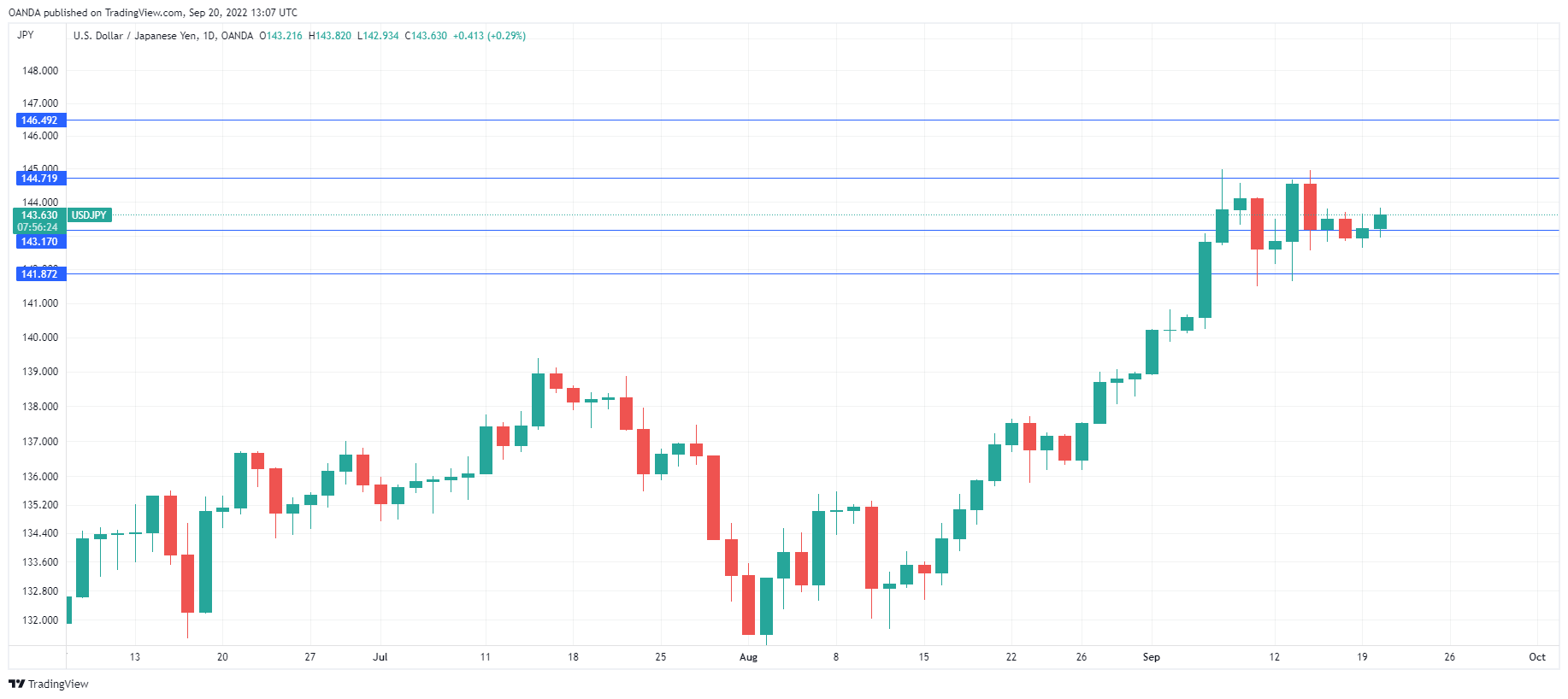
The Japanese yen is in negative territory, as USD/JPY trades at 143.67, up 0.31%.
Will Fed or BoJ wake up sleepy yen?
There is plenty of anticipation, as the Federal Reserve holds a meeting on Wednesday, followed by the Bank of Japan the next day. The yen has shown limited movement, oblivious to all the fuss. Is this the calm before the storm? It could very well be, especially with the Fed poised to press hard on the rate pedal. The markets have priced in a 75bp increase, with a 20% chance of a super-size 100bp move (times have clearly changed – it wasn’t very long ago that a 50bp move garnered the label “supersize”). The wobbly Japanese yen hasn’t posted a winning week since early August and fell to 144.99 earlier this month, its lowest level since 1998.
The yen’s slide has contributed to rising inflation, which accelerated in August. Core inflation rose to 2.8% YoY in August, up from 2.4% in July and the highest reading since 1991. Headline CPI rose to 3.0% YoY, up from 2.4% in July. Both readings were higher than the consensus.
The sharp depreciation of the yen will no doubt be high on the BoJ’s meeting agenda, but I’m sceptical that Bank members will take any action, aside from some strong rhetoric expressing their concern and dismay about the yen’s woes. Governor Kuroda has not given any signals that he plans to change the BoJ’s ultra-accommodative policy, even in the face of rising inflation. Kuroda says he will not raise rates until strong wage growth shows that inflation is sustainable.
The yen has borne the brunt of the BoJ’s loose policy, which has kept a tight lid on Japanese government yields while US Treasuries are heading higher, thanks to the Fed’s continued tightening. This has left the yen at the mercy of the US/Japan rate differential, and a 75 or 100bp hike from the Fed will only add to the yen’s misery.
USD/JPY Technical
- There is resistance at 144.71 and 146.49
- USD/JPY has support at 143.19, followed by 141.88
Canadian Inflation Takes Another Step in the Right Direction in August
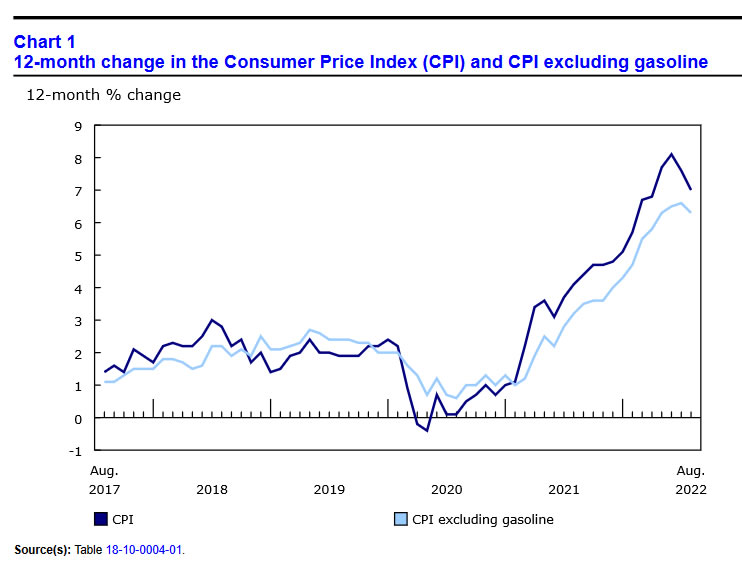
Consumer price inflation took another small step in the right direction in August, easing to 7.0% year-on-year (y/y), down from 7.6% in July.
Lower gasoline prices helped cool inflation once again, falling 9.6% on the month – the largest monthly decline since April 2020. However, gasoline prices are still 22% higher than a year ago.
The easing in the pace of inflation wasn't entirely energy, with CPI ex-energy cooling to 6.3% y/y in August, down from 6.6% y/y in July. This was helped by a slowing in services prices to 5.5% y/y from 5.7% in July.
Unfortunately, food prices remained stubbornly high. Food purchased from stores cost 10.8% more than a year ago – the fastest pace since 1981.
Durable goods inflation took a step back to 6% y/y in August, down from 7% in July, as consumer demand eased for things like appliances. Vehicle prices are still up 7.3% y/y, although that is down from an 8.2% y/y pace in July.
The Bank of Canada's core inflation metrics also cooled slightly in August. CPI-trim decelerated by 0.2 percentage points (pps) to 5.2%, CPI-common eased by 0.3 pps to 5.7%, and CPI-median cooled one tick to 4.8%. The average of the three core measures was 5.2% y/y, down two tenths from 5.4% y/y in July.
Key Implications
A journey of a thousand miles starts with a single step. Canadian inflation took a single step in the right direction in August, but it still has a long way to go. The Bank of Canada (BoC) core measures of inflation remain more than 2 pps from the target range of 1-3%. The BoC has hiked interest rates 300 basis points so far this year, and the impact of that is starting to be felt in the economy. Even still, we expect more slowing in demand, which should help bring down inflation along with it.
Still, there is a long journey ahead, and we expect the BoC to continue hiking its policy rate at the end of October, and take the policy rate to 4% by the end of the year, as outlined in our latest Quarterly Economic Forecast, released today.
EUR/USD Mid-Day Outlook
Daily Pivots: (S1) 0.9984; (P) 1.0007; (R1) 1.0047; More...
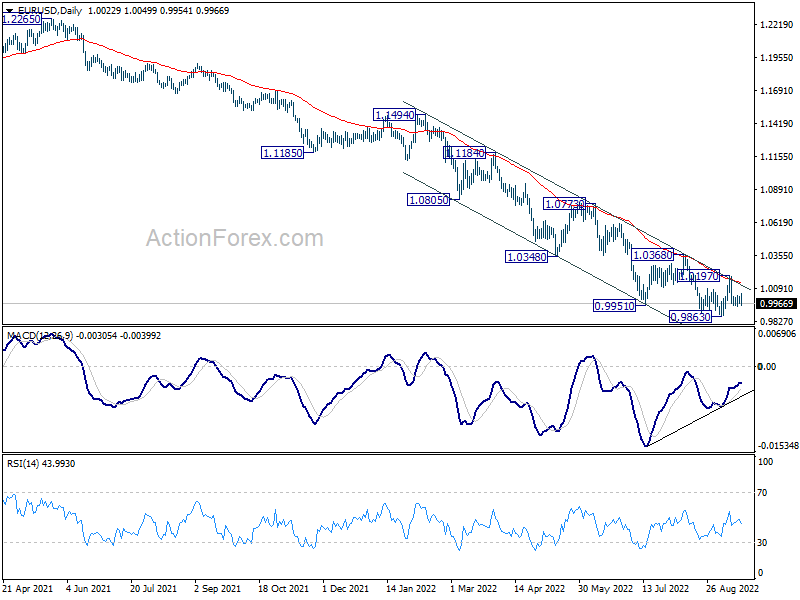
Intraday bias in EUR/USD stays neutral as range trading continues. Outlook also remains bearish. On the downside, firm break of 0.9863 support will resume larger down trend. On the upside, break of 1.0197 resistance will now raise the chance of larger trend reversal, and target 1.0368 resistance.
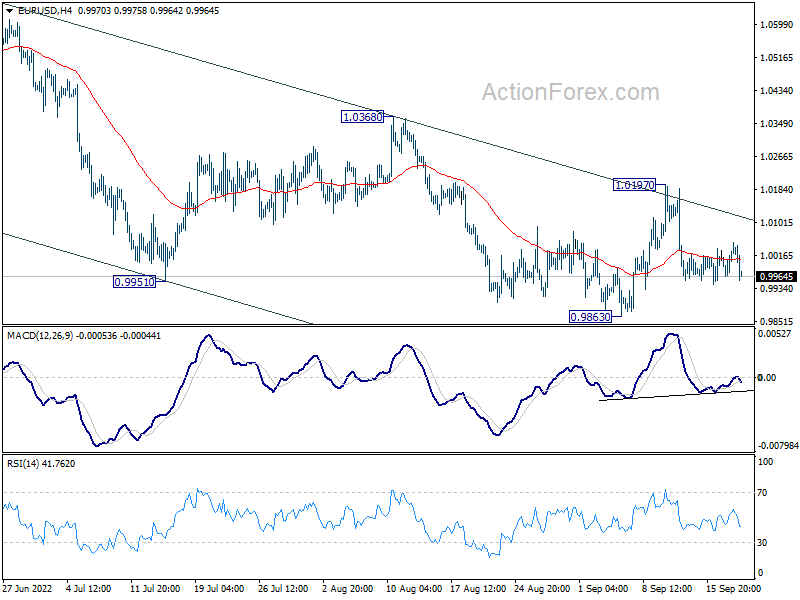
In the bigger picture, down trend from 1.6039 (2008 high) is still in progress. Next target is 100% projection of 1.3993 to 1.0339 from 1.2348 at 0.8694. In any case, outlook will stay bearish as long as 1.0368 resistance holds, in case of strong rebound.
GBP/USD Mid-Day Outlook
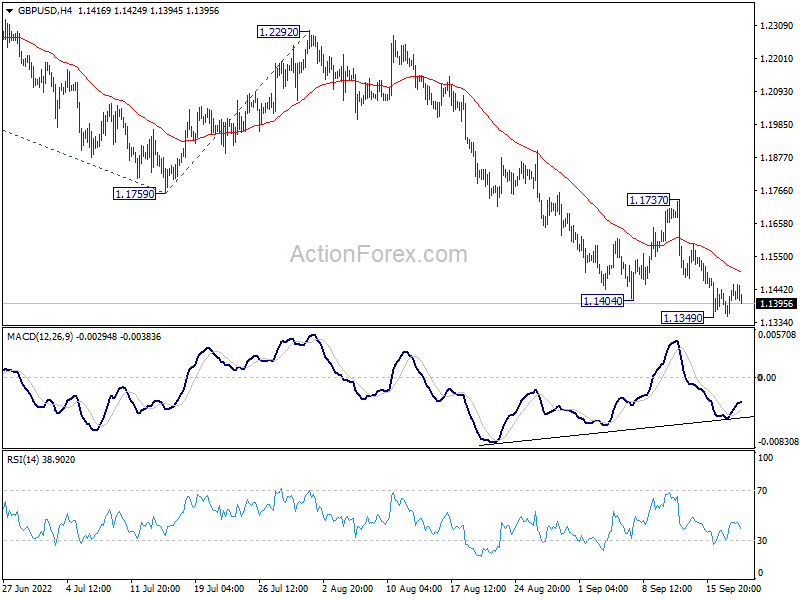
Daily Pivots: (S1) 1.1380; (P) 1.1411; (R1) 1.1466; More...
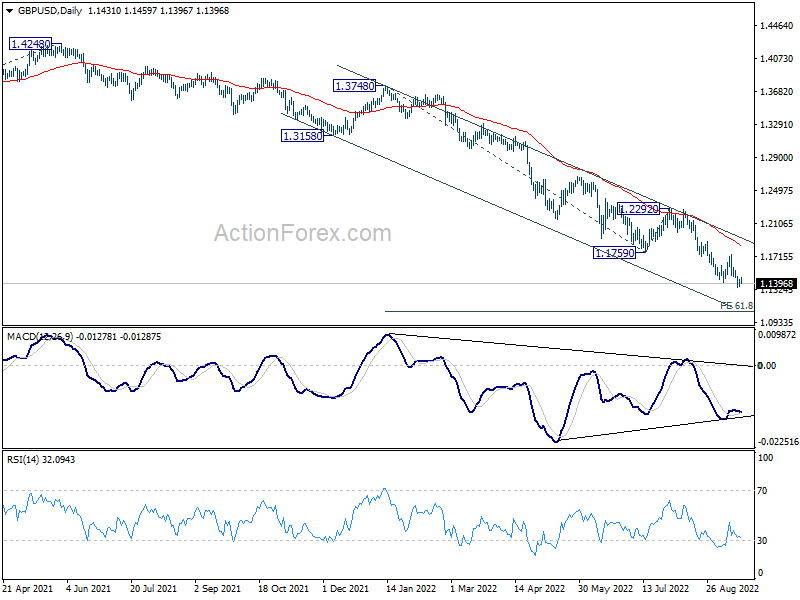
Intraday bias in GBP/USD stays neutral for consolidation above 1.1349 temporary low. Break of 1.1737 resistance is needed to indicate short term bottoming. Otherwise, outlook stays bearish. On the downside, break of 1.1349 will resume larger down trend to 61.8% projection of 1.3748 to 1.1759 from 1.2292 at 1.1063.
In the bigger picture, based on current momentum, fall from 1.4248 (2018 high) is probably resuming long term down trend from 2.1161 (2007 high). Sustained break of 1.1409 will target 61.8% projection of 1.7190 (2014 high) to 1.1409 (2020 low) from 1.4248 (2021 high) at 1.0675. This will remain the favored case for now as long as 1.2292 resistance holds.
USD/JPY Mid-Day Outlook
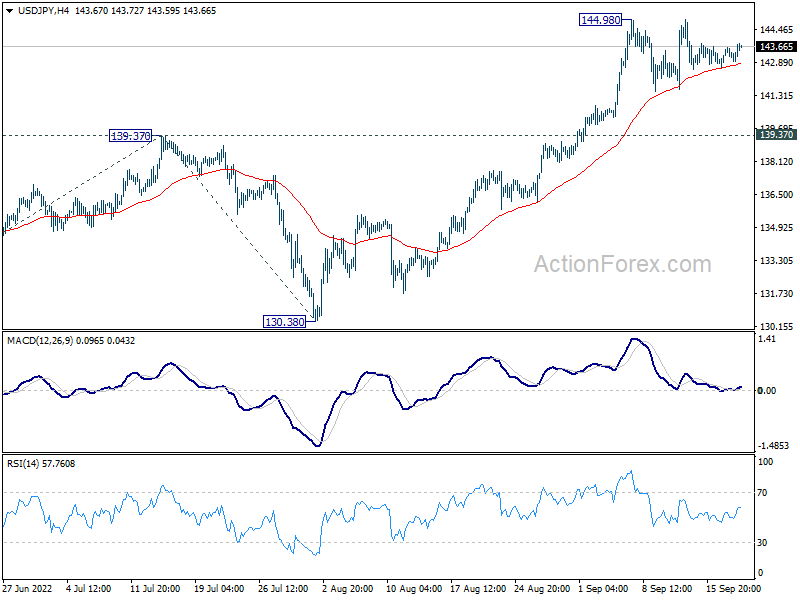
Daily Pivots: (S1) 142.71; (P) 143.17; (R1) 143.70; More...
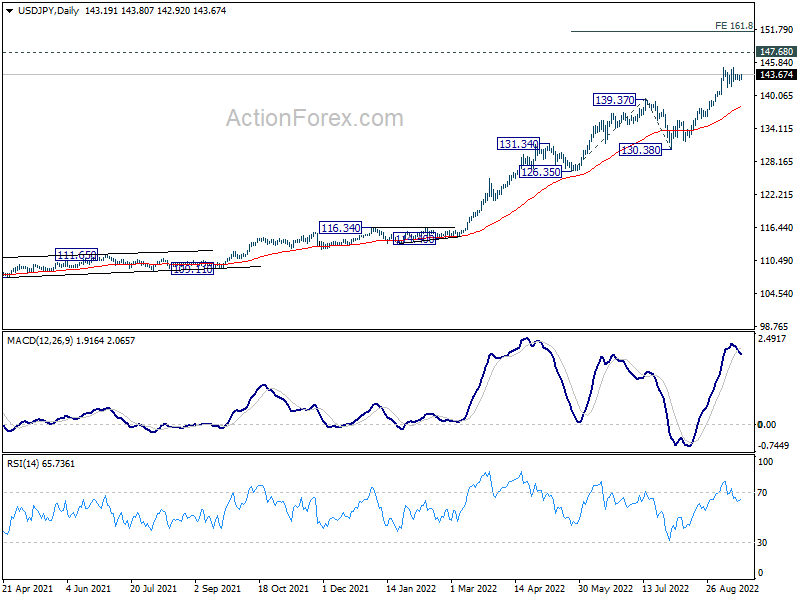
Intraday bias in USD/JPY stays neutral and consolidation from 144.98 could extend. Deeper retreat cannot be ruled out, but downside should be contained by 139.37 resistance turned support. On the upside, break of 144.98 will resume larger up trend to 147.68 long term resistance. Break there will target 161.8% projection of 126.35 to 139.37 from 130.38 at 151.44 next.
In the bigger picture, up trend from 101.18 is still in progress, as part of the whole up trend from 75.56 (2011 low). Further rise should be seen to 147.68 (1998 high). For now, break of 130.38 support is needed to be the first indication of medium term topping. Otherwise, outlook will stay bullish even in case of deep pull back.
USD/CHF Mid-Day Outlook
Daily Pivots: (S1) 0.9615; (P) 0.9655; (R1) 0.9684; More
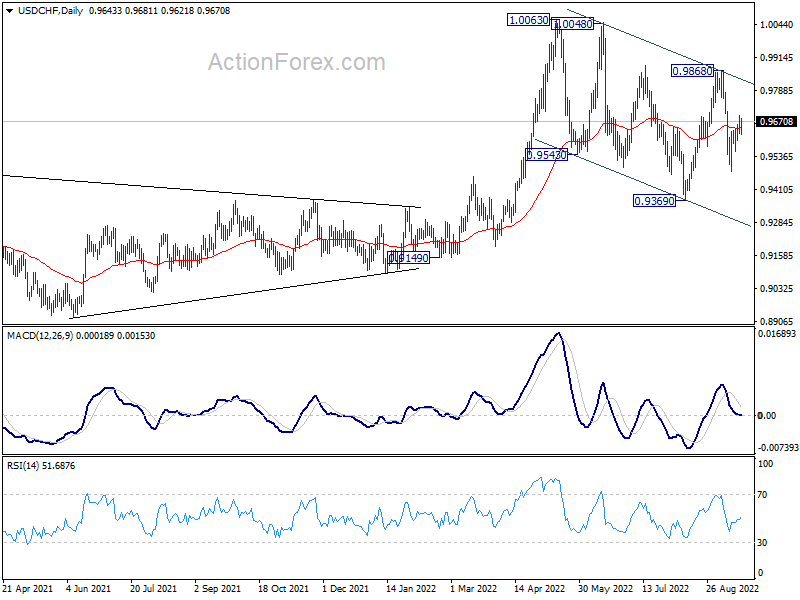
No change in USD/CHF's outlook and intraday bias stays mildly on the upside. Rise from 0.9478 would target 0.9868 resistance. Break there will argue that larger up trend is ready to resume through 1.0063. Overall, the corrective pattern from 1.0063 high could still extend. Below 0.9554 minor support will turn bias back to the downside for 0.9478 and below.
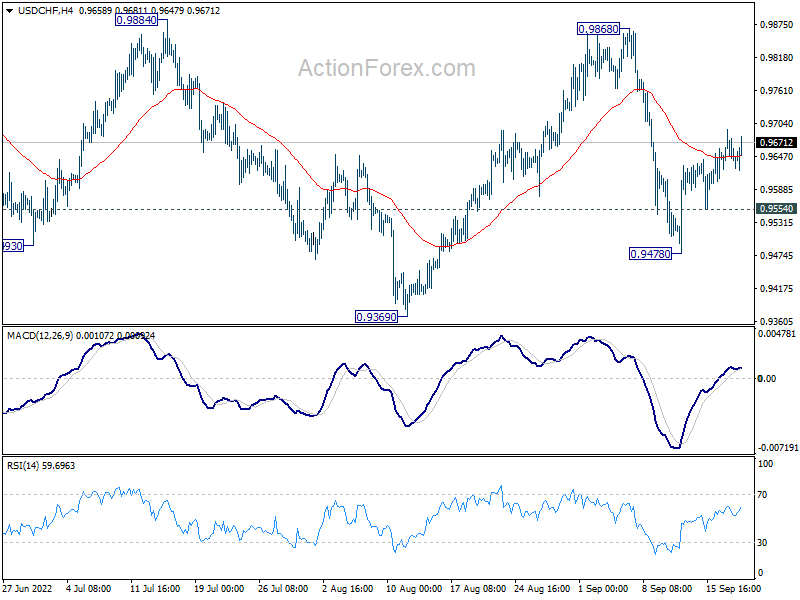
In the bigger picture, current development suggests that up trend from 0.8756 (2021 low) is still in progress. Sustained break of 1.0063 will target 100% projection of 0.9149 to 1.0063 from 0.9369 at 1.0283, and then 1.0342 (2016 high). For now, this will remain the favored case as long as 0.9369 support holds, even in case of deep pull back.
USD Jumps on Rising Yields and Risk Aversion, CAD Down after CPI Miss
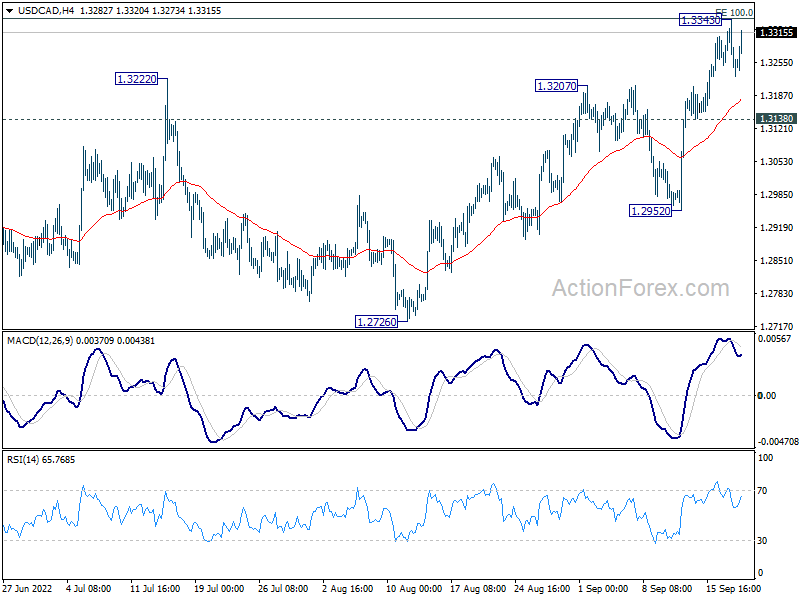
Canadian Dollar falls broadly in early US session after weaker than expected inflation reading. Yet, it's still undecided on which currency is worst. Dollar is current in the driving seat, as lifted by extended rally in treasury yield. 10-year yield is trading up above 3.5 handle for the first time in more than a decade. Swiss Franc and Yen are steady on risk aversion. But Sterling is more resilient with help from buying against Euro.
Technically, immediate focus in on 1.3343 temporary top in USD/CAD. Firm break there will resume larger up trend to medium term fibonacci level at 1.3650. That would be a leading signal of more rally in Dollar elsewhere.
In Europe, at the time of writing, FTSE is down -0.37%. DAX is down -0.88%. CAC is down -1.14%. Germany 10-year yield is up 0.115 at 1.919. Earlier in Asia, Nikkei rose 0.44%. Hong Kong rose 1.16%. China Shanghai SSE rose 0.22%. Singapore Strait Times rose 0.33%. Japan 10-year JGB yield rose 0.0028 to 0.260.
Canada CPI slowed to 7% yoy in Aug
Canada CPI dropped -0.3% mom in August, below expectation of -0.1% mom. That's the largest monthly decline since early months of the pandemic.
For the 12-month period, CPI slowed from 7.6% yoy to 7.0% yoy, below expectation of 7.3% yoy. That's also the second consecutive slowdown in the year-over-year rate, largely driven by lower gasoline prices. CPI excluding gasoline slowed from 6.6% yoy to 6.3% yoy, first deceleration since June 2021.
CPI common rose from 5.5% yoy to 5.7% yoy, above expectation of 5.6% yoy. CPI median dropped from 5.0% yoy to 4.8% yoy, below expectation of 5.1% yoy. CPI trimmed dropped from 5.4% yoy to 5.2% yoy, below expectation of 5.5% yoy.
From the US, building permits dropped to 1.52m annualized rate in August, below expectation of 1.62m. Housing starts rose to 1.58m, above expectation of 1.46m.
SECO downgrades Swiss GDP forecasts, upgrades CPI
SECO downgraded Swiss GDP growth forecasts for 2022 from 2.6% to 2.0%. For 2023, GDP growth projection was also lowered from 1.9% to 1.1%. CPI forecasts for 2022 was raised from 2.5% to 3.0%, and for 2023 up from 1.4% to 2.3%.
It said, "after a positive first half of the year 2022, the Swiss economy now faces a deteriorating outlook. A tense energy situation and sharp price increases are weighing on economic prospects, especially in Europe."
It also warned of risks from "serious gas or electricity shortages" in Europe, and "large-scale production stoppages and a marked downturn". Such a negative scenario would likely lead to "high domestic price pressures" and "downward trend in the economy economy. With rising interest rates, " risks associated with the surge in global debt are intensifying.
Japan CPI core rose to 3% yoy in Aug, highest in 31 years
Japan CPI accelerated from 2.6% yoy to 3.0% yoy in August, above expectation of 2.6% yoy. CPI core (ex-fresh food), rose from 2.4% yoy to 2.8% yoy, above expectation of 2.7% yoy. CPI core-core (ex-fresh food, energy), also rose from 1.2% yoy to 1.6% yoy, but missed expectation of 1.7% yoy.
CPI core, the BoJ watched reading, hit the highest level in 31 years since 1991, excluding the effect of sales tax hike. Even including the impact of sales tax, the reading was still the highest in nearly 8 years.
BoJ is widely expected to continue to stand pat, and maintain negative interest rate later this week. But there are expectations that core inflation could hit 3% later in the year, and stay above the 2% target in the near term. That might start to change BoJ's view on prices and policy at a later stage.
RBA minutes: Slower tightening comes with higher rates
Minutes of RBA's September 6 meeting revealed that there were discussions on whether to hike by 25bps or 50bps. But, "given the importance of returning inflation to target, the potential damage to the economy from persistent high inflation and the still relatively low level of the cash rate, the Board decided to increase the cash rate by a further 50 basis points."
RBA reiterated that there will be further interest rate hikes "over the months ahead", but it's it "not on a pre-set path". The full effects of higher interest rates were "yet to be felt" on mortgages, activity and inflation.
The board was "mindful" that the path to bring inflation back to target "needed to account for the risks to growth and employment. RBA is seeking to return inflation to target "while keeping the economy on an even keel".
Size of timing of future rate hikes will be "guided by the incoming data" and outlook for inflation and job market, and risks. "All else equal, members saw the case for a slower pace of increase in interest rates as becoming stronger as the level of the cash rate rises".
USD/CHF Mid-Day Outlook
Daily Pivots: (S1) 0.9615; (P) 0.9655; (R1) 0.9684; More
No change in USD/CHF's outlook and intraday bias stays mildly on the upside. Rise from 0.9478 would target 0.9868 resistance. Break there will argue that larger up trend is ready to resume through 1.0063. Overall, the corrective pattern from 1.0063 high could still extend. Below 0.9554 minor support will turn bias back to the downside for 0.9478 and below.
In the bigger picture, current development suggests that up trend from 0.8756 (2021 low) is still in progress. Sustained break of 1.0063 will target 100% projection of 0.9149 to 1.0063 from 0.9369 at 1.0283, and then 1.0342 (2016 high). For now, this will remain the favored case as long as 0.9369 support holds, even in case of deep pull back.
Economic Indicators Update
| GMT | Ccy | Events | Actual | Forecast | Previous | Revised |
|---|---|---|---|---|---|---|
| 23:30 | JPY | National CPI Core Y/Y Aug | 2.80% | 2.70% | 2.40% | |
| 01:30 | AUD | RBA Minutes | ||||
| 06:00 | EUR | Germany PPI M/M Aug | 7.90% | 1.50% | 5.30% | |
| 06:00 | EUR | Germany PPI Y/Y Aug | 45.80% | 37.50% | 37.20% | |
| 07:00 | CHF | SECO Economic Forecasts | ||||
| 08:00 | EUR | Current Account (EUR) Jul | -19.9B | 5.3B | 4.2B | |
| 12:30 | USD | Building Permits Aug | 1.52M | 1.62M | 1.69M | |
| 12:30 | USD | Housing Starts Aug | 1.575M | 1.46M | 1.45M | |
| 12:30 | CAD | CPI M/M Aug | -0.30% | -0.10% | 0.10% | |
| 12:30 | CAD | CPI Y/Y Aug | 7.00% | 7.30% | 7.60% | |
| 12:30 | CAD | CPI Common Y/Y Aug | 5.70% | 5.60% | 5.50% | |
| 12:30 | CAD | CPI Median Y/Y Aug | 4.80% | 5.10% | 5.00% | |
| 12:30 | CAD | CPI Trimmed Y/Y Aug | 5.20% | 5.50% | 5.40% |
Canada CPI slowed to 7% yoy in Aug
Canada CPI dropped -0.3% mom in August, below expectation of -0.1% mom. That's the largest monthly decline since early months of the pandemic.
For the 12-month period, CPI slowed from 7.6% yoy to 7.0% yoy, below expectation of 7.3% yoy. That's also the second consecutive slowdown in the year-over-year rate, largely driven by lower gasoline prices. CPI excluding gasoline slowed from 6.6% yoy to 6.3% yoy, first deceleration since June 2021.
CPI common rose from 5.5% yoy to 5.7% yoy, above expectation of 5.6% yoy. CPI median dropped from 5.0% yoy to 4.8% yoy, below expectation of 5.1% yoy. CPI trimmed dropped from 5.4% yoy to 5.2% yoy, below expectation of 5.5% yoy.
GBP/JPY: Cycle Global Trend Nears Completion Level
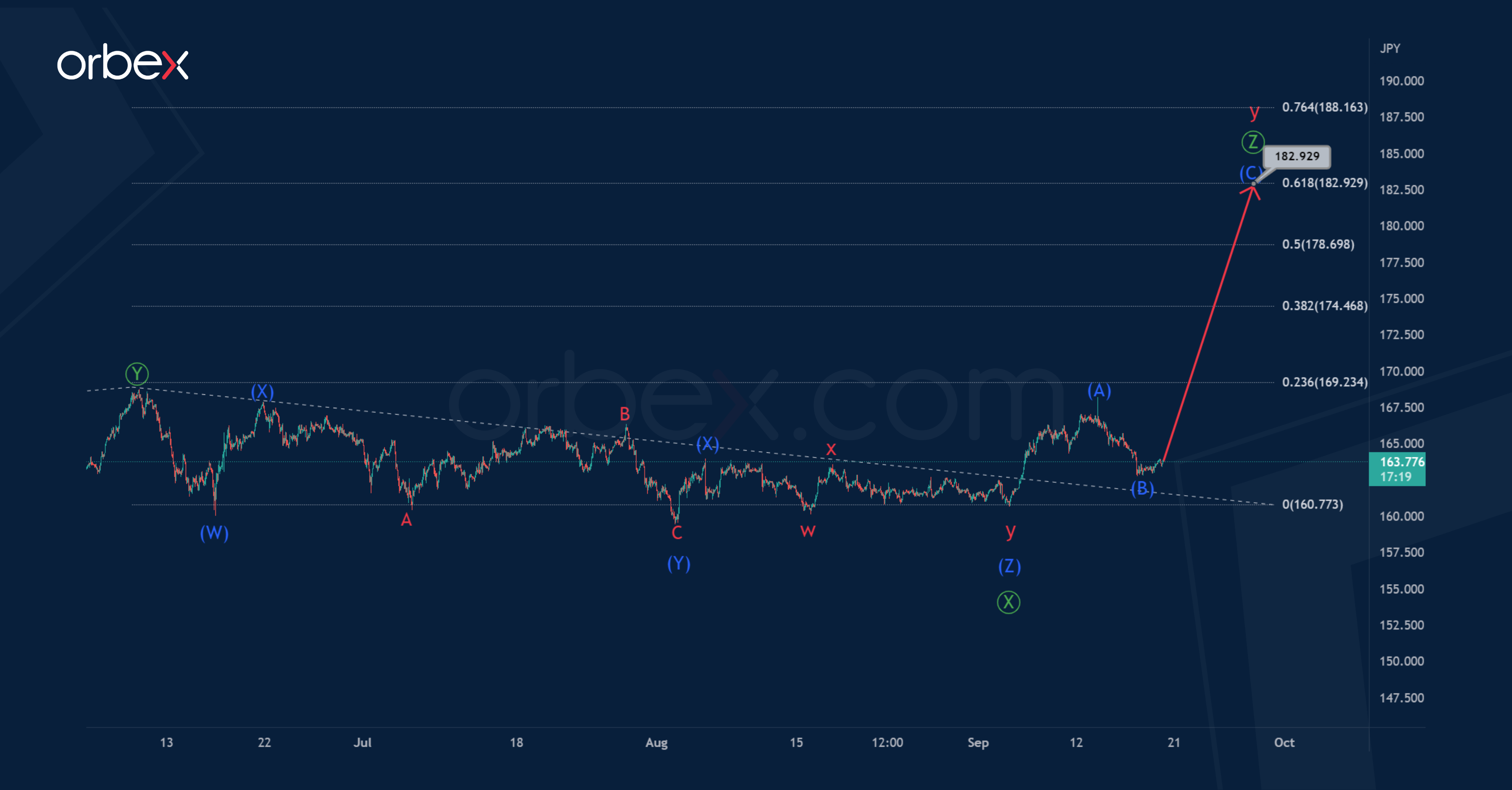
GBPJPY seems to be forming a global corrective trend, taking the form of a double zigzag. On the 1H timeframe, the final part of this pattern is visible, that is, the actionary wave y of the cycle degree.
It is assumed that the wave y takes the form of a triple zigzag Ⓦ-Ⓧ-Ⓨ-Ⓧ-Ⓩ of the primary degree, which may soon be fully completed. After the end of the second intervening wave Ⓧ, which took the form of a triple combination, the price began to move up.
Most likely, the wave Ⓩ takes the form of a standard zigzag, in which the first two parts are completed. In the next coming trading weeks, growth is expected within the intermediate correction wave (C), as shown in the chart.
The completion of the entire wave Ⓩ is possible near 182.92. At that level, wave Ⓩ will be at 61.8% of wave Ⓨ.
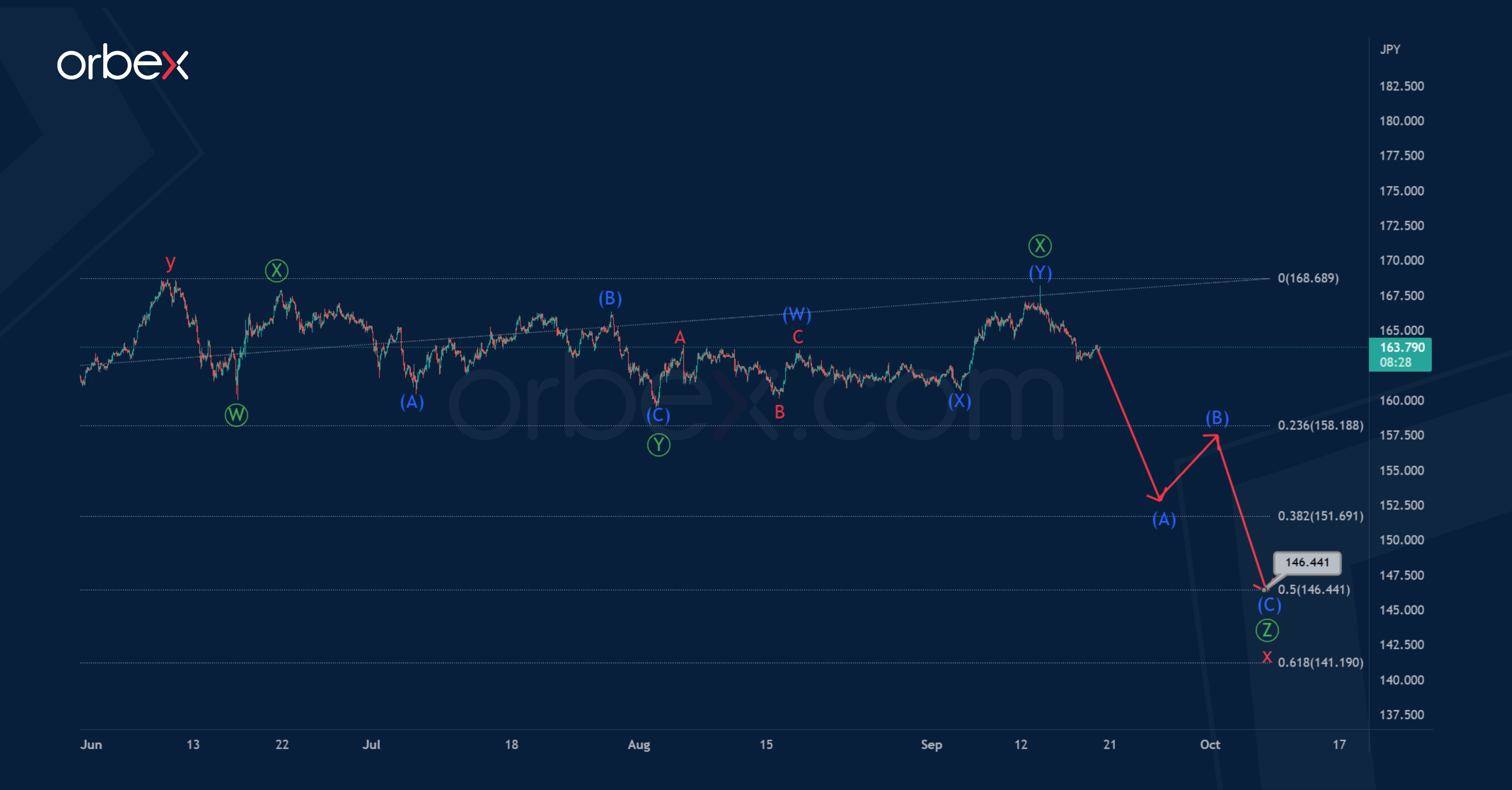
According to an alternative scenario, the market builds not a double, but a triple zigzag w-x-y-x-z of the cycle degree. And now its fourth part is being formed.
Thus, in the last section of the chart, we see a corrective movement in the cycle wave x. This wave, judging by its structure, may take the form of a triple zigzag Ⓦ-Ⓧ-Ⓨ-Ⓧ-Ⓩ.
It is possible that the market will fall in the last wave Ⓩ to 146.44. At that level, cycle wave x will be at 50% along the Fibonacci lines of actionary wave y. The probability of achieving this coefficient is high.
Dollar Index: Narrow Ranges Precede Fed Rate Decision
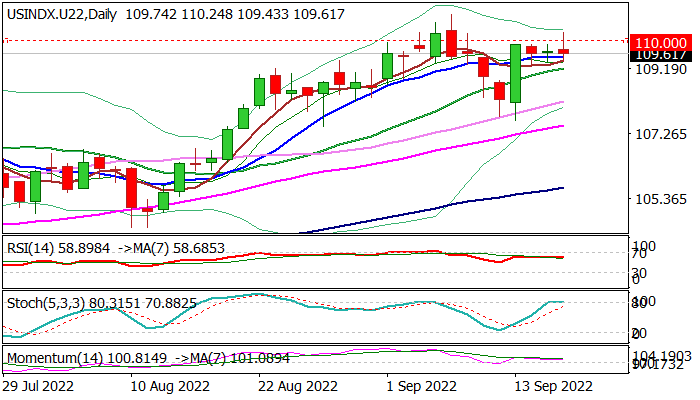
Near-term ranges are narrowing, and trading is quieter, as markets await the verdict from the Fed’s two-day policy meeting that ends tomorrow.
The US central bank has not much space to maneuver, as inflation remains high and over four times above the 2% target and Fed’s main task is to restore price stability, with main tool being tightening its monetary policy.
The Fed already raised its benchmark rate to 2.25%-2.50% range, on the way towards 4.5% that is seen as a likely target to be reached in early 2023.
In its September’s meeting, the Fed is expected to raise rates by another 75 basis points, with possibility of a massive 1% hike, being also on the table.
Aggressive central bank’s stance continues to lift the dollar, also strongly supported by safe-haven buying over growing economic and geopolitical concerns, as many large economies are on the way to recession.
Hawkish Fed in line with expectations is likely to be supportive for dollar, due to widening divergence of the monetary policies of Fed and other central banks, while Fed’s decision above expectations would strongly accelerate greenback’s rally.
Sustained break of cracked psychological 110 barrier would open way towards Fibo projections at 111.12 and 112.85 initially, but stronger rise cannot be ruled out on Fed’s surprise.
Initial support at lays at 109.51 (10DMA), followed by 109.17 (20DMA) , guarding pivotal support at 107.65 (Sep 13 trough).
Res: 110.00; 110.77; 111.12; 112.85.
Sup: 109.51; 109.17; 108.21; 107.65.