Sample Category Title
EURJPY Edges Higher as Positive Momentum Intensifies
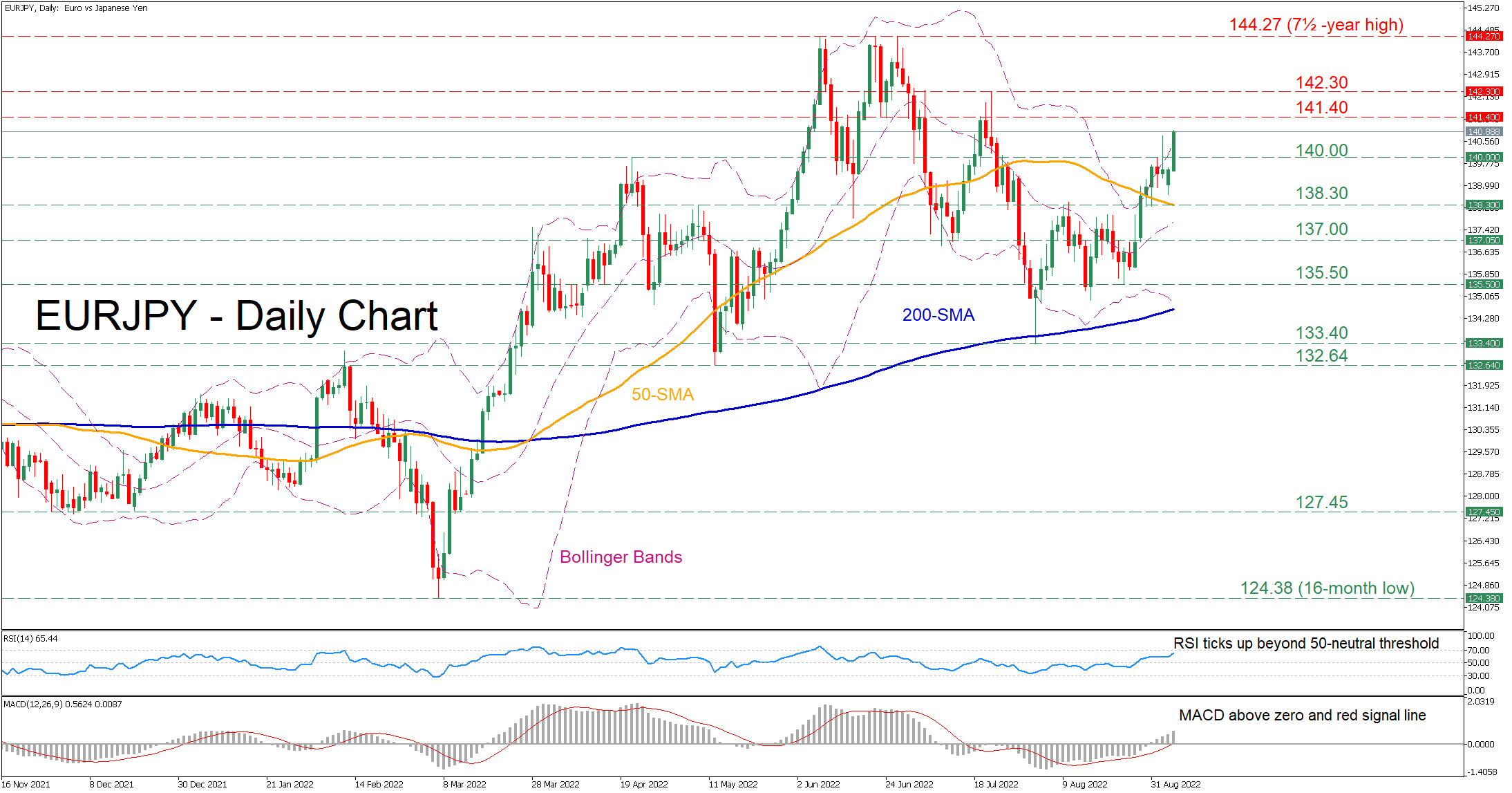
EURJPY has been gaining ground in the short term after it managed to find its feet at the 133.40 region in early August. However, the pair is currently trading above its upper Bollinger band, suggesting that its recent advance might be overstretched.
The momentum indicators are endorsing a positive near-term bias Specifically, the RSI is ticking upwards slightly below the 70-overbought area, while the MACD histogram is strengthening above both zero and its red signal line.
Should buying pressures persist, the pair could encounter initial resistance at the 141.40 region, which has acted both as resistance and support in the last two months. Conquering this barricade, the bulls could aim for the July high of 142.30. A jump above the latter might set the stage for the 7½-year high of 144.27.
To the downside, if sellers re-emerge and push the price lower, immediate support could be provided by the 140.00 psychological mark. Sliding beneath that floor, the price may descend towards the 50-day simple moving average (SMA), currently at 138.30. Failing to halt there, any further declines could then stall at 137.00 before the 135.50 hurdle appears on the radar.
In brief, EURJPY appears to have the necessary momentum to push even higher and extend its bullish short-term structure. However, a dive beneath the 50-day SMA could attract selling interest, shifting the technical picture to neutral.
USD/TRY Testing All Time Highs
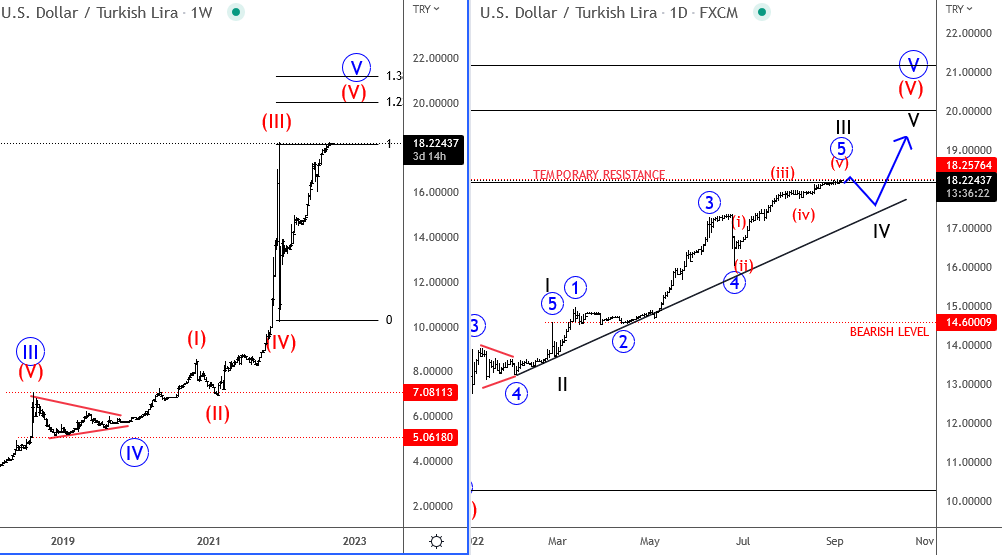
USD/TRY is in uptrend after a sharp drop back in 2021 which was seen as wave IV correction. Notice that recovery is now very strong back to new highs, which can be counted in an impulsive fashion so we think there will be more gains after any retracement. There can be some pullback coming away from temporary resistance now, ideally into wave IV which may find a base at the black trendline.
Big picture
Higher degree impulse can be in late stages with current five subwaves with blue wave V. Frist upward level is at 20.00 where bulls can slow down, but next extension targets show room even for 25 and 30.
GBP/JPY Daily Outlook
Daily Pivots: (S1) 161.08; (P) 161.52; (R1) 162.37; More...
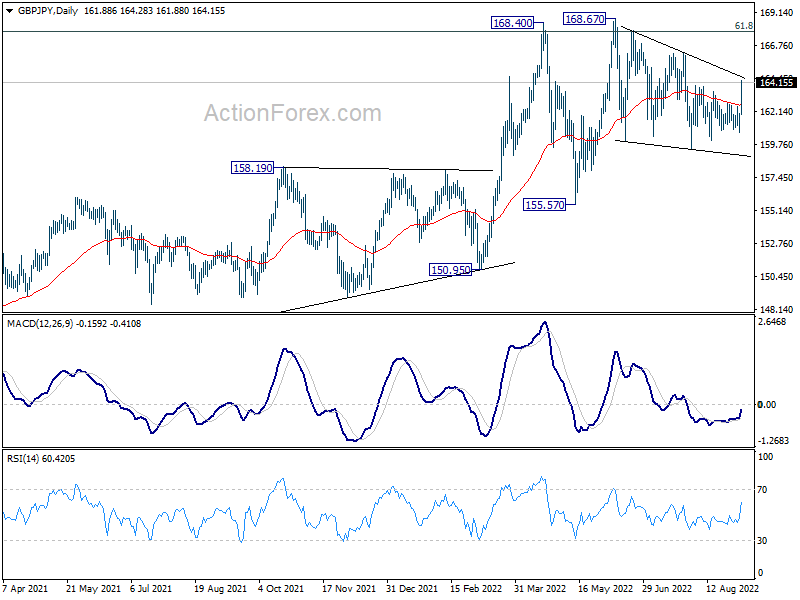
Intraday bias in GBP/JPY is back on the upside with break of 163.91. Further rise should be seen to 166.31 resistance next. Firm break there will argue that larger up trend is ready to resume through 168.67 high. On the downside, below 162.47 minor support will turn intraday bias neutral and extend the corrective pattern from 168.67.
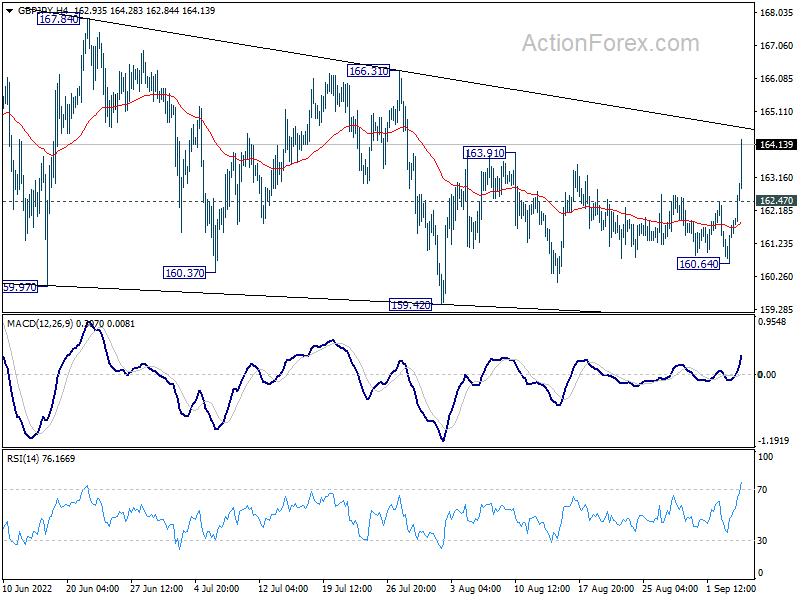
In the bigger picture, up trend from 123.94 (2020 low) is still in progress. Sustained break of 61.8% retracement of 195.86 (2015 high) to 122.75 (2016 low) at 167.93 will be a long term bullish signal, and could pave the way back to 195.86 high. This will remain the favored case as long as 155.57 support holds, even in case of deep pull back.
EUR/JPY Daily Outlook
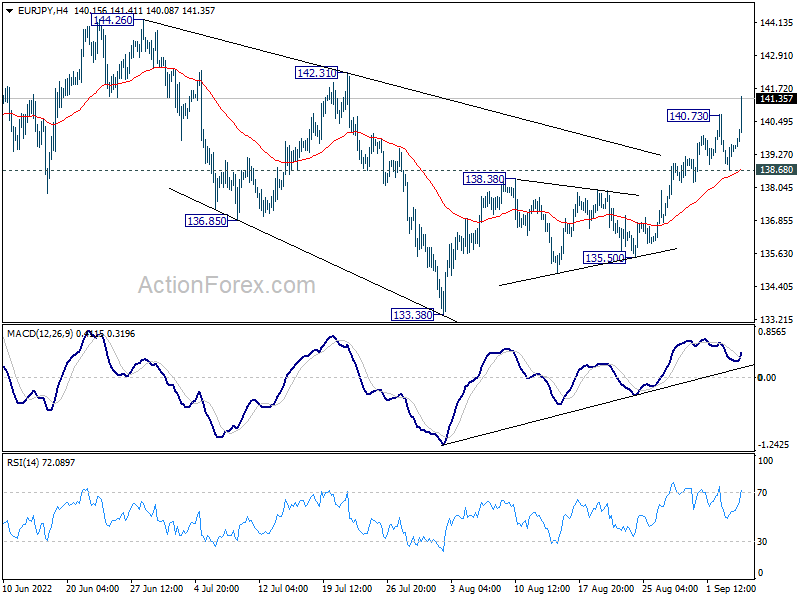
Daily Pivots: (S1) 138.96; (P) 139.30; (R1) 139.91; More....
EUR/JPY's rise from 133.38 resumed after brief consolidations. Intraday bias is back on the upside for 142.31 resistance first. Firm break there will argue that larger up trend is ready to resume through 144.26 high. For now, further rally is expected as long as 138.68 support holds, in case of retreat.
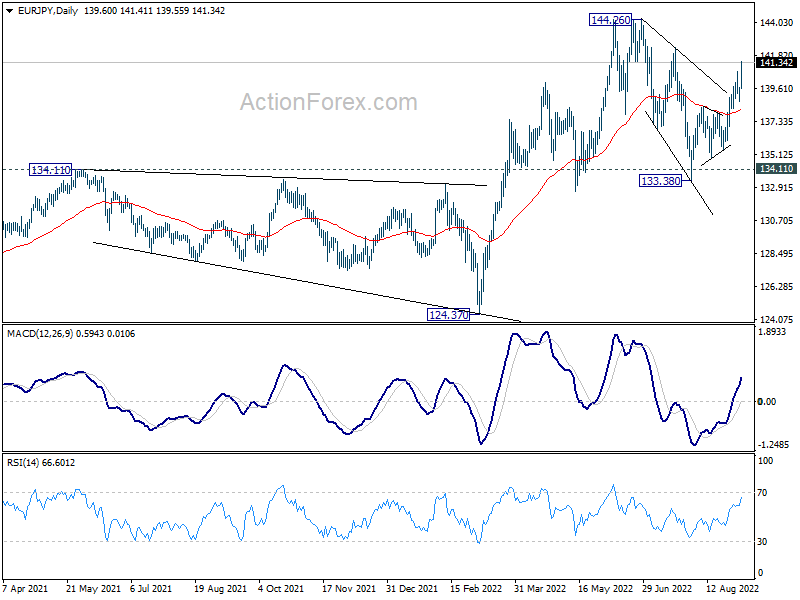
In the bigger picture, up trend from 114.42 (2020 low) is seen as the third leg of the pattern from 109.30 (2016 low). Further rally is in favor as long as 134.11 resistance turned support holds, even in case of deep pull back. Next target is 149.76 (2015 high). However, sustained break of 134.11 will be a sign of medium term bearish reversal and turn focus to 124.37 support for confirmation.
EUR/GBP Daily Outlook
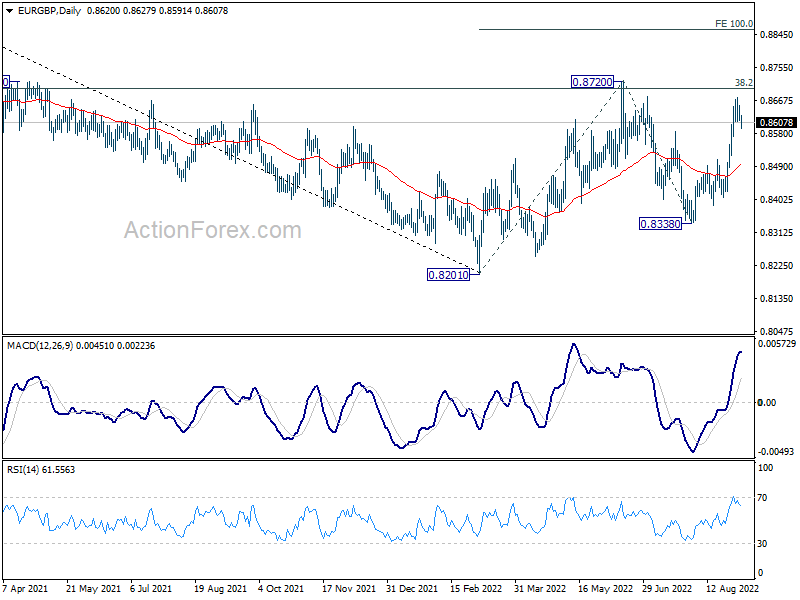
Daily Pivots: (S1) 0.8606; (P) 0.8630; (R1) 0.8645; More...
Intraday bias in EUR/GBP remains neutral for the moment. On the upside, decisive break of 0.8720 high will carry larger bullish implications. Next target is 100% projection of 0.8201 to 0.8720 from 0.8338 at 0.8857. For now, further rally will remain in favor as long a s0.8510 resistance turned support holds.
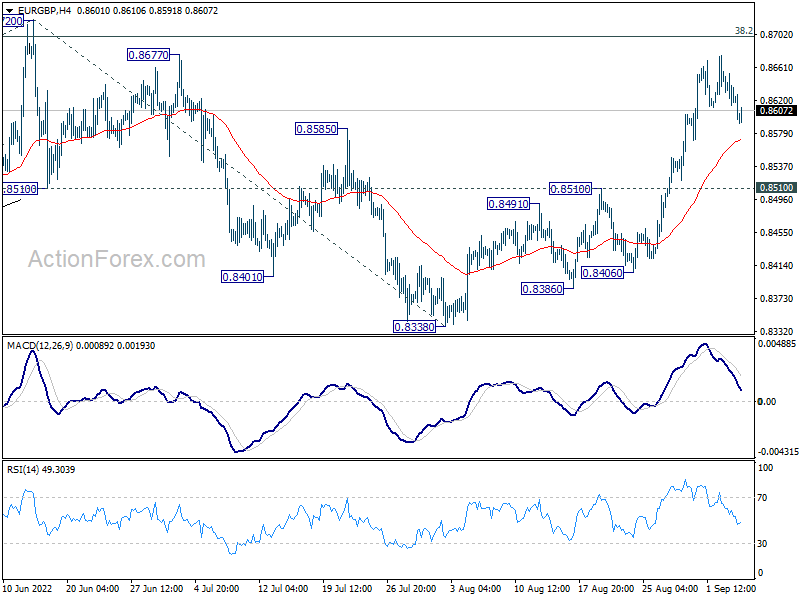
In the bigger picture, focus is back on 38.2% retracement of 0.9499 to 0.8201 at 0.8697. Sustained break there will argue that rise from 0.8201 is a medium term up trend, rather than a correction. Next target is 61.8% retracement at 0.9003. Rejection by 0.8697 again will maintain medium term bearishness, for extending the down trend from 0.9499 (2020 high) at a later stage.
EUR/AUD Daily Outlook
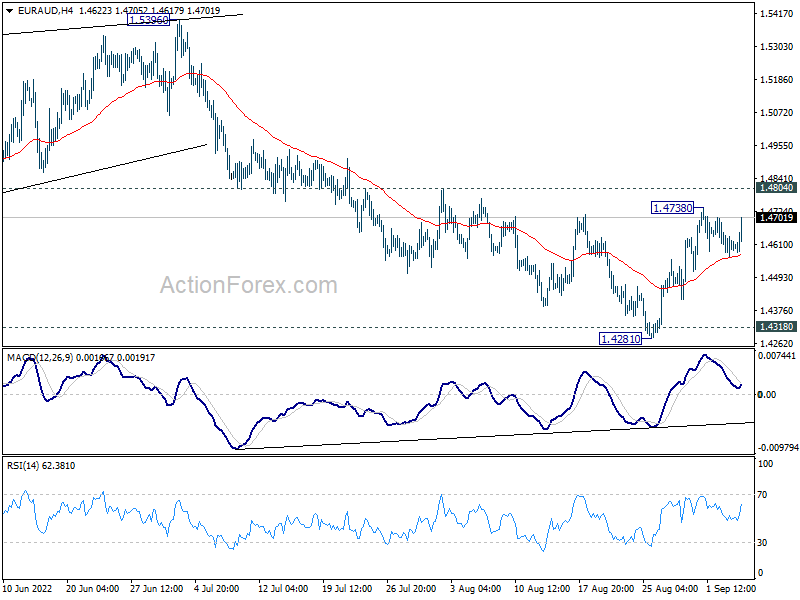
Daily Pivots: (S1) 1.4565; (P) 1.4607; (R1) 1.4646; More...
Intraday bias in EUR/AUD stays neutral first, but the strong support from 4 hour 55 EMA is a bullish sign. Break of 1.4738 will resume the rebound from 1.4281. Further break of 1.4804 resistance will bring stronger rally back towards 1.5396. On the downside, decisive break of 1.4318 low will resume larger down trend to medium term projection level at 1.3623.
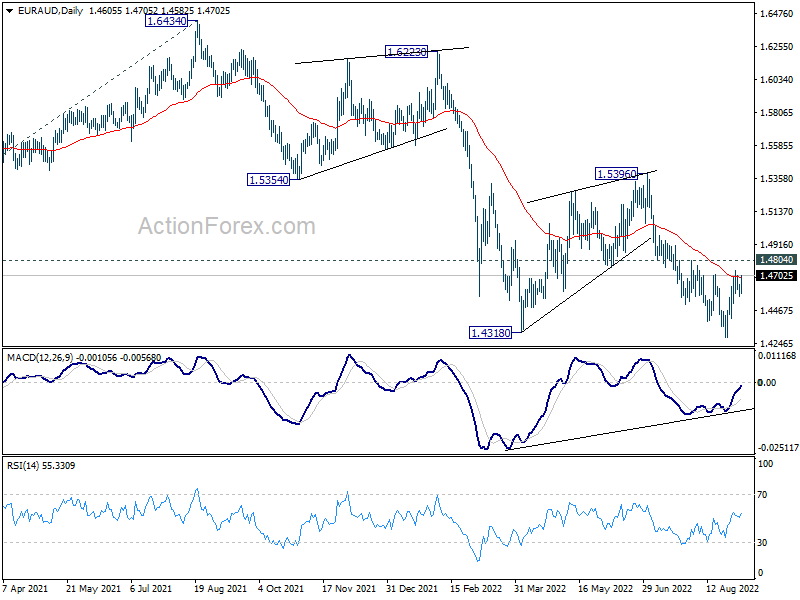
In the bigger picture, down trend from 1.9799 is still in progress. Break of 1.4318 low will target 61.8% projection of 1.9799 to 1.5250 from 1.6434 at 1.3623, which is close to 1.3624 long term support (2017 low). This will remain the favored case now as long as 1.5396 resistance holds.
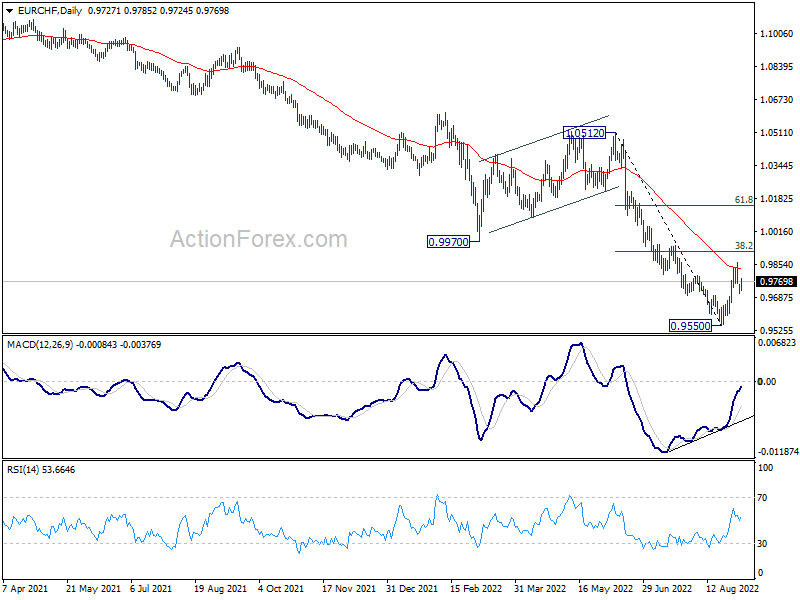
EUR/CHF Daily Outlook
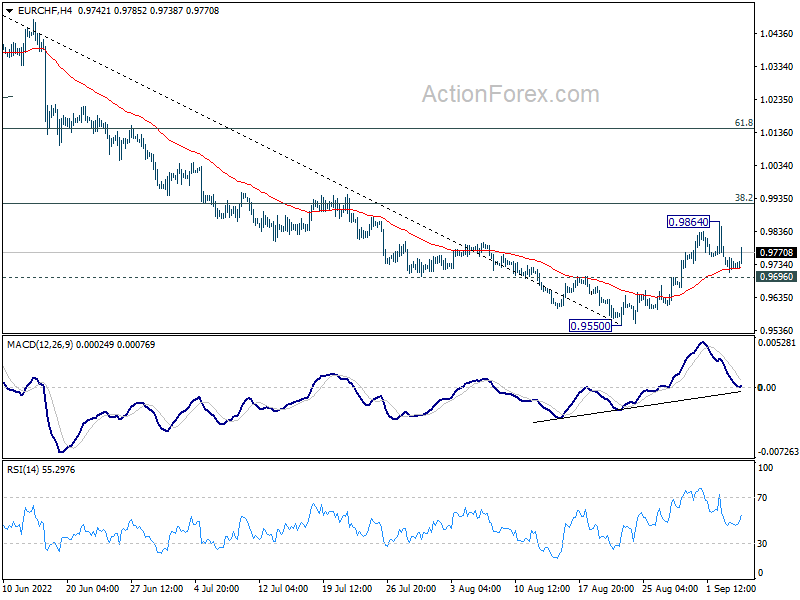
Daily Pivots: (S1) 0.9708; (P) 0.9733; (R1) 0.9753; More....
Intraday bias in EUR/CHF remains neutral and outlook is unchanged. Corrective rise from 0.9550 might extend higher. But upside should be limited by 38.2% retracement of 1.0512 to 0.9550 at 0.9917 to bring down trend resumption. On the downside, below 0.9696 minor support will turn bias back to the downside for retesting 0.9550 low.
In the bigger picture, long term down trend from 1.2004 (2018 high) is still in progress. Next target is 138.2% projection of 1.2004 to 1.0505 to 1.1149 at 0.9033. On the upside, break of 0.9970 support turned resistance is needed to be the first sign of medium term bottoming. Otherwise, outlook will stay bearish in case of strong rebound.
Sterling Enjoys a Small Relief Rally after the New PM Announced
Markets
Energy stayed the dominant trading theme on European markets yesterday. Gas prices surged as much as 36% intraday before the panic subsided somewhat. Eventual gains for natural gas amounted to about 15%. Oil prices also rose with OPEC+ having decided to cut production by a (symbolic) 100k barrels a day in October. Brent oil advanced from $93/b to $95.74. Fearing a sharp recession, stocks sold off. The EuroStoxx50 dropped 2.6% before paring losses to about 1.5%. Core bonds remained under pressure nonetheless. Rising energy prices deteriorate an already dramatic inflation outlook even further, solidifying the case for aggressive/frontloaded monetary tightening. European swap yields jumped 9.5 bps (10y) to 11.9 bps (5y). The euro washed off most of the early, knee-jerk weakness. EUR/USD finished only marginally lower at 0.9929 – a new two-decade closing low nonetheless.
Liz Truss was announced as the new Conservative Party leader and prime minister in the UK but didn’t spark a material market reaction in the pound. After a volatile Asian session, the British currency steady strengthened against the euro after having slid over the past ten days. EUR/GBP reversed course from the high 0.86 area to end up at 0.862, in line with risk sentiment gradually turning a bit for the better. Sterling did notice a Bloomberg story overnight which reported Truss earmarking a whopping £130bn over the next 18 months to keep UK energy bills at the levels of today. Bills were due to jump 80% in October. It’s a short-term positive by protecting household’s purchasing power. Sterling tested EUR/GBP 0.86 resistance this morning. Cable (GBP/USD) rebounded from the 1.15 barrier.
Other news this morning includes the Reserve Bank of Australia’s expected 50 bps rate hike to 2.35%. The RBA expects more tightening further out but reiterated it is not on a pre-set path. Data-dependency is the codeword these days. China’s RRR cut yesterday is of little support for the yuan. USD/CNY extends a rise to 6.94. USD/JPY hits a new 24-y high just shy of 141. EUR/USD ekes out an advance, surpassing 0.995. Equities trade mixed and core bonds decline further. UST cash trading reopens today with yields adding 6.8 bps at the front end of the curve.
Today’s remaining economic calendar contains the US services ISM. Consensus expects a further but limited easing to a still-solid 55.4. Combined with US Treasuries having some catching up to do with European bonds, we think the dollar may continue to enjoy the benefit of the doubt, especially in this structurally uncertain environment. EUR/USD’s downside continues to look vulnerable. A break below 0.99 was avoided yesterday, but the pair isn’t out of the woods yet. Sterling enjoys a small relief rally after the new PM was announced. This may last for the time being but we are wary of Truss’s fiscal policies that may widen the twin deficits going forward.
News Headlines
The Hungarian government yesterday took steps to meet conditions to free up blocked EU funds. Prime minister Orban signed a decree to set up and independent anti-corruption agency. The new authority is designed to ‘intervene in cases where it considers that the authorities responsible have not taken the necessary steps to prevent fraud, conflict of interest, corruption and other illegalities or irregularities which could harm the sound financial management of the EU budget’. The government also announced the creation of an anti-corruption task force consisting of equal number of government representatives and non-government members. The forint yesterday weakened back above the EUR/HUF 400 mark due to uncertainty on the European energy crisis. The prospect of the country working on an agreement with the EU might be supportive for the currency.
According to sources referred to by Bloomberg news agency, the German debt agency is talking with market participants set up reverse repo transactions potentially exchanging cash for government securities. This would help the agency to avoid putting cash at its Bundesbank account at a rate that is likely to be lower than market levels as the ECB is raising interest rates above 0%. Governments changing their cash-management policies by putting cash into short-dated, high quality assets might raise demand for these assets, driving up the premium compared to the swap market. According to Bloomberg reporting, the Treasury of Austria is also considering actions to reduce its cash position.
RBA Raises Cash Rate by 50 Basis Points – Next Move 25 Basis Points in October
The Governor’s Statement points to his assessment that policy has now reached neutral – best step now is to slow the pace to 25 basis points next month.
The Reserve Bank Board decided to increase the cash rate by 50 basis points to 2.35%.
The most important change in the Governor’s Statement is the changed description of the tightening cycle.
In previous statements he has referred to the rate increases being “a further step in the normalisation of monetary conditions”. In today’s Statement the “normalisation” concept has been removed.
“Normalisation” can be interpreted as moving policy towards a neutral setting. In previous speeches the Governor has described “neutral” as being at least 2.5%.
In not referring to this move as a step towards “normalisation” we can, arguably, conclude that, consistent with the 2.5% estimate, he now believes he has moved policy to that neutral setting.
It has been our view that policy should quickly move to neutral and then move more slowly as policy traverses through the contractionary settings.
That slower pace would imply a step back to 25 basis point moves going forward.
Some support for the concept of being a little more cautious with rate moves is provided in the comment “the full effects of higher interest rates yet to felt in mortgage payments.”
If we are right, it does not mean that the Governor believes he is close to his policy objective.
The Statement intensifies concerns around the labour market. In August, “tighter than it has been for many years”; in September, “the labour market is very tight and many firms are having difficulty hiring workers”. Furthermore, in August he noted, that liaison points to “a lift in wages growth.” In this Statement “some pockets where labour costs are increasing briskly”.
There is also some recognition of the strong emphasis on the priority of inflation over growth similar to the theme we saw in the Jackson Hole speech by FOMC Chair Powell, “Price stability is a prerequisite for a strong economy and a sustained period of full employment.”
If we had seen “not on a pre set path” for the first time in today’s speech then the case for scaling back to 25 basis points would be even stronger but, of course, that term has been used in previous Statements. However, it takes much greater significance now that the Governor believes that the normalisation objective has been achieved.
Note that the Statement also points to “The Board expects to increase interest rates further over the months ahead”.
Maintaining a “50 basis point” pace, when he accepts that there are lags with respect to the household sector would seem to be unnecessarily risky given the high frequency of the Board meetings (for example RBNZ has seven meetings a year compared to RBA’s eleven).
He does not need to move unnecessarily quickly into the contractionary zone when he recognises the importance of lags and is forced to pause too soon.
But the language around the priority of inflation; labour markets; and wages does not seem consistent with an imminent pause and the risks around inflationary expectations that could materialise through a premature pause.
The better approach, now that neutral has been reached, is to maintain the emphasis on inflation being the central commitment while backing that up by continuing to tighten policy.
Conclusion
We confirm our view.
Today’s decision and the associated Statement seems to be most consistent with a scaling back to 25 basis point moves from October but maintaining that sequence for a number of consecutive meetings out to February next year with a peak terminal rate of 3.35%.
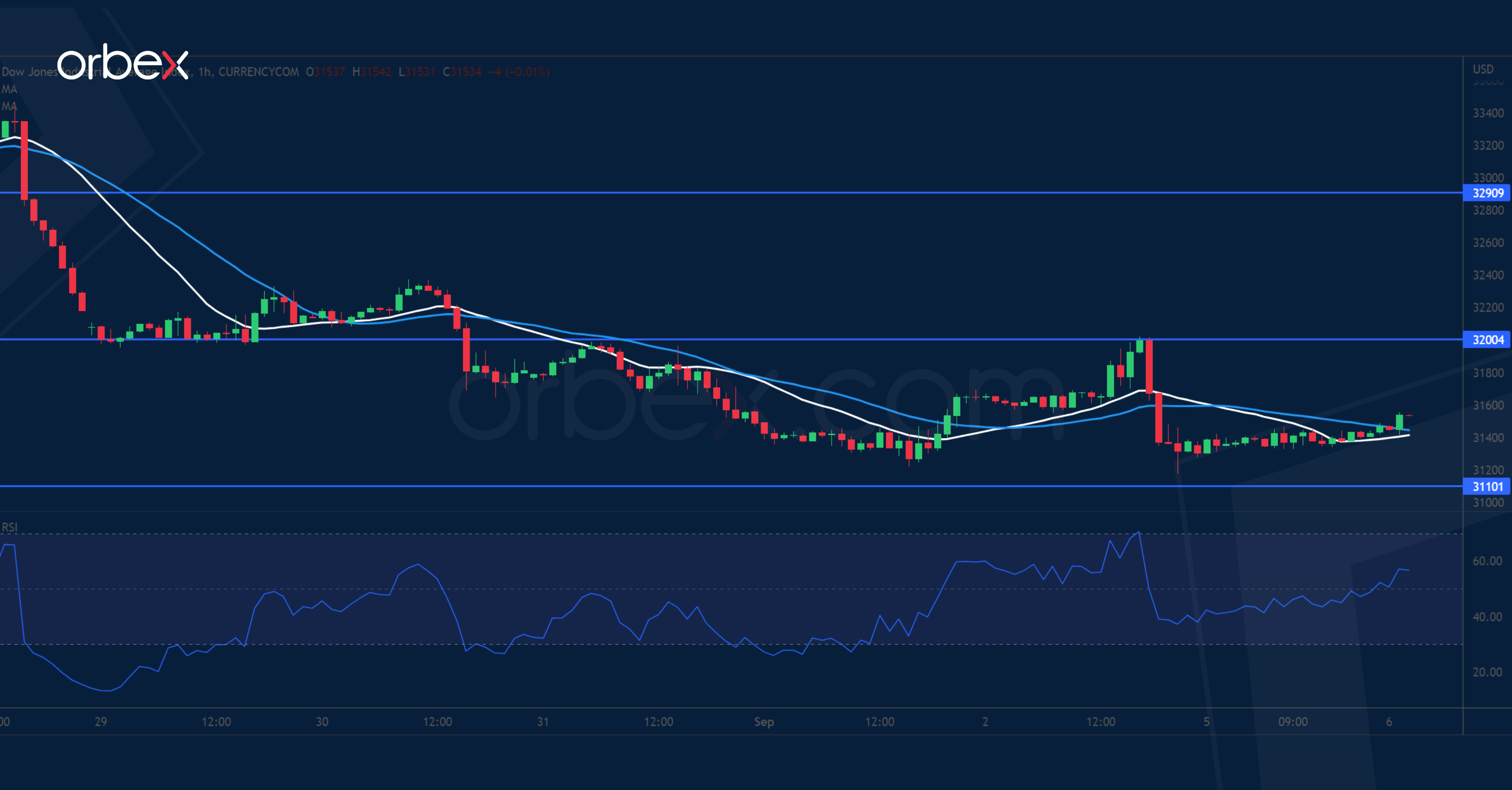
Dow Jones 30 Struggles for Support
The Dow Jones 30 slips as the Fed’s hike agenda may find comfort in a robust labour market. A quick bounce came to a halt at 32000 which indicates that the pessimistic mood still prevails. A bounce may only sustain itself if the bulls manage to push through the supply zone around 32000. Otherwise, traders may continue to see rebounds as opportunities to sell into strength. 31100 is the immediate support and its breach could send the index to 30550 near July’s lows, at the risk of putting an end to the summer recovery.