Sample Category Title
ECB Has Little Choice But to Tighten Faster
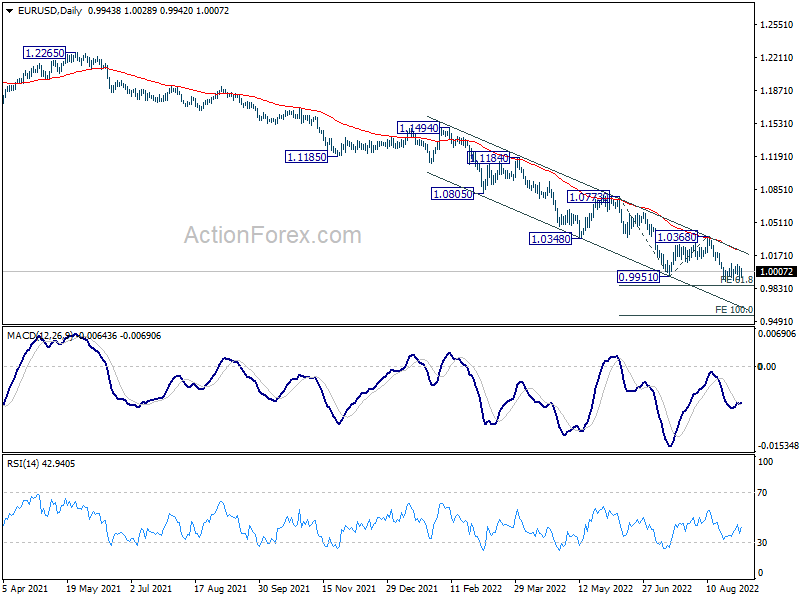
EUR/USD falls over gloomy outlook
The euro weakens as traders fret that an aggressive ECB is pushing the bloc to the brink of a recession. Euro zone inflation continues to surge and could hit a double digit soon. Prices excluding volatile food and fuel jumped over 5%, which is a sign that inflation is gaining a foothold across the economy, and cementing expectations of a 50 to a 75bp hike by the ECB at the upcoming meeting. Despite the risk of an economic slowdown, the central bank might count on deflation to put the brakes on consumer price growth. The pair is struggling to defend parity and may head towards 0.9700. 1.0350 remains a tough hurdle.
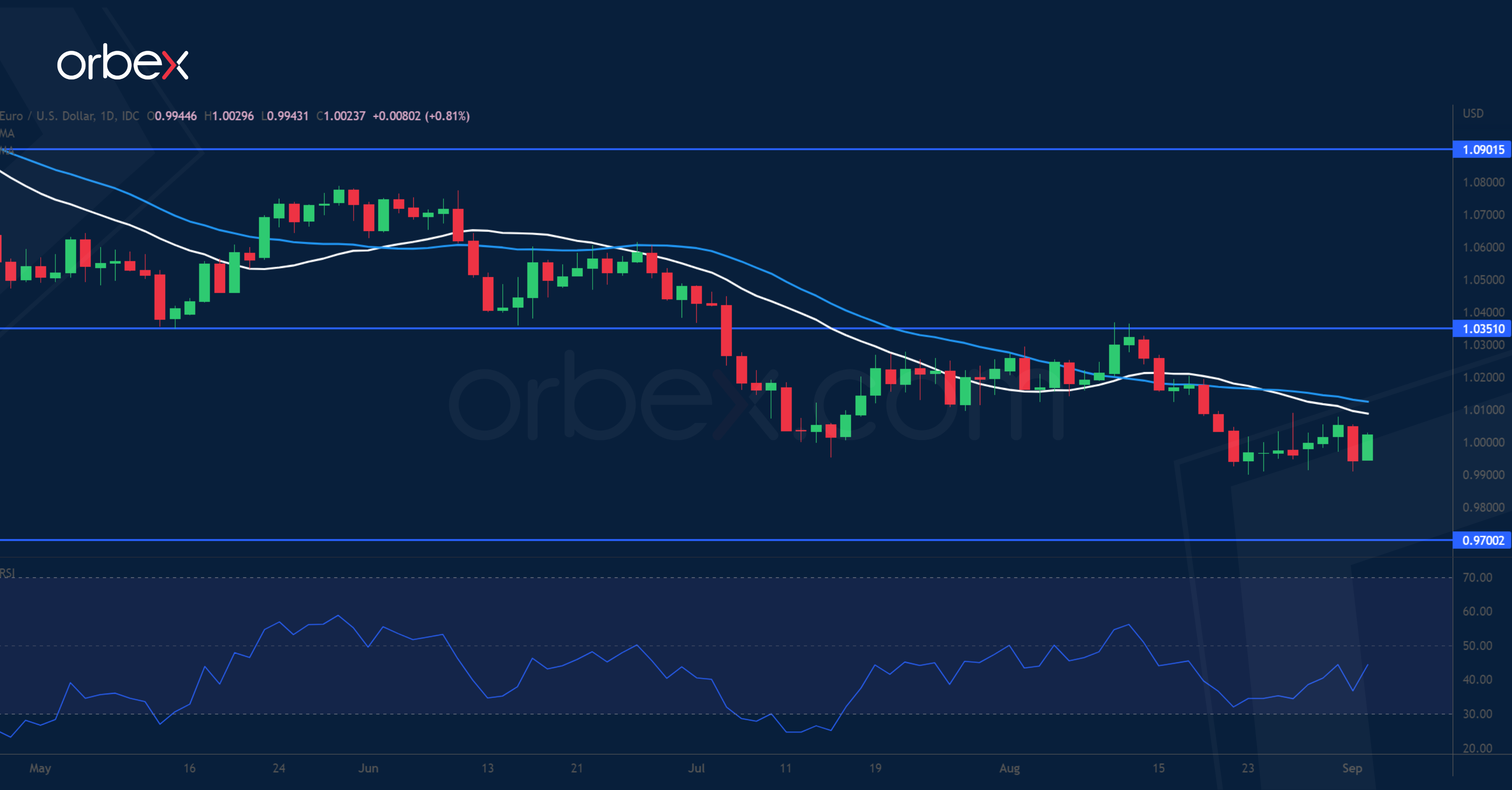
AUD/USD retreats over cautious mood
The Australian dollar falls back as risk appetite takes a backseat. Upbeat retail sales and business investment may encourage the RBA to lift interest rates for a fifth straight month. Another 50 basis points are likely to be on the table this week. However, currencies move in relative terms, and the US Fed’s hawkish stance could overshadow the Antipodean. Markets have switched to a risk-off mode once again and would weigh on growth-sensitive assets. China’s predicaments from Covid lockdowns, heat waves and a real estate crisis add another layer of risk to the aussie proxy. 0.6700 is a critical floor and 0.7000 a fresh resistance.
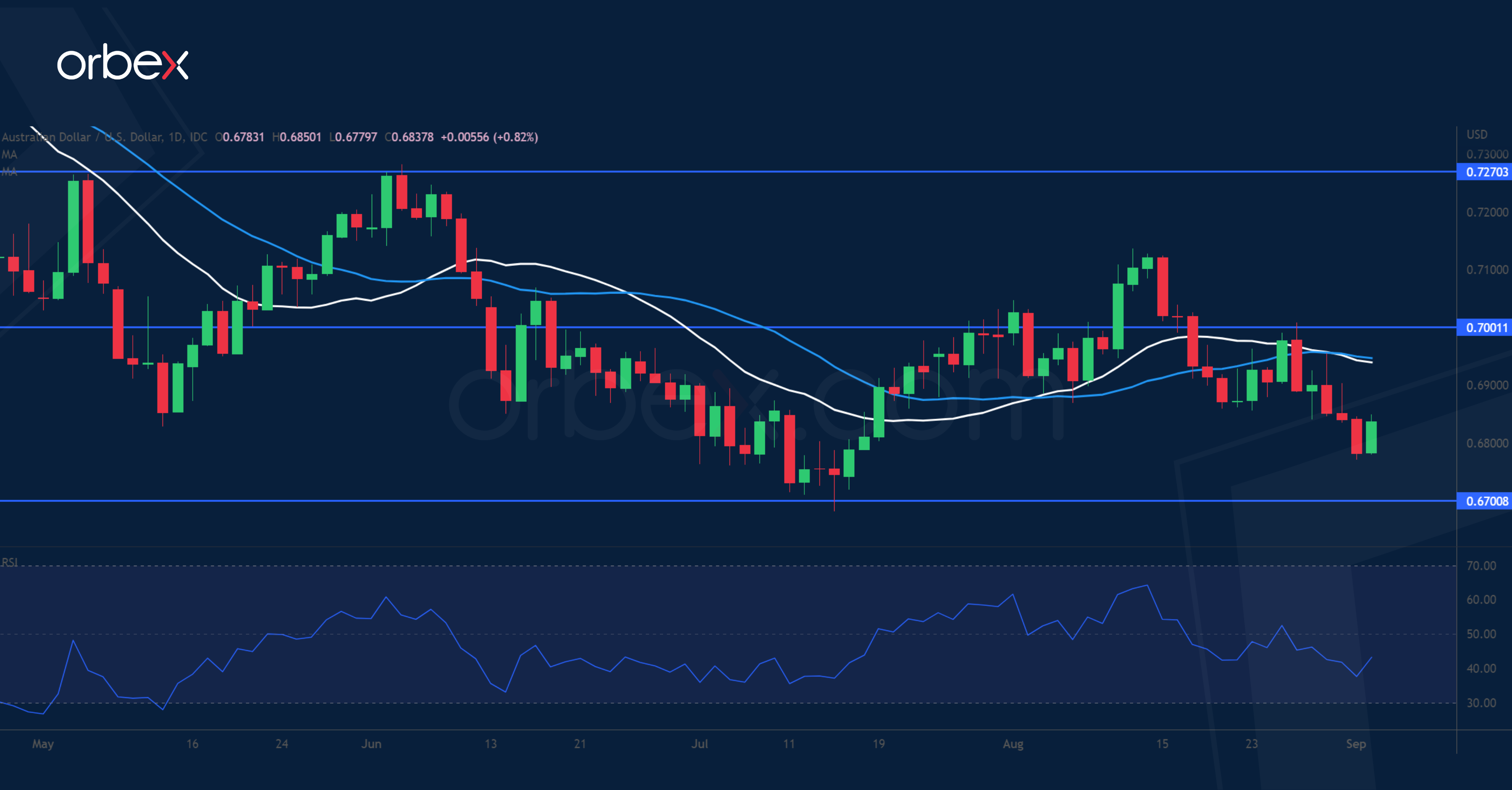
USD/CAD rallies on growth divergence
The Canadian dollar retreats over a downbeat economic outlook. Canada’s GDP growth fell short of expectations in the second quarter. The cooling is unlikely to sway the central bank from its normalisation path. Even though inflation eased from its peak in June, it is still well above the BoC’s 2% target. Traders are wagering a 75bp increase this week but it may not be enough to support the loonie in a flight-to-quality environment. While demand for the greenback picks up again, falling oil prices may pull the rug out from under the commodity-linked loonie. The US dollar is testing 1.3200 with 1.2900 as a fresh support.
SPX 500 retreats as Fed to stay committed
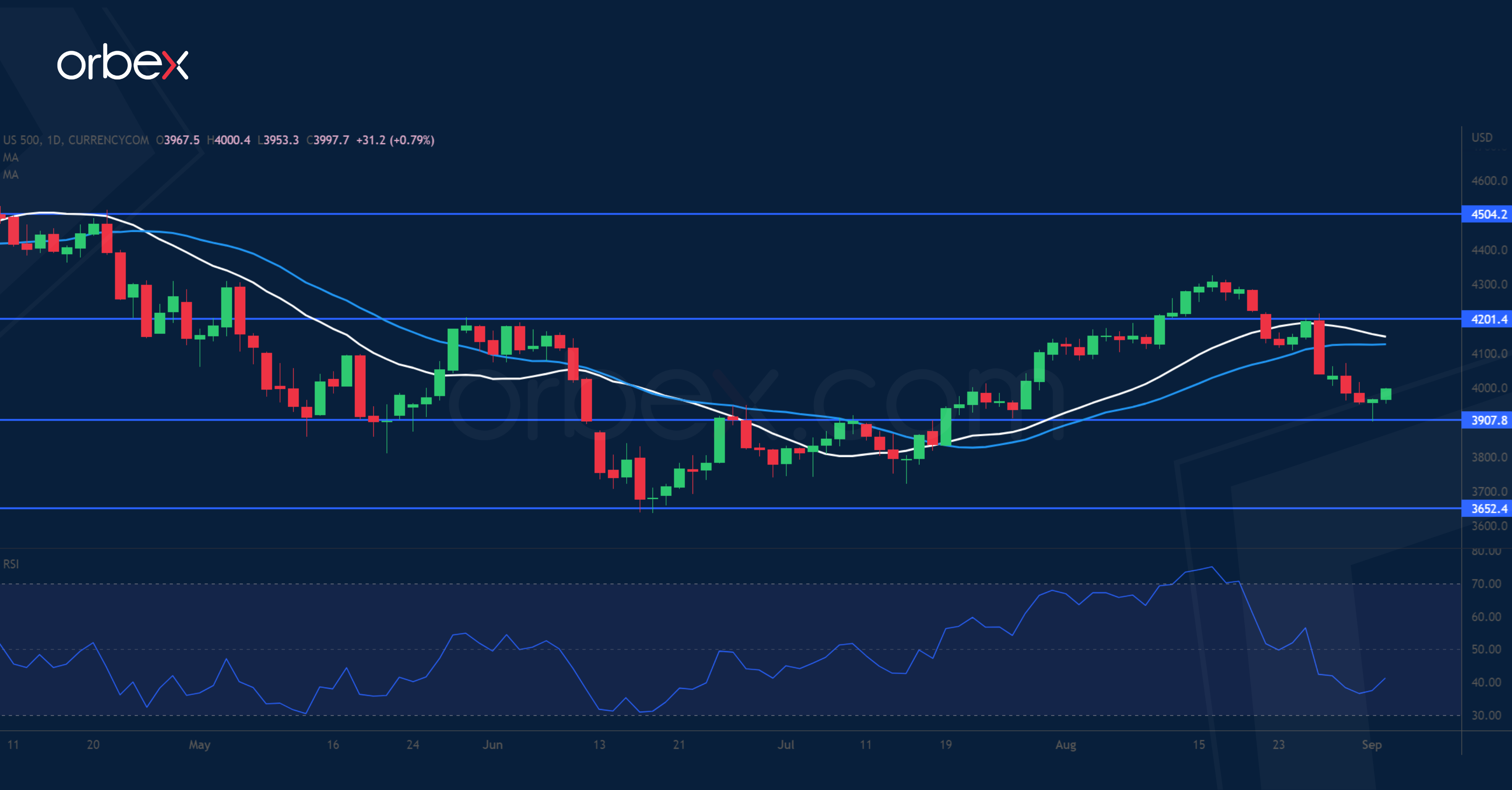
The S&P 500 struggles over the prospect of more restrictive monetary policy. Fed Chair Jerome Powell’s insistence on raising interest rates as high as needed has poured cold water on those betting on a dovish autumn. Even though policymakers acknowledged that it would be a hard pill to swallow for households and businesses, they are relying on a strong labour market to cushion the impact from tighter financial conditions. The index may lose ground as traders price in another 75bp hike in September and exits from wrongfooted buyers could exacerbate volatility. The price is testing 3900 and 4200 is the closest resistance.
Upcoming Cold Winter and Burning Energy Prices, What Will Europe Do?
Natural gas is the cornerstone of the European economy. If most of the world is struggling with rising energy prices, Europe is under the fiercest attack among us. Natural gas and electricity prices have risen to "ridiculous" levels, increasing pressure on consumers and businesses across the EU. As the energy crisis worsened, inflation jumped in August to 9.1% in the Eurozone, forcing European leaders to improvise rescue plans and emergency measures to spare consumers the devastating economic pain in the upcoming winter.
How will the European Union intervene to ease gas prices?
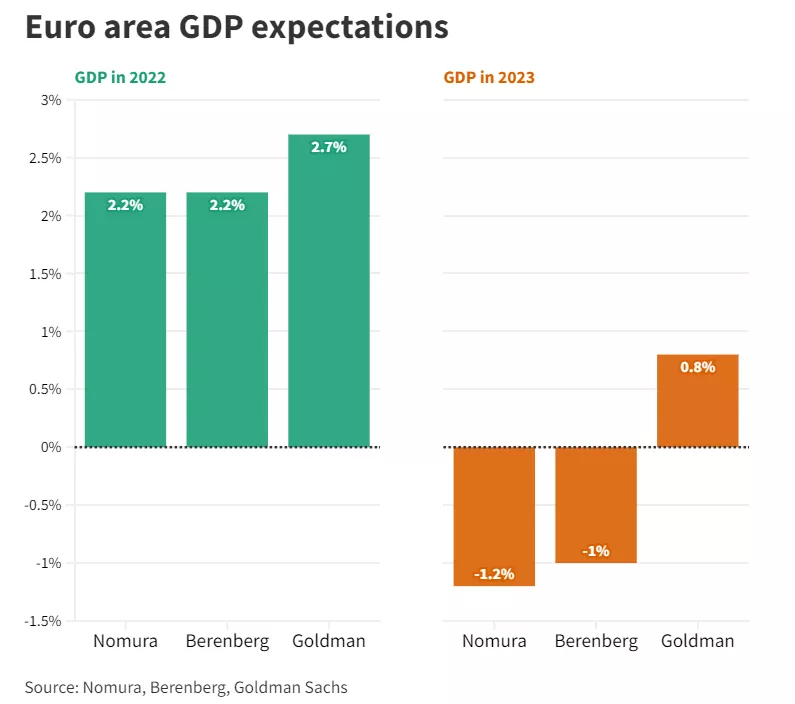
The EU plans to intervene in markets directly in the short term to curb rising energy costs for households and businesses, threatening to push the Euro area's economy into a deep recession.
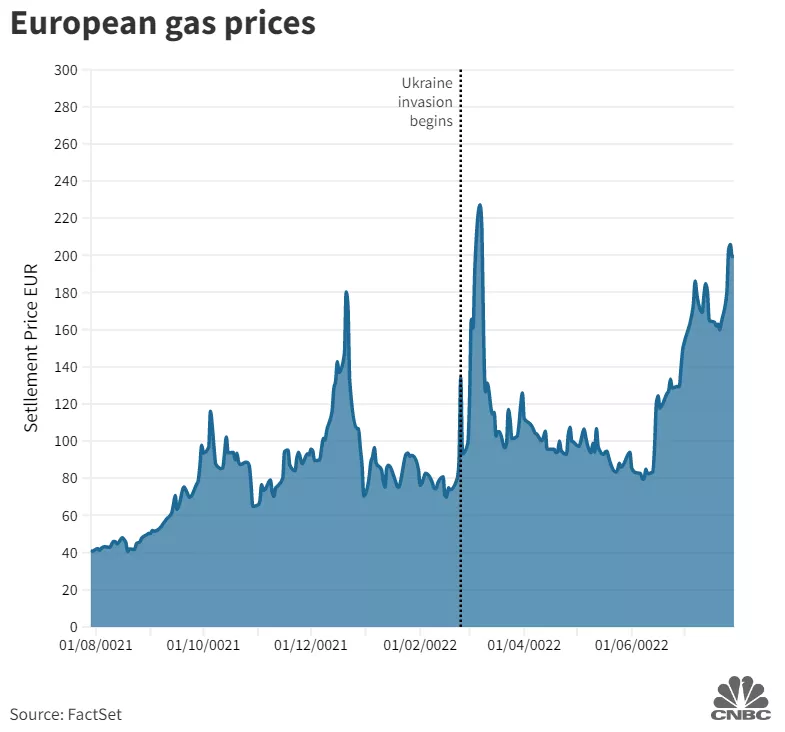
The European Commission is working on unspecified emergency proposals to ease energy costs this winter, ahead of the EU energy ministers meeting on September 9. Meanwhile, efforts to fill storage sites are proceeding faster than planned, providing some relief and increasing Europe's chances of getting through the winter with enough supplies.
What are the suggested actions?
- The EU agreed in late July to cut gas consumption by 15% this winter from average levels in 2017-2021. Gas consumption in Europe in the first half of August was 11% lower. Gas use in Germany fell 21% in July compared to the 2018-2021 average.
- Germany has introduced some measures to save energy. They take effect this month, including a ban on gas-heated private swimming pools, reduced lighting for public landmarks, and a ban on all-day heated stores. To survive, Germany needs to cut gas consumption by 20 to 25% this winter.
- Rather, Germany is willing to consider a European price cap on gas, a measure Europe has previously argued against, but now it is different.
- Britain is working to reopen the UK's largest gas storage facility.
Is filling natural gas storage enough to secure fuel in the winter?
The EU is on the right track to filling its gas storage facilities targets. Countries will surpass their target of having 80% of full storage by November, with European storage facilities filling an average of 79.9%.
But analysts warn that the biggest factor in securing energy this winter is cutting consumption to ensure stored fuel lasts through the cooler months. Reducing demand will be more important than storage. If countries fail, Europe's gas facilities will be empty by March and before winter ends.
To avoid a crisis in the winter, countries need to cut gas consumption every month by 15% below the five-year average. That would leave post-winter storage 45% full if Russia kept sending gas and 26% full if Russia cut flows from October.
How much Russian gas reaches Europe now?
Russia supplies Europe with more than 40% of its natural gas needs, but after the war in Ukraine, Russian flows have already fallen sharply.
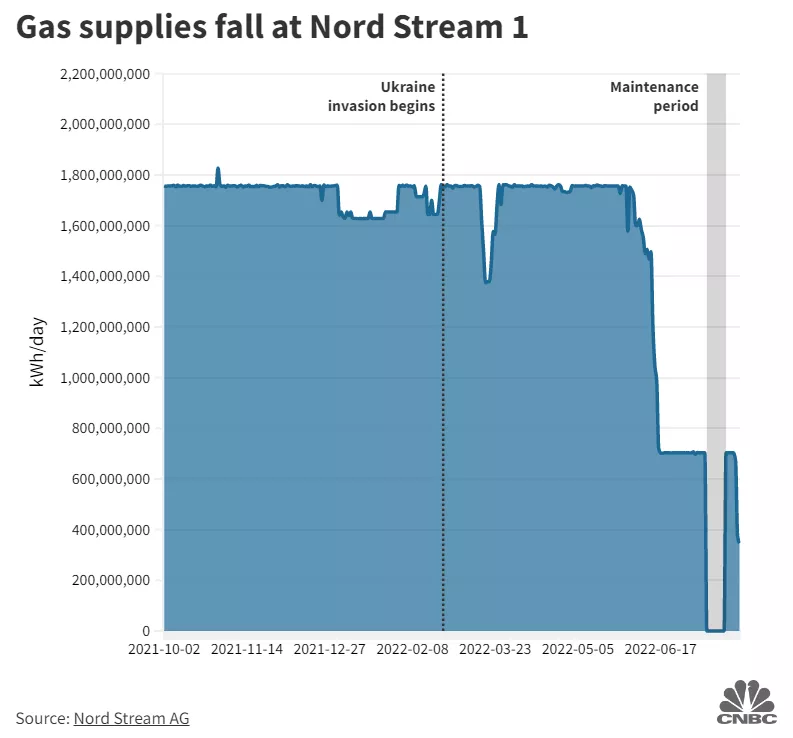
Moscow reduced supplies via Nord Stream 1, Europe's main pipeline, to 40% capacity in June and to 20% in July. The justifications were maintenance problems and sanctions, which Russia says prevent the return and installation of equipment.
The amount of gas Russia sends via Nord Stream 1 is now only 20%, so storage alone will not be enough to rebalance the markets. Especially with the repeated closure of the Russian pipeline for various reasons. It was closed for ten days in July. It was closed again last week for three days due to maintenance.
Crazy Record Gas prices!
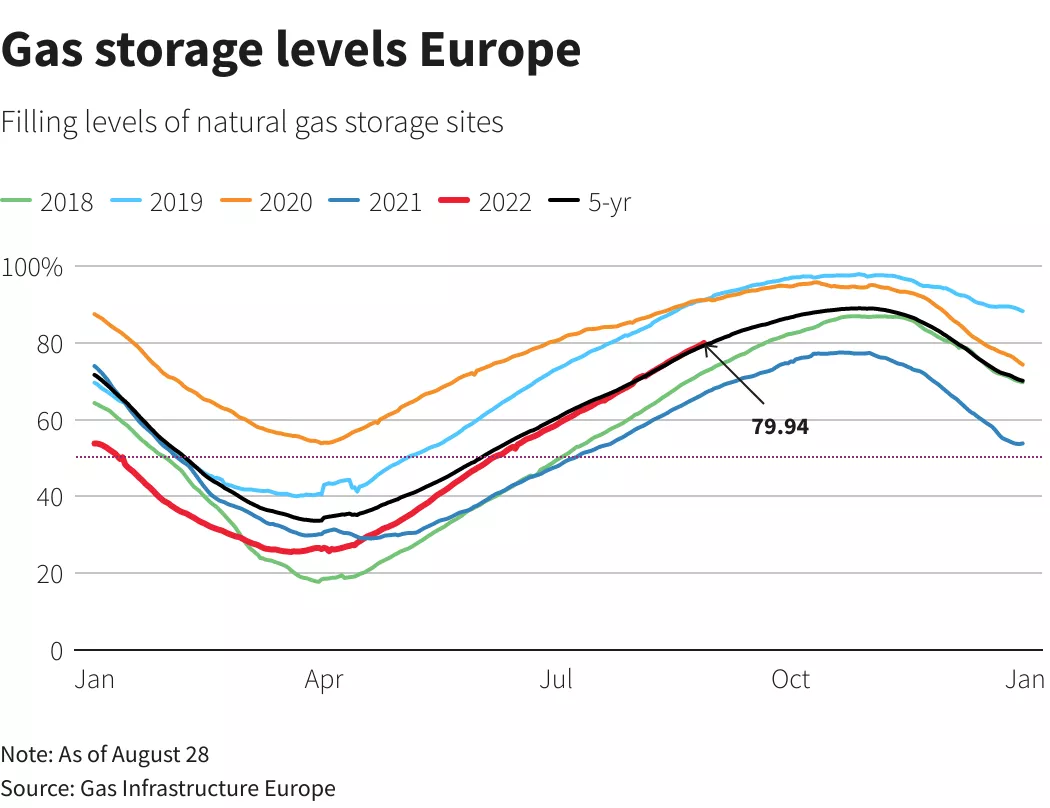
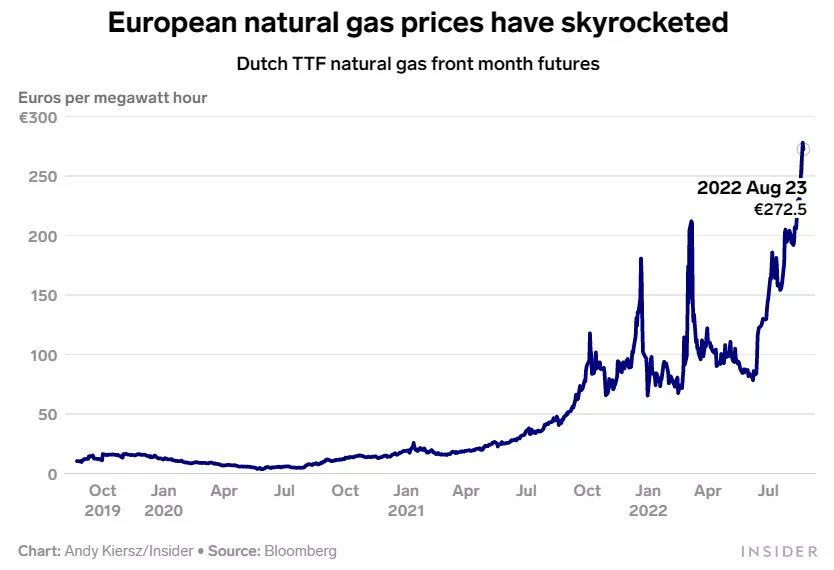
With an energy crisis raging in Europe, the uncertainty over the flow of natural gas has sent prices to unprecedented levels.
- On the oil scale, the price of natural gas has reached the equivalent of $500 per barrel, ten times the current average oil price ($100).
- Compared to the US, gas in Europe has risen to more than 10 times its level in the US, with US gas trading close to $10/MMBtu.
- While European gas prices reached a record level above 340 euros per megawatt-hour, or $100 per million British thermal units.
These numbers raised fears of the coming winter and cold homes without gas for heating, in addition to the explicit threat to energy-intensive industries.
A rare drop in gas prices and temporary relief
With the possibility of direct intervention in energy markets from the EU to ease the energy crisis, gas prices dropped, witnessing a rare relief from the recent rises.
Natural gas prices in Europe dropped sharply to €220 per megawatt hour, declining by more than 30% from record levels near 340 euros.
The German economy minister expects gas prices to drop more soon. Germany, the largest gas consumer in Europe, said its gas storage facilities are set to be 85% full by next month.
ECB is Far from Beating Inflation, Euro Remains Vulnerable
Another euro zone’s inflation report is noticeably above analysts’ expectations. Eurozone data published on Friday afternoon showed producer price growth of 4% for July and 37.9% year-on-year. At the same time, analysts had expected a 2.5% m/m increase and a slowdown in the annual inflation rate to 35.8%.
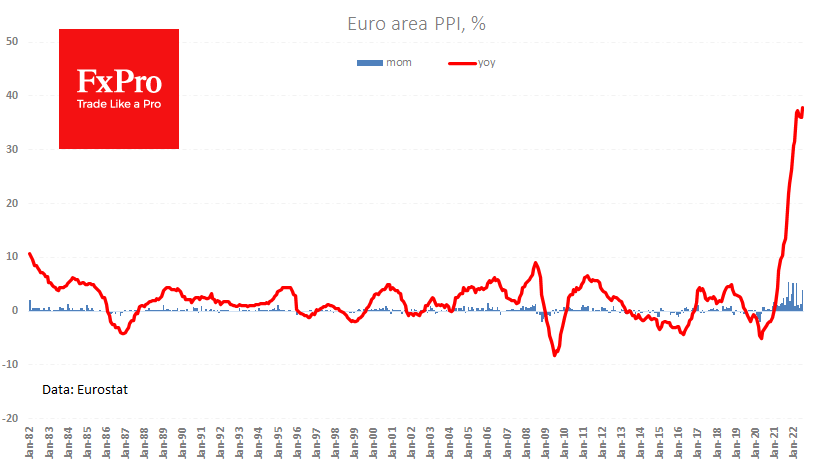
The fresh data set a new historical record, shattering the hopes we saw for the peak growth rate two months ago.
Producer prices are a step ahead of consumer inflation, so it is unlikely that the pressure on final consumer prices will diminish in the coming months.
Preliminary CPI estimates published for August confirm that the inflation spiral continues to unravel. Prices are, on average, 9.1% higher than in the same month a year earlier, almost half of which is due to a jump in energy prices.
But there are two additional worrying factors. The first is the acceleration in core inflation to 4.3% y/y, indicating a breadth of inflationary pressures. The second is the drop in the unemployment rate to 6.6% (a historic low since at least 1994), which makes the price spiral even more dangerous.
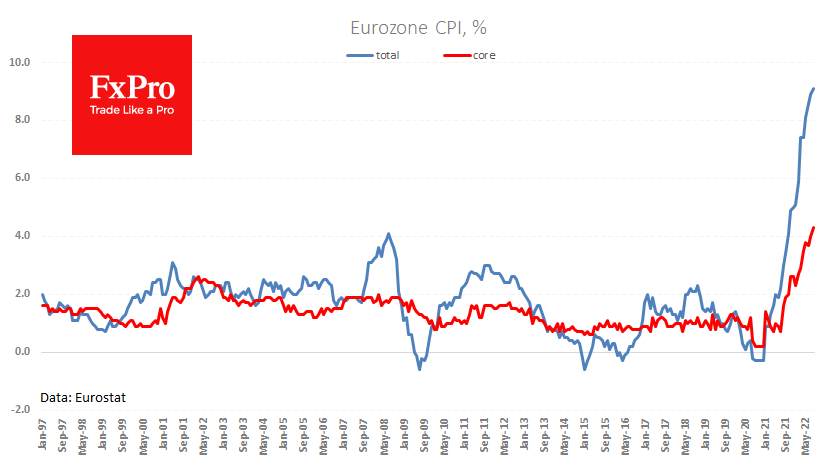
The combination of low unemployment, rising prices and a falling euro are sure companions of stagflation. In such an environment, it is not surprising that the ECB is becoming increasingly hawkish, convincing markets of its willingness to raise the rate by 75 points next week. This tightening of rhetoric has halted the sell-off in the euro.
Even if the ECB achieves the same acceleration as the Fed with a 75-point rate hike next week, there would still be a considerable lag in terms of nominal rate levels and balance sheet dynamics. The Fed has to double the pace of asset sales from the balance sheet to 90 billion a month from September, while the ECB is not even considering such an option.
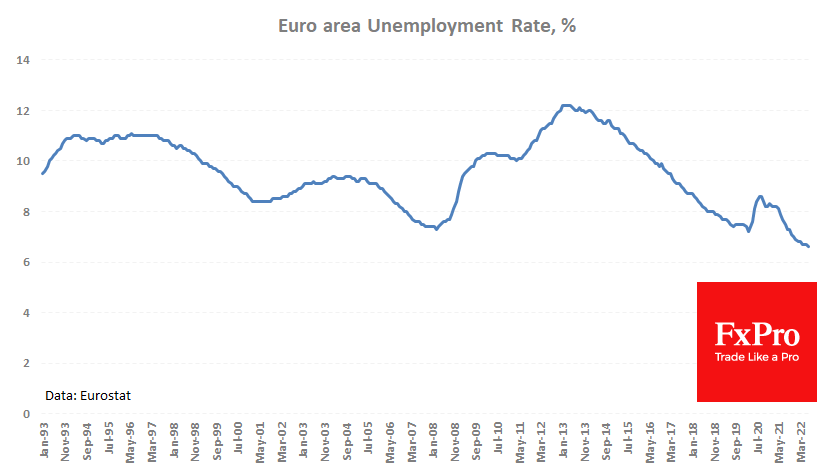
On the fundamental analysis side, Fed policy and macroeconomic factors lean towards the current EURUSD stabilisation at parity being a temporary halt but not base support. The acceleration in ECB policy normalisation is making the euro fall more slowly, but not enough for a trend reversal.
US: Payrolls Have Another Solid Month, While the Unemployment Rate Rises from its Pre-pandemic Low
The U.S. economy added 315k jobs in August, coming in slightly above the consensus forecast of 300k. Revisions to the two prior months were negative, subtracting 107k jobs to the previously reported figures, though most of the pullback was concentrated in June (revised down by 105k).
Employment gains on the service side (263k) were disproportionately concentrated in professional & business services (68k), health-care (62k), retail trade (44k) and leisure & hospitality (31k), though financial services (17k) and wholesale trade (15k) also recorded decent gains. Goods producing industries (45k) had another solid month of hiring, with manufacturing (22k) and construction (16k) both chipping in with decent gains. Motor vehicle & parts (-2k) shed jobs in August, which is consistent with some automakers announcing layoffs in recent months.
The unemployment rate ticked higher by two-tenths of a percentage point (pp), rising to 3.7%, as gains in household employment (442k) were far outstripped by a rebound in the labor force (786k). As a result, the participation rate edged higher by 0.3pp to 62.4% – matching its previous cyclical high.
Average hourly earnings rose 0.3% month-over-month (m/m) – a decent deceleration from the 0.5% m/m gain seen the month prior. On a year-over-year basis, wage growth held steady at 5.2%.
Key Implications
Payrolls surpassing expectations is something we've become accustomed to seeing. Since the start of the year, non-farm employment has meaningfully beat the consensus forecast in seven of the last eight months.
The reversal in the unemployment rate should not be viewed negatively as it was largely driven by an increase in labor supply. We have long said that the participation rate has been underperforming, and without more workers entering the labor force, employment gains would soon start to fade.
The recent underperformance of household employment relative to non-farm payrolls has been hard to miss. While the household measure did outstrip non-farm in August, the former has shown total gains of just 274k since April compared to nom-farm's 1.9 million. The underperformance appears to be explained by a decline in unincorporated self-employed workers (included in household employment but not non-farm) and an increase in multiple job holders, which count as separate jobs in the establishment survey but not the household survey. With the share of multiple job holders still below its pre-pandemic level, it seems likely that payrolls will continue to outperform household employment over the near-term.
Financial markets appear to be greeting the report positively, with equities rebounding and Fed pricing of a 75bps hike in September coming in a bit (from 74% pre-release to 61% currently). Whether the Fed goes by 50bps or 75bps later this month, Chair Powell was explicit in his Jackson Hole speech that the FOMC still has considerable work to do and policymakers are willing to sacrifice some slowing in economic growth in order to achieve price stability.
Sunset Market Commentary
Markets
The US economy added 315k (vs 298k expected) jobs in August according to the payrolls report. A 107k downward revision to the previous two months’ data takes some shine off the headline figure. The unemployment rate rose from 3.5% to 3.7%, but because of the “good reason”; the labor force participation rate showed an unusually large increase from 62.1% to 62.4%, matching the highest level since March 2020. Wage growth stabilized at 5.2% Y/Y. The payrolls report adds to this month’s decent to good US eco data and means that the Fed in September can continue to focus (solely) on tackling inflation. This suggests a likely 3rd consecutive rate hike by 75 bps (to 3%-3.25%). The market reaction was muted. Core bonds tested the recent sell-off lows, but a break didn’t occur. The rejected test generated return action higher. The US curve steepens with yield changes ranging between -6.9 bps (2-yr) and +1.2 bps (30-yr). The German yield curve steepens as well with yields falling 7.9 bps at the front end and rising 1.0 bp at the very long end. Stock markets recovered from their recent beating with main European indices gaining over 1%. Gas prices extend their correction lower, parting ways with oil prices. The latter could be due to some sell-the-rumour, buy-the-fact as G7 finance ministers agreed a price cap on Russian oil exports. Monday’s OPEC+ meeting is also expected to deliver lower future supply from the cartel. The euro profits from risk sentiment and weaker gas prices, returning towards parity against the dollar despite good payrolls.
Next week will be a busy one. On Monday we’ll know who becomes UK PM Johnson’s successor. Liz Truss leads Rishi Sunak in the polls which is likely one of the reasons of the UK currency’s recent underperformance. She advocates more fiscal stimulus especially targeting lower taxes which implies a significant deterioration of the UK’s long term public finances. Sunak is more fiscally conservative. EUR/GBP trades near 0.8650 compared with a YTD high of 0.8721. Governor Bailey’s appearance before the Treasury Committee (along with BoE Pill, Mann and Tenreyro) serves as a wildcard on Wednesday. Central bank action obviously centers around Thursday’s ECB meeting. European central bank governors hijacked last week’s Jackson Hole symposium, preparing the market for a 75 bps rate hike. New inflation forecasts will likely show new upward revisions compared to June, when the central bank penciled in 6.8% for this year, 3.5% for next year and 2.1% for 2024. After September, we lean to an additional 75 bps move in October. Talk about a potential balance sheet roll-off is probably premature. Apart from the ECB, the Reserve Bank of Australia, National Bank of Poland and Bank of Canada gather. The RBA is expected to extend its monthly 50 bps rate hike pace which is place since June (1.85% to 2.35%). This week’s Polish inflation acceleration (16.1% Y/Y in August) suggests that NBP governor Glapinski’s call to potentially end the rate hike cycle comes to soon. The NBP is expected to proceed with smaller, 25 bps, steps though (6.5% to 6.75). The Bank of Canada is one of the developed frontrunners in the tightening cycle with an almost unmatched 100 bps rate hike in July. The BoC signaled that neutral rates could be higher than previously envisioned, giving it more leeway to tighten policy further. A 75 bps move would lift the policy rate to 3.25% from 2.5%.
News Headlines
The ECB’s July consumer expectations survey showed consumer expectations for inflation over the next 12 months unchanged at 5.0%. However, EMU citizens raised expectations for inflation three years ahead from 2.8% to 3.0%. European citizens lowered expectations for economic growth in the year ahead to the lowest level since November 2020, from -1.3% to -1.9%. In line with their assessment on lower economic growth, they expect the unemployment rate to jump to 12%. Consumers again slightly lowered their expectations for the growth in price of their homes over the next 12 months to 3.2%. Expectations for mortgage interest rates 12 months ahead continued to drift up to 4.3% and now stand 1.0 percentage points higher than at the beginning of 2022. Both consumers’ perceived access to credit over the previous 12 months and their expectations over the next 12 months tightened again.
Yen Edges Lower as NFP Close to Forecast
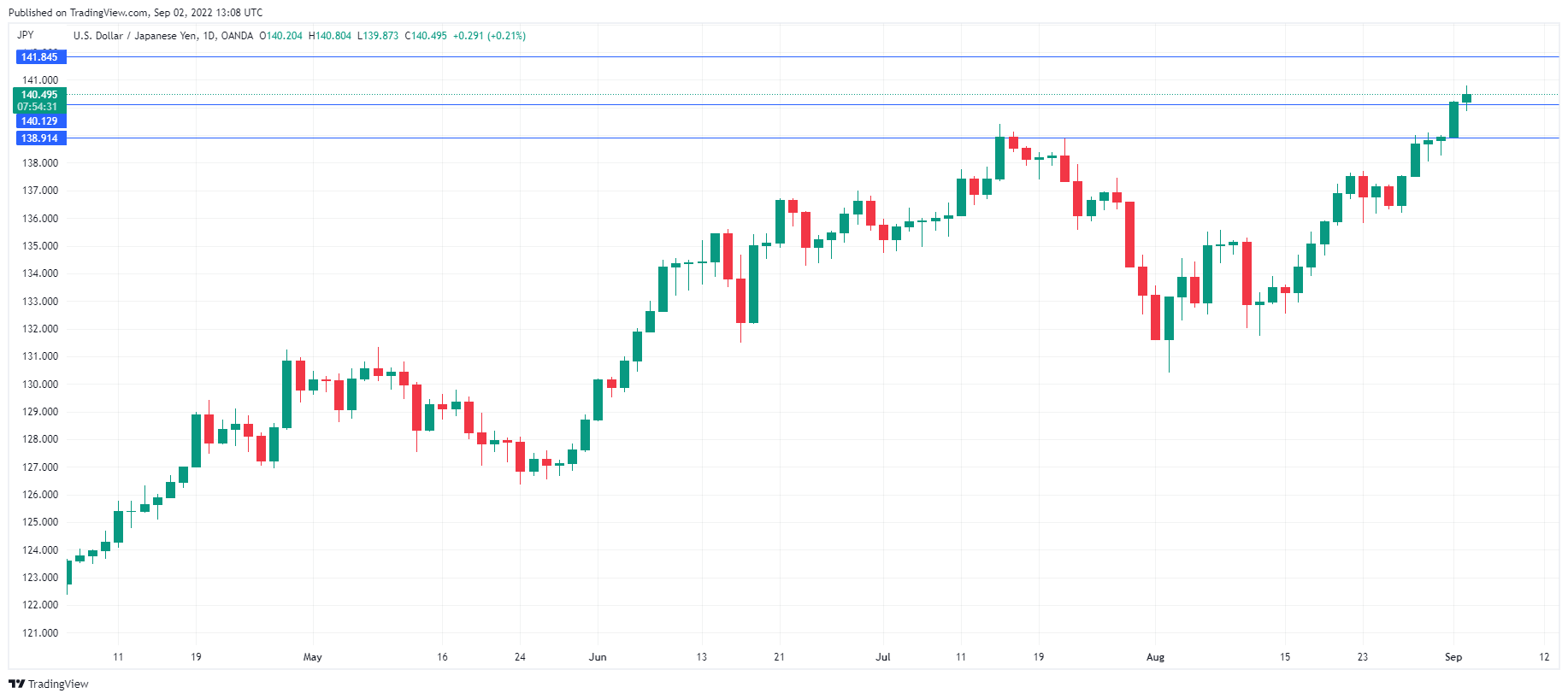
It has been a week to forget for the Japanese yen, as USD/JPY has climbed 2.23% and has pushed across the symbolic 140 line. In the North American session, USD/JPY is trading at 140.57, up 0.26% on the day.
US Nonfarm Payrolls within expectations
There was plenty of anticipation ahead of today’s nonfarm payrolls, with a consensus of 300 thousand. A wide miss of this mark could have triggered some sharp movement from the US dollar, as the Fed is relying on a strong labour market in order to continue delivering large rate increases. In the end, nonfarm payrolls was pretty much as expected, with a gain of 315 thousand. The dollar’s reaction has been muted, with USD/JPY posting small gains in the North American session.
Dollar/yen punches above 140
The US dollar has flexed its muscles this week and has pushed the ailing yen above the 140 line. With the yen at its lowest level since 1998, speculation has risen that Japanese officials might intervene in order to boost the yen. In truth, the same concerns were aired when dollar/yen broke above 125 and then 130.
There is no magic about the 140 level, keeping in mind that the last time Japan intervened to boost the yen was in 1998, during a financial crisis in Asia, when USD/JPY hit 146. In the past, Japan’s Ministry of Finance has warned that it is watching the yen’s depreciation with concern, but the lip service has not translated into any action.
The Bank of Japan has zealously defended its yield curve control policy (YCC), which has kept a tight lid on the rates of Japanese government bonds, and the widening US/Japan rate differential has led to a sharp depreciation of the yen. Rather than outright currency intervention, the BoJ could shift its YCC in order to prop up the yen. However, the BoJ hasn’t shown any interest in such a move, as its primary focus has been keeping rates ultra-low in order to boost the fragile economy. Bottom line? The yen has more room to fall, and a forceful response from Tokyo doesn’t appear likely anytime soon.
USD/JPY Technical
- USD/JPY has support at 140.12 and 138.91
- The next resistance line is at 141.84, followed by a monthly resistance line at 144.73
USD/JPY Mid-Day Outlook
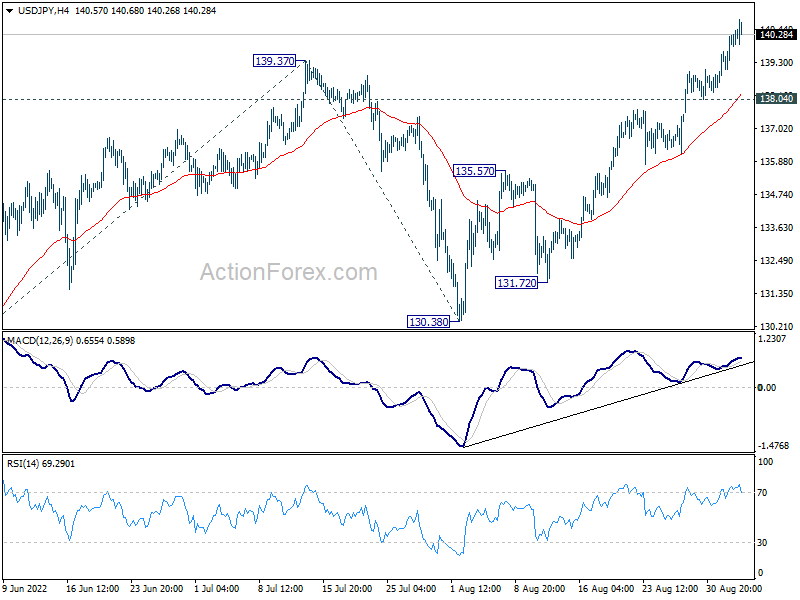
Daily Pivots: (S1) 139.24; (P) 139.74; (R1) 140.70; More...
Intraday bias in USD/JPY stays on the upside for the moment. Current up trend should target 100% projection of 126.35 to 139.37 from 130.38 at 143.40 next. Sustained break there could bring upside acceleration of 147.68 long term resistance. On the downside, below 138.04 minor support will turn intraday bias neutral and bring consolidations first, before staging another rally.
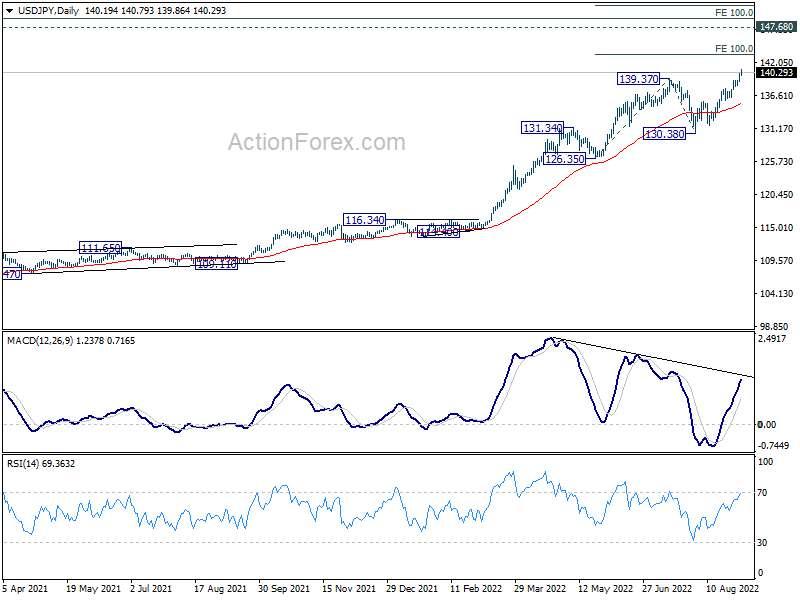
In the bigger picture, up trend from 101.18 is still in progress, as part of the whole up trend from 75.56 (2011 low). Further rise should be seen to 147.68 (1998 high). For now, break of 130.38 support is needed to be the first indicate of medium term topping. Otherwise, outlook will stay bullish even in case of deep pull back.
USD/CHF Mid-Day Outlook
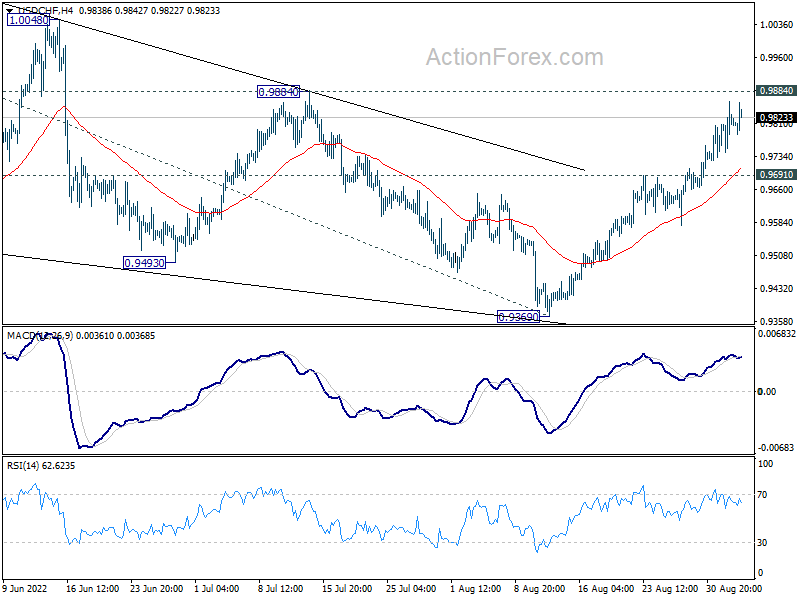
Daily Pivots: (S1) 0.9754; (P) 0.9807; (R1) 0.9870; More...
Intraday bias in USD/CHF stays on the upside as rise from 0.9369 is in progress. Firm break of 0.9884 resistance will argue that larger up trend is ready for resumption through 1.0063. On the downside, break of 0.9691 minor support will mix up the outlook and turn intraday bias neutral first.
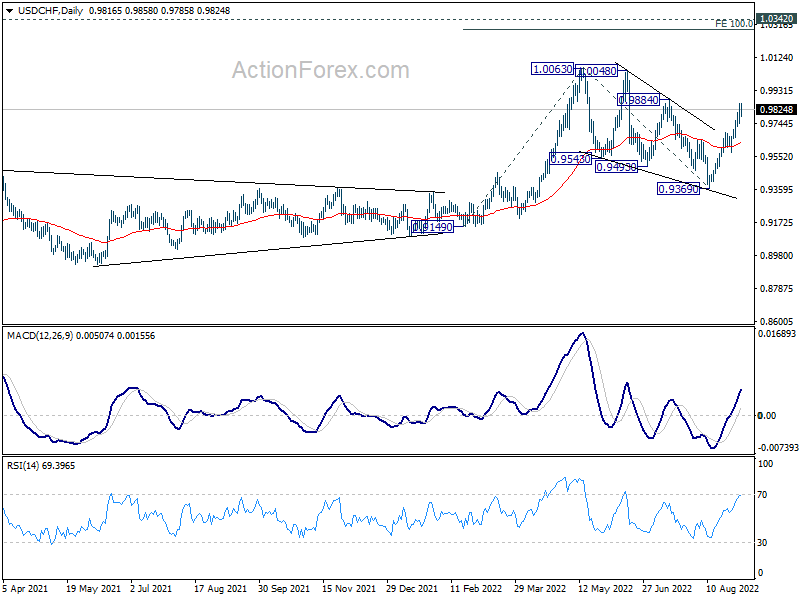
In the bigger picture, current development suggests that up trend from 0.8756 (2021 low) is still in progress. Sustained break of 1.0063 will target 100% projection of 0.9149 to 1.0063 from 0.9369 at 1.0283, and then 1.0342 (2016 high). For now, this will remain the favored case as long as 0.9369 support holds, even in case of deep pull back.
GBP/USD Mid-Day Outlook
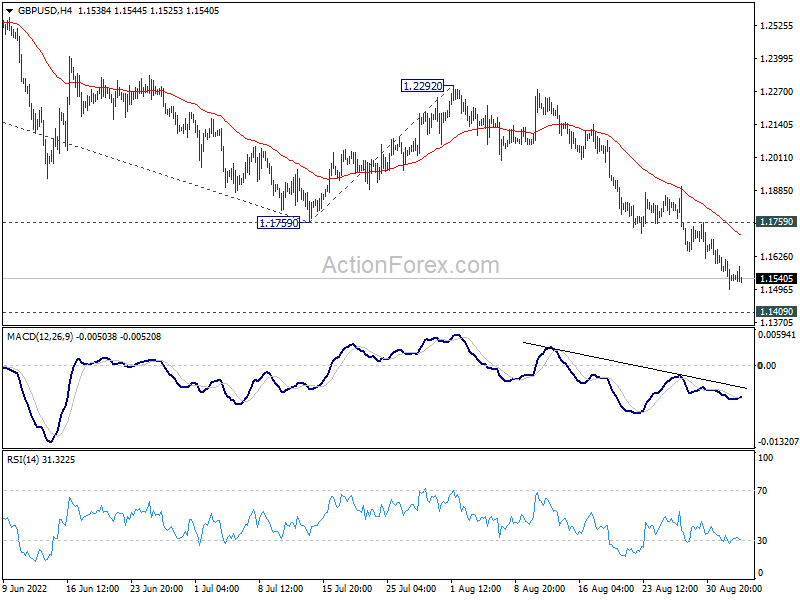
Daily Pivots: (S1) 1.1488; (P) 1.1558; (R1) 1.1616; More...
GBP/USD is losing some downside momentum, but intraday bias stays on the downside. Current fall should target 1.1409 long term support. Firm break there will pave the way to 61.8% projection of 1.3748 to 1.1759 from 1.2292 at 1.1063 next. But outlook will stay bearish as long as 1.2292 resistance holds, in case of recovery.
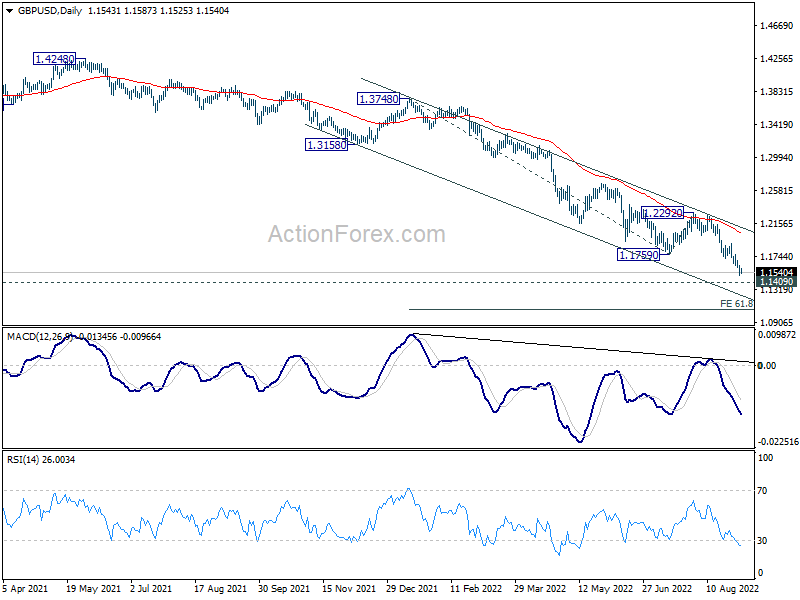
In the bigger picture, fall from 1.4248 (2018 high) could be a leg inside the pattern from 1.1409 (2020 low), or resuming the longer term down trend. Deeper decline is expected as long as 1.2292 resistance holds. Next target is 1.1409 low. However, firm break of 1.2292 will bring stronger rise back to 55 week EMA (now at 1.2859).
EUR/USD Mid-Day Outlook
Daily Pivots: (S1) 0.9886; (P) 0.9972; (R1) 1.0033; More...
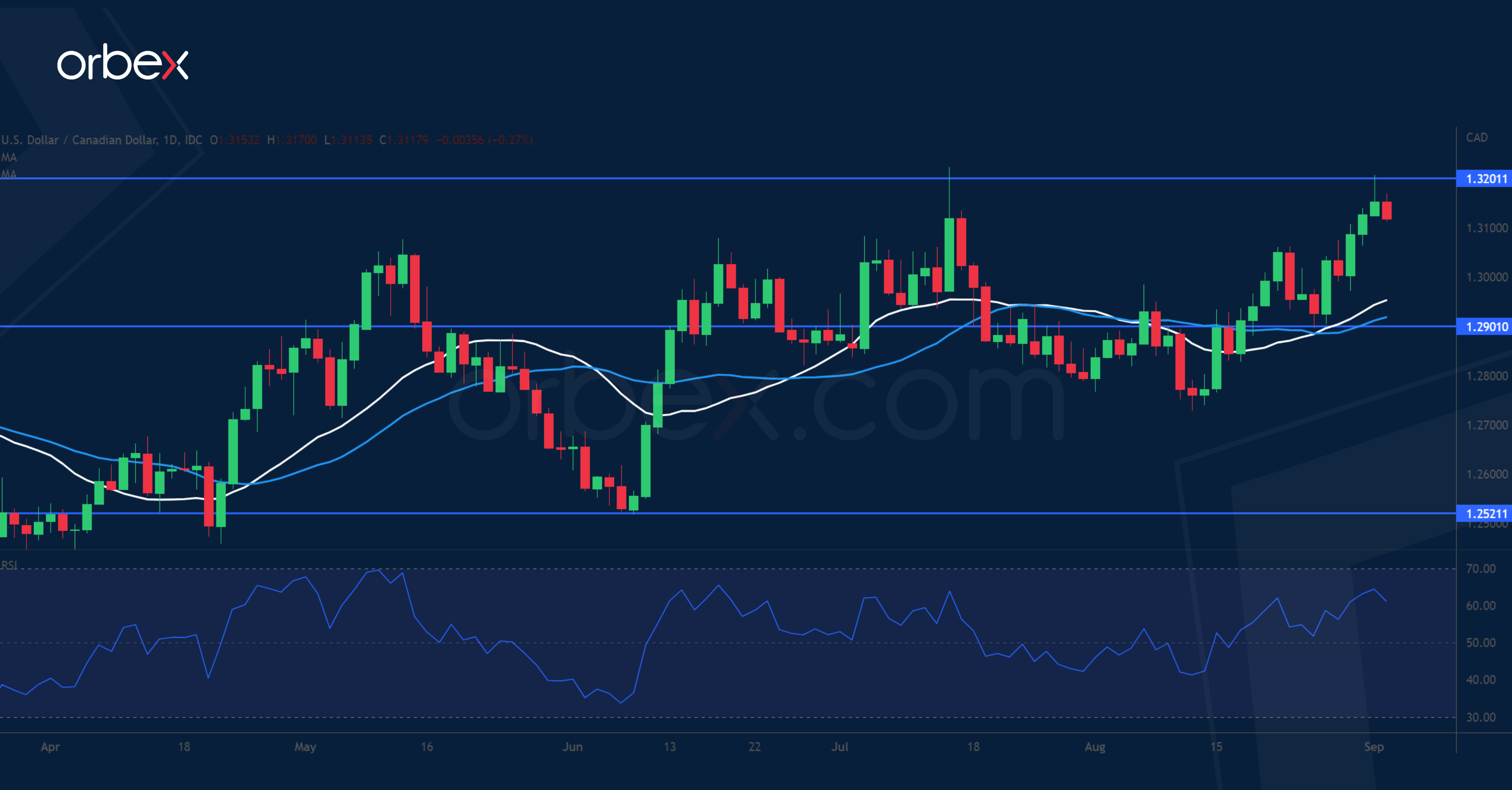
EUR/USD recovered ahead of 0.9899 support and intraday bias stays neutral. Still, further decline is expected with 1.0094 resistance intact. On the downside, break of 0.9899 will resume larger down trend to 61.8% projection of 1.0773 to 0.9951 from 1.0368 at 0.9860. Firm break there should prompt downside acceleration to 100% projection at 0.9546. However, firm break of 1.0094 minor resistance will dampen this bearish view, and turn bias back to the upside for 1.0368 resistance instead.
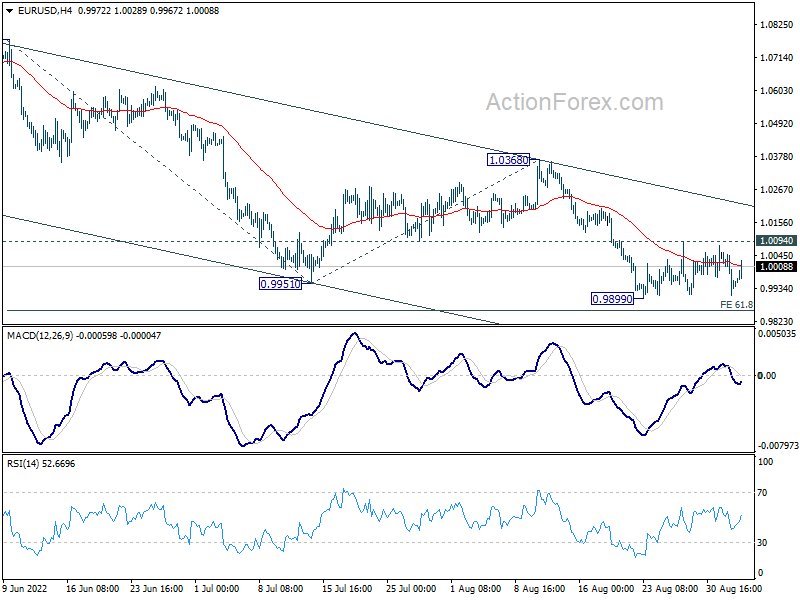
In the bigger picture, down trend from 1.6039 (2008 high) is still in progress. Next target is 100% projection of 1.3993 to 1.0339 from 1.2348 at 0.8694. In any case, outlook will stay bearish as long as 1.0368 resistance holds, in case of strong rebound.