

Sample Category Title
EUR/AUD Daily Outlook
Daily Pivots: (S1) 1.5166; (P) 1.5230; (R1) 1.5299; More...
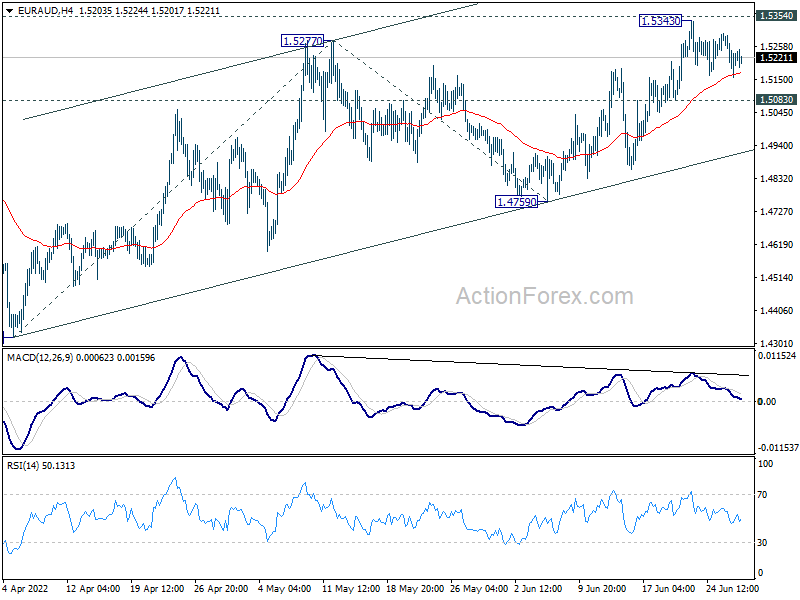
EUR/AUD is staying in range below 1.5343 and intraday bias remains neutral. On the upside, sustained break of 1.5354 support turned resistance will indicate medium term bottoming at 1.4318. Stronger rally would be seen back to 100% projection of 1.4318 to 1.5277 from 1.4759 at 1.5718. On the downside, however, break of 1.5083 minor support will retain medium term bearishness, and turn bias back to the downside for 1.4759 support instead.
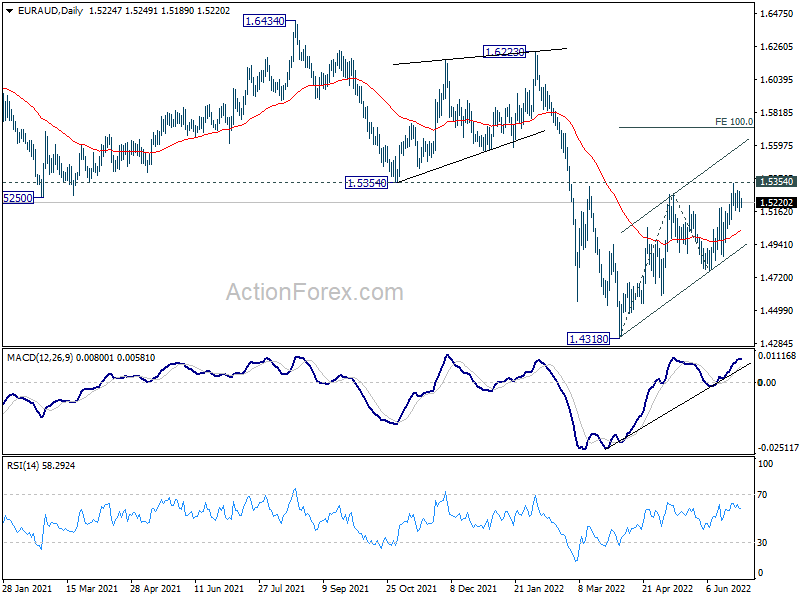
In the bigger picture, as long as 1.5354 support turned resistance holds, larger down trend from 1.9799 (2020 high) is still expected to continue. On resumption, next target is 61.8% projection of 1.9799 to 1.5250 from 1.6434 at 1.3623, which is close to 1.3624 long term support (2017 low). However, firm break of 1.5354 will indicate medium term bottoming and bring stronger rally back to 1.6434 key resistance.
EUR/CHF Daily Outlook
Daily Pivots: (S1) 1.0042; (P) 1.0086; (R1) 1.0117; More....
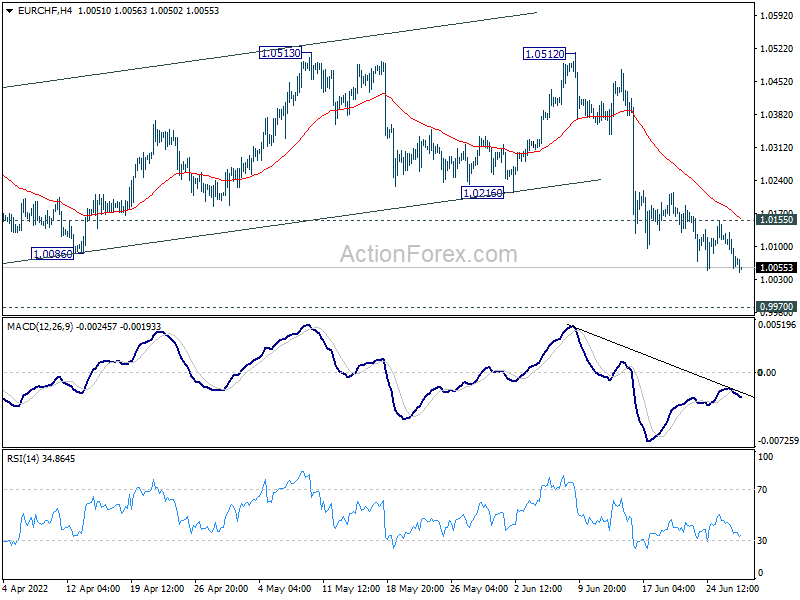
EUR/CHF's fall from 1.0512 is still in progress and further decline should be seen to retest 0.9970 low. Decisive break there will resume larger down trend. On the upside, however, above 1.0214 minor resistance will delay the bearish case, and turn bias back to the upside for stronger rebound.
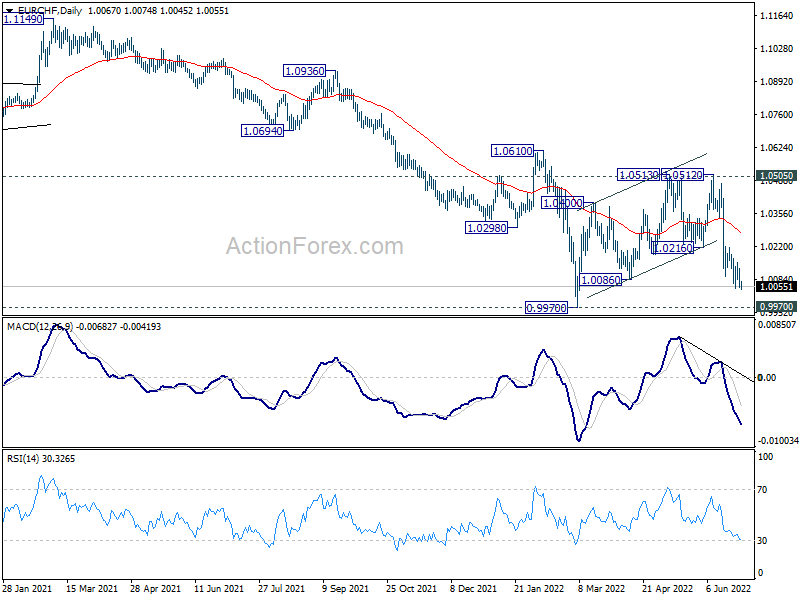
In the bigger picture, as long as 1.0505 support turned resistance (2020 low) holds, long term down trend from 1.2004 (2018 high) is expected to continue. Next target is 100% projection of 1.2004 to 1.0505 to 1.1149 at 0.9650. However, firm break of 1.0505 will suggest medium term bottoming, and bring stronger rebound towards 1.1149 structural resistance.
Euro Turning Softer While Swiss Franc is Firm
Risk-off sentiment is back in Asia today, after US stocks were sold off on poor consumer confidence data. In the currency markets, trading is relatively subdued, with Euro and Dollar trading in soft tone. Canadian Dollar and Swiss Franc are the strongest ones for the week. In particular, Swiss Franc is extending up trend against Yen and Sterling. Kiwi is currently the worst performing, followed by Yen and Sterling. Euro and Dollar are mixed.
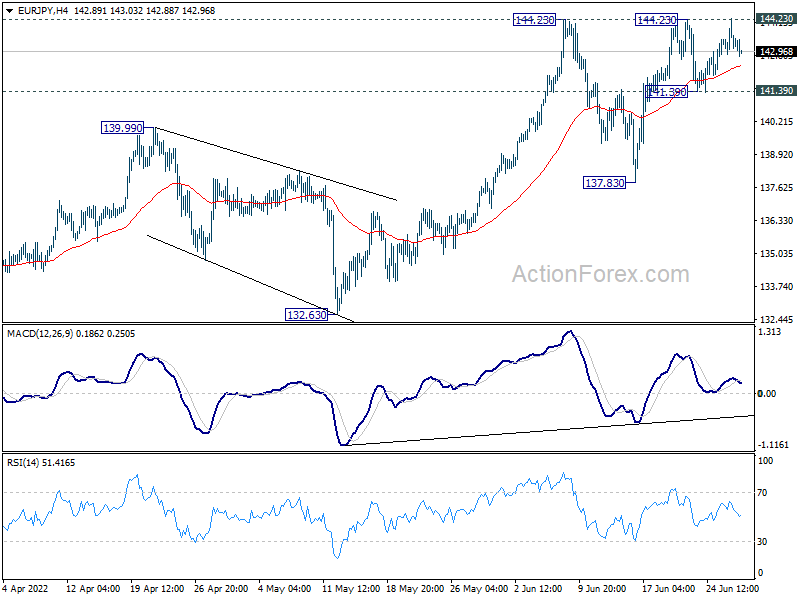
Technically, EUR/JPY appears to be rejected by 144.23 resistance. Break of 141.39 minor support will bring deeper fall back towards 137.83 support level. If that happens, selloff off in Euro could overnight Yen, which could be seen in renewed pressure in EUR/CHF, and push EUR/USD back towards 1.0339 long term support.
In Asia, at the time of writing, Nikkei is down -1.10%. Hong Kong HSI is down -1.63%. China Shanghai SSE is down -0.77%. Singapore Strait Times is up 0.37%. Japan 10-year JGB yield is down -0.0026 at 0.231. Overnight, DOW dropped -1.56%. S&P 500 dropped -2.01%. NASDAQ dropped -2.98%. 10-year yield rose 0.012 to 3.206.
BoJ Kuroda: Japan not much affected by global inflationary trend
BoJ Governor Haruhiko Kuroda said, "Unlike other economies, the Japanese economy has not been much affected by the global inflationary trend, so monetary policy will continue to be accommodative," according to the recording released by the Bank for International Settlements (BIS).
After 15 years of deflation that lasted through 2013, businesses have be "very cautious" in raising prices and wages. "The economy recovered and companies recorded high profits. The labour market became quite tight. But wages didn't increase much and prices didn't increase much," he added.
Also released, Japan retail sales rose 3.6% yoy in May, below expectation of 4.0% yoy. On seasonally adjusted basis, sales rose 0.6% mom.
Australia retail sales rose 0.9% mom in May, higher prices added to growth
Australia retail sales rose 0.9% mom in May, above expectation of 0.4% mom. That's the fifth consecutive monthly growth.
Ben Dorber, Director of Quarterly Economy Wide Statistics said, "There was growth across five of the six retail industries in May as spending remained resilient. Higher prices added to the growth in retail turnover in May. This was most evident in cafes, restaurants and takeaway food services and food retailing."
Looking ahead
Swiss Credit Suisse economic expectations, Eurozone M3 and economic sentiment, Germany CPI flash will be released in European session. Later in the day, US will release Q1 GDP final.
EUR/CHF Daily Outlook
Daily Pivots: (S1) 1.0042; (P) 1.0086; (R1) 1.0117; More....
EUR/CHF's fall from 1.0512 is still in progress and further decline should be seen to retest 0.9970 low. Decisive break there will resume larger down trend. On the upside, however, above 1.0214 minor resistance will delay the bearish case, and turn bias back to the upside for stronger rebound.
In the bigger picture, as long as 1.0505 support turned resistance (2020 low) holds, long term down trend from 1.2004 (2018 high) is expected to continue. Next target is 100% projection of 1.2004 to 1.0505 to 1.1149 at 0.9650. However, firm break of 1.0505 will suggest medium term bottoming, and bring stronger rebound towards 1.1149 structural resistance.
Economic Indicators Update
| GMT | Ccy | Events | Actual | Forecast | Previous | Revised |
|---|---|---|---|---|---|---|
| 23:50 | JPY | Retail Trade Y/Y May | 3.60% | 4.00% | 3.10% | |
| 01:30 | AUD | Retail Sales M/M May | 0.90% | 0.40% | 0.90% | |
| 08:00 | CHF | Credit Suisse Economic Expectations Jun | -52.6 | |||
| 08:00 | EUR | Eurozone M3 Money Supply Y/Y May | 6.10% | 6.00% | ||
| 09:00 | EUR | Eurozone Economic Sentiment Indicator Jun | 103 | 105 | ||
| 09:00 | EUR | Eurozone Services Sentiment Jun | 12.7 | 14 | ||
| 09:00 | EUR | Eurozone Industrial Confidence Jun | 4.7 | 6.3 | ||
| 09:00 | EUR | Eurozone Consumer Confidence Jun F | -23.6 | -23.6 | ||
| 12:00 | EUR | Germany CPI M/M Jun P | 0.30% | 0.90% | ||
| 12:00 | EUR | Germany CPI Y/Y Jun P | 7.90% | 7.90% | ||
| 12:30 | USD | GDP Annualized Q1 F | -1.50% | -1.50% | ||
| 12:30 | USD | GDP Price Index Q1 F | 8.10% | 8.10% | ||
| 14:30 | USD | Crude Oil Inventories |
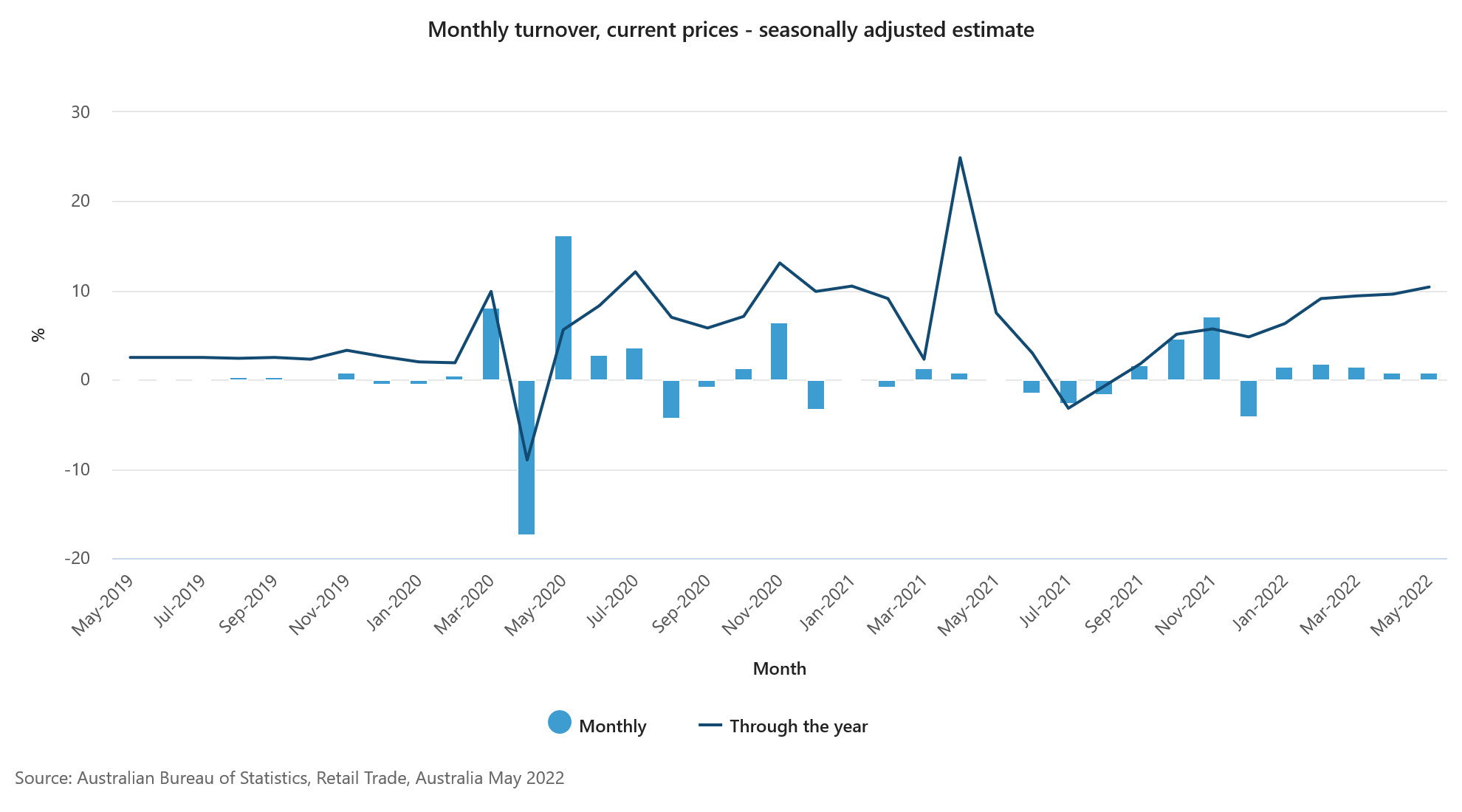
Australia retail sales rose 0.9% mom in May, higher prices added to growth
Australia retail sales rose 0.9% mom in May, above expectation of 0.4% mom. That's the fifth consecutive monthly growth.
Ben Dorber, Director of Quarterly Economy Wide Statistics said, "There was growth across five of the six retail industries in May as spending remained resilient. Higher prices added to the growth in retail turnover in May. This was most evident in cafes, restaurants and takeaway food services and food retailing."
BoJ Kuroda: Japan not much affected by global inflationary trend
BoJ Governor Haruhiko Kuroda said, "Unlike other economies, the Japanese economy has not been much affected by the global inflationary trend, so monetary policy will continue to be accommodative," according to the recording released by the Bank for International Settlements (BIS).
After 15 years of deflation that lasted through 2013, businesses have be "very cautious" in raising prices and wages. "The economy recovered and companies recorded high profits. The labour market became quite tight. But wages didn't increase much and prices didn't increase much," he added.
Dominant US Dollar Turns to Another Round of Data
The US dollar will be in the spotlight this week with the Fed’s favorite inflation measure on Thursday ahead of the ISM manufacturing PMI on Friday. Concerns about rampant inflation have been overshadowed by fears of a recession, so these releases could be crucial in shaping the narrative around the Fed. Overall, the dollar is unlikely to lose its shine while energy prices remain so high, torturing the euro and yen.
Inflation or recession?
The narrative in financial markets has shifted lately. Concerns around inflation running wild have taken a back seat, replaced by worries that economic growth is about to slow down dramatically. The risk of recession is the new public enemy.
Such concerns were reflected in the latest S&P Global PMI surveys, which showed a “remarkable drop in demand for goods and services” alongside a very sharp decline in business confidence. Several major retailers have also been complaining about having inventory they cannot unload, the housing market is feeling the burn of soaring mortgage rates, and hiring has slowed.
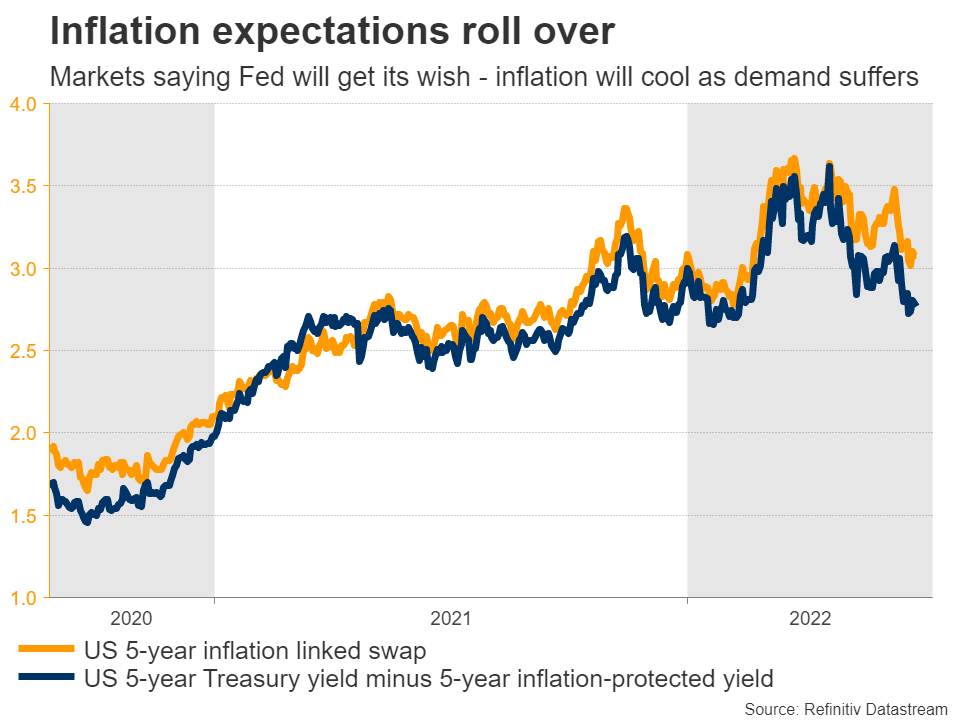
Traders are well aware of all this. Various commodity prices have taken heavy damage lately, market-based measures of inflation expectations have rolled over, and the terminal level of interest rates has been pushed lower - all consistent with a weakening economic data pulse.
Market participants are essentially saying the Fed will get its wish - inflation is going to cool, but only because the economy will struggle.
Upcoming data
Bearing all this in mind, the upcoming batch of data could be crucial as markets grapple with how much the Fed is going to raise interest rates over the coming months. The show will get started on Thursday with the core PCE price index for May, alongside personal consumption and income numbers for the same month.
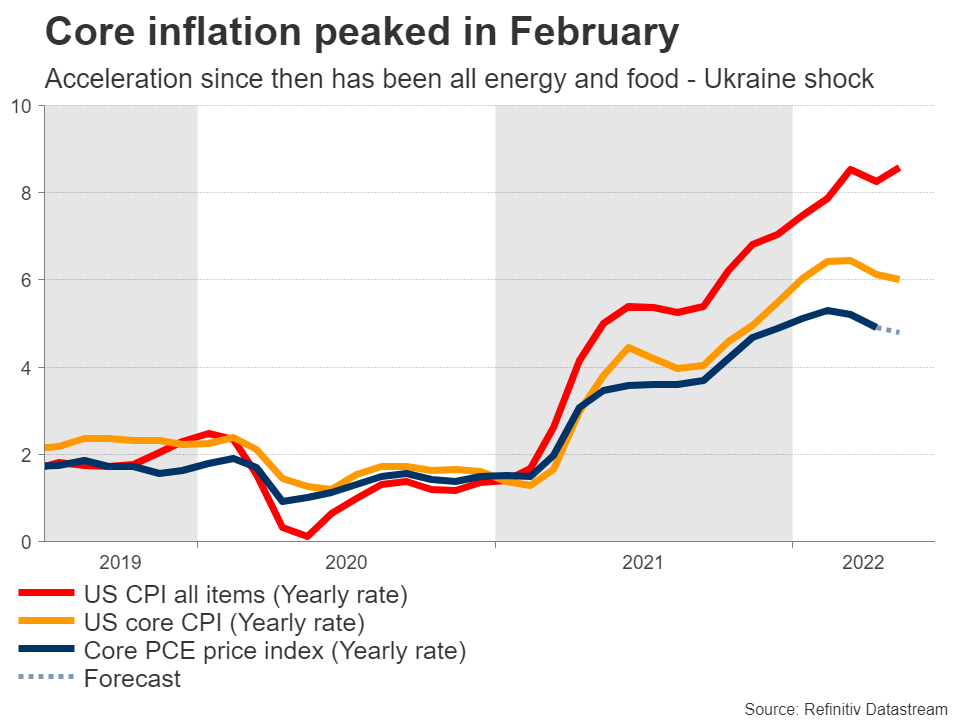
The core PCE price index is expected to have inched lower in yearly terms, falling to 4.8% from 4.9% in the previous month. It has been falling steadily since February, confirming that most of the acceleration in inflation we have seen since then boils down to energy and food prices going berserk after Ukraine was invaded.
Then on Friday, the ISM manufacturing index for June will hit the markets. This is likely to attract the most attention, as some of its components like new orders are considered forward-looking indicators of economic activity. If it echoes a similarly gloomy outlook as the other PMI surveys, bets for Fed rate increases could be dialed back further, spelling bad news for the dollar.
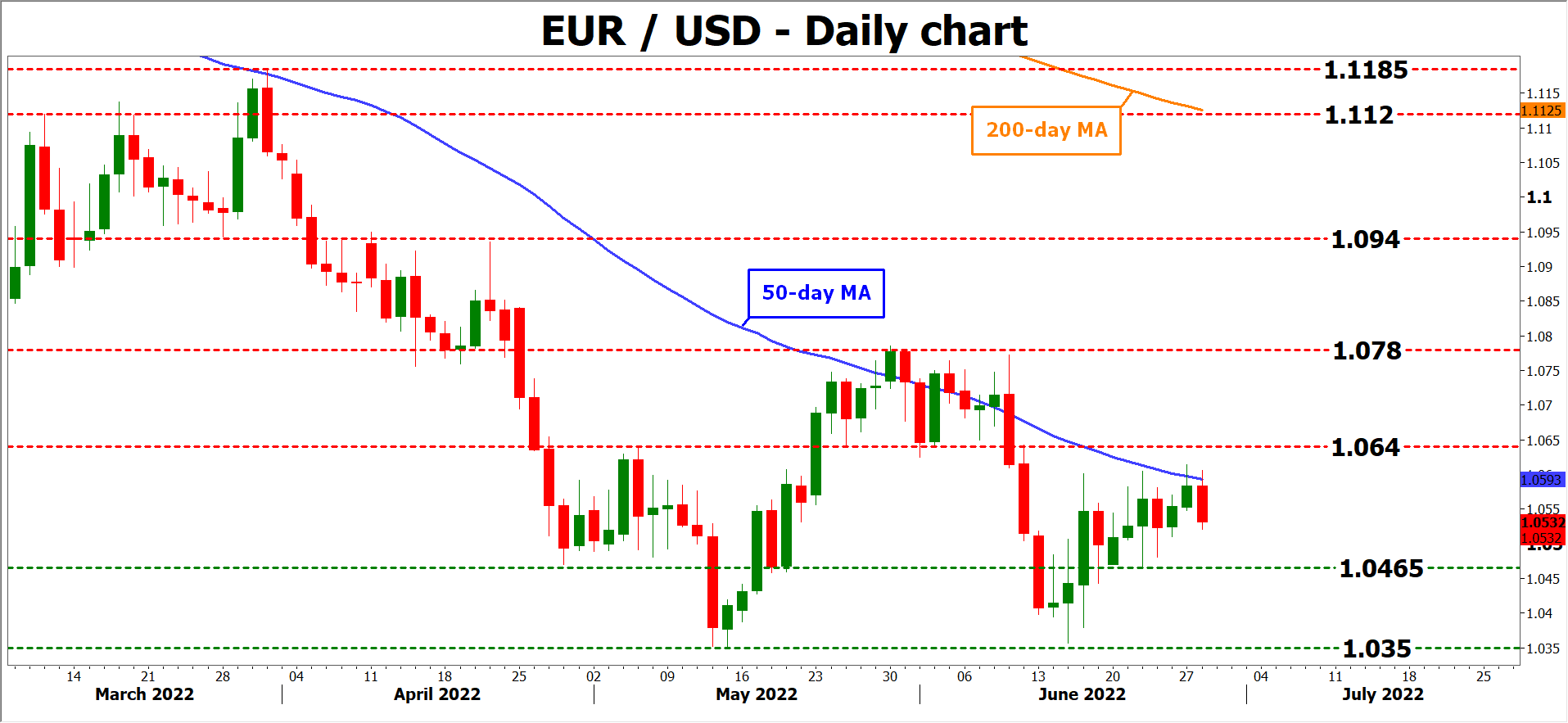
In this scenario, euro/dollar could violate its 50-day moving average and move higher for a test of the 1.0640 region.
On the other hand, a surprisingly strong batch of data could send the pair lower, with the 1.0465 likely to act as an initial support barrier.
No trend reversal yet
In the bigger picture, it is difficult to call for any reversal in the dollar while it is the only major currency that offers both attractive interest rates and safety thanks to its reserve currency status.
That is especially true when other major currencies are battling their own demons. Surging energy prices have devastated both the euro and the yen, by depriving them of their biggest historical advantage - a massive trade surplus. Both the Eurozone and Japan are running large trade deficits now, since they have to pay so much more to import energy products.
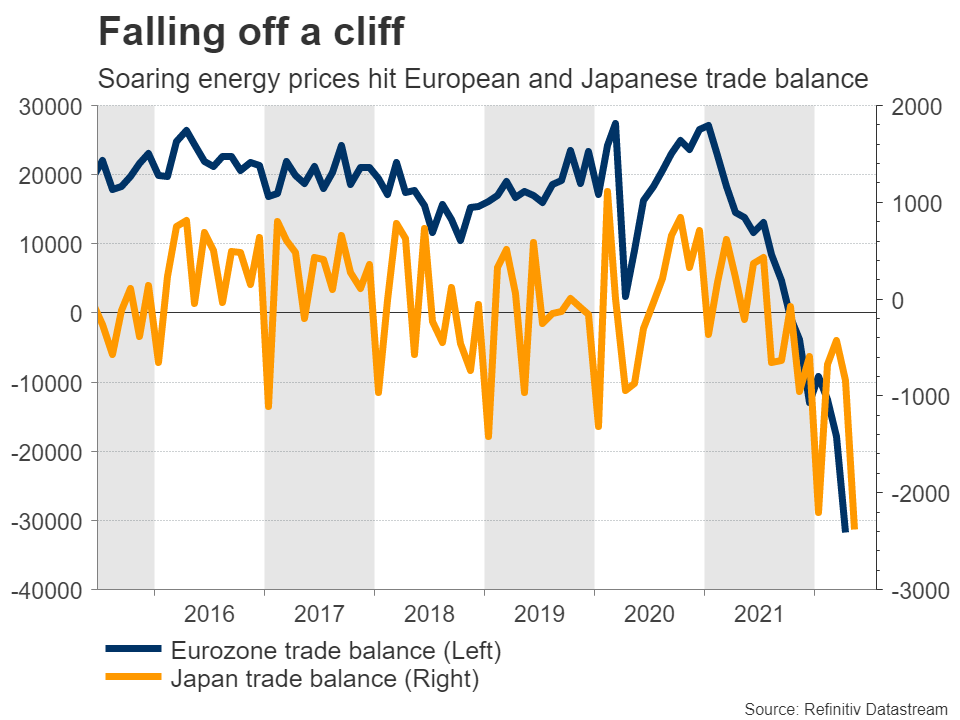
As such, the trajectory of oil prices might be the most important determinant for the FX market moving forward. A sustained decline in oil prices could simultaneously revive the euro and yen, and hamstring the dollar since the Fed wouldn’t need to be so aggressive with rate increases.
This is the missing piece for a trend reversal in the FX arena - lower energy prices. Until that happens, the mighty dollar is unlikely to lose its crown.
Technical Outlook and Review
DXY:
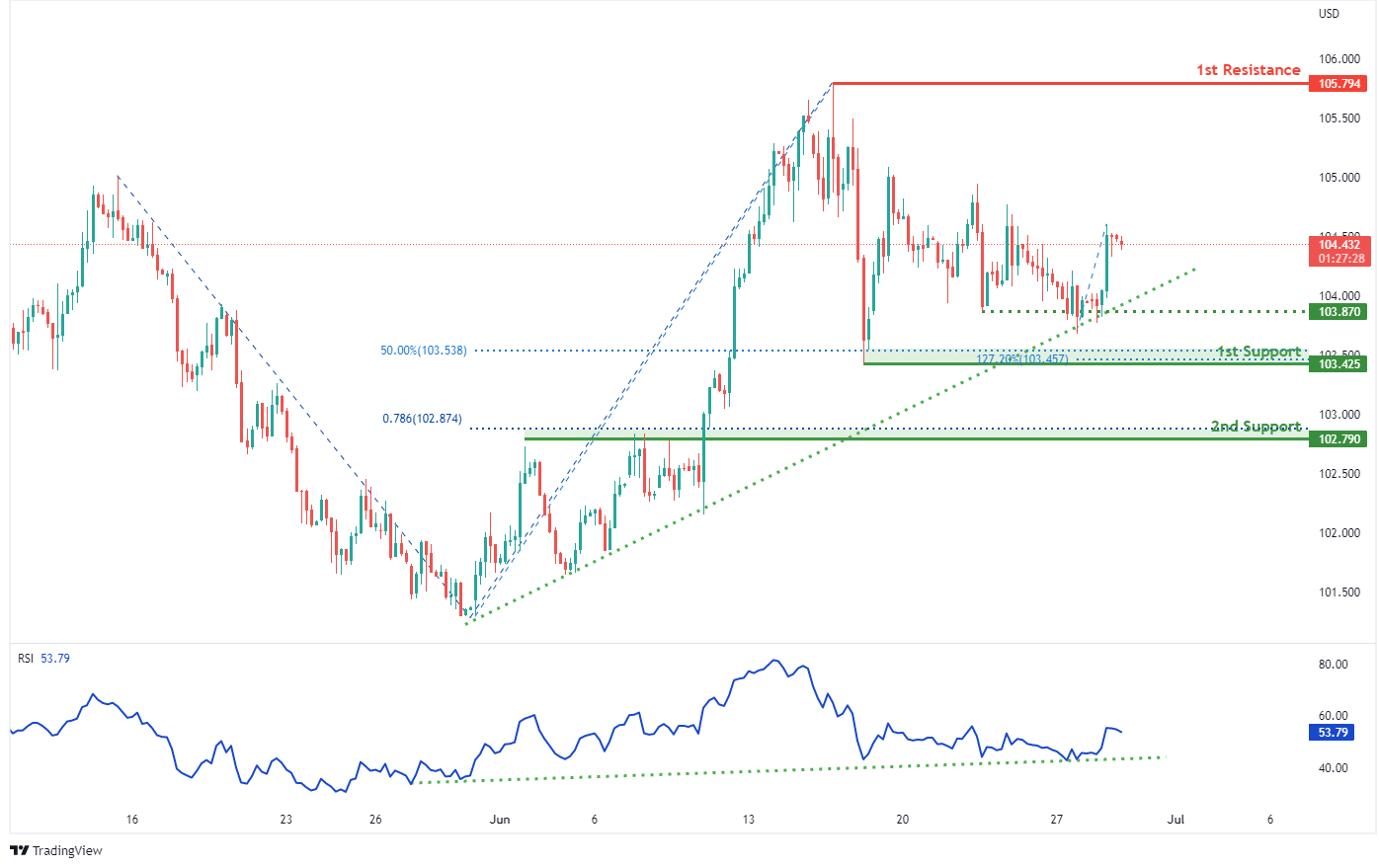
On the H4, with RSI moving along an ascending trendline and prices moving along the ascending trendline, we have a bullish bias that bullish momentum will carry prices from our 1st support at 103.425 where the 127.2% fibonacci extension, 50% fibonacci retracement and swing low support are, after price has dropped to the 1st support level, to our 1st resistance at 105.794 in line with the horizontal swing high resistance. Take note of intermediate support at 103.870 where the swing low support is. Alternatively, price may break 1st support structure and head for 2nd support at 102.790 where the horizontal overlap support and 78.6% fibonacci projection are.
Areas of consideration:
- H4 time frame, 1st resistance at 105.794
- H4 time frame, 1st support at 103.425
XAU/USD (GOLD):
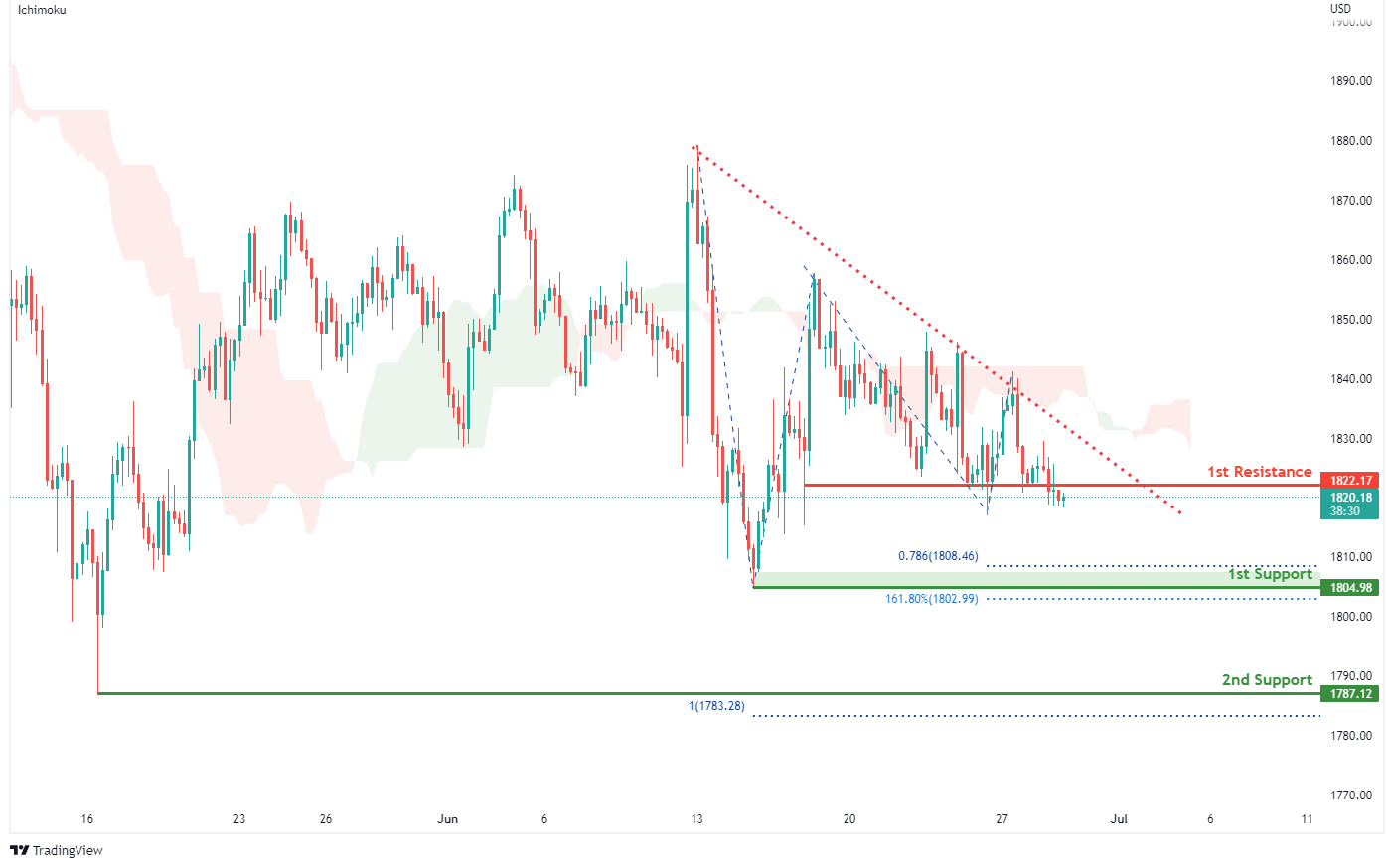
On the H4, with prices moving below the ichimoku indicator and along a descending trendline, we have a bearish bias that prices will drop to our 1st support at 1804.98 where the horizontal swing low support, 161.8% fibonacci extension and 78.6% fibonacci projection are. Once we have downside confirmation, we would expect bearish momentum to carry price to 2nd support at 1787.12 in line with swing low support and 100% fibonacci projection. Alternatively, price could rise to our 1st resistance at 1822.17 in line with overlap resistance.
Areas of consideration:
- H4 time frame, 1st Resistance at 1822.17
- H4 time frame, 1st Support at 1804.98
GBP/USD:
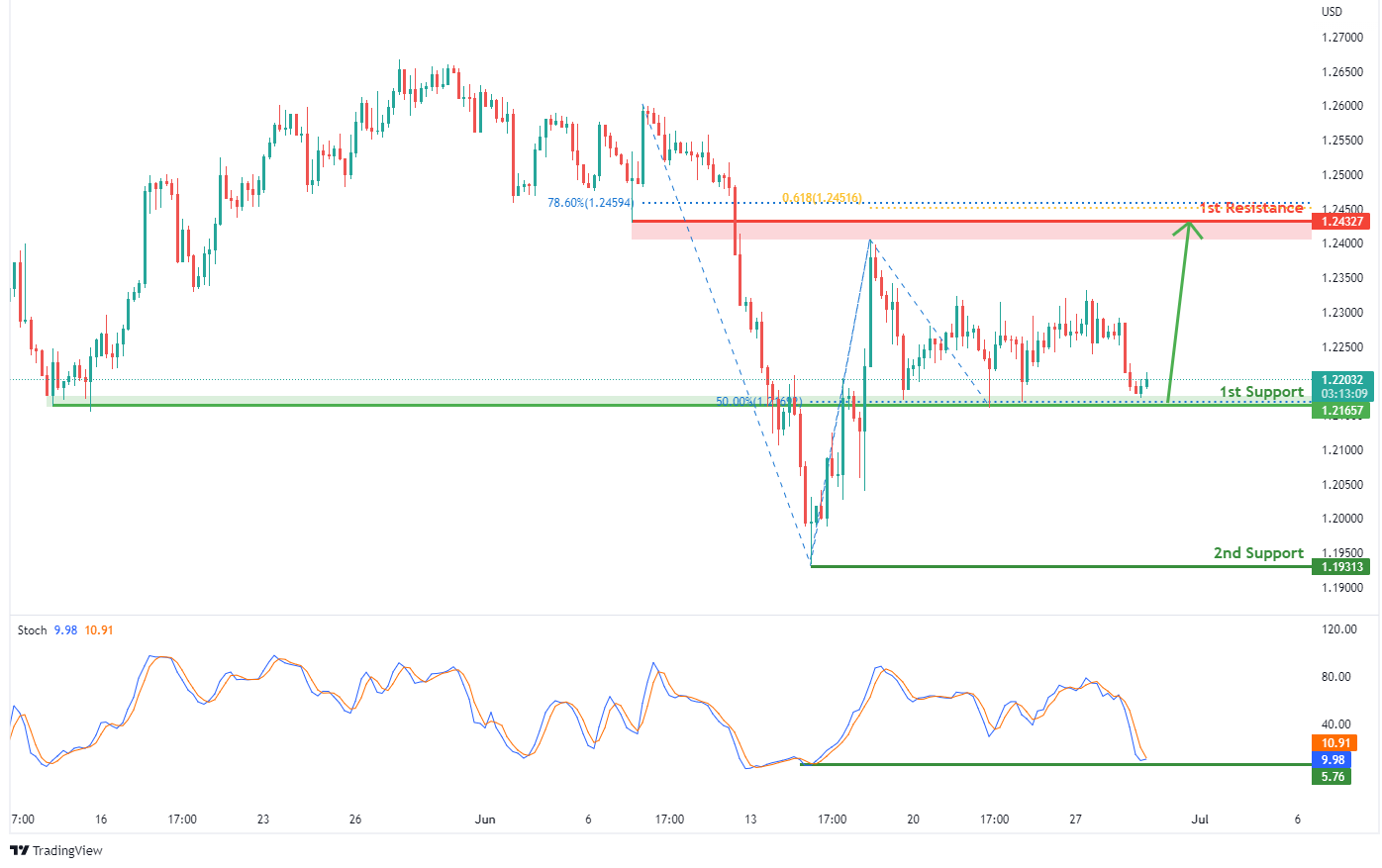
On the H4, with prices expected to bounce off the stochastic support, we have a bullish bias that price will drop and rise from our 1st support at 1.21657 where the horizontal overlap support and 50% fibonacci retracement are to our 1st resistance at 1.24327 in line with the 61.8% fibonacci projection, 78.6% fibonacci retracement and pullback resistance. Alternatively, price may break 1st support structure and head for 2nd support at 1.19313 where the horizontal swing low support is.
Areas of consideration:
- H4 1st resistance at 1.24327
- H4 1st support at 1.21846
USD/CHF:
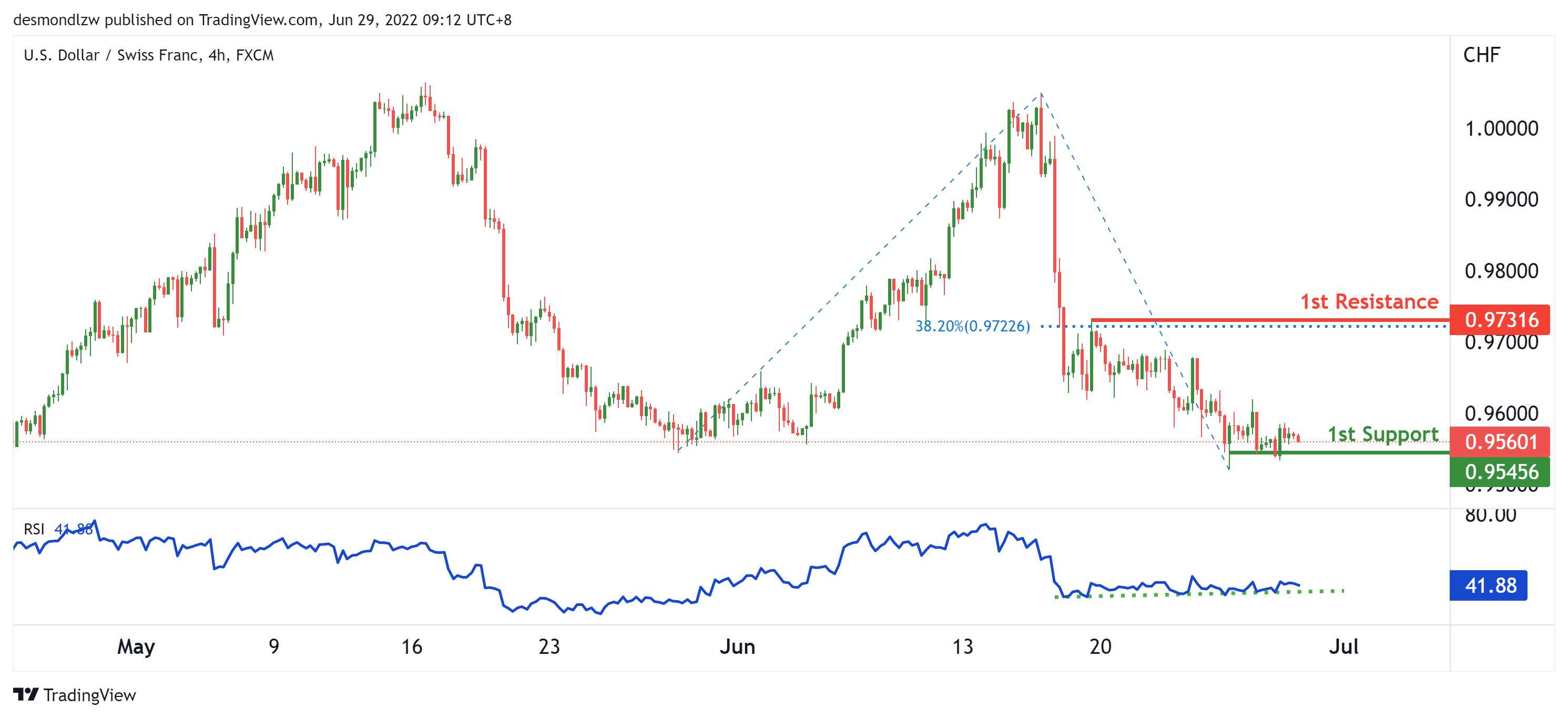
On the H4, with bullish divergence on the RSI, we have a bullish bias that price will rise from our 1st support at 0.95566 where the horizontal swing low support is to our 1st resistance at 0.97231 in line with the horizontal swing high resistance and 38.2% Fibonacci retracement. Alternatively, price may break structure and head for 2nd support at 0.94144 where the 127.2% Fibonacci extension is.
Areas of consideration
- 1st support level at 0.95566
- 1st resistance level at 0.97231
EUR/USD :
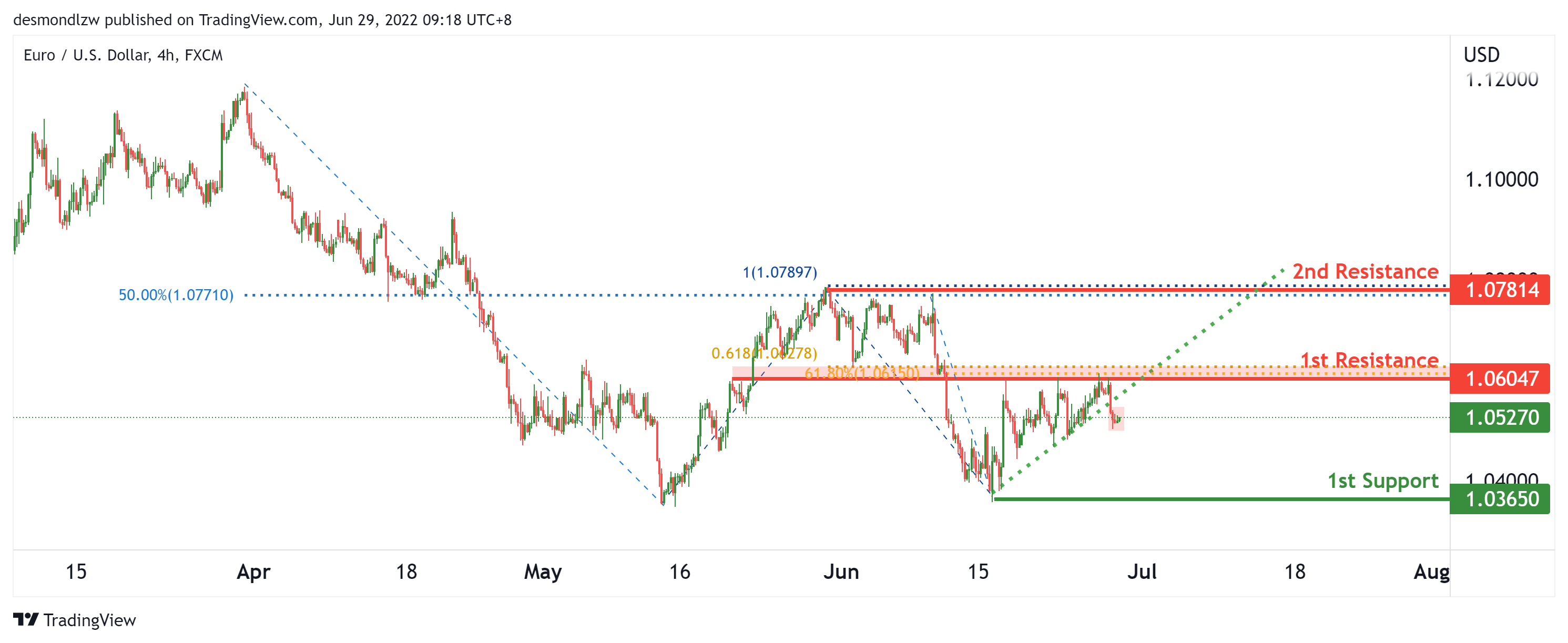
On H4, with price recently breaking the ascending trendline, we have a bearish bias that price will continue to drop from the 1st resistance at 1.06047 at the pullback resistance in line with the 61.8% fibonacci projection and 61.8% fibonacci retracement to the 1st support at 1.03541 in line with the multiple horizontal swing lows. Alternatively, price may reverse off the 1st resistance and rise to the 2nd resistance at 1.07814 at the horizontal swing high in line with the 50% fibonacci retracement and 100% Fibonacci projection.
Areas of consideration :
- H4 1st resistance at 1.06047
- H4 1st support at 1.03541
USD/JPY:
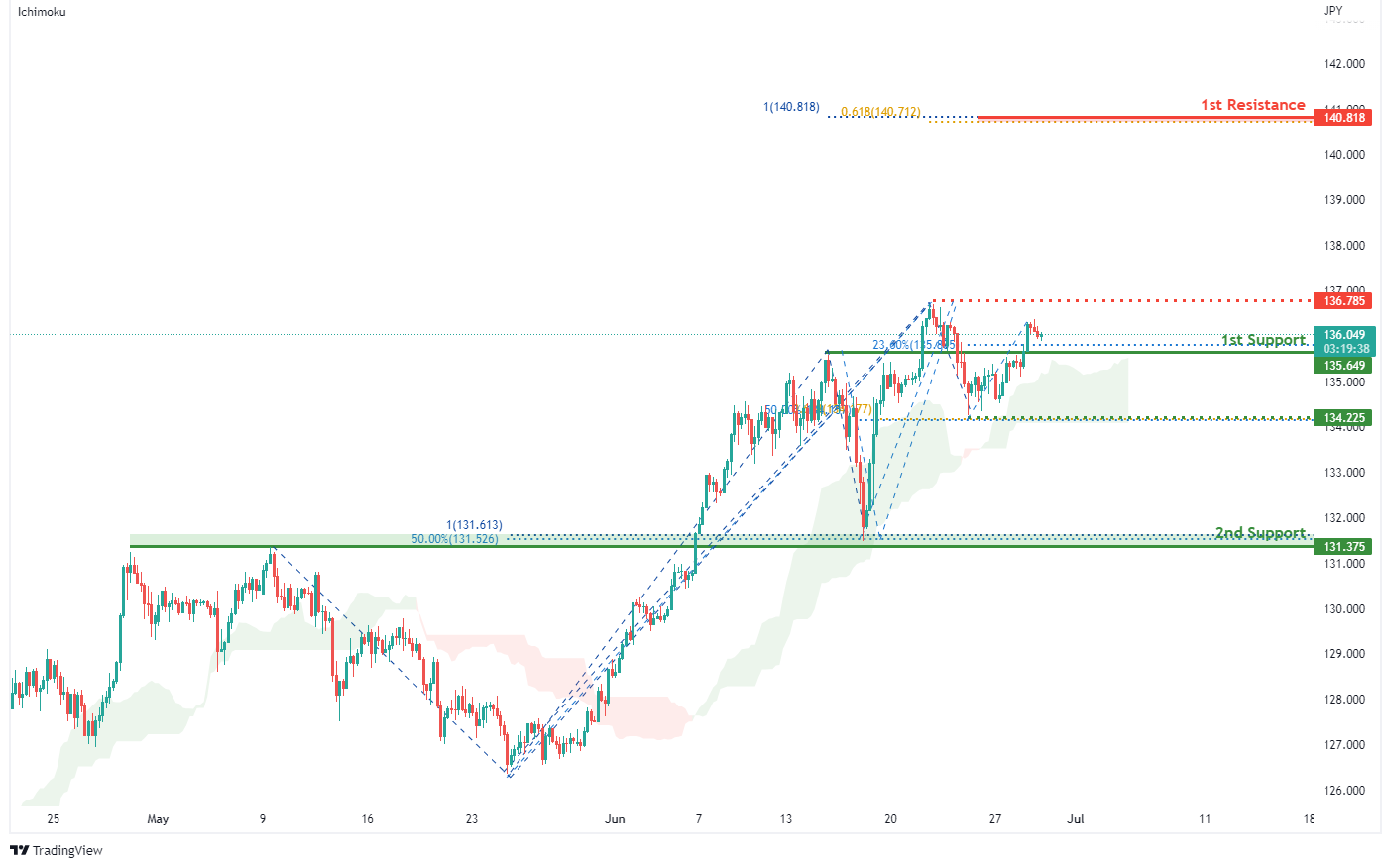
On the H4, with price moving above the ichimoku indicator, we have a bullish bias that price will drop and rise from our 1st support at 135.649 where the pullback resistance and 23.6% fibonacci retracement are to the intermediate resistance level at 136.785 where the swing high resistance is. Once there is upside confirmation, we would expect bullish momentum to carry price to our 1st resistance at 140.818 where the 100% fibonacci projection and 61.8% fibonacci projection are . Alternatively, price may break 1st support structure and drop to 2nd support at 131.375 in line with the swing low support, 100% fibonacci projection and 50% fibonacci retracement. Take note of the intermediate support at 134.225 in line with 50% fibonacci retracement and 61.8% fibonacci projection.
Areas of consideration:
- H4 time frame, 1st resistance at 140.818
- H4 time frame, 1st support at 135.649
AUD/USD:
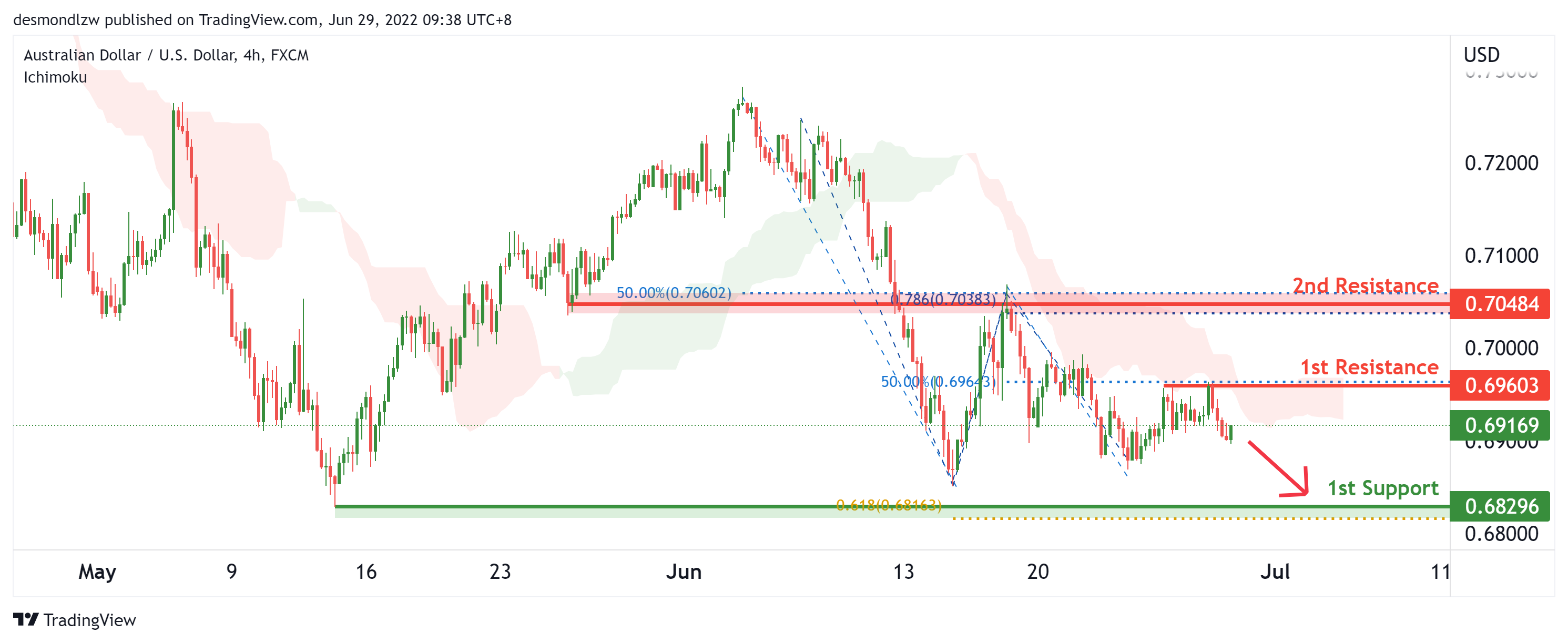
On the H4, with price moving below the ichimoku cloud , we have a bearish bias that price will continue to drop from the 1st resistance at 0.69303 in line with the 50% fibonacci retracement to the 1st support at 0.68296 in line with the horizontal swing low and 61.8% Fibonacci projection .Alternatively, price may reverse off the 1st resistance and rise to the 2nd resistance at 0.70484 in line with the overlap resistance, 78.6% Fibonacci projection and 50% Fibonacci retracement .
Areas of consideration
- H4 1st resistance at 0.68296
- H4 1st support at 0.69303
NZD/USD:
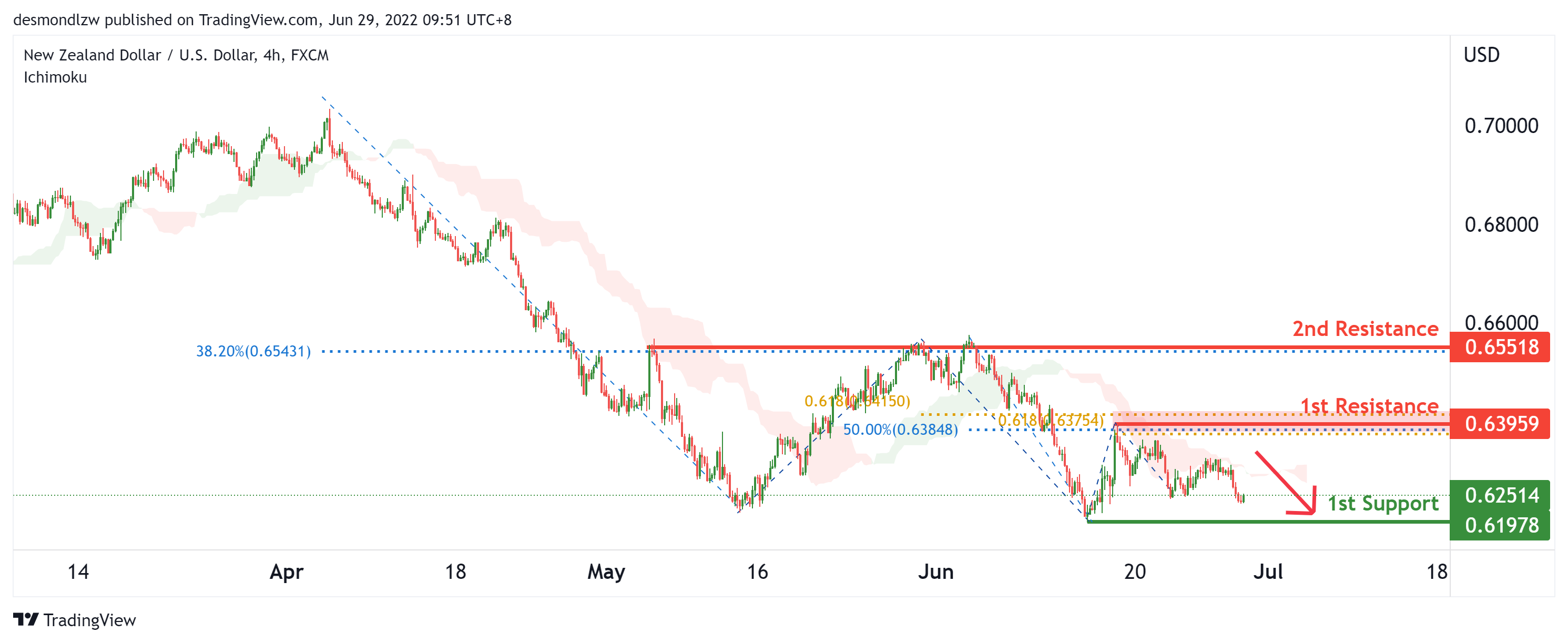
On the H4, with price moving below the ichimoku cloud , we have a bearish bias that price will continue to drop from the 1st resistance at 0.63959 in line with the two 61.8% fibonacci projections and 50% fibonacci retracement to the 1st support 0.61978 in line with the swing low. Alternatively, price may reverse off the 1st resistance and rise to the 2nd resistance at 0.65518 at the multiple swing highs and 38.2% fibonacci retracement.
Areas of consideration:
- H4 time frame, 1st support at 0.61978
- H4 time frame, 1st resistance at 0.63959
USD/CAD:
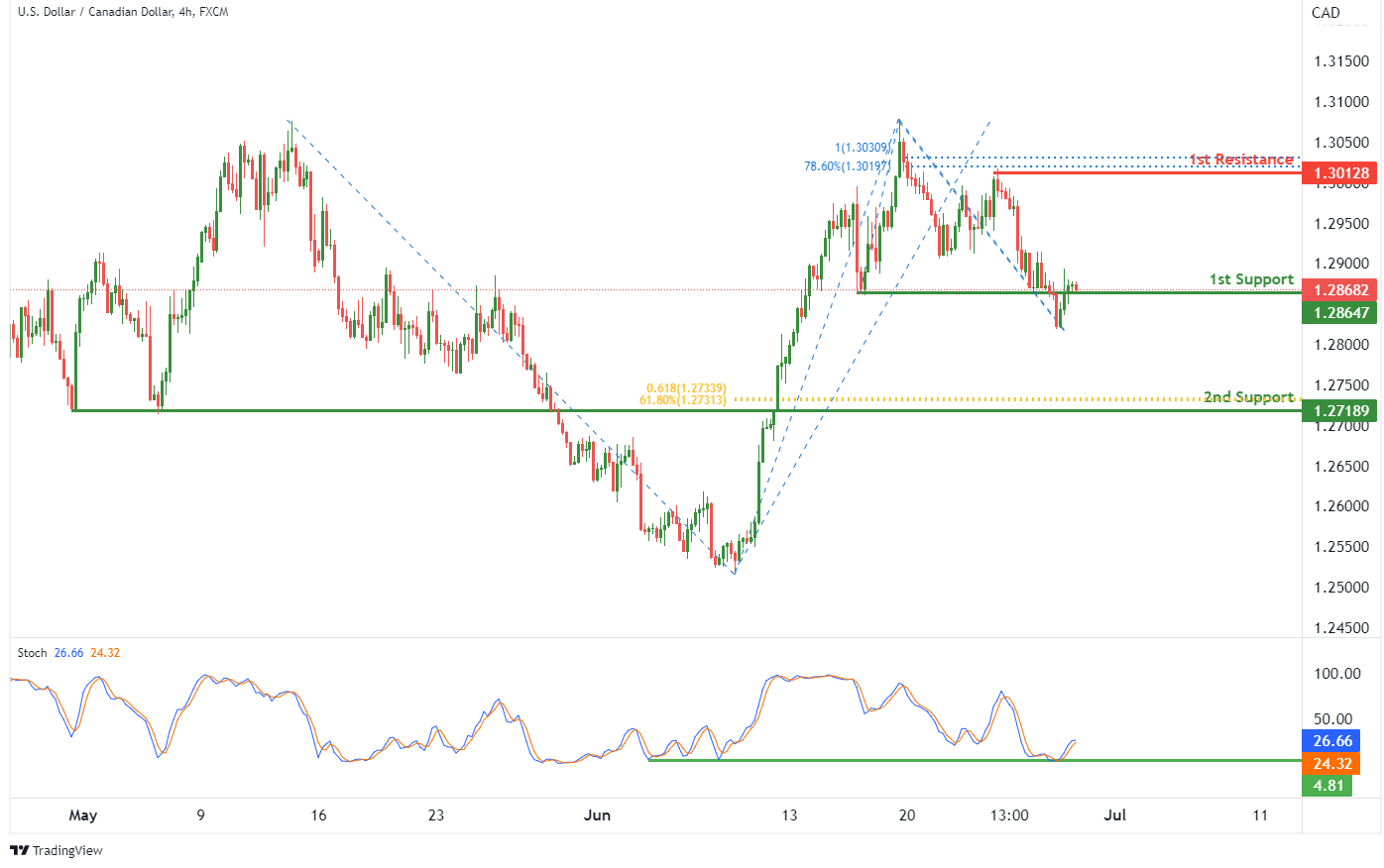
On the H4, with price bouncing off the stochastic support, we have a bullish bias that price will rise from our 1st support at 1.28647 where the horizontal pullback support is to our 1st resistance at 1.30128 in line with the horizontal swing high resistance, 100% fibonacci projection and 78.6% fibonacci retracement. Alternatively, price may break 1st support structure and head for 2nd support at 1.27189 where the horizontal overlap support, 61.8% fibonacci projection and 61.8% Fibonacci retracement are.
Areas of consideration:
- H4 time frame, 1st resistance at 1.30128
- H4 time frame, 1st support at 1.28647
OIL:
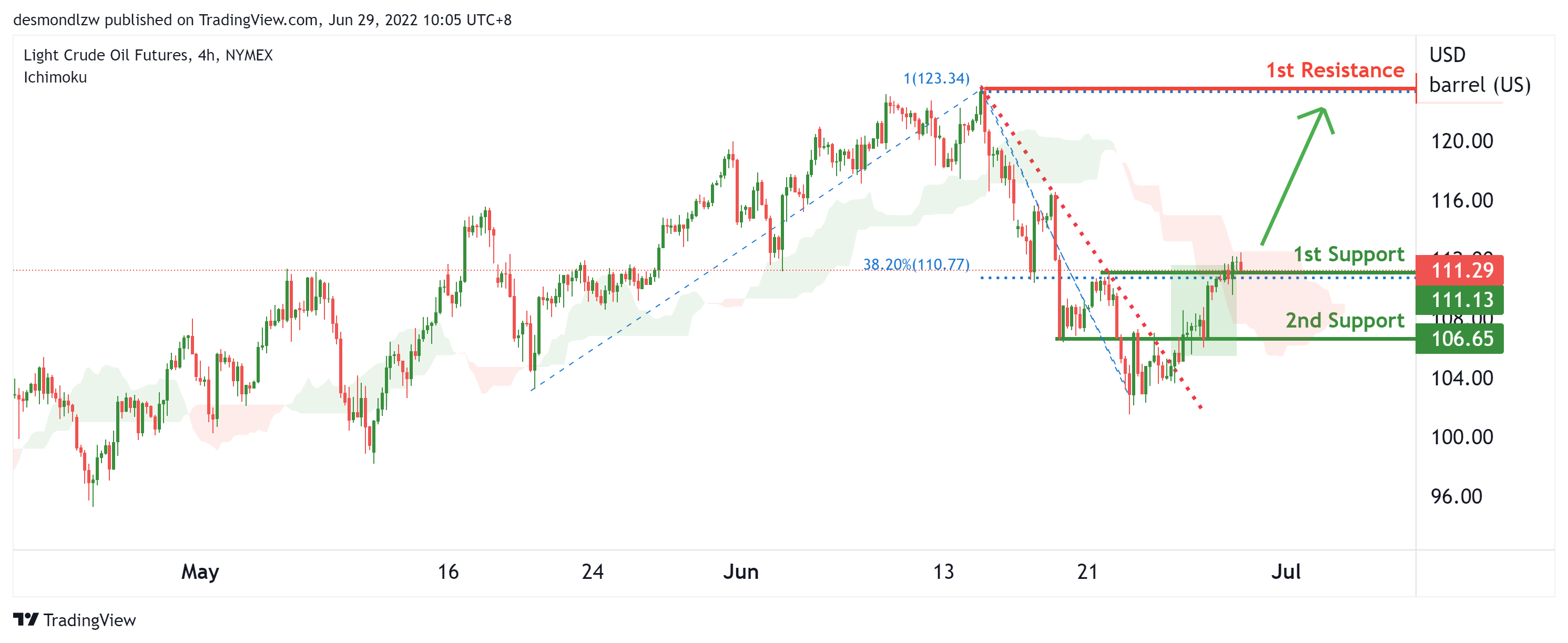
On the H4, with price bouncing off the ichimoku cloud, we have a bullish bias that price will continue to rise from the 1st support at 110.86 in line with the pullback support and 38.2% Fibonacci retracement to the 1st resistance at 123.56 at the horizontal swing high in line with the 78.6% Fibonacci projection. Alternatively, price may reverse off the 1st support and drop to the 2nd support at 106.65 in line with the pullback support and 100% Fibonacci projection.
Areas of consideration:
- H4 time frame, 1st resistance of 123.56
- H4 time frame, 1st support of 110.86
Dow Jones Industrial Average:
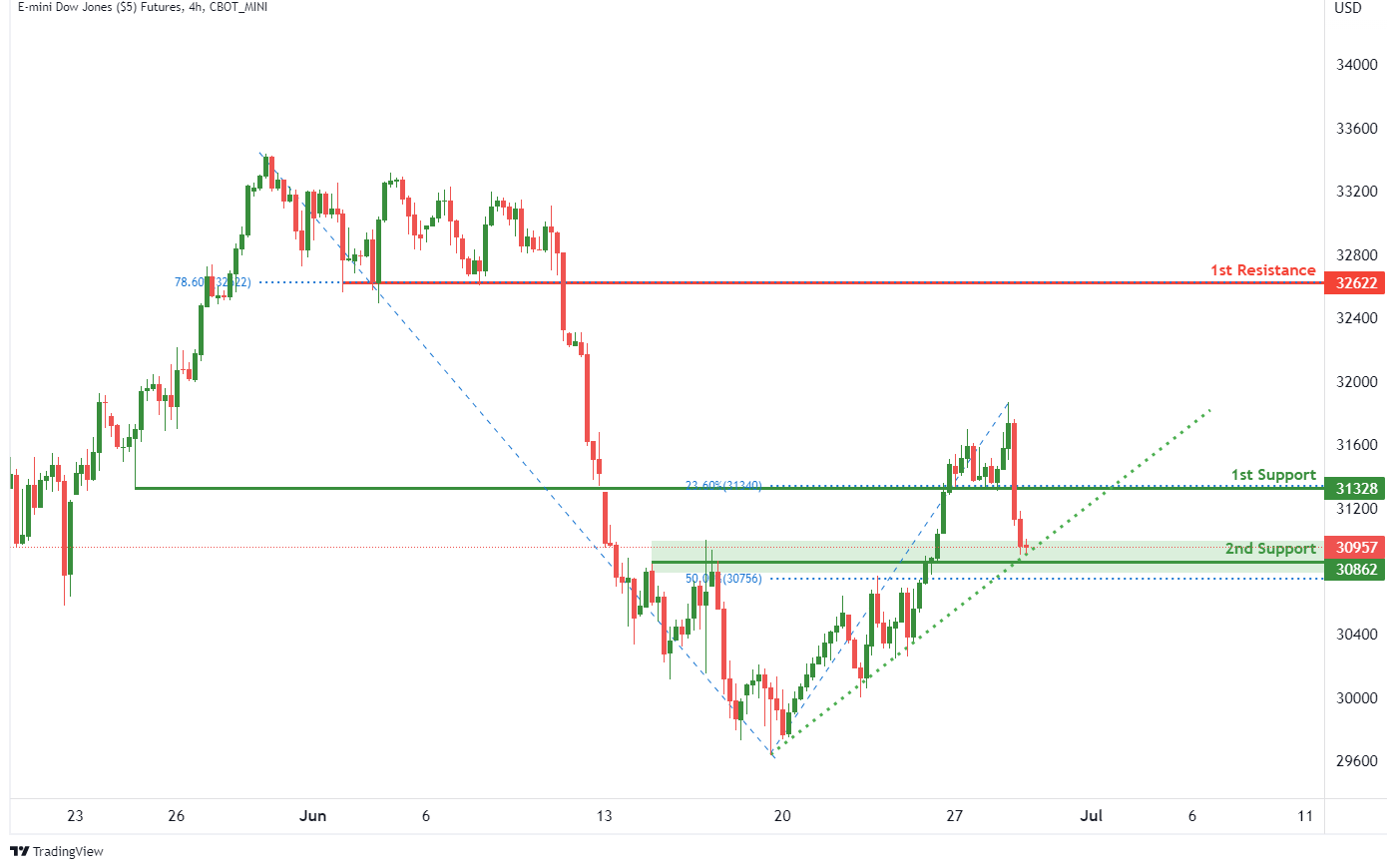
On the H4, with price moving along an ascending trendline, we have a bullish bias that price will rise from our 1st support at 31328 where the horizontal pullback support and 23.6% Fibonacci retracement are to our 1st resistance at 32622 in line with the horizontal overlap resistance and 78.6% fibonacci retracement. Alternatively, price may break 1st support and head for 2nd support at 30862 where the horizontal overlap support and 50% fibonacci retracement are.
Areas of consideration:
- H4 time frame, 1st resistance of 32622
- H4 time frame, 1st support of 31328
AUDNZD Wave Analysis
- AUDNZD reversed from support area
- Likely to rise to resistance level 1.116
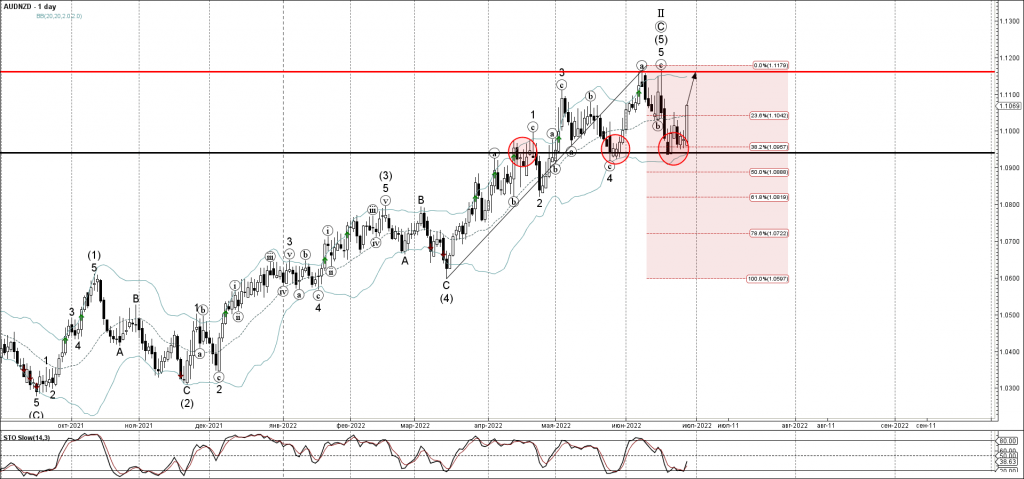
AUDNZD currency pair recently reversed up from the support area located between the key support level 1.0940 (which has been reversing the pair from May), the lower daily Bollinger Band and the 38.2% Fibonacci correction of the upward impulse from March.
The upward reversal from this support area continues the active multi-month uptrend from last September.
Given the strongly bearish NZD sentiment, AUDNZD can be expected to rise further toward the next resistance level 1.116 (which stopped the earlier upward waves (a) and (c)).
GBPCAD Wave Analysis
- GBPCAD falling inside impulse wave (iii)
- Likely to fall to support level 1.5550
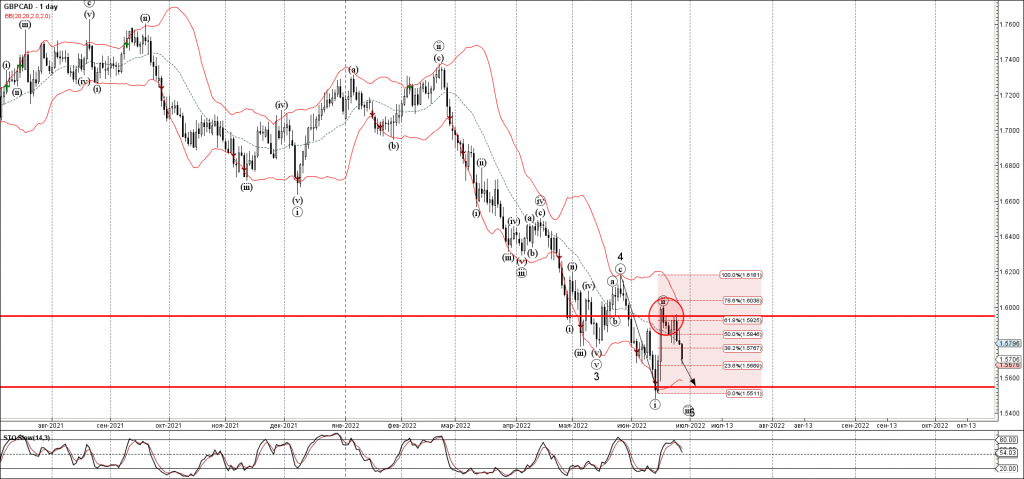
GBPCAD continues to fall inside the short-term downward impulse wave (iii), which started recently from the resistance area located between the resistance level 1.5950, upper daily Bollinger Band and the 61.8% Fibonacci correction of the downward impulse (i) from May.
The downward reversal from this resistance area started the active minor impulse wave (iii).
Given the strong daily downtrend, GBPCAD can be expected to fall further toward the next support level 1.5550 (which stopped the earlier sharp downward impulse wave (i)).
Eco Data 6/29/22
[php_everywhere instance="1"]