Sample Category Title
BTCUSD Bounces Off 18-Month Low But Retains Bearish Outlook
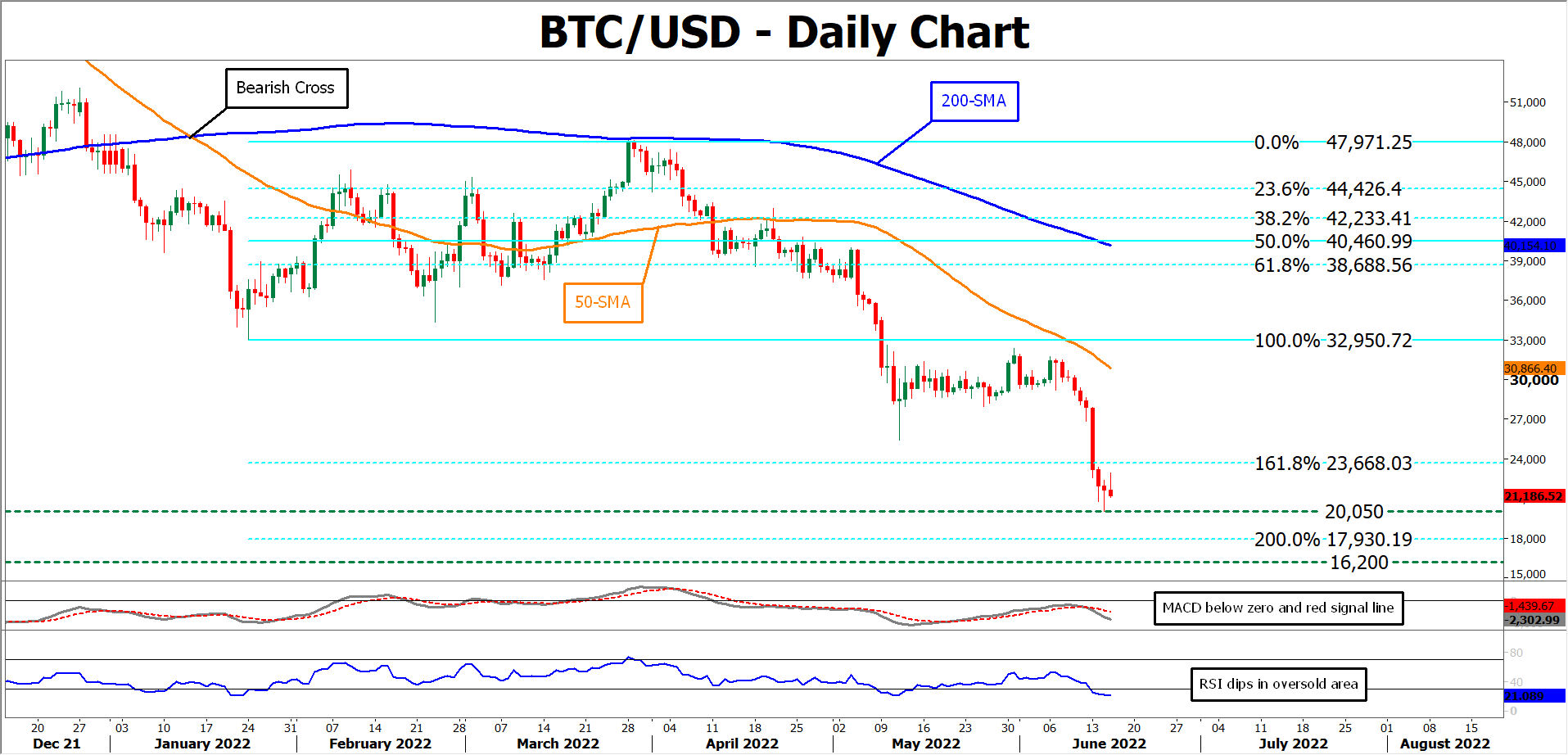
BTCUSD (Bitcoin) has been experiencing a sharp decline in the short-term after its long-lasting sideways pattern broke to the downside, generating a fresh 18-month low of 20,050. Moreover, the descending 50- and 200-day simple moving averages (SMAs) are endorsing the cryptocurrency's bearish technical picture.
The short-term oscillators indicate a negative near-term bias. Specifically, the MACD histogram is beneath both zero and its red signal line, while the RSI has entered into its oversold area.
Should selling pressure persist, the price could descend to challenge its 2022 low of 20,050, which is also an 18-month low. Violating this zone, the 17,930 level, which is the 200% Fibonacci extension of the 32,950-47,971 upleg, could prove a tough obstacle for the bears to overcome. Failing to halt there, the November 2020 support region of $16,200 may act as the next floor for the price.
Alternatively, if buyers re-emerge and regain the upper hand, the price might encounter initial resistance at the 161.8% Fibo of 23,668. Conquering this barricade, the bulls might aim for the 32,950 hurdle before the attention shifts to the 61.8% fibo of 38,688. Any further upside moves could then stall at the 50% Fibo of 40,460.
Overall, BTCUSD’s outlook remains bearish as broader near-term risks are tilted to the downside. Therefore, a break below the 20,050 could trigger fresh selling interest, sending the price to form fresh multi-year lows.
US Dollar Remains Firm Post-FOMC
US retreats after FOMC mega-hike
The US dollar gave back some recent gains overnight post-FOMC as Powell’s comments post-meeting were interpreted as implying a less aggressive scale of rate hikes. To me, that is a flawed interpretation, as the FOMC signalled a higher terminal rate and lifted its end-of-2022 target rate as well. Even if we don’t get any more 0.75% hikes, rates are still going up each meeting and will finish at a higher level. Indeed, the US dollar retreat was very mixed. It hardly moved against the euro and gave only modest gains to the Yen and Asian currencies, while sentiment currencies like the AUD and GBP outperformed.
The dollar index finished 0.60% lower at 104.85, and in Asia, has already regained 0.20% to 105.05. The dollar index has tested, but bounced off support at 104.60 for three days in a row, marking it as an important support and pivot point now. Resistance remains at 105.70 and 108.00.
EUR/USD gleaned only a 0.28% gain to 1.0445 overnight and has already fallen by 0.15% to 1.0430 today. Fragmentation concerns are the new buzzword dogging the central currency now and its price-performance overnight was underwhelming, to say the least. EUR/USD fell through support at 1.0400 overnight in a choppy session, but equally, failed ahead of 1.0500 as well. Support lies between 1.0350 and 1.0360, with resistance at 1.0500 and then 1.0650.
An under-pressure sterling bounced by 1.46% to 1.2170 overnight, owing the recovery as much to EUR/GBP selling as to the rebound in sentiment post-FOMC. It now faces a BOE rate decision today itself with 25 bps priced in and unlikely to be supportive, particularly if BOE’s economic guidance is negative. Only a 0.50% hike and a tilt to hawkish guidance are likely to keep the rally going. GBP/USD has fallen by 0.20% to 1.2145 in Asia. Support is at 1.1935, with resistance at 1.2200 which has held over the past two sessions.
USD/JPY traded in a wild 200-point range yesterday, finishing 1.22% lower at 133.80 post-FOMC. The yen rally has faltered already with USD/JPY rising by 0.35% to 134.25 in Asia. Tomorrow’s BOJ policy meeting sets the cross up for another directional move at the end of the week. However, if the BOJ raises the JGB yield cap, USD/JPY could have a potentially ugly move lower. Support is at the overnight low of 133.50, with resistance at the overnight high of 135.60.
AUD/USD was a star of the overnight session, leaping 1.93% higher to 0.7005 as sentiment made an abrupt recovery post-FOMC. It remains unchanged in Asia, having probed the 0.7030 level intraday after strong employment data. If the US equity rally runs out of steam this evening, AUD/USD could well give back most of its gains. It has resistance at 0.7050, with support at 0.6870. NZD/USD rallied less impressively, gaining 1.10% to 0.6285 today where it remains in Asia. Soft GDP data will increase nerves around New Zealand’s economic outlook and appears to be limiting gains. It too will fall if US equities track lower this evening.
USD/Asia has a very muted reaction relatively to the rebound in investor sentiment after the FOMC policy meeting. Asian regional currencies recorded only modest gains overnight, and today, that has reversed sharply as the prospect of slower US growth and widening US/Asia rate differentials took their toll on local currencies.USD/THB, USD/NTD, and USD/KRW are now 0.60% higher today, and yesterday, the Bank of Thailand was sighted intervening. Offshore USD/CNY has risen 0.60% as well, while USD/SGD and USD/INR are 0.20% higher. Overall, the price action by Asian FX has been underwhelming and that suggests that if US markets run out of recovery steam tonight, another wave of selling is inbound for regional currencies.
BoE hikes by 25bps, three members want 50bps
BoE raises the Bank Rate by 25bps to 1.25%. The decision was not unanimous, with three members (Catherine Mann, Michael Saunders and Jonathan Haskel) voted for a 50bps hike. The MPC said it will take necessary actions to return inflation to 2% target. The scale, pace and timing of further rate hikes will reflect the assessment of economic outlook and inflation pressures.
Nevertheless, it emphasized, "the Committee will be particularly alert to indications of more persistent inflationary pressures, and will if necessary act forcefully in response."
BoE also said GDP was weaker than expected in April, and it expect GDP to fall by -0.3% in Q2 as a while, weaker than anticipated at in the May Monetary Policy Report. CPI inflation's rise to 9% was "close to expectations" at the time of the May report. CPI is expected to be over 9% "during the next few months" and rise to "slightly above 11% in October.
(BOE) Bank Rate increased to 1.25%
Monetary Policy Summary, June 2022
The Bank of England's Monetary Policy Committee (MPC) sets monetary policy to meet the 2% inflation target, and in a way that helps to sustain growth and employment. At its meeting ending on 15 June 2022, the MPC voted by a majority of 6-3 to increase Bank Rate by 0.25 percentage points, to 1.25%. Those members in the minority preferred to increase Bank Rate by 0.5 percentage points, to 1.5%.
In the MPC's central projections in the May Monetary Policy Report, UK GDP growth was expected to slow sharply over the first half of the forecast period and, although the labour market was expected to tighten slightly further in the near term, the unemployment rate was projected to rise to 5½% in three years' time. CPI inflation was expected to average slightly over 10% at its peak in 2022 Q4. Conditioned on the rising market-implied path for Bank Rate at that time and the MPC's forecasting convention for future energy prices, CPI inflation was projected to fall to a little above the 2% target in two years' time, largely reflecting the waning influence of external factors, and to be well below the target in three years, mainly reflecting weaker domestic pressures. The risks to the inflation projection were judged to be skewed to the upside at these points.
There has been relatively little news in global and domestic economic data since the May Report, although there have been significant movements in financial markets. UK-weighted global growth in 2022 Q2 appears to be broadly in line with expectations. Global inflationary pressures have remained elevated and oil prices have risen further. Equity markets have ended the period lower, while short and longer-term government bond yields have continued to rise.
UK GDP was weaker than expected in April, partly reflecting a further decline in Test and Trace activity. Bank staff now expect GDP to fall by 0.3% in the second quarter as a whole, weaker than anticipated at the time of the May Report. Consumer confidence has fallen further, but other indicators of household spending appear to have held up. Some indicators of business sentiment have weakened, although they have so far remained more resilient than indicators of consumer confidence and consistent with positive underlying GDP growth.
In the three months to April, the unemployment rate was 3.8% and employment grew by 0.5%. The inactivity rate has declined a little over recent months but is still higher than immediately before the pandemic. Recruitment difficulties have remained elevated and labour demand has remained strong. Underlying nominal earnings growth has also remained strong, and the Bank's Agents report that bonus payments have been used to address recruitment and retention difficulties. All of these indicators remain consistent with a tight labour market.
Initial Bank staff analysis of the Government's recent Cost of Living Support package suggests that, all else equal, it could boost GDP by around 0.3% and raise CPI inflation by 0.1 percentage points in the first year, with some upside risks around these estimates given the targeted and front-loaded nature of some of the measures.
Twelve-month CPI inflation rose from 7.0% in March to 9.0% in April, close to expectations at the time of the May Report, and triggering the exchange of open letters between the Governor and the Chancellor of the Exchequer that is being published alongside this monetary policy announcement. Inflation's overshoot of the 2% target mainly reflects previous large increases in global energy and other tradable goods prices. The former has been greatly exacerbated by the war in Ukraine, which has also raised significantly the wholesale price of many agricultural commodities. The latter mainly reflects the impact of the pandemic, which shifted demand towards goods but also impaired and disrupted supply chains.
However, not all of the excess inflation can be attributed to global events. There has also been a role for interactions with domestic factors, including the tight labour market and the pricing strategies of firms. Consumer services price inflation, which is more influenced by domestic costs than goods price inflation, has strengthened in recent months. In addition, core consumer goods price inflation is higher in the United Kingdom than in the euro area and in the United States.
CPI inflation is expected to be over 9% during the next few months and to rise to slightly above 11% in October. The increase in October reflects higher projected household energy prices following a prospective additional large increase in the Ofgem price cap.
In the MPC's latest forecasts in May, upward pressure on CPI inflation was expected to dissipate over time. In the main, this reflected the stabilisation of the prices of commodities, albeit at elevated levels, and other tradable goods. It also reflected the combined impact of weaker real incomes and tighter monetary policy on domestic demand. Monetary policy is also acting to ensure that longer-term inflation expectations are anchored at the 2% target.
The MPC's remit is clear that the inflation target applies at all times, reflecting the primacy of price stability in the UK monetary policy framework. The framework also recognises that there will be occasions when inflation will depart from the target as a result of shocks and disturbances. The economy has recently been subject to a succession of very large shocks. Monetary policy will ensure that, as the adjustment to these shocks occurs, CPI inflation will return to the 2% target sustainably in the medium term, while minimising undesirable volatility in output.
In view of continuing signs of robust cost and price pressures, including the current tightness of the labour market, and the risk that those pressures become more persistent, the Committee voted to increase Bank Rate by 0.25 percentage points, to 1.25%, at this meeting.
The MPC will take the actions necessary to return inflation to the 2% target sustainably in the medium term, in line with its remit. The scale, pace and timing of any further increases in Bank Rate will reflect the Committee's assessment of the economic outlook and inflationary pressures. The Committee will be particularly alert to indications of more persistent inflationary pressures, and will if necessary act forcefully in response.
Minutes of the Monetary Policy Committee meeting ending on 15 June 2022
1: Before turning to its immediate policy decision, the Committee discussed: the international economy; monetary and financial conditions; demand and output; and supply, costs and prices.
The international economy
2: UK-weighted global growth in 2022 Q2 appeared to be broadly in line with expectations at the time of the May Monetary Policy Report. Global inflationary pressures had remained elevated.
3: GDP growth rates in the euro area and in the United States were likely to be marginally stronger in 2022 Q2 than in the May Report, with quarterly rates of 0.3% and 0.8% now expected respectively. Business and particularly consumer confidence had fallen back in both regions since Russia's invasion of Ukraine, although some sentiment indicators had shown signs of stabilising in the euro area in May. The euro-area unemployment rate had remained unchanged at a record low of 6.8% in April, while the US unemployment rate had held steady at 3.6% in May, close to pre-pandemic levels.
4: China had experienced Covid-19 (Covid) outbreaks in major cities over recent months, and the authorities had imposed strict regional lockdowns to control the spread of the virus. In part reflecting those developments, Chinese activity data had been weaker in April than had been anticipated at the time of the May Report, and Bank staff now expected the level of GDP to be broadly flat in 2022 Q2 compared with the 0.8% quarterly growth that had been incorporated in the May Report. The slowdown had continued to be most marked in indicators of consumption. Industrial production had also seen a decline, albeit somewhat smaller relative to the strictness of the lockdowns, as some companies had continued to operate via so-called closed-loop production systems. Continued weakness in the property sector had weighed on fixed investment. Activity was expected to recover as some Covid restrictions had started to be lifted more recently. PMI indicators in May had shown a slowing in the rate of contraction, and indicators of supply constraints had started to ease somewhat, with Shanghai's major port operating closer to capacity.
5: Developments in commodity prices had been mixed since the MPC's previous meeting. The spot price of Brent crude oil had increased by around 15% to $120 per barrel. European gas prices had ended the period little changed, with the Dutch Title Transfer Facility spot price, a measure of prices in the continental wholesale market, at around €100 per MWh. Agricultural commodity and metals prices had been volatile, and they were now down slightly since the MPC's previous meeting though still at elevated levels.
6: Euro-area annual HICP inflation had increased to 8.1% in May according to the flash release, with core inflation at 3.8%, both of which had been stronger than market expectations. US annual CPI inflation had rebounded to 8.6% in May, also above market expectations, while core inflation had fallen slightly to 6.0%. The headline US CPI figure was consistent with annual PCE inflation remaining stable at 6.3%. Indicators of wage growth had stabilised at elevated levels over recent months in the United States and risen in the euro area.
Monetary and financial conditions
7: Since the MPC's previous meeting, government bond yields and risky asset prices had been volatile in major advanced economies. Ten-year government bond yields had risen by around 40, 55 and 75 basis points in the United States, United Kingdom and Germany respectively. Equity indices in the major advanced economies had fallen since the MPC's previous meeting, with large declines in the S&P 500 and the Euro Stoxx 50. Spreads on advanced economy corporate bonds had also widened over recent days.
8: The near-term path for market-implied policy rates in the United States and in the euro area had risen significantly since the MPC's previous meeting, reaching around 3.6% and 1.3% respectively by end-2022. At its meeting on 9 June, the ECB Governing Council had decided to end net asset purchases under its asset purchase programme as of 1 July 2022 and had left its key policy interest rates unchanged. As set out in the accompanying statement, the Governing Council had also concluded that the conditions, according to its forward guidance, for starting to raise the key ECB interest rates had been satisfied. Therefore, the Governing Council was intending to raise these rates by 0.25% at its July monetary policy meeting. Looking further ahead, the Governing Council was expecting to raise them again in September. The calibration of this rate increase would depend on the updated medium-term inflation outlook and, if the medium-term inflation outlook persisted or deteriorated, the Governing Council had indicated that a larger increment would be appropriate.
9: In the United Kingdom, market pricing indicated an expectation of an increase of 0.25 percentage points in Bank Rate, to 1.25%, at this MPC meeting. The market-implied path for Bank Rate had risen materially since the MPC's previous meeting, reaching around 2.9% by end-2022 and peaking at 3.3% in 2023. This path continued to be higher than the expectations for Bank Rate of respondents to the Bank's latest Market Participants Survey, perhaps in part reflecting upside risks to the inflation outlook domestically and internationally.
10: The sterling effective exchange rate had depreciated by around 2½% since the previous MPC meeting and by almost 4% compared to the 15-day moving average on which the May Monetary Policy Report projections had been conditioned. Sterling had been particularly weak against the US dollar. According to market participants, the recent movements had in part reflected the rising yield differential between shorter-term government bond yields in the United States compared to those in the United Kingdom, and perceptions of the UK growth outlook.
11: Lending rates for new mortgages in the United Kingdom had increased further in May, reflecting a continuing response to the increases in Bank Rate and risk-free market rates that had been observed since the autumn of 2021. Lending rates on mortgages with loan-to-value (LTV) ratios at or below 75% had risen by more than those at higher LTV ratios, such that the spread between the two had narrowed to below pre-pandemic levels. Interest rates on unsecured borrowing had also increased slightly overall. As usual, however, households' unsecured lending rates had continued to be less sensitive to changes in risk-free rates. Rates on new lending to businesses were higher in April than in December 2021, reflecting the increases in Bank Rate.
12: Taking together all of the evidence so far, the pass-through of the increases in risk-free rates to mortgage rates since the autumn of 2021 had been greater than in 2017-18 and much closer to the full pass-through that was seen prior to the financial crisis when interest rates had been further away from the lower bound. Interest rates on instant-access deposits had also increased since last autumn, though by much less than for mortgage lending. The further increases in risk-free rates that had occurred since the May MPC meeting would be expected to feed through to lending and deposit rates in due course.
Demand and output
13: According to the ONS's first quarterly estimate, UK GDP had increased by 0.8% in 2022 Q1, slightly below the expectations incorporated into the May Monetary Policy Report projection. Within the expenditure components, household consumption had risen by 0.4% on the quarter and business investment, which was often subject to substantial revision, had fallen by 0.5%. Total government expenditure had risen by 1.5%.
14: Monthly GDP had fallen by 0.1% in March and by 0.3% in April, the latter weaker than expectations. Government services output had fallen significantly in April, as NHS Test and Trace activity had continued to decline. Manufacturing output had also fallen, below expectations at the time of the May Report. Output in consumer-facing services had risen by 2.2% in April, broadly in line with expectations.
15: Bank staff now expected GDP to fall by 0.3% in 2022 Q2, below the May Report projection of 0.1% growth. The downside news had reflected a larger than expected impact from the scaling back of Test and Trace activity in April, alongside weaker than expected market sector output growth. Relative to 2022 Q1, the slowing in growth was still expected primarily to reflect temporary factors such as the additional bank holiday for the Platinum Jubilee as well as the anticipated fall in Test and Trace activity. Intelligence from the Bank's Agents suggested that, although there had been some early signs of a slowing in underlying growth, demand had remained mostly robust and broadly in line with projections at the time of the May Report.
16: There had been mixed signs on the extent to which the squeeze on real disposable incomes was weighing on household sentiment and spending. GfK consumer confidence had fallen further in May, to below the previous low point for the series in mid-2008. That weakness had been broad-based across backward and forward-looking sub-balances that fed into the headline confidence indicator. Other indicators of consumer spending had held up, however. Retail sales volumes had increased by 1.4% in April, following a decline of 1.2% in March. Faster indicators of spending had also suggested a continued recovery in previously subdued areas of consumer services, such as international travel, and resilience in other areas, such as restaurant reservations. Indicators of house prices had remained robust in the recent period and housing activity had fallen back.
17: Some indicators of corporate sector sentiment had weakened since the MPC's previous meeting, although they had remained more resilient than indicators of consumer confidence and, based on pre-Covid relationships, were consistent with positive underlying GDP growth. The S&P Global/CIPS PMI composite output index had fallen in May, but had remained around its long-run average level. The composite output expectations series had also fallen. Other business survey indicators had continued to hold up. The CBI reported output balance and Lloyds trading expectations balance had both shown little change on the month. In addition, expected sales over the year ahead had remained strong in the May Decision Maker Panel results, although this indicator had fallen back somewhat over recent months. According to contacts of the Bank's Agents, growth had continued to be held back by supply chain disruptions, although companies were increasingly taking measures to alleviate the effects of these disruptions, for example by using alternative inputs and holding more stock.
18: The Chancellor of the Exchequer had announced a £15 billion Cost of Living Support package on 26 May. This had included: a direct one-off payment of £650 for households on means-tested benefits; a payment of £300 to pensioners; and a £150 payment to people on disability benefits. There had been a doubling of the universal rebate through the Energy Bills Support Scheme, providing an additional £200 to households. The Chancellor had also announced that the original £200 rebate would no longer have to be repaid in subsequent years. The announced measures took effect over the second half of this year, with additional payments for households receiving means-tested benefits starting as soon as July. The payments to benefit recipients were skewed towards people on lower incomes.
19: Taken together, and using standard fiscal multipliers, initial Bank staff analysis suggested that these measures were likely to boost GDP by around 0.3% and raise CPI inflation by 0.1 percentage points in the first year, with some upside risks around these estimates given the targeted and front-loaded nature of some of the measures. Bank staff would conduct a detailed assessment of the new measures ahead of the August Monetary Policy Report.
Supply, costs and prices
20: Twelve-month CPI inflation had risen to 9.0% in April, close to the May Monetary Policy Report projection. Energy and core goods inflation had continued to account for around 80% of the overshoot of CPI inflation relative to the 2% target. Food and services inflation had risen further and accounted for the remainder of the overshoot, with an increasing contribution from services prices, which was partly due to the restoration of the 20% VAT rate on the hospitality sector's sales. Core CPI inflation, excluding food, beverages, tobacco and energy, had risen to 6.2%. The April CPI release had triggered the exchange of open letters between the Governor and the Chancellor of the Exchequer that was being published alongside these minutes.
21: Higher inflation rates had become more widespread within the CPI basket. The inflation rates of around nine tenths of the 85 class level categories by weight in the CPI basket had been above their pre-pandemic averages in April, compared to around half in the summer of 2021.
22: The Committee discussed the strength of UK inflation from a cross-country perspective. Rates of consumer price inflation in the euro area and in the United States had also been elevated during the first half of this year. Based on a component level comparison, the Committee noted that energy price inflation had pushed up on measures of headline consumer price inflation to a similar extent in both the United Kingdom and the euro area, consistent with those regions' greater exposure to European wholesale gas price increases, with a smaller effect in the United States. Core goods price inflation had been stronger in the United Kingdom than in other regions recently. It had risen to 8.0% in April, compared to 3.8% in the euro area for the same month and 6.4%, on the PCE measure, in the United States. The strength of food price inflation across the three economies had been similar in the latest data, partly reflecting the importance of global developments for agricultural prices. Services price inflation, which reflected domestic labour market conditions to a greater extent than other components of inflation, had been stronger in the United Kingdom and in the United States than in the euro area.
23: CPI inflation was expected to rise somewhat further in the near term, to just under 10% in September, reflecting higher food, core goods and services price inflation. The recent increase in oil prices would also push up on inflation relative to the May Report projection, by around a quarter of a percentage point. Core CPI inflation was expected to rise to just under 7% by September.
24: CPI inflation was then expected to rise to slightly above 11% in October, slightly higher than the monthly peak consistent with the May Report. The projected increase between September and October was expected to be due largely to the next reset of Ofgem's utility price cap. If sustained, the latest wholesale gas futures prices would mean around a 40% increase in the utility price cap in October, similar to the expectation at the time of the May Report. Over two-thirds of the six-month observation window relevant for the reset of the October cap had now passed. Following the recent consultation, Ofgem's decision on whether to increase the frequency at which the cap was reset was forthcoming. One outcome could be around a three-week extension to the current observation window, which provided some additional uncertainty around the magnitude of the increases in utility prices in October. For the period beyond October, staff estimates suggested that resetting the price cap on a quarterly, rather than semi-annual basis, had only modest implications for the CPI inflation projections, given the latest wholesale gas price futures curve.
25: The Government's Cost of Living Support package had included a doubling of the universal rebate to households, which was due to take effect from October. The ONS's announcement on the treatment of this rebate in economic statistics, including consumer prices, was forthcoming.
26: Survey indicators of cost and prices had remained elevated. The S&P Global/CIPS PMI composite input price index had risen to a record high level in May. The corresponding composite output price index had remained close to its record high. Contacts of the Bank's Agents had reported that manufacturing and services companies had continued to face elevated input prices, which businesses had continued to pass onto their prices in order to protect their margins.
27: Short-term measures of inflation expectations across households, businesses and financial markets had remained substantially elevated relative to their historic averages. The Bank/Ipsos and Citi/YouGov measures of households' one-year ahead inflation expectations had been close to their record high levels recently. The Decision Maker Panel had reported a further increase in expectations for businesses' year-ahead output price inflation, to 5.9% in the three months to May.
28: Medium to longer-term measures of inflation expectations had not been as elevated as their short-term counterparts, although they had, nevertheless, remained above their historic averages. Within this latter set of indicators, inflation compensation measures in financial markets had fallen modestly, but they had remained well above their average levels of the past decade. The expectations of professional forecasters reported in HM Treasury's May survey had risen to around ½ percentage point above the inflation target of 2% at the two to three-year ahead horizons. However, this shift in the mean appeared to be due largely to the effect of a substantial upward revision by a single forecaster. The median of the distribution had remained close to 2% at these forecast horizons. The Committee would continue to monitor measures of inflation expectations very closely.
29: The ONS's reweighting of the Labour Force Survey (LFS) with new population estimates had changed only marginally the composition of the labour market. In the three months to April, the unemployment rate was 3.8%, equal to its pre-pandemic trough and slightly lower than in the three months to January. LFS employment had grown strongly, by 0.5%. The inactivity rate had declined a little over recent months but was still higher than immediately before the pandemic. These labour market developments had been broadly consistent with the expectations made at the time of the May Report and with a tight labour market. Her Majesty's Revenue and Customs (HMRC) employee payrolls had risen by a further 90,000 in May, although these initial estimates had tended to be revised down somewhat subsequently.
30: Labour demand indicators had remained strong, alongside evidence of persistently elevated recruitment difficulties. The stock of vacancies had risen further, to 1.3 million in the three months to May. The vacancy-to-unemployment ratio, a measure of labour market tightness, remained elevated, within which the stock of vacancies was now broadly equal to the stock of unemployed people. Growth in the stock of vacancies had however slowed, from 5.4% in the three months to February to 1.6% in the three months to May. Recent employment indicators in business surveys and the REC labour demand index had remained strong. Intelligence from the Bank's Agents' contacts suggested that hiring intentions had continued to be positive and that recruitment difficulties had remained severe. Contacts had said that they expected recruitment difficulties to persist for at least the next twelve months, due to structural shortages of labour and skills.
31: Recent indicators of nominal pay growth had remained elevated, consistent with the continued effects of a tightening labour market. Nominal private sector regular AWE growth had been 4.8% in the three months to April, in line with the expectation at the time of the May Report. Adjusted for the mechanical effects of the changes in workforce composition and the Coronavirus Job Retention Scheme, Bank staff estimated that underlying nominal private sector regular pay growth had remained above 4%, also consistent with expectations at the time of the May Report and in excess of pre-pandemic rates of around 3 to 3½%. HMRC PAYE measures of median pay growth had been in a range of 4 to 6¼% over recent months, also above pre-pandemic rates. Recent strong growth in bonus payments had been broad based when compared to pre-pandemic sectoral averages. The Bank's Agents' contacts had reported that one-off bonus payments had been used to address recruitment and retention difficulties. Given recent developments in market-sector productivity, these underlying nominal earnings indicators also appeared to be consistent with elevated rates of unit wage cost growth.
32: The Bank's Agents had reported that pay settlements continued to be much higher than a year ago, with deals averaging just over 5%, a little above the 4.8% expected by companies in the Agents' pay survey conducted near the beginning of this year. A significant minority of companies were considering mid-year top-ups to pay settlements. This recent intelligence reinforced the upside risk to the MPC's central projections for pay growth and domestic price pressures highlighted in the May Report.
The immediate policy decision
33: The MPC sets monetary policy to meet the 2% inflation target, and in a way that helps to sustain growth and employment.
34: In the MPC's central projections in the May Monetary Policy Report, UK GDP growth had been expected to slow sharply over the first half of the forecast period and, although the labour market had been expected to tighten slightly further in the near term, the unemployment rate had been projected to rise to 5½% in three years' time. CPI inflation had been expected to average slightly over 10% at its peak in 2022 Q4. Conditioned on the rising market-implied path for Bank Rate at that time and the MPC's forecasting convention for future energy prices, CPI inflation had been projected to fall to a little above the 2% target in two years' time, largely reflecting the waning influence of external factors, and to be well below the target in three years, mainly reflecting weaker domestic pressures. The risks to the inflation projection had been judged to be skewed to the upside at these points.
35: The MPC's remit was clear that the inflation target applied at all times, reflecting the primacy of price stability in the UK monetary policy framework. The framework also recognised that there would be occasions when inflation would depart from the target as a result of shocks and disturbances. The economy had recently been subject to a succession of very large shocks. These shocks had pushed global energy and other tradable goods prices to elevated levels. Those price increases had raised UK inflation and, since the United Kingdom was a net importer of these items, would necessarily weigh on most UK households' real incomes and many UK companies' real profits. This real economic adjustment was something monetary policy was unable to prevent. These global shocks could interact with domestic factors, including the tight labour market and the pricing strategies of firms, and could lead to more persistent inflationary pressures. The role of monetary policy was to ensure that, as the adjustment in the real economy occurred, CPI inflation returned to the 2% target sustainably in the medium term, while minimising undesirable volatility in output. Monetary policy was also acting to ensure that longer-term inflation expectations were anchored at the 2% target.
36: The latest output, business survey and consumer spending indicators had been mixed, and, taken together, did not suggest a materially different near-term underlying growth path to that projected in the May Report. The latest official data continued to suggest that momentum in labour market activity had been sustained, and there had been no signs from other timelier indicators of employment of an imminent deterioration. That was not in itself surprising as changes in labour market activity usually lagged developments in GDP by one or two quarters, but there was a risk that tightness in the labour market persisted for longer than expected. The Government's recent fiscal package would be incorporated into the MPC's updated projections for consumer spending and saving behaviour ahead of the August Report, and there were some reasons for a slightly bigger boost to growth and inflation than a standard multiplier framework would suggest. Although CPI inflation in April had been close to the MPC's expectations at the time of the May Report, inflationary pressures appeared to have broadened across the major components of consumer prices, including in the services sector, and other indicators of cost and price pressures had remained robust. A key question remained about whether some self-sustaining momentum in domestically generated inflation would persist even as a margin of slack in the economy was expected to open up in due course.
37: In view of continuing signs of robust cost and price pressures, including the current tightness of the labour market, and the risk that those pressures became more persistent, all members of the Committee judged that an increase in Bank Rate was warranted at this meeting.
38: Six members of the Committee judged that a further 0.25 percentage point increase in Bank Rate, to 1.25%, was warranted at this meeting. These members noted that the economic news overall had been fairly limited relative to the May Report projections. CPI inflation had been projected to be some way below the 2% target in three years' time in the May Report, and demand might be starting to slow in line with the May forecast. But the labour market remained tight and indications of broader domestic inflationary pressure required a response in order to ensure inflation returned sustainably to the target in the medium term.
39: Three members preferred a 0.5 percentage point increase in Bank Rate at this meeting. These members put a higher weight on the prospect of more resilience in demand or shortfalls in supply or both, such that cost and capacity pressures would remain relatively strong over the forecast period. These members also judged that monetary policy should lean strongly against risks that recent trends in pay growth, firms' pricing decisions, and inflation expectations in the economy more widely would become more firmly embedded. Faster policy tightening now would help to bring inflation back to the target sustainably in the medium term, and reduce the risks of a more extended and costly tightening cycle later.
40: The MPC would take the actions necessary to return inflation to the 2% target sustainably in the medium term, in line with its remit. The scale, pace and timing of any further increases in Bank Rate would reflect the Committee's assessment of the economic outlook and inflationary pressures. The Committee would be particularly alert to indications of more persistent inflationary pressures, and would if necessary act forcefully in response.
41: The Chair invited the Committee to vote on the proposition that:
- Bank Rate should be increased by 0.25 percentage points, to 1.25%.
42: Six members (Andrew Bailey, Ben Broadbent, Jon Cunliffe, Huw Pill, Dave Ramsden and Silvana Tenreyro) voted in favour of the proposition. Three members (Jonathan Haskel, Catherine L Mann and Michael Saunders) voted against the proposition, preferring to increase Bank Rate by 0.5 percentage points, to 1.5%.
Operational considerations
43: As of 15 June 2022, the total stock of assets held in the Asset Purchase Facility (APF) was £866 billion, comprising £847 billion of UK government bond purchases and £19.3 billion of sterling non-financial investment-grade corporate bond purchases.
44: Consistent with the Committee's decision at its February 2022 meeting to begin to reduce the stock of UK government bond purchases, the £3.2 billion of cash flows associated with the redemption of the July 2022 gilt held by the APF would not be reinvested.
45: The following members of the Committee were present:
- Andrew Bailey, Chair
- Ben Broadbent
- Jon Cunliffe
- Jonathan Haskel
- Catherine L Mann
- Huw Pill
- Dave Ramsden
- Michael Saunders
- Silvana Tenreyro
Clare Lombardelli was present as the Treasury representative.
46: As permitted under the Bank of England Act 1998, as amended by the Bank of England and Financial Services Act 2016, Sir Bradley Fried was also present on 8 June, as an observer for the purpose of exercising oversight functions in his role as a member of the Bank's Court of Directors. The Committee expressed its thanks for his significant contribution to the Bank during his time as Chair of Court since 2018 and as a member of Court since 2012.
Bitcoin Bounced Up from $20K, But Lack of Reasons for a Rally
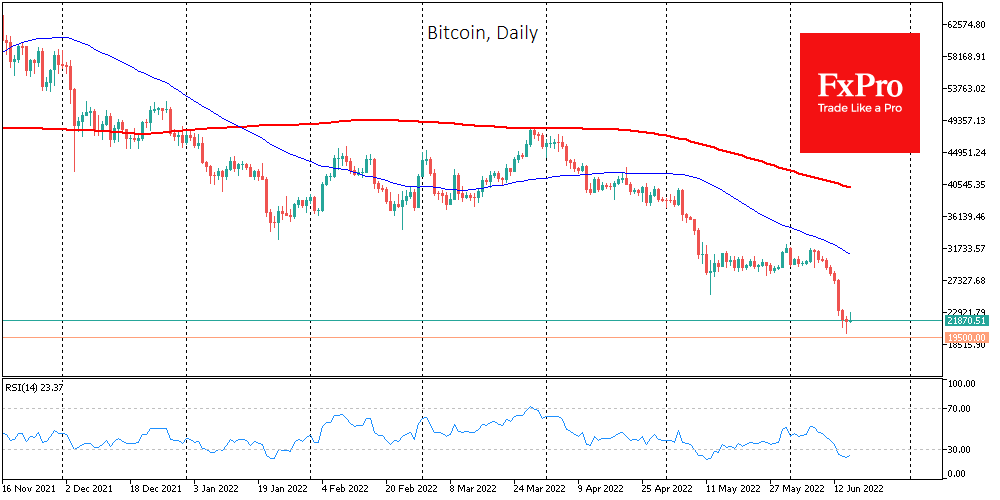
Bitcoin was down 0.7% on Wednesday, ending it near $21.8K, although it was a hair away from $20K in the first half of the day.
Ethereum gained 5% in the past 24 hours, losing 35% in 7 days. Altcoins from the top 10 are growing ahead of the curve, rising between 7% (BNB) and 18.6% (Solana). The top altcoins are behaving better than the flagships (ETH, BTC) this week, as they have fewer institutions and crypto enthusiasts find them relatively stable and still cheap.
Total crypto market capitalisation, according to CoinMarketCap, added 5% overnight to $0.94 trillion. The Bitcoin dominance index declined 0.6 points overnight and 2.2 points in 7 days to 44.3%.
By Thursday, the cryptocurrency fear and greed index remained unchanged at 7 points (“extreme fear”).
It isn’t easy to rely on the resulting rebound as it is not due to easing financial conditions. Bitcoin’s recovery to Tuesday’s levels looks like a technical bounce after a quick collapse. Yesterday, financial markets received the fastest monetary policy tightening in almost 30 years, which has hardly added to the appeal of cryptocurrencies for the foreseeable future.
Investors and traders should be prepared that yesterday’s rebound could choke out rather quickly. We need to be ready that cryptocurrencies and risky assets in financial markets are unlikely to reliably bounce back before there are signals that the economy has stopped slowing. The Fed is no longer tightening its rhetoric.
Despite the massive fall in the crypto market, MicroStrategy CEO Michael Saylor continues to express confidence in bitcoin’s growth. He said the company is safe, has enough collateral for its loan, and could survive a BTC’s fall as low as $3562. MicroStrategy has already lost more than $1.2 billion due to the decline in BTC.
According to a Bank of America survey, 90% of Americans plan to buy cryptocurrencies in the next six months.
According to market veteran Peter Brandt, people are willing to buy anything in the hope of an “ace” but end up losing their hard-earned money.
SNB Jordan: Swiss Franc no longer highly valued
SNB Chairman Thomas Jordan said in the post-meeting pressing conference, "the new inflation forecast shows that further increases in the policy rate may be necessary in the foreseeable future."
"In the current environment, price increases were being passed on more quickly, and are also being more readily accepted, than was the case until recently," he said. "There is the threat of second-round effects becoming entrenched if inflation remains above 2% for a long period."
Jordan also noted that the Franc's strength on safe-haven flow helped dampen the impact on higher fuel and food import prices. But that was less the case following recent decline. "Thus the inflation imported from abroad has increased," he said. "Another consequence of this depreciation coupled with significantly higher inflation abroad is that the franc is no longer highly valued."
EUR/CHF Daily Outlook
Daily Pivots: (S1) 1.0352; (P) 1.0415; (R1) 1.0449; More....
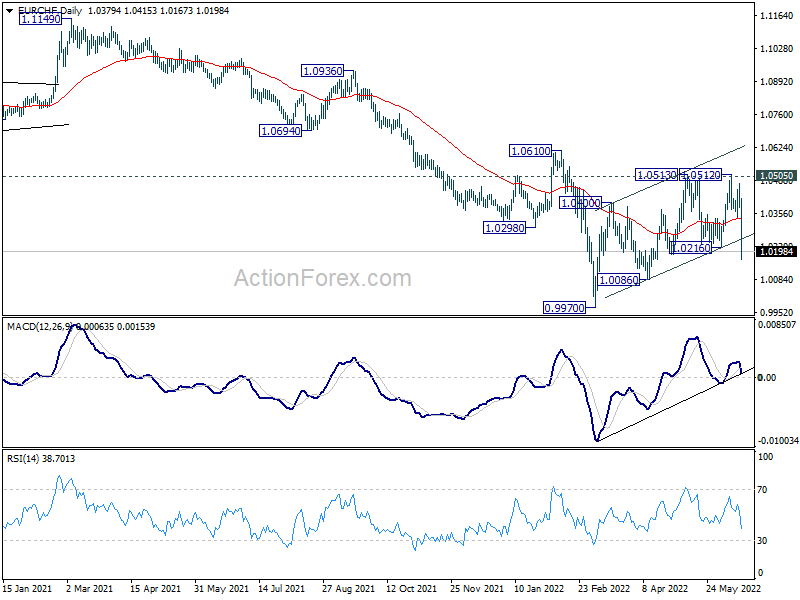
EUR/CHF's steep decline and strong break of 1.0216 support suggests that corrective rebound from 0.9970 has completed already, after second rejection by 1.0505 support turned resistance. Intraday bias is back on the downside for 1.0086 support first. Break will target a test on 0.9970 low. For now, risk will stay on the downside as long as 1.0512 resistance holds, in case of recovery.
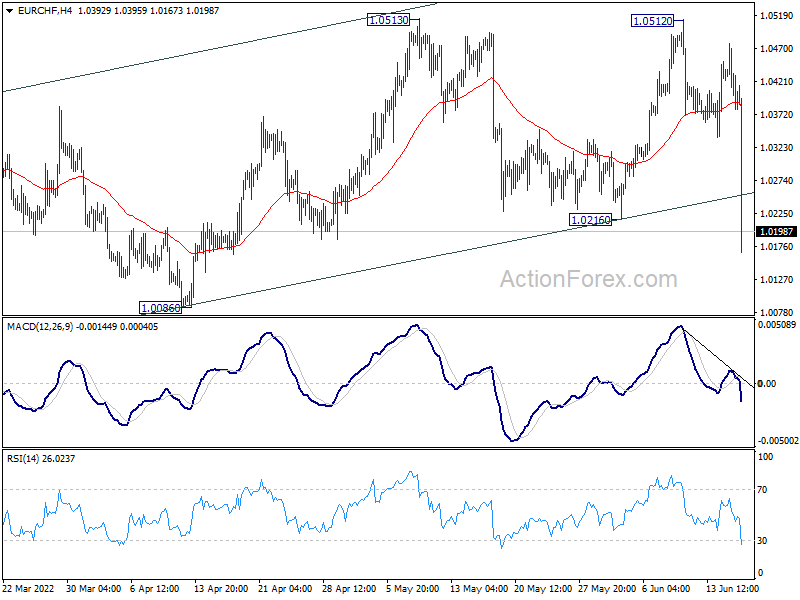
In the bigger picture, as long as 1.0505 support turned resistance (2020 low) holds, long term down trend from 1.2004 (2018 high) is expected to continue. Next target is 100% projection of 1.2004 to 1.0505 to 1.1149 at 0.9650. However, firm break of 1.0505 will suggest medium term bottoming, and bring stronger rebound towards 1.1149 structural resistance.
GBP/JPY Daily Outlook
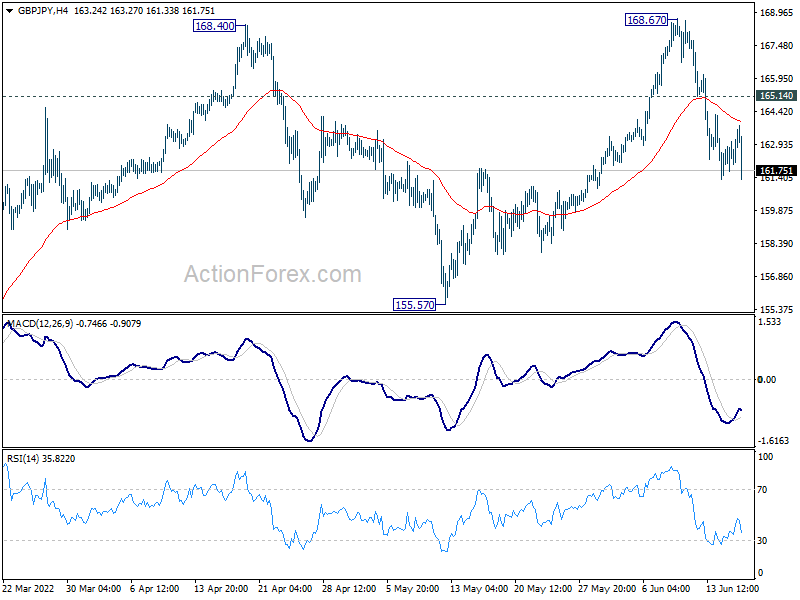
Daily Pivots: (S1) 162.05; (P) 162.61; (R1) 163.48; More...
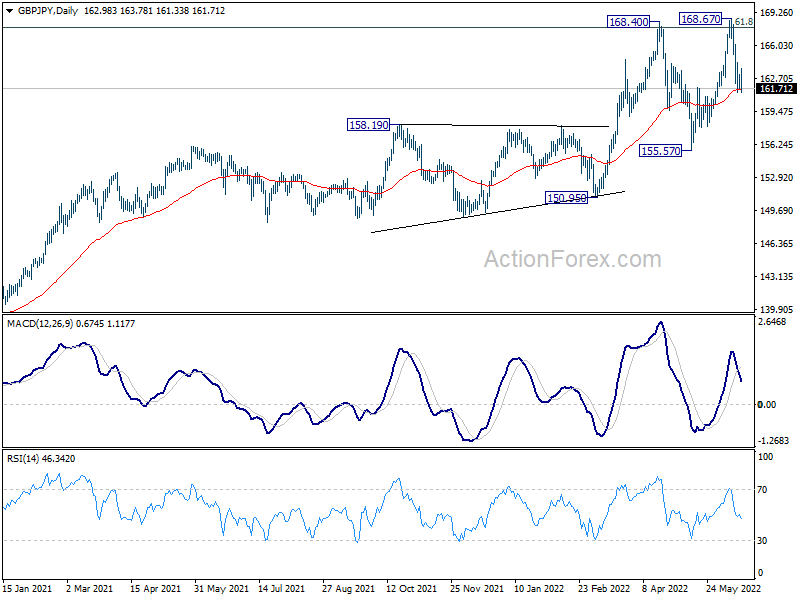
Intraday bias in GBP/JPY remains on the downside as fall from 168.67 is in progress. Sustained break of 55 day EMA (now at 161.66) will bring deeper decline to 155.57 support. On the upside, above 165.14 minor resistance will turn bias back to the upside for 168.67 again.
In the bigger picture, up trend from 123.94 (2020 low) is still in progress. Sustained break of 61.8% retracement of 195.86 (2015 high) to 122.75 (2016 low) at 167.93 will be a long term bullish signal, and could pave the way back to 195.86 high. This will now remain the favored case as long as 155.57 support holds, even in case of deep pull back.
EUR/JPY Daily Outlook
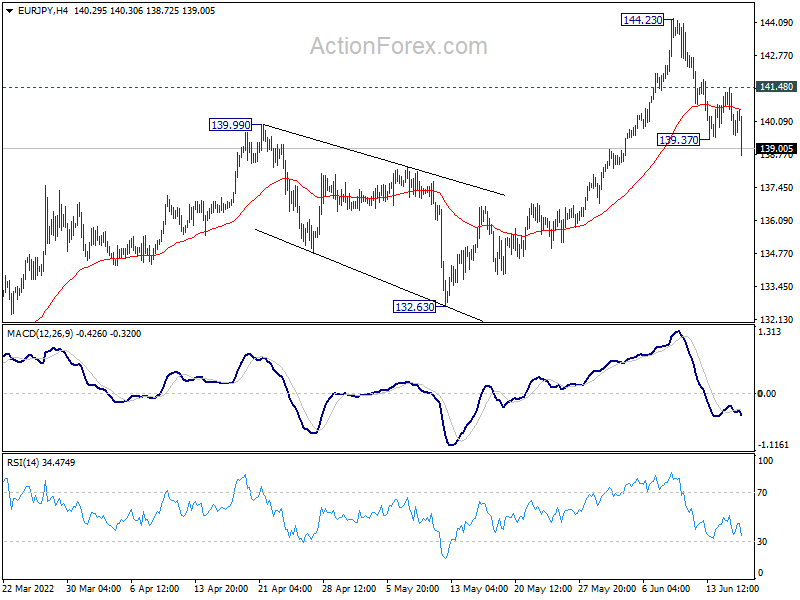
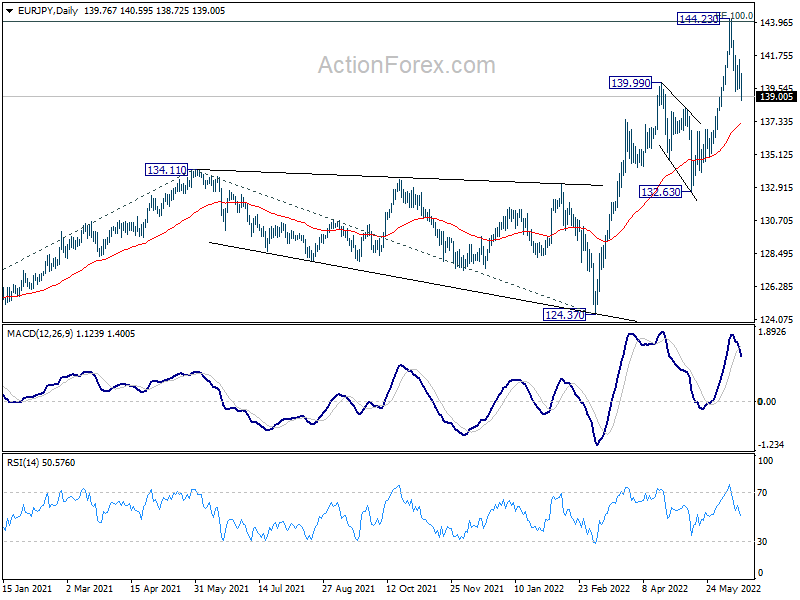
Daily Pivots: (S1) 139.07; (P) 140.28; (R1) 141.02; More....
EUR/JPY's fall from 144.23 resumes today and intraday bias is back on the downside for 55 day EMA (now at 137.11). On the upside, above 141.48 will turn bias back to the upside for retesting 144.23 resistance instead.
In the bigger picture, up trend from 114.42 (2020 low) is in progress. Such rise is seen as the third leg of the pattern from 109.30 (2016 low). Sustained trading above 100% projection of 114.42 to 134.11 from 124.37 at 144.06 will indicate upside acceleration and target 149.76 long term resistance (2014 high). In any case, outlook will now remain bullish as long as 132.63 support holds, in case of deep pull back.
EUR/GBP Daily Outlook
Daily Pivots: (S1) 0.8525; (P) 0.8623; (R1) 0.8680; More...
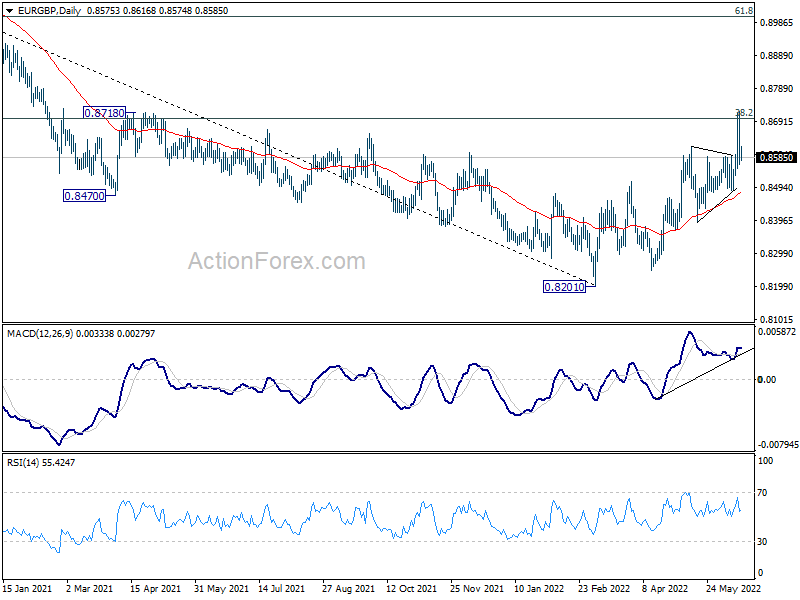
Intraday bias in EUR/GBP is turned neutral with current recovery. Further rise is expected as long as 0.8484 support holds. Break of 0.8720 and sustained trading above 0.8697 medium term fibonacci level will carry larger bullish implication. Next target is 0.9003 fibonacci level. However, break of 0.8484 will indicate rejection by 0.8697 and turn near term outlook bearish.
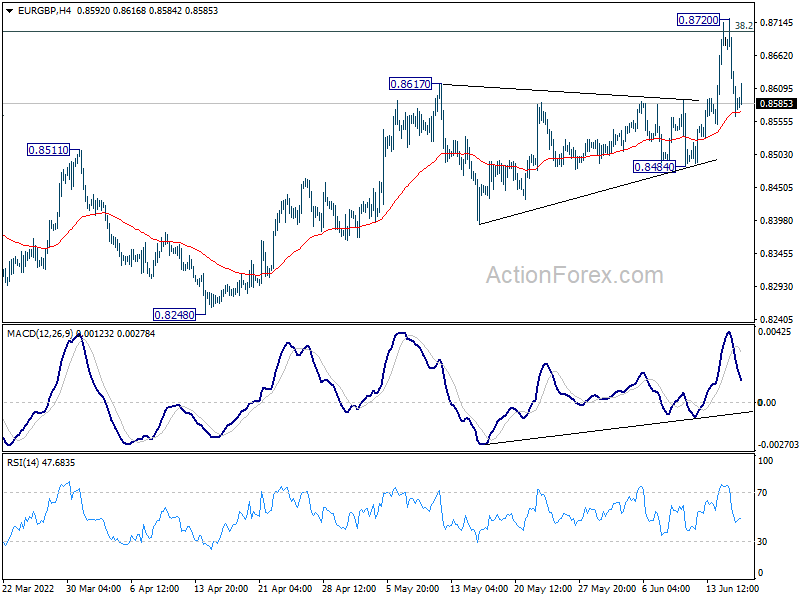
In the bigger picture, rise from 0.8201 medium term bottom could could either be a correction to the down trend from 0.9499 (2020 high), or a medium term up trend itself. Sustained break of 38.2% retracement of 0.9499 to 0.8201 at 0.8697 will affirm the latter case, and pave the way to 61.8% retracement at 0.9003. However, rejection by 0.8697 will maintain medium term bearishness.