Sample Category Title
EUR/AUD Daily Outlook
Daily Pivots: (S1) 1.4799; (P) 1.4995; (R1) 1.5110; More...
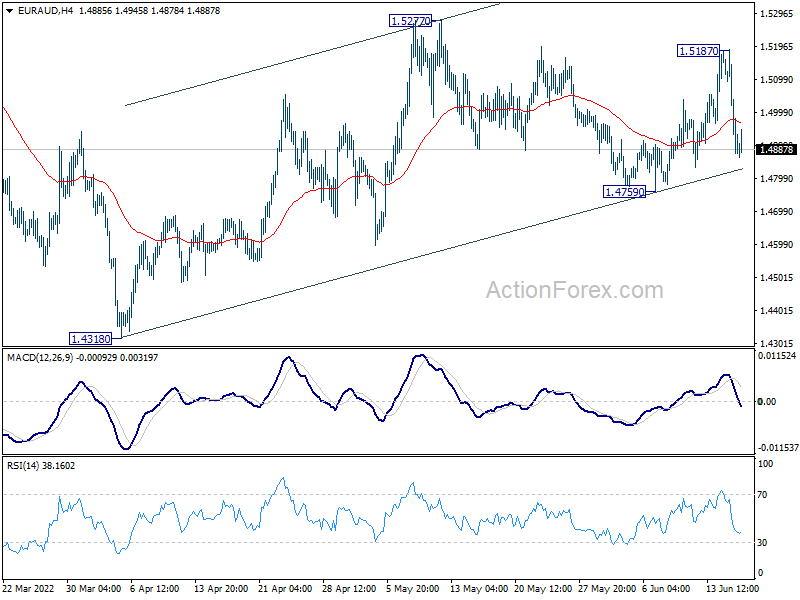
Intraday bias in EUR/AUD is turned neutral with current retreat. On the downside, break of 1.4759 support will suggest that rebound from 1.4318 has completed. Intraday bias will be turn back to the downside for retesting 1.4318 low. On the upside, above 1.5187 will target 1.5277 resistance and than 1.5354 support turned resistance next.
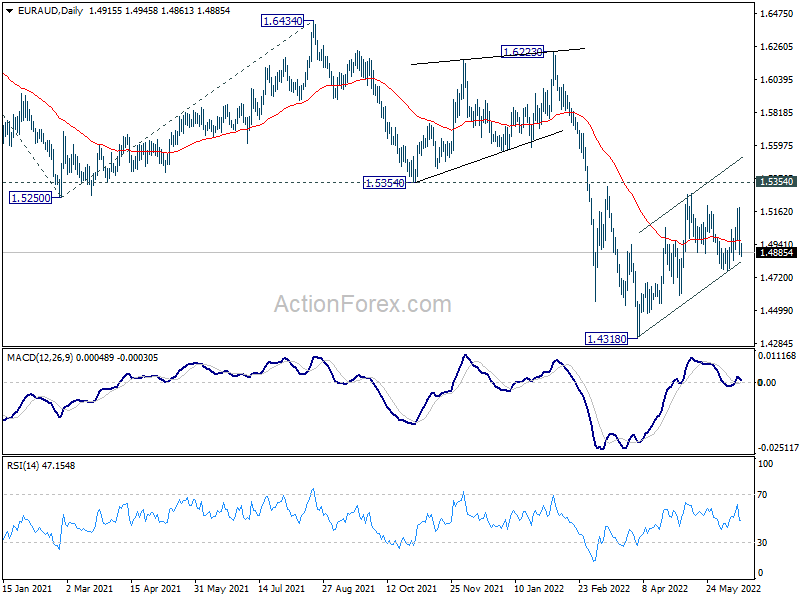
In the bigger picture, as long as 1.5354 support turned resistance holds, larger down trend from 1.9799 (2020 high) is still expected to continue. On resumption, next target is 61.8% projection of 1.9799 to 1.5250 from 1.6434 at 1.3623, which is close to 1.3624 long term support (2017 low). However, firm break of 1.5354 will indicate medium term bottoming and bring stronger rally back to 1.6434 key resistance.
USD/CAD Daily Outlook
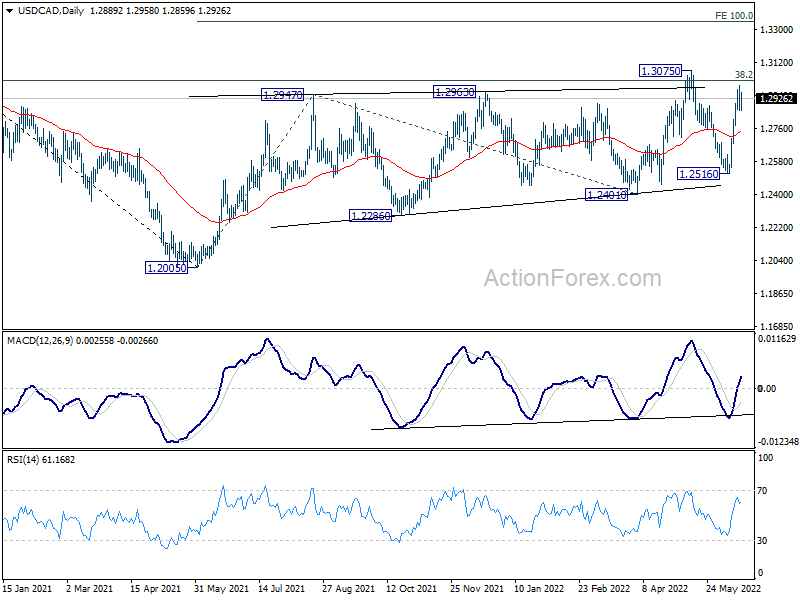
Daily Pivots: (S1) 1.2838; (P) 1.2917; (R1) 1.2971; More...
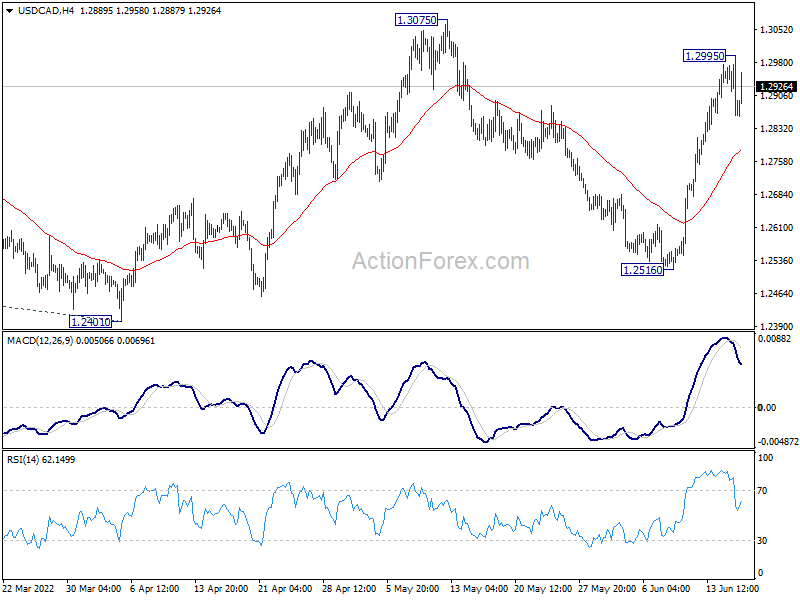
Intraday bias in USD/CAD is turned neutral first. Further rise will remain mildly on favor as long as 1.2516 support holds. Above 1.2995 will target 1.3075 resistance. Firm break there will resume medium term rally and sustained trading above 1.3022 fibonacci level will carry larger bullish implications. Next target is 100% projection of 1.2005 to 1.2947 from 1.2401 at 1.3343.
In the bigger picture, focus stays on 38.2% retracement of 1.4667 (2020 high) to 1.2005 (2021 low) at 1.3022. Sustained break there should confirm that the down trend from 1.4667 has completed after defending 1.2061 long term cluster support. Further rise would then be seen towards 61.8% retracement at 1.3650. However, rejection by 1.3022 will maintain medium term bearishness.
AUD/USD Daily Report
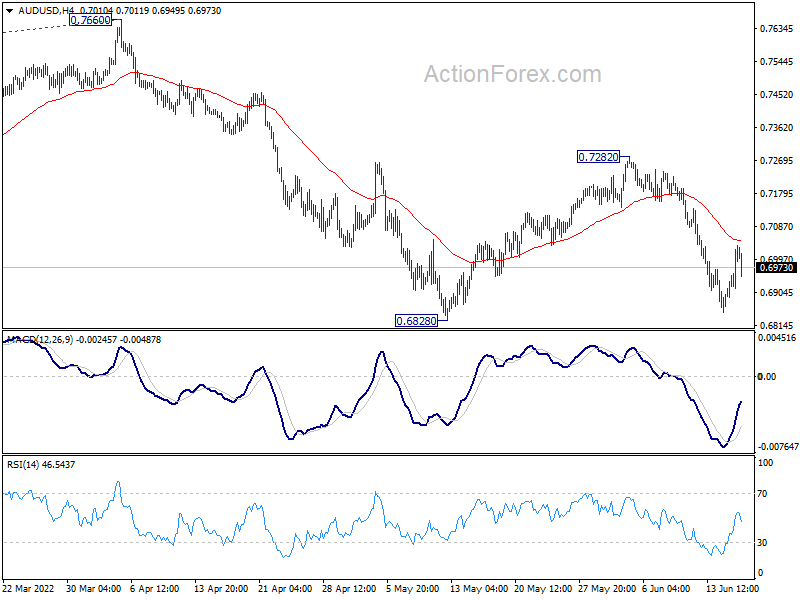
Daily Pivots: (S1) 0.6901; (P) 0.6963; (R1) 0.7064; More...
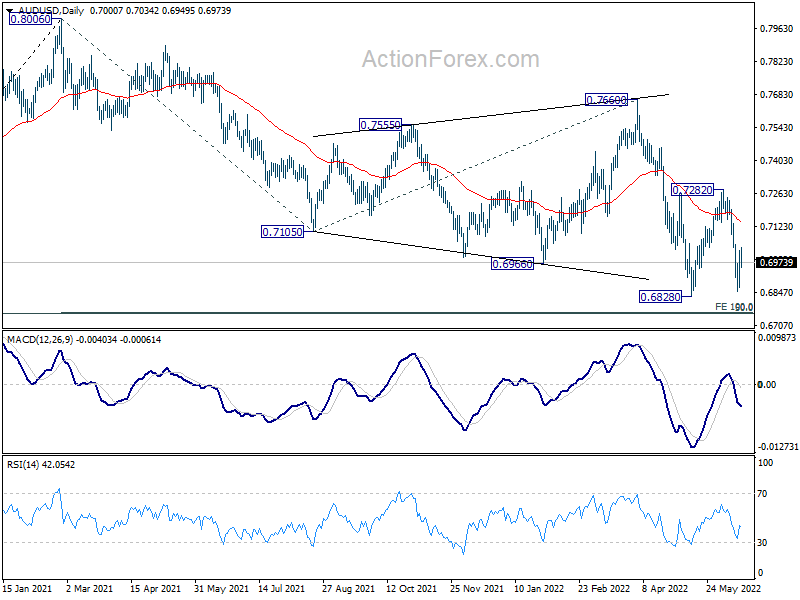
Intraday bias in AUD/USD is turned neutral first with current recovery. Risk will stay on the downside as long as 0.7282 resistance holds. On the downside, firm break of 0.6828 support will resume larger fall from 0.8006. Next target is 0.6756/60 cluster support.
In the bigger picture, price actions from 0.8006 are seen as a corrective pattern to rise from 0.5506 (2020 low). Deeper fall could still be seen to 50% retracement of 0.5506 to 0.8006 at 0.6756. This coincides with 100% projection of 0.8006 to 0.7105 from 0.7660 at 0.6760. Strong support is expected from 0.6756/60 cluster to contain downside to complete the correction. Meanwhile, firm break of 0.7660 resistance will confirm that such corrective pattern has completed, and larger up trend is ready to resume.
EUR/USD Daily Outlook
Daily Pivots: (S1) 1.0368; (P) 1.0438 (R1) 1.0517; More...
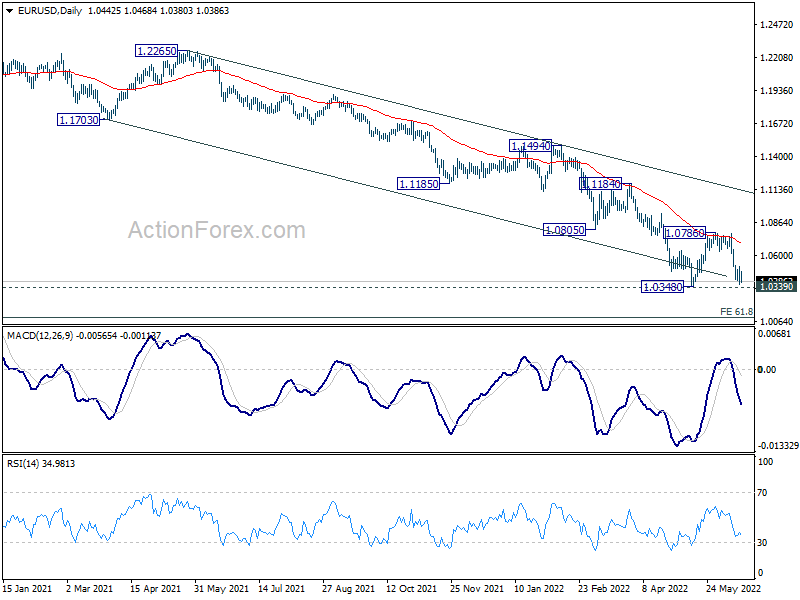
Intraday bias in EUR/USD is back on the downside for retesting 1.0339 low. Decisive break there will resume larger down trend. Next target is long term projection level at 1.0090. On the upside, above 1.0506 minor resistance will delay the bearish case and turn intraday bias neutral again.
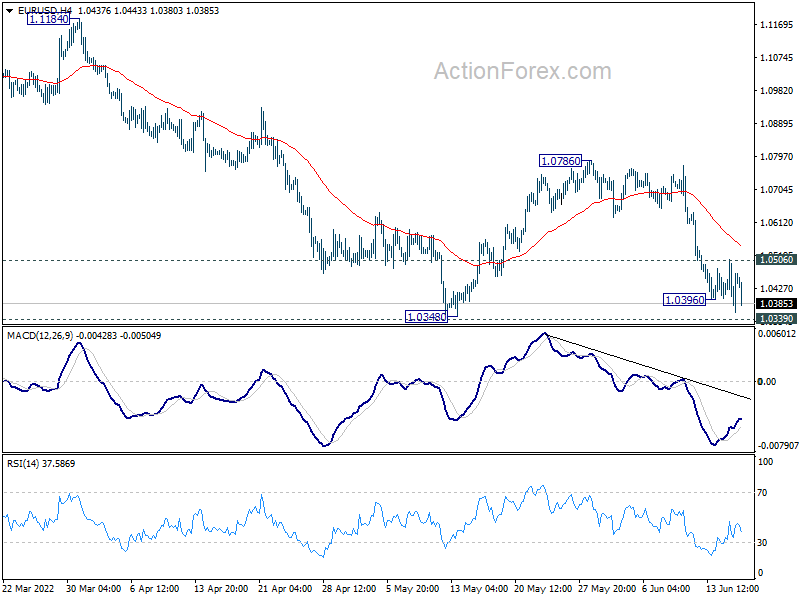
In the bigger picture, focus stays on 1.0339 long term support (2017 low). Decisive break there will resume whole down trend from 1.6039 (2008 high). Next target is 61.8% projection of 1.3993 to 1.0339 from 1.2348 at 1.0090. However, firm break of 1.0805 support turned resistance will delay this bearish case, and bring stronger rebound first.
GBP/USD Daily Outlook
Daily Pivots: (S1) 1.2040; (P) 1.2123; (R1) 1.2255; More...
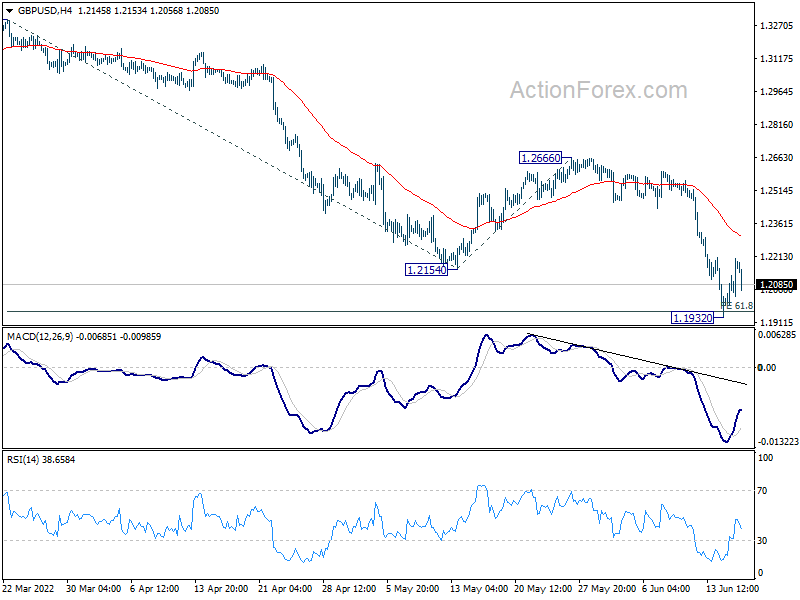
Intraday bias in GBP/USD remains neutral for consolidation above 1.1932 temporary low. Outlook stays bearish with 1.2666 resistance intact. On the downside, sustained break of 61.8% projection of 1.3297 to 1.2154 from 1.2666 at 1.1960 will extend larger down trend to 100% projection at 1.1523 next.
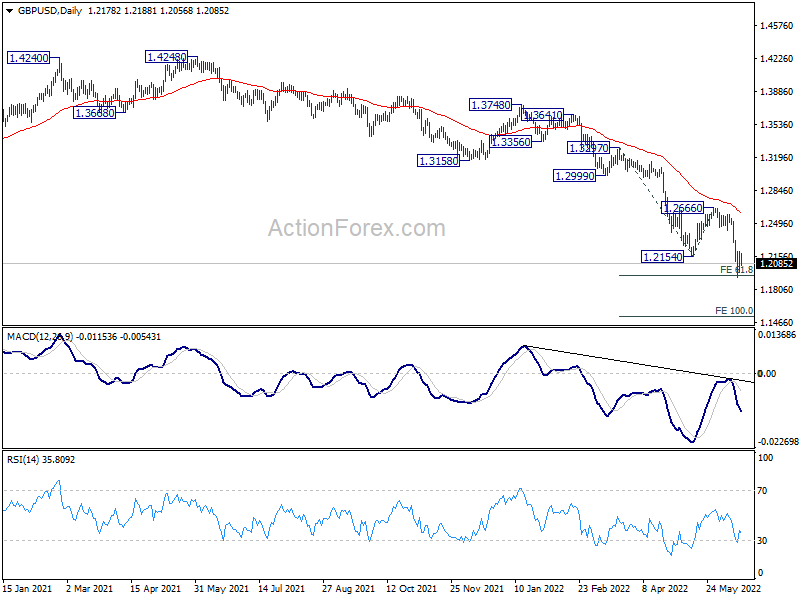
In the bigger picture, fall from 1.4248 (2018 high) could be a leg inside the pattern from 1.1409 (2020 low), or resuming the longer term down trend. Deeper decline is expected as long as 1.2666 resistance holds. On resumption, next target is 1.1409 low.
USD/JPY Daily Outlook
Daily Pivots: (S1) 133.01; (P) 134.31; (R1) 135.10; More...
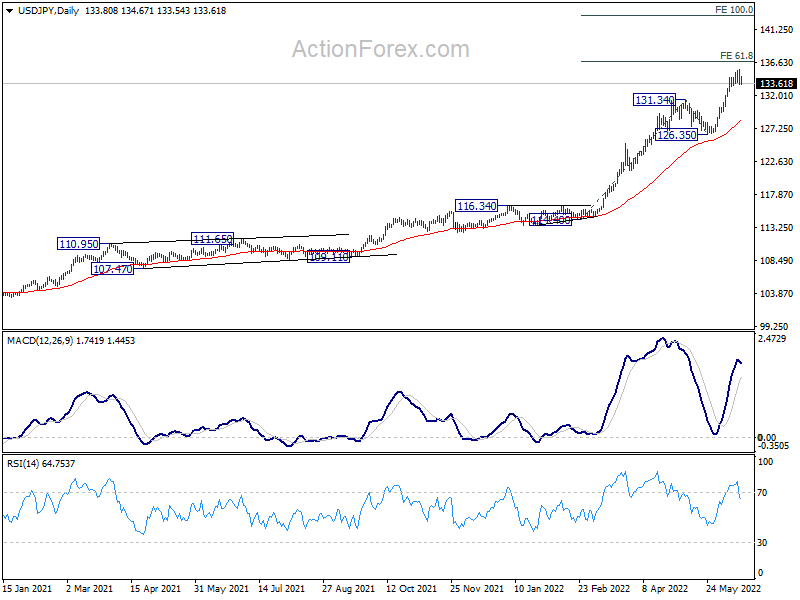
Intraday bias in USD/JPY is turned neutral for consolidation below 135.58. Further rally is expected as long as 131.34 resistance turned support holds. Above 135.58 will resume larger up trend to 61.8% projection of 114.40 to 131.34 from 126.35 at 136.81. Firm break there will target 100% projection at 143.29.
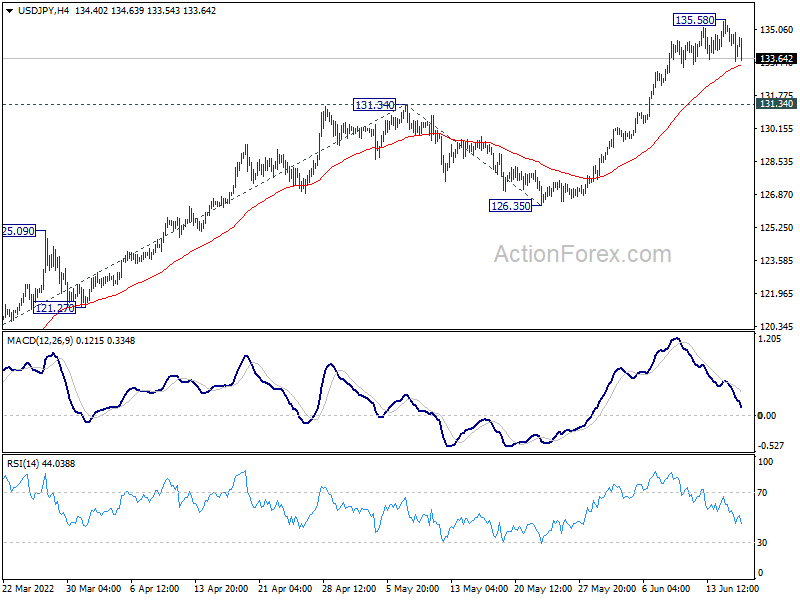
In the bigger picture, current rally is seen as part of the long term up trend from 75.56 (2011 low). Next target is 100% projection of 75.56 (2011 low) to 125.85 (2015 high) from 98.97 at 149.26, which is close to 147.68 (1998 high). This will remain the favored case as long as 126.35 support holds.
Markets Will Look for a New Equilibrium Post Fed
Markets
Yesterday didn’t bring the boring intraday countdown that often guides trading going into a Fed decision. After the recent sharp rise in yields and risk sell-off, investors scaled back on recent unidirectional positioning, whatever the outcome of the Fed decision. Yields corrected south. Equities tried a cautious rebound. Early in Europe, the ECB announced an ad hoc meeting to discuss current market conditions. The outcome of the meeting was meager. The ECB reiterated to apply flexibility in the reinvestment of PEPP redemptions. Staff was ordered to come up with a new antifragmentation instrument. The Italian 10-y spread vs Germany initially dropped more than 40 bps and preserved a big part of this gain even after a disappointing result.
In the meantime, weak US retail sales further supported the bond rebound ahead of the Fed policy meeting. The Fed as expected raised the Fed Fund target by 75 bps to 1.50%-1.75%. In its projections/dots, it sees PCE inflation above 2% over the policy horizon (5.2% 2022, 2.6% 2023,2.2% 2024), with the median forecast for the policy rate seen at 3.4% and 3.8% end 2022 and 2023 respectively. Expected growth is downwardly revised to 1.7% this and next year. The unemployment rate is expected to rise from 3.7% to 4.1%. During the press conference, the Fed Chair reiterated that policy had to move into restrictive territory given the combination of excessive demand (also in the labour market) and restricted supply. Even so, if the Fed would be able to engineer the ‘Dots-scenario’, Powell said this would be close to a soft landing. On the short term trajectory for policy, Powel expects a 75 bps or 50 bps hike in July, but indicated that 75 bps isn’t a common move. He saw a rate at 3.0%/3.50% end 2022and 3.50%/4.0% next year as reasonable tightening to cool down demand. During the press conference, the decline in yields continued especially after his remarks that 75bps isn’t common.
Finally, US yields dropped 23.6 bps (2-y) to 9.6 bps (30-y). Equities got some relief (Dow +1.0%, Nasdaq +2.50%). The dollar (DXY) jumped to a cycle top upon the announcement but dropped back to 104.80. In a similar move, EUR/USD spiked to the 1.10350/65 area, but the 1.0341 support wasn’t questioned. The pair closed at 1.044.Today, markets will look for a new equilibrium post Fed. US yields, especially at the longer end might enter a consolidation pattern. (10-y: 3%-3.5%). The dollar remains well bid, but the pace of gains might slow, especially if equities would (temporary?) enter calmer waters, too. EUR/USD 1.0340/50 remains an key reference. The BoE will decide on monetary policy. Analysts expect an additional 25 bps hike, but maybe there is an outside risk for 50 bps, even as domestic demand is under pressure from the decline in real disposable income. If the BoE sticks to a 25 bps step, sterling probably will stay in the defensive. Also keep an eye at the Swiss national Bank (SNB)
News Headlines
The May Australian labour market report was decent, but near consensus. The unemployment rate stabilized at 3.9%, still the lowest on record. Employment increased by 60.6k following only 4.4k in April (influenced by Easter, school holidays, floods and ongoing Covid-disruptions). A positive trend in full time employment drives employment gains. In May, they increased by 69.4k, compensating for a 8.7k decline in part-time employment. The employment to population ratio increased to 64.1%, an all-time high and 1.6 percentage points higher than March 2020. Seasonally adjusted hours worked increased by 0.9%. A separate survey this morning shows consumer inflation expectations rising from 5% to 6.7% in June, the highest level since 2008. AUD/USD tries to hold above 0.70, following yesterday’s impressive rebound (from 0.6850) in a more relaxed global context.
New Zealand recorded negative GDP growth in Q1 (-0.2% Q/Q) coming from 3% growth in the final quarter of last year and below 0.6% Q/Q consensus. Net exports were responsible for the decline with exports down 14.3% Q/Q and imports decreasing by 2.8% Q/Q. Export of services fell 24.8% Q/Q and remains significantly impacted by the pandemic and continued border restrictions. Household spending held up, adding 4.6% Q/Q and being driven by spending on services. Real gross national disposable income did fall 0.5% Q/Q, reducing the consumer’s purchasing power. Investments in fixed assets rose 1.2% Q/Q but showed a mixed picture on a sector level. NZD/USD followed yesterday’s global move, bouncing off 0.62 support towards 0.63...
WTI Futures Capped by 20-day SMA But Remains in Ascending Move
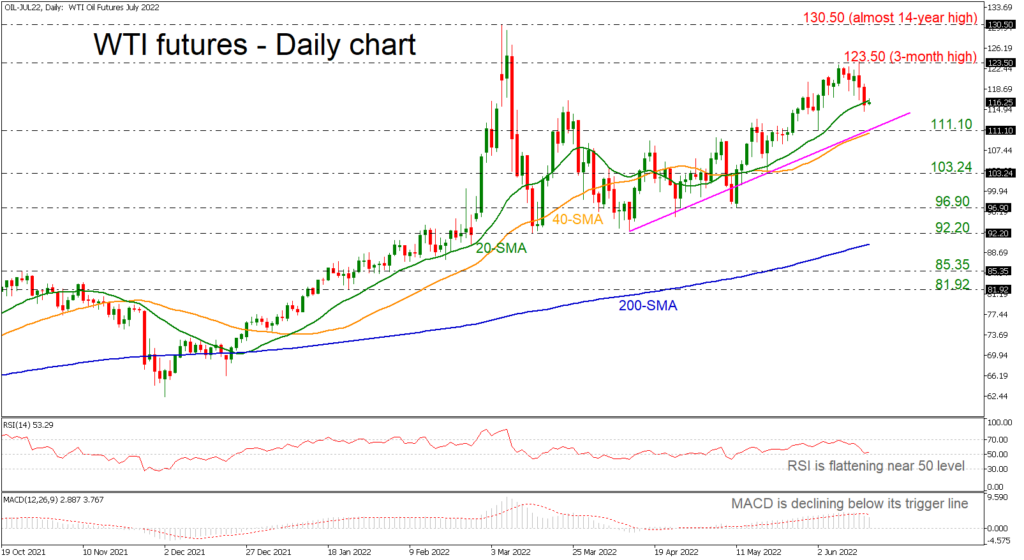
WTI crude oil futures are declining below the 20-day simple moving average (SMA) after the pull back from the 123.50 resistance level. The price has been developing within an uptrend line over the last two months while the technical indicators are mirroring the latest descending move. The RSI indicator is moving sideways near the neutral threshold of 50, and the MACD is falling below its trigger line.
More downside pressures may meet immediate support around the 111.10 barrier, which overlaps with the uptrend line and the 40-day SMA. Should the price retreat further, the 103.24 barrier could come under speculation.
In the positive scenario, the commodity could improve above the three-month high of 123.50 to challenge a stronger resistance around the almost 14-year high of 130.50. The 147.00 area, however, which strictly capped bullish over the past 14 years, remains the big highlight.
In brief, WTI futures are expected to pause the north-run in the very short-term, while in the medium-term, buying interest could advance if the market confirms a jump above the three-month high and the 14-year peak.
AUDUSD Pauses Post-FOMC Rally, But Bulls May Persist
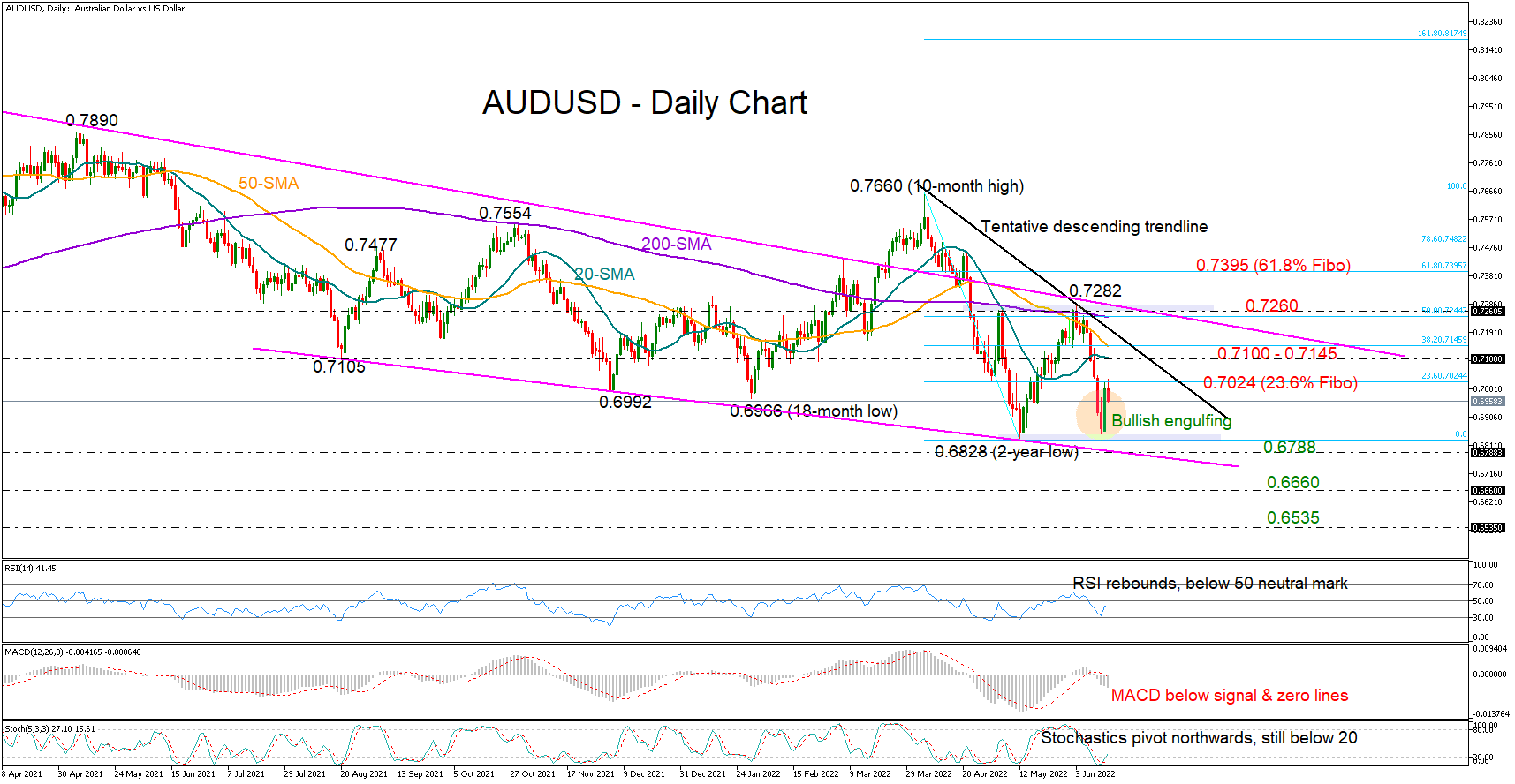
AUDUSD has not successfully entered the 0.7000 zone yet despite its impressive post-FOMC rally, which lifted the price by almost 2.0% to 0.7034.
The 23.6% Fibonacci retracement of the 0.7660 – 0.6828 downleg was another struggle yesterday at 0.7024, though the latest big green candlestick seems to be part of a bullish engulfing pattern: an encouraging sign that the rebound could gain more legs in the near term. The upside reversal in the RSI and the Stochastics is sending positive vibes as well, though traders may retain some caution as the indicators remain within the bearish area, while the MACD continues to point downwards.
A clear close above the 0.7000 – 0.7024 bar could initially pause within the 0.7100 – 0.7145 region, where the 20- and 50-day SMAs and the 38.2% Fibonacci level are located. Running higher, the bulls will push for a break above the 200-day SMA and the upper boundary of the bearish channel at 0.7260. The 50% Fibonacci is also in the same neighborhood; therefore, any violation at this point is expected to drive the price straight up to the 61.8% Fibonacci of 0.7395.
Otherwise, a downside reversal may retest the floor around the 2-year low of 0.6826 ahead of the channel’s bottom line seen at 0.6788. A decisive step lower may promote an extension towards the familiar barricade of 0.6660, which had been strongly rejecting upside and downside moves during the 2019 – 2020 period. In case the latter fails to hold, the next stop could be near the 0.6535 mark last seen in May 2020.
In brief, Wednesday’s bounce in AUDUSD has raised the odds for further improvement. A close above 0.7000 could bolster buying interest.
Daily Technical Analysis
EUR/USD
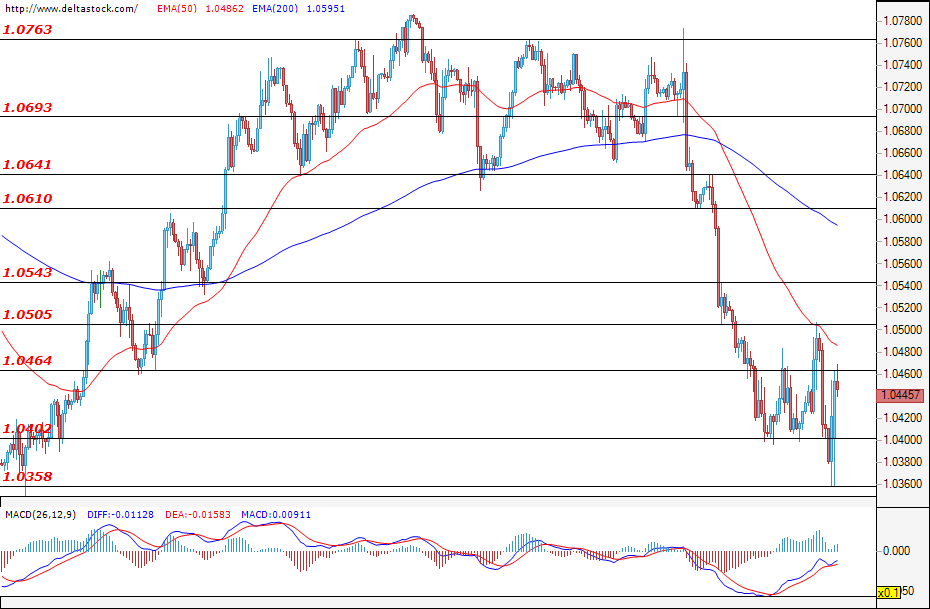
In the early hours of Thursday, the euro had gained strength against the dollar, and with the opening of the European session, it was quoted at a daily high of about 1.0505. There, however, the uptrend found resistance, and shortly before the release of the retail data for the United States, the currency pair started its decline. The data strengthened the dollar and the pair bottomed out at around its key level of 1.0358. Shortly afterwards, at 18:00 GMT, the U.S. Federal Reserve decided to increase the key interest rate by 0.75 basis points – a decision they had not made since 1994. The effect was not delayed and we saw a 85-pip bounce from the bottom that ended the trading session at 1.0445. The probability for the dollar to continue rising after the Fed's decision is high, and this could seriously affect the prolonged decline of the euro. However, whether we will see a higher correction and a follow-up bear attack will largely depend on the market reaction following the announcement of the unemployment claims data for the United States, which is expected today at 12:30 GMT.
USD/JPY
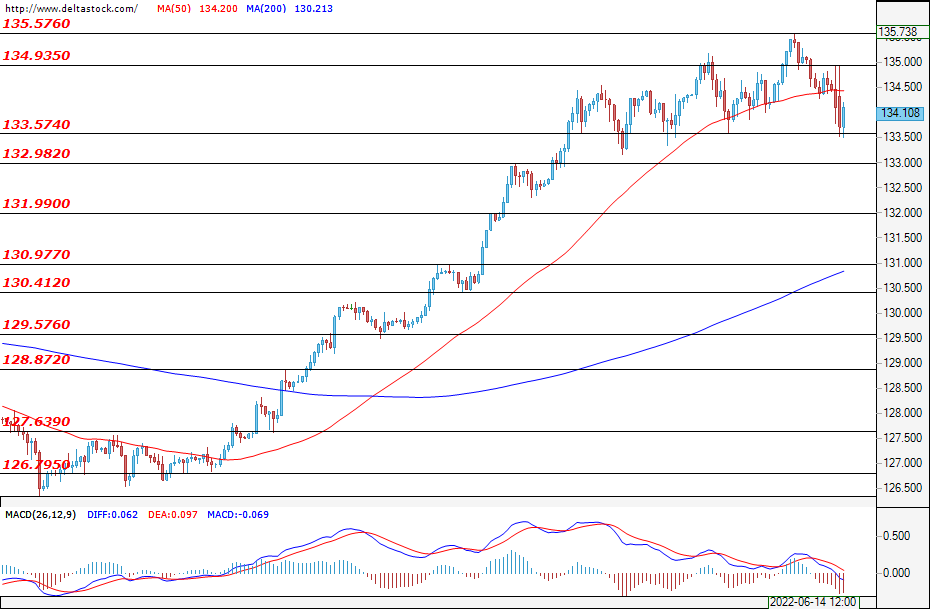
In the early hours of Thursday, the USD/JPY managed to reach a new monthly peak of 135.57. There, however, the bears found a good entry point, and after breaching the key level of 135.00, they managed to continue the pair’s decline following a short break. The decision to raise the U.S. interest rate had a negative effect on the currency pair and the correction deepened towards the support at 133.57. The day ended not far from it at prices of around 133.72. The trend is likely to continue in the upward direction and to mark new highs, as the Japanese bank is not expected to raise its interest rate this Friday. Still, a deepening of the correction towards the levels at around 133.00 should not be excluded, as the price provides a good market entry point for newly arriving bulls.
GBP/USD
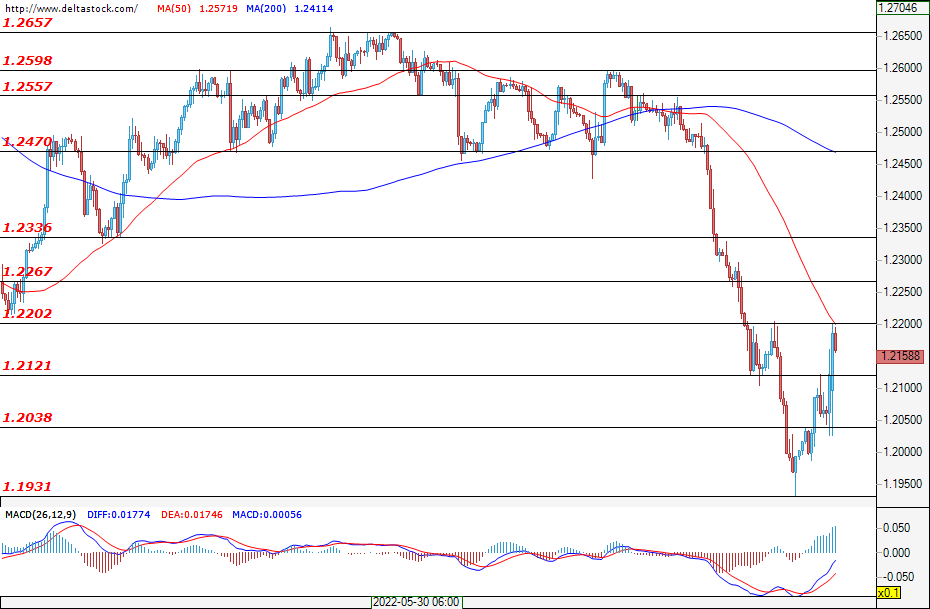
After finding its weekly low at 1.1931, the pound continued to rise throughout today’s early session. The weak dollar at the beginning of the day gave the bulls the strength to extend their attack towards the level at around 1.2121 following a short break and just a few hours before the Fed's decision. After seeing the rise in the key interest rate of the U.S. to 1.75%, the sterling took advantage and continued its growth by rebounding from its key level of 1.2038. It then managed to reach 1.2202 as well and end the day a few pips below its peak. Today, everyone's eyes will be on the Bank of England’s interest rate decision that is scheduled to be released at 11:00 GMT. The expectations are for a growth of 0.25%, but rumours are for a larger hike of 50 basis points. The volatility around such data is high and there will most likely be sharp movements in both directions.
EUGERMANY40
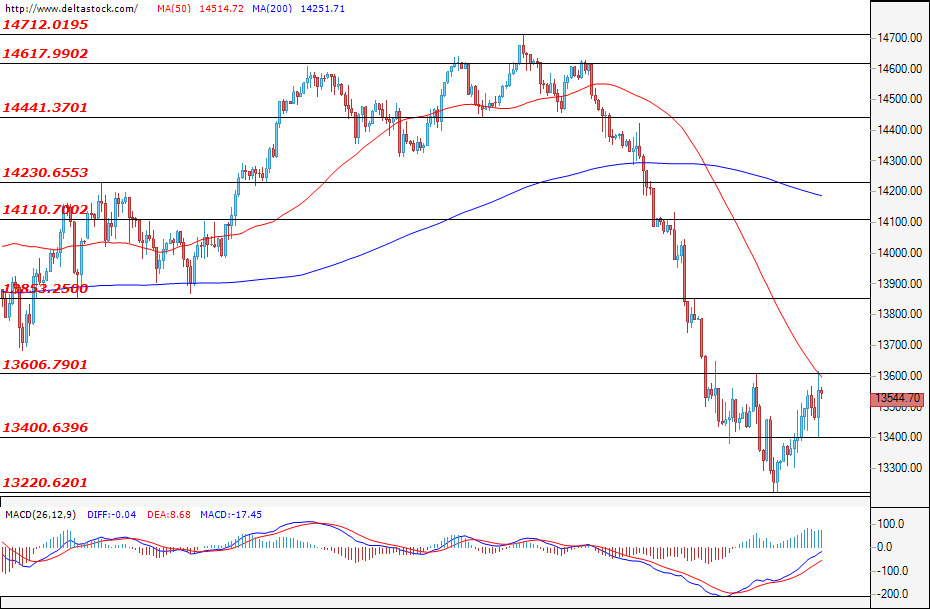
After initially rebounding from the bottom at 13220, the EUGERMANY40 is now pressing on with its upward movement. The opening of the European session revealed high volatility and a serious battle between bears and bulls. However, as we have already mentioned, the bulls prevailed and broke through the resistance at 13400, which after a few hours became a support. After the U.S. indices rose following the Fed’s decision to raise its key interest rate by 0.75%, the German index was not late to the party and mirrored their movements, once more reaching its local peak at 13606. However, there it found resistance and closed the day at around 13544. The downward trend towards 13220 is more likely to continue, but before that could happen, we may first see a higher correction if the bears are unable to find good entry prices.
US30
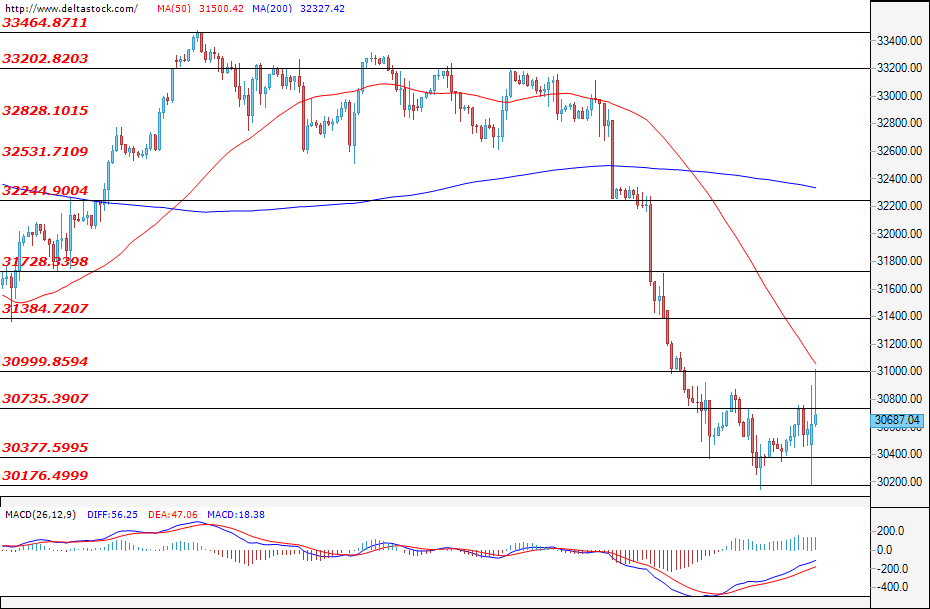
Yesterday’s price action was extremely volatile for the blue-chip index. In the early hours of today’s trading, the US30 went up after initially bouncing back from the support at 30377. Traders held their breath as they awaited the Fed's decision to raise the key interest rate for the U.S., and 30735 played the role of a light resistance. At 18:00 GMT, the unprecedented rise of 0.75% was already a fact, and within 2 hours, the US30 tested its bottom at 30176 and jumped to a new daily high of 31000. Such volatile movements, however, are typical around key interest rate data, and so the index is expected to continue downward if the reaction regarding today's U.S. unemployment data is negative, but the opposite scenario should still not be ruled out. If the bears do not find good prices today, then the price of the index may rise even higher.