Sample Category Title
GBP/USD Daily Outlook
Daily Pivots: (S1) 1.2280; (P) 1.2327; (R1) 1.2363; More...
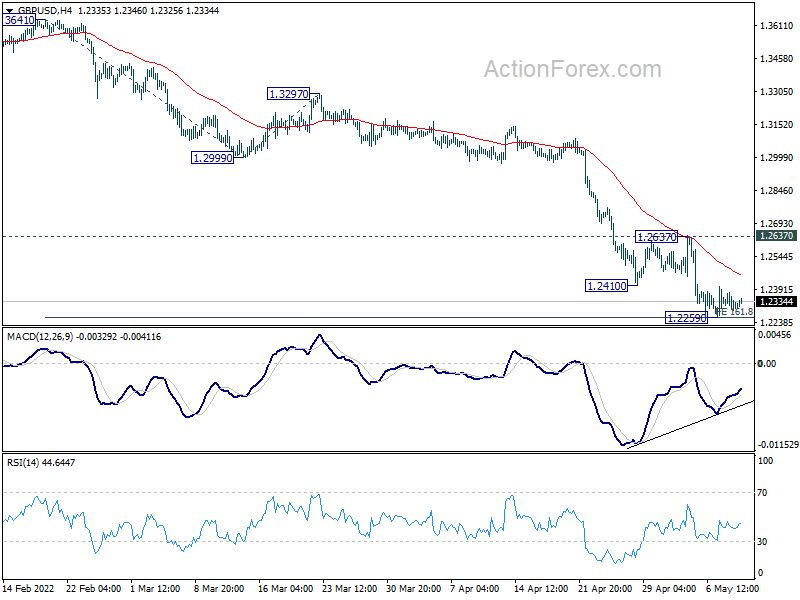
Intraday bias in GBP/USD remains neutral as consolidation from 1.2259 is extending. Some more consolidations could be seen but upside of recovery should be limited by 1.2637 resistance to bring fall resumption. On the downside, firm break of 161.8% projection of 1.3641 to 1.2999 from 1.3297 at 1.2258 will extend recent down trend to 200% projection at 1.2013 next.
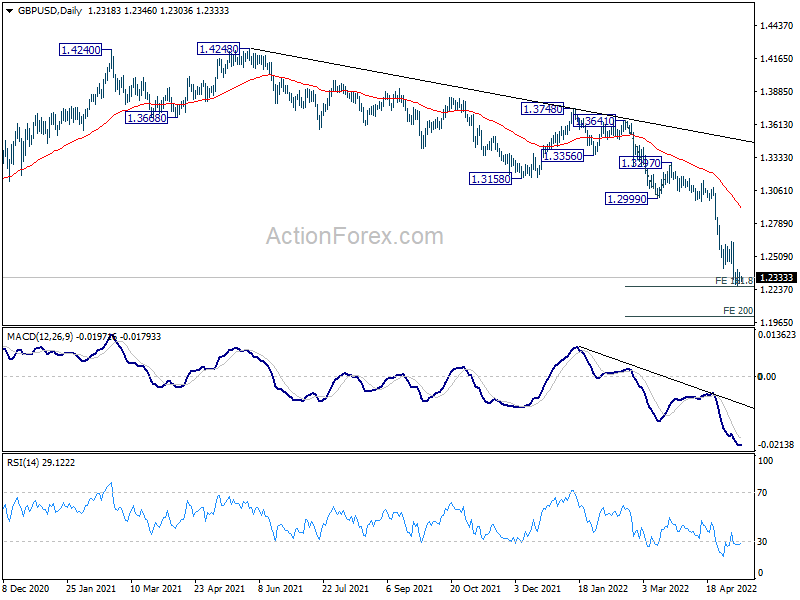
In the bigger picture, based on current momentum, fall from 1.4248 (2018 high) at least at the same degree as the rise form 1.1409 (2020 low). That is, fall from 1.4248 could be a leg inside the pattern from 1.1409, or resuming the longer term down trend. In either case, deeper decline is expected as long as 1.2999 support turned resistance holds. Next target is 1.1409 low.
USD/CHF Daily Outlook
Daily Pivots: (S1) 0.9918; (P) 0.9947; (R1) 0.9987; More....
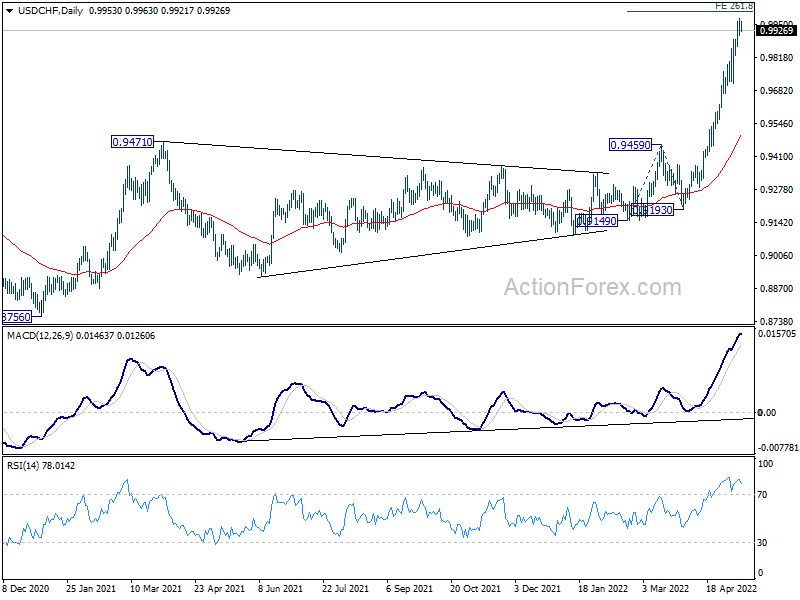
Intraday bias in USD/CHF remains mildly on the upside, and further rise could still be seen to 261.8% projection of 0.9149 to 0.9459 from 0.9193 at 1.0005. On the downside, break of 0.9708 support is needed to indicate short term topping. Otherwise, outlook will stay bullish in case of retreat.
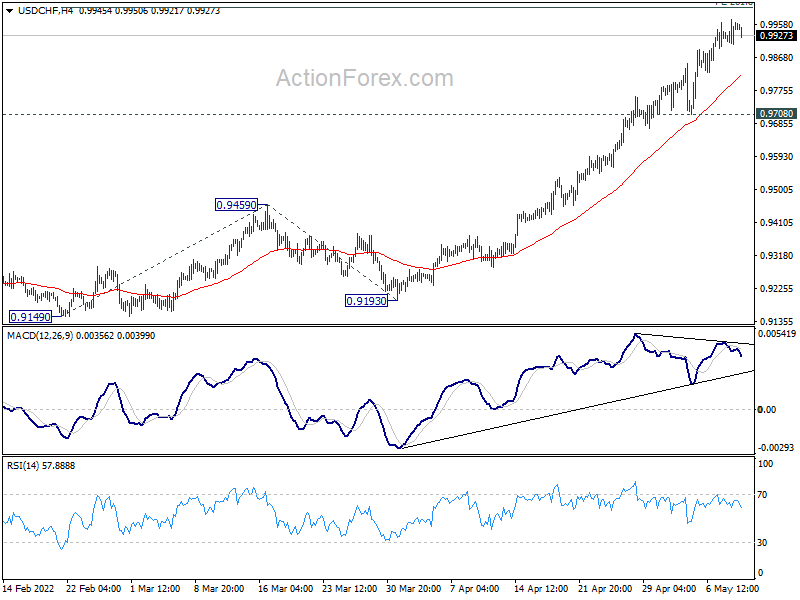
In the bigger picture, down trend from 1.0342 (2016 high) should have completed with three waves down to 0.8756 (2021 low) already. Rise from 0.8756 is likely a medium term up trend of its own. Sustained trading above 100% projection of 0.8756 to 0.9471 from 0.9149 at 0.9864 will pave the way to 161.8% projection at 1.0306, which is close to 1.0342 (2016 high). This will remain the favored case as long as 0.9459 resistance turned support holds.
USD/JPY Daily Outlook
Daily Pivots: (S1) 129.97; (P) 130.27; (R1) 130.75; More...
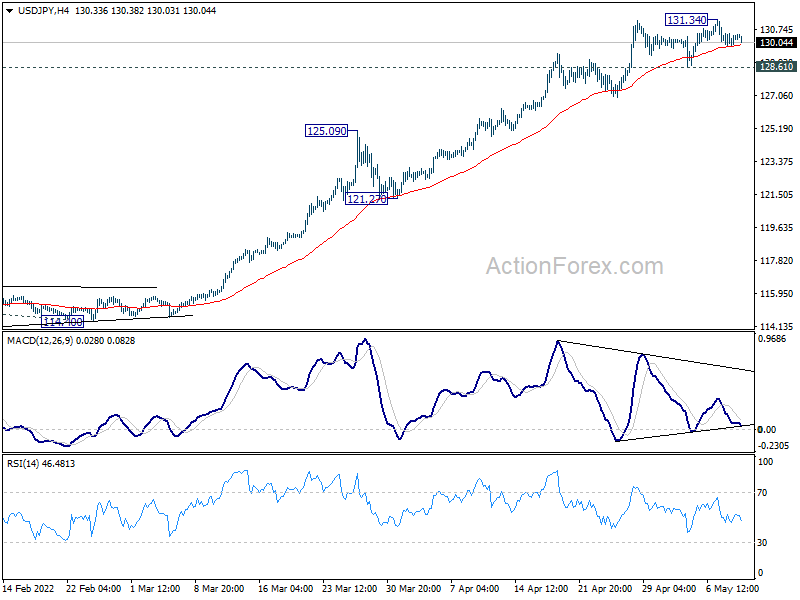
Intraday bias in USD/JPY remains neutral and outlook is unchanged. Further is expected as long as 128.61 support holds. Above 131.34 will target 261.8% projection of 109.11 to 116.34 from 114.40 at 133.26. However, firm break of 128.61 will indicate short term topping, and turn bias to the downside for deeper pull back.
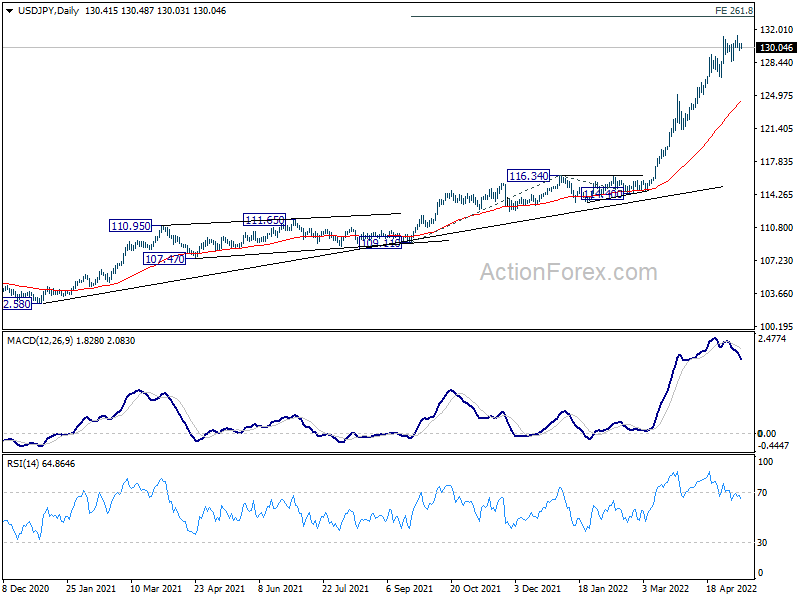
In the bigger picture, current rally is seen as part of the long term up trend form 75.56 (2011 low). Sustained trading above 61.8% projection of 75.56 (2011 low) to 125.85 (2015 high) from 98.97 at 130.04 will pave the way to 100% projection at 149.26, which is close to 147.68 (1998 high). For now, this will remain the favored case as long as 121.27 support holds.
AUD/USD Daily Report
Daily Pivots: (S1) 0.6905; (P) 0.6946; (R1) 0.6980; More...
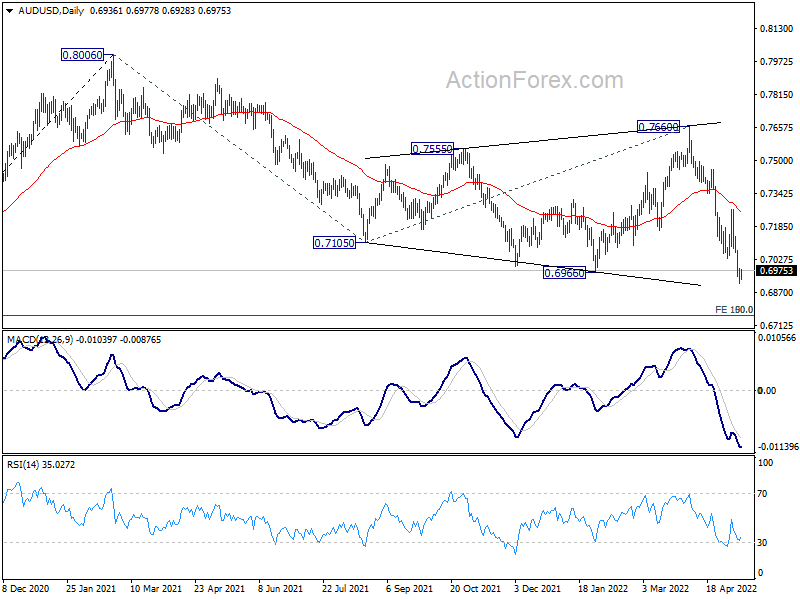
Intraday bias in AUD/USD stays mildly on the downside for the moment. Current fall is part of the corrective pattern from 0.8006. Deeper decline would be seen to for 0.6756 medium term fibonacci level next. On the upside, above 0.7027 minor resistance will turn intraday bias neutral first. But near term outlook will stay bearish as long as 0.7265 resistance holds.
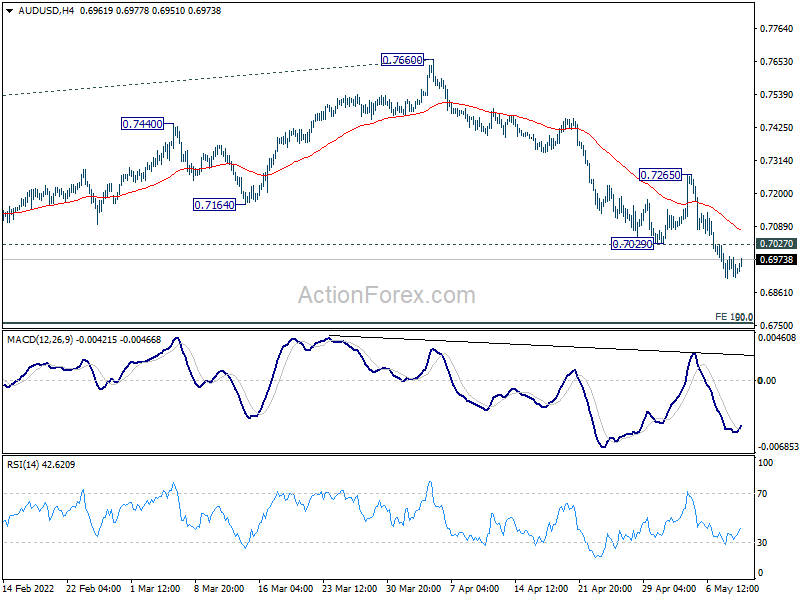
In the bigger picture, price actions from 0.8006 are seen as a corrective pattern to rise from 0.5506 (2020 low) with fall from 0.7660 as the third leg. Deeper fall should be seen to 50% retracement of 0.5506 to 0.8006 at 0.6756. This coincides with 100% projection of 0.8006 to 0.7105 from 0.7660 at 0.6760. Strong support is expected from 0.6756/60 cluster to contain downside to complete the correction. However, sustained break of 0.6756/60 would argue that AUD/USD is indeed in a medium term down trend.
ECB Muller: We may get to positive rate by end of the year
ECB Governing Council member Madis Müller said the central bank could already outline its interest rate expectations for the coming months at the June meeting. He added that the first step is to end asset purchases in early July, but "we could even discuss if we should end purchases a few weeks earlier."
"The real issue is interest rate increases and we shouldn't have much of a delay there either," Müller added. "The recent data confirm that the monetary policy stance is not appropriate given where inflation is and given inflation expectations."
"Even if we go by 25 basis point increments, we may get to a positive rate by the end of the year. For the time being, 25 basis points would be an appropriate increment."
Separately, another Governing Council member Francois Villeroy de Galhau told France Inter radio today, "I think that from this summer onwards, the ECB will gradually raise its interest rates." The Ukraine war provided a "negative shock" for the French economy. He added, "inflation is the principal concern of companies and citizens."
Another Carpet Bomb of ECB Speeches Coming Our Way
Markets
The equity sell-off took a breather yesterday. European stocks eked out gains of less than 1%. Markets in the US slid early in the open but rebounded later, ending the session with gains for the S&P (0.25%) and the Nasdaq (0.98%). They found some comfort in further declining core bond yields.
Fed and ECB talk remained hawkish but didn’t bring any new insights. Fed members Waller, Bostic, Williams and Mester all backed 50 bps for the next two (maybe three) meetings. Mester stood out in not ruling out a 75 bps “forever”. It helps explain the underperformance of the short end of the US curve despite a strong $45bn 3y auction. Yields rose 2 bps in the 2y but eased up to 4.3 bps in the 7-10y sector.
German Bunds outperformed the US. The curve bull flattened with changes ranging from -6.8 bps (2y) to -9.5 bps (10y). Peripheral spreads narrowed. Italy (-5bps) outperformed. ECB’s Nagel and de Guindos indicated in a speech their preference for a rate hike lift-off in July but had limited impact. Markets are a few bps short of fully pricing in such a scenario.
Oil prices eased for a second day straight. Natural gas diverged by erasing earlier losses and gaining 11% from the intraday lows after Ukraine said Russian gas flows to one of the two key entry points that serve as a transit to Europe will halt from today on.
The dollar on FX markets reversed early weakness into marginal strength. EUR/USD retreated to 1.053, USD/JPY held above 130. UK PM Johnson signaled readiness to tear the NI protocol apart in the wake of the Northern Irish elections last week, saying it was undermining the Good Friday Agreement. It brings the UK back at collision course with the EU. For now, sterling has little attention for the matter but it’s worth following up. EUR/GBP held a tight sideways trading range around 0.855.
China reporting a decline in Covid cases make its bourses jump to the tune of 2-3% this morning, outperforming during a mixed Asian trade session. It helps the yuan strengthen a bit for the first time in five days despite a mixed CPI reading. The USD trades lower in general. Core bonds hover sideways.US CPI in April is expected to have slowed down to 8.1% from 8.5% (6% from 6.5% in the core). These are largely statistical base effects at work. The key question at the current junction, however, is how strong the monthly dynamics still are. In the end, this will determine how quickly yearly inflation will return to its goal. We believe the monthly (core) figures will remain elevated for some time still.
In Europe another carpet bomb of ECB speeches is coming our way. Our attention goes in particular to ECB’s Lagarde. Will she side with the likes of Nagel, Wunsch and de Guindos? It would mark a dramatic turnaround, one that the euro and bond yields would surely notice. If she keeps kicking the can down the road, EUR/USD may lose the 1.05 barrier today.
News Headlines
Price rises in Hungary accelerated at a faster than expected pace in April, jumping 1.6% M/M to 9.5% Y/Y (was 1.0% and 8.5% in March). Core inflation data as published by the central bank also rose, accelerating from 9.1% to 10.3%, reaching the highest level since 2001. Monthly prices gains were broad-based across different sub-categories with food (3.6%), clothing (2.8%), housing (0.9%), furnishings (1.7%) and transport (0.9%) catching the eye. As such, inflation is moving further away from the MNB 3.0% target. The data keep pressure on the MNB to continue monetary tightening. The 2-y swap rate yesterday rose 7 bps tot 8.50%. The forint traded marginally stronger in the EUR/HUF 380 area, but this was mainly due to a better risk sentiment.
China April price data this morning showed a mixed picture. Headline CPI rose from 1.5% Y/Y to 2.1%. Comments from the Statistics Bureau attributed the rise to the virus outbreaks and higher global commodity prices. A rise in energy and food costs was the main driver behind the rise. Core inflation ex food and energy eased to 0.9% from 1.1%, suggesting less demand driven price pressures. PPI in April even slowed from 8.3% Y/Y to 8.0% Y/Y. The NBS attributed this decline to measures of the government to stabilize commodity prices and improve supply. Today’s data are no obstacle for Chinese authorities to keep their efforts focused on (selective) measures to support growth. After a substantial weaking over the previous weeks, the yuan today gains marginally (USD/CNY 6.722).
Daily Technical Analysis
EUR/USD
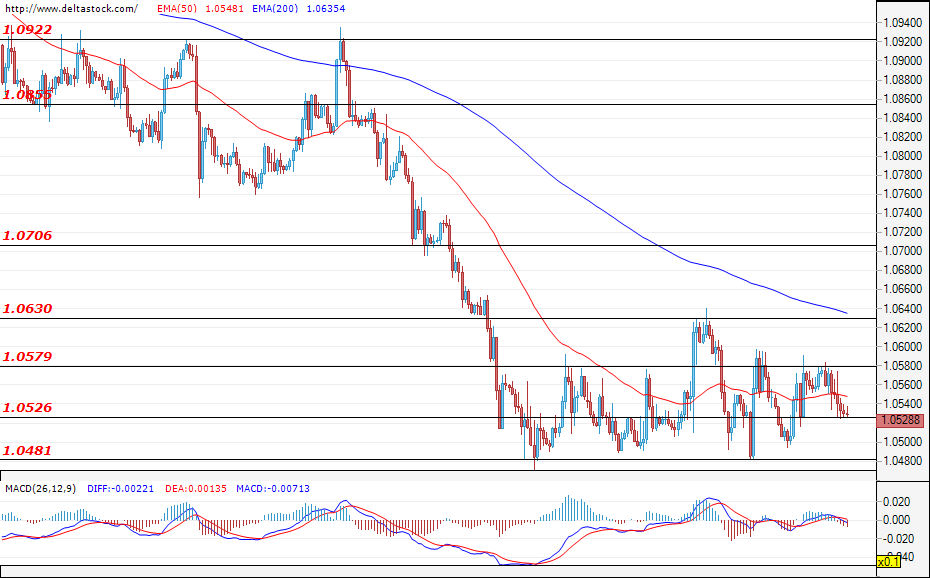
The single European currency is still locked in the range that started last week as any upward movement is denied by the bears. The strong dollar does not allow the euro to rise for now, but the bulls are not willing to give up the zone at 1.0525, a support which has been proved many times. The data for the CPI levels in the U.S. will come out at 12:30 GMT, expecting a slight slowdown of its growth by 0.2% compared to the 1.2% increase that came out last month and strengthened the dollar. If the traders’ reaction for the dollar is positive, we can see a break at the bottom of the range and deepening of the trend below 1.0480, but if the dollar disappoints, the bulls may try another attack above 1.0580.
USD/JPY
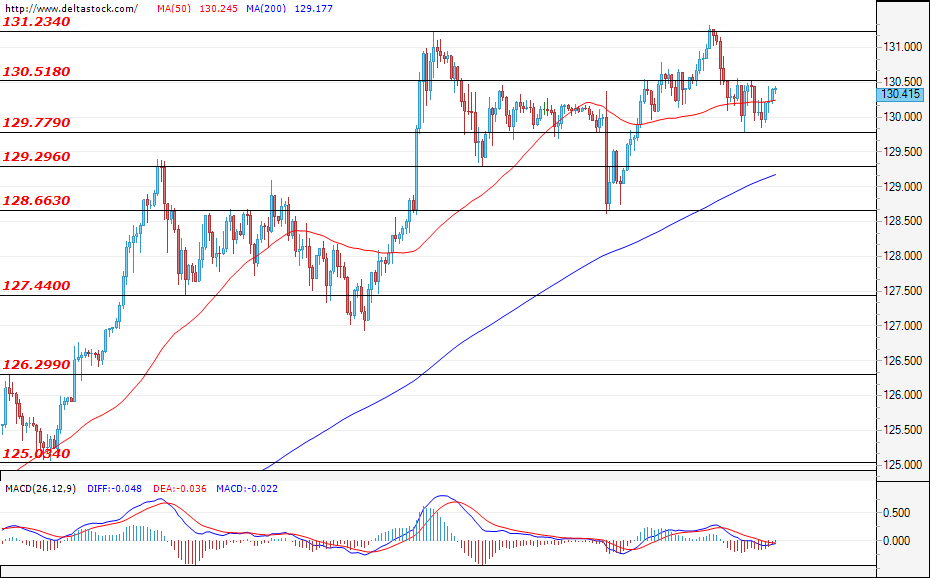
After reaching the levels around 131.30 once again, the yen began to show new strength, which continued to weaken the dollar. It is not allowing USD/JPY to rise above the resistance of 130.50, but at the same time the bulls do not allow a fall below 129.80. The danger for the yen comes from the U.S. inflation data at 12:30 GMT. If the results have a positive effect on the dollar, we can see a renewed attack of 131.30 levels and possibly break above them, but if the traders react to the information negatively, a drop below 129.80 in search of a new bottom around 128.66 should not be excluded.
GBP/USD
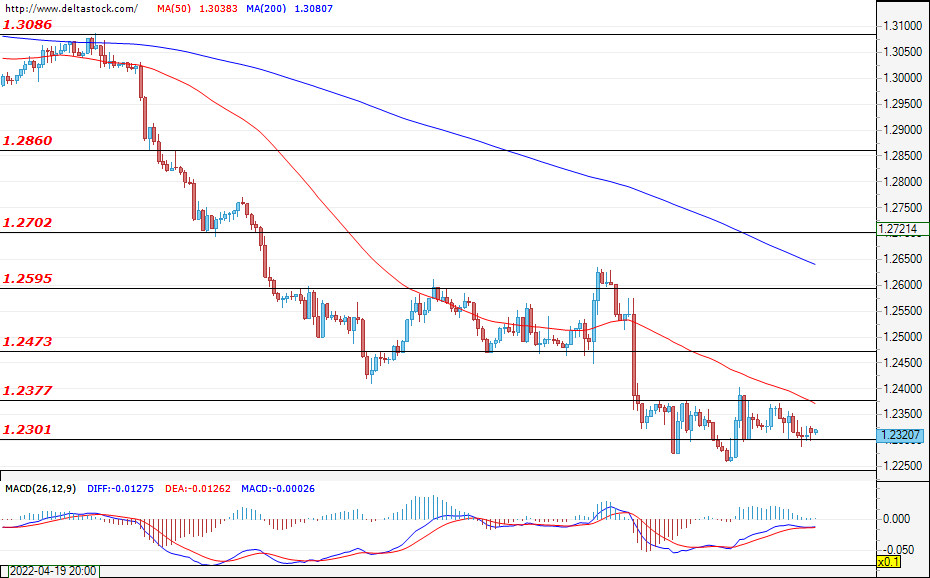
The pound chart seems to be locked between the resistance of 1.2377 and the often defended this week demand zone of 1.2300. The rise of the sterling is threatened by the expected data on April’s inflation in the U.S. at 12:30 GMT, which could have a positive impact on the dollar and send GBP/USD below 1.2300 in search of a new bottom. The opposite scenario and upward movement can be seen only after a weakening of the dollar due to data on the U.S. inflation and a convincing break of 1.2377.
EUGERMANY40
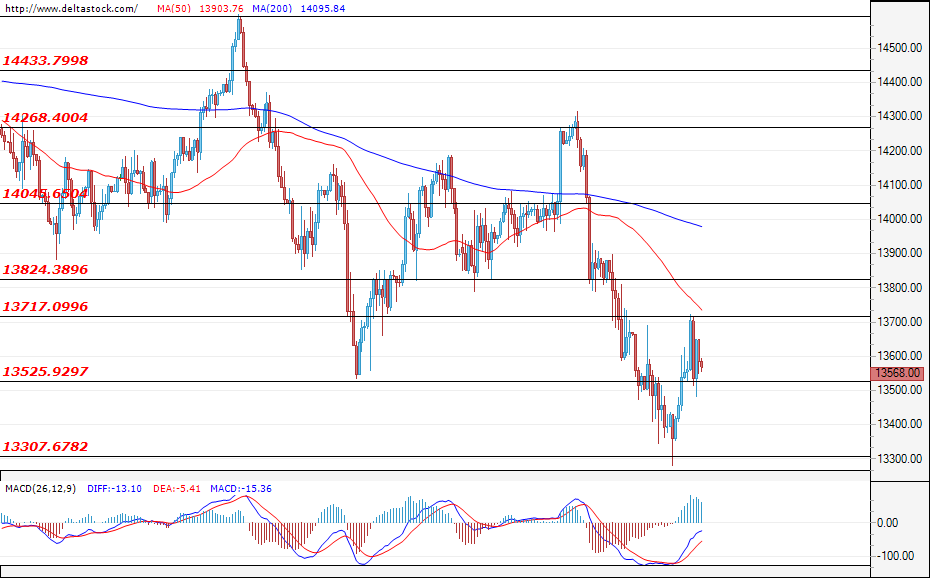
EUGERMANY40 managed to bounce off the bottom of 13300 and climb as much as 420 points in the European session. However, the attack of the bulls ended with the opening of the U.S. stock exchange and the reaching of the resistance of 13720. The following correction brought the German index to key levels of 13525 where it found support and a few hours later managed to close at 13568. Whether the growth continues and the support holds depends on the bulls’ confidence in today's session. If so, we can see a new attack on 13717 in search of a new peak above 13825, but if the U.S. stock market shows weakness again, usually EUGERMANY40 is the one to follow.
US30
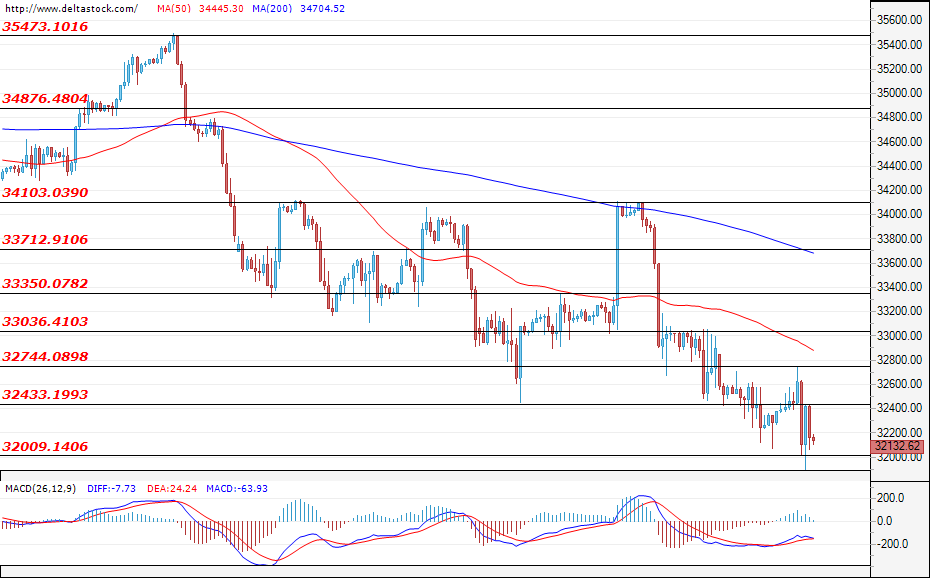
During the European session, the blue-chip index rose, reaching a daily high of 33036. The decline came immediately after the opening of Wall Street as the attack pushed the index to the 32000 mark where the bulls attacked and staged a 400 point rally to 32433. However, the bears did not give up and the index ended the session at 32132. The turbulent week for the U.S. indices is due to continue, with the data for the April CPI in the U.S. (12:30 GMT) possibly helping restore the index. However, if traders remain disappointed with the data, a deepening trend below 32,000 can not be ruled out.
US Inflation: A Make-or-Break Print
It’s D-day of the week: we will see whether inflation in the US started easing in April after hitting a four-decade high in March, and if yes, by how much.
The consensus of analyst estimates on Bloomberg hints that consumer price index may have eased to 8.1% in April, from 8.5% printed a month earlier.
A soft inflation read will come as a relief that the Federal Reserve’s (Fed) efforts to tame inflation start paying off, and that the Fed doesn’t need to get much more aggressive to bring inflation back towards its 2% policy target. In which case, a couple of 50-bp hikes and the announced balance sheet reduction should suffice to deal with inflation and cool the hawkish Fed expectations.
If however, inflation hasn’t pulled lower as expected - and worse, if we see a higher figure than last month print, we would see another big wave of selloff across all assets, as a persistent rise in inflation from the actual levels would get investors to bet for a 75-bp hike from the Fed in a next meeting.
Cleveland Fed President Loretta Mester said yesterday on Bloomberg TV that ‘they don’t rule out 75bp hike forever’.
For now, activity on Fed funds futures give almost 90% chance for a 50-bp hike in FOMC’s June meeting; there is a lot left to be priced for a 75bp hike, if the data doesn’t please. To avoid pricing in a 75bp hike at next FOMC meeting, we must see an encouraging cooldown in inflation.
Pre-CPI recovery
The pressure on the US 10-year yield eased yesterday, along with a rebound across the equity space, which helped the S&P500 eke out a slim 0.25% gain to close the session just a point above the 4000 mark. Nasdaq gained the most with a one percent jump. We should see further gains in case of a satisfactory inflation report.
The US dollar extended gains, despite the easing yields yesterday, as the risk-off flows continued supporting the greenback. The levels against the majors like euro, yen and sterling remained flat, but the positive pressure in the dollar, combined with Turkey’s unconventional monetary policy start giving signs of exhaustion. The dollar-try advanced past the 15 mark, and the government asked institutions to make their FX operations within the most liquid trading hours. Two weeks ago, the bank had revised its regulations on banks' reserve requirements, applying them to the asset side of balance sheets in order to strengthen its macroprudential policy toolkit. The latter required reserves now pressure the overnight rates to the upside – suggesting that the unconventional policy is near limits.
Energy up and down but mostly up
US gas prices hit a record again this week, while the barrel of US crude tipped a toe below the $100 level on news that the Europeans softened their sanctions proposal against the Russian oil, now suggesting banning the European vessels to carry Russian oil.
But oil is already above the $100 this morning and news that Russian gas flows via one of the key entry points in Ukraine will stop from today - as troops disrupt operations, sent the European gas prices 5% higher on Tuesday. Therefore, the pressure remains positive on energy prices, but the upside potential is fading due to slower global growth prospects, and the Chinese lockdown.
Peak Inflation in the US?
Market movers today
Today markets will zoom in on US CPI data. April could very well mark the peak in US inflation but we will continue to watch mom moves closely. We expect a solid 0.5% mom increase.
In Sweden, we will look out for Prospera inflation expectations today and given the rise in inflation, an increase probably on all horizons could be seen especially in 1 and 2Y. Most interesting will be the 5Y horizon, last month was on 2.2%. This is probably an acceptable level for the Riksbank, but if we will see larger up-ticks from here it will for sure be uncomfortable for the Riksbank. The question is if the Riksbanks new rate path will have any impact.
The 60 second overview
Risk sentiment: Market rout is taking a breather despite growth concerns staying high on the agenda. News that new infections fell in Shanghai and that no community cases were reported (all new cases at quarantine centres) brought some relief as it raised hopes that some of the lockdowns could be loosened. According to Reuters, half of Shanghai's 16 districts have achieved 'zero Covid' status. Asian markets are trading in green this morning.
Natural gas deliveries to Europe: Russia and Ukraine are clashing over natural gas deliveries to Europe via one of the main pipes in Ukraine, the Sokhranivka border point. Ukraine said it can no longer accept Russian gas transit through Sokhranivka from 7am local time on Wednesday as occupying forces control the territory. Russia supplies about 40% of gas to Europe and about a third of that is sent via Ukraine. On Tuesday, gas transit via Sokhranivka accounted for 27% of the total gas flowing via Ukraine, with the rest passing through Sudzha. While the Ukrainian system operator is saying gas could be rerouted through Sudzha, the Russian Gazprom said the switch is not possible. LNG deliveries and warm weather in Europe have kept gas prices in check in Europe, and prices have been range-bound in 90-110 €/MWh over the last few weeks, but now the dispute could add some pressure.
Economic outlook: Yesterday, ZEW index, the measure of economic conditions, painted a mixed picture of the German economy. The current conditions component continued to tumble to -36.5 in May from -30.8 in April, vs. consensus expectations of -35.0. More positively, the forward-looking expectations component recovered to -34.3 from -41.0 in April against analyst expectations (-43.5). Recovery in sentiment was broad-based across industries with exceptions in retail, construction and IT sectors.
Equities: Global equities more or less flat yesterday but some optimism came back as US growth stocks stopped the bleeding and implied volatility ticked a bit lower. Still a lot of intraday volatility as all the conflicting signals are challenging investors. VIX yesterday finishing north of 33, a level where VIX typically does not stay for very long. From current level one should either expect it moves higher or lower. The amount of observations being lower by far exceeds the number of observations above 33. Today's US CPI number brings a good chance for either higher or lower volatility depending on how the data comes out at 14:30 CET.
Yesterday in US, Dow -0.3%, S&P500 +0.3%, Nasdaq +1.0% and Russell 2000 -0.02%. Asian markets mostly in green this morning and the same goes for both the European and US futures.
FI: The global bond market recovered some lost ground yesterday with bond yields declining as well as a spreads tightening between the periphery and core-EU markets. The 10Y BTPS-Bund spread tightened some 5-6bp and the spread is back at the 200bp level and our 2Y BTPS-OBL trade is back below 100bp, but we still have healthy gain on the trade. There was also a modest tightening of the iTraxx main and Xover. However, the Bund ASW-spread continues to widen even though rates were declining and the BPTS-Bund spread was tightening. Hence, we are getting close to testing the 90bp level.
FX: Commodity currencies continue to trade on the back-foot with NZD, NOK, AUD, CAD and MXN leading losses. EUR/USD has edged back closer to 1.05 while EUR/SEK remains close to the 10.60 level. EUR/GBP has been rangy around 0.8550 in recent sessions.
Credit: After some difficult days the credit market recovered slightly Tuesday with iTraxx Xover tightening 4bp to 465bp. Main was tighter by 2bp to 96bp.
USD/CAD Daily Outlook
Daily Pivots: (S1) 1.2976; (P) 1.3014; (R1) 1.3067; More...
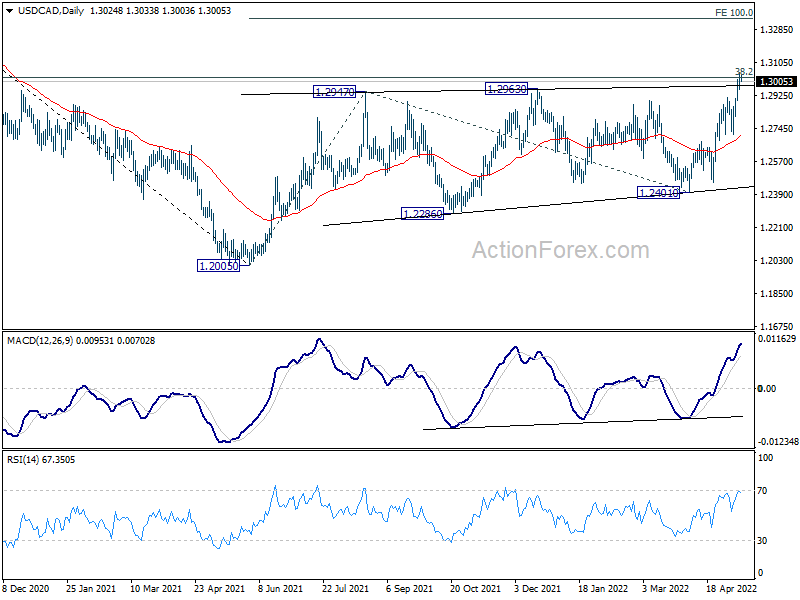
Intraday bias in USD/CAD stays on the upside for now, despite some loss in upside momentum. Current Sustained break of 1.3022 fibonacci level will carry larger bullish implications. Next target will be 100% projection of 1.2005 to 1.2947 from 1.2401 at 1.3343. On the downside, below 1.2907 minor support will turn intraday bias neutral first. But further rally will remain in favor as long as 1.2712 support holds.
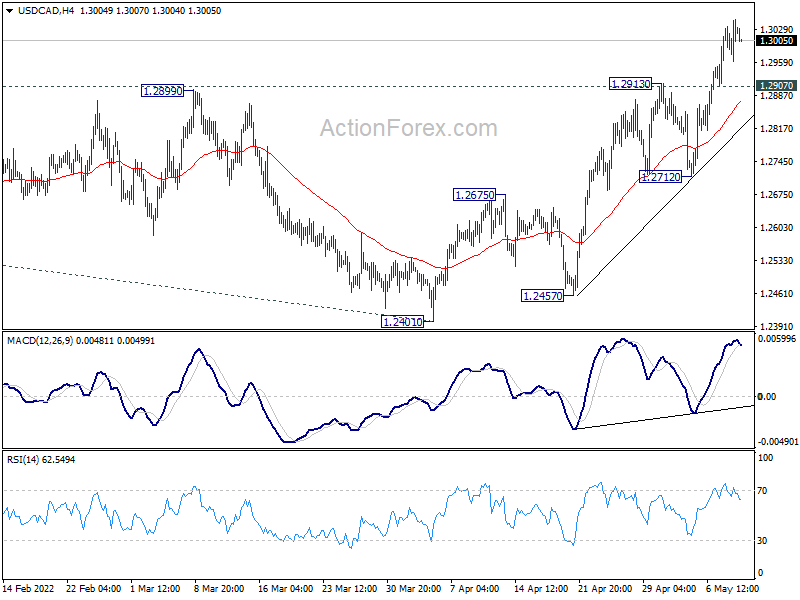
In the bigger picture, focus stays on 38.2% retracement of 1.4667 (2020 high) to 1.2005 (2021 low) at 1.3022. Sustained break there should confirm that the down trend from 1.4667 has completed after defending 1.2061 long term cluster support. Further rise would then be seen towards 61.8% retracement at 1.3650. However, rejection by 1.3022 will maintain medium term bearishness. Break of 1.2005 will resume the down trend from 1.4667 and that carries larger bearish implications too.