Sample Category Title
USD/CHF Keeps Momentum
The US dollar continues upwards as traders pour in before the Fed hike next week.
A bullish MA cross on the daily chart indicates an acceleration to the upside after a break above April 2021’ high at 0.9460. General sentiment remains overwhelmingly optimistic as the greenback heads towards 0.9730.
However, the bulls may refrain from committing too much as the RSI repeatedly ventures into the overbought territory. The pair could use a pullback to consolidate its gains. 0.9560 is a fresh support in this case.
Daily Technical Analysis
EUR/USD
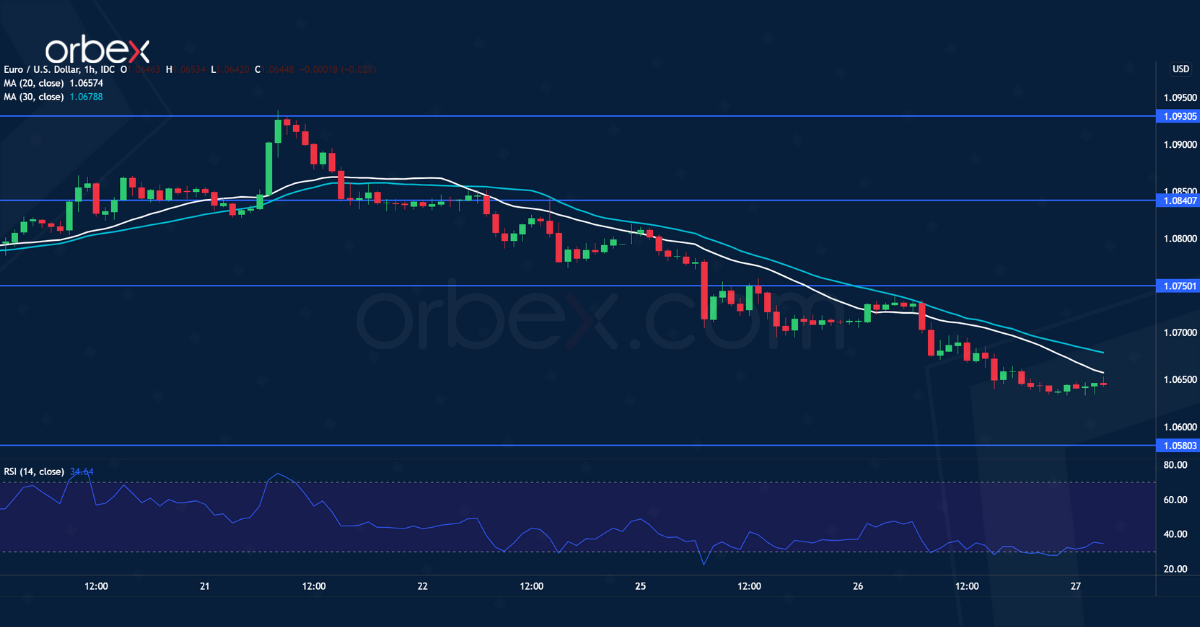
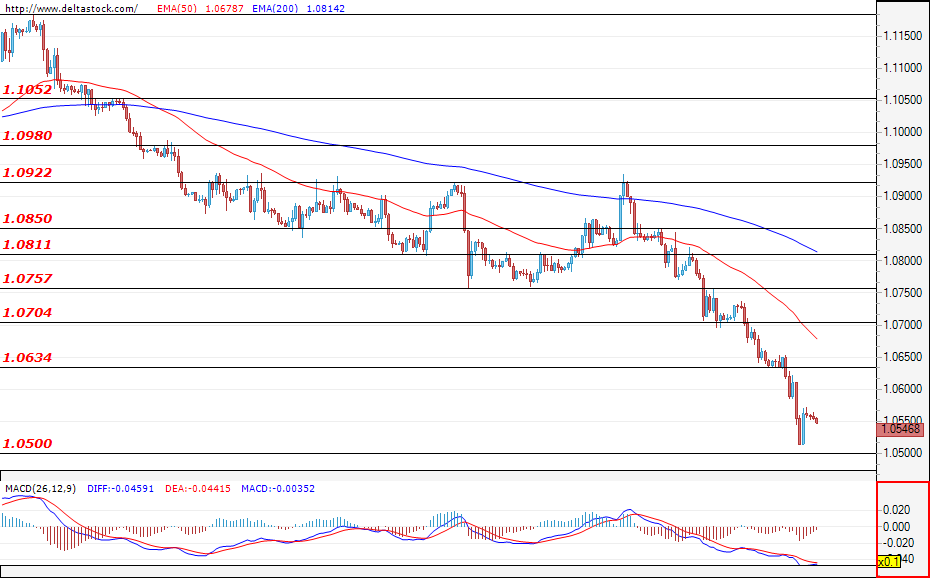
The EUR/USD’s collapse continues despite the pair being extremely oversold. However, the bulls managed to limit the sell-off to slightly above the critical support at 1.0500, which was last reached in 2017. The most probable scenario for today’s trading session is for the pair to enter a corrective phase and test the resistance at 1.0634. The strength of the dollar is colossal and the bulls would most probably face difficulties in overcoming the mentioned resistance. In the short term, we may expect the pair to consolidate in the range of 1.0500 – 1.0634, but only a successful breach of the support at 1.0500 could confirm the negative sentiments and could lead to a decline towards the level at 1.0400. During today's trading session, the most important economic news that would be of interest to the market participants will be the GDP data and the initial jobless claims data reports for the U.S. at 12:30 GMT.
USD/JPY
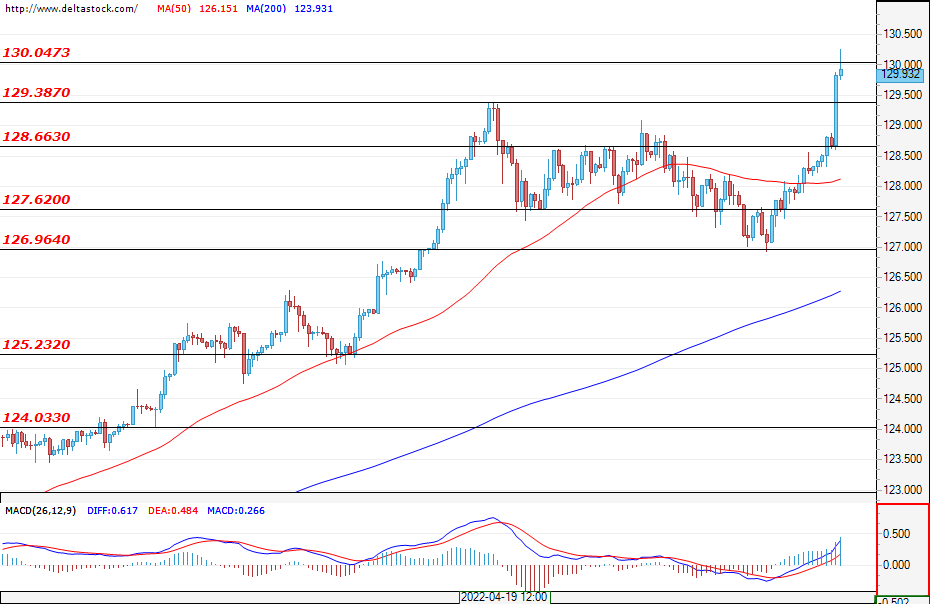
During yesterday's trading session, the U.S. dollar scored some moderate gains against the yen, which continued during the early hours of today. When the central bank of Japan announced that it would not change the current main interest rate of -0.1% and doubled down on its commitment to maintain its massive stimulus policy despite consumer inflation nearing 2%, there was a massive melt-down for the yen. At the time of writing, the Ninja is confirming the breach of the level at 130.00 and the most likely scenario for today is for a minor corrective move and a continuation of the rally. Due to the fact that there is a massive difference in the monetary policies in the U.S. and Japan, the rally will most likely continue towards 133.00 and beyond. In case the corrective move deepens, the first support is the level at 129.38, followed by 127.80, but even if these levels are reached, the uptrend will most likely remain intact. Some dollar volatility can be expected around the announcement of the initial jobless claims data for the U.S. at 12:30 GMT.
GBP/USD
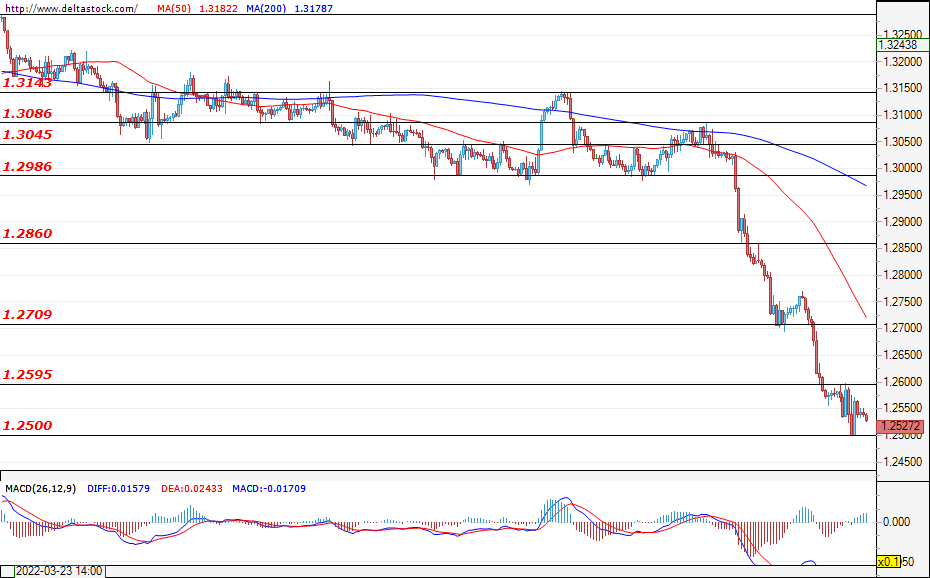
The depreciation of the pound against the dollar was limited to the support zone at 1.2500, and at the time of writing the analysis, the Cable is holding positions above the aforementioned level. If the bearish momentum fades and the bulls prevail, then they could lead the pair towards the resistance level at 1.2600, but only a successful violation of the target at 1.2700 could lead to a change in the current sentiment of the market participants. If the sellers remain in control, however, then a new breach attempt of the zone at 1.2500 would be the most probable scenario. If confirmed, this breach could prolong the sell-off and could easily lead to future losses towards 1.2400 for the sterling.
EUGERMANY40
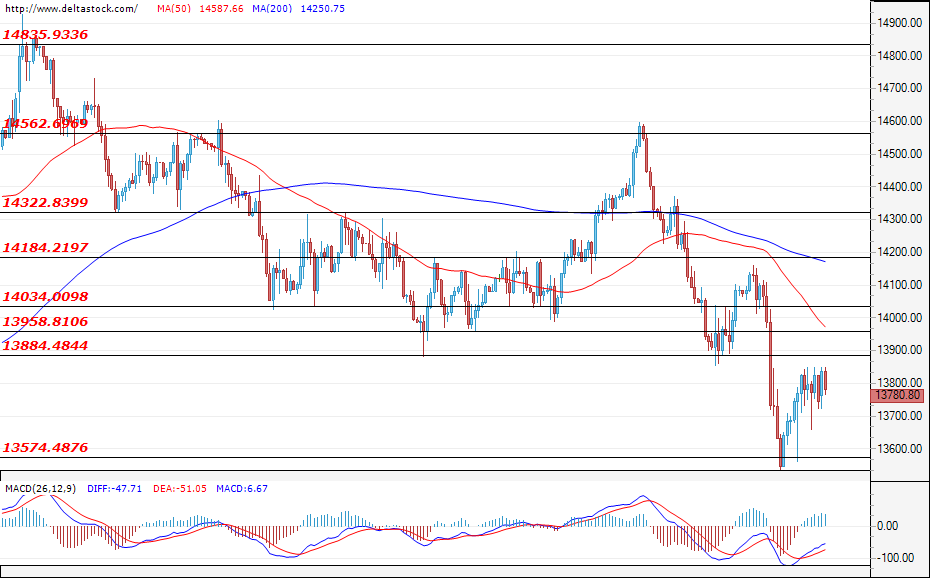
After the massive sell-off that began in the beginning of the week, the bears started to take their profits around the level of support at 13574 and the index partially recovered its losses. There is a high chance that this recovery is a short-lived correction and the bears would probably try to regain control and head the price towards another test of the support level at 13574. A breach of this level could be considered as a signal for the continuation of the downtrend and the next target for the bears would likely be the support at 13350. In the opposite direction, the first significant resistance lies at 13884. The expectations for today’s trading session are for the trading activity to remain in the range of 13884 – 13574. The situation in Ukraine will remain the main driving force behind the price action during today's session as well.
US30
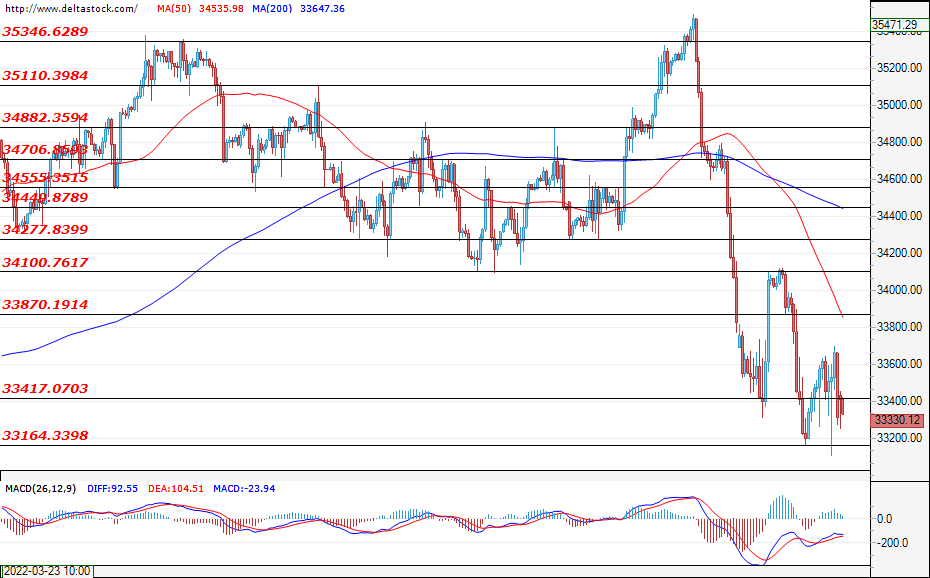
The downtrend for the U.S. blue-chip stock index continues, with the bulls currently managing to limit the sell-off to just above the support at 33164. We might see a short-term upward correction towards the resistance at 33870, after which the downtrend would most probably continue. A breach of the support zone at 33164 would significantly boost the sell-off towards the next support level at 32800.
AUDUSD Unlocks 11-Week Low; Dives Below 0.7100
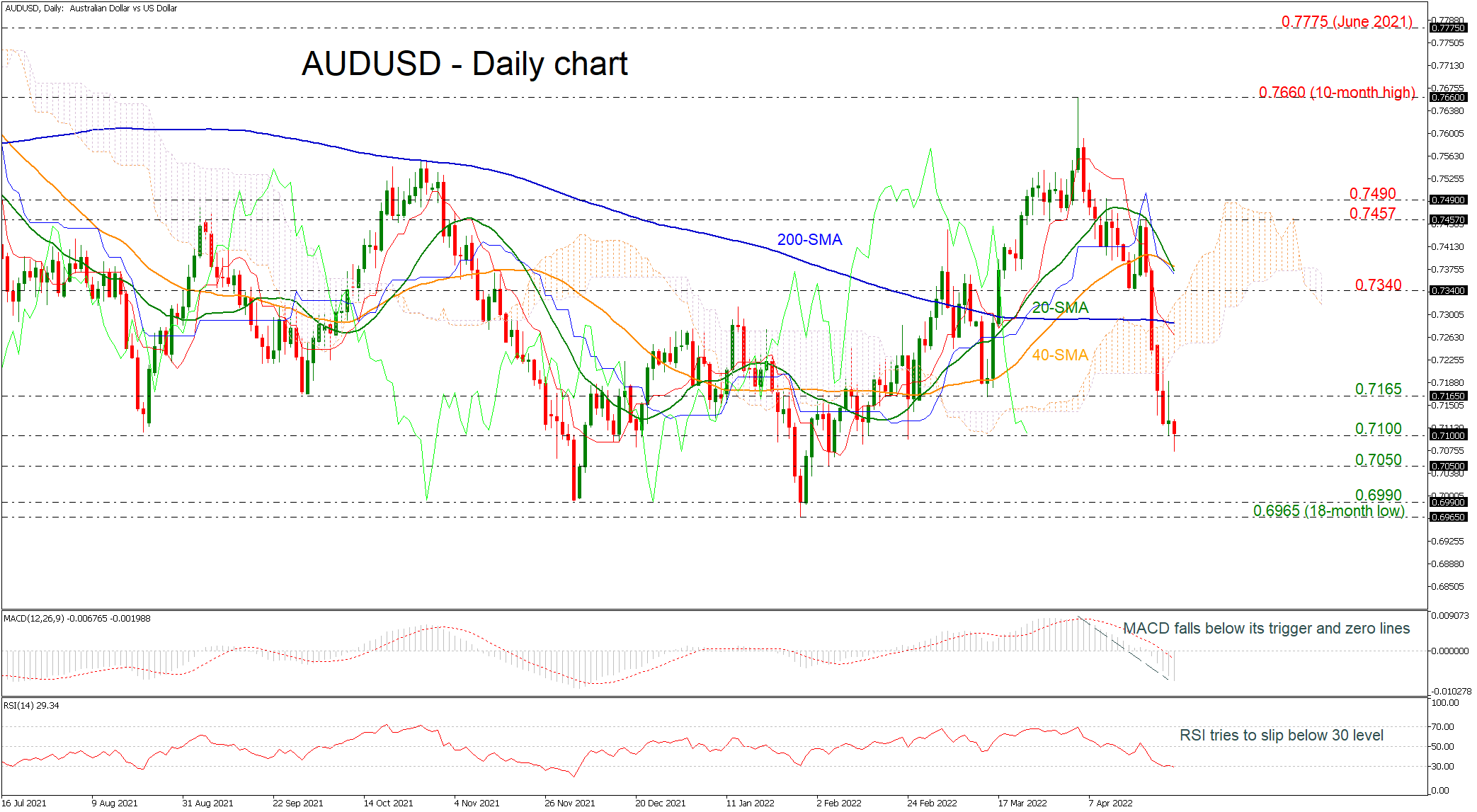
AUDUSD plunged to an eleven-week low of 0.7074 earlier today, continuing the strong selling interest from the 0.7457 resistance level. The price is also travelling well below the 200-day simple moving average (SMA) with the technical indicators confirming the negative prospects. The MACD is holding below its trigger and zero lines, while the RSI is standing near the neutral threshold of 30.
A failure to jump above the 0.7100 round number again could send the price down to 0.7050, a challenging point over the last two months. Lower support could next be found around 0.6990, ahead of the 18-month low of 0.6965.
Alternatively, if 0.7100 proves easy to get through, the spotlight will turn to the inside swing low of 0.7165. On top of that, the bulls would need to clear the 200-day SMA currently at 0.7386 to push the rally towards the 0.7340 barrier. Above this line, the price could meet the bearish crossover within the 20- and 40-day SMAs at 0.7377.
In the medium-term picture, AUDUSD turned neutral after violating the 200-day SMA to the downside starting from the 0.7660 peak. Should the market continue the recent sell-off and tumble below the 18-month low of 0.6965, the outlook may turn strongly bearish.
Bank of Japan Pressed ahead with its Yield Curve Control Programme
Markets
The dollar takes no prisoners these days. The past 5 trading days ended with impressive gains and this morning’s price action shows no signs of slowing. The trade-weighted greenback since last Thursday rose from 100 to 103.50, taking out the 2020 top in the process (102.98) and having the 2017 top (103.82) within reach. We need to go back to 2002 to see even stronger DXY-levels. EUR/USD sinks below the 1.0636 2020 bottom to currently trade near 1.05.
In no time, we’ll arrive at the 2017 bottom of 1.0341. Last week’s IMF panel discussion was another eye-opener. FOMC Chair Powell’s determination to both tackle high inflation and restore credibility in stable inflation expectations marked a stark contrast with ECB Lagarde’s unwillingness to join the growing chorus of ECB governors arguing in favour of a hard QE-stop in June in order to hike policy rates in July. Look where Lagarde’s “looking at the data” brought us. We warned before that the euro would pay a high price if the ECB extends its ostrich policy. A weaker currency in combination with additional (imported) inflation pressure. The ECB gets its next reference tomorrow with April CPI data.
Dollar strength is reflected against other majors as well. GBP/USD loses the 1.25-handle this morning with USD/JPY trading above 130 for the fist time since 2002 after the Bank of Japan this morning doubled down on its yield curve control commitment (see headlines). USD/CNY rises north of 6.60 for the first time since end 2020. The correction higher in core bonds stalled and even went into reverse on the US Treasury market. After this week’s China scare, focus returns to next week’s FOMC meeting. US yields added 9.3 bps (30-yr) to 11 bps (10-yr) across the curve. The German yield curve steepened with yield changes varying between -5 bps (2-yr) and +1.7 bps (30-yr). European outperformance was also related to the Russian decision to halt gas deliveries to Poland and Bulgaria because of non-compliance with RUB-payments. Gas prices surged at the start of trading but reversed the largest part of that move.
Today’s eco calendar contains US Q1 GDP figures and German inflation (amuse-bouche for tomorrow’s EMU CPI). Speeches by ECB governors de Guindos and Wunsch are planned. Both are amongst the July rate hike camp. Given the freefall of the euro, we wouldn’t be surprised to see unscheduled ECB comments as well. Especially the more hawkish governors will feel the need to do something. Too little, too late for now.
News Headlines
All or nothing. The Bank of Japan pressed ahead with its yield curve control programme, offering to buy an unlimited amount of bonds to keep the 10y yield anchored near 0% (+/- 25 bps) every business day. It kept the short-term policy rate unchanged at -0.10%. Some market participants speculated the central bank would have taken action against the ongoing slide by the Japanese yen and to allow for some more flexibility in the 10y yield after hovering near the upper bound in recent weeks. A string of verbal interventions from (mostly government) officials helped shape such expectations. But with inflation expected to cool from the 1.9% this fiscal year (up from 1.1% expected in Q1) to 1.1% in the two following years, the BoJ concludes easy policy remains necessary. GDP growth was revised down from 3.8% to 2.9% this FY but up for the next (1.9% from 1.1%). A disappointed yen takes another hit this morning. USD/JPY surges to 129.86. The 2002 correction high (135.15) comes closer. Germany dropped previous opposition and is prepared to back an embargo on Russian oil, Bloomberg reported. The news followed Russia’s decision to halt gas flows to Poland and Bulgaria after both failed to pay for it in rubles. The ban would need to come with a transition period though. The EU is currently working on another package of sanctions. Formal proposals, including an oil embargo, could be put forward for approval next week. Oil rebounded from intraday lows in the wake of the Bloomberg report before losing those gains again in early Asian trading today. Brent oil trades just shy of $104/b.
Bank of Japan Maintains Dovish Stance, Riksbank up next
Market movers today
All eyes will be on the Riksbank today and whether they deliver their first rate hike (see more below and in Reading the Markets Sweden - Preview Riksbank April meeting, 22 April). Sweden also releases retail sales this morning.
Preliminary German CPI for April will also be interesting. Consensus looks for a flat headline inflation at 7.4%.
In the US it is time for quarterly GDP figures for Q1. Consensus looks for a drop to 1.1% q/q annualised from 6.9% in Q4. However, private consumption is expected to have grown a solid 3.5% q/q annualised in Q1 up from 2.5% in Q4. Initial jobless claims will also be released and so far they continue to point to a very hot labour market.
The 60 second overview
EU reacts to Russia energy shut-down: As a response to Russia's suspension of gas exports to Poland and Bulgaria European Commission President Ursula von der Leyen yesterday advised EU companies not to follow Russian demands for RUB payments. The guidance come amid speculation of whether European energy companies following Russian demands would be a breach of EU sanctions or not. European natural gas prices have soared almost 20% on the recent escalation with focus increasingly turning to Germany and Italy - two of the biggest Russian gas importers in the EU. Higher energy prices mark a substantial headwind for the Eurozone growth outlook which is also reflected in the EUR currency hitting the lowest level vs the USD since 2017.
Bank of Japan: The Bank of Japan (BoJ) continues to stand out among major central banks as it released a dovish statement this morning and pledged to buy 10-year JGBs at a rate of 0.25% every business day from now on following temporary purchases over the recent week. The forward guidance was also kept unchanged as the BoJ intends to continue on the current path as long as necessary to achieve the price stability target. The BoJ seems mostly concerned about the impact of the pandemic on businesses following a reduction in its growth forecast. Inflation is now expected at 1.9% in the fiscal year 2021, primarily driven by energy prices. It looks like the market had priced in some probability of the BoJ loosening the grip on the yield curve and thus USD/JPY took a leap higher from 128.6 level to 129.7 on the back of the statement.
Equities: Uncertainty and fear still dominating equity markets and hence it was no surprise to see yet another session yesterday with high intraday volatility. However, equities ended higher for a change and the sector/industry rotation was not a top down story but rather a bottom up/earnings report story. It is very rare to see software and service in massive outperformance on a day with media and entertainment massively underperforming. The reason was of course the reporting from Microsoft versus Alphabet. Good to see most styles performing more or less equally and VIX a notch lower (32).
In US, Dow +0.2%, S&P 500 +0.2%, Nasdaq -0.01% and Russell 2000 -0.3%. The positive sentiment is carrying over to Asia this morning and into both US and European futures.
FI: Yesterday, US Treasury yields rose again despite the recent safe-haven buying due to volatile stock markets, lock-downs in China and the ongoing war in Ukraine. However, analysts and investors expect the Federal Reserve to become even more hawkish.
FX: The relentless rally in broad USD continued yesterday, where DXY reached the highest level in over five years. At the other end of the scale, NOK continued to suffer despite the rise in energy prices. At the time of writing USD/JPY is trading just south of the psychologically important 130 level.
Credit: Worries about European growth and renewed volatility in energy prices caused the bear-market in credit to continue yesterday. Itraxx main widened 0.4bp to 87.9bp and Xover widened 4.4bp to 414.5bp. This marks the 5th trading day in a row with widening spreads in CDS indices.
Nordic macro
It will be a close call between the Riksbank hiking policy rates today or in June (our forecast). Market prices around 70% (18bp) for April, while market consensus is for a June hike. Why wait? 1) Riksbank has never hiked without prior guidance in the repo rate path (not doing so could be viewed as 'panicking'. 2) 5y inflation expectations and also wage growth is still very moderate. The reason for Riksbank to start hiking is inflation target credibility and to mitigate further 2nd round effects. We expect Riksbank to announce a front-loaded repo path, around 100bp over the next year with a terminal point around 1.5% which would be much below market pricing (yesterday 221bp up until Sep 2023). That said, the market will likely also pay little attention to the rate path. QE purchases are expected to be reduced form SEK 37bn in Q2 to 20bn in Q3 and 10bn in Q4.
There's also a lot of data out this morning (before Riksbank) with prime focus on the Q1 GDP indicator. Market expects -0.5 % qoq/3.8 % yoy but we would not be surprised to see a bigger drop given plunging real wages, consumer confidence and wealth. NIER also releases the April confidence survey so more data on how businesses and consumers view recent events.
GBP/JPY Daily Outlook
Daily Pivots: (S1) 160.04; (P) 160.72; (R1) 161.78; More...
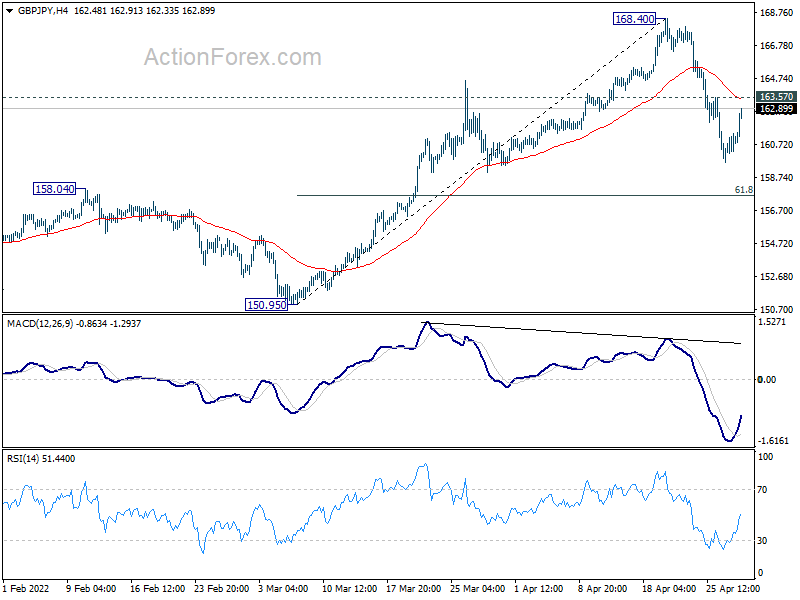
Intraday bias in GBP/JPY is turned neutral with current recovery. In case of another fall, strong support is expected from 61.8% retracement of 150.95 to 168.40 at 157.61 to bring rebound. On the upside, break of 163.57 minor resistance will turn bias back to the upside for retesting 168.40 high. However, firm break of 157.61 will bring deeper fall to 150.96 structural support.
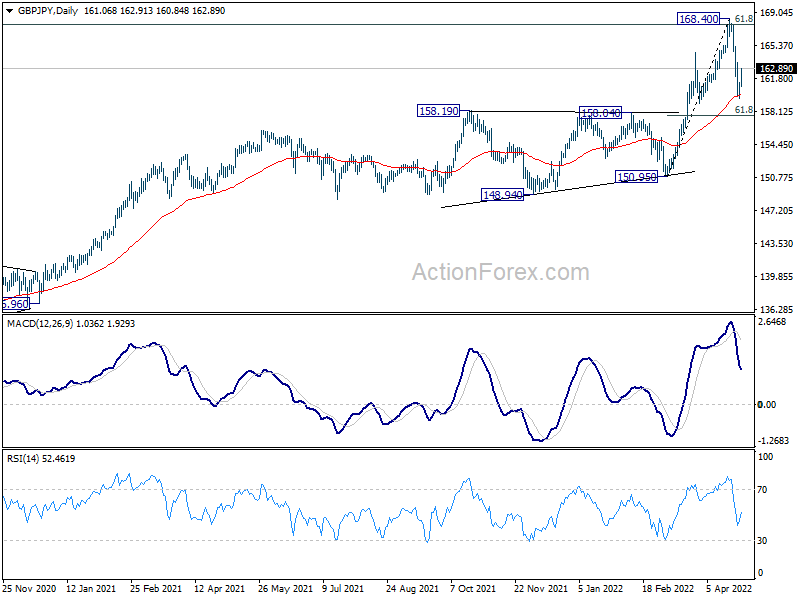
In the bigger picture, up trend from 123.94 (2020 low) is still in progress. Sustained break of 61.8% retracement of 195.86 (2015 high) to 122.75 (2016 low) at 167.93 will be a long term bullish signal, and could pave the way back to 195.86 high. This will now remain the favored case as long as 150.95 support holds, even in case of deep pull back.
EUR/JPY Daily Outlook
Daily Pivots: (S1) 134.89; (P) 135.53; (R1) 136.26; More....
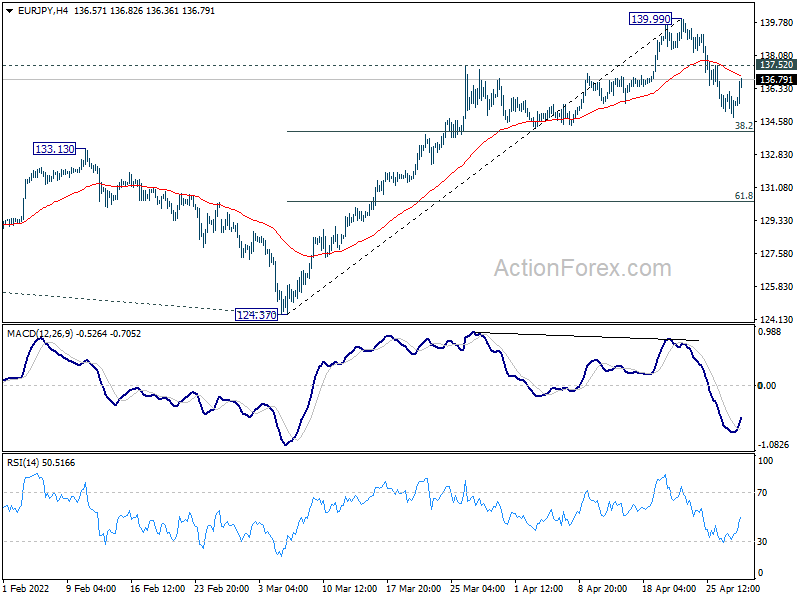
Intraday bias in EUR/JPY is turned neutral with current recovery. In case of another fall, downside should be contained by 38.2% retracement of 124.37 to 139.99 at 134.02 to bring rebound. On the upside, above 137.52 minor resistance will bring retest of 139.99 resistance first. However, firm break of 134.02 will bring deeper decline to 61.8% retracement at 130.33.
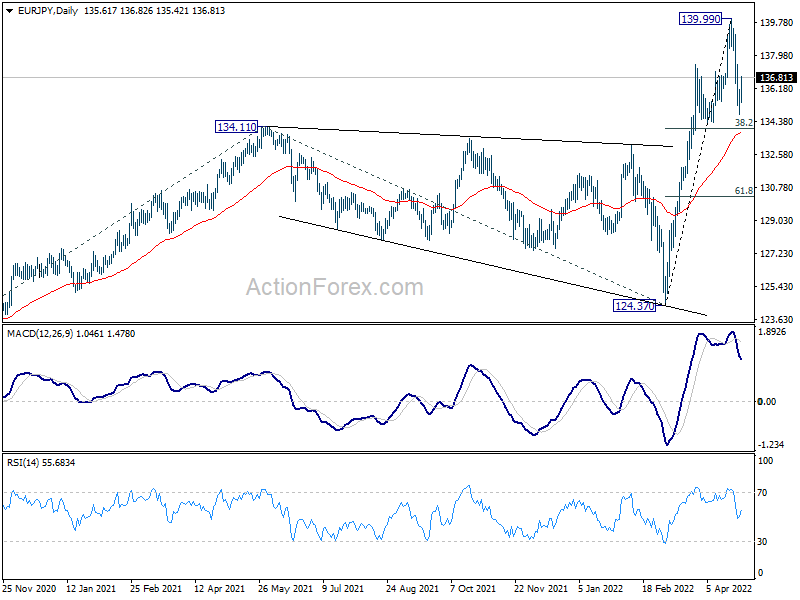
In the bigger picture, up trend from 114.42 (2020 low) is in progress. Such rise is seen as the third leg of the pattern from 109.30 (2016 low). Next target will be 100% projection of 114.42 to 134.11 from 124.37 at 144.06. In any case, outlook will now remain bullish as long as 124.37 support holds, in case of deep pull back.
EUR/GBP Daily Outlook
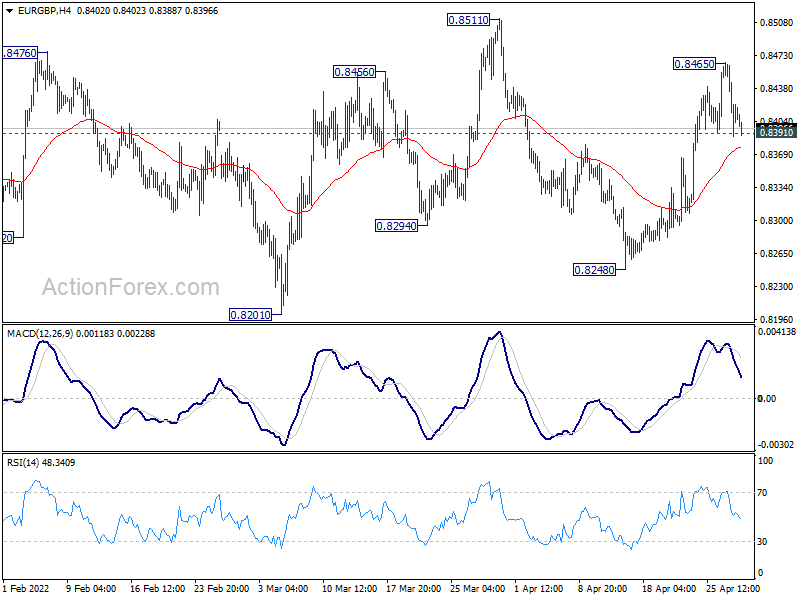
Daily Pivots: (S1) 0.8382; (P) 0.8424; (R1) 0.8460; More...
A temporary top is formed at 0.8465 and intraday bias is turned neutral first. On the upside, above 0.8465 will target 0.8511 resistance first. Further break of 0.8511 will reaffirm that 0.8201 is a medium term bottom, and target 0.8697 medium term fibonacci level next.
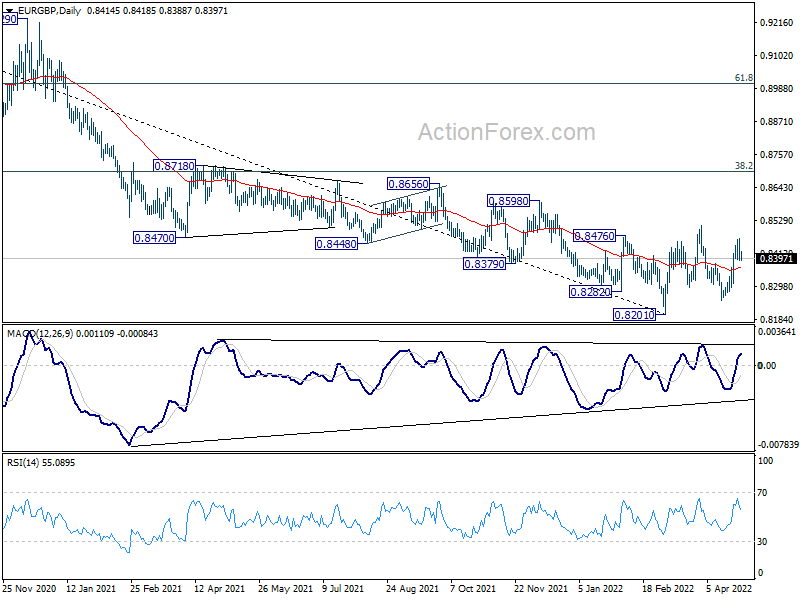
In the bigger picture, a medium term bottom could be in place at 0.8201, on bullish convergence condition in daily and weekly MACD. Rise from there could either be a correction to the down trend from 0.9499 (2020 high), or a medium term up trend itself. In either case, further rise should be seen to 38.2% retracement of 0.9499 to 0.8201 at 0.8697. Sustained break there will target 61.8% retracement at 0.9003.
EUR/AUD Daily Outlook
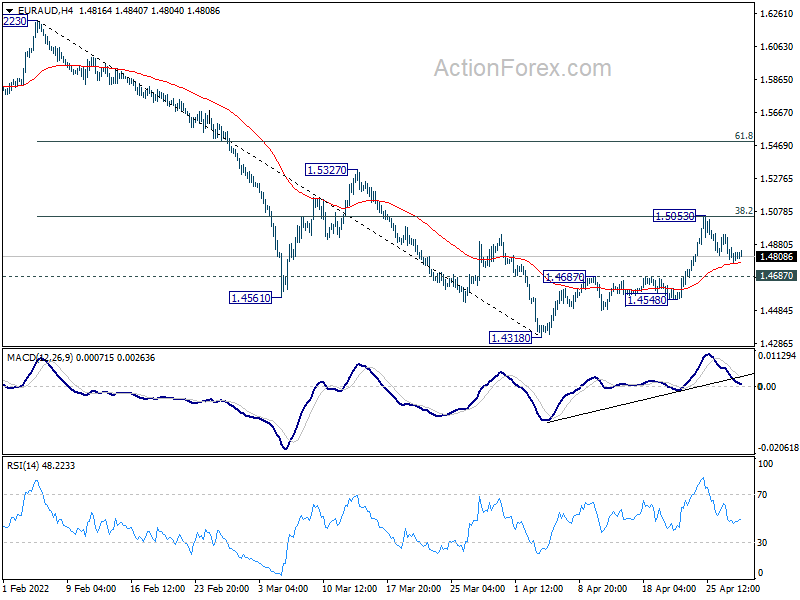
Daily Pivots: (S1) 1.4745; (P) 1.4844; (R1) 1.4917; More...
Intraday bias in EUR/AUD stays neutral at this point, and another rise is still mildly in favor 1.4687 support intact. On the upside, break of 1.5053 will target 61.8% retracement of 1.6223 to 1.4318 at 1.5495. On the downside, below 1.4687 minor support will turn bias back to the downside for retesting 1.4318 instead.
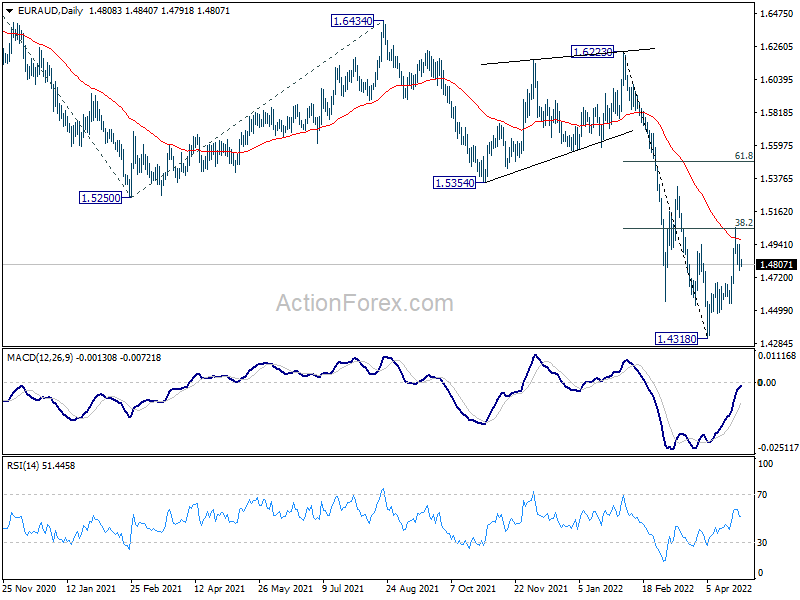
In the bigger picture, fall from 1.9799 is seen as a long term impulsive move. Next target is 61.8% projection of 1.9799 to 1.5250 from 1.6434 at 1.3623, which is close to 1.3624 long term support (2017 low). Some support could be seen there to bring interim rebound. But overall, break of 1.5354 support turned resistance is needed to be the first sign of medium term bottoming. Otherwise, outlook will stay bearish in case of recovery.
EUR/CHF Daily Outlook
Daily Pivots: (S1) 1.0202; (P) 1.0230; (R1) 1.0263; More....
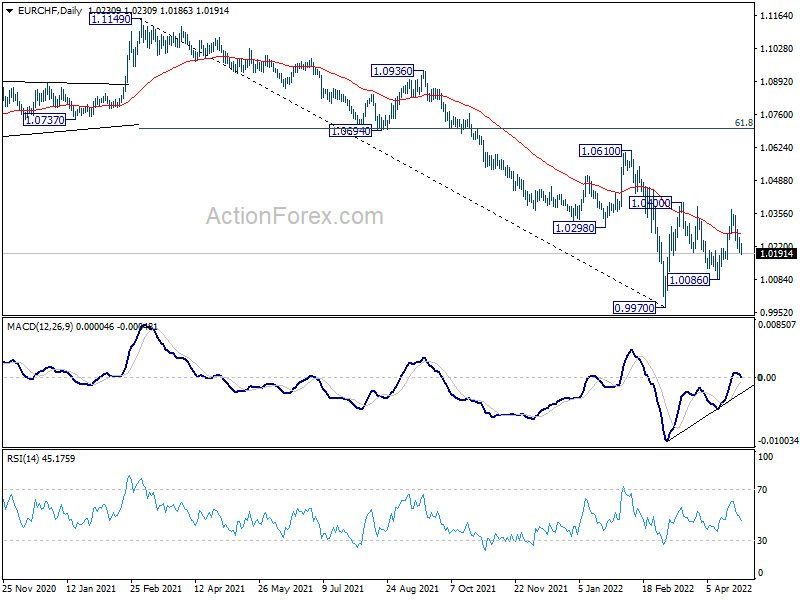
Intraday bias in EUR/CHF stays on the downside at this point. Corrective pattern from 1.0400 is extending with another falling leg. Deeper decline could be seen to 1.0086 support. On the upside, above 1.0289 minor resistance will turn intraday bias neutral first. Further break of 1.0400 resistance will resume the rebound from 0.9970 to 1.0610 structural resistance instead.
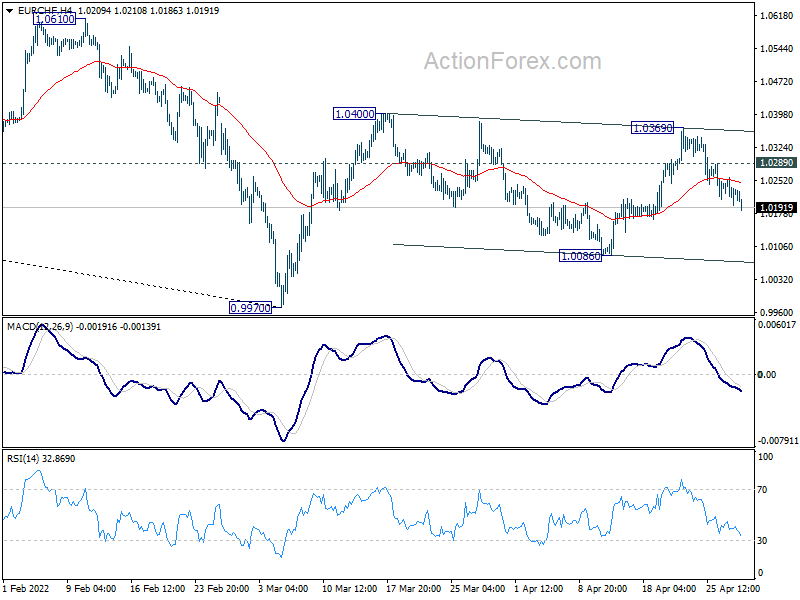
In the bigger picture, long term down trend from 1.2004 (2018 high) is still in progress. Next target is 100% projection of 1.2004 to 1.0505 to 1.1149 at 0.9650. In any case, sustained break of 1.0505 support turned resistance (2020 low) is needed to be the first sign of medium term bottoming. Otherwise, outlook will remain bearish.