Sample Category Title
Daily Technical Analysis
EUR/USD
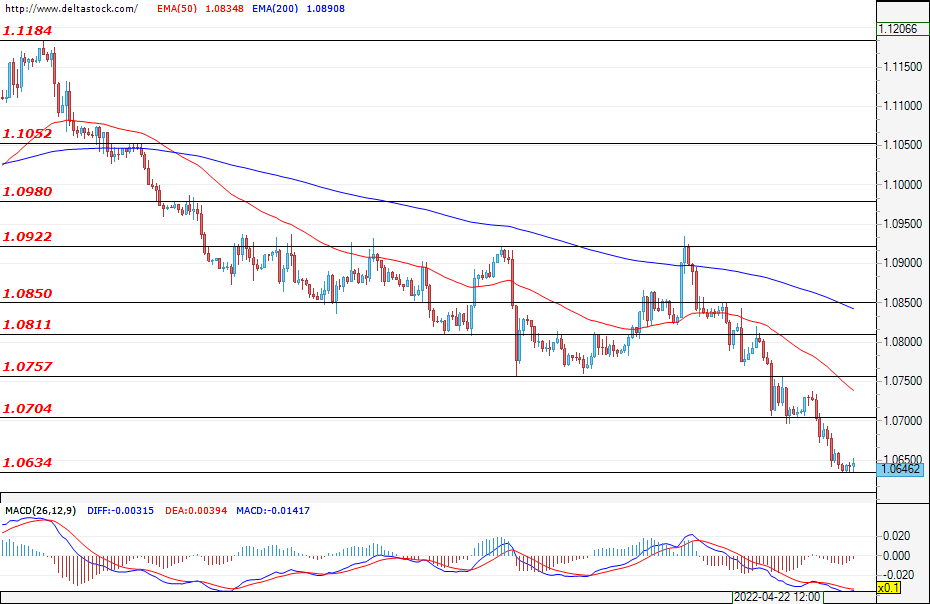
The single European currency continues to lose ground against the U.S. dollar as the breach of the 1.0704 support zone from the previous session gave additional impetus to the bears. They, in turn, without hesitation led the market towards the area of the next significant support at 1.0635 – a level last reached in March 2020. The return of the bulls will be relatively difficult with such a predominantly bearish sentiment. The first important resistance for the buyers is the 1.0757 zone, with the most likely scenario at the moment being for a consolidation around the current level. The initial jobless claims data for the United States (Thursday; 12:30 GMT), as well as the data on the consumer price index for the euro area (Friday; 09:00 GMT) could play a key role in determining the future movement of the currency pair.
USD/JPY
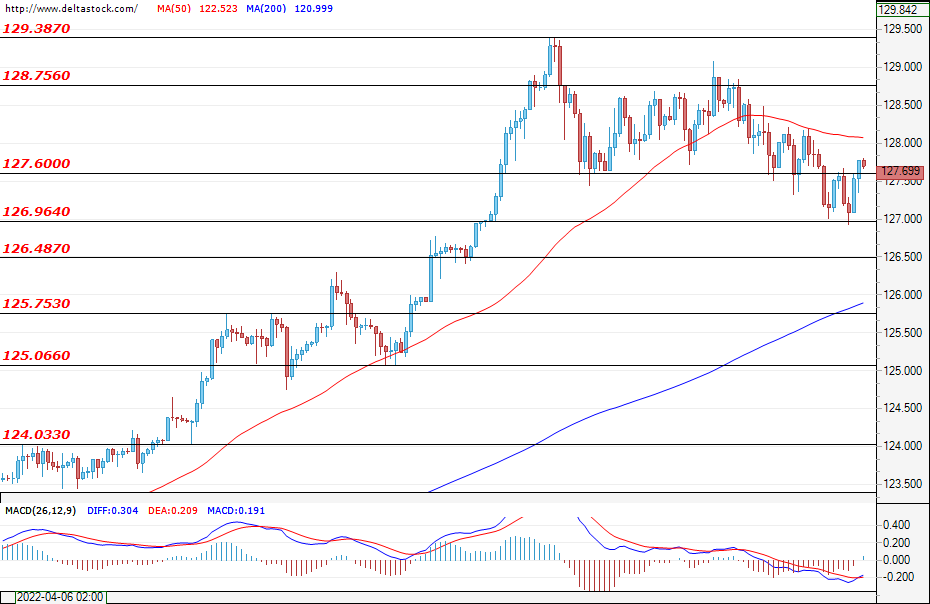
The range from the previous week was disrupted earlier this week. The bears managed to lead the market towards the support zone at 126.96, where the bulls intervened and managed to limit the sell-off. At the time of writing, the currency pair is facing a test of the resistance zone at 127.60 – an area playing the role of the lower boundary of the range between 127.60 – 128.75. A resumption of the range is not excluded if the bulls manage to overcome the mentioned zone of resistance. Investors will look forward to the bank of Japan's interest rate decision on Thursday morning.
GBP/USD
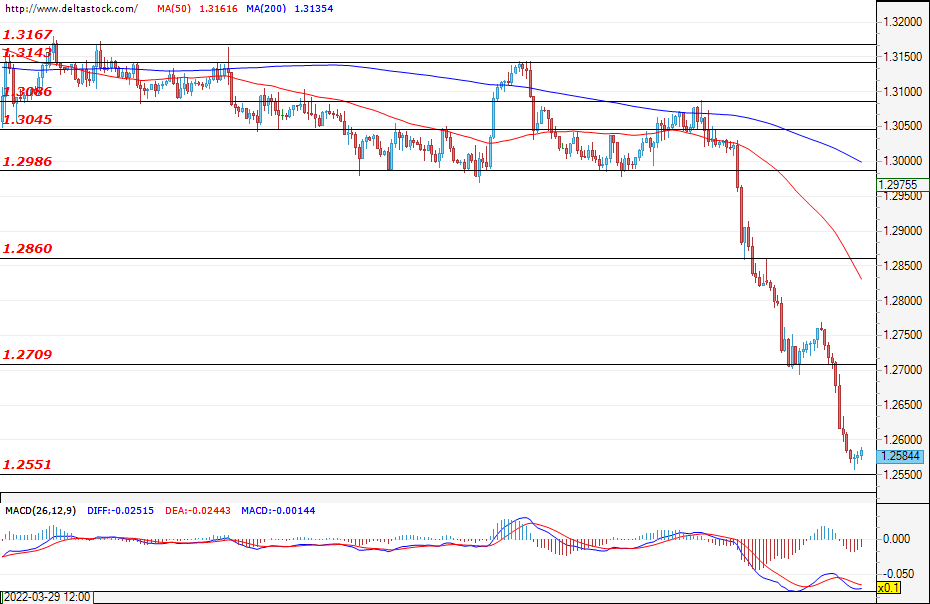
The bears continue to keep control in their hands, easily overcoming the support zone at 1.2709 during yesterday's trading session. The deepening of the sell-off continues at the beginning of today's trading session, and for now the bulls manage to thwart the attack in the significant support area at 1.2551. The most likely scenario is for maintaining the negative sentiment for a depreciation of the British pound against the U.S. dollar. The first significant resistance zone for the bulls is the not-so-close level of 1.2700.
EUGERMANY40
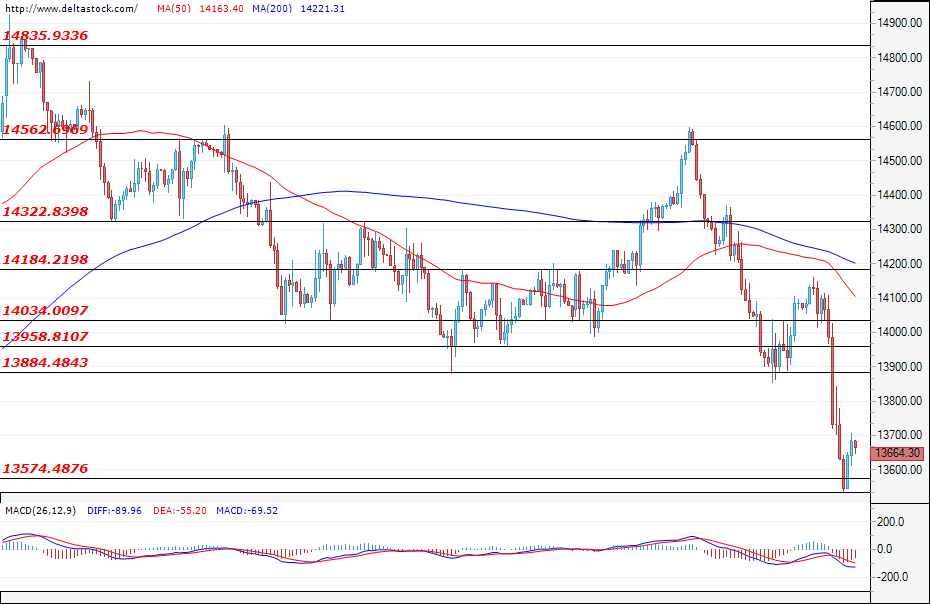
The sell-off continued at the beginning of today's trading session, and at the time of writing the analysis, we might see a correction above the 13574 support level. If the bulls manage to recover and take control, then it is possible to witness an attack on the first significant resistance at 13884. With the realisation of such an optimistic scenario and the breach of the mentioned resistance, it is possible to witness the end of the sell-off and the resumption of the upward movement.
US30
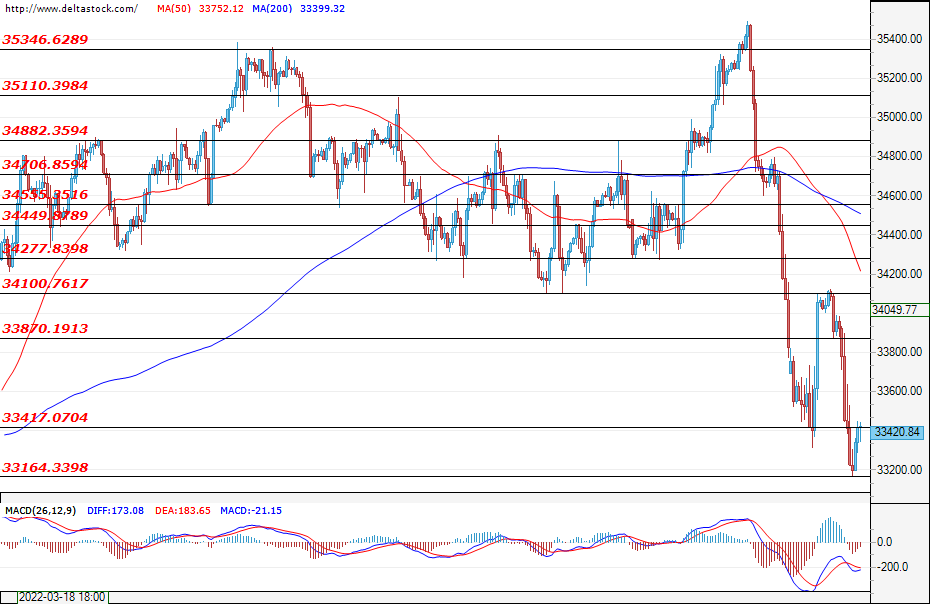
Both the European markets and the U.S. blue-chip stock index closed in the red. The bulls managed to limit the sell-off at the 33164 support level, and at the time of writing the analysis, the US30 is just ahead of a test of the resistance zone at 33417. A successful breach here would give the investors the necessary incentive to attack the next significant levels at 33870 and at 34100. Such an optimistic turn of events is not ruled out mainly due to the fact that many American companies are in the process of publishing their quarterly reports and that the results so far exceed expectations, despite the deteriorating global economic situation and the rising inflation.
Euro Clearly Becoming an Additional Source of Concern for ECB
Markets
A high level of uncertainty continued to dominate trading yesterday. US data (durable orders, house prices, consumer confidence or the Richmond Fed man. index) were OK or even better than expected, but unable to prevent further equity selling especially in the US. Uncertainty on China growth added to uncertainty. Later, investors had to digest the announcement that Russia would stop gas deliveries to Poland and Bulgaria as the refuse to pay in ruble. US indices tumbled from 2.38% (Dow) to 3.95%, (Nasdaq).
The risk-off this time also translated in a further sharp correction in US yields with the curve bull steepening. 2-y yields declined 15 bps. The 30-y lost 6.1 bps. The decline again was mainly due to a decline in inflation expectations. Remarkably, moves in European yields were modest with The 2-y German bund yield rising marginally (0.3 bps) but the longer end bull flattening (30-y minus 3 bps). Cash trading in Bunds halted before the announcement of Russia stopping gas supplies to Poland and Bulgaria.
In FX, the dollar outperformed with the DXY trading well north of 102 and nearing the corona top (102.99). The euro and sterling were again hit hard as markets are still looking for more concrete insights on how the BoE and the ECB will handle the balance between deteriorating growth and rising inflation. EUR/USD closed at 1.0638, almost at the key 1.0636 corona low. Cable closed at 1.2575, with sterling even underperforming the euro (EUR/GBP 0.8459).
Lower core yields and a support package of the Japanese government provided relief for the yen. USD/JPY closed at 127.23 (from 128.14). CEE currencies already suffered from an uncertain global sentiment and came under further pressure after the Russian announcement of stopping gas supplies. EUR/PLN closed 4.716 (from 4.6430).This morning, Asian markets trade mixed, despite the sell-off in WS yesterday. Price action will be driven by global sentiment with investors assessing the impact of a potential further escalation in economic sanctions between Russia and Europe.
Interest rate markets still haven’t found out how to strike the balance between inflation and growth risks. US yields are rebounding sharply this morning (2y +9 bps). European yields yesterday also declined only modestly despite global uncertainty. So, maybe the room for a further decline in EMU swap yields might be limited, despite risks to growth. The euro clearly is becoming an additional source of concern for ECB. A sustained break below 1.0636 brings EUR/USD at the lowest levels since April 2017, with 1.0341 (2017 low) next target on the charts. In case of further sterling underperformance, EUR/GBP 0.8512 is the next reference on the charts.
News Headlines
In an interview conducted on Monday, CNB board member Holub said the central bank needs to continue its tightening cycle with at least 50 bps at next week’s meeting. The extreme price pressures, almost 13% in March and bound to rise further, must be prevented from entrenching, he argued. Russia’s war with Ukraine poses economic risks but according to Holub, this may not be an excuse to cool domestic demand which is still very strong thanks to the tight labour market. Adding to his conviction for higher rates is that elevated inflation expectations make the current key rate at 5% less restrictive than usual. Holub said last week there’s “no ceiling” for Czech rates, but in the interview he sided with market expectations of a 6% terminal rate. The Czech crown slid to EUR/CZK 24.58 yesterday in a broader, risk-off driven CE currency sell-off. Australian inflation accelerated significantly more than expected in Q1. Headline CPI came in at 2.1% q/q to be up 5.1% y/y, from 3.5% in 2021Q4. Core measures quickened between 3.2-3.7% y/y. All but one of the categories saw price increases in the past quarter. Transportation (4.2% q/q) showed one of the biggest advances, driven by soaring fuel prices. Food (2.8% q/q) inflation was remarkably high as well. The reading ups the ante for the RBA at the policy meeting next week. Armed with new forecasts, it now may be enough for a 15 bps rate lift-off to bring the policy rate to 0.25%. Bets were previously for a start in June, because of important data (Q1 wage growth) only available after the May meeting. The country also holds general elections on May 21. Australian swap yields jump more than 10 bps this morning. The Aussie dollar rebounds after a recent slide to AUD/USD 0.718.
FTSE 100 Struggles for Bids
The FTSE 100 tumbles as China’s lockdowns hit sentiment. A plunge below the demand zone at 7500 further weighs on the market mood after buyers failed to lift offers around this year’s peak at 7670.
The RSI’s overextension led to a rebound. Nonetheless, downbeat sentiment capped the price at 7490 where a new round of sell-off started.
Trapped buyers could be scrambling for the exit, compounding existing selling interests in the process. A deeper correction below 7370 would send the index to 7250.
AUD/USD Sees Limited Bounce
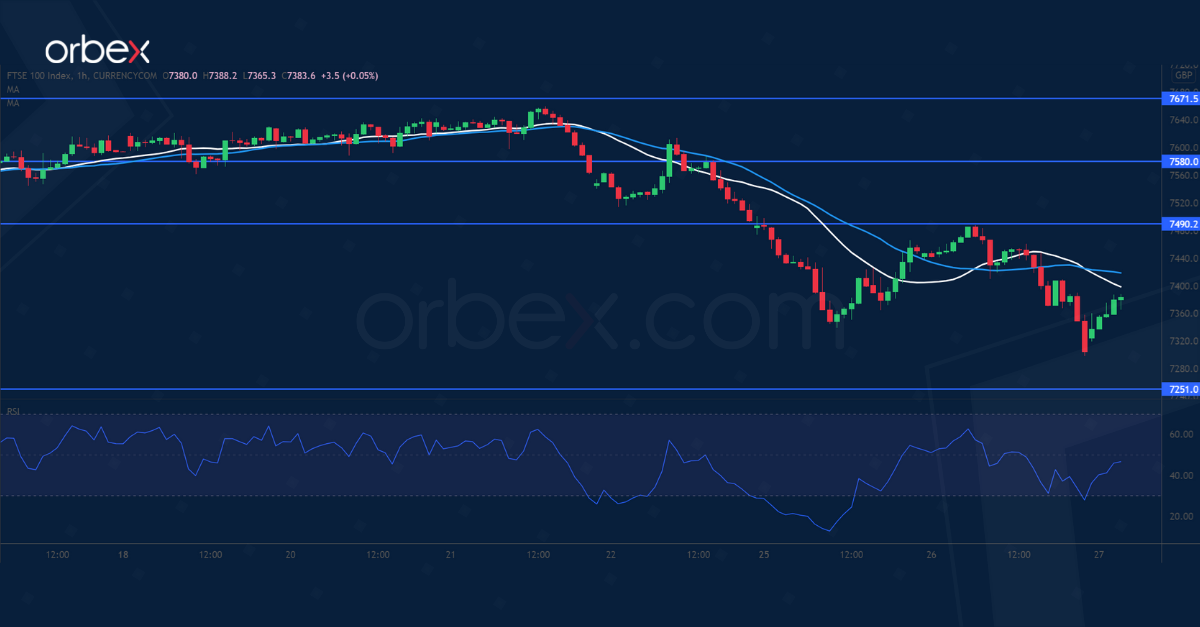
The Australian dollar recovers over a better-than-expected Q1 CPI reading.
A break below March’s low at 0.7170 may have invalidated the recent rebound and put the Aussie on a reversal course in the weeks to come. A bearish MA cross on the daily chart indicates an acceleration to the downside. An extremely oversold RSI on the hourly time frame prompted sellers to take profit, driving the price up momentarily.
Stiff selling pressure could be expected around 0.7370. 0.7100 would be the next stop in case of another sell-off.
EUR/USD Breaks Critical Support
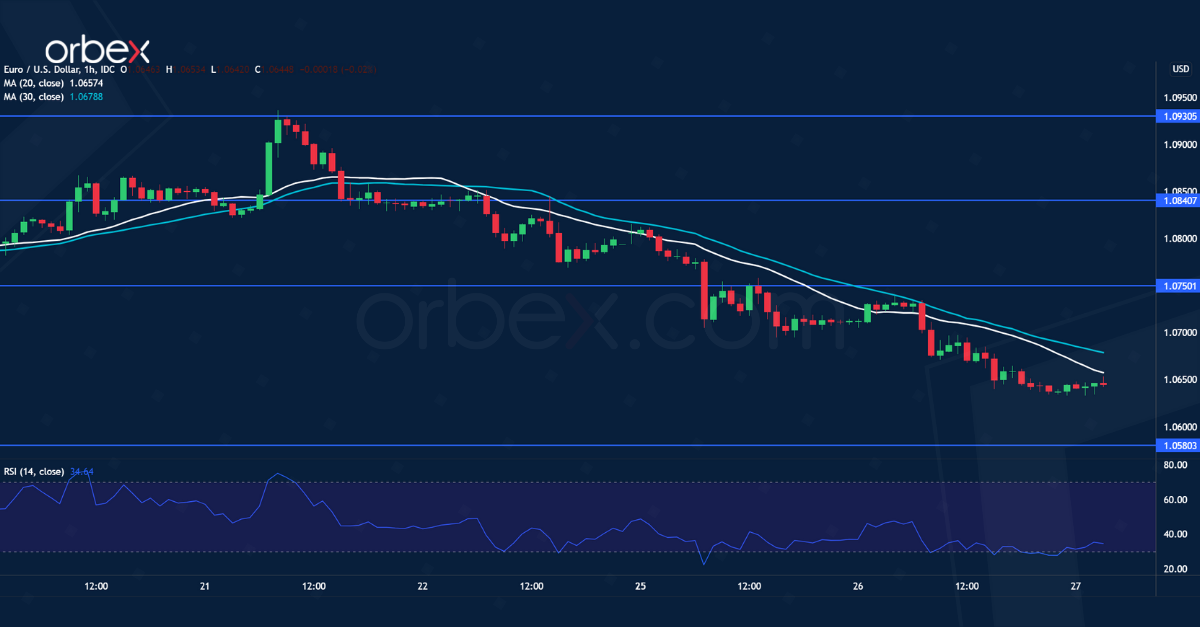
The euro struggles as the eurozone’s growth prospect dampens. The pair remains under pressure after it broke below a short-lived congestion area around 1.0770.
A bearish breakout below March 2020’s lows near 1.0650 (a major demand zone) could send the single currency to 1.0580. In the meantime, the RSI’s double-dip in the oversold territory may trigger a buy-the-dips behavior.
1.0750 is a fresh resistance and its breach could alleviate the selling pressure. The bulls must clear 1.0840 before they could regain control.
Russia Escalates Energy Conflict
Market movers today
The data calendar is dominated by tier-2 releases today. In the US we get data on the trade balance and pending home sales.
France and Germany release consumer confidence this morning. Both indices dropped sharply last month and we have seen similar indices in European countries plummet further in recent weeks.
In Sweden we get PPI inflation, trade balance and unemployment.
Focus will also be on Russian gas deliveries after Russia yesterday said it would halt flows to Poland
The 60 second overview
Russian energy supplies: Both Poland and Bulgaria face a cut-off from Russian energy supplies today as they have reached the Russian deadline for shifting into RUB-based payments for Russian energy. The EU has refused Russian payment demands, yet in recent weeks there has been optimism as to the potential for an EU-Russia compromise. A cut-off of Russian energy to two EU member states marks a significant escalation in the ongoing energy crisis. It further highlights the vulnerability of other EU-members like Germany as they risk similar cut-offs soon. Also the Russian decision to stop energy supplies make a European energy embargo a less potent negotiation tool and threat.
European gas prices: On the back of the escalating outlook for less - and potentially no - Russian gas supplies to the EU, European gas prices have spiked higher although yesterday's afternoon surge of 20% was later cut in half. Brent crude oil prices moved above USD 105/bbl. Next to COVID-19, higher energy prices act as another negative supply shock to the global economy and significantly pressure not least the European economic recovery. European assets have visibly suffered from the negative terms of trade shock in recent months and the single currency has hit new lows.
Central banks: The combination of higher energy prices and a weaker growth outlook put central banks in a tough spot. Yet with inflation spiking above most inflation targets and inflation expectations moving to decade highs in many countries most central banks have clearly indicated forthcoming tightening of monetary policy. Overnight Australian inflation surprised to the topside adding pressure on the Reserve Bank of Australia to hike policy rates for the first time this cycle at the next policy meeting on Tuesday. While markets have reduced expectations for Fed policy rate hikes in recent sessions amid the sell-off in risky assets, rates pricing still embed more than 230bp worth of additional tightening by the end of this year.
Equities: Global equities down 2% yesterday and down 5% in the last 5 trading days. Drops (again) yesterday driven by the cyclical growth stocks while Min Vol and value showing massive outperformance. Tech and consumer discretionary the two biggest loser and earnings reports yesterday did not make things better. Tech normally one of the sectors with the highest surprise factor but so far after 30% reported it's ranked as the third lowest. Yesterday in US, Dow -2.4%, S&P 500 -2.8%, Nasdaq -3.9%(down 20 YTD) and Russell 2000 -3.3%.
Markets in Asia this morning looking somewhat better with Chinese stocks slightly higher while most other markets lower. European futures slightly lower while US once slightly higher.
FX: JPY rebounded further and USD continued to climb higher yesterday. DXY has moved close to 2016 and 2020 peaks now. In the other end of the scale Scandies and GBP lost out. EUR/USD slid towards 1.06 level. The rise in USD/CNH came to a halt yesterday with the pair lingering close to 6.60 level.
Credit: Yesterday the credit markets started the day on a positive footing amid an overweight in better than expected Q1 earnings results. During the day, though, focus on geopolitics, higher rates and Chinese uncertainty crept back into the front of investors' minds. Subsequently iTraxx main ended the day some 3.3bp wider and Xover 11.4bp wider. These indices ended the day in 87.6bp and 410.0bp respectively.
GBP/JPY Daily Outlook
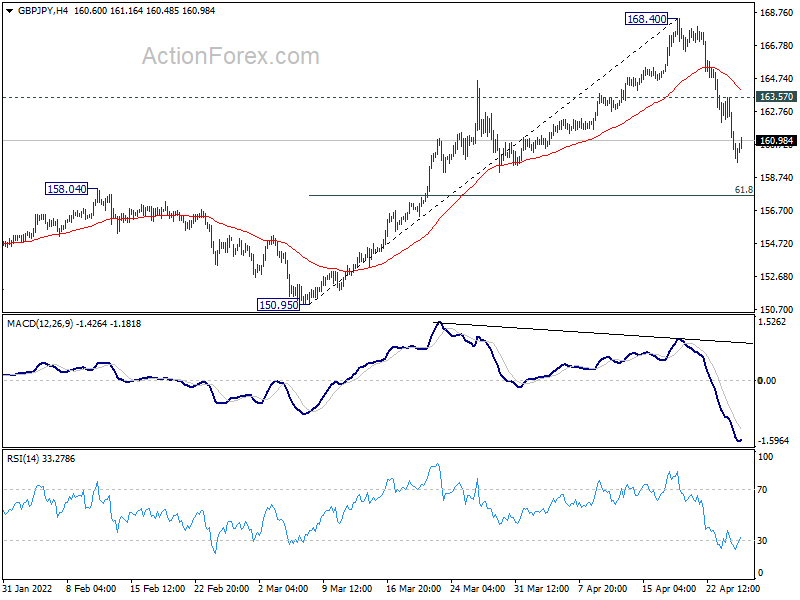
Daily Pivots: (S1) 158.77; (P) 161.19; (R1) 162.41; More...
GBP/JPY's fall from 168.40 is still in progress and could extend to 61.8% retracement of 150.95 to 168.40 at 157.61. Strong support is expected there to contain downside to bring rebound. On the upside, break of 163.57 minor resistance will turn bias back to the upside for retesting 168.40 high. However, firm break of 157.61 will bring deeper fall to 150.96 structural support.
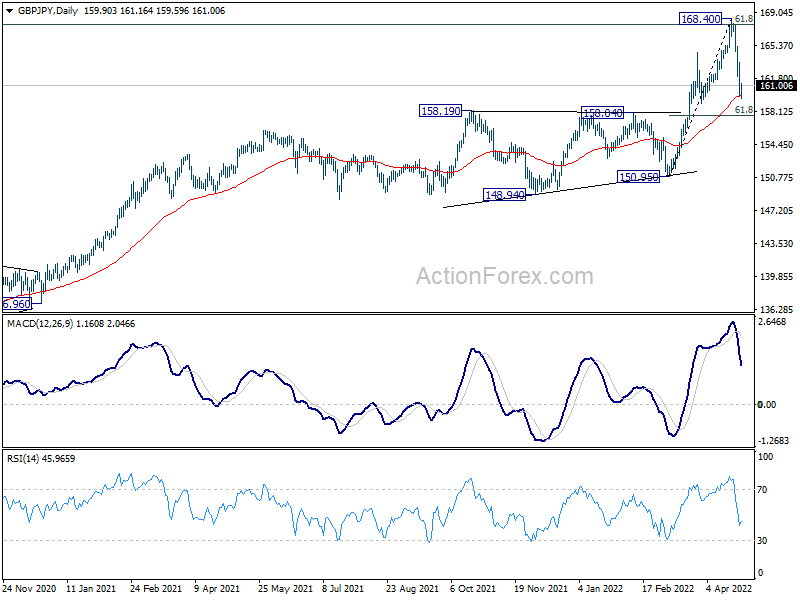
In the bigger picture, up trend from 123.94 (2020 low) is still in progress. Sustained break of 61.8% retracement of 195.86 (2015 high) to 122.75 (2016 low) at 167.93 will be a long term bullish signal, and could pave the way back to 195.86 high. This will now remain the favored case as long as 150.95 support holds, even in case of deep pull back.
EUR/JPY Daily Outlook
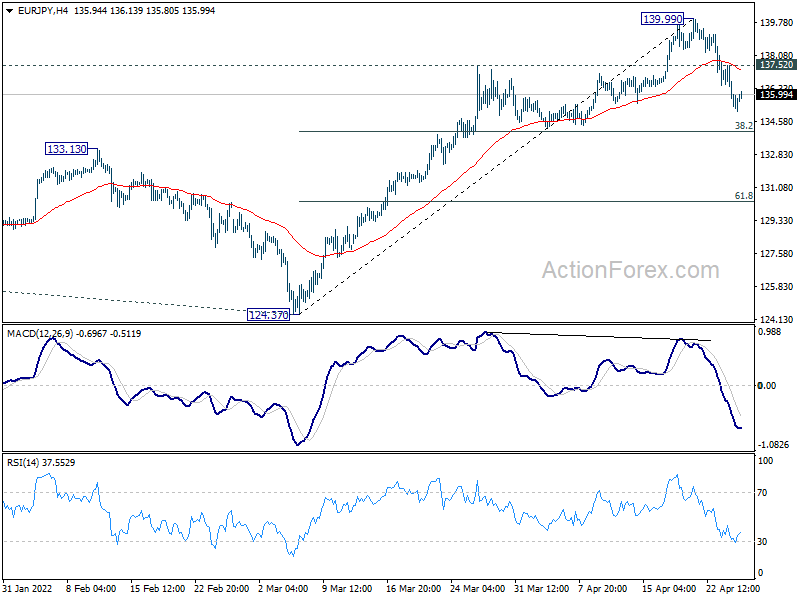
Daily Pivots: (S1) 134.63; (P) 136.08; (R1) 136.82; More....
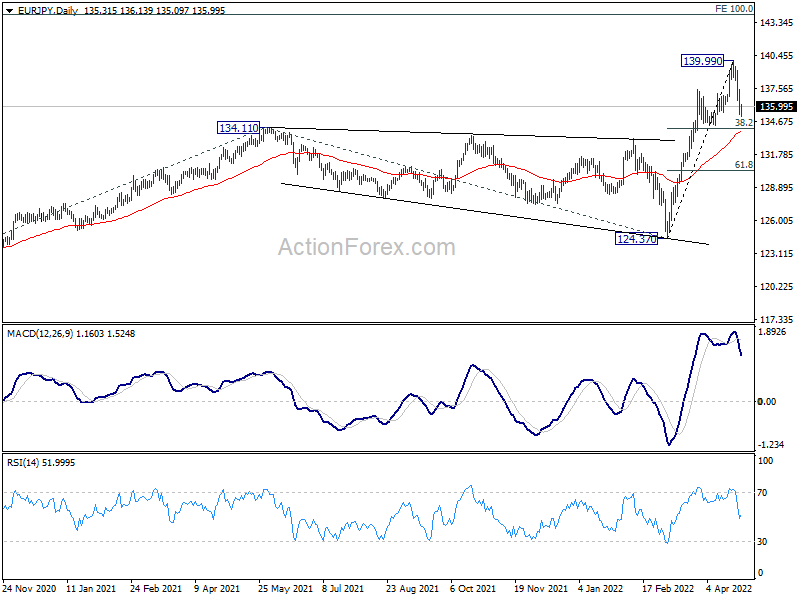
EUR/JPY's pull back from 139.99 is still in progress and deeper fall could be seen to 38.2% retracement of 124.37 to 139.99 at 134.02. Downside should be contained there to bring rebound. On the upside, above 137.52 minor resistance will bring retest of 139.99 resistance first. However, firm break of 134.02 will bring deeper decline to 61.8% retracement at 130.33.
In the bigger picture, up trend from 114.42 (2020 low) is in progress. Such rise is seen as the third leg of the pattern from 109.30 (2016 low). Next target will be 100% projection of 114.42 to 134.11 from 124.37 at 144.06. In any case, outlook will now remain bullish as long as 124.37 support holds, in case of deep pull back.
EUR/GBP Daily Outlook
Daily Pivots: (S1) 0.8414; (P) 0.8439; (R1) 0.8484; More...
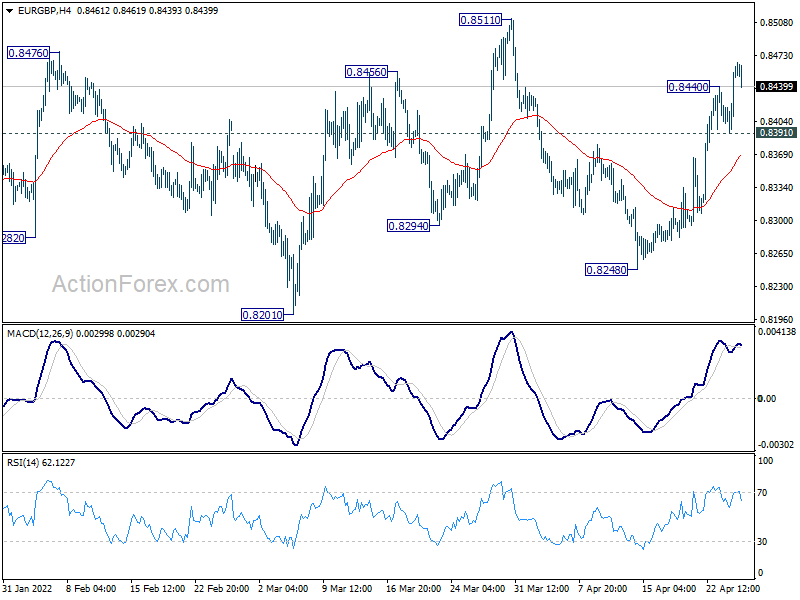
EUR/GBP's rise from 0.8248 resumes after brief retreat and intraday bias is back on the upside. Current rally should target 0.8511 resistance first. Further break of 0.8511 will reaffirm that 0.8201 is a medium term bottom, and target 0.8697 medium term fibonacci level next. On the downside, below 0.8391 minor support will mix up the outlook and turn bias neutral again.
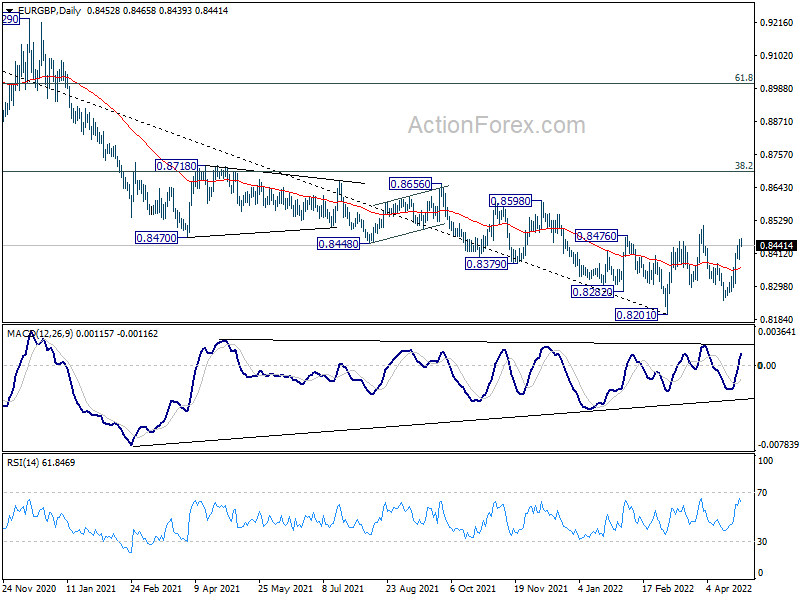
In the bigger picture, a medium term bottom could be in place at 0.8201, on bullish convergence condition in daily and weekly MACD. Rise from there could either be a correction to the down trend from 0.9499 (2020 high), or a medium term up trend itself. In either case, further rise should be seen to 38.2% retracement of 0.9499 to 0.8201 at 0.8697. Sustained break there will target 61.8% retracement at 0.9003.
EUR/AUD Daily Outlook
Daily Pivots: (S1) 1.4849; (P) 1.4897; (R1) 1.4981; More...
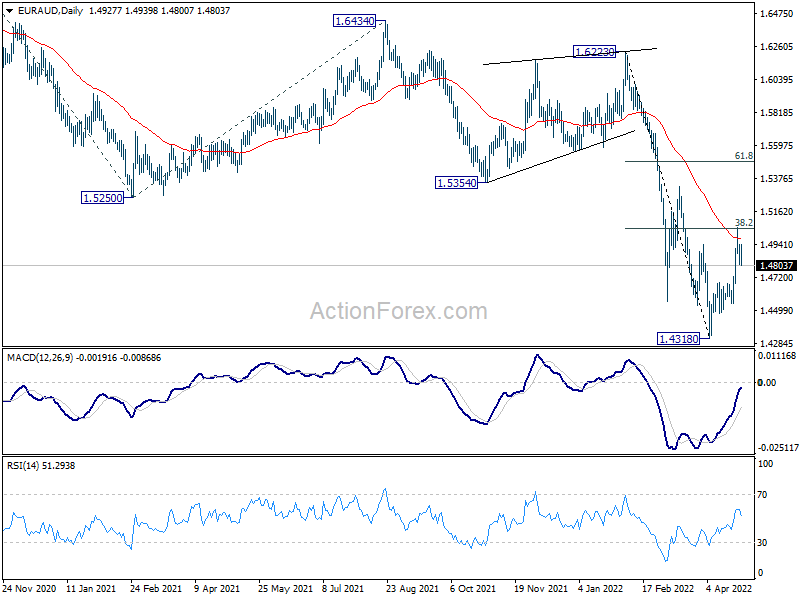
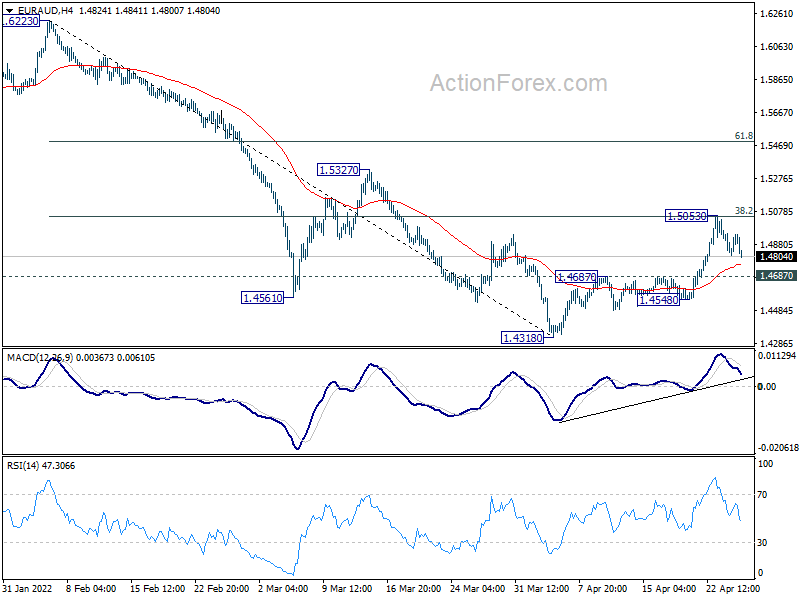
Intraday bias in EUR/AUD remains neutral for the moment. Another rise is still mildly in favor 1.4687 support intact. On the upside, break of 1.5053 will target 61.8% retracement of 1.6223 to 1.4318 at 1.5495. On the downside, below 1.4687 minor support will turn bias back to the downside for retesting 1.4318 instead.
In the bigger picture, fall from 1.9799 is seen as a long term impulsive move. Next target is 61.8% projection of 1.9799 to 1.5250 from 1.6434 at 1.3623, which is close to 1.3624 long term support (2017 low). Some support could be seen there to bring interim rebound. But overall, break of 1.5354 support turned resistance is needed to be the first sign of medium term bottoming. Otherwise, outlook will stay bearish in case of recovery.