Sample Category Title
Bitcoin, Gold, Silver, and Stocks Sell-off Intensifies
US equities, cryptocurrencies, and precious metals declined on Thursday as investors started to adjust for the upcoming interest rate hikes. The Dow Jones declined by about 170 points while the Nasdaq 100 and S&P 500 rose marginally. This sell-off was mostly a reaction to the hawkish minutes by the Federal Reserve. The argument is that assets that did well in a period of low interest rates will lag when the Fed starts its hiking cycle. Meanwhile, data showed that the American services sector lagged in December as the Omicron variant spread. The ISM non-manufacturing PMI declined from 69.1 in November to 62.0 in December.
The US dollar held steady as investors waited for the upcoming American jobs numbers that will come out later today. Economists polled by Reuters expect the data to show that the country’s employers added about 400k jobs in December while the unemployment rate retreated to 4.1%. On Wednesday, data by ADP revealed that the country’s private sector added 800k jobs. On Thursday, the Labor Department said that initial jobless claims rose slightly to 207k last week. Strong jobs numbers will incentivize the Fed to start tapering.
The Canadian dollar strengthened against the US dollar after the latest Canadian trade numbers. According to the country’s commerce department, exports increased from C$56.42 billion in October to C$58.57 billion in November. In the same period, imports rose to C$55.44 billion, leading to an overall trade surplus of C$3.13 billion. These numbers show that the country’s economy is doing well. Later today, the statistics agency will publish the latest jobs data. Economists expect the data to show that the country’s unemployment rate declined from 6.0% to 5.9% in November.
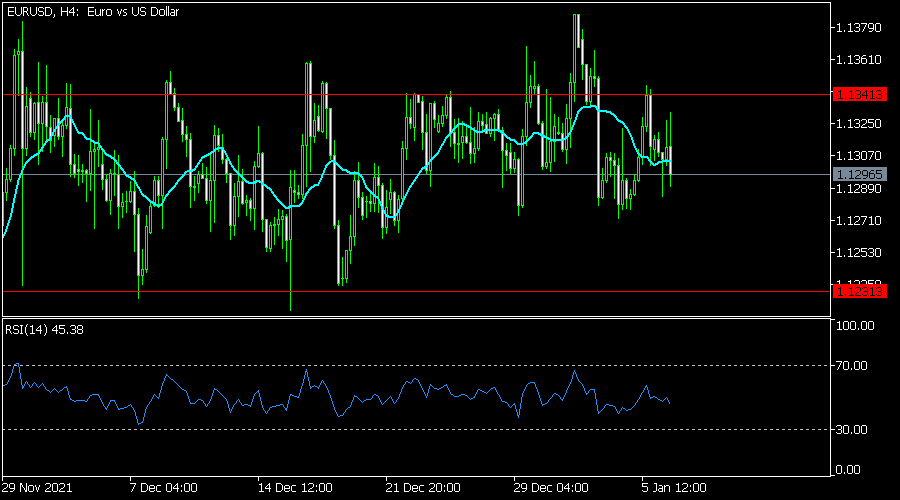
EURUSD
The EURUSD pair was little changed ahead of the latest Eurozone inflation and US NFP data. It is trading at 1.1296, where it has been in the past few days. This price is slightly below the upper side of the horizontal channel shown in red. It is also along the 25-day and 50-day moving averages and slightly below the 23.6% Fibonacci retracement level. Therefore, the pair will likely remain in this range ahead of the NFP data.
USDCAD
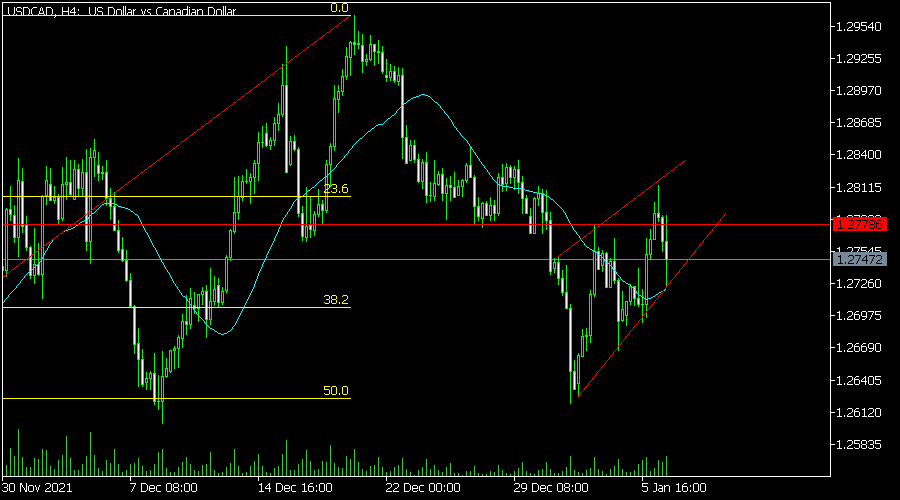
The USDCAD pair moved sideways ahead of the latest US and Canadian jobs numbers. It is trading at 1.2753, which is above this week’s low at 1.2620. The pair has also moved slightly above the 25-day and 50-day moving averages. It has formed an ascending channel that is shown in red. It has also formed a head and shoulders pattern. Therefore, there is a possibility that it will retreat and retest the support at 1.2620.
XTIUSD
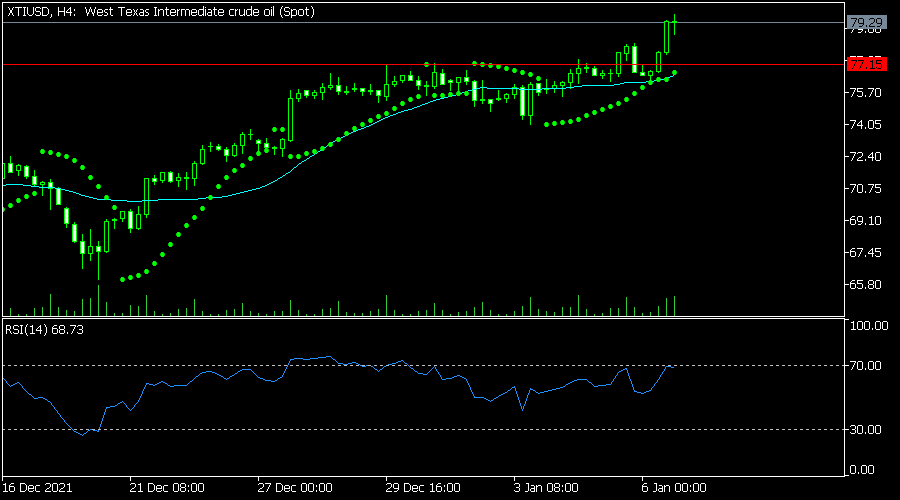
The XTIUSD pair rose to a high of 79, which was the highest level since November 17. It is also above the key support at 77.15 and the Parabolic SAR indicator. It has also risen above the 25-day moving average while the Relative Strength Index (RSI) is slightly below the overbought level of 70. Therefore, the pair will likely keep rising as bulls target the key resistance at 78.
Daily Technical Analysis
EUR/USD
Current level - 1.1295
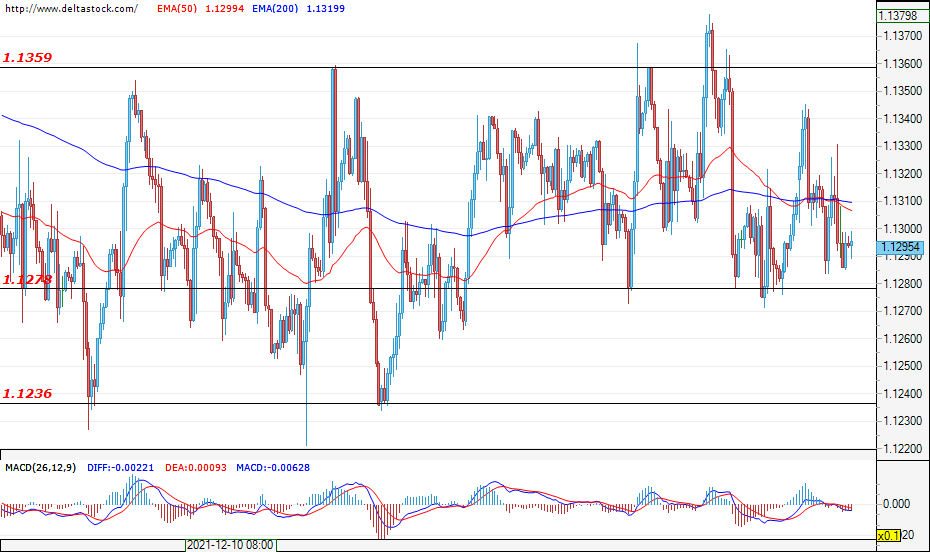
The market continues to trade without a clear direction and, at the time of writing this analysis, the single European currency is on the verge of testing the support zone at 1.1278, and a possible breach of this level could give the bears the necessary incentive to test the key support at 1.1236. On the other hand, if the trade stays above 1.1278, then it is possible that the bulls will try to attack the resistance at 1.1359. Today, investors will expect the monthly non-farm payrolls report for the United States, as well as the unemployment rate (13:30 GMT), and the expected increase in volatility could lead to an end of the consolidation phase and provide a signal for the future direction of the pair.
USD/JPY
Current level - 115.91
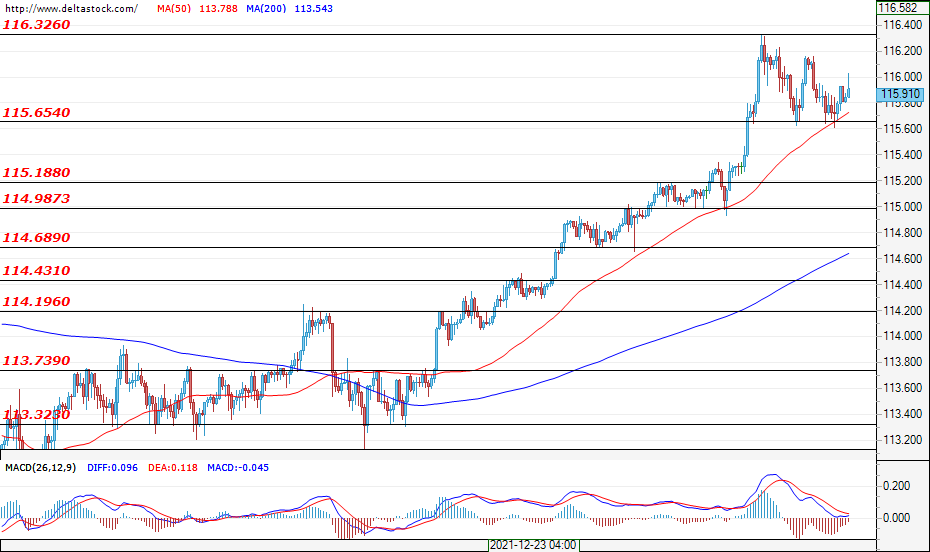
The currency pair is in а consolidation phase in the range of 115.65 – 116.32 and the bears cannot yet gain enough momentum to breach the critical support at 115.65. The expectations are the bulls to re-enter the market and to attack the resistance at 116.32, where a successful breach may pave the way for the pair towards the next resistance zone at 117.00 coming from the higher time frames. In an alternative scenario in which the bears prevail, the market may test the support level at 115.18.
Forex Technical Analysis on USD/JPY
GBP/USD
Current level - 1.3543
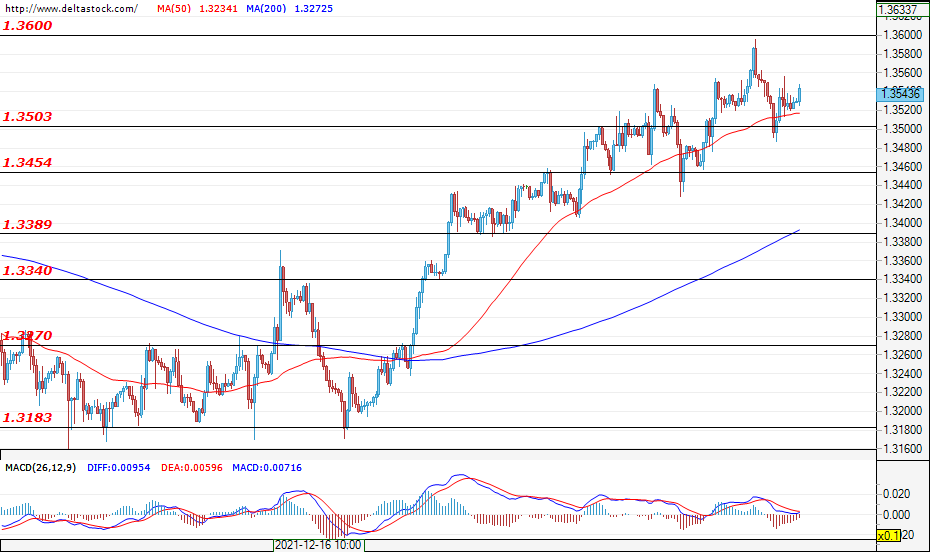
During yesterday’s trading session, the bears couldn’t violate the support at 1.3500 and the expectations for today’s trading session are for an eventual test of the psychological level at 1.3600. In case the bulls gain enough momentum and manage to violate the mentioned level, then this may be considered as a signal for a continuation of the uptrend and a consecutive appreciation of sterling against the U.S. dollar targeting the resistance at 1.3680. However, before a potential upward movement is to develop, the trade may first remain limited in the range of 1.3500 – 1.3600. In the opposite direction, a breach of the support at 1.3500 may give the bears an opportunity to attack the next support zone at 1.3454.
EUGERMANY40
Current level - 16046
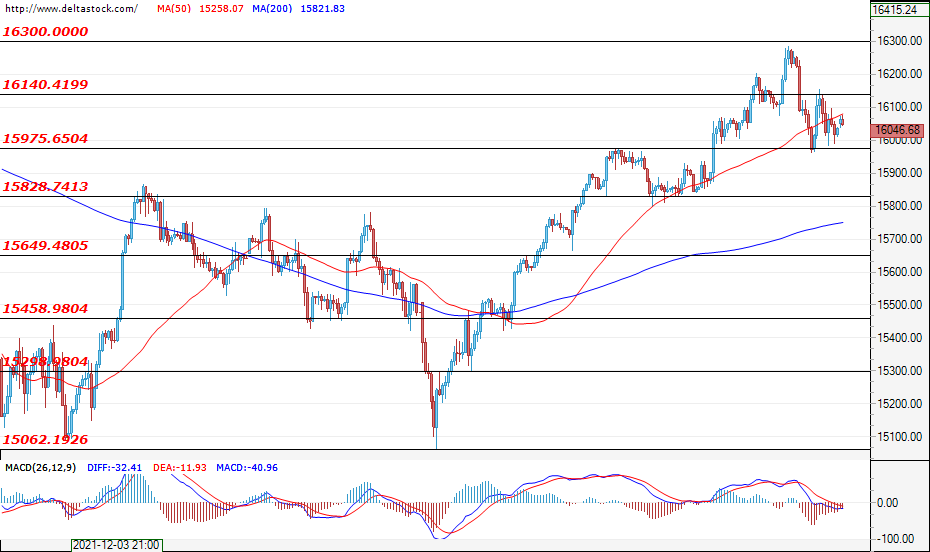
The corrective move after the unsuccessful test of the record level of 16300 was limited by the support zone at 15975 and, at the time of writing, the market is in a hesitant mood and the bears are struggling to overcome the mentioned level. The market sentiment remains positive – for an appreciation of the index and, if the bulls gain enough momentum to overcome the psychological level at 16300, then this would probably lead to an appreciation of the index towards new record highs. Conversely, if the bears re-enter the market, then sell-offs towards 15975 and 15828 would be a more likely scenario, which would also provide better entry levels for the buyers.
USD30
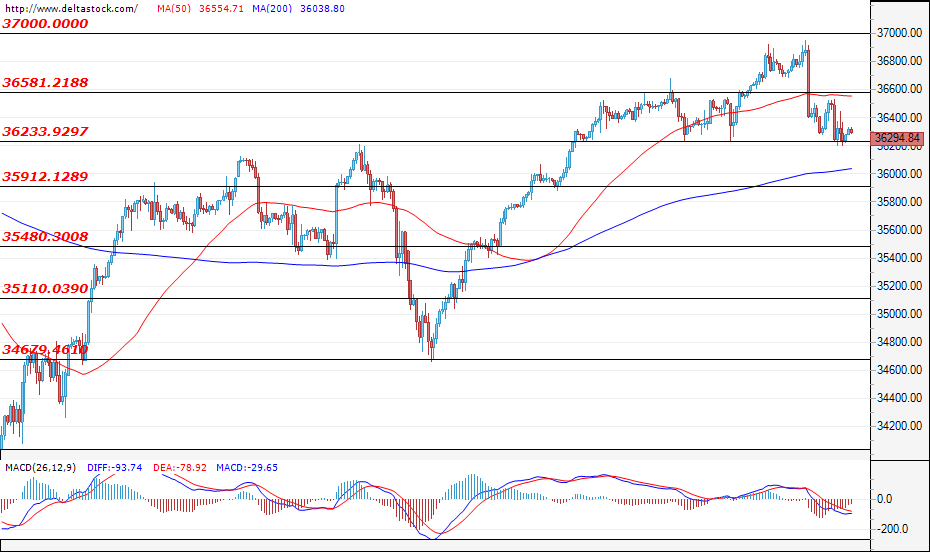
Current level - 36294
The bulls failed to hold their ground after the U.S. blue-chip stock index reached new record highs, which resulted in a decline and a consolidation just above the support area at 36233. A potential deepening of the sell-off during today's trading session could give the bears the necessary momentum needed to test the next major support area at 35912. If the bulls manage to keep the price of the index above the mentioned support and gain just enough momentum, then we may witness a further move towards the psychological level at 37000. Today, the news, mentioned in the EUR/USD analysis, could have an impact on the volatility of the index.
Dollar Still the Odd One Out in this Story
Markets
December FOMC Minutes still echoed through dealing rooms yesterday. Markets concluded that the US central bank could be on its way for a March rate hike with intentions to start winding down the $8.8tn balance sheet later this year. Voting regional Fed governor Bullard backed this scenario as did non-voting San Francisco Fed governor Daly. The latter emphasized strength on the US labour market as witnessed for example earlier this week in a very strong December ADP employment report. Today’ payrolls are expected to confirm this. Consensus expects a decent net job creation of 447k with the unemployment rate forecast to decline from 4.2% to 4.1%, which would be the lowest since February 2020 (3.5%). Average hourly earnings are forecast to remain robust at 0.4% M/M and 4.1% Y/Y. The key question is whether the data will still be able to influence main markets further following a volatile start (excl. FX) to the year. US yields already added 13.3 bps (2-yr) to 22.1 bps (7-yr) on those first four trading days with the US 10-yr yield for example approaching the 2021 high at 1.77%. Real yields are driving the move higher. In such a context it will probably take an extremely strong report to extend this week’s US Treasuries’ losses. US stock markets took a scare from this rate move with the Nasdaq for example down 3.6% YTD. The dollar is still the odd one out in this story, sticking near the beloved 1.13 big figure against the euro. Rising real rates and the risk-off environment tend to cancel each other out for the moment in this cross rate, but the greenback can’t really profit against the smaller currencies either. With the Fed’s cards out on the table, investors might be more interested in today’s EMU inflation numbers. Consensus expects the December print at 4.8% Y/Y, slightly down from 4.9% Y/Y in November, but we expect the first 5%(+?) reading in EMU history. Similar experiences in the US tended to spark sell-off in both bonds and stocks in such scenario. The same reasoning applies as for US Treasuries though. European bonds have been selling off ever since the December ECB meeting. The German 10-yr yield closes in on the -0.03% recovery high, while the EU 10y swap rate already passed its own technical reference (0.33%). The next mark to watch here is 0.4% which is 50% retracement on the 2018-2019 decline. Summarizing for today: EMU and US eco data will probably be negative for core bonds (and currently risk sentiment), but turn a little bit more cautious on the pace of the decline given strong moves since mid-December. EUR/USD remains deadlocked.
News headlines
Monetary policy normalization/tightening also continues in South America. Peru raised its policy rate by 50 bps to 3.0%. It was the sixth consecutive monthly rate hike since the cycle started in in August (from 0.25%). Inflation in Peru rose to 6.4% Y/Y in December. The central bank has an inflation target of 2.0% with a tolerance band of +/- 1.0%. Given solid economic growth, the bank no longer sees a need for an expansionary monetary policy stance. With the incoming information available, it now considers its ‘appropriate to continue with the normalization of monetary policy ion the coming months’. At the same time, the inflation problem in Argentina remains of a much different degree. The centrale bank yesterday raised its ‘leliq’ policy rate from 38% to 40% after it was left unchanged for more than a year. Inflation in Argentina is hovering around 50%. The IMF, in negotiations of a new schedule for the countries repayments to the Fund, asked Argentina to raise interest rates above the inflation rate.
Japanese eco data published this morning showed a mixed picture. The December Tokyo headline CPI, which is published well ahead of the national release, is gradually trading higher from 0.5% to 0.8%. The ‘core measure’ excluding fresh food also rose from 0.3% to 0.5%. At the same time, November spending data raised questions on any sustained reflationary dynamics. Even before the impact of the omicron variant hit activity, household spending unexpectedly declined 1.2% M/M in November. The spending was also 1.3% below the level recorded last year. Real cash earnings printed unchanged in November (0.0% Y/Y). Higher domestic spending supported by higher wages and an accommodative fiscal policy is an import component of the recovery strategy from the new government.
Ethereum in free fall, bitcoin following closely
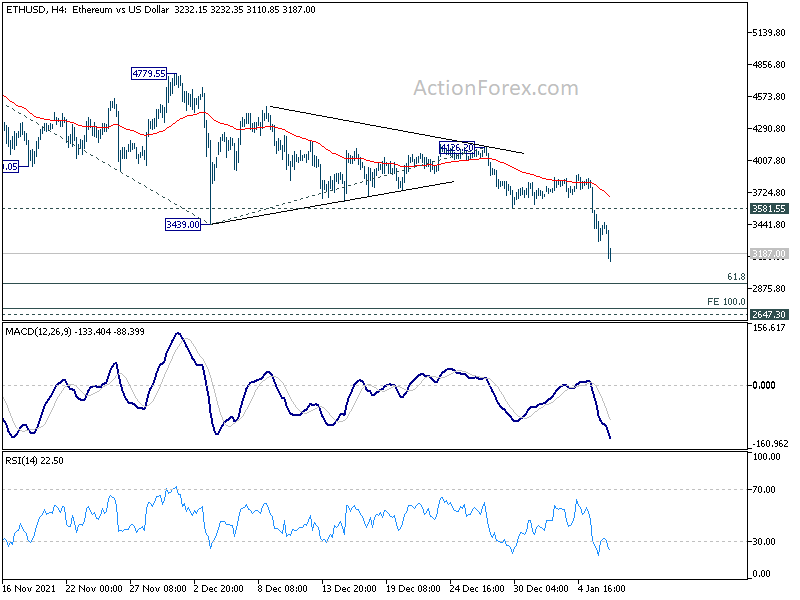
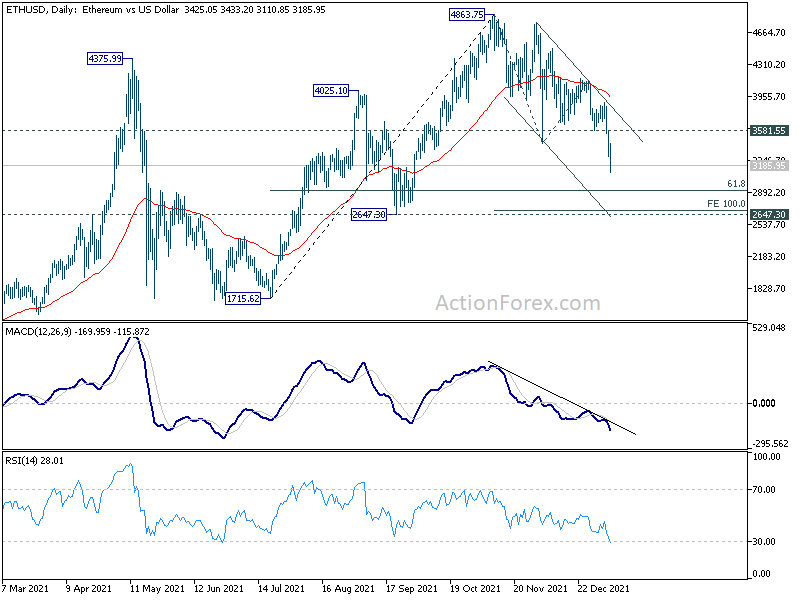
Ethereum is in free fall this week, apparently weighed by hawkish FOMC minutes. ETH/USD even accelerates downwards after taking out 3439 spike low. The decline from 4863.75 is seen as reversing the whole move from 1715.62 to 4863.75. Further fall is expected as long as 3581.55 support turned resistance holds.
ETH/USD should target 61.8% retracement of 1715.62 to 4863.75 at 2918.20, or even further to 100% projection of 4863.75 to 3439.00 from 4126.20 at 2701.45 which is close to 2647.30 support ), before forming a bottom.
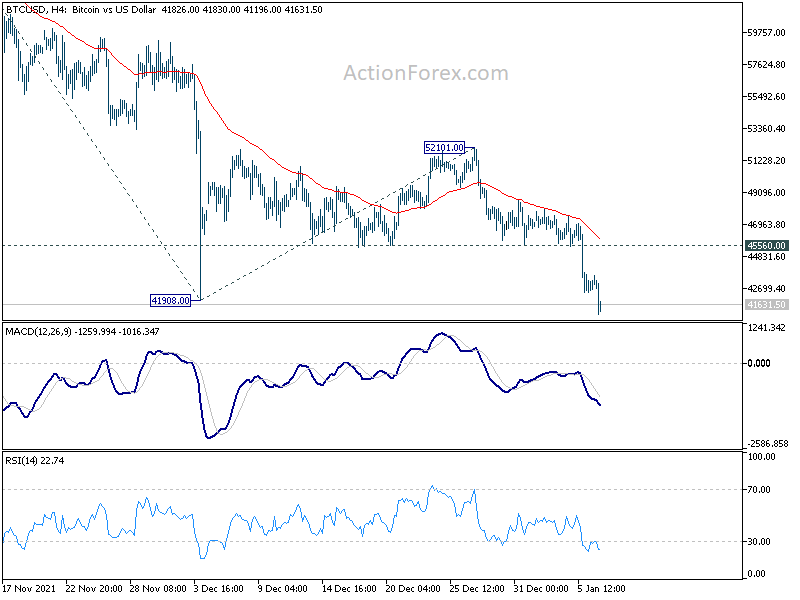
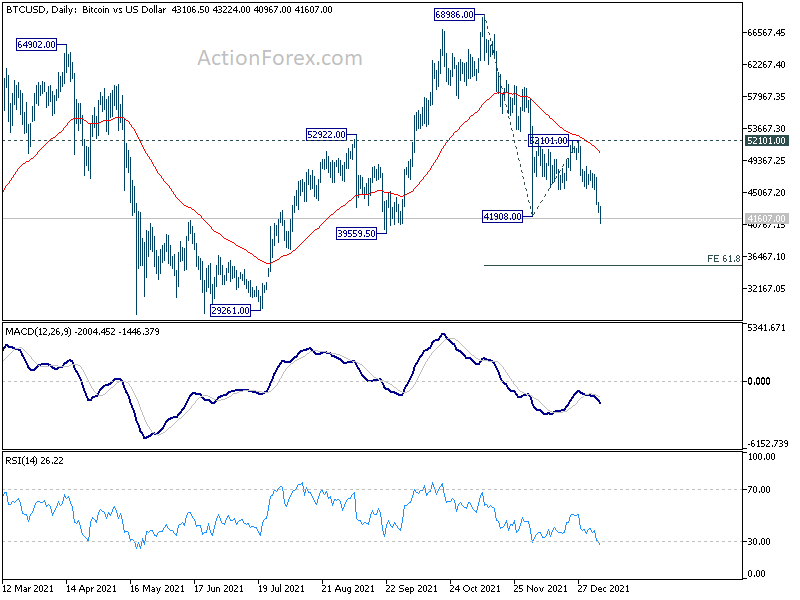
Bitcoin is also following and breaks 41908 spike low. As noted before, there might be some temporary support between 39559/41908, around 40k handle. But outlook will stay bearish as long as 45560 support turned resistance holds.
Fall from 68986 could extend to 61.8% projection of 68986 to 41908 from 52101 at 35366 before BTC/USD forms a bottom.
US Jobs: Strong Read Could Further Boost Fed Hawks
Selloff in equities stabilizes, with the S&P 500 and Nasdaq closing the day with minor losses only. US and European stock futures turned positive in the overnight trading session, hinting at consolidation before the weekly closing bell.
Yet, uncertainties persist as investors got unsettled with the latest FOMC minutes this week. We knew the Fed wouldn’t wait much longer before hiking the interest rates but the plan of reducing the size of the balance sheet almost simultaneously came a slap in the market’s face, as investors would normally expect a 12–24-month time gap between the two. As a result, the hawkish shift is real, and the worry of seeing the Fed go full blast into an aggressive tightening cycle is of course a sudden wake-up from a wild all-you-can-drink night out.
Important for the mood today will be the US jobs data. On Wednesday, the ADP report revealed a much better than expected number with a print of 800’000 new private jobs in December. Today, the NFP is expected to reveal that the US economy added 400’000 new nonfarm jobs. But the jobs data doesn’t matter much for the Fed policy expectations right now, what matters for the Fed is inflation.
Therefore, a low figure, around 100-200K, wouldn’t change the direction the Fed is preparing to take. However, a strong NFP print, and a beat on unemployment rate, have the power of boosting the Fed hawks, on the idea that the US jobs market no longer needs the Fed’s support, and the Fed could pull away support faster if it believes that there is no harm for the jobs leg of the equation. In this sense, a strong jobs data could wreak havoc in risk markets. Remember, investors like good data only and if only it boosts asset prices, and when it doesn’t, they mourn.
European inflation still transitory?
Europe will announce its latest consumer inflation figure today. Yesterday, the producer price inflation came a touch higher than expected, at 23.7% year-on-year versus 22.9% expected by analysts. The expectation for consumer inflation is a slight retreat from 4.9% mark. But, if there is a surprise, I would expect a surprise to the upside.
The EURUSD remains flat near the 1.13 mark and the risks seem tilted to the downside due to the hawkish Fed expectations pressuring the greenback higher across the board. The ECB’s lack of reaction faced with the rising inflation and the fact that the European policymakers chose to wait for inflation to temper itself keeps the ECB hawks very much off the book for now. A read above the 5% mark will sure titillate the ECB hawks and get Christine Lagarde a step closer to accept that inflation may not be transitory.
Bitcoin hit by global risk appetite & shutdown in Kazakhstan
Selloff in Bitcoin intensifies with the lack of risk appetite and the internet shutdown in Kazakhstan due to the mounting social unrest. Kazakhstan is one of the biggest power houses for Bitcoin miners. Last year, it became the world’s largest mining centers after the United States, so the internet shutdown in Kazakhstan hit Bitcoin’s computational power.
The coin is now ready to test the $40K psychological support, which may not bring in the dip buyers just yet, as the prospects of a tighter monetary policy will likely weigh on the mood. For now, Bitcoin is acting as a high-beta asset, it trades parallel to the risk appetite. Therefore, the meltdown could continue if yields trend higher - which is the base case scenario.
Consumer Headwinds as Inflation Soars
Market movers today
After the sharp risk sell-off following the release of the December FOMC minutes, focus is on whether sentiment rebounds or stays shaky.
Today's key release is the US jobs report due out 14:30 CET. ADP was much stronger than consensus for today's jobs report but ADP is not considered a good indicator for official jobs growth. That said, if jobs growth in December was indeed above 800,000, it increases the probability of the Fed hiking already in March and tightening more in 2022 than currently priced in, so risk may not react positively to a strong number this time around. Also look out for whether the labour force increases, as a rebound in the labour force is likely needed for stronger jobs growth in 2022.
In the euro area Flash HICP figures for December are due. We expect a slight easing of the inflation pressures to 4.7%, but upside risks stem from the energy component and another uptick in German and Italian core inflation. Also euro area retail sales data for November are due out at 11:00 CET.
In Germany, industrial production data for November is due out, which is interesting because of the sharp decline in factory orders. Norwegian industrial production is also due out.
The 60 second overview
Inflation: German inflation increased further to 5.3% in December, the highest since 1992. Energy prices and VAT-normalisation are still key drivers but state figures indicate core inflation has also been increasing. We are still waiting for higher gas prices to feed through, which will likely be a January effect, so more headwinds could be in store for the German consumer, although the VAT base effect will slide out of the inflation measure in 2022. Italian inflation also climbed to 3.9%, which is the highest level since 2008.
Headwinds for the Japanese consumer: We got some weak figures out on Japanese consumers this morning with household spending down 1.2% in November (vs. consensus of 1.2% increase) and real wages down 1.6% yoy as total cash earnings ticked in at 0% yoy. The weak JPY is slowly starting to raise some concern among politicians as consumers' purchasing power is currently being eroded. Finance Minister Suzuki was out this morning saying FX stability is important. We will watch for further comments on JPY ahead of the 17/18 January Bank of Japan meeting.
Equities: Equities fell yesterday but sector/style rotation remains the big story with 10%-point performance difference between energy and tech in 2022. Sentiment a bit better yesterday but yields continued higher and hence the defensive value trade turned into a more cyclical value trade. In US, Dow -0.5%, S&P 500 -0.1%, Nasdaq +0.1% and Russell 2000 +0.6%. Sentiment in Asia this morning with Hang Seng leading the gains. Futures in Europe and US in small gains.
FI: Bond markets came under pressure yesterday as the hawkish Fed minutes from the December meeting were digested. The 10y Bund touched above -0.05%, but later reversed to end the day just 2bp higher than it started.
FX: Yesterday, EUR/USD ended the day marginally below 1.13 at the time of writing. EUR/GBP began the day by moving higher but ended around the same level, where it started. Both EUR/NOK and EUR/SEK rose and were trading at 10.05 and 10.33, respectively, at the time of writing. Downwards pressure on EUR/DKK eased this week.
Credit: CDS indices came under pressure yesterday, with iTraxx Xover widening 7.5bp (taking it above 250bp) and Main 1.5bp (to almost 50bp). Cash bonds held up better with HY closing unchanged and IG widening 0.5bp.
Nordic macro
There are no market movers in the Nordics today.
GBP/JPY Daily Outlook
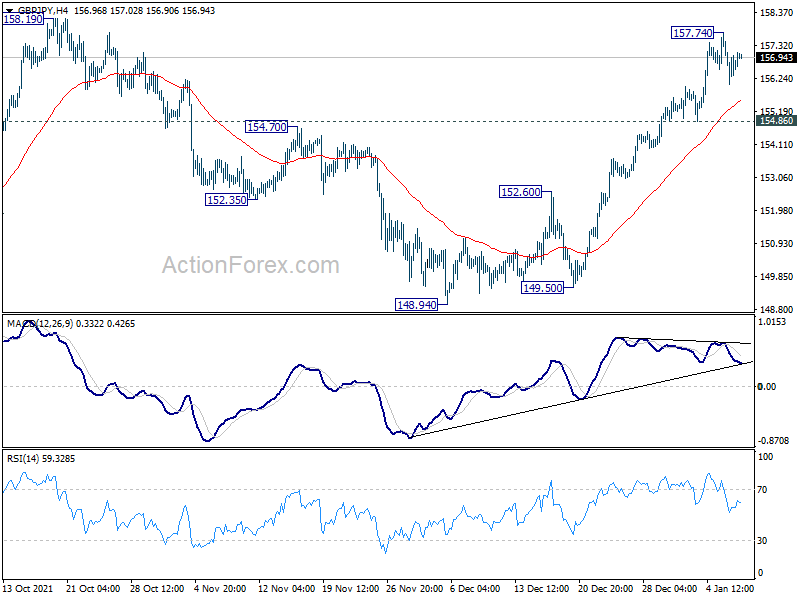
Daily Pivots: (S1) 156.12; (P) 156.79; (R1) 157.50; More...
Intraday bias in GBP/JPY is turned neutral for consolidations first. Further rally is expected as long as 154.86 support holds. Decisive break of 158.19 high will resume larger up trend to 167.93 long term fibonacci level. On the downside, below 154.86 minor support will turn intraday bias back to the downside for deeper pull back.
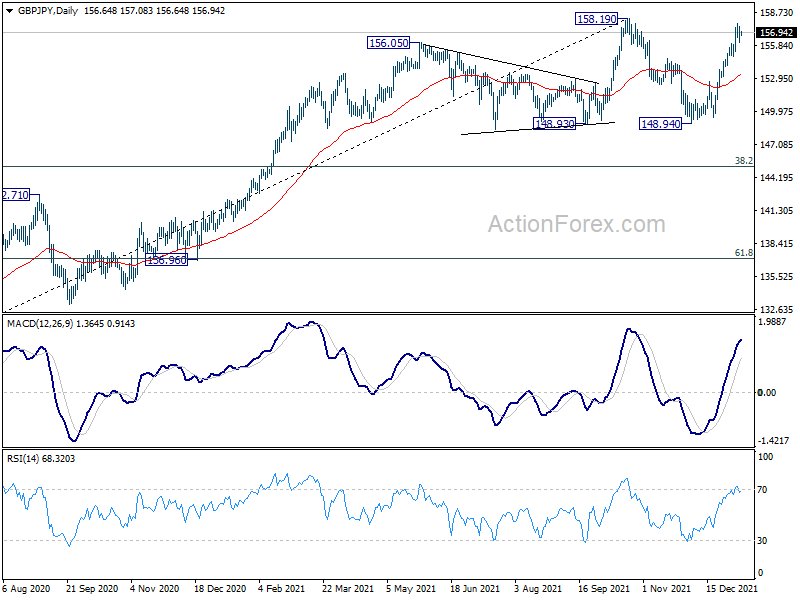
In the bigger picture, strong rebound from 148.93 key structural support will retain medium term bullishness. Firm break of 158.19 high will resume whole up trend from 123.94 (2020 low), to 61.8% retracement of 195.86 to 122.75 at 167.93. Nevertheless, firm break of 148.93 will bring deeper correction to 38.2% retracement of 123.94 to 158.19 at 145.10, and possibly further lower, as a correction to up trend from 123.94 at least
EUR/JPY Daily Outlook
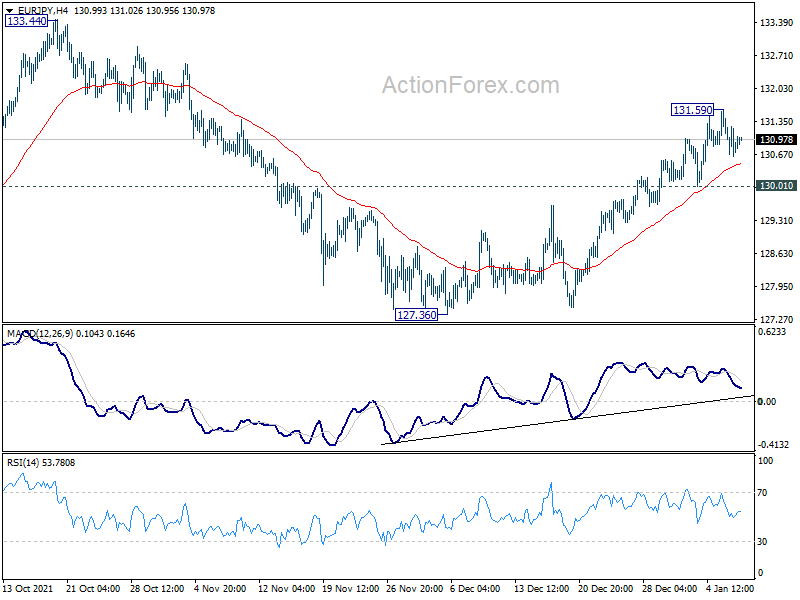
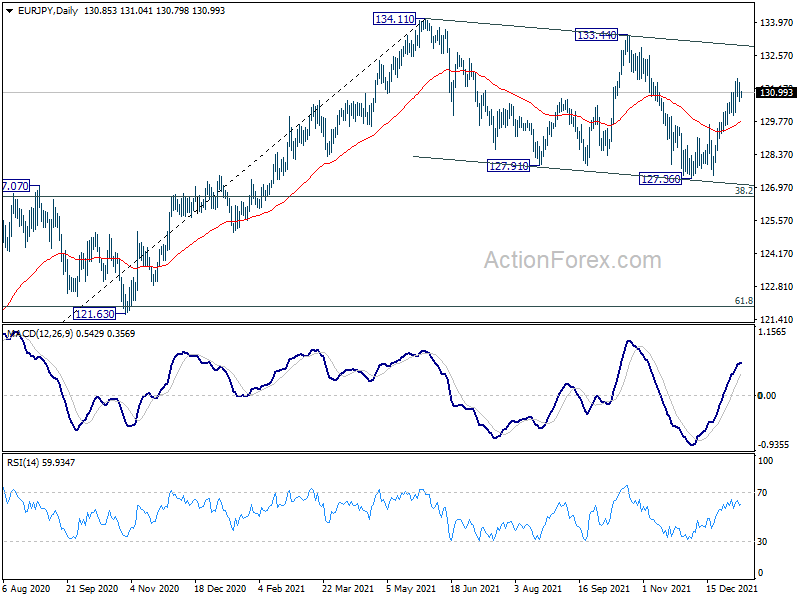
Daily Pivots: (S1) 130.55; (P) 130.99; (R1) 131.34; More....
Intraday bias in EUR/JPY is turned neutral for some consolidation. But further rally is in favor with 130.01 minor support intact. As noted before, whole consolidation from 134.11 could have completed with three waves down to 127.36, ahead of 126.58 medium term fibonacci level. Break of 131.59 will target a test on 133.44/134.11 resistance zone. On the downside, break of 130.01 minor support will turn bias bias to the downside for retesting 127.36 low instead.
In the bigger picture, as long as 38.2% retracement of 114.42 (2020 low) to 134.11 at 126.58 holds, up trend from 114.42 is still in favor to continue. Break of 134.11 will target long term resistance at 137.49 (2018 high). However, sustained break of 126.58 will raise the chance of medium term bearish reversal. In this case, deeper decline would be seen to 61.8% retracement at 121.94, and possibly below.
EUR/GBP Daily Outlook
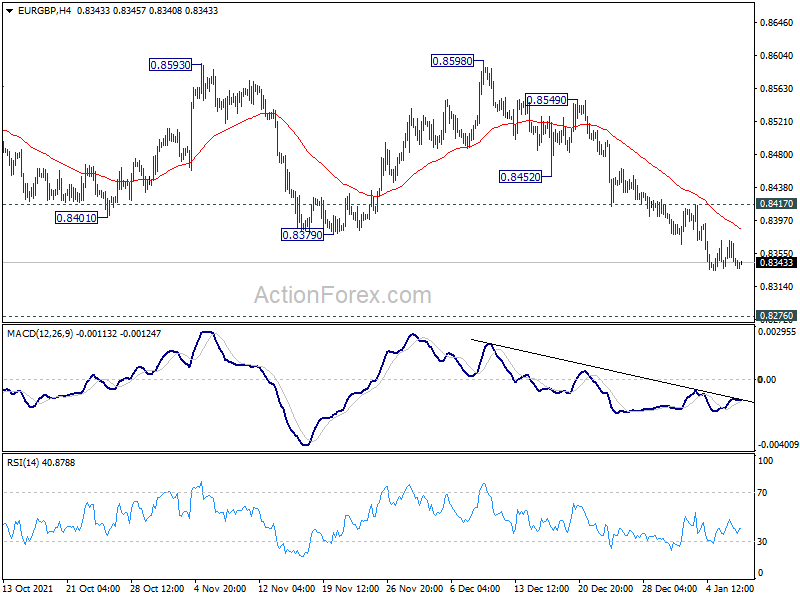
Daily Pivots: (S1) 0.8330; (P) 0.8351; (R1) 0.8368; More...
No change in EUR/GBP's outlook as further decline is expected as long as 0.8417 resistance holds. Current fall is part of the larger down trend from 0.9499. Further decline would be seen to 0.8276 key long term support. On the upside, above 0.8417 minor resistance will turn bias back to the upside for stronger rebound.
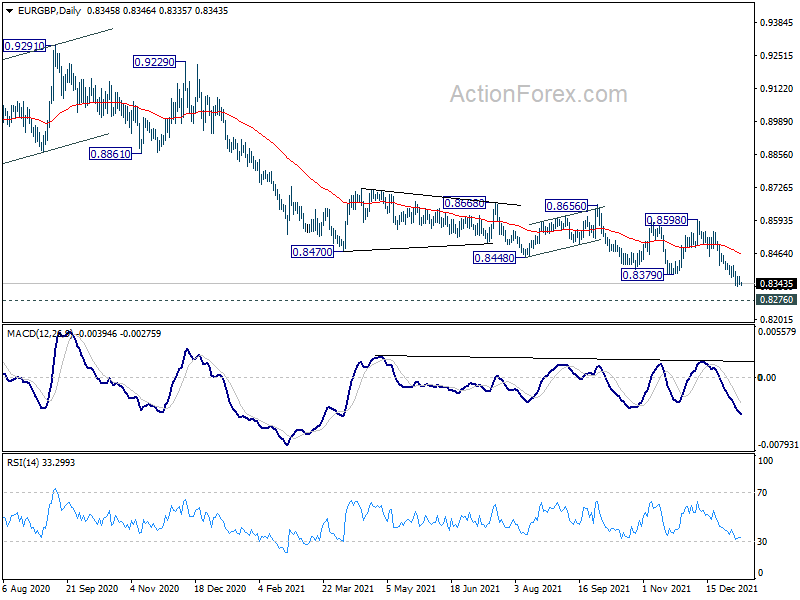
In the bigger picture, price actions from 0.9499 (2020 high) are still seen as developing into a corrective pattern. Deeper fall could be seen as long as 0.8598 resistance holds, towards long term support at 0.8276. We'd look for bottoming signal around there to bring reversal. Meanwhile, firm break of 0.8598 will now be an early sign of medium term bottoming and bring stronger rebound. However, sustained break of 0.8276 will argue that the long term trend has reversed.
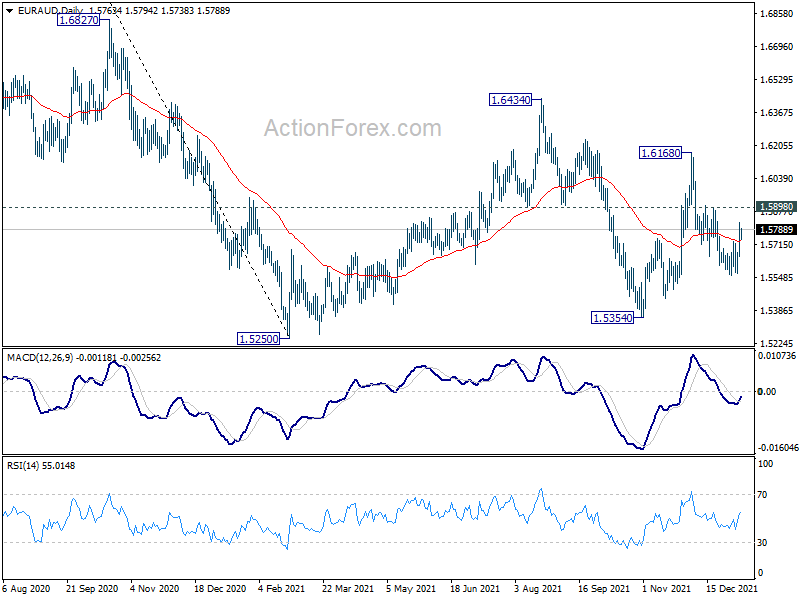
EUR/AUD Daily Outlook
Daily Pivots: (S1) 1.5682; (P) 1.5752; (R1) 1.5844; More...
Intraday bias remains neutral and outlook is unchanged in EUR/AUD. Further fall is expected as long as 1.5898 resistance holds. On the downside, break of 1.5559 will resume the fall from 1.6168 to retest 1.5354 low. However, break of 1.5898 will turn bias back to the upside for 1.6168 resistance instead.
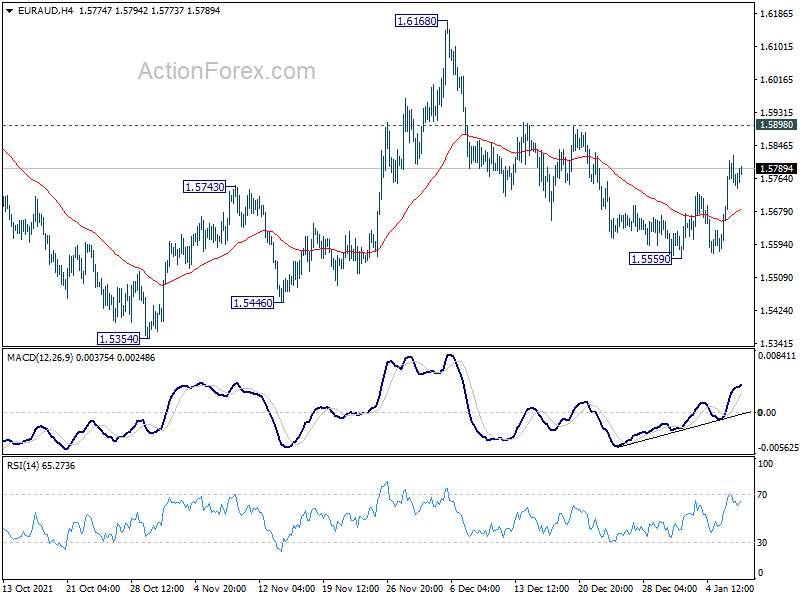
In the bigger picture, medium term outlook remains neutral for the moment. Rise from 1.5354 is seen as the third leg of the corrective pattern from 1.5250 low. Further rise cannot be ruled out, but even in that case, strong resistance should be seen at 38.2% retracement of 1.9799 to 1.5250 at 1.6988. Larger down trend from 1.9799 is in favor to extend through 1.5250 at a later stage.