

Sample Category Title
Australia Westpac leading index rose to -0.2%, Omicron not derailing recovery
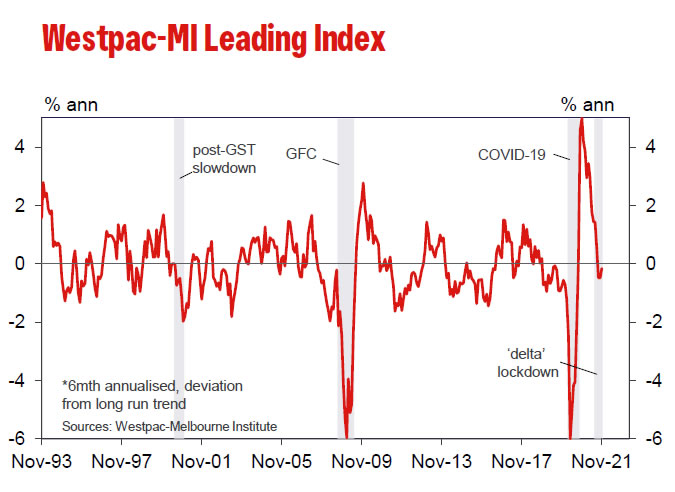
The six month annualized growth rate in Westpac-Melbourne Institute Leading Index rose from -0.5% to -0.2% in November. The index has been in negative territory for three consecutive months, partly reflecting the lockdowns in New South Wales and Victoria. Nevertheless, reopening rebounds should eventually lift growth back above trend.
Westpac said both itself and the RBA "currently believe that Omicron will not derail the recovery although the next month will determine the extent of the delay and uncertainty."
Eco Data 12/22/21
[php_everywhere instance="1"]
US PCE Inflation Expected to Jump; Fed’s Hawkish Turn Relieves Markets
The US dollar has been roaring lately, capitalizing on the risk-off sentiment in the markets caused by the Omicron variant. This week, dollar bulls will be closely eyeing the barrage of the last major US data releases of the year. More specifically, the core Personal Consumption Expenditure (PCE) price index is out at 13:30 GMT on Thursday, which will be accompanied by several other key indicators, including Q3 GDP revision and durable goods orders. However, the upside potential for the greenback is limited since the ultra-hawkish rhetoric adopted by the Fed in the latest FOMC meeting does not leave much room for further positive surprises.
Core PCE creeps higher but does not spook markets
The core PCE index, which is the Fed's favored gauge of inflation, is expected to follow a similar suit to the CPI rate, confirming that inflationary pressures intensified in November. According to the latest projections, the index, which excludes the more volatile food and energy prices, has jumped to 4.5% in November on a yearly basis from 4.1% previously. This figure is not only well above the Fed's 2% target but it would also be the highest in 33. Moreover, the month-on-month rise is forecast at 0.4% and marks an eleventh straight monthly increase, which is an even more worrisome sign.
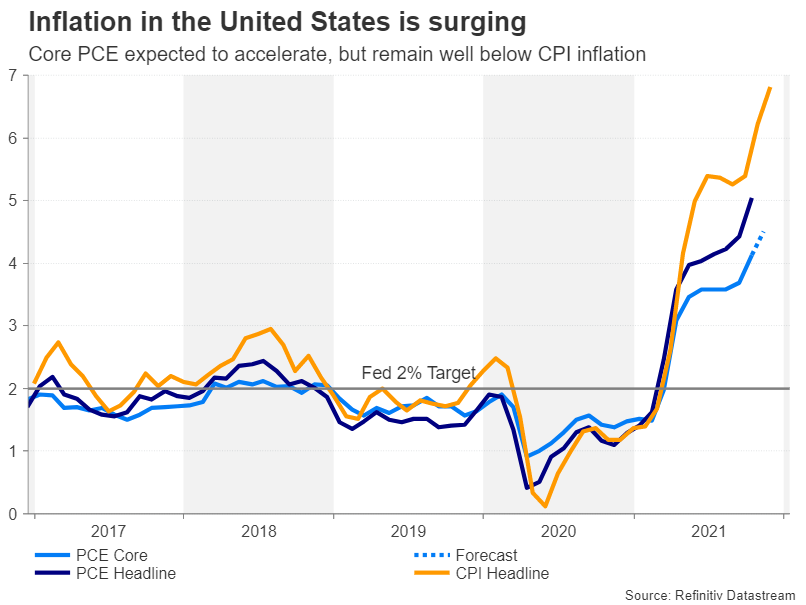
In response to growing concerns about inflation getting out of control the Fed accelerated the pace of its tapering program and signaled a more aggressive rate hike timeline at last week's policy meeting. Nevertheless, as long as inflationary pressures keep stemming from supply chain bottlenecks and surging energy prices, the tighter US monetary policy will probably not significantly weigh on inflation as it cannot resolve any of these issues.
Income and consumption remain key factors for the economy
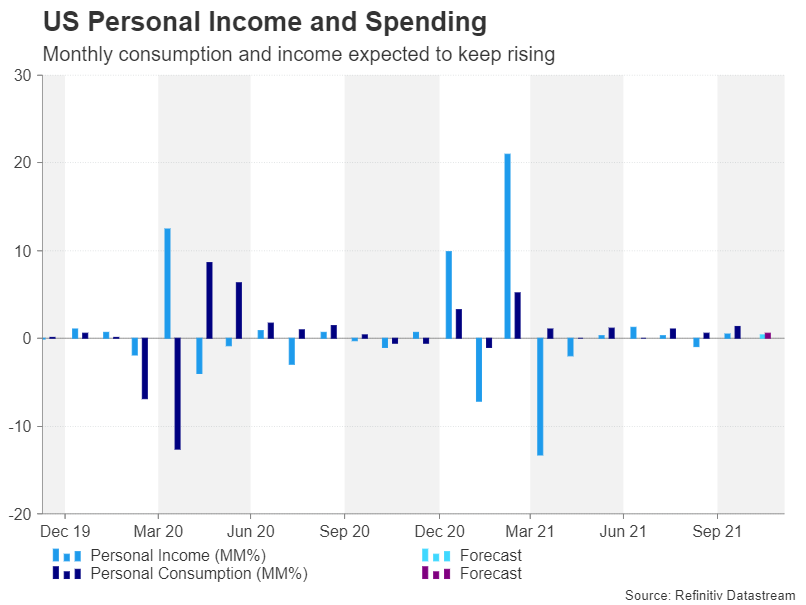
Personal income and consumption figures usually serve as substantial indicators of the overall condition of an economy. In the upcoming US PCE release, personal income is forecast to have risen by 0.4% m/m following a 0.5% increase in October. The main driving force behind this continuing surge might be the constantly increasing compensations deployed by businesses to lure employees to return to their jobs.
Furthermore, personal consumption is projected to have climbed by 0.6% on a monthly basis, slowing from the prior 1.3% rate. Despite the expectations of solid spending growth in November as the holiday season approaches, the earlier start of holiday shopping due to fears of emerging restrictions may have slightly undermined November's consumption figure.
Apart from the PCE print, durable goods orders will also be watched on Thursday, alongside the Q3 GDP revision. Durable goods orders are forecast to have risen by 1.6% in November, bouncing back after the 0.4% pullback in October, led mainly by a sharp jump in orders for civilian aircraft and cars. In addition, the Q3 GDP growth figure is expected to remain unchanged at 2.1% but this data point is of no particular interest as it refers to a period well before the Omicron variant emerged.
Dollar index storms higher in 2021
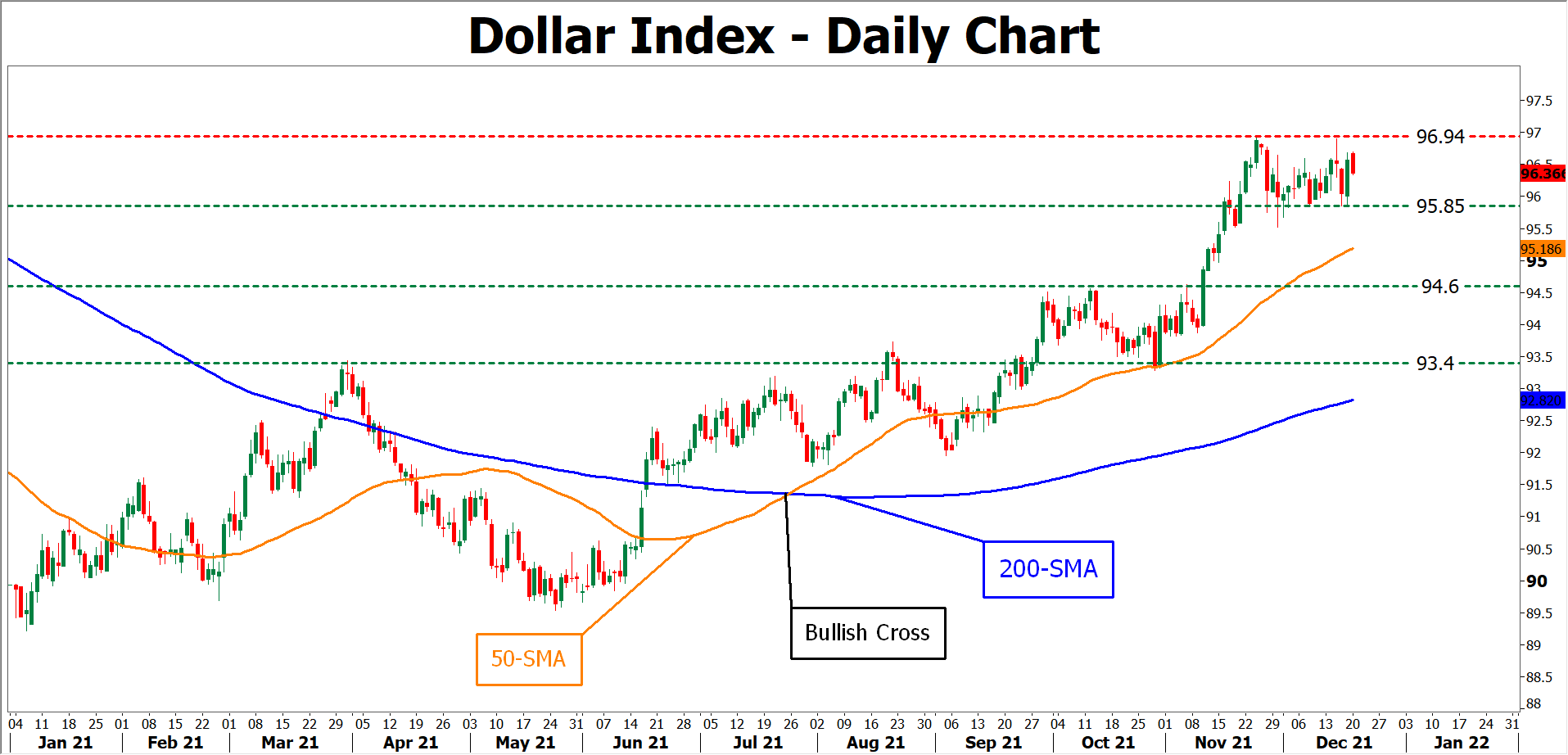
From a technical perspective, the dollar index is set to finish 2021 strong, fuelled by the Fed's more hawkish stance versus most major central banks, alongside the long-lasting Covid-19 woes that increase its safe-haven demand.
Should a stronger-than-expected PCE report ignite further buying interest, the dollar index could ascend towards the 2021 high of 96.94.
Alternatively, in the negative scenario, bearish forces might push the price towards 95.85, a violation of which would shift the spotlight to 94.60.
Canadian Dollar Ticks Higher after Retail Sales
Solid retail sales fails to move loonie
Canada’s retail sales rebounded in October after a disappointing release for September. Headline retail sales rose 1.6% (vs. -0.3% in September), while core retail sales climbed 1.3% (vs. 0.2% in September). The increase was led by sales in motor vehicles and parts, as well as general merchandise. This points to a well-balanced increase in consumer spending, as the recovery accelerates, despite the challenges of the Omicron variant.
Despite the strong retail sales reports, the Canadian dollar remains weak, with the symbolic 1.30 level not too far away. The currency is a key risk barometer, and has been pointing south much of the time. Risk appetite has been curbed by the explosion in the infection rate due to Omicron, with the US reporting its first fatality from the variant. According to the US Centers for Disease Control and Prevention, Omicron now accounts for 73% of all Covid cases in the country. Based on the grim situation in Europe, Omicron will almost certainly lead to a huge spike in infection rates in the US.
Domestically, the latest twist on Capitol Hill has also sapped risk appetite. President Biden has touted the Build Back Better spending bill as a key legislative aim, but the bill is being held up by a Democratic senator, Joe Manchin. Without Manchin’s support, the bill will have to go back to the drawing board as the red-faced Biden will be unable to pass the package before Christmas. Biden and the Democrats desperately need a major legislative victory, as irate consumers, hammered by high gasoline and food prices could send the Democrats to defeat in next year’s mid-term elections.
USD/CAD Technical
- USD/CAD has support at 1.2756. Below, there is support at 1.2615
- There is resistance at 1.2987. Above, there is resistance at 1.3077

Stocks Return to Green Zone as Covid Fears Wane
Risk-on appetite returns but covid headache to be continued
Omicron fears took a back seat on Tuesday, letting global stock indices, risk-sensitive currencies, and energy prices recoup some lost ground. Of course, the pandemic will remain the key driver for market sentiment for longer, at least into the new year, navigating inflation pressures, and therefore, monetary tightening plans accordingly. But for now the recent bearish correction is reminiscent of the short-lived downfall which stock markets faced in the same period last year, with “buying the dip” remaining a popular strategy among traders.
Almost every single sector was in the green in the pan-European STOXX 600 community, helping the index advance by more than 1% so far in the day. The British FTSE 100 is also following the same footsteps after Boris Johnson sent a high alert against the covid situation but abstained from imposing any additional constraints during his speech on Monday.
US futures are currently eyeing a similar performance for Wall Street, raising optimism that the NASDAQ 100 and S&P 500 could maintain a foothold around their 100-day simple moving average (SMAs) once again, while the Dow Jones could pivot near the 200-day SMA.
Antipodeans outperform
FX markets enjoyed some recovery as well, but excluding the steep rally in the Turkish lira, which cheered Erdogan’s FX rescue plan, volatility remains relatively muted elsewhere.
The risk-sensitive antipodean currencies are mildly outperforming their major counterparts, with aussie/dollar pushing for a close above the 20-day SMA and the 0.7130 level as iron ore prices strengthened and the RBA meeting minutes mentioned the case for a QE termination in February. Kiwi/dollar still has some distance to reach that resistance line, though it has already fully reversed yesterday’s pullback, likely capitalizing on news that New Zealand will reduce the booster gap wait from six months to four.
In other commodity currencies, the loonie could not capitalize on stronger-than-expected retail sales data for October. Perhaps the stats are outdated and what matters most for investors is whether the Bank of Canada will raise its prospects for higher interest rates early next year. Dollar/loonie was last seen marginally lower at 1.2920.
Euro extends rebound but still heavy
As regards the European currencies, although in positive territory, euro/dollar and pound/dollar are fighting hard to stretch above the 20-day SMA at 1.1285 and 1.3271 respectively, weighted by the cloudy covid conditions in the UK and the Eurozone. Rising hopes that the Democrats could accept some adjustments in Biden’s Build Back Better $2 trillion package in order to find a compromise with Senator Manchin also holding back the already-anemic bullish movement.
Nevertheless, the slight improvement in the euro is enough to keep the dollar index under pressure for the second consecutive day at 96.33.
Gold is changing hands marginally higher in the day on the back of a weaker dollar, though it is still lacking the power to exit its range bound trading above the $1,800/oz ceiling.
President Biden will hit the wires later in the day, briefing investors about how the US is planning to tackle the mounting infection cases.
EUR/USD Mid-Day Outlook
Daily Pivots: (S1) 1.1240; (P) 1.1272; (R1) 1.1309; More...
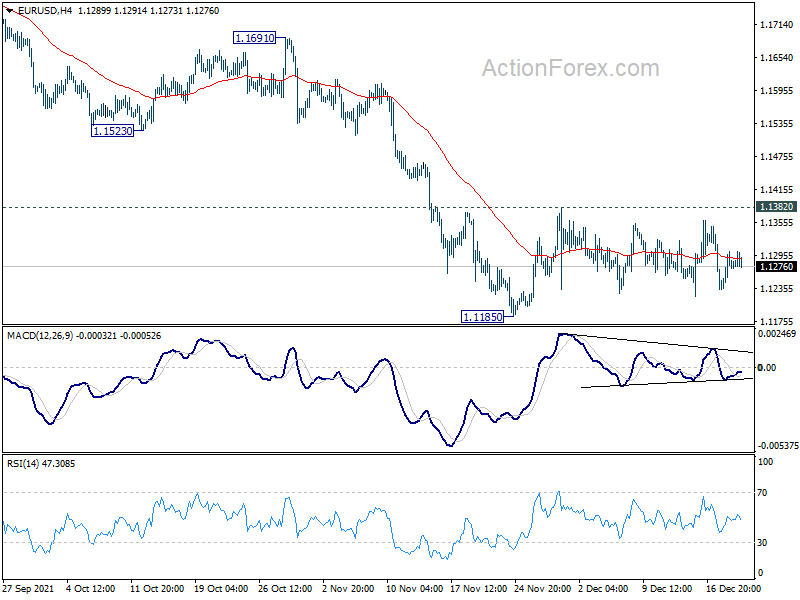
No change in EUR/USD's outlook as range trading continues. Intraday bias remains neutral and further decline will remain in favor as long as 1.1382 resistance holds. Break of 1.1185 will resume larger decline from 1.2348. Next target is 161.8% projection of 1.2265 to 1.1663 from 1.1908 at 1.0934. On the upside, firm break of 1.1382 resistance should confirm short term bottoming at 1.1186. Intraday bias will be turned back to the upside for 55 day EMA (now at 1.1426).
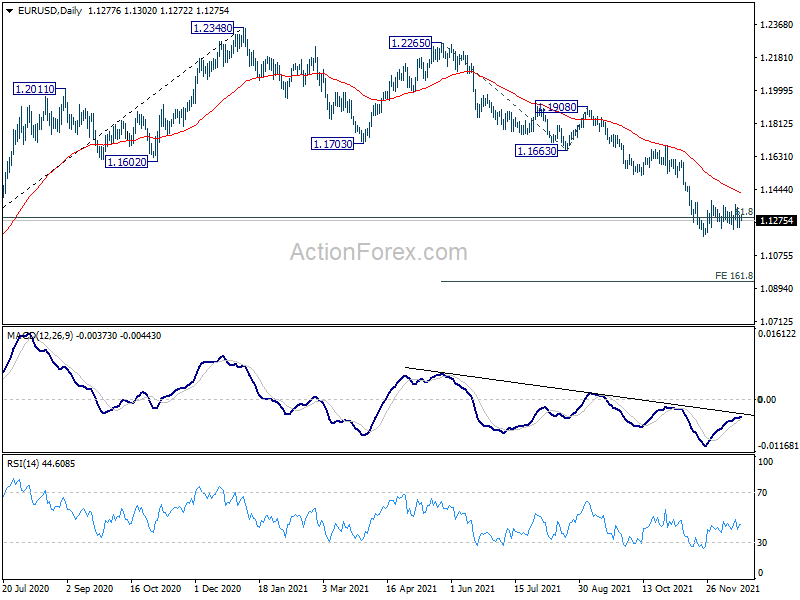
In the bigger picture, there are various ways of interpreting the fall from 1.2348 (2021 high). It could be a correction to rise from 1.0635 (2020 low), the fourth leg of a sideway pattern from 1.0339 (2017 low), or resuming long term down trend. In any case, outlook will now stay bearish as long as 1.1703 support turned resistance holds. Sustained break of 61.8% retracement of 1.0635 to 1.2348 at 1.1289 would pave the way back to 1.0635.
GBP/USD Mid-Day Outlook
Daily Pivots: (S1) 1.3173; (P) 1.3209; (R1) 1.3245; More...
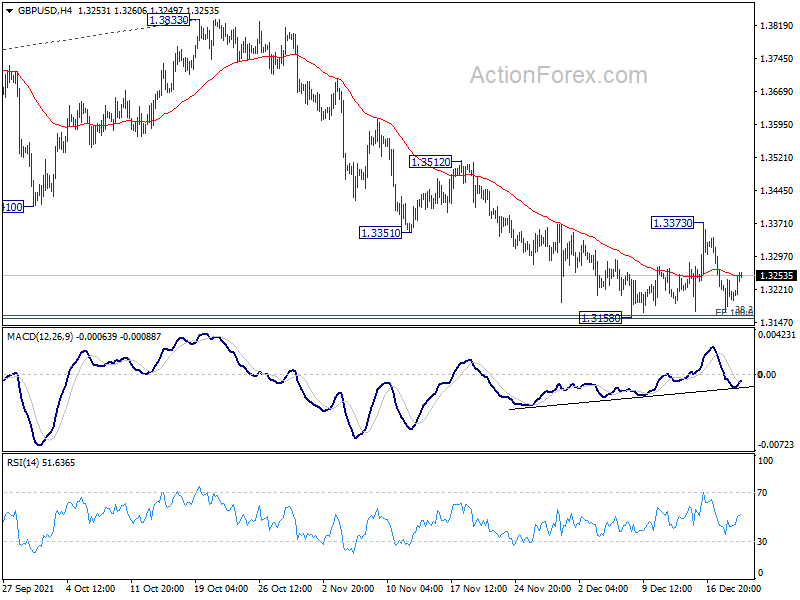
Range trading continues in GBP/USD and intraday bias remains neutral. On the downside, firm break of 1.3164 medium term fibonacci level will carry larger bearish implication. Fall from 1.4248 should resume and target 161.8% projection of 1.4248 to 1.3570 from 1.3833 at 1.2736. On the upside, , break of 1.3372 will resume the rise from 1.3158 to 55 day EMA (now at 1.3428).
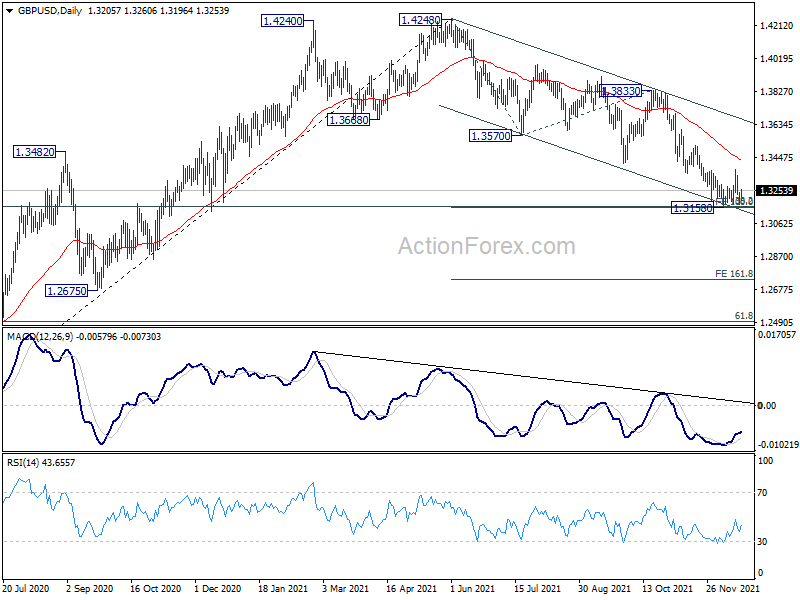
In the bigger picture, focus remains on 38.2% retracement of 1.1409 to 1.4248 at 1.3164. Sustained break there will argue that whole rise from 1.1409 has completed at 1.4248, after rejection by 1.4376 long term resistance. That will revive some medium term bearishness and and target 61.8% retracement at 1.2493. However, strong rebound from current level will revive argue that up trend from 1.1409 is still in progress, and probably ready to resume.
USD/JPY Mid-Day Outlook
Daily Pivots: (S1) 113.40; (P) 113.56; (R1) 113.80; More...
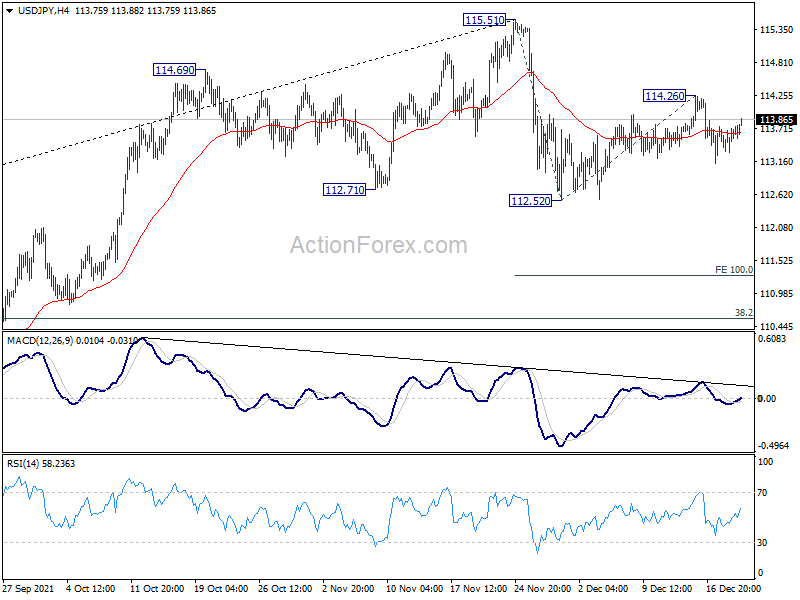
Intraday bias in USD/JPY stays neutral at this point. On the downside, break of 112.52 will resume the fall from 115.51, as a correction to up trend from 102.57, and target 100% projection of 115.51 to 112.52 from 114.26 at 111.27. On the upside, above 114.26 will target a test on 115.51 high instead.
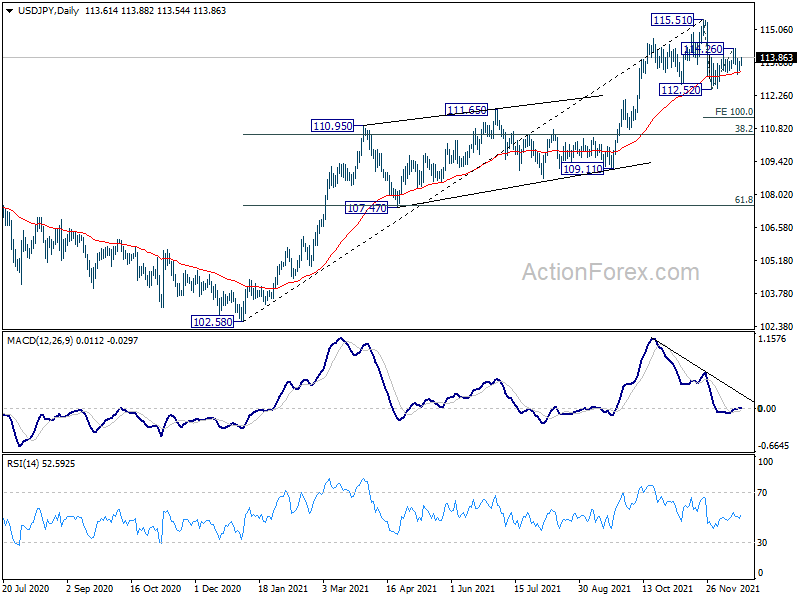
In the bigger picture, no change in the view that rise from 102.58 is the third leg of the up trend from 101.18 (2020 low). Such rally should target a test on 118.65 (2016 high) on resumption. However, firm break of 109.11 structural support will argue that the trend might have reversed and bring deeper fall to 107.47 support and possibly below.
USD/CHF Mid-Day Outlook
Daily Pivots: (S1) 0.9188; (P) 0.9220; (R1) 0.9246; More....
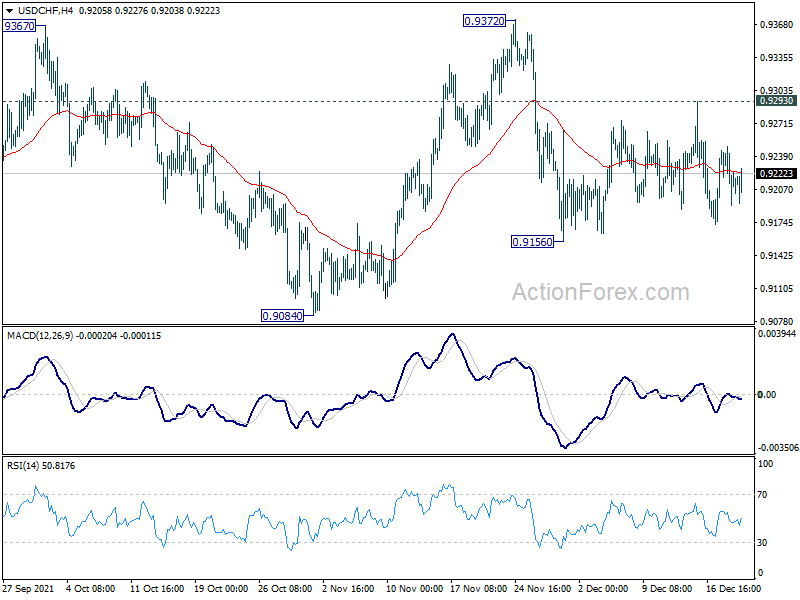
USD/CHF is still bounded in range trading above 0.9156 and intraday bias remains neutral. On the downside, below 0.9156 will target 0.9084 support. Firm break there should confirm that choppy rise from 0.8925 has completed, and suggests that fall from 0.9471 is resuming. Deeper decline would be seen through 0.8925. On the upside, break of 0.9293 will suggest that the pull back from 0.9372 is finished. Intraday bias will be turned back to the upside for 0.9372.
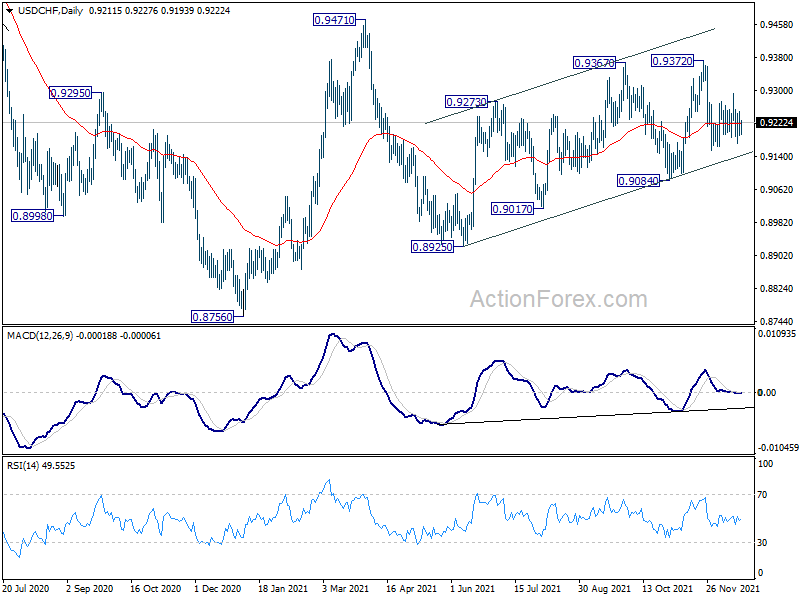
In the bigger picture, the corrective structure of the rebound from 0.8925 argues that fall from 0.9471 is not complete yet. It could either be the second leg of pattern from 0.8756 (2021 low), or resuming larger down trend from 1.0237 (2018 high). We'd pay attention to the downside momentum and assess the odds later. But for now, medium term outlook will be neutral at best as long as 0.9471 resistance holds.
Risk Sentiment Flip-Flops, Canadian Dollar Shrugs Retail Sales
Risk sentiment continues to flip-flop in pre-holiday markets. Major European indexes and US futures are trading slightly higher. Swiss Franc, Yen and Dollar are all trading generally lower, while Kiwi and Aussie are trading higher with Sterling. Canadian Dollar appears to be getting little support from better than expected retail sales data.
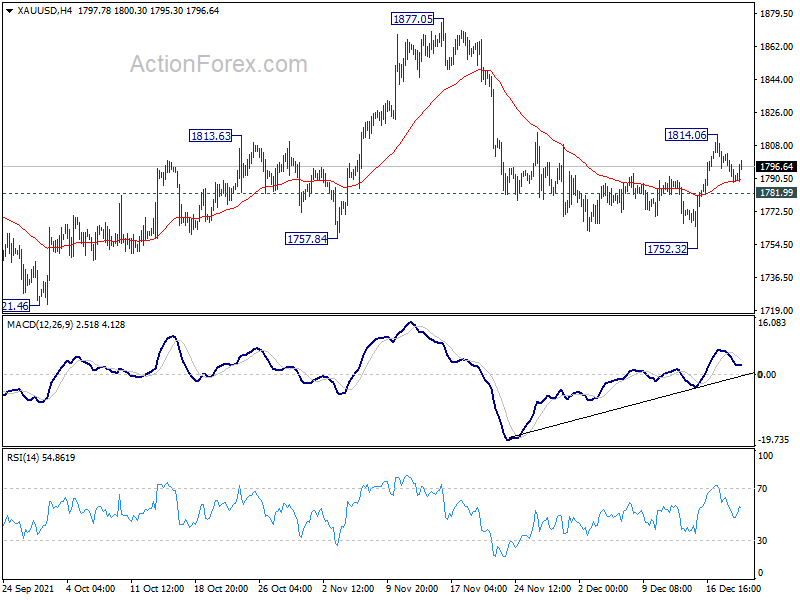
Technically, gold appears to be supported by 4 hour 55 EMA and recovers. It has yet recaptured 1800 handle yet. For now, further rise is in favor as long as 1781.99 minor support holds. Break of 1814.06 will target 1877.05 resistance. However, below 1781.99 will bring retest of 1752.32 support instead.
In Europe, at the time of writing, FTSE is up 0.99%. DAX is up 1.14%. CAC is up 1.06%. Germany 10-year yield is up 0.0462 at -0.320. Earlier in Asia, Nikkei rose 2.08%. Hong Kong HSI rose 1.0%. China Shanghai SSE rose 0.88%. Singapore Strait Times rose 0.39%. Japan 10-year JGB yield rose 0.0163 to 0.055.
Canada retail sales rose 1.6% mom in Oct, to rise further 1.2% in Nov
Canada retail sales rose 1.6% mom to CAD 57.6B in October, above expectation of 1.2% mom. Growth was led by higher sales at motor vehicle and parts dealers (+2.2%), as new car dealer sales (+2.8%) rebounded. Sales increased in 7 of 11 subsectors, representing 59.9% of retail trade. Core retail sales, excluding gasoline stations and motor vehicle and parts dealers, rose 1.5% mom.
According to advance estimate, retail sales rose 1.2% mom in November.
Germany Gfk consumer confidence dropped to -6.8, down on Omicron and prices
Germany Gfk consumer confidence for January dropped sharply from -1.8 to -6.8. In December, economic expectations dropped from 31.0 to 17.1, lowest since April. Income expectations dropped from 12.9 to 6.9. Propensity to buy dropped from 9.7 to 0.8.
Rolf Bürkl, GfK consumer expert said: "Consumer sentiment continues to be under a lot of pressure from two sides as the year draws to a close. High case numbers due to the fourth wave of the Corona pandemic with further restrictions, as well as significantly increased prices, are putting more and more pressure on consumer sentiment.... The outlook for the beginning of next year is also muted against the backdrop of the rapid spread of the Omicron variant."
Also releaesd in Europaen session, Swiss trade surplus widened to CHF 6.16B in November, versus expectation of CHF 5.43B. UK public sector net borrowing rose to GBP 16.6B in November, versus expectation of GBP 12.0B.
Japan government: economy shows movements of picking up
In the latest Monthly Economic Report, Japan's Cabinet Office upgraded economic assessment for the first time in 17 months. It said, "the Japanese economy shows movements of picking up recently as the severe situation due to the Novel Coronavirus is gradually easing." Back in November, it said the economy "continues to show weakness in picking up".
Private consumption is "picking up", dropping "while some weakness remains". However, business investments "appears to be pausing for picking up". Exports are "almost flat". Industrial production continues to appear to be "pausing for picking up". Corporate profits are "picking up". Employment situations shows "picking up in some components", comparing to November's "shows steady movement". Consumer prices continues to "show steady movements.
RBA minutes laid three options on QE, patient on rates
In the minutes of December 21 meeting, RBA reiterated that decision about the bond purchases program will be made in February. The criteria to consider include "progress towards the Board's goals for employment and inflation, the actions of other central banks and the functioning of the Australian bond market." Information include December CPI, December and January labor market data, and overall impact of Omicron.
Three possible options were also discussed.
- The first option was to reduce the pace of purchases from mid February with an expectation of a likely end point in May 2022. This option is consistent with November forecasts for employment and inflation.
- The second option was to reduce the pace of purchases and review it again in May 2022. This option is stronger if progress was slower than expected.
- The third option was to cease purchases altogether in mid February. In case of better-than-expected progress, the third option would become more appropriate.
Regarding interest rate, "the Board will not increase the cash rate until actual inflation is sustainably within the 2 to 3 per cent target range." And, "this is likely to take some time and the Board is prepared to be patient."
USD/CHF Mid-Day Outlook
Daily Pivots: (S1) 0.9188; (P) 0.9220; (R1) 0.9246; More....
USD/CHF is still bounded in range trading above 0.9156 and intraday bias remains neutral. On the downside, below 0.9156 will target 0.9084 support. Firm break there should confirm that choppy rise from 0.8925 has completed, and suggests that fall from 0.9471 is resuming. Deeper decline would be seen through 0.8925. On the upside, break of 0.9293 will suggest that the pull back from 0.9372 is finished. Intraday bias will be turned back to the upside for 0.9372.
In the bigger picture, the corrective structure of the rebound from 0.8925 argues that fall from 0.9471 is not complete yet. It could either be the second leg of pattern from 0.8756 (2021 low), or resuming larger down trend from 1.0237 (2018 high). We'd pay attention to the downside momentum and assess the odds later. But for now, medium term outlook will be neutral at best as long as 0.9471 resistance holds.
Economic Indicators Update
| GMT | Ccy | Events | Actual | Forecast | Previous | Revised |
|---|---|---|---|---|---|---|
| 00:30 | AUD | RBA Minutes | ||||
| 07:00 | EUR | Germany Gfk Consumer Confidence Jan | -6.8 | -2.5 | -1.6 | -1.8 |
| 07:00 | CHF | Trade Balance (CHF) Nov | 6.16B | 5.43B | 5.65B | |
| 07:00 | GBP | Public Sector Net Borrowing (GBP) Nov | 16.6B | 12.0B | 18.0B | 11.6B |
| 13:30 | USD | Current Account (USD) Q3 | -215B | -204B | -190B | |
| 13:30 | CAD | Retail Sales M/M Oct | 1.60% | 1.20% | -0.60% | |
| 13:30 | CAD | Retail Sales ex Autos M/M Oct | 1.30% | 0.80% | -0.20% | |
| 15:00 | EUR | Eurozone Consumer Confidence Dec P | -8 | -7 |