Sample Category Title
US Dollar Is Modestly Lower
US dollar pauses after rally
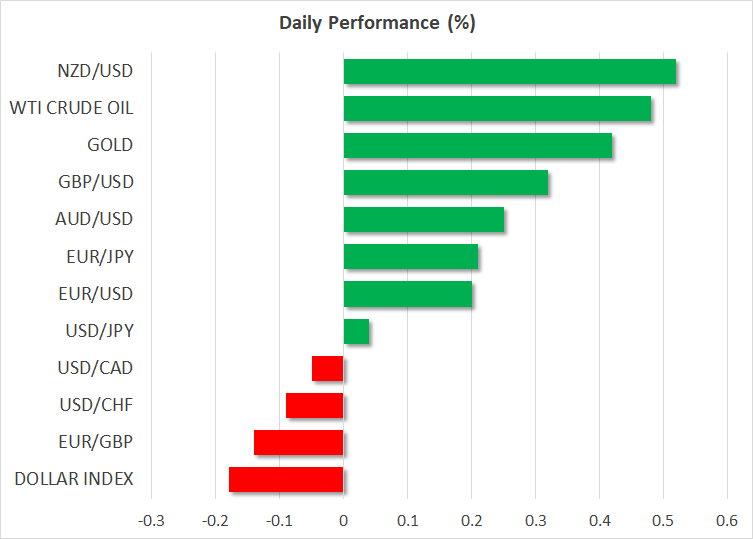
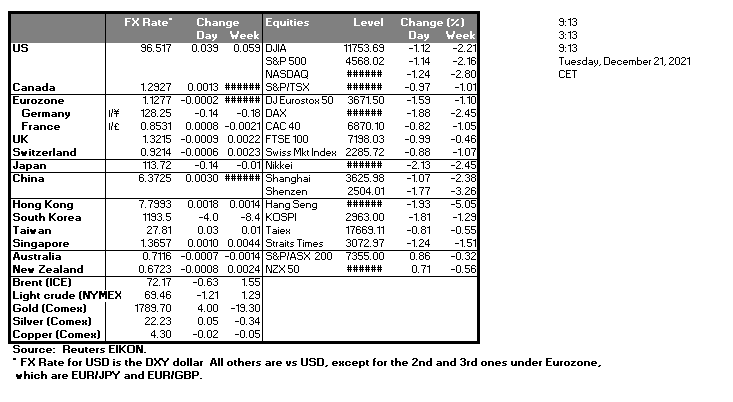
The dollar index fell slightly overnight as some profit-taking of Friday’s monster US dollar rally set in as the new wires stayed relatively quiet. The dollar index fell 0.17% to 96.50, edging lower to 96.46 in sedate Asian trading. I expect the chop-fest to continue, with a move through either 96.00 or 97.00 indicating the US dollar’s next directional move.
EUR/USD staged a modest technical recovery, rising to 1.1285 by this morning, with 1.1200 to 1.1350 likely to contain this week. GBP/USD has continued falling to 1.3215 today as its virus situation and political turmoil weigh. Failure of 1.3150 will signal a potential test of 1.3000. With US yields hardly moved overnight, USD/JPY remains marooned at 113.70 – bring a good book to read.
Notably, the risk-sentiment three amigos, the CAD, AUD and NZD, didn’t rally at all on US dollar weakness overnight elsewhere and remain near year lows That suggests that markets remain vulnerable to more virus headlines and that dips in the US dollar may be shallow.
Asian currencies have had another mixed performance. The yuan continues to strengthen despite weaker fixes from the PBOC. The Indian rupee, notably, gained some respite on US dollar weakness. The firm Chinese yuan and diminishing holiday season liquidity are dampening activity in the regional Asia FX space, and I expect range trading to dominate over the rest of the week.
Looking ahead, this week’s US events could have a significant impact on the movement of the dollar. On Wednesday, there is some old news from Q3 GDP and PCE Prices, followed by the far more relevant US Personal Income/Spending and Durable Goods for November, plus the weekly Jobless Claims, on Thursday. There is also a swath of minor inflation data released from around the world that will probably only be interesting if it shows large falls that aren’t due to baseline effects. Otherwise, US politics and virus headlines will continue to dominate proceedings.
Asia Sees A Modest Relief Rally
Asia equity markets edge higher
The Omicron/Build Back Better (BBB) sell-off seen yesterday morning in Asia, continued throughout the day, sweeping into Europe and US markets. However, in line with my view that tail-chasing range-trading will dominate December, Asian equity markets are rising sharply today. With no news of note hitting the wires, it appears that short-covering in US index futures has been enough to attract the fast money back into local markets in a classic follow-the-leader move.
Similarly, the US dollar retreated slightly overnight as well as traders booked short-term profits on long positions, while oil, which looked to be suffering some ugly stop-loss price action in thin markets overnight, recovered to finish only slightly down. Notably, the risk-sentiment three amigos, the CAD, AUD and NZD, didn’t rally at all and remain near year lows. That is as good a warning to the fast-money FOMO gnomes as any, that sentiment remains exceedingly fragile, complicated by rapidly thinning liquidity in asset classes ahead of the holiday season and year-end.
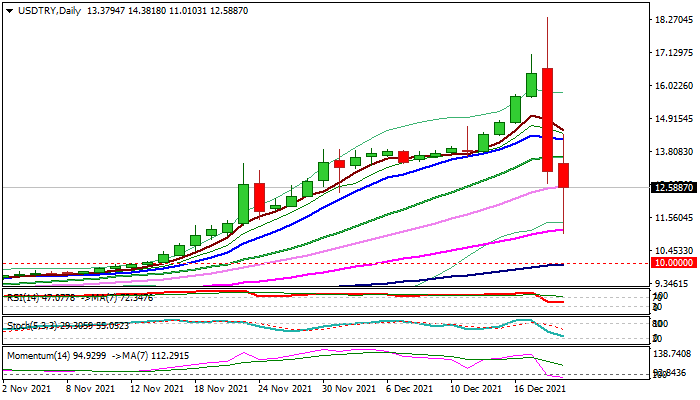
We are one headline away, be it omicron or something else, from normal service resuming. I’ll say it again, December is about V for Volatility and not directional market trends. Searching for conspiracies or rays of hope on every intraday move is a fool’s errand. A case in point is the Turkish lira which had the mother of all rallies overnight, falling 11.0% intraday, but finishing the overnight session over 20% higher after President Erdogan announced new policy measures to protect the lira savings from currency depreciation. A look through the new measures left me scratching my head about how they would ever be enacted and executed, especially in a short time. USD/TRY is already 2.40% higher in Asia and all I can say to President Erdogan is thanks for the dip.
The data calendar in Asia is threadbare once again, yesterday’s China Loan Prime Rate announcements being the highlight of the week for the region. The action will be in the US tomorrow with some old news Q3 GDP and PCE Prices, followed by the far more relevant US Personal Income/Spending and Durable Goods for November, plus the weekly Jobless Claims, on Thursday. There is also a swath of minor inflation data released from around the world that will probably only be interesting if it shows large falls that aren’t due to baseline effects. Otherwise, US politics and virus headlines will continue to dominate proceedings.
USD/TRY Outlook: Lira Has Registered The Record One-Day Rally On President Erdogan’s
USDTRY was the top performer on Monday and early Tuesday, in a generally slowing pre-holiday market, shook strongly twice by the comments from Turkish President Erdogan.
The currency accelerated to new historical low against the US dollar below 18 mark after Erdogan announced on Sunday possible implementation of Islamic doctrine, which avoids high interest and then sent another shockwave to the market by announcing anti-dollarization plan which would encourage Turks to hold lira savings rather than dollars, but did not provide more details how the government would fund the this expensive and inflationary plan.
The lira has registered the biggest one-day rally in the history, rising over 20% from record low at 18.30 to three-week high at 12.72 on Monday and extended advance in early Tuesday, spiking to 11.01, before losing traction and dropping back to 14.38.
The high volatility is likely to persist, but depending on possible further announcements, while the market is going to evaluate the latest ideas.
The lira may advance further if plans prove to be workable that would improve very negative sentiment and ease pressure on lira. This would open way for possible major correction of lira’s crash, which turned to a free fall since September.
Otherwise, lira’s gains could be short-lived, and lira would lose ground again if the President’s plan fails.
The situation on weekly chart works in favor of further lira’s strength, as USDTRY’s bullish momentum is rapidly falling, while the RSI and stochastic reversed from overbought territory and heading south, with a plenty of space ahead.
Daily chart shows rising bearish momentum and 10/20DMA’s in bearish setup and turning lower that maintains pressure.
Fresh weakness found footstep on approach to key support at 10.00 (psychological / 100DMA/ top of thin daily cloud), with break here to spark deeper pullback.
Res: 13.6010, 14.1981, 14.5178, 14.6863.
Sup: 11.1463, 11.0103, 10.0000, 90.8054.
Stock Markets Are Declining Due To Risks Related To The Rapid Spread Of The Omicron Strain
Yesterday, the US stock market started the week with all three major indices down more than 1% due to concerns over the rapid spread of the Omicron strain, which could potentially slow economic growth and intensify supply chain problems. The Dow Jones Index (US30) closed with a fall of 1.23%, the S&P 500 Index (US500) decreased by 1.14%, while the Nasdaq (US100) lost 1.24%.
There is also an alternative view on the reason the stock indices fell. The whole previous year there was a huge injection of liquidity into the stock market due to economic government stimulus. Now the Fed has begun to reduce the QE program, which means that the infusion of liquidity has begun to decrease, and it will stop completely in the spring of 2022. This means that liquidity will begin to slowly "withdraw" from the market from this moment. And together with the overestimated assessments of companies, this all leads to lower stock markets since the "inflated bubble" will "deflate" as liquidity is "withdrawn." According to a Bank of America study, there have been very large outflows from funds investing in developed market stocks this month. Such large outflows occurred during the March 2020 crash and during the December 2018 crash. Therefore, there is every reason to believe that investors should not expect significant growth in stock indices next year.
Investor sentiment was also dampened by news that Senator Joe Manchin blocked US President Joe Biden's "Build Back Better" bill.
The pharmaceutical company Moderna has provided an update on the booster dose of its 50-microgram vaccine, according to which it increases antibodies against the Omicron strain 37 times. This news may, for a while, remove fears around the new strain of coronavirus, which is positive both for stock indices and for oil quotes.
Japanese drugmaker Shionogi announced today that its pill against COVID-19 suppresses the severity of infections caused by the highly transmissible Omicron strain, inspiring optimism that an inexpensive treatment could help prevent a rise in hospitalizations. Clinical trials began in late September and are in the final phase. The company plans to apply for approval in Japan this month.
Oil prices continue to fall since the rapid spread of the Omicron virus has strengthened concerns about the outlook for energy demand. But analysts expect oil prices to rebound soon. News of the booster vaccine Moderna is also encouraging.
Stock markets in Europe are also decreased due to concerns about the rapid spread of Omicron in the region. The British FTSE 100 (UK100) decreased by 0.99%, German DAX (DE30) lost 1.88%, French CAC 40 (FR40) decreased by 0.82%, Spanish IBEX 35 (ES35) fell by 0.83%. Due to a cold snap, electricity prices in Europe increased to a record high on Monday. The Bundesbank predicts the German economy may contract this quarter due to the Omicron strain.
A 26-year-old man died in New Zealand whose death may have been caused by a Pfizer vaccine.
Asia's stock indexes declined on Monday. Hong Kong's Hang Seng Index (HK50) fell by 1.93%, it’s 27% below its peak in early February 2021. Japan's Nikkei 225 Index (JP225) lost 2.13%, and Australia's ASX 200 Index (AU200) decreased by 0.16%. In addition to a potential decline in economic activity due to the spread of the new strain, investors are also worried that Omicron could add to inflationary pressures. And if the situation reaches the point of restrictions at seaports, factories, and other key points for global supply chains, it could worsen the supply crisis that has already erupted.
Australia's central bank believes that the Omicron strain will not undermine the ongoing economic recovery and is preparing for early termination of the quantitative easing program if the labor market, inflation, and other economic statistics remain positive. The next meeting of the Reserve Bank of Australia will be held in February, where the question of early termination of stimulus will be considered.
Main market quotes:
- S&P 500 (F) (US500) 4,568.02 −52.62 (−1.14%)
- Dow Jones (US30) 34,932.16 −433.28 (−1.23%)
- DAX (DE40) 15,239.67 −292.02 (−1.88%)
- FTSE 100 (UK100) 7,198.03 −71.89 (−0.99%)
- USD Index 96.51 −0.06 (−0.06%)
Important events for today:
- Australia RBA Meeting Minutes (m/m) at 02:30 (GMT+2);
- Hong Kong Consumer Price index (m/m) at 10:30 (GMT+2);
- Canada Retail Sales (m/m) at 15:30 (GMT+2).
Nerves Calm Down But Risks Still Loom
- Mood improves, helped by signs that Biden’s fiscal agenda isn’t dead
- Dollar pulls back, sterling recovers in a relatively quiet FX market
- Stocks and oil prices bounce back, Turkish lira stages epic comeback
Risk sentiment stabilizes
Global markets started the week on a soft note amid worries that the lightning-fast spread of Omicron would curtail economic growth at a time when central bank liquidity is evaporating and government spending is rolled back. Thin trading volumes because of the holiday season likely acted as an accelerant for the sell-off.
The good news is that the bleeding has stopped for now. Asian and European shares have bounced back, Wall Street futures point to a positive open today, and oil prices have stabilized alongside most commodity currencies. It is worth noting that the S&P 500 rebounded off its 100-day moving average yet again.
What calmed the market’s nerves isn’t entirely clear, although some signs that President Biden’s fiscal agenda isn’t completely dead likely helped. Senator Manchin’s stark refusal to support the social package was interpreted as a fatal blow to the Democrats’ spending program, but it seems the negotiations will continue next year after all.
Dollar cools, sterling breathes
The FX arena has been remarkably stable considering the heightened volatility elsewhere, with most major currency pairs trading without a clear direction. Dollar/yen has been the epitome of this relative tranquility, thanks to the defensive qualities of both the greenback and the yen.
In contrast, sterling has been in the eye of the storm, caught between the Bank of England’s surprise rate increase and the wild shifts in risk appetite. The prospect of stricter restrictions to battle Omicron before Christmas is also lurking in the background, preventing the pound from staging a proper comeback.
Looking ahead, the key themes for the currency market next year will be central bank policies and how risk sentiment evolves. This is a recipe for higher volatility as FX traders will have to grapple with inflation surprises and any panic episodes in markets, which could become more frequent as liquidity gets withdrawn from the system.
For now, the risk is some flash crash happening in a very illiquid holiday market.
Turkish lira fights back
The Turkish lira has been all the rage lately, with central bank rate cuts in the face of accelerating inflation bringing the currency to its knees, until local authorities signaled they’ve had enough yesterday. The government said it will protect the holders of lira deposits, compensating them for FX losses that exceed interest rates offered by banks.
Of course, there are many questions about whether this program would exacerbate inflationary pressures and how it would be funded, something reflected in derivatives markets signaling a higher risk of default on Turkish debt. But as far as stopping the lira’s freefall, it has worked wonders, with the currency recovering 15% of its value as the psychological signal alone sparked a short squeeze of epic proportions.
The economic calendar is low key. The spotlight will fall on Canada’s retail sales after a rough couple of months for the loonie, which has been trading in lockstep with struggling oil prices. Overall, markets will continue to take their cue from any news around Omicron, central banks, and the US fiscal agenda.
The Analytical Overview Of The Main Currency Pairs
The EUR/USD currency pair
Technical indicators of the currency pair:
Prev Open: 1.1236
Prev Close: 1.1276
% chg. over the last day: +0.36%
Electricity prices in Europe increased to record levels due to the cold weather on Monday. Also, there is a rising incidence of disease in the region. Bundesbank predicts that the German economy may contract this quarter due to the Omicron strain. At the moment, the ECB is not taking any decisive steps to tighten monetary policy, so there are no fundamental reasons for the European currency to grow.
Trading recommendations
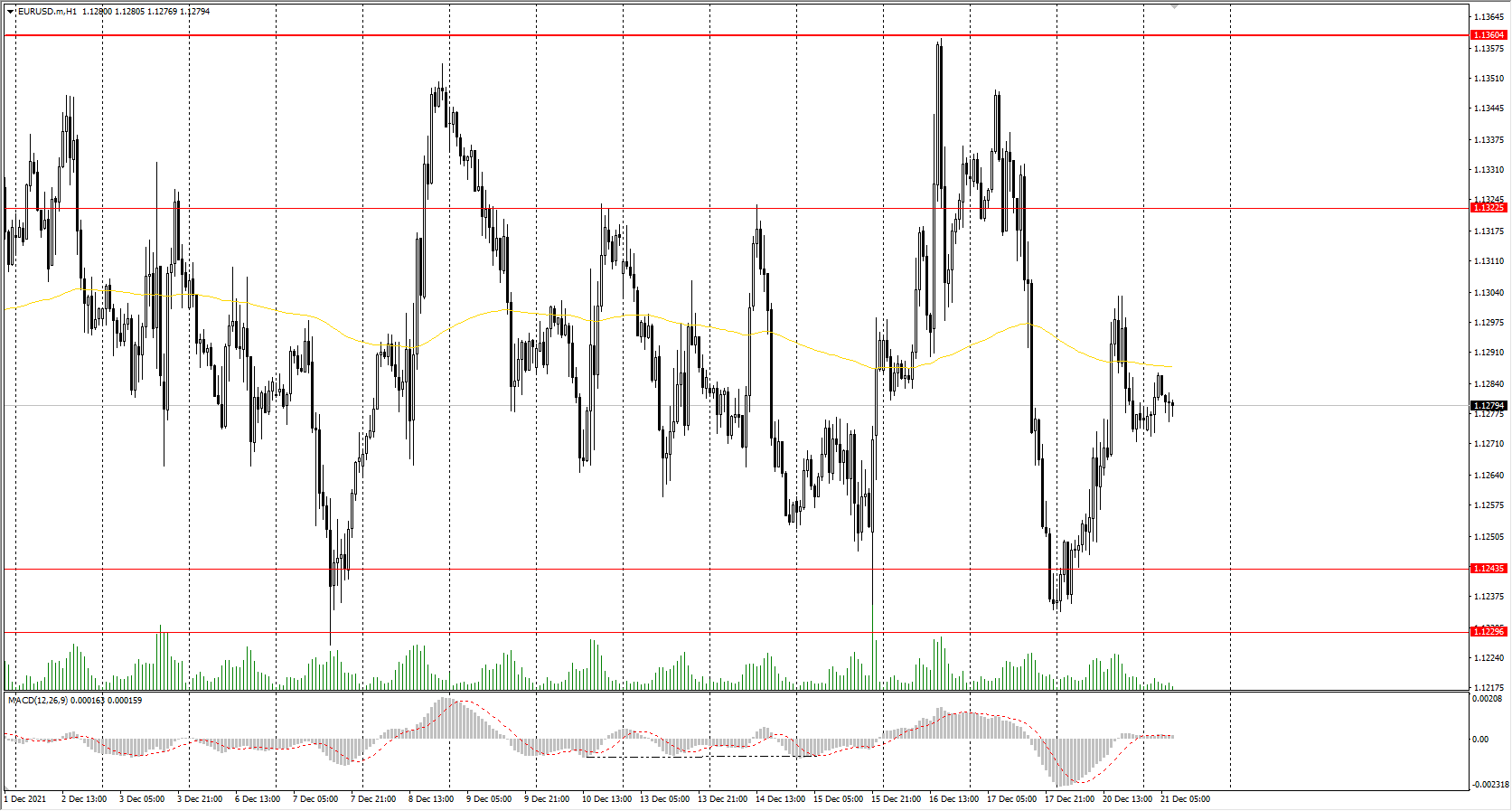
Support levels: 1.1243, 1.1230, 1.1168
Resistance levels: 1.1323, 1.1360, 1.1436, 1.1535, 1.1613, 1.1667, 1.1717
From a technical point of view, the EUR/USD on the hour time frame is still bearish. The MACD indicator has become inactive. Under such market conditions, traders should consider sell positions from the resistance level of 1.1323. Buy trades can be considered on the lower time frames from the support level of 1.1243, but only with additional confirmation.
Alternative scenario: if the price breaks out through the 1.1360 resistance level and fixes above, the mid-term uptrend will likely resume.
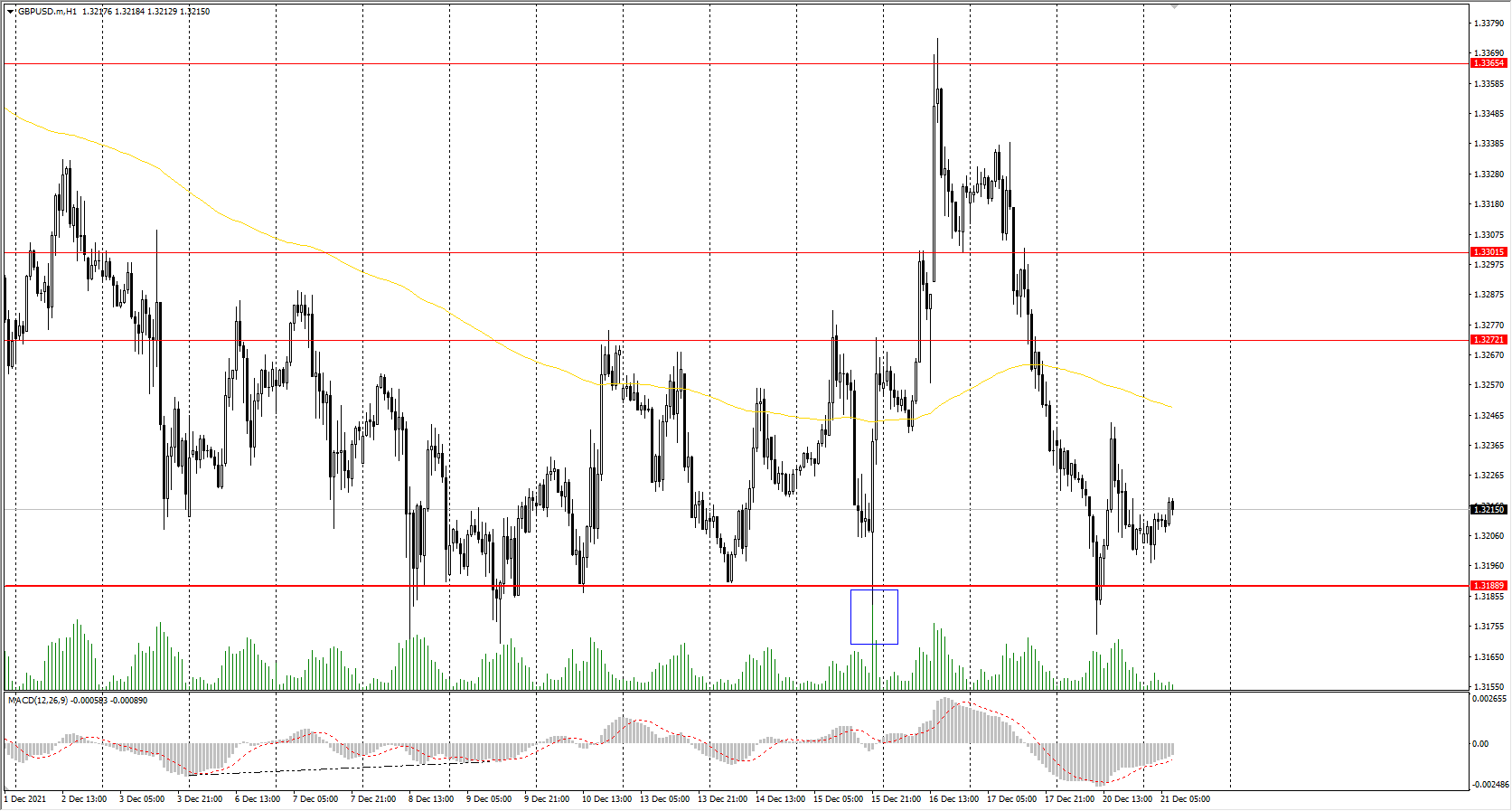
The GBP/USD currency pair
Technical indicators of the currency pair:
Prev Open: 1.3238
Prev Close: 1.3208
% chg. over the last day: -0.23%
The UK reported 91,743 new Covid-19 cases on Monday, compared to 82,886 the day before. The country has already imposed strict restrictions, and the government is ready to tighten even more if necessary. The British pound may be supported by oil quotes growth, as well as the monetary policy of the Bank of England, which has already raised the interest rate last week.
Trading recommendations
Support levels: 1.3189
Resistance levels: 1.3272, 1.3301, 1.3365, 1.3434, 1.3507, 1.3575, 1.3685
On the hourly time frame, the GBP/USD trend is still bullish. The price reached the priority change level yesterday, but the buyers defended their positions. The MACD indicator has become inactive. Under such market conditions, traders should consider buy positions from the priority change level but only with additional confirmation in the form of a new buyers' initiative. Sell trades can be considered from the resistance levels near the moving average.
Alternative scenario: if the price breaks down through the 1.3189 support level and consolidates below, the bearish scenario will likely resume.
The USD/JPY currency pair
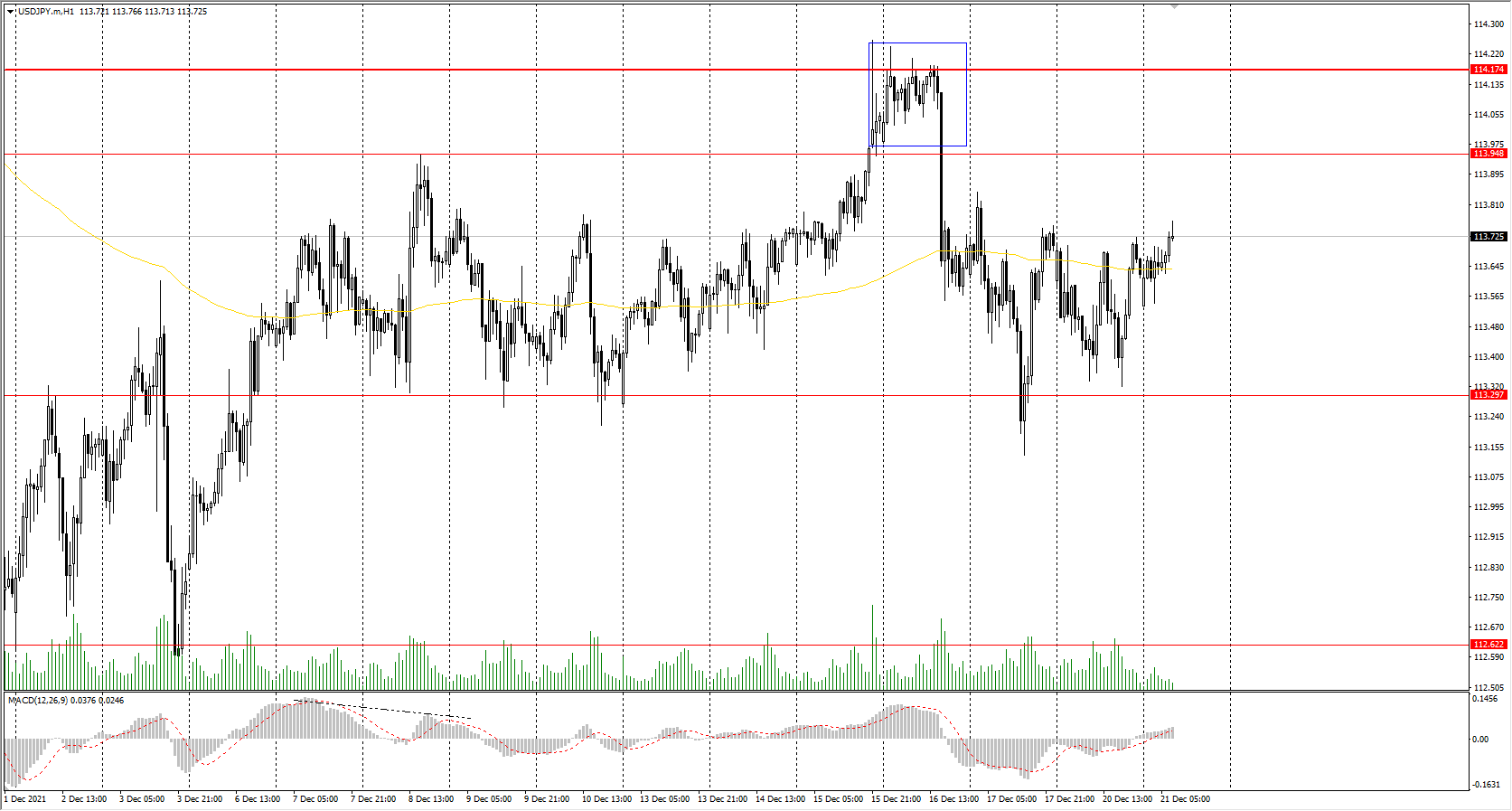
Technical indicators of the currency pair:
Prev Open: 113.61
Prev Close: 113.62
% chg. over the last day: +0.00%
From a fundamental point of view, the situation on the USD/JPY currency pair remains the same. The monetary policy of the Bank of Japan is aimed at active economic stimulation, while the US Federal Reserve, on the contrary, accelerated the reduction of the quantitative easing program last week. Such a situation is in favor of further growth of USD/JPY quotes.
Trading recommendations
Support levels: 113.30, 112.62, 112.30
Resistance levels: 113.95, 114.17, 115.15, 115.50
The global trend on the USD/JPY currency pair is bearish. The price is trading in a wide corridor. Under such market conditions, traders are best to look for sell positions from the resistance level of 113.95, but with additional confirmation. Buy positions should be considered from the 113.30 support level, but with additional confirmation in the form of a buyers' initiative or after the price breaks out the priority change level.
Alternative scenario: if the price rises above 114.17, the uptrend will likely resume.
The USD/CAD currency pair
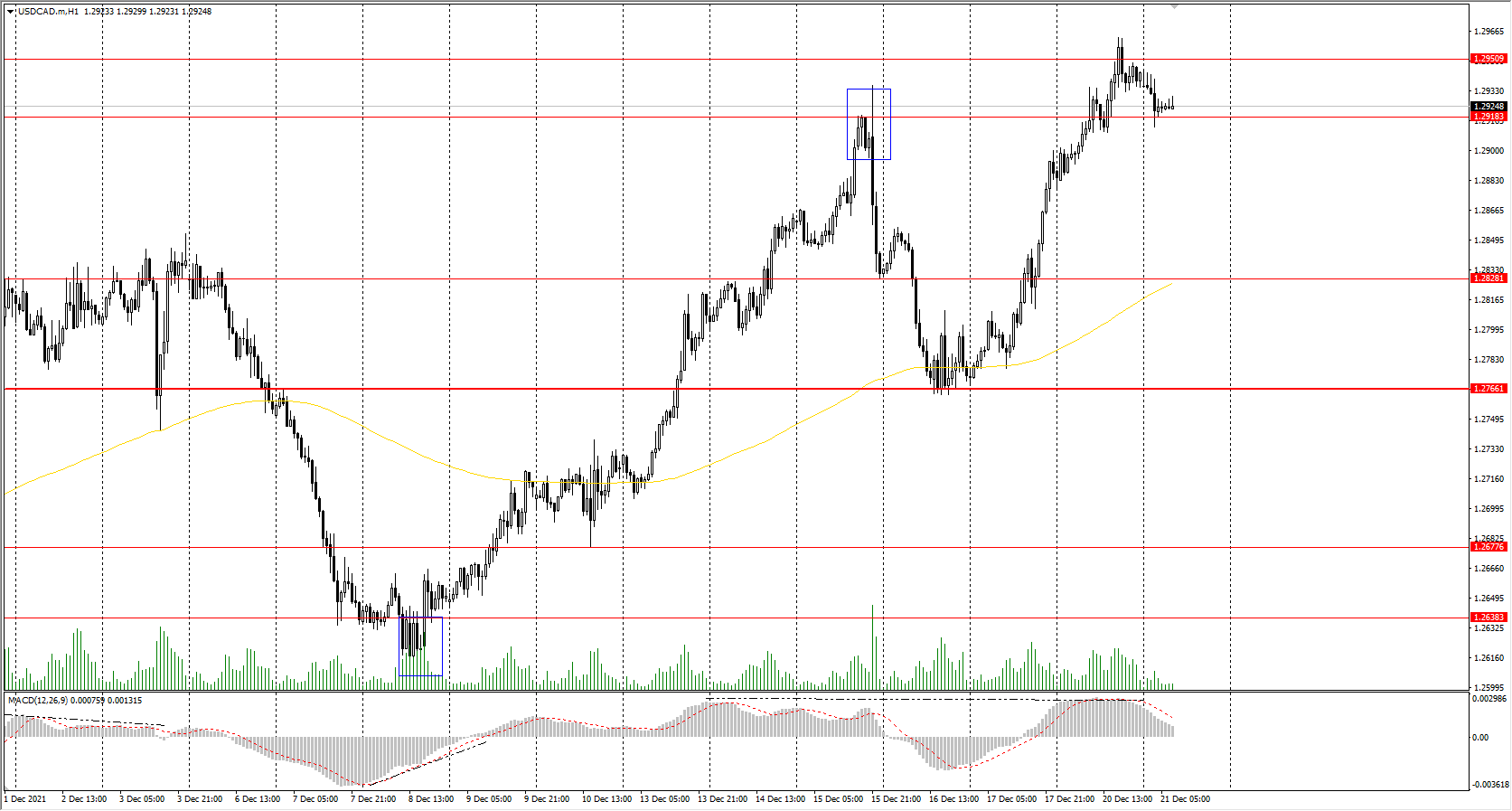
Technical indicators of the currency pair:
Prev Open: 1.2889
Prev Close: 1.2943
% chg. over the last day: +0.42%
The Canadian dollar is a commodity currency, so it is highly correlated with both the dollar index and oil prices. Now the dollar index has fundamental support from the US Federal Reserve, while oil prices have been declining because of the Omicron strain, which negatively impacts fuel demand. However, analysts expect oil prices to recover soon, which could lead to a temporary strengthening of the Canadian dollar and a decrease in USD/CAD quotes.
Trading recommendations
Support levels: 1.2918, 1.2828, 1.2721, 1.2677, 1.2638
Resistance levels: 1.2951
From a technical point of view, the trend of the USD/CAD currency pair is bullish. The MACD indicator is in the positive zone, but there are the first signs of divergence. Under such market conditions, it’s better to look for buy deals from the support levels near the moving average on the lower time frames. Sell deals should be considered after the price returns below the level of 1.2918, but with additional confirmation in the form of a sellers' initiative.
Alternative scenario: if the price breaks down through the 1.2766 support level and fixes below, the downtrend will likely resume.
News feed for 2021.12.21:
- Canada Retail Sales (m/m) at 15:30 (GMT+2).
GBPUSD Remains Above One-Year Low, Bearish Outlook
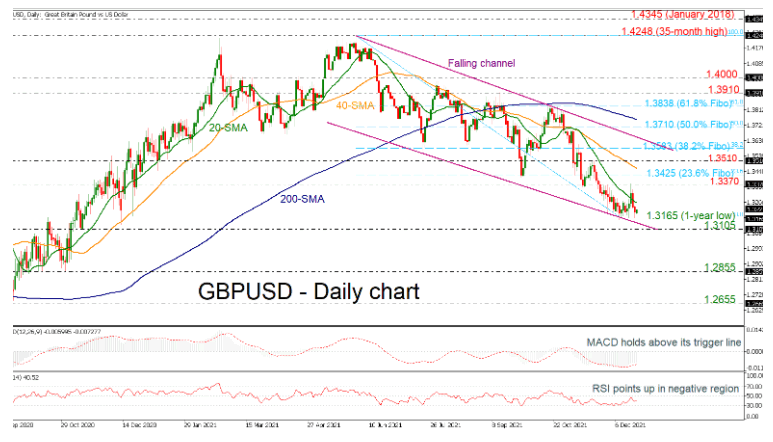
GBPUSD is stubbornly fighting the nearby one-year low of 1.3165, deriving strong support from the return line of the descending channel.
The technical picture however, suggests a neutral-to-bullish bias at the moment as the MACD remains positively charged above its red signal line, while the RSI is currently pushing efforts for an upside reversal, but it is still clearly below its 50 neutral mark.
Should the return line around the 1.3165 support be penetrated, the price could initially test the 1.3105 barrier before heading towards the 1.2855 support, taken from the low in November 2020.
On the flip side, the target to the upside would be the 1.3370 resistance after the price overcomes the 20-day simple moving average (SMA) at 1.3260. Running slightly higher, the bulls will need to drive beyond the 23.6% Fibonacci retracement level of the down leg from 1.4248 to 1.3165 at 1.3425, to access the recent peak of 1.3510.
In brief, GBPUSD has been in a descending channel since June 1, while for any upside correction the price needs to jump above the 200-day SMA
EURJPY Bounces On December’s Low But Bullish Prospects Still Weak
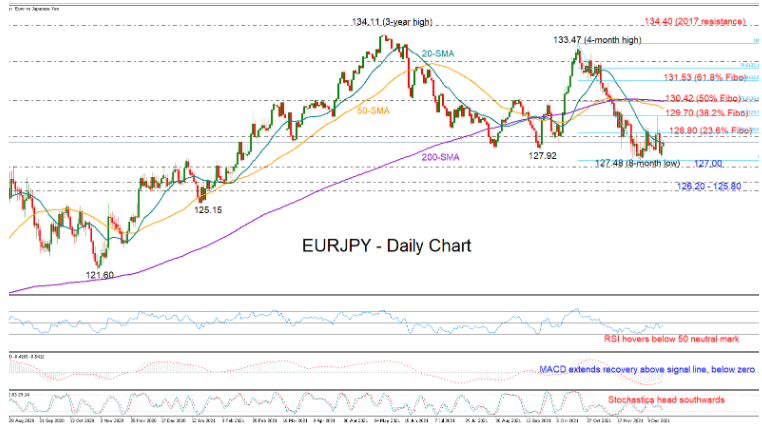
EURJPY changed course to the upside again after almost touching December's low of 127.48 on Monday, with the price currently testing a close above the 20-day simple moving average (SMA) at 128.30.
The main target is the 23.6% Fibonacci retracement of the latest downfall, which has been blocking bullish actions around 128.80 since the start of the month. But the momentum indicators are questioning whether the bulls have enough power to knock down that wall. The RSI continues to consolidate its latest upturn, unable to extend it above its 50 neutral mark, the Stochastics are drifting southwards again, whereas the MACD keeps deviating above its red signal line but within the negative zone.
Nevertheless, if the price exceeds the 128.80 barrier, the market could gain further buying traction, bringing the 38.2% Fibonacci of 129.70next into view. Another upside move from here could meet resistance near the 50% Fibonacci and the 200-day SMA both around 130.42. A violation at this point is expected to spark buying pressures up to the 61.8% Fibonacci of 131.53.
Alternatively, if the pair holds below the 20-day SMA, the bears may attempt to crack the floor around 127.48 and drive past the 127.00 psychological mark. If that is the case, support could next emerge somewhere within the 126.20 – 125.80 territory.
In brief, EURJPY is looking indecisive in the short-term picture. A decisive step above 128.80 or below 127.48 could direct market sentiment accordingly.
EUR-Eurozone Firmly In The Grip Of The Pandemic
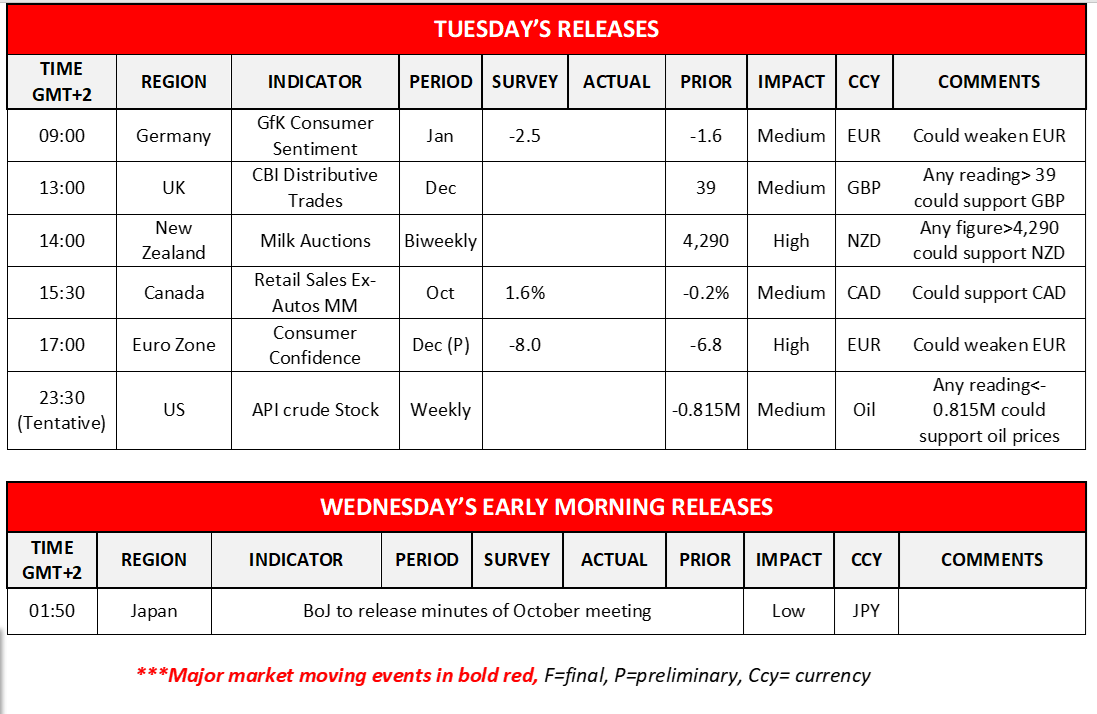
EUR gained on Monday, recovering part of Friday’s losses against the USD and also tended to gain against the JPY. EUR’s fundamentals seem to be heavily linked with the pandemic and its characteristic that Netherlands has entered a new painful Christmas lockdown while other European governments are also contemplating new measures, with Germany deciding today. EU Health Commissioner Stella Kyriakidi has described the situation as particularly critical and that tends to underscore the gravity of the situation. Some analysts have even mentioned that it’s not a question of if but of when stricter measures are to be employed. Overall, the situation could weigh on the EUR as it clouds the economic outlook of the area and could dovishly affect ECB’s monetary policy. As for financial releases we note the release on the consuming side, Germanys’ forward looking GfK Consumer sentiment for January, while in the American session we get Eurozone’s Preliminary Consumer Sentiment for December. Both indicators could adversely affect the EUR as they are expected to drop and could imply an understandingly more pessimistic outlook on behalf of European consumers.
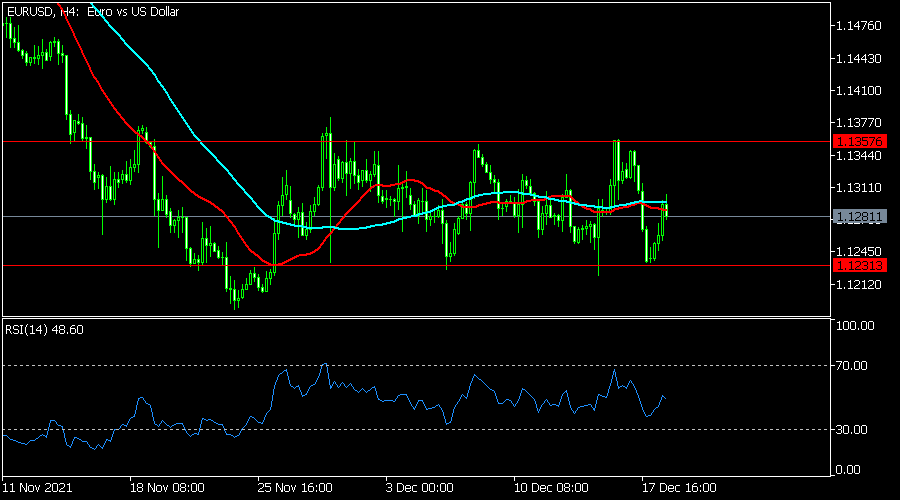
EUR/USD edged a bit higher yesterday testing the 1.1300 (R1) resistance line yet did not break it. We tend to maintain a bias for a sideways movement for the pair currently, given also that the RSI indicator below our 4-hour chart is near the reading of 50. Should the bulls take the initiative over the pairs’ direction we may see it breaking the 1.1300 (R1) resistance line, that prevented the pair’s ascent yesterday and aim for the 1.1370 (R2) level. Should the bears take over, we may see the pair breaking the 1.1225 (S1) support line and aim for the 1.1165 (S2) level.
GBP – Political uncertainty present
The pound seems to have stabilised against the USD yesterday yet gained against the EUR. On the fundamental side the surprise resignation of Brexit minister David Frost, tended to add further uncertainty to the UK Government after the recent scandal broke out as well as due to the Torie rebellion against the UK government’s current Covid policy measures and restrictions. UK health minister Javid refused to rule out even further measures ahead of Christmas, adding to the uncertainty for the UK outlook and discontent of the UK public. Overall, the situation seems to remain fluid in the UK providing little ground for pound traders to stand on fundamentally. As for financial releases we note the release of December’s CBI distributive trades for December.
GBP/USD edged a bit lower yesterday yet remained between the 1.3160 (S1) support line and the 1.3280 (R1) resistance line. We maintain our bias for a rangebound motion for cable between the prementioned levels, and we must note that the RSI indicator below our 4-hour chart is between the readings of 50 and 30 implying a slight advantage for the bears. Should a selling interest actually be displayed by the market we may see cable breaking the 1.3160 (S1) support line and aim for the 1.2990 (S2) level. Should the bulls take over we may see the pair breaking the 1.3280 (R1) line and aim for the 1.3430 (R2) resistance level.
Other highlights for today
Today in the European session we get Germanys’ forward looking GfK consumer sentiment for January and UK’s December CBI distributive trades indicator, while later on we get New Zealand’s milk auctions figures. In the American session we get Canada’s retail sales growth rate for October, and a bit later we note the release of Eurozone’s preliminary consumer confidence for December. Just before the Asian session starts we get from the US the weekly API crude oil inventories figure while later on we note that BoJ is to release the minutes of its October meeting.
EUR/USD H4 Chart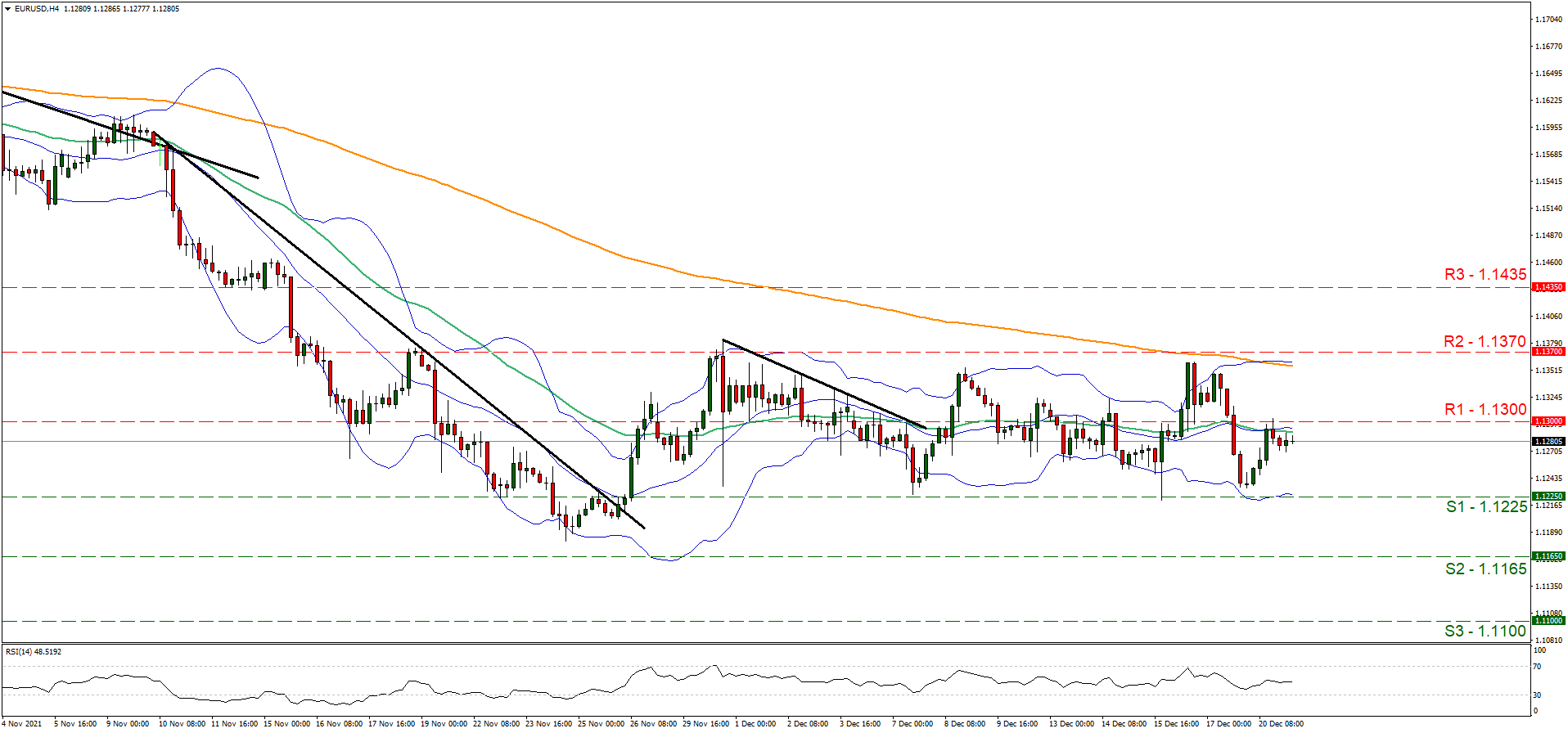
Support: 1.1225 (S1), 1.1165 (S2), 1.1100 (S3)
Resistance: 1.1300 (R1), 1.1370 (R2), 1.1435 (R3)
GBP/USD H4 Chart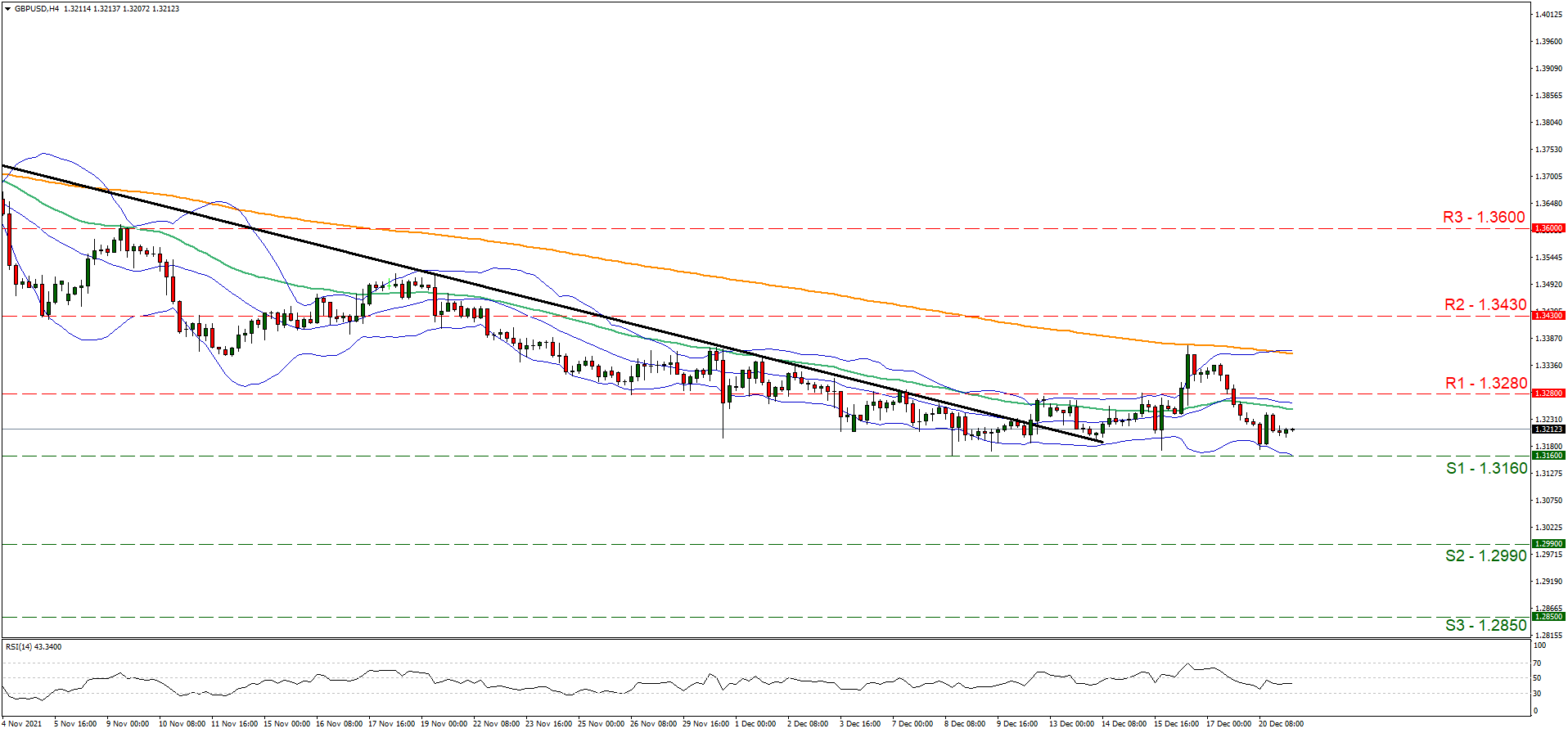
Support: 1.3160 (S1), 1.2990 (S2), 1.2850 (S3)
Resistance: 1.3280 (R1), 1.3430 (R2), 1.3600 (R3)
Dow Jones And Nasdaq 100 Retreat Sharly As Omicron Fears Rise
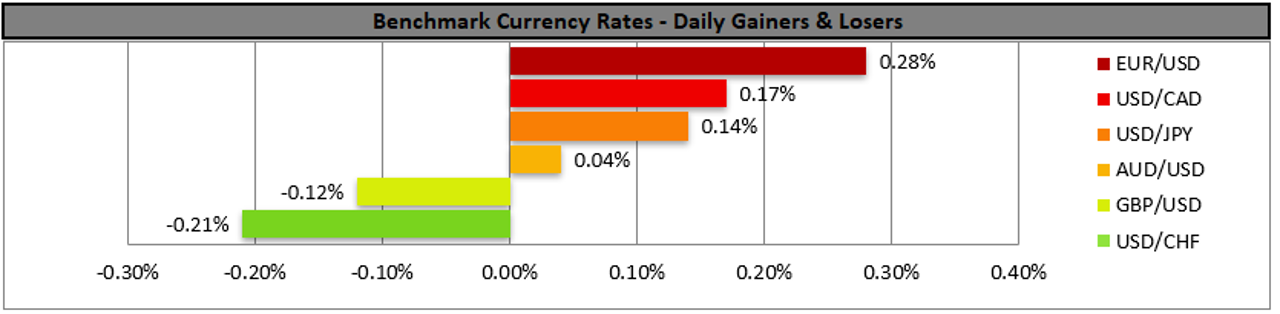
US stocks declined sharply as investors remained concerned about the rising number of Covid-19 cases in the country. The S&P 500 index declined for the third straight day, while the Dow Jones and Nasdaq 100 index declined by more than 300 points each. The biggest declines were growth stocks like Workhorse, Peloton, and Carvana. Oil and gas companies also retreated as the price of crude oil fell. Airlines like United, Southwest, and American also declined. At the same time, US Treasury yields diverged, with the 10-year falling to 1.400% and the 30-year rising to 1.38%. In a separate report, Goldman Sachs analysts decided to slash the US GDP estimates. It expects that the economy will rise by 2% in the first quarter and 3% in Q3.
Oracle made headlines on Monday after the company announced a blockbuster $30 billion acquisition of Cerner. Cerner is a company that provides medical records to employers, patients, and the government. It competes with the likes of Epic Systems and Allscripts Healthcare. This is the biggest deal that Oracle has made in the past few years. The deal came a few months after Microsoft acquired Nuance, a company that provides healthcare solutions. Another big mover was Nike, the giant sporting company that announced strong results.
The price of crude oil and other commodities declined in the overnight session as the Omicron concerns rose. The market is concerned that countries will implement new lockdowns and restrictions to curb the disease. The UK government is expected to announce lockdowns after Christmas. Other countries in Europe like the Netherlands, Austria, and Germany have announced restrictions. Therefore, there are concerns that demand for crude oil will drop. The only key data to watch today will be the latest Canadian retail sales numbers.
XBRUSD
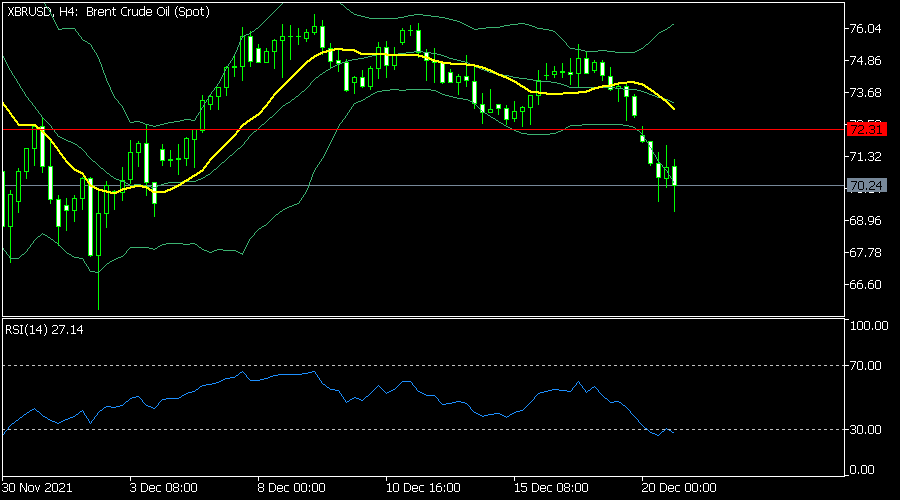
The XBRUSD pair declined to a low of 69.20 as concerns of the Omicron rose. This was the lowest level since December 3rd. The price is also significantly below the year-to-date high of 86. It is along the lower side of the Bollinger Bands. The pair has also moved below the 25-day and 50-day moving averages, while oscillators are pointing lower. Therefore, the pair will likely keep falling as bears target the key support at 67.
USDJPY
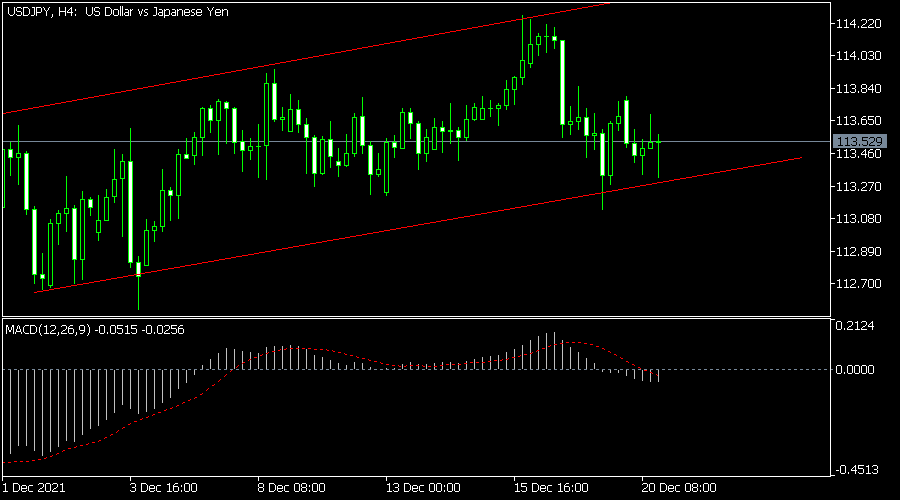
The USDJPY pair wavered on Tuesday morning as investors continued to focus on the latest Fed and BOJ interest rate decision. The pair is trading at 113.52, which is slightly above last week’s low of 113.13. The pair is also slightly above the lower side of the rising channel. The MACD has moved slightly below the neutral level. It also seems to be forming a giant bearish flag pattern. Therefore, in the near term, the pair will likely remain inside the current channel.
EURUSD
The EURUSD pair is trading at 1.1280. This price is between the rectangle channel that is shown in red. It is also at the same level as the 25-day moving average, while the Relative Strength Index (RSI) is at a neutral level. Therefore, the pair will likely remain in this range today with a bearish bias.