

Sample Category Title
Awaiting US Inflation Data For Clues On Forthcoming Monetary Tightening By The Fed
Notes/Observations
- UK Oct GDP data misses consensus as the economy expands at a weak pace.
- BOE 12-month inflation expectation survey of 3.2% registers its highest level since Aug 2019.
- Focus on US CPI data for Nov which could cement the course of interest rate rises next year.
Asia
- Japan Nov PPI data registered its highest annual pace since 1981 Y/Y: 9.0% v 8.5%e).
- Japan PM Kishida noted that the restart of travel subsidies was dependent on coronavirus situation. Needed to watch downside risks to economy with an eye to supply constraints/ semiconductor chip shortage. Reiterated that would not be changing sales rate tax at this time.
- Japan Fin Min Suzuki noted it was important to follow up on implementation on increase wages together with country’s growth strategy.
- China PBOC set the Yuan reference rate at 6.3702 v 6.3498 prior; (Note: market was expecting the mid-point to be at 6.3499). The weaker fixing was seen as a signal that PBoC had a limit to its tolerance for the yuan's recent advance by setting its reference rate at a weaker-than-expected level).
- China PBOC might launch additional FX intervention measures and reintroduce the counter-cyclical factor in setting the daily reference rate for the yuan (CNY). PBoC could also seek to slow capital inflows.
Europe
- PM Johnson said to be facing the biggest rebellion of his premiership as Tory MPs are furious over the latest Plan B rules with Some MPs said to be considering sending letters of no confidence in the Prime Minister.
- UK Govt said to deny any Friday (Dec 10th) deadline in row over EU fishing (Reminder: EU was said to have told UK that they must resolve the fishing license issue by Dec 10th. France said not get the remaining 104 fishing licenses that it had demanded. France had set a deadline of Friday for the UK to show good will or would retaliate with port blockades and litigation.
Americas
- Senate Majority Leader Schumer (D-NY) stated that debt limit increase would be passed before Dec 15th.
- Senate had the votes to pass fast track plan on raising the debt ceiling; the final vote was 59 to 35; President Biden was now expected to sign the measure.
- Bank of Canada (BOC) and Finance Ministry said to plan to keep inflation target at 2% in framework renewal.
- Bank of Canada (BOC) Dep Gov Gravelle noted that longer global supply chain disruptions would increase the likelihood of inflation remaining above its control range.
Speakers/Fixed income/FX/Commodities/Erratum
Equities
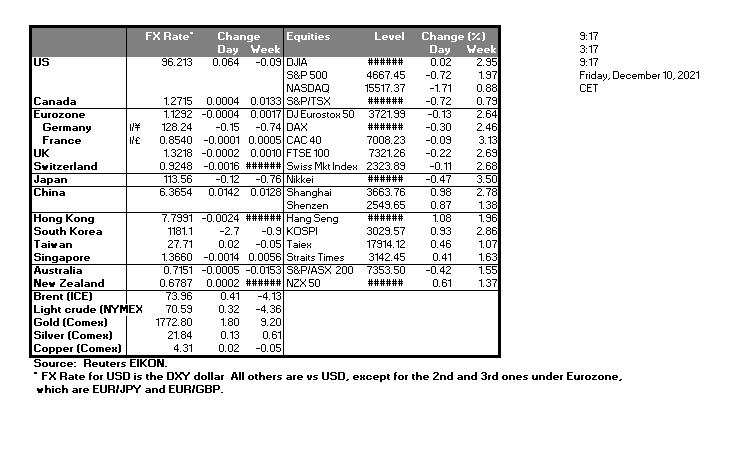
- Indices [Stoxx600 -0.38% at 475.16, FTSE -0.14% at 7,311.30, DAX -0.29% at 15,595.69, CAC-40 -0.31% at 6,986.34, IBEX-35 -0.25% at 8,378.50, FTSE MIB -0.20% at 26,765.00, SMI -0.57% at 12,536.21, S&P 500 Futures +0.27%].
- Market Focal Points/Key Themes: European indices open lower across the board and stayed in the red as the session wore on; better performing sectors include health care and consumer discretionary; while those leading to the downside include technology and utilities; automotive subsector dragged down by Daimler; Daimler Truck Holding opens for trade; Swiss Re sells its elipsLife to Swiss Life; Lucas Bols raises funds to acquire Tequila Partida; no major corporate earnings expected during the upcoming US session.
Equities
- Consumer discretionary: Associated British Foods [ABF.UK] +1% (trading update), Accel Group [ACCEL.NL] +14% (trading update).
- Healthcare: Bayer [BAYN.DE] +2% (said to win second verdict), bioMerieux [BIM.FR] +1.5% (raises outlook).
- Industrials: Daimler [DAI.DE] -16%, Daimler Truck [DTG.DE] +8 (Daimler Truck spin-off).
Speakers
- France European Affairs Min Beaune stated that it would ask the EU Commission to announce litigation if fishing issue with UK were not resolved by Friday, Dec 10th. Noted that around 100 licenses were still missing.
- UK Chancellor of the Exchequer Sunak (Fin Min) stated after monthly GDP data that had always acknowledged that recovery could face some bumps in the road. Early actions taken meant UK was well placed to keep economy on track.
- Czech Central Bank (CNB) Gov Rusnok stated that there was expectations of more rate hikes to come. Rates to exceed 3.00% and stay above that level for some time (**Note: 2-Week Repurchase Rate currently at 2.75%).
- Poland Central Bank member Kochalski stated that CPI should return to target in late 2023.
- Hungary PM Orban stated that Constitutional Court expected to rule on govt motion challenging supremacy of EU law on Friday, Dec 10th.
- Hungary Top Court stated that Govt could override EU ruling in limited cases.
Currencies/Fixed Income
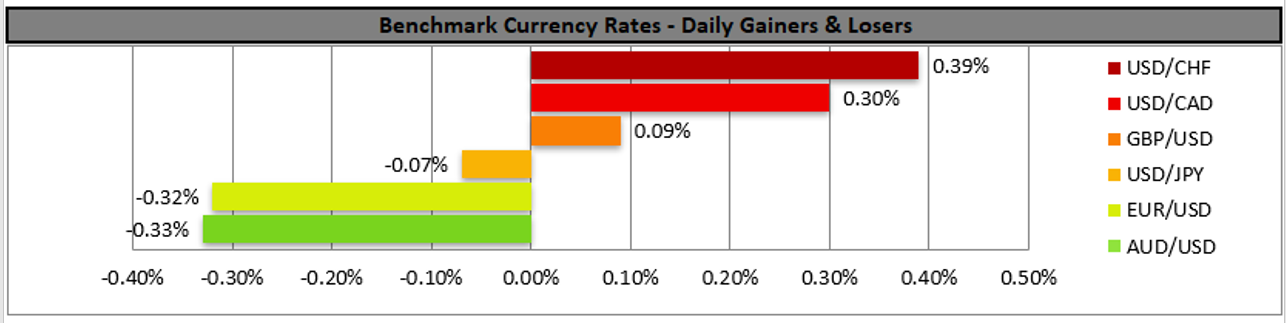
- USD was basically steady in a quiet EU session. Focus remained on the upcoming US CPI data for Nov which could cement the course of interest rate rises next year.
- Policy divergence among the largest central banks has been the main driver for the USD recent strength. The upcoming BOE, BOJ and ECB meeting next week to take into account the combination of higher inflation and their possible responses and the spread of the Omicron variant.
- EUR/USD holding below the 1.13 level.
- GBP/USD was softer amid broad dollar strength. Sterling also weaker as domestic headwinds continued to grow.
- TRY currency (Lira) tested aboves 13.95 level per US dollar (new record low).
Economic data
- (NL) Netherlands Oct Manufacturing Production M/M: 1.1 v 1.0% prior; Y/Y: 9.9 v 10.9% prior; Industrial Sales Y/Y: 17.2 v 13.8% prior.
- (FI) Finland Oct Industrial Production M/M: 0.2% v 0.7% prior; Y/Y: 5.5% v 6.7% prior.
- (DE) Germany Nov Final CPI M/M: -0.2% v -0.2% prelim; Y/Y: 5.2% v 5.2% prelim (confirmed highest annual pace since 1993 reunification).
- (DE) Germany Nov Final CPI EU Harmonized M/M: 0.3% v 0.3% prelim; Y/Y: 6.0% v 6.0% prelim.
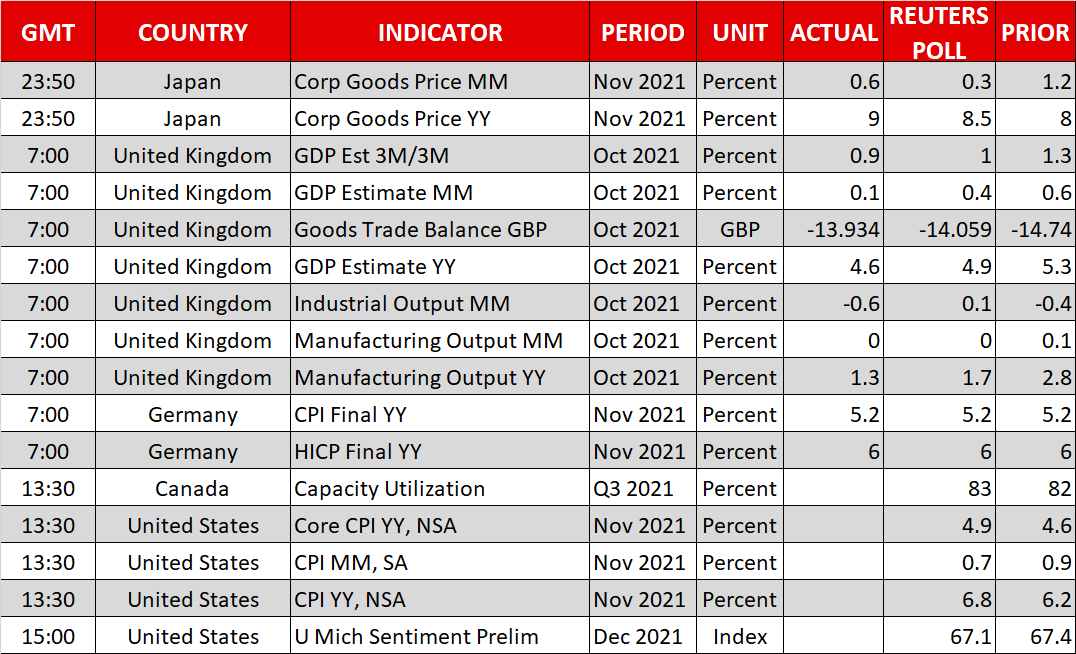
- (UK) Oct GDP M/M: 0.1% v 0.4%e; GDP 3M/3M: 0.9% v 1.0%e.
- (UK) Oct Industrial Production M/M: -0.6% v +0.1%e; Y/Y: 1.4% v 2.2%e.
- (UK) Oct Manufacturing Production M/M: 0.0% v 0.2%e; Y/Y: 1.3% v 1.6%e.
- (UK) Oct Construction Output M/M: -1.8% v +0.2%e; Y/Y: 3.3% v 5.4%e.
- (UK) Oct Index of Services M/M: % v 0.4%e; 3M/3M: % v 1.2%e.
- (UK) Oct Visible Trade Balance: -£13.9B v -£14.4Be; Overall Trade Balance: -£2.0B v -£2.4Be; Trade Balance Non EU: -£8.6B v -£9.1B prior.
- (DK) Denmark Nov CPI M/M:0.3 % v 0.9% prior; Y/Y: 3.4% v 3.0% prior.
- (DK) Denmark Nov CPI EU Harmonized M/M: 0.4% v 1.0% prior; Y/Y: 3.8% v 3.2% prior.
- (NO) Norway Nov CPI M/M: 0.8% v 0.3%e; Y/Y: 5.1% v 4.6%e.
- (NO) Norway Nov CPI Underlying M/M: 0.1% v 0.0%e; Y/Y: 1.3% v 1.2%e.
- (NO) Norway Nov PPI (including oi)l M/M: 3.0% v 6.2% prior; Y/Y: 58.6% v 60.8% prior.
- (TR) Turkey Central Bank Dec TCMB Expected Inflation Survey: Next 12-Month Outlook: 21.4% v 15.6% prior.
- (TR) Turkey Oct Unemployment Rate: 11.2% v 11.4% prior.
- (CN) Weekly Shanghai copper inventories (SHFE): 41.4K v 36.1K tons prior.
- (ES) Spain Oct Industrial Production M/M: -0.4% v +0.3%e; Y/Y: -0.9% v +0.9%e; Industrial Output NSA (unadj) Y/Y: -3.3% v +0.9% prior.
- (ES) Spain Q3 INE House Price Index Q/Q: 2.1% v 2.4% prior; Y/Y: 4.2% v 3.3% prior.
- (RU) Russia Narrow Money Supply w/e Dec 3rd (RUB): T v 14.24T prior.
- (CZ) Czech Nov CPI M/M: 0.2% v 0.3%e; Y/Y:6.0% v 6.0%e (highest annual pace since Oct 2008).
- (CZ) Czech Oct Export Price Index Y/Y: 7.5% v 7.5% prior; Import Price Index Y/Y: 9.9% v 8.8% prior.
- (AT) Austria Oct Industrial Production M/M: -0.2% v -0.7% prior; Y/Y: 3.3% v 4.8% prior.
- (IT) Italy Oct Industrial Production M/M: -0.6% v +0.3%e; Y/Y: 2.0% v 3.3%e; Industrial Production NSA (unadj) Y/Y: -1.1% v +4.6% prior.
- (UK) BoE/Kantar Dec Inflation (quarterly release) Inflation: Next 12 Months: 3.2% v 2.7% prior (highest since Aug 2019).
- (IT) Bank of Italy (BOI) Banks and Money Monthly Statistics: Oct Gross Non-performing Loans (NPLs): €46.1B v €44.7B prior.
- (GR) Greece Nov CPI Y/Y: 4.8% v 3.4% prior; CPI EU Harmonized Y/Y: 4.0% v 2.8% prior.
- (GR) Greece Oct Industrial Production Y/Y: 16.5% v 9.7% prior.
Fixed income Issuance
- (IN) India sold total INR vs.INR240B indicated in 2023, 2026, 2035 and 2051 bonds.
- (ZA) South Africa sold total ZAR1.2B vs. ZAR1.2B indicated in I/L 2033, 2046 and 2050 Bonds.
- (IT) Italy Debt Agency (Tesoro) sold €6.0B vs. €6.0B indicated in 12-month Bills; Avg Yield: -0.467% v -0.533% prior; Bid-to-cover: 1.29x v 1.53x prior.
Looking ahead
- (MX) Mexico Nov Nominal Wages: No est v 4.1% prior.
- 05:25 (EU) Daily ECB Liquidity Stats.
- 06:00 (PT) Portugal Oct Trade Balance: No est v -€1.7B prior.
- 06:00 (UK) DMO to sell £2.0B in 1-month, 3-month and 6-month bills (£0.5B, £0.5B and £1.0B respectively).
- 06:30 (CL) Chile Central Bank Economist Survey.
- 06:30 (IN) India Weekly Forex Reserve w/e Dec 3rd: No est v $637.7B prior.
- 06:45 (US) Daily Libor Fixing.
- 07:00 (IN) India announces upcoming bill issuance (held on Wed.
- 07:00 (IN) India Oct Industrial Production Y/Y: 3.7%e v 3.1% prior.
- 07:00 (IS) Iceland Nov Unemployment Rate: No est v 4.9% prior.
- 07:00 (MX) Mexico Oct Industrial Production M/M: +0.8%e v -1.4% prior; Y/Y: 1.8%e v 1.6% prior; Manufacturing Production Y/Y: +1.0%e v -0.4% prior.
- 07:00 (BR) Brazil Nov IBGE Inflation IPCA M/M: 1.1%e v 1.3% prior; Y/Y: 10.9%e v 10.7% prior.
- 07:00 (CZ) Czech Central Bank to comment on CPI data.
- 08:00 (PL) Poland Central Bank (NBP) Dec Minutes.
- 08:00 (RU) Russia Oct Trade Balance: $18.0Be v $20.0B prior; Exports: $46.7Be v $45.6B prior; Imports: $26.4Be v $B25.6B prior.
- 08:00 (UK) Daily Baltic Dry Bulk Index.
- 08:00 (ES) Spain Debt Agency (Tesoro) announcement on upcoming bond issuance.
- 08:30 (US) Nov CPI M/M: 0.7%e v 0.9% prior; Y/Y: 6.8%e v 6.2% prior.
- 08:30 (US) Nov CPI (ex-food/energy) M/M: 0.5%e v 0.6% prior; Y/Y: 4.9%e v 4.6% prior.
- 08:30 (US) Nov CPI Index NSA: 278.111e v 276.589 prior; CPI Core Index SA: 283.453e v 281.695 prior.
- 08:30 (US) Nov Real Avg Hourly Earning Y/Y: No est v -1.2% prior; Real Avg Weekly Earnings Y/Y: No est v -1.6% prior.
- 08:30 (CA) Canada Q3 Capacity Utilization Rate: 83.0%e v 82.0% prior.
- 10:00 (US) Dec Preliminary University of Michigan Confidence: 68.0e v 67.4 prior.
- 10:00 (CO) Colombia Oct Exports: $3.8Be v $3.6B prior.
- 11:00 (EU) Potential sovereign ratings after European close(Moody’s on Netherlands and Austria sovereign rating; S&P on Slovenia sovereign rating; Fitch on UK, Spain and Czech Republic sovereign rating; Canadian rating agency DBRS on Slovenia sovereign rating).
- 13:00 (US) Weekly Baker Hughes Rig Count.
- 14:00 (US) Nov Monthly Budget Statement: -$193.0Be v -$165.1B prior.
Dollar Steady Ahead Of US CPI, Stock Rally Fizzles Out
- US CPI data in focus ahead of Fed decision next week, dollar flat
- Stocks pare weekly gains as Evergrande default unnerves markets
- Pound holds near lows after GDP miss, euro reverses back down
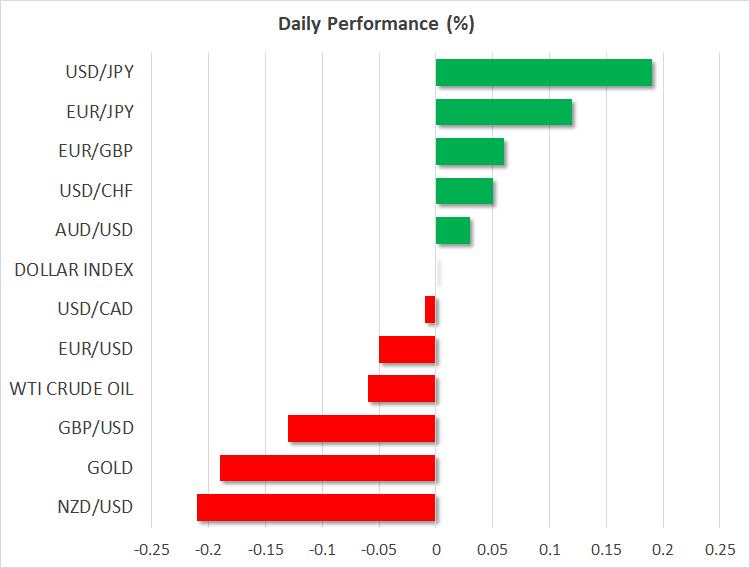 Spotlight on US inflation
After making a strong recovery this week, risk appetite is being tested as the all-important inflation test looms for the markets. The US consumer price index is due at 13:30 GMT and the forecasts are pointing to another big jump in November. If the annual CPI rate hits 6.8% as expected, the Fed will be inclined to speed up the winding down of its asset purchase program as the last time the country faced price growth in the 7% region was at the end of the Great Inflation era of 1965-1982.
Fed officials have been quite loud in signalling that tapering may need to be accelerated and even Powell himself is now questioning the long-held narrative that this burst in inflation will be transitory. But it’s not just about inflation. The labour market is also running hot and weekly jobless claims were at their lowest since 1969 last week.
The Fed holds its final meeting of the year next week and markets are bracing not only for a quicker exit from QE but also a steeper dot plot with an earlier liftoff date.
Short-dated Treasury yields continued to climb today, with the two-year yield reaching another high, while the 10-year yield clawed back some of yesterday’s decline. This kept the US dollar well supported, which had come under pressure earlier in the week as fears about the Omicron variant subsided.
However, the threat from Omicron has not completely dissipated and markets may just be realising that this new mutation still poses significant risks to the growth outlook. The UK and Europe have tightened their restrictions and fresh curbs in the US are possible too given that the Omicron strain may be up to four times more transmissible than Delta even if its symptoms are less severe. This reality check is likely contributing to slight dampening in the mood on Friday.
Stocks break winning streak but US futures turn north
For equity markets, there is a bit of profit-taking occurring as well after Wall Street recorded three days of solid gains. The S&P 500 slipped 0.7%, mainly dragged lower by tech shares as the Dow Jones closed flat.
In Asia, aside from the dip on Wall Street, traders also had to contend with more bad news coming out of China’s embattled real estate sector. Property giant Evergrande and smaller rival Kaisa both missed their coupon payments on international bonds after the 30-day grace period elapsed, according to Fitch Ratings, which downgraded the two companies to ‘restricted default’ rating.
Hong Kong’s Hang Seng index slid just over 1% but the wider fallout appeared to be minimal as investors had been anticipating that a default would come eventually. The expectation is that Evergrande’s collapse will be carefully managed now that the firm’s restructuring has been taken over by the Chinese government.
European shares followed their Asian counterparts lower but US stock futures turned slightly positive, suggesting the week may yet end in the green, barring no shocks in the US CPI numbers.
Euro and pound look shaky ahead of big week
In the currency markets, the euro succumbed to the stronger dollar, dropping back below $1.13. The coming week will likely be a struggle for the single currency as the ECB looks set to beef up its regular bond purchase program to compensate for the end of the pandemic program in stark contrast to the Fed’s faster exit plan.
The pound regained some footing but was unable to make much headway above $1.32 following some disappointing GDP figures out of the UK today. Britain’s economy barely grew in October as supply chain issues capped industrial output. The data has further dashed expectations that the Bank of England will raise interest rates next week.
Other majors were mostly steady, apart from the kiwi, which was last down by more than 0.3%.
Investors Are Waiting For US Inflation Data. Analysts Believe That Consumer Prices Will Reach 6.9-7% In Annual Terms
The US stock indices were mostly trading negative yesterday. The Dow Jones Industrial Average (US30) remains at the same level by the end of the day. The S&P 500 (US500) decreased by 0.72%, and the Nasdaq Technology Index (US100) lost 1.71%. Investors were evaluating the latest US labor market statistics. The number of new jobless claims in the US was 184,000, while analysts expected 220,000. The last time, such a figure was in 1969. Today the inflation data will be published in the United States. Analysts expect consumer prices to rise to 6.9-7% in annual terms. Rising inflation tends to cause the national currency to rise, anticipating that the central bank will tighten monetary policy. And often the stock markets react in the opposite way. It should also be noted that 2 important events will take place next week.
On Wednesday, December 15, the Fed will hold a meeting where policy makers may announce that they will accelerate QE cuts, especially if inflation data today is worse than expected. The second big day is Friday, December 17, when both the futures contracts and the quarterly options contracts are set to expire. It is also known as "Witch Friday." Often, asset movements are hard to predict during this period because investors and hedge-funds close their positions on "old" contracts and reopen them on "new" ones.
The world's central banks can no longer afford to continue soft monetary policy and keep rates low, Gita Gopinath, senior economist at the International Monetary Fund, said Thursday.
European stock indexes followed the downward trend of US indices yesterday. Germany's DAX (DE30) decreased 0.4%, Britain's FTSE 100 (UK100) was down 0.3%, France's CAC 40 (FR40) lost 0.2% and Spain's IBEX 35 (ES35) fell 0.9%. Germany's annual inflation accelerated to 5.2% in November, the highest since 1992. The question is what level of inflation is acceptable to the ECB? The 2% technical target has long been passed, but the ECB is still not going to do anything until March 2022. In Europe, there have already been various articles and headlines criticizing the ECB and, in particular, Christine Lagarde, who wears expensive clothes and doesn't worry about high inflation.
The oil price has stabilized around $70-71 per barrel of WTI. The easing of concerns about the Omicron coronavirus variant on global growth and fuel demand allowed oil prices to show their biggest weekly gain since August. But oil prices are still under pressure due to a sharp drop in air traffic in Europe and China. Investors will keep a close eye on the US inflation data today. Rising inflation may lead to an increase in the dollar index. Usually, oil prices decrease if the dollar index starts rising.
Gold prices have been drifting for weeks. On the one hand, many investors have been buying gold to protect against inflation. On the other hand, if the QE program is cut, gold prices will fall because of rising government bond yields, to which gold and silver are inversely correlated. That's why gold is traded in a wide flat with no clear dynamics.
Asian stock indices are also decreasing amid falling the US and European indices and on the news about China Evergrande default. The bankruptcy of such a company is comparable to the bankruptcy of Lehman Brothers in 2008, which eventually led to the global financial crisis. Analysts are confident that Evergrande is only part of China's problem. China's total debt to GDP is well over 320%, with a credit imbalance of more than $52.6 trillion in bank assets. In today's trading, Hong Kong's Hang Seng Index (HK50) decreased by 1.34%. Japan's Nikkei 225 Index (JP225) lost 1.00%, and Australia's S&P/ASX 200 Index (AU200) decreased by 0.42%.
Main market quotes:
- S&P 500 (F) (US500) 4,667.45 −33.76 (−0.72%)
- Dow Jones (US30) 35,754.69 −0.059 (−0.00016%)
- DAX (DE40) 15,639.26 −47.83 (−0.30%)
- FTSE 100 (UK100) 7,321.26 −15.79 (−0.22%)
- USD Index 96.24 +0.35 (+0.36%)
Important events for today:
- Australia RBA Governor Lowe Speaks at 00:00 (GMT+2);
- Japan Producer Price Index (m/m) at 01:50 (GMT+2);
- UK GDP (q/q) at 09:00 (GMT+2)
- UK Industrial Production (m/m) at 09:00 (GMT+2);
- UK Manufacturing Production (m/m) at 09:00 (GMT+2);
- Germany Consumer Price Index (m/m) at 09:00 (GMT+2);
- ECB President Lagarde’s Speech at 11:05 (GMT+2);
- US Consumer Price Index (m/m) at 15:30 (GMT+2);
- US Michigan Consumer Sentiment (m/m) at 17:00 (GMT+2).
USD/CAD Reaches Resistance Zone
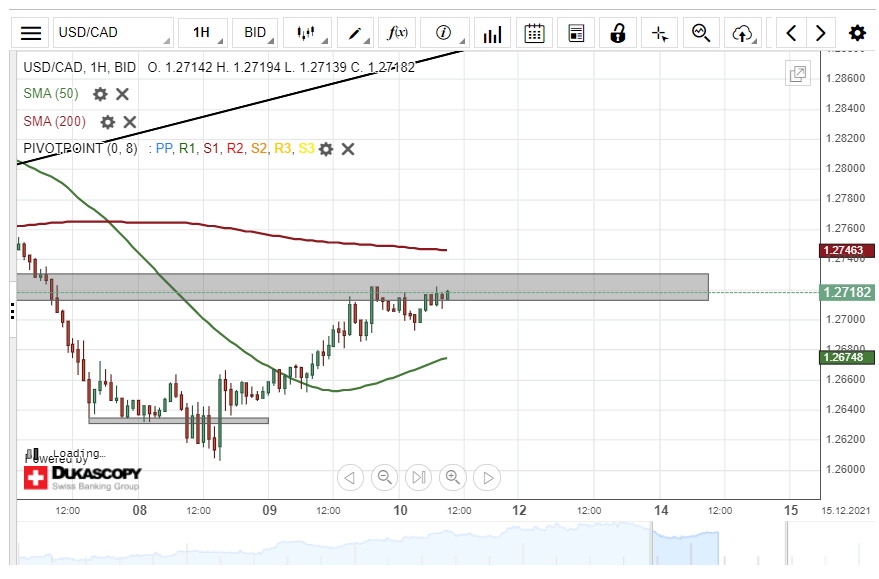
The recovery of the US Dollar against the Canadian Dollar has reached a resistance zone. Namely, the previous low level zone at 1.2713/1.2730 kept the pair down from Thursday evening up to the middle of Friday.
A move above the resistance zone would most likely find resistance in the 200-hour SMA and the weekly S1 simple pivot point near 1.2750. Above the 1.2750 level, the weekly simple pivot point at 1.2803 might stop a recovery of the USD against the CAD.
However, a move down could look for support in the 50-hour SMA near 1.2675. Below the SMA, note the weekly S2 and S3 simple pivot points at 1.2662 and 1.2611.
GBP/JPY Reveals Triangle Pattern
On Friday morning, the GBP/JPY pair passed the resistance of the 50-hour SMA and the weekly simple pivot point near 150.00. However, the surge stopped. After a review, it was discovered that the this week's high and low levels can be connected to reveal a triangle pattern. Namely, the rate's surge was stopped by the upper trend line of the triangle.
In theory, trading in a triangle occurs, as volatility and volume reduce. Eventually, an asset or currency exchange rate reaches a point at which either bulls or bears take over and cause a sudden move. Namely, a break out up or down occurs.
A break out to the upside could immediately find resistance in the 200-hour simple moving average near 150.30. Above the SMA, previous high levels could act as resistance at 150.70 and 151.15.
On the other hand, a move down might find support in the 149.50 mark. Below the round exchange rate level, the July, August, September and October low level zone at 148.46/149.30 might stop a decline.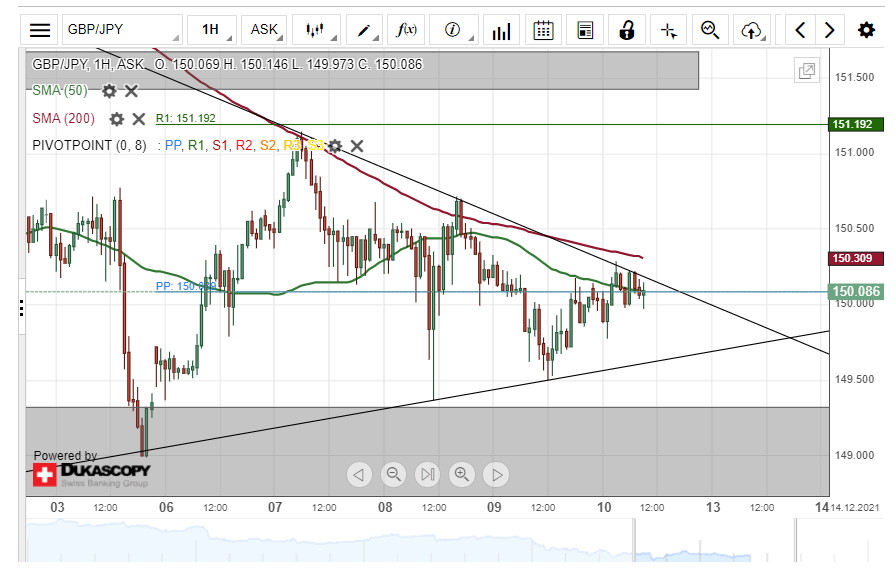
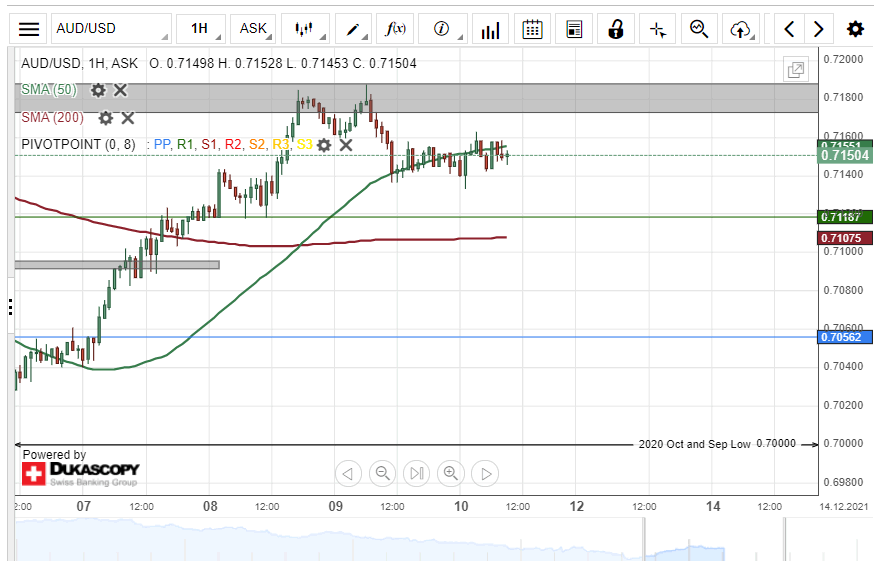
AUD/USD Consolidates Below High Levels
On Thursday, the AUD/USD booked a new December high level before retreating to the 0.7140 level. Since the middle of Thursday's trading, up to the middle of Friday, the rate traded between the 0.7140 and 0.7160 levels. It appeared that the AUD was consolidating its gains against the USD, which were achieved since the finding of support at the 0.7000 mark.
In the case that the pair resumes its surge, it would face the December high level zone at 0.7173/0.7188. A move above the zone could find resistance first in the 0.7200 mark and afterwards the weekly R2 simple pivot point at 0.7236.
Meanwhile, a decline of the Aussie against the USD might look for support in the weekly R1 simple pivot point at 0.7119 and the 200-hour simple moving average near 0.7110.
EUR/JPY Retreats To 128.00
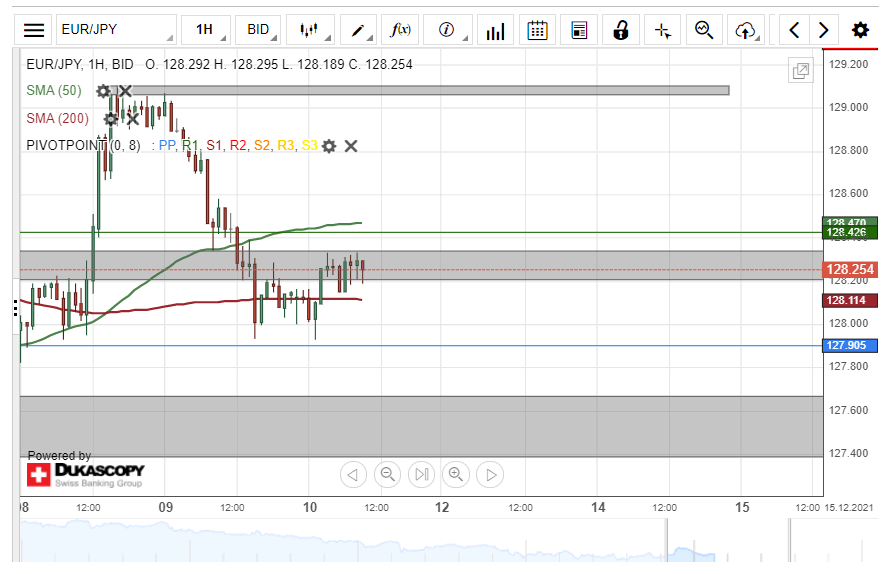
The bounce off from the resistance of the 129.00 level eventually passed technical support levels on Friday morning. Namely, the EUR/JPY declined below a support zone, the 50 and 200-hour SMAs and the weekly R1 simple pivot point. However, by the start of the day's European trading hours, the pair found support in the 128.00 mark and slightly recovered.
A potential surge of the rate would most likely find resistance in the combination of the 50-hour simple moving average and the weekly R1 simple pivot point at 128.42/128.50. Above these levels, the 129.00 level and the zone above it is set to act as resistance.
On the other hand, a decline of the rate would have to pass the 128.00 mark before aiming at the weekly simple pivot point at 127.91. Below the pivot point, note the low level zone at 127.40/127.65
The Analytical Overview Of The Main Currency Pairs
The EUR/USD currency pair
Technical indicators of the currency pair:
Prev Open: 1.1341
Prev Close: 1.1292
% chg. over the last day: -0.44%
The euro may fall sharply today on inflation data in Germany and the United States. Analysts expect a -0.2% decline in German inflation, while the US is expected to see a 0.7-0.9% increase in consumer prices. A rise in inflation usually leads to an increase in the national currency, expecting that the central bank will tighten its monetary policy.
Trading recommendations
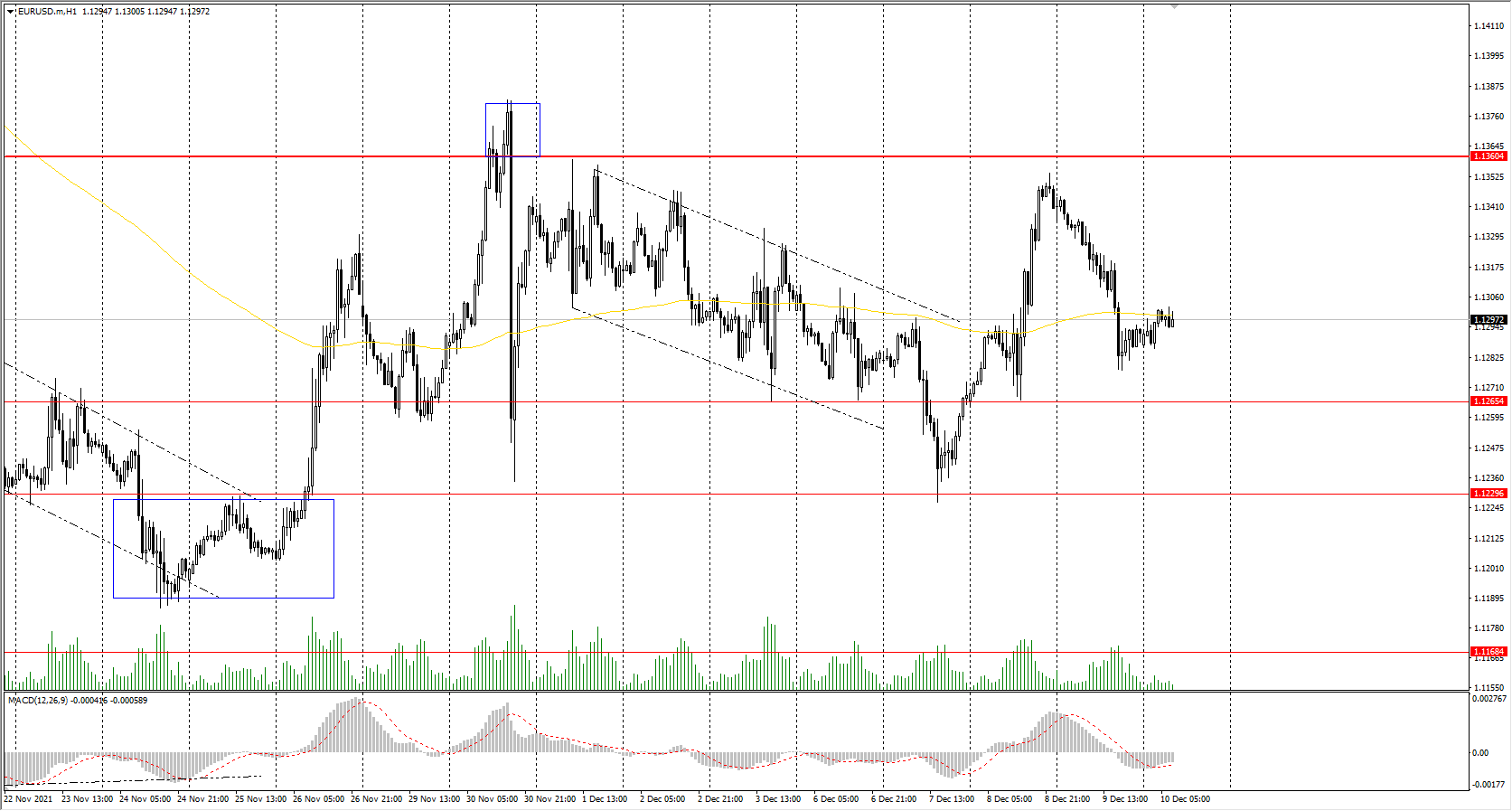
Support levels: 1.1265, 1.1230, 1.1168
Resistance levels: 1.1360, 1.1436, 1.1535, 1.1613, 1.1667, 1.1717
From a technical point of view, the EUR/USD on the hour time frame is still bearish. Sellers' initiatives replaced buyers' initiatives. The MACD indicator has become inactive. Under such market conditions, traders should consider sell positions from the priority change level of 1.1360. Buy trades can be considered on lower time frames, but only with short targets.
Alternative scenario: if the price breaks out through the 1.1360 resistance level and fixes above, the mid-term uptrend will likely resume.
News feed for 2021.12.10:
- Germany Consumer Price Index (m/m) at 09:00 (GMT+2);
- ECB President Lagarde’s Speech at 11:05 (GMT+2);
- US Consumer Price Index (m/m) at 15:30 (GMT+2);
- US Michigan Consumer Sentiment (m/m) at 17:00 (GMT+2).
The GBP/USD currency pair
Technical indicators of the currency pair:
Prev Open: 1.3193
Prev Close: 1.3218
% chg. over the last day: +0.19%
Goldman Sachs canceled its forecast for the first Bank of England rate hike at the December meeting, amid uncertainty caused by the Omicron option and after new restrictions imposed across the country. The US inflation report for November may trigger a new sell-off in the pound today since analysts expect a strong rise in consumer prices.
Trading recommendations
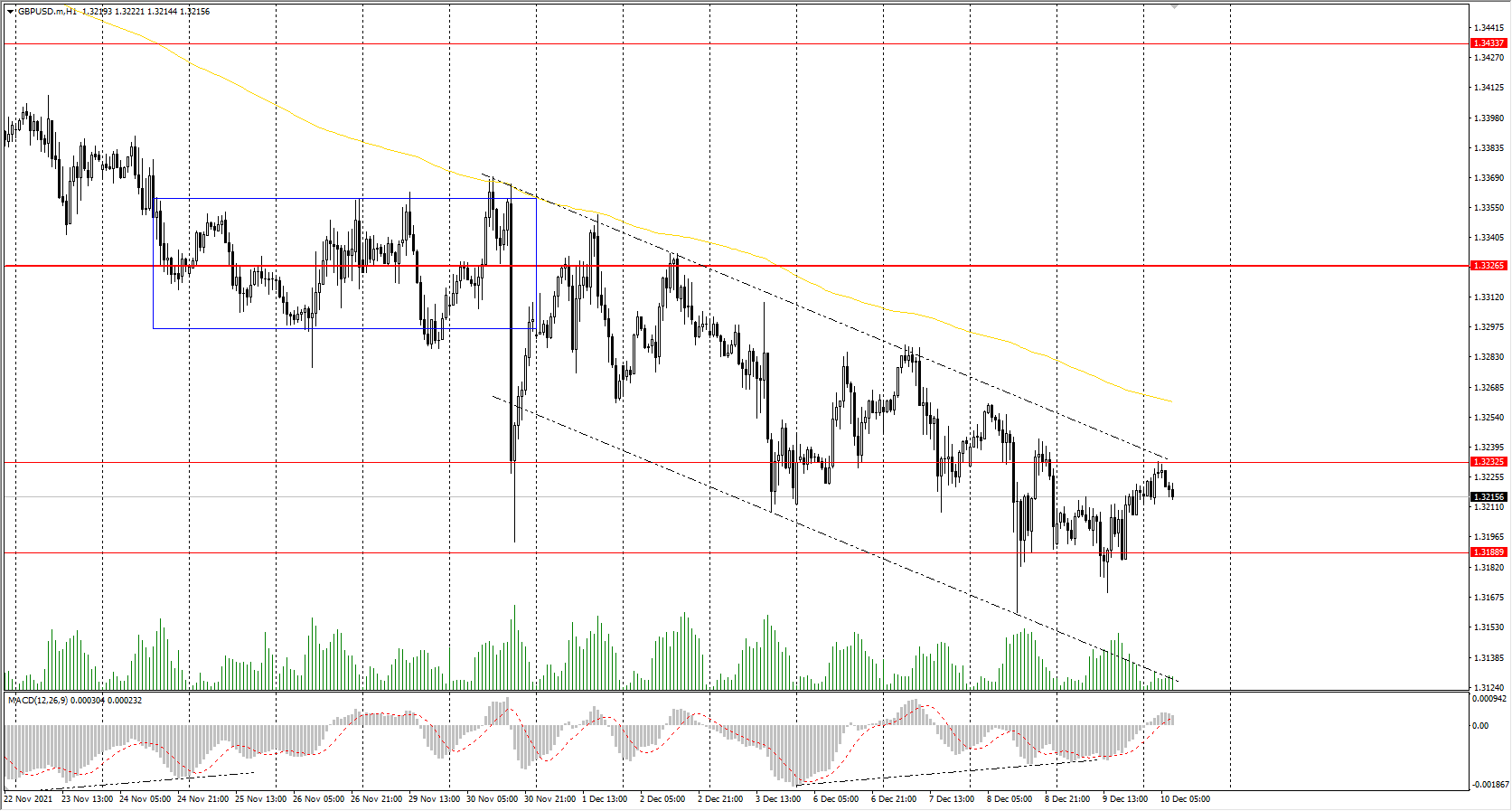
Support levels: 1.3188
Resistance levels: 1.3232, 1.3289, 1.3326, 1.3434, 1.3507, 1.3575, 1.3685
On the hourly time frame, the trend on GBP/USD is bearish. The British pound is trading in a narrow corridor with the range of 1.3188-1.3232. The MACD indicator has become inactive, but there are still signs of divergence on several time frames. Under such market conditions, traders should consider sell positions from the resistance levels around the moving average or from the upper border of the descending channel. Buy trades should be considered from the support level of the higher time frame, but only with additional confirmation.
Alternative scenario: if the price breaks out through the 1.3326 resistance level and consolidates above, the bullish scenario will likely resume.
News feed for 2021.12.10:
- UK GDP (q/q) at 09:00 (GMT+2);
- UK Industrial Production (m/m) at 09:00 (GMT+2);
- UK Manufacturing Production (m/m) at 09:00 (GMT+2);
- US Consumer Price Index (m/m) at 15:30 (GMT+2).
The USD/JPY currency pair
Technical indicators of the currency pair:
Prev Open: 113.65
Prev Close: 113.45
% chg. over the last day: -0.18%
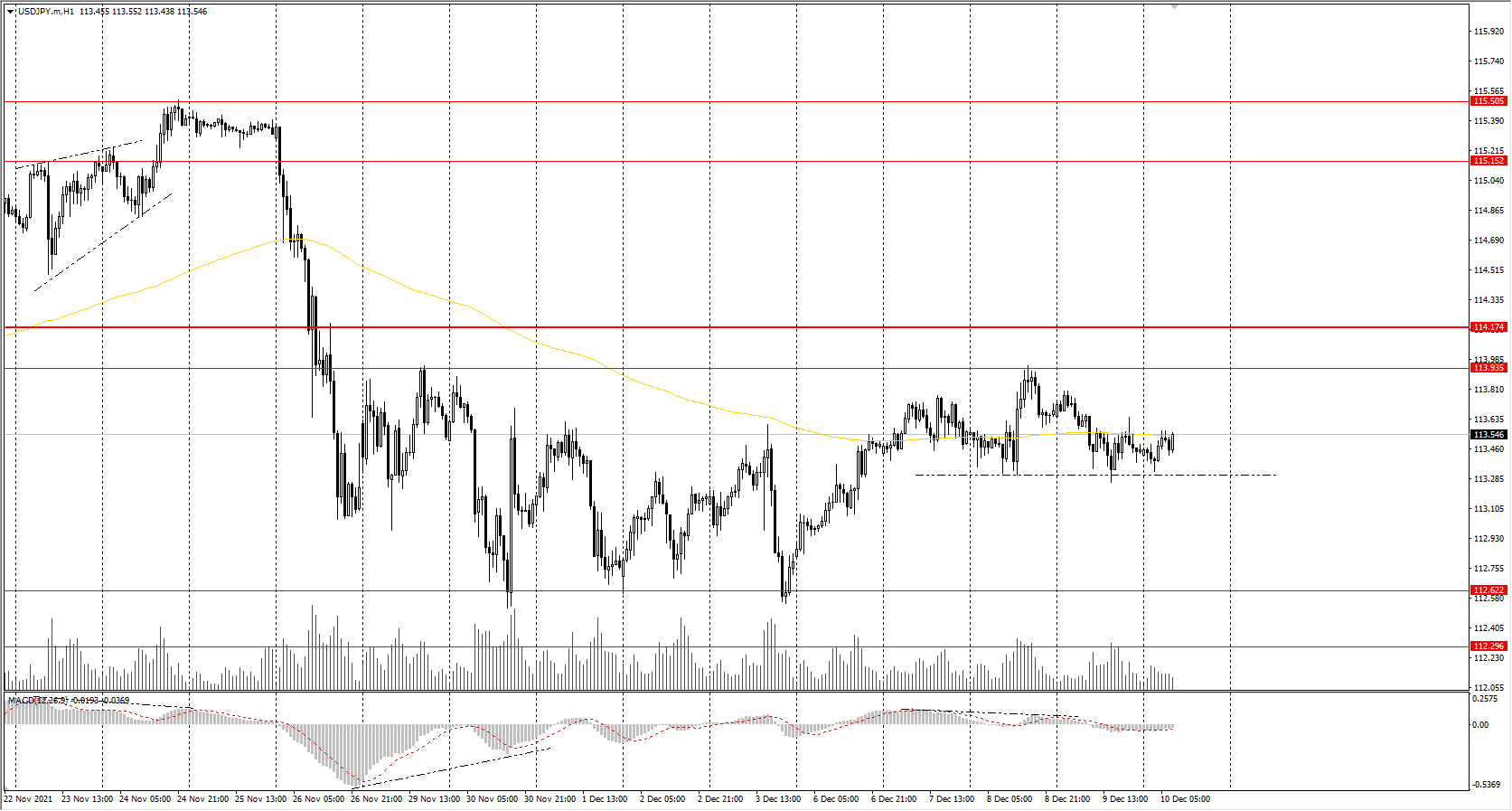
In Japan, the Producer Price Index, which shows the rate of inflation between companies and factories, increased from 8.3% to 9%. These are the first signs that investors should expect consumer inflation to rise soon. But against the backdrop of massive central bank stimulation of the economy, such a picture looks quite normal. The dollar index may jump up sharply today since inflation in the US is rising. If this happens, the USD/JPY quotes might go up sharply.
Trading recommendations
Support levels: 112.62, 112.30
Resistance levels: 113.94, 114.17, 115.15, 115.50
The global trend on the USD/JPY currency pair is bearish. But the pressure of buyers is increasing, and the price is approaching the priority change level. Under such market conditions, traders are better to look for sales from the priority change level, but with additional confirmation. Buy positions should be considered from the lower border of the corridor, but with additional confirmation in the form of a buyers' initiative.
Alternative scenario: if the price rises above 114.17, the uptrend will likely resume.
News feed for 2021.12.10:
- Japan Producer Price Index (m/m) at 01:50 (GMT+2);
- US Consumer Price Index (m/m) at 15:30 (GMT+2).
The USD/CAD currency pair
Technical indicators of the currency pair:
Prev Open: 1.2647
Prev Close: 1.2714
% chg. over the last day: +0.53%
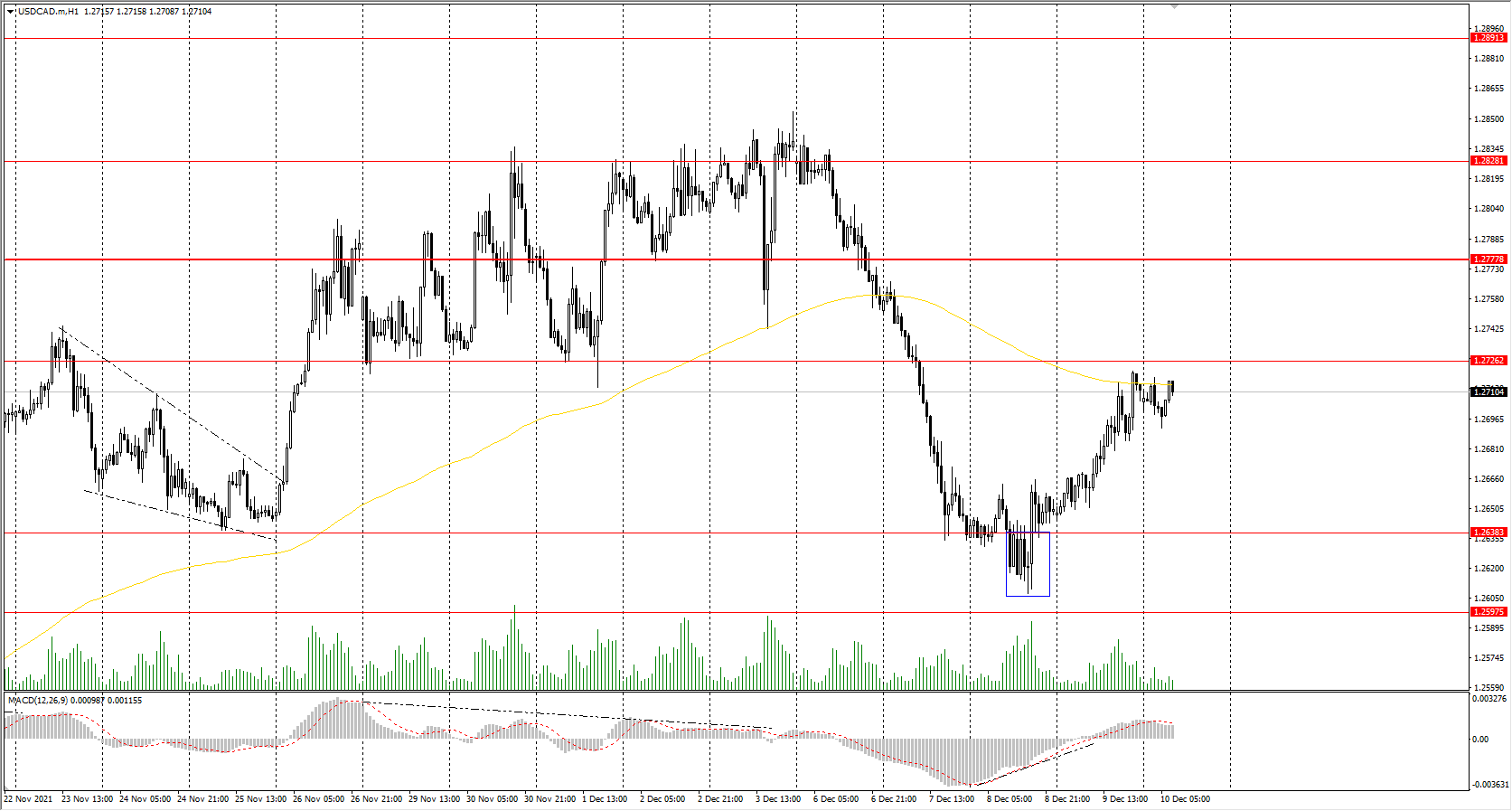
After the oil price stabilized, the USD/CAD quotes started rising again. The Canadian dollar is a commodity currency, as it is highly correlated with oil prices. Technically, the price of oil may drop to the area of $68 a barrel, so the Canadian dollar will be under sellers' pressure, especially if the dollar index rises sharply today on the background of the expected growth of inflation in the United States.
Trading recommendations
Support levels: 1.2638, 1.2597, 1.2502, 1.2416
Resistance levels: 1.2726, 1.2776, 1.2828
From a technical point of view, the USD/CAD currency trend is bearish. The MACD indicator has become positive. Under such market conditions, it is better to look for buy trades from the 1.2638 support level, but only after additional confirmation in the form of a buyers' initiative. It is better to consider sell deals from the resistance levels near the moving average.
Alternative scenario: if the price breaks out through the 1.2776 resistance level and fixes above, the downtrend will likely be broken.
News feed for 2021.12.10:
- US Consumer Price Index (m/m) at 15:30 (GMT+2).
USD Gains As The US Inflation Rates Are Due Out
The USD gained yesterday against some of its counterparts, as the market turns its attention to the release of the US inflation rates for November. The headline rate is expected to accelerate on a year-on-year level reaching new multi-year highs and could provide some support for the USD ahead of the Fed’s meeting next week, yet on a month-on-month level it is expected to lose some steam which could tame the bulls somewhat. It should be noted that also the release of the preliminary University of Michigan consumer sentiment for December could also get some attention. On a more fundamental level we note that yesterday the US Senate passed the first of two bills required to raise the debt ceiling of the US Government and seems to avoid the possibility of a default which could lift some uncertainty from the markets. US stockmarkets tended to send out some mixed signals ahead of the release and failed to capitalise on the lower-than-expected initial jobless claims figure released yesterday. As market attention starts turning towards inflationary pressures within the US economy gold’s price seems to have stabilised yet also seems to remain soft as it remains in the reds for a fourth consecutive week.
Gold’s price seemed to remain rather stable yet bearish tendencies seem to exist as it broke the 1780 (R1) support line now turned to resistance. For our current sideways bias to change in favour of a clear-cut bearish outlook though we would require the precious metal’s price to reach if not break the 1760 (S1) support line. On the other and should bulls take over, we may see the bullion’s price breaking the 1780 (R1) resistance line and aim for the 1800 (R2) round number.
Pound stabilises but the bears seem to be still present
The pound edged higher against the USD yesterday as it also gained against the EUR and stabilised against JPY. On the pound’s fundamentals the new stricter measures undertaken by the UK government to curb the spreading of the pandemic seem to weigh, while the UK braces for the possibility of a million Omicron variant infections to come. The new measures include a working from home order and a requirement for proof of vaccination for indoor venues such as nightclubs, while the pandemic seems to cloud the economic outlook of the UK and casts doubt on the possibility of BoE hiking rates in its meeting next week. Also, we must note the mini crisis which has erupted in the UK government with the possibility of the UK government lying to the public is still an issue, despite the resignation of a Downing Street 10 aide. Overall, it seems that Johnson’s government seems to be losing on popularity against the opposition Labor party. Today we expect pound traders to focus on the release of a slew of data from the UK in the European session, yet we highlight the GDP rates for October which are expected to slow down and the manufacturing output growth rate which is expected to remain at anaemic levels and if so could weigh on the pound.
GBP/USD seems to have stabilised somewhat between the 1.3280 (R1) and the 1.3160 (S1) levels. We tend to maintain a bearish outlook for the pair as long as its price action remains below the downward trendline incepted since the 29th of October. Should the selling interest for cable be renewed we may see it breaking the 1.3160 (S1) line and aim for the 1.2990 (S2) level. If buyers take over GBP/USD’s direction, it could break the prementioned downward trendline, the 1.3280 (S1) support line and aim for the 1.3430 (R2) level.
Today’s events and expectations
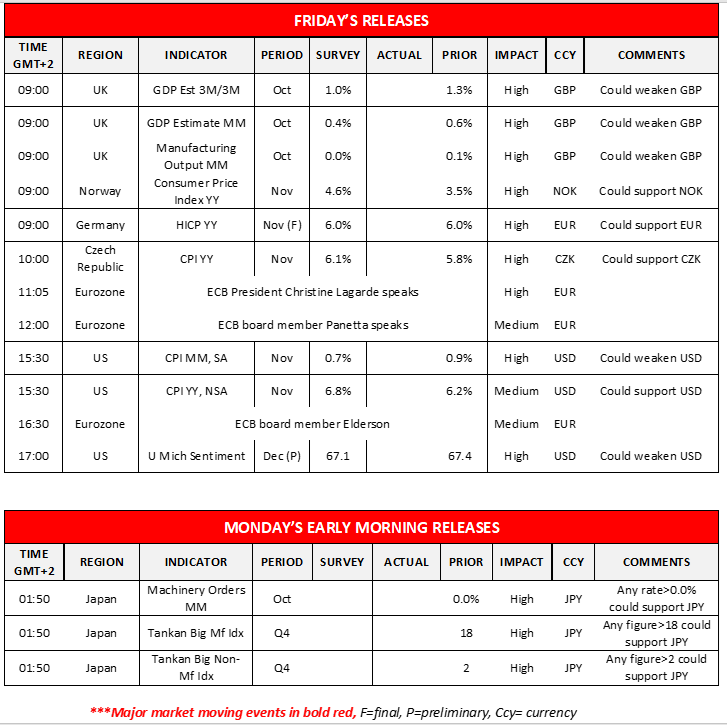
Today we note high number of statements from ECB policymakers which could create some volatility for EUR pairs and on second note the release of Eurozone’s and the Czech Republic’s inflation measures for November. On Monday’s Asian session we get from Japan the machinery orders for October and the Tankan indexes for Q4 which is usually closely watched.
XAU/USD H4 Chart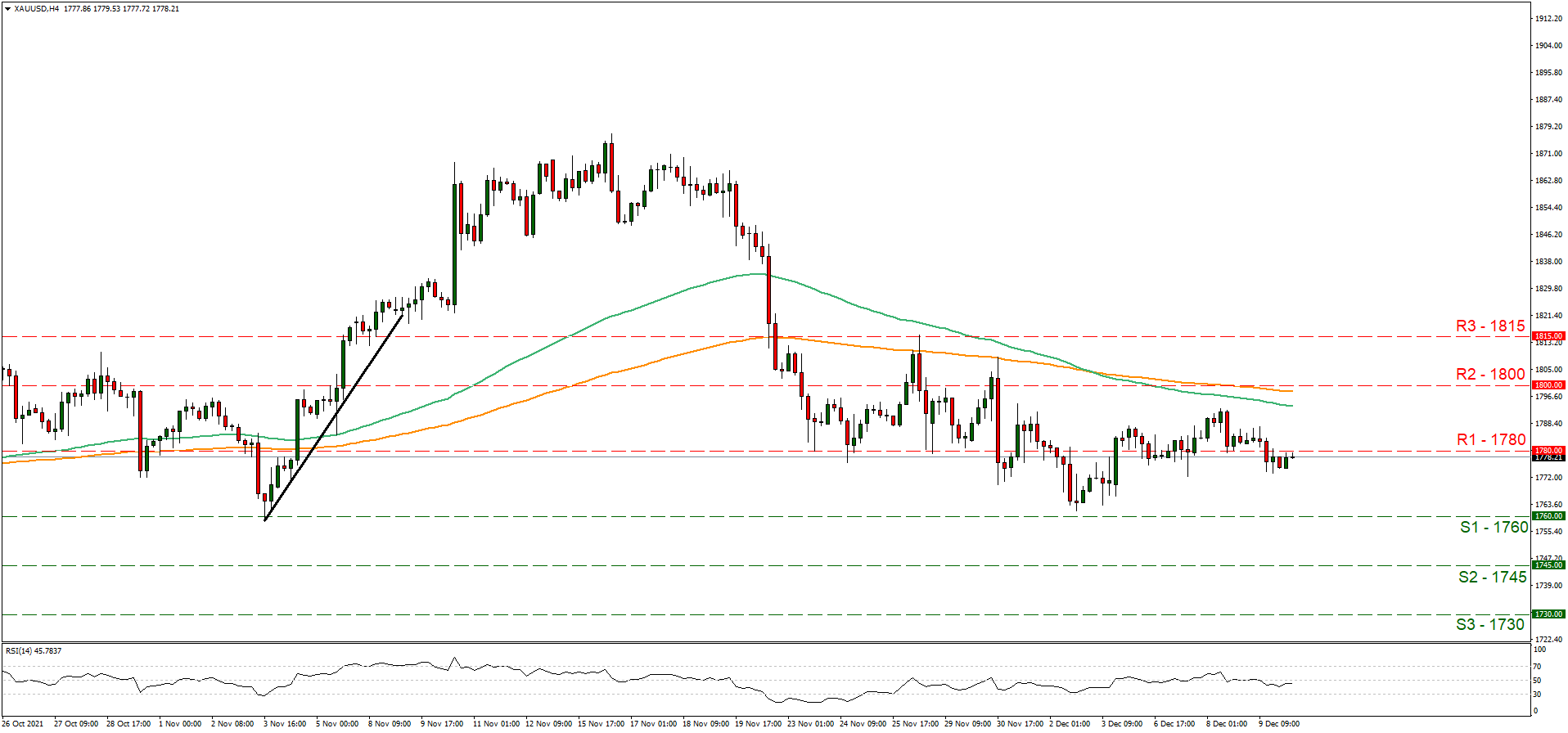
Support: 1760 (S1), 1745 (S2), 1730 (S3)
Resistance: 1780 (R1), 1800 (R2), 1815 (R3)
GBP/USD H4 Chart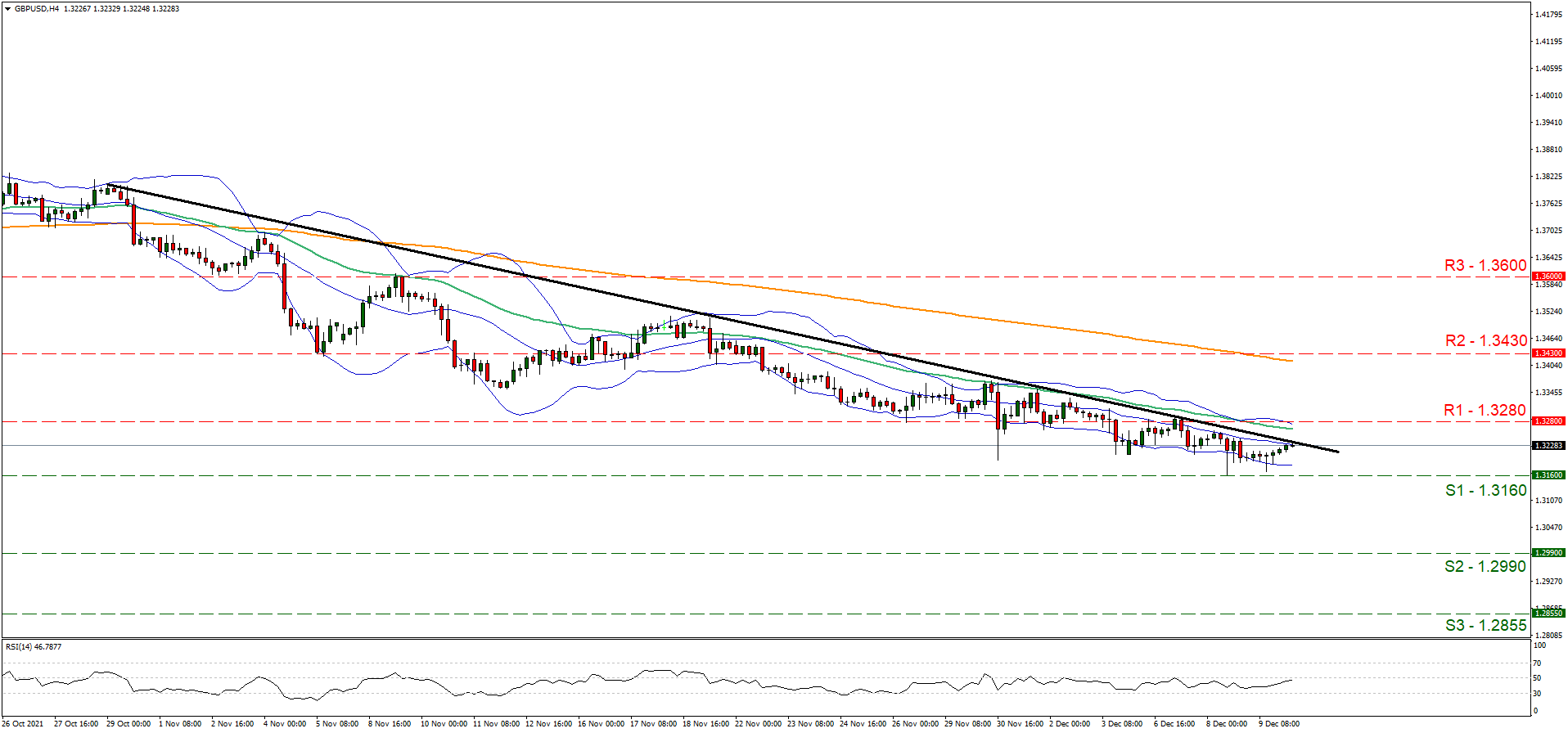
Support: 1.3160 (S1), 1.2990 (S2), 1.2855 (S3)
Resistance: 1.3280 (R1), 1.3430 (R2), 1.3600 (R3)
EUR/USD Outlook: A Key Bearish Trend Line Is Forming With Resistance Near 1.1295
The Euro struggled to clear the 1.1350 resistance zone and corrected lower against the US Dollar. The EUR/USD pair broke the 1.1300 support, but it found support near 1.1275.
It is now moving higher above 1.1280 and trading below the 50 hourly simple moving average. Besides, there was a break above a key bearish trend line forming with resistance near 1.1295 on the hourly chart.
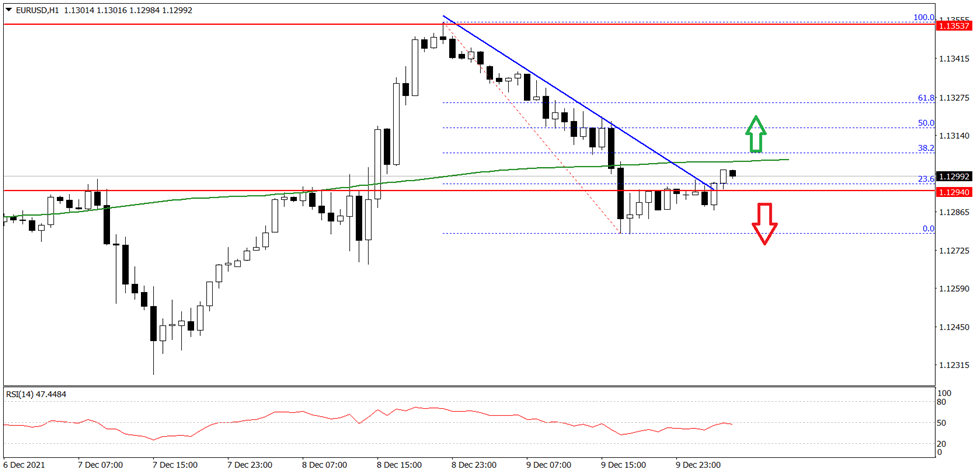
An immediate resistance near the 1.1300 level. A break above the 1.1300 and 1.1305 resistance levels could lead the pair towards the 1.1325 zone, above which the pair could rise towards 1.1350 on FXOpen.
On the downside, an initial support is near the 1.1285 level. The key support is near 1.1275, below which there is a risk of a sharp decline. The next major support is near the 1.1220 level.