Sample Category Title
Weekly Focus – Team Dovish or Hawkish to Prevail?
The concern about omicron abated over the past week as vaccines were deemed effective against the variant with a booster shock. Preliminary analysis from the European health agency suggests the symptoms are milder than with previous variants. Furthermore, a new study shows that a third shot of the Pfizer vaccine could neutralise the omicron virus. The news boosted risk sentiment over the past week with equity markets rebounding along with yields, where 10Y Treasuries moved above 1.50%, and Bunds tested -30bp while the spread between Italian and German yields widened in anticipation of tighter monetary policy in the euro zone. If the fears of omicron indeed abates, we think focus in the markets should move back to the monetary policy and to what extent they will move in a more hawkish direction or remain accommodative.
The Fed meeting next week is likely to confirm Powell's more hawkish message that inflation is more permanent and hence that monetary policy may need to be normalised faster than previously thought. We have changed our Fed view accordingly seeing QE to be phased out by April (instead of June) and three hikes in 2021 (June, September and December) instead of two followed by four hikes in 2022. The US labour market appears to be very tight with jobless claims this week hitting the lowest level since 1969. In our the view the relatively weak non-farm payroll report last Friday, was more due to labour supply constraints than demand problems. The unemployment rate fell significantly to 4.2% from 4.6%, as employment in the household survey was extremely strong. On another positive note, the labour force rose by almost 600K, which is very important to avoid the need for premature tightening by the Fed if wages rise faster.
A difficult communication exercise awaits ECB with regard to the inflation outlook amid growing divisions in the Governing Council about pro-inflationary risks and a stuttering economy. We expect new forecasts to show a marked upward revision in the near-term inflation outlook, but with HICP inflation falling back below 2% in 2023 and 2024, supporting the ECB's communication of a patient approach with regard to rate hikes. That said, to placate the 'hawks', a first step towards policy normalisation will likely be done by phasing out the PEPP programme as scheduled in in March 2022, see ECB Preview - Baby steps to normalisation, 10 December.
Meanwhile, the Chinese central bank eased monetary policy further this week lowering reserve requirements and thereby enabling more credit to enter the financial system. The stimulus will in our view support a modest rebound in the Chinese economy in early 2022. It is a close call whether the Bank of Japan will prolong its pandemic measures set to run off in March on its meeting next week. Very few newly infected, a high vaccine uptake and a decent looking Q4 rebound has paved the way, but the Omicron variant adds uncertainty.
The concern about omicron abated over the past week as vaccines were deemed effective against the variant with a booster shock. Preliminary analysis from the European health agency suggests the symptoms are milder than with previous variants. Furthermore, a new study shows that a third shot of the Pfizer vaccine could neutralise the omicron virus. The news boosted risk sentiment over the past week with equity markets rebounding along with yields, where 10Y Treasuries moved above 1.50%, and Bunds tested -30bp while the spread between Italian and German yields widened in anticipation of tighter monetary policy in the euro zone. If the fears of omicron indeed abates, we think focus in the markets should move back to the monetary policy and to what extent they will move in a more hawkish direction or remain accommodative.
The Fed meeting next week is likely to confirm Powell's more hawkish message that inflation is more permanent and hence that monetary policy may need to be normalised faster than previously thought. We have changed our Fed view accordingly seeing QE to be phased out by April (instead of June) and three hikes in 2021 (June, September and December) instead of two followed by four hikes in 2022. The US labour market appears to be very tight with jobless claims this week hitting the lowest level since 1969. In our the view the relatively weak non-farm payroll report last Friday, was more due to labour supply constraints than demand problems. The unemployment rate fell significantly to 4.2% from 4.6%, as employment in the household survey was extremely strong. On another positive note, the labour force rose by almost 600K, which is very important to avoid the need for premature tightening by the Fed if wages rise faster.
A difficult communication exercise awaits ECB with regard to the inflation outlook amid growing divisions in the Governing Council about pro-inflationary risks and a stuttering economy. We expect new forecasts to show a marked upward revision in the near-term inflation outlook, but with HICP inflation falling back below 2% in 2023 and 2024, supporting the ECB's communication of a patient approach with regard to rate hikes. That said, to placate the 'hawks', a first step towards policy normalisation will likely be done by phasing out the PEPP programme as scheduled in in March 2022, see ECB Preview - Baby steps to normalisation, 10 December.
Meanwhile, the Chinese central bank eased monetary policy further this week lowering reserve requirements and thereby enabling more credit to enter the financial system. The stimulus will in our view support a modest rebound in the Chinese economy in early 2022. It is a close call whether the Bank of Japan will prolong its pandemic measures set to run off in March on its meeting next week. Very few newly infected, a high vaccine uptake and a decent looking Q4 rebound has paved the way, but the Omicron variant adds uncertainty.
Sunset Market Commentary
Markets
Today’s trading was a long drawn countdown to the publication of the US inflation release. On the financial newswires there was still a lot of analyses/debate on the options for the ECB to engineer a smooth transition for asset purchases beyond the formal end of PEPP at the end of March. However, the direct impact on (European) bond markets was limited. At least European yields didn’t decline further after yesterday’s setback. US yields continued a modest flattening trend going into the US CPI release. However, from a market point of view, it brought a ‘high profile non-event’. US headline CPI rose 0.8% M/M and 6.8% Y/Y, the fastest pace since 1982. Core inflation also rose further, 0.5% M/M to 4.9% Y/Y (from 4.6%Y/Y). However, the report was perfectly in line with expectations. Energy (3.5%) again rose sharply M/M, but this might be partially reversed in December. A new rise in prices for new vehicles (1.1%) and used cars (2.5%) also caught the eye. Markets were slightly positioned for an upward surprise. As this didn’t materialize, US yields now reversed from a bear to a bull flattening with yields declining between 0.75 bp (2-y) and 2.6 bps (30-y). Interestingly, the US 10-y inflation swap dropped about 5 bps upon the release. Investors apparently feel that enough inflation risk is discounted as the Fed tends to accelerate tapering in order to fight inflation next year with higher interest rates. German yields moving between unchanged (30 y) and +1.2bp bp (5 & 2-y). The 0.10% level for EMU 10-y swap again survives. The -0.35% barrier for the 10-y bund remains under pressure. European equites overcame earlier, mostly limited losses. US indices opened in positive territory. Some fading of the inflation hype/narrative apparently gives some comfort.
The ‘not higher-than-feared’ US inflation also triggered an admittedly mild repositioning in FX. The dollar lost earlier intraday gains. After testing the Wednesday low near 1.1265 area, EUR/USD tried to regain the 1.13 level but even that is a too high hurdle (currently 1.128). USD/JPY dropped from the 113.80 area to 1.1350. Sterling and in particular EUR/GBP was a place of almost perfect wind still. UK October production and construction data were softer dan expected, but markets consider this as outdates and look forward how the BoE assesses the impact of new corona restrictions and of the omicron variant. Probably more relevant for the BoE, the BOE/Kantar survey showed inflation expectations of the UK public for next year rising from 2.7% to 3.2% and also expectations on a longer term horizon rise further away from the 2.0% BoE target. Market didn’t draw any immediate conclusions for next week policy meeting. UK yields even ease slightly. EUR/GBP declined a few ticks to currently trade in the 0.8535 area.
News Headlines
Czech headline inflation quickened from 5.8% to 6% y/y in November, well above the upper limit of the Czech National Bank’s 1-3% range. Adjusted for indirect taxes, monetary-policy relevant price dynamics rose by a full 7% according to a statement. Inflation was about 1 ppt higher than the CNB’s autumn forecast, mainly on accelerating core inflation (7.8% y/y) amid rising costs of owner-occupied housing. The CNB says today’s reading poses inflationary risks to the autumn forecasts, which projected 7% inflation during the winter. Czech short-term rates jump 20 bps higher today, projecting a peak policy rate of more than 4% compared to 2.75% today. The Czech krone advanced vs the euro to 25.36.
Inflation in Norway came in at the high end of expectations, accelerating from 3.5% to 5.1% y/y in November. It’s the first 5%+ reading since 2008. Core measures stayed muted at 1.3%, though that’s also slightly more than the 1.2% expected. The price data serves as the final input for the Norges Bank’s meeting next week. It’s all but certain it will raise policy rates for a second time from 0.25% to 0.50%. With inflation coming in significantly above the NB’s own projections as well (3.9%), pressure may be building for a more decisive approach than the 1.7% peak policy rate projected for 2024 back in September. The Norwegian krone strengthened marginally, with some help of rising oil prices too (+1%). EUR/NOK eases from 10.16 to 10.13.
US CPI: What Were You—And the Fed—Doing in 1982?
Summary
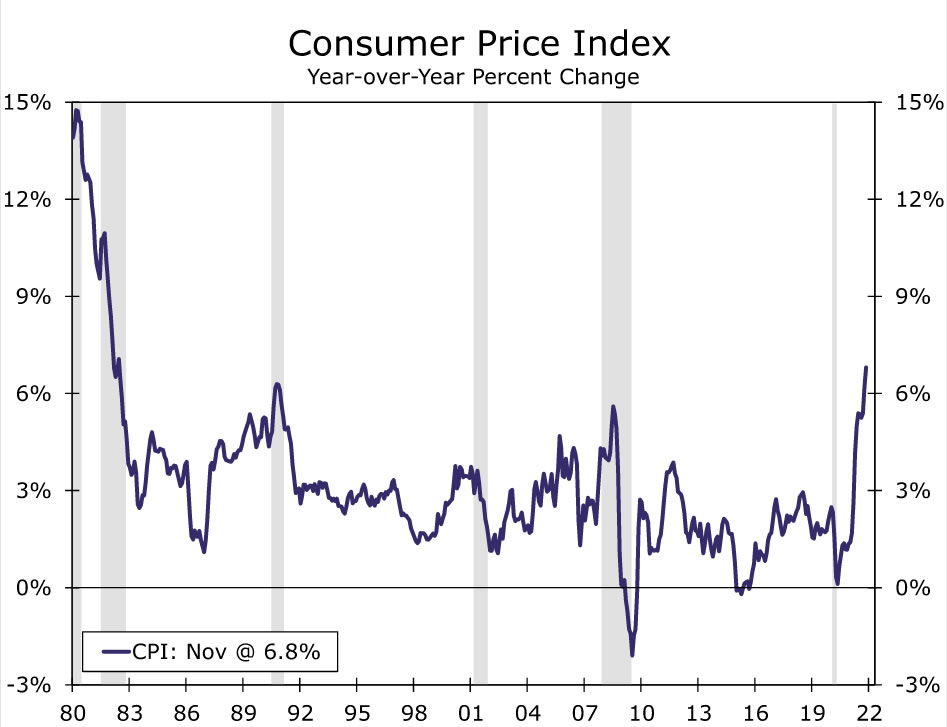
Another jump in prices in November propelled inflation up 6.8% from a year ago, the largest one year-increase since 1982. Pressures remain broad based, with supply chains still struggling to meet turbocharged demand for goods, and services inflation only recently beginning to reflect the pandemic's effects on housing costs. We expect the monthly trend in price gains to moderate ahead, but there is a lot of daylight between the current pace of inflation and the Fed's goal.
What Do November CPI, Eye of the Tiger, and E.T. Have in Common?
Inflation continues to feel extraterrestrial. The CPI rose 0.8% in November, pushing prices up 6.8% year-over-year. This 6.8% move is the biggest one-year change in the CPI since 1982. Once again strength was broad based. The goods side of the economy continues to adapt to the massive shift in spending on "things", and services inflation pushed forward as travel-related prices rebounded and housing inflation climbed. While current strength continues to reflect the strains of the pandemic, that is likely to be little comfort to consumers seeing paychecks and savings stretch less.
The dip in gasoline prices at the end of November was not enough to offset the earlier rise from October. Energy prices rose 3.5% and included another gain in energy services. We expect energy will offer some relief in the near term though, with gasoline prices and oil down 1.5% since the end of November, oil prices down about 15% from recent highs, and natural gas in storage more closely aligned with seasonal norms.
Beyond energy, however, we see little meaningful relief in sight. Price hikes remain widespread, meaning it will take more than a correction in one or two categories to return inflation to a more tepid pace. Food prices continue to sizzle, up another 0.7% in November. Food-related commodities are off from their recent highs, but continue to hover at a decade-high. And while November's average hourly earnings numbers came in a touch light, wages were up another 0.8% in the leisure & hospitality sector.
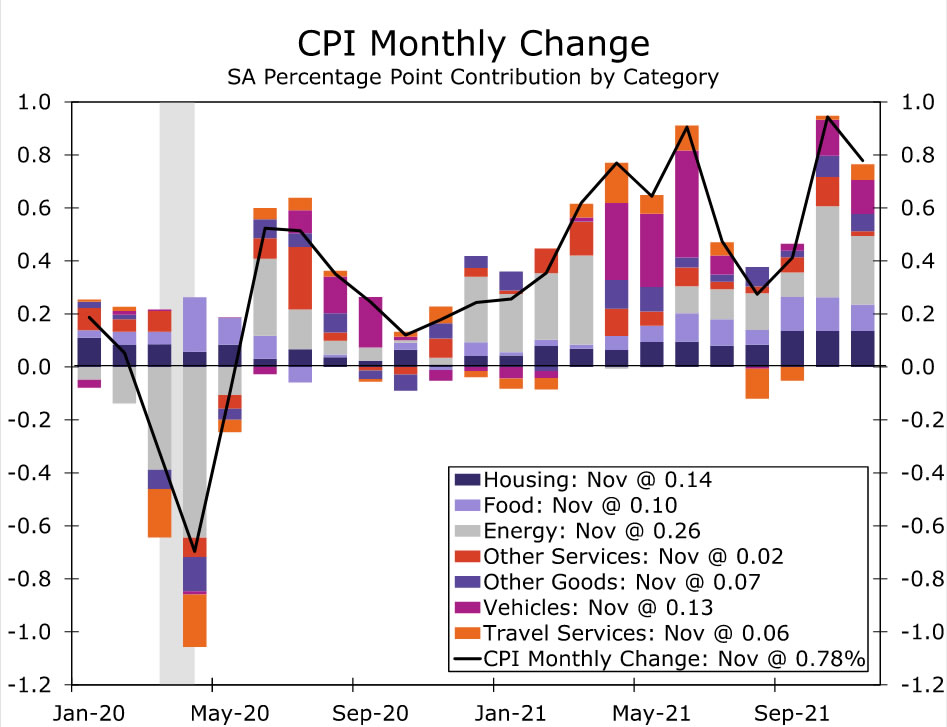
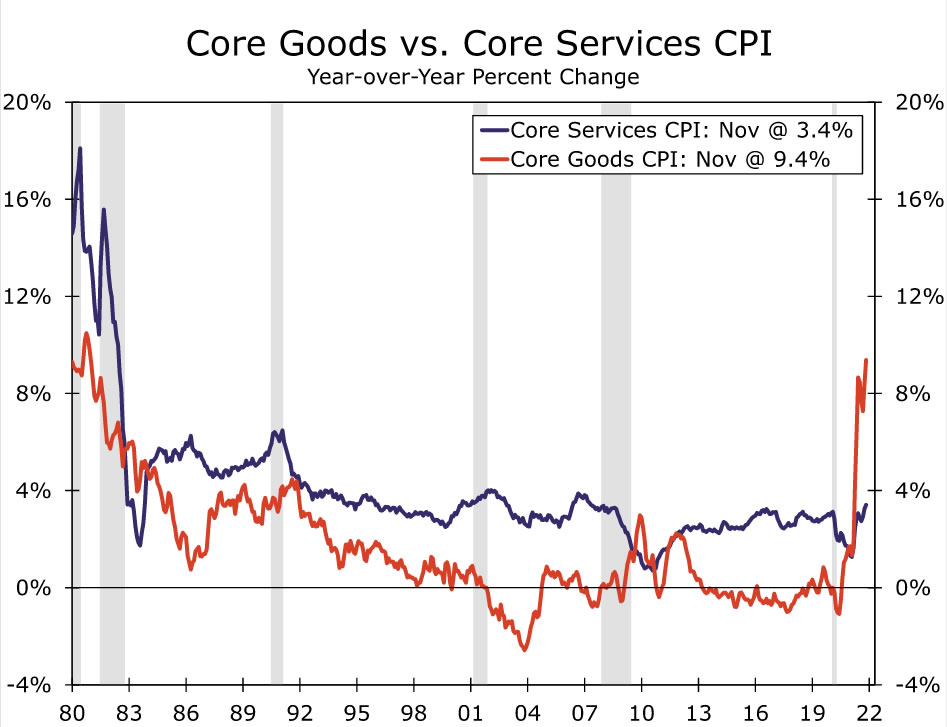
Excluding the volatile food and energy components, core CPI inflation slowed slightly from October but remained hot at 0.5% month-over-month. Core goods prices yet again led the way with a 0.9% month-over-month increase. As expected, motor vehicles once again pushed core goods prices higher. New vehicle prices rose 1.1% while used car and truck prices rose 2.5% for the second month in a row. Apparel prices also grew at a strong 1.3% pace in November, while prices for alcoholic beverages and medicine were roughly flat.
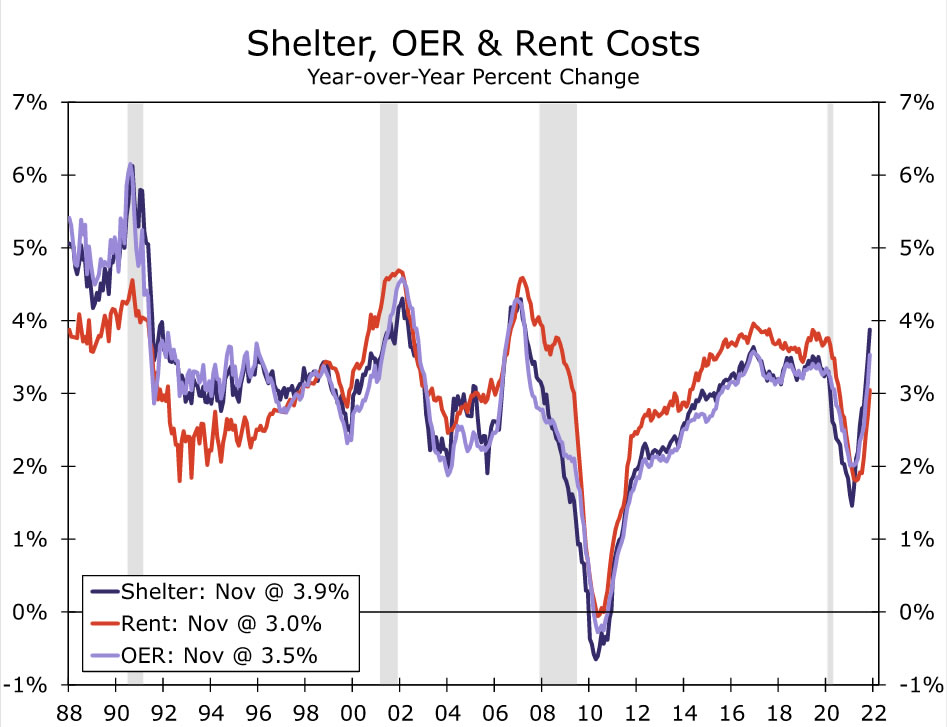
On the services side, shelter costs continued their steady climb higher. Shelter costs were led higher by another 0.4% increase in owners' equivalent rent of residences and a 2.9% increase in prices for lodging away from home, such as hotels. Prices for car and truck rentals rose 1.1% in November and are up 37.2% year-over-year. Like lodging away from home, airfare price growth was also strong at 4.7% in the month. Higher service sector inflation is a phenomenon we have anticipated for quite some time now as the lagged effect from higher home prices and rents flow through to the CPI and as the pandemic-hit sectors of the economy normalize. However, goods price inflation remains stubbornly high and has yet to come back down to Earth, creating a double-barrelled inflation challenge for consumers and policymakers alike.
More Moderate Inflation Ahead, but the "All Clear" a Long Ways Off
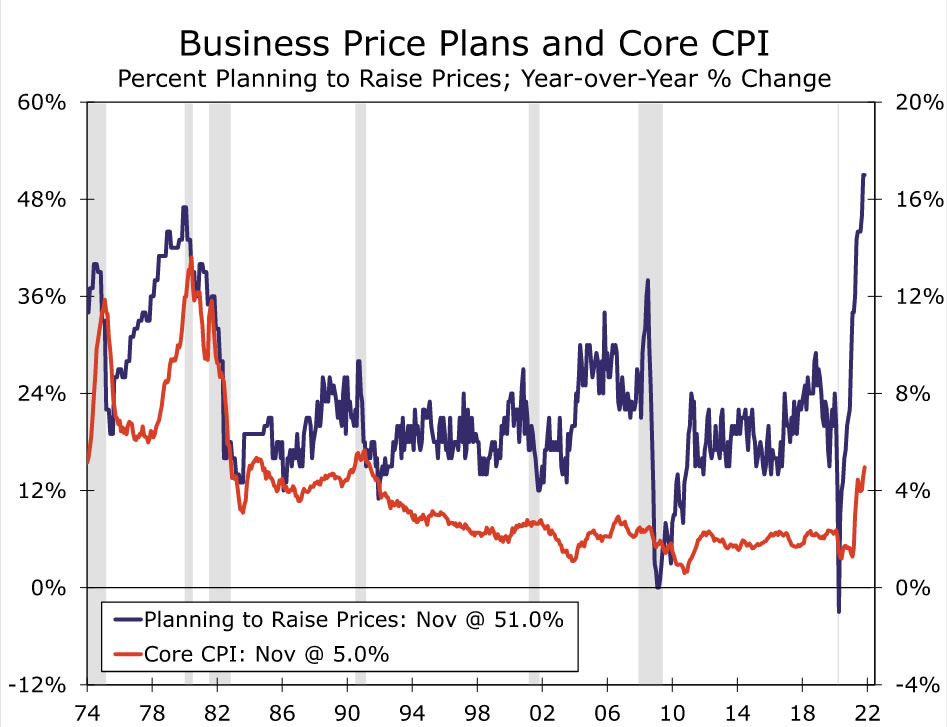
Inflation is set to remain a challenge for consumers and policymakers in the months ahead. The share of businesses planning to raise prices is the largest on record dating back to the mid-1970s. The breadth of price hikes raises the potential for current inflation to become self-reinforcing, particularly as employers' desperation to hire is bidding up wages.
We expect headline CPI to peak on a year-ago basis at about 7% in the first quarter before base effects get tougher come spring. Monthly gains should continue to trend lower as the acute pressures from goods inflation begins to ease up and offsets the emerging momentum in services inflation. However, another big wave of COVID cases this winter could delay relief by keeping goods demand turbo-charged and global supply lines strained.
Even as the monthly trend in price hikes moderates ahead, there is a lot of daylight between November's increase and the 0.2% monthly gains that would return inflation to a pace consistent with the Fed's target. We estimate that headline and core CPI will still be above 3% year-over-year this time next year. We therefore look for the Fed to announce accelerating its wind-down of asset purchases at its meeting next week and to then raise the fed funds rate 50 bps in the second half of 2022. Slower inflation next year is not the same as benign inflation, and we think the Fed will need to respond accordingly.
Dollar in Quiet Trading after US CPI; Equities Secure Positive Close
US inflation the highest in four decades
The eagerly awaited US consumer price index came in as expected on Friday ahead of a busy week with focus on several central bank events. Prices grew the fastest in four decades in November at 6.8% y/y on the back of gas and energy increases.
The core CPI measure was also in line with forecasts at 4.9% y/y, but still at uncomfortable levels and well above the Fed’s 2.0% symmetric target, suggesting that the central bank could officially announce the start of a faster bond tapering cycle on Wednesday with scope to mitigate the nonstop inflation rise.
Dollar holds steady but awaits a hawkish FOMC meeting
Powell and several of his colleagues have already signaled a hawkish policy shift, though what is still unknown is how large the pace of reductions in bond purchases will be, and more importantly, whether interest rates will pick up earlier than previously expected, probably before summer 2022.
The US dollar index remained flat at 96.18 in the aftermath as the 10-year Treasury yield stood steady slightly below its weekly highs. Yet, today’s CPI data suggested the Fed may not have the comfort of waiting too long before it acts, and that could provide an advantage to the US dollar relative to its European peers if the ECB and the BoE struggle to make their minds next week – at least in the short term.
Note that the ECB is even thinking to moderately increase its regular bond purchases after its pandemic bond program ends in March, showing no interest in playing catch up with the Fed.
Technically, a hawkish FOMC event could leave euro/dollar exposed to a downtrend resumption below the 1.1190 low as the pair has almost reversed Wednesday’s bullish breakout above the 20-day simple moving average (SMA). Pound/dollar could also be at risk of breaching the key 1.3200 – 1.3160 support zone and marking a new lower low around 1.3100.
The Japanese yen could be a bigger victim as the Bank of Japan may keep playing the same boring dovish song next week. Currently, there is a tough resistance around the 114.00 level, which the bulls need to claim to gain control.
Stock indices in the green; gold moderately up
In stock markets, US futures gained positive momentum following the CPI release, securing a bullish weekly close for Wall Street. The pan-European STOXX 600 is also eyeing a positive close to the week, despite today’s neutral trading, with non-consumer cyclicals and energy offsetting losses in utilities and real estate shares.
Turning to commodities, gold made tiny steps up to $1,778/oz, though a key ceiling is still laying overhead around the 1,800 level and the 200-day SMA. WTI crude oil continued to push towards yesterday’s highs.
USD/JPY Mid-Day Outlook
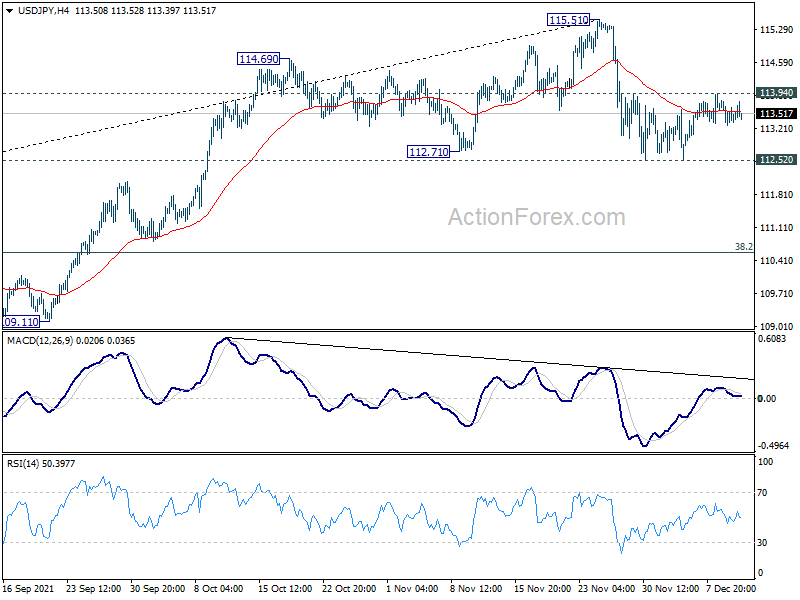
Daily Pivots: (S1) 113.22; (P) 113.52; (R1) 113.75; More...
Range trading continues in USD/JPY and intraday bias remains neutral. On the downside, sustained break of 112.71 will argue that it's already correcting whole rise from 102.58. Deeper fall would be seen to 38.2% retracement of 102.58 to 115.51 at 110.57. On the upside, break of 113.94 minor resistance will turn bias back to the upside for retesting 115.51 high instead.
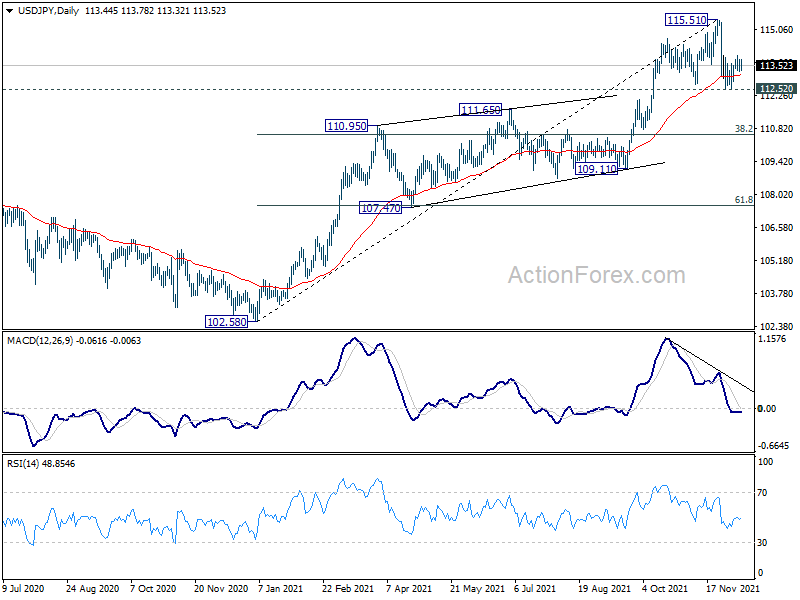
In the bigger picture, no change in the view that rise from 102.58 is the third leg of the up trend from 101.18 (2020 low). Such rally should target a test on 118.65 (2016 high) on resumption. However, firm break of 109.11 structural support will argue that the trend might have reversed and bring deeper fall to 107.47 support and possibly below.
USD/CHF Mid-Day Outlook
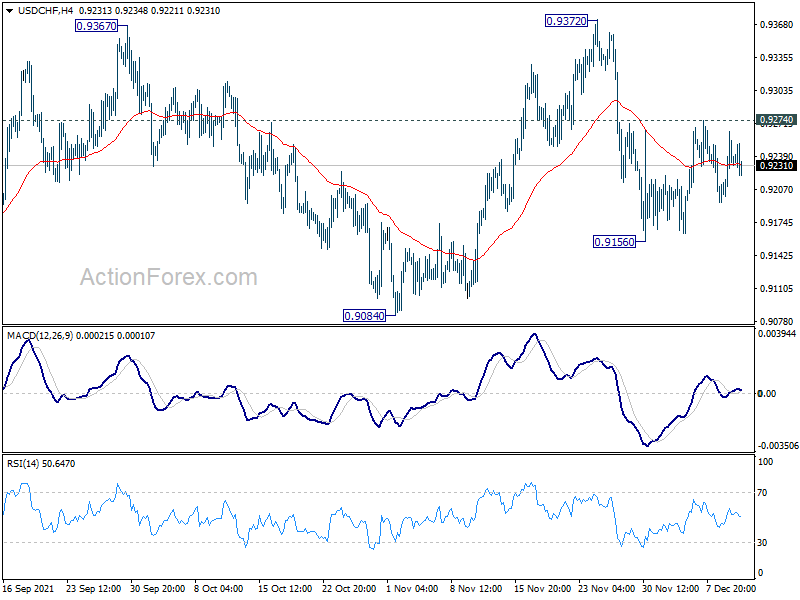
Daily Pivots: (S1) 0.9228; (P) 0.9251; (R1) 0.9272; More....
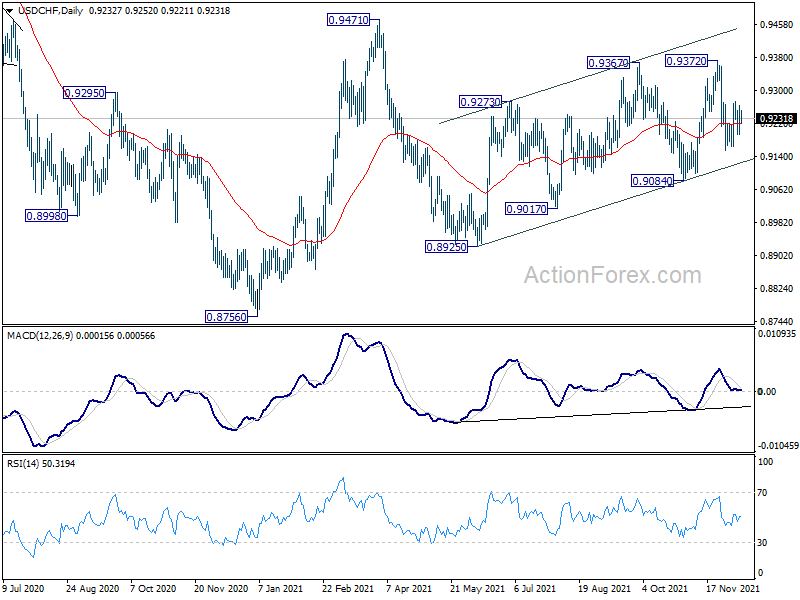
Range trading continues in USD/CHF and intraday bias remains neutral. On the upside, break of 0.9274 will suggest that the pull back from 0.9372 is finished. Intraday bias will be turned back to the upside for 0.9372. On the downside, below 0.9156 will target 0.9084 support. Firm break there should confirm that choppy rise from 0.8925 has completed, and suggests that fall from 0.9471 is resuming. Deeper decline would be seen through 0.8925.
In the bigger picture, the corrective structure of the rebound from 0.8925 argues that fall from 0.9471 is not complete yet. It could either be the second leg of pattern from 0.8756 (2021 low), or resuming larger down trend from 1.0237 (2018 high). We'd pay attention to the downside momentum and assess the odds later. But for now, medium term outlook will be neutral at best as long as 0.9471 resistance holds.
EUR/USD Mid-Day Outlook
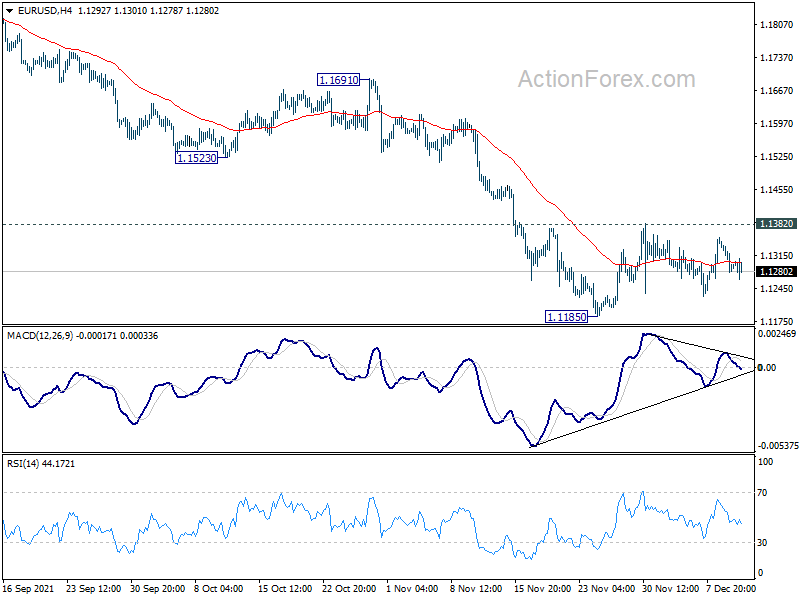
Daily Pivots: (S1) 1.1265; (P) 1.1306; (R1) 1.1333; More...
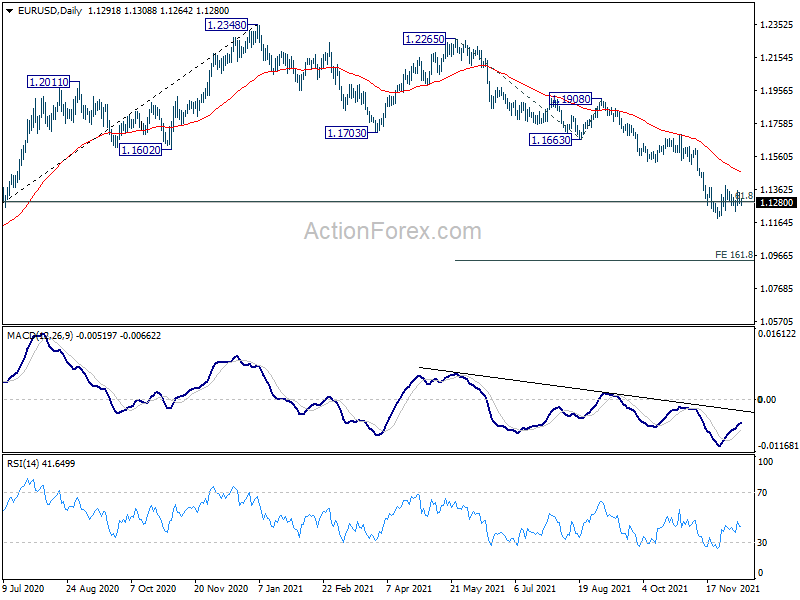
EUR/USD is staying in sideway trading and intraday bias remains neutral first. Downside breakout is mildly in favor with 1.1382 minor resistance intact. On the downside, break of 1.1185 will resume larger fall from 1.2348. Next target is 161.8% projection of 1.2265 to 1.1663 from 1.1908 at 1.0934. On the upside, however, firm break of 1.1382 resistance should confirm short term bottoming at 1.1186. Intraday bias will be turned back to the upside for 55 day EMA (now at 1.1462).
In the bigger picture, there are various ways of interpreting the fall from 1.2348 (2021 high). It could be a correction to rise from 1.0635 (2020 low), the fourth leg of a sideway pattern from 1.0339 (2017 low), or resuming long term down trend. In any case, outlook will now stay bearish as long as 1.1703 support turned resistance holds. Sustained break of 61.8% retracement of 1.0635 to 1.2348 at 1.1289 would pave the way back to 1.0635.
GBP/USD Mid-Day Outlook
Daily Pivots: (S1) 1.3153; (P) 1.3207; (R1) 1.3248; More...
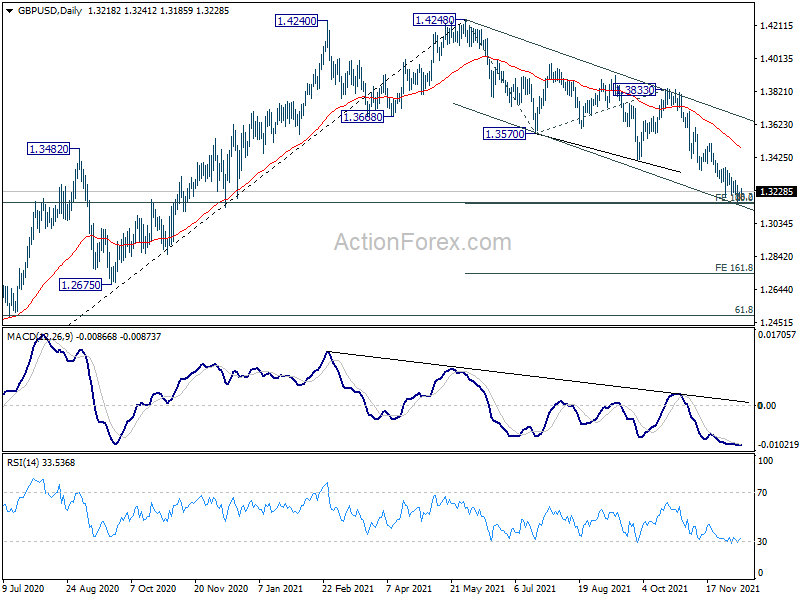
Intraday bias in GBP/USD remains neutral and outlook is unchanged. On the downside, sustained break of 1.3164 medium term fibonacci level will carry larger bearish implication. Fall from 1.4248 should resume and target 161.8% projection of 1.4248 to 1.3570 from 1.3833 at 1.2736. On the upside, though, break of 1.3351 support turned resistance will indicate short term bottoming, and turn bias back to the upside for 1.3512 resistance next.
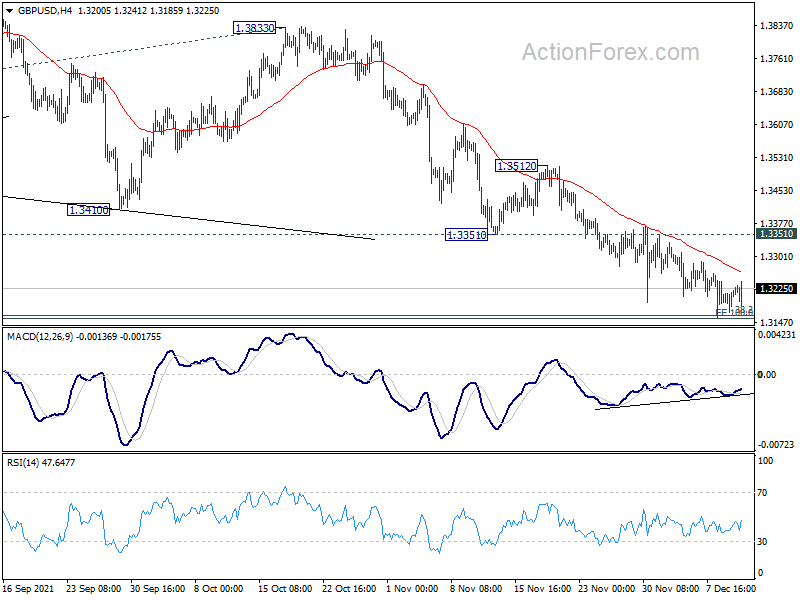
In the bigger picture, immediate focus is now on 38.2% retracement of 1.1409 to 1.4248 at 1.3164. Sustained break there will argue that whole rise from 1.1409 has completed at 1.4248, ahead rejection by 1.4376 long term resistance. That will revive some medium term bearishness and and target 61.8% retracement at 1.2493.
Dollar Shrugs Strong CPI Reading, Extending Sideway Trading
The multi-decade high in US CPI reading appears to be failing trigger any move in Dollar. The greenback is staying in very tight range in general. Commodity currencies are indeed trying to regain upside momentum. Yen is set to end as the worst performing, followed by Swiss Franc and then Euro.
In Europe, at the time of writing, FTSE is down -0.06%. DAX is up 0.05%. CAC is down -0.06%. Germany 10-year yield is up 0.017 at -0.337. Earlier in Asia, Nikkei dropped -1.0%. Hong Kong HSI dropped -1.07%. China Shanghai SSE dropped -0.18%. Singapore Strait Times dropped -0.22%. Japan 10-year JGB yield rose 0.0059 to 0.056.
US CPI rose to 6.8% yoy, highest since 1982
US CPI rose 0.8% mom in November, above expectation of 0.7 % mom. For the 12-month period, CPI accelerated to 6.8% yoy, up from 6.2% yoy, matched expectations. That's the highest rate since June 1982.
CPI core rose 0.5% mom, matched expectations. CPI core accelerated to 4.9% yoy, up from 4.6% yoy, matched expectations. Energy index rose 33.3% yoy. Both are highest level in at least 13 years.
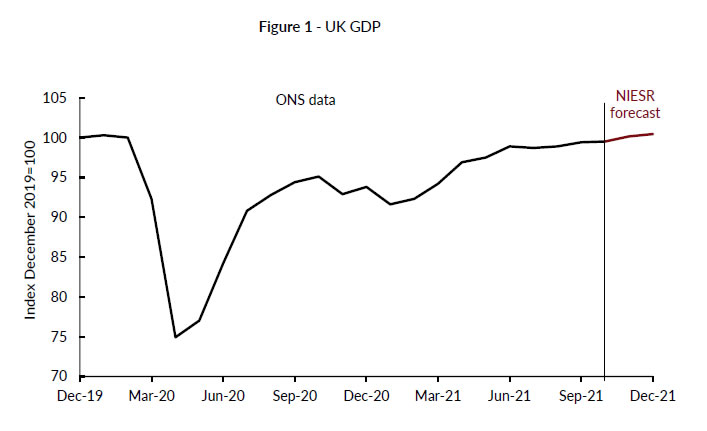
NIESR forecast UK GDP to grow 0.6% mom in Nov, 1.0% qoq in Q4
NIESR forecast UK GDP growth to reach 0.6% mom in November, before significant concerns about transmission of Covid-19 began to return, falling to 0.3% in December. Overall for Q3, GDP growth is projected to be 1.0% qoq, following the 1.3% qoq in Q3.
NIESR added that "Omicron is expected to restrain growth in the coming months but not to cause economic disruption anywhere near the scale of 2020, with households and businesses having adapted economic behavior more with each wave."
UK GDP grew 0.1% mom in Oct, Services back at pre-pandemic level
UK GDP grew 0.1% mom in October, below expectation of 0.3% mom. GDP remained -0.5% below pre-pandemic level in February 2020.
Services grew 0.4% mom, back at pre-pandemic level. Production dropped -0.6% mom, at -2.1% below pre-pandemic level. Manufacturing rose 0.0% mom, at -2.5% below pre-pandemic level. Construction dropped -1.8% mom, at -2.8% below pre-pandemic level.
Also released, industrial production came in at -0.6% mom, 1.4% yoy, versus expectation of 0.2% mom, 2.2% yoy. Manufacturing was at 0.0% mom, 1.3% yoy, versus expectation of 0.1% mom, 1.4% yoy. Goods trade deficit narrowed to GBP -13.9B, versus expectation of GBP -14.1B.
New Zealand BusinessNZ manufacturing dropped to 50.6, soft growth and rising inflation
New Zealand BusinessNZ Performance of Manufacturing index dropped from 54.3 to 50.6 in November. Looking at some details, production dropped from 53.2 to 52.2. Employment dropped from 51.7 to 48.2. New orders rose from 54.2 to 54.7. Finished stocks dropped from 54.6 to 48.3. Deliveries dropped from 59.9 to 42.9.
BNZ Senior Economist, Doug Steel stated that "the PMI implications for economic (and employment) growth seem clear – soft. But with obvious difficulties remaining on the supply side, we'd suggest that inflation is still rising."
GBP/USD Mid-Day Outlook
Daily Pivots: (S1) 1.3153; (P) 1.3207; (R1) 1.3248; More...
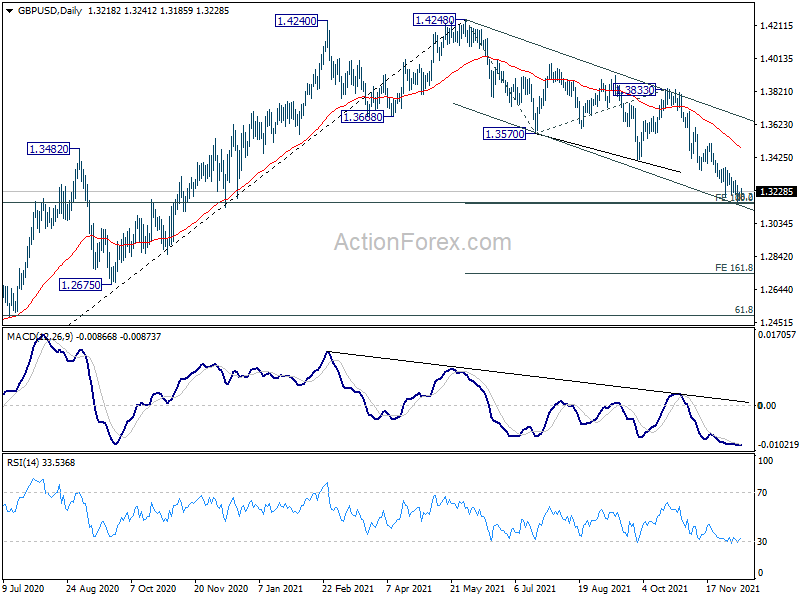
Intraday bias in GBP/USD remains neutral and outlook is unchanged. On the downside, sustained break of 1.3164 medium term fibonacci level will carry larger bearish implication. Fall from 1.4248 should resume and target 161.8% projection of 1.4248 to 1.3570 from 1.3833 at 1.2736. On the upside, though, break of 1.3351 support turned resistance will indicate short term bottoming, and turn bias back to the upside for 1.3512 resistance next.
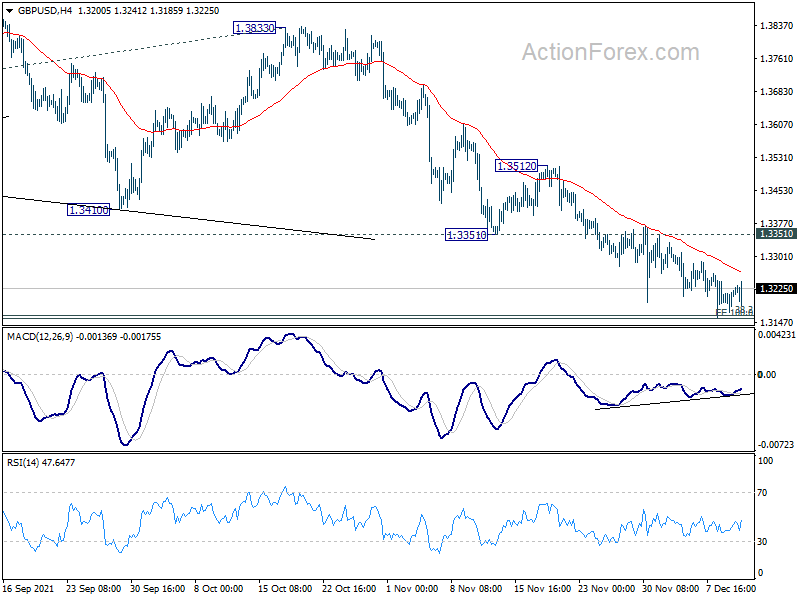
In the bigger picture, immediate focus is now on 38.2% retracement of 1.1409 to 1.4248 at 1.3164. Sustained break there will argue that whole rise from 1.1409 has completed at 1.4248, ahead rejection by 1.4376 long term resistance. That will revive some medium term bearishness and and target 61.8% retracement at 1.2493.
Economic Indicators Update
| GMT | Ccy | Events | Actual | Forecast | Previous | Revised |
|---|---|---|---|---|---|---|
| 21:30 | NZD | Business NZ PMI Nov | 50.6 | 54.3 | ||
| 23:50 | JPY | PPI Y/Y Nov | 9.00% | 8.50% | 8.00% | |
| 07:00 | EUR | Germany CPI M/M Nov F | -0.20% | -0.20% | -0.20% | |
| 07:00 | EUR | Germany CPI Y/Y Nov F | 5.20% | 5.20% | 5.20% | |
| 07:00 | GBP | GDP M/M Oct | 0.10% | 0.30% | 0.60% | |
| 07:00 | GBP | Index of Services 3M/3M Oct | 1.10% | 1.20% | 1.60% | |
| 07:00 | GBP | Industrial Production M/M Oct | -0.60% | 0.20% | -0.40% | |
| 07:00 | GBP | Industrial Production Y/Y Oct | 1.40% | 2.20% | 2.90% | |
| 07:00 | GBP | Manufacturing Production M/M Oct | 0.00% | 0.10% | -0.10% | |
| 07:00 | GBP | Manufacturing Production Y/Y Oct | 1.30% | 1.40% | 2.80% | |
| 07:00 | GBP | Goods Trade Balance (GBP) Oct | -13.9B | -14.1B | -14.7B | |
| 09:00 | EUR | Italy Industrial Output M/M Oct | -0.60% | 0.40% | 0.10% | |
| 13:15 | GBP | NIESR GDP Estimate (3M) Nov | 0.90% | 1.30% | 1.00% | 0.90% |
| 13:30 | USD | CPI M/M Nov | 0.80% | 0.70% | 0.90% | |
| 13:30 | USD | CPI Y/Y Nov | 6.80% | 6.80% | 6.20% | |
| 13:30 | USD | CPI Core M/M Nov | 0.50% | 0.50% | 0.60% | |
| 13:30 | USD | CPI Core Y/Y Nov | 4.90% | 4.90% | 4.60% | |
| 13:30 | CAD | Capacity Utilization Q3 | 81.40% | 81.20% | 82.00% | |
| 15:00 | USD | Michigan Consumer Sentiment Index Dec P | 68.2 | 67.4 |
NIESR forecast UK GDP to grow 0.6% mom in Nov, 1.0% qoq in Q4
NIESR forecast UK GDP growth to reach 0.6% mom in November, before significant concerns about transmission of Covid-19 began to return, falling to 0.3% in December. Overall for Q3, GDP growth is projected to be 1.0% qoq, following the 1.3% qoq in Q3.
NIESR added that "Omicron is expected to restrain growth in the coming months but not to cause economic disruption anywhere near the scale of 2020, with households and businesses having adapted economic behavior more with each wave."