

Sample Category Title
GBP/USD Mid-Day Outlook
Daily Pivots: (S1) 1.3153; (P) 1.3207; (R1) 1.3248; More...
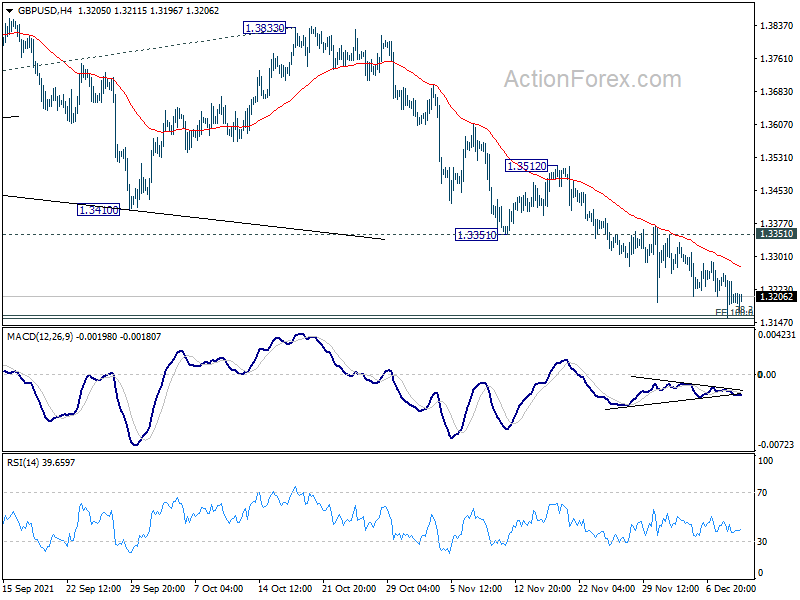
Intraday bias in GBP/USD remains neutral with focus on 1.3164 medium term fibonacci level. Sustained break there will carry larger bearish implication, and target 161.8% projection of 1.4248 to 1.3570 from 1.3833 at 1.2736. On the upside, though, break of 1.3351 support turned resistance will indicate short term bottoming, and turn bias back to the upside for 1.3512 resistance next.
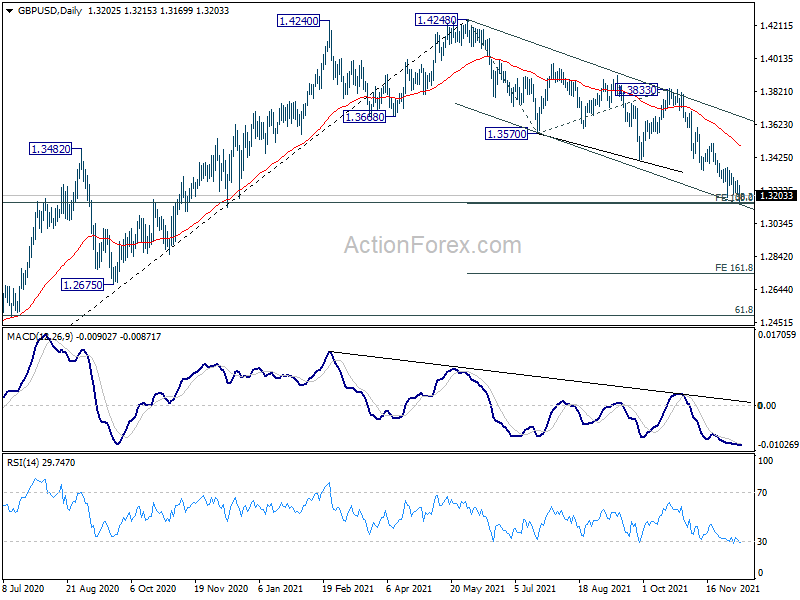
In the bigger picture, immediate focus is now on 38.2% retracement of 1.1409 to 1.4248 at 1.3164. Sustained break there will argue that whole rise from 1.1409 has completed at 1.4248, ahead rejection by 1.4376 long term resistance. That will revive some medium term bearishness and and target 61.8% retracement at 1.2493.
USD/JPY Mid-Day Outlook
Daily Pivots: (S1) 113.36; (P) 113.65; (R1) 114.00; More...
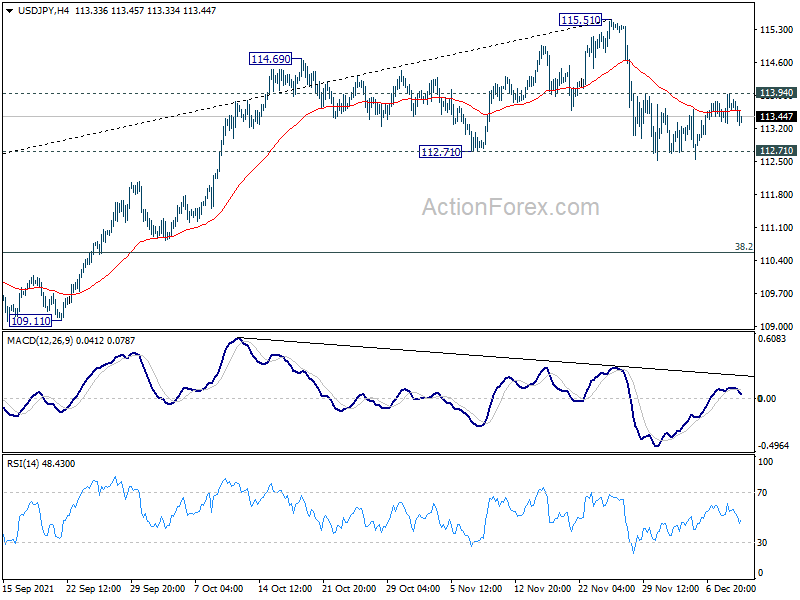
Intraday bias in USD/JPY remains neutral for the moment. On the downside, sustained break of 112.71 will argue that it's already correcting whole rise from 102.58. Deeper fall would be seen to 38.2% retracement of 102.58 to 115.51 at 110.57. On the upside, break of 113.94 minor resistance will turn bias back to the upside for retesting 115.51 high instead.
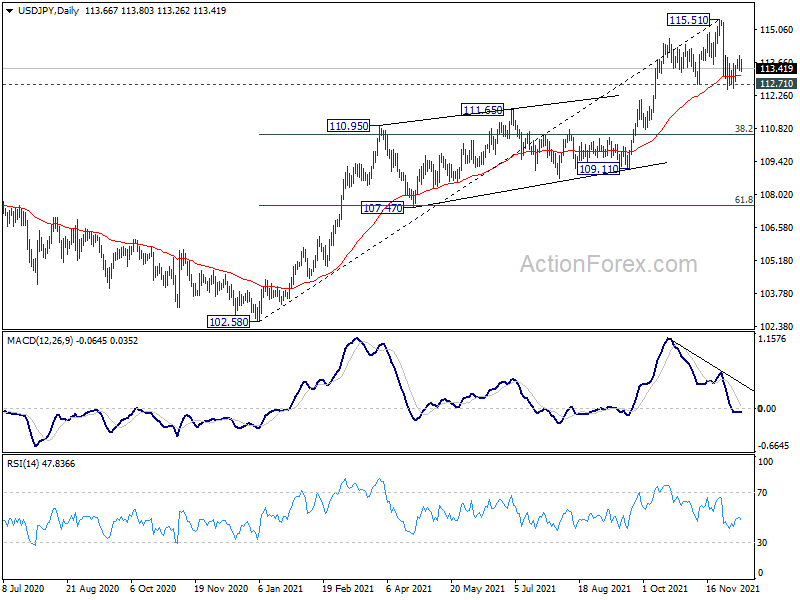
In the bigger picture, no change in the view that rise from 102.58 is the third leg of the up trend from 101.18 (2020 low). Such rally should target a test on 118.65 (2016 high) on resumption. However, firm break of 109.11 structural support will argue that the trend might have reversed and bring deeper fall to 107.47 support and possibly below.
USD/CHF Mid-Day Outlook
Daily Pivots: (S1) 0.9228; (P) 0.9251; (R1) 0.9272; More....
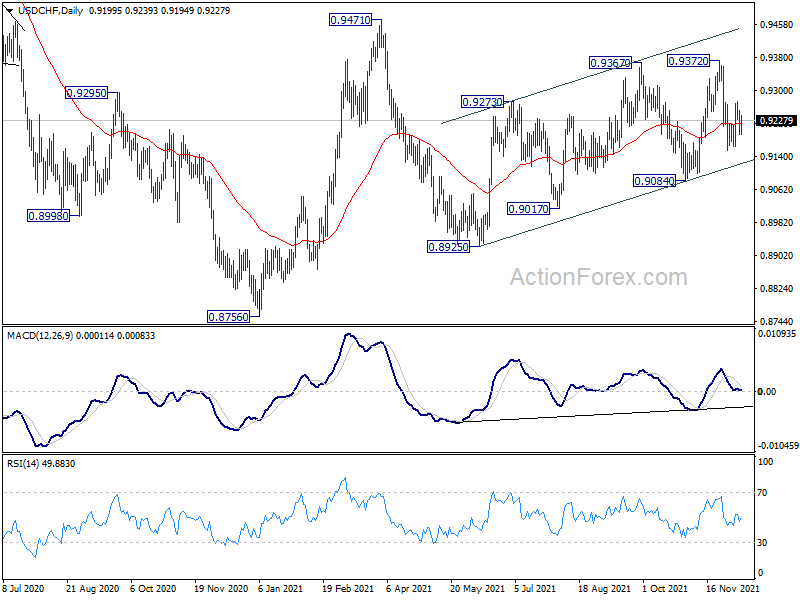
USD/CHF recovers mildly but stays below 0.9274 minor resistance. Intraday bias remains neutral first. On the upside, break of 0.9274 will suggest that the pull back from 0.9372 is finished. Intraday bias will be turned back to the upside for 0.9372. On the downside, below 0.9156 will target 0.9084 support. Firm break there should confirm that choppy rise from 0.8925 has completed, and suggests that fall from 0.9471 is resuming. Deeper decline would be seen through 0.8925.
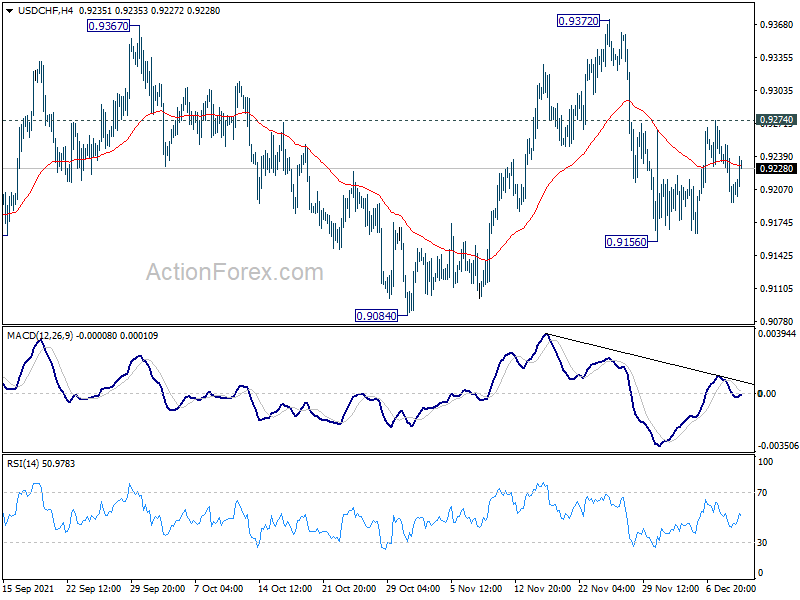
In the bigger picture, the corrective structure of the rebound from 0.8925 argues that fall from 0.9471 is not complete yet. It could either be the second leg of pattern from 0.8756 (2021 low), or resuming larger down trend from 1.0237 (2018 high). We'd pay attention to the downside momentum and assess the odds later. But for now, medium term outlook will be neutral at best as long as 0.9471 resistance holds.
Dollar Recovers on Surprisingly Low Jobless Claims
Dollar rebounds mildly entering into US session, as supported by surprisingly good jobless claims report. Risk-on rallies in the stock markets also losing some momentum, helps lift Yen mildly. As for the week so far, Aussie remains the best performer, followed by other commodity currencies. Swiss Franc and Yen are the worst ones. There's still enough time to change the picture before weekly close tomorrow.
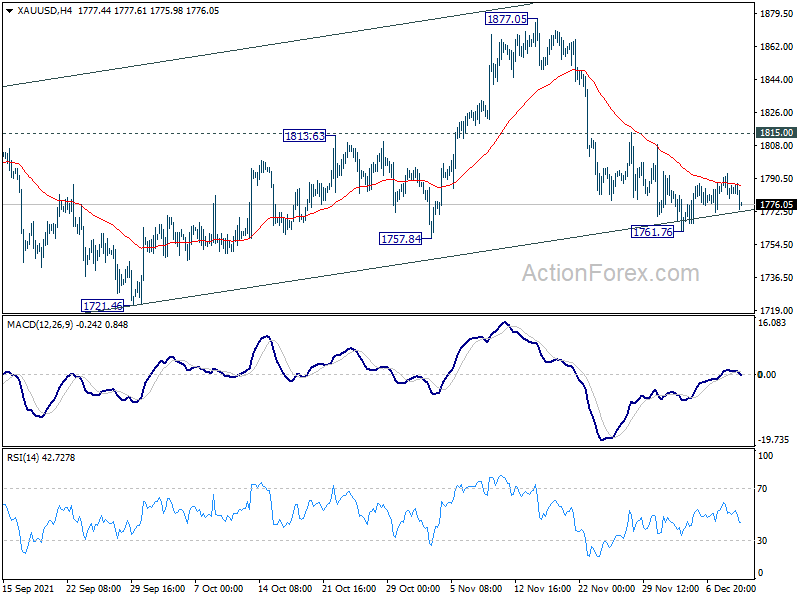
Technically, it could be about time Gold completes the consolidation pattern from 1761.76 temporary low, after touching 4 hour 55 EMA. Break of 1716.76 will resume the decline form 1877.05 to 1721.46 support next. Such development, if happens, could be accompanied by a near term comeback in Dollar.
In Europe, at the time of writing, FTSE is down -0.36%. DAX is down -0.39%. CAC is down -0.31%. Germany 10-year yield is down -0.042 at -0.353. Earlier in Asia, Nikkei dropped -0.47%. Hong Kong HSI rose 1.08%. China Shanghai SSE rose 0.98%. Singapore Strait Times rose 0.41%. Japan 10-year JGB yield rose 0.0008 to 0.050.
US initial jobless claims dropped to 184k, lowest since 1969
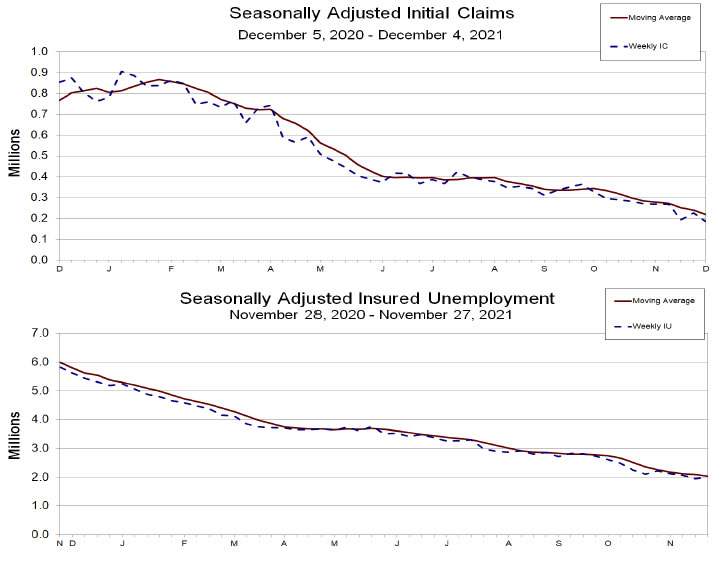
US initial jobless claims dropped -43k to 184k in the week ending December 4, much better than expectation of 225k. That's also the lowest level since September 6, 1969. Four-week moving average of initial claims dropped -21k to 219k, lowest since March 7, 2020.
Continuing claims rose 38k to 1992k in the week ending November 27. Four-week moving average of continuing claims dropped -54k to 2028k, lowest since March 14, 2020.
Swiss SECO expects significant slowdown in winter period, lowers 2022 GDP growth forecast
SECO lowered Swiss GDP growth forecast for 2022 from 3.4% to 3.0%. GDP growth is projected to slow further to 2.0% in 2023, as the economy normalizes. 2021 GDP growth forecast is revised up slightly from 3.2% to 3.3%.
It said that "international supply and capacity bottlenecks are putting pressure on the industrial sector and causing sharp price increases globally". Also, "uncertainty surrounding the pandemic has recently become strongly accentuated and several countries have stepped up their containment measures."
SECO expects a "significant slowdown in economic growth globally and in Switzerland in the 2021/22 winter period". But economy recovery is "not, however, expected to come to standstill in the medium term".
Germany export rose 4.1% mom in Oct, imports rose 5.0% mom
In calendar and seasonally adjusted term, Germany export rose 4.1% mom to EUR 121.3B. Imports rose 5.0% mom to EUR 108.5B. Trade surplus narrowed to EUR 12.5B, down from EUR 13.2B, below expectation of EUR 12.9B. Over the year, exports rose 8.1% yoy, while imports rose 17.3% yoy.
In calendar and seasonally adjusted term, exports were 3.8% higher than pre-pandemic level in February 2020. Imports were 13.5% higher.
Japan business conditions improved sharply as led by non-manufacturers
According to the Japanese government's Business Outlook Survey, conditions for all large corporations improved notably from 3.3 to 9.6 in Q4. That's the second quarter of positive reading. Conditions for large non-manufacturing jumped sharply from 1.5 to 10.4. Meanwhile, conditions for large manufacturers improved slightly from 7.0 to 7.9.
Conditions for mid-sized companies also rose sharply from 0.2 to 10.7. Conditions for small companies rose from -18.0 to -3.0, but stayed negative for the 31st successive quarter.
"With the severe situation caused by the impact of virus infections gradually easing, the survey results showed that (the economy) has been picking up, although some fields remain weak," a government official told reporters.
China CPI rose to 2.3% yoy in Nov, PPI slowed from 26-yr high to 12.6% yoy
China CPI accelerated to 2.3% yoy in November, up from 1.5% yoy, but below expectation of 2.5% yoy. That's nonethless the highest level since August 2020. PPI slowed to 12.9% yoy, down from October's 26-year high of 13.5% yoy, above expectation of 12.6%.
"As policies to stabilise prices and ensure supply have stepped up, the rapid surge in coal, metal and other energy and raw material prices has been initially contained, leading to a slowdown in PPI," NBS senior statistician Dong Lijuan said in a statement accompanying the release.
New Zealand manufacturing sales dropped -2.2% qoq in Q3
New Zealand Manufacturing sales dropped -2.2% qoq, or NZD 674m in Q3. When adjusted for seasonal effects, 10 of the 13 manufacturing industries had lower volumes of sales in the quarter.
The largest industry movements were: metal products (-17%), petroleum and coal products (-13%), transport equipment, machinery, and equipment (-8.8%).
"Despite sales falls in several construction related manufacturing industries, increased prices for meat and dairy cushioned the blow for total manufacturing values," business statistics manager Evie Rolinson-Purchase said.
USD/CHF Mid-Day Outlook
Daily Pivots: (S1) 0.9228; (P) 0.9251; (R1) 0.9272; More....
USD/CHF recovers mildly but stays below 0.9274 minor resistance. Intraday bias remains neutral first. On the upside, break of 0.9274 will suggest that the pull back from 0.9372 is finished. Intraday bias will be turned back to the upside for 0.9372. On the downside, below 0.9156 will target 0.9084 support. Firm break there should confirm that choppy rise from 0.8925 has completed, and suggests that fall from 0.9471 is resuming. Deeper decline would be seen through 0.8925.
In the bigger picture, the corrective structure of the rebound from 0.8925 argues that fall from 0.9471 is not complete yet. It could either be the second leg of pattern from 0.8756 (2021 low), or resuming larger down trend from 1.0237 (2018 high). We'd pay attention to the downside momentum and assess the odds later. But for now, medium term outlook will be neutral at best as long as 0.9471 resistance holds.
Economic Indicators Update
| GMT | Ccy | Events | Actual | Forecast | Previous | Revised |
|---|---|---|---|---|---|---|
| 21:45 | NZD | Manufacturing Sales Q3 | -2.20% | 4.20% | 3.90% | 3.70% |
| 23:50 | JPY | BSI Large Manufacturing Q3 | 7.9 | 5.3 | 7 | |
| 23:50 | JPY | Money Supply M2+CD Y/Y Nov | 4.00% | 4.40% | 4.20% | |
| 00:01 | GBP | RICS Housing Price Balance Nov | 71% | 72% | 70% | 71% |
| 00:30 | AUD | RBA Bulletin Q3 | ||||
| 01:30 | CNY | CPI Y/Y Nov | 2.30% | 2.50% | 1.50% | |
| 01:30 | CNY | PPI Y/Y Nov | 12.90% | 12.60% | 13.50% | |
| 06:00 | JPY | Machine Tool Orders Y/Y Nov | 64.00% | 81.50% | ||
| 07:00 | EUR | Germany Trade Balance (EUR)Oct | 12.5B | 12.9B | 13.2B | |
| 08:00 | CHF | SECO Economic Forecasts | ||||
| 13:30 | USD | Initial Jobless Claims (Dec 3) | 184K | 225K | 222K | 227K |
| 15:00 | USD | Wholesale Inventories Oct F | 2.20% | 2.20% | ||
| 15:30 | USD | Natural Gas Storage | -60B | -59B |
US initial jobless claims dropped to 184k, lowest since 1969
US initial jobless claims dropped -43k to 184k in the week ending December 4, much better than expectation of 225k. That's also the lowest level since September 6, 1969. Four-week moving average of initial claims dropped -21k to 219k, lowest since March 7, 2020.
Continuing claims rose 38k to 1992k in the week ending November 27. Four-week moving average of continuing claims dropped -54k to 2028k, lowest since March 14, 2020.
Pfizer And Biontech Are Confident That 3 Doses Of Vaccine Will Completely Neutralize The Omicron Strain
The US stock market continued to rise yesterday. By the close of the NYSE, Dow Jones index (US30) gained by 0.10%, S&P 500 (US500) added 0.31%, and the technology NASDAQ Composite (US100) jumped by 0.64%. Apple (+2.28%) and Disney (+1.64%) were the gainers among the Dow Jones index components. The leaders in growth among the components of the S&P 500 index were airline and cruise companies because of declined concerns about the economic impact of the OMICRON COVID-19.
Published preliminary results of Pfizer and BioNTech laboratory studies regarding the efficacy of the Omicron vaccine showed that 3 doses of the vaccine would completely neutralize the Omicron strain. Pfizer also said it would submit the full results of its Covid-19 drug, Paxlovid, to the FDA in the coming days.
Economists predict a complete reduction in bond purchases by the Federal Reserve by the end of March next year.
Canada will join the US in a diplomatic boycott of the 2022 Winter Games in Beijing.
Canada's central bank expectedly left its key interest rate unchanged. The statement also said the bank has no plans to raise its key rate until April-September next year. Meanwhile, the Bank of Canada is keeping a close eye on inflation expectations and labor costs to control the growth.
The European Center for Disease Prevention and Control reports that all Omicron cases in Europe for which severity information is available were either asymptomatic or soft.
Europe's stock indices closed in the negative area yesterday. German DAX (DE30) and French CAC 40 (FR40) lost 0.6% each, British FTSE 100 (UK100) decreased by 0.04%, Spanish IBEX 35 (ES35) fell by 0.9%. The British pound fell to a one-year low on Wednesday after British Prime Minister Boris Johnson imposed tighter restrictions in England to counter the spread of the Omicron variant. Now people need to work from home, wear masks in public places, and use vaccination passes.
Olaf Scholz, German Finance Minister and a leader of the country's Social Democratic Party has been elected to the post of Chancellor of the Federal Republic of Germany. Scholz changed Angela Merkel, who led Germany for 16 years, and decided not to nominate her candidacy.
US oil production increased by 100,000 bpd to 11.7 million bpd for the week. Oil prices continue to rise since the spread of the Omicron strain will not have as severe an impact on the global economy as originally expected.
Asia-Pacific stock markets are trading without a single dynamic today after Chinese inflation data and also in anticipation of US inflation data, which could influence the Federal Reserve's (Fed) decision to speed up stimulus cuts. Hong Kong's Hang Seng Index (HK50) increased by 1.13%, Japan's Nikkei 225 Index (JP225) decreased by 0.47%, and Australia's S&P/ASX 200 Index (AU200) lost 0.28%.
The growth of the food costs in China pushed China's consumer inflation last month to its highest level in nearly a year and a half. However, thanks to a "general easing of price pressures" by the People's Bank of China, exorbitantly high producer inflation eased in November. China's consumer price index increased from 1.5% to 2.3%, while the producer price index fell from 13.5% to 12.9%.
Main market quotes:
- S&P 500 (F) (US500) 4,701.21 +14.46 (+0.31%)
- Dow Jones (US30) 35,754.75 +35.32 (+0.099%)
- DAX (DE40) 15,687.09 −126.85 (−0.80%)
- FTSE 100 (UK100) 7,337.05 −2.85 (−0.039%)
- USD Index 95.93 -0.44 (-0.46%)
Important events for today:
- Australia RBA Governor Lowe Speaks at 00:00 (GMT+2);
- China Consumer Price Index (m/m) at 03:30 (GMT+2);
- China Producer Price Index (m/m) at 03:30 (GMT+2);
- US Initial Jobless Claims (w/w) at 15:30 (GMT+2);
- US Natural Gas Storage (w/w) at 17:30 (GMT+2).
The Analytical Overview Of The Main Currency Pairs
The EUR/USD currency pair
Technical indicators of the currency pair:
Prev Open: 1.1266
Prev Close: 1.1340
% chg. over the last day: +0.65%
Yesterday, the European currency strengthened on the back of the dollar index decline, but the situation in the Eurozone remains tense. First, analysts predict a rise in inflation in the region next year as well. Secondly, the energy crisis leads to the bankruptcy of businesses and raises the prices of electricity and natural gas to new highs. Third, supply problems haven't gone anywhere. Fourth, the ECB has no plans to cut the PEPP program until March 2022. All this suggests that there are no reasons for the Euro strengthening now from a fundamental point of view.
Trading recommendations
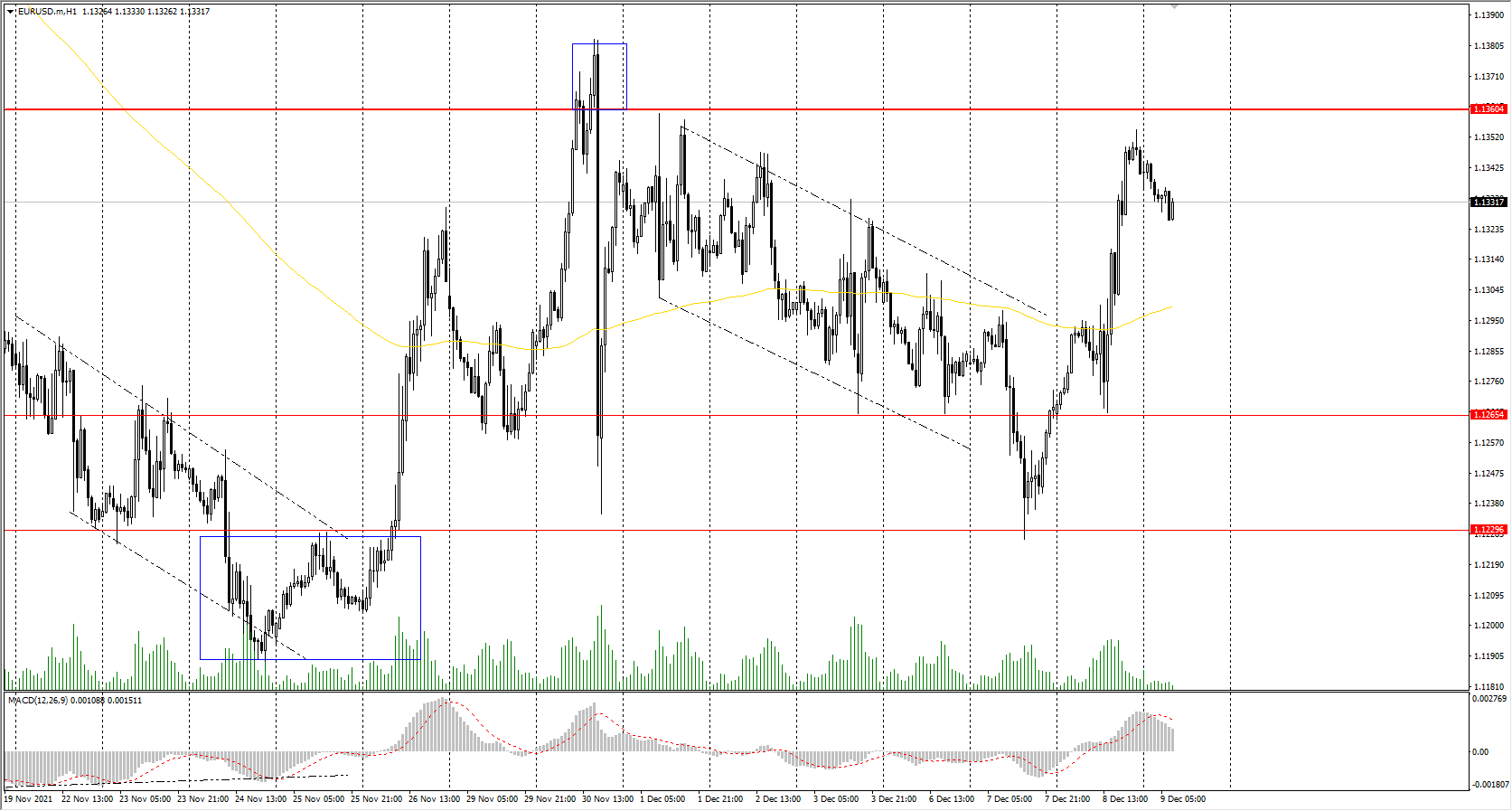
Support levels: 1.1265, 1.1230, 1.1168
Resistance levels: 1.1360, 1.1436, 1.1535, 1.1613, 1.1667, 1.1717
From a technical point of view, the EUR/USD on the hour time frame is still bearish, but the price is approaching the priority change level. Buyers continue to show initiative. At the moment, the price has already been trading above the moving average. The MACD indicator is in the positive zone, with no signs of reversal. Under such market conditions, traders should consider sell positions from the priority change level of 1.1360. Buy trades can be considered on lower time frames, but only with short targets.
Alternative scenario: if the price breaks out through the 1.1360 resistance level and fixes above, the mid-term uptrend will likely resume.
News feed for 2021.12.09:
- US Initial Jobless Claims (w/w) at 15:30 (GMT+2).
The GBP/USD currency pair
Technical indicators of the currency pair:
Prev Open: 1.3231
Prev Close: 1.3203
% chg. over the last day: -0.21%
The British pound fell to a one-year low Wednesday after British Prime Minister Boris Johnson imposed tighter restrictions in England to counter the spread of the Omicron variant. Now people need to work from home, wear masks in public places, and use vaccination passes.
Trading recommendations
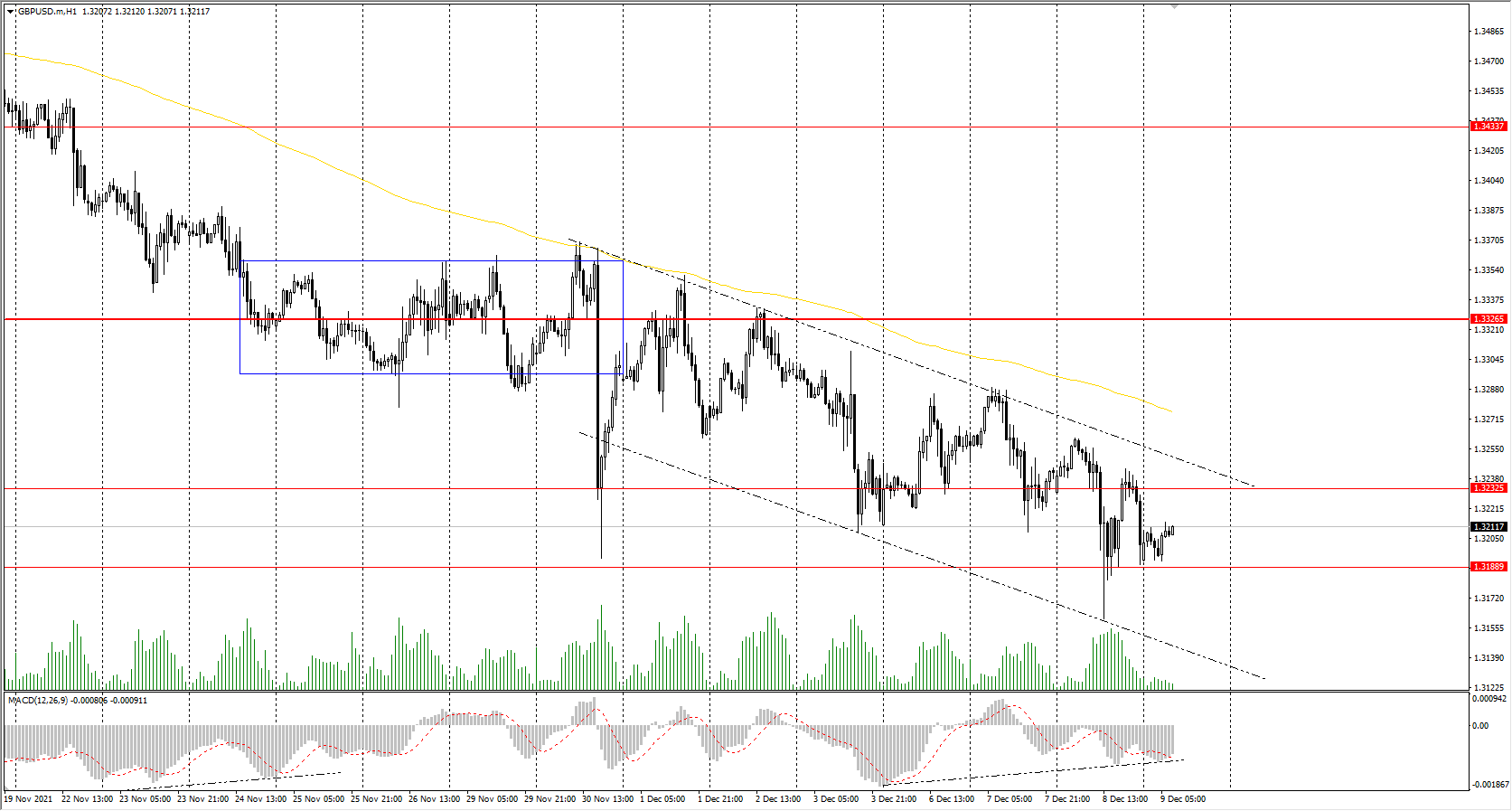
Support levels: 1.3188
Resistance levels: 1.3232, 1.3289, 1.3326, 1.3434, 1.3507, 1.3575, 1.3685
On the hourly time frame, the trend on GBP/USD is bearish. The British pound is under sellers' pressure. The MACD indicator is in the negative zone, but there are signs of divergence on several time frames, which means that a technical rebound should be expected. Under such market conditions, traders should consider sell positions from the resistance levels around the moving average or from the upper border of the descending channel. Buy trades should be considered from the support level of the higher time frame, but only with additional confirmation.
Alternative scenario: if the price breaks out through the 1.3326 resistance level and consolidates above, the bullish scenario will likely resume.
The USD/JPY currency pair
Technical indicators of the currency pair:
Prev Open: 113.55
Prev Close: 113.68
% chg. over the last day: +0.11%
From a fundamental point of view, there is no reason for the JPY to strengthen right now. Firstly, Japan has downgraded GDP in Q3 due to a bigger drop in consumer spending. Second, the risks associated with the Omicron option are decreasing, causing investors to shift assets from the safe haven currency to other riskier and more profitable assets. Third, Japan's central bank introduced a record $490 billion stimulus package to support the economy.
Trading recommendations
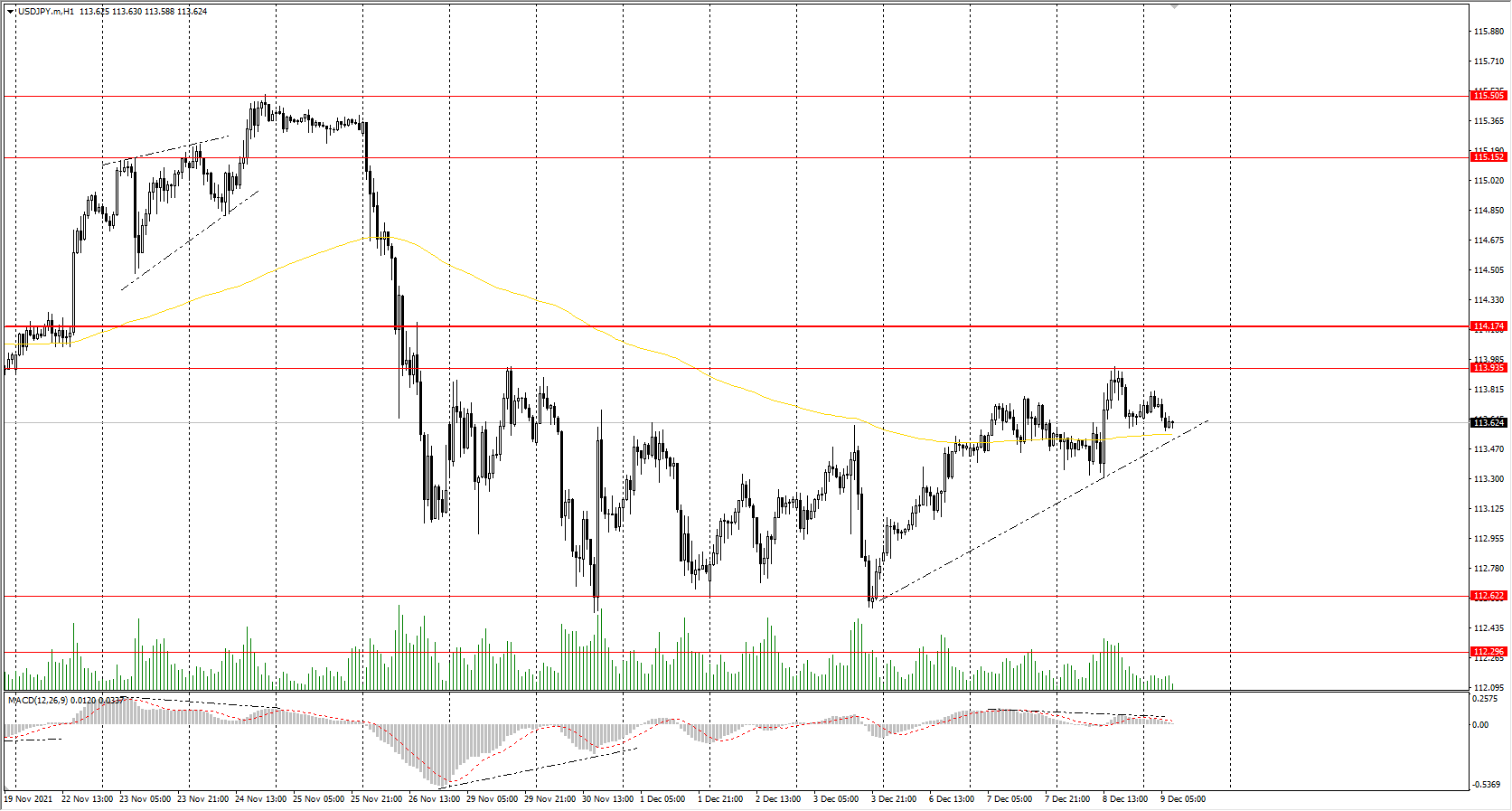
Support levels: 112.62, 112.30
Resistance levels: 113.94, 114.17, 115.15, 115.50
The global trend on the USD/JPY currency pair is bearish. But the pressure of buyers is increasing, and the price is approaching the priority change level. Under such market conditions, traders can look for sales from the priority change level but with additional confirmation. Buy positions should be considered from the lower border of the corridor, but with additional confirmation in the form of a buyers' initiative.
Alternative scenario: if the price rises above 114.17, the uptrend will likely resume.
The USD/CAD currency pair
Technical indicators of the currency pair:
Prev Open: 1.2636
Prev Close: 1.2650
% chg. over the last day: +0.11%
Canada's central bank left its key interest rate unchanged as expected. The statement also said the bank does not plan to raise its key rate until April-September of next year. But the Bank of Canada is keeping a close eye on inflation expectations and labor costs in order to control the growth.
Trading recommendations
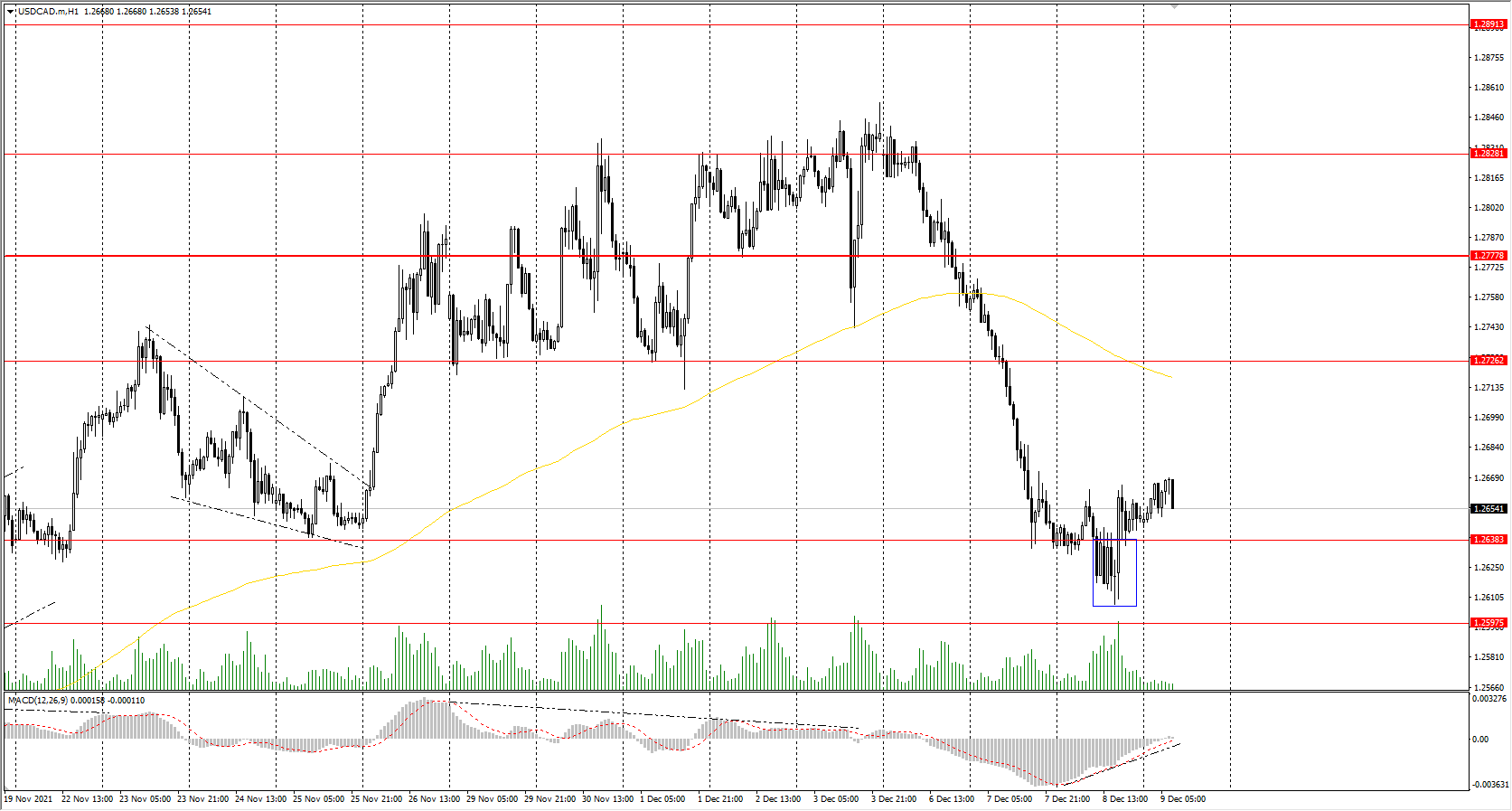
Support levels: 1.2638, 1.2597, 1.2502, 1.2416
Resistance levels: 1.2726, 1.2776, 1.2828
From a technical point of view, the USD/CAD currency trend has changed to bearish. The MACD indicator has become inactive. Under such market conditions, it is better to look for buy trades from the 1.2638 support level, but only after additional confirmation in the form of a buyers' initiative. It is better to consider sell deals from the resistance levels near the moving average.
Alternative scenario: if the price breaks out through the 1.2776 resistance level and fixes above, the downtrend will likely be broken.
EURUSD Survives Above 1.1300, Neutral Phase
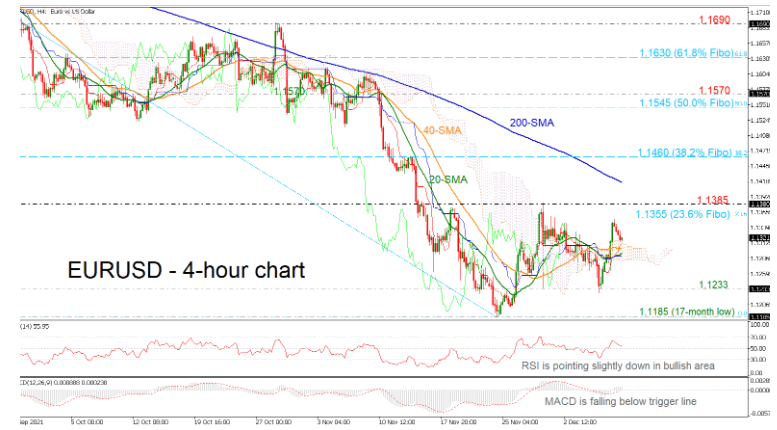
EURUSD is retreating from the 23.6% Fibonacci retracement level of the downward wave from 1.1908 to 1.1185 at 1.1355. The price is currently testing the Ichimoku cloud and is moving towards the flat 40- and 20-period simple moving averages (SMAs). The RSI posted a descending move in the positive territory, while the MACD oscillator is moving with weak momentum above its trigger and zero lines.
If the pair continues the decline, immediate support could come from the 40- and then the 20-period SMAs at 1.1303 and 1.1295 respectively, ahead of the 1.1233 low. Below these obstacles, the bears could open the way for revisiting the 17-month low of 1.1185.
In the positive scenario, a rebound off the Ichimoku cloud could lead the market until the 23.6% Fibonacci of 1.1355 again, while steeper increases may retest the 1.1385 barrier, taken from the peak of November 30. Even stronger upside pressures could push the market towards the 200-period SMA at 1.1415.
All in all, EURUSD has been in a neutral phase in the short-term as it has failed to post a clear directional move over the last two weeks. A break beyond the 200-period SMA would shift the outlook to bullish, while any declines below the 17-month low of 1.1185 would endorse the long-term bearish view.
Focus Remains On Inflation Data And Pandemic News
Notes/Observations
- ECB council members said to be willing to make clear that QE bond purchases to continue until at least end-2022 to play down rate hike bets.
- Fitch cut Chinese property developer Evergrande [3333.HK] ratings to 'restrictive default' ahead of planned restructuring; PBoC stated that Evergrande should be dealt with in a market oriented way.
- Focus on US inflation data (CPI on Friday).
Asia
- China Nov CPI missed consensus but rising at its fastest pace since August 2020 (Y/Y: 2.3% v 2.5%e); PPI moved off its recnt 25-year highs (Y/Y: 12.9% v 12.1%e).
- China PBOC set the Yuan reference rate at 6.3498 v 6.3677 prior (Note: PBOC was expected to set yuan mid-point at 6.3452 and markets believe the PBoC had signaled a limit to its tolerance for the yuan's recent advance by setting its reference rate at a weaker-than-expected level.
- BOK monetary policy report noted it would adjust the extent of its loose monetary policy stance "appropriately" in consideration of inflation the pandemic and monetary policy directions of major economies.
Europe
- ECB's Schnabel (Germany) noted that benefits seen from the ECB’s bond-buying were fading. Policy was inflating asset prices and creating risks of financial instability.
- PM Johnson confirmed that UK moved to its 'Plan B' as the country was experiencing rapid growth of Omicron cases. Could not assume Omicron was less severe than previous variants at this point.
- UK govt said to be threatened to impose more duties on US goods if Trump era tariffs on steel and aluminum are not lifted. UK Trade Min Trevelyan had invited US Commerce Sec Raimondo to UK for Jan Meeting on Steel and Aluminum tariff issue.
Americas
- House Speaker Pelosi stated that the House would be putting forward bills to 'shine light' on China human rights issues.
- House passed a bill that will put new restrictions on imports from Xinjiang by US Customs to ensure that goods produced through forced labor by Uyghurs, Kazakhs, Kyrgyz and members of other minority groups will not be purchased or sold in the US.
- Brazil Central Bank (BCB) raised its Selic Rate Target by 150bps to 9.25% (as expected) for its 7th straight rate hike in the current tightening cycle. Saw another 150bps rate hike in Feb. Baseline scenario and balance of risks indicated it was appropriate for interest rate hike cycle to advance significantly into restrictive territory.
Speakers/Fixed income/FX/Commodities/Erratum
Equities
- Indices [Stoxx600 +0.17% at 478.18, FTSE -0.03% at 7,335.50, DAX -0.05% at 15,678.65, CAC-40 +0.16% at 7,025.49, IBEX-35 -0.13% at 8,467.12, FTSE MIB +0.37% at 26,851.00, SMI -0.02% at 12,595.10, S&P 500 Futures -0.22%].
- Market Focal Points/Key Themes: European indices open generally mixed with a bias to the upside, but largely failed to gain direction as the day wore on; better performing sectors include consumer discretionary and materials; while those trending to the downside include financials and energy; Stern looking to sell mobility unit; Wolters Kluwer agrees to sell it’s French and Spanish legal unit; earnings expected during the upcoming US session include Oracle, Broadcom and Costco.
Equities
- Consumer discretionary: Stern Groep [STRN.NL] +23% (divestment discussions), Watches of Switzerland [WOSG.UK] +2% (earnings), Go-Ahead [GOG.UK] -21% (delays results), Dr. Martens [DOCS.UK] -3% (earnings).
- Energy: Neste [NESTE.FI] -4% (CEO, President resigns).
- Healthcare: Astrazeneca [AZN.UK] +1% (COVID-19 antibody approved in US).
- Industrials: Balfour Beatty [BBY.UK] +2% (trading update), Rolls-Royce [RR.UK] -4% (trading update).
Speakers
- ECB said to plan for a temporary increase in the APP bond buying (conventional QE) scheme that would still significantly reduce overall debt purchases after PEPP program ends. Some council members said to be willing to make clear that purchases would continue until at least end-2022 to play down rate hike bets.
- Swiss Govt updated its Economic Forecasts which raised 2021 GDP growth forecast from 3.2% to 3.3% while cutting the 2022 GDP growth outlook from 3.4% to 3.0%. It also raised both 2021 and 2022 CPI forecasts.
- German Dep Fin Min Toncar stated that Germany to adhere to strict budget rules in the post pandemic environment.
- Hungary Central Bank again raised its One-Week Deposit Rate by 20bps to 3.30% (4th straight weekly hike).
- China PBoC Gov Yi Gang stated that Evergrande [3333.HK] should be dealt with in a market oriented way.
- Fitch cut Chinese property developer Evergrande [3333.HK] ratings to 'restrictive default'.
- US govt said to move to tighten Iran sanctions enforcement efforts; To send top delegation to UAE to meet banks over potential Iran sanctions.
Currencies/Fixed Income
- USD holding steady in quiet trade on Thursday. Nov CPI expected to hit a 40-year high and keep Fed tightening expectations intact despite the Omicron virus variant. Dealers noted that higher interest rates in the US and widening interest rate differentials with respect to the rest of the world continued to be the main driver in FX.
- EUR/USD drifted from session highs after reports circulated that ECB council members would make clear that QE bond purchases to continue until at least end-2022 to play down rate hike bets.
- GBP/USD continued to hover around the 1.32 area as fresh UK coronavirus restrictions weighed on the economic outlook in Britain.
Economic data
- (DE) Germany Oct Current Account Balance: €15.4B v €17.0Be; Trade Balance: €12.8B v €14.3Be; Exports M/M: 4.1% v 0.8%e; Imports M/M: 5.0% v 0.4%e.
- (NO) Norway Oct Overall GDP M/M: -1.8% v +2.3% prior; GDP Mainland M/M: 0.0% v 0.4%e.
- (DK) Denmark Oct Current Account Balance (DKK): 20.5B v 18.2B prior; Trade Balance: 3.4B v 2.6B prior.
- (TH) Thailand end-Nov Foreign Reserves: $242.6B v $246.1B prior.
- (HU) Hungary Oct Preliminary Trade Balance: -€0.3B v -€0.1B prior.
- (CN) China Nov Aggregate Financing (CNY): 2.610T v 2.696Te v 1.590T prior.
- (CN) China Nov New Yuan Loans (CNY): 1.270T v 1.555Te.
- (CN) China Nov M2 Money Supply Y/Y: 8.5% v 8.7%e; M1 Money Supply Y/Y: 2.5%e; M0 Money Supply Y/Y: % v 6.2% prior.
- (ZA) South Africa Q3 Current Account Balance (ZAR): 226B v 259Be; Current Account to GDP Ratio: 3.6% v 3.9%e.
- (ZA) South Africa Oct Total Mining Production M/M: 3.4% v 2.2%e; Y/Y: +2.1% v -1.0%e; Gold Production Y/Y: -3.5% v -5.6% prior; Platinum Production Y/Y: +24.0% v -7.5% prior.
Fixed income Issuance
- None seen.
Looking ahead
- 05:25 (EU) Daily ECB Liquidity Stats.
- 05:30 (HU) Hungary Debt Agency (AKK) to sell 12-month Bills.
- 06:00 (IE) Ireland Nov CPI M/M: No est v 0.7% prior; Y/Y: No est v 5.1% prior.
- 06:00 (IE) Ireland Nov CPI EU Harmonized M/M: No est v 0.8% prior; Y/Y: No est v 5.1% prior.
- 06:00 (IE) Ireland Oct Industrial Production M/M: No est v 3.5% prior; Y/Y: No est v 44.6% prior.
- 06:00 (ZA) South Africa Oct Manufacturing Production M/M: 0.5%e v 3.8% prior; Y/Y: -1.6%e v +1.3% prior.
- 06:30 (CL) Chile Central Bank Bi-monthly Traders Survey.
- 07:00 (UR) Ukraine Central Bank (NBU) Interest Rate Decision: Expected to raise Key Rate by 50bps to 9.00%.
- 07:00 (MX) Mexico Nov CPI M/M: 1.0%e v 0.8% prior; Y/Y: 7.2%e v 6.2% prior; CPI Core M/M: 0.3%e v 0.5% prior.
- 07:00 (BR) Brazil CONAB Crop Report.
- 08:00 (RU) Russia Gold and Forex Reserve w/e Dec 3rd: No est v $619.8B prior.
- 08:00 (UK) Daily Baltic Dry Bulk Index.
- 08:30 (US) Initial Jobless Claims: 220Ke v 222K prior; Continuing Claims: 1.91Me v 1.956M prior.
- 08:30 (UR) Ukraine Nov CPI M/M: 0.9%e v 0.9% prior; Y/Y: 10.6%e v 10.9% prior.
- 08:30 (US) Weekly USDA Net Export Sales.
- 10:00 (US) Oct Final Wholesale Inventories M/M: 2.2%e v 2.2% prelim; Wholesale Trade Sales M/M: 1.0%e v 1.1% prior.
- 10:30 (US) Weekly EIA Natural Gas Inventories.
- 12:00 (US) Q3 Financial Account Household Change in Net Worth: No est v $5.849T prior.
- 12:00 (US) USDA World Agricultural Supply and Demand Estimates (WASDE) Crop Report.
- 13:00 (US) Treasury to sell 30-year bond.
- 14:00 (AR) Argentina Oct Industrial Production Y/Y: No est v 10.1% prior; Construction Activity Y/Y: No est v 12.4% prior.
- 16:30 (NZ) New Zealand Nov Manufacturing PMI: No est v 54.3 prior.
- 16:45 (NZ) New Zealand Nov Total Card Spending M/M: No est v 9.5% prior; Retail Card Spending M/M: No est v 10.1% prior.
- 18:00 (PE) Peru Central Bank (BCRP) Interest Rate Decision: Expected to raise Reference Rate by 50bps to 2.50%.
- 18:50 (JP) Japan Nov PPI M/M: 0.4%e v 1.2% prior; Y/Y: 8.5%e v 8.0% prior.
- 20:00 (PH) Philippines Oct Trade Balance: -$3.8Be v -$4.0B prior; Exports Y/Y: 7.1%e v 6.3% prior; Imports Y/Y: 28.3%e v 24.8% prior.
- 22:00 (CN) China to sell 30-year Upsize Bond.
- 23:00 (MY) Malaysia Oct Industrial Production Y/Y: 3.7%e v 2.5% prior; Manufacturing Sales Value Y/Y: No est v 11.6% prior.
- 23:30 (TW) Taiwan to sell NT$30B in 10-year Bonds.
GBP/USD – Divergences Remain
Time for a correction?
The pound has continued to push lower in recent days but continues to lack momentum, which could point to further weakness in the sell-off.
The most recent low came on reduced momentum again which suggests a corrective move may not be far away. It’s worth noting that divergences between price and oscillators aren’t reversal indicators on their own, rather a warning sign that a reversal may be coming as the move is losing pace.
So while the pair is still trending lower, the fact that it’s not generating fresh momentum continues to point to weakness in the sell-off.
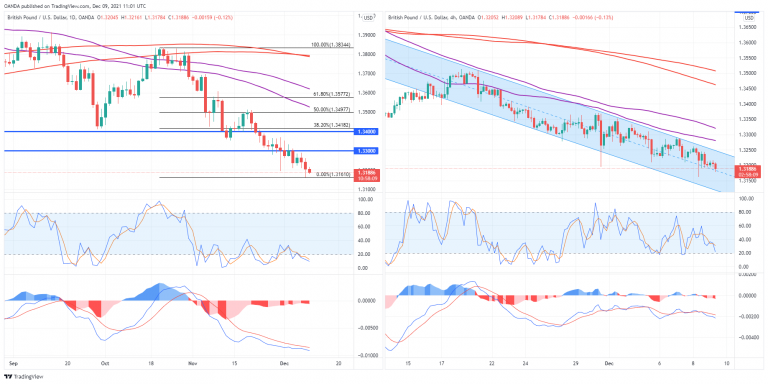
What it does do is slightly alter the key levels above. The first test for the pair is now the top of the descending channel around 1.3250, a break of which could be an early signal that a correction is underway.
The next test falls around 1.33, a historic level of support and resistance that now coincides with the 55/89-period SMA on the 4-hour chart. Above here, 1.34 looks interesting while 1.35 will be key, falling around the 50 fib level on the daily chart, perhaps the 55/89-day SMA, and maybe the 200/233-period SMA on the 4-hour chart.
Of course, it’s worth noting that until the price breaks higher, we could see further lows. The key is whether it generates fresh momentum or not. If so, further declines could follow and gather more momentum. If not, the sell-off continues to look weak and prone to quick rebounds.