

Sample Category Title
GBP/CAD Breakout Above 1.7050 Opens The Way To 1.7200
GBP/CAD technical analysis
- Bullish SHS spotted.
- Move up is expected.
- Breakout is possible.
- M H4 is the target.
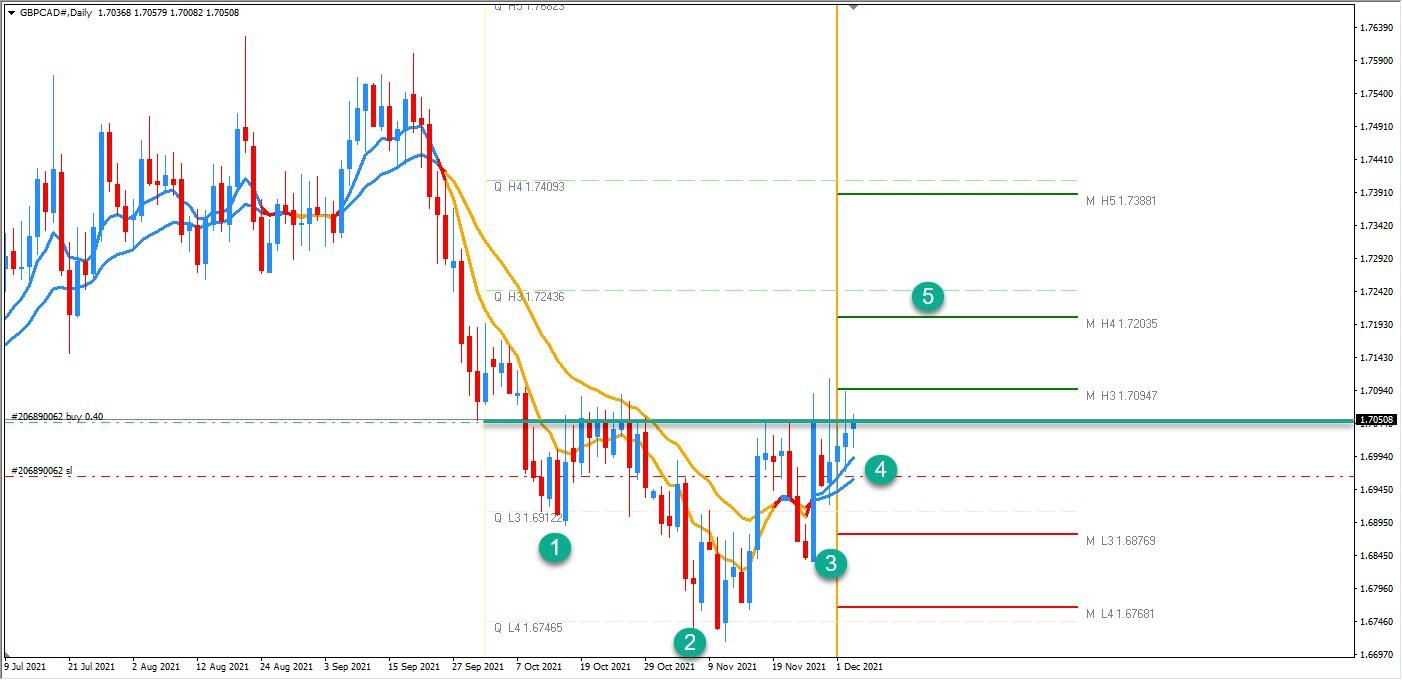
- Left shoulder.
- Head.
- Right shoulder.
- Entry.
- Target.
The GBP/CAD is bullish. The market is trying very hard to break the resistance 1.7050. Today we have both the NFP and CAD data. Employment change is due today. Employment Change reports the change in the number of people employed versus the prior month. Job creation is an important indicator of consumer spending. A reading that is stronger than forecast is generally supportive (bullish) for the CAD, while a weaker than forecast reading is generally negative (bearish) for the CAD. If the market makes the breakout above 1.7050 then we should see 1.7200 soon. As the news is classified as very important, any positive divergence from the result might bring the market down. 1.7050 break is crucial for bulls.
Awaiting US Jobs Report
Notes/Observations
- Major European PMI Services mixed (Beats: Spain, Italy; Misses: France, Germany, Euro Zone, UK).
- Turkish inflation accelerated for a sixth straight month to a 3-year high.
- Optimism over booster shots helps to overcome fears over Omicron's impact; current cases appear to have displayed mild symptoms.
- Fed talk overnight was undeniably hawkish; Focus on US payroll data that could clear the path for an earlier rate hike by the Fed.
Asia
- China Nov Caixin PMI Services registered its 3rd month of expansion (52.1 v 53.0e).
- Australia Nov Final PMI Services confirmed its 2nd consecutive expansion (55.7 v 55.0 prelim.
- Japan Nov Final PMI Services: confirmed it 2nd straight month of expansion (53.0 v 52.1 prelim.
- Kaisa Group [1638.HK] confirmed exchange offer has lapsed on existing $400M in 6.5% notes to mature Dec 7th; No guarantee of meeting repayment obligations.
Coronavirus
- Booster jabs said to “massively” strengthen the body’s defenses against Covid and raised hopes of strong protection from the Omicron variant.
- New Lancet Study gave suggestion that most current coronavirus vaccines would work as booster shots; it was too early for researchers to determine the impact of boosters versus the new Omicron variant.
Europe
- Incoming German Chancellor Scholz said to be favoring Joachim Nagel to run Germany’s Bundesbank.
- France said to pledge that it would push for a new EU-UK agreement for reallocating migrants after it took the presidency of the EU next year. France PM Castex rejected the idea of joint patrols in the English channel.
- US official noted that delay in US-UK trade deal was not linked to British threats to suspend parts of the Brexit agreement dealing with Northern Ireland.
Americas
- Senate passed the short term funding bill funding the Govt through Feb 18th; the final vote was 69 to 28 (averts shutdown for now).
- Fed's Mester (non-voter, hawk) noted that the Omicron variant threatened to stroke US Inflation; Had to entertain risk that persistently high numbers of inflation could become embedded. Reiterates would support 1 hike in 2022, and 2 may be appropriate.
- Fed's Daly (non-voter, dove) noted that might be time to start crafting a plan to raise rates to combat inflation,
Speakers/Fixed income/FX/Commodities/Erratum
Equities
- Indices [Stoxx600 +0.17% at 466.24, FTSE +0.24% at 7,146.00, DAX +0.28% at 15,302.00, CAC-40 +0.27% at 6,813.83, IBEX-35 +0.47% at 8,339.56, FTSE MIB +0.48% at 26,130.00, SMI +0.04% at 12,182.79, S&P 500 Futures 0.00%].
Equities
- European indices opened higher across the board but retraced some of the gains as the session progressed; sectors among those trending higher include energy and materials; while laggard sectors include consumer discretionary and technology; in corporate news, German financial giant Allianz provided mid-term targets durign its investor day and trading down slightly higher; Dassault Aviation in Paris trading sharply higher after announcement of contract with UAE which said to be a multibillion deal; healthcare firm SOBI Swedish Orphan Biovitrum trades lower over 20% after bidding company withdrew its offer; earnings expected during the upcoming US session include Big Lots and Genesco.
- Consumer discretionary: Evolution AB [EVO.SE] +7% (buyback), Bureau Veritas [BVI.FR] -4% (CMD targets).
- Financials: Allianz [ALV.DE] +1.5% (CMD targets).
- Healthcare: SOBI Swedish Orphan Biovitrum [SOBI.SE] -24% (Agnafit Bidco withdraws offer for SOBI).
- Industrials: Dassault Aviation [AM.FR] +9% (contract with UAE).
Speakers
- ECB chief Lagarde stressed that the Omicron variant showed that vaccinations must be stepped upped. economic impact to depend on measures. ECB to be alert but could take confidence from the past. Another wave of pandemic was included in ECB's adverse scenario and currently remained within that range. Saw inflation profile looking like a hump and reiterated stance that inflation to decline during 2022. She added that ECB was attentive to currency movements.
- ECB's Knot (hawk, Netherlands): Reiterates ECB council stance that inflation is largely temporary phenomenon.
- Italy Stats Agency (Istat) Economic Forecast raised both 2021 and 2022 GDP growth outlook. Raised 2021 GDP growth forecasts from 4.7% to 6.3% and raised the 2022 GDP growth from 4.4% to 4.7%.
- Germany Public Health RKI Institute chief Wieler stated that infection numbers were not easing and added that the Omicron variant could be more transmissible.
- Chile Fin Min Cerda stated that expected a fast economic recovery during 2022 with GDP seen between 3.0-4.0% range.
- BOJ said to see new Omicron variant as potential reason to keep COVID aid.
Currencies/Fixed Income
- USD was a tad firmer in the session as dealers noted some optimism over booster shots to help overcome fears over Omicron's impact. Greenback also aided by more ‘hawkish’ Fed talk recently. Focus on US payroll data due out later today that could clear the path for an earlier rate hike by the Fed.
- EUR/USD holding below the 1.13 handle during the session. ECB speak continued to downplay the recent pickup in inflation and discount the chances of a rate hike in 2022.
- USD/JPY at 113.30 area in quiet trade.
Economic data
- (RU) Russia Nov PMI Services: 47.1 v 49.5e; PMI Composite: 48.4 v 49.5 prior.
- (TR) Turkey Nov CPI M/M: 3.5% v 3.0%e; Y/Y: 21.4% v 20.7%e; CPI Core Index Y/Y: 17.6% v 17.5%e.
- (TR) Turkey Nov PPI M/M: 10.0% v 6.0%e; Y/Y: 54.6% v 49.0%e.
- (ZA) South Africa Nov PMI (whole economy): 51.7 v 49.0e (moved into expansion).
- (SE) Sweden Nov PMI Services: 68.7 v 68.0 prior (18th month of expansion); PMI Composite: 67.2 v 66.9 prior.
- (TH) Thailand end-Nov Foreign Reserves: $244.5B v $246.1B prior.
- (CN) Weekly Shanghai copper inventories (SHFE): 36.1K v 41.9K tons prior.
- FR) France Oct Industrial Production M/M: 0.9% v 0.6%e; Y/Y: -0.5% v -0.4%e.
- (FR) France Oct Manufacturing Production M/M: 0.9% v 0.8%e; Y/Y: +0.1% v -0.5%e.
- (FR) France Oct YTD Budget Balance: -€171.6B v -€175.1B prior.
- (RU) Russia Narrow Money Supply w/e Nov 26th (RUB): 14.24T v 14.35T prior.
- (HU) Hungary Oct Retail Sales Y/Y: 5.7% v 4.7%e.
- (ES) Spain Nov Services PMI: 59.8 v 58.6e (8th month of expansion); Composite PMI: 58.3 v 57.5e.
- (IT) Italy Nov Services PMI: 55.9 v 54.5e (7th month of expansion); Composite PMI: 57.6 v 55.9e.
- (FR) France Nov Final PMI Services: 57.4 v 58.2 prelim (confirmed 8th straight expansion); PMI Composite: 56.1 v 56.3 prelim.
- (DE) Germany Services Nov Final PMI Services: 52.7 v 53.4 prelim (confirmed 7th month of expansion); PMI Composite: 52.2 v 52.8 prelim.
- (EU) Euro Zone Nov Final PMI Services: 55.9 v 56.6 prelim (confirmed 8th month of expansion); PMI Composite: 55.4 v 55.8 prelim.
- (NO) Norway Nov Unemployment Rate: 2.1% v 2.1%e.
- (UK) Nov Final PMI Services: 58.5 v 58.6 prelim(confirmed 8th month of expansion); PMI Composite: 57.6 v 57.7 prelim.
- (UK) Nov Official Reserves Changes: -$1.4B v -$0.1B.
- (EU) Euro Zone Oct Retail Sales M/M: 0.2% v 0.3%e; Y/Y: 1.4% v 1.4%e.
Fixed income Issuance
- (IN) India sold INR240B vs. INR240B indicated in 2028, 2031 and 2061 bonds.
- (ZA) South Africa sold total ZAR vs. ZAR1.2B indicated in I/L 2029, 2046 and 2050 Bonds.
Looking Ahead
- (ZA) South Africa to sell combined ZAR1.2B indicated in I/L 2029, 2046 and 2050 Bonds.
- 05:25 (EU) Daily ECB Liquidity Stats.
- 06:00 (IE) Ireland Q3 GDP Q/Q: No est v 6.3% prior; Y/Y: No est v 21.6% prior.
- 06:00 (IE) Ireland Q3 Current Account Balance: No est v €15.0B prior.
- 06:00 (IE) Ireland Nov Live Register Monthly Change: No est v +2.8K prior; Live Register Level: No est v 170.1K prior.
- 06:00 (UK) DMO to sell £2.0B in 1-month, 3-month and 6-month bills (£0.5B, £0.5B and £1.0B respectively).
- 06:00 (UK) BOE's Saunders.
- 06:30 (IN) India Weekly Forex Reserve w/e Nov 26th: No est v $640.4B prior.
- 06:45 (US) Daily Libor Fixing.
- 07:00 (BR) Brazil Oct Industrial Production M/M: +0.8%e v -0.4% prior; Y/Y: -5.0%e v -3.9% prior.
- 07:00 (IN) India announces upcoming bill issuance (held on Wed).
- 08:00 (BR) Brazil Nov PMI Services: No est v 54.9 prior; PMI Composite: No est v 53.4 prior.
- 08:00 (UK) Daily Baltic Dry Bulk Index.
- 08:30 (US) Nov Change in Nonfarm Payrolls: +550Ke v +531K prior; Change in Private Payrolls: +525Ke v +604K prior; Change in Manufacturing Payrolls: +45Ke v +60K prior.
- 08:30 (US) Nov Unemployment Rate: 4.5%e v 4.6% prior; Underemployment Rate: No est v 8.3% prior; Labor Force Participation Rate: 61.7%e v 61.6% prior.
- 08:30 (US) Nov Average Hourly Earnings M/M: 0.4%e v 0.4% prior; Y/Y: 5.0%e v 4.9% prior; Average Weekly Hours: 34.7e v 34.7 prior.
- 08:30 (CA) Canada Nov Net Change in Employment: +37.5Ke v +31.2K prior; Unemployment Rate: 6.6%e v 6.7% prior; Full Time Employment Change: No est v.
- +36.4K prior; Part Time Employment Change: No est v -5.2K prior; Participation Rate: 65.4%e v 65.3% prior; Hourly Wage Rate: No est v 2.1% prior.
- 08:30 (CA) Canada Q3 Labor Productivity Q/Q: -0.6%e v +0.6% prior.
- 09:15 (US) Fed's Bullard.
- 09:45 (US) Nov Final Markit PMI Services: 57.0e v 57.0 prelim; PMI Composite: No est v 56.5 prelim.
- 10:00 (US) Nov ISM Services Index: 65.0e v 66.7 prior.
- 10:00 (US) Oct Factory Orders: 0.5%e v 0.2% prior; Factory Orders (ex-transportation: 0.6%e v 0.7% prior.
- 10:00 (US) Oct Final Durable Goods Orders: -0.5%e v -0.5% prelim; Durables (ex-transportation): No est v 0.5% prelim; Capital Goods Orders (non-defense/ex-aircraft): No est v 0.6% prelim; Capital Goods Shipments (non-defense/ex-aircraft): No est v 0.3% prelim.
- 10:00 (CO) Colombia Oct Exports: $3.8Be v $3.6B prior.
- 11:00 (EU) Potential sovereign ratings after European close (Moody's on Russia and Turkey sovereign rating; Fitch on Italy, Russia, Sweden and Slovenia sovereign ratings; Canadian rating agency DBRS on Germany sovereign rating.
- 11:00 (EU) Potential sovereign ratings after European close.
- 13:00 (US) Weekly Baker Hughes Rig Count.
Weekend
- 12:00 (CO) Colombia Nov CPI M/M: 0.2%e v 0.0% prior; Y/Y: 5.0%e v 4.6% prior.
- 12:00 (CO) Colombia Nov CPI Core M/M: No est v -0.2% prior; Y/Y: No est v 2.9% prior.
November PMIs Reveals China’s Fragile Economic Outlook
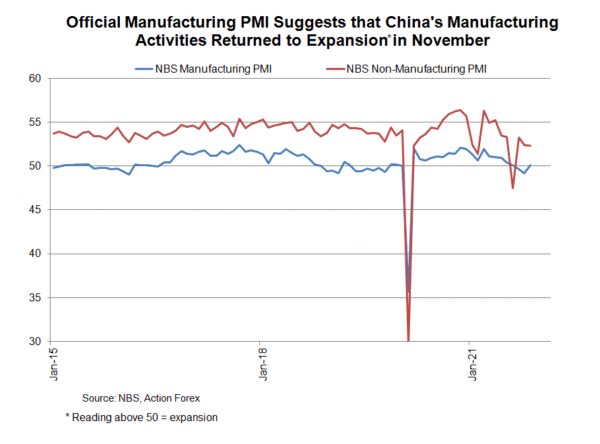
Both official and Caixin’s PMI reports suggest that China’s economic recovery remains fragile. Slipping into the contractionary territory, Caixin’s manufacturing PMI dropped -0.7 point to 49.9 in November. The official manufacturing PMI, however, climbed +0.9 point to 50.1 during the month, reclaiming expansion for the first time in 3 months. Both reports suggested stronger output and new export orders, as well as easing inflationary pressures in both input and output prices. The divergence in the headline readings was driven by new orders and employment. Both were stronger in the official data.
Concerning the services sector, Caixin PMI dropped -1.7 points to 52.1 in November, This came in weaker than consensus of 53. The new business index plunged to 50.7 from October’s 54.1, while the new export orders sub-index slipped -0.2 point to 50.8. Resurgence of the pandemic was the key reason causing the slowdown. Companies surveyed mentioned that outbreaks both domestically and abroad had disrupted new business and new export orders. Upstream price pressure climbed higher with the input prices sub-index gained +2 points to 55.6 in November, resulting from higher labor costs, energy and raw material prices. Downstream output prices, however eased to 51.4 from October’s 52.9 in October. The official non-manufacturing index (est. 80/20 in services/ construction sectors) slipped -0.1 point to 52.3 in November. This, however, came in better than consensus of 51.5.
Overall, Caixin’s reports depicted a trend of slowdown in China’s recovery. The manufacturing even slipped to contraction. However, the official data showed mild improvement in November. Note that the official report covers large companies while Caixin’s focuses on SME. Moreover, different timings and geographic coverage also contributed to the divergence. Nonetheless, both reports suggest that China’s economic outlook remains fragile, attributable to the government erratic policy such as clampdown of different sectors including real estate development, technology and entertainment. The new variant Omicron and the renewed restrictive measures due to rolled out by world governments suggest that the worst of China’s slowdown is yet to come.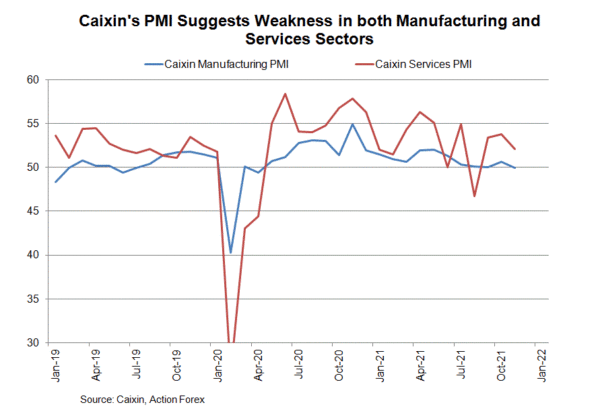
USD Continued To Be Soft Ahead Of The US Employment Report Release
The USD continued to be weak yesterday, against a number of its counterparts ahead of the release of the US employment report for November. Overall, the expectations for the key metrics of the report are showing a tightening of the US employment market as the NFP figure is forecasted to rise, the unemployment rate to tick down and average earnings to accelerate their growth. Should the actual rates and figures meet their respective forecasts, we may see the USD getting some support as it would imply that the US employment market tightened, easing the Fed’s worries. Also, an acceleration of the average earnings growth rate could imply further inflationary pressures within the US economy and overall good readings could prompt the Fed to accelerate the pace of its monetary policy tightening by expediting the pace of the tapering of its QE program and hike rates in an earlier date. Yet we would also note the release today of the ISM non-manufacturing PMI figure for November as well as October’s US factory orders, while on a more fundamental level we note that the market’s worries about the Omicron variant of the pandemic tend to ease yet uncertainty is still present.
USD/JPY seems to have stabilised in a sideways motion above the 112.75 (S1) support line. For the time being though we maintain a bias for a sideways motion and for it to change in favour of a bearish outlook we would require a clear breaking of the 112.75 (S1) line. Please note that the RSI indicator below our 4-hour chart is nearing the reading of 50 implying a rather undecisive market. Should the bears a take charge of the pair’s direction we may see it breaking the 112.75 (S1) support line and aim for the 112.10 (S2) level. Should the bulls take over, we may see the pair aiming if not breaking the 113.70 (R1) resistance line.
TRY continues to weaken as CPI rates are due out
TRY continued to weaken against the USD yesterday despite CBT’s intervention in the markets for the first time in 7 years on Wednesday. Turkish President Erdogan doubled down on his intention to keep rates low on Wednesday and fired his finance minister, replacing him with a supporter of low rates as per media. The CBT chief is reported to have signaled yesterday that the bank is to halt its monetary policy easing in January after one more rate cut this month, while the Turkish President is intensifying efforts to enhance foreign investments in Turkey, with both factors set out to support the Lira. Also please note that the net FX reserves of CBT are on a downtrend since the start of the month and the trade deficit widens for Turkey which could imply that CBT’s ammunition to support the Lira once again in the markets is running out and Turkey may have a hard time sourcing hard currency. Today we highlight the release of Novembers’ CPI rates which are expected to accelerate past the psychological limit of 20% and if so theoretically the Lira should get some support, yet given CBT’s unwillingness to hike rates we may see the Lira weakening further.
USD/TRY continued to rise yesterday aiming for the 13.8500 (R1) resistance line. We maintain a bullish outlook for the pair as long as it remains above the upward trendline currently guiding it. Please note that the RSI indicator below our 4-hour chart is at the reading of 70 which on the one hand confirms the bullish sentiment for the pair yet may warn that USD/TRY approaches overbought conditions. Should the bulls actually maintain control over the pair we may see it breaking the 13.8500 (R1) resistance line and aim for the 14.2000 (R2) level. Should the bears take over, we may see the pair breaking the prementioned upward trendline, the 13.5000 (S1) support line and aim for lower grounds.
Other highlights today and during tomorrow’s Asian session
Besides the financial releases allready mentioned we would also note the release of Canada’s employment data for November at the same time with US employment report. Should the actual rates and figures meet their respective forecasts, we may see the CAD getting some support.
USD/JPY H4 Chart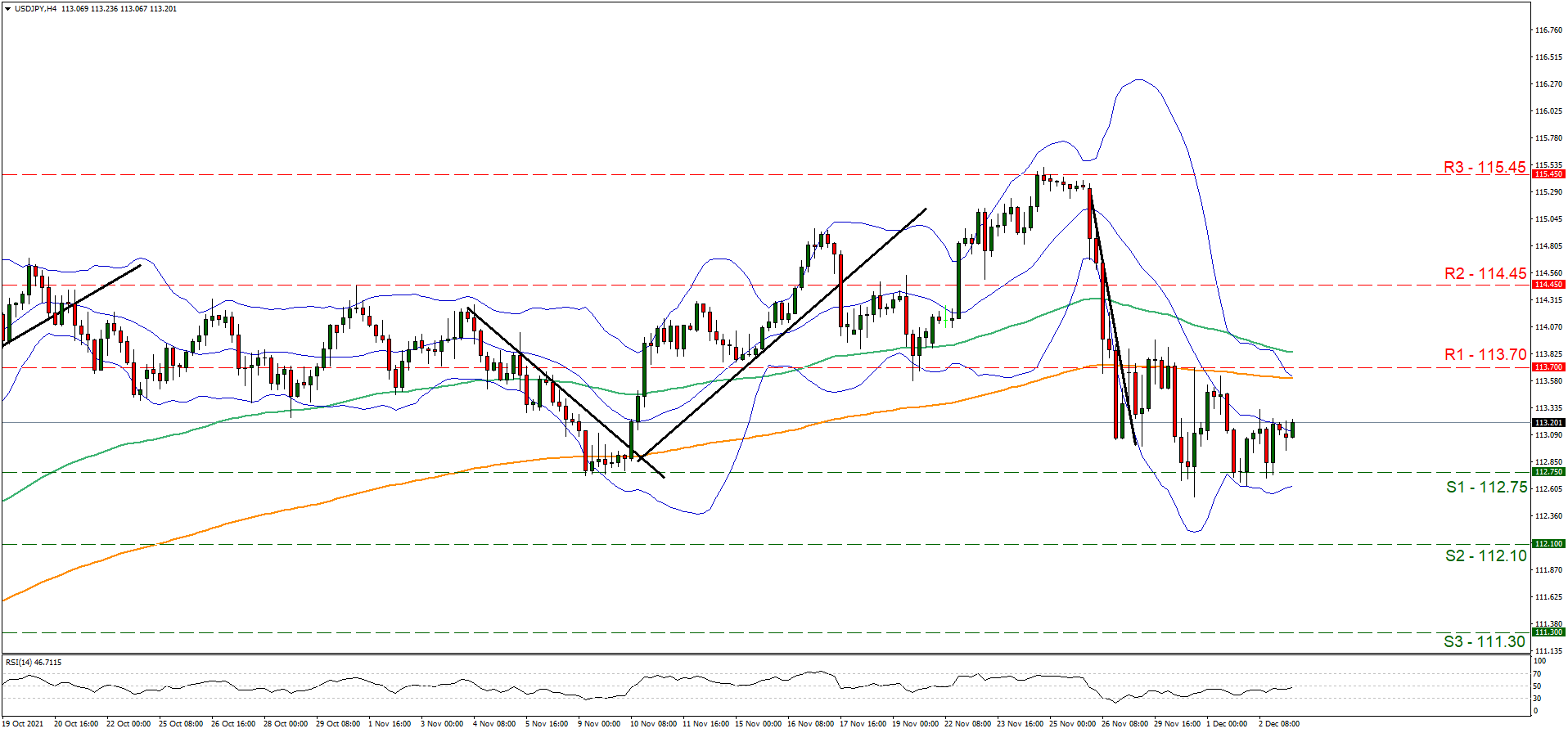
Support: 112.75 (S1), 112.10 (S2), 111.30 (S3)
Resistance: 113.70 (R1), 114.45 (R2), 115.20 (R3)
USD/TRY H4 Chart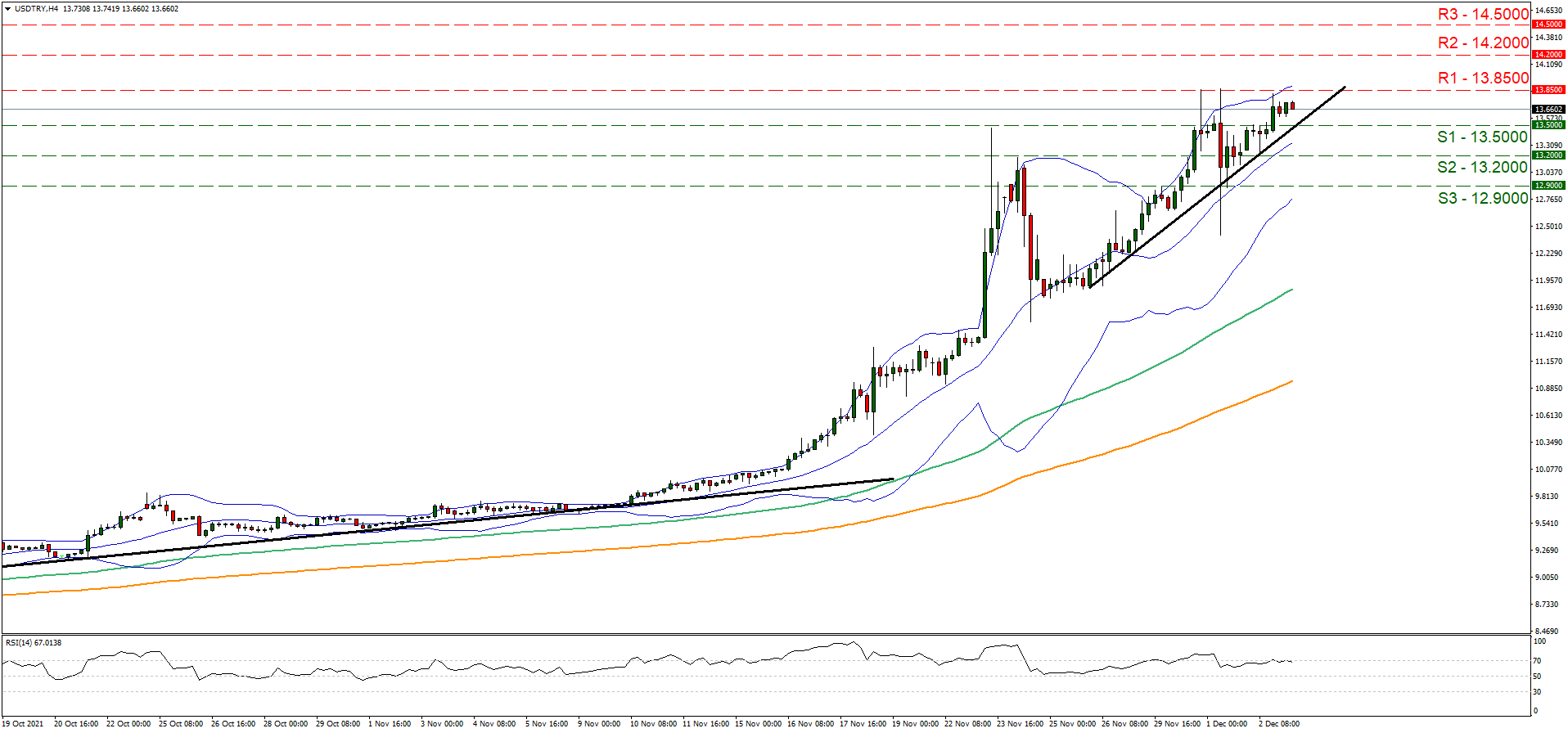
Support: 13.5000 (S1), 13.2000 (S2), 12.9000 (S3)
Resistance: 13.8500 (R1), 14.2000 (R2), 14.5000 (R3)
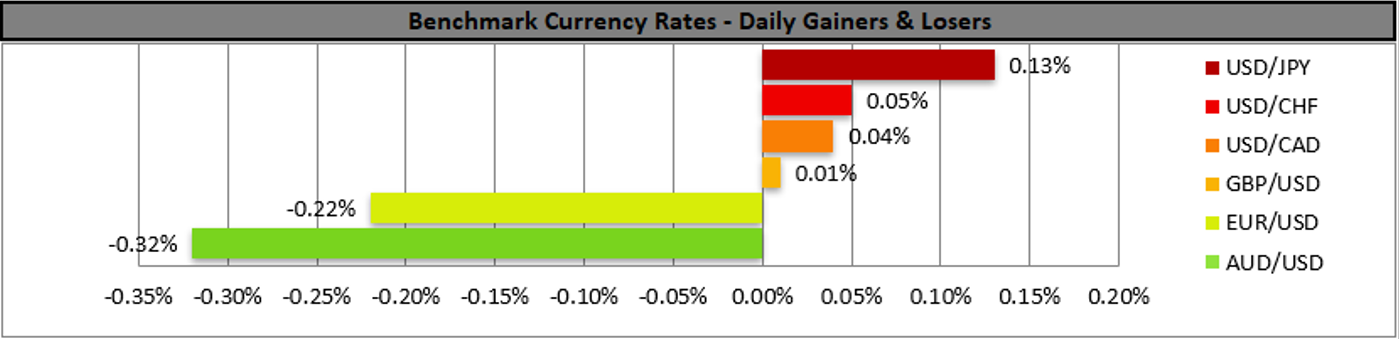
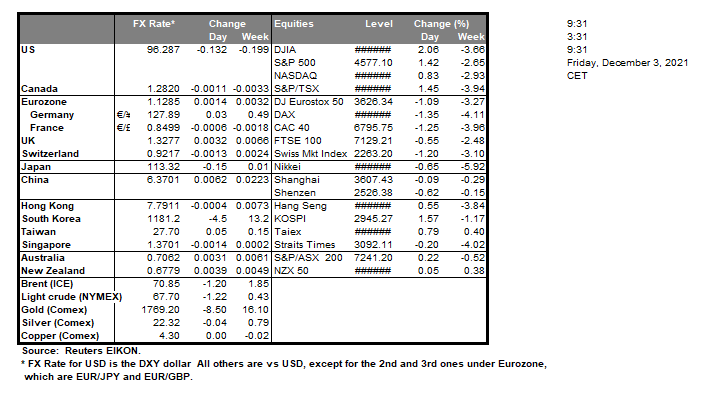
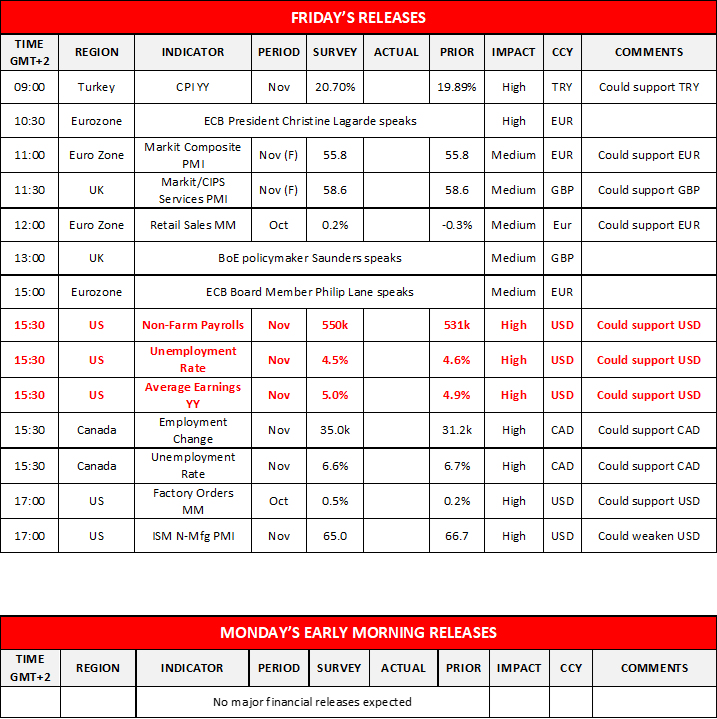
The Analytical Overview Of The Main Currency Pairs
The EUR/USD currency pair
Technical indicators of the currency pair:
Prev Open: 1.1321
Prev Close: 1.1300
% chg. over the last day: -0.18%
The EU unemployment rate decreased from 7.4% to 7.3%. An ECB official said yesterday that inflation in the region is temporary. The same thing was being said for a year by Jerome Powell, a head of the US Federal Reserve, but recently he changed his rhetoric and stopped using the word "temporary" for inflation. Analysts are confident that the growth of inflation in the EU will continue until the summer-fall of 2022.
Trading recommendations
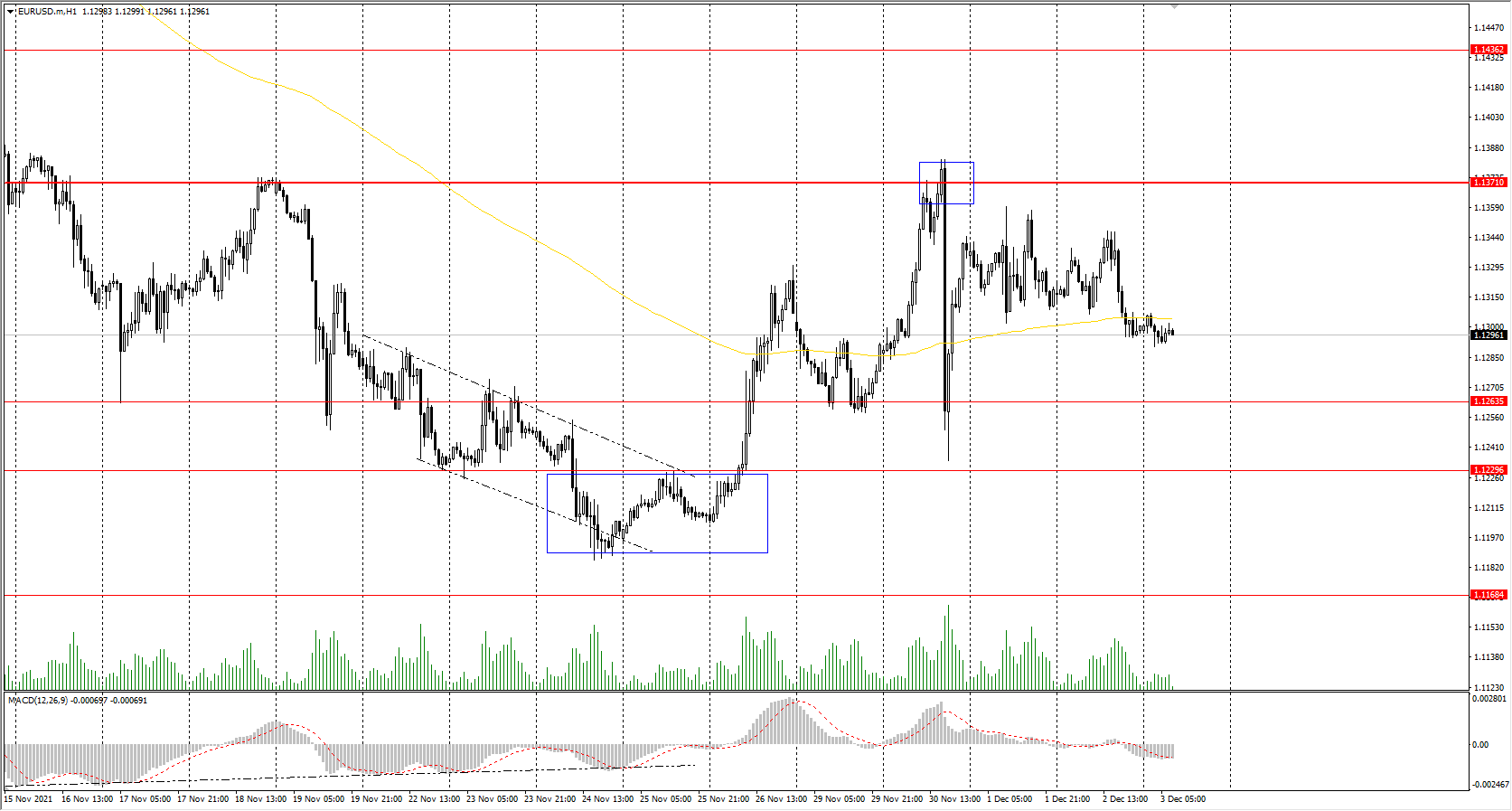
Support levels: 1.1263, 1.1230, 1.1168
Resistance levels: 1.1371, 1.1436, 1.1535, 1.1613, 1.1667, 1.1717
From a technical point of view, the EUR/USD on the hour time frame is still bearish. The price is currently trading in a narrow corridor. The MACD indicator has become inactive. Under such market conditions, traders should consider sell positions from the priority change level of 1.1371. Buy trades should be considered only from the support levels of the higher time frame, given the buyers’ initiative, but only with short targets.
Alternative scenario: if the price breaks out through the 1.1371 resistance level and fixes above, the mid-term uptrend will likely resume.
News feed for 2021.12.03:
- ECB President Lagarde’s Speech at 10:30 (GMT+2);
- Eurozone Services PMI (m/m) at 11:00 (GMT+2);
- Eurozone Retail Sales (m/m) at 12:00 (GMT+2);
- US ISM Services PMI (m/m) at 17:00 (GMT+2).
The GBP/USD currency pair
Technical indicators of the currency pair:
Prev Open: 1.3279
Prev Close: 1.3299
% chg. over the last day: +0.15%
From a fundamental point of view, the British pound has a mixed background. On the one hand, the growth of the dollar index provokes a decrease in the GBP/USD quotes. On the other hand, the rise in Brent oil prices, with which historically the pound correlates, leads to the British currency strengthening. As a result, the currency pair is trading in a wide corridor without any single dynamics.
Trading recommendations
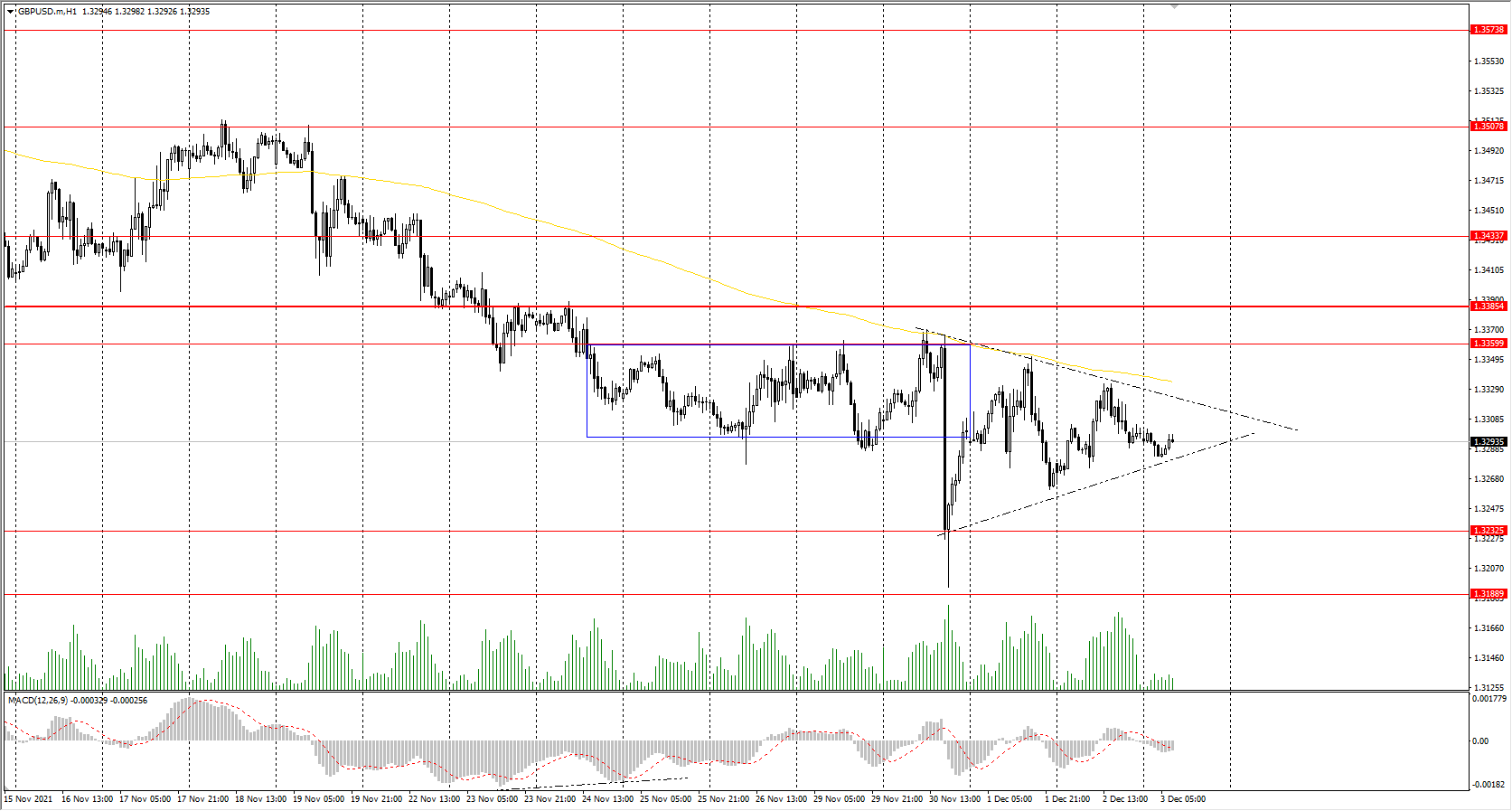
Support levels: 1.3232
Resistance levels: 1.3360, 1.3434, 1.3507, 1.3575, 1.3685, 1.3748
On the hourly time frame, the trend on GBP/USD is bearish. The MACD indicator has become inactive, but it is still signaling divergence on several time frames. Under such market conditions, traders should consider sell positions from the resistance levels around the moving average. Buy trades should be considered on the support levels of higher time frames, given the buyers’ initiative.
Alternative scenario: if the price breaks out through the 1.3385 resistance level and consolidates above, the bullish scenario will likely resume.
News feed for 2021.12.03:
- UK Services PMI (m/m) at 11:30 (GMT+2);
- US Nonfarm Payrolls (m/m) at 15:30 (GMT+2).
The USD/JPY currency pair
Technical indicators of the currency pair:
Prev Open: 112.71
Prev Close: 113.17
% chg. over the last day: +0.41%
The Japanese Yen is now under pressure because of the Bank of Japan policy, which introduced a new economic stimulus package. At the same time, the US Fed has already been reducing its QE program, so the USD/JPY currency pair will grow in the mid-term.
Trading recommendations
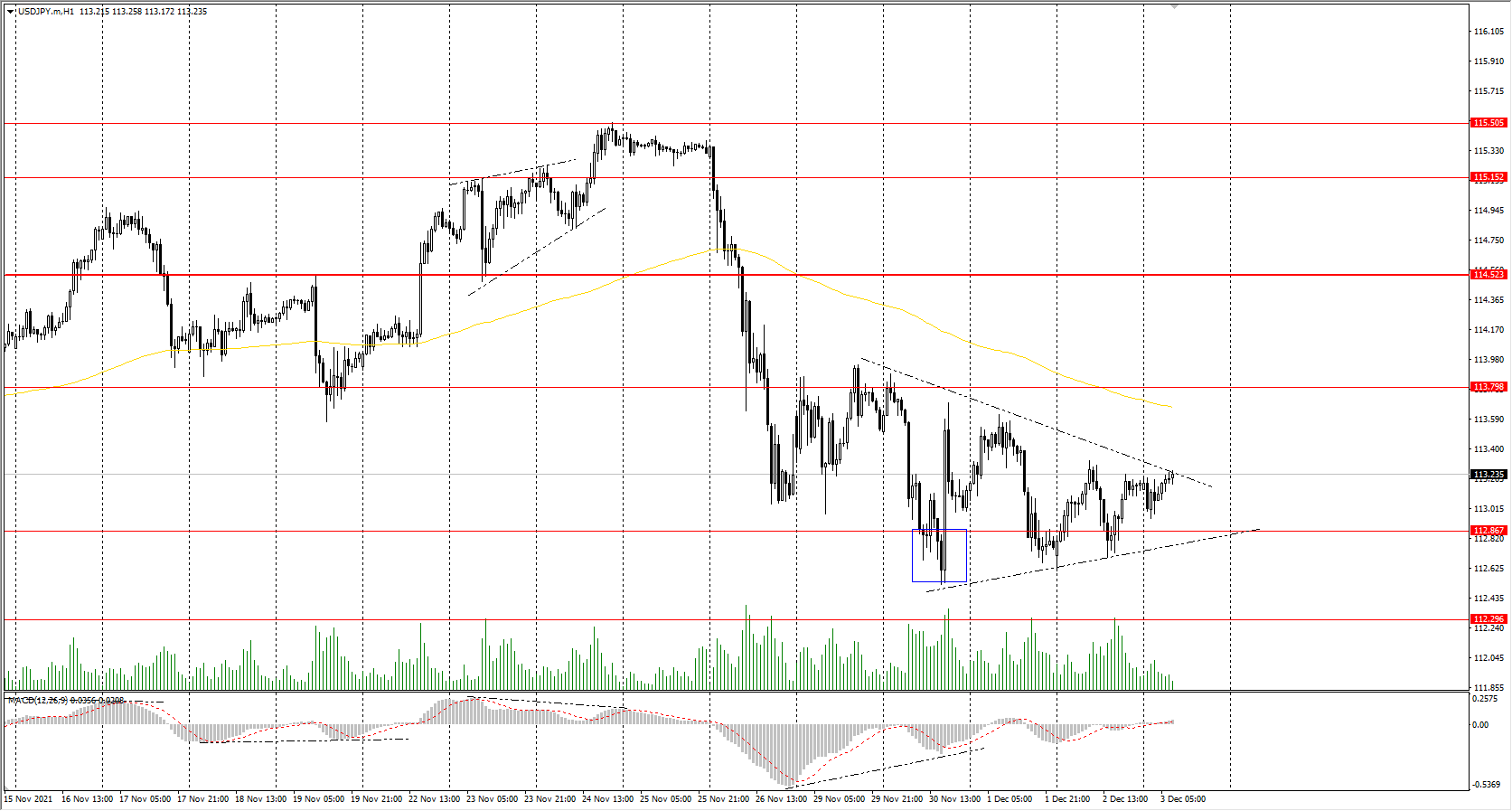
Support levels: 112.87, 112.30
Resistance levels: 113.79, 114.48, 115.15, 115.50
The global trend on the USD/JPY currency pair is bearish. At the moment, the price is trading in the corridor with the 112.87-113.79 range. There is also a narrowing of liquidity in the form of a "triangle" pattern. Under such market conditions, it is best for traders to look for sell positions from the resistance levels around the moving average or from the upper border of the corridor, but with additional confirmation. Buy positions should be considered from the false breakdown zone or after an impulsive upward movement out of the "triangle."
Alternative scenario: if the price rises above 114.52, the uptrend will likely resume.
News feed for 2021.12.03:
US Nonfarm Payrolls (m/m) at 15:30 (GMT+2).
The USD/CAD currency pair
Technical indicators of the currency pair:
Prev Open: 1.2819
Prev Close: 1.2805
% chg. over the last day: -0.11%
From a fundamental point of view, the dollar index is now inclined to rise as the Fed has started cutting the QE program and may accelerate the process at the next meeting. Following the OPEC+ meeting, the world's largest oil producers left their production increase quotas for January at 400,000 bpd. Analysts expect oil prices to return above $75 a barrel.
Trading recommendations
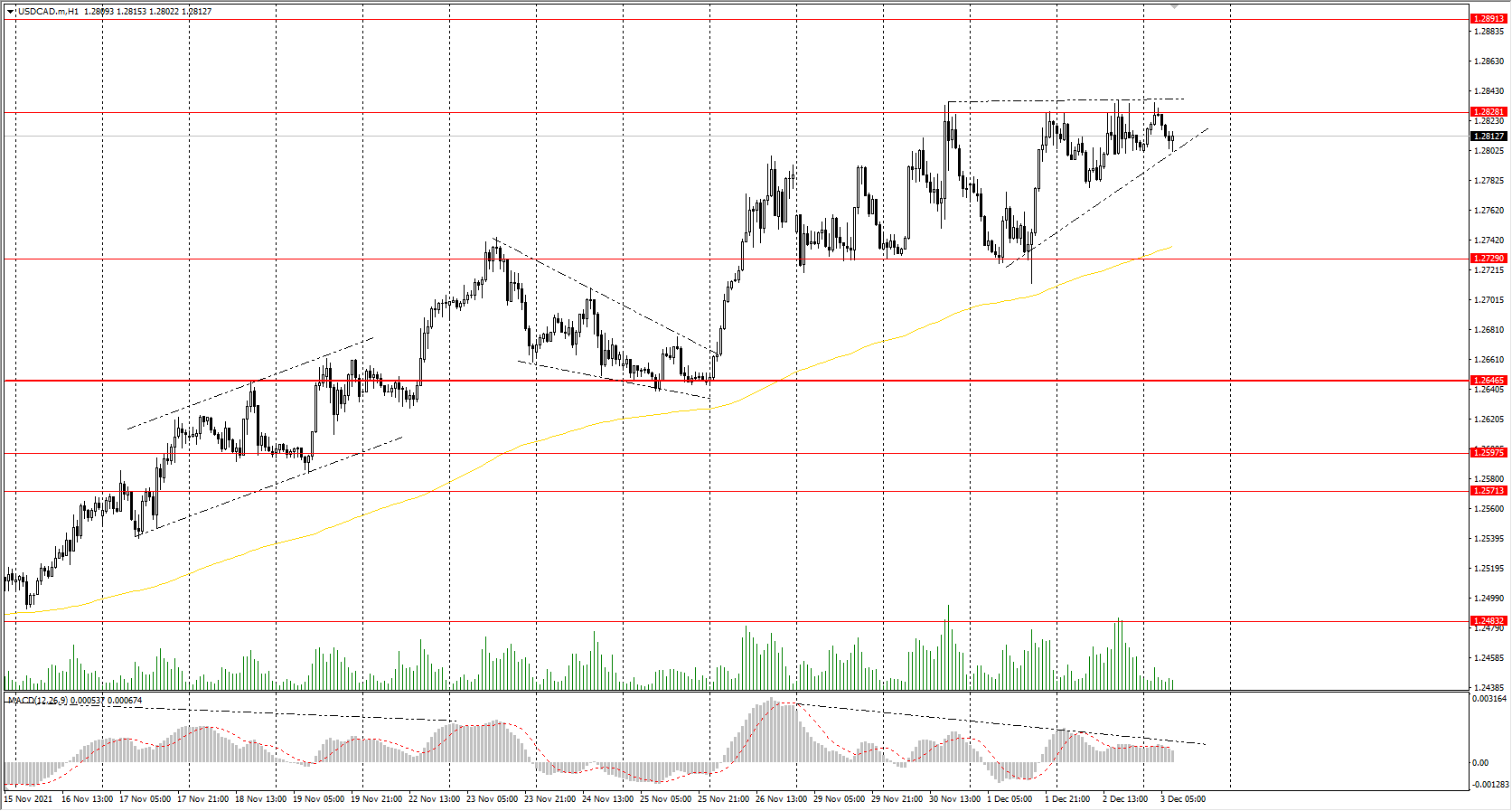
Support levels: 1.2729, 1.2646, 1.2598, 1.2571, 1.2483, 1.2416, 1.2388
Resistance levels: 1.2828
From a technical point of view, the USD/CAD currency trend is bullish. The price is trading flat in the corridor with a range of 1.2729-1.2828. But there is a pressure of buyers to the upper border. The MACD indicator is in the positive zone, but there are signs of divergence. Under such market conditions, it is better to look for buy trades from the lower border of the flat corridor or after a true breakout. Sell deals should be considered from the resistance levels of the higher time frames.
Alternative scenario: if the price breaks down through the 1.2646 support level and fixes below, the downtrend will likely resume.
News feed for 2021.12.03:
- US Nonfarm Payrolls (m/m) at 15:30 (GMT+2).
- Canada Unemployment Rate (m/m) at 15:30 (GMT+2).
Today, Investors’ Attention Is Focused On The Nonfarm Payrolls Report
The ADP employment report showed that the US labor market is recovering despite high inflation. But 5 million more new jobs are needed to reach pre-pandemic levels. The ISM manufacturing activity index also showed improvement. The US stock market ended trading higher. By the close of the stock market, the Dow Jones index (US30) increased by 1.82%, S&P 500 (US500) added 1.42%, NASDAQ Composite (US100) jumped by 0.83%. The US will release an important nonfarm payrolls report today. Analysts are confident that whatever data is released today, the decision to reduce stimulus more quickly will be made at the next meeting since high inflation leaves the Fed with no other choice.
According to 79 of 106 analysts surveyed, a global market correction is likely in the next six months. Saxo Bank predicts a constitutional crisis in the US and inflation above 15% next year.
Omicron continues to spread worldwide, with new infections found in countries, including the United States, Norway, Ireland, Australia, and South Korea. At the same time, South Korea is introducing lockdowns for the unvaccinated. Australia's chief medical director said there is no indication that Omicron is more deadly than other Covid strains because all cases reported so far have been very "soft" or no symptoms at all. Meanwhile, a scientist from South Africa's National Institute of Infectious Diseases said that there has been an increase in the number of repeated diseases Omicron, which has not been seen in previous strains.
Meanwhile, US President Joe Biden announced a new plan to confront the coronavirus on Tuesday. The new measures include an expanded campaign to re-vaccinate those who need it.
Yesterday, European stock indexes closed in the red zone. There is no single correlation between the indices of Europe and the United States now, which happens quite rarely. German DAX (DE40) decreased by 1.35%, French CAC 40 (FR40) decreased by 1.25%, British FTSE 100 (UK100) lost 0.55%, Spanish IBEX (ES35) decreased by 1.8%. The unemployment rate in the EU fell from 7.4% to 7.3%. The ECB representative said yesterday that inflation in the region is temporary. The same thing was being said for a year by Jerome Powell, a head of the US Federal Reserve, but he has recently changed his rhetoric and stopped using the word "temporary" for inflation. Analysts are confident that the growth of inflation in the EU will continue until the summer-fall of 2022.
Moderna announced an agreement with the United Kingdom to deliver additional 60 million doses of Covid-19 vaccines in 2022 and 2023. It looks like the virus epidemic won't end anytime soon. The EC Public Health Agency has warned that the Omicron variant could cause more than half of all Covid-19 infections in Europe within the next few months.
Omicron has not yet been taken into account by the OPEC+ committee meeting. Following the OPEC+ meeting yesterday, the world's largest oil producers left production quotas for January at 400,000 bpd. Analysts expect oil prices to return above $75 a barrel.
Following a rally on Wall Street, Asia-Pacific stock markets are increasing today, except for the Hong Kong index. Hong Kong's Hang Seng (HK50) decreased by 0.42%, Japan's Nikkei (JP225) added 1%, and Australia's S&P/ASX 200 (AU200) increased by 0.22%. Shares of the Hong Kong Internet giant Alibaba (-3.8%) and car maker BYD (-3.7%) were among the fall leaders on Friday.
Main market quotes:
- S&P 500 (F) (US500) 4,577.10 +64.06 (+1.42%)
- Dow Jones (US30) 34,639.79 +617.75 (+1.82%)
- DAX (DE40) 15,263.11 −209.56 (−1.35%)
- FTSE 100 (UK100) 7,129.21 −39.47 (−0.55%)
- USD Index 96.14 +0.11 (+0.12%)
Important events for today:
- Japan Services PMI (m/m) at 02:30 (GMT+2);
- ECB President Lagarde’s Speech at 10:30 (GMT+2);
- Eurozone Services PMI (m/m) at 11:00 (GMT+2);
- UK Services PMI (m/m) at 11:30 (GMT+2);
- Eurozone Retail Sales (m/m) at 12:00 (GMT+2);
- US Nonfarm Payrolls (m/m) at 15:30 (GMT+2);
- US Unemployment Rate (m/m) at 15:30 (GMT+2);
- Canada Unemployment Rate (m/m) at 15:30 (GMT+2);
- US ISM Services PMI (m/m) at 17:00 (GMT+2).
Choppy Markets Brace For Nonfarm Payrolls
- US jobs report could decide whether Fed pulls the QE handbrake
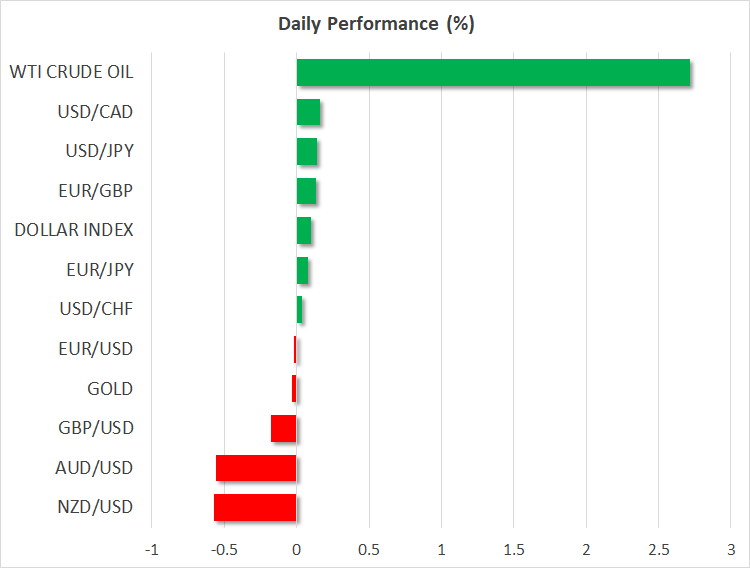
- Euro trades heavy after German restrictions, commodity FX bleeds
- Oil bounces even without OPEC support, gold grinds lower
Nonfarm payrolls coming up
The US employment report for November will dominate trading in financial markets today as investors grapple with whether the Fed will speed up the tapering process. Nonfarm payrolls are projected to clock in at 550k, pushing the unemployment rate down one tick to 4.5%. Wage growth is expected to have accelerated slightly.
Labor market indicators were quite encouraging during the month. The ADP report showed 534k jobs being added in the private sector, the preliminary Markit PMIs pointed to a “solid” rate of job creation, the employment sub-index of the ISM manufacturing survey rose, and jobless claims fell during the NFP survey week.
Blending everything together, the tea leaves point to another solid jobs report that is more or less in line with the forecasts. Considering also that American workers are quitting their jobs at a record pace in search for higher wages, the US labor market seems to be in pretty good shape overall.
As for the dollar, the outlook remains bright. If the upcoming employment data and next week’s inflation report reaffirm the recent trends in the US economy, that could give the Fed the confidence needed to expedite the tapering process, putting the wind back into the sails of the reserve currency.
A look around the FX market
The commodity dollars continue to bleed as worries over new restrictions have dampened the outlook for global growth, with the Australian dollar hitting fresh one-year lows today. The Reserve Bank of Australia is unlikely to turn the tide when it meets next week as current market pricing for three rate hikes next year seems excessive considering the current state of the economy.
Sterling has suffered a similar fate since Omicron entered the equation, despite recent speculation that this variant may turn out to be more infectious but less deadly. The euro initially found some relief as energy prices cooled, yet the recovery looks shaky when new restrictions threaten to hamstring economic growth.
Germany just announced that unvaccinated people will be barred from restaurants and many shops. Euro/franc touched a new six-year low in the aftermath. The Swiss National Bank is almost certainly intervening to smoothen the descent, but it may need to roll out even bigger guns if it wants to change the course of this battle.
Stocks bounce back, gold feeling blue
The mood in equity markets improved yesterday as bargain hunters came out in force, pushing the S&P 500 higher by 1.4%. That said, the environment could remain challenging until traders figure out exactly what Omicron means for riskier plays heading into year end, especially if the Fed pulls the handbrake on quantitative easing soon.
Oil prices spiked lower after OPEC decided to stick to its planned production increases, but bounced back in the following hours as risk appetite improved to close the session higher overall.
Gold refuses to participate in the volatility that has gripped other asset classes, grinding lower instead. The bulls are now praying that next week brings another US inflation surprise that sends investors scrambling for hedges and chases the blues away from bullion.
Finally, the ISM non-manufacturing PMI will also be released today. Additionally, the latest employment data out of Canada could be crucial ahead of next week's Bank of Canada meeting.
GER 40 Moves Sideways After Retreating From All-Time High
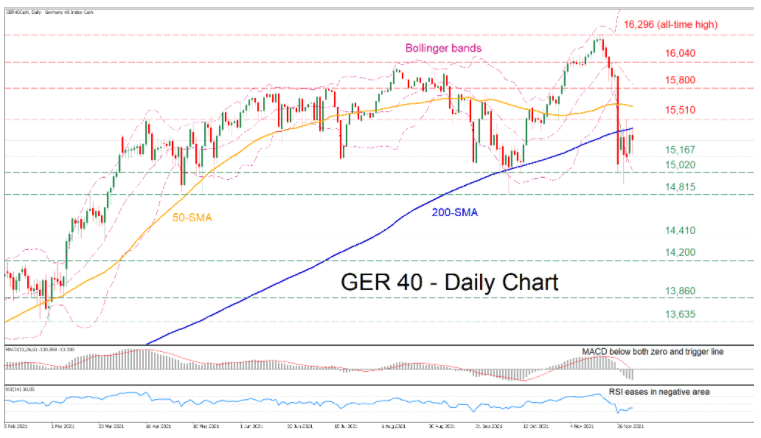
GER 40 stock index (cash) has been charging upwards since February, recently posting a new record high at 16,296. Although the index plunged after its rally ceased, it has adopted a more sideways pattern in the last few sessions.
The short-term picture seems bearish as the price dived beneath both its 50- and 200-day simple moving averages (SMAs). This imminent negative bias is also reinforced by the stochastic oscillators. The MACD histogram is currently found below its red signal line in the negative territory, while the RSI is flatlining under its 50-neutral mark.
Should the selling pressure intensify and the price breaches through the recent low of 15,167, the bears might then target the 15,020 level. Failing to halt there, the index could move towards 14,815 or even lower to challenge the 14,410 number. If the downward pressure persists, the price may then test the 14,200 barrier.
On the flip side, should the bulls regain the upper hand, immediate resistance would probably be encountered at the recent high of 15,510. If the price snaps that obstacle, the bulls might aim at 15,800 or higher at the 16,040 hurdle. Crossing above these barricades would set the stage for the all-time high of 16,296.
Overall, although the index has retreated from its recent all-time peak, it still holds its bullish long-term structure. A clear break above 16,040 could endorse the reversal of the short-term downtrend, whereas a dip below 14,815 would shift the medium-term outlook to negative.
UK PMI services finalized at 58.5, recovery accelerated from Q3
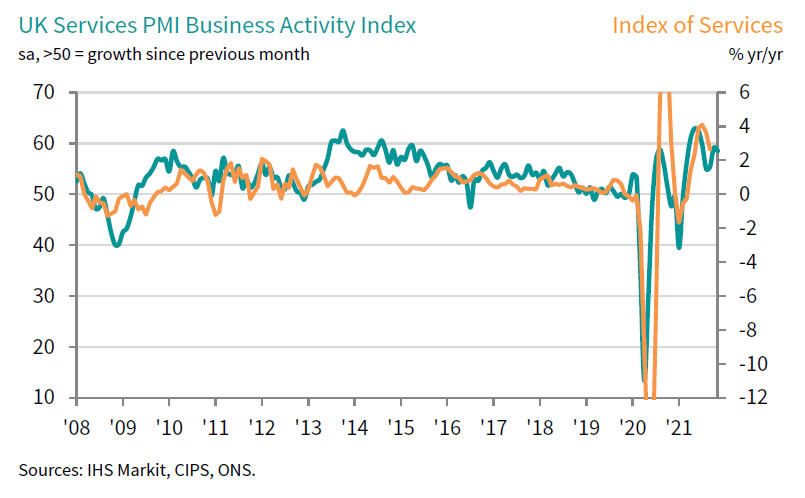
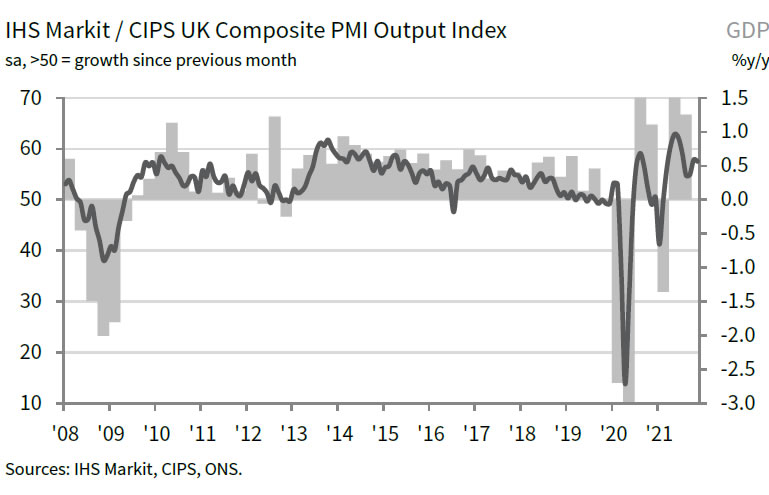
UK PMI Services was finalized at 58.5 in November, down from October's 59.1. PMI Composite was finalized at 57.6, down from October's 57.8. Markit also said there was the strongest increase in new work since June. Output growth eased slightly. Input costs and prices charged rose at record rates.
Tim Moore, Economics Director at IHS Markit:
"Surging price pressures have done little to dent business and consumer spending across the UK economy... The overall speed of recovery looks to have accelerated in comparison to the third quarter of 2021, with output growth mostly driven by services as manufacturers struggle with severe shortages of raw materials and critical components.
"The vast majority of survey responses in November were received prior to the news of the Omicron variant, however, which has the potential to derail near-term growth prospects and add to international supply chain disruption.
EUR/USD Outlook: A Key Bearish Trend Line Is Forming With Resistance Near 1.1325
The Euro struggled to clear the 1.1350 resistance zone against the US Dollar. The EUR/USD pair is slowly moving lower and is trading below the 1.1320 level.
There was also a break below the 1.1300 zone and a close below the 50 hourly simple moving average. Besides, there is also a key bearish trend line forming with resistance near 1.1325 on the hourly chart.
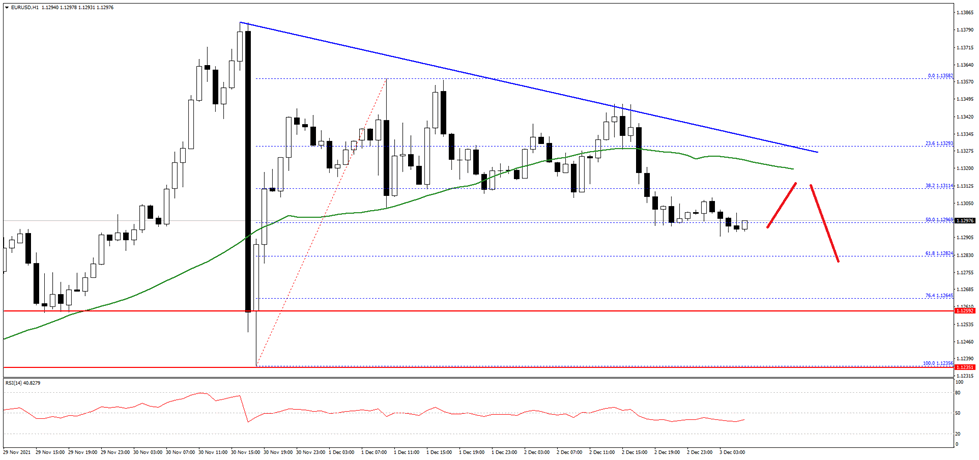
An immediate resistance near the 1.1320 level and the trend line. A break above the 1.1320 and 1.1325 resistance levels could lead the pair towards the 1.1350 zone, above which the pair could rise towards the 1.1400 level.
On the downside, an initial support is near the 1.1280 level. The key support is near 1.1265 on FXOpen, below which there is a risk of a sharp decline. The next major support is near the 1.1200 level.