Sample Category Title
EUR/CHF Struggles For Support
The euro bounced higher after the bloc’s industrial production beat expectations in September.
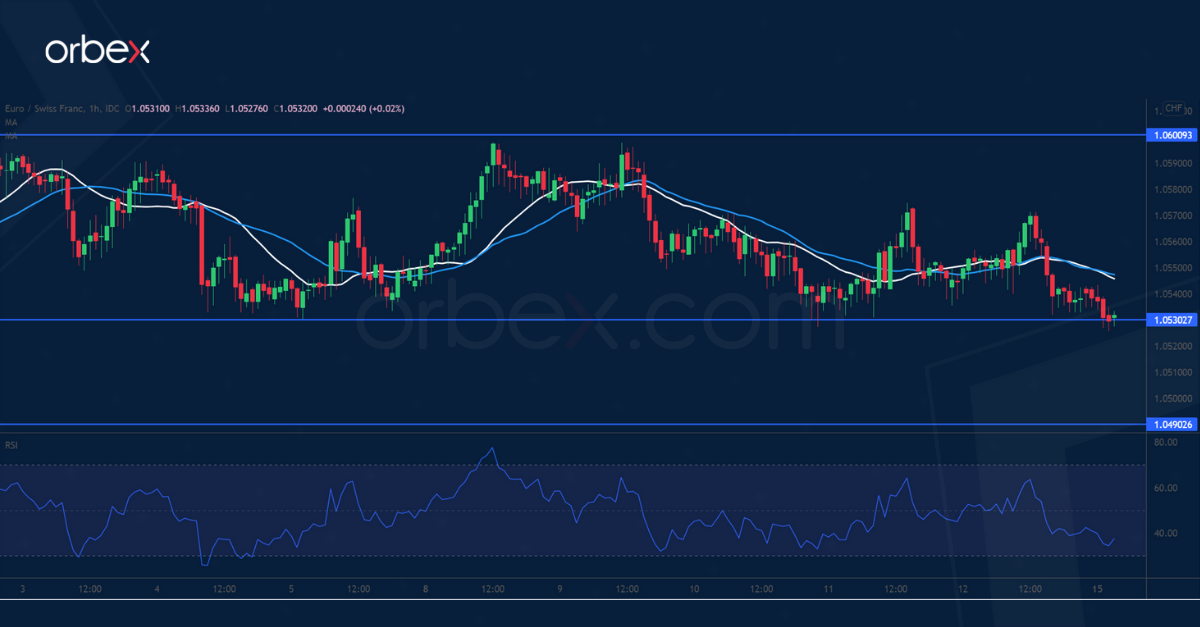
The RSI’s oversold situation on the daily chart has attracted bargain hunters’ attention around 1.0530, a demand area from May 2020. Price action had three failed attempts to lift offers at 1.0600, a sign of strong selling pressure to keep the downtrend going.
A bullish breakout may trigger a runaway rally as sellers seek to exit a crowded short bet. A bearish one would send the single currency to 1.0490.
USD/JPY Hits Temporary Resistance
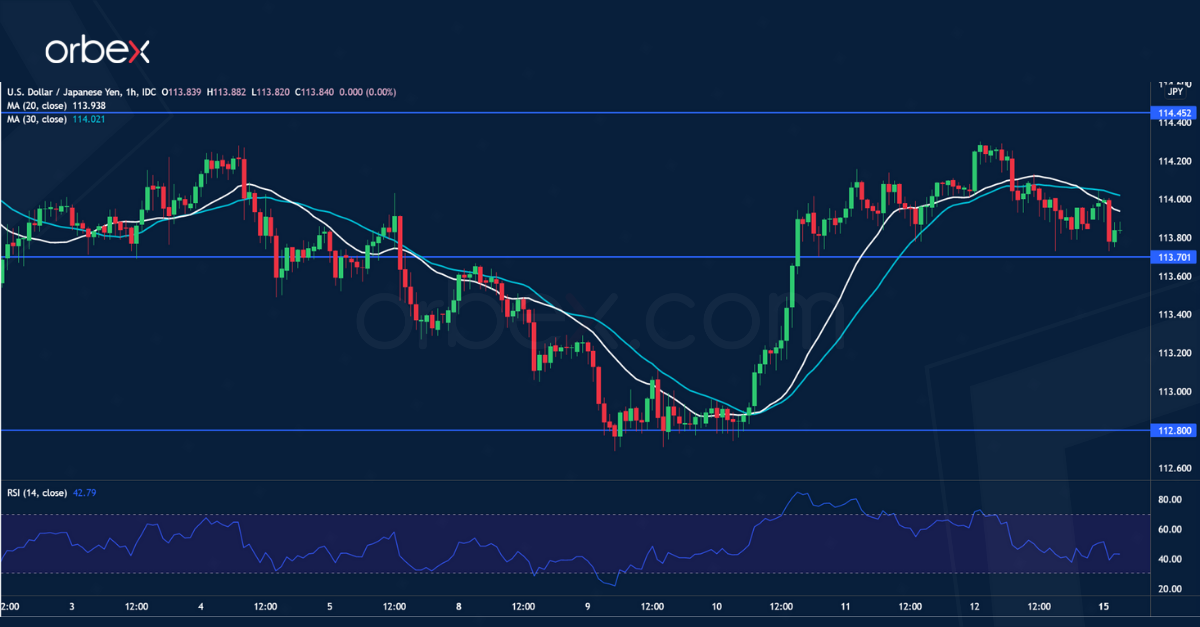
The Japanese yen pulled back after a larger-than-expected GDP contraction in Q3. The US dollar is looking to hold onto its gains after a rally above 114.00.
Sentiment has recovered and a surge above 114.45 around the October peak would resume the uptrend. However, the current rebound may lack the strength to clear the supply zone right away.
An overbought RSI has held the bullish fever back. A breach below 113.70 would lead to a deeper correction towards 112.80, which is a key level to keep the rebound relevant.
EURUSD Ticks Slightly Up From 16-Month Low
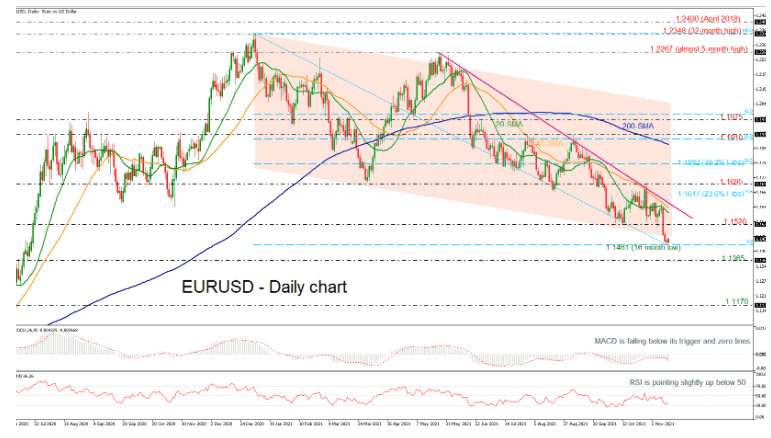
EURUSD is recouping some of the losses of the preceding days, finding support at the 16-month low of 1.1461. The pair dived beneath the falling channel and is holding well below the steep long-term downtrend line.
Looking at the technical indicators, the RSI is turning up from the negative region, while the MACD is losing the negative momentum but is still standing below its trigger and zero lines. Both are suggesting a bullish correction movement before the market dips further.
If the price continues the rebound, immediate resistance could be faced from the 1.1520 barrier, taken from the latest inside swing low. Above this level, the pair could meet the 20- and 40-day simple moving averages (SMAs) at 1.1568 and 1.1590 respectively, before touching the diagonal line around the 1.1600 psychological mark. Overcoming these strong obstacles, traders could have a look at the 23.6% Fibonacci retracement level of the down leg from 1.2348 to 1.1461 at 1.1647 ahead of the 1.1695 barrier.
Alternatively, a decline beyond the multi-month trough of 1.1461 could take the pair until the 1.1365 support before tumbling to the 1.1170 bottom, registered in June 2020.
In conclusion, EURUSD is hovering above the low that was posted on Friday and any jumps above the descending trend, could endorse the bullish movement in the short-term.
EUR/USD Breaking Below Key Support At 1.1493/95
Markets
US inflation took center stage last week. A stellar CPI print of 6.2% y/y on Wednesday caused an incredible bear flattening with yields up more than 10 bps at the short and medium segment of the curve. All of those gains were held on to or even extended (in longer tenors) going into the weekend even as the US consumer sentiment (U. of Michigan) on Friday unexpectedly dropped to a 10-year low. The reason helps explain why. US consumers are increasingly worried about the inflationary impact on their finances and say there are no policies in place to reduce the damage. Inflation thus starts getting political (also see headline below) and may reinforce market’s conviction the Fed will act sooner rather than later. In contrast, the knee-jerk boost in German ST yields post-US CPI was more than erased by the end of the week. US stocks on Friday recouped some of the loses induced by rising rate hike bets earlier in the week. Gains varied from 0.5-1%. The US dollar benefited with EUR/USD breaking below key support at 1.1493/95 to finish the week at 1.1445. USD/JPY’s comeback to above 114 was unconvincing. Sterling eyed potentially crucial talks between the UK and EU on the Northern Irish protocol on Friday. They only agreed, however, to intensify talks this week. EUR/GBP fell from 0.8563 to 0.8531.
Asian-Pacific markets trade mixed this morning. South Korea outperforms. Japan gains about 0.5% as disappointing GDP growth (-0.8% q/q vs -0.2% expected) increases the odds of a big Japanese fiscal stimulus package. Chinese equities inch lower despite solid readings in retail sales (4.9% y/y) and industrial production (3.5% y/y). New home prices fell for a second month straight (-0.25% m/m) and property investment eases from 8.8% to 7.2%, adding evidence to a cooling real estate sector. USD/CNY holds near recent low around 6.38. The dollar trades slightly in the defensive after a major bull run last week. Today’s US NY Manufacturing index will probably be of secondary importance. ECB’s Lagarde speaks before the European Parliament where she will be grilled on the central bank’s policy in an environment of above-target inflation. We don’t expect her to change tack though. That may have to wait until the December policy meeting. We therefore remain cautious on yields and on EUR/USD in the short run, especially after last week’s technical break. Next support lies at 1.1422 (June 2020 interim high). We also keep a close eye at Bank of England’s Bailey and Pill (together with Mann and Saunders) having a similar testimony before UK Parliament. Will they shed more light on the decision to backtrack on a telegraphed November hike? With more UK/EU talks scheduled for this week, we assume the downside in EUR/GBP in general to be better protected.
News headlines
Bulgaria went to the polls for a third time this year. Corruption protests against the center right Gerb party and its prime minister Borisov, triggered first elections in April. Opposition parties and new populist parties failed to agree a coalition. July parliamentary polls produced a similar outcome. This time around, there might be a way out. The very recently founded “We Continue To Change” (PP) unexpectedly won the election with slightly over 25% of the votes. Together with populist party ITN (>15%), Socialists (9%) and Democratic Bulgaria (6%) they would be able to set-up a majority gover
A Washington Post-ABC News poll shows that if US elections were held today, 46% of adults overall would support the Republican candidate for Congress and 43% the Democratic one. The poll confirms recent Democratic losses in the Virginia elections and the unexpectedly close call in the New Jersey gubernatorial race. Biden’s approval rating declines to new lows for the way he handles the Covid-pandemic (47%), his overall presidency (41%) and the economy (39%). Recently passing the infrastructure bill didn’t provide the hoped-for boost. About half of Americans overall and political independents blame Biden for fast-rising inflation. US Treasury Secretary Yellen on CBS said that controlling Covid-19 is key to taming inflation. Politically backfiring inflation worries could add pressure on the Fed to act sooner rather than later.
Daily Technical Analysis
EUR/USD
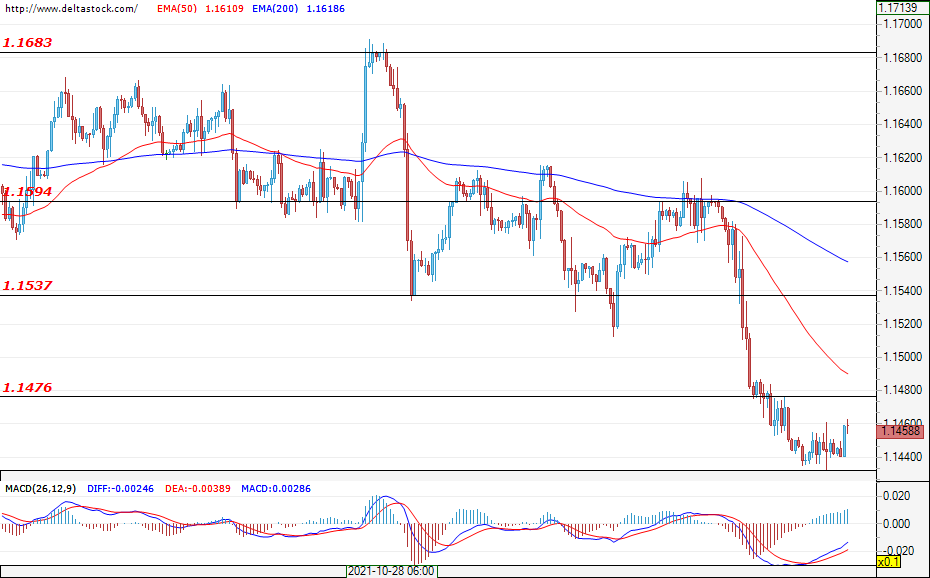
Current level - 1.1458
During the past week, the European single currency continued to shed from its value against the U.S. dollar. The bulls managed to limit the sell-off slightly above the support level of 1.1420, but it is possible that the decline will continue. The forthcoming test of the resistance zone of 1.1476 could predetermine the future move of the currency pair. A successful breach of the mentioned level may be a prerequisite for an additional appreciation and a test of the next significant level of 1.1537. The announcement of the trade balance data for the euro area (today; 10:00 GMT) could lead to an increase in the volatility of the currency pair.
| Resistance | Support | ||
| intraday | intraweek | intraday | intraweek |
| 1.1476 | 1.1600 | 1.1420 | 1.1300 |
| 1.1537 | 1.1680 | 1.1370 | 1.1180 |
USD/JPY
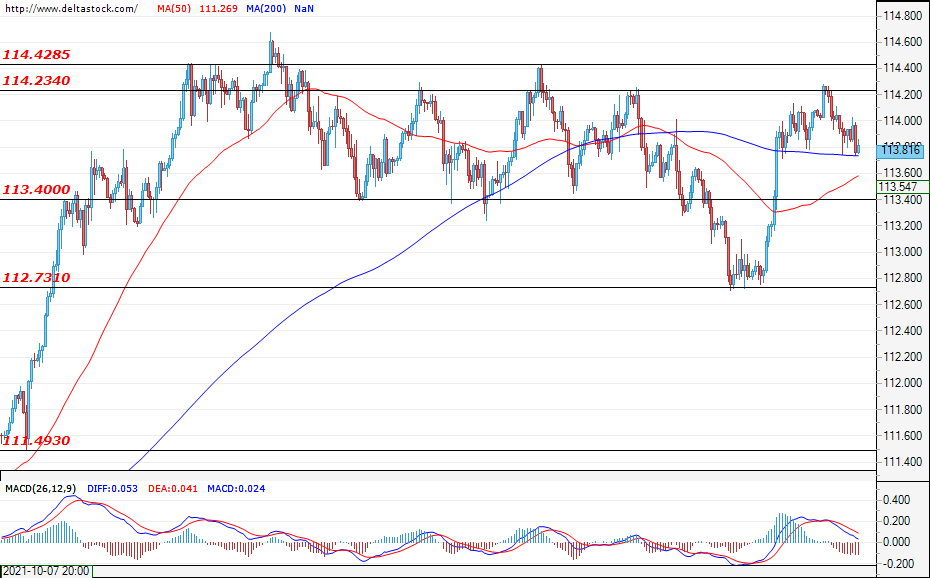
Current level - 113.81
The currency pair resumed its range move in the narrow channel between 113.40 - 114.23 after the brief breach of the lower boundary of the channel and the failed test of the support zone of 112.73. At the time of writing, the situation remains rather neutral. However, a test of the support zone of 113.40 is possible. The announcement of the GDP data for Japan (yesterday; 23:50 GMT) couldn't change investors’ sentiment and, so far, there is no economic news that is expected to affect the volatility of the market throughout the rest of the day
| Resistance | Support | ||
| intraday | intraweek | intraday | intraweek |
| 114.20 | 115.50 | 113.40 | 111.50 |
| 114.40 | 117.00 | 112.73 | 111.00 |
GBP/USD
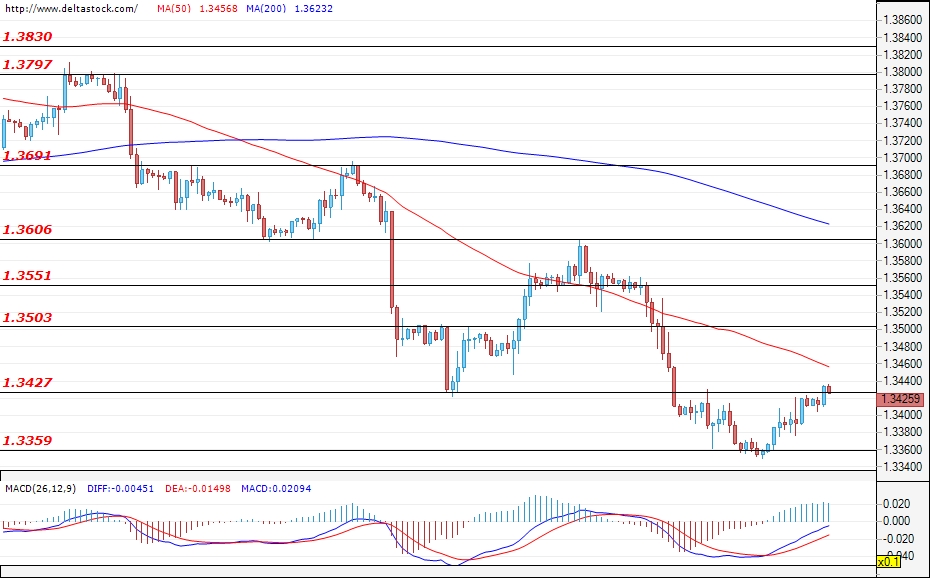
Current level - 1.3425
Like most of the major currency pairs, the pound also lost ground against the U.S. dollar during last week. The bears lost momentum around the support zone of 1.3360, where the bulls intervened and tested the resistance of 1.3427. The current breach of the mentioned resistance cannot be considered as completed and, in case we do not receive confirmation, the most probable scenario would be for a second reduction and a test of the 1.3360 support area.
| Resistance | Support | ||
| intraday | intraweek | intraday | intraweek |
| 1.3427 | 1.3600 | 1.3360 | 1.3200 |
| 1.3550 | 1.3690 | 1.3290 | 1.3200 |
Gold Price Started A Fresh Increase From The $1,820 Support Level
Gold price found support near $1,820 and started a fresh increase against the US Dollar. The price was able to surpass the $1,830 and $1,850 resistance levels.
There was a break above the $1,860 level and a close above the 50 hourly simple moving average. The price traded as high as $1,868 and it is now consolidating gains. On the downside, an initial support is near the $1,858 level.
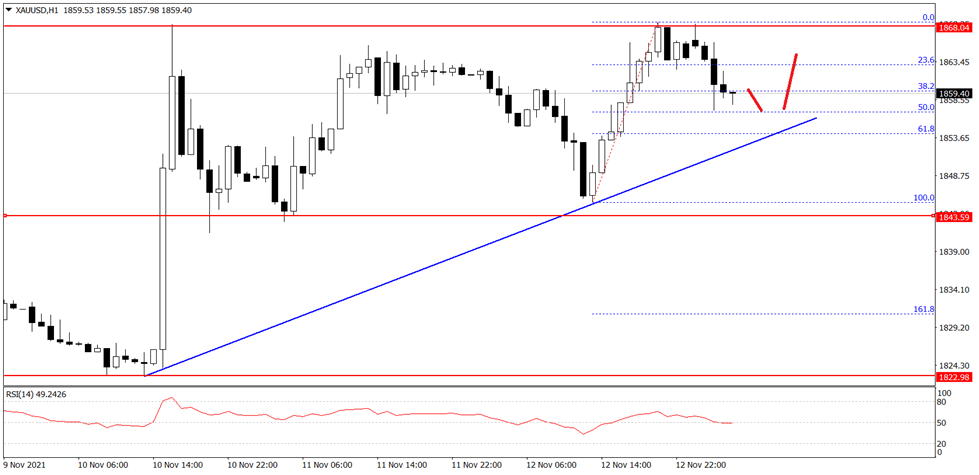
There is also a major bullish trend line forming with support near $1,855 on the hourly chart. The next key support is near the $1,850 level, below which the price could revisit $1,835 on FXOpen.
On the upside, an immediate resistance is near the $1,865 level. A clear break above the $1,865 resistance could push the price further higher. The next main resistance could be near the $1,880 level.
Mixed Feelings
The week starts on a mixed sentiment. The equity markets quickly got over last week’s inflation shocker from the US. Nasdaq rebounded as fast as it dived, as investors didn’t find a much better alternative to the stocks for hedging against inflation, while gold coughed to life, as the yellow metal flirted with $1870 an ounce for the first time in five months.
Activity on equity futures point at a flat start to the week.
The better-than-expected industrial output from China, and rising hopes that the upcoming US-China meeting would lead to some positive news for international trade keeps investors cautiously optimistic this Monday.
But inflation remains on the back of every investor’s mind, as the Europeans and the Brits will be revealing their latest inflation figures this week, and following the blow number from the US last week, traders are not walking into the European inflation data light-hearted.
While inflation in the Eurozone is expected to have stabilized near 4.1% in October, the consumer price index in Britain is seen jumping to 3.9% from 3.1% printed a month earlier.
What’s important is not the numbers per se, but these numbers’ potential of boosting the hawkish expectations. For the Eurozone, Christine Lagarde is fighting back inflation by playing it down, acting as it doesn’t exist and as it won’t impact the policy decisions. Therefore, the chances are that we continue seeing the single currency extending losses against the US dollar.
The Bank of England (BoE), on the other hand, at least reckons that there is a rising inflation problem that needs to be addressed, but they don’t want to address it. Still, activity on MPC Sonia futures points at a 67% chance of a rate hike in December in the UK. Therefore, a strong inflation figure could come to strengthen the hawks’ hands and could give a boost to the pound at the current levels.
However, even the BoE hawks could find it hard to fight back the prospects of a strengthening US dollar moving forward. The US dollar index is at a year-high levels, and has room to extend gains for three major reasons. One, the rising inflation is boosting the hawkish Federal Reserve (Fed) expectations, and could lead to earlier and a steeper rate normalization path in the US. Second, the slowing global growth is less good for the export-oriented economies like the Eurozone and Japan, which according to UBS exports 29% and 18% of their GDP, versus only 12% for the US. And third, the US dollar should benefit from rising real rates as a result of a tighter interest rate policy from the Fed, given that the Fed is expected to act earlier than its major peers.
COVID-19 Worries On The Rise
Market movers today
- We start the week in a fairly quiet fashion on scheduled global data releases. However, in the Nordics focus will start out with Swedish October inflation and Danish Q3 GDP both to be released this morning. For details see the Nordic Macro Section below.
- US President Joe Biden and Chinese President Xi Jinping are scheduled to hold a virtual summit later today which will always get attention from a global diplomacy perspective.
- Later this week, markets will keep a close eye on US retail sales (Tuesday), the UK labour market report (Tuesday) and also a range of Fed speakers for any hints on the monetary policy outlook. Also markets will follow global COVID-19 data and possible new restrictions being put in place (see below).
- Finally, we should soon expect an announcement of whether Jerome Powell is re-nominated as Fed chair.
The 60 second overview
COVID-19 restrictions: On the back of rising contaminations the Netherlands has entered a three-week partial lockdown forcing bars, restaurants and supermarkets to close at 20.00 and non-essential stores to close at 18.00. Also spectators will be banned from sporting events and people are being urged to work from home. This illustrates the rising risk of new lock-down measures being put in place in developed countries. Also Austria and Germany are contemplating tougher measures.
We think the next 3-6M will be challenging in Europe and in the US and we expect many countries will re-introduce (or tighten) some of the soft measures like face mask requirements and COVID-19 green pass. We still think the bar for new lockdowns in most countries is higher this year due to the vaccine roll-out but countries with low vaccine uptake may be forced to implement tougher measures. We still expect a weaker relationship between new cases and hospitalisations/deaths, especially in countries with high vaccine uptakes.
COP26: Over the weekend more than 200 nations agreed on a climate agreement coined the Glasgow Climate Pact. The agreement included several measures to fight climate change which among other things included the first explicit intention to reduce the use of coal (to be "phased-down") and a framework for a global carbon market. According to experts the agreement keeps hopes alive that the Paris Agreement's 1.5 degree Celsius goal is still achievable. Meanwhile, critics say the agreement was not ambitious enough and that the really tough decisions have merely been pushed out in time.
China: Overnight data out of China revealed both retail sales and industrial production beating market expectations. This comes after a string of worse-than-expected figures and does give some investor relief. That said, also this morning we got fixed asset and property investment data which still highlighted how not least the Chinese market for property development will continue to be followed closely. Prior to the releases The People's Bank of China has rolled over its medium term lending facility thereby injecting CNY 1tn into the bank system.
Japan: National Account figures this morning showed a larger-than-expected setback in Japanese activity in Q3. That still leaves Japan as one of the biggest losers from the COVID-19 crisis with the country posting one of the largest GDP gaps to both pre COVID-19 levels and not least trend as illustrated by this twitter-chart.
Equities: As anticipated in our September strategy, sector- and style performance have turned more directionless. Last week we saw both defensives/cyclicals and growth/value among winners- and losers. On Friday, preference reversed for the week, with growth names generally outperforming. Communication services and tech were among the leaders, while value defensives such as energy, utilities and consumer staples lagged. Asian markets are mixed this morning, despite strong Chinese macro numbers. US futures slightly higher.
FI: It was a very volatile week for the global bond market as shown by the 10Y US Treasury yield, which has been trading between 1.43% and 1.56%. The real yield has again been touching the 5Y low of -1.20%. Hence, real yields continue to trade at very expensive levels on the back of the higher than expected US inflation numbers.
FX: The end to last week's session was generally characterised by modest USD gains and reflation-sensitive currencies in RUB, HUF, PLN, SEK and NOK posting decent losses. Both EUR/USD and EUR/GBP moved somewhat lower.
Credit: There were only small moves in credit on Friday. iTraxx Xover widened 0.7bp, closing in 248bp, and Main unchanged in 48.7bp. HY bonds tightened 0.7bp and IG was unchanged.
Nordic macro
Swedish inflation numbers for the month of October will be released at 09.30 CET today. We expect CPIF and CPIF ex energy to print spot on respectively 0.2 percentage points below the Riksbank's forecasts, with CPIF unchanged on the month and ex energy 0.2% higher m/m. Electricity prices have come down during October and we expect this to drag down headline, whereas fuel is expected to pull in the opposite direction. We also expect food prices to increase slightly on the month. The big joker lies within transportation services, where we saw higher than expected numbers from both Norway and Denmark last week. However, there are no signs of significantly higher foreign airline ticket prices. Additionally, as the autumn break spilled over into November, it is hard to pinpoint which month will actually be hit.
In Denmark, we get the GDP indicator for Q3. The Danish economy maintained its momentum in Q3 and we expect that the GDP indicator will show growth of 0.7%. Industry has looked strong, and the service economy has experienced a powerful tailwind in the wake of the reopening, which has also created a record number of jobs.
GBP/JPY Daily Outlook
Daily Pivots: (S1) 152.49; (P) 152.71; (R1) 153.05; More...
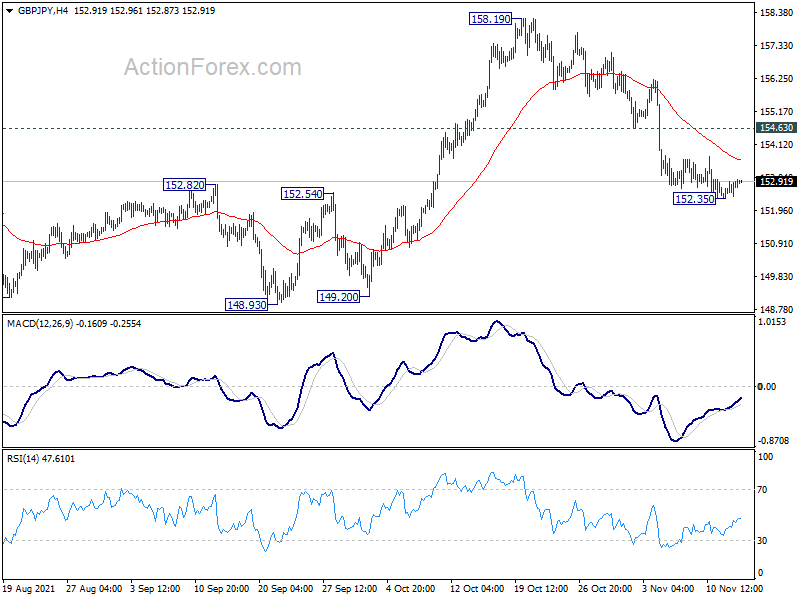
Intraday bias in GBP/JPY remains neutral for some consolidations above 152.35 temporary low. Further fall is expected as long as 154.63 resistance holds. On the downside, below 152.35 will resume the fall from 158.19 towards 148.93 key support next. On the upside, though, break of 154.63 minor resistance will turn bias back to the upside for retesting 158.19 high.
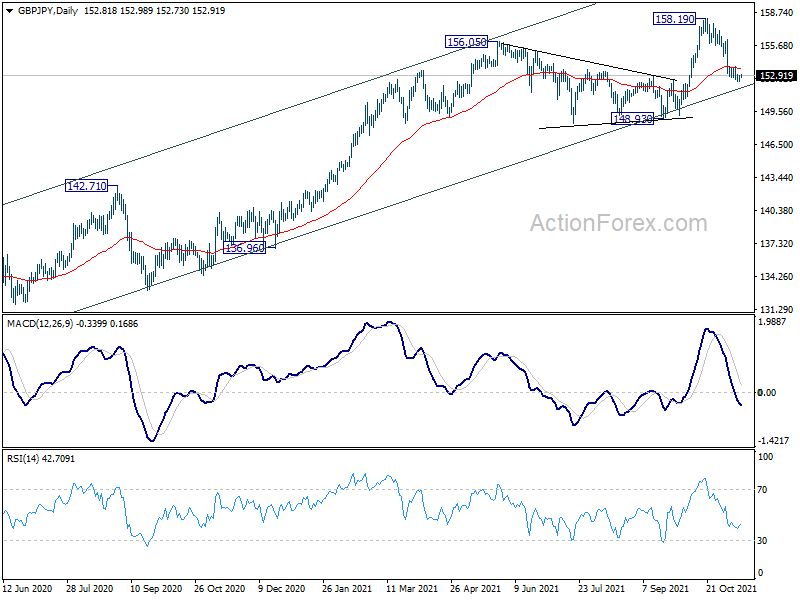
In the bigger picture, rise from 123.94 is seen as the third leg of the pattern from 122.75 (2016 low). The stay above 55 week EMA affirms medium term bullishness. Current rise should now target 61.8% retracement 195.86 (2015 high) to 122.75 at 167.93 next. In any case, outlook will remain bullish as long as 148.93 structural support hold, even in case of deep pull back.
EUR/JPY Daily Outlook
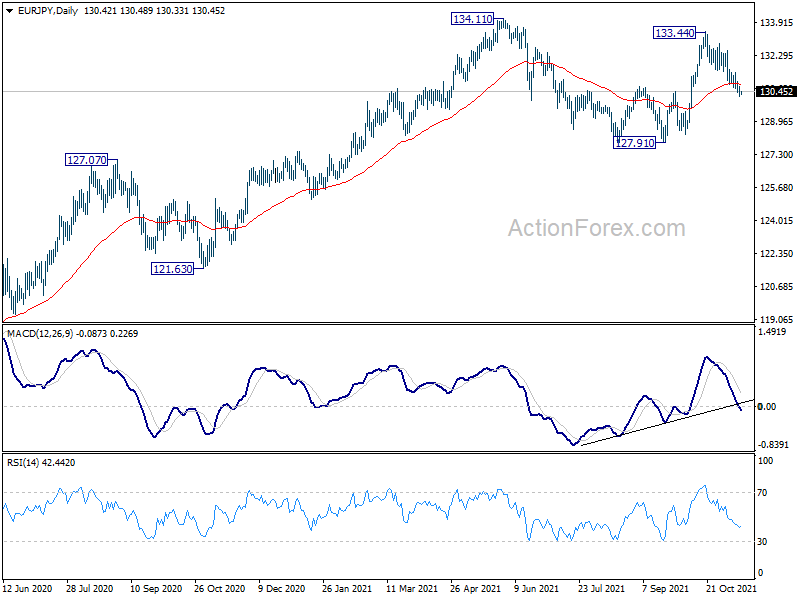
Daily Pivots: (S1) 130.17; (P) 130.46; (R1) 130.67; More....
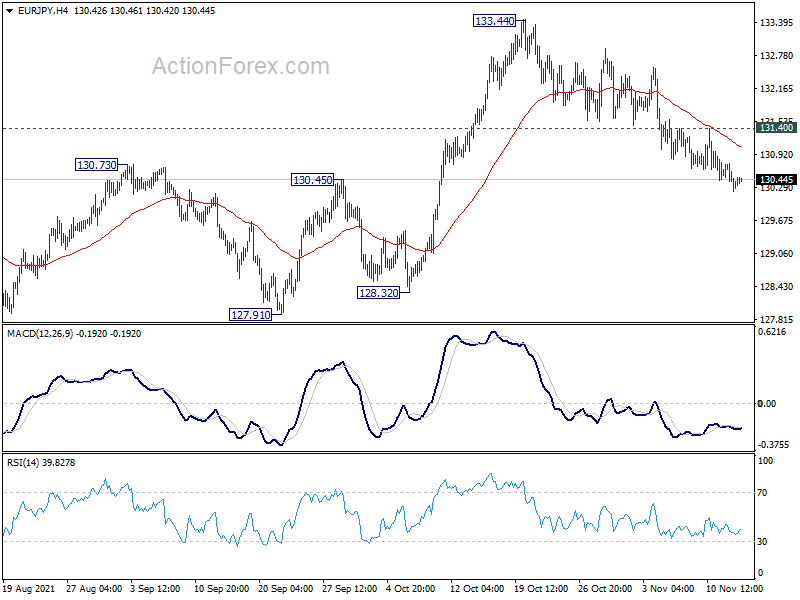
Intraday bias in EUR/JPY remains on the downside at this point. Deeper fall would be seen for 127.91 key support. On the upside, however, break of 131.40 minor resistance will turn bias back to the upside for stronger rebound, probably back to retest 133.44 high.
In the bigger picture, rise from 114.42 (2020 low) is still in progress and the strong support support from 55 week EMA affirms medium term bullishness. Further rise would be seen to retest 137.49 (2018 high). Decisive break there will resume the whole long term rise from 109.03 (2016 low). Next target will be 100% projection of 109.03 to 137.49 from 114.42 at 142.88. This will now remain the favored case as long as 127.91 support holds.