Sample Category Title
Sunset Market Commentary
Markets
Interest rate markets apparently still haven’t fully digested last week’s repositioning. Yesterday, US and EMU yields tried a cautious but unconvincing rebound off last week’s lows, but there was no follow-through action. Soon after the start in Europe, US and European bonds again captured a better bid and this was extended in US dealings. Financial news wires mentioned dovish MPC member Lael Brainard still being in the race to become the next Fed chair as possible support for bonds. The same applies to yesterday’s Fed financial stability report addressing a wide range of topics that might complicate the economic recovery. We doubt these factors were really of big importance. Markets simply remain uncertain on CB’s reaction function in a context of rising inflation but at the same time multiple risks to economic growth. The ongoing downleg on real yields is illustrative in this respect. German and US 10-y real yields are again close to the all-time lows (-2.21% and -1.17% respectively). The US real 30-y yield is currently in uncharted territory (-0.56%). On the more hawkish side of the CB spectrum, ECB’s Knot warned that the ECB shouldn’t make long-term commitments with inflation at risk of outpacing expectations. For markets this is still a minority view. Data were of second tier importance. German ZEW economic expectations unexpectedly rebounded from 22.3 to 31.7. Admittedly, the current situation index eased from 21.6 to 12.5, neutralizing any potential positive reaction. US October PPI inflation printed exactly in line expectations with the headline holding at 8.6% Y/Y. From a market point of view, the report didn’t bring the upward inflation surprise that is needed to change current dovish market thinking. The US yield curve flattens with the 2-y yield easing 3 bps and longer maturities declining about 4/5 bps. German yields also resume their (corrective?) decline with changes ranging between -1.7 bps (2-y) and -8 bps (30-y). Intra-EMU spreads again tighten, but only marginally with Greece slightly outperforming (-3 bps). ‘Depressed’ sentiment on yield markets currently has no big impact on equities. Persistent low real yields currently are enough to keep equity indices near recent (EMU)/all-time records (US).
On FX markets, the dollar remains in the defensive, but losses remain modest. The trade-weighted index (DXY) currently struggles to hold north of the 94 handle. EUR/USD locked is a balance of weaknesses (1.1595). The yen still outperforms on the further decline in core real yields. USD/JPY (112.90) confirms yesterday’s technical break lower. Sterling failed to hold on to tentative initial strength. EUR/GBP returned to the mid 0.8550 area. Lingering Brexit fears and an ‘unpredictable’ BoE interest policy currently hampers a sustained GBP-comeback.
News Headlines
The Romanian central bank increased policy rates with 25 bps to 1.75%. Although that was less than the 50 bps consensus, it follows the unexpected kick-off of a tightening cycle last month (from 1.25% to 1.5%). The central bank said its new forecasts showed a “more pronounced slowing” this year. This warrants a cautious tightening while it fights off soaring prices. Inflation sped up to 6.29% in September and will probably hit 7% when data for October is released tomorrow. That’s double the upper range of the 1.5-3.5% target. Complicating matters for the central bank is the political crisis after the government collapsed in October. Acting Defense Minister Ciuca officially returned his mandate to become the new PM just one week ago. The Romanian leu trades little changed near all-time lows of EUR/RON 4.95.
Hungarian inflation quickened more than expected (again) from 5.5% y/y to 6.5% (1.1% m/m). Core inflation also rose from 4.2% to 4.7%. Both gauges are now at levels not seen since 2012, adding more pressure to the MNB to step up the tightening pace. After three consecutive 30 bps hike, the MNB since September continued at monthly 15 bps rate hikes. While money markets have recently repositioned for a return of a more aggressive approach, the forint traded guarded. It left the 7-month lows against the euro from around EUR/HUF 365 end of October to a still weak near 361 today (almost unchanged vs. yesterday). The MNB holds its policy meeting next week.
Dollar Still Holds in Negative Territory after US PPI
Calm day with US core PPI
Across the board, this week's data has been strong but not so important. The market has instead been focused on central banks, with both the US Federal Reserve and the Bank of England meeting last week. The FOMC voted to taper immediately in November, with a $15bn reduction per month in purchases, which implies asset purchases would end completely by June 2022.
Markets are continuing to price in a Fed lift-off that occurs sooner than the Fed desires. Even though many Federal Reserve officials have gone to great lengths to emphasize that tapering does not imply raising rates immediately, Bullard is certainly not one of them.
The dollar index is retreating for the third consecutive day around 93.82 with dollar/yen continuing the selling interest below the 113.00 round number after the release of US PPI. For October, core producer prices for final demand climbed by 0.4%, accelerating from 0.2% in September but falling short of market forecasts of 0.5%. In yearly terms, the producer price index remained the same as before at 8.6%.
The euro continues to struggle to reclaim the $1.16 region. The pound has taken a beating following the BoE, but has found some footing in recent sessions, with cable rising from a low of $1.3410 on Friday. While some of this is due to a weaker dollar, the pound itself has also found a more stable footing, with euro/pound failing to overcome the 200-day simple moving average (SMA).
Stocks
The S&P 500 and the Dow Jones futures are marginally down after the rise to record highs in the previous days, with investors awaiting fresh U.S. inflation data for clues on the direction of interest rates. European stocks were trading near all-time highs, buoyed by robust corporate earnings reports that boosted investor confidence.
Commodities and commodity currencies
In other markets, WTI crude oil futures are continuing to hold above $82.00/per barrel and gold is hovering beyond the $1,825/per ounce today. The aussie and kiwi are slightly softer versus the greenback, while dollar/loonie is flattening around 1.2440, finding strong resistance at the 200-day SMA.
US: NFIB Small Business Optimism Index Eases Further in October
- The National Federation of Independent Business' (NFIB) small business optimism index ticked down 0.9 points to 98.2 in October. The index has generally trended lower so far in the second half of 2021. The October headline print came in below market expectations, which called for an increase from 99.1 to 99.3.
- Seven of the ten subcomponents fell on the month, one improved and two remained unchanged. A four-point decline in expectations about an improvement in the economy (-37%) led the pullback. This subindex has fallen 25 points since mid-year and is at its lowest level since 2012. Earning trends (-3 points to -17%) and the share of businesses expecting higher real sales (-2 points to 0%) also fell on the month.
- The survey's labor market indicators were mixed. The share of firms with unfilled job openings eased two points to a still-elevated 49%, while the share of firms planning to increase employment held steady at 26%. At the same time, the share of firms with 'few or no qualified' applicants and 'quality of labor' concerns fell 4 points apiece to respectively 58% and 24%. While all of the aforementioned indicators have pulled back on a trend basis in recent months, they remain near their respective all-time highs, indicating that labor demand remains strong.
- Businesses continued to place a heavy focus on wage increases in order to attract and retain workers. The share of firms increasing worker compensation and those planning to do so increased by two points apiece to fresh record highs of respectively 44% and 32%. This was accompanied by an elevated share of firms raising average selling prices (+7 points to 53%) and those planning to do so (+5 points to 51%), with the latter eclipsing its 1970s peak.
Key Implications
- While the headwind from the Delta-driven infection wave continued to subside in October, optimism among small business owners failed to improve. Owners remain skeptical about an improvement in the economy, with this sub-indicator now at its lowest level since 2012.
- Improved public health conditions and rising vaccination rates should offer support to business growth, but the current economic environment also presents challenges. Besides the negative impact of supply-chain disruptions, which is featuring in inventories (an elevated share of businesses continue to report inventories as "too low"), filling open job positions also remains a big hurdle. In fact, 'quality of labor' and 'cost of labor' remain the biggest concerns for a combined 40% of business owners – far outstripping other categories such as taxes (17%) and government requirements (11%).
- Businesses continue to raise employee compensation in order to attract and retain talent, with compensation metrics reaching new all-time highs in October. Many of these added costs, meanwhile, continue to be unloaded onto consumers, with price metrics also near the highest levels since the 1970s. These dynamics will continue to keep upward pressure on inflation in the near-term, and are part of the reason why the Fed is poised to continue easing monetary support in the months ahead
USDCHF Crossed Below Its 50- and 200-Day SMA; Bearish Outlook
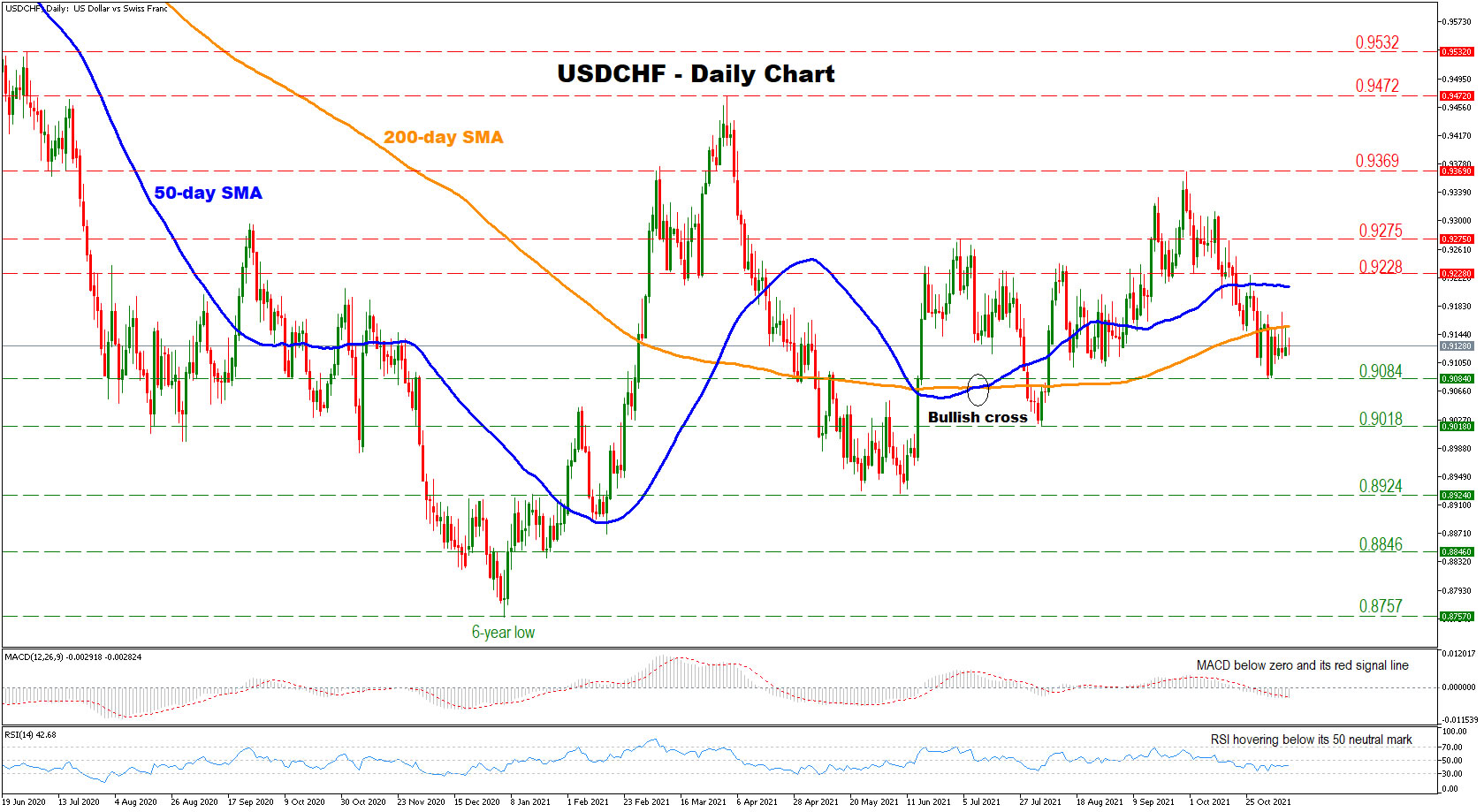
USDCHF regained its negative momentum as the pair crossed below its 50- and 200-day simple moving average (SMA) in the past couple of sessions. This diminished hopes of a sustained bullish move after a brief period of price appreciation when the 50-day SMA had crossed above its 200-day SMA.
The bearish outlook and the recent price depreciation are also supported by the short-term momentum indicators, as the RSI is hovering below 50, while the MACD has dropped below zero and its red signal line.
Should the price break below its 0.9084 support, the bears might then target the 0.9018 level. A further descending movement from this barrier could intensify selling pressure, sending the price to test the 0.8924 obstacle. Breaching this barrier too could pave the way towards the 0.8846 level, strengthening the pair’s negative momentum.
On the flip side, if the price breaks above its 200-day SMA currently found at 0.9156, the bulls might target the 50-day SMA currently at 0.9210. Any advancements beyond that crucial level could turn the cards around for the pair, reviving its positive momentum. This could send the price to test its 0.9228 resistance, before moving higher towards the 0.9369 level.
In brief, the overall outlook for the USDCHF is bearish. However, this might change if the price breaks above its 50-day SMA, reviving positive momentum, while breaking below the 0.8846 level, could reinforce the pair’s negative bias.
Gold Remains Firm in Near-term as Central Banks Downplayed Rate Hike Expectations
Gold price consolidates at the highest level in 2 months. Its recent rally has been driven by major banks’ attempt to tame rate hike expectations. We expect its strength to remain in the near-term. However, elevated inflation would eventually force central banks to reduce monetary stimulus and increase the policy rate, leading to decline in the yellow metal’s price.
Last week, the Fed formally announced to begin QE tapering in mid-November. Policymakers acknowledged that the employment market and inflation have achieved “substantial further progress”. However, they reiterated that recent strength on inflation was driven by “transitory” factors and that it’s “appropriate” to leave the Fed funds rate at 0-0.25% until the employment situation has reached what the Fed assessed as “maximum employment” and inflation has “risen to 2% and is on track to moderately exceed 2% for some time”. Market expectations of at least a rate hike in June 2022 slipped to 57.3% as of November 9, from 58.5% before the November meeting. Elsewhere, the BOE disappointed the market by leaving the Bank rate unchanged at 0.1% last week, despite the affirmation that “it would be necessary over coming months to increase Bank Rate in order to return CPI inflation sustainably to the 2% target”. The Committee voted 7-2 to keep the policy rate on hold, signaling that it was not so much a tight race between hawks and doves although inflation is expected to accelerate further to +4.5% in November. The ECB in late October attempted to downplay the urgency of rate hike.
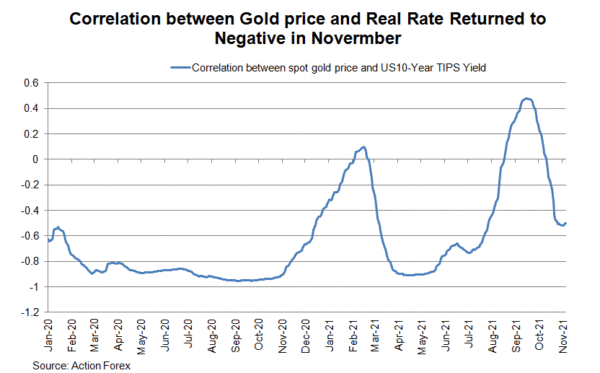
However, strong inflation has so far proved more persistent than central banks have anticipated. In the US, headline CPI is the US is estimated to have increased +5.3% in October from the same period last year. This was only a mild drop from +5.4% y/y in September. Core CPI is expected to remain steady at +4% y/y in October. Longer-term inflation expectations have stayed above the Fed’s +2% target.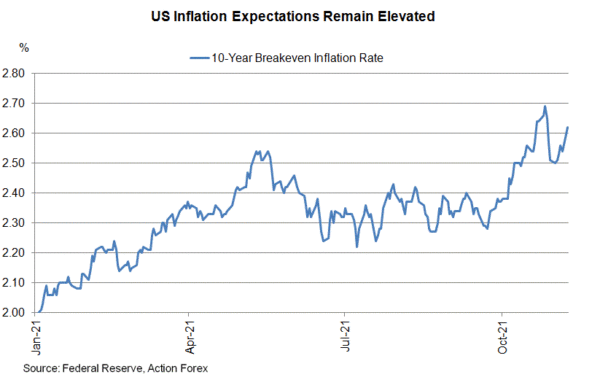 The negative correlation between gold price and real yield was derailed from mid-August to early October. Yet, it has recently to “normal” with the 90-day correlation at -0.5. We expect the outlook of gold price would be closely related to the inflation outlook together with rate hike expectations as reflected in Treasury yield.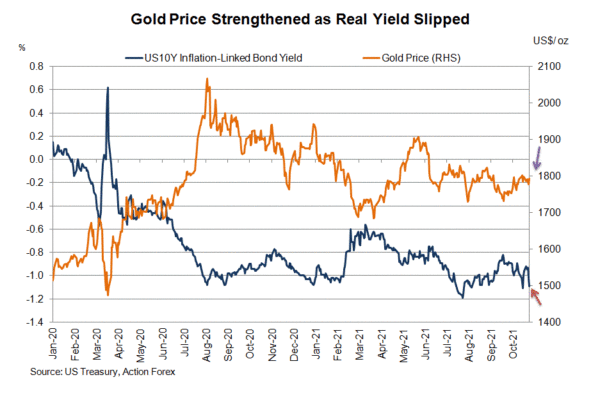
NZDJPY Falters Near 4-Year Highs
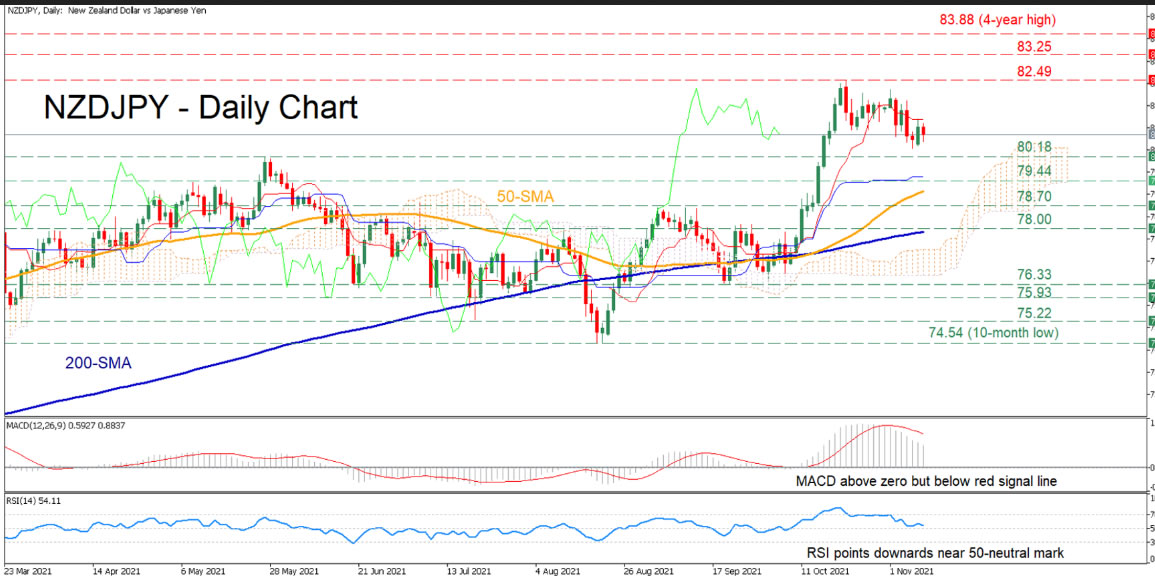
NZDJPY has been trending upwards since the beginning of 2021 but seems to be lacking the necessary momentum to challenge its 4-year highs. After peaking at 82.49, the pair has been moving without a clear direction, while the immediate bias seems neutral.
The short-term oscillators provide mixed conclusions. On the one hand, both 50- and 200-day simple moving averages (SMAs) are ticking upwards and the price is trading above the Ichimoku cloud, suggesting a bullish bias. However, the MACD histogram is below its red signal line, while the RSI is declining near the 50-neutral mark, endorsing a loss of steam for the pair.
Should the buying pressure intensify, buyers may target the recent high of 82.49. Overcoming this level, the next obstacle might be the July 2017 resistance zone of 83.25. If the price continues to ascend, the next barricade might be the 4-year high of 83.88.
On the flipside, the first target for the bears might be the 80.18 level. A drop below this barrier would open the way towards 79.44, and even lower the price could test the 78.70 hurdle. If these obstacles fail, then the price might seek to halt its decline at the 78.00 region, which has provided both support and resistance in recent months.
To sum up, NZDJPY is sustaining a bullish tone as it fluctuates close to record highs. A profound break above 82.49 would strengthen the long-term positive bias, whereas a move below 78.00 can turn the short-term picture to negative.
Fed Powell attentive to disparities in labor market, not just headline numbers
Fed Chair Jerome Powell said defining maximum employment as a broad and inclusive goal recognizes that "a strong labor market delivers broad-reaching benefits and extends those benefits in particular to low- and moderate-income communities".
"While monetary policy does not target any particular group of people, when we assess whether we are at maximum employment, we purposely look at a wide range of indicators, and we are attentive to disparities in the labor market, rather than just the headline numbers," he added.
Bailey Signals Rate Hike Coming
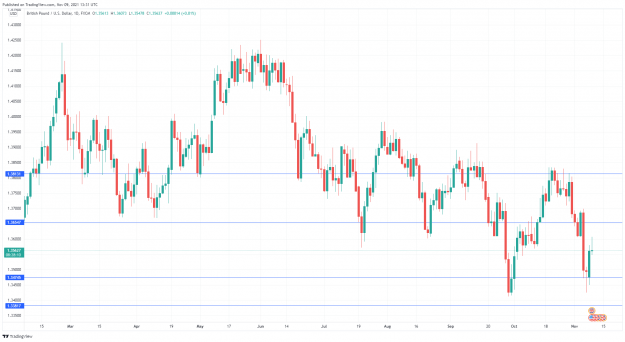
The British pound is trading quietly on Tuesday. GBP/USD is currently trading at 1.3569, up 0.06% on the day.
Bailey says BoE monitoring inflation
The BoE surprised the markets last week when it stayed on the sidelines at its policy meeting and kept its benchmark rate at 0.1%. BoE Governor Andrew Bailey had stated that before the meeting the bank would act to contain rising inflation, and many investors viewed Bailey’s comments as a hint that the bank would raise rates at last week’s policy meeting. When the BoE failed to carry through with a rate hike, the markets were stunned and the pound fell sharply.
Bailey may have felt the need to do some damage control after last week’s non-move and held a Q&A with the public on Monday. The Governor noted that there was a risk of further bottlenecks in the economy and said that the bank was on the path to raising rates, without providing any timelines.
The BoE could be faced with a credibility issue if it chooses to sit on the sidelines at the December meeting. The fact that the BoE is still running a QE scheme while talking about raising rates is also a potential source of confusion for the markets, as the two programmes are inconsistent with each other. In contradistinction, the Fed has no plans to raise rates before it winds up its bond purchase program.
Brexit is back in the news. More specifically, the UK has demanded changes to the trade rules affecting the movement of goods between Northern Ireland and the rest of the UK. Prime Minister Johnson has threatened to suspend the Protocol if no agreement is reached with Brussels. A unilateral move by Johnson would certainly trigger retaliation from the EU and could send the pound to lower ground.
GBP/USD Technical Analysis
- GBP/USD continues to break support levels as it falls lower. The pair is testing support at 1.3471. Below, there is monthly support at 1.3253
- There is resistance at 1.3653 and 1.3813
USD/JPY Mid-Day Outlook
Daily Pivots: (S1) 112.98; (P) 113.32; (R1) 113.57; More...
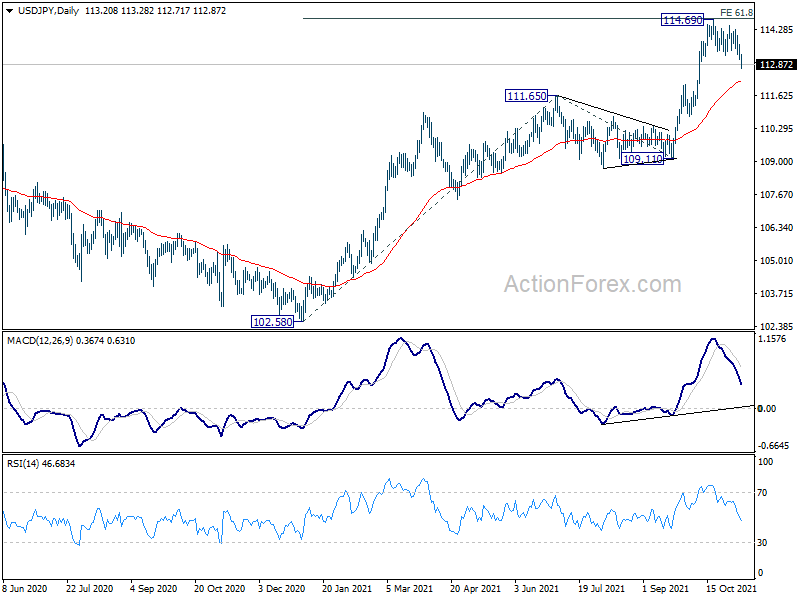
Intraday bias in USD/JPY remains mildly on the downside as fall from 114.69 is in progress. We'd still expect downside to be contained above 112.07 resistance turned support to bring rebound. On the upside, break of 113.65 minor resistance will turn bias back to the upside for retesting 114.69. However, sustained break of 112.07 will dampen our bullish view and bring deeper fall back towards 109.11 structural support.
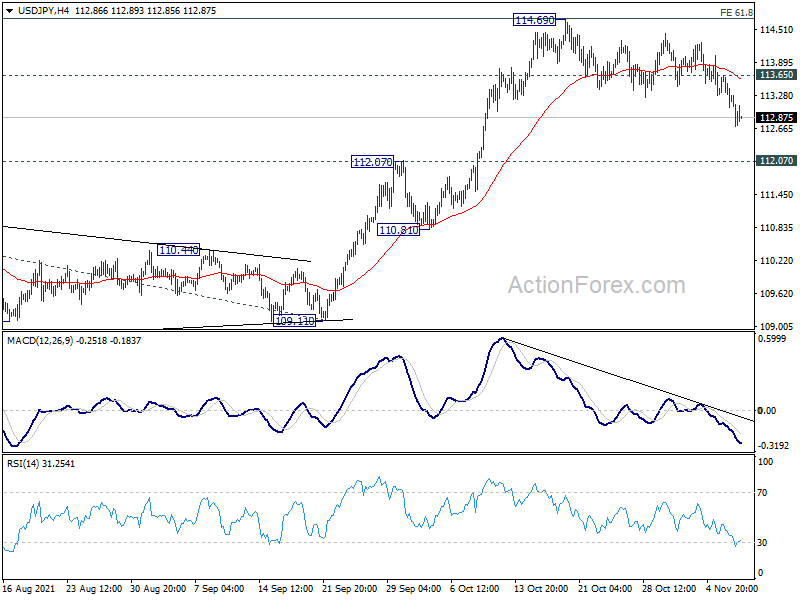
In the bigger picture, corrective decline from 118.65 (2016 high) should have completed at 101.18 already. Rise from the 102.58 is seen as the third leg of the up trend from 101.18. Next target is 114.54 resistance and then 118.65 high. This will now be the preferred case as long as 109.11 support hold, even in case of deep pull back.
USD/CHF Mid-Day Outlook
Daily Pivots: (S1) 0.9117; (P) 0.9137; (R1) 0.9156; More....
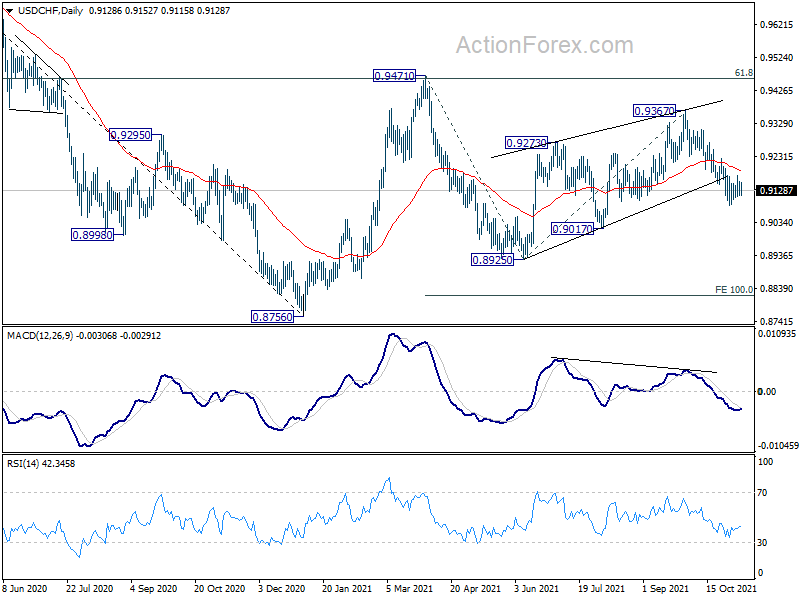
USD/CHF is staying in consolidation from 0.9084 and intraday bias remains neutral. Further decline is expected as long as 0.9174 resistance holds. Break of 0.9084 will resume the fall from 0.9367 to 0.9017 support, and then 0.8925. On the upside, however, break of 0.9174 resistance will indicate short term bottoming and turn bias back to the upside for stronger rebound instead.
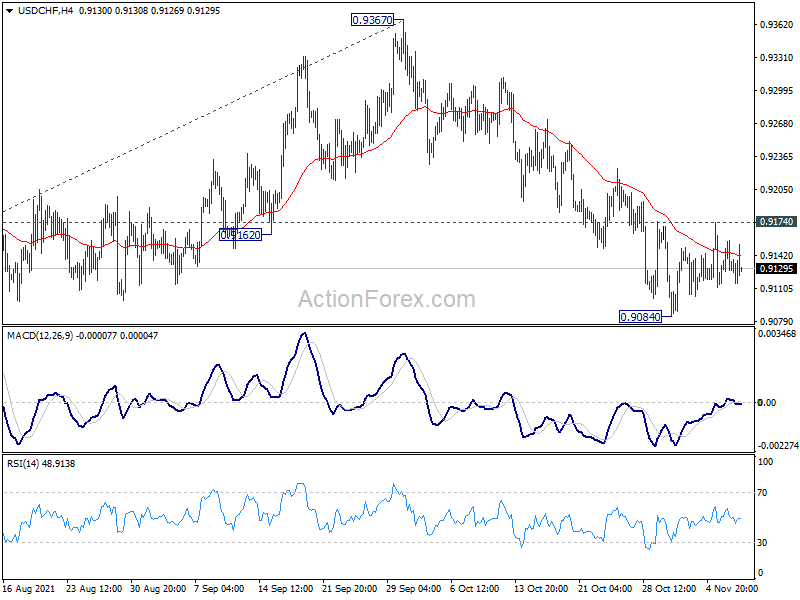
In the bigger picture, the corrective structure of the rebound from 0.8925 argues that fall from 0.9471 is not complete yet. It could either be the second leg of pattern from 0.8756 (2021 low), or resuming larger down trend from 1.0237 (2018 high). We'd pay attention to the downside momentum and assess the odds later. But for now, medium term outlook will be neutral at best as long as 0.9471 resistance holds.