Sample Category Title
Yen Staying in Driving Seat With Falling Yields and Mild Risk-Off Sentiment
Falling global yields and mild risk off sentiment continue to boost Japanese Yen. On the other hand, Australian Dollar is leading other commodity currencies lower. But the forex markets are mixed elsewhere for now. Dollar and European majors are stuck in near term ranges against each other. Eyes will turn to US consumer inflation data today, and see if that could trigger breakouts in Dollar pairs.
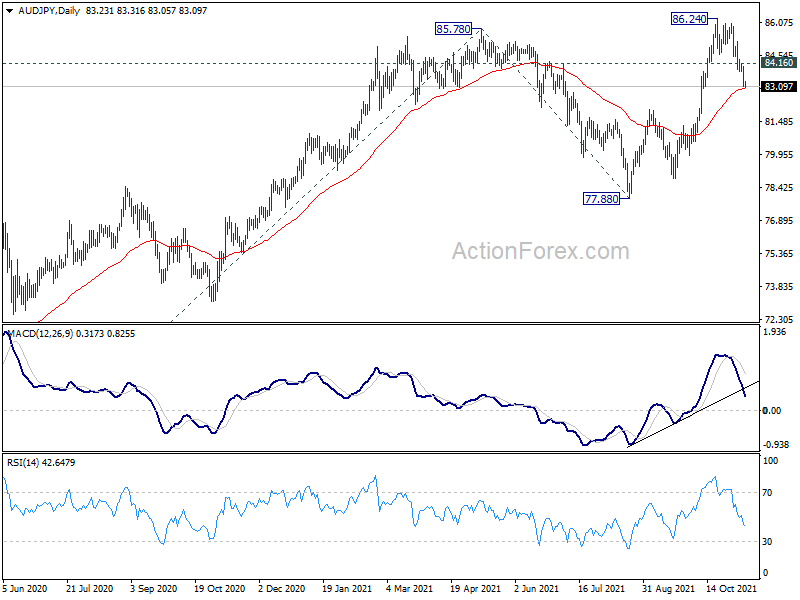
Technically, the pull back in AUD/JPY is turning out to be deeper than expected and threatens the near term up trend at least. Focus is on 55 day EMA (now at 82.98) and sustained break there would open the case for deeper fall back to 77.88 key structural support. Nevertheless, rebound from 55 day EMA, followed by break if 84.16 minor resistance will revive near term bullishness, and bring stronger rise through 86.24 high. We'll see how the cross reacts to development in both stocks and yields ahead.
In Asia, at the time of writing, Nikkei is down -0.63%. Hong Kong HSI is down -1.18%. China Shanghai SSE is down -1.20%. Singapore Strait Times is down -0.55%. Japan 10-year JGB yield is down -0.0047 to 0.061. Overnight, DOW dropped -0.31%. S&P 500 dropped -0.35%. NASDAQ dropped -0.60%. 10-year yield dropped -0.065 to 1.432.
Fed Daly looking at summer 2022 for some clarity
San Francisco Fed President Mary Daly urged patience to wait-and-see before acting on interest rates. She warned that if Fed hikes too soon, it will do very little on inflation, but "absolutely" reduce the pace of job growth. "That's too much risk to take when we don't have any indication that these are today persistent trends," she said.
"I'm looking at the summer of 2022 is when we should - knock on wood, no more variants, no more delta surges - get some clarity," she said.
On prices, she said, "as we get through the pandemic, we'll see prices moderate and we'll be back to that situation in which we had for more than a decade of forces pushing inflation down, not pushing inflation up."
Fed Kashkari: We are getting these mixed signals out of the economy
Minneapolis Fed President Neel Kashkari said he is keeping an "open mind" on the timing of rate hike and "I have not made any decisions about where my stance is on that."
"We are getting these mixed signals out of the economy," he added, referring to rising wages while jobs were still 5 to 7 million short of pre-pandemic levels. "I'm optimistic, in the next three, six, nine months we will get a lot more information," he said.
He also said, "if the labor force does not return, then that's going to give me more concern that the high inflation readings that we've been seeing may be sustained, because that means that hey, we are already at or maybe we are close to our economy's potential."
Australia Westpac consumer sentiment rose to 105.3 in Nov
Australia Westpac Consumer Sentiment rose 0.6% to 105.3 in November, up from 104.6. Looking at some details, the index on economic conditions for the next 12 months improved from 103.2 to 106.6, as reopening of major cities looked to have shored up confidence. Unemployment expectations index dropped notably from 107.1 to 95.3, as more consumers expect unemployment to fall than rise.
Westpac expects RBA to continue with the current AUD 4B per week asset purchases to continue as planned till February, and then reduce it to AUD 2-3B until next most likely review in May. Yet, if RBA assess that the pace of achieving its targets is satisfactory, it could decide to cut taper to ADU 2B per week and Fed, and than end the program altogether by May.
New Zealand ANZ business confidence dropped to -18.1, surging inflation expectations
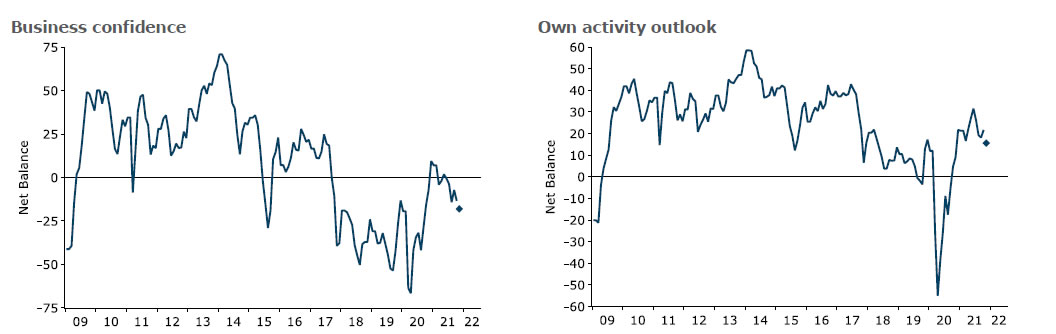
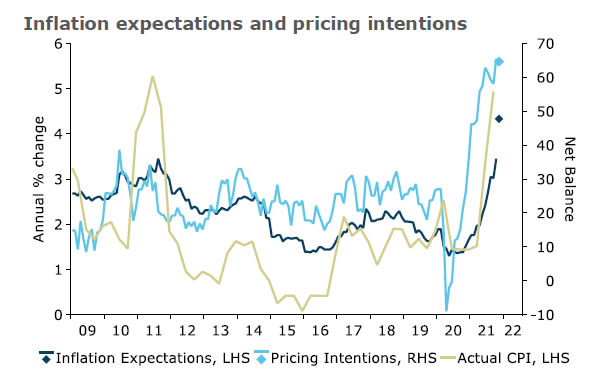
According to preliminary reading, ANZ business confidence dropped to from -13.4 to -18.1 in November. Own activity outlook dropped from 21.7 to 15.6. Export intentions ticked down from 8.6 to 8.0. Investment intentions dropped from 13.8 to 11.6. Employment intentions jumped from 10.9 to 16.1. Cost expectations rose from 87.2 to 89.0. Pricing intentions dropped from 65.6 to 64.6. Inflation expectations surged sharply from 3.45 to 4.33.
ANZ said: "Overall, the survey shows an understandable wariness as we move into a COVID-endemic world. The one certainty is that costs are through the roof."
Elsewhere
China CPI rose to 1.5% yoy in October, up from 0.7% yoy, above expectation of 1.4% yoy. PPI rose to 13.5% yoy, up from 10.7% yoy, above expectation of 12.0% yoy.
Germany CPI final and Italy industrial output will be featured in the European session. Main focuses will be on US CPI and jobless claims.
USD/JPY Daily Outlook
Daily Pivots: (S1) 112.64; (P) 112.97; (R1) 113.20; More...
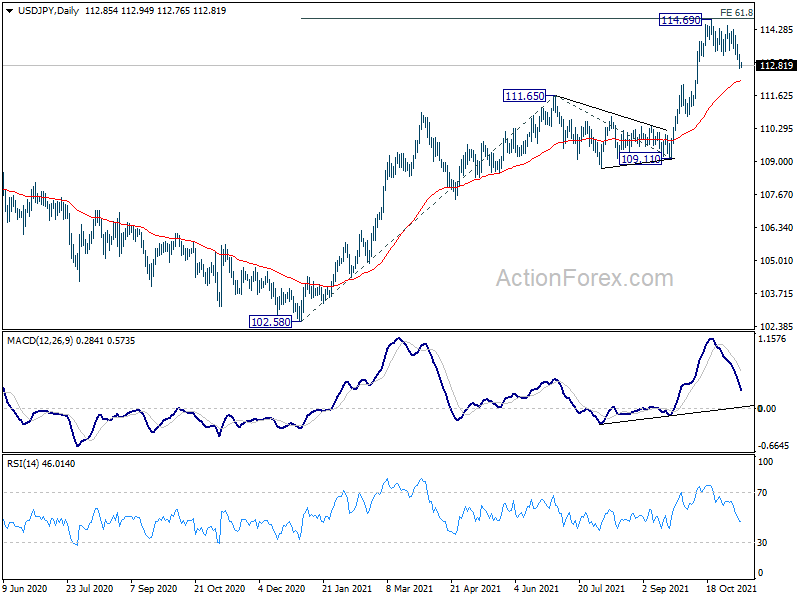
USD/JPY's fall from 114.69 is still in progress and intraday bias stays on the downside. For now, we'd expect downside to be contained above 112.07 resistance turned support to bring rebound. On the upside, break of 113.65 minor resistance will turn bias back to the upside for retesting 114.69. However, sustained break of 112.07 will dampen our bullish view and bring deeper fall back towards 109.11 structural support.
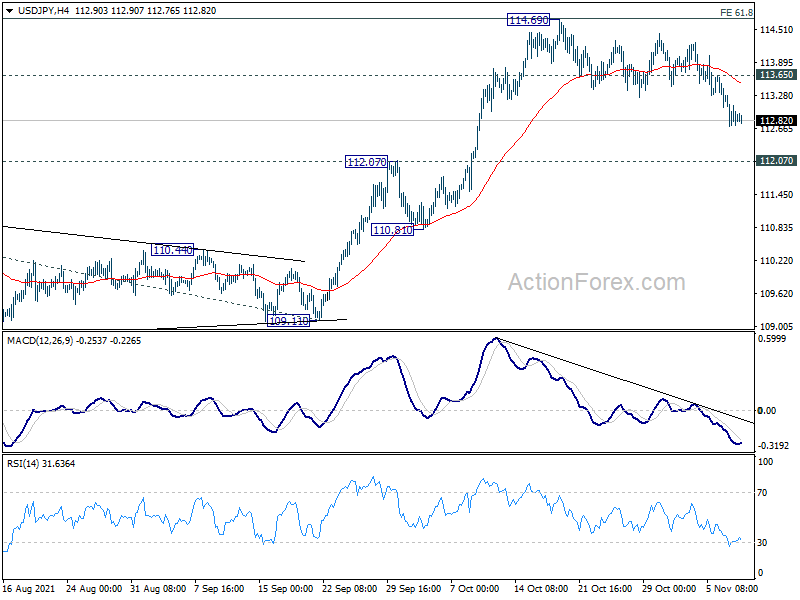
In the bigger picture, corrective decline from 118.65 (2016 high) should have completed at 101.18 already. Rise from the 102.58 is seen as the third leg of the up trend from 101.18. Next target is 114.54 resistance and then 118.65 high. This will now be the preferred case as long as 109.11 support hold, even in case of deep pull back.
Economic Indicators Update
| GMT | Ccy | Events | Actual | Forecast | Previous | Revised |
|---|---|---|---|---|---|---|
| 23:30 | AUD | Westpac Consumer Confidence Nov | 0.60% | -1.50% | ||
| 23:50 | JPY | Money Supply M2+CD Y/Y Oct | 4.20% | 4.30% | 4.20% | |
| 01:30 | CNY | CPI Y/Y Oct | 1.50% | 1.40% | 0.70% | |
| 01:30 | CNY | PPI Y/Y Oct | 13.50% | 12.00% | 10.70% | |
| 07:00 | EUR | Germany CPI M/M Oct F | 0.50% | 0.50% | ||
| 07:00 | EUR | Germany CPI Y/Y Oct F | 4.50% | 4.50% | ||
| 09:00 | EUR | Italy Industrial Output M/M Sep | -0.10% | -0.20% | ||
| 13:30 | USD | Initial Jobless Claims (Nov 5) | 266K | 269K | ||
| 13:30 | USD | CPI M/M Oct | 0.50% | 0.40% | ||
| 13:30 | USD | CPI Y/Y Oct | 5.30% | 5.40% | ||
| 13:30 | USD | CPI Core M/M Oct | 0.30% | 0.20% | ||
| 13:30 | USD | CPI Core Y/Y Oct | 4.00% | 4.00% | ||
| 15:00 | USD | Wholesale Inventories Sep F | 1.10% | 1.10% | ||
| 15:30 | USD | Crude Oil Inventories | 1.6M | 3.3M | ||
| 15:30 | USD | Natural Gas Storage | 9B | 63B |
AUD/USD At Risk Of Breakdown Below 0.7350
Key Highlights
- AUD/USD started a fresh decline from well above 0.7500.
- It traded below a key bullish trend line at 0.7520 on the 4-hours chart.
- EUR/USD is struggling to clear the 1.1600-1.1620 resistance zone.
- The US CPI could increase 5.3% in Oct 2021 (YoY), down from 5.4%.
AUD/USD Technical Analysis
After a steady rise, the Aussie Dollar faced sellers near 0.7560 against the US Dollar. AUD/USD started a fresh decline below the 0.7500 support zone.
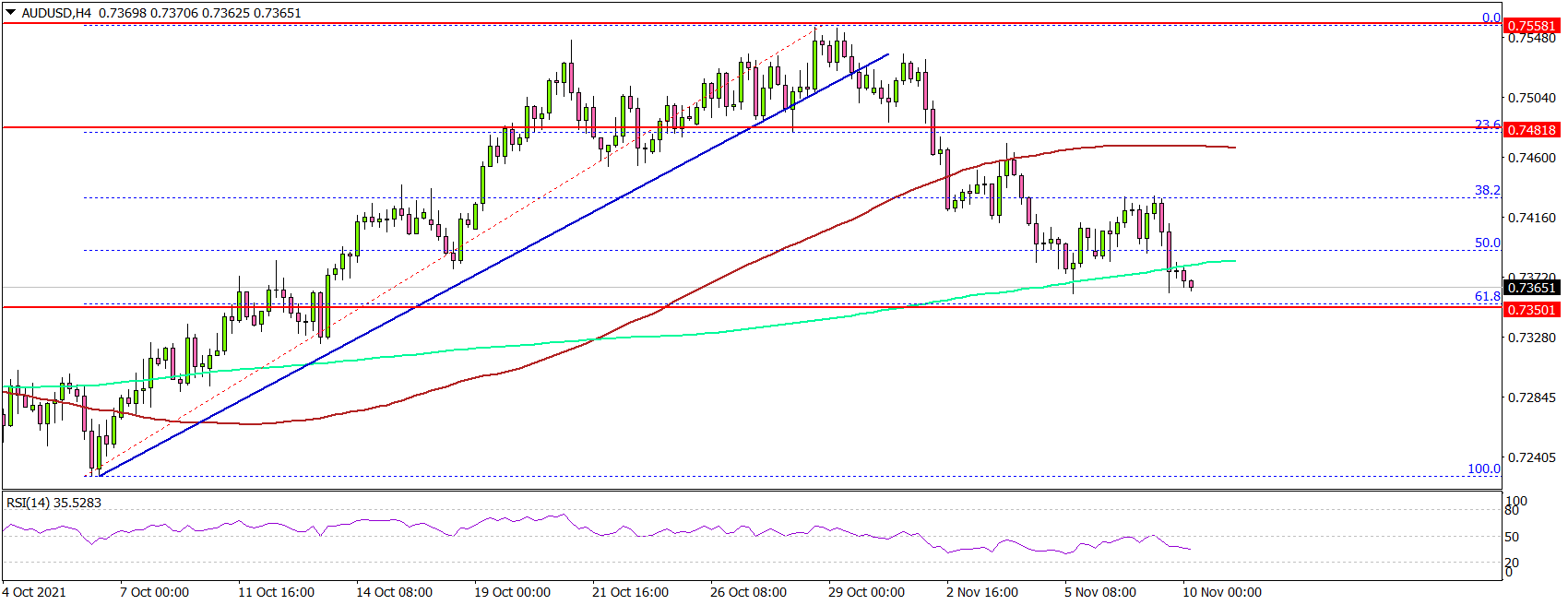
Looking at the 4-hours chart, the pair traded below the key 0.7480 support. Besides, there was a break below a major bullish trend line with support at 0.7520.
The pair even traded below the 50% Fib retracement level of the upward move from the 0.7225 swing low to 0.7558 high. The pair settled below the 0.7450 level and the 100 simple moving average (red, 4-hours).
The pair tested the 61.8% Fib retracement level of the upward move from the 0.7225 swing low to 0.7558 high. An immediate support is near the 07350 level.
A close below 0.7350 could open the doors for a move towards the 0.7300 level. The next major support is near the 0.7250 level. On the upside, an immediate resistance is near the 0.7420 level.
The next major resistance is near the 0.7450 level. A close above 0.7420 and 0.7450 could open the doors for a fresh increase. In the stated case, the pair could rise towards the 0.7550 level.
Looking at EUR/USD, the pair is attempting a recovery wave, but it is still struggling to gain pace above the 1.1620 level.
Economic Releases
- German Consumer Price Index for Oct 2021 (YoY) – Forecast +4.5%, versus +4.5% previous.
- German Consumer Price Index for Oct 2021 (MoM) – Forecast +0.5%, versus +0.5% previous.
- US Consumer Price Index for Oct 2021 (MoM) – Forecast +0.5%, versus +0.4% previous.
- US Consumer Price Index for Oct 2021 (YoY) – Forecast +5.3%, versus +5.4% previous.
- US Consumer Price Index Ex Food & Energy for Oct 2021 (YoY) – Forecast +4%, versus +4% previous.
Market Morning Briefing: Aussie Has Fallen Sharply And May Continue To Fall While Below 0.74
STOCKS
Dow needs to sustain above 36250/000 to keep the uptrend intact while Dax also needs to hold above 16000 to keep the bullish momentum intact for the near to medium term. Nikkei and shanghai have fallen and unless both sustain above 29500 and 3450, view is bearish for the near term. Nifty and Sensex have bullish scope intact while above 18000 and 60000 respectively.
Dow (36319.98, -112.24, -0.31%) has come down after testing the high of 36565.73 yesterday. A fall below 36250/000 is needed for our view to turn bearish. While above 36000/250, we may expect a test of 36500 and 37000 eventually.
DAX (16040.47, -6.05, -0.038%) has dipped slightly today but while above 16000, view remains bullish to see a test of crucial resistance at 16400.
Nikkei (29200.04, -84.63, -0.29%) has broken below the support at 29500. While below 29500 a fall towards 28000 is possible in the coming sessions before we see a bounce again. Our earlier mentioned bullish view towards 30000/31000 is negated while below 29500.
Shanghai (3461.98, -48.62, -1.28%) as come down sharply below 3475 resistance mentioned previously. A further fall below 3450, if seen will be bearish towards 3400. A strong break above 3475/3500 is needed to see a rise towards 3550+.
Nifty (18044.25, -24.30, -0.13%) closed above 18000 yesterday. While above 18000 the view is bullish to see a test of 18200/250. A fall back below 18000 can take it down towards 17600. Overall view is bullish.
Sensex (60433.45, -112.16, -0.19%) looks bullish to test 61000-62000 while above 60000. Watch price action closely in the near term.
COMMODITIES
Crude prices have surged as the US has opened its borders for international travel indicating a boost in jet fuel demand going ahead. Brent can rise to 87.50 while WTI can rise to 86 in the near term. Gold has dipped a bit while below 1835/40 but it needs to break on the upside soon to continue moving higher in the coming sessions. Copper has dipped while below 4.45 but can again bounce back from 4.25 soon. Silver is headed towards 24.65-25 while above 24.
Brent (85.20) and WTI (84.34) have risen sharply as the US reopened the country’s borders for international travel as a sign of an increase in demand for jet fuel going ahead. We may have to allow for a rise to 87.50 and 86 on Brent and WTI respectively.
Gold (1830.30) has dipped from 1832.72 and has interim resistance in the 1835-1840 region which if holds can produce a decline towards 1810-1800 on the downside before again a sharp rise is seen. Else an immediate break above 1835/40 is needed to give more weightage for further bullishness. That if seen may put downtrend since 2100 (Aug’20) into question.
Silver (24.32) looks stable just now and while above 24, there is scope for a rise to 25. Interim resistance is seen near 24.65/70 which if holds can produce a fall towards 24-23 in the medium term.
Copper (4.3615) tested 4.45 yesterday before coming off rom there. As mentioned yesterday, 4.45 may act as a decent resistance for the near term, pushing the price down towards 4.30/25before again attempting to bounce back towards 4.45/50 in the medium term.
FOREX
Dollar Index and Euro seem stable just now. Dollar Index holds above support near 93.65 while Euro is falling while below decent resistance near 1.16-1.1650. Aussie, EURJPY, Pound and Dollar Yen all look strongly bearish for the near to medium term. USDCNY can be ranged within 6.3750/38-6.40 while USDINR can attempt to rise to 74.20/25-74.40/50 before falling from there.
Dollar Index (94.023) has bounced from 93.87 and while above 93.75/60, the index could remain higher within 93.65-94.25 region. A break on either side in the near term will indicate further direction.
Euro (1.1583) tested 1.1609 yesterday before falling off from there. While below 1.16-1.1650 region we may keep intact our bearish view of seeing a test of 1.15-1.14 .
EURJPY (130.71) has support near 130.50 which if holds can produce a bounce to 131.50-131.75 before the cross again resumes its downtrend towards 130-129.50.
Aussie (0.7364) has fallen sharply and may continue to fall while below 0.74. The view is strongly bearish for a target of 0.7350-0.7315.
Pound (1.3559) had risen to 1.36 but came off sharply from there. While below 1.36, a fall to 1.35 is possible. Unless a break on either side of 1.36-1.35 is seen, it may remain in a sideways consolidation. Broad range of 1.37-1.33 may hold for a couple of weeks.
Dollar-Yen (112.85) has fallen breaking below 113. View is strongly bearish just now and there is scope for a fall to 112.55-112 in the medium term.
USDCNY (6.3935) tested 6.3869 yesterday and has bounced from there. A range of 6.40-6.3750/38 can hold for the near term before a decisive rise is seen.
USDINR (74.02) bounced well yesterday from 73.84 and has managed to close above 74. We expect the rise to extend towards 74.20/25 or even 74.40/50 on the upside before any fresh decline is seen again. We would expect a broad range of 73.50-74.50 for the coming sessions with a sell-on rallies environment.
INTEREST RATES
US Treasury Yields remain stable at the near-end while those at the far-end has dipped further. There is room for the 10Yr and 30Yr to dip further to test their key supports and then bounce-back again. We expect the Treasury yield to remain in a broad sideways range for some time. The German Yields have come down towards their intermediate supports much faster than expected. A corrective bounce is possible in the coming days before the broader downmove resumes. The 10Yr and 5Yr GoI dipped further yesterday and keeps our bearish view intact of falling further from here.
The US 2Yr (0.43%) and the 5Yr (1.09%) Treasury yields remain stable while the 10Yr (1.46%) and 30Yr (1.83%) have dipped slightly. Our view remains the same. 1.4%-1.35% (10Yr) and 1.8%-1.75% (30Yr) are important supports that can be tested in the near-term. We expect the yields to bounce from there and remain in a broad range of 1.35%-1.65% (10Yr) and 1.75%-2.1/2.2% (30Yr) for some time.
The German 2Yr (-0.76%), 5Yr (-0.59%), 10Yr (-0.30%) and the 30Yr (0.0%) have declined again sharply across tenors. The 30Yr has dipped to -0.3% as expected and has room to extend the fall to -0.4% before bouncing back again. The 30Yr has come down to 0% much faster than anticipated and can see a corrective bounce to 0.1% from here and then a fresh fall to -0.1% and -0.2% can be seen.
The India 10Yr GoI (6.2925%) has dipped below 6.3% as expected. It remained lower but stable yesterday. While below 6.3%, the view is bearish to see 6.2% and even lower in the coming weeks.
The 5Yr GoI (5.6655%) can extend the fall to 5.62%-5.6% on a break below 5.66% in the coming days.
New Zealand ANZ business confidence dropped to -18.1, surging inflation expectations
According to preliminary reading, ANZ business confidence dropped to from -13.4 to -18.1 in November. Own activity outlook dropped from 21.7 to 15.6. Export intentions ticked down from 8.6 to 8.0. Investment intentions dropped from 13.8 to 11.6. Employment intentions jumped from 10.9 to 16.1. Cost expectations rose from 87.2 to 89.0. Pricing intentions dropped from 65.6 to 64.6. Inflation expectations surged sharply from 3.45 to 4.33.
ANZ said: "Overall, the survey shows an understandable wariness as we move into a COVID-endemic world. The one certainty is that costs are through the roof."
Australia Westpac consumer sentiment rose to 105.3 in Nov
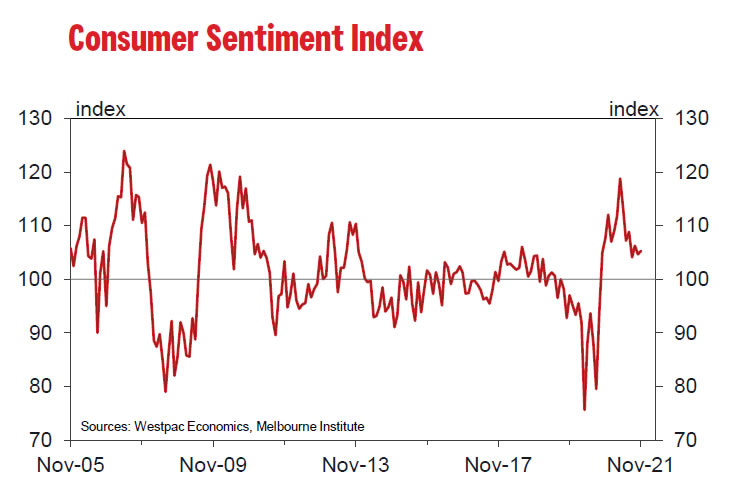
Australia Westpac Consumer Sentiment rose 0.6% to 105.3 in November, up from 104.6. Looking at some details, the index on economic conditions for the next 12 months improved from 103.2 to 106.6, as reopening of major cities looked to have shored up confidence. Unemployment expectations index dropped notably from 107.1 to 95.3, as more consumers expect unemployment to fall than rise.
Westpac expects RBA to continue with the current AUD 4B per week asset purchases to continue as planned till February, and then reduce it to AUD 2-3B until next most likely review in May. Yet, if RBA assess that the pace of achieving its targets is satisfactory, it could decide to cut taper to ADU 2B per week and Fed, and than end the program altogether by May.
Fed Kashkari: We are getting these mixed signals out of the economy
Minneapolis Fed President Neel Kashkari said he is keeping an "open mind" on the timing of rate hike and "I have not made any decisions about where my stance is on that."
"We are getting these mixed signals out of the economy," he added, referring to rising wages while jobs were still 5 to 7 million short of pre-pandemic levels. "I'm optimistic, in the next three, six, nine months we will get a lot more information," he said.
He also said, "if the labor force does not return, then that's going to give me more concern that the high inflation readings that we've been seeing may be sustained, because that means that hey, we are already at or maybe we are close to our economy's potential."
Fed Daly looking at summer 2022 for some clarity
San Francisco Fed President Mary Daly urged patience to wait-and-see before acting on interest rates. She warned that if Fed hikes too soon, it will do very little on inflation, but "absolutely" reduce the pace of job growth. "That's too much risk to take when we don't have any indication that these are today persistent trends," she said.
"I'm looking at the summer of 2022 is when we should - knock on wood, no more variants, no more delta surges - get some clarity," she said.
On prices, she said, "as we get through the pandemic, we'll see prices moderate and we'll be back to that situation in which we had for more than a decade of forces pushing inflation down, not pushing inflation up."
Eco Data 11/10/21
[php_everywhere instance="1"]
Dollar Braces for US Inflation Report
The latest US inflation data will be released at 13:30 GMT Wednesday. Forecasts point to another sharp acceleration, which could unleash turmoil in the markets as the transitory narrative melts away. As for the dollar, the outlook remains positive with the American economy out-recovering most of the world and Congress bringing more spending to the party.
Firing up
The US economy is in pretty good shape, considering the chaos in global supply chains. Consumption has remained resilient, lost jobs are coming back quickly, and business surveys point to stronger economic growth in the final quarter.
Meanwhile, Congress has approved an infrastructure package that will bring $550 in new spending to the table and the White House continues to ‘twist arms’ to pass the larger $1.75 trillion social safety net bill. This stimulus would be spread out over several years so it wouldn’t really turbocharge the economy, but it’s still great news.
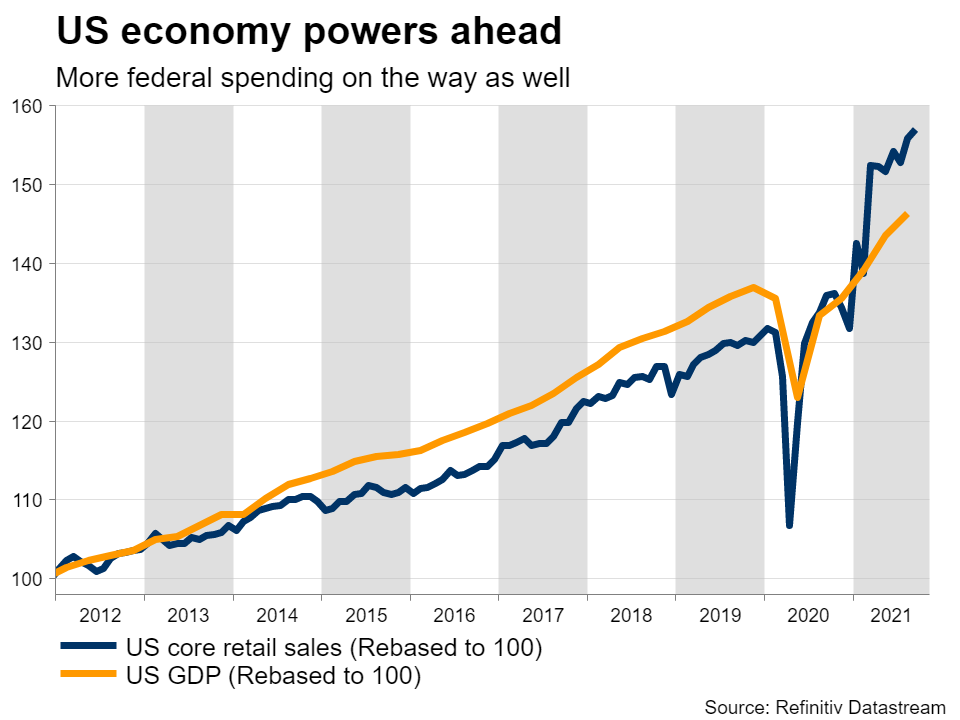
The elephant in the room is inflation. What started out as a short-lived supply shock is looking less transitory by the day. It’s not just shipping delays and energy prices anymore. Higher costs are increasingly being passed down to consumers, rents are firing up to keep pace with house prices, and wage growth is accelerating as companies compete to attract workers.
Another inflation ‘shocker’?
This is why the upcoming inflation report will be so important. If price pressures continue to spread out into different sectors, it is difficult to argue that this inflation episode remains transitory.
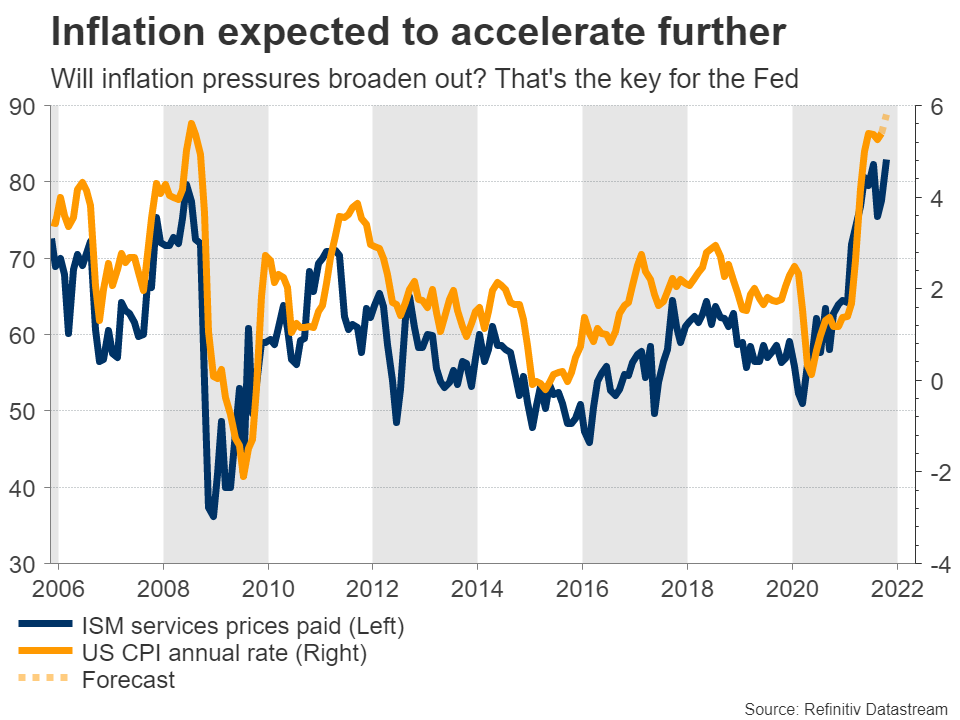
The annual CPI rate is expected to have jumped to 5.8% in October, from 5.4% previously. Similarly, the core rate that excludes volatile items like food and energy is forecast to have reached 4.3%, a considerable increase from the 4% last month.
If anything, the risk is for a positive surprise considering what business surveys revealed during the month. The Markit PMIs showed that companies raised their selling prices ‘at the fastest pace on record’ while the price components of both ISM surveys rose sharply too.
Dollar outlook remains positive
In the FX complex, the dollar has been trading sideways for almost a month now, but the bigger picture remains positive and an upside inflation surprise could reignite the rally. It all comes back to the strength of the US economy.
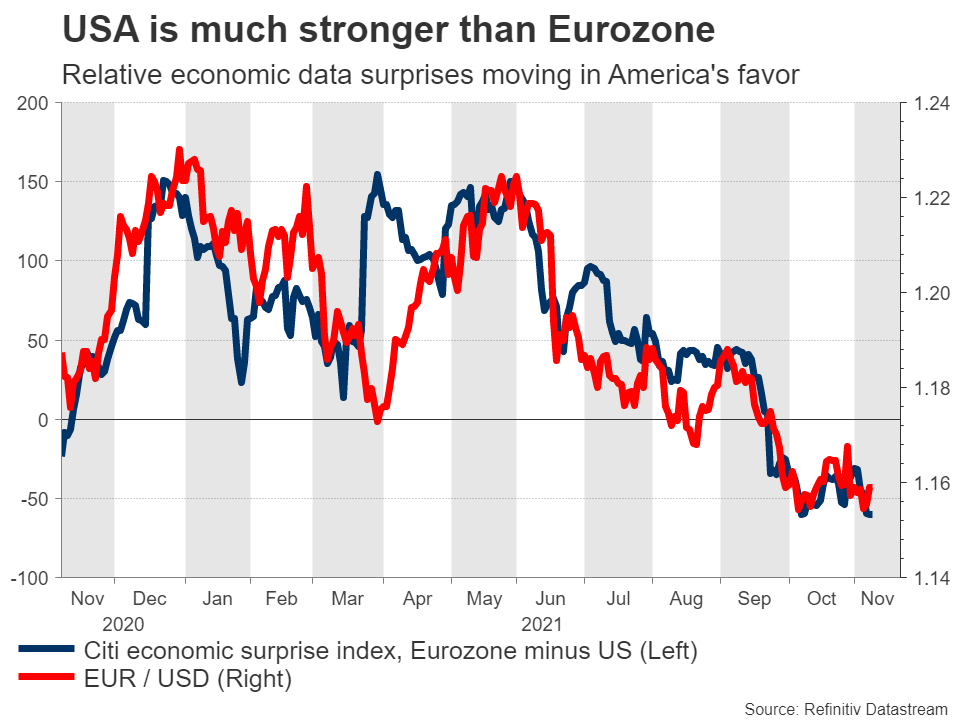
With wage growth accelerating and inflationary pressures broadening out, the Fed might need to step on the brakes aggressively. Money markets are currently pricing in two rate increases for next year, so there’s scope for a hawkish shift towards three hikes if inflation keeps rising.
In contrast, the Eurozone has taken a sharp hit from the energy crisis and paralyzed supply chains. Business surveys point to slower growth ahead, which implies the European Central Bank is unlikely to raise rates next year as market pricing currently suggests. This keeps the risks surrounding euro/dollar tilted to the downside.
Taking a technical look at euro/dollar, the 1.1525 zone could provide initial support to any declines. A potential violation would turn the focus to 1.1420.
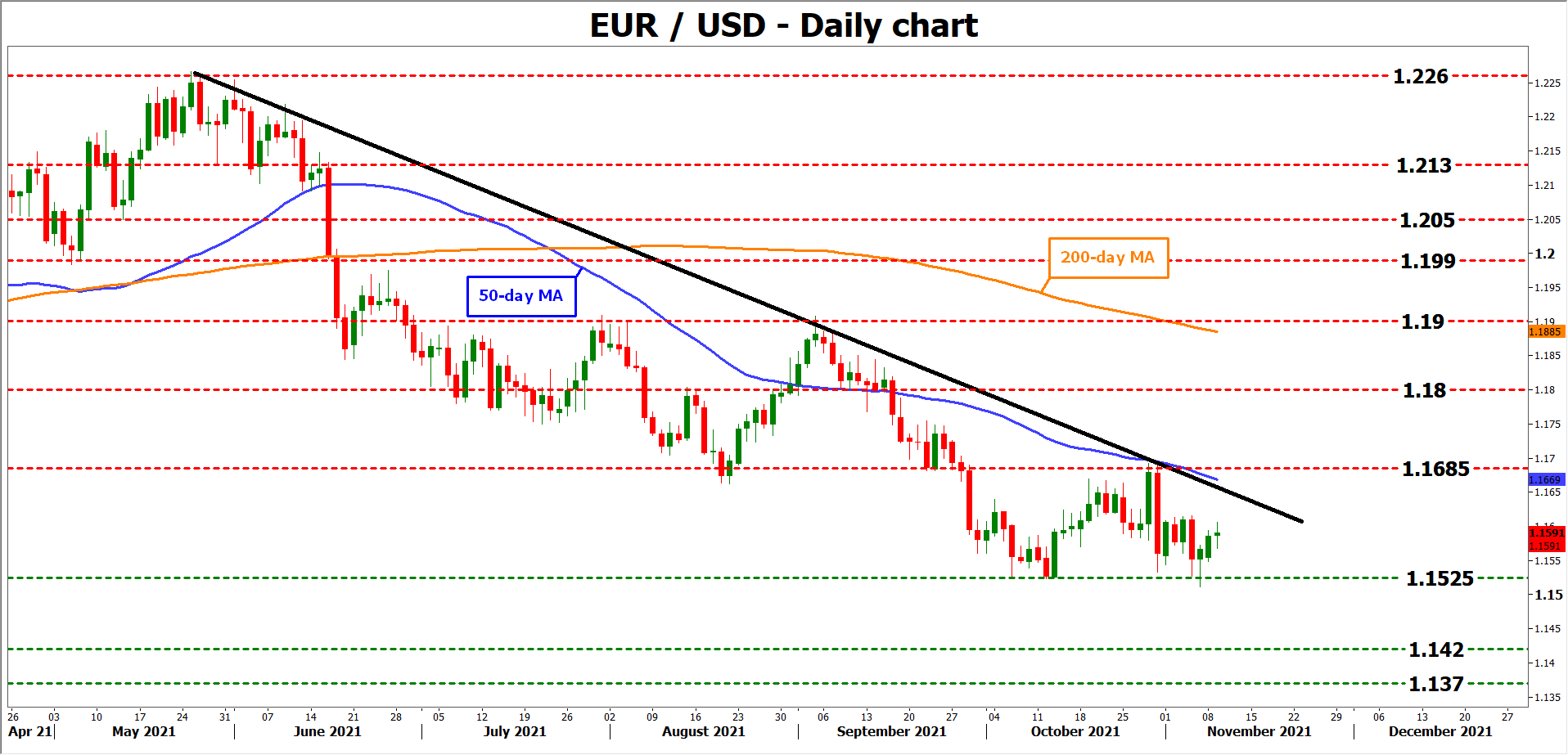
On the upside, the first major barrier for the bulls would be the 1.1685 area, which roughly encapsulates the 50-day moving average and the downtrend line drawn from the May top as well.
But the ECB isn’t the only central bank that might disappoint. The same is true for the Reserve Bank of Australia and the Bank of England. Neither economy is particularly strong, so the current market pricing for three rate increases in Australia next year and four hikes in Britain seems unrealistic. Again, this implies aussie/dollar and sterling/dollar are both vulnerable.
The final argument in favor of the reserve currency is that it offers protection against stock market declines. With the S&P 500 having gained 27% this year alone despite several risks on the radar, this safe haven status could come in handy.
Business Confidence Shines But Aussie Slips
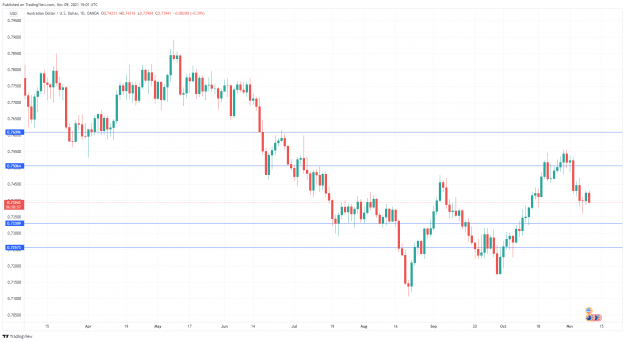
The Australian dollar is in negative territory in the Tuesday session. AUD/USD is currently trading at 0.7388, down 0.44% on the day.
The RBA has been consistent in projecting a rate hike in 2024 and reiterated this stance on Friday, when it released its quarterly monetary policy statement. The bank acknowledged that inflation has moved higher but said that it would be patient with regard to a rate hike. The markets, however, do not share the RBA’s stance and are much more hawkish on a rate move, with projections of a rate hike in 2023 or even in late 2022 if economic conditions are suitable. On Monday, ANZ Bank cut its home loan rate, a sign that the major bank is gearing for an earlier than expected interest rate rise from the RBA. There is a disconnect between RBA guidance and market expectations and the central bank will have to tread carefully as it pushes back against market sentiment.
The removal of lockdowns in Sydney and Melbourne has raised optimism about the economy, and the NAB Business Confidence for October soared to 21, up from 10 points beforehand. Will Westpac Consumer Sentiment, which will be released later today, follow suit? The index declined by 1.5% in October and a rebound could boost the Australian dollar. Conversely, another decline could disappoint investors and weigh on the Aussie.
In the US, the focus is on inflation, which remains high. The PPI reports didn’t have any effect on the US dollar, as both PPI and Core PPI were within expectations, with readings of 0.6% and 0.4%, respectively. The US releases CPI on Wednesday, and this event could have a strong impact on the movement of AUD/USD. If CPI is stronger than expected, it will reignite discussion of an accelerated taper by the Fed and the potential bringing forward of a rate hike and would be bullish for the US dollar.
AUD/USD Technical
- There is resistance at 0.7506 and 0.7609
- AUD/USD has support at 0.7330 and 0.7257