Sample Category Title
EURJPY Erases Rally, Could Weaken Further In Short-Term
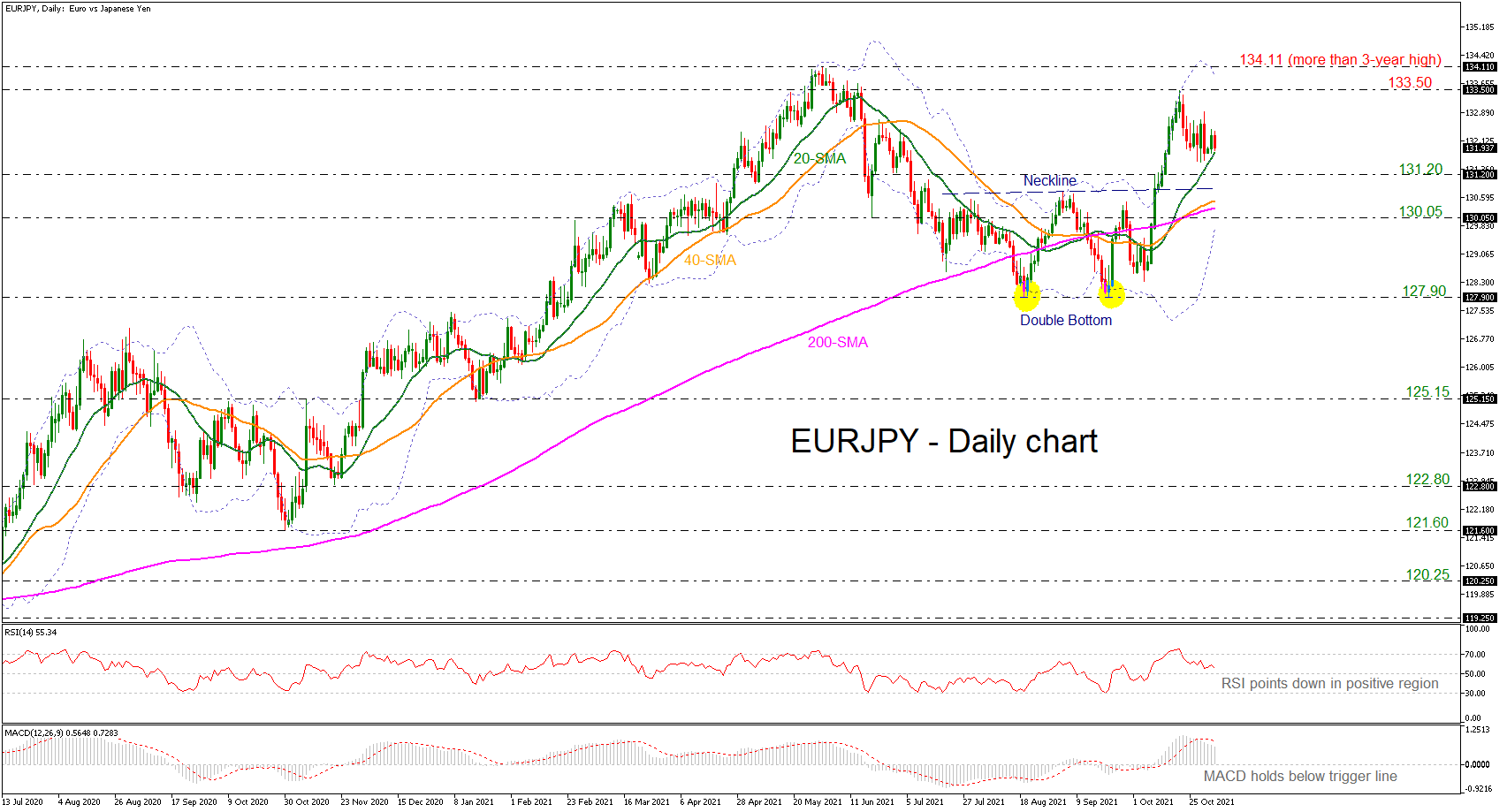
EURJPY is testing the 20-period simple moving average (SMA) again, after it penetrated the neckline of the double bottom pattern to the upside. The price is losing some momentum, holding beneath the 133.50 resistance level and inside the Bollinger bands.
Regarding the technical indicators, the RSI is falling in the positive region, while the MACD is diving beneath its trigger line, suggesting a downside move on price action before heading up again. However, the 20-day SMA crossed the 40- and the 200-day SMAs to the upside in the previous sessions, underscoring the recent bullish phase.
Should the market extend losses, support could be met between the 131.20 support level and the 40- and the 200-day SMAs in the 138.50-138.30 region. A significant leg below this area could send prices towards the 130.05 barrier, which is currently fluctuating near the lower Bollinger band at 129.75.
On the flip side, if the pair bounces up, immediate resistance could be met at the 133.50 level ahead of the upper Bollinger band at 133.90 and the more-than-three-year-high of 134.11.
In the bigger picture, the pair is bullish as long as it holds above the 200-day MA. In case it violates this line, bears could take the upper hand.
BoE To Hike Rates, Pave Way For Big Central Banks, But Will Pound Follow?
The Bank of England’s policy meeting on Thursday is being primed as a live one following a series of strong hints by policymakers that interest rates might have to be raised before the year-end. With November being a ‘Super Thursday’ meeting when updated economic projections and a press conference accompany the decision (due at 12:00 GMT), a rate hike this month rather than in December is more likely. But the real question is, does everyone on the Monetary Policy Committee (MPC) support a pre-emptive tightening? Judging from the pound’s latest moves, many traders do not seem to think so.
Rate clues left, right, and centre
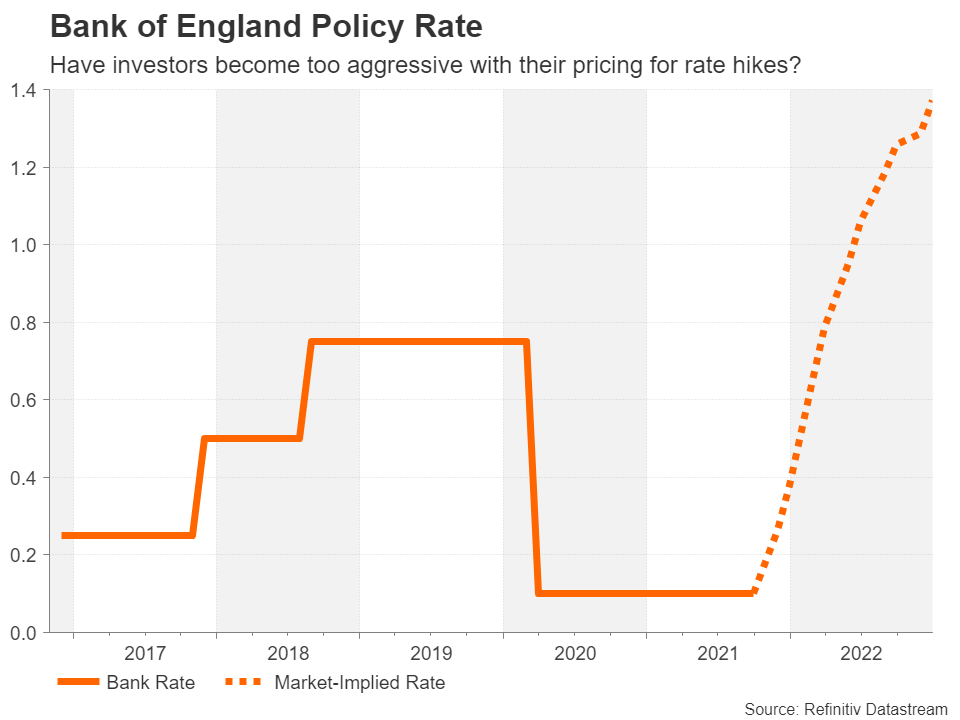
Just a few weeks ago, market pricing for a rate hike in November was near zero. But a carefully coordinated attempt by the Bank of England, starting with the September meeting statement, has pushed up the odds to more than 50%. Markets initially didn’t take much notice of the change in the Bank’s forward guidance in September that signalled a rate increase could become appropriate before asset purchases end in December. Many thought it was simply jawboning on the part of policymakers to rein in rising inflation expectations.
Several hints later from Governor Andrew Bailey, investors are in no doubt that a rate rise of 15 basis from 0.10% will be discussed at the meeting. The trouble for Bailey, though, is that at least three MPC members will likely vote against a rate increase this month. Four, including Bailey, are expected to vote in favour, which leaves the outcome in the hands of Deputy Governor Ben Broadbent and Jon Cunliffe. Neither have made remarks recently but they are not considered to be particularly hawkish.
UK economic outlook a worry
Market expectations for a rate rise have been pared back somewhat over the past couple of weeks, not so much by what policymakers have or haven’t said, but rather from worries about the outlook for the UK economy. Investors are concerned that whilst supply constraints and soaring fuel costs will push up inflation, those same factors will hold back output by manufacturers and curtail spending by consumers, hurting the recovery.
For UK businesses, there is also the lingering tension between London and Brussels to contend with. Although there’s been encouraging progress lately on the Northern Ireland protocol to ease border checks between the province and mainland Britain, a fresh row with France over fishing has erupted. France is threatening to block British fishing boats at some of its ports and tighten checks on UK goods if Britain doesn’t allow more French vessels to fish in its waters.
Has Sunak’s Budget emboldened the hawks? Another headache for businesses are rising wage pressures, which are being exacerbated by the government’s tough post-Brexit immigration rules as well as by plans to raise the minimum wage, as announced by Chancellor Rishi Sunak in last week’s Budget. On the bright side, Sunak also outlined plans to boost spending by £75 billion, which should support growth.
In fact, the government’s spending spree has probably strengthened the case for policy action in November as the Bank frets about surging inflation expectations. Both consumer- and market-based inflation expectations in the UK have skyrocketed lately and the BoE doesn’t appear to be as confident as some other central banks that the supply disruptions that are triggering the jump in the prices of raw materials, energy and other commodities will be resolved anytime soon.
Key technical hurdles for pound advances If the hawks manage to win the argument and the BoE ups the Bank Rate to 0.25%, the pound could climb back above the $1.37 level against the US dollar. However, the 50-day moving average and the 38.2% Fibonacci retracement of the June-September downtrend at $1.3730 are situated slightly above, making this a strong resistance area. Further up, the $1.38 level is potentially another critical test for cable as it is currently being intersected by the descending trend line.
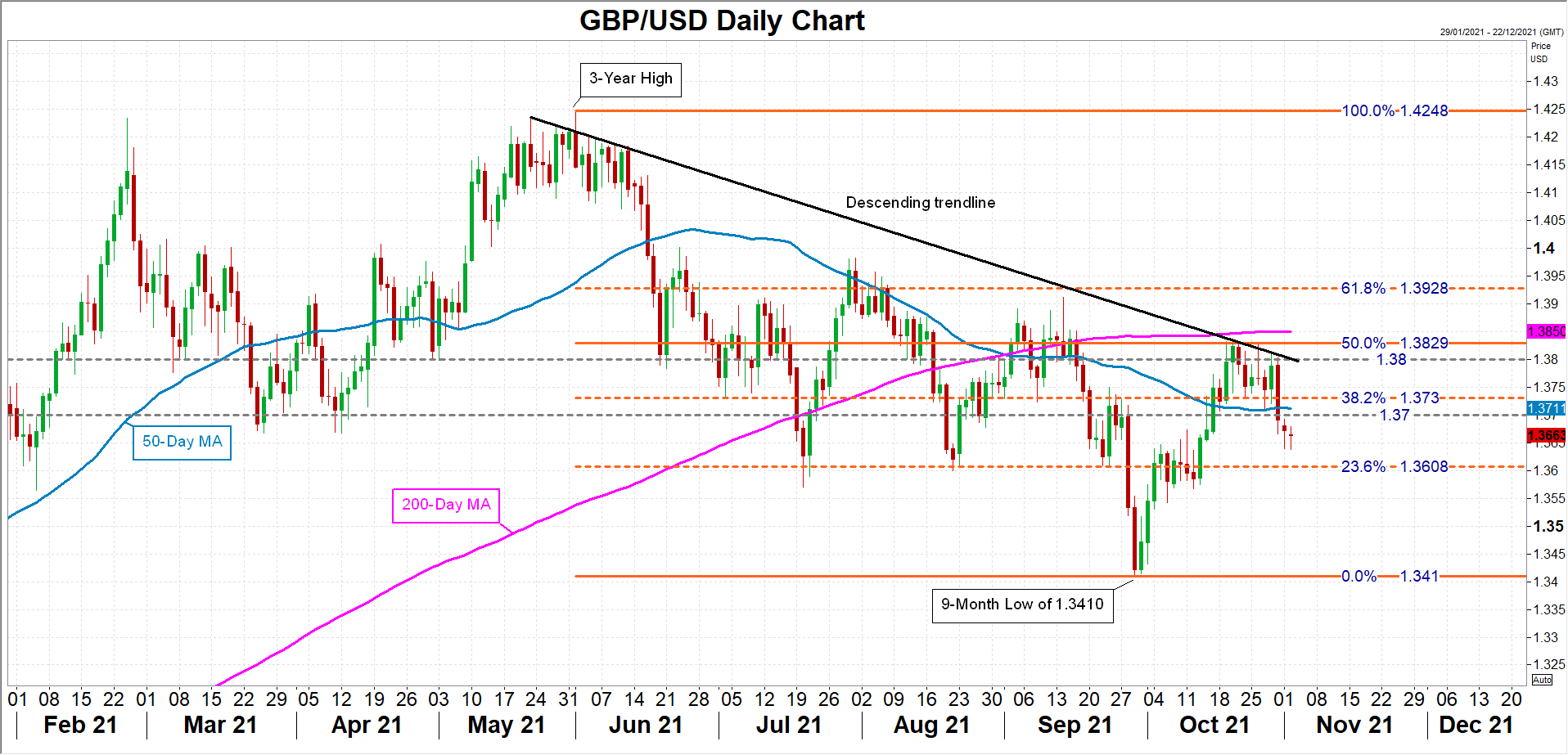
On the flip side, if the BoE lives up to its reputation of being the “unreliable boyfriend” and confounds expectations of a rate hike by holding policy steady, the pound could slip below the 23.6% Fibonacci of $1.36, which if broken, would clear the way for a revisit of the September trough of $1.3410.
Room for surprises
Aside from the decision on rates, investors will also be keeping an eye on the projected rate path in the latest Monetary Policy Report. A steeper or shallower rate path might even have a more powerful impact on sterling than any potential change in the Bank Rate on Thursday, not to mention the inflation forecasts. An upward revision in forecasted inflation would likely be positive for the currency, while in the most extreme hawkish scenario, the BoE could also announce it is ending its QE programme early.
If, though, the only headline from the meeting is the predicted rate hike, sterling could find itself back at the mercy of the US dollar, and more specifically, the Federal Reserve’s own policy decision on Wednesday.
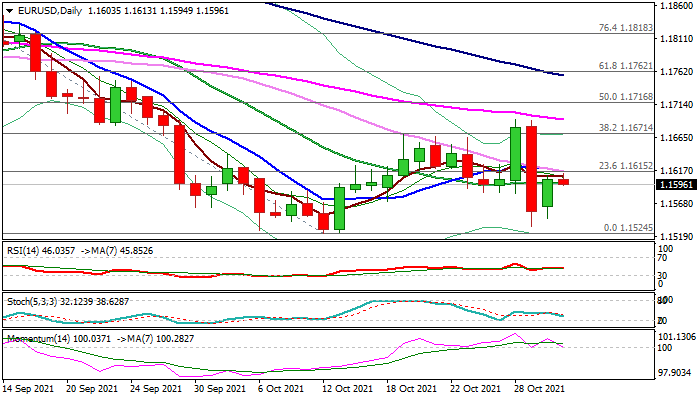
EUR/USD Outlook: Limited Recovery Likely To Precede Fresh Push Lower, Fed In Focus
Early Tuesday’s action shows attempts to extend Monday’s bounce after a massive fall on Friday, which weakened near-term structure.
Bear-trap that was left after repeated failure to sustain break above pivotal Fibo barrier at 1.1671 (38.2% of 1.1909/1.1524 fall) weighs on near-term action, along with weakening bullish momentum on daily chart, suggesting limited recovery.
Increased demand for the US dollar on expectations that rising inflation could prompt Fed to start tightening policy earlier than expected, would add pressure on Euro and traders focus on the outcome of the central bank’s policy meeting that ends on Wednesday.
Recovery should be ideally capped by 10DMA (1.1616) to keep near-term bias with bears for renewed attack at key weekly cloud base (1.1562) and multi-week lows at 1.1525 zone, break of which is needed to signal continuation of the downtrend from 1.2266 (May top).
Res: 1.1616, 1.1632, 1.1671, 1.1692.
Sup: 1.1585, 1.1562, 1.1535, 1.1525.
US 100 Falls Back For Support
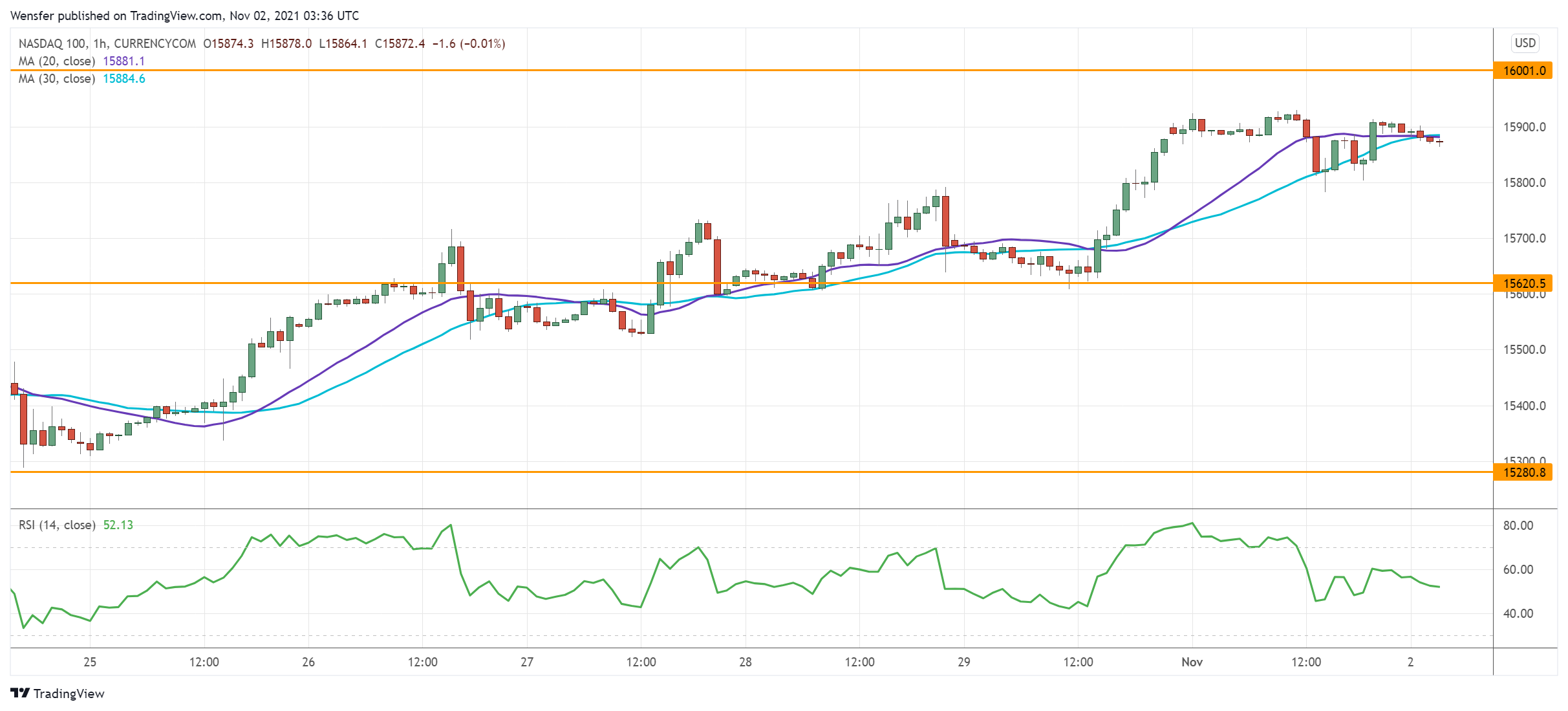
The Nasdaq 100 surges to a new all-time high as investors expect the strong growth trend to continue. The break above the previous peak at 15700 has put the index back on an upward trajectory.
A bullish MA cross on the daily chart is a confirmation of the market’s optimism. However, a brief pullback is necessary to let the bulls catch their breath.
15620 is the immediate support. Further down, 15280 is key daily support on the 20-day moving average. The psychological level of 16000 would be the next target rebound.
EUR/JPY Tests Key Support
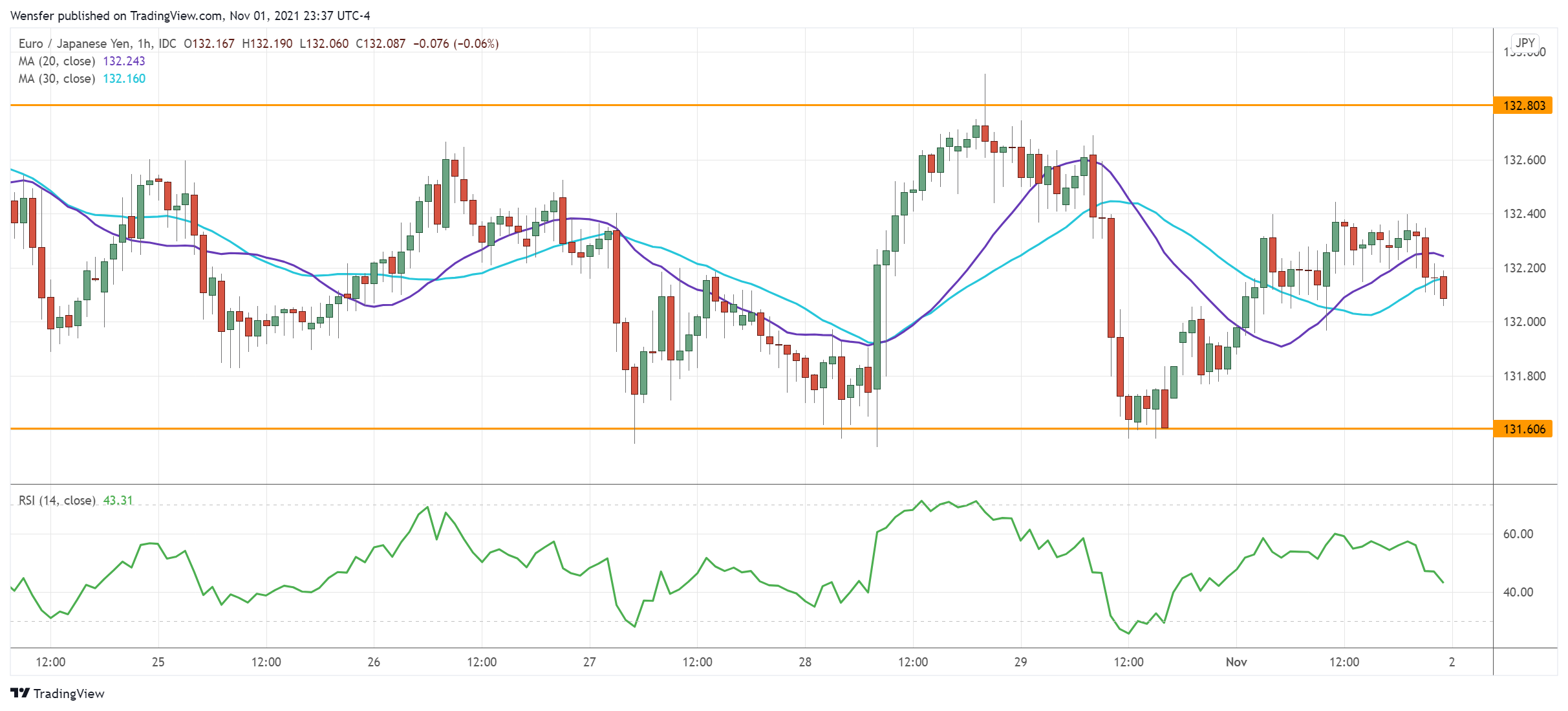
The euro struggles to bounce higher after Germany’s lackluster retail sales in September.
The pair has come under pressure at 133.45 near June’s peak. The subsequent retracement has met some bids at 131.60 when the RSI dipped into the oversold territory.
The triple test of the support level indicates solid buying interest. However, the bulls will need to push above 132.80 before the uptrend could resume.
On the downside, a bearish breakout would extend the sideways action towards 130.80 which sits on the 30-day moving average.
USD/CAD Consolidates At 4-Month Low
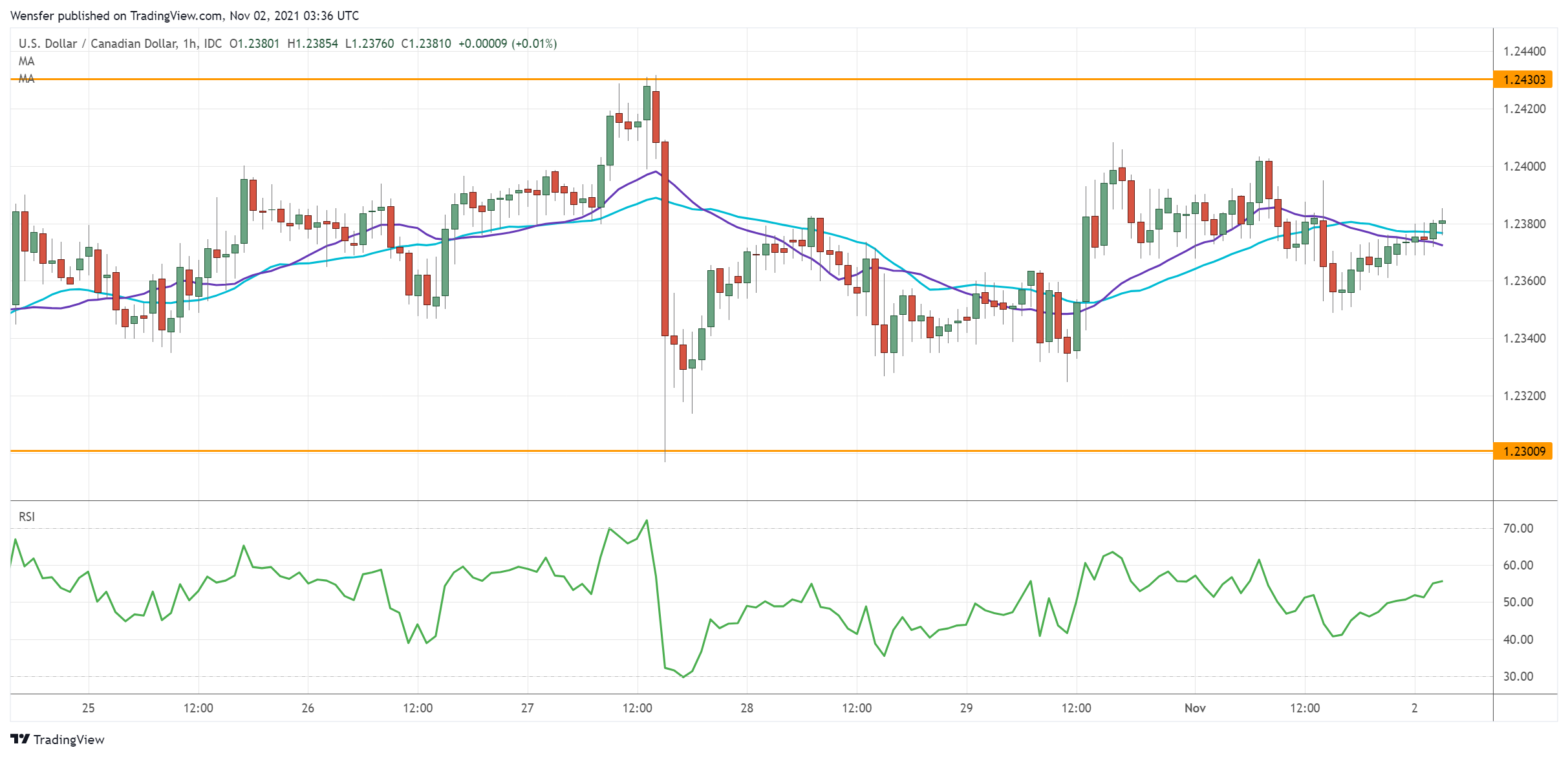
The US dollar retreats ahead of this week’s FOMC as traders await further catalysts. Price action has stabilized above 1.2300, a major demand zone from last summer.
1.2430 from the latest sell-off is a key resistance as it coincides with the 20-day moving average. The current consolidation suggests the market’s indecision, though overall sentiment remains bearish.
A deeper correction would send the greenback to 1.2150. A bullish breakout on the other hand may challenge the supply area around 1.2550.
GBP/JPY Daily Outlook
Daily Pivots: (S1) 155.41; (P) 155.96; (R1) 156.30; More...
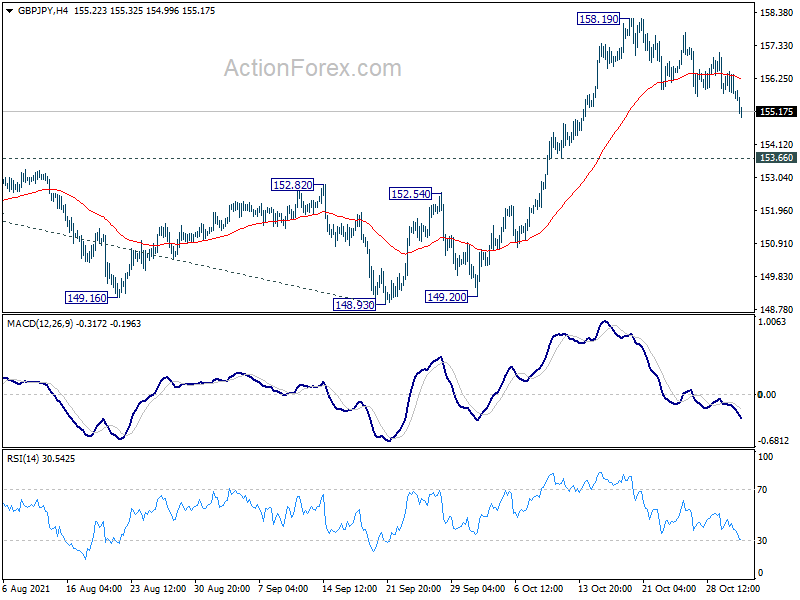
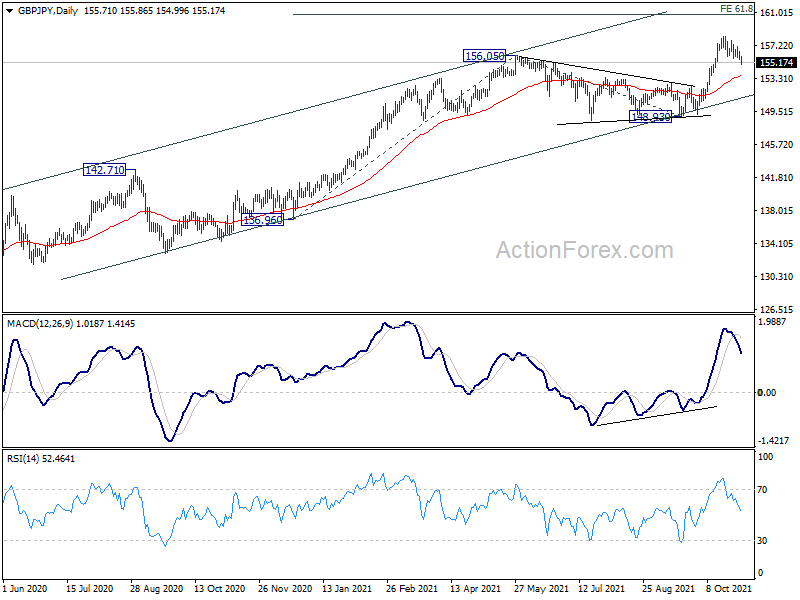
GBP/JPY's correction from 158.19 is extending lower and deeper fall would be seen. But downside should be contained above 153.66 support to bring rebound. On the upside, above 158.19 will resume larger up trend from 123.94. Next target will be 61.8% projection of 136.96 to 156.05 from 148.93 at 160.72.
In the bigger picture, rise from 123.94 is seen as the third leg of the pattern from 122.75 (2016 low). The stay above 55 week EMA affirms medium term bullishness. Current rise should now target 61.8% retracement 195.86 (2015 high) to 122.75 at 167.93 next. In any case, outlook will remain bullish as long as 148.93 structural support hold, even in case of deep pull back.
EUR/JPY Daily Outlook
Daily Pivots: (S1) 131.93; (P) 132.19; (R1) 132.58; More....
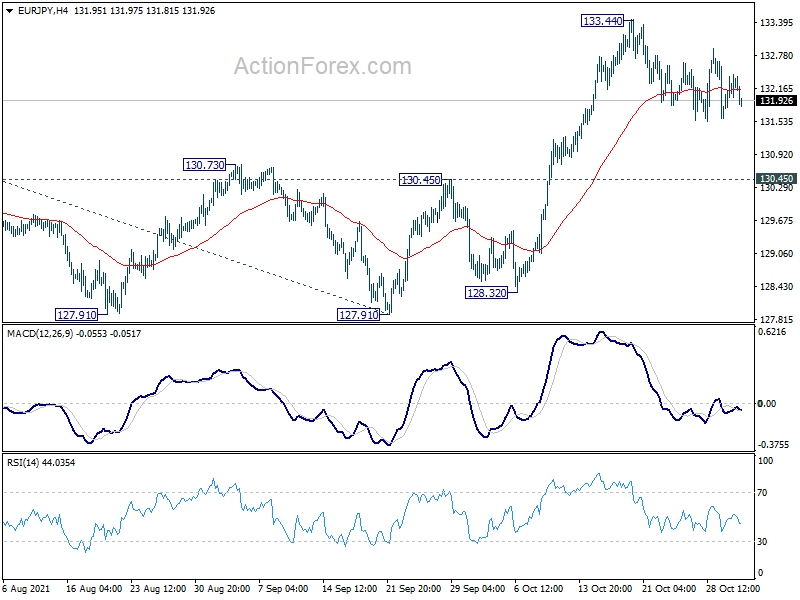
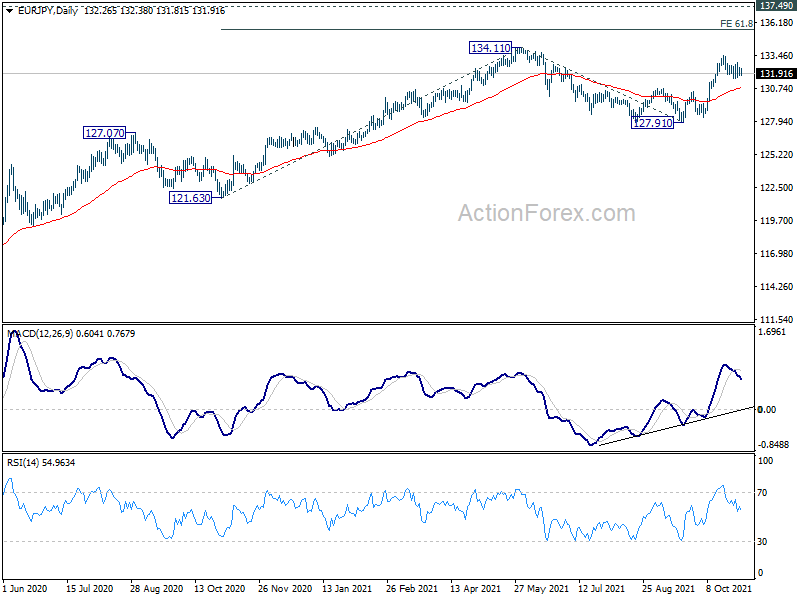
EUR/JPY is still extending the corrective pattern from 133.44 and intraday bias remains neutral. Deeper fall could be seen but downside should be contained above 130.45 resistance turned support to bring rebound. On the upside, above 133.44 will target 134.11 high first. Firm break there will resume larger up trend from 114.42. Next target is 61.8% projection of 121.63 to 134.11 from 127.91 at 135.62.
In the bigger picture, rise from 114.42 (2020 low) is still in progress and the strong support support from 55 week EMA affirms medium term bullishness. Further rise would be seen to retest 137.49 (2018 high). Decisive break there will resume the whole long term rise from 109.03 (2016 low). Next target will be 100% projection of 109.03 to 137.49 from 114.42 at 142.88. This will now remain the favored case as long as 127.91 support holds.
EUR/GBP Daily Outlook
Daily Pivots: (S1) 0.8459; (P) 0.8479; (R1) 0.8516; More...
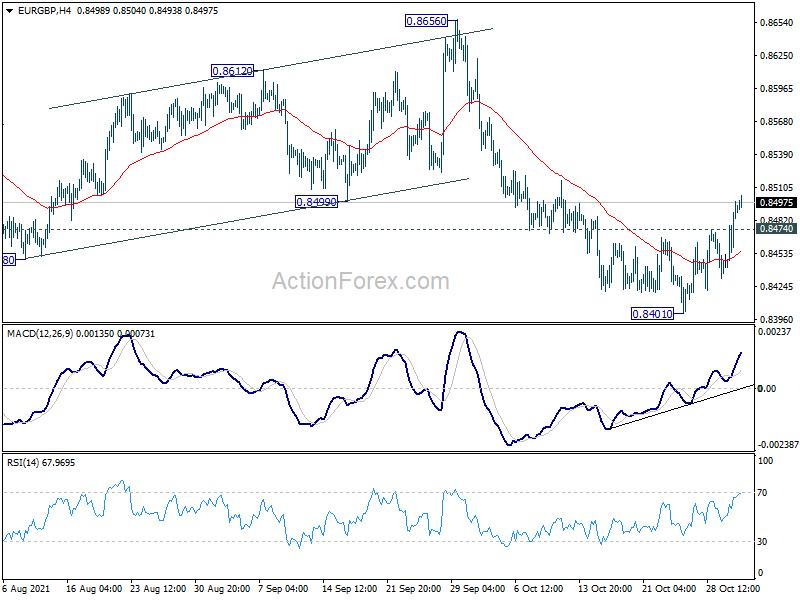
Break of 0.8474 minor resistance suggests short term bottoming a 0.8401, on bullish divergence condition in 4 hour MACD. Intraday bias is back on the upside for 55 day EMA (now at 0.8509). Sustained break there will target a test on 0.8656 resistance. On the downside, break of 0.8401 will resume larger down trend from 0.9499 to 0.8276 key long term support next.
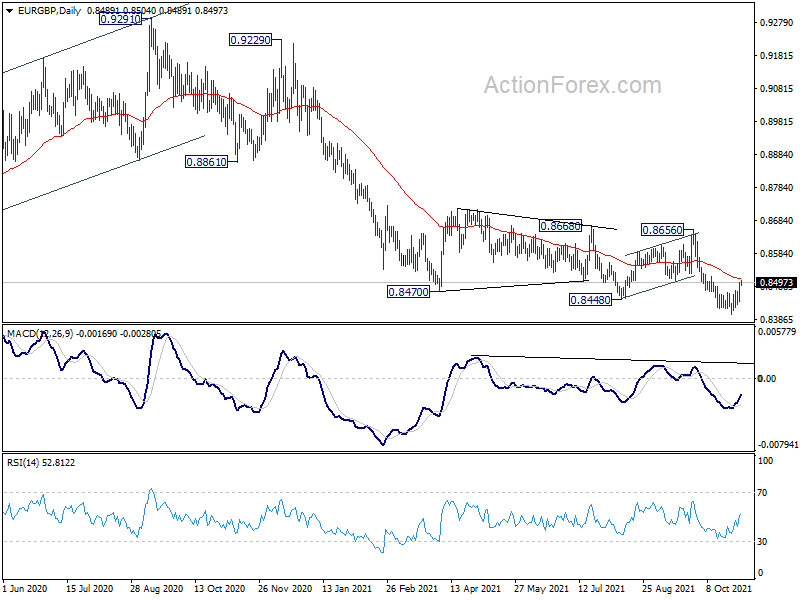
In the bigger picture, price actions from 0.9499 (2020 high) are still seen as developing into a corrective pattern. Deeper fall could be seen as long as 0.8656 resistance holds, towards long term support at 0.8276. However, firm break of 0.8656 resistance would argue that a medium term bottom was already formed. Stronger rise would be seen to 0.8861 support turned resistance to confirm completion of the corrective pattern.
EUR/AUD Daily Outlook
Daily Pivots: (S1) 1.5380; (P) 1.5410; (R1) 1.5464; More...
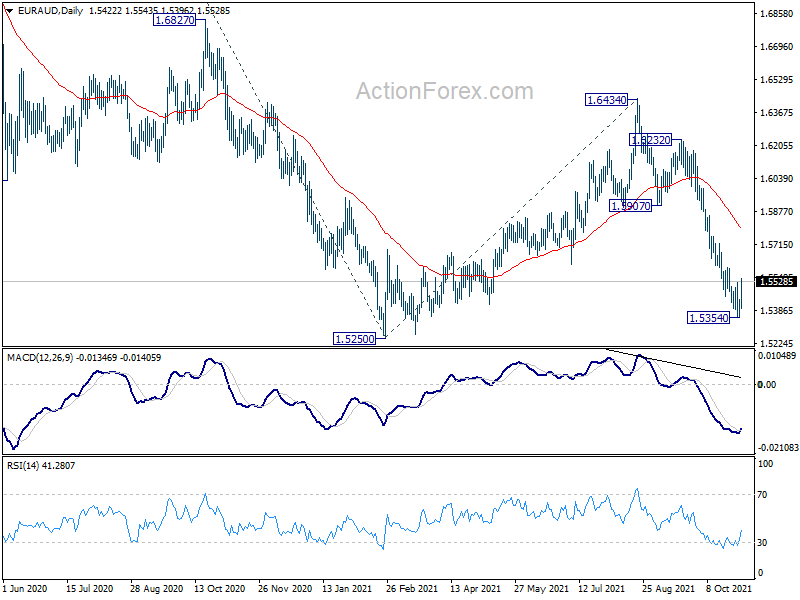
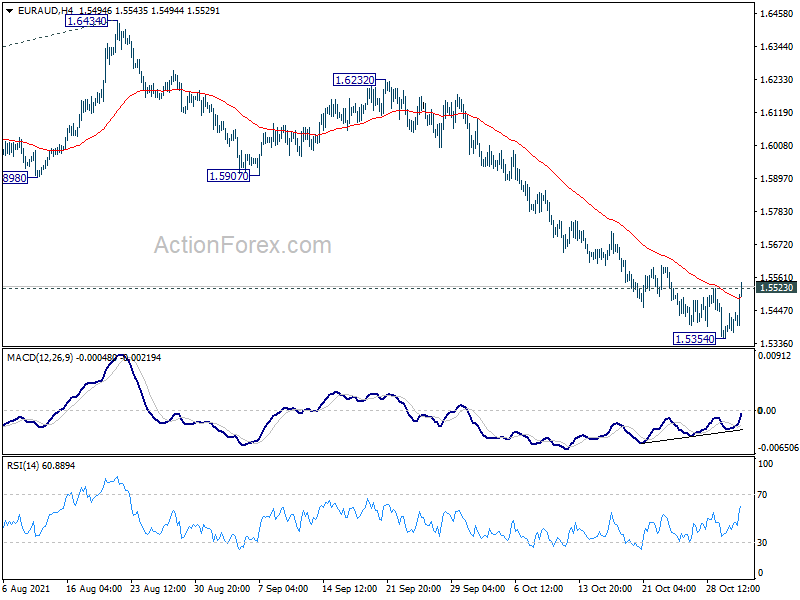
Break of 1.5523 minor resistance suggests that a short term bottom is formed at 1.5354, on bullish convergence condition in 4 hour MACD. Intraday bias is back on the upside for stronger rebound, towards 55 day EMA (now at 1.5803). On the downside, break of 1.5354 will resume the fall from 1.6434 to retest 1.5250 low. Sustained break there will confirm resumption of larger down trend.
In the bigger picture, the down trend from 1.9799 (2020 high) is in progress. Firm break of 1.5250 low will confirm resumption nand target 61.8% retracement of 1.1602 (2012 low) to 1.9799 at 1.4733. Sustained break there could bring more downside acceleration to 61.8% projection of 1.9799 to 1.5250 from 1.6434 at 1.3623. In any case, break of 1.6434 resistance is needed to signal medium term bottoming, or outlook will stay bearish.