Sample Category Title
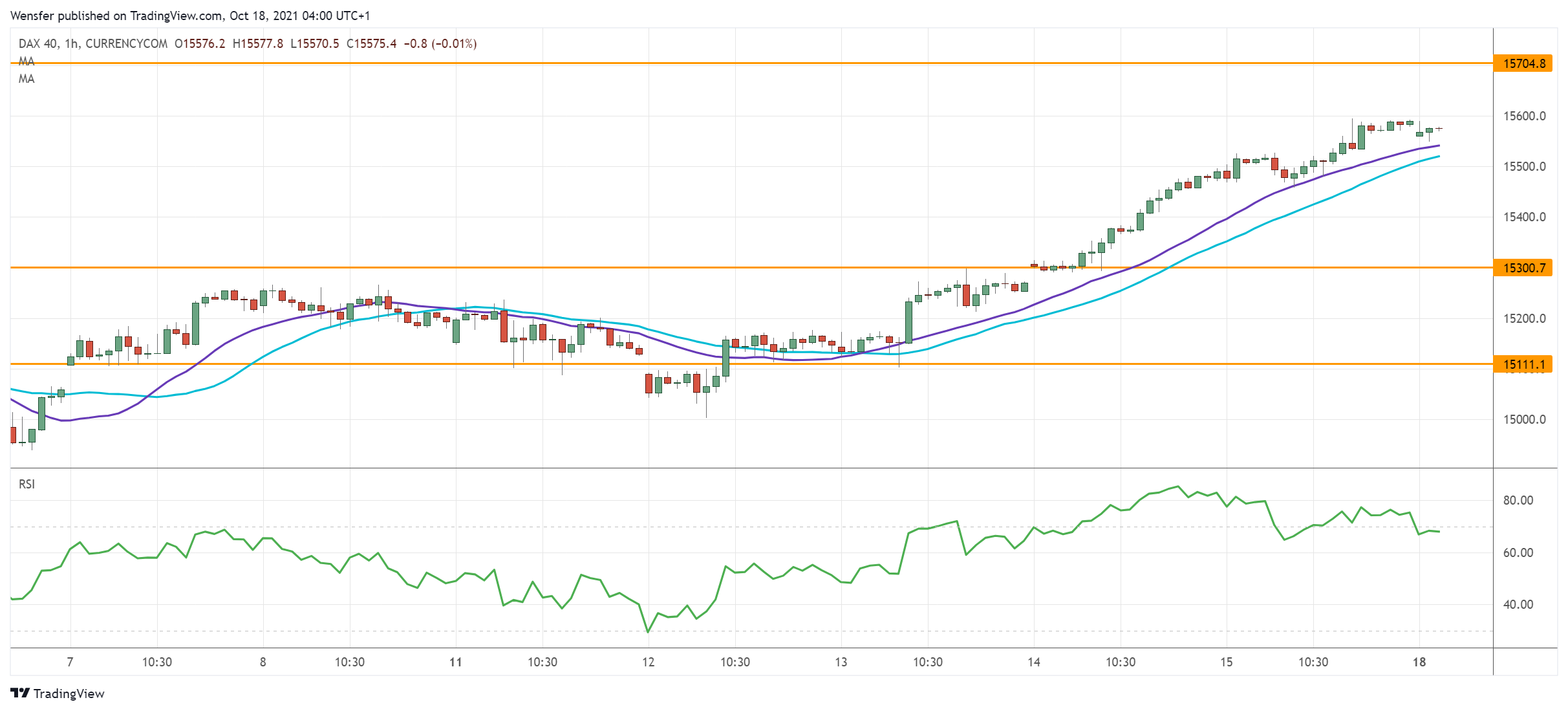
GER 40 Heads Towards Major Hurdle
The Dax 40 bounces higher as the market bets on a prolonged low-interest environment.
The major floor at 14800 has seen strong buying interest as traders bought the dip. A bullish close above 15200 has put the short side under pressure. Then a rally above the 30-day moving average indicates further commitment from the buy-side.
The momentum could slow down momentarily as the RSI shows an overbought situation. 15300 would be the first support. A break above the daily resistance at 15700 may resume the uptrend.
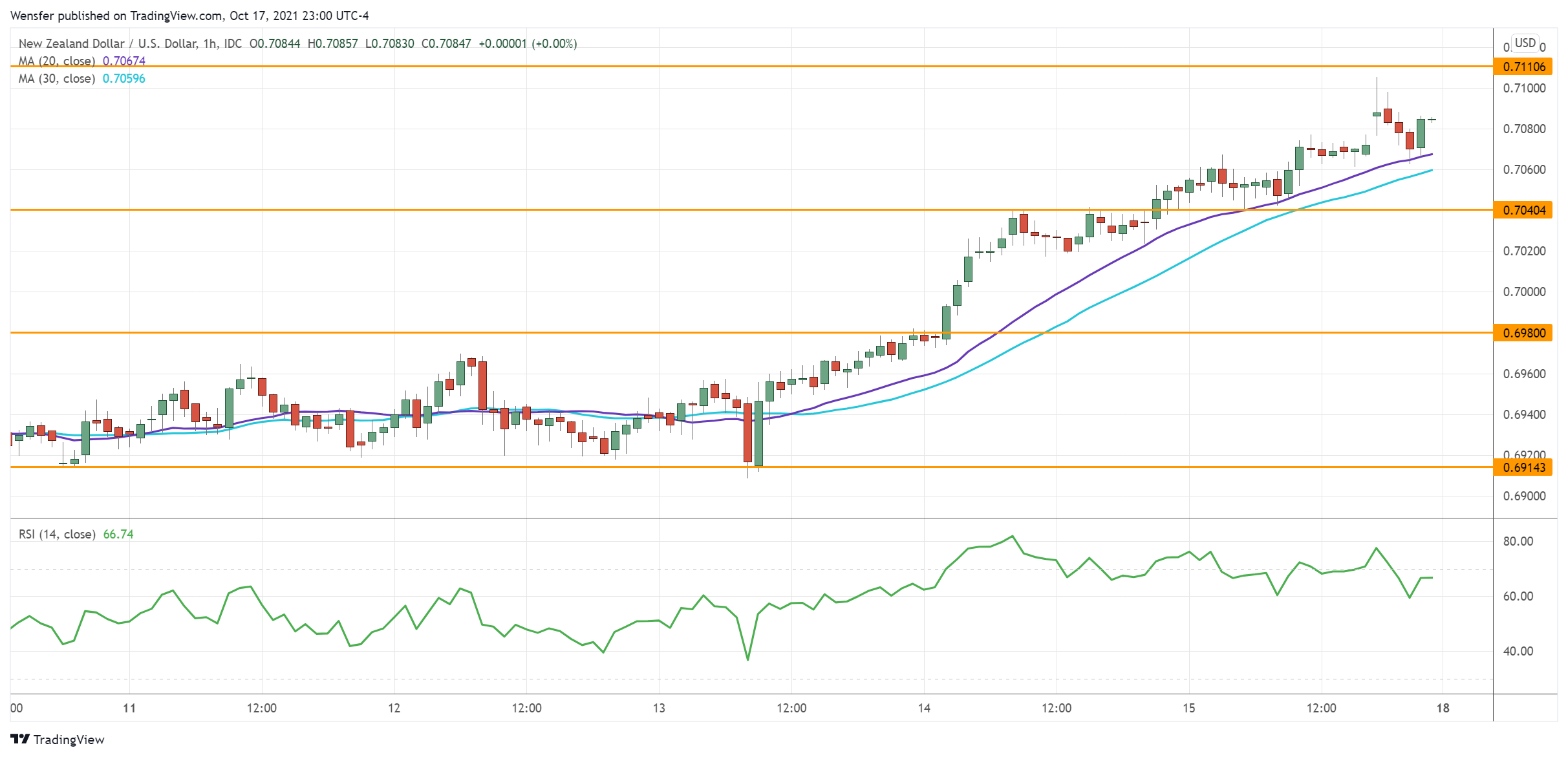
NZD/USD Tests Key Resistance
The New Zealand dollar rallies as Q3 inflation beats estimates.
After a few days of sideways action, the indecision ended with a break above 0.7020, the origin of the last sell-off. In turn, this set the kiwi on a bullish course.
Sellers would scramble to get out after their failed attempts to push lower. An overbought RSI may cause a temporary pullback.
0.7040 is the immediate support, then 0.6980 is the second line of defense in case of a deeper correction. A close above 0.7110 would lift the pair towards the previous peak at 0.7170.
EUR/USD Daily Outlook
Daily Pivots: (S1) 1.1585; (P) 1.1602; (R1) 1.1616; More...
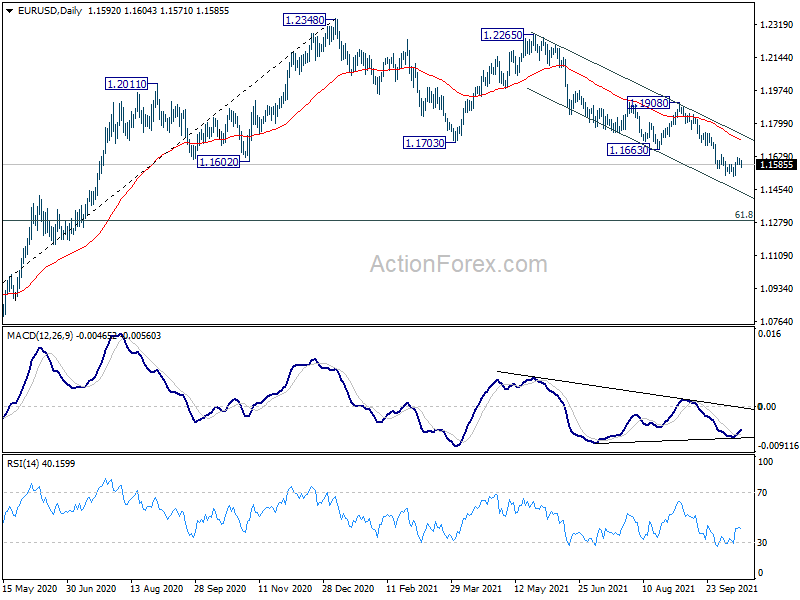
Intraday bias in EUR/USD remains neutral for the moment. Further decline is still in favor as long as 1.1639 minor resistance holds. Break of 1.1523 will resume larger decline towards 1.1289 medium term fibonacci level. On the upside, break of 1.1639 resistance, however, will indicate short term bottoming. intraday bias will be turned back to the upside for stronger rebound, to 55 day EMA (now at 1.1712).
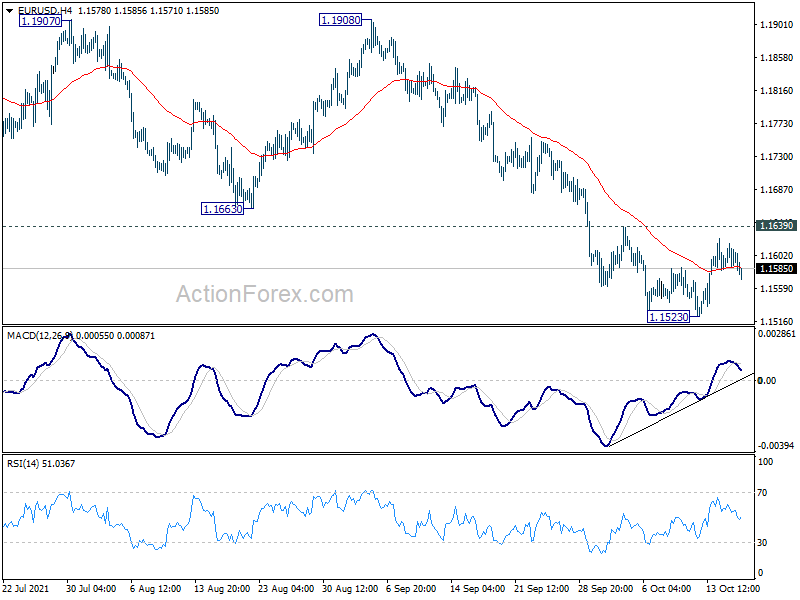
In the bigger picture, price actions from 1.2348 should at least be a correction to rise from 1.0635 (2020 low). As long as 1.1908 resistance holds, deeper fall would be seen to 61.8% retracement of 1.0635 to 1.2348 at 1.1289. Nevertheless break of 1.1908 resistance will revive medium term bullishness and turn focus back to 1.2348 high.
GBP/USD Daily Outlook
Daily Pivots: (S1) 1.3684; (P) 1.3729; (R1) 1.3789; More...
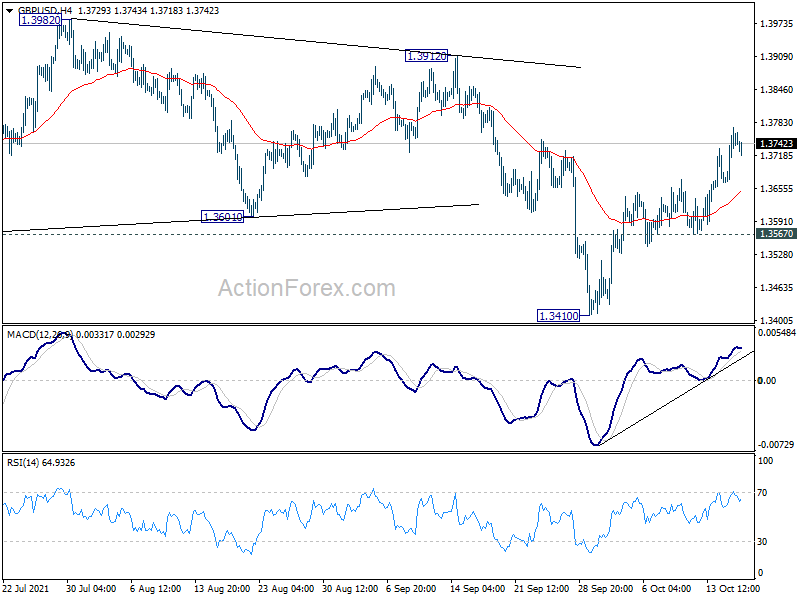
Intraday bias in GBP/USD remains on the upside at this point. Further rise should be seen to 1.3912 key structural resistance. Firm break there will indicate that the correction from 1.4248 is complete with three waves down to 1.3410. Further rally would then be seen to retest 1.4248 high. On the downside, however, break of 1.3567 support will turn bias back to the downside for 1.3410 low instead.
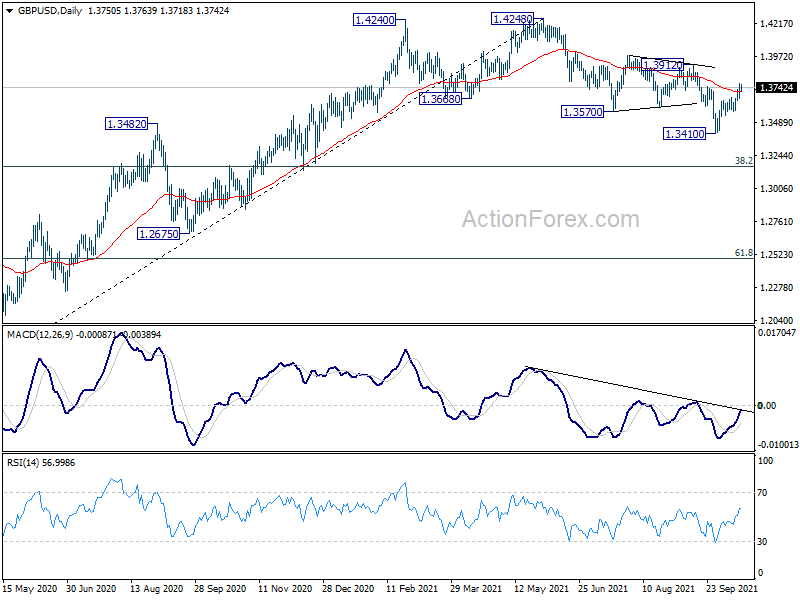
In the bigger picture, the structure of the fall from 1.4248 suggests that it's a correction to the up trend from 1.1409 (2020 low) only. While deeper fall cannot be ruled out yet, downside should be contained by 38.2% retracement of 1.1409 to 1.4248 at 1.3164, at least on first attempt, to bring rebound. ON the upside, firm break of 1.4376 key resistance (2018 high) will add to the case of long term bullish reversal. However, sustained trading below 1.3164 will revive some medium term bearishness and target 61.8% retracement at 1.2493.
EUR/USD Attempts A Bullish Breakout
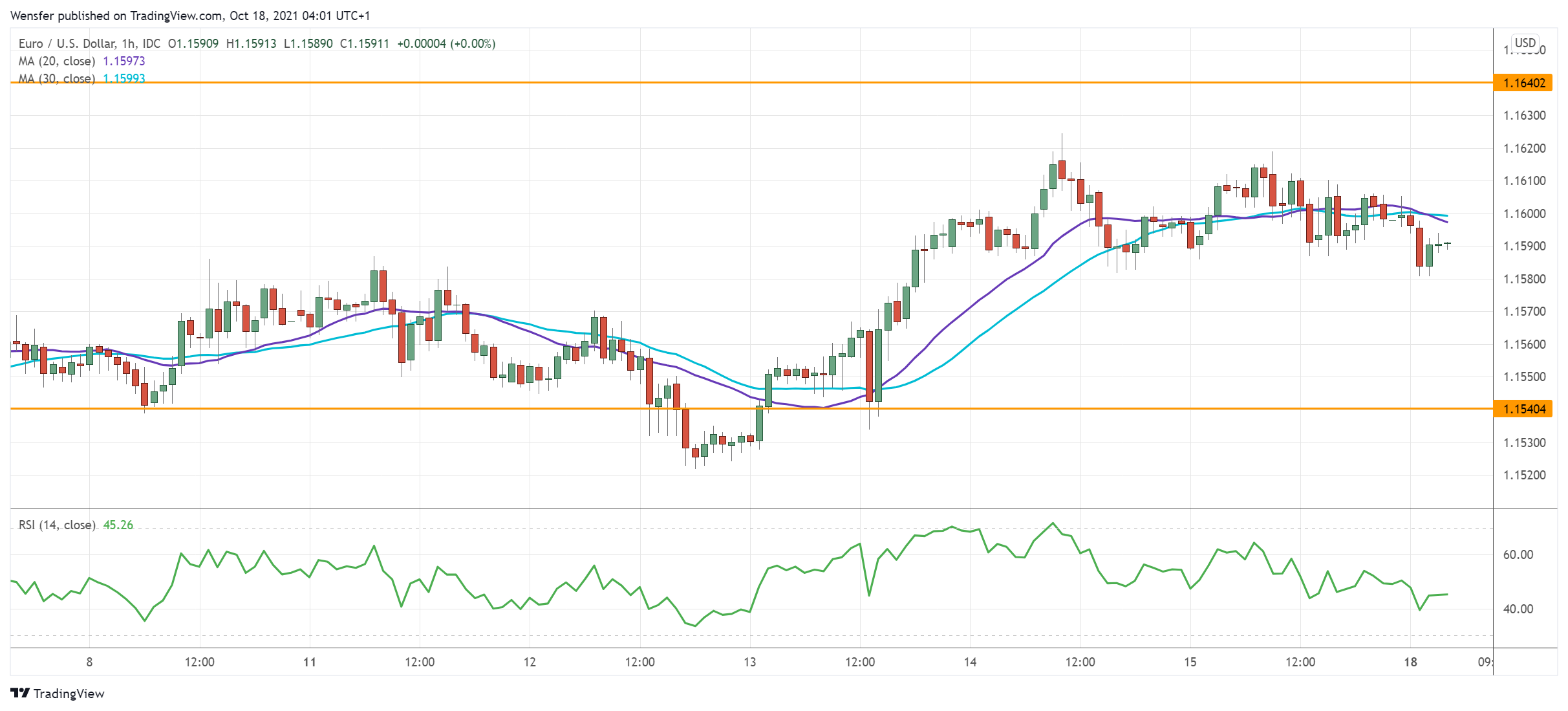
The US dollar retreated after retail sales fell below 1% in September. The euro’s rally above 1.1570 has led some short interests to close their positions.
The pair is testing the key resistance at 1.1640, which coincides with the 20-day moving average and the first resistance on the daily chart. A bullish breakout could pave the way for recovery to 1.1750.
However, buyers could be hesitant to commit after an overbought RSI caused profit-taking. In case of a pullback, 1.1540 is fresh support to keep the current rebound relevant.
Core Bonds Remain In Sell-Off Mode This Morning
Markets
US yields added 2.7 bps (30-yr) to 7.5 bps (5-yr) last Friday with the belly of the curve underperforming the wings. Strong(er than expected) September retail sales overshadowed small misses in October Empire Manufacturing business sentiment and October University of Michigan consumer confidence. The retail sales prompted the start of a sell-off which lasted into the US close. Spill-over effects to Europe pushed German yields 1 bp (2-yr) to 2.3 bps (30-yr) higher in a bear steepening move. The US dollar on Friday failed to really profit from the rising yield environment (evenly driven by inflation expectations and by real yields) even as the 2-yr yield rose to 0.40% for the first time since February 2020 with short term money markets already pricing a September 2022 first Fed rate hike. EUR/USD closed near unchanged at 1.1601. DXY at 93.94. The positive risk environment serves as a potential explanation. Main European and US indices recorded gains of close to 1%. Rising (real) yields and stocks obviously bite in JPY with USD/JPY moving above 114 to near the 2018 top (114.55) and November 2017 high (114.73) which are next resistance levels. EUR/JPY since early October surged from sub 129 to above 132. The tide is again changing in favour of the dollar this morning with short term dynamics suggesting an end to last week’s correction lower. EUR/GBP dropped out of the 0.8450/0.8721 trading band with BoE governor Bailey this weekend saying they will have to act on inflation. A December rate hike is discounted, but a surprise November move is no longer excluded.
Core bonds remain in sell-off mode this morning as you can’t look beyond the uncomfortably high inflation stories. Developments in New Zealand (see below) are a point in case. European pre-market activity even shows again pressure at the front end of the curve. The FT runs a story where four ECB governing council members said that they would support raising the current 10% cap on supranational bond buying under APP. This sort of flexibility enables the ECB to bypass potential problems with reaching the 33% cap on a national level. The fact that the EU will become a net €150bn/year issuer in 2022-2026 to fund NextGenerationEU comes in handy. The discussions evolve in a context where the ECB tries to sort out how QE-life will look like after ending PEPP in March 2022. The article also suggests discussions on including Greek bonds in future purchases even if they currently don’t meet the required credit rating bar. Finally, they suggest shifting from buying a fixed monthly amount of debt to targeting a total of overall purchases. The overall tone of the article shows willingness to do some subtle technical changes, but ECB governors clearly stop short of making strong commitments to really extend current ultra-accommodative measures. European money markets continue pulling forward first ECB rate hike bets towards end 2022/early 2023.
News headlines
Inflation in New Zealand sped up from 1.3% q/q to 2.2% in the third quarter this year, well above expectations of a 1.5% increase. At 4.9% y/y, prices now rise at the fastest pace in a decade. Soaring energy commodities were obviously a main driver, together with vegetable prices. Travel costs and the ongoing construction upswing were other important factors pushing inflation rates ever higher. This reading is likely to prompt the central bank of New Zealand (RBNZ) to tighten policy further at the meeting November 24. The RBNZ hiked policy rates for a first time in October while burying its bond-buying scheme already in July. Short-term rates (2y) in New Zealand surge 24 bps this morning to the highest level since early 2019. The kiwi dollar briefly surpassed 0.71 but soon failed the test.
Chinese growth slowed quite sharply in the third quarter: from 1.3% q/q to 0.2% vs 0.4% expected. Growth in 2021 so far amounts to 9.8% YTD y/y vs 12.7% in Q2 with all major categories retreating as shown by the monthly dataset for September. Property investment eased to pre-pandemic levels (8.8% YTD y/y) amid a property market crackdown by Beijing. Retail sales decelerated from 18.1% YTD y/y to 16.4%, as did industrial production (11.8%) and fixed investments (7.3%) with supply side demand especially weak due to the energy crunch that forced factories to curb production or even close completely. The Chinese yuan reacts pretty stoic, going nowhere around USD/CNY 6.43.
USD/CHF Daily Outlook
Daily Pivots: (S1) 0.9216; (P) 0.9240; (R1) 0.9258; More....
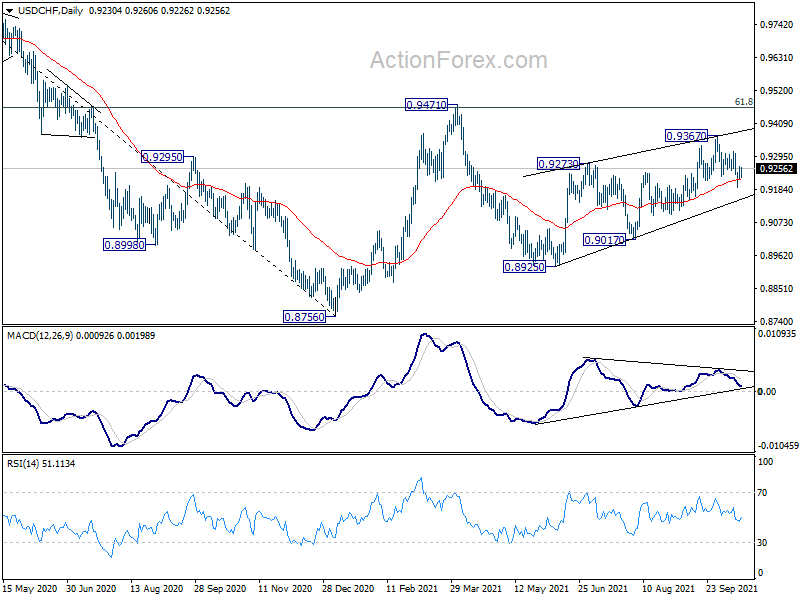
Intraday bias in USD/CHF remains neutral first. On the downside, break of 0.9193 will resume the fall from 0.9367 to 0.9162 support first. Considering bearish divergence condition in daily MACD, firm break of 0.9162 will argue that whole rise from 0.8925 has completed and target this support. On the upside, break of 0.9312 support will bring retest of 0.9367 resistance instead.
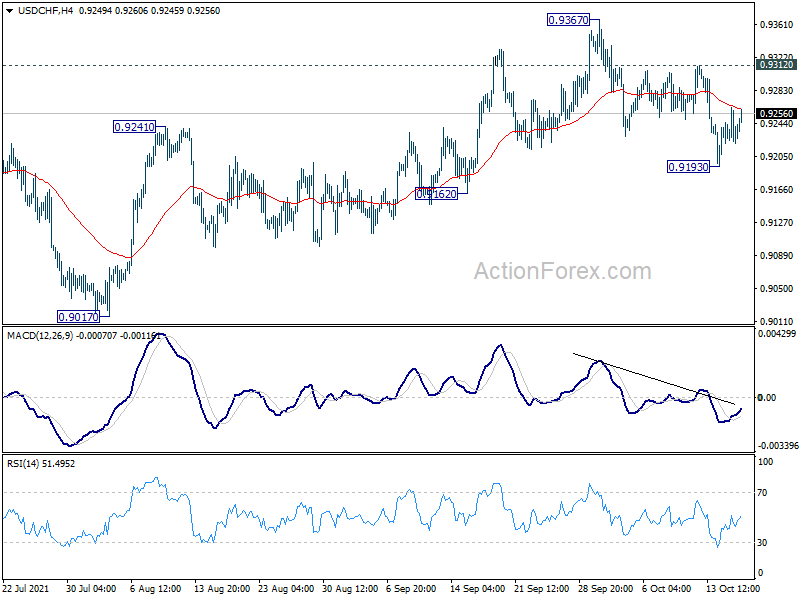
In the bigger picture, the corrective structure of the rebound from 0.8925 argues that fall from 0.9471 is not completed yet. It could either be the second leg of pattern from 0.8756 (2021 low), or resuming larger down trend from 1.0237 (2018 high). We'd pay attention to the downside momentum of assess the odds later. But for now, medium term outlook will be neutral at best as long as 0.9471 resistance holds.
USD/JPY Daily Outlook
Daily Pivots: (S1) 113.80; (P) 114.13; (R1) 114.59; More...
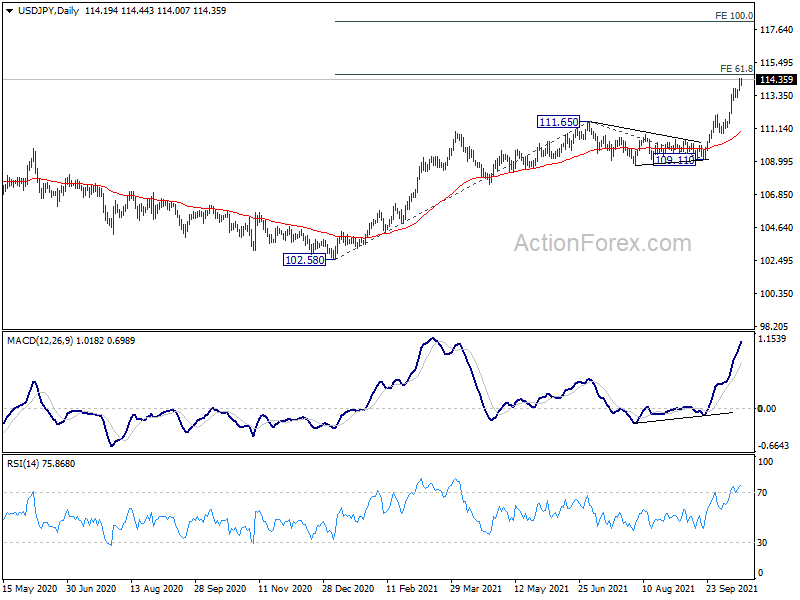
Intraday bias in USD/JPY stays on the upside for 61.8% projection of 102.58 to 111.65 from 109.11 at 114.71. Firm break there will target 100% projection at 118.18 next. On the downside, break of 113.20 minor support will turn intraday bias neutral and bring consolidations again, before staging another rally.
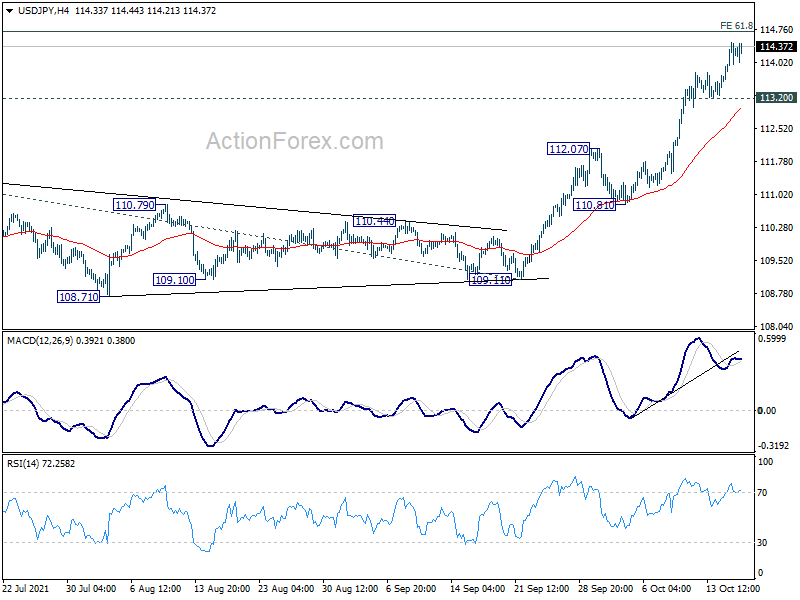
In the bigger picture, corrective decline from 118.65 (2016 high) should have completed at 101.18 already. Rise from the 102.58 is seen as the third leg of the up trend from 101.18. Next target is 114.54 resistance and then 118.65 high. This will now be the preferred case as long as 109.11 support hold, even in case of deep pull back.
AUD/USD Daily Report
Daily Pivots: (S1) 0.7403; (P) 0.7421; (R1) 0.7439; More...
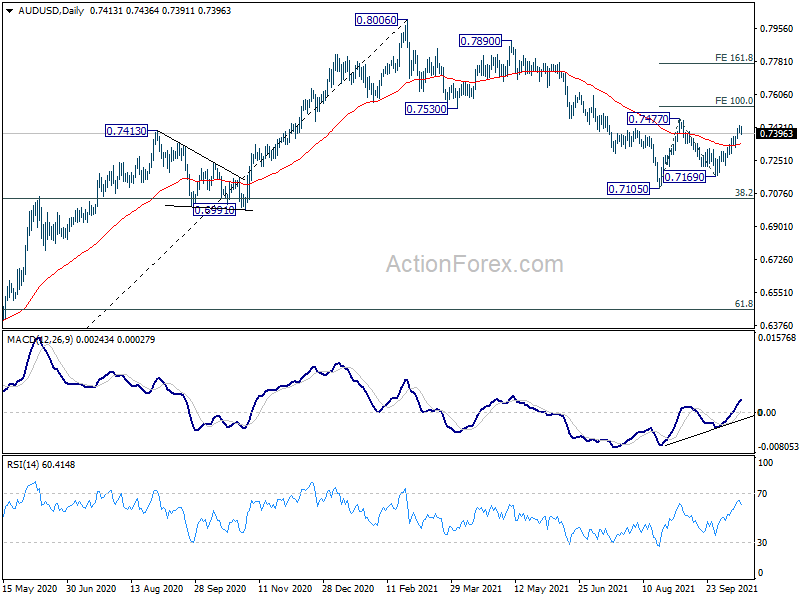
Intraday bias in AUD/USD is turned neutral with current retreat, and some consolidations could be seen first. Further rise is in favor with 0.7322 minor support intact. Above 0.7439 will target 0.7477 resistance first. Firm break there will argue that larger decline from 0.8006 has completed and turn near term outlook bullish. Next target is 100% projection of 0.7105 to 0.7477 from 0.7169 at 0.7541, and then 161.8% projection at 0.7771. On the downside, though, below 0.7322 minor support will dampen the bullish case and turn bias back to the downside for 0.7169 support instead.
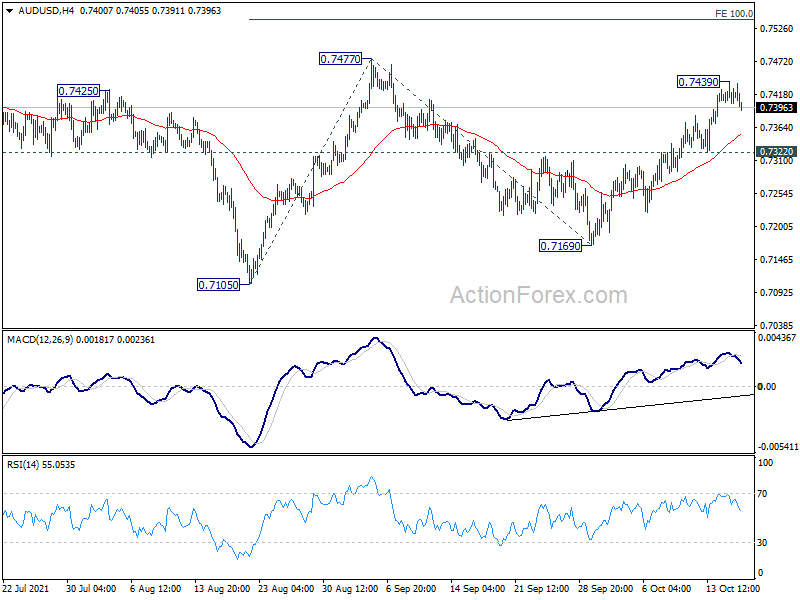
In the bigger picture, with 0.6991 cluster support (38.2% retracement of 0.5506 to 0.8006 at 0.7051) intact, we're seeing price action from 0.8006 as a correction only. That is, up trend from 0.5506 low would resume after the correction completes. In that case, main focus will be 0.8135 key resistance (2018 high). Sustained break there will carry larger bullish implications. However, sustained break of 0.6991 will argue that the whole medium term trend has indeed reversed.
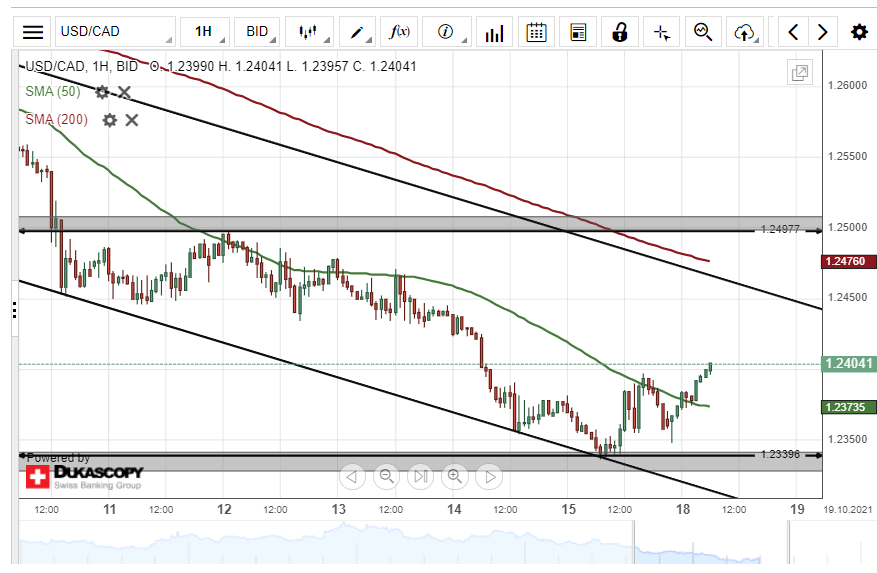
USD/CAD Could Target 1.2440
On Friday, the US Dollar rose by 57 pips or 0.46% against the Canadian Dollar. The surge was stopped by the 50– hour simple moving average during Friday's trading session.
As for the near future, the USD/CAD exchange rate could continue to strengthen. Buyers may target the upper boundary of a descending channel pattern at 1.2440 within this session.
However, technical indicators suggest that the currency exchange rate could continue to edge lower during the following trading session.