Sample Category Title
EUR/JPY Daily Outlook
Daily Pivots: (S1) 130.06; (P) 130.65; (R1) 131.52; More....
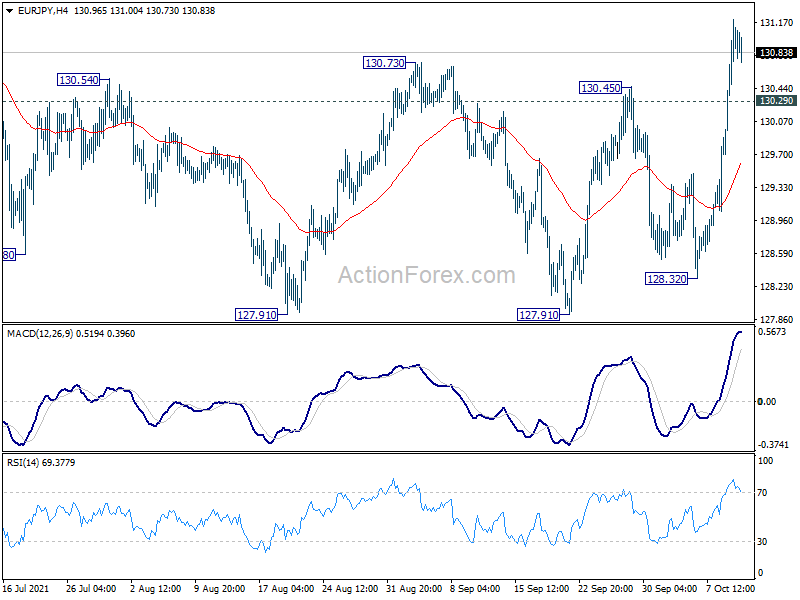
Intraday bias in EUR/JPY remains on the upside at this point. As noted before, corrective pattern from 134.11 could have already completed at 127.91. Further rise should be seen to retest 134.11 high. On the downside, below 130.29 minor support will dampen the bullish case and turn intraday bias neutral first.
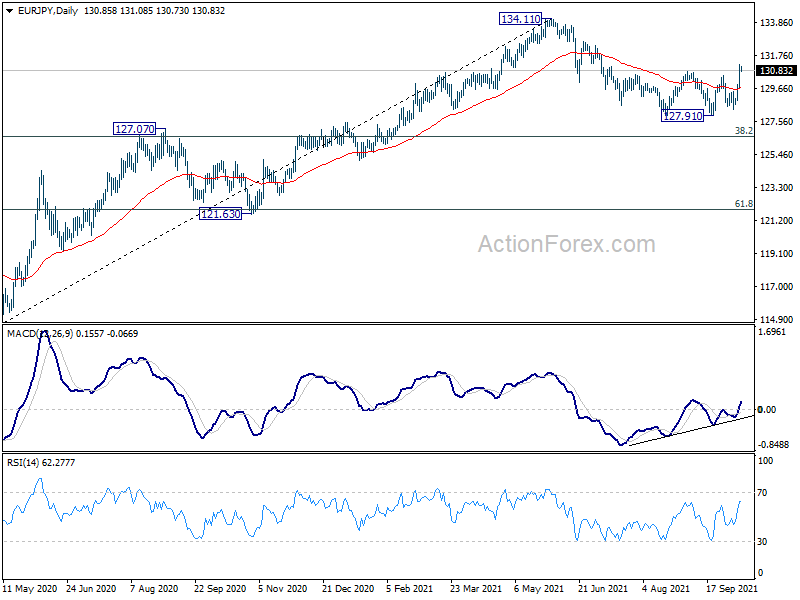
In the bigger picture, rise from 114.42 is seen as a medium term rising leg inside a long term sideway pattern. As long as 127.07 resistance turned support holds, further rise is still expected to retest 137.49 (2018 high). However, firm break of 127.07 will argue that the medium term trend has reversed, deeper fall would be seen to 61.8% retracement of 114.42 to 134.11 at 121.94.
AUD/USD Could Continue To Trend Up
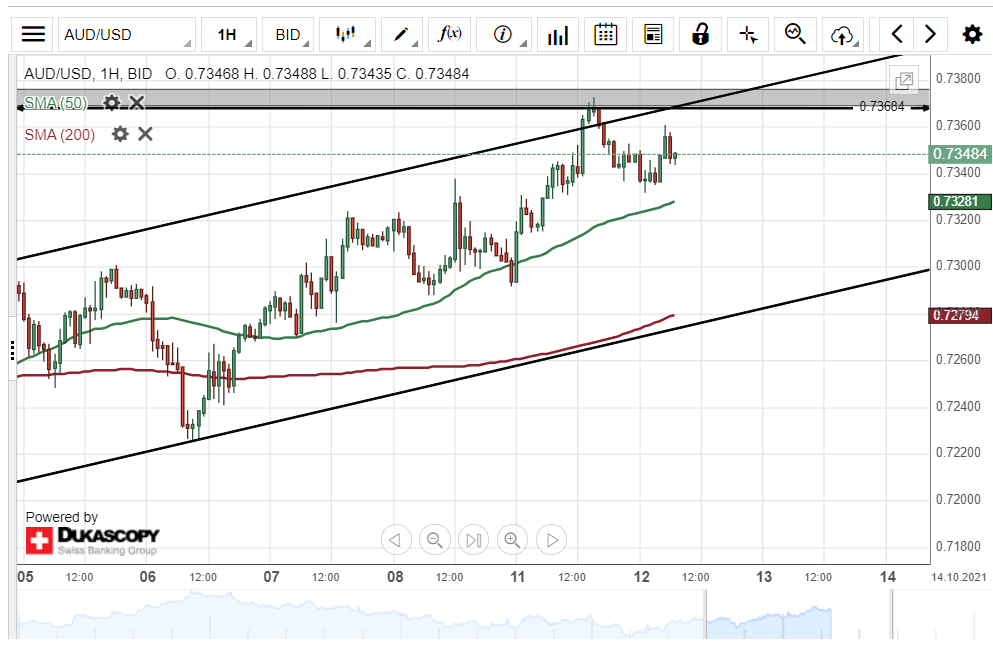
On Monday, the Australian Dollar edged higher by 73 pips or 1.00% against the US Dollar. The currency pair tested the upper boundary of an ascending channel pattern at 0.7366 during Monday's trading session.
Technical indicators suggest buying signals on the 4-hour time frame chart. The AUD/USD exchange rate is likely to continue to trend higher during the following trading session.
However, the resistance level at 0.7368 might provide resistance for the currency exchange rate within this session.
EUR/JPY Two Scenarios Likely
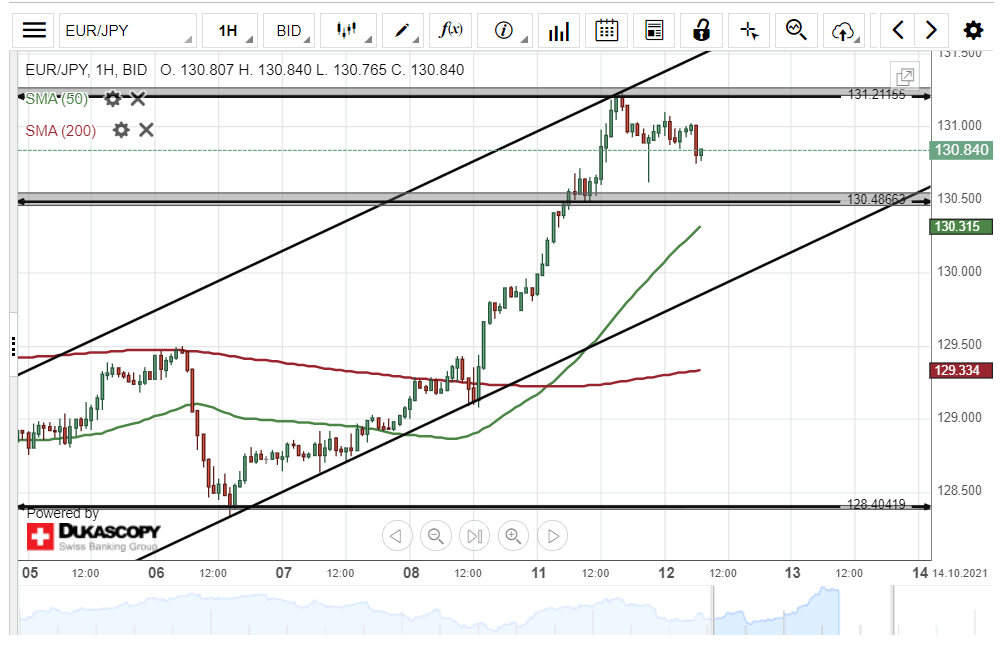
Upside risks dominated the EUR/JPY currency pair on Monday. As a result, the common European currency edged higher by 136 pips or 1.05% against the Japanese yen during Monday's trading session.
Currently, the exchange rate is trading near the upper boundary of an ascending channel pattern and could be set for a breakout.
If the breakout occurs, a surge towards the 132.00 level could be expected within this session.
However, if the channel pattern holds, sellers could target the 50- hour simple moving average at 130.21 today.
EUR/GBP Daily Outlook
Daily Pivots: (S1) 0.8481; (P) 0.8491; (R1) 0.8511; More...
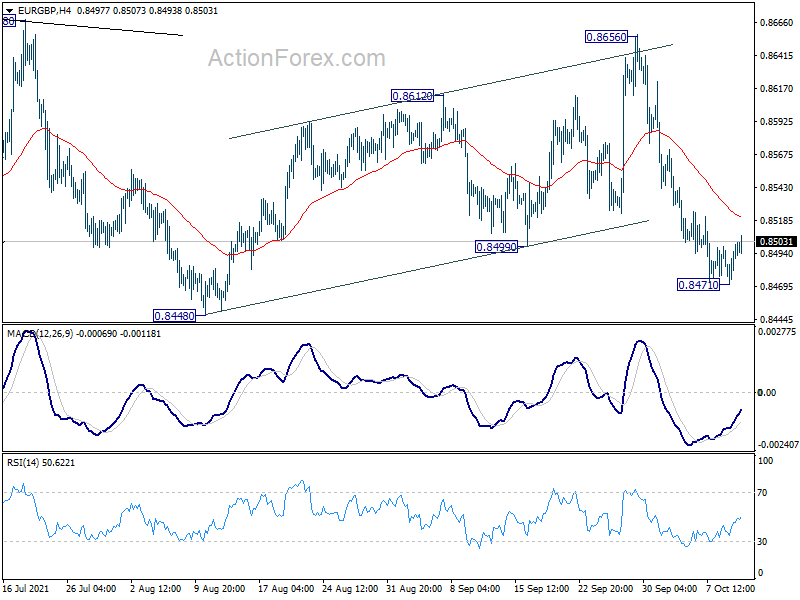
Intraday bias in EUR/GBP is turned neutral with current recovery. Some consolidations could be seen but risk will stay on the downside as long as 0.8656 resistance holds. Below 0.8471 will bring retest of 0.8448 low first. Firm break there resume larger down trend from 0.9499, towards 0.8276 key support.
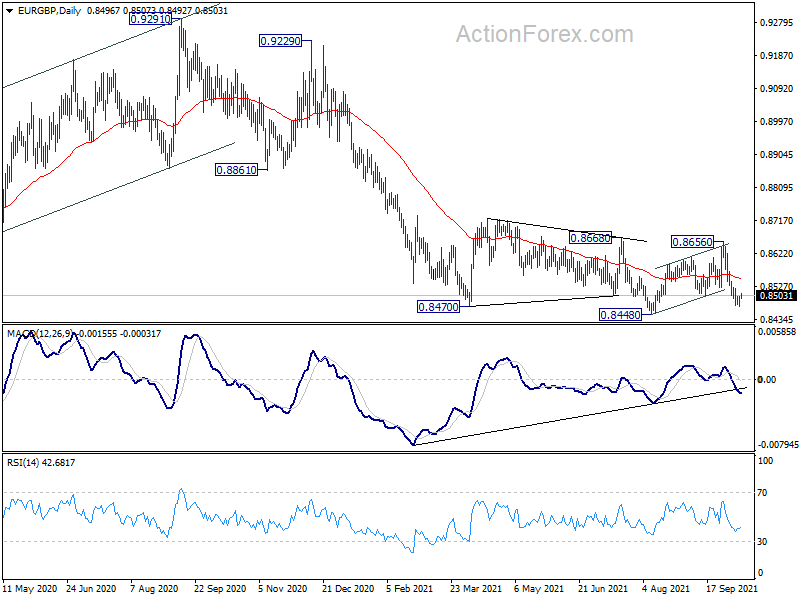
In the bigger picture, price actions from 0.9499 (2020 high) are still seen as developing into a corrective pattern. Deeper fall could be seen as long as 0.8668 resistance holds, towards long term support at 0.8276. However, firm break of 0.8668 resistance would argue that a medium term bottom was already formed. Stronger rise would be seen to 0.8861 support turned resistance to confirm completion of the corrective pattern.
EUR/AUD Daily Outlook
Daily Pivots: (S1) 1.5663; (P) 1.5761; (R1) 1.5823; More...
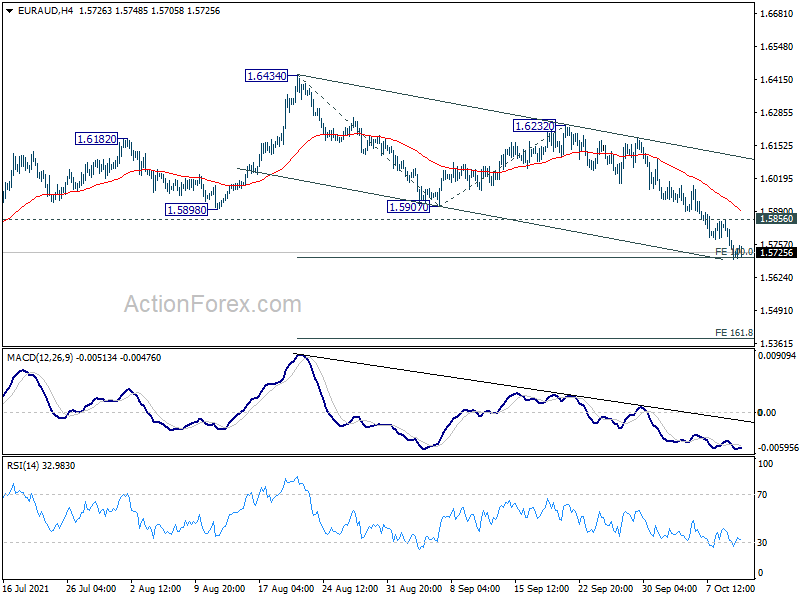
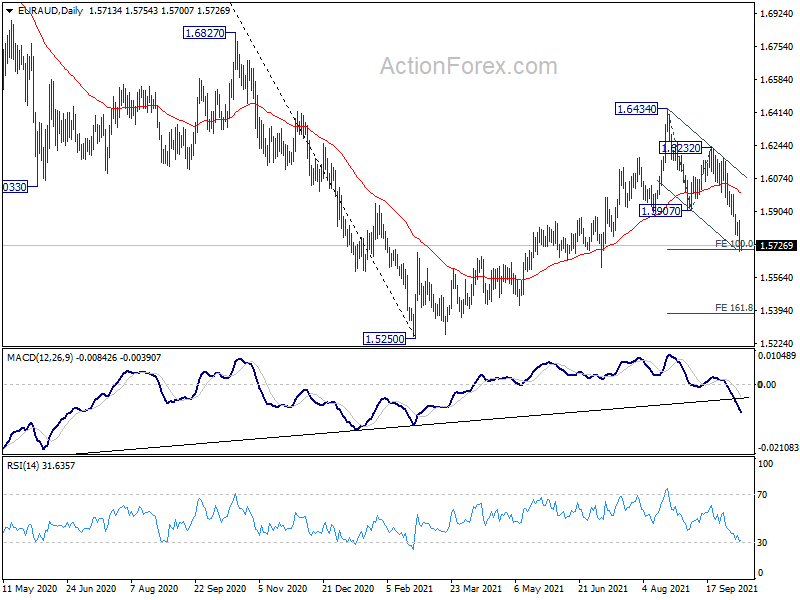
Intraday bias EUR/AUD remains on the downside as fall 1.6434 is still in progress. Firm break of 100% projection of 1.6434 to 1.5907 from 1.6232 at 1.5705 will pave the way to 161.8% projection at 1.5379. On the upside, above 1.5856 minor resistance will turn bias neutral and bring consolidations. But near term outlook will now remain mildly bearish as long as 1.6232 resistance holds, in case of recovery.
In the bigger picture, rise from 1.5250 medium term bottom is seen as a correction to the down trend from 1.9799 (2020 high) only. With 38.2% retracement of 1.9799 to 1.5250 at 1.6988 intact, such down trend is expected to resume at a later stage. Firm break of 1.5250 will target 61.8% retracement of 1.1602 (2012 low) to 1.9799 at 1.4733. In any case, sustained break of 1.6988 fibonacci level is needed to indicate long term reversal.
Daily Technical Analysis
EUR/USD
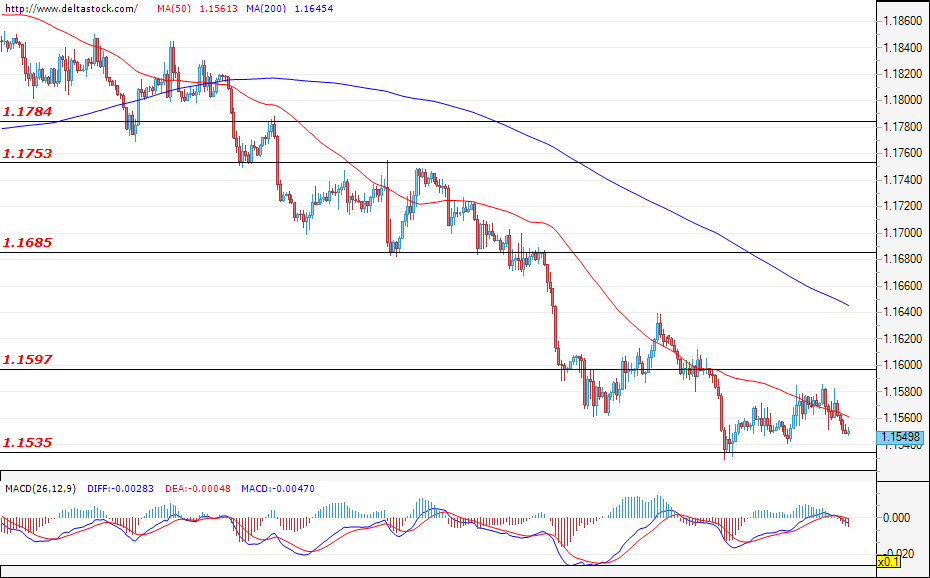
Current level - 1.1549
The currency pair still cannot recover from its recent losses and continues to trade in the range between 1.1535 and 1.1597. The bulls are managing to limit the sell-off at the support level of 1.1535. A breach of the mentioned support, however, would strengthen the negative expectations and would most likely lead to a sell-off towards the next significant support of 1.1400. However, before the downward trend is to continue, it is possible that we could witness a corrective move towards the resistance of 1.1685. Only a confirmed breach of the resistance of 1.1597, however, would give the bulls a chance to enter the markets and head the EUR/USD towards the mentioned resistance.
| Resistance | Support | ||
| intraday | intraweek | intraday | intraweek |
| 1.1597 | 1.1750 | 1.1535 | 1.1410 |
| 1.1685 | 1.1780 | 1.1500 | 1.1280 |
USD/JPY
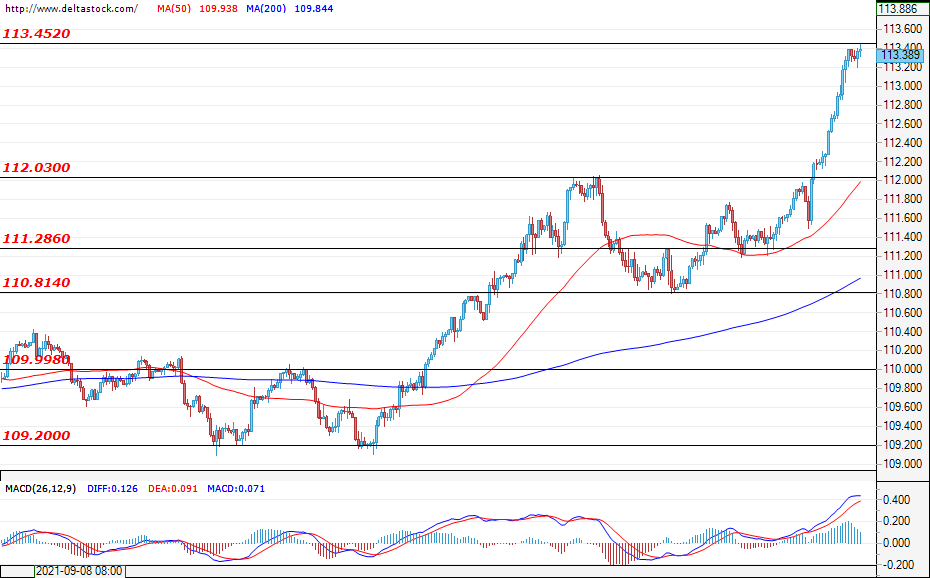
Current level - 113.38
The appreciation of the U.S. dollar against the Japanese yen continued during the first trading session for this week and the resistance level of 113.45 was reached. At the time of writing this analysis, the pair is testing this resistance and the next significant one before the bulls is the level of 113.60, followed by the one of 114.50. The forecasts for today's trading session are for the resistance at 113.45 to limit the rally and to allow the bears to enter the market, which would lead to a sell-off targeting the first important support at 112.00.
| Resistance | Support | ||
| intraday | intraweek | intraday | intraweek |
| 113.45 | 113.60 | 112.00 | 111.80 |
| 113.60 | 114.50 | 111.30 | 110.00 |
GBP/USD
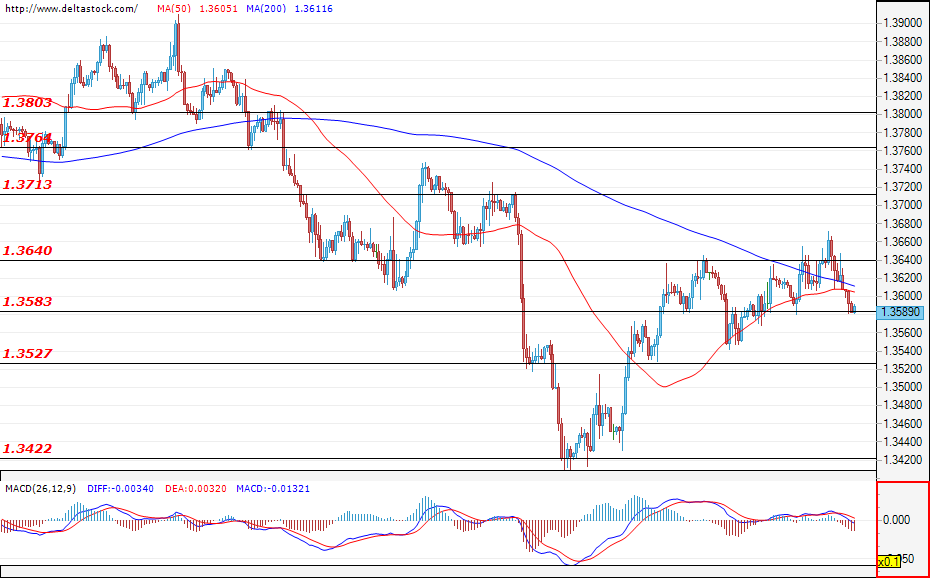
Current level - 1.3589
The currency pair is testing the support of 1.3580 and, if this level is successfully breached, the next target for the sellers would be the level of 1.3520. On the other hand, if the current level turns out to be a good entry level for the bulls and if they enter the market and gain enough momentum to overcome the resistance at 1.3640, this would pave the way for the currency pair towards the next important resistance of 1.3713.
| Resistance | Support | ||
| intraday | intraweek | intraday | intraweek |
| 1.3640 | 1.3760 | 1.3580 | 1.3420 |
| 1.3710 | 1.3800 | 1.3530 | 1.3420 |
EUR/CHF Daily Outlook
Daily Pivots: (S1) 1.0704; (P) 1.0725; (R1) 1.0741; More....
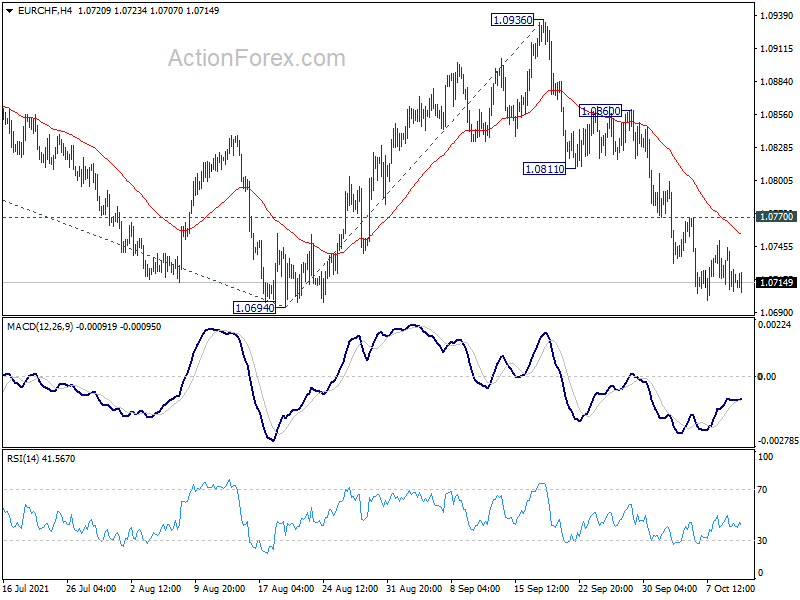
Intraday bias in EUR/CHF remains neutral for the moment, but further decline is expected as long as 1.0770 resistance holds. Decisive break of 1.0694 support will resume whole decline from 1.1149. Next target is 61.8% projection of 1.1149 to 1.0694 from 1.0936 at 1.0655. On the upside, though, break of 1.0770 minor resistance will turn bias back to the upside for rebound towards 1.0811 support turned resistance first.
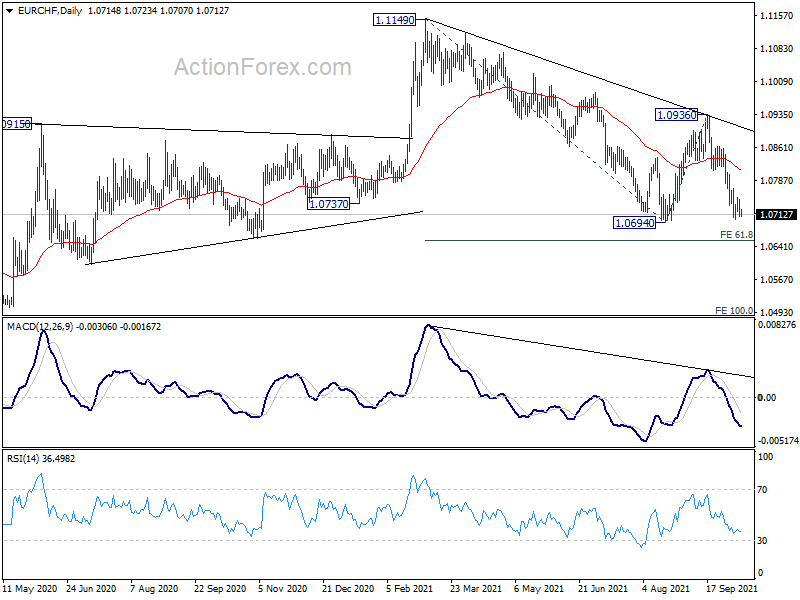
In the bigger picture, the rejection by 55 week EMA maintains medium term bearishness. Fall from 1.1149 (2021 high) is currently seen as the second leg of the patter from 1.0505 (2020 low) first. Hence, in case of deeper fall, we'd look for strong support from 1.0505 to bring rebound. However, sustained break of 1.0505 will resume the long term down trend from 1.2004 (2018 high). Also, medium term outlook will now be neutral at best as long as 1.0936 resistance holds.
Asian Markets Stay In Risk-Off Modus
Markets
Trading started in slow motion yesterday as US cash bond markets were closed (Columbus Day). Still, the established trends remained in place. European yields extended their march north and are near or even surpass key technical levels. In a session without key data, German yield rose another 2 bps (2-y) to 3 bps (5 & 10-y). The 10-y yield easily took out the -0.15% level, the final hurdle ahead of the -0.07% May post-corona top. The 10-y EMU swap (0.28%) already trades well north of the comparable May top. A sustained break would suggest that rates are entering a new era. It deserves close monitoring. Persistent high oil/commodity prices of late raised inflation expectations, but yesterday’s move was mainly driven by higher real yields. In theory, this might be a sign of markets anticipating ECB tapering too. However, policy easing remains subject to hefty internal ECB debate. ECB’s Lane repeated the ‘temporary inflation’ mantra as he advocated that one-off wage increases do not per se contribute to sustained higher underlying inflation. Equity markets lost modest ground, with the US underperforming (S&P -0.7%). In FX, the DXY USD index held north of 94 (close 94.32), but this move was due to a sharp jump in USD/JPY (close 113.31 from 112.24). The yen suffers from higher core (real) yields/rising yield differentials. Moves in other major USD cross rates were more modest. EUR/USD is holding near recent lows (close 1.155). Short-term UK yields continue to rise (2-y + 5 bp) as the debate on an early BoE rate hike evolves (comments from Saunders and Bailey). However, for now it doesn’t cause any further sterling gains, not even against the euro. EUR/GGBP closed at 0.849.
Asian markets stay in risk-off modus. Oil and other commodities holding at high levels are fueling uncertainty on growth going forward as does China regulation (state banks). The DXY USD index is holding stable near 94.30 as USD/JPY (113.25). Later today, the US NFIB small business confidence and German ZEW investor sentiment are interesting, but no real market movers. Several ECB members including Lagarde, Lane and Villeroy will speak as will Fed members Clarida and Bostic. With interest rate markets at key technical levels we keep a close eye at investor interest for US Treasury’s $ 58 bln 3-y action and the $ 38 bln 10-y sale. The EU will issue its first green bond, selling 15-y bonds for an amount of € 12 bln. At first sight, the odds look still good for further USD gains (risk-off, inflation fears, interest rate advantage). Even so, USD gains against the euro recently slowed. The ST picture remains EUR/USD negative as long as the pair trades below 1.1665. Even so, a quick drop to the 1.1495 support also didn’t occur. UK labour market data published this morning were solid, but close to expectations. Later today, UK’s Frost delivering an important speech on the Northern Ireland Protocol, might cause some sterling nervousness.
News headlines
The central bank of South Korea kept the main policy rate unchanged at 0.75%. Two members voted for a back-to-back increase following the August 25 bps hike. Governor Lee said, however, that if the current situation doesn’t differ too much from the one they will be looking at during the November meeting, an additional hike “will be good to consider”. The BoK expressed confidence in the economic recovery while flagging risks from accelerating inflation to worsening financial imbalances, including an increase in household loans and rapid housing price rises in all parts of the country. The South Korean won slips vs the USD this morning, mainly in risk-off trading. USD/KRW touched the 1200 handle for the first time since July 2020.
The Turkish lira dived to another all-time low against the USD yesterday (USD/TRY >9) and hovers near Monday’s close this morning. Both sides of the equation played their role with broad-based dollar strength and a weak lira. The latter resulted from president Erdogan threatening with military intervention in neighboring Syria where Turkey-backed rebels are fighting forces loyal to the Syrian president and Kurdish militia. The domestic situation doesn’t support the currency either as headline inflation spiraled to 19.6% in September while the central bank recently cut policy rates to 18%. Furthermore, markets fear additional rate cuts due to core inflation – the CBRT’s preferred gauge - showing preliminary signs of topping out, even as it still amounts to 17%.
US CPI And Fed Minutes To Reinforce Fed Taper Expectations After Soft NFP
The US dollar was left unscathed from Friday's disappointing payrolls numbers, with investors sticking firmly to their expectations of the Fed announcing tapering in November. Inflation data and the minutes of the September FOMC meeting due on Wednesday (12:30 and 18:00 GMT, respectively) may solidify those bets, eliminating any remaining doubts that the Fed will soon pull the plug on stimulus. However, given how strongly US yields have been rising lately, there is a risk of a pullback from any surprise softness in the CPI readings, which could in turn weigh on the dollar.
The great puzzle of the US jobs market
The US labour market keeps puzzling economists who are struggling to understand why more people aren't returning to work even after the generous federal unemployment benefits ended at the beginning of September. The US economy added just 194k jobs in September, defying predictions of a strong rebound following a similarly big miss in August. It seems that many Americans are still cautious about returning to work due to the ongoing prevalence of the Delta variant. Hiring in government education was affected particularly badly as schools reopened amid teacher shortages.
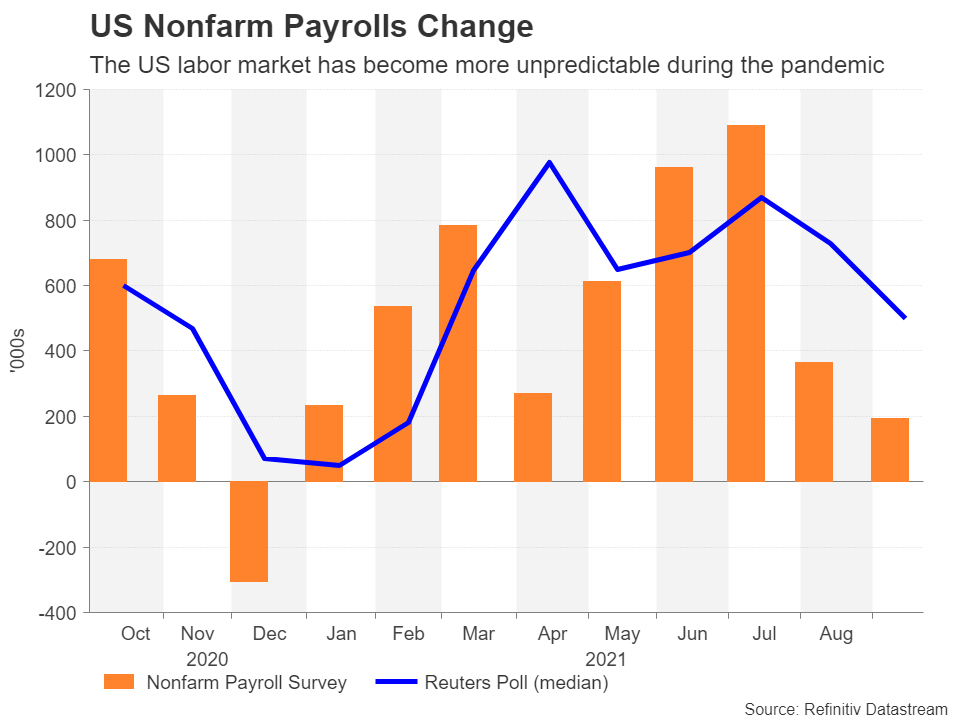
However, not only were the losses in government payrolls possibly overstated by not accounting for teachers engaged in remote learning, other previously hard-struck industries did well. For example, jobs in leisure and hospitality rose by 74k, suggesting that the recovery in the sector may finally be back on track after getting hamstrung by the Delta outbreak.
CPI likely held steady in September
This should make it easier for the Fed to overlook the weakness in the headline NFP figure and go ahead with tapering at the next meeting on November 2-3, especially as inflation worries are mounting. The consumer price index rose at the fastest pace in 13 years during the summer months and is expected to have stayed above 5% in September.
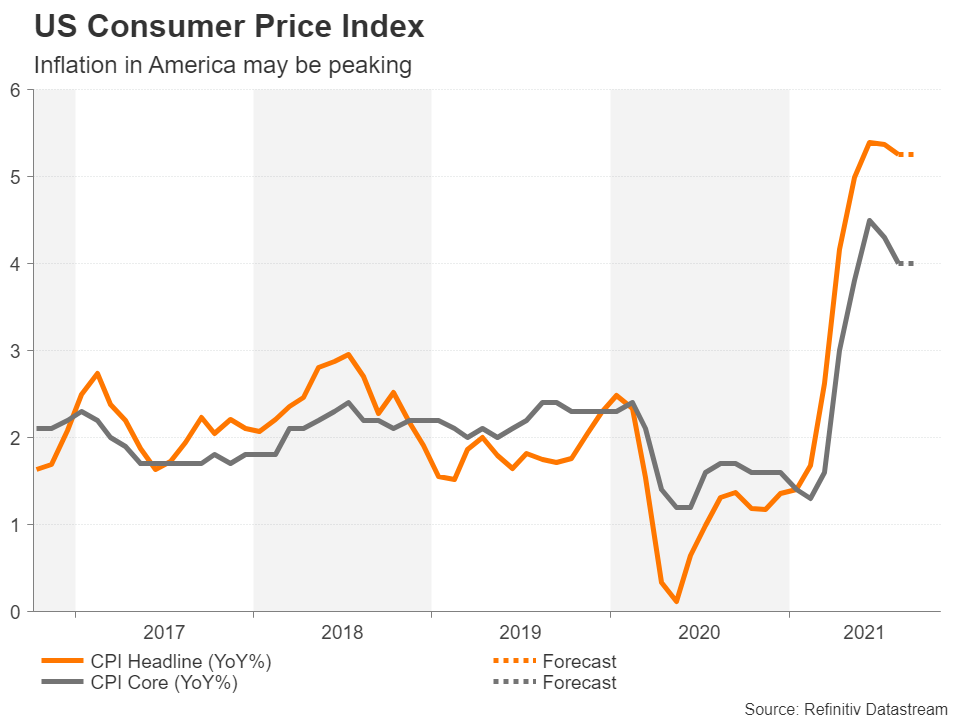
Analysts are forecasting the month-on-month rate to have increased by 0.3% and the 12-month rate by 5.3%, unchanged from August. Core CPI, which excludes volatile food and energy prices, is expected to have quickened in September from 0.1% to 0.3% on a monthly basis but to have remained unchanged at 4.0% on a year-on-year level.
Has inflation peaked?
Should the CPI data miss the forecasts hot on the heels of the weaker-than-expected NFP print, markets might begin to question how hawkish the Fed will be in November as policymakers might proceed more cautiously following two back-to-back underwhelming jobs reports. Although price pressures in America are persisting and becoming broader based, inflation may now be plateauing. The fact that the US isn't experiencing fuel shortages like other countries as it is more energy self-sufficient gives some credence to this view.
Hence, any further evidence on Wednesday that inflation might be past its peak could take the steam out of the rally in Treasury yields. The 10-year yield hit four-month highs on Monday, surpassing 1.60%, boosting the US dollar against the Japanese yen.
Dollar hits 3-year high versus yen
The pair has surged towards the 161.8% Fibonacci extension of the July-August downtrend at 113.47 – a near three-year high – and the CPI numbers could determine whether it's able to break above it. Clearing the hurdle of the 161.8% Fibonacci could see dollar/yen test the 114 level before reaching for the 200% Fibonacci of 114.59.
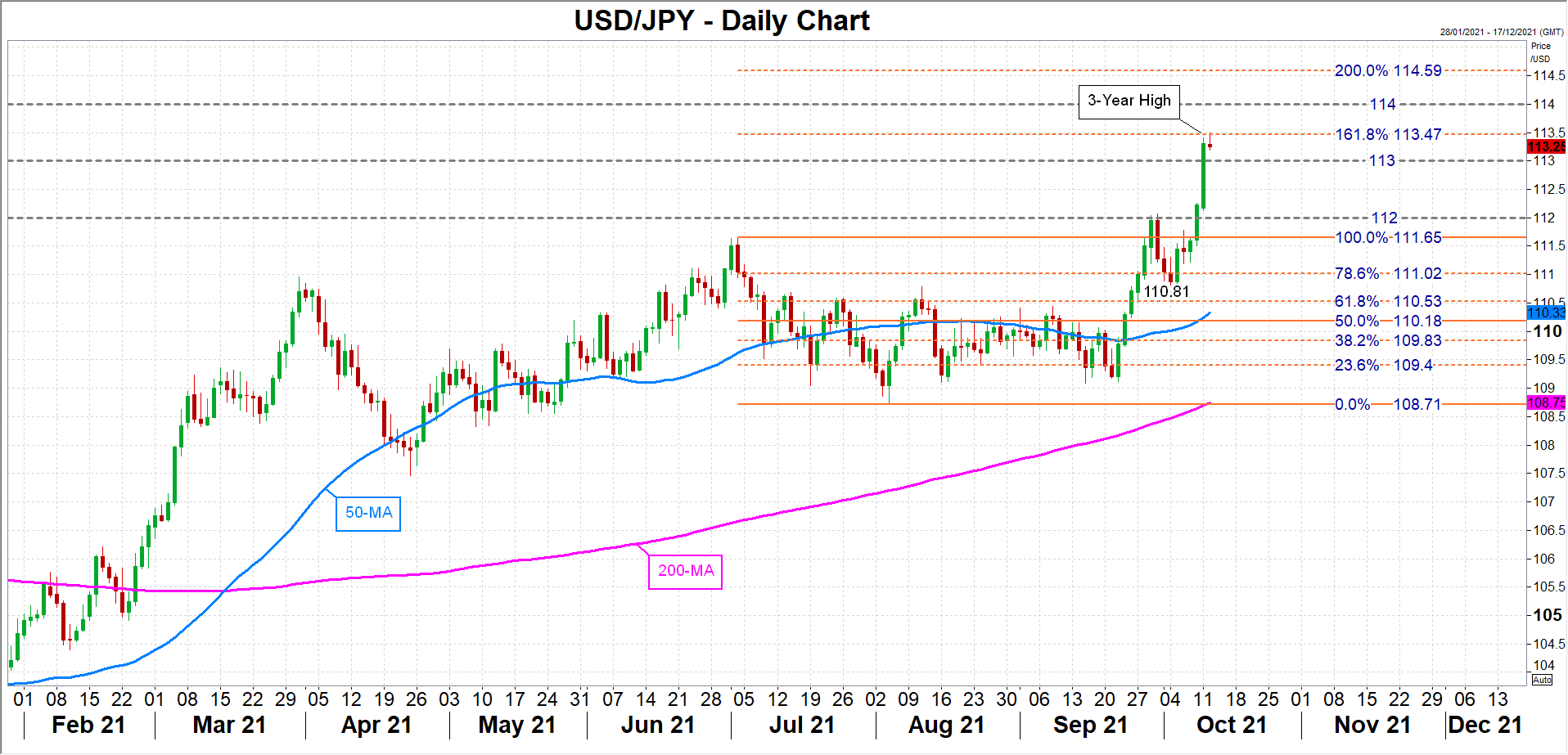
Alternatively, a downside reversal would turn attention on the 113 and 112 psychological barriers for support before revisiting the October low of 110.81.
Fed speakers to draw more focus than minutes
Another clue on whether a dovish taper is more likely than a hawkish one will come from the Fed's September meeting minutes. At the last meeting, the Fed finally took the step of flagging a taper decision, with Chair Powell suggesting asset purchases could be unwound by the middle of 2022.
The minutes could shed some more light on the discussions around the tapering timeline as well as on the timing of the first post-pandemic rate hike. The latter will take priority once the taper debate is over, but the minutes will probably not reveal a great deal more than what Powell has already said and investors will be hoping that the Fed officials lined up to speak this week will provide some fresh answers.
UK employment back to pre-pandemic level in Sep
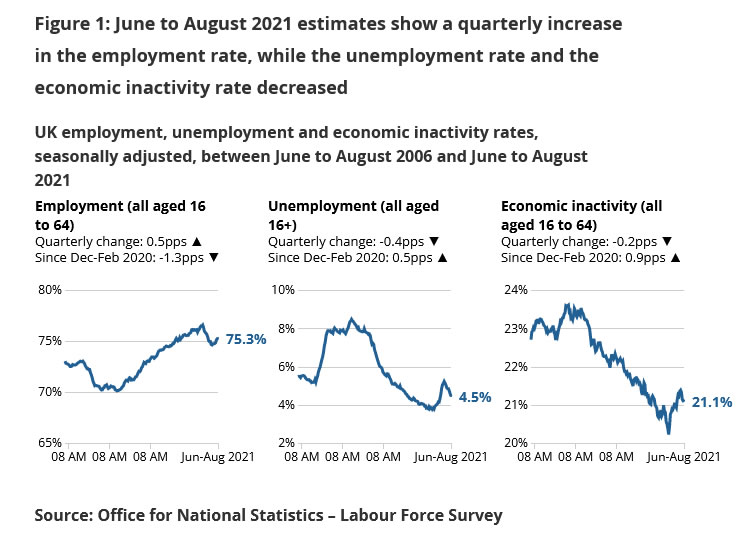
UK number of payroll employees rose 207k to record 29.2m in September, returning to pre-coronavirus pandemic level in February 2020. For the three months to August, unemployment rate dropped to 4.5% in August, down from 4.6%, matched expectations. Employment rate rose 0.5% on the quarter to 75.3%. Average earnings including bonus rose 7.2% 3moy. Average earnings excluding bonus rose 6.0% 3moy.