

Sample Category Title
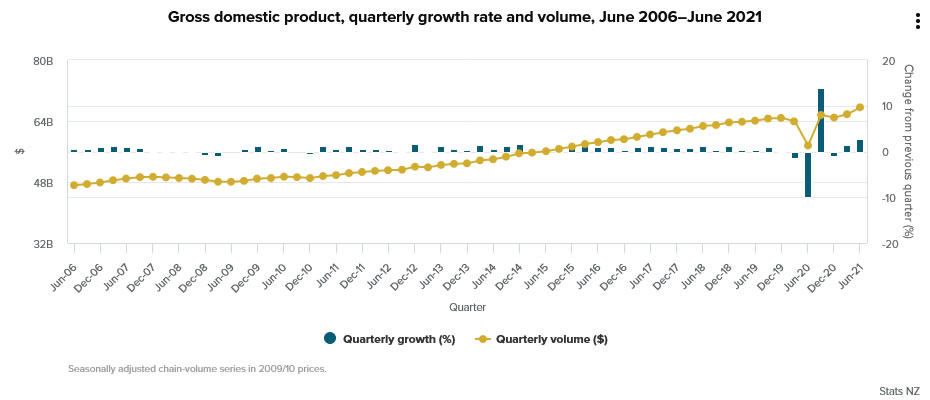
New Zealand GDP grew 2.8% qoq in Q2, well above expectation
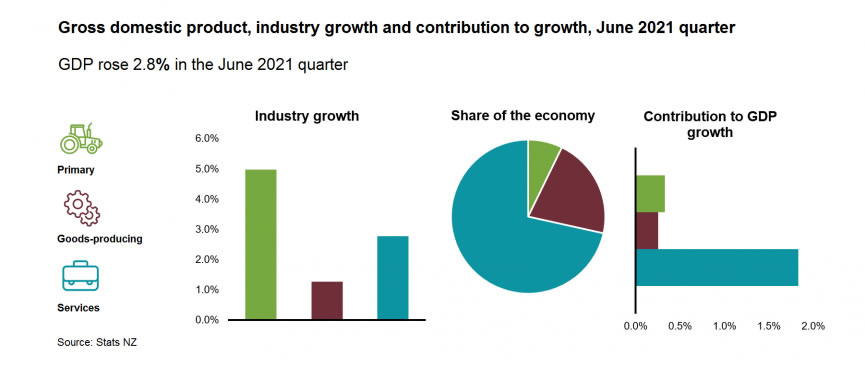
New Zealand GDP grew 2.8% qoq in Q2, well above expectation of 1.2% qoq. Growth was led by service industries, which rose 2.8% qoq. Primary industries rose 5.0% qoq. Goods producing industries rose 1.3% qoq.
"The June 2021 quarter experienced fewer COVID-19 restrictions than previous quarters affected by COVID-19. Many industries experienced activity at or above pre-COVID-19 levels, while some remained below," national accounts senior manager Paul Pascoe said.
ECB Lane: Should emphasize persistence, not volume of asset purchases
ECB Chief Economist Philip Lane said in a webinar, "it's not a good idea to identify the monetary policy stance with the volume of asset purchases." Instead, "the efficient approach is to emphasize persistence."
"We're happy that our monetary accommodation is strengthening the underlying inflation dynamic and over time -- this will continue to build. We have a coherent policy setting," he added.
Market Morning Briefing: Aussie Is Holding Below 0.7350
STOCKS
Dow Jones have risen well and could be headed towards 35500 while Dax has fallen from interim resistance near 15800 and could see some ranged trade between 15800 and 15400 region for a few sessions. Nikkei and shanghai have dipped a bit and is likely to test 30000 and 3600-3575 before a bounce is seen in the medium term. Nifty and Sensex have risen well and look bullish for the near term.
Dow (34814.39, +236.82, +0.68%) has bounced sharply after testing 34522 on the downside. The bounce can take the index higher to 35250-35500 in the near term which needs to break too in order to take the index further up towards 36000 in the medium term.
DAX (15616, -106.99, -0.68%) has fallen from immediate resistance at 15800 and while that holds, a dip back towards 154600/800 cannot be negated. A range of 15800-15400 can hold for the near term.
Nikkei (30332.64, -179.07, -0.59 %) has dipped sharply from 30750. View is bearish as the corrective fall can extend towards 30000 before again bouncing back from there. Only if a break below 30000 is seen, we may look for a further dip towards 28500-28000.
Shanghai (3626.04, -30.19, -0.83%) has fallen sharply and could test a maximum of 3575 on the downside before rising back from there. View is bearish while below 3650.
Nifty (17519.45, +139.45, +0.80%) has made a strong close above 17500 yesterday in line with our expectations. While above 17500, view is bullish to see a test of 17800-850 in the coming sessions. Else an immediate pull back from current levels can delay the expected rise and initiate a corrective dip from here.
Sensex (58723.20, +476.11, +0.82%) has also risen yesterday and is heading towards 59000. A strong break above 59000 will be further bullish else a consolidation between 58000-59000 can be seen for some sessions.
COMMODITIES
Crude prices rose sharply after the API (American Petroleum Institute) reported a larger than expected crude draw of 5.437mln barrels for week ended 10th Sep’21. It exceeded analyst expectations of 3.903mln barrels. Gold has fallen below 1800 and could be headed towards 1780/65 if it does not bounce back immediately. Silver holds above 23 and can rise towards 24-25. Copper is likely to remain stable within 4.20-4.40
Brent (75.60) and WTI (72.71) have risen sharply on larger than expected crude inventory draws. Brent has broken above our expected 74/75 levels and can rise to test 77/78 or even 80 before a decline is seen from there. WTI on the other hand has risen above our expected 72 and can rise to 75 in the near term.
Gold (1796.70) has fallen back below the level of 1800.While below 1800 the view is bearish to see a test of 1780 and 1765 eventually.
Silver (23.97) sustains above 23.50 and while the price trades higher, view is bullish to see a test of 24 and eventually 25 in the coming sessions. A strong break below 23.50 would be needed for the price to fall towards 23-22.
Copper (4.3790) has come up sharply after testing the low of 4.2915. View is to see sideways consolidation between 4.20-4.40 in the coming sessions
FOREX
Dollar index trades lower but can bounce from 92-92.20 in the near term. On the other hand, Euro is facing difficulty to rise above 1.1830/50 and failure to break above 1.1850 can turn bearish for the medium term. Aussie and Pound are stable but has scope for a fall in the medium term. USDJPY is falling sharply and can test 109. Failure to bounce from 109 would make it more bearish in the longer run. USDCNY has been falling sharply and can fall to 6.40/3750 soon. USDINR too can test 73.20/10 on a break below 73.40.
Dollar Index (92.47) fell sharply from 92.80/90 over the past couple of sessions and while the index trades lower, a fall towards 92 is possible before a bounce is seen. Immediate view is bearish but we need to see if this impacts the Euro positively.
Euro (1.1817) faces immediate resistance near 1.1850 making it difficult to rise past 1.1830/50. While below these levels, it would be difficult for Euro push itself upwards and can eventually give way for a sharp decline. Else it may remain stable and ranged until the FOMC next week. Wait and watch for a broad range of 1.1775/50-1.1.1830/50 to hold for the near term.
EURJPY (129.14) has fallen further and can continue to fall towards 128.50-128.00 in the near term while below 129. Immediate view is bearish.
Dollar-Yen (109.29) has fallen sharply and while below 109.50, we may expect a further fall towards 109 or even lower eventually. For now watch a test of 109 and see if it manages to produce a bounce back.
Aussie (0.7328) is holding below 0.7350 and can fall towards 0.7250 if it sustains to fall further from here.
Pound (1.3839) seems to be fluctuating within 1.39 and 1.3750 and could remain sideways for a few sessions. Thereafter a break on either side will be needed to determine further directional movement.
USDCNY (6.4316) has fallen and looks bearish for a test of 6.40/3750 in the near term. View is strongly bearish while below 6.45.
USDINR (73.4950) may test 73.40 and if it holds, can bounce back towards 73.70/80 again on the upside. But on the very near term charts, there is scope for a fall to 73.20/10 before a bounce takes place. Watch price action near 73.40 today.
INTEREST RATES
The US Treasury yields remain stable. A strong bounce from here is needed from here to avoid a further fall and move up to test their resistances. From a bigger picture, the upside in the yields are likely to be capped with strong resistances ahead and any sharp rise from here is likely to be short-lived for now. It will have to be seen as what the US retail sales data release today and the FOMC meeting outcome next week have in plate for the Treasury yields. The German yields have come closer to their crucial resistances. We can expect the yields to reverse lower and resume the broader downtrend in the coming days. The 5Yr and 10Yr GoI have come down sharply yesterday after testing their key resistances. The view is bearish to fall further.
The US 2Yr (0.21%), 5Yr (0.80%), 10Yr (1.29%) and the 30Yr (1.86%) Treasury yields remain stable. The 10Yr has to rise past 1.3% to move up to 1.4% again and negate the fall to 1.2%-1.18% from here. From a big picture 1.4%-1.45% will be an important support zone while below which the broader view will remain bearish. The 30Yr on the other hand has to breach 1.9% to move up to 2% in the near-term. Else a dip to 1.8% cannot be ruled out.
The German 2Yr (-0.71), 5Yr (-0.63%), 10Yr (-0.31%) and 30Yr (0.19%) yields have risen across tenors. The 10Yr and 30Yr have come closer to our targets of -0.30%/-0.25% and 0.20% respectively. The price action in the coming days will need a close watch for a reversal and the resumption of the overall downtrend.
The Indian 10Yr GoI (6.1630%)fell sharply yesterday. Failure to breach 6.2% keeps intact our bearish view of seeing 6.12-6.1%. From a medium-term perspective 6.05%-6% can also be targeted.
The resistance at 5.64% has held very well and the 5Yr GoI (5.5987%) has come down sharply. This keeps alive our bearish view of seeing 5.55%-5.5% on the downside.
EUR/GBP: Support Turned Resistance At 0.8560
Key Highlights
- EUR/GBP is facing resistance near 0.8560 and 0.8570.
- There was a break below a major bullish trend line at 0.8575 on the 4-hours chart.
- EUR/USD must stay above 1.1780 to start a fresh increase.
- GBP/USD is holding gains above the main 1.3800 support zone.
EUR/GBP Technical Analysis
The Euro failed to settle above the 0.8600 resistance against the British Pound. As a result, EUR/GBP saw a bearish reaction below the 0.8560 support level.
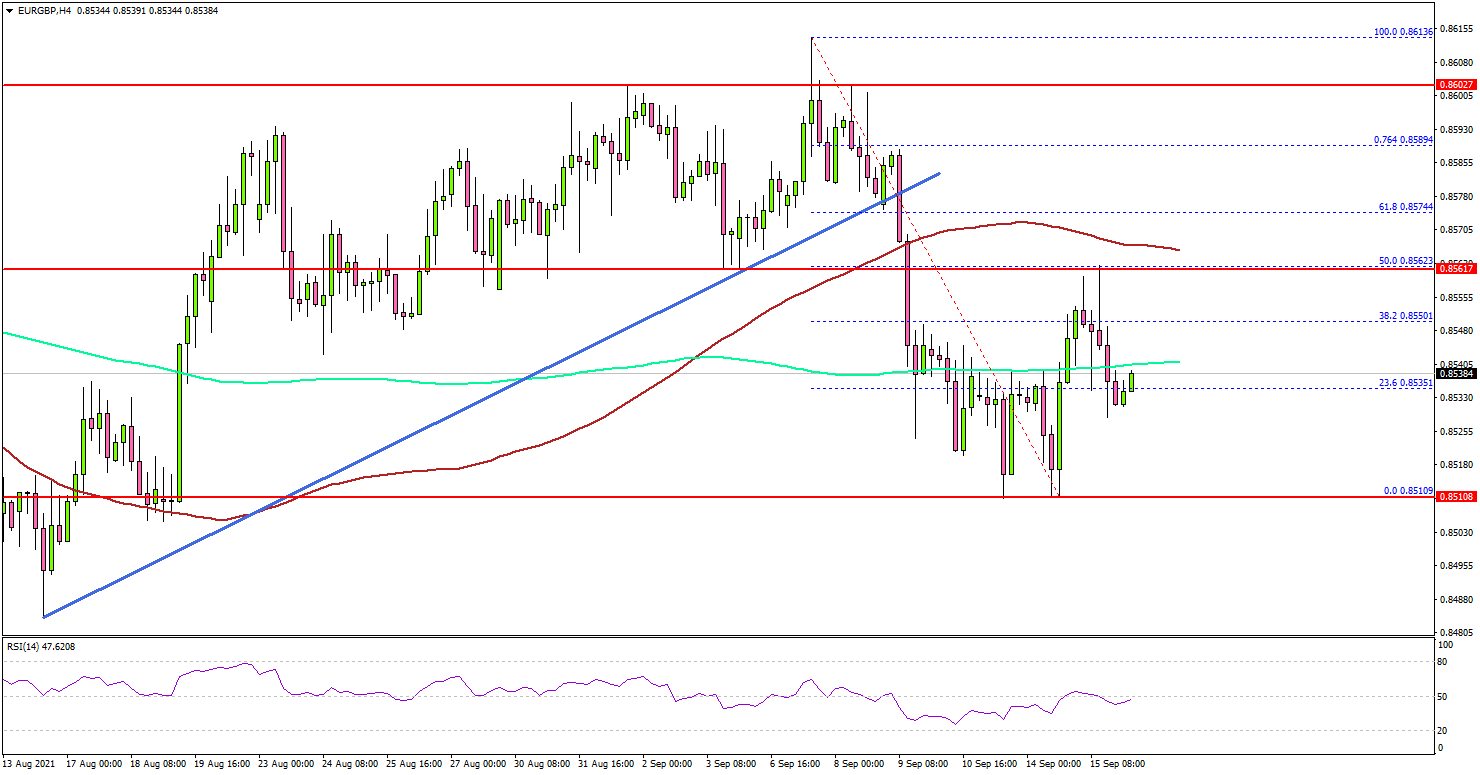
Looking at the 4-hours chart, the pair traded below a major bullish trend line with support at 0.8575. There was also a close below the 0.8560 level and the 100 simple moving average (red, 4-hours).
The pair spiked below the 0.8520 level and the 200 simple moving average (green, 4-hours). It traded as low as 0.8510 before it started an upside correction. There was a break above the 0.8535 level. The pair even climbed above the 38.2% Fib retracement level of the recent decline from the 0.8613 swing high to 0.8510 low.
However, the bears protected the last key support (now resistance) at 0.8560. The 50% Fib retracement level of the recent decline from the 0.8613 swing high to 0.8510 low is also acting as a resistance.
To start a fresh increase, the pair must clear 0.8560 and 0.8570. On the downside, there is a major support forming near the 0.8510 zone. The next major support is near 0.8500. Any more losses might push the pair towards the 0.8460 support zone in the near term.
Looking at EUR/USD, the pair is struggling to stay above the 1.1780 support. Besides, GBP/USD is stable above the main 1.3800 support zone.
Economic Releases
- US Initial Jobless Claims - Forecast 328K, versus 310K previous.
- Canada’s ADP Employment Change for August 2021 – Forecast 110K, versus 221.3K previous.
Eco Data 9/16/21
[php_everywhere instance="1"]
US Crude Oil Inventory Plunged 6.42 mbb, almost Doubling Expectations
The report from the US Energy Information Administration (EIA) shows that total crude oil and petroleum products (ex. SPR) stocks fell -8.78 mmb to 1234.64 mmb in the week ended September 10. Crude oil inventory sank -6.42 mmb (consensus: -3.54 mmb) to 417.45 mmb. Stockpile fell in 4 out of 5 PADDs. PADD 3 (Gulf Coast) alone saw -3.85 mmb decline during the week. Cushing stock dropped -1.1 mmb to 35.32. This marks the first decline in 4 weeks. Utilization rate added +0.2 percentage points to 82.1% while crude production edged +0.1 mmb higher to 10.1M bpd for the week. Crude oil imports decreased -0.05M bpd to 5.76M bpd in the week. 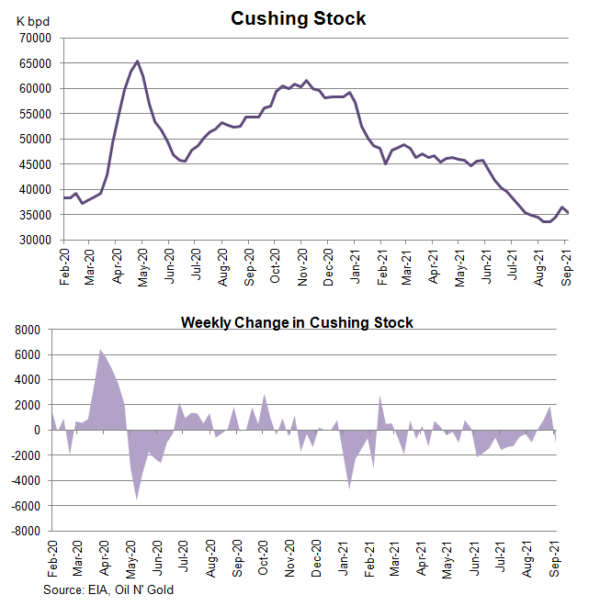 Concerning refined oil product inventories, gasoline inventory slipped -1.86 mmb to 218.14 mmb although demand declined -7.45% to 8.89M bpd. The market had anticipated a -1.96 mmb fall in stockpile. Production plunged -8.41% to 9.27M bpd while imports slumped -29% to 0.64M bpd during the week. Distillate stockpile dropped -1.69 mmb to 131.9 mmb. The market had anticipated a -161 mmb decrease. Demand gained +2.99% to 3.8M bpd. Imports slipped -0.69% to 4.16 mmb while production jumped +15.49% to 0.16M bpd during the week.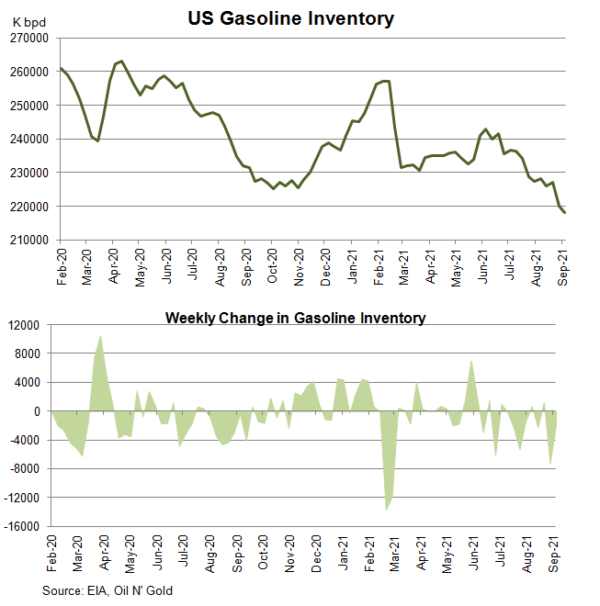
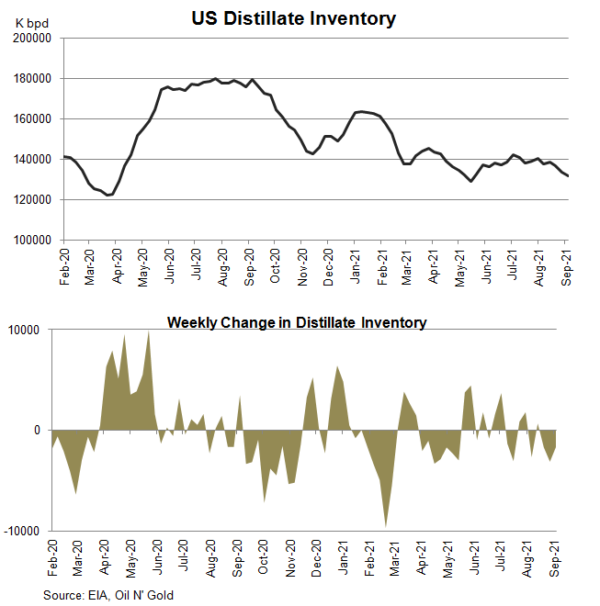
A day earlier, the industry-sponsored API estimated that crude oil inventory was sank -5.44 mmb. Gasoline stockpile dropped -2.76 mmb, while that for distillate dipped -2.89 mmb.
Stocks Mixed on Strong US Data, Casino Stocks Crushed on China Review
US stocks are mixed as investors digest a better-than-expected Empire State survey, a triple threat of bad news from China (casino crackdown, soft economic data, and Evergrande contagion fears), and as concerns start to grow over surging oil and gas prices. Right now, Wall Street knows the Fed is not going anywhere, but nervousness is growing that this string of Chinese crackdowns/concerns could be the first domino to fall and help trigger the first 5% pullback in well over 200 trading days.
The dollar is paring losses as Treasury yields bounce back after New York manufacturing surprisingly surged alongside prices. The dollar’s gains will likely be limited until we hear from the Fed next week.
US Data The Empire manufacturing index is telling a new story about the direction of the economy. The headline index rose sharply by 16 points to 34.3, as business conditions improve. Demand is looking healthy and if this report is not just a one-off, this could trigger a slightly more optimistic reset for the third quarter. One report does not make a trend, but if this positive theme spreads across all the other regional surveys, Wall Street could rush to upgrade forecasts for how the US economy will finish the year.
Import prices in August declined, another round of data that goes to the inflation is transitory camp. Export prices also rose 0.4% month-over-month after increasing 1.1% in July.
August industrial production showed the economic recovery is intact, albeit at a slower pace. The impact of hurricane Ida was at the end of the month, so expectations will be some pricing pressures next month.
Today’s data is incomplete as the Empire State survey is limited in size, but if the rest of the regions are strong and the flash PMI readings show a pickup, economic growth calls will be upgraded.
China The headlines continue to deter foreign investor interest back into Beijing. Asian stocks were mostly lower over the Macau crackdown, weak economic data, and a nervous market over Evergrande’s collapse impact on the Chinese real estate market.
The future of gambling stocks in Macau is dragging down US casinos, with Wynn having its worst decline since early in the pandemic last year. Margins will be crushed at the gambling capital of the world and that will drag down all the big casinos. Today, the house loses as Macau regulations will yield a lot of uncertainty over what new rules will be in place once the 45-day consultation ends.
BoJ Kuroda: Inflation will eventually reach 2% target, but not before 2023
BoJ Governor Haruhiko Kuroda reiterated in an online seminar, "Japan's economy will recover as the impact of COVID-19 wane due to further progress in vaccinations."
"We expect that inflation rate will steadily go up and eventually reach 2% target, although not before 2023," he said.
He also pledged, "if necessary, we will further relax our monetary policy".
The Canadian Election and FX Outcomes
Canadians will go to the polls on Monday, September 20 to elect their new government. The outcome is too close to call, as the two main contenders are currently running neck-and-neck in opinion polls. The best scenario for the loonie is probably a comeback victory for Prime Minister Trudeau that enables powerful government spending as the Bank of Canada raises rates next year.
Gambit
When Prime Minister Trudeau called an early election in mid-August, he was looking to capitalize on Canada’s vaccination success and his government’s handling of the economic crisis. He was riding high in opinion polls and hoped to secure a majority in parliament. It looked like a free victory.
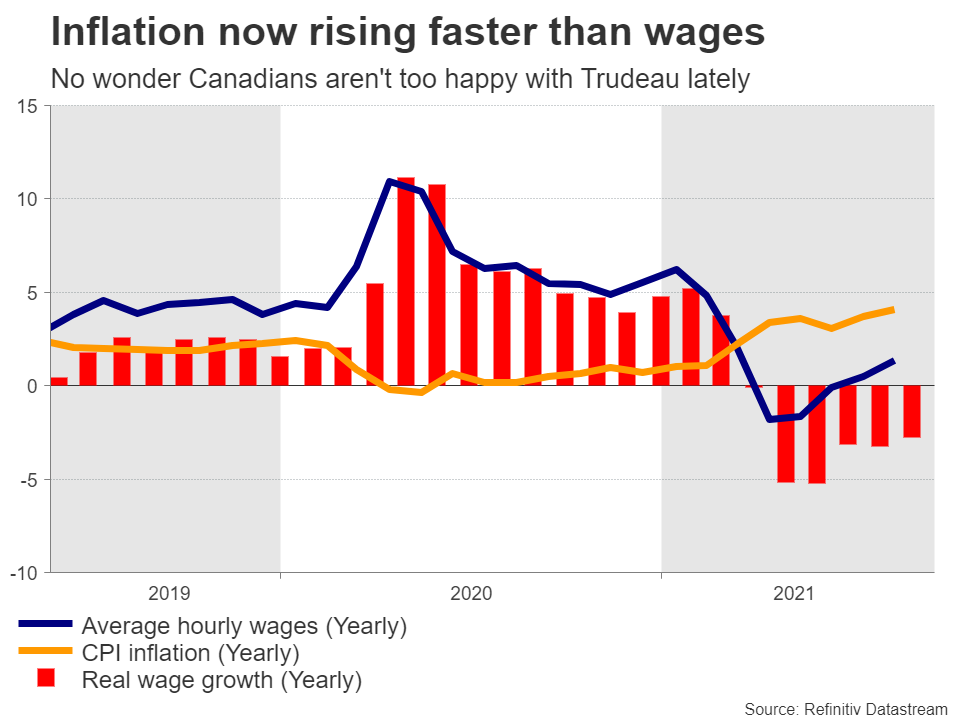
That political gamble has backfired spectacularly. He is now tied with his conservative opponent Erin O’Toole in polling surveys and could very well lose this election. His Liberal party has struggled to explain to people why another election was needed in the middle of a pandemic. The conservatives have even accused him of risking the health of voters for personal benefit.
What’s at stake?
The two candidates have very different spending plans. Trudeau’s government went all-out to fight the crisis, pushing the public deficit to the highest since World War Two to support businesses and individuals. He has promised to deliver more new spending if re-elected to power up the recovery. Some of that would be offset by raising taxes on bank profits.
O’Toole has also pledged to boost spending, but to a much smaller extent. He intends to balance the government budget within a decade without making any spending cuts, by ‘growing the economy’. That of course almost never happens in reality.
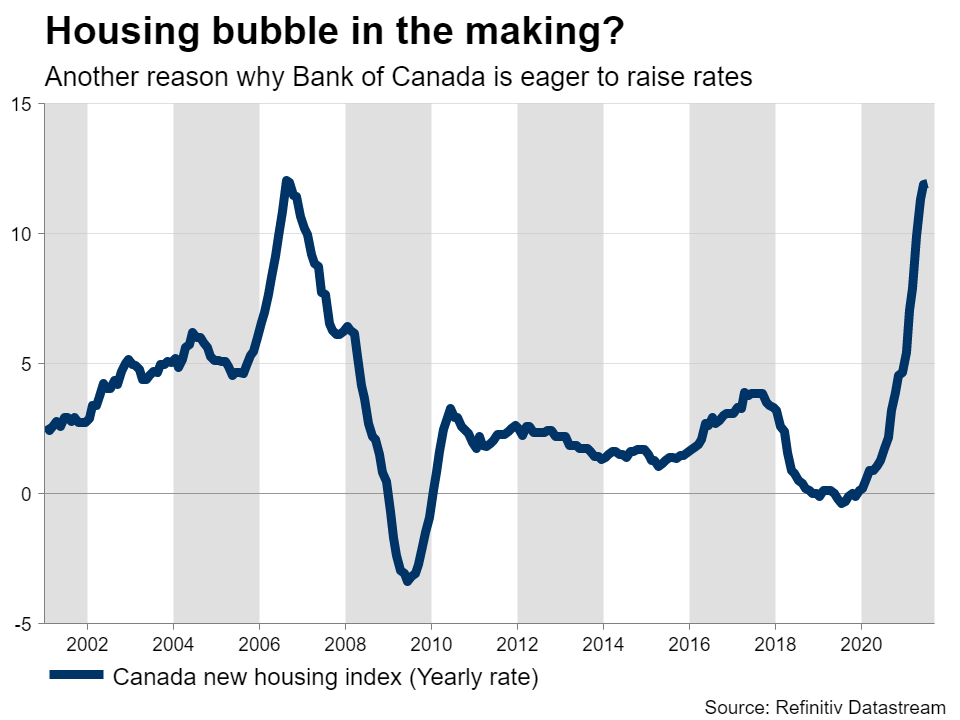
Another interesting point is his plan to deal with Canada’s scorching hot housing market. Both candidates have vowed to build millions of houses to cool soaring prices, but O’Toole also wants to ban foreign investors from buying for two years.
The final point of contention is around climate change. Trudeau’s Liberals have promised much more aggressive emission regulations than the Conservatives, who are major allies of the oil industry. Canada is a major oil exporter, so this matters.
Market scenarios
In the FX market, the ideal scenario for the loonie might be another Trudeau victory. That would allow government spending to remain very generous in an environment of tighter monetary policy, as the Bank of Canada intends to raise rates next year. Massive government spending coupled with rising rates is a very powerful cocktail for a currency.
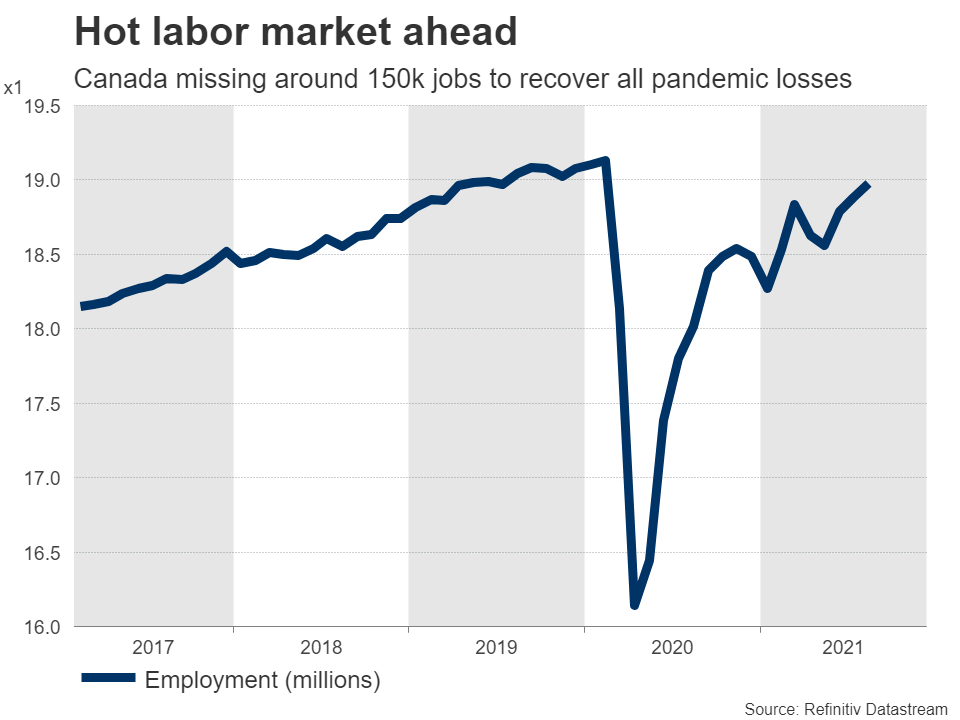
In contrast, the Canadian dollar could take a hit if O’Toole is victorious, as the probability of spending cuts down the road would be much higher. That could hit economic growth coming out of the crisis. A ban on foreign investors buying houses implies less demand for the currency as well. That said, there would also be less regulatory risk and better chances of tax cuts, so that might negate some of the negative impact.
Either way, whoever wins will only command a minority government according to opinion polls, so any dramatic policy changes are unlikely. Still, options traders think this could be an interesting event. One-month implied volatility in dollar/loonie is currently at 7.2%, which essentially means investors see a 7.2% move for the pair in either direction over the next month.
Big picture
Overall, the outlook for the Canadian dollar seems positive. Even if it takes a minor hit on an O'Toole victory, any spending cuts are far away, the economy is doing well, vaccinations are very high, and the Bank of Canada will be among the first central banks to raise rates again.
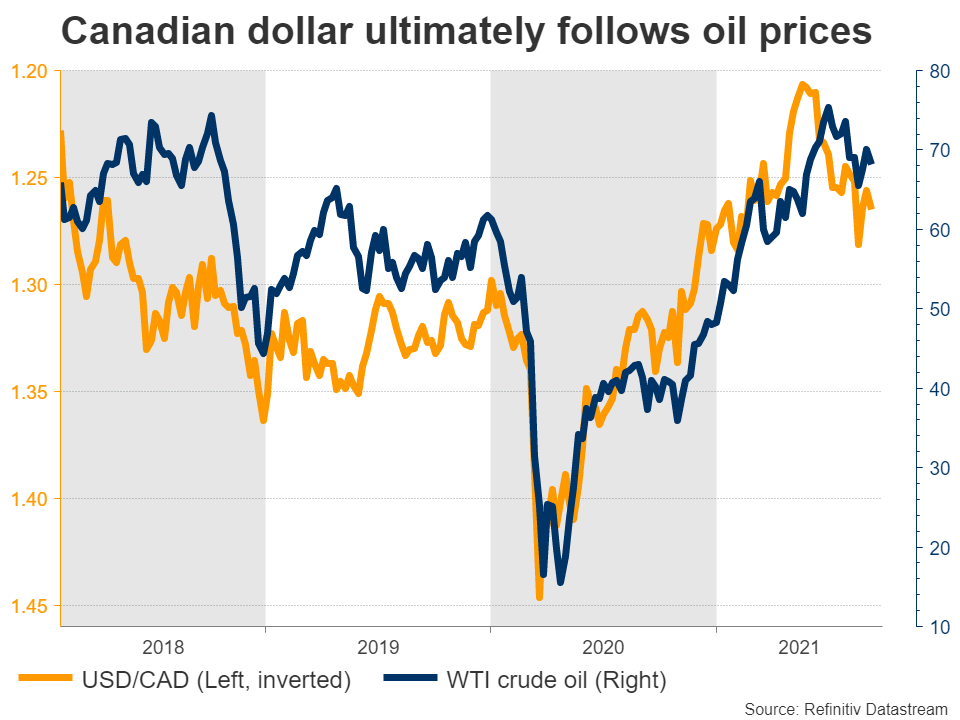
As always a lot will depend on oil prices and stock markets, but once election risk is out of the way, the loonie’s uptrend could resume - especially if the central bank slashes its asset purchases again next month.
Investors Wary of Inflation Trend
Stock markets have turned a little more negative on Wednesday, with Chinese data overnight dealing a blow to sentiment.
It seems there’s a growing list of concerns for investors that spans beyond simply what the Fed is going to do. And this comes despite certain Fed officials giving the impression that they are undeterred by this. That may well change over the coming months.
Inflation is at the forefront of those concerns, perhaps why policymakers are so reluctant to wait, which makes it even more of a concern. Investors have been cracking on under the impression that inflation is transitory – as they’ve repeatedly been told – and tapering will come as a result of the economic recovery rendering it no longer necessary.
Regardless of whether the result is the same, the change in narrative is a worry for investors. Persistent inflation, a slower economic recovery and higher interest rates is not the recipe for stronger equity markets but that appears to be the way we’re heading.
Coming at a time when Covid cases are already rising going into the winter period, potentially meaning more restrictions – or at the very least more cautious behaviour – we may be in for a difficult end to the year for risk assets.
Two hikes priced in as UK inflation surges
The UK is among those experiencing a surge in inflation, with the August reading jumping to 3.2%, ahead of market expectations. One of the drivers is the timing of the Eat Out to Help Out scheme last year, which makes it look worse than it is but this also won’t be where it peaks, which is why some are growing more concerned.
The result is that traders are now pricing in two rate hikes next year, taking the base rate to 0.5% by year-end. While there are areas of concern as far as inflation is concerned, such as higher input prices and the struggle to fill vacancies with skilled workers, I’m still unconvinced by the stickiness of the inflation we’re seeing.
While this won’t necessarily deter policymakers from gradually removing emergency stimulus measures, I still think it will be done with great caution and only as the economy warrants it. Still, that doesn’t mean it won’t be a nervy few months, with inflation expected to peak later in the year.
Bitcoin showing incredible resilience
Bitcoin shows incredible resilience at times and it certainly feels like we’re seeing that right now, with the cryptocurrency making gains for a second day and approaching USD 48,000. This comes despite USD 44,000 once again coming under pressure earlier this week before bulls fought back once more.
A failure at USD 48,000 could be another blow though and perhaps a further correction warning. A move above here could spur more optimism and fuel another rally towards USD 50,000 where it has repeatedly run into resistance.