

Sample Category Title
Daily Technical Analysis
EUR/USD
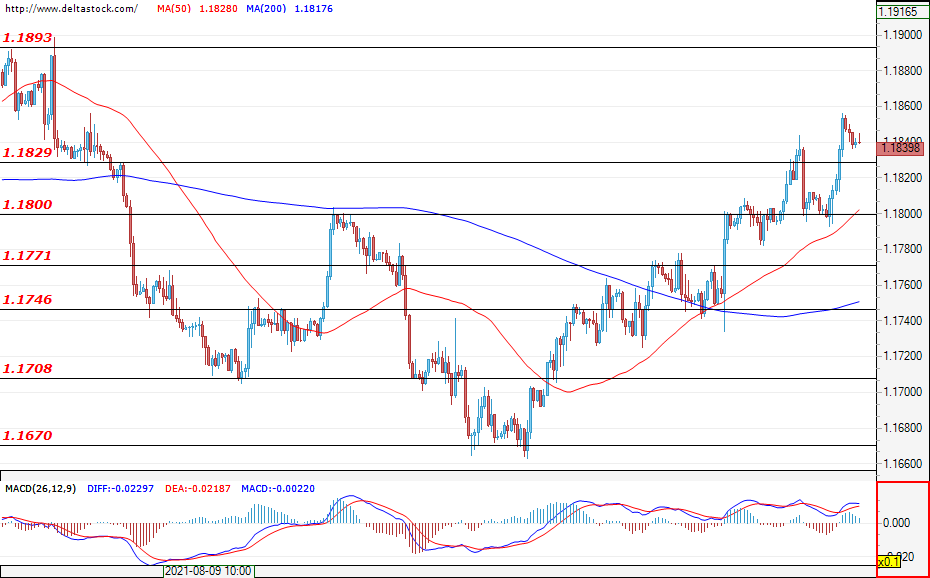
Current level - 1.1839
Following an unsuccessful test at the resistance level of 1.1829 and a short consolidation around 1.1800, the currency pair made another attempt to breach the mentioned resistance and the second test was successful. The forecast is for the bulls to build up the momentum and approach the next resistance level of 1.1893. In the negative direction, the first support lies at 1.1800. Today, increased activity can be expected around the announcement of the data on the initial jobless claims for the United States at 12:30 GMT.
| Resistance | Support | ||
| intraday | intraweek | intraday | intraweek |
| 1.1890 | 1.1890 | 1.1800 | 1.1746 |
| 1.1950 | 1.1950 | 1.1770 | 1.1700 |
USD/JPY
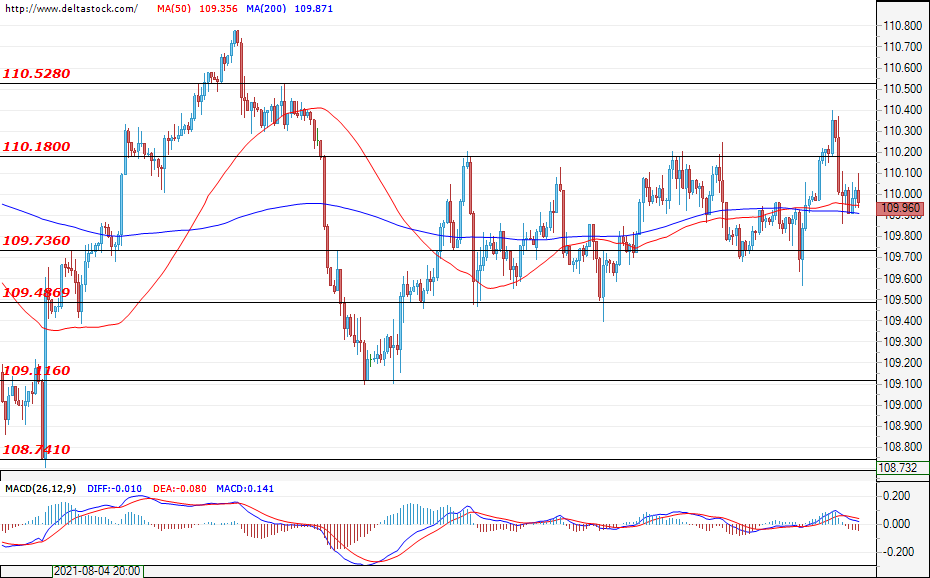
Current level - 109.96
The fleeting breach of the resistance and an upper border of the range, in which the currency pair has been trading for about a week now, at 110.18, wasn't confirmed and the price quickly bounced back into the range between 109.48 and 110.18. Neither the bears, nor the bulls manage to prevail and breach either of the borders of the range, which would set a direction for the future movement of the Ninja.
| Resistance | Support | ||
| intraday | intraweek | intraday | intraweek |
| 110.18 | 110.52 | 109.73 | 109.11 |
| 110.52 | 111.00 | 109.48 | 108.74 |
GBP/USD
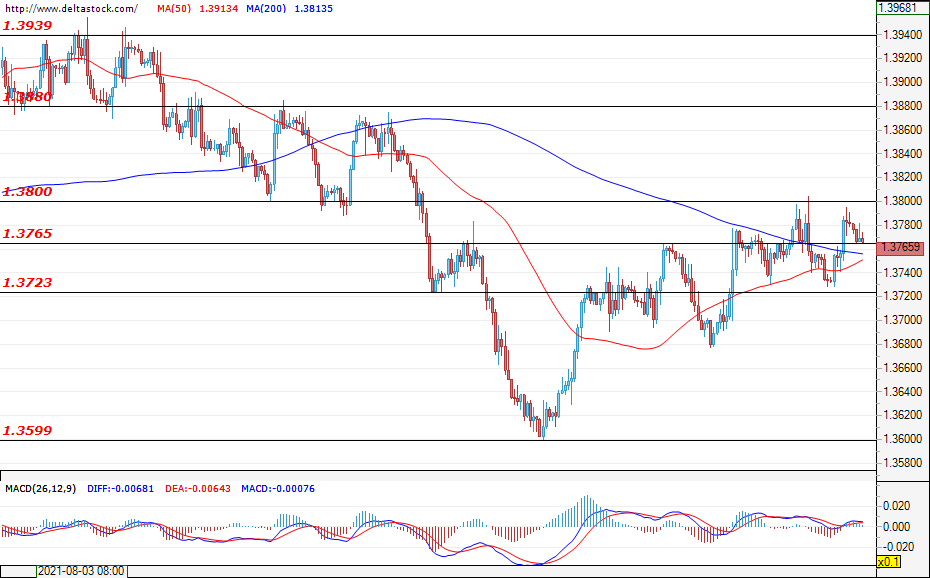
Current level - 1.3765
At the time of writing the analysis, the Cable is testing the support level of 1.3765. In case the bears don't manage to violate this level, this would signal an upward movement and a test at the resistance at 1.3800, possibly followed by a test at 1.3880. However, if the support at 1.3765 is violated, then the minor support at 1.3732 would be the next target for the bears, before they approach the main support at 1.3600.
| Resistance | Support | ||
| intraday | intraweek | intraday | intraweek |
| 1.3800 | 1.3880 | 1.3765 | 1.3567 |
| 1.3880 | 1.3939 | 1.3723 | 1.3508 |
USD/CAD Remains Near 1.2640 Level
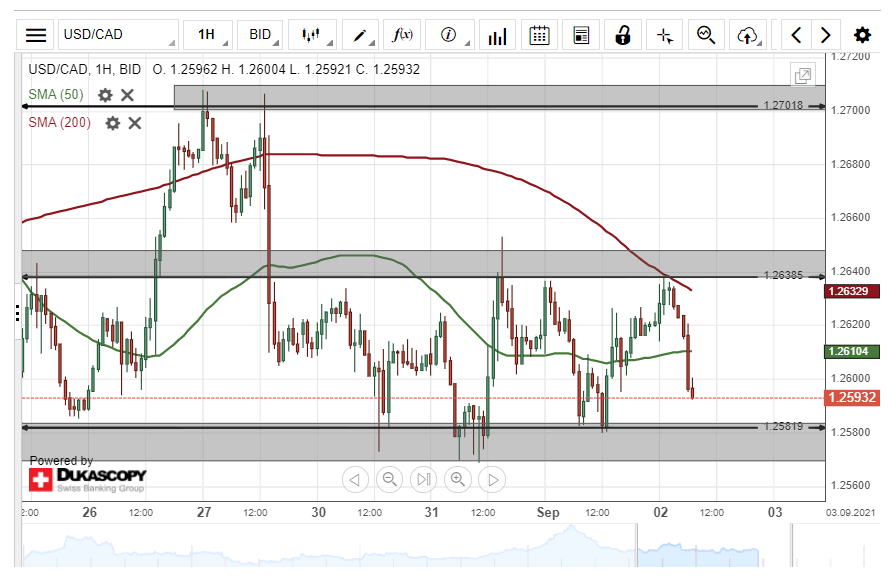
On Wednesday, the US Dollar surged by 53 pips or 0.43% against the Canadian Dollar. The surge was stopped by the 200– hour simple moving average at 1.2635 during Wednesday's trading session.
If the resistance level formed by the 200– hour moving average at 1.2635 holds, a decline towards the 1.2580 area could be expected during the following trading session.
However, if the USD/CAD currency exchange rate breaks the resistance level, the next target for buyers will be near the 1.2680 area.
GBP/JPY Two Scenarios Likely
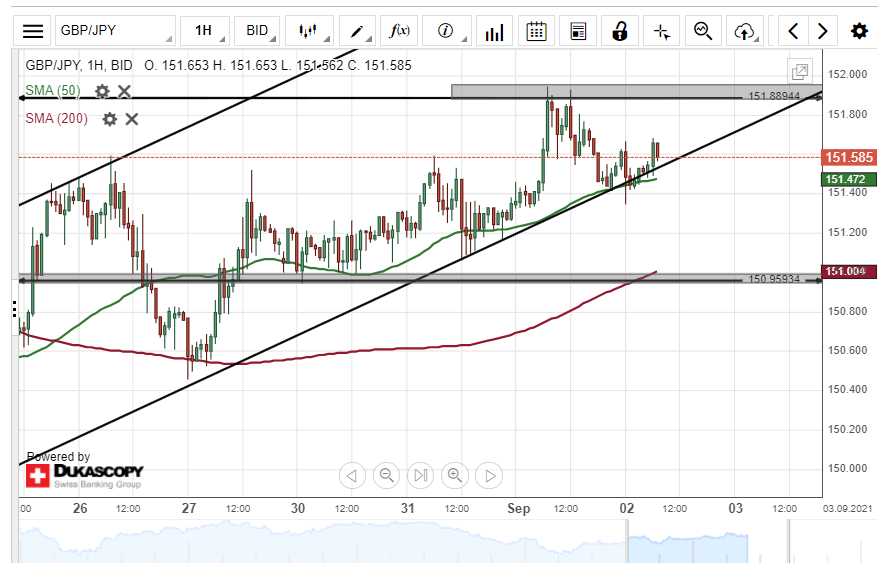
On Wednesday, the British Pound fell by 46 pips or 0.30% against the Japanese Yen. The decline was stopped by the 50– hour simple moving average during yesterday's trading session.
Currently, the exchange rate is trading near the lower boundary of an ascending channel pattern and could be set for a breakout.
If the breakout occurs, a decline towards the support line formed by the 200– hour SMA at 150.95 could be expected today.
However, if the channel pattern holds, buyers could target the 152.20 level within this session.
AUD/USD Potential Target At 0.7420
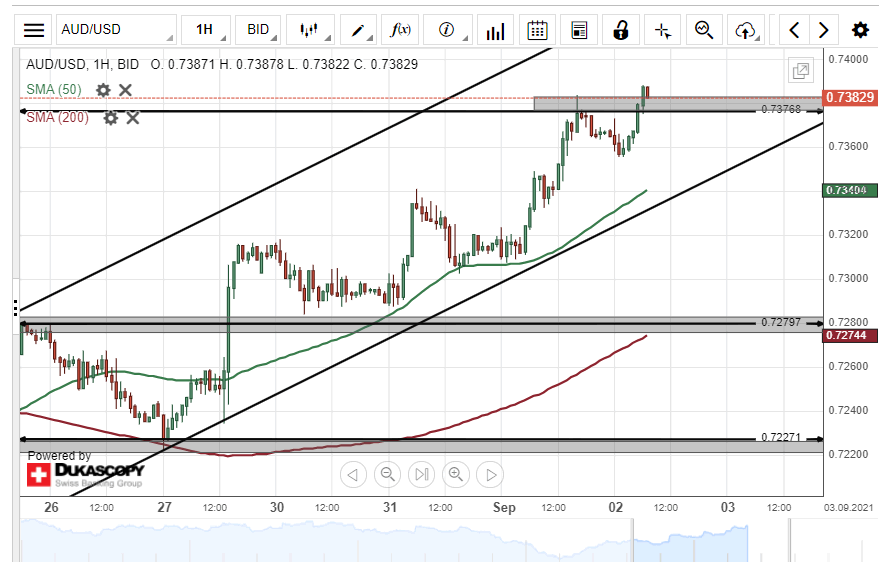
On Wednesday, the AUD/USD currency pair bounced off a support level formed by the 50– hour simple moving average at 0.7311. As a result, the Australian Dollar surged by 65 pips or 0.89% against the US Dollar during yesterday's trading session.
All things being equal, the exchange rate could continue to edge higher in an ascending channel pattern during the following trading session. The potential target for bullish traders will be near the 0.7420 area.
On the other hand, the currency exchange rate might reverse from the resistance level at 0.7380 within this session.
EUR/JPY Could Continue To Edge Up
On Wednesday, the common European currency surged by 57 pips or 0.44% against the Japanese Yen. The 50– hour simple moving average led the currency pair higher during yesterday's trading session.
Technical indicators suggest that the exchange rate would continue to trend in the ascending channel pattern during the following trading session. The potential target for buyers will be near the 130.80 level.
However, bullish traders may encounter resistance at 130.40 within the following trading hours.

Swiss GDP grew 1.8% qoq in Q2, retail sales dropped -2.6% yoy in Jul
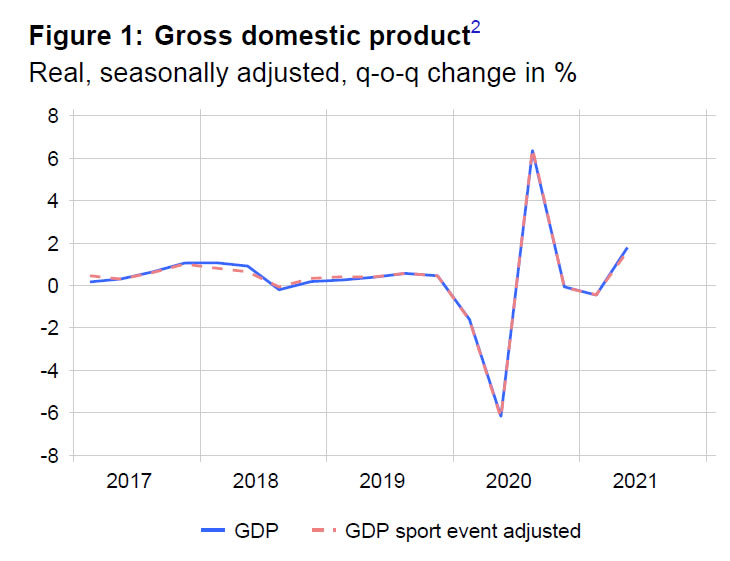
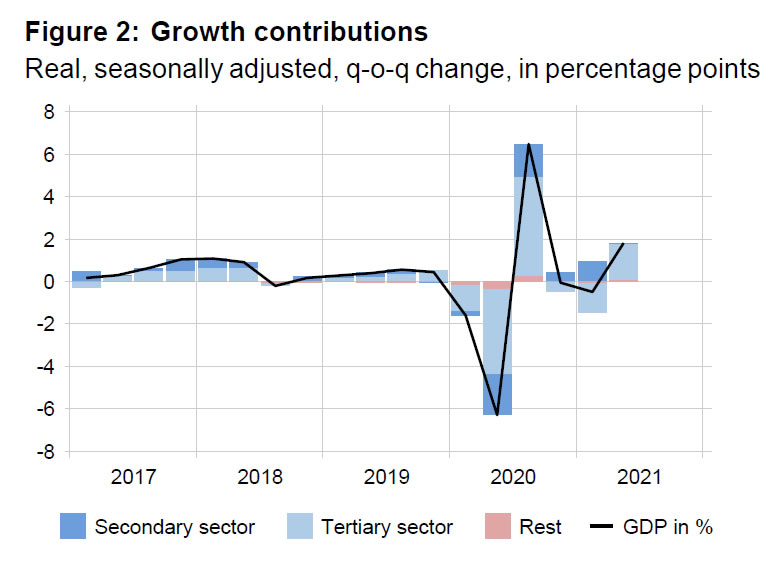
Swiss GDP grew 1.8% qoq in Q2, slightly below expectation of 1.9% qoq. Total GDP was only -0.5% below the pre-crisis level seen in Q4 2019. Looking at some details, from production approach, manufacturing grew 0.9%, trade rose 4.8%, accommodation and food rose 48.9%, arts, entertainment and recreation rose 52.9%. From expenditure approach, private consumption rose 4.1%, government consumption rose 5.5%.
Also from Swiss, real retail sales dropped -2.6% yoy in July, much worse than expectation of 0.2% yoy. CPI came in at 0.2% mom, 0.9% yoy in August, above expectation of 0.1% mom, 0.8% yoy.
US Oil Hits Key Resistance
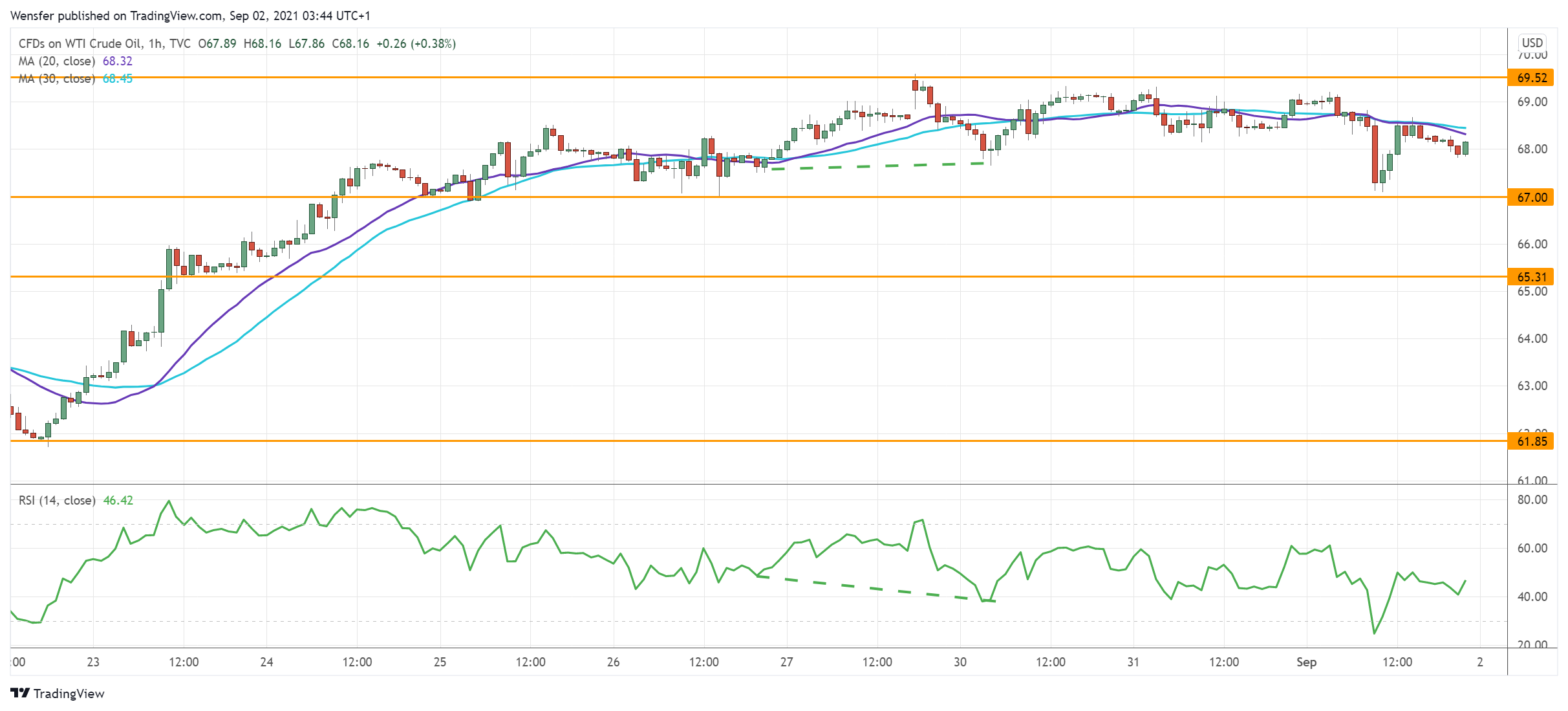
WTI crude found support from the EIA’s report of a large reduction in US stockpiles. The V-shaped rebound is now testing the key hurdle on the daily timeframe (69.50).
An RSI divergence indicates a loss in the upward momentum. Short-term buyers have taken some chips off the table and caused a pullback. 67.00 is the immediate support.
A deeper retracement may send the price to 65.30. On the upside, a close above 69.50 may open the door to 73.00 and reverse an eight-week long correction.
EUR/GBP Consolidates Support
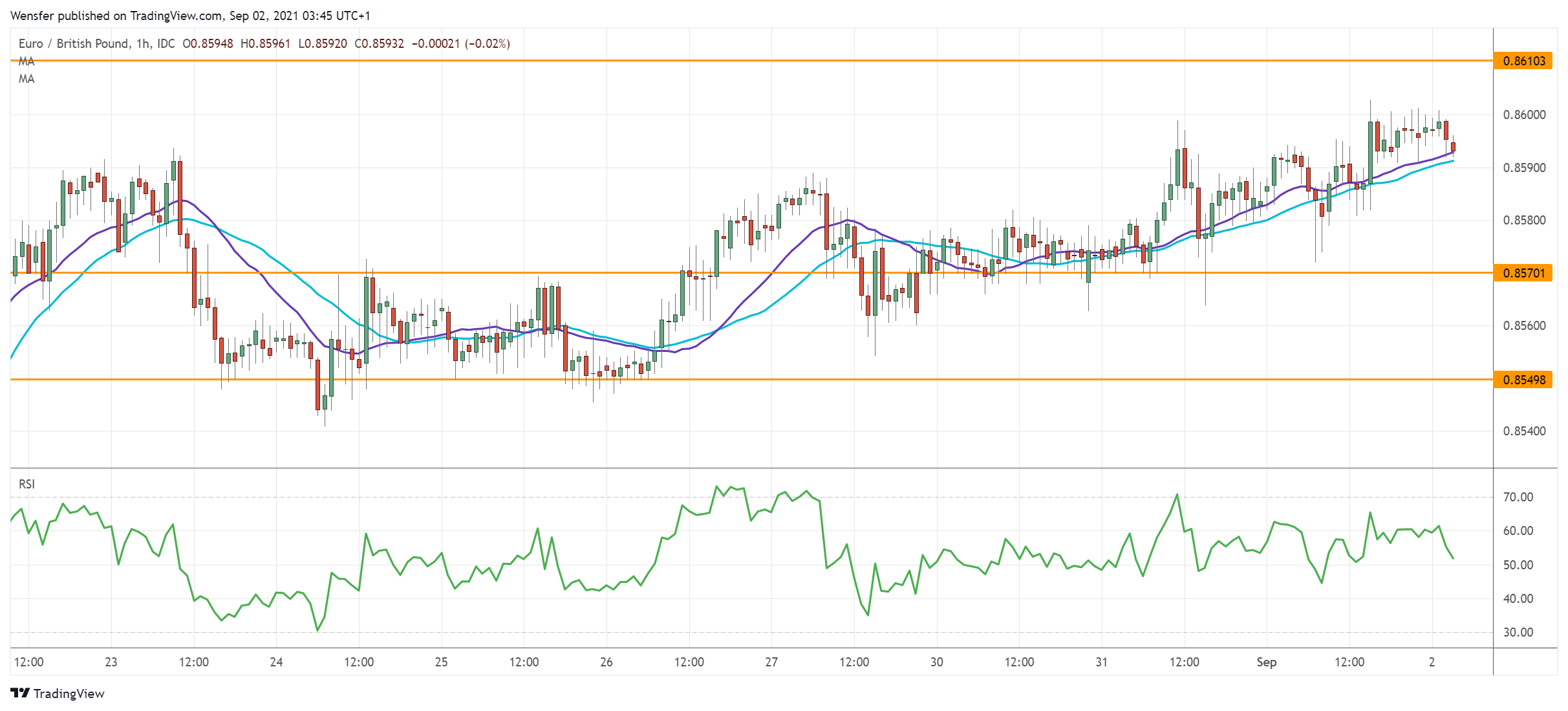
The euro inched higher after a drop in the unemployment rate across the eurozone in July.
The recovery has gained momentum after the pair cleared the daily resistance at 0.8555. The 20-day MA crossing the 30-day one suggests that sentiment may have turned around.
Following a short consolidation, the single currency has met buying interest along 0.8550 and then 0.8570. 0.8610 is the next resistance and its breach could clear the path for a rally to the recent peak at 0.8660.
XAU/USD Tests Daily Resistance
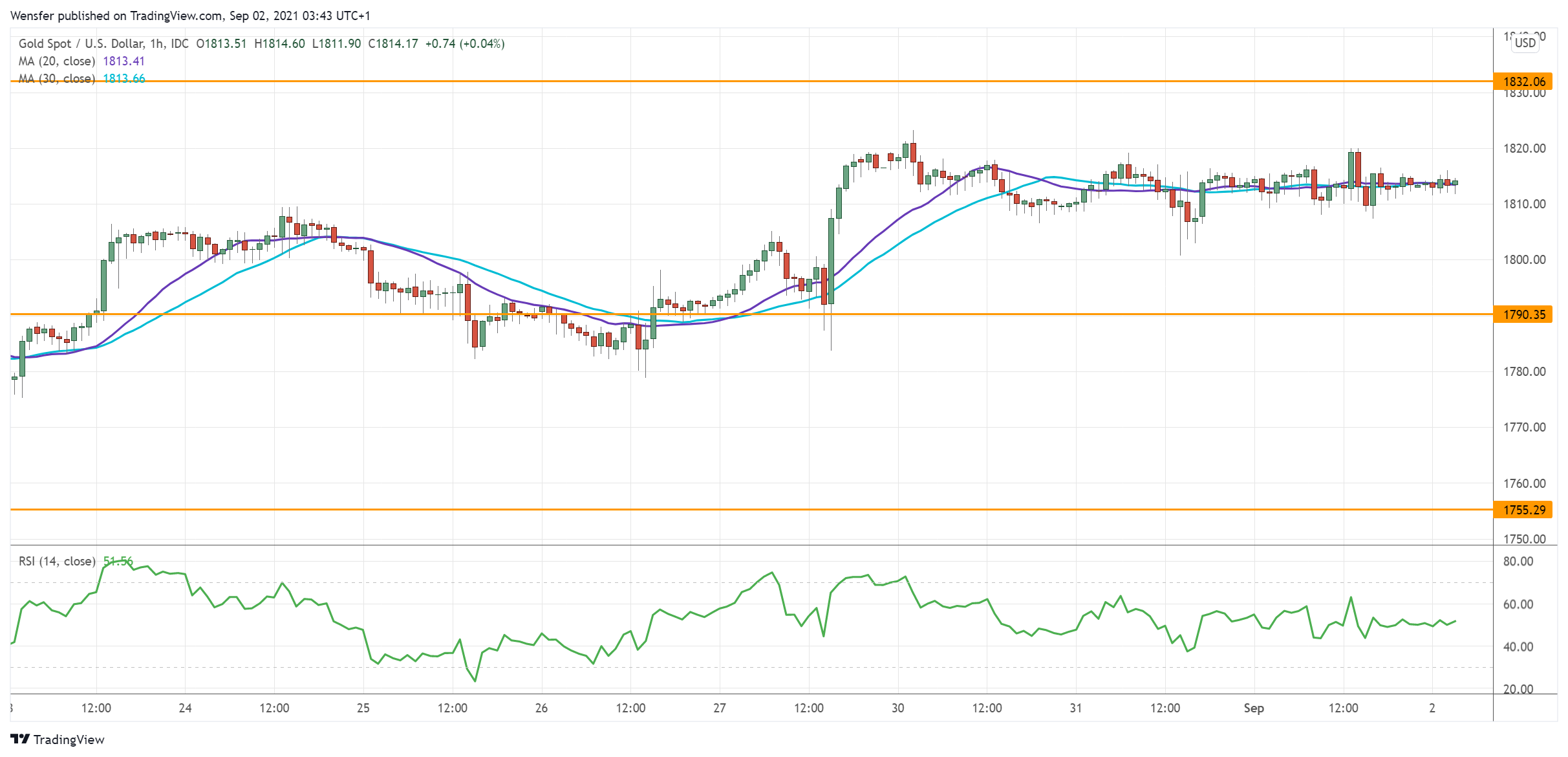
Gold consolidates recent gains ahead of the US jobs reports.
Traders are looking for direction after the metal recouped most losses from the August sell-off. 1832 is major resistance on the daily chart.
A bullish breakout may trigger an extended rally as the short side bails out. We can expect volatility with 1860 as a potential target. A fall below 1790 however would tip the balance to the downside.
1755 would be the first support in a retracement. In the meantime, an overbought RSI has led intraday buyers to take profit.
US Interest Rates Stay In A Holding Pattern Post Jackson Hole
Markets
European yields initially continued Tuesday’s rise. Markets still pondered the impact of the 3% inflation reading and subsequent comments from some more hawkish ECB members on the tapering narrative going into next week’s ECB policy decision. The German 10-y yield tested the -0.35% area. The EMU 10-y swap rate just failed to touch positive levels. European eco data were few. US data, however, a big miss in the ADP private job report broke the upward dynamics in yields on both sides of the Atlantic. Later in the session, the US manufacturing ISM was OK. Output and orders were strong. Supply bottlenecks persist with the employment index even falling back into contraction territory (49). Too much of a mixed bag to support a sustained directional market move. The US yield curve slightly flattened with yields declining about 2 bp for the 10-30y sector. European yields reversed most their earlier rise. Some tentative steepening still survived with the 10 and 30-y German rising 1.0 bp and 2.5 bp respectively. US equities (Nasdaq and S&P500) tested record levels but in the end closed with limited gains. The dollar set a minor short-term correction low post ADP but managed to limit the damage later in US dealings (EUR/USD close 1.1839, DXY 92.456). Some underlying euro resilience apparently is also still at work. EUR/GBP continued its recent uptrend and is challenging the 0.86 big figure.
Asian equities are trading mixed with the likes of China (persistent regulation issues) and Australia underperforming. The dollar remains in the defensive (DXY 92.50, EUR/USD 1.1840). The US 10-y yield wavers near the 1.30 pivot.
Trading today will probably face some kind of interludium ahead of tomorrow’s US payrolls report. EMU July PPI data might add to the inflation debate, but are no market mover. While covering a different period, US jobless claims (expected to ease slightly further to 345k) will be assessed as a precursor for tomorrow’s payrolls. US interest rates stay in a holding pattern post Jackson Hole. The 1.37%/1.38% resistance for the US 10-y yield still looks quite far away/solid. For Europe, question is whether there is room for a further autonomous rise in LT yields. Is the 10-y swap ripe to return north of 0%? On the FX market some by default euro resilience and at the same time USD softness might continue. EUR/USD 1.1909 remains next target on the technical charts. The dollar probably needs a meaningful upward surprise from the labour data (today and tomorrow) to change fortunes for the better.
News headlines
OPEC+ reaffirmed its plans to dial back pandemic-induced production cuts by an additional 400k barrels/day in October. The cartel withstood recent US pressure to beef up production faster. Oil producing and exporting countries already restored around 45% of unused capacity, eyeing a return to normal by September 2022. The compensation period for some OPEC-members – a quid pro quo to agreeing increased production; eg UAE in July – will be extended until December 2021. The Meeting noted that, while the effects of the COVID-19 pandemic continue to cast some uncertainty, market fundamentals have strengthened and OECD stocks continue to fall as the recovery accelerates. OPEC+ raised oil demand growth forecasts for next year, but still expects the market to shift form a supply-demand deficit in 2021 to a little surplus in 2022. Oil prices didn’t really respond to the expected outcome. They nevertheless traded volatile with low inventory data partly erasing earlier losses. Brent crude currently trades around $71.4/b.
South Korean inflation unexpectedly remained at a 9-yr high in August, leveling at 2.6% Y/Y following a monthly 0.6% gain while consensus expected a slowdown to 2.4% Y/Y. Inflation now tops the Bank of Korea’s 2% inflation target for a fifth month running. Details showed agriculture, livestock, and fisheries (+7.8% Y/Y) and petroleum products (+21.6% Y/Y) to be responsible for the higher outcome. Underlying core inflation ticked up from 1.7% Y/Y to 1.8% Y/Y. Inflationary pressure are likely to persist at least until the end of the year and add to the case that the BoK might hike rates one more time. Last week, they became the first major Asian central bank to engage to a tightening cycle. Separately, Q2 GDP faced a small upward revision this morning, from 0.7 % Q/Q to 0.8% Q/Q. The Korean won didn’t profit from the CPI release with USD/KRW even returning above 1160.