Sample Category Title
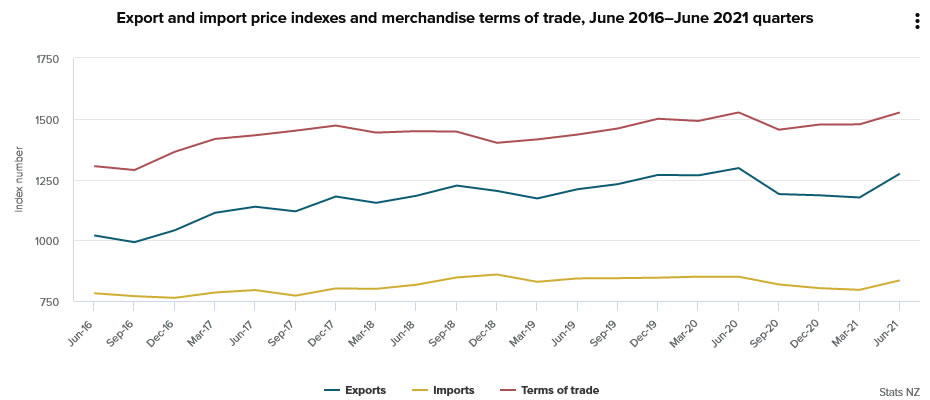
New Zealand terms of trade rose 3.3% in Q2 as export prices surged
New Zealand merchandise terms of trade rose 3.3% in Q2, well above expectation of 0.3%. Export prices for goods rose 8.3% while import prices rose 4.8%. Export volume for goods rose 2.9% while import volumes rose 4.4%. Export values rose 9.2% and import values rose 4.6%. Services terms of trade dropped -8.5%. Services export prices fell -1.6% while import prices rose 7.7%.
Terms of trade measures New Zealand's purchasing power for import goods, based on the prices it receives for exports. An increase in terms of trade means that New Zealand can buy more import goods for the same quantity of exports.
AUD/USD Gains Bullish Momentum, 0.7400 Is The Key
Key Highlights
- AUD/USD started a fresh increase above the 0.7280 resistance.
- It broke a major bearish trend line with resistance near 0.7315 on the 4-hours chart.
- EUR/USD extended its increase, while GBP/USD is still below 1.3800.
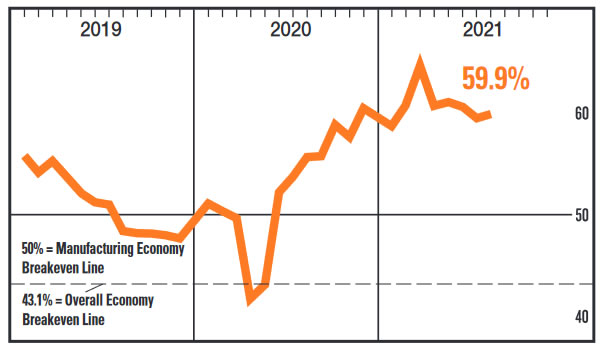
- The US ISM Manufacturing PMI increased from 59.5 to 59.9 in August 2021.
AUD/USD Technical Analysis
The Aussie Dollar started a steady increase from the 0.7106 low against the US Dollar. AUD/USD broke many hurdles near 0.7200 and 0.7250 to move into a positive zone.
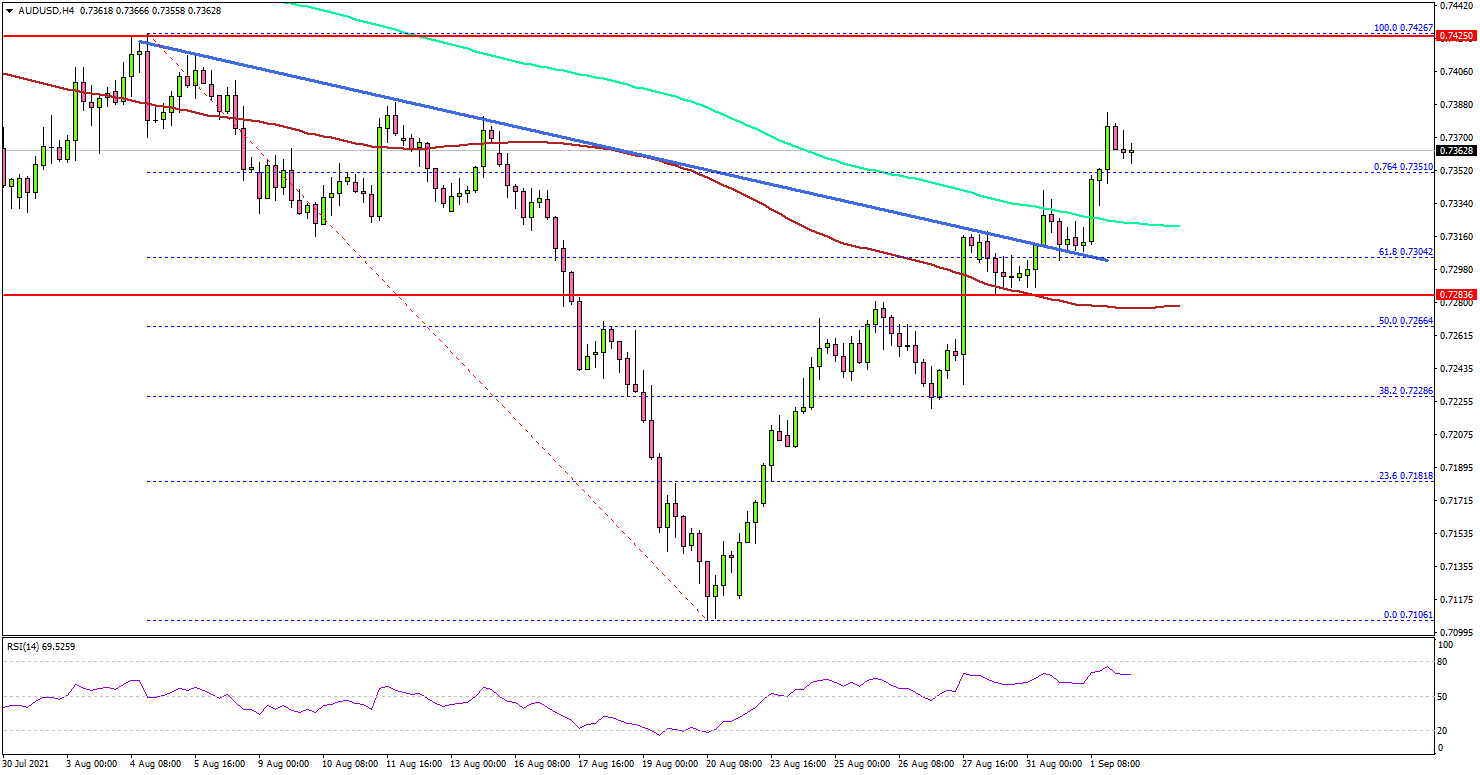
Looking at the 4-hours chart, the pair was able to climb above the 0.7300 resistance zone. There was a break above the 50% Fib retracement level of the downward move from the 0.7426 swing high to 0.7106 swing low.
There was also a break above a major bearish trend line with resistance near 0.7315 on the same chart. The pair is now trading above 0.7350, the 100 simple moving average (red, 4-hours), and the 200 simple moving average (green, 4-hours).
It is now consolidating above the 76.4% Fib retracement level of the downward move from the 0.7426 swing high to 0.7106 swing low. An immediate resistance is near the 0.7400 zone.
A close above the 0.7400 resistance might open the doors for a move towards 0.7500. On the downside, an initial support is near the 0.7320 level. The main support is now forming near 0.7300, below which the pair could correct lower towards 0.7220.
Fundamentally, the US ISM Manufacturing Purchasing Managers Index (PMI) was released yesterday by the Institute for Supply Management’s (ISM). The market was looking for a minor decline from 59.5 to 58.6.
The actual result was better than the forecast, as the US ISM Manufacturing increased from 59.5 to 59.9 in August 2021. On the other hand, the Employment Index declined from 52.9 to 49.0.
Looking at EUR/USD, the pair was able to clear the 1.1800 resistance zone and it is currently showing signs of more upsides.
Economic Releases
- US Initial Jobless Claims - Forecast 345K, versus 353K previous.
- US Factory Orders for July 2021 (MoM) - Forecast +0.3%, versus +1.5% previous.
WTI Crude – Breakout Imminent?
A strong rebound
Oil prices have rebounded strongly over the last couple of weeks, with WTI coming within a whisker of $70 before profit-taking kicked in.
The pullback today was short-lived and after falling close to $67 it recovered the bulk of the losses to trade in between two key technical levels.
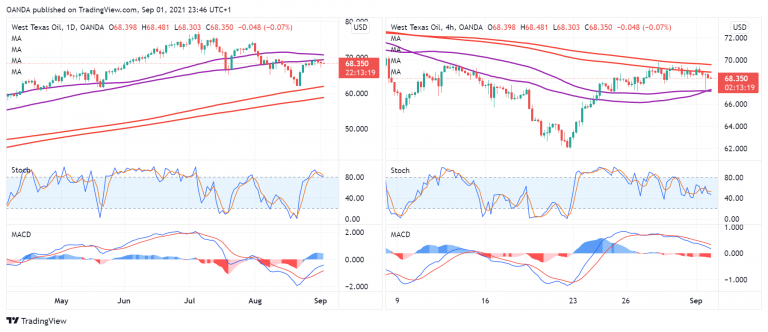
Above, $70 is an important psychological barrier that coincides with the 200/233-period SMA band on the 4-hour chart. This is also around the 55/89-day SMA band.
Below, the 55/89-period SMA on the 4-hour chart coincides with support over the last week that has been tested on a number of occasions this past week.
A breakout in either direction may indicate the direction of travel in the coming weeks.
Eco Data 9/2/21
[php_everywhere instance="1"]
Kiwi Gains Support from Hawkish RBNZ
New Zealand dollar was the only major currency rose against the US dollar in August, despite speculations over Fed’s tapering and renewed lockdown. We believe policymakers’ proactive reassurance of an October rate hike would likely make the RBNZ the first major central bank to begin rate hike after the most recent round of global monetary easing. This policy divergence has lent strong support to kiwi despite the stringent lockdown of late.
Sentiment weakened in August
The New Zealand government announced on Monday that lockdown in Auckland would be extended for two more weeks. The most populous city of the country will remain in full lockdown at least until mid-September, while restrictions in other parts of the country would be relaxed somewhat. The decision would inevitably affect the third quarter economic data and GDP growth.
Sentiment indicators released over the past two weeks have sent mixed signals about the growth outlook. ANZ’s business confidence index declined to -14.2 in August from -3.8 a month ago. Deterioration in the sentiment was across difference areas. For instance, the “own activity outlook” index dropped to 19.2 from July’s 26.3, while “employment intention” fell -4.4 points to 17. Pricing intentions also slipped -2.1 points to 59.2 last month. Yet, inflation expectations remained strong, rising to 3.05% from July’s 2.7%.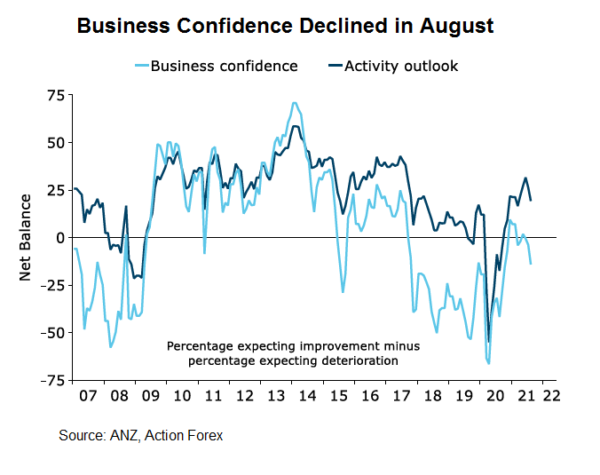
In light of the renewed lockdown since August 17, the report was divided into pre- and pro-lockdown. Interestingly, the headline business confidence index was weaker before (-14.5) than after the lockdown (-13.4), suggesting that the moderation in sentiment has already existed before the lockdown. Some indices, such as investment intentions, employment intentions, inflation expectations and capacity utilization, worsened after the lockdown was imposed. The survey reveals that the renewed restrictive measures have dampened business sentiment and it is likely that companies would restrain investment and employment plans amidst fear of the economic headwind.
Meanwhile, consumer confidence slipped -3 points to 110 in August, as ANZ-Roy Morgan’s report revealed. A net 13% of consumers surveyed noted that it’s a good time to buy a major household item, down -11 points from July. The reading signals that the August retail sales data could have weakened from a month ago. Perceptions regarding the next year’s economic outlook fell -3 points to -5%, while the five-year outlook dropped -5 points to +7%. CPI inflation expectations, however accelerated to +5.1% from July’s +4.9% to 5.1%. The overwhelming majority of the surveys was down prior to the lockdown, it is reasonable to expect the readings would worse off in the next report.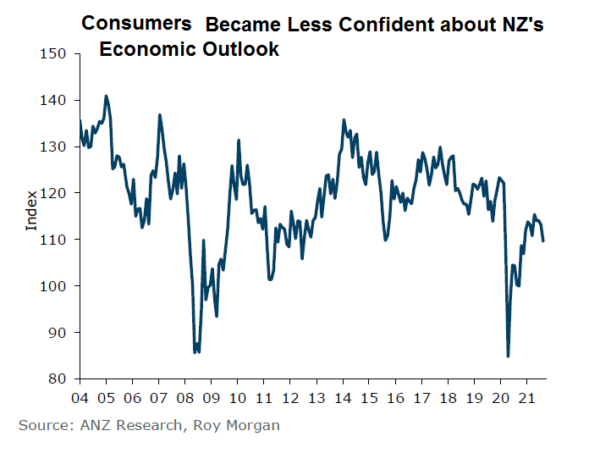
Auckland’s lockdown will continue at least until mid-September before gradually relaxing. The rest of the country is less stringent but restrictions remain. The measures would inevitably hurt GDP growth in 3Q21 as sentiment indicators have also shown easing consumer and business confidence.
RBNZ Remains Hawkish
Yet, history proves that the growth rebound picks up relatively swiftly after the lockdown. As such, a temporary slowdown should not affect RBNZ’s rate hike schedule. Indeed, after the disappointment at the August meeting, policymakers have reassured that the first rate hike would come very soon, likely in October. For instance, Governor Adrian Orr reaffirmed “October is a live meeting” and “a significant shock to demand” would be needed to change the view. Assistant Governor Christian Hawkesby revealed last week that policied considered to raise the policy rate by +50 bps, but was hard to communicate the case for a hike on the same day the country was locked down in August. Deputy Governor Geoff Bascand echoed the rhetoric of his counterparts, noting that a "six-week delay in a tightening cycle” would not make much difference in the long term.
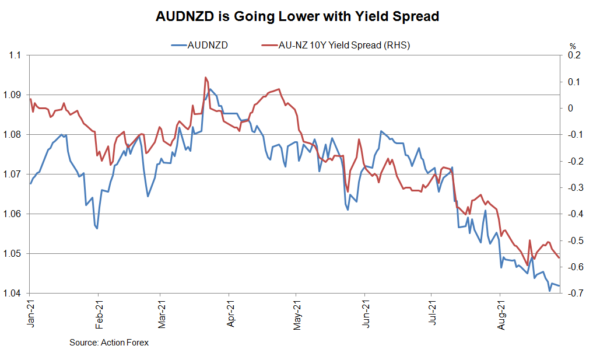
Policy Divergence to Support NZD against USD and AUD
Unless New Zealand’s economy deteriorates rapidly, it is likely that the central bank would go ahead with a rate hike of +25 bps in October, and possibility followed by another +25 bps in November. Policy normalization by the RBNZ would come earlier than the Fed, which is expected to announce QE tapering in November, followed by a first rate hike in 2023. The policy divergence has supported New Zealand dollar over the past week despite the stringent lockdown. The divergence is even wider between the RBNZ and the RBA. It is anticipated that the latter would delay its QE tapering schedule or even resume easing, in light of the latest resurgence of the pandemic. The RBA pledged in mid-August that it would take policy action if the latest country-wide lockdown threatens a deeper economic setback.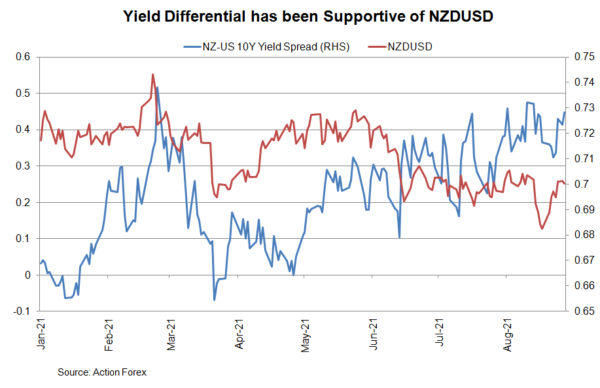
Nonfarm Payrolls, Tapering Edition
With markets buzzing about when the Fed will finally push the taper button, the next US employment report at 12:30 GMT Friday will be crucial, especially since some indicators point to a disappointment. That said, the US economy is solid, Congress is about to deliver more fiscal juice, and inflation might not cool as quickly as the Fed expects. That’s a cocktail that argues for a stronger dollar over time.
Slowing, from top speed
It looks like the US economy hit a speed bump lately, as the Delta outbreak escalated. Some early signs suggest this has spilled over into economic activity, for example with consumer confidence cratering in August and the composite Markit PMI taking a sharp hit.
As such, Fed chief Powell hedged his bets last week. He said that the tapering process could still begin this year, although that would ultimately depend on how much the virus impacts the economy. Investors interpreted his caution as diminishing the chances of a September announcement.
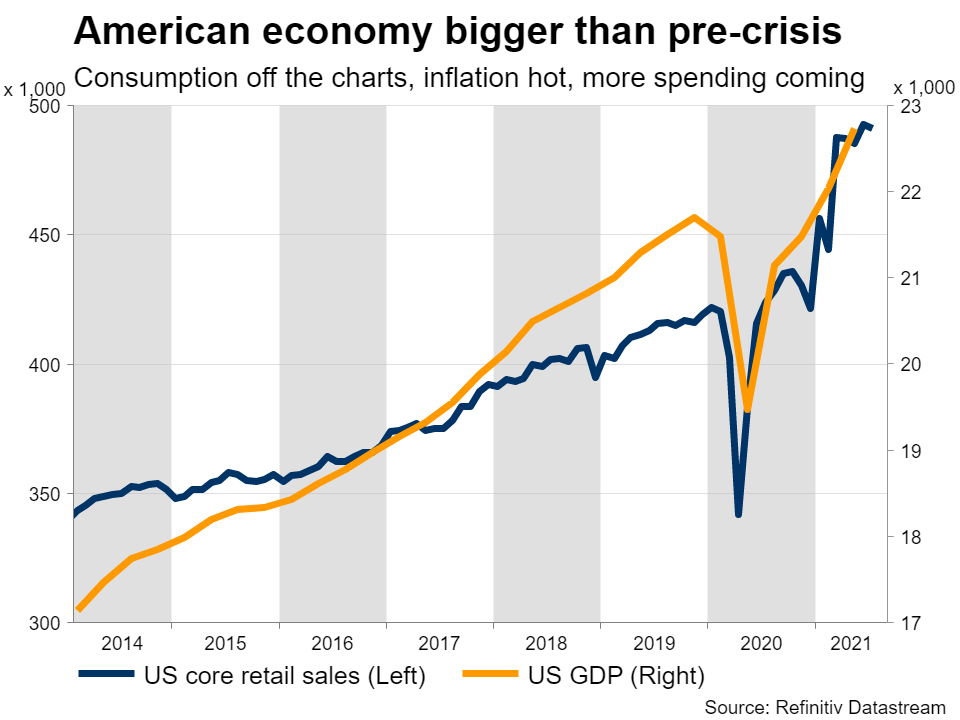
That said, the US economic engine is still strong. The economy is already much larger than it was before the crisis, there are now more open jobs than people unemployed, and Congress is about to unleash another multi-trillion spending spree to power up growth.
Meanwhile, inflation might not cool as quickly as the Fed thinks. Supply chain problems are getting worse with shutdowns in Asia, causing shipping costs to skyrocket and lengthening delivery times. And with the US Supreme Court abolishing the ban on evictions, rents could now start to play catch-up with soaring house prices, allowing inflationary pressures to broaden out.
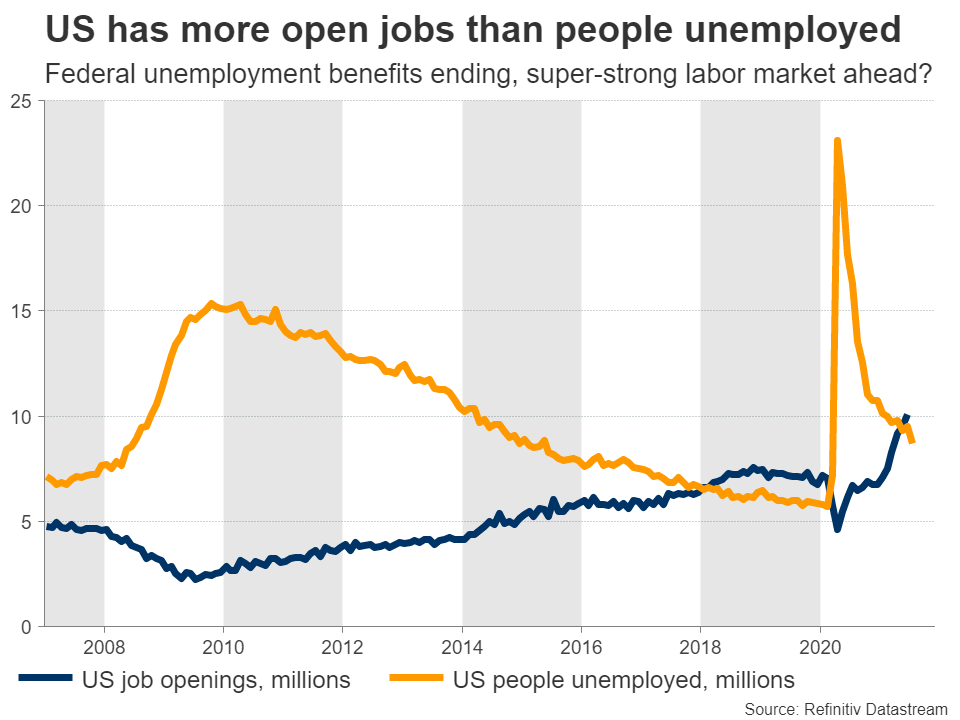
Therefore, the Fed will almost certainly dial back its asset purchases. Markets are debating whether the central bank will signal tapering in September and start the process in November, or whether it will be pre-announced in November and implemented in December. The upcoming jobs data could go a long way in settling this debate.
Solid report, but mind the risks
Nonfarm payrolls are forecast to have risen by 750k in August, pushing the unemployment rate down another two ticks to reach 5.2%. If the actual numbers meet the forecasts, that would leave the US economy some 5 million jobs away from a full labor market recovery.
Subtract from that around 2.5 million people that retired early because of the pandemic and aren’t coming back to the labor force, and it is entirely possible that America returns to full employment by the turn of the year. It would only take a few more months at this pace.
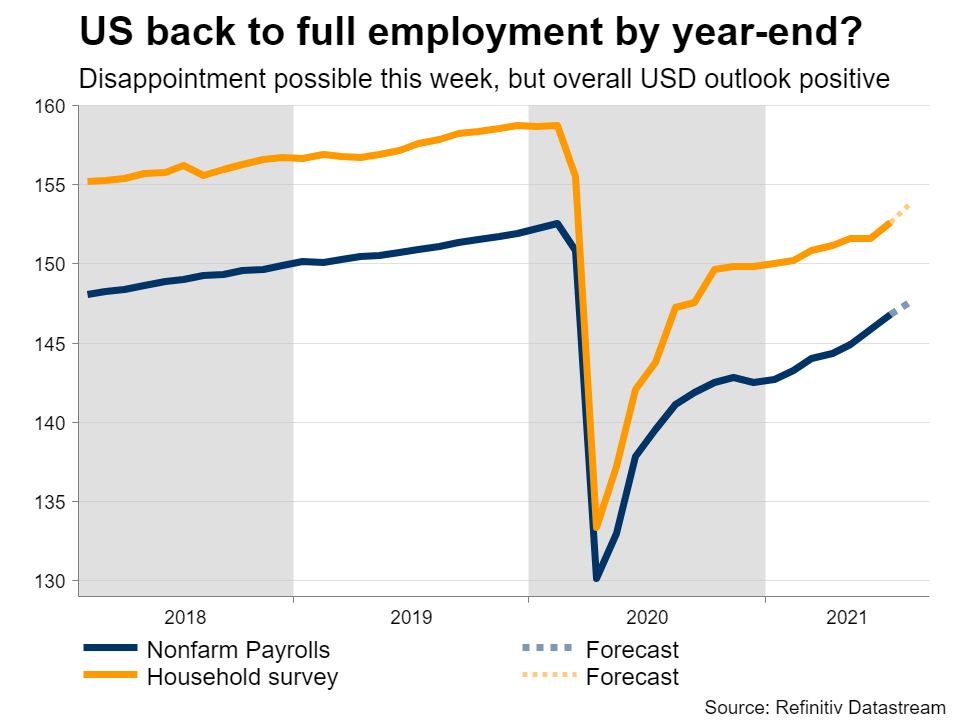
With the economy overflowing in open jobs and the generous federal unemployment benefits ending, this seems like a high-probability scenario as millions of people begin to actively look for jobs again.
As for the risks surrounding the upcoming employment data, there is some scope for disappointment. The ADP report showed only 374k jobs being added in August, the Markit PMI surveys signaled that employment growth fell to a one-year low, and the employment sub-index of the ISM manufacturing report fell into contraction.
Dollar looks promising overall
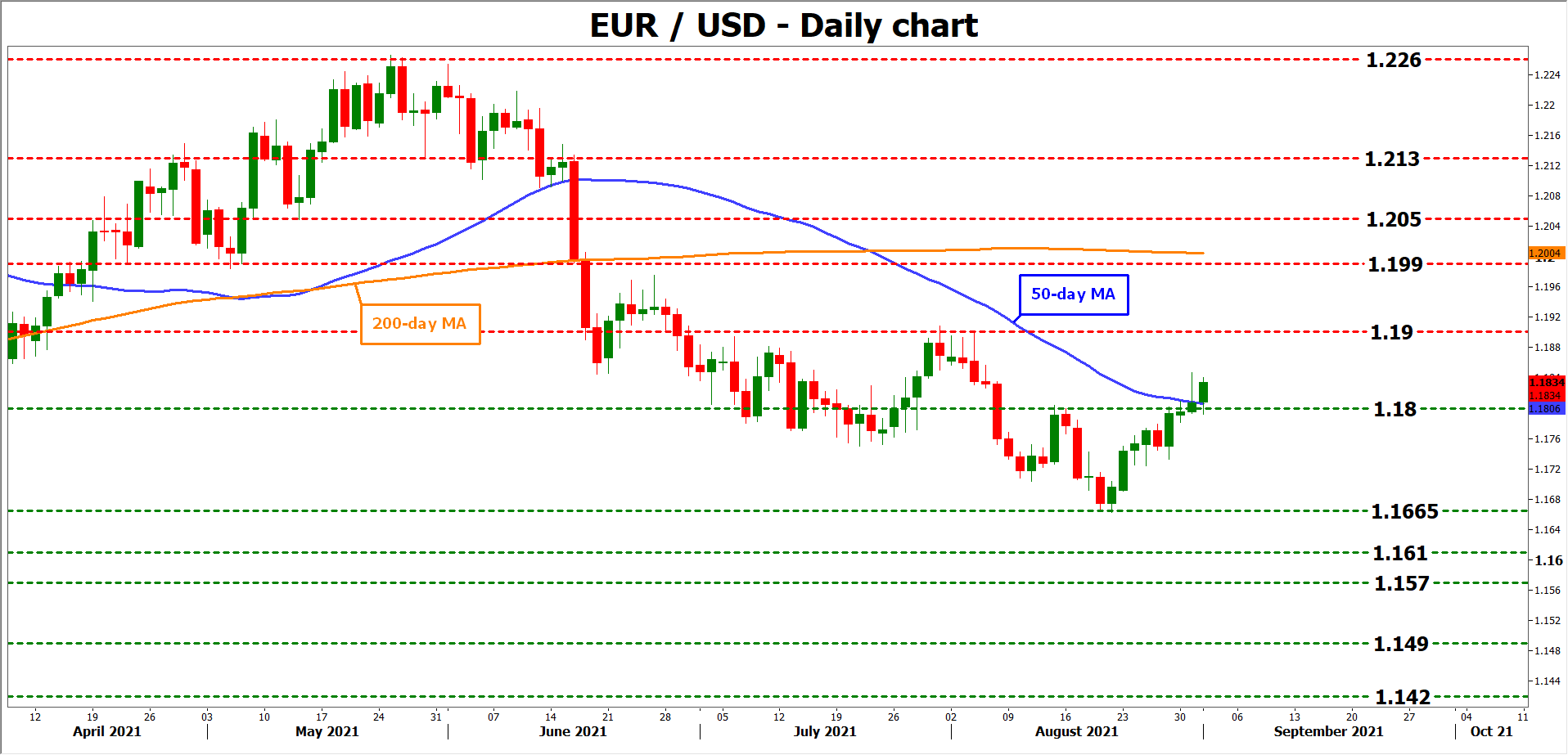
A disappointment this week could hurt the dollar, as it would further lower the chances of a September taper announcement by the Fed. Taking a technical look at euro/dollar, a soft jobs print could push the pair towards the 1.1900 region.
That said, the bigger picture for the reserve currency seems positive. Whether the Fed announces tapering in September, November or even December doesn’t matter much. That will only affect short-term trading, not the overall trend.
What’s important is that the Fed is getting the tapering process rolling and ultimately plans to raise interest rates, whereas the European Central Bank and the Bank of Japan aren’t. Over time, this central bank divergence could allow American yields to rise faster, making the dollar more attractive against the euro and yen as it begins to benefit from carry trades.
That could allow euro/dollar to fall back below the 1.1800 zone and aim towards the recent lows of 1.1665.
Finally, the ISM services PMI for August will also be released on Friday, ninety minutes after the employment report.
Aussie Rises as GDP Beats Estimate
The Australian dollar has extended its gains and is in positive territory on Wednesday. Currently, AUD/USD is trading at 0.7359, up 0.60% on the day. The pair is currently at its highest level in two weeks.
Australia GDP is better than expected
Australia’s economy rose 0.7% in the second quarter. This was significantly below the Q1 gain of 1.9%, but beat the consensus of 0.5%. Investors reacted positively to the release and the Australian dollar is up considerably on Wednesday. However, Australia continues to grapple with Covid-19, and earlier today the government extended the lockdown in Melbourne for another three weeks.
With most Australians not fully vaccinated, the government has used lockdowns as its primary tool to contain the pandemic. Sydney, for example, has been in lockdown since late June). However, the prolonged lockdowns have been deeply unpopular and have taken a toll on the economy, in particular the services sector. The impact of the recent lockdowns will only be reflected in the Q3 GDP report, and this could mean that the economy will contract in the third quarter.
The markets have shifted their attention to US employment data. The ADP Employment report earlier today was much weaker than expected – the read of 374 was well off the consensus of 613 thousand. The weak reading is a cause for concern, but it should be remembered that the ADP release is not a reliable indicator of the NFP which follows on Friday, so the market reaction has been muted. The estimate for NFP is around 750 thousand, and if the reading is much lower than expected, the dollar will likely lose ground.
AUD/USD Technical
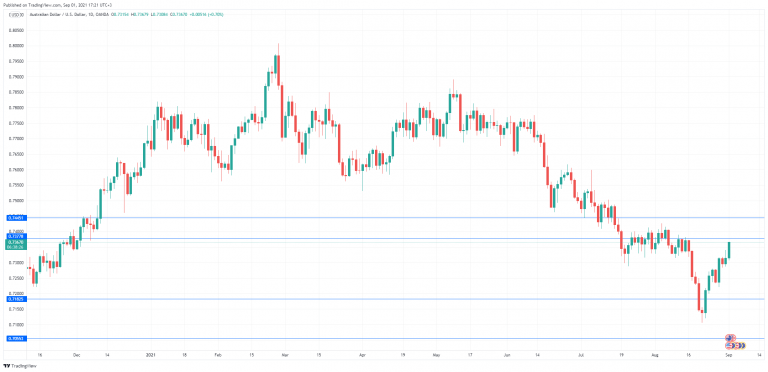
- On the upside, 0.7377 is under pressure as AUD/USD is up sharply on Wednesday. Next, there is resistance at 0.7455
- There are support levels at 0.7162 and 0.7055
EUR/USD Outlook: Euro Rallies after Downbeat US ADP Jobs Report
The Euro accelerate higher on Wednesday after soft US data deflated dollar. The ADP report showed that US private sector added 374K new jobs in August, compared to expectations for 613K and July’s figure, downwardly revised from 330K to 326K.
Downbeat ADP report, which is often used as an indication for more significant government’s jobs report (due on Friday), fades expectations for strong non-farm payroll report (Aug f/c 750K vs 943K in July) and also cools down expectations for Fed’s early action.
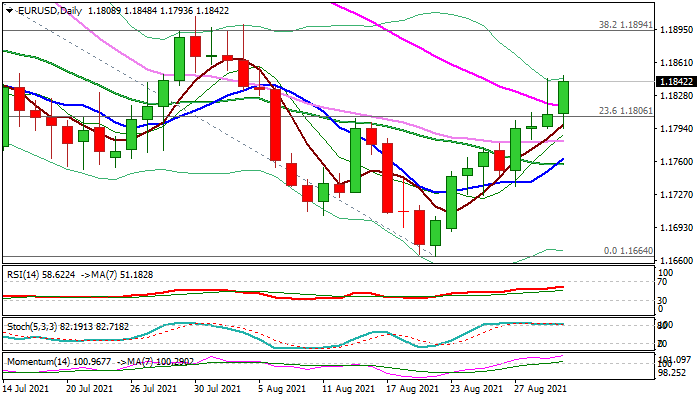
Fresh strength penetrated thick daily cloud (base lays at 1.1832), with close within the cloud to confirm bullish signal and open way for extension towards key barriers at 1.1900 zone (Fibo 38.2% of 1.2266/1.1664 descend/July 30 high) violation of which would confirm reversal signal.
Daily studies maintain strong bullish momentum with additional positive signal seen on formation of 10/20DMA’s bull cross.
Broken Fibo support at 1.1806 reverted to solid support which is expected to keep the downside protected and maintain bullish bias
Res: 1.1857; 1.1894; 1.1908; 1.1954.
Sup: 1.1832; 1.1806; 1.1782; 1.1763.
Sunset Market Commentary
Markets
Rising US real rates saved the dollar’s downfall during yesterday’s trading session. This time around, the safety net was missing. A disappointing August ADP employment report put things in motion. Net job creation amounted to 374k compared to 638k consensus and dashed hopes of those looking for final progress on the employment front to trigger a September tapering announcement. Fed chair Powell at the virtual Jackson Hole meeting labelled progress towards the employment (taper) goal as “clear” rather than “substantial”. Despite today’s market reaction, we believe the jury is still out. Friday’s payrolls provide a lifeline. Consensus expects 748k net job growth compared to a stellar 943k in July. Back in the day, ADP employment and payrolls reports were closely correlated as one’s gut feeling would suggest. However, over the past years it almost turned out to be a contra-indicator for official payrolls, with July’s 326 ADP gain providing a nice example. Overall, we stick with our view that decent payrolls will be sufficient for the Fed to announce tapering in September, start slowing down net purchases from Q4 and end them all together by the middle of next year.
US Treasuries significantly outperformed German Bunds. The US yield curve bull flattens with yields sliding 0.6 bps (2-yr) to 2.8 bps (30-yr). The German yield curve steepens with daily changes ranging between -0.5 bps (2-yr) and +1.7 bps (30-yr). The post-ADP reaction (lower) in US yields ended the intraday rebound (higher) in German yields. From the start of dealings until early US trading, they added to yesterday’s significant gains. As reminder: they were inspired by a 3% Y/Y EMU CPI reading and by comments from some (important) ECB governors hinting at slower PEPP purchases in Q4 2021. The ECB decides on the issue at next week’s policy meeting (September 9) which includes updated (and higher) growth and inflation forecasts. The German 10-yr yield from a technical point of view bounced into -0.35% resistance which is 38% retracement on the May/August yield decline. Post-ADP yield developments hurt the dollar with EUR/USD currently changing hands near yesterday’s high of 1.1845. Underlying dynamics shifted from euro strength to dollar weakness though. The trade-weighted dollar is testing 92.47/41 support again. Losing that level would obviously accelerate the EUR/USD rebound with the 1.1909 July top being the next reference. The US ISM’s starting with today’s manufacturing measure are next reference for the (US) trading dynamics.
News Headlines
Turkish GDP grew by 21.7% y/y in Q2. While the quarter-on-quarter figure wasn’t necessarily bad (0.9%), it does reveal the record yearly growth reading is largely the result of base effects. The Turkish Statistical Office said household consumption, which accounts for some two-thirds of the economy, was the main driver of growth, rebounding 22.9% compared to the same quarter last year. Exports rose 59.9% y/y and imports 19.2%, resulting in a positive net export contribution. Companies spurred investments, with fixed capital formation rising by 20.3%. In a separate report, the Turkish manufacturing PMI marginally increased, from 54 to 54.1. The decent-to-strong data do not help the Turkish lira today. EUR/TRY stabilizes around 9.83. Perhaps some nervousness in the run-up to Friday’s CPI reading is at play. July inflation creeped higher to 18.95%, leaving the real central bank policy rate barely positive.
The European Securities and Markets Authority (ESMA) in its latest bi-annual report on financial markets trends said valuations in the EU are now at and even ahead of pre-pandemic levels and thus possibly face significant corrections. ESMA found that corporate bonds are far above levels seen before the crisis and reported increased risk taking in stocks and crypto assets. It said that the current market trends would have to show resilience over an extended period of time before it can make a more positive risk assessment.
ISM manufacturing rose to 59.9, corresponds to 4.8% annualized GDP growth
US ISM Manufacturing PMI rose from 59.5 to 59.9 in August, above expectation of 58.6. Looking at some more details, new orders rose from 64.9 to 66.7. Production rose form 58.4 to 60.0. However, employment dropped from 52.9 to 49.0. Prices dropped from 85.7 to 79.4.
ISM said: "The past relationship between the Manufacturing PMI and the overall economy indicates that the Manufacturing PMI for August (59.9 percent) corresponds to a 4.8-percent increase in real gross domestic product (GDP) on an annualized basis."