

Sample Category Title
German IFO Survey Mixed, Focus On Jackson Hole
Notes/Observations
- German Aug IFO Survey misses consensus with supply chain bottlenecks and rising commodity costs as factors.
- Awaiting for clues on taper from Powell at upcoming Jackson Hole symposium but Powell likely not to announce anything at this time.
Asia
- BOJ Member Nakamura reiterated overall assessment stance that the economy was picking up as a trend but outlook uncertain due to recent resurgence in Covid-19 cases.
- US have approved Huawei’s license application for auto chips worth hundreds of millions of dollars.
- China PBOC increased short-term cash injections as liquidity tightens; Open Market Operation (OMO) injected CNY50B in 7-day reverse repos against CNY10B maturing.
- China Ningo Port to reopen previously closed terminal on Wed, Aug 25th (terminal has through put of ~25% port capacity).
Coronavirus
- Japan Econ Min Nishimura: Seeking to expand state of emergency to 8 additional prefectures.
- Japan to spend additional ¥1.4T on COVID, using reserves.
Americas
- House advanced $3.5T budget framework package after ending stalemate between Speaker Pelosi and centrists. Clears the way for Democrats to pursue a massive social spending package that could pass both chambers without Republican support.
- House Speaker Pelosi stated that she was committed to passing the bill by Sep 27th and would also advance the $1.0T infrastructure bill (Note: most likely outcome is that both plans are finally approved).
- President Biden agreed with Pentagon recommendation to stick to Aug 31st Afghan pullout citing the very high risk of terrorism.
Energy
- Weekly API Crude Oil Inventories: -1.6M v -1.2M prior.
Speakers/Fixed income/FX/Commodities/Erratum
Equities
- Indices [Stoxx600 +0.11% at 472.30, FTSE +0.15% at 7,136.45, DAX -0.11% at 15,888.65, CAC-40 +0.10% at 6,670.88, IBEX-35 +0.21% at 8,967.00, FTSE MIB -0.13% at 25,993.50, SMI -0.20% at 12,407.80, S&P 500 Futures %].
- Market Focal Points/Key Themes: European indices open modestly higher across the board and again slipped to trad mixed later in the session; sectors trending into the green include technology and consumer discretionary; underperforming sectors include materials and utilities; Salmar takes stake in Refsnes Laks; Augean to be acquired by Fierra and Ancala; reportedly Blackstone takes majority stake in ASK Group; earnings expected in the upcoming US session include National Bank of Canada, Dick’s Sporting Goods and Autodesk.
Equities
- Financials: Augean [AUG.UK] +16% (agrees with the offer).
- Healthcare: Bavarian Nordic [BAVA.DK] -5% (earnings), Elekta [EKTAB.SE] -7% (earnings).
- Industrials: Stadler Rail [SRAIL.CH] +4% (earnings).
- Technology: Sopheon [SPE.UK] +9% (earnings).
Speakers
- ECB’s De Guindos (Spain) noted that it could revise Staff Projections higher in Sept as Q3 indicators were positive.
- German IFO Economists noted that almost 75% of businesses complain about supply chain bottlenecks. Export expectations had fallen but remain at a good level. Approx 67% of companies in both manufacturing and retail sought higher prices to cover rising costs.
- Iceland Central Bank Policy Statement noted that the economic outlook had improved since May driven by tourist arrivals. Inflationary pressures remained relatively high but appeared to be subsiding; Outlook was for CPI to ease more slowly compared to May forecast while the rise in inflationary expectations appeared to be reversing.
- Japan govt FY22/23 budget said to total over ¥110T.
- US Senate said to offer simpler alternative to Pres Biden's tax plan; Proposes to increase penalties on companies sending profit abroad.
- President Biden expected to host executives from major technology, financial and energy companies on Wednesday (Aug 25th) for a summit on national cybersecurity.
Currencies/Fixed income
- USD retraced a bit of its recent strength with a focus on the upcoming Jackson Hole symposium. Markets seemed to have discounted the likelihood of any details on Fed tapering plans at this time but Fed Powell speech on Friday was expected to remain cautious.
- EUR/USD managed to shake off a mixed German IFO survey and hovered above 1.1750by mid-session.
Economic data
- (ES) Spain July PPI M/M: 1.7% v 2.2% prior; Y/Y: 15.3% v 15.4% prior.
- (TR) Turkey Aug Real Sector Confidence (seasonally adj): 112.2 v 112.1 prior; Real Sector Confidence NSA (unadj): 113.9 v 114.8 prior.
- (TR) Turkey Aug Capacity Utilization: 77.1% v 76.7% prior.
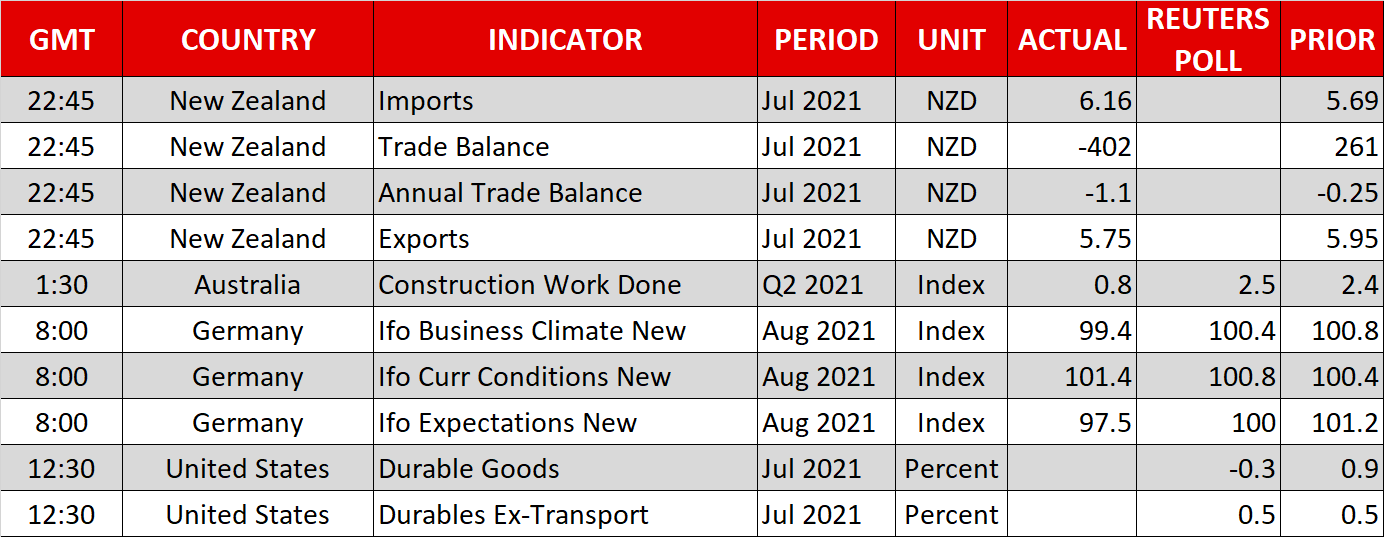
- (DE) Germany Aug IFO Business Climate Survey: 99.4 v 100.4e; Current Assessment: 101.4 v 100.8e; Expectations Survey: 97.5 v 100.0e.
- (CH) Swiss Aug Expectations Survey: -7.8 v +42.8 prior.
- (IS) Iceland Central Bank (Sedabanki) raised 7-Day Term Deposit Rate by 25bps to 1.25%.
Fixed income issuance
- (IN) India sold total INR 170B vs. INR170B indicated in 3-month, 6-month and 12-month bills.
- (NO) Norway sold NOK3.0B vs. NOK3.0B indicated in 1.375% Aug 2030 Bonds, Avg Yield: 1.22% v 1.44% prior; bid-to-cover: 2.68x v 2.06x prior.
- (SE) Sweden sold total SEK3.5B vs. SEK3.5B indicated in 2026 and 2032 Bonds.
Looking ahead
- (PT) Portugal Debt Agency (IGCP) to hold switch auction.
- 05:25 (EU) Daily ECB Liquidity Stats.
- 05:30 (EU) ECB allotment in 3-month LTRO tender.
- 05:30 (ZA) South Africa announces details of next bond auction (held on Tuesdays).
- 06:00 (UK) Aug CBI Retailing Reported Sales: 20e v 23 prior; Total Distributed Reported Sales: No est v 41 prior.
- 06:00 (RU) Russia to sell 2029 and 2036 OFZ bonds.
- 06:00 (CZ) Czech Republic to sell 2029 and 2037 bonds.
- 06:45 (US) Daily Libor Fixing.
- 07:00 (US) MBA Mortgage Applications w/e Aug 20th: No est v -3.9% prior.
- 07:00 (MX) Mexico Q2 Final GDP Q/Q: 1.6%e v 1.5% prelim; Y/Y: 19.7%e v 19.7% prelim; GDP Nominal Y/Y: No est v 1.8% prior.
- 07:00 (MX) Mexico Jun IGAE Economic Activity Index (Monthly GDP) M/M: -0.3%e v +0.6% prior; Y/Y: 13.8%e v 25.1% prior.
- 07:00 (BR) Brazil Aug FGV Consumer Confidence: No est v 82.2 prior.
- 08:00 (BR) Brazil mid-Aug IBGE Inflation IPCA-15 M/M: 0.8%e v 0.7% prior; Y/Y: 9.2%e v 8.6% prior.
- 08:00 (UK) Daily Baltic Dry Bulk Index.
- 08:30 (US) July Preliminary Durable Goods Orders: -0.3%e v+ 0.9% prior; Durables (ex-transportation) 0.5%e v 0.5% prior; Capital Goods Orders (non-defense/ex-aircraft): 0.5%e v 0.7% prior; Capital Goods Shipments (non-defense/ex-aircraft): 0.7%e v 0.6% prior.
- 08:30 (BR) Brazil July Current Account Balance: -$0.5Be v +$2.8B prior; Foreign Direct Investment (FDI): $4.7Be v $0.2B prior.
- 09:00 (BE) Belgium Aug Business Confidence Index: No est v 10.1 prior.
- 09:45 (UK) BOE to buy £1.147B in APF Gilt purchase operation (7-20 years).
- 10:00 (MX) Mexico Q2 Current Account Balance: +$3.8Be v -$5.1B prior.
- 10:30 (US) Weekly DOE Oil Inventories.
- 11:00 (BR) Brazil July Tax Collections (BRL): 161.6Be v 137.2B prior.
- 12:00 (RU) Russia July Industrial Production Y/Y: 8.0%e v 10.4% prior.
- 13:00 (US) Treasury to sell 2-Year FRN Reopening.
- 13:00 (US) Treasury to sell 5-Year Notes.
- 13:30 (BR) Brazil July Total Federal Debt (BRL): No est v 5.330T prior.
- 19:50 (JP) Japan July PPI Services Y/Y: 1.3%e v 1.1% prior.
- 20:00 (US) Jackson Hole agenda published.
- 21:00 (KR) Bank of Korea (BoK) Interest Rate Decision: Expected to leave 7-Day Repo Rate unchanged at 0.50%.
- 21:30 (AU) Australia Q2 Private Capital Expenditure: 2.6%e v 6.3% prior.
- 22:00 (KR) South Korea July Department Store Sales Y/Y: No est v 12.8% prior; Discount Store Sales Y/Y: No est v -2.4% prior.
- 22:00 (KR) South Korea July Retail Sales Y/Y: No est v 11.4% prior.
- 23:35 (JP) Japan to sell 20-Year JGB Bonds.
Risk Appetite Takes A Breather Ahead Of Jackson Hole
- Stocks pause after recent run-up.
- Powell’s Jackson Hole speech could provide more tapering clues.
- US data to add additional colour to policy outlook.
- Oil markets digest Delta variant concerns ahead of OPEC+ decision.
The surge in risk assets appears to be on a mid-week break. US equity futures are holding steady after the S&P 500 and the Nasdaq posted fresh record highs thanks to ample buy-the-dip action. Asian stocks are mixed after the rebound in Chinese tech stocks petered out. The dollar index (DXY) is resting around the 93 line for now, while gold has moderated back into sub-$1800 territory.
Traders and investors worldwide may have to wait until Friday before sending asset prices on their next big move, with Fed Chair Jerome Powell’s speech eagerly awaited as the next big potential catalyst.
Should he lean closer towards his more hawkish colleagues on the FOMC suggesting that the Fed’s tapering will happen sooner rather than later, the DXY could push onto fresh year-to-date highs and the 94 handle for the first time since November.
However, if Powell sticks to his message of patience, we may see the dollar unwind more of its recent gains while boosting stock markets, as equity bulls continue to gorge on the Fed’s stimulus.
US data still a major influence on investor sentiment
If Jackson Hole proves to be a non-event, then market attention could be swayed by the incoming US economic data, with the latest readings on jobless claims, personal income and spending, as well as the Fed’s preferred inflation gauge all due in the coming days. In the absence of any discernable policy hints out of Powell this week, investors and traders will take bigger cues from the latest figures as they portend to the Fed’s next policy move.
Strong data that pushes markets into thinking that the tapering has to happen sooner rather than later might reinvigorate tailwinds for bond yields and the dollar, at the expense of commodities and stocks.
Oil bulls contend with Delta variant concerns
Oil prices are taking a slight breather after the sharp rebound earlier this week, while the steadying US dollar is also giving oil bulls reason to pause. Still, oil futures have yet to break out of the series of lower highs since the start of July.
The global demand outlook has to turn more optimistic and overcome the persistent concerns surrounding the Delta variant in order for prices to unwind recent losses and claim a higher high. Markets need to be shown more signs that global demand can truly absorb any incoming OPEC+ supply, with the alliance set to make a key decision on output next week.
Much of the uncertainty surrounding the supply-demand equation lies in whether the Delta variant’s spread can be contained in major economies. The lockdowns in China, Australia and New Zealand have all shown that oil markets have to stay vigilant over the stubborn threats posed by the coronavirus on the demand recovery picture.
Gold Analysis: Retreats Below 1,800.00
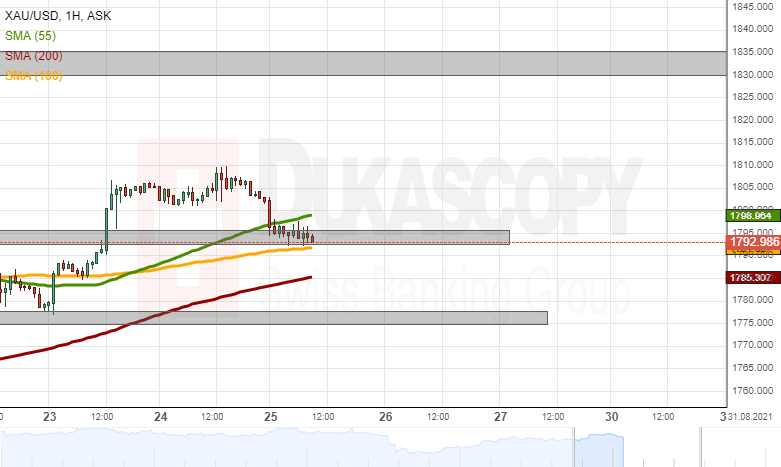
After encountering resistance at the 1,810.00 level, the price for gold began a decline. On Wednesday, the decline had reached the 1,792.40/1,795.60 support zone. Since reaching the zone, the commodity price has been trading sideways in it.
In the case of a recovery, the price for gold would most likely make another attempt at passing the 1,810.00 level before aiming at the previous July and August high levels near 1,830.00.
Meanwhile, a decline of the price below the mentioned support zone would look for support in the 200-hour simple moving average near 1,785.00 and round price levels.
USD/JPY Analysis: Continues To Ignore SMAs
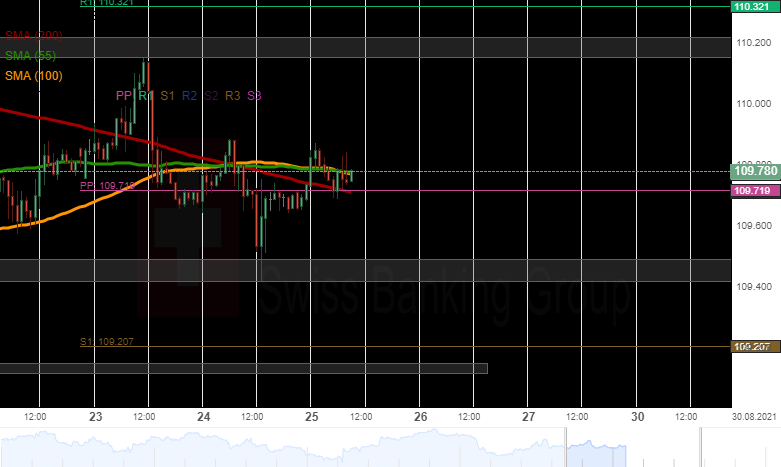
The USD/JPY dipped to the 109.42 level on Tuesday. With it, the pair confirmed that there is a support zone in the 109.42/109.49 zone. Meanwhile, the recent August high levels have been marked to reveal a resistance zone at 110.15/110.23.
In addition, the currency exchange rate continues to ignore the 55, 100 and 200-hour simple moving averages and the weekly simple pivot point at 109.72.
A potential surge would have to pass the 110.15/110.23 zone before reaching the weekly R1 simple pivot point at 110.32. On the other hand, a decline below the 110.15/110.23 zone could look for support in the weekly S1 simple pivot point at 109.21.
GBP/USD Analysis: Continues Sideways Trading
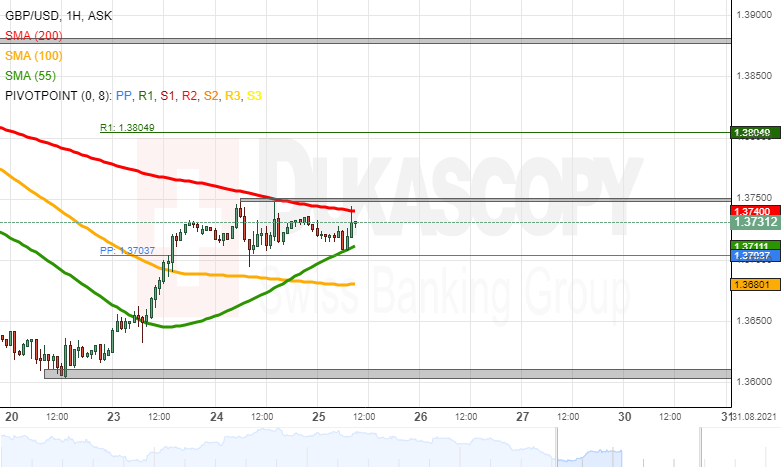
Since the middle of Monday's trading, the GBP/USD has continued to trade between the 1.3700 and 1.3750 levels. On Wednesday morning, the rate was approached by the support of the 55-hour simple moving average near 1.3710 and the 200-hour simple moving average at 1.3740.
A breaking of the resistance of the 1.3750 level could result in a surge to the 1.3800 mark. Note that the 1.3800 level's resistance was being strengthened by the weekly R1 simple pivot point at 1.3805.
However, a decline below the 1.3700 level and the weekly simple pivot point at 1.3704 could look for support in the 100-hour simple moving average at 1.3680. A failure of the SMA to provide support would most likely result in another decline to the 1.3600 mark.
EUR/USD Analysis: Reveals Possible Pattern
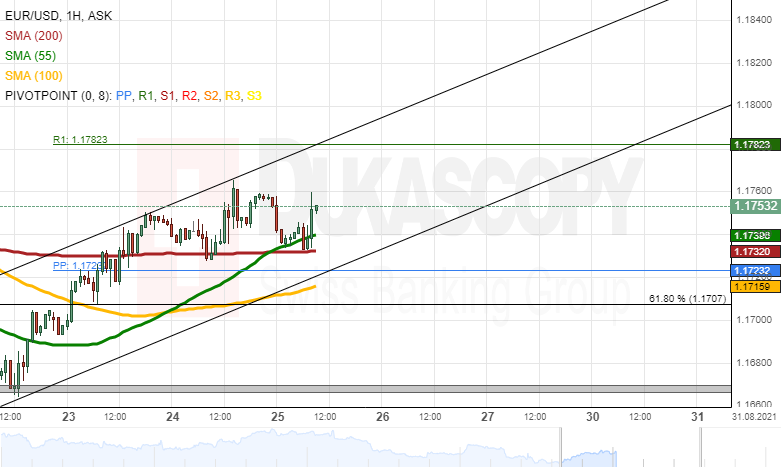
On Tuesday, the EUR/USD found support in the 1.1730 level and afterwards reached the resistance of the 1.1760 mark, which was tested two times. In the meantime, it was spotted that the rate appears to have started to respect the support of the 200-hour simple moving average.
Meanwhile, the currency exchange rate appears to be trading in a still not confirmed channel up pattern. Namely, the rate has not confirmed the support line of the pattern, as it has been simply set parallel to the resistance line, which has been touched three times.
If the rate finds support in the 200-hour simple moving average and the lower trend line of the channel up pattern, a surge should follow up. A potential surge would test the resistance of round exchange rate levels at 1.1750, 1.1760 and 1.1770 before reaching the resistance of the weekly R1 simple pivot point at 1.1782.
On the other hand, a decline below the SMA and the trend line could look for support in the combination of the weekly simple pivot point at 1.1723 and the 100-hour simple moving average nearby the pivot point. Below these levels, the 1.1700 mark together with a 61.80% Fibonacci retracement level would provide support.
AUD Rally Pauses Ahead Of Jackson Hole
Australian dollar drifting
After plenty of volatility over the past week, the Australian dollar has settled down on Wednesday. AUD/USD is currently trading at 0.7251, down 0.09% on the day. The Aussie has sparkled this week, with gains of 1.5%. This follows a fall of 3% a weak earlier.
With markets in a wait-and-see mode ahead of the Jackson Hole meeting, which begins on Thursday, the currency markets could be on hold for the next day or two. The lack of activity is likely change on Friday, when Fed Chair Jerome Powell addresses the symposium. The million-dollar question on the minds of the markets is whether Powell will provide any insight into the timing of a Fed taper. Risk sentiment has improved with the Biden Administration making progress on its budget and infrastructure proposals, but the mood could quickly shift, depending on what Powell says – if he hints that a taper is imminent, that would likely give the dollar a boost. If, however, Powell chooses to lay low and doesn’t say much about a taper, risk sentiment could improve and weigh on the greenback.
The Australian dollar has enjoyed a strong week, despite soft manufacturing and services PMIs and lockdowns which have been imposed on half of the population of 25 million. The country had done a remarkable job in containing Covid, but the delta variant has sent infections soaring, while the vaccination rate remains low. If the lockdowns are extended, there are concerns that the weak Australian economy could totter into a recession.
In economic news, the construction sector continued to expand in Q2, with a gain of 0.8%, down from 2.4% (est. 2.5%). Still, the sector is in recovery mode, posting its second straight gain after a nasty steak of contraction in 10 straight quarters.
AUD/USD Technical
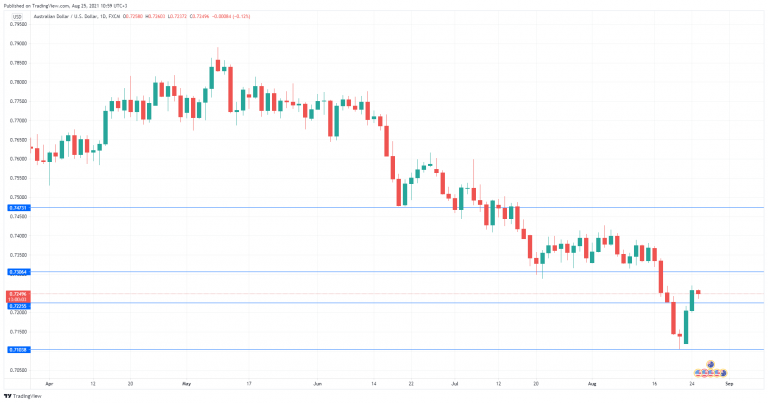
- There is resistance at 0.7306, followed by 0.7473
- On the downside, 0.7225, a monthly line, is providing weak support. Below, there is support at 0.7103, protecting the round number of 0.7100
Dollar Finds Footing As Jackson Hole Awaited, Stocks Fly Again
- Markets turn to Jackson Hole for direction amid uneasy optimism
- Dollar edges up after three-day slide, while Wall Street climbs to fresh records
- China cash injection, House infrastructure vote lift sentiment, but Delta still a worry
Calm sets in before possible Fed storm
After a volatile week, markets were in much steadier waters on Wednesday, with the US dollar halting its losing streak and equities holding onto their gains. Optimism that the global economic recovery from the pandemic will only be slightly dented by the Delta variant and central banks will continue to pump plenty of stimulus to support growth is the primary reason for this turnaround.
Fears of aggressive Fed tightening have receded somewhat after Kaplan – one of the Fed’s biggest hawks – expressed doubts about the outlook. In the meantime, Congress is making progress with advancing President Biden’s economic agenda.
The House of Representatives on Tuesday voted to move forward with the $3.5 trillion budget blueprint. Although the process is almost certain to drag on well into the fall, there’s growing confidence that the Democrats will be able to resolve their differences and pass both the budget and infrastructure bills in due course.
Equities not too fussed about Delta strain
Sentiment was additionally aided on Wednesday by China’s central bank boosting its daily cash injection into the financial system, easing interbank lending rates. The move helped local stocks to post a third straight day of strong gains following a rebound in Chinese tech stocks in recent days.
The recent regulatory crackdown had pummelled popular tech stocks in Hong Kong and China but upbeat earnings by JD.com this week has allayed worries that the measures would become a significant drag on revenue.
The SSE Composite index closed 0.7% higher, though Hong Kong’s Hang Seng index slipped today. Japan’s Nikkei 225 index also bucked the trend, giving up earlier advances to close marginally lower. The losses came after a Bank of Japan policymaker warned chip shortages may continue to serve as a source of uncertainty for the global economy, while the Japanese government looks set to place more regions into a state of emergency amid still soaring virus cases.
However, for investors on Wall Street, lockdowns in Australia, Japan and other Asian-Pacific countries are of minor concern. With China appearing to have contained an outbreak of the Delta variant in the country, therefore averting a major disruption to global supply chains, regional woes won’t have a material impact on US equities.
Meanwhile, easing Fed taper expectations have boosted Wall Street’s tech behemoths, which had already benefited from defensive plays during the bout of risk aversion. The Nasdaq 100 and Composite, as well as the S&P 500 all closed at all-time highs on Tuesday.
Dollar selloff takes a breather ahead of Jackson Hole
But the bounce in risk appetite may be cooling as US stock futures were barely in positive territory and the US dollar was slightly firmer. There’s no doubt that the greenback’s downside correction has breathed some life into the battered commodity-linked currencies. But whether the rebound can be extended will likely depend on what Fed Chair Powell signals about tapering when he speaks on Friday from the Jackson Hole conference.
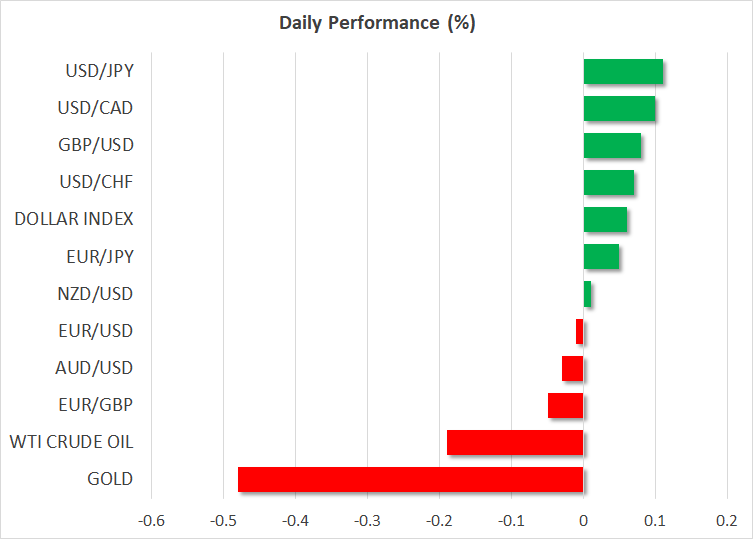
The aussie was last trading flat versus its US counterpart, while the loonie and kiwi were 0.1% higher. The euro and pound were also flat.
In commodities, gold fell back after failing to crack above the $1,800/oz level and as the dollar steadied. Oil prices were weaker too on Wednesday, having surged about 8% from Monday’s lows.
The Analytical Overview Of The Main Currency Pairs
The EUR/USD currency pair
Technical indicators of the currency pair:
Prev Open: 1.1744
Prev Close: 1.1757
% chg. over the last day: +0.11%
Germany’s GDP increased by 1.6% in the second quarter. On an annual basis, Europe's largest economy grew by 9.4%, leaving economic activity 3.3% below the pre-crisis level. The European economy is now recovering at a slightly faster pace than the US economy.
Trading recommendations
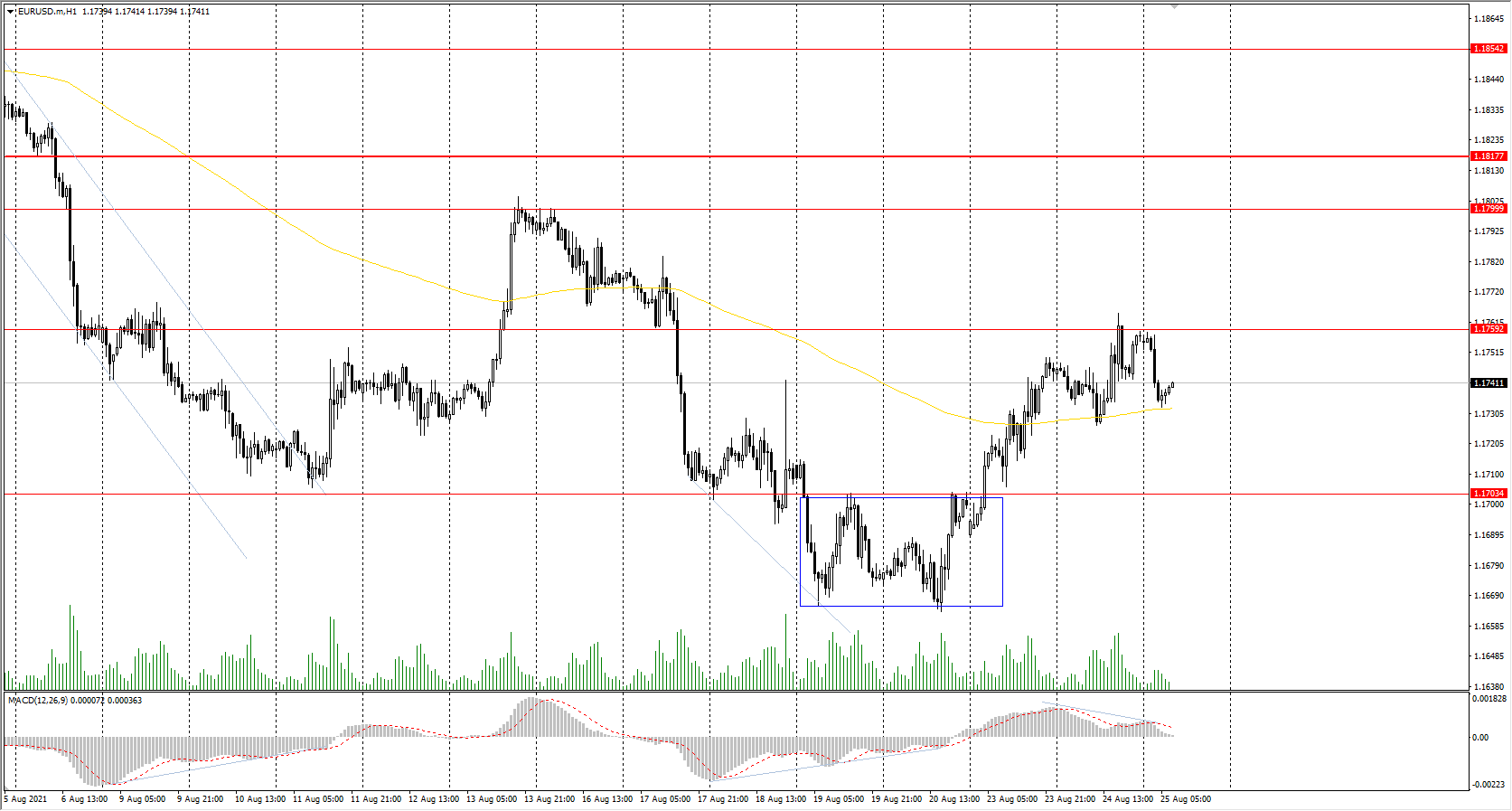
Support levels: 1.1704, 1.1620
Resistance levels: 1.1759, 1.1799, 1.1817, 1.1854, 1.1894, 1.1934, 1.1969
From a technical point of view, the general trend of the EUR/USD currency pair is bearish. The price is trading at the level of the moving average. The MACD indicator started signaling a divergence in the opposite direction. Under such market conditions, it is best to look for sell trades from the resistance levels, where sellers showed the initiative. Buy trades can only be considered intraday from the support levels where the buyers have shown the initiative. It is better to buy from the false breakdown zone around the 1.1703 level.
Alternative scenario: if the price breaks out through the 1.1817 resistance level and fixes above, the mid-term uptrend will likely resume.
News feed for 2021.08.25:
- German Ifo Business Climate (m/m) at 11:00 (GMT+3);
- US Core Durable Goods Orders (m/m) at 15:30 (GMT+3).
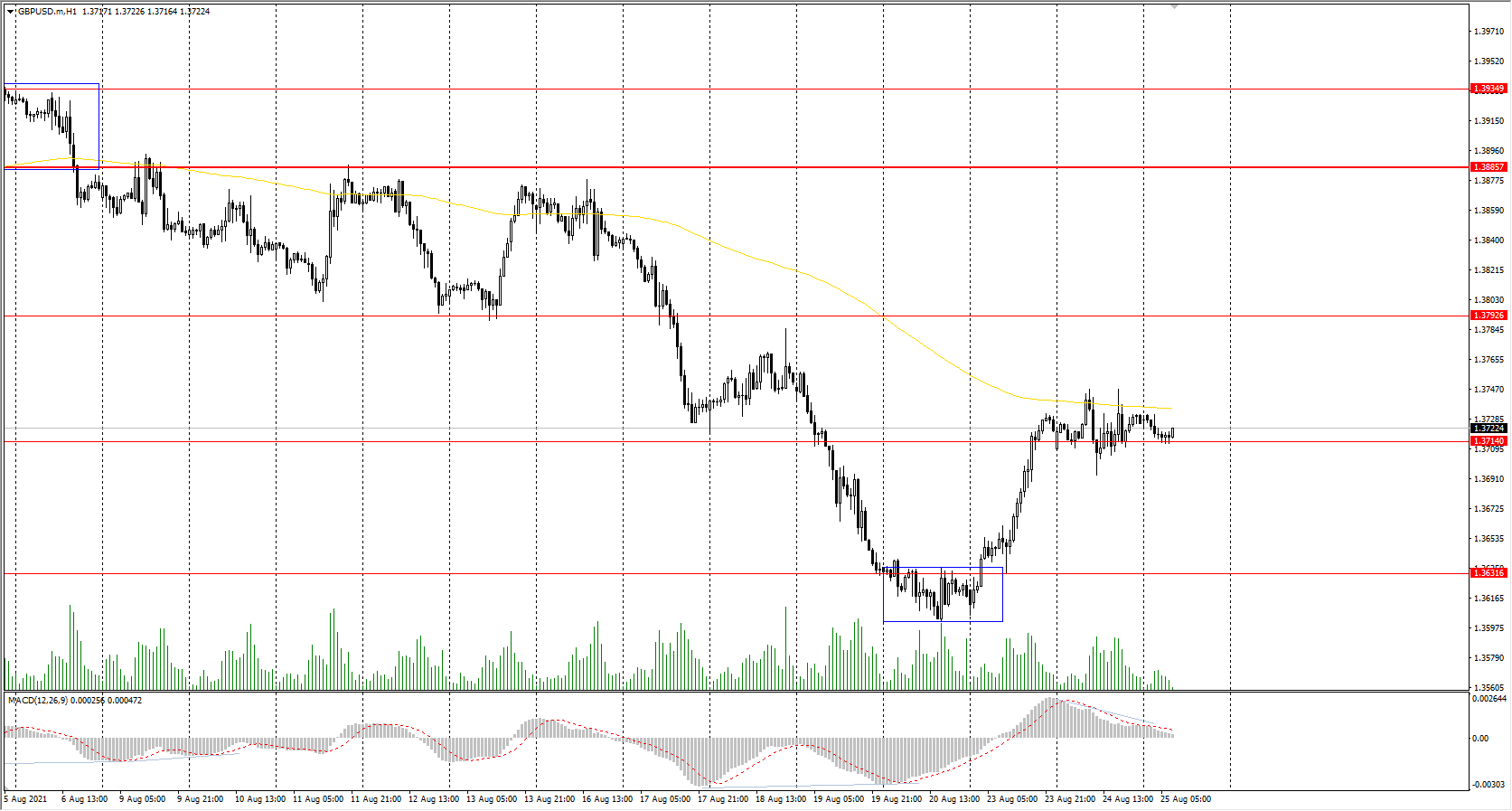
The GBP/USD currency pair
Technical indicators of the currency pair:
Prev Open: 1.3709
Prev Close: 1.3725
% chg. over the last day: +0.12%
The British pound continues to strengthen against the background of the dollar index decline. The increase in quotes is also due to the growth of Brent oil, which is increasing for the second session in a row.
Trading recommendations
Support levels: 1.3714, 1.3632, 1.3614, 1.3525
Resistance levels: 1.3793, 1.3772, 1.3886, 1.3935, 1.4002
On the hourly time frame, the GBP/USD trend is bearish. The price has consolidated above the support level and formed a false breakdown zone below. The MACD indicator has become positive, but there are signs of a hidden divergence. Under such market conditions, it is better to look for sell trades from the resistance levels. Buy positions can be considered only within the day and only with short targets.
Alternative scenario: if the price breaks out through the 1.3885 resistance level and consolidates above, the bullish scenario will likely resume.
The USD/JPY currency pair
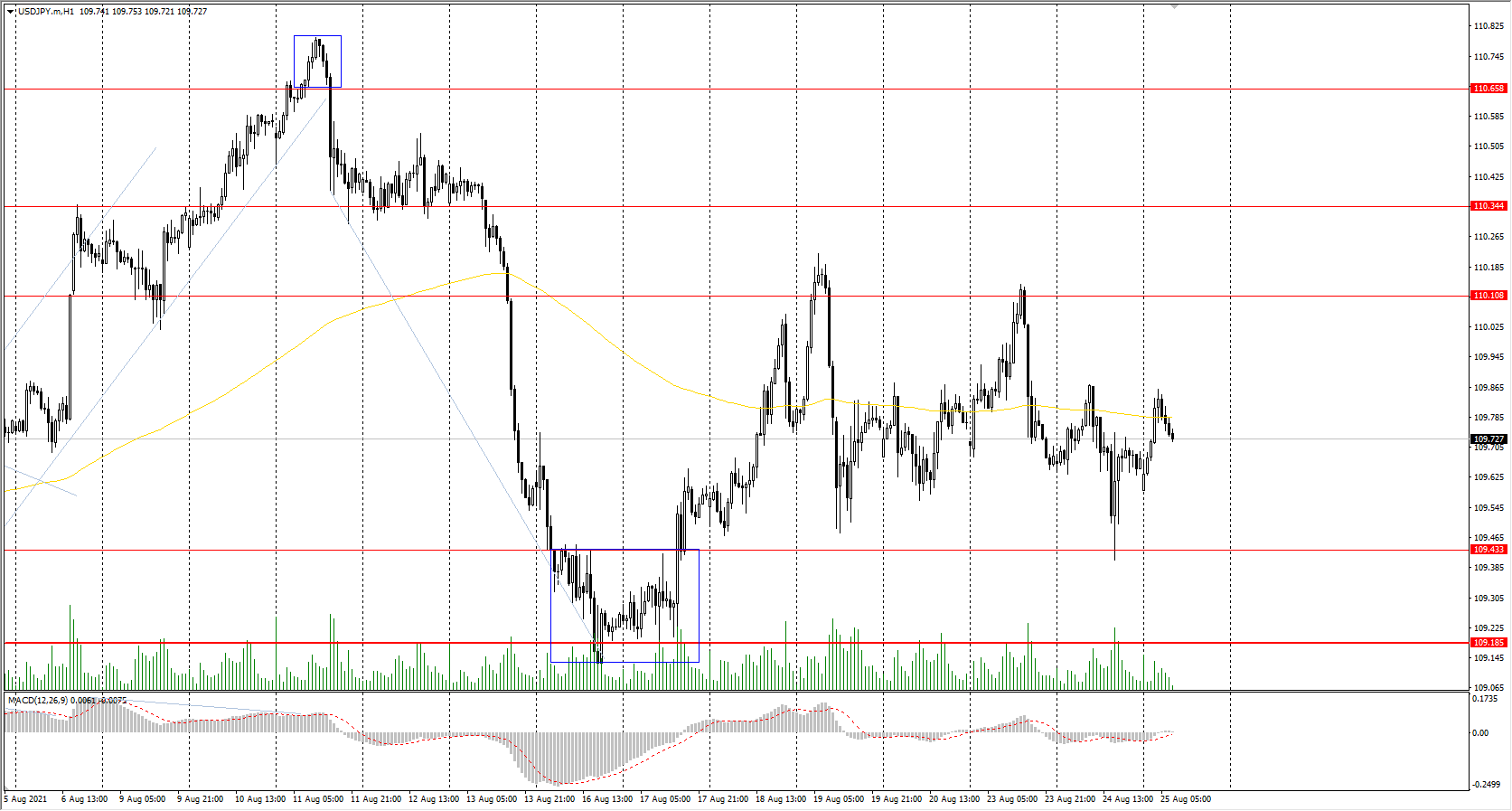
Technical indicators of the currency pair:
Prev Open: 109.68
Prev Close: 109.67
% chg. over the last day: -0.01%
In Japan, the situation with the spread of the Delta strain is worsening. According to the Ministry of Health, the country reported 21,500 new daily cases of COVID-19 and 42 deaths on Tuesday. Eight more prefectures were added to the state of emergency, bringing the total number of prefectures under quarantine to 21. The state of emergency will last until September 12. This situation will have a very negative impact on the economic performance for the quarter.
Trading recommendations
Support levels: 109.43, 109.19, 108.65
Resistance levels: 110.11, 110.34, 110.66, 110.95, 111.48
The main trend of the USD/JPY currency pair is bullish. The fall of the dollar index compensated for the negative impacts of the news. As a result, the USD/JPY currency pair is trading flat. The MACD indicator is inactive. Under such market conditions, it is best for traders to look for buy trades from the support level, where the buyers have shown initiative. Sell positions should be considered only on lower time frames from the resistance levels and only with short targets.
Alternative scenario: if the price falls below 109.18, the uptrend is likely to be broken.
The USD/CAD currency pair
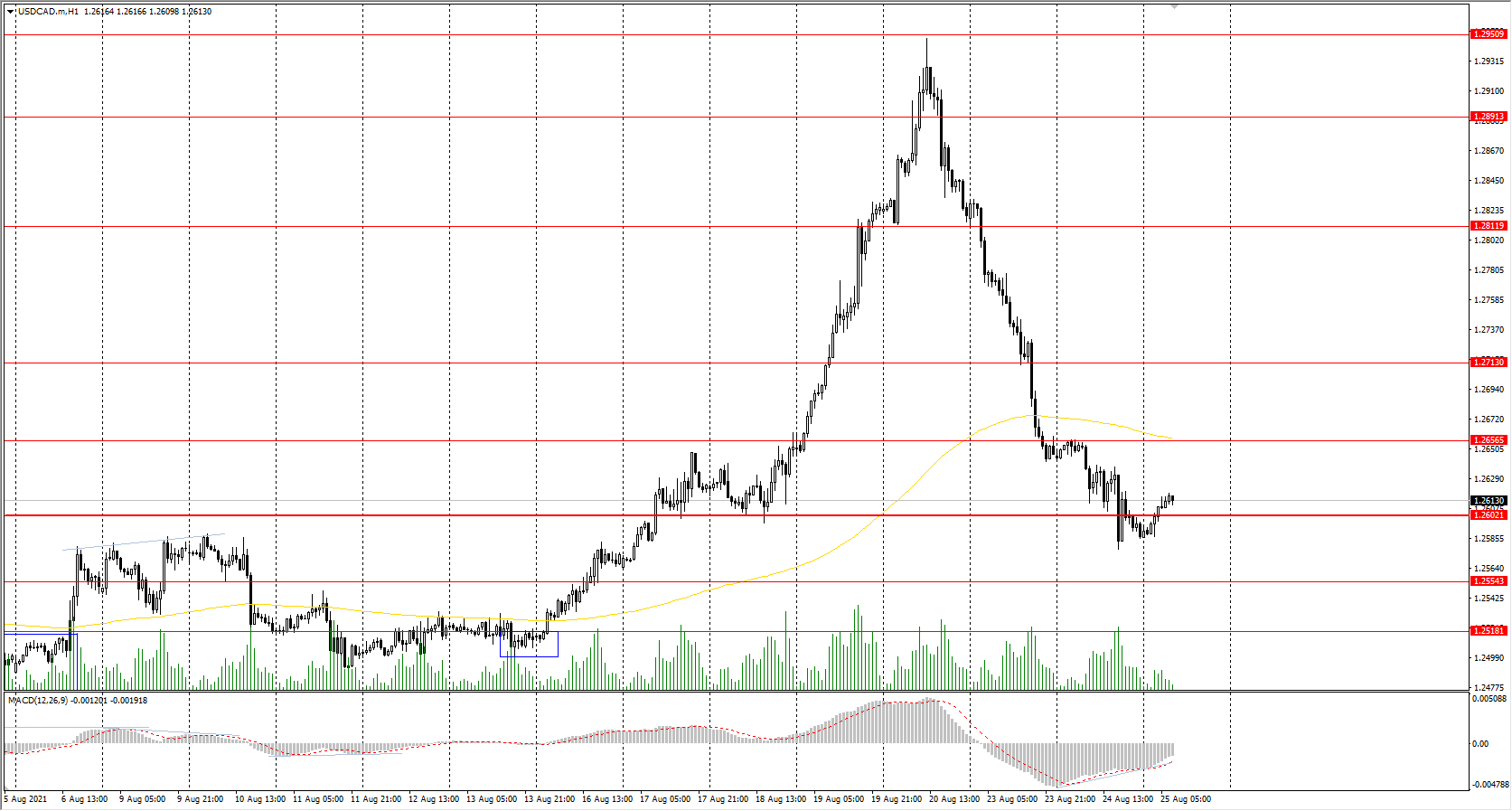
Technical indicators of the currency pair:
Prev Open: 1.2645
Prev Close: 1.2587
% chg. over the last day: -0.46%
The USD/CAD currency pair is highly dependent on the dynamics of the dollar index and oil prices. The dollar index is declining, while oil prices are rising for the second session in a row. As a result, the USD/CAD continues to decline. The USA’s statistics on crude oil reserves will be published today and significantly impact the USD/CAD behavior.
Trading recommendations
Support levels: 1.2602, 1.2554
Resistance levels: 1.2656, 1.2713, 1.2812, 1.2891, 1.2951
In terms of technical analysis, the USD/CAD trend is still bullish. But now, the price has approached the priority change level and tried to break it down yesterday but failed to consolidate below the level. The MACD indicator is signaling a divergence. It is better to look for buy positions from the priority change level after the buyer's initiative. There are no optimal entry points for sell deals now because the support level is ahead.
Alternative scenario: if the price breaks down through the 1.2602 support level and fixes below, the uptrend will likely be broken.
US Stock Indices Close At New All-Time Highs Again
Yesterday, the S&P 500 and Nasdaq closed at record highs. The Dow Jones index increased by 0.09%, the S&P 500 added 0.15%, and the Nasdaq jumped by 0.52%. Investors are waiting for Friday’s speech by Fed Chairman Jerome Powell. The July FOMC minutes suggest that the Fed could start cutting QE by the end of the year. However, there is a high probability that Mr. Powell may refrain from talking about cutting QE because of the spread of Delta and the fact that Fed officials aren’t unanimous about this issue.
New home sales in the US increased in July after a three-month decline, but housing market dynamics are slowing since the rise in housing prices against the background of a limited proposal displaces new buyers from the market.
Major European stock indices were trading flat yesterday despite positive statistics from Germany. Germany’s GDP increased by 1.6% in the second quarter. On an annual basis, Europe's largest economy grew 9.4%, leaving economic activity 3.3% below the pre-crisis level. The European economy is now recovering at a slightly faster pace than the US economy. The German DAX index increased by 0.3%, and the British FTSE 100 added 0.2% yesterday. At the same time, France's CAC 40 decreased by 0.3%, Italy's FTSE MIB decreased by 0.1%, and Spain's IBEX lost 0.2%.
Investors are now buying gold, silver, and other commodities as they do not expect Jerome Powell to announce this week that the Fed will cut the QE program. The Fed's soft monetary policy contributes to an upward trend in commodity markets.
Oil prices have been rising for the 2nd session in a row. On the one hand, the growth of the quotes is affected by the fact that the US regulatory authorities have fully approved a vaccine against COVID-19. It will reduce the spread of Delta and lead to a resumption of demand for fuel. On the other hand, the epidemiological situation in Asian countries (except China) remains very difficult, which clouds the prospects for a quick demand recovery.
China's central bank increased short-term injections into the financial system to calm market worries about the reduction in liquidity. As a result, Chinese companies sharply jumped yesterday. Malaysia's consumer price index, which is responsible for inflation, increased by 2.2% in July compared to a year earlier. The number of cases of COVID-19 infection in Sydney reached the highest record on Wednesday. Officials are calling for more vaccinations to stop the wave of hospitalization. In Japan, the situation with the spread of the Delta strain is worsening. According to the Ministry of Health, the country reported 21,500 new daily cases of COVID-19 and 42 deaths on Tuesday. Eight more prefectures were added to the state of emergency, bringing the total number of prefectures under quarantine to 21. The state of emergency will last until September 12.
Main market quotes:
- S&P 500 (F) 4,486.23 +6.70 (+0.15%)
- Dow Jones 35,366.26 +30.55 (+0.09%)
- DAX 15,905.85 +53.06 (+0.33%)
- FTSE 100 7,125.78 +16.76 (+0.24%)
- USD Index 92.88 -0.08 (-0.08%)
Important events for today:
- German Ifo Business Climate (m/m) at 11:00 (GMT+3);
- US Core Durable Goods Orders (m/m) at 15:30 (GMT+3);
- US Crude Oil Reserves (w/w) at 17:30 (GMT+3).