

Sample Category Title
USD/CHF Daily Outlook
Daily Pivots: (S1) 0.9131; (P) 0.9164; (R1) 0.9201; More....
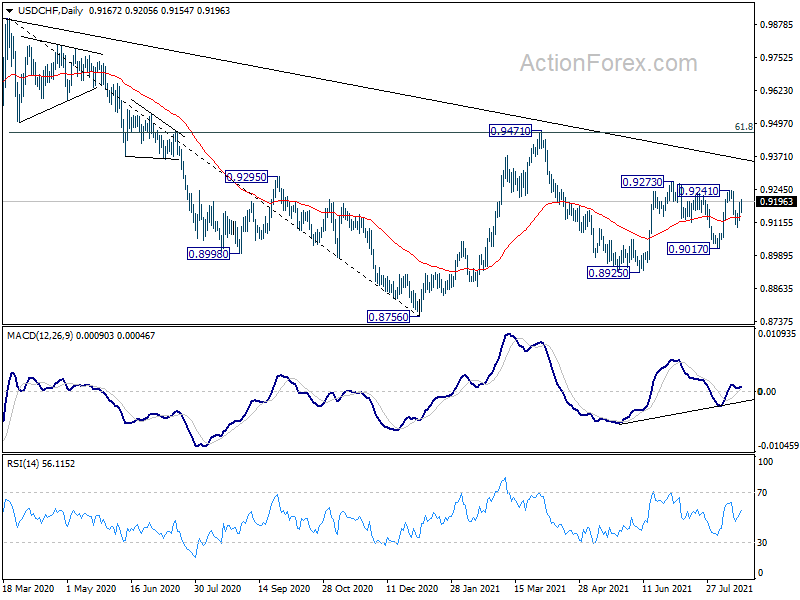
Intraday bias in USD/CHF remains neutral at this point. On the upside, break of 0.9241 resistance should resume the rise from 0.8925 through 0.9273. On the downside, break of 0.9098 will target 0.9017 support first. Further break there will likely resume the decline from 0.9471 through 0.8925 low.
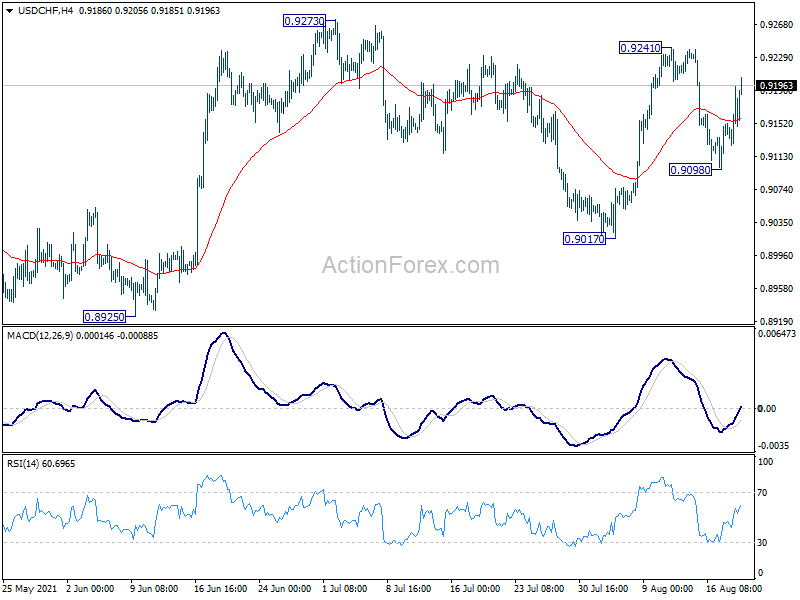
In the bigger picture, the failure to sustain above 55 week EMA (now at 0.9184) retains medium term bearish in USD/CHF. Break of 0.8925 support should resume the whole decline form 1.0342 (2016 high) through 0.8756 low. However, break of 0.9273 resistance and sustained trading above 55 week EMA will be an early sign of bullish trend reversal. Focus will then turn to 0.9471 resistance for confirmation.
GBP/USD Daily Outlook
Daily Pivots: (S1) 1.3727; (P) 1.3757; (R1) 1.3786; More...
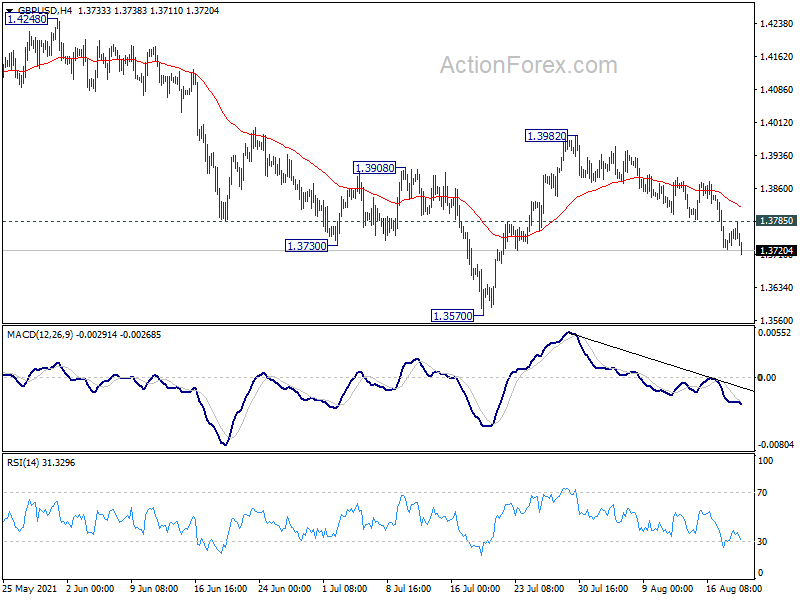
Intraday bias in GBP/USD remains on the downside as this point. As noted before, rebound from 1.3570 should have completed at 1.3982, after the rejection by 55 day EMA. Deeper fall would be seen to retest 1.3570 first. Break will target 1.3482 resistance turned support. On the upside, above 1.3785 minor resistance will mix up the near term outlook and turn intraday bias neutral first.
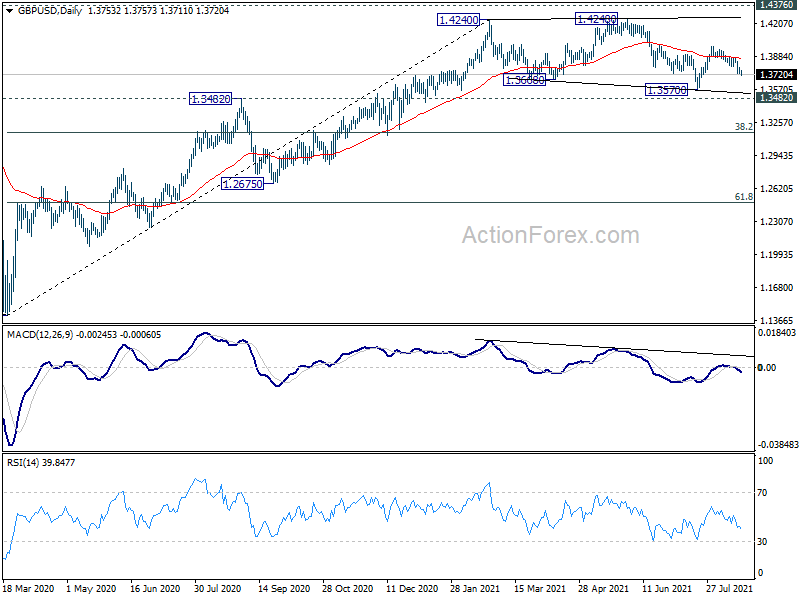
In the bigger picture, as long as 1.3482 resistance turned support holds, up trend from 1.1409 should still continue. Decisive break of 1.4376 resistance will carry larger bullish implications. However, firm break of 1.3482 support will argue that the rise from 1.1409 has completed. GBP/USD would then be seen as in another leg of long term range pattern between 1.1409 and 1.4376. Deeper fall could then be seen to 61.8% retracement of 1.1409 to 1.4248 at 1.2493, and even below.
Elliott Wave View: EURUSD Further Downside Likely
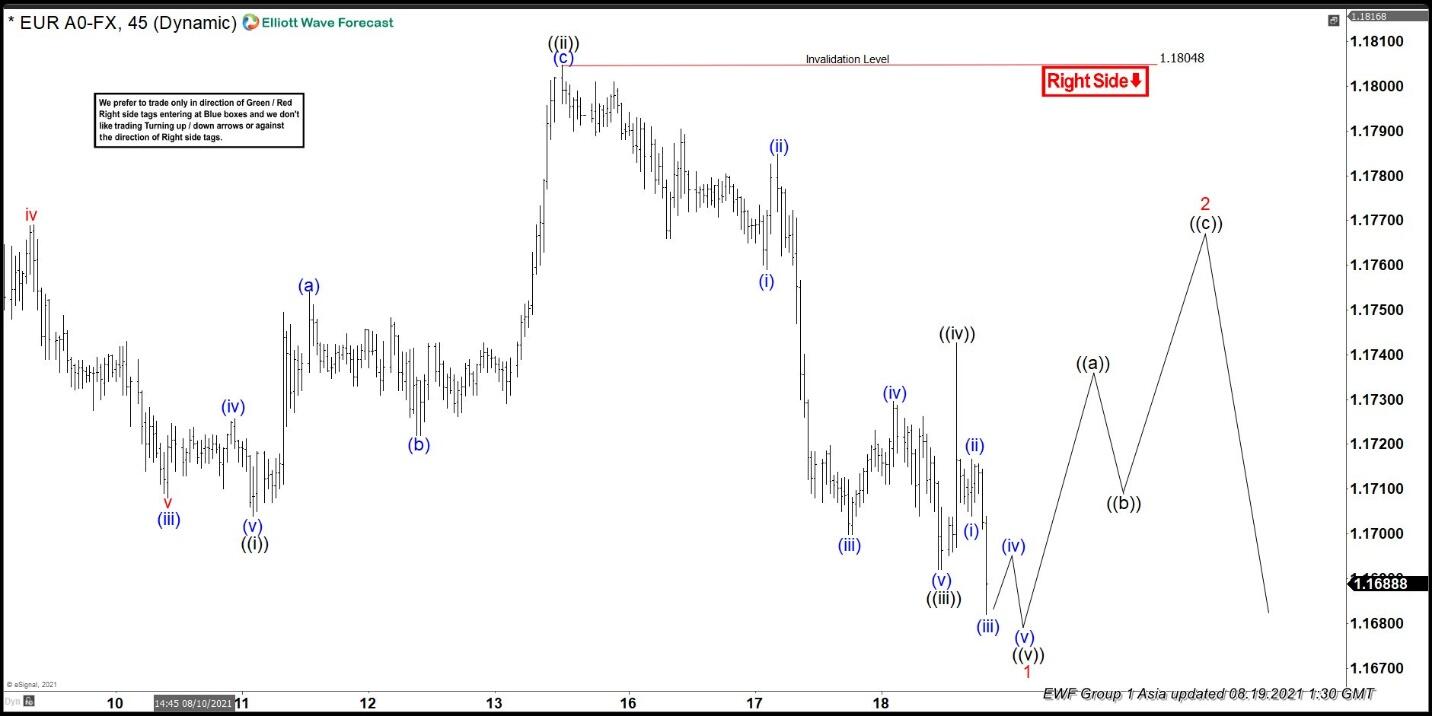
Short-term Elliott wave view in EURUSD suggests that the cycle from 24 May 2021 high is unfolding in a zigzag correction. The structure remains incomplete favoring more downside extension. Up from that high, the pair has ended the first leg in wave (A) at 1.1752 low. Then wave (B) pullback ended at 1.1908 high and the pair continued lower.
Down from wave (B), wave (C) remains in progress in lesser degree 5 waves structure. Wave 1 of (C) is taking the form of a leading diagonal structure. The wave ((i)) of 1 ended at 1.1706 low. Wave ((ii)) pullback ended at 18.05 high. Wave ((iii)) drop finished at 1.1694 and wave ((iv)) rally ended at 1.1743. Near-term, as far as bounces remain below wave ((iv)) high at 1.1743, expect EURUSD to extend lower within wave ((v)) and complete wave 1 in red. Afterwards, we should look for a corrective bounce in at least 3 swings to complete wave 2 before see further downside in an impulse structure within wave (C). Potential target lower in wave (C) is 100% – 123.6% fibonacci extension from January 6, 2021 high towards 1.147 – 1.162 area.
EURUSD 45 Minutes Elliott Wave Chart
EUR/USD Daily Outlook
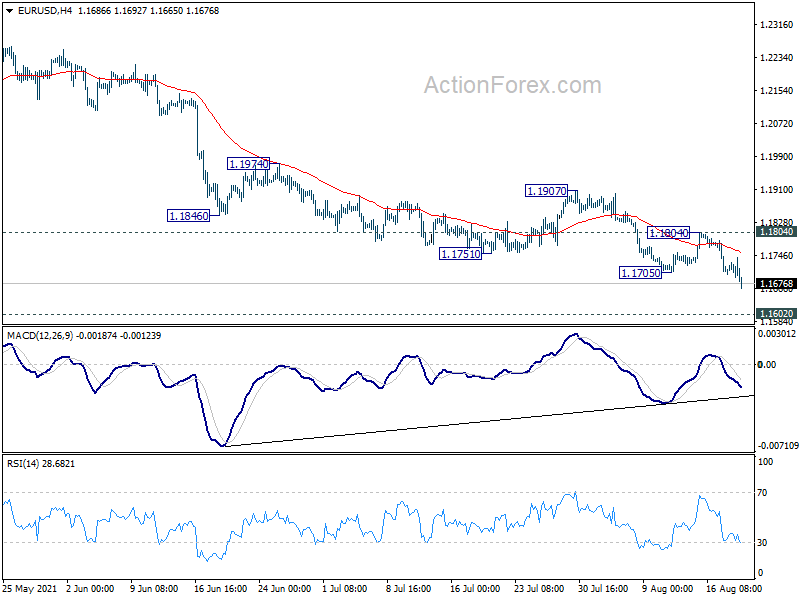
Daily Pivots: (S1) 1.1689; (P) 1.1716; (R1) 1.1737; More...
EUR/USD drops to as low as 1.1665 so today and intraday bias remains on the downside. We'd continue to look for strong support from 1.1602/1703 support zone to bring rebound. On the upside, above 1.1804 resistance will turn bias back to the upside for 1.1907 resistance first. however, sustained break of 1.1602/1703 will carry larger bearish implication and pave the way to 1.1289 fibonacci support.
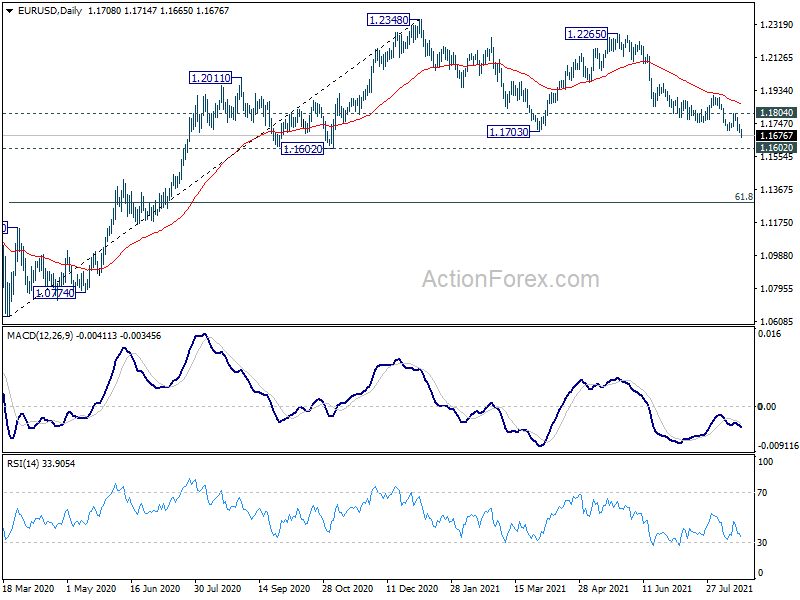
In the bigger picture, rise from 1.0635 is seen as the third leg of the pattern from 1.0339 (2017 low). Further rally remains in favors long as 1.1602 support holds, to cluster resistance at 1.2555 next, (38.2% retracement of 1.6039 to 1.0339 at 1.2516). Reaction from 1.2555 should reveal underlying long term momentum in the pair. However sustained break of 1.1602 will argue that the rise from 1.0635 is over, and turn medium term outlook bearish again. Deeper fall would be seen to 61.8% retracement of 1.0635 to 1.2348 at 1.1289 and below.
Dollar Rises Again on Risk Aversion, Aussie Weak after Job Report
Dollar rises broadly again risk sentiment turned sour again. While Yen and Swiss Franc are still firm elsewhere, the greenback has overtaken their top position for the week. Meanwhile, commodity currencies remain the worst performing ones, as led by New Zealand Dollar, closely followed by Australian Dollar. Euro and Sterling are mixed for the moment.
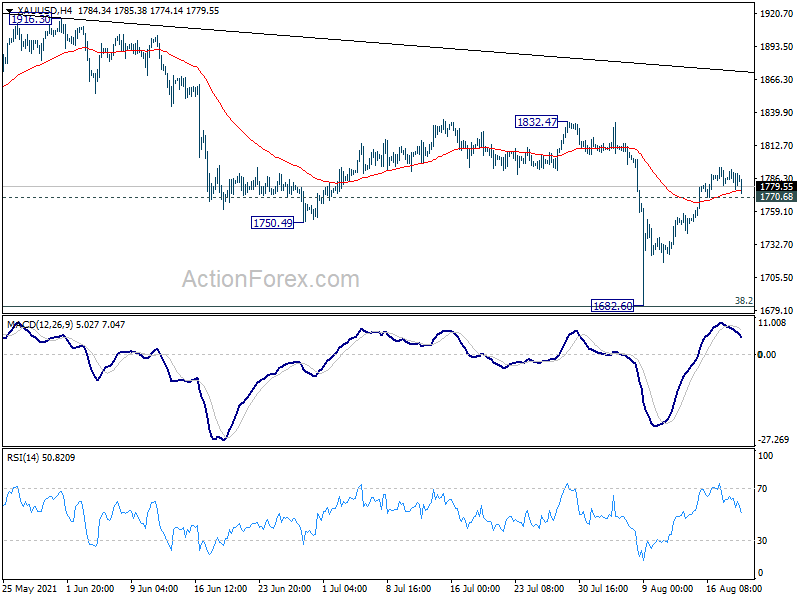
Technically, EUR/USD is finally moving away from 1.1705 support as selling accelerates. Focus is turned to 1.1602 support next and bring there will carry larger bearish implications. We'd also pay attention to the development in Gold. Break of 1770.68 support will suggest rejection by 1800 handle, and bring deeper fall. That would be another signal of Dollar's strength if happens.
In Asia, at the time of writing, Nikkei is down -0.73%. Hong Kong HSI is down -1.80%. China Shanghai SSE is down -0.71%. Singapore Strait Times is down -1.00%. Japan 10-year JGB yield is up 0.0023 at 0.019. Overnight, DOW dropped -1.08%. S&P 500 dropped -1.07%. NASDAQ dropped -0.89%. 10-year yield rose 0.015 to 1.273.
FOMC minutes: Most participants said appropriate to start tapering this year
In the minutes of July 27-28 FOMC meeting, Fed said "all participants" assessed that progress were made towards the both the maximum-employment and price-stability goals. However, "most participants" judged that the standard of "substantial further progress" on employment "had not been met yet". "Most participant" said the standard was met regarding price-stability, even though a few participants noted that "transitory nature" of this year's rise in inflation.
"Most participant" said provided that the economy were to "evolve broadly as they anticipated", it could be "appropriate" to start tapering "this year". "Various participants" said the economic and financial conditions would likely warrant a reduction in purchase "in coming months".
But "several others" indicated that tapering would more likely to be become appropriate "early next year", as they saw prevailing conditions in labor market as not being close to the "substantial further progress" standard, or due to the "uncertainty" about progress on price stability.
Australia unemployment rate dropped to 4.6%, people falling out of the labour force
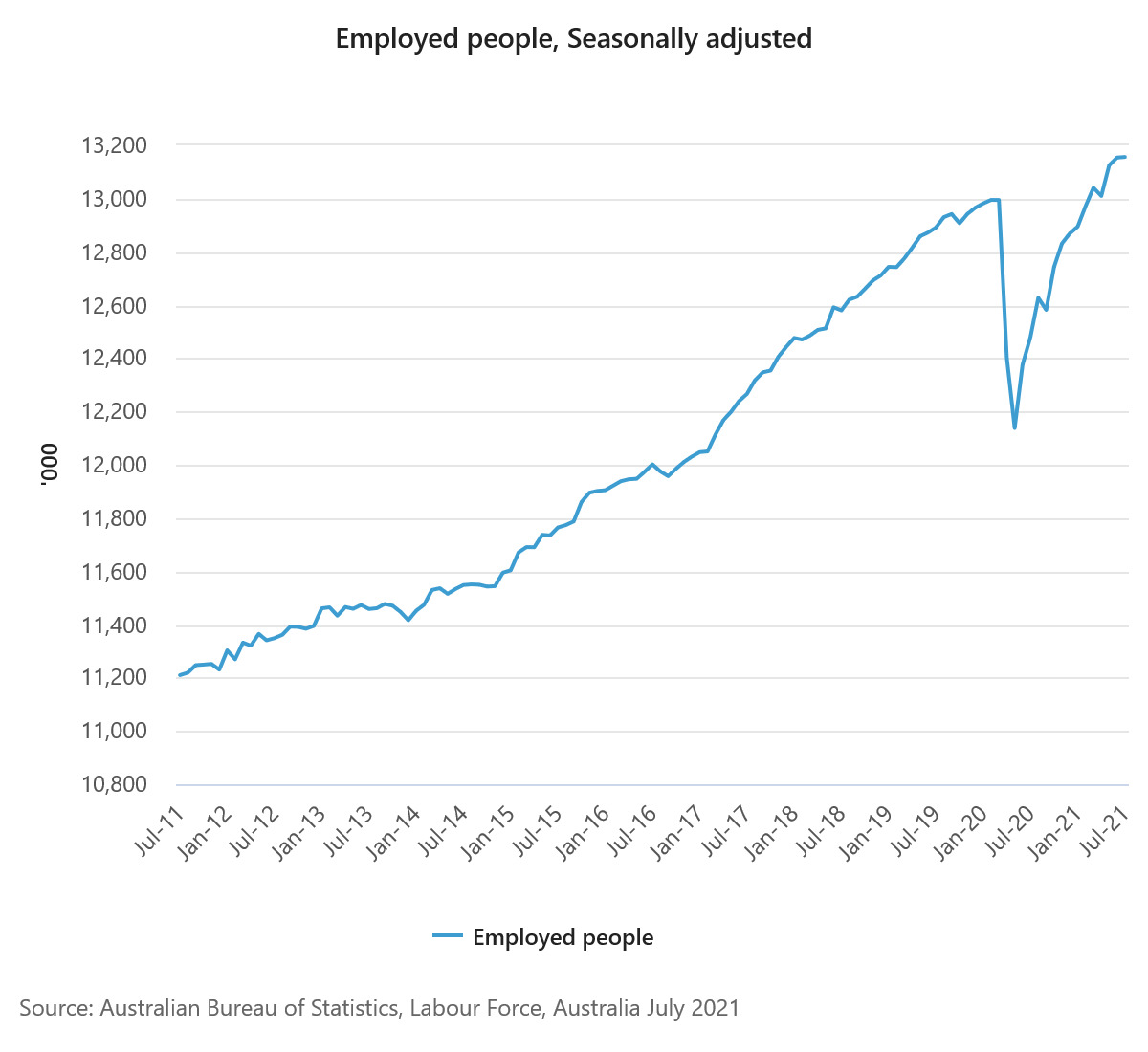
Australia employment grew 2.2k in July, better than expectation of -45.0k contraction. Full-time jobs dropped -4.2k while part-time jobs rose 6.4k. Unemployment rate dropped -0.3% to 4.6%, which was already -0.6% lower than than 5.1% level at the start of the pandemic in March 2020. However, participation rate dropped by -0.2% to 66.0% at the same time.
Bjorn Jarvis, head of labour statistics at the ABS, said: "Early in the pandemic we saw large falls in participation, which we have again seen in recent lockdowns. Beyond people losing their jobs, we have also seen unemployed people drop out of the labour force,"
"In Victoria, we saw unemployment fall by 19,000 people in July 2020, during the second wave lockdown, and by 13,000 in the June 2021 lockdown. The fall in unemployment in New South Wales in July 2021 was more pronounced than either of these, falling by 27,000 people."
"In each of these instances, the unemployment rate also fell. Falls in unemployment and the unemployment rate may be counter-intuitive, given they have coincided with falls in employment and hours, but reflect the limited ability for people to actively look for work and be available for work during lockdowns. This means that people are falling out of the labour force."
AUD/JPY staying bearish as NSW delta cases rose to record again
Australian Dollar continues to trade as the second worst performing one, just next to New Zealand Dollar, this week. New South Wales just reported record 681 daily new delta cases and another death, while regional lockdown has been extended until August 28, in line with Greater Sydney. Victoria reported 57 new cases as Melbourne is in tough restrictions until at least September 2. Overall, weaker risk-sentiment is also weighing on Aussie, after DOW's -1% fall overnight.
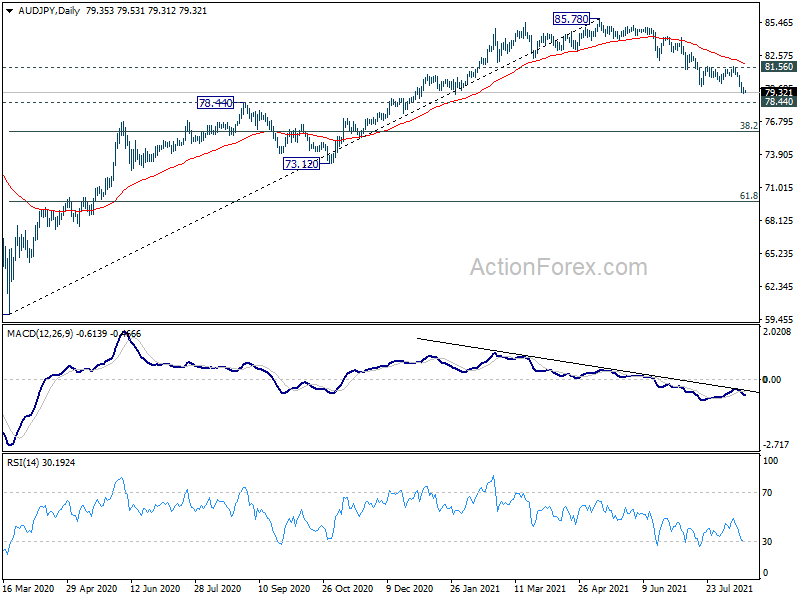
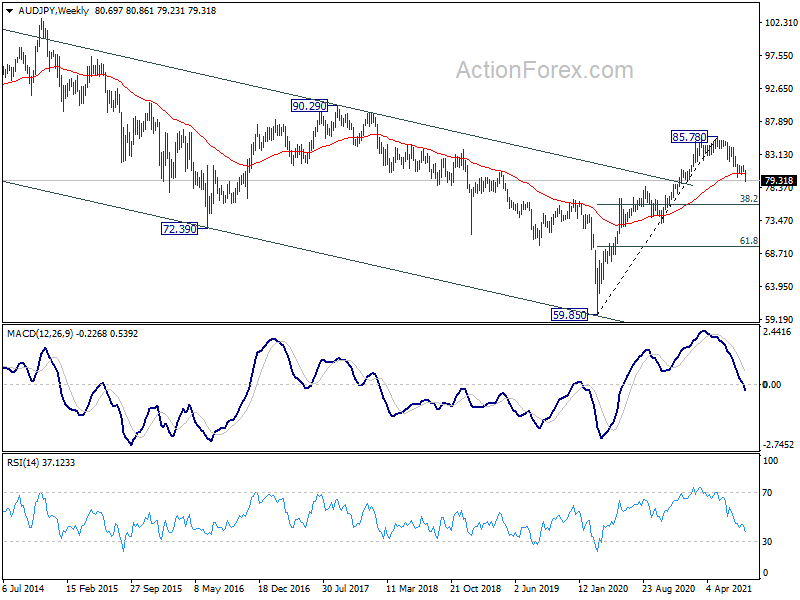
AUD/JPY is one of the biggest movers this week, and is on track to continue with the decline from 85.78. Such fall is seen as a correction to the up trend from 59.89 for the moment. Next target is 78.44 resistance support, and then 38.2% retracement of 59.89 to 85.78 at 75.89. We'd tentatively look for some support from there to bring rebound. But in any case, break of 81.56 resistance is needed to indicate completion of the decline. Or, near term outlook will stay bearish in case of recovery.
Looking ahead
Swiss trade balance and Eurozone current account will released in European session. Later in the day, Canada will release ADP employment. US will release jobless claims and Philly Fed survey.
EUR/USD Daily Outlook
Daily Pivots: (S1) 1.1689; (P) 1.1716; (R1) 1.1737; More...
AUD/USD drops to as low as 1.1665 so today and intraday bias remains on the downside. We'd continue to look for strong support from 1.1602/1703 support zone to bring rebound. On the upside, above 1.1804 resistance will turn bias back to the upside for 1.1907 resistance first. however, sustained break of 1.1602/1703 will carry larger bearish implication and pave the way to 1.1289 fibonacci support.
In the bigger picture, rise from 1.0635 is seen as the third leg of the pattern from 1.0339 (2017 low). Further rally remains in favors long as 1.1602 support holds, to cluster resistance at 1.2555 next, (38.2% retracement of 1.6039 to 1.0339 at 1.2516). Reaction from 1.2555 should reveal underlying long term momentum in the pair. However sustained break of 1.1602 will argue that the rise from 1.0635 is over, and turn medium term outlook bearish again. Deeper fall would be seen to 61.8% retracement of 1.0635 to 1.2348 at 1.1289 and below.
Economic Indicators Update
| GMT | Ccy | Events | Actual | Forecast | Previous | Revised |
|---|---|---|---|---|---|---|
| 01:30 | AUD | Employment Change Jul | 2.2K | -45.0K | 29.1K | |
| 01:30 | AUD | Unemployment Rate Jul | 4.60% | 5.00% | 4.90% | |
| 06:00 | CHF | Trade Balance (CHF) Jul | 4.78B | 5.53B | ||
| 08:00 | EUR | Eurozone Current Account (EUR) Jun | 12.3B | 11.7B | ||
| 12:30 | CAD | ADP Employment Change Jul | -294.2K | |||
| 12:30 | USD | Initial Jobless Claims (Aug 13) | 362K | 375K | ||
| 12:30 | USD | Philadelphia Fed Manufacturing Aug | 24.3 | 21.9 | ||
| 14:30 | USD | Natural Gas Storage | 28B | 49B |
AUD/USD Extends Decline, Dollar Gains Momentum
Key Highlights
- AUD/USD extended its decline below the 0.7300 support zone.
- It broke a major contracting triangle at 0.7325 on the 4-hours chart.
- EUR/USD is now trading well below 1.1800, and GBP/USD broke the 1.3800 support.
- USD/CAD could continue to rise above the 1.2650 resistance zone.
AUD/USD Technical Analysis
The Aussie Dollar started a major decline from well above 0.7350 against the US Dollar. USD/CAD traded below the 0.7300 support to move into a bearish zone.
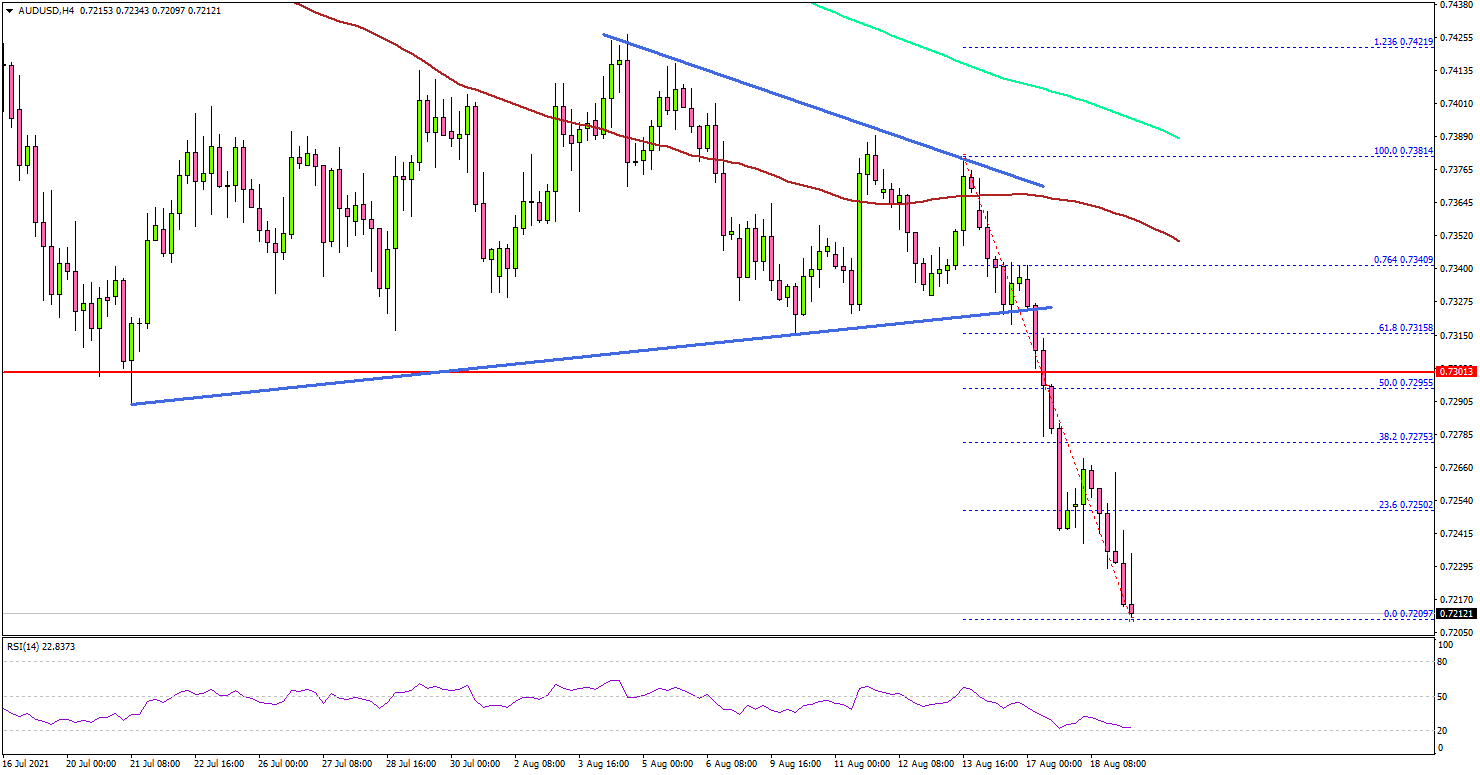
Looking at the 4-hours chart, there was a break below a major contracting triangle at 0.7325. The pair settled well below the 0.7300 level, the 100 simple moving average (red, 4-hours), and the 200 simple moving average (green, 4-hours).
The pair gained pace below the 0.7250 support level. The next major support is near the 0.7200 level, below which there is a risk of a larger decline.
On the upside, an initial resistance is near the 0.7265 level. The main resistance is now forming near the 0.7300 level (the recent breakdown zone). A close above the 0.7300 level might open the doors for a fresh increase.
Looking at EUR/USD, the pair traded below the 1.1750 support and it remains at a risk of more losses. Similarly, GBP/USD might extend losses below the 1.3700 level.
Economic Releases
- US Initial Jobless Claims - Forecast 363K, versus 375K previous.
- Canada’s ADP Employment Change for July 2021 – Forecast -250K, versus -294.2K previous.
AUD/JPY staying bearish as NSW delta cases rose to record again
Australian Dollar continues to trade as the second worst performing one, just next to New Zealand Dollar, this week. New South Wales just reported record 681 daily new delta cases and another death, while regional lockdown has been extended until August 28, in line with Greater Sydney. Victoria reported 57 new cases as Melbourne is in tough restrictions until at least September 2. Overall, weaker risk-sentiment is also weighing on Aussie, after DOW's -1% fall overnight.
AUD/JPY is one of the biggest movers this week, and is on track to continue with the decline from 85.78. Such fall is seen as a correction to the up trend from 59.89 for the moment. Next target is 78.44 resistance support, and then 38.2% retracement of 59.89 to 85.78 at 75.89. We'd tentatively look for some support from there to bring rebound. But in any case, break of 81.56 resistance is needed to indicate completion of the decline. Or, near term outlook will stay bearish in case of recovery.
Australia unemployment rate dropped to 4.6%, people falling out of the labour force
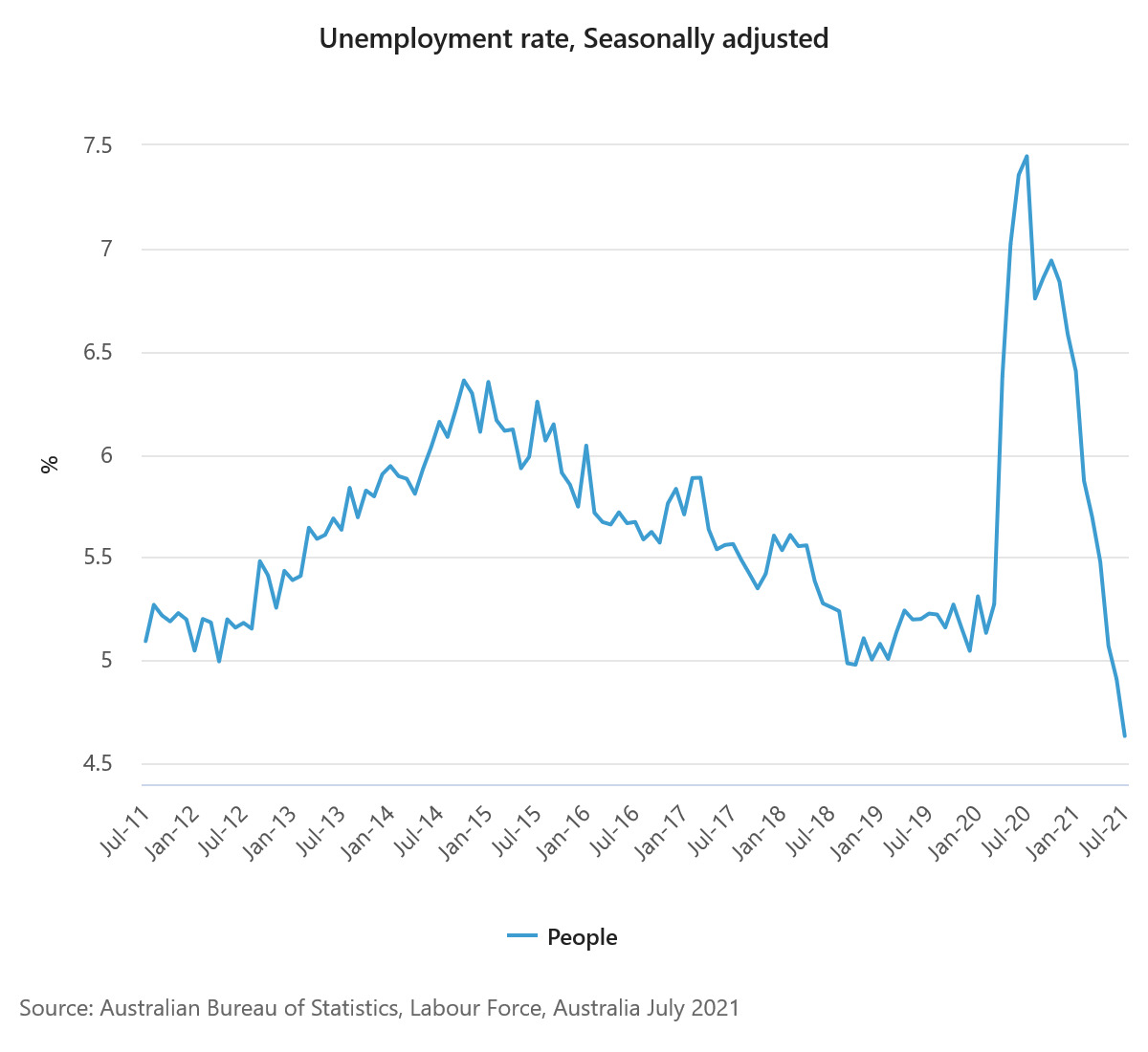
Australia employment grew 2.2k in July, better than expectation of -45.0k contraction. Full-time jobs dropped -4.2k while part-time jobs rose 6.4k. Unemployment rate dropped -0.3% to 4.6%, which was already -0.6% lower than than 5.1% level at the start of the pandemic in March 2020. However, participation rate dropped by -0.2% to 66.0% at the same time.
Bjorn Jarvis, head of labour statistics at the ABS, said: "Early in the pandemic we saw large falls in participation, which we have again seen in recent lockdowns. Beyond people losing their jobs, we have also seen unemployed people drop out of the labour force,"
"In Victoria, we saw unemployment fall by 19,000 people in July 2020, during the second wave lockdown, and by 13,000 in the June 2021 lockdown. The fall in unemployment in New South Wales in July 2021 was more pronounced than either of these, falling by 27,000 people."
"In each of these instances, the unemployment rate also fell. Falls in unemployment and the unemployment rate may be counter-intuitive, given they have coincided with falls in employment and hours, but reflect the limited ability for people to actively look for work and be available for work during lockdowns. This means that people are falling out of the labour force."
FOMC minutes: Most participants said appropriate to start tapering this year
In the minutes of July 27-28 FOMC meeting, Fed said "all participants" assessed that progress were made towards the both the maximum-employment and price-stability goals. However, "most participants" judged that the standard of "substantial further progress" on employment "had not been met yet". "Most participant" said the standard was met regarding price-stability, even though a few participants noted that "transitory nature" of this year's rise in inflation.
"Most participant" said provided that the economy were to "evolve broadly as they anticipated", it could be "appropriate" to start tapering "this year". "Various participants" said the economic and financial conditions would likely warrant a reduction in purchase "in coming months".
But "several others" indicated that tapering would more likely to be become appropriate "early next year", as they saw prevailing conditions in labor market as not being close to the "substantial further progress" standard, or due to the "uncertainty" about progress on price stability.
FOMC Minutes Reveal Greater Openness to Policy Change
- The minutes from the July 27-28 Federal Open Market Committee (FOMC) meeting showed that members view the economy as having made significant progress towards their policy objectives in recent months. The members of the Committee stated that "with progress on vaccinations and strong policy support, indicators of economic activity and employment had continued to strengthen."
- FOMC members hedged their optimism, highlighting that there is more room to go on the recovery. That "activity in the service industries most adversely affected by the pandemic, such as in the leisure and hospitality sector, was rebounding as the economy reopened further but had not fully recovered," and that in spite of recent job gains, "the household survey showed that the unemployment rate remained elevated at 5.9 percent in June, and the labor force participation rate and employment-to-population ratio were little changed in recent months."
- On the balance sheet, Fed members opened up about just how close we are to a tapering announcement. Recall that the members need to be convinced of the economy's progress towards maximum employment and price stability before they make a change to asset purchases. Here, the members stated that "the economy had made progress toward the Committee's maximum-employment and price-stability goals since the adoption of the guidance on asset purchases in December. Most participants judged that the Committee's standard of "substantial further progress" toward the maximum-employment goal had not yet been met."
Key Implications
- That's the sound of the tune changing. Fed members have been increasingly more confident in the progress shown by the American economy. And they should be. Economic growth is poised to overshoot its potential over the next several quarters, the labor market is heating up, and inflation continues to exceed expectations. This is why most members see rate hikes happening in 2023, and a growing chorus calling for them to start in 2022.
- Before that happens, an adjustment to the Fed's Quantitative Easing program is right around the corner. With soaring equity prices, frothing home prices, and climbing debt levels, efforts by the Fed to push down interest rates and support risk taking behavior, are no longer warranted. The minutes today make us more confident in our call that a tapering to asset purchases will start as early as October.
- Even with emerging variants and risks to the outlook, we have the Federal Reserve pointing to a reduction in monetary support (tapering) and signaling to markets that a rate hike is not far behind. At the same time, inflation is hot and expected to remain elevated for the next couple of years. Even still, the U.S. 10-year Treasury yield is trading around 1.3%. That's too low. To reiterate our recent Dollars & Sense, Something's Gotta Give.