Sample Category Title
Wall Street Slips, Dollar Shines, RBNZ Holds Fire
- Stock markets edge lower after US retail sales disappoint
- Risk aversion reawakens the dollar ahead of Fed minutes today
- RBNZ says rate hikes ‘delayed not derailed’, kiwi goes wild
Stocks bleed, but not much
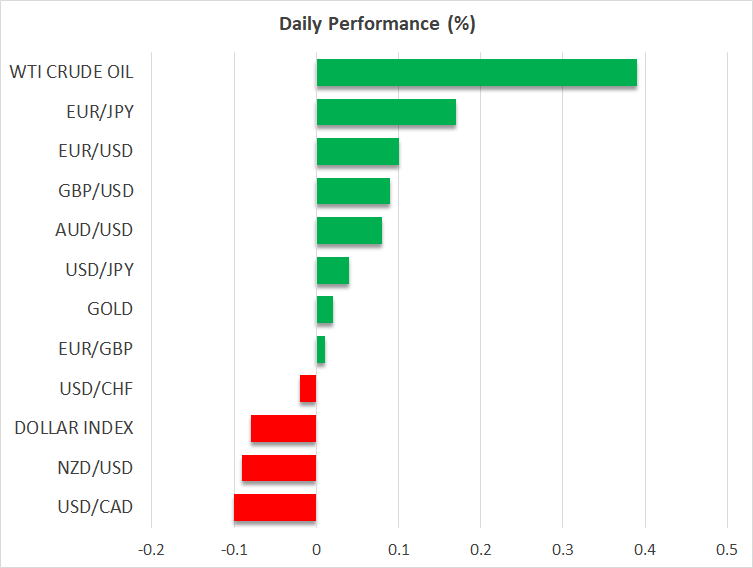
It was a lively session across global markets. Wall Street came under pressure on Tuesday after US retail sales fell short of expectations, amplifying concerns that consumer spending may be rolling over and reinforcing the narrative that economic growth has already peaked.
Of course, the retreat was mild and there wasn’t any sense of panic selling, with the S&P 500 losing just 0.7%. It is quite impressive that US markets are still within touching distance from record highs, defying an imminent withdrawal of Fed liquidity as well as a worsening Delta outbreak in America and Asia, even with valuations being so stretched.
This resilience might boil down to expectations that the Fed will be infinitely cautious in reining back stimulus and that Congress will put a floor under economic growth by delivering another multi-trillion round of spending. Monetary policy will still be super-loose after tapering and the fiscal taps aren’t closing.
Stock markets can always bleed, but dip buyers aren’t going away anytime soon.
Dollar stands tall, looks to Fed minutes
The FX market traded exactly as one would expect when growth worries are the dominant theme, with commodity currencies getting blasted alongside the risk-sensitive British pound.
Across the risk spectrum, it was the dollar that shined the brightest even despite the disappointing US retail sales, highlighting once again that ‘when the going gets tough’ everyone seeks shelter in the world’s reserve currency. The yen also performed well, but its advance was capped by global bond yields rising a little.
Euro/dollar is currently testing its lows for the year around $1.17 and whether it manages to pierce through this region might depend on what the Fed minutes have to say about tapering today at 18:00 GMT. That said, the Jackson Hole symposium next week is where any real hints will drop, so this might steal the thunder from the upcoming minutes.
The question is whether we will get a formal taper announcement in September or November. That doesn’t matter much in the big picture. Tapering is coming, it’s just a matter of time. Even the Fed’s arch dove - Neel Kashkari - said so yesterday. The path of least resistance for the dollar still seems higher, especially against low-yielders like the euro and yen.
RBNZ holds rates, kiwi goes for a rollercoaster ride
The real fireworks today were in the kiwi after the Reserve Bank of New Zealand kept interest rates unchanged. What looked like a certain rate increase until a couple of days ago was thrown under the bus after the nation went into a snap lockdown yesterday to battle the first virus outbreak in months.
The kiwi took some damage as the RBNZ held its fire, but it came back roaring as Governor Orr signaled that their normalization plans were merely delayed, not derailed. Rate forecasts were revised higher to reflect that, now penciling in around five rate hikes by the end of next year.
Overall, the message was that this isn’t a game changer, but merely a speed bump in the road towards higher rates. The kiwi’s fortunes are now tied to the domestic health situation. Will New Zealand eradicate the virus from its borders again or will it follow Australia in a vicious lockdown spiral? That will determine whether the RBNZ honors its promises.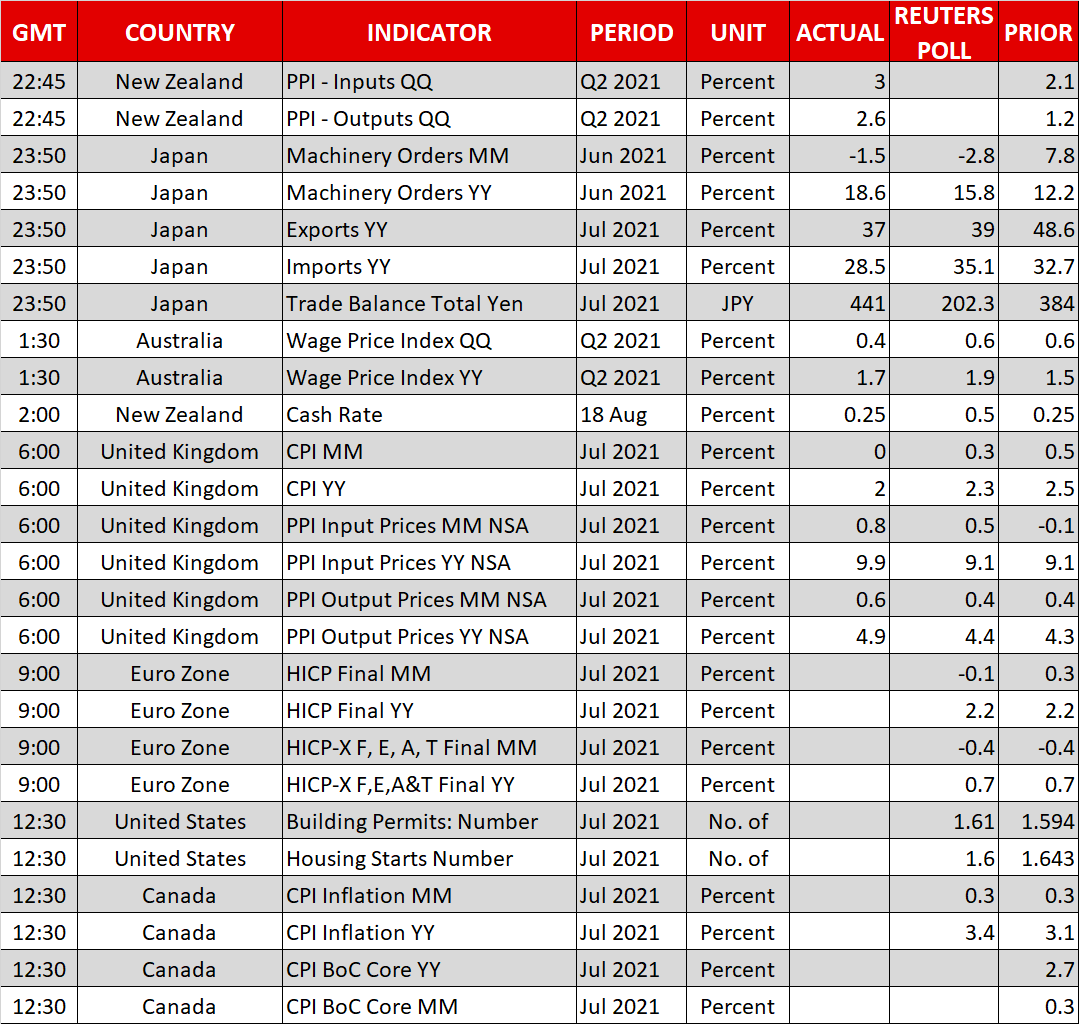
USDCAD Eases From 4-Week High, Finds Support In 50% Fibo
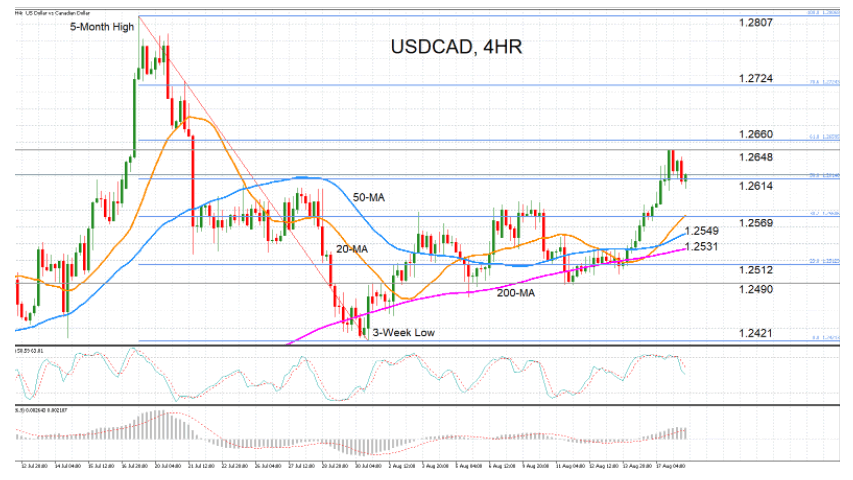
USDCAD has come off a 4-week top of 1.2648 brushed yesterday to settle around the 50% Fibonacci retracement of the late July drop, which lies at 1.2614. Technical indicators underscore the waning positive momentum. The stochastics are sliding, with the %K line approaching 50, while the MACD histogram has also started to retreat.
However, the MACD not only remains comfortably in positive territory but also above its red signal line. In addition, the price is holding well above its moving averages (MA), which are all sloped upwards. Hence, the odds for extended losses are low at this point.
Nevertheless, the 20-period MA stands ready to defend the price from selling pressures near the 38.2% Fibonacci of 1.2569. Should this support fail, the 50- and 200- period MAs could halt further declines at 1.2549 and 1.2531 respectively. Lower down, the 23.6% Fibonacci of 1.2512 and the 1.2490 level would be critical in preventing a fresh run towards the three-week trough of 1.2421 from July 30.
If, though, USDCAD regains its bullish momentum, it could re-challenge the 1.2648 high before aiming for the 61.8% Fibonacci of 1.2660. A break above the 61.8% Fibo would leave just the 78.6% Fibo of 1.2724 standing in the way of the July peak of 1.2807, which was a 5-month high.
Should the bulls manage to successfully overcome this high, it would restore the pair’s uptrend, reinforcing the bullish outlook in the medium term. But in the very near-term, the bullish bias is at risk of turning neutral again unless the price is able to reverse sustainably back up soon.
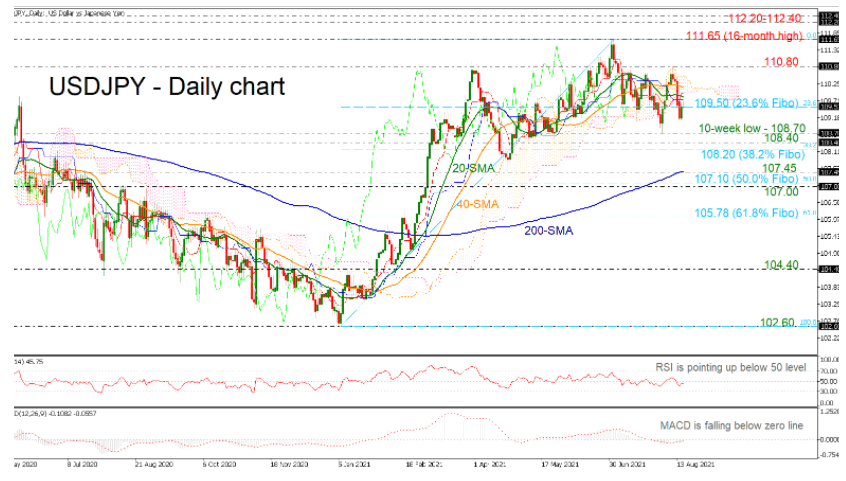
USDJPY Moves Horizontally Near 23.6% Fibonacci
USDJPY is in the process of recouping the previous week’s strong losses, standing near the 23.6% Fibonacci retracement level of the up leg from 102.60 to 111.65 at 109.50.
The RSI indicator is hovering in the negative region, while the MACD is stretching its bearish bias below its trigger and zero lines. In trend indicators, the 20- and 40-day simple moving averages (SMAs) are sloping downwards and the blue Kijun-sen line is travelling below the red Tenkan-sen line.
More gains could lead the market towards the immediate resistance levels such as the 20- and 40-day SMAs at 109.85 and 110.15 respectively, around the Ichimoku cloud. Even higher, the price could hit the 110.80 barrier before meeting the 16-month peak of 111.65.
Alternatively, a successful drop below the 23.6% Fibonacci could ease the buying pressure, pushing the market until the ten-week low of 108.70. Further falls could open the way towards the 108.40 level and the 38.2% Fibonacci mark of 108.20, before meeting the 200-day SMA, which overlaps with the 107.45 support.
All in all, USDJPY is failing to improve the bullish move that started on Tuesday, creating a neutral bias in the short- and medium-term timeframes.
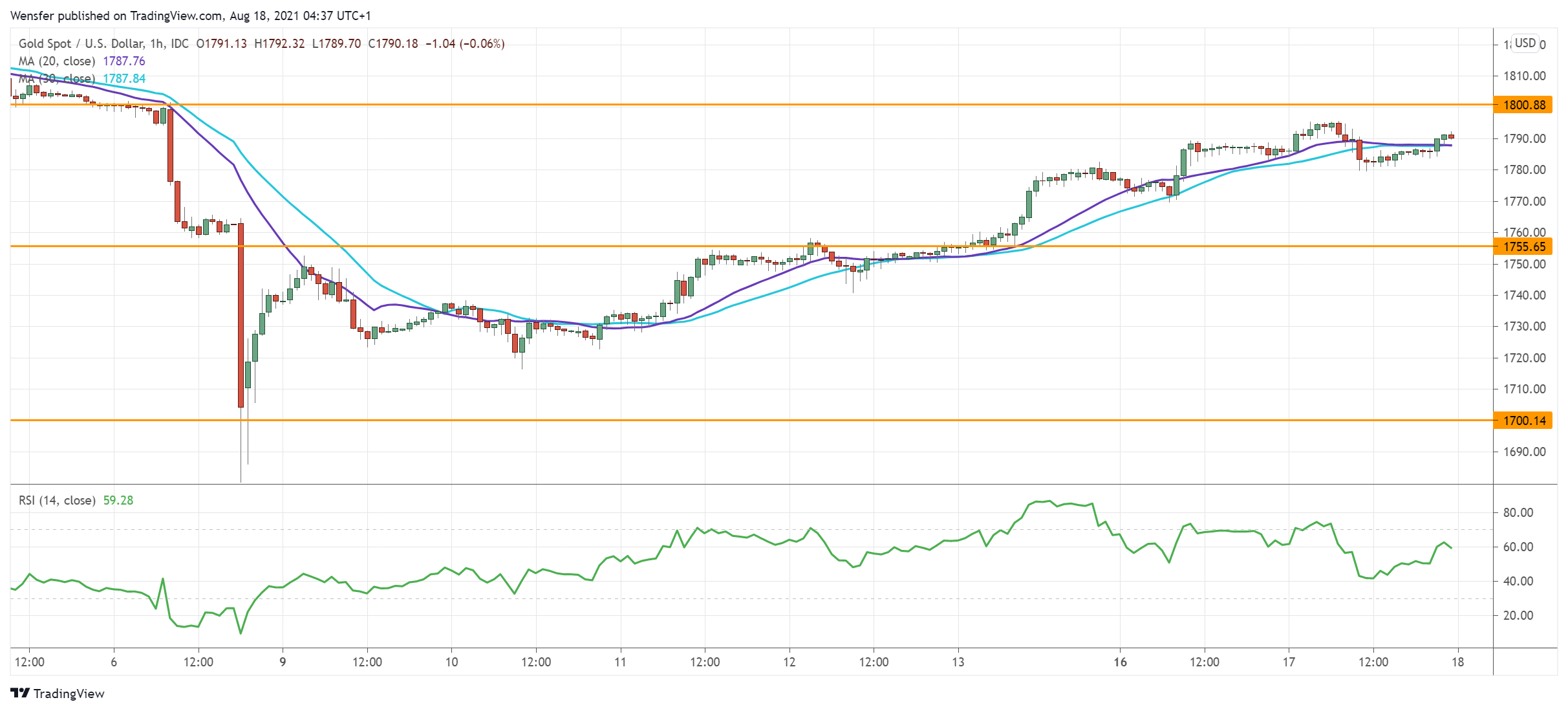
XAU/USD Rises To Key Resistance
Gold extended its recovery supported by a retreat in US Treasury yields.
The price has recouped most losses from the previous sharp liquidation. A break above the intermediary resistance at 1762 has confirmed strong buying interest.
Buyers will need to close above the origin of the firesale and the psychological level of 1800 to seal the deal in their favor. Then 1830 would be the last hurdle before a full-blown reversal.
A repeatedly overbought RSI may cause a temporary pullback with 1755 as key support.
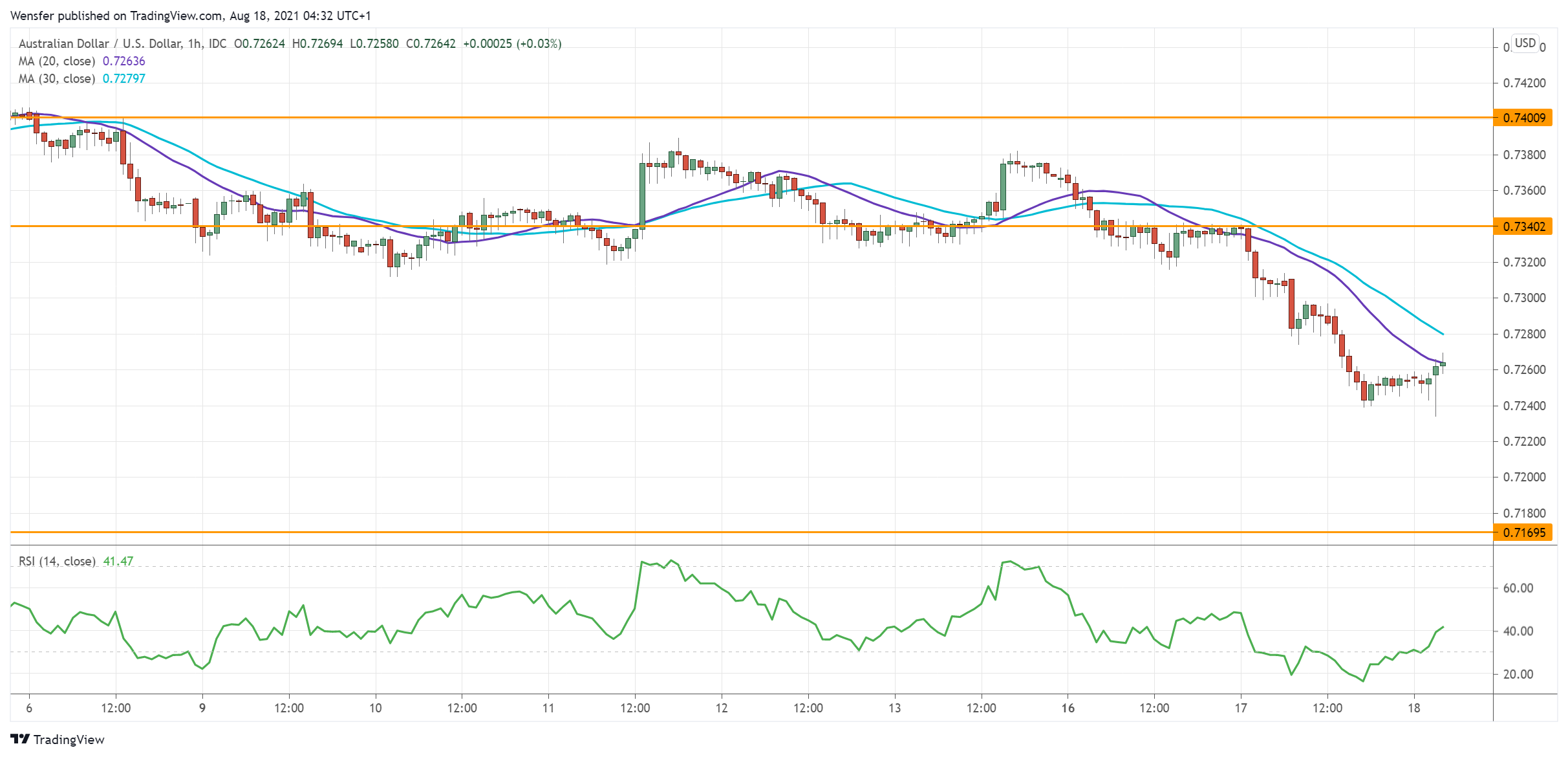
AUD/USD Falls Through Support
The Australian dollar fell after the RBA minutes tempered the taper optimism amid COVID-19 restrictions.
The pair has been under pressure at the 20-day moving average. The drop below 0.7290 may have resumed the downtrend after a four-week-long consolidation.
Strong bearish momentum is an indication of high turnover between buyers bailing out and sellers piling in. 0.7170 would be the next target. The key resistance at 0.7340 will likely cap a limited rebound, while the RSI climbs from the oversold area.
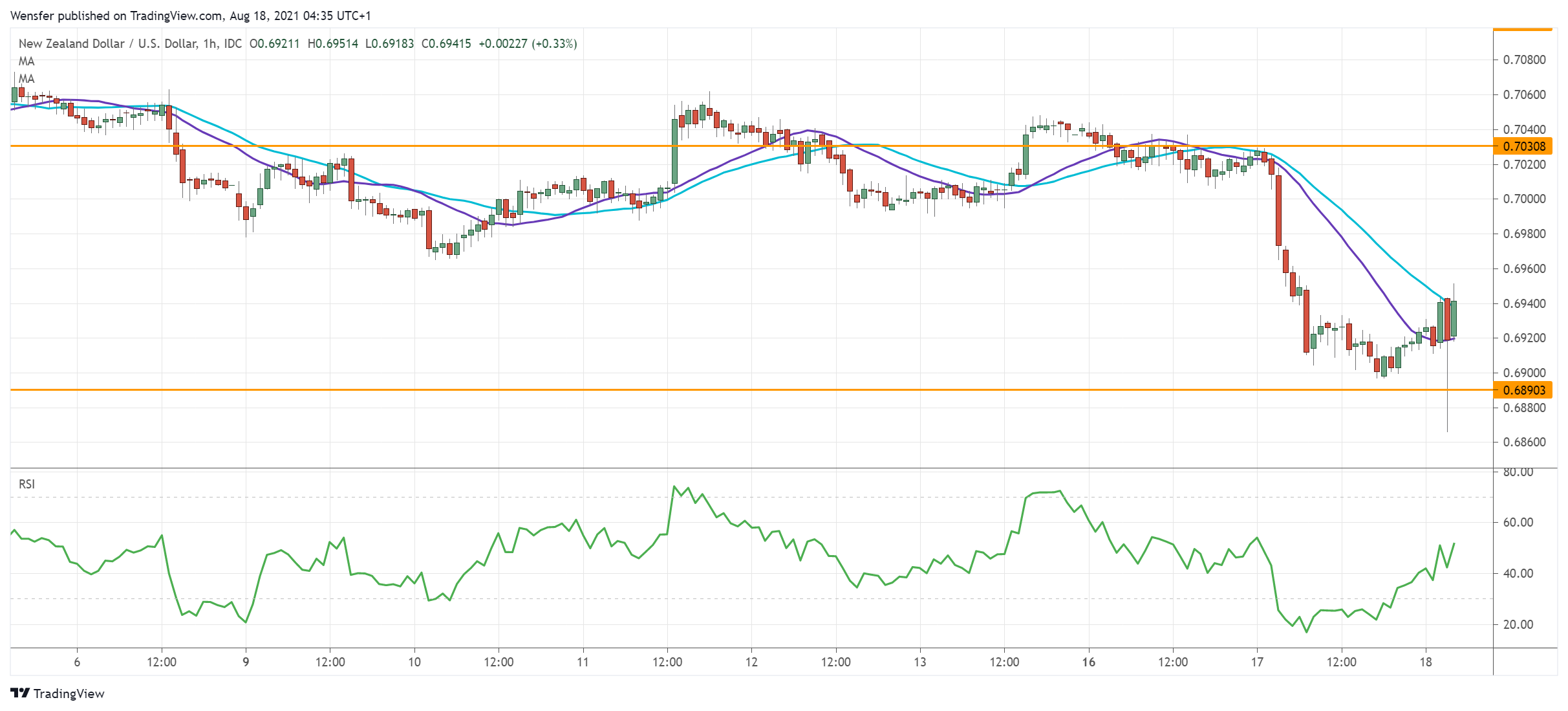
NZD/USD Tests Major Support
The New Zealand dollar struggles as the RBNZ postpones its rate hike against expectations.
The pair had failed to push above the supply area near 0.7100 from the daily chart. The RSI’s double top was a sign of overextension.
The sell-off below the psychological level of 0.7000 and then 0.6960 indicates that sentiment has turned sour. A recovering RSI could be an opportunity to sell into strength.
A break below 0.6890 may extend the sell-off towards 0.6700. 0.7030 is the first resistance in case of a rebound.
NZDUSD Slumps As RBNZ Leaves Interest Rates Intact
US equities ended their five-day winning streak after the weak retail sales numbers. The data showed that retail sales declined by 1.1% in July as momentum slowed. This was the worst performance in the past few months. The numbers came on the same day that leading retailers announced mixed results. For example, Walmart had a strong quarter as more people moved into its stores. On the other hand, higher prices had an impact on Home Depot’s revenue. The Dow Jones, Nasdaq 100, and S&P500 index declined by more than 0.50%.
The Japanese yen was relatively unchanged during the Asian session after mixed economic data from Japan. According to the statistics agency, the country’s exports increased by 37% in July after rising by 48.6% in the previous month. Imports, on the other hand, rose by 28.5% in July. The two numbers were lower than the median estimate of 37% and 28.5%. This trend pushed the trade surplus to more than 441 billion yen. Meanwhile, data showed that the country’s core machinery orders declined by 1.5% in June after rising by 7.8% in May.
The NZDUSD pair slumped further on Wednesday. The decline happened as the government implemented lockdowns to curb the spread of the virus. This was after the country recorded its first Covid-19 case in more than 6 months. The lockdown will give authorities a chance to promote vaccinations and contact tracing. The pair also slumped during the Asian session after the Reserve Bank of New Zealand left rates unchanged at 0.25%. Investors were hoping that the bank would hike rates by 25 basis points. Other key numbers to watch today will be inflation from South Africa, Europe, UK, and Canada.
EURUSD
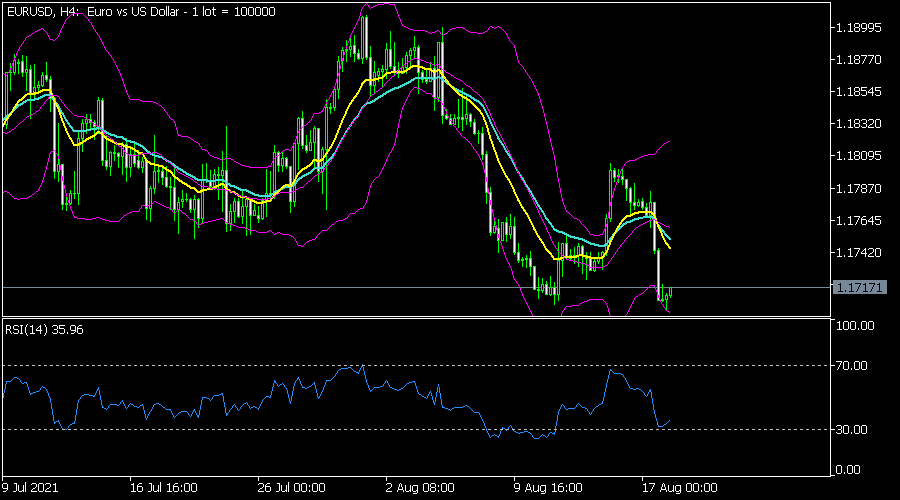
The EURUSD pair was little changed during the overnight session as traders waited for the latest Eurozone inflation data. The pair is trading at 1.1715, which is substantially lower than last Friday’s high of 1.1805. On the 4 hour chart, this price is along the lower side of the Bollinger Bands and is slightly below the 25-day moving averages. It has also formed the handle section of the cup and handle pattern. Therefore, the pair will likely maintain its bearish trend. The next reference point will be at 1.1650.
USDJPY
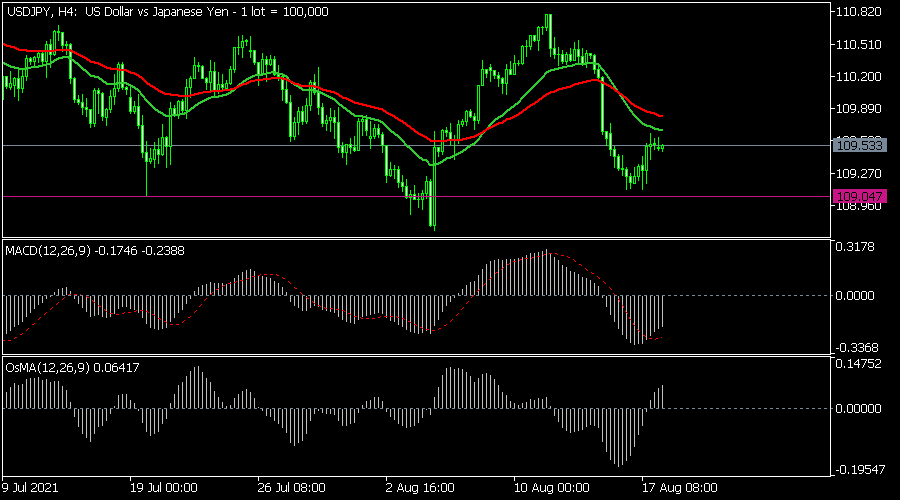
The USDJPY pair was little changed after the latest Japanese economic data. It is trading at 109.48, which was slightly above this week’s high of 109.10. On the four-hour chart, the price is slightly below the 25-day and 50-day exponential moving averages. It is also in the process of forming a head and shoulders pattern. At the same time, the MACD has formed a bullish crossover while the moving average of oscillator has moved above the neutral line. Therefore, the pair will likely remain in this range in the next few hours.
NZDUSD
The NZDUSD pair declined sharply after the RBNZ interest rate decision. The pair fell to 0.6867, which was the lowest level in several months. It was also significantly lower than this year’s high of 0.7465. On the four-hour chart, it is below the moving averages and along the lower line of the Bollinger Bands. The MACD has also moved below the neutral line. Therefore, the pair will likely maintain its bearish trend.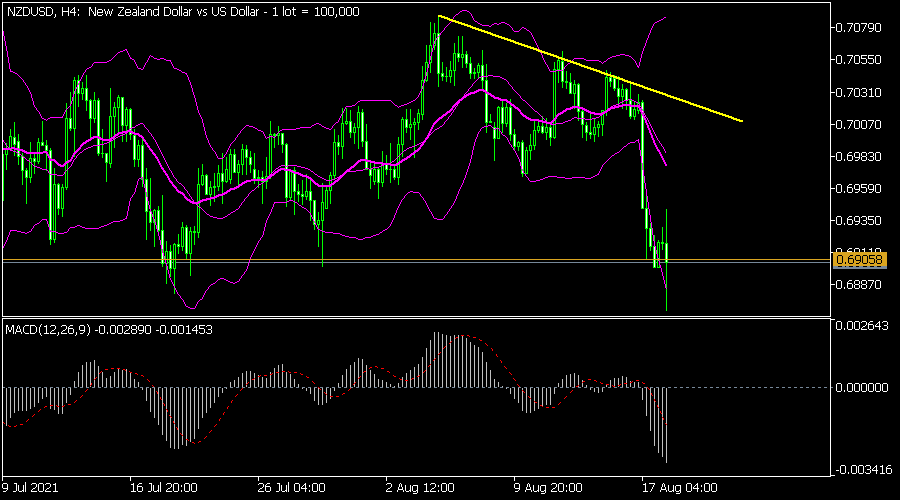
Euro Confirmed Reversal
Pressure on the euro returned this week, marking a sell-off against the broader currency front, signalling the possible start of a prolonged downward trend.
EURUSD has crossed the upper end of the 1.1600-1.1700 area, where it has repeatedly received support from buyers over the past 12 months. However, the dynamics of the single currency against many other major competitors reflect a reversal to the downside. This is an important signal that the markets have switched to another gear.
This week, EURJPY slid below its 200-day moving average as an essential confirmation of the down reversal that started in June. The latest downside momentum confirmed a head-and-shoulders pattern with the potential to pull back from the current 128.4 to 122.5, where the pair last traded in November 2020.
An equally eloquent dip we saw yesterday on the EURCHF. At the beginning of the month, the pair was gaining support on the decline to 1.0720. The Swiss National Bank was likely behind the rebound, trying to stop a five-month plunge, which began to look particularly worrisome in July.
On Tuesday, the pair rewrote its lows from last November and, at the time of writing, remains near 1.0700. Will the NBS come in for support this time too? So far, it looks unlikely, as it appears more and more like a history of the euro falling rather than the franc rising. However, an uptrend in the pair cannot be ruled out during the trading in Europe today.
Interestingly, the single currency manages to develop gains against the pound after updating its lows since February 2020.
Fundamentally, the pressure on the euro is due to the slowdown in China and the high prices of raw materials and energy that Europe imports. Also worth noting is the rise in the dollar after yesterday’s data. Retail sales fell more sharply than expected but remain at elevated levels relative to the long-term trend. The Fed reported industrial production growth of 0.9% for July. The market reacted with the higher dollar buying on both news due to heightened expectations of an imminent policy reversal.
EUR/USD Breakout Occurs
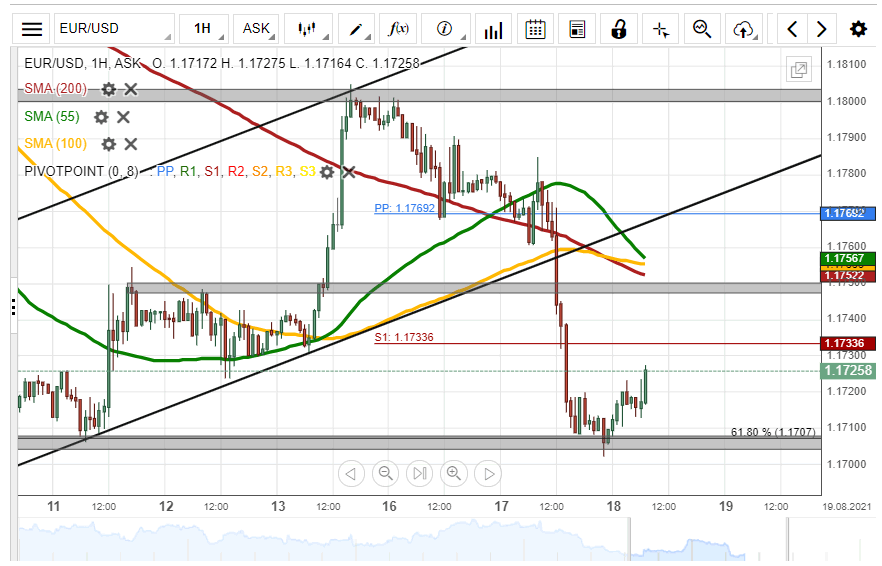
Downside risks dominated the EUR/USD currency pair on Tuesday. As a result, the common European currency fell by 73 pips or 0.62% against the US Dollar during yesterday's trading session.
Given that a breakout has occurred, sellers are likely to continue to drive the exchange rate lower during the following trading session. The potential target for bearish traders will be near the weekly S2 at 1.1670.
However, the 61.80% Fibonacci retracement level at 1.1707 could provide support for the currency exchange rate within this session.
GBP/USD Bounces Off Support
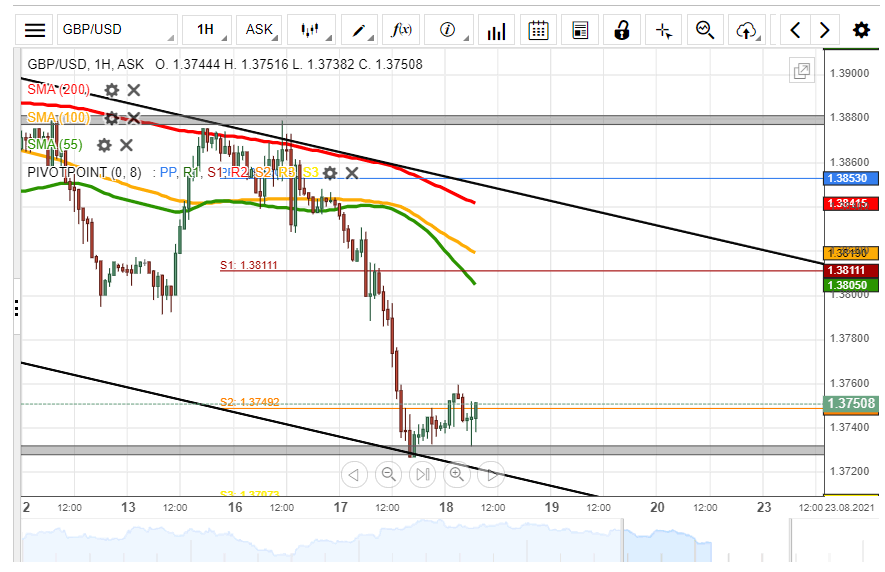
Bearish sentiment pressured the GBP/USD currency pair on Tuesday. As a result, the British Pound sank by 114 pips or 0.83% against the US Dollar during Tuesday's trading session.
The exchange rate bounced off the lower line of a descending channel pattern at 1.3725 during the Asian session on Wednesday. Most likely, buyers could drive the price higher today.
However, technical indicators suggest that the currency exchange rate might edge lower within this session.