Sample Category Title
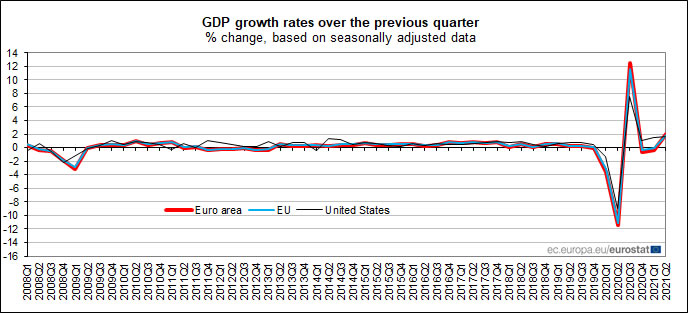
Eurozone GDP grew 2.0% qoq in Q2, EU up 1.9% qoq
According to a flash estimate by the Eurostat, Eurozone GDP grew 2.0% qoq in Q2, and 1.9% qoq in the EU. Comparing with the same quarter of the previous year, GDP rose 13.6% yoy in Eurozone, and 13.2% yoy in the EU. Employment grew 0.5% qoq in Eurozone and 0.6% qoq in EU.
USD/NOK Awaits Breakout
The Norwegian krone weakens as oil prices struggle amid demand uncertainty.
The pair is in a pennant consolidation on the daily chart following a rally above last December’s high at 8.9000. The narrowing range is a sign of hesitation and a breakout would dictate the direction for the days to come.
8.7800 near the 30-day moving average is the closest support. A close above 8.8600 may challenge the key resistance at 8.9150, and a bullish breakout would confirm the uptrend’s continuation.

USD/CHF Breaks Support
The US dollar tumbles as traders take profit ahead of Wednesday’s FOMC minutes.
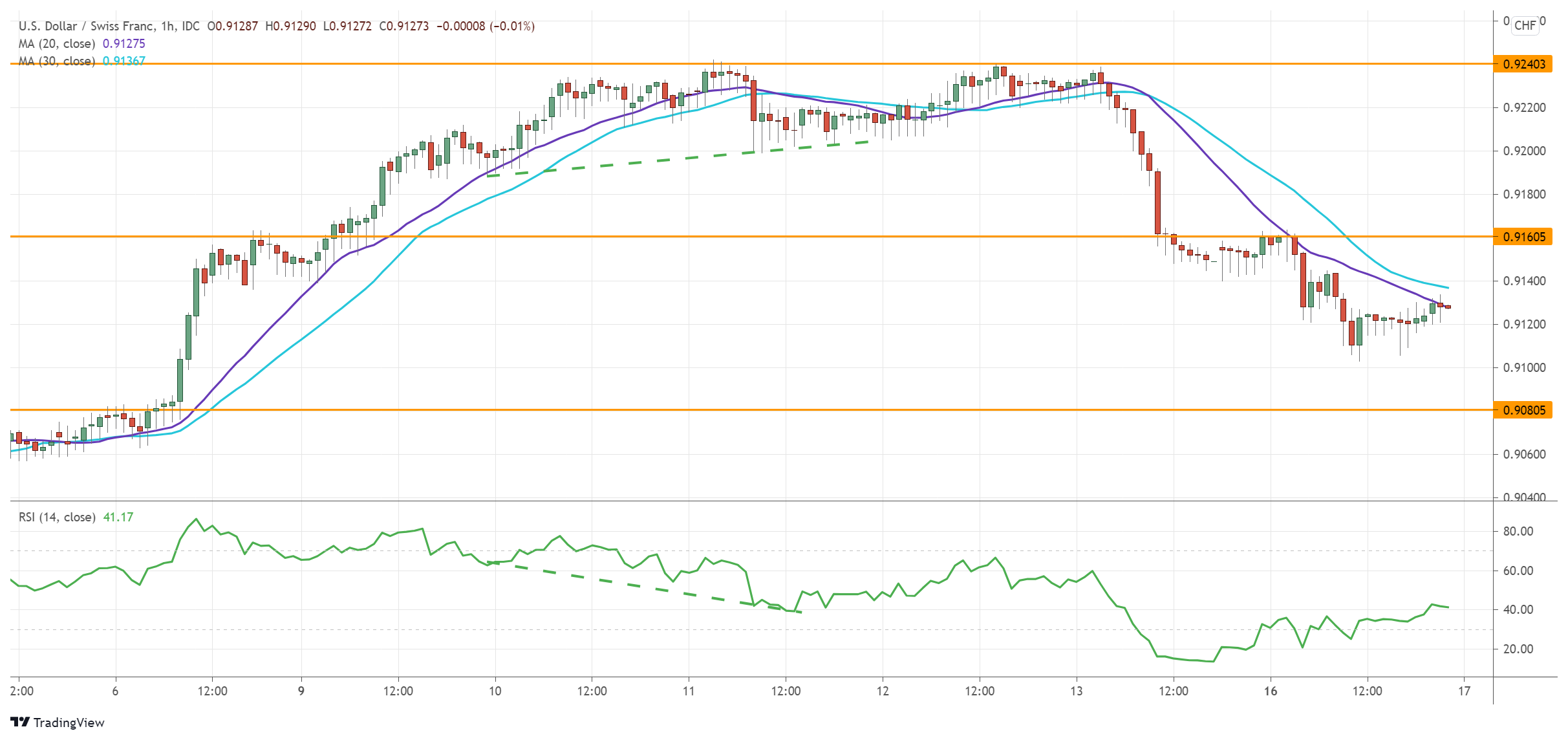
The break above the daily resistance at 0.9230 has led to an overextension. The RSI divergence at the supply area near 0.9260 was a warning that a retracement could be in the making.
The confirmation came in in the form of a fall below 0.9190. The sell-off has then gained momentum after 0.9140 failed to secure bids.
0.9160 is now a fresh resistance. The base of the previous breakout at 0.9080 would be the next target.
UK Inflation And Retail Sales Likely Eased In July But Pound To Stay Elevated
It's a data-heavy week for the UK, with investors turning to Wednesday's CPI readings and Friday's retail sales numbers (all due at 06:00 GMT) after today's employment report. The key monthly metrics for the British economy are not anticipated to bring anything new to the table as far as the Bank of England policy outlook or the pound are concerned. However, they may determine how well sterling stacks up against its peers in the short term, some of which have had a few wobbles lately, including the mighty US dollar.
UK CPI may fall back, but only temporarily
The UK isn't quite experiencing runaway inflation like in the United States, but the Bank of England is already nervous that its forecasters are predicting the consumer price index will hit 4% later this year. In June, the annual rate of CPI stood at 2.5% - above the Bank's 2% target. It is expected to have moderated slightly to 2.3% in July before potentially picking up again. The core rate is also forecast to have eased back a little in July to 2.2% from 2.3%.
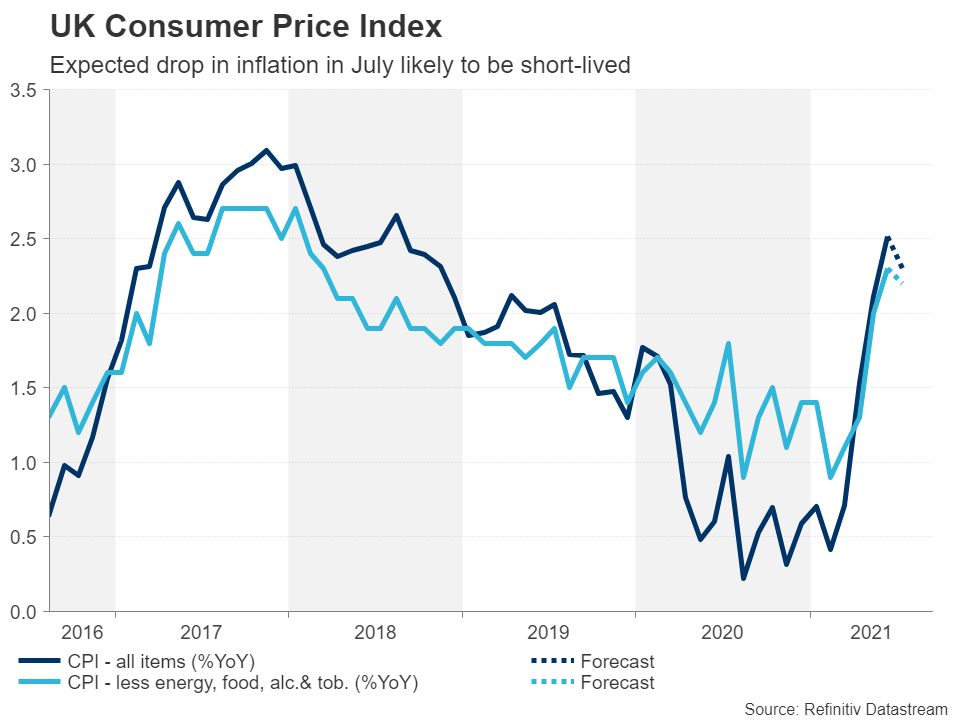
But with factory input prices running around 10% over the past three months and likely holding near that region in July, it's only a matter of time before more of that cost burden is passed onto consumers. Moreover, while some of the price pressures from pent-up demand will probably subside over the coming months, it's difficult to see supply-side inflation abating as quickly because the global supply shortages and bottlenecks could last well into 2022 if not beyond.
Can retail sales maintain growth momentum?
Consequently, policymakers at the BoE are not beating around the bush like their Fed counterparts and laid out an exit strategy from their quantitative easing programme at the August meeting. However, the timing of the first post-pandemic rate hike is still open to debate and subject to how quickly the economy recovers from the devastating lockdowns.
Retail sales figures out on Friday are expected to show the reopening effect fading further in July. The month-on-month increase is forecast at 0.4%, slightly down on the prior 0.5% rate, while annual growth is projected to slow from 9.7% in June to 6.0% in July. Given the expected boost from England reaching the UEFA Euro 2020 final as well as the good weather, there is a greater risk of an upside surprise to the data. The question is, how much of a lift would stronger-than-expected prints offer the pound? 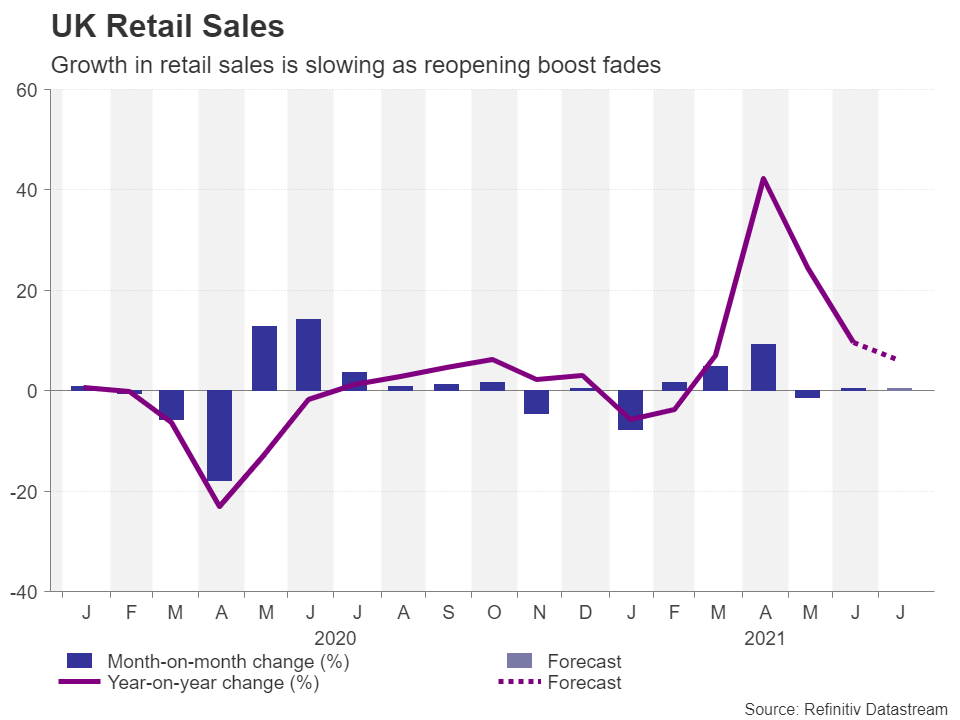
Cable might have peaked but euro/pound still bearish
Against the US dollar, sterling has been stuck in a neutral range for much of the summer, drifting towards $1.38, amid relatively strong recoveries and tapering expectations on both sides of the Atlantic. However, a hat trick of positive releases this week following the robust jobs data could be more impactful for euro/pound.
The pair recently brushed a 17-year trough of 0.8448. It has since edged up to around 0.85. But with the 50-day moving average fast closing in on it, it's hard to see the euro finding much upside in the near term when the policy divergence between the BoE and ECB isn't about to lessen anytime soon.
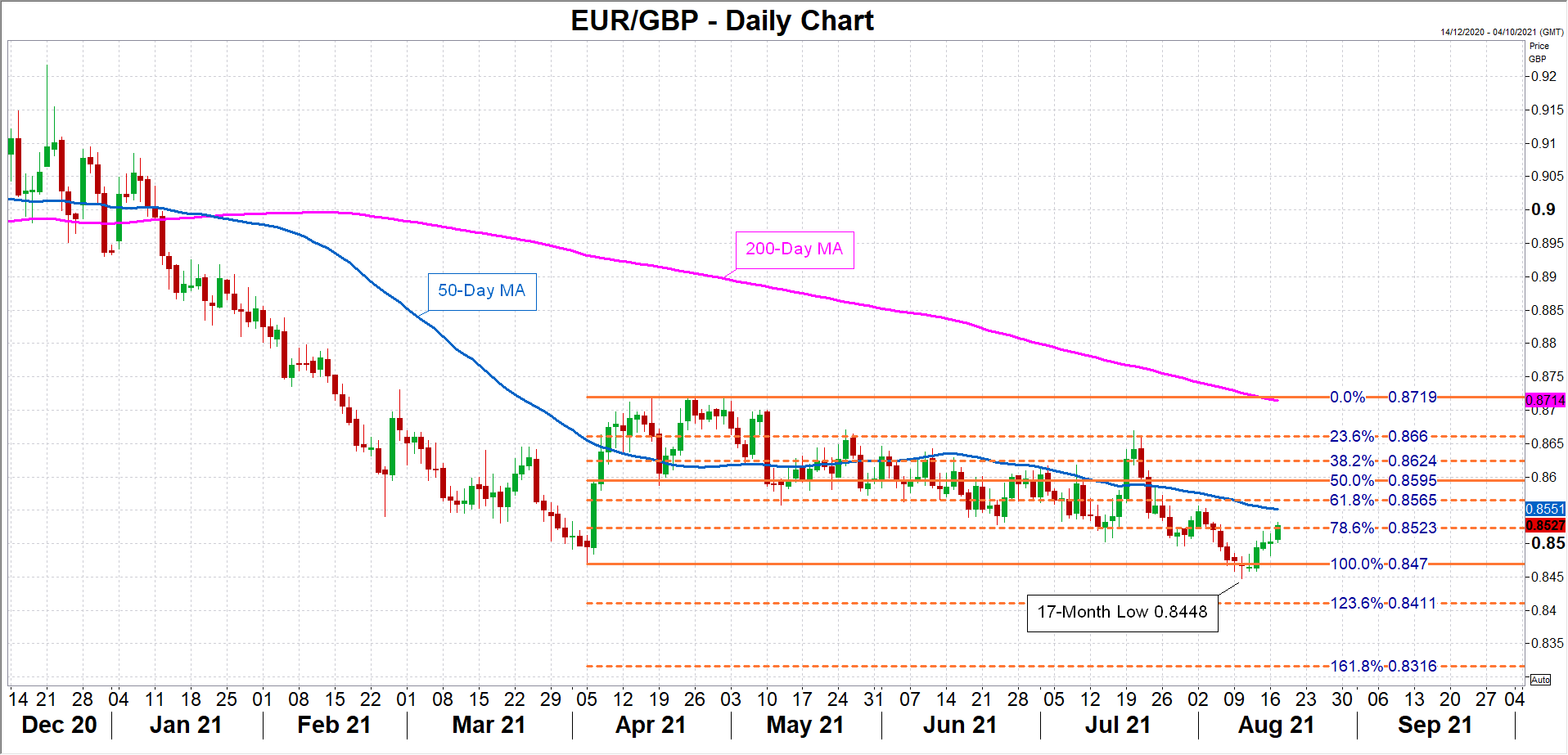
As long as there's nothing that derails the UK economy, euro/pound could soon be testing the 123.6% Fibonacci extension of the April upleg at 0.8411 before sellers set their sights on the 161.8% Fibonacci of 0.8316.
Inflation less of a problem for ECB than BoE
Although Eurozone data hasn't necessarily been worse than Britain's recently and the EU's vaccination rate could even overtake the UK's soon, underlying inflation in the euro area remains very much depressed while UK manufacturers have additionally had to contend with Brexit-driven costs, reinforcing the monetary policy divergence. So although the pound's rally versus the dollar has possibly run its course, there may be plenty of steam left against the euro, with the 0.83 level looking like a reachable target.
RBNZ to Hold Fire, in Light of New Covid Case
We now expect the RBNZ to leave the OCR on hold tomorrow, to await developments in the new Covid-19 community case.
Change of forecast: No RBNZ rate hike tomorrow
We now expect the Reserve Bank to leave the OCR on hold at tomorrow’s Monetary Policy Statement. Regardless of the economic case for higher interest rates, there is nothing to be gained from pushing the OCR higher now, rather than waiting for more clarity on the Covid situation.
Earlier today a case of Covid-19 in the community was announced. A link to the border has not yet been established.
In response, the Government has announced that New Zealand will move to Level 4 (the strictest Covid alert level) from midnight tonight. This will initially be for seven days in the Auckland and Coromandel regions, and three days in the rest of the country.
The key here is that the Government cannot be confident about the scope of the problem. Further testing and tracing will be needed in the coming days to establish this.
Experience shows that economic activity tends to bounce back readily once Covid restrictions are lifted. And when that happens, the RBNZ will be left facing many of the same issues as before: an economy that is running up against cost pressures and capacity constraints, with risks that inflation could become more persistent. Ultimately we expect OCR hikes will still be needed, but we will review the likely timing of this as we get more clarity.
Kiwi Tanks Ahead Of RBNZ, Dollar Braces For Powell
- Kiwi burned by doubts about RBNZ rate hike tomorrow
- US stocks hit new records, Chinese equities get smoked
- Dollar braces for US retail sales and Powell speech
RBNZ meeting in the spotlight
New Zealand just went into a lockdown, after discovering its first covid case in several months. The nation has kept its borders closed since last year to keep the virus out and the government has unleashed tremendous fiscal firepower to keep the economy going.
As such, the economy was booming and markets had become convinced that the Reserve Bank would raise interest rates when it meets tomorrow. Investors were so confident about a rate hike that it was fully priced in, and they were also assigning a chance for a ‘double’ rate increase of 50 basis points.
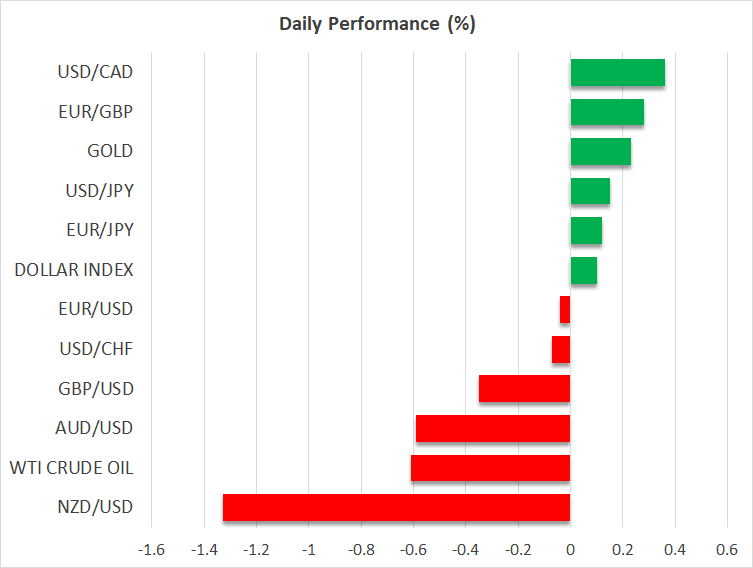
All that went up in flames today. The probability of a single rate increase by the RBNZ tomorrow has fallen to 85%, essentially wiping out speculation for a double hike and showing some doubts about whether even a single hike will happen. This has demolished the kiwi dollar.
It’s just one infection but markets seem to be saying that the days of New Zealand being the last bastion of virus-free life are over, as the Delta variant has proven to be a terrifying foe.
The fortunes for the kiwi looked bright until yesterday, with the currency primed to become the next king of carry trades. That could still happen, but there is now a lot of uncertainty involved. If the RBNZ doesn’t raise rates tomorrow, the kiwi could get slaughtered.
Wall Street enjoys comeback
Volatility has returned to stock markets as well. Wall Street opened lower yesterday but managed to stage an epic turnaround, with the S&P 500 erasing its losses to close at a fresh record high as dip-buyers went into overdrive.
That said, we are back to square one on Tuesday, with futures pointing to another negative open for the major US bourses while Europe and Asia were both a sea of red. Investors are back to playing defense as virus developments have become more distressing and China continues its regulation crusade, ahead of some crucial US data releases and a speech by Fed chief Powell today.
China has brought down the hammer on its tech companies again, with regulators issuing new draft rules aimed at reining in unfair competition on the internet. This is the latest in a series of moves as Beijing tightens its grip on tech giants, which has set ablaze the likes of Tencent and Alibaba along with the popular Hang Seng index.
Huge session coming up, aussie eyed
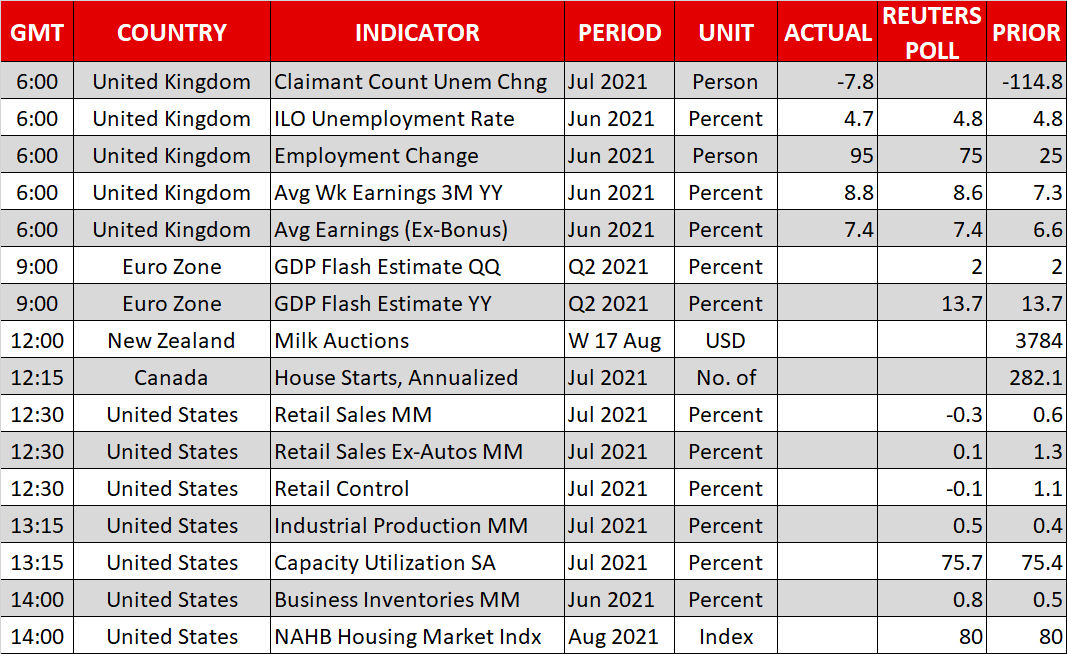
As for today, the spotlight will fall on the US dollar. The ball will get rolling with the latest US retail sales, which will give traders some insights into how consumption is holding up. Forecasts point to a minor drop in retail sales, although market expectations may be even more pessimistic given some worrisome ‘real time’ data from credit card providers.
Then at 17:30 GMT, the Fed chief will step up to the digital rostrum. Markets will be hanging on his lips for any signals about dialing back asset purchases soon. That said, there’s a good chance this ends up being a dud, as Powell may prefer to wait until next week’s Jackson Hole symposium before sending any concrete signals on tapering.
Finally, the Australian dollar is also worth mentioning. Aussie/dollar has been pulverized lately and is currently testing its lows for the year after the minutes of the latest RBA meeting showed policymakers were willing to put their tapering plans on ice if the economic situation deteriorated, which it has.
It is difficult to see the silver lining for the aussie, with the nation stuck in a draconian lockdown, the RBA unlikely to join the ‘rate hike club’, China slowing down, and iron ore prices under pressure.
The Fed May Start Reducing The QE Program Next Month
US stock indices closed without a single trend yesterday. The Dow Jones increased by 0.31%, the S&P 500 added 0.26%, and the Nasdaq Composite decreased by 0.2%. Tesla shares lost 4.3% after the US National Highway Traffic Safety began an inspection of Tesla's Autopilot system after a series of crashes involving the company's electric cars. Shares of Chinese electric carmaker NIO decreased by 5.9% after the death of the driver of an electric car with the autonomous driving system. According to a survey, the majority of investment banks believe that the Federal Reserve will announce a reduction in the QE program at the meeting on September 22. In this case, the reduction of stimulus will begin on December 1, 2021, and will be completed by August 1, 2022, after which the Fed will raise the interest rate by 0.25% at the beginning of 2023. Usually, a massive sale of assets is observed in the financial markets after the announcement of the QE program reduction.
European stock indices fell yesterday. The Stoxx Europe 600 composite index lost 0.5%, British FTSE 100 dropped by 0.9%, German DAX decreased by 0.3%, French CAC 40, Spanish IBEX 35, and Italian FTSE MIB lost 0.8% each. Before that day, the European markets had been rising for ten trading sessions in a row. The reason for the decrease is the investors' concern with the global spread of a new strain of coronavirus. The German government announced its intention to sell a quarter of its 20% stake in Germany's largest air carrier Deutsche Lufthansa. As a result, the company's shares have decreased by 3.9%. Shares of French auto components maker Faurecia (+12%) were the leaders among Stoxx Europe 600 components.
Yesterday, the US Treasury Department held an auction on Treasury bonds, which led to a liquidity withdrawal from the banking system and a drop in government bond yields. Gold and silver have an inverse correlation to US government bond yields, so prices of the precious metals have strengthened slightly. Gold added 0.6% and silver increased by 0.39%.
Oil prices stabilized a bit. Gasoline consumption declined for the third week in a row in the US. At the same time, gasoline demand in India remained above pre-pandemic levels in the first half of August. Analysts at Goldman Sachs believe the threat of the Delta strain to the oil market is temporary and stick to their forecast of Brent prices rising to $80 a barrel in the next quarter due to a supply shortage in the market.
Asian stock indices are still under pressure. Asia-Pacific's broadest stock index outside Japan, the MSCI, decreased by 1.1%, China's CSI300 blue-chip index lost 1.11%, and the Shanghai Composite index decreased by 1.05%. Australia's ASX 200 index fell by 0.98%, and Japan's Nikkei index lost 0.11%. The drop in stock indices was mainly due to the worsening situation with Delta in the region. Markets also monitored the situation in Afghanistan. The Reserve Bank of Australia will continue to review its quantitative easing program, considering the economic conditions and the quarantine restrictions.
Main market quotes:
- S&P 500 (F) 4,479.71 +11.71 (+0.26%)
- Dow Jones 35,625.40 +110.02 (+0.31%)
- DAX 15,925.73 -51.71 (-0.32%)
- FTSE 100 7,153.98 -64.73 (-0.90%)
- USD Index 92.61 +0.10 (+0.10%)
Important events for today:
- Australia RBA Meeting Minutes at 04:30 (GMT+3);
- Japan Tertiary Industry Activity Index (m/m) at 07:30 (GMT+3);
- UK Average Earnings Index (m/m) at 09:00 (GMT+3);
- UK Claimant Count Change (m/m) at 09:00 (GMT+3);
- UK Unemployment Rate (m/m) at 09:00 (GMT+3);
- Eurozone GDP (q/q) at 12:00 (GMT+3);
- US Retail Sales (m/m) at 15:30 (GMT+3);
- US Industrial Production (m/m) at 16:15 (GMT+3);
- US Fed Chair Powell’s Speech at 20:30 (GMT+3).
Gold: Climbing Uphill Only To Plummet Off A Cliff
Gold added for the sixth consecutive trading session, showing persistent but very cautious gains. Sustained buying brought the price closer to 1800, almost recovering from a violent two-day sell-off after a strong NFP. Despite steady buying, downside risks still prevail in gold.
Gold finds buyers after an overly sharp sell-off, but it is unlikely to rely on such speculative interest.
Gold’s positive momentum late last week has been renewed on a drop in US consumer sentiment, which cooled expectations of an imminent tightening of monetary policy and restored some of gold’s attractiveness as a savings vehicle.
But this growth momentum has an important test to pass. The dip at the beginning of the month had a much higher amplitude, reflecting the increased interest in selling gold. The same can be said of the downward price impulses in June and January. Gold seems to be slowly climbing uphill only to plummet off a cliff.
The collapse at the beginning of August sent gold below the long-term trend support for the upside. On the other hand, this failure has not technically been confirmed, as the price has not rewritten the previous lows from April.
The bulls can only be serious after the price returns above $1800, where the long-term support and the 50-day moving average are located. Just above that level, at $1814, is the 200-day moving average. An increase above this level might not only increase the current momentum, but it could also bring back the long-term buyers in the precious metal after the 12-month correction from the historical peaks.
However, it is worth expecting that the bears in gold have taken a pause but have not lost control of the situation. The dip in the sentiment indices, which supported the momentum from last Friday, stands out from the generally very positive mood of the reports. Fed officials are openly talking about a possible start of tapering as early as September-November and an end to the buying by the middle of next year.
This is a solid bearish factor for gold, which follows the pattern of post-2008 dynamics. The price peak coincided with the peak of the recovery in the stock market. Equities then continued to rise, and gold went into a correction. In 2013, at the rally’s start, the price of gold broke the uptrend, losing 30% or 2/3 of its rally before going into a more measured decline.
Globally, the pressure on gold only stopped with the interest rate hike when all the negativity was built into the quotes. This pattern creates the potential to fall into the area of $1450-1500 per troy ounce unless the bulls manage to push the price back into an up-trend.
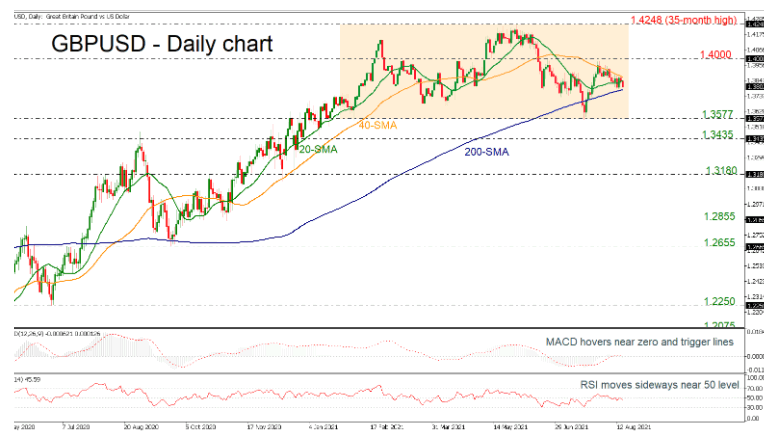
GBPUSD Drifts Near 1.3800 And Below Short-Term SMAs
GBPUSD is dropping below the 20- and 40-day simple moving averages (SMAs) but is still holding above the 200-day SMA and near the 1.3800 level. In the short-term, the bias looks neutral-to-bearish after the fall below the 1.4000 resistance level.
Regarding the technical indicators, the MACD is flattening below its trigger and zero lines, while the RSI is moving below its neutral threshold of 50.
Further losses should see the 200-day SMA currently at 1.3780 acting as a major support. A drop below this key level would reinforce the near-term bearish structure and open the way towards the 1.3577 and the 1.3435 barriers.
In the event of an upside reversal, the 1.4000 level could become a hurdle before being able to re-challenge the 35-month high of 1.4248. A break above this level would lead the way towards the 1.4345 resistance, registered in January 2018.
To conclude, GBPUSD has been in a sideways channel since February 4 and any moves above 1.4248 or below 1.3577 could paint a clearer picture.
Daily Tecnical Analysis
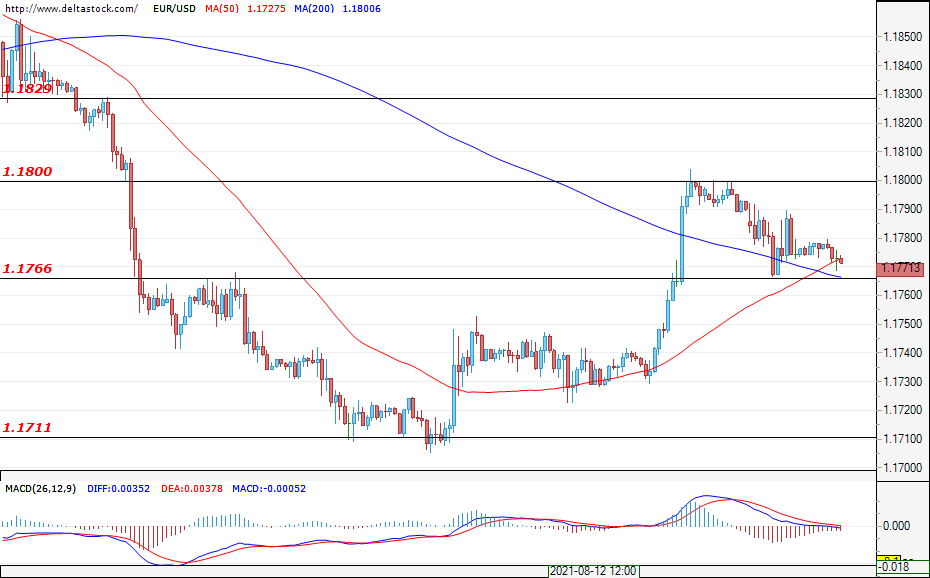
EUR/USD
Current level - 1.1794
On the first trading day of the week, the currency pair was not particularly active and the euro recorded a modest loss against the U.S. dollar. The session formed an intraday support at around 1.1766, and the market is showing early signs of reversal. Declines to 1.1740 are possible, and if they get aggressively bought out, the uptrend of the union’s currency will be confirmed.. It is possible that the bulls will try to attack the resistance again at 1.1800 and, if successful, the next targets would be 1.1830 and 1.1900. Today, an increase in activity can be expected around the announcement of the retail sales data for the United States (12:30 GMT) and the statement of FOMC chairman Jerome Powell (17:30 GMT).
| Resistance | Support | ||
| intraday | intraweek | intraday | intraweek |
| 1.1829 | 1.1890 | 1.1766 | 1.1650 |
| 1.1890 | 1.1944 | 1.1711 | 1.1600 |
USD/JPY
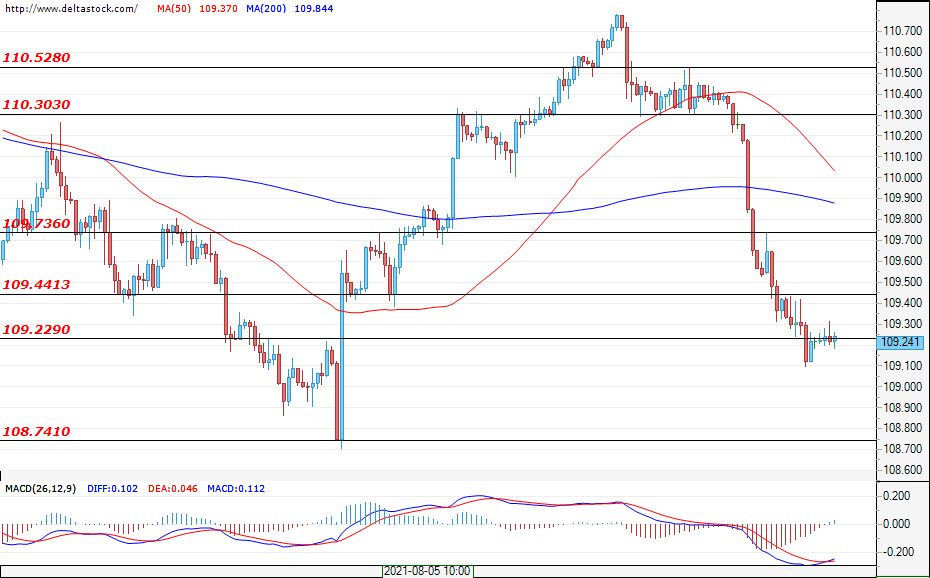
Current level - 109.24
The bears eased the pressure around the support at 109.22 and it is possible for the market to enter a pullback phase. The first resistance for the bulls is found at 109.44, and the next one, which should limit any attempt of a rally from the buyers, is located at 109.73. The chance for a prolonged decline is confirmed by the higher time frames, and potential rallies are expected to be aggressively shorted. The bears will try to attack the support at 108.74, with their ultimate goal being the bottom of around 107.46 that was reached in April.
| Resistance | Support | ||
| intraday | intraweek | intraday | intraweek |
| 109.44 | 110.30 | 109.22 | 108.00 |
| 109.73 | 110.52 | 108.74 | 107.46 |
GBP/USD
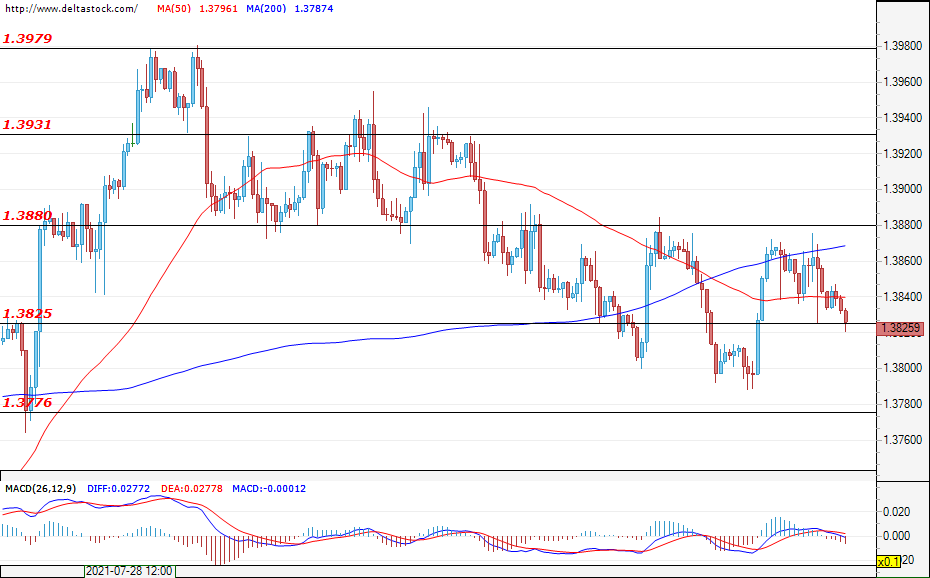
Current level - 1.3825
Like most of the other major currencies, the dollar depreciated against the sterling at the end of the previous week. At the time of writing, the Cable is headed towards a test of the resistance level at 1.3862 which, if successful, would deepen the correction and we might witness prices rise above 1.3900. In the negative direction, the first support lies at 1.3827. This week, investors' attention will be focused on the data on the consumer price index (Wednesday; 06:00 GMT) and the retail sales for the UK (Friday; 06:00 GMT).
| Resistance | Support | ||
| intraday | intraweek | intraday | intraweek |
| 1.3860 | 1.3931 | 1.3825 | 1.3632 |
| 1.3880 | 1.3979 | 1.3776 | 1.3570 |