Sample Category Title
Dollar Index Faces Structural Breakdown Toward 90, EUR/USD Eyes 1.20 Breakout
Dollar Is Approaching a Much Bigger Technical Test
Dollar’s selloff is not just about this week’s Treasury buyback announcement. DXY has broken important support and is moving toward levels that could turn a medium-term decline into a much larger structural breakdown. A decisive break of 95.55 would threaten the multi-decade rising channel and eventually bring 90 area into view. On other side, EUR/USD would likely be challenging 1.20 at roughly same time — a breakout that would carry similarly important long-term implications.
What makes technical setup more significant is that several very different analytical routes are pointing in same direction. Bond managers have focused on financing mechanics. Treasury’s own advisory committee has laid out limits of what buybacks can achieve. Fitch has approached issue through sovereign-credit arithmetic. Ray Dalio has looked at it through debt-cycle experience. Dollar traders are now expressing their own verdict through price.
These approaches do not start from same place, but they converge on one distinction: Treasury can manage where financing pressure appears, while buybacks do not remove underlying borrowing requirement. Initial Dollar reaction on August 19 could be explained by falling Treasury yields after larger buybacks were announced. By end of week, however, greenback remained broadly weaker even after yields recovered part of their initial fall. That raises a much bigger question for coming weeks: is Dollar merely extending a correction, or beginning to price fiscal concerns deeply enough to break DXY through 95.55 and send EUR/USD above 1.20?
What Treasury Actually Did
Treasury announced on August 19 that it would increase buybacks in longer-dated nominal debt. Maximum operations in the 10–20 year and 20–30 year sectors were lifted from $2bn to at least $4bn, with larger operations scheduled between September 9 and November 4. Announcement came after 30-year Treasury yield briefly reached 5.34%, its highest since 2007.
Treasury Secretary Scott Bessent went further the following day. He said buybacks could exceed $4bn per issue and described liquidity in 30-year bonds as “very poor.” His stated aim was to improve market functioning and encourage investors to focus on fundamentals rather than headline-driven volatility.
Bond market initially responded exactly as Treasury might have hoped. Long yields fell sharply. But relief faded quickly. Ten-year yield reversed higher during Bessent’s own CNBC appearance and subsequently recovered a meaningful part of Wednesday’s decline.
That does not mean buybacks achieved nothing. They can improve liquidity and reduce pressure in parts of Treasury curve where investors have become reluctant to take duration. What they cannot do by themselves is change how much money US government ultimately needs to borrow.
And that is where first “language” comes in.
Language One: Bond Mechanics — Move the Supply, Don’t Remove It
The easiest way to understand UBS’s argument is to compare Treasury buybacks with someone refinancing a mortgage.
Suppose a borrower replaces some long-term debt with shorter-term debt. Monthly financing structure changes. But total debt has not disappeared.
Treasury is doing something similar. It can buy older long-dated bonds from investors, reducing pressure in that corner of market. But it still needs money to fund government deficit and buyback itself. More Treasury bills can therefore be issued at short end.
UBS described this as reshaping debt maturity rather than reducing total Treasury supply markets must ultimately absorb. Unlike Fed quantitative easing, Treasury cannot simply create reserves to buy bonds. Financing pressure is reallocated, not eliminated.
Wellington Management’s Brij Khurana made essentially same point independently: Treasury needs to finance those purchases elsewhere, including through more bills. DBS economist Chang Wei Liang called likely impact of buyback changes “small” and “transient.” JPMorgan, Wells Fargo, Principal Asset Management and Standard Chartered all arrived at variations of same conclusion: Treasury may buy time or improve liquidity, but deficits, inflation risk and financing requirements remain.
That is why this is not really an argument over whether buybacks “work.” They can work perfectly well as a liquidity operation.
The more important question is whether investors begin treating them as a substitute for reducing borrowing needs.
So far, professional bond desks appear reluctant to do that.
Language Two: Treasury’s Own Rulebook Says Much the Same Thing
The second language comes from inside Treasury’s own advisory framework.
Treasury Borrowing Advisory Committee has previously drawn a distinction between buybacks as a liquidity tool and issuance as the main tool for managing overall debt profile. In other words, even Treasury’s own advisers do not present buybacks as a way of solving underlying fiscal imbalance.
That distinction matters more because Treasury bills already account for around 22.2% of outstanding Treasury debt in the material supplied, above TBAC’s roughly 20% preferred ceiling. If more long-bond support is financed through additional short-term issuance, market has to consider whether pressure is simply being moved along curve.
There is also an uncomfortable historical echo. Bessent criticized Janet Yellen in 2024 for relying heavily on bills, saying Treasury was putting its “thumb on the scale of markets” to lower financing costs. Now Treasury itself is leaning more actively on debt-management tools as long yields approach politically and economically uncomfortable territory.
That does not automatically mean Treasury is trying to peg yields. But it does raise a broader question: where does ordinary debt management end and active management of financial conditions begin?
RSM chief economist Joseph Brusuelas warned that political pressure could increasingly push monetary and fiscal institutions toward the same objective of suppressing financing costs. That would create a difficult environment for Fed Chair Kevin Warsh, especially because Warsh has previously criticized central-bank bond purchases for keeping borrowing costs artificially low and weakening fiscal discipline.
Jackson Hole next week therefore takes on another dimension. Markets will not only listen for Fed’s inflation and rate outlook. They will also watch how Warsh defines boundary between monetary policy and Treasury’s growing role in bond-market conditions.
Language Three: Fitch Removes the Trading Desk From the Argument
Fitch approaches the issue from a very different direction.
It is important not to overstate its message. Fitch affirmed US rating at AA+ with a stable outlook on August 13. It continues to highlight enormous strengths: scale of US economy, high income levels, deep capital markets and Dollar’s dominant reserve-currency role. Dollar still represents roughly 58% of global reserves and plays an overwhelming role in foreign-exchange transactions.
But Fitch’s fiscal projections show why long-term investors are uncomfortable.
General government debt is projected to rise from around 117% of GDP at end-2025 to 123% in 2028 and 128% by 2030 under current policies. Median for other AA-rated sovereigns is only 46.3%.
US general government deficit is projected at 7.4% of GDP in 2026, highest in AA category. Interest costs are also becoming much heavier. Fitch expects interest-to-revenue ratio to reach 12.6% by 2028, compared with 3.5% median for AA peers.
Current numbers reinforce that pressure. Federal debt has moved above $40tn. July deficit reached $432bn. Fiscal-year-to-date deficit is around $1.8tn, while net interest payments reached roughly $963bn over first ten months of fiscal year in the supplied research.
Fitch’s point is not that US is facing an imminent funding crisis. Its stable outlook says the opposite.
The more useful conclusion is that America’s exceptional economic scale and Dollar’s reserve status are compensating for fiscal metrics that would look much more problematic in an ordinary AA sovereign.
That makes confidence in Dollar itself part of fiscal equation.
Bessent Has a Counterargument — but It Needs Numbers
Bessent is not ignoring fiscal problem. His counterargument is that current trajectory can improve without dramatic austerity.
He said there is a “very good chance” deficit has already peaked. He has also argued that US can “grow our way out” of the $40tn debt figure. A Treasury-OMB effort is examining “several hundred billion dollars” of potential fiscal consolidation.
Those arguments are plausible in principle.
A larger economy makes an existing debt burden easier to service. Faster productivity growth from AI could improve tax revenues. Spending restraint could narrow deficit. Strong tariff revenues could contribute as well.
But markets need evidence rather than promises.
If deficit really has peaked, future budget numbers should show it. If tariff receipts can stay close to 2025 levels after recent legal setbacks, Treasury data should demonstrate it. If US can grow out of debt problem, nominal GDP needs to expand quickly enough relative to debt to stabilize fiscal ratios.
This is one reason buyback announcement moved markets more than Bessent’s reassurance. Buyback was an actual policy action. Fiscal improvement remains a forecast.
Language Four: Dalio and Dimon Ask What Happens If It Isn’t Fixed
Ray Dalio’s argument is different again. He is less concerned with whether a $4bn buyback lowers a particular Treasury yield by five or ten basis points. He is asking what happens if debt and debt-service costs keep compounding.
Dalio said US government financial position is at an “inflection point” and warned that debt could eventually become impossible to manage without serious economic pain. He views Treasury intervention as a symptom of that pressure rather than a cure, arguing that government has only limited capacity to keep intervening indefinitely.
His preferred solution combines three measures: cut spending, raise revenue and reduce interest rates. The important part is that he says those three need to happen together so no single adjustment becomes too extreme.
But Dalio also adds an important warning: “it would be very bad if the Federal Reserve unnaturally forced interest rates down.” In other words, lower borrowing costs may be part of a solution, but artificially suppressing them without addressing deficits simply postpones adjustment.
Jamie Dimon has raised a related but different concern. His warning is about what prolonged high debt and expensive money could expose elsewhere in financial system. In April, he said a bond crisis would eventually have to be dealt with, without offering a specific timeframe. More recently, he has highlighted high levels of leverage that may not appear in conventional margin-debt statistics because it sits inside special vehicles and securitized structures.
These are not forecasts that a crisis happens next month or even next year.
They are warnings about second-order risk: when sovereign borrowing costs stay high for long enough, stresses can migrate into places that were not obvious during earlier stages of cycle.
Language Five: Dollar Is Starting to Say the Same Thing
The fifth language needs no analyst note.
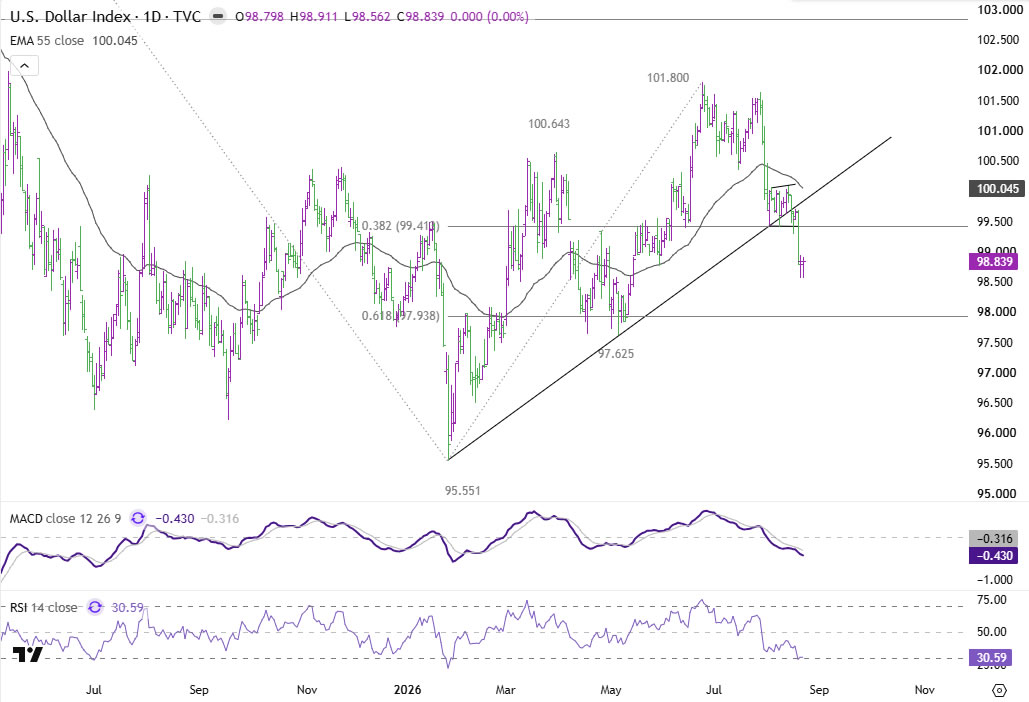
Dollar Index extended its decline last week and broke decisively below 99.41, the 38.2% retracement of rebound from 95.55 to 101.80. That strengthens view that rebound from 95.55 completed as a three-wave corrective move at 101.80.
Near-term outlook stays bearish while 55-day EMA around 100.04 caps recovery.
Next key level is around 97.94. This is an important technical confluence. It represents 61.8% retracement of the 95.55–101.80 rise, while sitting almost exactly on the 38.2% retracement of much larger advance from 70.68 in 2008 to 114.77 in 2022.
Firm break of 97.94 would put 95.55 back into focus.
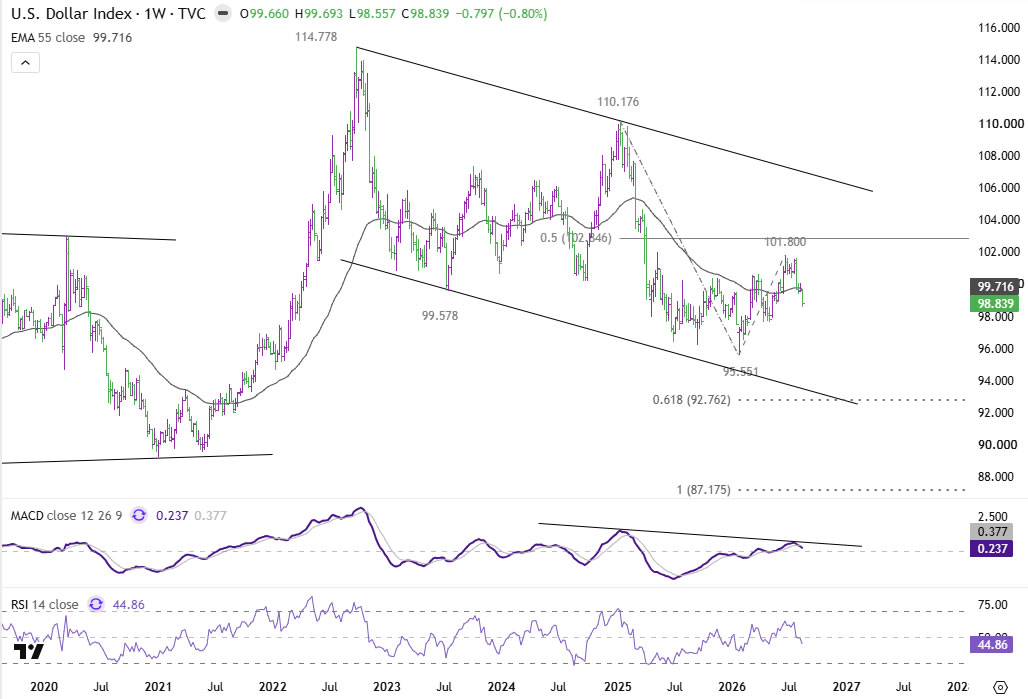
Weekly chart strengthens that warning. DXY has fallen below 55-week EMA around 99.71, supporting view that decline from 110.17 remains incomplete. Break through 95.55 would resume that fall and target the 92.76 projection.
But monthly chart is where stakes become much larger.
DXY has again failed to sustain above 55-month EMA around 100.57. If decline eventually breaks through 95.55, Dollar Index would also threaten its multi-decade rising channel from 2008 low.
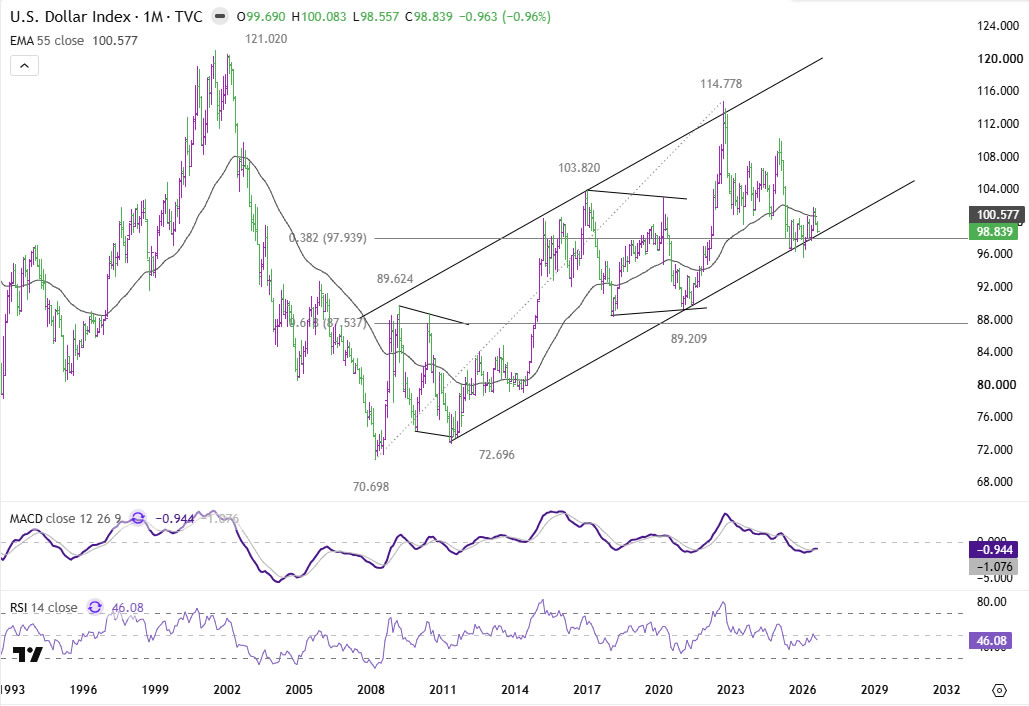
That would no longer be simply a short-term Dollar correction.
Fall from 114.77 could then be developing into a much larger correction of entire post-2008 bull trend, or potentially something more significant. In either case, 89.29, close to psychological 90 level, would become an important longer-term downside objective.
The distinction is crucial: 95.55 has not broken yet. It is the level that would turn current bearish setup into a much more serious structural signal.
EUR/USD 1.20 Is the Other Side of the Same Test
EUR/USD offers traders a mirror image of DXY setup.
Pair has repeatedly struggled around psychological 1.20 area. That region also contains 1.2019, the 38.2% retracement of long decline from 1.6039 to 0.9534.
If DXY breaks decisively through 95.55, EUR/USD would likely be making its corresponding attempt through 1.20.
A clean breakout there would carry substantial medium-to-long-term significance. It would open the way toward 1.3554, the 61.8% retracement of 1.6039–0.9534 decline.
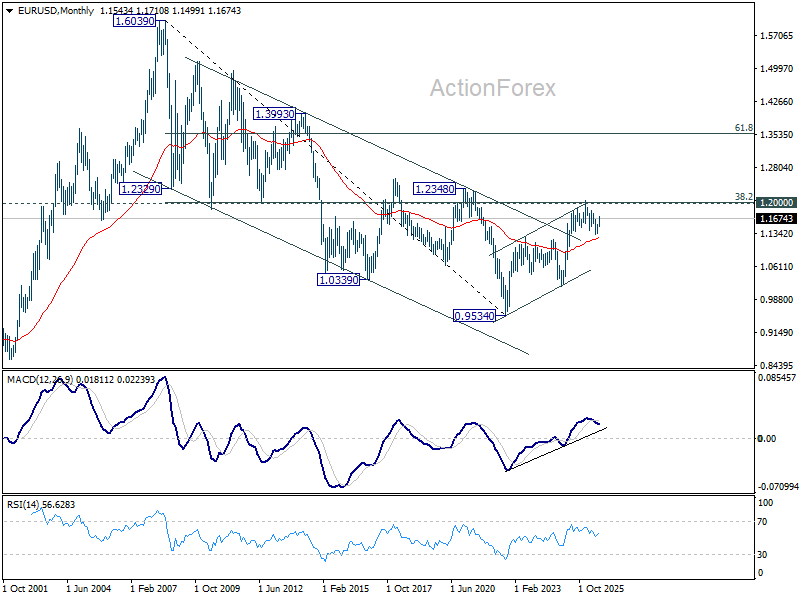
So two charts give traders essentially the same structural test:
DXY below 95.55.
EUR/USD above 1.20.
If both occur together, Dollar story would be moving beyond a reaction to one week’s Treasury headlines.
What Would Prove the Bearish Dollar Thesis Wrong?
Convergence is powerful, but it is not proof of an inevitable Dollar crisis.
There are clear developments that would weaken the argument.
Most important would be actual fiscal consolidation. A legislated and independently scored package that materially reduces future deficits would address underlying borrowing requirement rather than maturity structure.
Hard revenue data could also validate Bessent’s optimism. Stronger tariff receipts or other revenue gains would improve fiscal arithmetic.
Growth is another route. If productivity and real activity accelerate enough to improve debt-to-GDP dynamics, “grow our way out” becomes an economic argument rather than a slogan.
Markets themselves will provide confirmation as well.
If DXY starts responding positively again to strong US data, higher yields or hawkish Fed signals and reclaims 100, immediate bearish case would weaken.
But failure to recover 100 on positive catalysts would keep warning alive.
A break of 97.94, followed by 95.55, would turn that warning into something much more serious.
Five Languages, One Question for Dollar
No single voice in this debate is decisive.
UBS and Wellington explain mechanics. Treasury’s own advisory framework explains what buybacks were designed to do. Fitch shows fiscal arithmetic. Dalio and Dimon warn about consequences if debt burden keeps compounding. Dollar chart tells us how investors are beginning to position.
These arguments are not identical. They should not be treated as if they are.
But they overlap at one crucial point: buybacks can help Treasury manage market stress without solving reason that stress exists.
That is why DXY’s next move matters so much.
Holding 95.55 would leave current decline within a broader range. Breaking it would threaten a much larger technical structure, while EUR/USD would simultaneously be positioned for another attack on 1.20.
Treasury can rearrange duration. It can improve liquidity. It can buy time.
What markets are now asking is whether Washington can use that time to change fiscal trajectory before Dollar begins pricing a much bigger adjustment.
EUR/USD Weekly Outlook
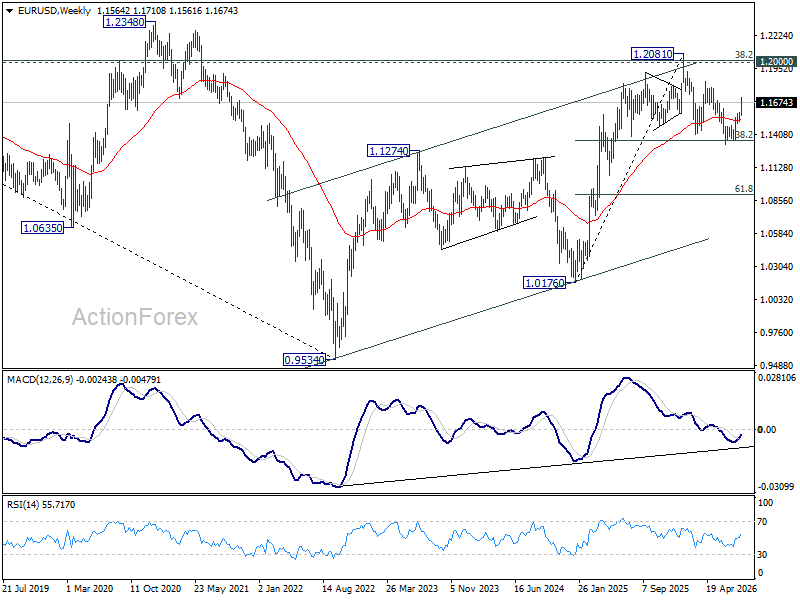
EUR/USD's rally from 1.1323 extended further to 1.1710 last week but turned sideway since then. Initial bias is turned neutral this week for some consolidations. Downside should be contained by 1.1565 support to bring another rally. On the upside, above 1.1710 will target 61.8% retracement of 1.2081 to 1.1323 at 1.1791 next. Firm break there will bring retest of 1.2081 high.
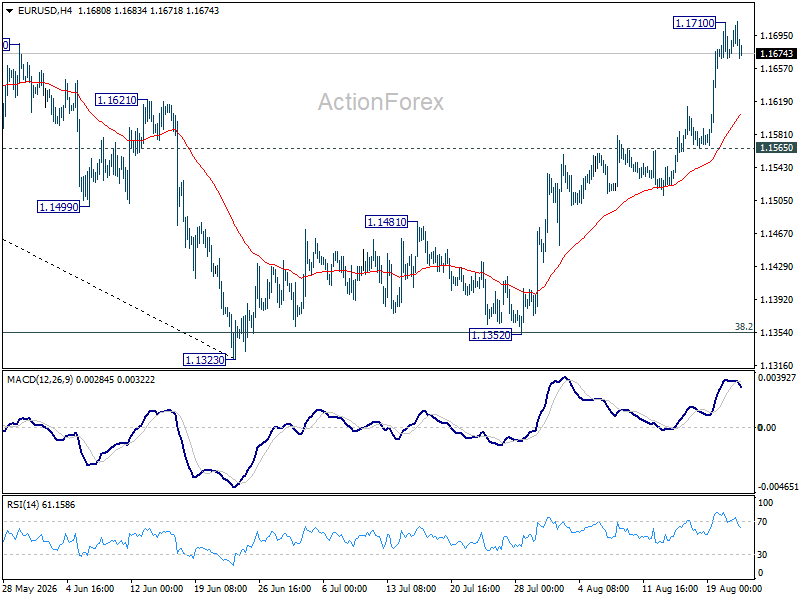
In the bigger picture, current development argues that fall from 1.2081 was a corrective pattern which has completed at 1.1323, after hitting 38.2% retracement of 1.0176 to 1.2081 at 1.1353. Firm break of 1.2081 will resume whole up trend from 1.1716. This will now remain the favored case as long as 55 D EMA (now at 1.1520) holds, in case of retreat.
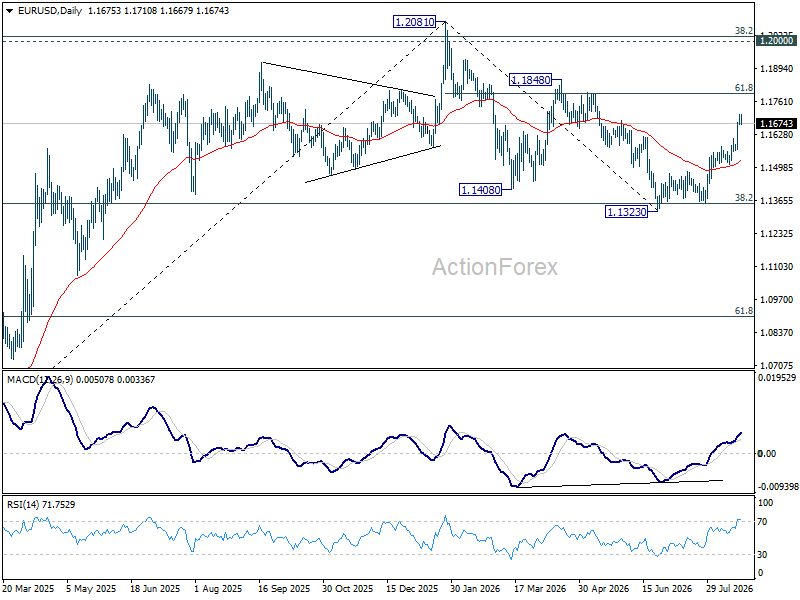
In the long term picture, 38.2% retracement of 1.6039 to 0.9534 at 1.2019, which is close to 1.2000 psychological level is the key for the outlook. Rejection by this level will keep the multi decade down trend from 1.6039 (2008 high) intact, and keep outlook neutral at best. However, decisive break of 1.2000/19, will suggest long term bullish trend reversal, and target 61.8% retracement at 1.3554.
USD/JPY Weekly Outlook
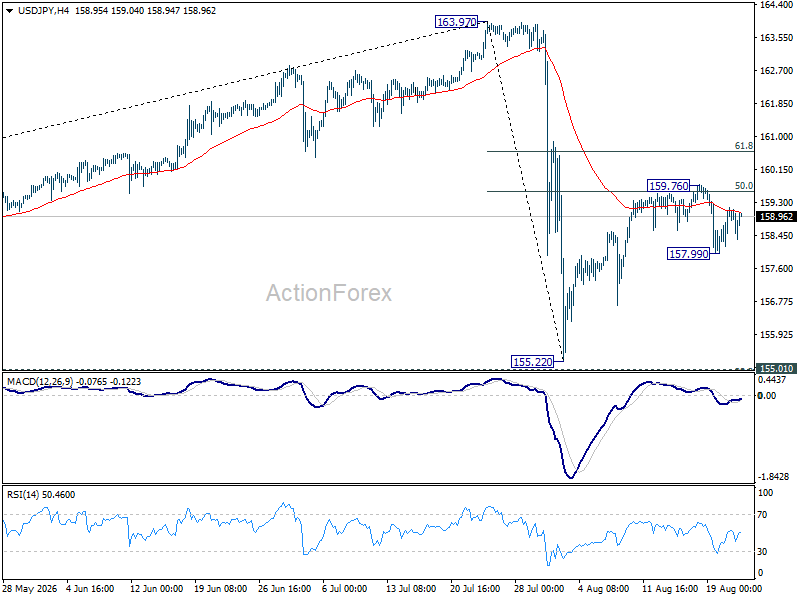
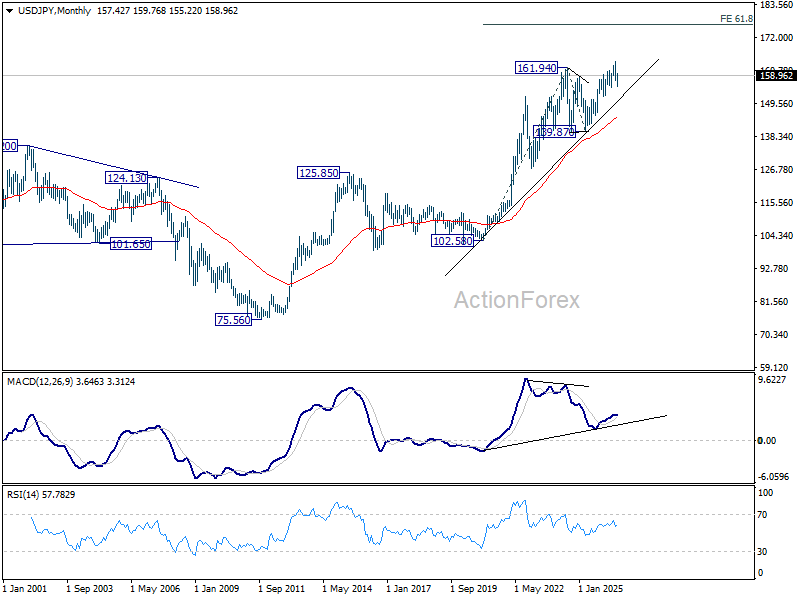
USD/JPY dipped lower to 157.99 last week but recovered since then. Initial bias remains neutral this week first. On the downside, below 157.99 will extend the fall from 159.76 to retest 155.22 low. In case of another rise, strong resistance could emerge from 159.59 to 160.62 zone (50% and 61.8% retracement of 163.97 to 155.22) to limit upside.
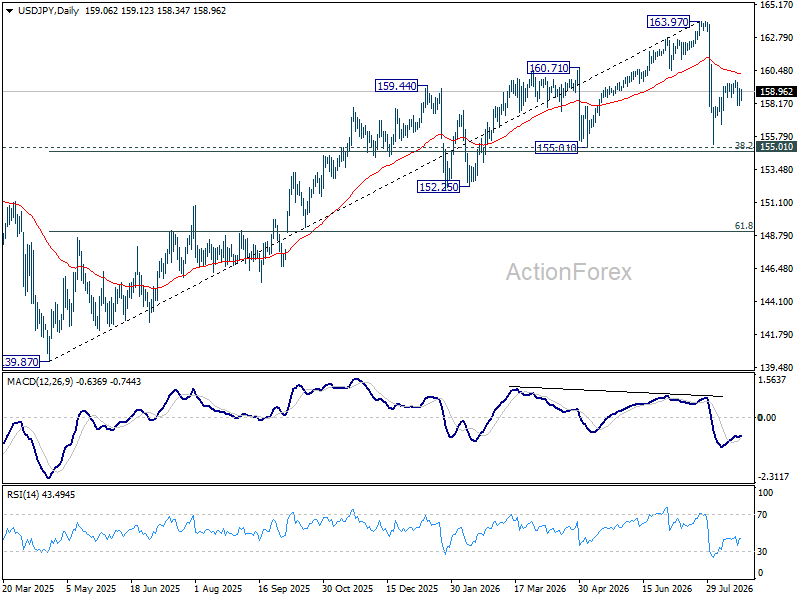
In the bigger picture, as long as 155.01 cluster support (38.2% retracement of 139.87 to 163.97 at 154.76) holds, the larger up trend is still expected to continue through 163.97 after current correction completes. However, firm break of 155.01 will raise the chance that USD/JPY is already in a larger scale correction, and open up deeper fall back to 139.87 (2025 low) in the medium term.
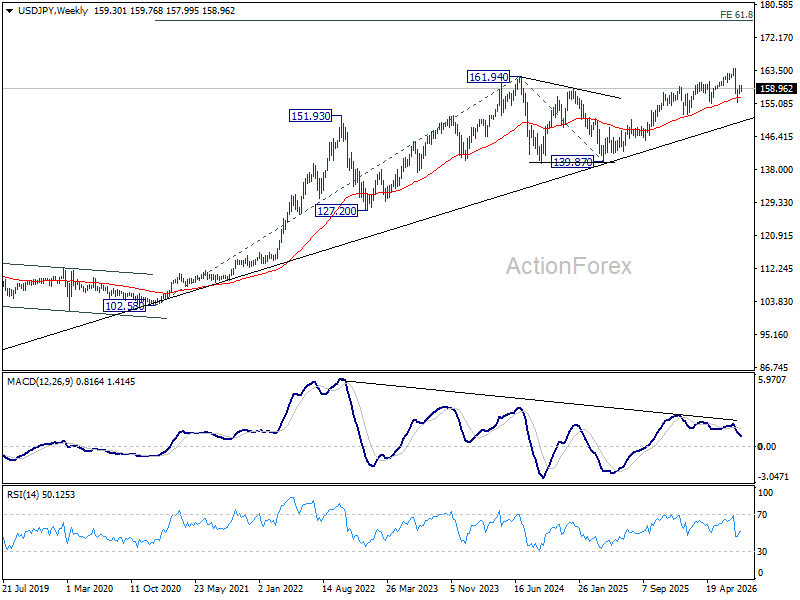
In the long term picture, up trend from 75.56 (2011 low) is still in progress. Next target is 61.8% projection of 102.58 (2020 low) to 161.94 (2024 high) from 139.87 at 176.55 in the medium term. Long term outlook will stay bullish as long as 139.87 support holds, even in case of deep pullback.
GBP/USD Weekly Outlook
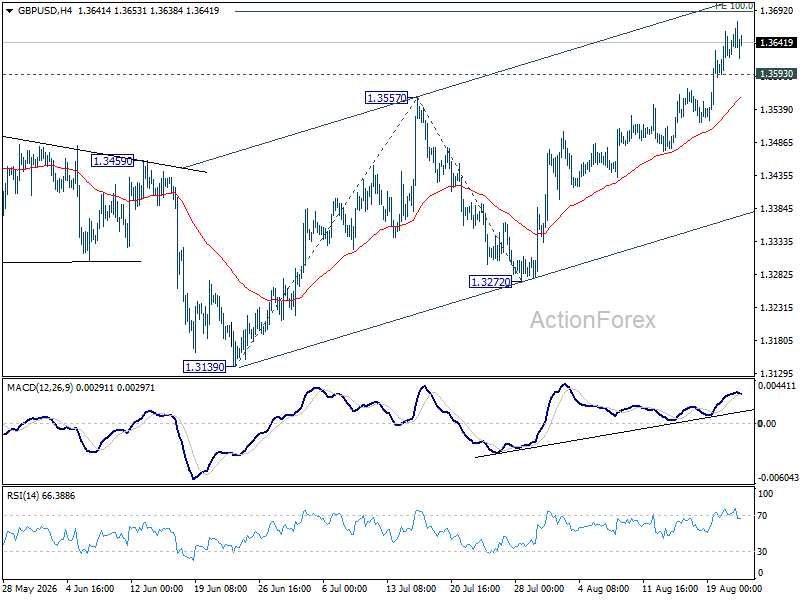
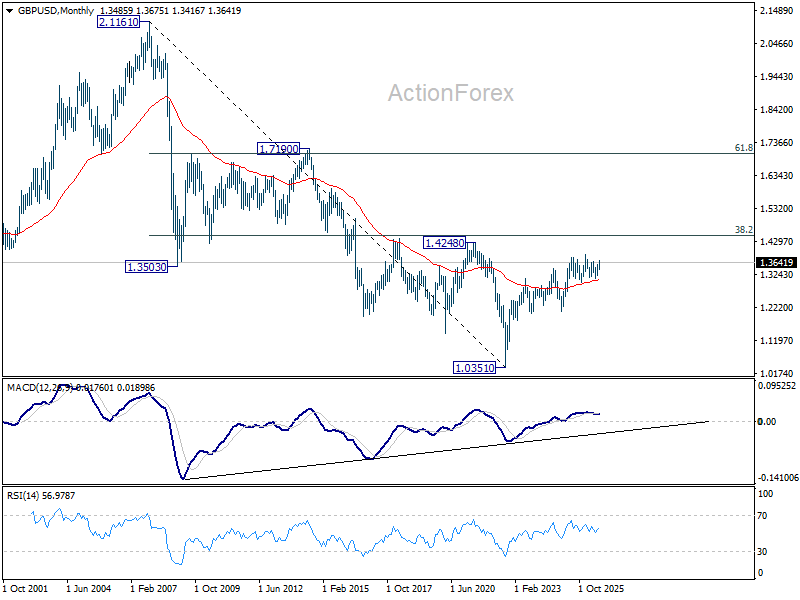
GBP/USD's rise form 1.3139 resumed by breaking through 1.3557 decisively last week. Initial bias stays on the upside this week for 100% projection of 1.3139 to 1.3557 from 1.3272 at 1.3690. Firm break there will target a retest on 1.3867 high. On the downside, below 1.3593 minor support will turn intraday bias neutral again first.
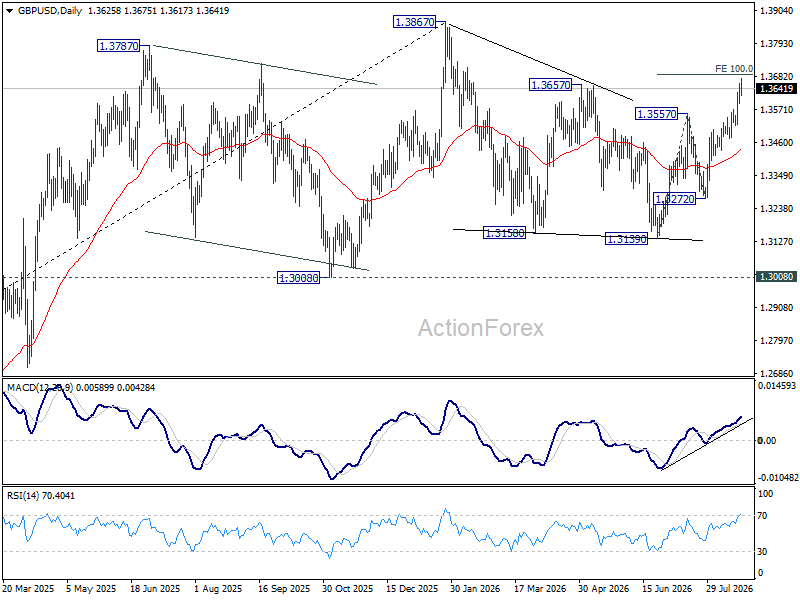
In the bigger picture, price actions from 1.3867 are a corrective pattern within the broader up trend from 1.0351 (2022 low). With 1.3008 support intact, medium term bullishness is maintained and break of 1.3867 is in favor for a later stage, towards 1.4248 key resistance (2021 high). However, firm break of 1.3008 will at least bring deeper fall to 38.2% retracement of 1.0351 to 1.3867 at 1.2524, with increased risk of bearish reversal.
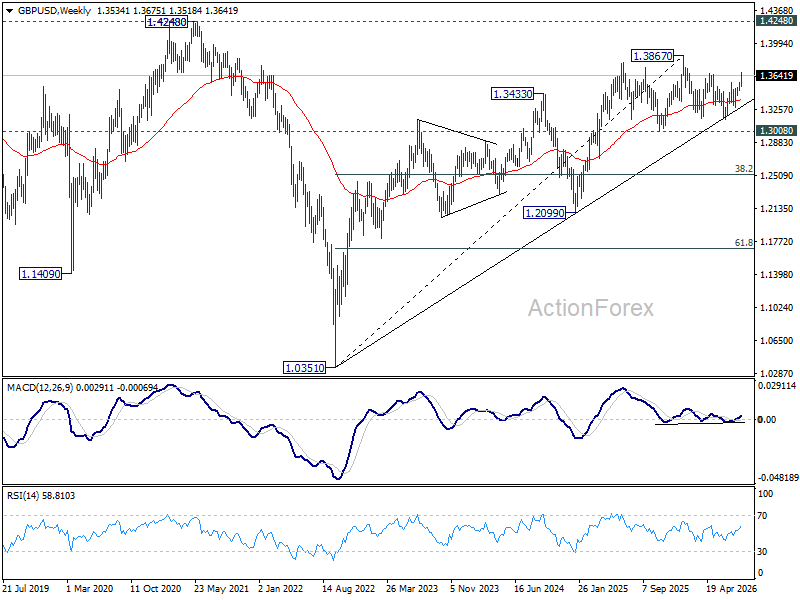
In the long term picture, as long as 1.4248/4480 resistance zone holds (38.2% retracement of 2.1161 to 1.0351 at 1.4480), the long term outlook will remain bearish. That is, price actions from 1.0351 are seen as a corrective pattern to down trend from 2.1161 (2007 high) only. Nevertheless, decisive break of 1.4248/4480 will be a strong sign of long term bullish reversal.
USD/CHF Weekly Outlook
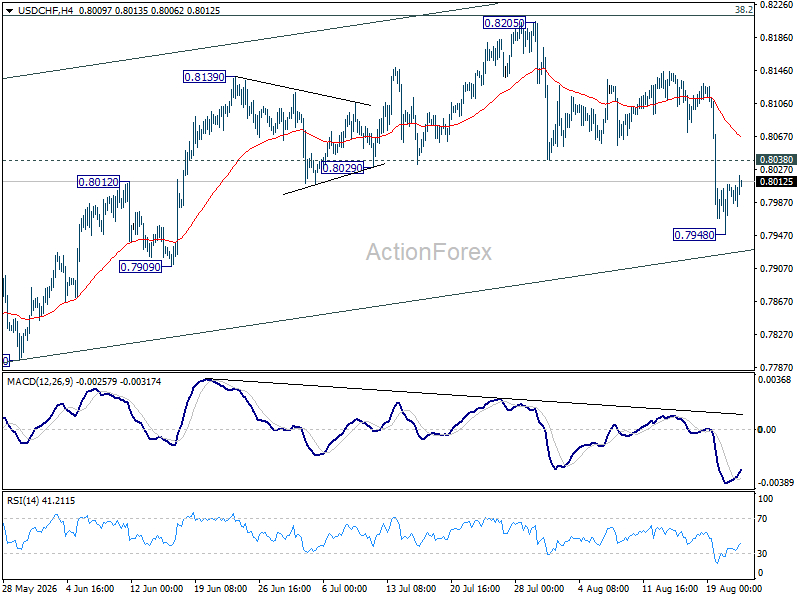
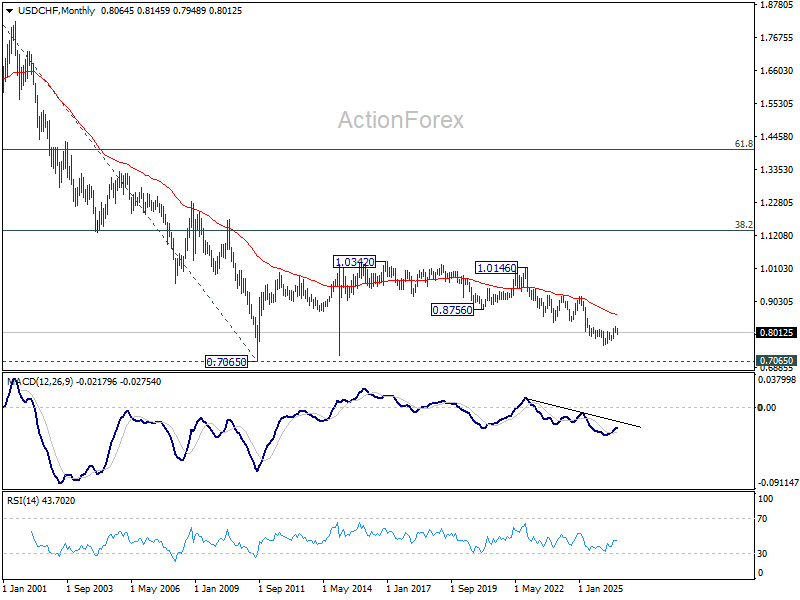
USD/CHF's fall from 0.8205 extended to 0.7948 last week but recovered ahead of near term channel floor. Initial bias is turned neutral first. On the downside, decisive break of the channel support (now at 0.7928) will solidify the case that rebound from 0.7603 has completed with three waves up to 0.8205. Deeper fall should be seen to 0.7760 support next. On the upside, firm break of 0.8038 will bring stronger rebound.
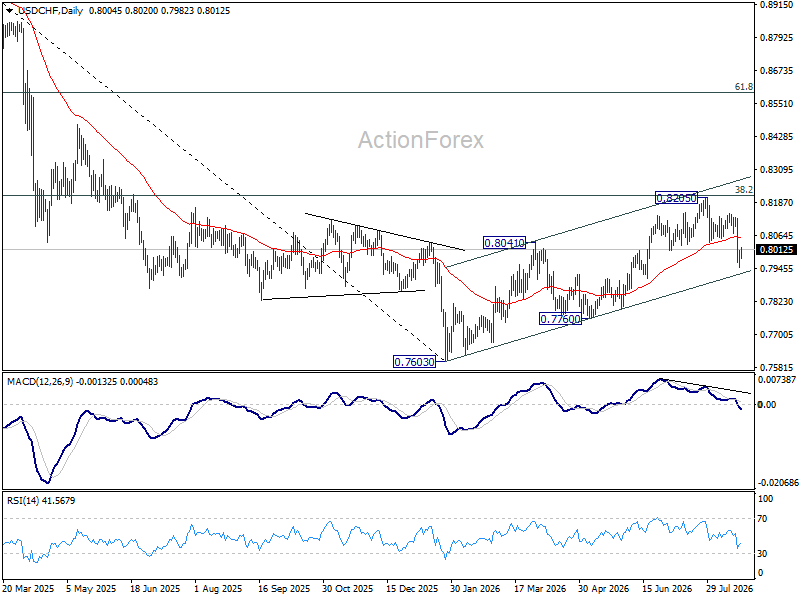
In the bigger picture, rejection by 38.2% retracement of 0.9200 (2025 high) to 0.7603 at 0.8213 suggests rebound from 0.7603 is merely a corrective move, and the long term down trend is not complete yet. Break of 0.7603 will resume the down trend. Nevertheless, decisive break of 0.8213 will indicate that USD/CHF is at least reversing the medium term trend, and turn focus to 0.8332 support turned resistance (2023 low) for confirmation.
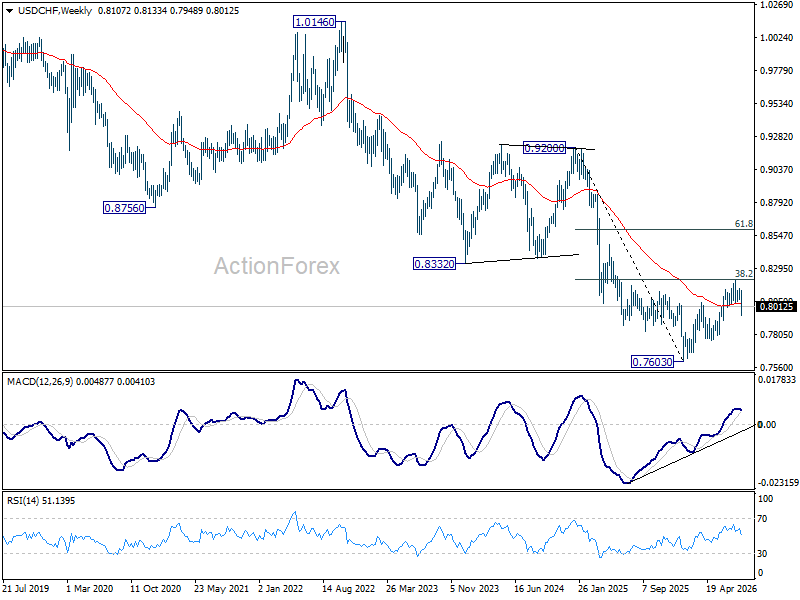
In the long term picture, price action from 0.7065 (2011 low) are seen as a corrective pattern to the multi-decade down trend from 1.8305 (2000 high). It's uncertain if the fall from 1.0342 is the second leg of the pattern, or resumption of the downtrend. But in either case, outlook will stay bearish as long as 0.8756 support turned resistance holds (2021 low). Retest of 0.7065 should be seen next.
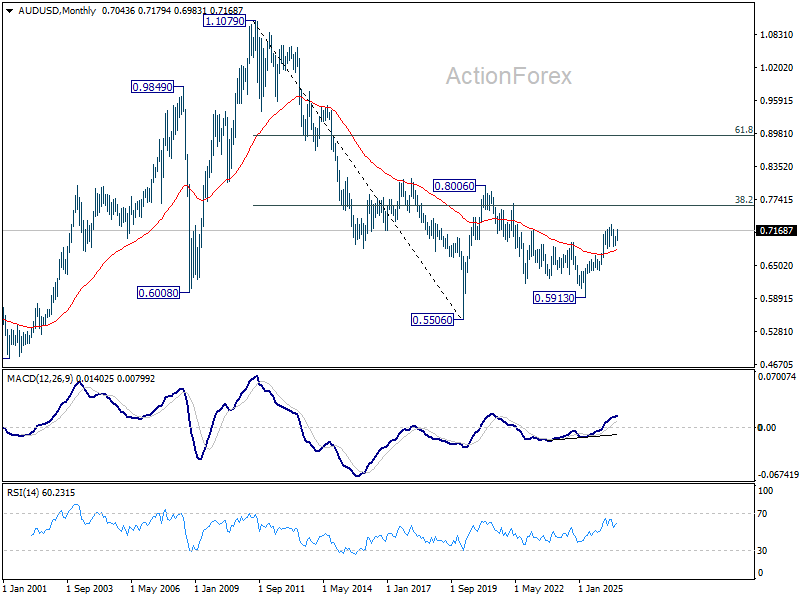
AUD/USD Weekly Report
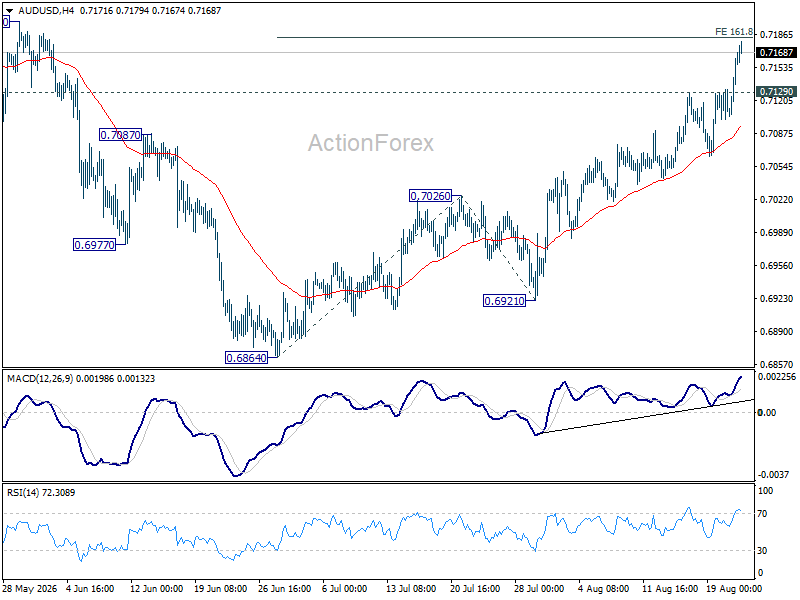
AUD/USD's rally from 0.6864 continued last week and accelerated higher. Initial bias remains on the upside this week. Firm break of 161.8% projection of 0.6864 to 0.7026 from 0.6921 at 0.7183 will bring retest of 0.7277 high. On the downside, below 0.7128 minor support will turn bias neutral and bring consolidations again.
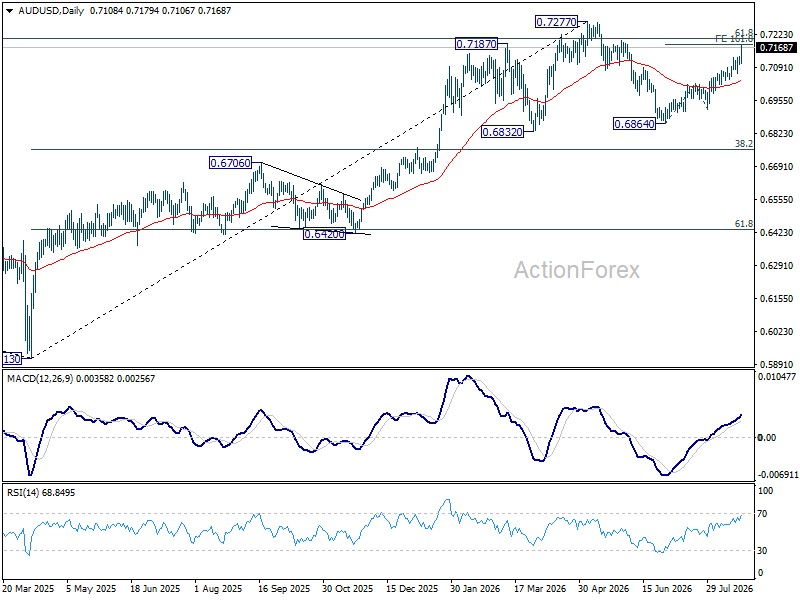
In the bigger picture, price action from 0.7277 medium term top is seen as developing into a correction to rise from 0.5913 only. While deeper decline cannot be ruled out, downside should be contained by 38.2% retracement of 0.5913 to 0.7277 at 0.6756 to bring rebound. Consolidations would continue below 0.7277 for a while, before an eventual upside breakout. Firm break of 0.7277 will target 0.8006 (2021 high).
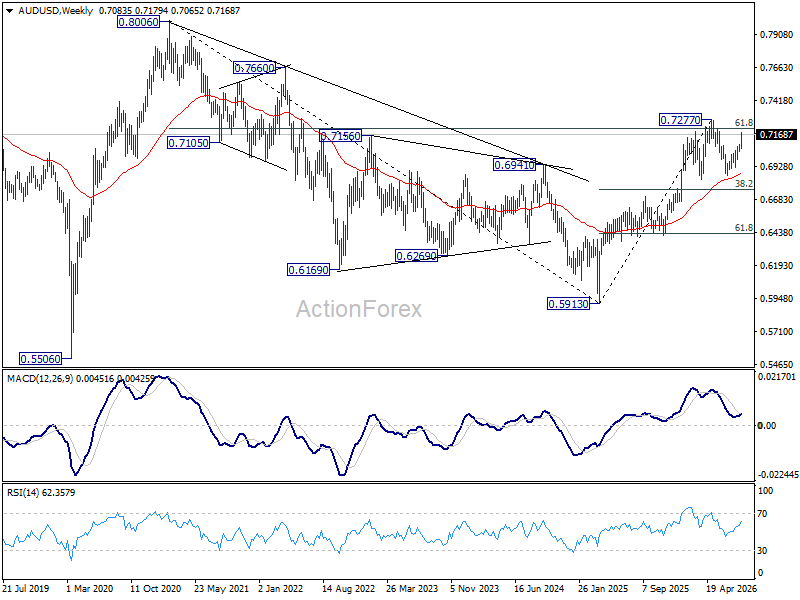
In the long term picture, rise from 0.5913 is seen as the third leg of the whole pattern from 0.5506 (2020 low). It's still early to judge if this is an impulsive or corrective pattern. But in either case, further rise should be seen back to 0.8006 and possibly above. This will remain the favored case as long as 55 W EMA (now at 0.6870) holds.
USD/CAD Weekly Outlook
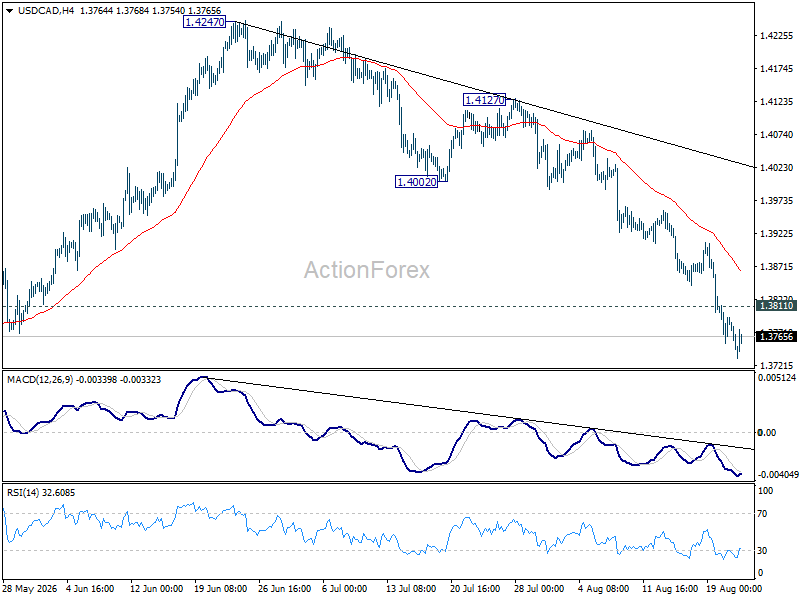
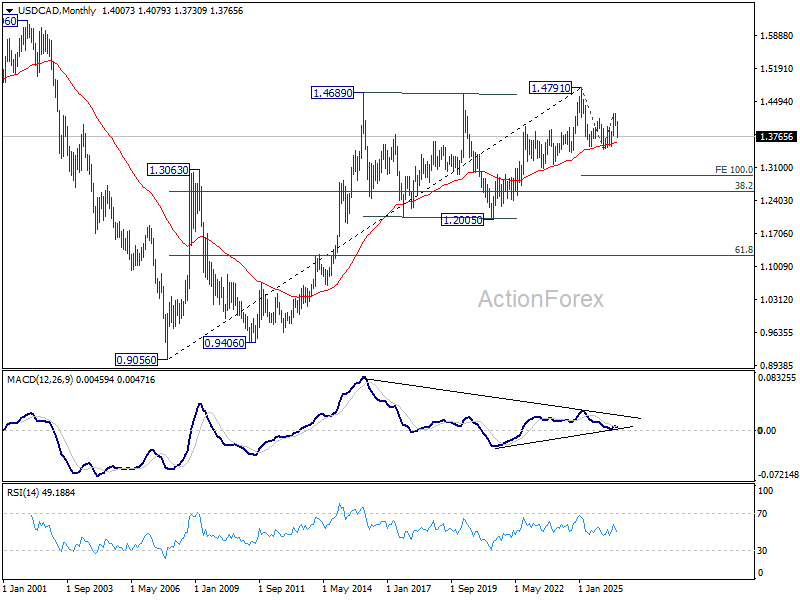
USD/CAD's decline from 1.4247 accelerated lower last week and there is no sign of bottoming yet. Initial bias stays on the downside this week for retesting 1.3480 low. On the upside, above 1.3811 minor resistance will turn intraday bias neutral again first.
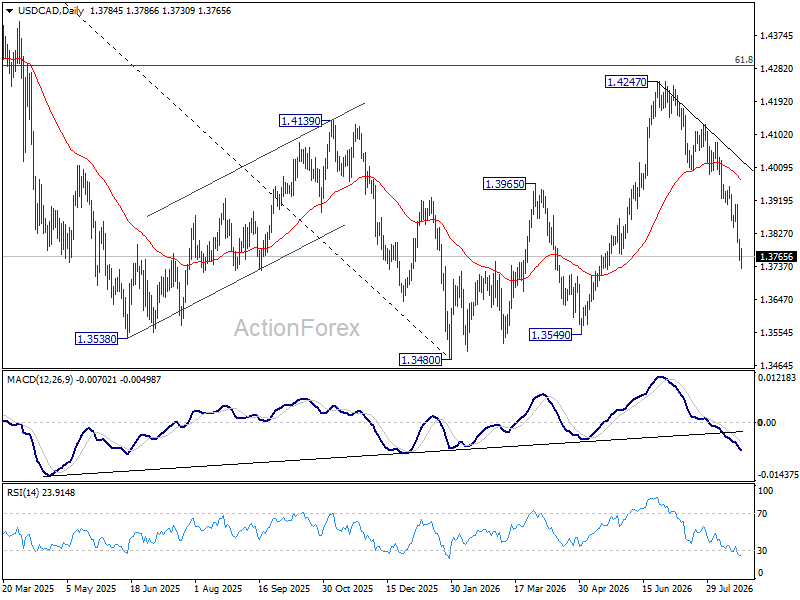
In the bigger picture, the pattern from 1.4791 (2025 high) is still extending, with fall from 1.4247 as the third leg. Firm break of 1.3480 will pave the way to 100% projection of 1.4791 to 1.3480 from 1.4247 at 1.2936. For now, medium term risk will stay on the downside as long as 1.4247 resistance holds, in case of rebound.
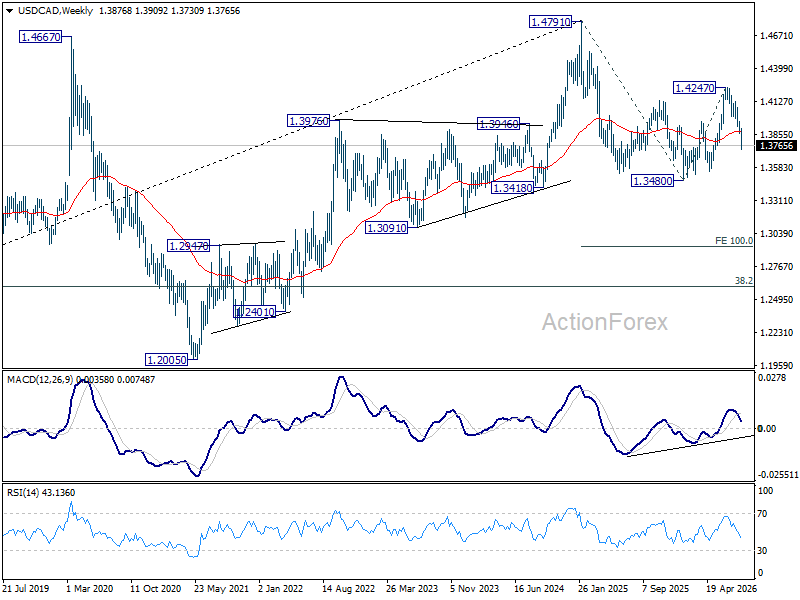
In the long term picture, considering bearish divergence condition in M MACD, fall from 1.4791 could be corrective whole up trend from 0.9056 (2007 low). Firm break of 1.3480 support and sustained trading below 55 M EMA (now at 1.3636) will pave the way to 38.2% retracement of 0.9056 to 1.4791 at 1.2600. Nevertheless, strong rebound from 55 M EMA will maintain medium term bullishness.
GBP/JPY Weekly Outlook
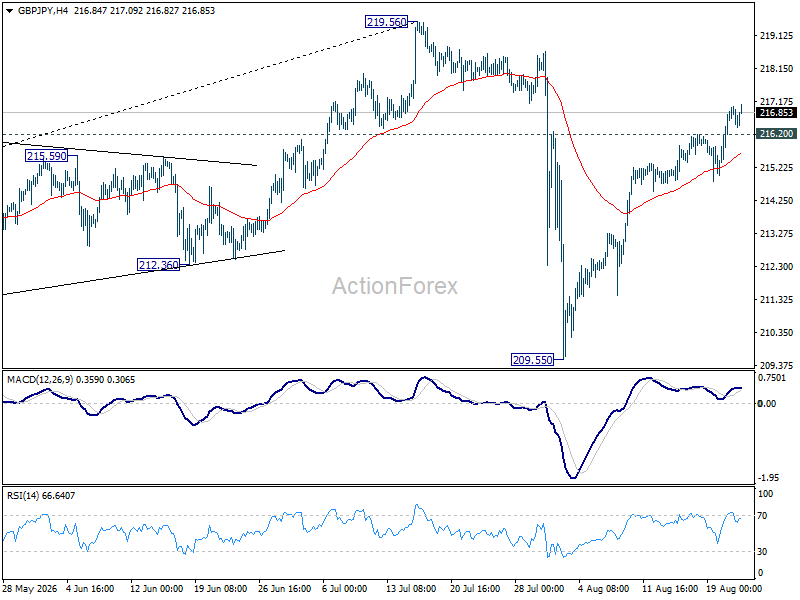
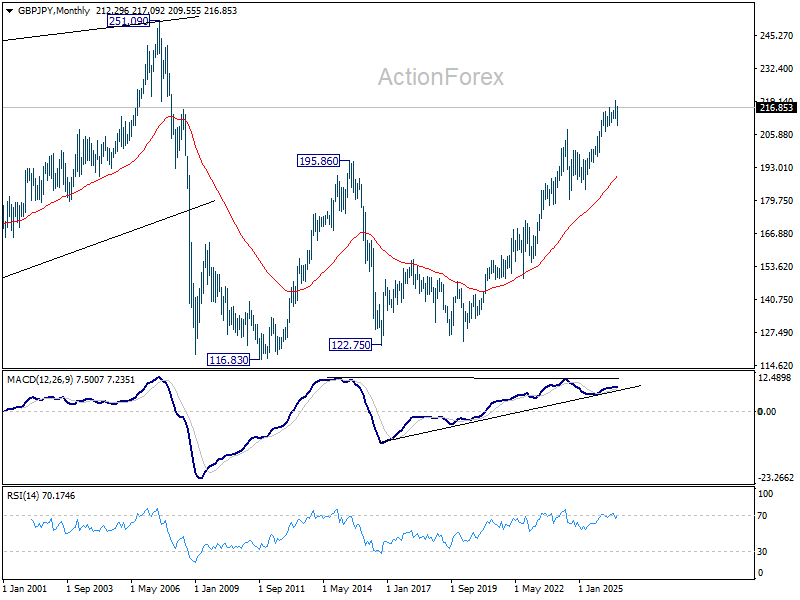
GBP/JPY's rally continued last week and the development is inline with the case that corrective fall from 219.56 has already completed. Initial bias stays on the upside this week for retesting 219.56 high. On the downside, below 216.20 minor support will turn bias neutral and bring consolidations first, before staging another rally.
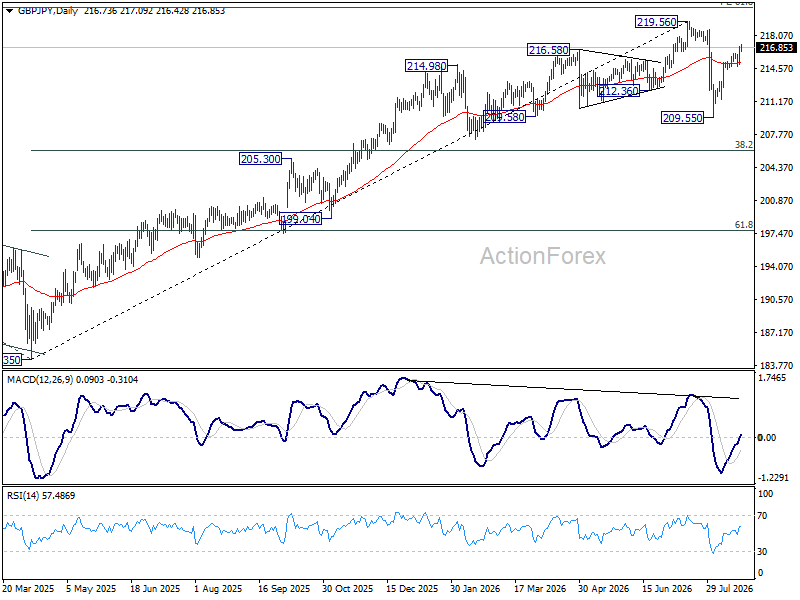
In the bigger picture, strong rebound above 55 W EMA (now at 209.15) keeps the up trend from 123.94 (2020 low) intact. Firm break of 209.55 should target 100% projection of 148.93 to 208.09 from 184.35 at 243.51. However, sustained break of 55 W EMA will argue that it's already in a medium term down trend to 184.35 support.
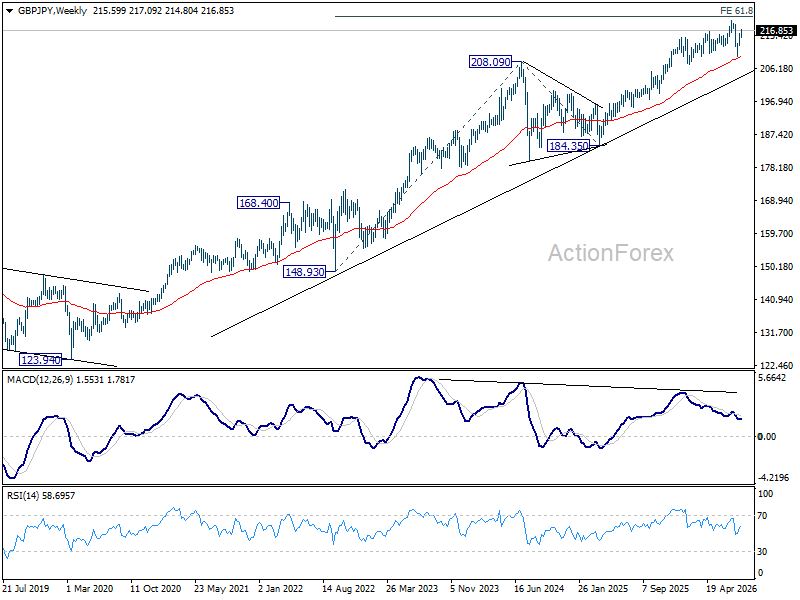
In the long term picture, up trend from 116.83 (2011 low) is in progress. Next target is 251.09 (2007 high). This will remain the favored case as long as 55 M EMA (now at 189.71) holds.
EUR/JPY Weekly Outlook
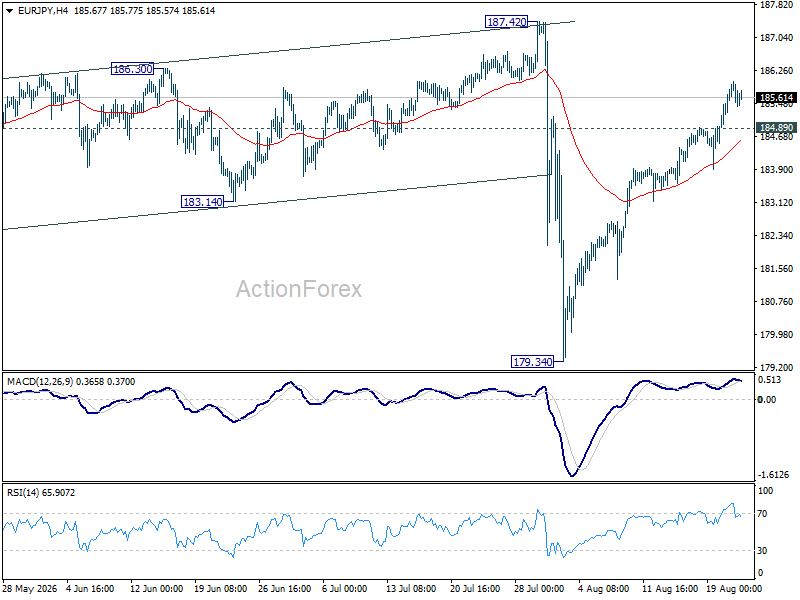
EUR/JPY's rally from 179.34 continued last week. The development is inline with the case that fall from 187.93 has completed as a three wave correction. Initial bias stays on the upside this week for 187.42 resistance. Firm break there will target a retest on 187.93 high. On the downside, below 184.89 minor support will turn intraday bias neutral and bring consolidations first, before staging another rally.
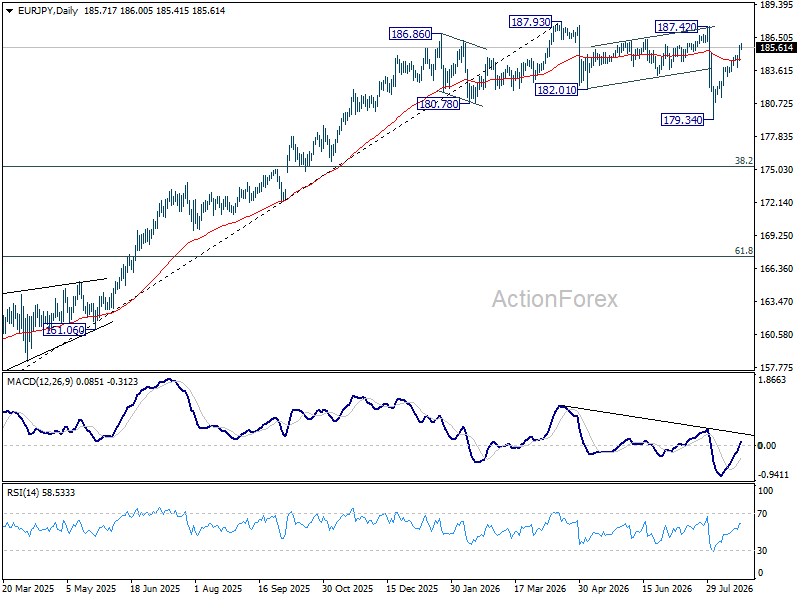
In the bigger picture, strong rebound from rising 55 W EMA (now at 180.64) keeps the up trend from 114.42 (2020 low) intact. Break of 187.93 will target 78.6% projection of 124.37 (2022 low) to 175.41 (2025 high) from 154.77 at 194.88. However, sustained break of 55 W EMA will argue that it's already in a medium term down trend to 175.41 resistance turned support and below.
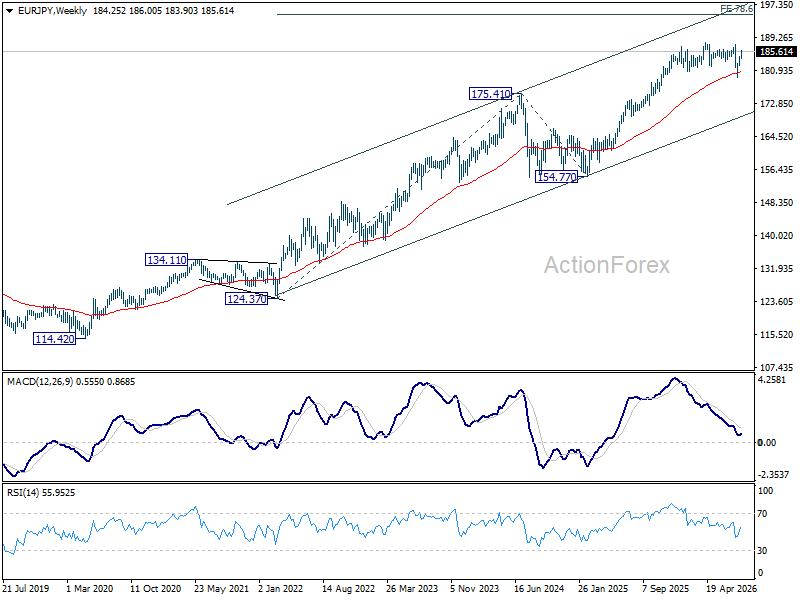
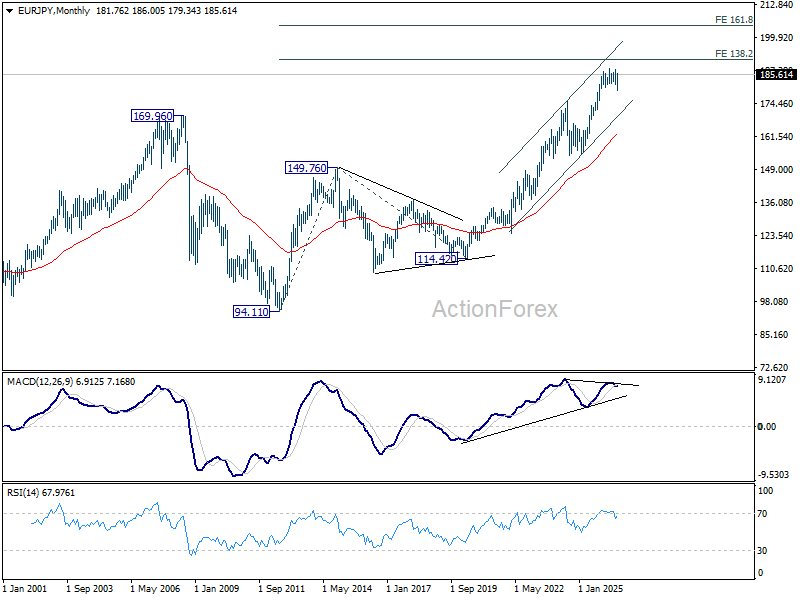
In the long term picture, up trend from 94.11 (2021 low) is in progress. Next target is 138.2% projection of 94.11 to 149.76 (2014 high) from 114.42 (2020 low) at 191.32. This will remain the favored case as long 175.41 resistance turned support holds.
EUR/GBP Weekly Outlook
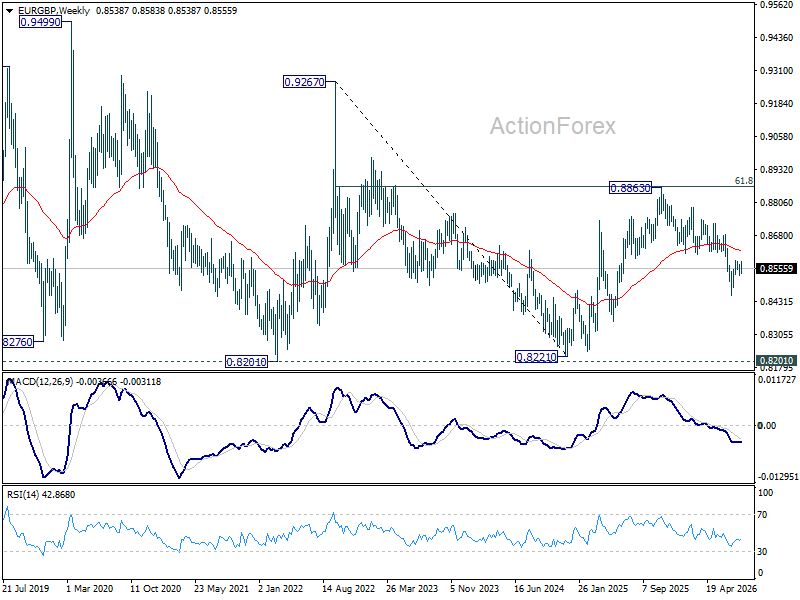
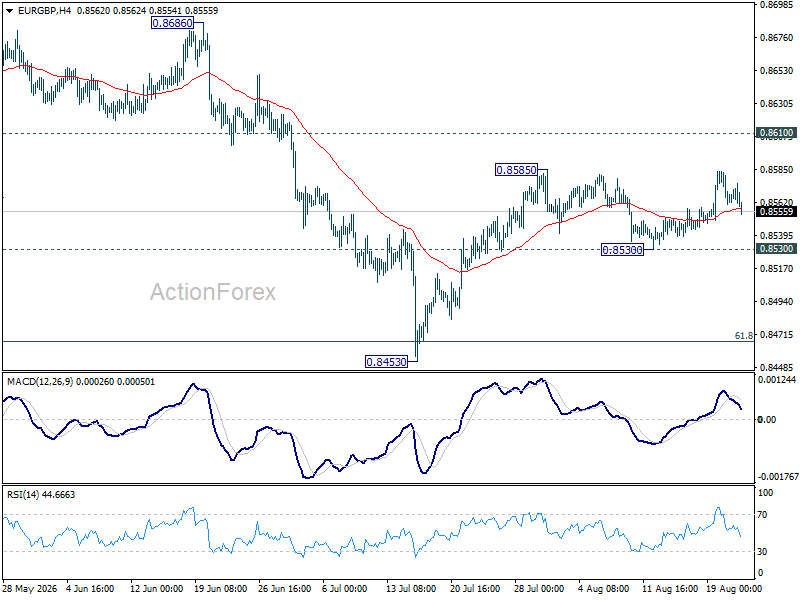
EUR/GBP's rebound was capped below 0.8585 last week. Initial bias remains neutral this week first. Rise from 0.8453 could still extend. But strong resistance should be seen from 0.8610 support turned resistance to limit upside. On the downside, break of 0.8530 support will argue that the corrective rebound from 0.8453 has completed, and turn bias back to the downside for retesting this low. However, firm break of 0.8610 will bring stronger rally to falling channel resistance (now at 0.8654).
In the bigger picture, rise from 0.8221 (2024 low) should have completed at 0.8863, just ahead of 38.2% retracement of 0.9267 (2025 high) to 0.8221 at 0.8867. Deeper fall would be seen back to 0.8221. For now, outlook will be neutral at best as long as 0.8610 support turned resistance hold.
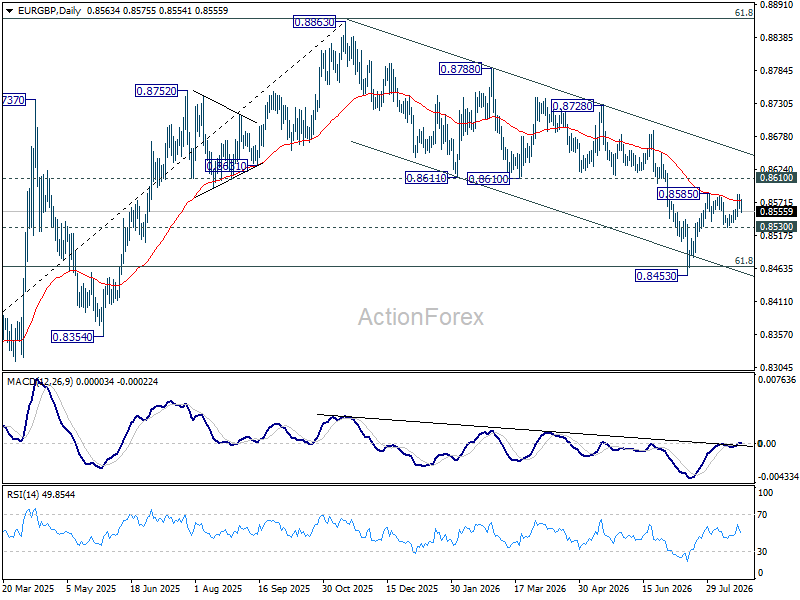
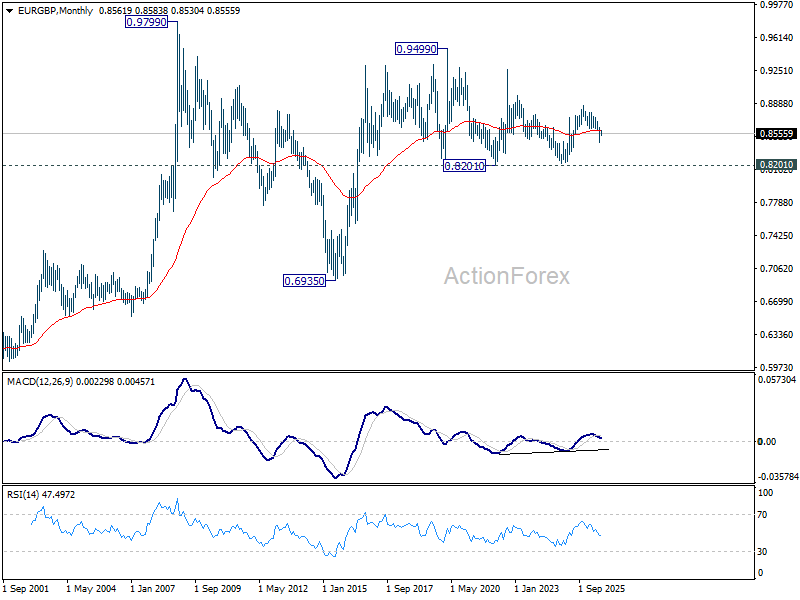
In the long term picture, price action from 0.9499 (2020 high) is seen as part of the long term range pattern from 0.9799 (2008 high). Range trading should continue between 0.8201 and 0.9499, until there is clear signal of imminent breakout.