Sample Category Title
Japan’s Core CPI Cools as Expected
The Japanese yen is showing little movement on Friday. In the North American session, USD/JPY is trading at 148.69, up 0.06% on the day. On the data calendar, Japan's inflation rate eased in June. It's a light day in the US, highlighted by UoM consumer sentiment and inflation expectations.
Japan's core CPI eases to 3.3%
Inflation in Japan fell in June as expected and the yen is showing little movement today. Headline CPI dropped to 3.3% y/y from 3.5% in May, matching the consensus. This was the lowest level since Nov. 2024, as prices for electricity and gasoline rose more slowly in June. Food prices were up 7.2%, the most since March, as rice prices soared 100%. Monthly, CPI eased to 0.1%, down from 0.3% in May. Core inflation, which excludes fresh food but includes energy, fell to 3.3% from 3.7%, in line with the consensus and the lowest pace since March.
The inflation numbers come just before an election for Japan's Upper House of Parliament on Sunday. The ruling coalition is in danger of losing its majority, and if that happens, it will likely impact yields and the yen next week.
The Bank of Japan meets next on July 31 and is expected to continue its wait-and-see approach and hold interest rates. The BoJ hiked rates in January but hopes for a series of rate increases were dashed after US President Trump promised and delivered tariffs on many US trading partners, including Japan.
Trade talks between the US and Japan have bogged down and Trump has threatened to hit Japan with 25% tariffs if an agreement isn't reached by Aug. 1. In this uncertain environment, the BoJ isn't likely to raise interest rates.
USD/JPY Technical
- USD/JPY is testing resistance at 148.66. Above, there is resistance at 1.4882
- 148.44 and 148.28 are the next support levels

USDJPY 4-Hour Chart, July 18, 2025
Gold Ends the Week in Decline
Gold remained below $3,340 per ounce this week, on track to close in negative territory for the first time in three weeks. The downward pressure followed stronger-than-expected US economic data, which reduced expectations of an imminent interest rate cut by the Federal Reserve.
June’s retail sales significantly outperformed forecasts, while initial jobless claims dropped to a three-month low – further evidence of the US economy’s resilience despite ongoing trade tensions.
In response, Adriana Kugler, a member of the Federal Reserve’s Board of Governors, suggested that maintaining the current interest rate in the near term would be prudent. Meanwhile, Mary Daly, President of the Federal Reserve Bank of San Francisco, still anticipates two rate cuts before year-end.
Gold continues to benefit from demand for defensive assets amid escalating trade and geopolitical risks. Former US President Donald Trump has announced plans to notify more than 150 trading partners of impending tariffs, heightening uncertainty in global trade.
Additionally, rising geopolitical tensions worldwide reinforce gold’s appeal as a hedge against instability, thereby ensuring its role as a key tool for wealth preservation.
Technical Analysis: XAU/USD
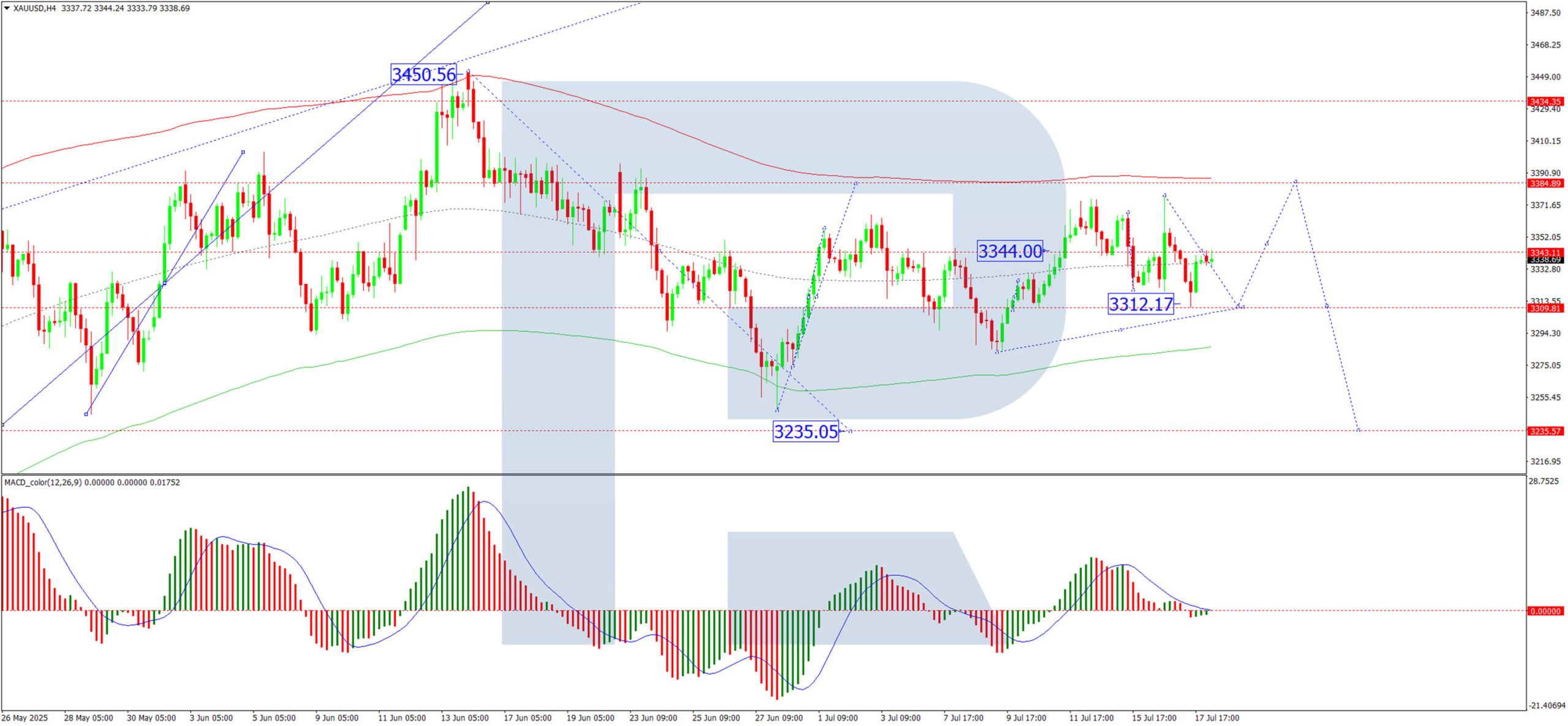
H4 Chart:
The XAU/USD pair is consolidating around $3,344 on the H4 chart, with the current range extending downward to $3,312. Today, prices have retested $3,344, and we anticipate further consolidation near this level.
- Bullish scenario: a breakout above $3,344 could trigger an upward wave towards $3,384
- Bearish scenario: a downward breakout may lead to a decline towards $3,235
The MACD indicator supports this outlook, with its signal line above zero and pointing firmly upward.
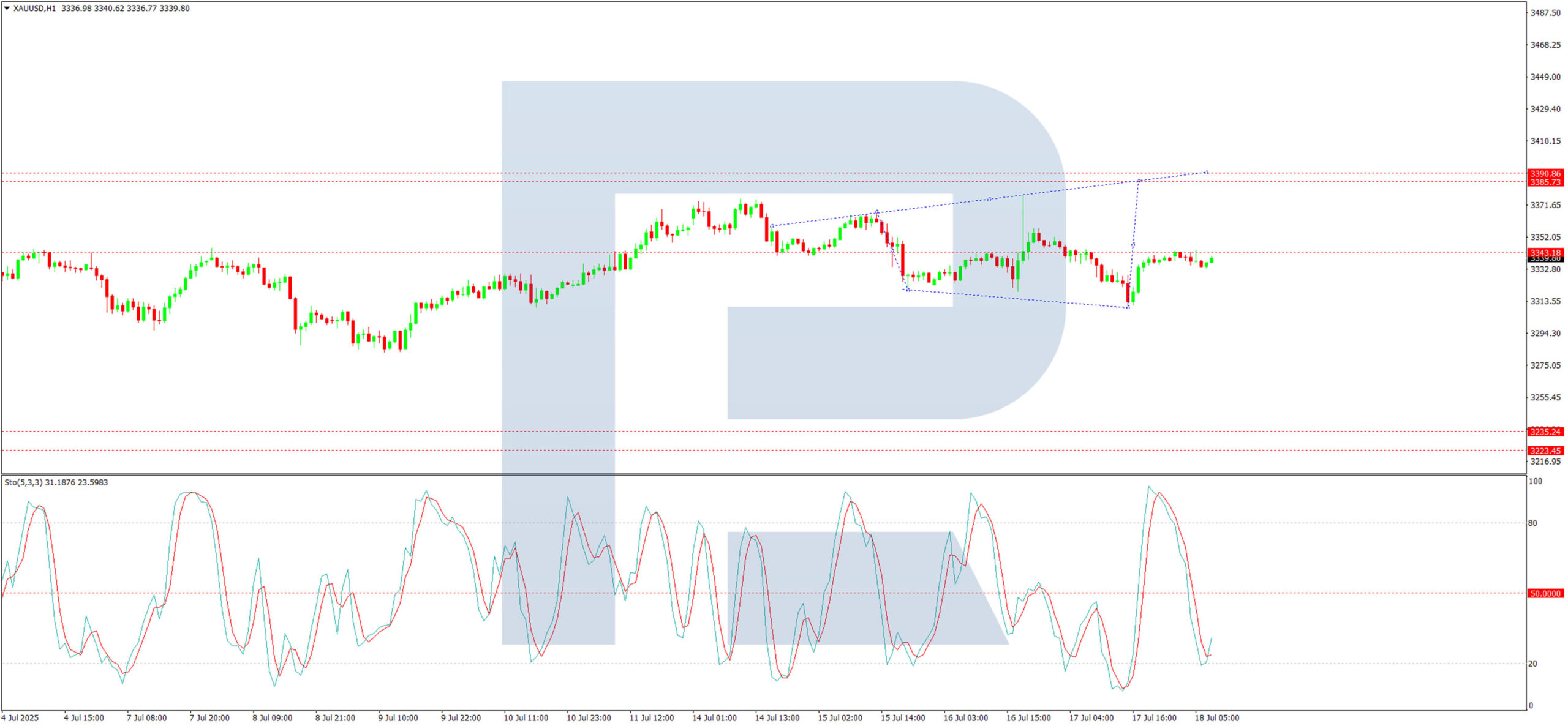
H1 Chart:
On the H1 chart, the market completed a decline wave to $3,310 before rebounding to $3,344, effectively returning to the consolidation range’s midpoint. Currently, trading lacks a clear directional bias, with equal potential for further gains or losses.
- Upside potential: a breakout above $3,344 may extend gains towards $3,384
- Downside risk: a drop below the range could see a downward wave towards $3,235
The Stochastic oscillator aligns with this view, as its signal line has risen from 20 and is now trending upward towards 80.
Conclusion
Gold faces short-term bearish pressure from robust US economic data, but long-term support persists due to trade uncertainties and geopolitical risks. Traders should monitor key technical levels for breakout opportunities in either direction.
US Dollar Index (DXY) Chart Analysis
The addition of the US Dollar Index (DXY) to FXOpen’s suite of instruments offers traders potential opportunities. This financial instrument:
→ serves as a measure of the overall strength of the US dollar;
→ is not tied to a single currency pair but reflects the value of the USD against a basket of six major global currencies, including the EUR, JPY, and GBP;
→ allows traders to capitalise on price fluctuations in the currency market;
→ is used in more advanced strategies for hedging risks in portfolios sensitive to sharp movements in the US dollar.
In today’s environment of heightened volatility, this instrument becomes particularly valuable. The active stance of US President Donald Trump — through the implementation of trade tariffs, sanctions, and unpredictable geopolitical rhetoric — gives traders even more reason to closely monitor the DXY chart.
Technical Analysis of the DXY Chart
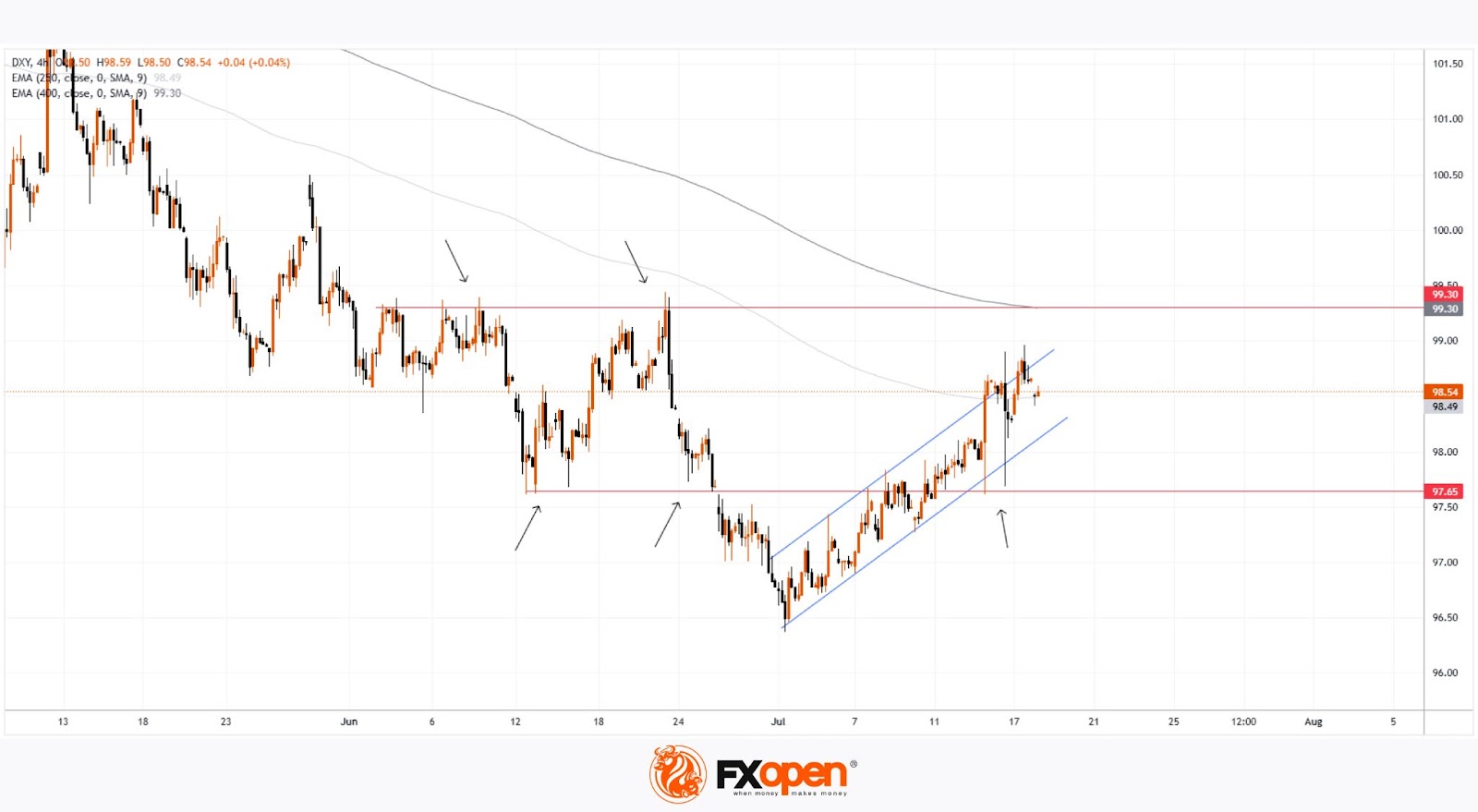
Moving averages show that the US Dollar Index displayed a predominantly bearish trend during the first half of 2025.
However, the picture shifted in July: the index began rising steadily (already up approximately +1.9% since the beginning of the month), highlighted by the blue ascending trend channel.
This suggests that the DXY may have found support following a prolonged decline, and a shift in market sentiment could be underway: after a bearish phase, a period of consolidation may follow. If this scenario plays out, we could see DXY oscillating between the 97.65 and 99.30 levels – both of which show signs of acting as support and resistance (as indicated by the arrows).
Trade global index CFDs with zero commission and tight spreads. Open your FXOpen account now or learn more about trading index CFDs with FXOpen.
This article represents the opinion of the Companies operating under the FXOpen brand only. It is not to be construed as an offer, solicitation, or recommendation with respect to products and services provided by the Companies operating under the FXOpen brand, nor is it to be considered financial advice.
Nikkei 225 Forecast: Start of New Medium-Term Bullish Trend Amid Rising JGB Yields
Key takeaways
- Nikkei 225 rallies 34% from April lows to June highs, driven partly by post-tariff optimism despite Japan being targeted by US trade measures.
- Nikkei 225 outperforms globally, gaining 28% since 7 April, trailing only South Korea’s KOSPI and ahead of the Hang Seng and S&P 500.
- Rising 30-year JGB yields (+45 bps) spark a -4.2% Nikkei 225 pullback due to fiscal concerns ahead of Japan’s 20 July election.
- Strong economic & earnings data: Citigroup Surprise Index and Earnings Revisions Index support bullish fundamentals for Japanese stocks.
- Bullish technical breakout from flag pattern signals potential for Nikkei 225 to challenge resistance at 40,620 and 42,500/890.
This is a follow-up analysis of our prior report, “Nikkei 225 Outlook: Negative sentiment overshadows positive fundamentals” published on 4 March 2025.
Since our last publication, the price actions of the Japan 225 CFD Index (a proxy for the Nikkei 225 futures) have staged the expected corrective decline and retested the 5 August 2024 ‘s major swing low of 30,390 on 7 April 2025.
Thereafter, the Japan 225 CFD Index has staged a magnificent rally of 34% from the 7 April 2025 low to the 30 June 2025 high ex-post US “Liberation Day” in early April, where US President Trump announced a slew of higher reciprocal tariffs on the respective US trading partners, which include Japan, that has been hit with a 24% levy (now at 25% with an extended deadline of 1 August for negotiation)
Japan’s Nikkei 225, one of the best-performing stock indices
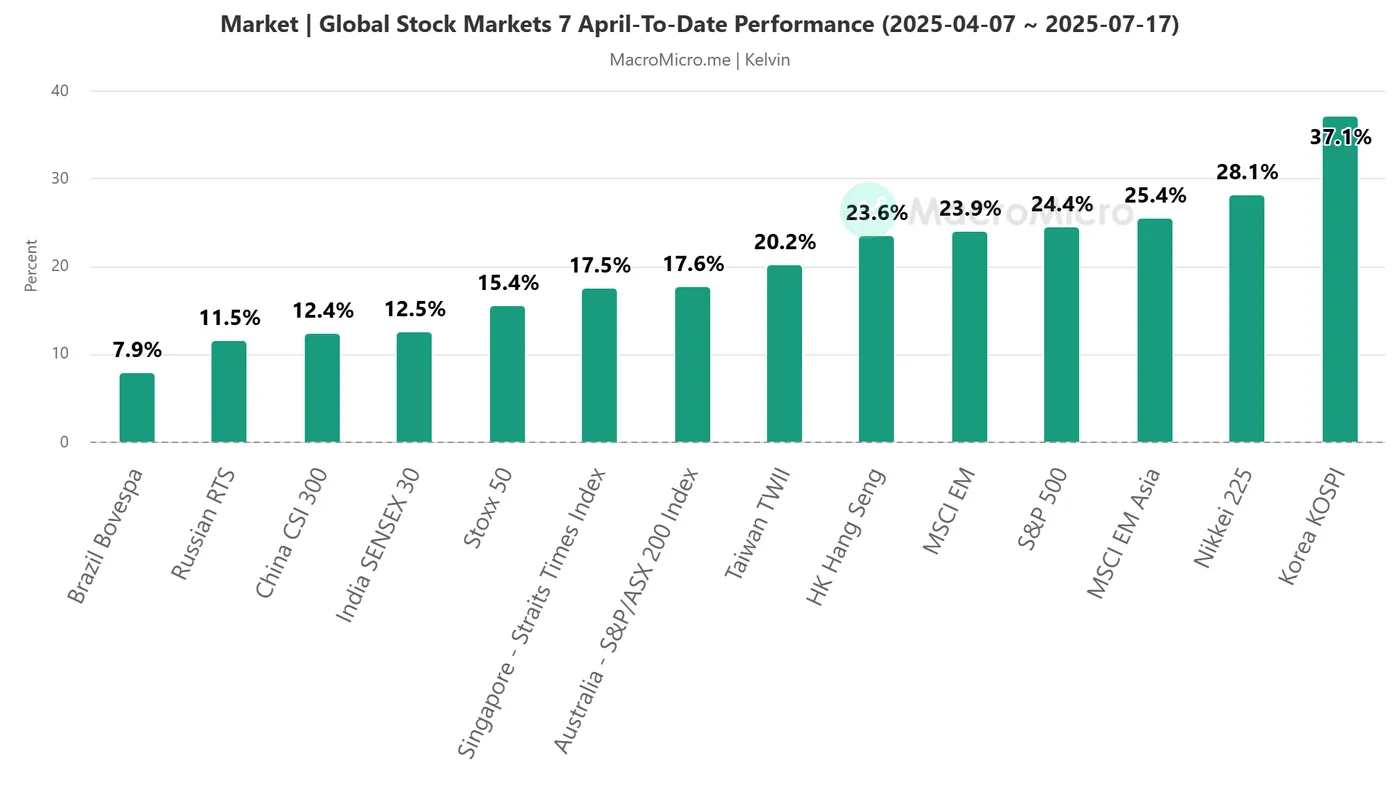
Fig 1: Major stock indices performances since 7 Apr 2025 till 17 Jul 2025 (Source: MacroMicro, click to enlarge chart)
On a closing level basis since 7 April, the Nikkei 225 is one of the top-performing Asia Pacific stock markets as of 17 July with a gain of 28%, just trailing behind the top performer, South Korea’s KOSPI’s return of 37%, and outperformed the Hong Kong’Hang Seng Index (24%), and US S&P 500 (24%). So far, the Nikkei 225 has yet to break above its current all-time high level printed in July 2024 (see Fig 1).
A recent spike in the 30-year JGB bond yield has created headwinds
The recent price actions of the Japan 225 CFD Index have staged a corrective decline of -4.2% from 30 June to 16 July, in line with the recent uptick seen on the long-term 30-year Japanese Government Bond (JGB) yield, where it rose by 45 basis points (bps) from the 4 July low of 2.75% to retest its recent all-time high of 3.2% (printed in May) on 15 June.
Japan’s surge in 30-year JGB yield reflects market anxiety over the upcoming upper-house election on Sunday, 20 July, and the spectre of expansive fiscal policies. With state debt near 250% of GDP and institutional demand skewed away from longer-term JGBs, the surge underscores a fragile balance between Japan’s fiscal commitments and monetary stance. If election outcomes favour populist spending, Japan risks rising borrowing costs and possible credit rating downgrades, forcing fiscal restraint or central bank intervention.
Other supportive fundamental factors can create a tailwind buffer
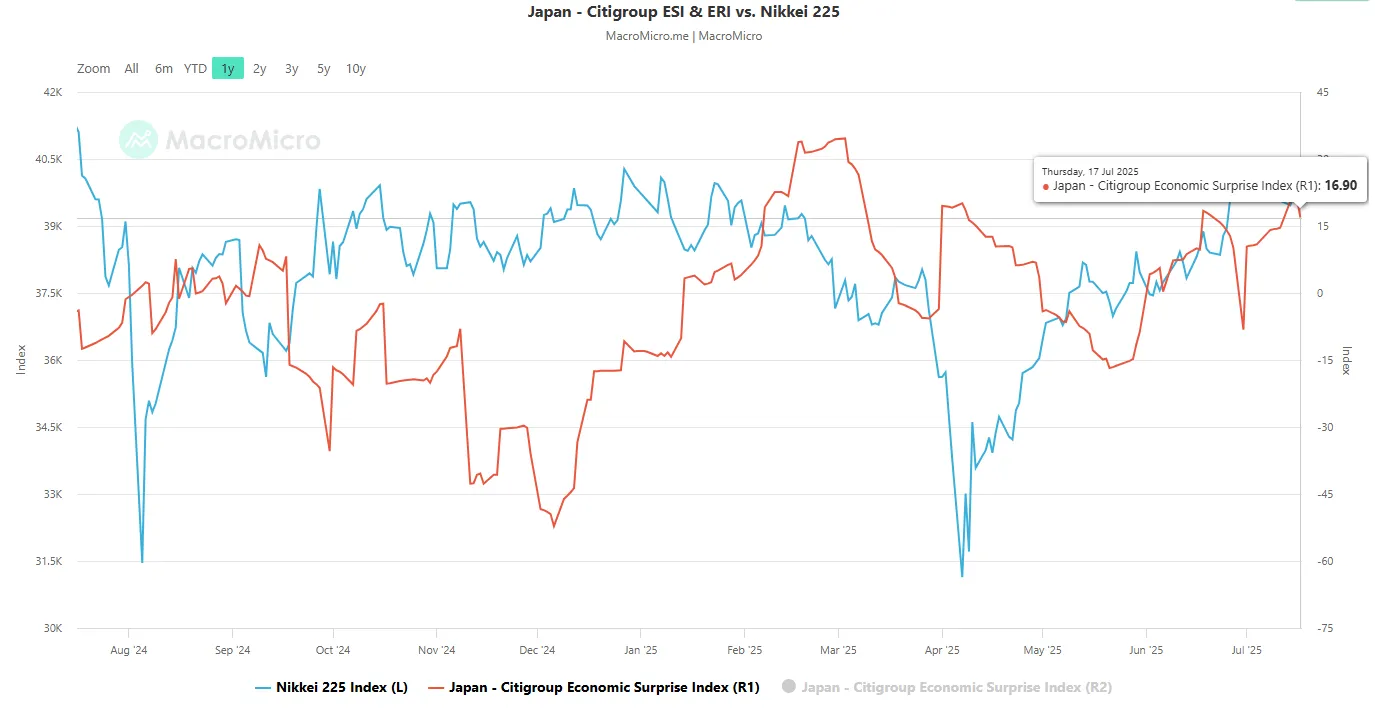 Fig 2: Japan’s Citigroup Economic Surprise Index as of 17 Jul 2025 (Source: MacroMicro, click to enlarge chart)
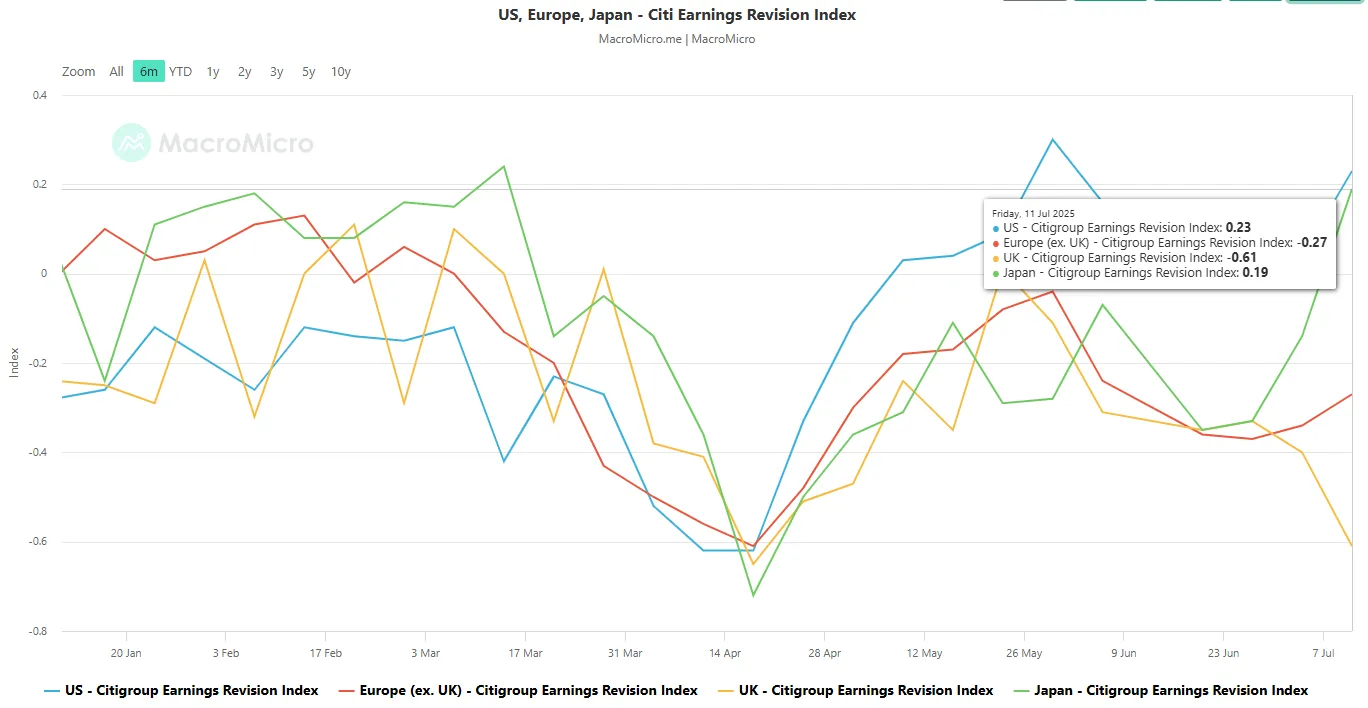 Fig 3: Japan’s Citigroup Earnings Revision Index vs US, UK & Europe as of 11 Jul 2025 (Source: MacroMicro, click to enlarge chart)
There are still supportive fundamental elements that can support further potential upside in the Nikkei 225 despite the ongoing rise in the longer-term JGB yields.
The Citigroup Economic Surprise Index for Japan has been on a steady increase since the 30 June 2025 reading of -8.20 to hit a recent level of 16.90 on Thursday, 17 July. The index is the sum of the difference between the actual value of various economic data and their consensus forecast. If the index is greater than zero and rising, it means that the overall economic performance in Japan is generally better than expected, which in turn, supports a potential strengthening in the Nikkei 225 (see Fig 2).
Secondly, the Japanese stock market has seen the steepest analysts’ earnings upgrades on average since 27 June, versus other regions (US, UK, Europe). Japan’s Citigroup Earnings Revision Index has risen significantly from 27 June’s print of -0.33 to the current level of 0.19 as of 11 July, another potential tailwind to support a bullish Nikkei 225 (see Fig 3).
Technical factors are suggesting a potential multi-month bullish trend for the Nikkei 225
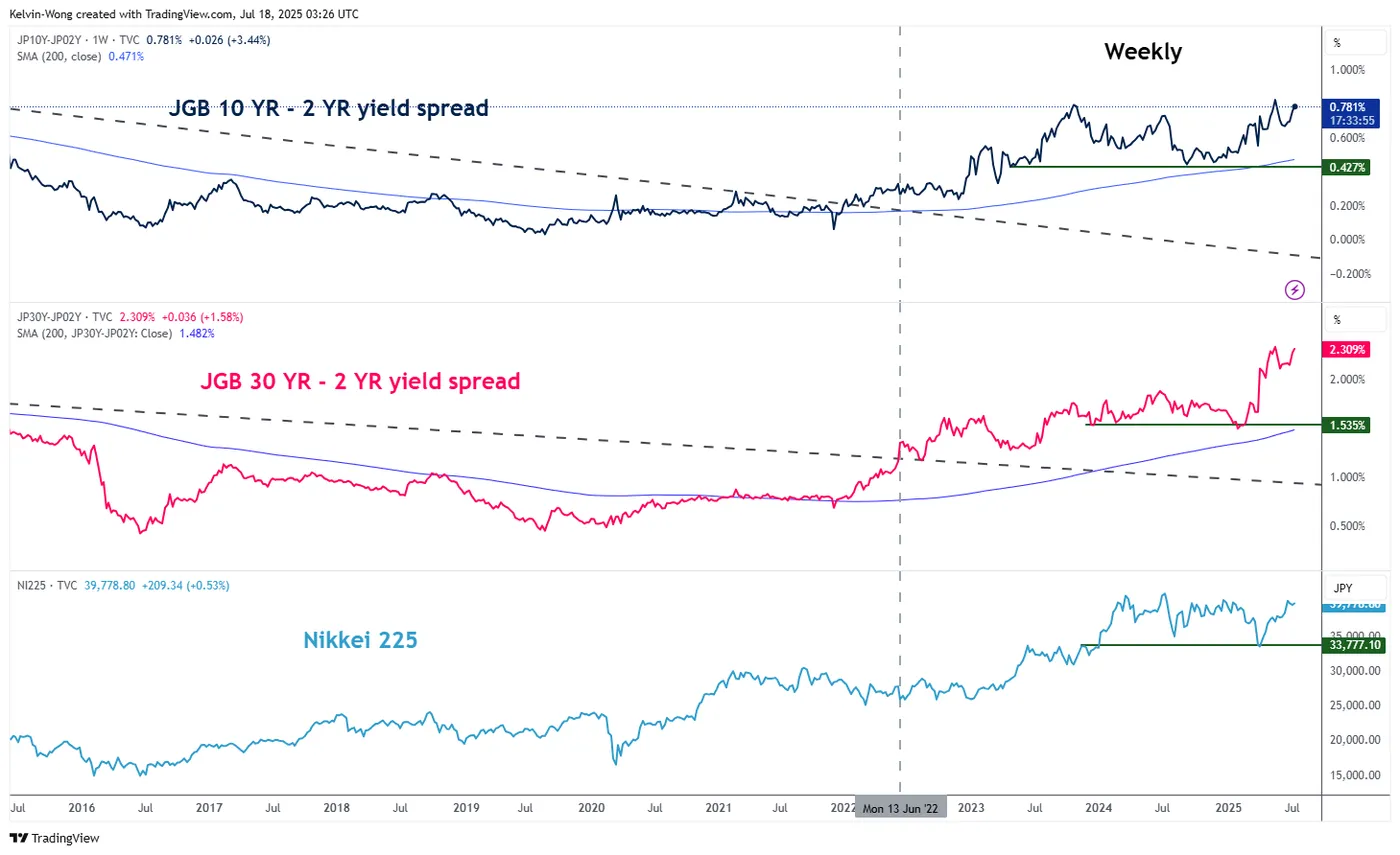
Fig 4: JGB yield curves (30-YR/2-YR & 10-YR/2-YR) major trends as of 18 Jul 2025 (Source: TradingView, click to enlarge chart)
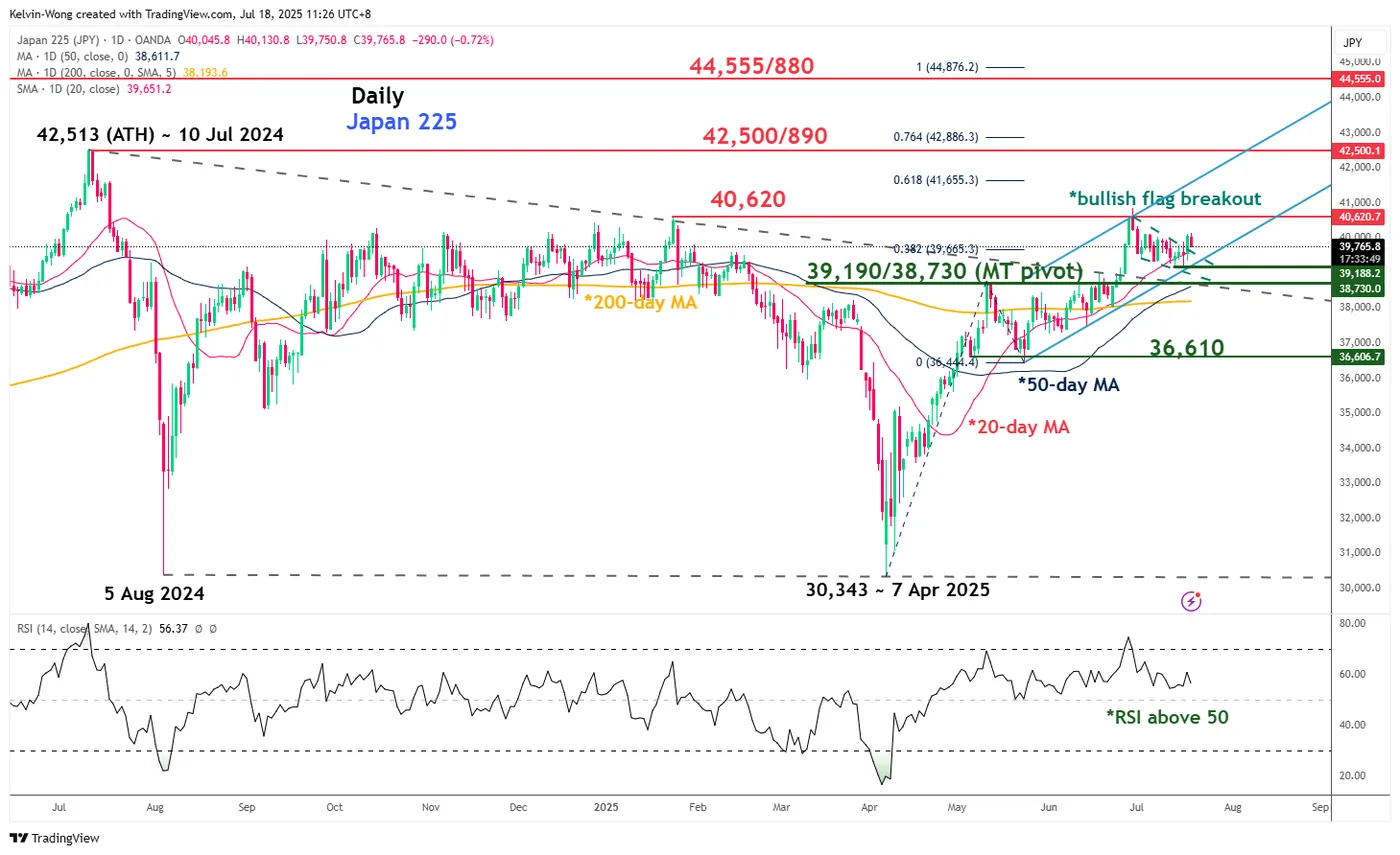
Fig 5: Japan 225 CFD Index medium-term & major trends as of 18 Jul 2025 (Source: TradingView, click to enlarge chart)
A steepening of the JGB yield curves (30-year minus 2-year and 10-year minus 2-year) coupled with supportive fundamentals, as highlighted earlier, is likely to create another tailwind for the Nikkei 225.
The major bullish breakout (steepening conditions) of the JGB yield curves since June 2022 has a direct correlation with the movements of the Nikkei 225, and the major uptrend phases of the JGB yield curves remain intact so far, in turn, may trigger a positive feedback loop into the Nikkei 225 (see Fig 4)
In addition, the daily time frame technical chart of the Japan 225 CFD Index has staged a bullish breakout from a bullish continuation flag configuration on Thursday, 17 July, after a retest on its rising 20-day moving average on Monday, 14 July (see Fig 5).
These observations suggest that a medium-term uptrend phase is evolving in the Japan 225 CFD Index. Watch the 39,190/38,730 key medium-term pivotal support zone for the start of a potential fresh impulsive up move sequence for the next medium-term resistances to come in at 40,620 and 42,500/890 (current all-time high and Fibonacci extension).
However, failure to hold at 38,739 invalidates the bullish scenario to kickstart a medium-term corrective decline sequence to expose the next medium-term support at 36,610.
Dovish Comments by Fed Governor Waller Grab Attention
Markets
The latest batch of US eco data and the absence of destabilizing headlines from the US president helped the S&P 500 (+0.54%) and Nasdaq (+0.75%) to new all-time closing highs. The dollar extended the July comeback with the trade-weighted dollar (DXY) ending the day 98.73 from 98.35. The greenback managed to record daily gains on all but one trading day so far this month, but we must add that the cumulative increase remains limited so far to only 1.7% which compares with a >10% loss in H1 2025. EUR/USD closed at 1.1596 from a start at 1.1641. First technical support only arrives around 1.1461/31 (mid-June low & 24% retracement on this year’s rally). Daily changes on the US yield curve were limited between +1.2 bps (2-yr) and -0.4 bps (30-yr). This hides intraday volatility around the release of solid (and consensus-beating) June US retail sales (+0.6% M/M headline; +0.5% M/M control group), lower-than-expected weekly jobless claims (221k from 228k) and a surge in July Philly Fed business outlook to the best level since February. New orders, shipments and employment all moved back into expansion territory, but price pressures increased as well (expected prices paid highest since January 2022). US Treasuries initially sold off on the data, but the move didn’t went far.
Dovish comments by Fed governor Waller grab attention this morning. They gently lift US Treasuries while weighing somewhat on the dollar. He repeats his call that it would make sense to lower the policy rate by 25 bps as soon as this month’s FOMC meeting. “With inflation near target and the upside risks to inflation limited, we should not wait until the labor market deteriorates before we cut the policy rate. The economy is still growing, but its momentum has slowed significantly and the risks to the FOMC’s employment mandate have increased.” Waller expects growth to remain soft for the rest of 2025. Together with Fed Bowman, Waller is the only one to back a July rate cut with the vast majority of the FOMC supporting Powell’s view to assess the summer inflation prints before drawing firm conclusions on the inflationary impact of Trump’s protectionist trade policy. SF Fed Daly nevertheless warned that you can’t wait forever (with making monetary policy less restrictive), because if you wait until inflation is 2% you risk injuring the economy in a way that was completely unnecessary. Daly still sees a path to two (25 bps) rate cuts this year. Recent Fed comments suggest that the September FOMC meeting might be a confrontational one between doves and hawks. Today’s US eco calendar contains housing data and July consumer confidence from the University of Michigan survey. Markets will be looking for more moderation in 1y (5% in June) and 5-10y (4%) inflation expectations. Overall, we expect this week’s trends on major markets to persist (friendly risk sentiment; breathing space for USD; truce in long term core bonds).
News & Views
National Japanese inflation excluding volatile fresh food prices, slowed in June to 0.1% M/M and 3.3% Y/Y from 0.5% M/M and 3.7% Y/Y in May. A measure excluding fresh food and energy prices, rose further by 0.4% M/M and 3.4% Y/Y from 3.3% in May. Both indices hold well above the Bank of Japan’s 2% target. A decline in energy/utility prices was behind the decline in core inflation. Services inflation accelerated to 0.3% M/M and 1.5% from (1.4%). Goods price inflation slowed to -0.1% M/M and 4.8% Y/Y (from 5.3%). A rise in underlying, cost-driven prices keeps the debate open on the timing of further BoJ policy normalization even as the potential negative impact of trade tensions recently put the central bank in a wait-and-see modus. Markets are very cautious in discounting further policy tightening (60% probability of 25 bps rate hike by year-end). The yen this morning underperforms but this probably mirrors investor caution going into this weekend’s Upper House elections. (USD/JPY 148.75).
Reuters reports that the Bank of England asked some lenders to test their resilience to potential US dollar shocks. The central bank was said to have requested that some lenders assess their dollar funding plans and the degree to which they depend on the US currency, including for short term needs. Amongst others, a bank reportedly was asked to run internal stress tests including scenarios where the USD swap market could dry up entirely. In the background the question swirls whether entities outside the US still can rely on Fed USD swap facilities in case of a shortage of US liquidity.
GBP/JPY Daily Outlook
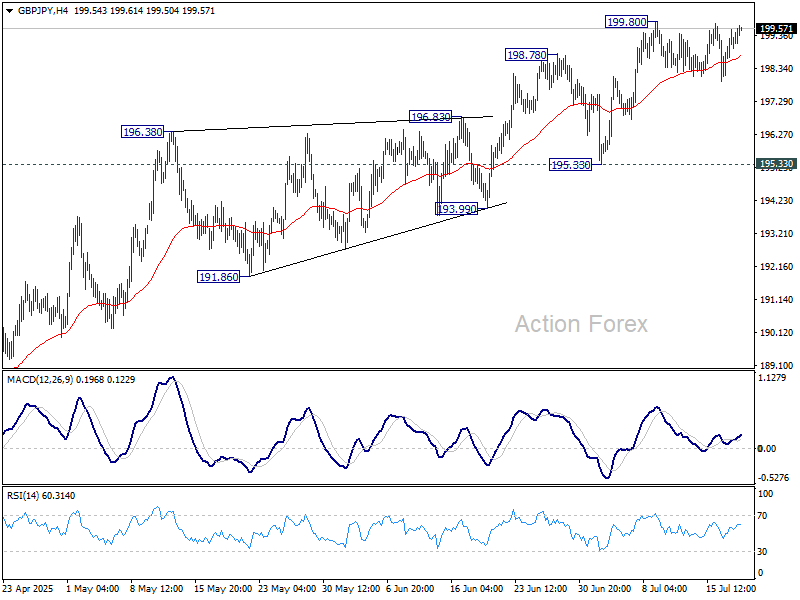
Daily Pivots: (S1) 198.57; (P) 199.06; (R1) 199.90; More...
GBP/JPY is staying in consolidations below 199.80 and intraday bias remains neutral. While deeper retreat cannot be ruled out, further rise is expected as long as 195.33 support holds. On the upside, break of 199.80 will resume the rally from 184.35 and target 100% projection of 180.00 to 199.79 from 184.35 at 204.14.
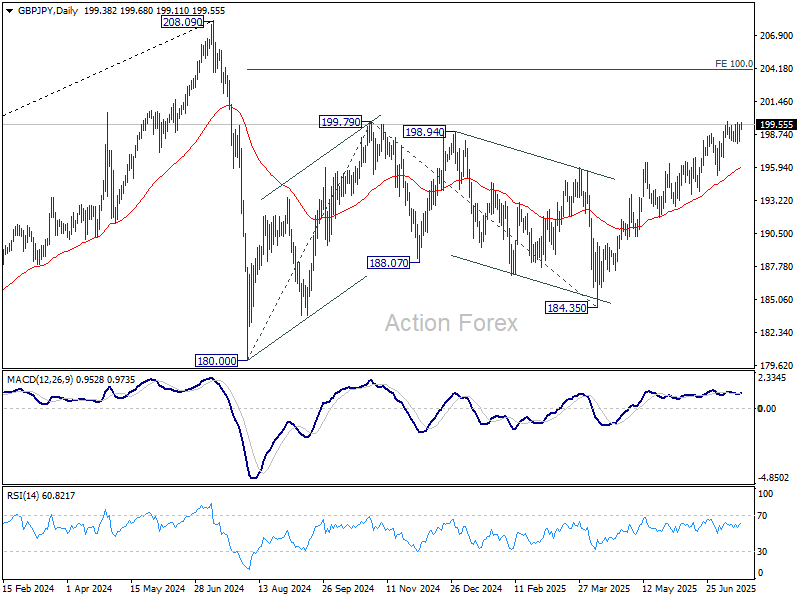
In the bigger picture, price actions from 208.09 (2024 high) are seen as a correction to rally from 123.94 (2020 low). The pattern might still extend with another falling leg. But in that case, strong support should be seen from 38.2% retracement of 123.94 to 208.09 at 175.94 to contain downside. Meanwhile, decisive break of 208.09 will confirm long term up trend resumption.
EUR/JPY Daily Outlook
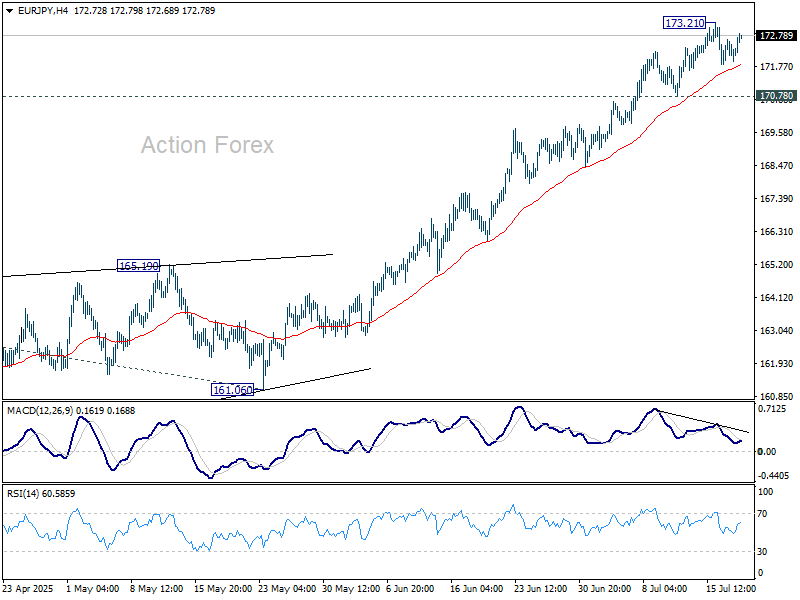
Daily Pivots: (S1) 171.93; (P) 172.30; (R1) 172.75; More...
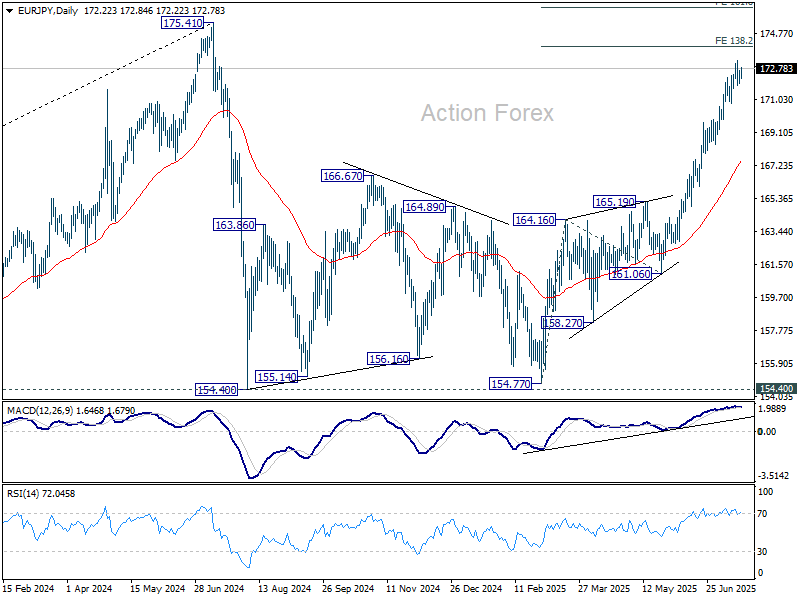
EUR/JPY's consolidations from 173.21 is in progress and intraday bias remains neutral. Further rally is expected as long as 170.78 support holds. Above 173.21 will resume the rise from 154.77 to 138.2% projection of 154.77 to 164.16 from 161.06 at 174.03.
In the bigger picture, price actions from 175.41 (2024 high) are seen as correction to up trend from 114.42 (2020 low). The pattern might still extend with another falling leg. But in that case, strong support should be seen from 38.2% retracement of 114.42 to 175.41 at 152.11 to contain downside. Meanwhile, decisive break of 175.41 will confirm long term up trend resumption.
EUR/GBP Daily Outlook
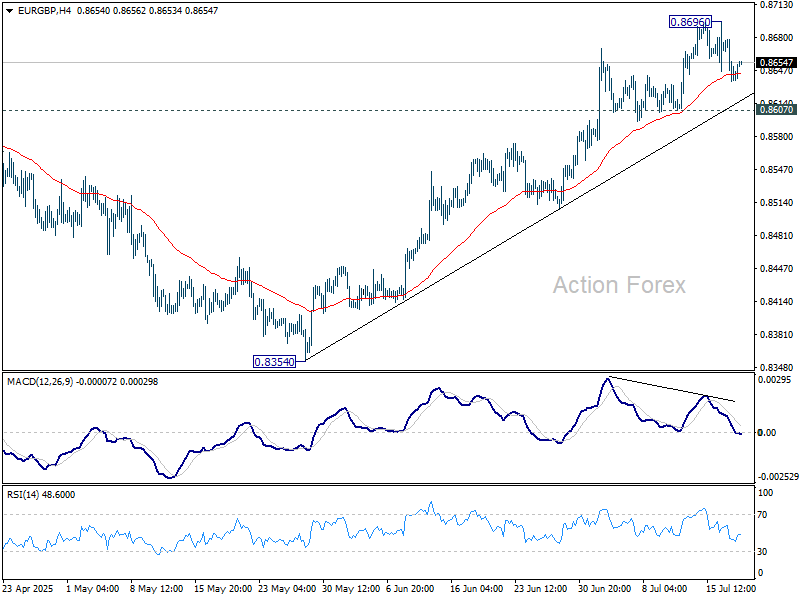
Daily Pivots: (S1) 0.8626; (P) 0.8654; (R1) 0.8672; More...
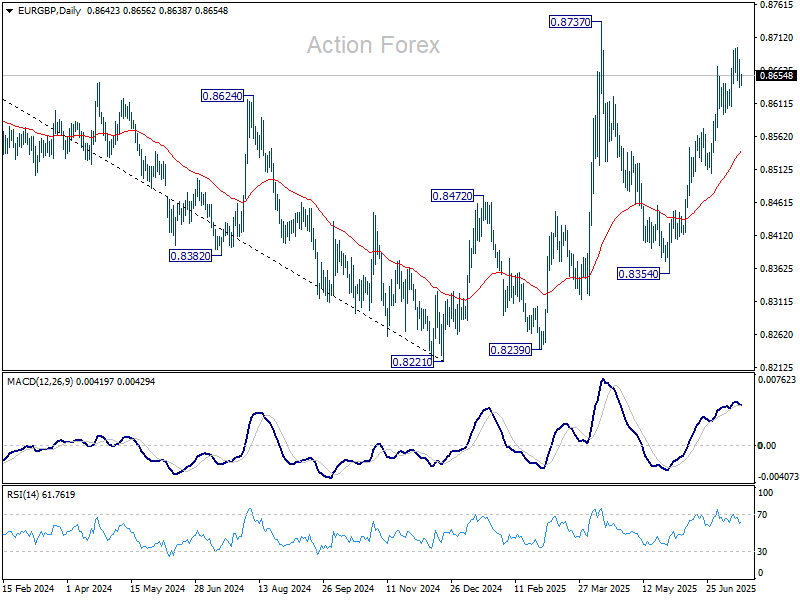
EUR/GBP is staying in consolidations below 0.8695 and intraday bias remains neutral. Further rise is expected as long as 0.8607 support holds. Above 0.8695 will target 0.8737 high. Decisive break there will resume the whole rise from 0.8221 low, and target 0.8867 fibonacci level. Nevertheless, considering bearish divergence condition in 4H MACD, firm break of 0.8607 will argue that rebound from 0.8354 has completed, and turn bias back to the downside for 55 D EMA (now at 0.8541).
In the bigger picture, the structure from 0.8221 medium term bottom are not impulsive enough to suggest that it's reversing the down trend from 0.9267 (2022 high). But even if it's a correction, firm break of 0.8737 will still pave the way to 61.8% retracement of 0.9267 to 0.8221 at 0.8867.
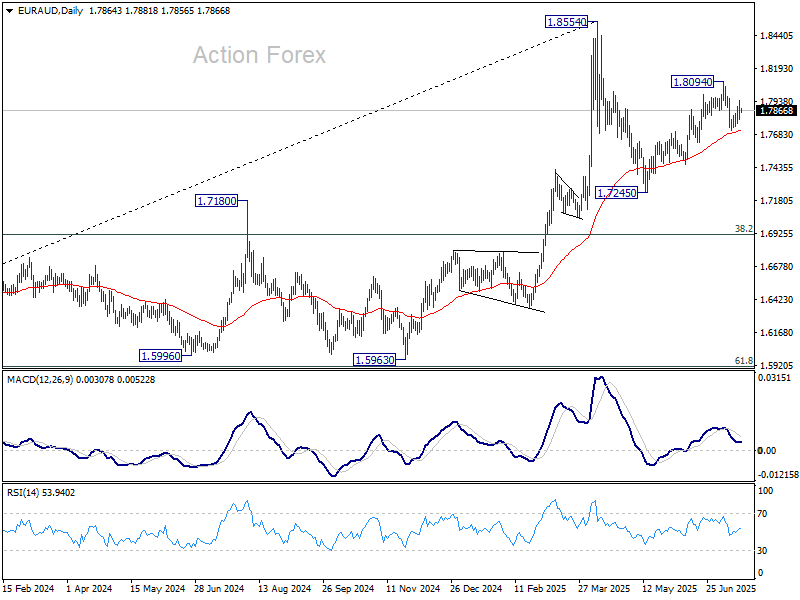
EUR/AUD Daily Outlook
Daily Pivots: (S1) 1.7812; (P) 1.7880; (R1) 1.7944; More...
Intraday bias in EUR/AUD remains mildly on the upside for 1.8094. Firm break there will resume the rise from 1.7245 to retest 1.8554 high. Nevertheless, break of 1.7717 support will revive the case that rise from 1.7245 has completed, and turn bias back to the downside for 1.7459 support instead.
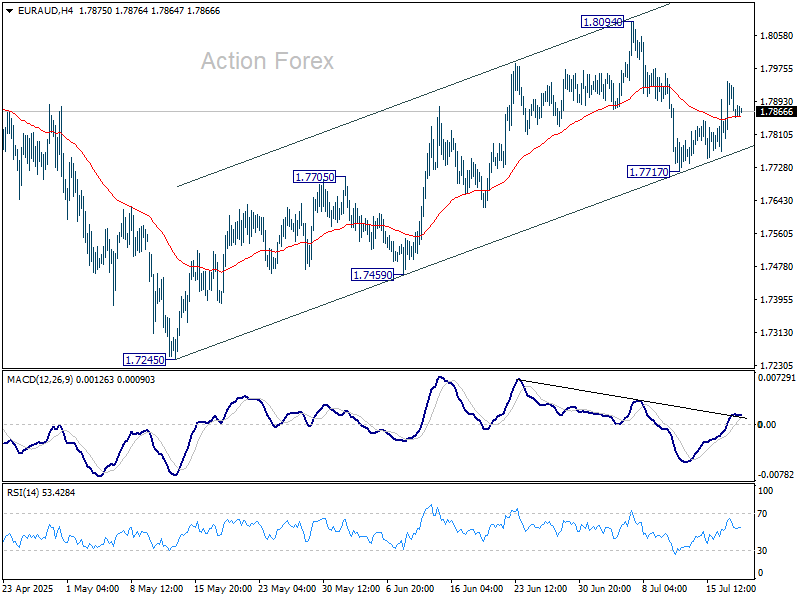
In the bigger picture, price actions from 1.8554 medium term are seen as a corrective pattern. While deeper pullback might be seen, downside should be contained by 38.2% retracement of 1.4281 (2022 low) to 1.8554 at 1.6922 to bring rebound. Up trend from 1.4281 is expected to resume at a later stage.
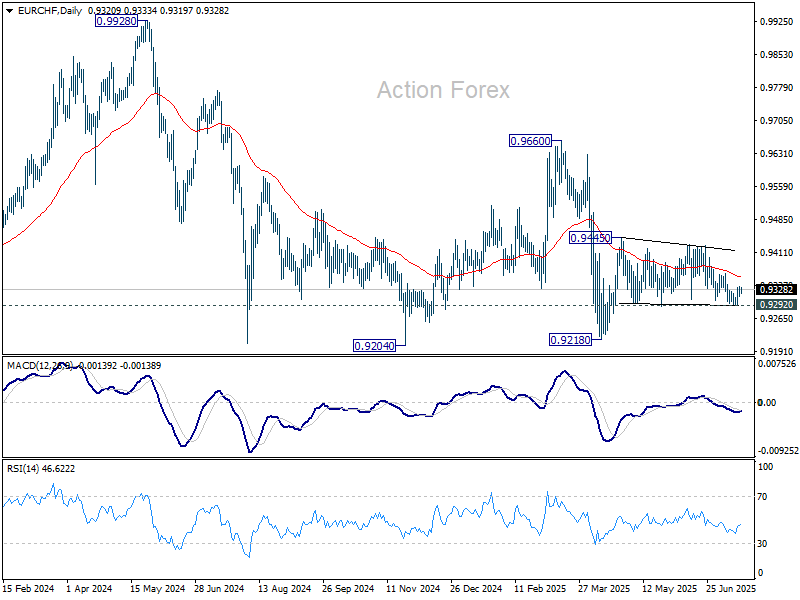
EUR/CHF Daily Outlook
Daily Pivots: (S1) 0.9317; (P) 0.9327; (R1) 0.9338; More....
Intraday bias in EUR/CHF stays neutral at this point. On the upside, break of 0.9365 resistance will suggest that fall from 0.9428 has completed. Further rally should be seen to retest 0.9428/45 resistance zone. Firm break there will resume the rebound from 0.9218. On the downside, firm break of 0.9292 support will bring retest of 0.9218 low instead.
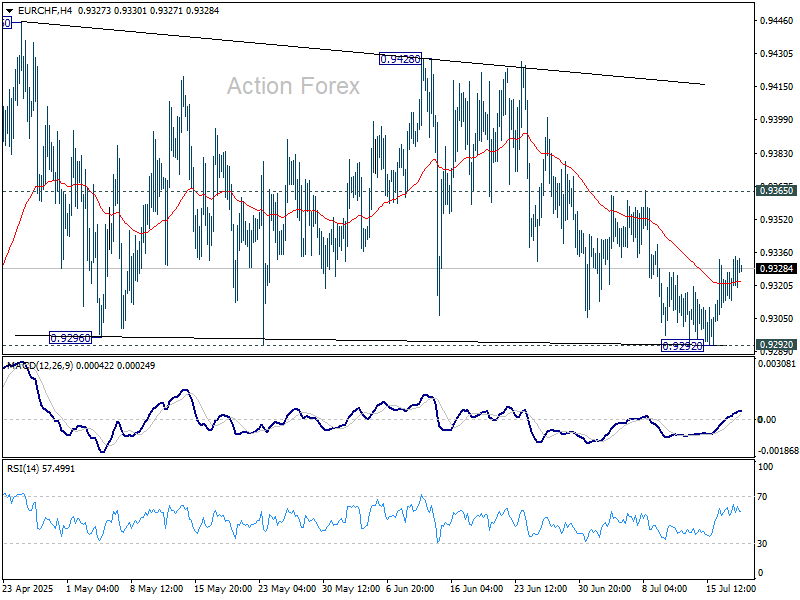
In the bigger picture, while downside momentum has been diminishing as seen in W MACD, there is no sign of bottoming yet. EUR/CHF is still staying below 55 W EMA (now at 0.9437) and well inside long term falling channel. Outlook will stay bearish as long as 0.9660 resistance holds. Break of 0.9204 (2024 low) will confirm resumption of down trend from 1.2004 (2018 high).