Sample Category Title
Markets Rush to Safe Haven as Tariff Clock Ticks Down
While US investors managed to stay relatively composed through most of last week, the calm cracked heading into the weekend. Stocks saw extended selloffs, Treasury yields dropped, and Gold surged to yet another record high — all classic signs of a decisive flight to safety. With risk appetite now clearly under pressure, traders are no longer waiting to see what happens next. They’ve begun positioning defensively ahead of April 2, dubbed “Liberation Day,” when the US is expected to announce sweeping reciprocal tariffs.
That looming event, along with inevitable retaliatory measures from trading partners, has injected a fresh wave of uncertainty into the outlook. Risk-off sentiment is likely to dominate US markets in the near term, at least until the full scale of the tariff fallout becomes clear — including possible re-retaliations.
A big question is whether European markets, which showed notable resilience through March, can continue to defy the global jitters. Stocks in Germany and the UK have largely outperformed US peers, and Euro has led major currencies higher for the month. But the divergence might be tested soon, especially if the trade conflict spills into sectors crucial to the Eurozone's export-heavy economy.
Meanwhile, forex markets have remained relatively stable, with most major pairs stuck inside the prior week's ranges. Kiwi was the lone exception. However, late-week price action across several currency pairs — particularly EUR/USD — suggests that breakouts may be imminent. The common currency is showing signs of bullish potential, with traders watching closely to see whether March strength can evolve into something even more meaningful.
Ultimately, April could be a make-or-break month for the Euro. Either it confirms a genuine bullish turn, reversing the multi-decade downtrend, or it becomes just another short-lived bounce in a longer-term bearish cycle. Otherwise, the March rally risks being remembered as another false dawn in the common currency’s struggle to reverse its long-term decline.
Wall Street Sinks as Markets Front-Run Trump's "Liberation Day" Tariff Blitz
US equities closed out the week with sharp losses, as fears over the looming escalation in trade tensions and persistent inflation sent risk sentiment spiraling. S&P 500 fell -1.53% on the week, while DOW dropped -0.96%. Tech bore the brunt of the selloff, with NASDAQ sliding -2.59%. That puts the NASDAQ on track for a painful monthly decline of over -8%, which would mark its worst monthly performance since December 2022.
The market is being squeezed from two ends. On one side, uncertainty over the scope and scale of US tariffs is weighing on sentiment. On the other, resilient inflation data, especially in core readings, is reinforcing expectations that Fed will keep interest rates higher for longer. Together, these twin pressures are raising fears of a broader slowdown in consumer spending, business investment, and overall economic growth, with the risk of tipping the US into recession.
Trump’s steel and aluminum tariffs have already been in place, but tensions intensified last week as he announced a fresh 25% levy on imported cars and auto parts. That was a mere prelude to what he has dubbed “Liberation Day” on April 2, when the broader reciprocal tariff regime is expected to be unveiled. Stock markets may already be bracing for impact, with traders possibly front-running the announcement, despite the usual quarter-end rebalancing flows.
The broader concern is that even after the April 2 announcement, the tariff saga won’t be over. Canada and the EU are almost certain to respond with retaliations, and China’s stance remains unclear. Others, like the UK and Australia, are expected to hold back. But should retaliation begin to pile up, there is every chance that Trump will double down with even more aggressive measures, setting off a full-blown global trade war.
Still, there is a glimmer of hope. If current market anxiety is more about the "uncertainty" surrounding tariffs rather than the "actual impact" of tariffs themselves, there may be room for a sentiment rebound once the details are made clear — hopefully sometime in Q2.
But that’s a big assumption, and one that relies heavily on the scope, implementation, and global response to the tariffs.
Technically, S&P 500's rebound from 5504.65 should have completed at 5786.95, ahead of falling 55 D EMA (now at 5833.15). Focus for the next few days will be back on 5504.65 support. Firm break there will resume the corrective decline from 6147.47 high to 38.2% retracement of 3491.58 to 6147.43 at 5132.89. Strong support should be seen there to contain downside and bring rebound, at least on first attempt.
Similarly, NASDAQ's corrective recovery from 17238.23 should have completed at 18281.13, ahead of falling 55 D EMA (now at 18608.86). Break of 17238.23 in the next week days will resume the corrective fall from 20204.58 to 38.2% retracement of 10088.82 to 20204.58 at 16340.36. Strong support should be seen there to bring rebound, at least on first attempt. However, firm break there will pave the way to 15708.53 support next.
Yields Tumble on Safe Haven Flows, Dollar Index Relatively Resilient
US 10-year Treasury yields fell sharply on Friday, even as core PCE inflation surprised to the upside. The data highlighted persistent inflationary pressures, with the core PCE accelerating to 2.8% yoy, above expectations and well above Fed’s 2% target. Typically, such data would push yields higher as markets price out rate cuts. However, Friday’s yield decline suggests a different narrative dominated—one of risk aversion.
Technically, corrective recovery from 4.106 could have already completed at 4.387 after hitting falling 55 D EMA (now at 4.3650). Break of 4.174 support will argue that the whole decline from 4.809 is ready to resume through 4.106 short term bottom. Next target will then be 61.8% projection of 4.809 to 4.106 from 4.387 at 3.952, which is below 4% psychological level.
More importantly, the next fall will solidify that decline from 4.809 is another leg inside the medium term pattern from 4.997 (2023 high) with risk of extending to 3.603 (2024 low) and below.
Dollar Index only dipped slightly on Friday and the development argues that corrective recovery from 103.19 might still extend. But even in case of another rise, upside should be limited by 55 D EMA (now at 105.64). Break of 103.19 will resume the fall from 110.17 to 100.15 support next.
Crucially, the next fall will further solidify the case that decline from 110.17 is the third leg of the pattern from 114.77 (2022 high). Break of 100.15 support will pave the way through 99.57 (2023 low) to 100% projection of 114.77 to 99.57 from 110.17 at 94.97.
March Belongs to Europe, But Can Momentum Survive April’s Storm?
Despite rising global trade tensions and the looming threat of reciprocal US tariffs, European currencies and assets have emerged as the standout performers for March. In the equity space, major European indices like Germany’s DAX and the UK’s FTSE have remained relatively insulated from the sharp selloff seen on Wall Street.
Meanwhile, Euro has led the charge in the currency markets, with Sterling and, to a lesser extent, Swiss Franc following closely. The coming weeks will be critical in determining whether this resilience in European markets can be sustained or even turn into renewed momentum.
Technically, with 8474.41 resistance turned support intact, FTSE's price actions from 8908.82 are viewed as a sideway consolidation pattern only. Larger up trend is expected resume through 8908.82 to 100% projection of 7404.08 to 8474.41 from 8002.34 at 9072.67 at a later stage.
As for the stronger DAX, outlook is staying bullish with 22226.34 support intact, which is close to 55 D EMA (now at 22150.63). Another rise is till expected to 161.8% projection of 14630.21 to 18892.92 from 17024.82 at 23921.87, or even further to 24000 psychological level.
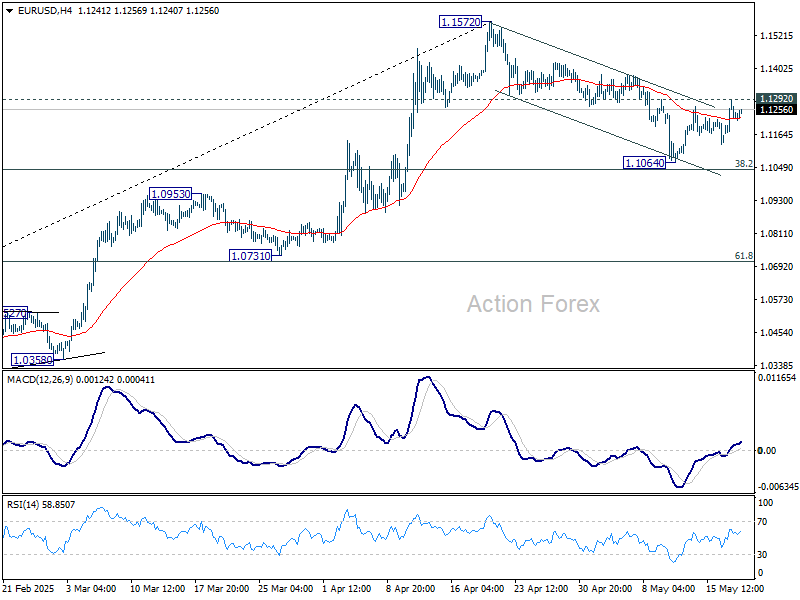
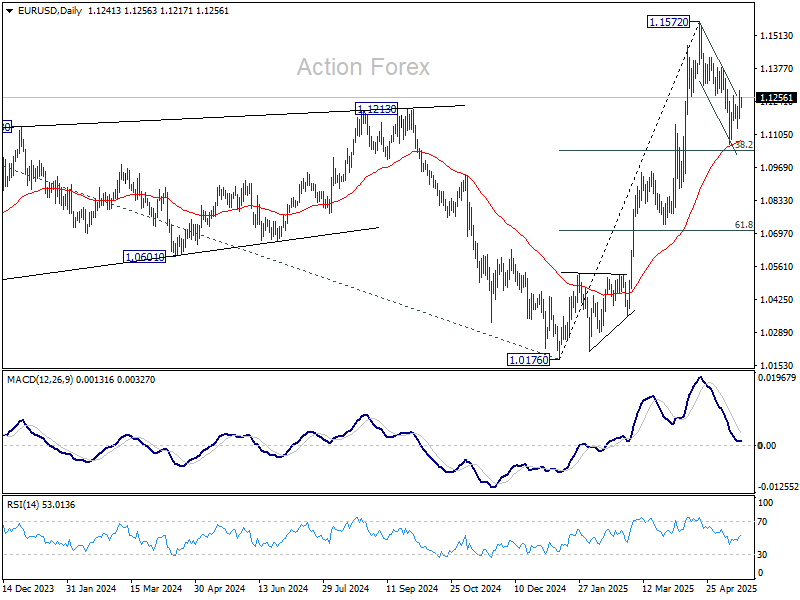
It's also important for EUR/USD. The near term pull back from 1.0953 could have already completed at 1.0731, ahead of 38.2% retracement of 1.0358 to 1.0953 at 1.0726. Break of 1.0857 minor resistance should affirm this bullish case, and push EUR/USD through 1.0953 to resume the whole rally from 1.0176.
More significantly, the next rally would set up EUR/USD for a test on key resistance between 1.1274 (2023 high) and multi-decade falling channel resistance (now at around 1.1380). This resistance zone is crucial to determine whether EUR/USD is reversing the long term down trend.
USD/JPY Weekly Outlook
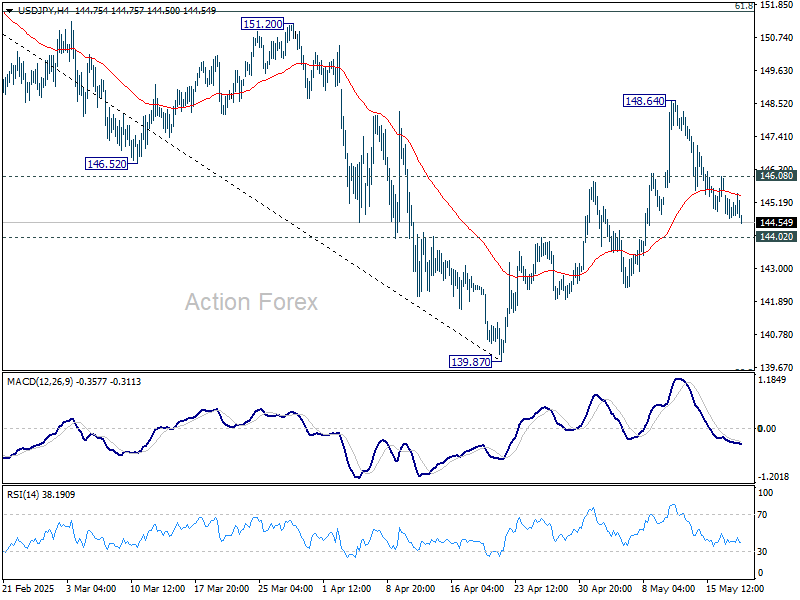
USD/JPY recovered further to 151.20 last week but retreated sharply ahead of 151.29 cluster resistance (38.2% retracement of 158.86 to 146.52 at 151.23). Initial bias remains neutral first and outlook stay bearish. On the downside, below 149.53 minor support will argue that the corrective recovery has completed and bring retest of 146.52 low. Firm break there will resume whole fall from 158.86. However, firm break of 151.23/9 will turn bias back to the upside for 154.79 resistance instead.
In the bigger picture, price actions from 161.94 are seen as a corrective pattern to rise from 102.58 (2021 low), with fall from 158.86 as the third leg. Strong support should be seen from 38.2% retracement of 102.58 to 161.94 at 139.26 to bring rebound. However, sustained break of 139.26 would open up deeper medium term decline to 61.8% retracement at 125.25.
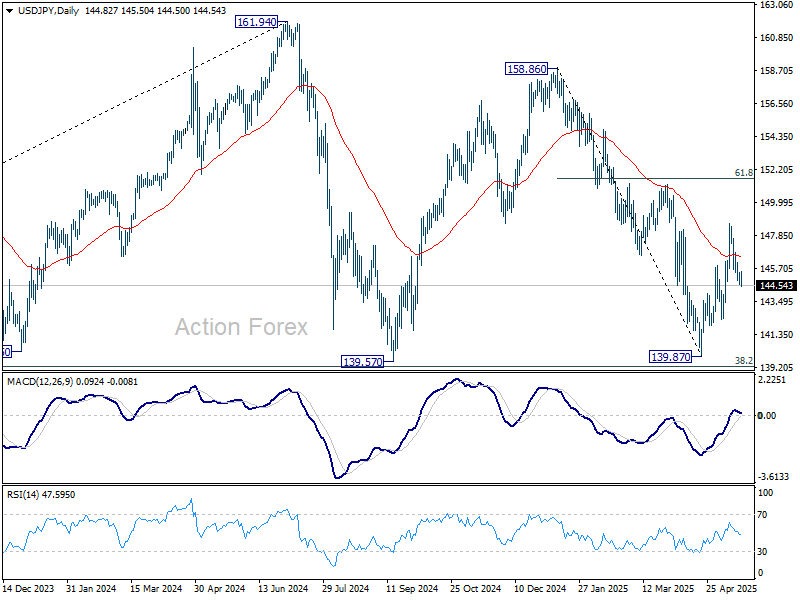
In the long term picture, it's still early to conclude that up trend from 75.56 (2011 low) has completed. A medium term corrective phase should have commenced, with risk of deep correction towards 55 M EMA (now at 136.94).
Summary 3/31 – 4/4
Monday, Mar 31, 2025
| GMT | Ccy | Events | Consensus | Previous | ||
|---|---|---|---|---|---|---|
| 23:50 | JPY | Industrial Production M/M Feb P | 1.90% | -1.10% | ||
| 23:50 | JPY | Retail Trade Y/Y Feb | 2.40% | 4.40% | ||
| 00:00 | NZD | ANZ Business Confidence Mar | 58.4 | |||
| 00:30 | AUD | Private Sector Credit M/M Feb | 0.50% | 0.50% | ||
| 01:30 | CNY | NBS Manufacturing PMI Mar | 50.5 | 50.2 | ||
| 01:30 | CNY | NBS Non-Manufacturing PMI Mar | 50.4 | |||
| 05:00 | JPY | Housing Starts Y/Y Feb | -1.90% | -4.60% | ||
| 06:00 | EUR | Germany Import Price Index M/M Feb | -0.10% | 1.10% | ||
| 06:00 | EUR | Germany Retail Sales M/M Feb | 0.00% | 0.20% | ||
| 08:30 | GBP | M4 Money Supply M/M Feb | 1.10% | 1.30% | ||
| 08:30 | GBP | Mortgage Approvals Feb | 66K | 66K | ||
| 12:00 | EUR | Germany CPI M/M Mar P | 0.30% | 0.40% | ||
| 12:00 | EUR | Germany CPI Y/Y Mar P | 2.30% | |||
| 13:45 | USD | Chicago PMI Mar | 45.4 | 45.5 |
| GMT | Ccy | Events | |
|---|---|---|---|
| 23:50 | JPY | Industrial Production M/M Feb P | |
| Forecast: | Previous: 1.90% | ||
| 23:50 | JPY | Retail Trade Y/Y Feb | |
| Forecast: | Previous: 2.40% | ||
| 00:00 | NZD | ANZ Business Confidence Mar | |
| Forecast: | Previous: | ||
| 00:30 | AUD | Private Sector Credit M/M Feb | |
| Forecast: | Previous: 0.50% | ||
| 01:30 | CNY | NBS Manufacturing PMI Mar | |
| Forecast: | Previous: 50.5 | ||
| 01:30 | CNY | NBS Non-Manufacturing PMI Mar | |
| Forecast: | Previous: | ||
| 05:00 | JPY | Housing Starts Y/Y Feb | |
| Forecast: | Previous: -1.90% | ||
| 06:00 | EUR | Germany Import Price Index M/M Feb | |
| Forecast: | Previous: -0.10% | ||
| 06:00 | EUR | Germany Retail Sales M/M Feb | |
| Forecast: | Previous: 0.00% | ||
| 08:30 | GBP | M4 Money Supply M/M Feb | |
| Forecast: | Previous: 1.10% | ||
| 08:30 | GBP | Mortgage Approvals Feb | |
| Forecast: | Previous: 66K | ||
| 12:00 | EUR | Germany CPI M/M Mar P | |
| Forecast: | Previous: 0.30% | ||
| 12:00 | EUR | Germany CPI Y/Y Mar P | |
| Forecast: | Previous: | ||
| 13:45 | USD | Chicago PMI Mar | |
| Forecast: | Previous: 45.4 | ||
Tuesday, Apr 1, 2025
| GMT | Ccy | Events | Consensus | Previous |
|---|---|---|---|---|
| 00:30 | AUD | Retail Sales M/M Feb | 0.30% | 0.30% |
| 00:30 | JPY | Manufacturing PMI Mar F | 48.3 | 48.3 |
| 01:45 | CNY | Caixin Manufacturing PMI Mar | 50.5 | 50.8 |
| 03:30 | AUD | RBA Interest Rate Decision | 4.10% | 4.10% |
| 04:30 | AUD | RBA Press Conference | ||
| 06:30 | CHF | Real Retail Sales Y/Y Feb | 1.50% | 1.30% |
| 07:30 | CHF | Manufacturing PMI Mar | 50.5 | 49.6 |
| 07:50 | EUR | France Manufacturing PMI Mar F | 48.9 | 48.9 |
| 07:55 | EUR | Germany Manufacturing PMI Mar F | 48.7 | 48.3 |
| 08:00 | EUR | Eurozone Manufacturing PMI Mar F | 48.7 | 48.7 |
| 08:30 | GBP | Manufacturing PMI Mar | 44.6 | 44.6 |
| 09:00 | EUR | Eurozone Unemployment Rate Feb | 6.20% | 6.20% |
| 09:00 | EUR | CPI Y/Y Mar P | 2.20% | 2.30% |
| 09:00 | EUR | CPI Core Y/Y Mar P | 2.50% | 2.60% |
| 13:30 | CAD | Manufacturing PMI Mar | 47.8 | |
| 13:45 | USD | Manufacturing PMI Mar F | 49.8 | 49.8 |
| 14:00 | USD | ISM Manufacturing PMI Mar | 49.9 | 50.3 |
| 14:00 | USD | ISM Manufacturing Prices Paid Mar | 65 | 62.4 |
| 14:00 | USD | ISM Manufacturing Employment Mar | 47.6 | |
| 14:00 | USD | ISM Manufacturing New Orders Index Mar | 48.6 | |
| 14:00 | USD | Construction Spending M/M Feb | 0.20% | -0.20% |
| 21:45 | NZD | Building Permits M/M Feb | 2.60% | |
| 23:50 | JPY | Monetary Base Y/Y Mar | -1.50% | -1.80% |
| GMT | Ccy | Events | |
|---|---|---|---|
| 00:30 | AUD | Retail Sales M/M Feb | |
| Forecast: 0.30% | Previous: 0.30% | ||
| 00:30 | JPY | Manufacturing PMI Mar F | |
| Forecast: 48.3 | Previous: 48.3 | ||
| 01:45 | CNY | Caixin Manufacturing PMI Mar | |
| Forecast: 50.5 | Previous: 50.8 | ||
| 03:30 | AUD | RBA Interest Rate Decision | |
| Forecast: 4.10% | Previous: 4.10% | ||
| 04:30 | AUD | RBA Press Conference | |
| Forecast: | Previous: | ||
| 06:30 | CHF | Real Retail Sales Y/Y Feb | |
| Forecast: 1.50% | Previous: 1.30% | ||
| 07:30 | CHF | Manufacturing PMI Mar | |
| Forecast: 50.5 | Previous: 49.6 | ||
| 07:50 | EUR | France Manufacturing PMI Mar F | |
| Forecast: 48.9 | Previous: 48.9 | ||
| 07:55 | EUR | Germany Manufacturing PMI Mar F | |
| Forecast: 48.7 | Previous: 48.3 | ||
| 08:00 | EUR | Eurozone Manufacturing PMI Mar F | |
| Forecast: 48.7 | Previous: 48.7 | ||
| 08:30 | GBP | Manufacturing PMI Mar | |
| Forecast: 44.6 | Previous: 44.6 | ||
| 09:00 | EUR | Eurozone Unemployment Rate Feb | |
| Forecast: 6.20% | Previous: 6.20% | ||
| 09:00 | EUR | CPI Y/Y Mar P | |
| Forecast: 2.20% | Previous: 2.30% | ||
| 09:00 | EUR | CPI Core Y/Y Mar P | |
| Forecast: 2.50% | Previous: 2.60% | ||
| 13:30 | CAD | Manufacturing PMI Mar | |
| Forecast: | Previous: 47.8 | ||
| 13:45 | USD | Manufacturing PMI Mar F | |
| Forecast: 49.8 | Previous: 49.8 | ||
| 14:00 | USD | ISM Manufacturing PMI Mar | |
| Forecast: 49.9 | Previous: 50.3 | ||
| 14:00 | USD | ISM Manufacturing Prices Paid Mar | |
| Forecast: 65 | Previous: 62.4 | ||
| 14:00 | USD | ISM Manufacturing Employment Mar | |
| Forecast: | Previous: 47.6 | ||
| 14:00 | USD | ISM Manufacturing New Orders Index Mar | |
| Forecast: | Previous: 48.6 | ||
| 14:00 | USD | Construction Spending M/M Feb | |
| Forecast: 0.20% | Previous: -0.20% | ||
| 21:45 | NZD | Building Permits M/M Feb | |
| Forecast: | Previous: 2.60% | ||
| 23:50 | JPY | Monetary Base Y/Y Mar | |
| Forecast: -1.50% | Previous: -1.80% | ||
Wednesday, Apr 2, 2025
| GMT | Ccy | Events | Consensus | Previous |
|---|---|---|---|---|
| 00:30 | AUD | Building Permits M/M Feb | -1.40% | 6.30% |
| 12:15 | USD | ADP Employment Change Mar | 120K | 77K |
| 14:00 | USD | Factory Orders M/M Feb | 0.50% | 1.70% |
| 14:30 | USD | Crude Oil Inventories | -3.3M |
| GMT | Ccy | Events | |
|---|---|---|---|
| 00:30 | AUD | Building Permits M/M Feb | |
| Forecast: -1.40% | Previous: 6.30% | ||
| 12:15 | USD | ADP Employment Change Mar | |
| Forecast: 120K | Previous: 77K | ||
| 14:00 | USD | Factory Orders M/M Feb | |
| Forecast: 0.50% | Previous: 1.70% | ||
| 14:30 | USD | Crude Oil Inventories | |
| Forecast: | Previous: -3.3M | ||
Thursday, Apr 3, 2025
| GMT | Ccy | Events | Consensus | Previous |
|---|---|---|---|---|
| 00:30 | JPY | Services PMI Mar F | 49.5 | 49.5 |
| 01:30 | AUD | Trade Balance (AUD) Feb | 5.40B | 5.62B |
| 01:45 | CNY | Caixin Services PMI Mar | 51.6 | 51.4 |
| 06:30 | CHF | CPI M/M Mar | 0.10% | 0.60% |
| 06:30 | CHF | CPI Y/Y Mar | 0.30% | |
| 07:50 | EUR | France Services PMI Mar | 46.6 | 46.6 |
| 07:55 | EUR | Germany Services PMI Mar | 50.2 | 50.2 |
| 08:00 | EUR | Eurozone Services PMI Mar | 50.4 | 50.4 |
| 08:30 | GBP | Services PMI Mar | 53.2 | 53.2 |
| 09:00 | EUR | Eurozone PPI M/M Feb | 0.40% | 0.80% |
| 09:00 | EUR | Eurozone PPI Y/Y Feb | 1.80% | |
| 11:30 | EUR | ECB Meeting Accounts | ||
| 11:30 | USD | Challenger Job Cuts Y/Y Mar | 103.20% | |
| 12:30 | CAD | Trade Balance (CAD) Feb | 2.5B | 4.0B |
| 12:30 | USD | Initial Jobless Claims (Mar 28) | 225K | 224K |
| 12:30 | USD | Trade Balance (USD) Feb | -110.0B | -131.4B |
| 13:45 | USD | Services PMI Mar F | 54.3 | 54.3 |
| 14:00 | USD | ISM Services PMI Mar | 53.1 | 53.5 |
| 14:30 | USD | Natural Gas Storage | 37B | |
| 23:30 | JPY | Overall Household Spending Y/Y Feb | -0.70% | 0.80% |
| GMT | Ccy | Events | |
|---|---|---|---|
| 00:30 | JPY | Services PMI Mar F | |
| Forecast: 49.5 | Previous: 49.5 | ||
| 01:30 | AUD | Trade Balance (AUD) Feb | |
| Forecast: 5.40B | Previous: 5.62B | ||
| 01:45 | CNY | Caixin Services PMI Mar | |
| Forecast: 51.6 | Previous: 51.4 | ||
| 06:30 | CHF | CPI M/M Mar | |
| Forecast: 0.10% | Previous: 0.60% | ||
| 06:30 | CHF | CPI Y/Y Mar | |
| Forecast: | Previous: 0.30% | ||
| 07:50 | EUR | France Services PMI Mar | |
| Forecast: 46.6 | Previous: 46.6 | ||
| 07:55 | EUR | Germany Services PMI Mar | |
| Forecast: 50.2 | Previous: 50.2 | ||
| 08:00 | EUR | Eurozone Services PMI Mar | |
| Forecast: 50.4 | Previous: 50.4 | ||
| 08:30 | GBP | Services PMI Mar | |
| Forecast: 53.2 | Previous: 53.2 | ||
| 09:00 | EUR | Eurozone PPI M/M Feb | |
| Forecast: 0.40% | Previous: 0.80% | ||
| 09:00 | EUR | Eurozone PPI Y/Y Feb | |
| Forecast: | Previous: 1.80% | ||
| 11:30 | EUR | ECB Meeting Accounts | |
| Forecast: | Previous: | ||
| 11:30 | USD | Challenger Job Cuts Y/Y Mar | |
| Forecast: | Previous: 103.20% | ||
| 12:30 | CAD | Trade Balance (CAD) Feb | |
| Forecast: 2.5B | Previous: 4.0B | ||
| 12:30 | USD | Initial Jobless Claims (Mar 28) | |
| Forecast: 225K | Previous: 224K | ||
| 12:30 | USD | Trade Balance (USD) Feb | |
| Forecast: -110.0B | Previous: -131.4B | ||
| 13:45 | USD | Services PMI Mar F | |
| Forecast: 54.3 | Previous: 54.3 | ||
| 14:00 | USD | ISM Services PMI Mar | |
| Forecast: 53.1 | Previous: 53.5 | ||
| 14:30 | USD | Natural Gas Storage | |
| Forecast: | Previous: 37B | ||
| 23:30 | JPY | Overall Household Spending Y/Y Feb | |
| Forecast: -0.70% | Previous: 0.80% | ||
Friday, Apr 4, 2025
| GMT | Ccy | Events | Consensus | Previous |
|---|---|---|---|---|
| 06:00 | EUR | Germany Factory Orders M/M Feb | 3.30% | -7.00% |
| 06:45 | EUR | France Industrial Output M/M Feb | 0.50% | -0.60% |
| 08:30 | GBP | Construction PMI Mar | 46.7 | 44.6 |
| 12:30 | USD | Nonfarm Payrolls Mar | 128K | 151K |
| 12:30 | USD | Average Hourly Earnings M/M Mar | 0.30% | 0.30% |
| 12:30 | USD | Unemployment Rate Mar | 4.10% | 4.10% |
| 12:30 | CAD | Net Change in Employment Mar | 1.1K | |
| 12:30 | CAD | Unemployment Rate Mar | 6.60% |
| GMT | Ccy | Events | |
|---|---|---|---|
| 06:00 | EUR | Germany Factory Orders M/M Feb | |
| Forecast: 3.30% | Previous: -7.00% | ||
| 06:45 | EUR | France Industrial Output M/M Feb | |
| Forecast: 0.50% | Previous: -0.60% | ||
| 08:30 | GBP | Construction PMI Mar | |
| Forecast: 46.7 | Previous: 44.6 | ||
| 12:30 | USD | Nonfarm Payrolls Mar | |
| Forecast: 128K | Previous: 151K | ||
| 12:30 | USD | Average Hourly Earnings M/M Mar | |
| Forecast: 0.30% | Previous: 0.30% | ||
| 12:30 | USD | Unemployment Rate Mar | |
| Forecast: 4.10% | Previous: 4.10% | ||
| 12:30 | CAD | Net Change in Employment Mar | |
| Forecast: | Previous: 1.1K | ||
| 12:30 | CAD | Unemployment Rate Mar | |
| Forecast: | Previous: 6.60% | ||
The Weekly Bottom Line: Waiting for April 2nd
Canadian Highlights
- The announcement of U.S. tariffs on the auto sector this week could be a major downside risk for the Canadian economy. Attention now turns to the April 2nd “reciprocal tariff” announcement and Canada’s response.
- Not surprisingly, a major survey of businesses showed that business confidence took a tumble in March.
- Before trade tensions emerged as the most important issue for the Canadian economy, the latest data show the economy had held up in January, although the service sector did show some weakness.
U.S. Highlights
- This week’s announcement of new automobile tariffs caught markets by surprise. But now all eyes are focused on updates on reciprocal tariffs next week.
- The U.S. economy had been humming, but as uncertainty ramps up and consumer confidence continues to dip, the risks of a slowdown are building.
- Worryingly, inflation momentum picked up again in February suggesting price growth could be stickier than anticipated.
Canada – Bracing for Impact
Going into this week, April 2nd, the day that the United States is expected to announce reciprocal tariffs on all its trading partners, already loomed large over the Canadian economy. Many questions remained, such as the coverage of countries and goods, and the size of the tariff. Then the Trump administration surprised markets this week with an announcement of a 25% tariffs on the auto sector, scheduled to take effect on April 3rd. We covered what we know about these tariffs in our report yesterday but many questions remain, including exactly how high the tariff will be for Canada. As of now, there are some indications that Canada and Mexico may receive a lower tariff on autos than other countries. We expect that the full picture of U.S. tariff measures will remain somewhat in flux at least until April 2nd, and the same is likely true for any response from the Canadian government.
But the world still turns, and the data still come in. We released our commentary on today’s Canadian GDP by industry earlier this morning, which showed that Canada’s economy surged in January, on top of a healthy pace in December. The major driver of January’s pickup was mining and oil and gas extraction, which accounted for nearly a third of all growth in January. Manufacturing and construction also did well, while the major laggard was retail. These data show the state of the economy through January 2025, much of it from before the world realized tariff uncertainty would be omnipresent for the next two months. These data suggest that the goods-producing sector in Canada was on solid footing in January, as we can see in Chart 1. But much of that likely represented firms’ attempt to get ahead of impending tariffs. The next release may tell a different story, as the advance estimate for February is already pointing to no growth in monthly GDP.
We don’t have to wait to see some indication that tariffs are taking a toll already. After all, last week we saw soft retail sales and housing sales in February, the first major hard data prints for the month. This week, the CFIB Business Barometer for March was released, and it showed that business confidence in Canada has taken a major hit, falling to the lowest in ten years and lower than at any point during the COVID-19 pandemic. It seems businesses are bracing for a difficult year ahead.
The new Quebec budget released earlier this week underscored that these concerns are top of mind across Canada. It included measures to give relief to consumers and businesses hurt by tariffs, and to support infrastructure investment, as we discussed in our report earlier this week. The Bank of Canada also released their summary of deliberations from their las interest rate cut decision. These emphasized how much tariff threats are weighing on their outlook. The BoC likely would not have cut interest rates in March were it not for tariff threats and elevated uncertainty. Next week, we’ll see how the Canadian labour market has held up through March, and we’ll receive international trade data, which may also contain some clues about how businesses have been managing the shifting trade environment. But all eyes and ears are going to be on the April 2nd tariff announcement and Canada’s response.
U.S. – Waiting for April 2nd
After steadily rallying since mid-March, markets took a step back this week when new U.S. tariffs on automobiles and parts were announced. The news comes ahead of next week’s much anticipated update on reciprocal tariffs that are expected to cover major U.S. trading partners. In the meantime, February’s Personal Income and Outlays report showed that core inflation picked up again, while spending growth failed to recover from last month’s decline. The U.S. economy had been humming, but as uncertainty ramps up and consumer confidence continues to dip, the risks of a slowdown are building. All eyes are now firmly focused on next week’s tariff announcement for more clarity on the operating environment going forward.
The big news this week was President Trump’s announcement of new tariffs on automobile imports of 25%, set to take effect on April 3rd. This comes ahead of the expected announcement next week on reciprocal tariffs that markets had been bracing for. At the time of writing, most countries had held off on any new retaliation, likely opting to wait and see what’s in store from next week’s announcements before proceeding. As we wrote, the full impact of the autos tariffs will depend on their duration and how much of the cost firms pass along to their customers.
Yet, while we await more clarity on the import taxes, consumer confidence continues to dip, and the darkening moods appear to be flowing through to behavior. The Conference Board measure of consumer confidence has fallen to its lowest level since early-2021. With sinking sentiment, an adjustment in consumer spending appears to be unfolding as real outlays in February failed to recover from the tumble they took in January (Chart 1). This leaves the three-month annualized change in real consumer spending at 0.2%, well short of the 4.6% clip recorded in December. First quarter consumer spending is now tracking only a 0.5% annualized pace, a downgrade from our recent forecast. Importantly, the pullback in real spending is coming at a time of still-healthy income growth, so with the savings rate ticking up to 4.6% (its highest level since June of last year), this suggests that some precautionary savings could be taking place.
Part of the story is that inflation looks to be heating up again. Higher price growth is cutting into consumers’ purchasing power, restraining real outlays. The core personal consumption expenditures price index saw its biggest monthly gain since January of last year, taking the annual pace to 2.8% (Chart 2). Inflation momentum appears to be gaining steam, and consumer are noticing. Inflation expectations for the year ahead jumped to their highest levels since late-2022.
For the Fed, the combination of softening growth and rising inflation are troublesome. Yet, what could make it more complicated is if inflation expectations continue to rise, creating a self-reinforcing loop of greater price pressures. For now, though, we wait for next week for more clarity on the next set of tariffs to better guide our assumptions around the forecast.
Weekly Economic & Financial Commentary: Tariff Policy Remains Top of Mind
Summary
United States: They Say Waiting Is the Hardest Part
- Next week should bring clarity about details of tariff policies. Economic data released this week are shaping up in an ugly way for Q1. Advance goods trade data combined with only a modest rebound in February consumer spending put growth on track for the weakest quarterly print in two-and-a-half years. It's unclear if this can all be chalked up to “temporary” tariff effects.
- Next week: ISM Manufacturing & Services (Tue. & Thu.), Trade Balance (Thu.), Employment (Fri.)
International: Tariff Policy Remains Top of Mind
- Tariffs are a major influence over the global economic, policy and FX outlook. While our global GDP forecast is unchanged, tariff sensitivity is affecting economies around the world. At the same time, FX markets seem somewhat immune to tariffs, at least for now. Could that change on reciprocal tariff day? Time will tell.
- Next week: Colombia Central Bank (Mon.), Eurozone Inflation (Tue.), April 2 Tariff Deadline (Wed.)
Credit Market Insights: You Can't Always Get What You Want: Consumers Report Worsening in Credit Access Expectations
- Last week, the Federal Reserve Bank of New York released the February 2025 Credit Access Survey. While overall credit demand has held up, a peek underneath the hood reveals an increasing share of consumers that are becoming discouraged from applying for credit. Expectations about credit conditions in the future also appear to be souring.
Topic of the Week: Livin' La Auto Local: U.S. Announces Auto Tariffs
- The U.S. auto industry, yet to fully recover from the pandemic, is facing renewed headwinds due to the prospect of a trade war on the horizon. This week, the Trump administration unveiled plans to enact 25% tariffs on motor vehicle and part imports to the United States.
Week Ahead – US NFP and Eurozone CPI Awaited as Tariff War Heats Up, RBA Meets
- Trump’s reciprocal tariffs could spur more chaos.
- US jobs report might show DOGE impact on labour market.
- Eurozone inflation will be vital for ECB bets as April cut uncertain.
- RBA to likely hold rates; Canadian jobs, BoJ Tankan survey also on tap.
Markets brace for reciprocal tariffs
There’s a sense of both optimism and fear as we approach the April 2 deadline of when the Trump administration will detail the much talked-about reciprocal tariffs. All indications are that the White House will primarily target the countries with which the US has the biggest trade imbalances, thought to cover 15% of America’s trading partners. Hence, they’ve been dubbed as the ‘Dirty 15’ and include China, the EU, Mexico and South Korea among others.
Negotiations are already underway with several countries to find a middle ground so if Trump shows leniency, a relief rally could ensue. However, if the announcement contains very few exemptions and markets are left disappointed, shares on Wall Street could resume their selloff.
It’s also possible that Trump might unveil further sectoral tariffs, such as for pharmaceuticals. Risk appetite would struggle to get far in such a scenario.
NFP slowdown could fuel recession fears
Worries about the US economy stumbling amid the Trump administration’s radical policies have so far proved unfounded, but next week’s nonfarm payrolls report could change that. The Department of Government Efficiency (DOGE) has been busy laying off federal workers since its inception after Donald Trump’s election victory.
Those job cuts will likely start to come through in the March payroll figures. At the same time, many businesses have turned more cautious with their hiring plans, especially in the manufacturing sector, as President Trump’s erratic decisions on tariffs are generating a lot of uncertainty about the economic outlook.
Fed Chair Powell insists that the US labour market remains “in balance”. Nevertheless, the risks are clearly tilted to the downside and so there is some anxiety about Friday’s jobs data. After a gain of 151k in February, nonfarm payrolls are expected to have increased by 128k in March.
The change in government and private payrolls will be watched very closely to gauge the scale of potential DOGE layoffs and to what extent these will be replenished by the private sector.
The unemployment rate is projected to tick up slightly to 4.2%, while average hourly earnings are forecast to have risen by 0.3% m/m.
Any cooldown in the labor market that’s a lot greater than what’s anticipated could bolster Fed rate cut expectations. The Fed has yet to budge on its wait-and-see stance despite the few cracks that have started to appear in the economy.
Will the data support the Dollar’s rebound?
However, the market reaction will likely be influenced by the tone set by the ISM PMIs that will be published in the preceding days. The ISM manufacturing PMI is out on Tuesday and is expected to stay unchanged at 50.3. The ISM services PMI will follow on Thursday and that’s forecast to dip slightly from 53.5 to 53.0.
Other releases include the Chicago PMI on Monday, the JOLTS job openings on Tuesday, the ADP employment report and factory orders on Wednesday, and Challenger Layoffs on Thursday.
The US dollar has been in recovery mode over the past couple of weeks but should the incoming data point to a weakening economic backdrop, it’s likely to face some renewed selling pressure, particularly if investors price in a strong probability of a third rate cut this year.
A major risk for the markets is if any poor numbers are accompanied by a spike in the ISM survey’s price indices, which would indicate a stagflationary environment. It would be tough for Wall Street to find much support from aggressive rate cut bets under such conditions.
Eurozone CPI eyed as tariffs boost ECB cut bets
Policymakers from the European Central Bank have hinted at the possibility of a pause in rate cuts at the April meeting, but the decision looks set to be a close one as the case for caution has weakened after Trump’s decision to impose 25% tariffs on all auto imports into the United States as of April 2.
The latest levies, which include imports of all automobile parts, are likely to hit European economies hard as the continent is a major exporter of cars and related parts to the US. Investors seem to think that the ECB will have little choice but to lower rates again when it meets on April 17 to cushion the Eurozone economy from Trump’s trade tirade and are pricing in about a 90% probability of a 25-basis-point reduction.
If Tuesday’s flash CPI estimates for March show another decline in the inflation readings, the euro will be in danger of deepening its recent pullback against the US dollar. The Eurozone’s headline CPI rate fell to 2.3% y/y in February, ending four months of increases. Core measures have also moderated. But if there’s a reversal of this trend, rate cut expectations could be pared back, lifting the euro.
The account of the ECB’s March meeting might offer further clues about the next gathering when it’s published on Thursday.
RBA to hold rates amid trade frictions
A central bank that’s almost certain to keep interest rates unchanged at its next meeting is the Reserve Bank of Australia. Having been late to the game, the RBA trimmed its cash rate in its previous decision in February but is not expected to cut again until July. However, the escalating trade war, which China is at the centre of, makes it more likely that the RBA will cut rates sooner rather than later.
Moreover, with inflation in Australia easing slightly in February and employment unexpectedly falling, policymakers may not sound quite as hawkish as they did in February.
Should the RBA open the door to a rate cut at its May meeting, the Australian dollar could reverse lower, although it’s so far been able to hold above its short-term uptrend line despite the heightened trade frictions.
PMI numbers out of China will also be important for the aussie and may offer some support if they signal an improvement in manufacturing activity as forecast. The government’s own manufacturing PMI is due on Monday, while the equivalent PMI from S&P Global/Caixin is out on Tuesday.
Tariffs complicate BoC’s rate cut path
The Canadian dollar has also been on a somewhat steadier footing lately, even though Canada has come under Trump’s direct firing line. The Bank of Canada has not been shy about expressing its concerns about the negative impact of the trade war on the economy. However, although the BoC cut rates by a further 25bps earlier this month, citing tariff risks, Governor Tiff Macklem acknowledged that the risks to inflation have gone up too.
This potentially limits the scope of additional easing and investors see just two more 25-bps rate cuts for the rest of the year. Those odds could increase, however, if the Canadian economy were to take a sudden turn for the worse.
Traders will therefore be keeping a close eye on Friday’s employment data for any signs about a slowing labour market.
Yen slides as tariffs throw BoJ hikes into doubt
The Japanese yen hasn’t been able to garner much safe-haven bids during the latest wave of tariff headlines. Investors think that Trump’s sectoral and reciprocal tariffs will hurt Japanese growth, making it more difficult for the Bank of Japan to hike interest rates again later this year.
The Bank’s own Tankan business survey that’s conducted quarterly should shed some light on Tuesday as to whether Japanese businesses are becoming less optimistic about the outlook and reducing their capital expenditure plans on the back of the growing trade turmoil.
Preliminary industrial output figures for February are also due on Tuesday, while household spending data will be released on Friday.
The yen could halt its recent slide against its major peers if the data calms jitters about significant damage to the Japanese economy from Trump’s protectionist policies.
US Inflation Accelerates But Lags Income Growth
The Fed’s preferred indicator of US inflation, the core index of personal consumption expenditure, accelerated from 2.6% to 2.8% in February. This is above the expected 2.7%, confirming that it is too early to see a sustained downward trend in prices.
At the same time, we note the second month of acceleration in income growth, which added 0.8% in February after a 0.7% increase in January. Total spending rose by 0.6% after a contraction of 0.4% earlier. As a result, Americans’ personal savings exceeded 4.6%, approaching the norm. The savings rate was mostly above 5% from 2013 to 2022. The rate only went below it during the inflationary surge of 2022 and between 2004 and 2008.
This is negative news for the US stock market, where worries around tariffs are crushing recovery attempts. These bearish sentiments are reinforced by the technical picture, which has seen sellers retake the lead as the major US equity indices have attempted to move back into territory above their 200-day moving averages. Temporarily, there is a positive correlation between the dollar and US equity indices due to speculation that a weak economy will intensify Fed rate cuts, regardless of inflation.
However, robust income growth and normalisation of the savings rate so far make it possible to dismiss the idea of a serious recession in the US soon.
What Next: Australia Rate, EU CPI, US NFP
Europe is switching to daylight saving time in the new week – don’t miss the changes in the trading schedule.
Among the key events on the 1st of April, we highlight the Reserve Bank of Australia’s decision. The rate is expected to remain at 4.1% after a cut in February. Inflation only ticked down last month, and GDP growth remains healthy, so it is hardly prudent to ease policy too sharply.
Also, on April 1st, the preliminary estimate of eurozone inflation will be released. Recent data showed a slowdown to 2.3% annually, and the new soft data will increase speculation about further ECB policy easing.
Oil traders’ attention is on the OPEC meeting on Thursday, April 3rd. As oil is rising, no changes are expected, but surprises cannot be ruled out, which could affect the price.
The main news on Friday will be the March US labour market data. The market has been adding below-trend rates for a couple of months, and a dip could be a new dose of negativity for the dollar.
Weekly Focus – Mixed Signals from PMIs Amid Tariff Announcements
The PMI reports showed contrasting trends between the US and the euro area in March. In the euro area, manufacturing PMI rose more than expected to 48.7 from 47.6, while the US index declined to 49.8 from 52.7. March marked the first time with the US index below 50 since last year, while the euro area manufacturing output subindex rose above 50 for the first time in two years, giving the first signs of an end to the manufacturing slump in Europe. In the services sector, the US recorded a very strong increase to 54.3 from 51.0 while the index in the euro area declined to 50.4. Hence, the reports sent mixed signals within each of the economies, and thereby likely not changing the views in the central banks much for the upcoming policy decisions.
Consumer confidence continued to slide in the US, with the Conference Board measure declining to 92.9 (cons: 94.0) as economic expectations reached the lowest level since 2013 and inflation expectations moved higher on the back of tariff announcements, like we saw in the Miching survey. Yet, at the same time the perception of labour market conditions remained unchanged, as did intension for major purchases, and the share of Americans planning a vacation even rose. So, while Americans are concerned about the future economic outlook, they are not changing their behaviour, yet it seems.
President Trump announced a 25% tariff increase on imports of foreign-made vehicles as well as car parts, which affects USD 286 bn worth of imports, scheduled to income into effect on April 2nd. Together with the expansion of tariffs on Mexico and Canada, the effective average tariff rate could increase by another 5%-points to around 13%, which would weigh on US GDP by a total of 0.5% according to the tax foundation. The EU is expected to retaliate 1:1 to the US measures which risks a tit-for-tat trade war. For details, see Research US - Trump's 'Liberation Day' - what to expect?, 27 March.
In the euro area, we received March inflation data for two of the large economies, France and Italy. In both countries, inflation came in lower than expected. French inflation was unchanged at 0.9% y/y (consensus: 1.1% y/y) and Spanish inflation declined to 2.2% y/y (consensus: 2.5% y/y) from 2.9%. The lower-than-expected inflation prints support a rate cut from the ECB in April, which was also reflected in markets, that increased the likelihood of a cut, now pricing -21 bp from -19 before the prints. Based on the country data, we expect euro area inflation on Tuesday to decline to 2.1% y/y from 2.3% y/y.
Besides euro area inflation and Trump's tariff announcements, focus next week turns to the US jobs market report, ISM, and Chinese PMIs. We expect nonfarm payroll growth slowed down to just 110k (from 151k) amid federal layoffs and sharply slowing immigration. Also in the US, we look out for the ISM indexes next week to see if they mimic the PMI report. China releases the official PMI for both manufacturing as well as services for March. Consensus is for a small increase in both indices, but we see a good chance of an even bigger increase based on a strong pick-up in the high-frequency Yicai index, metal prices, as well as the Emerging Industries PMI for March. In Japan, focus turns to the Tankan business survey, where a strong report is a prerequisite for further BoJ hikes.
EUR/USD: Reversal Signal Developing on Daily Chart
EURUSD regained traction and rose above 1.08 handle in early US trading on Friday, as hotter than expected US inflation and higher consumer spending failed to impress traders, concerned about slower economic growth.
Fresh strength broke above the top of two-day congestion and generating initial basing and reversal signal after recent pullback from 1.0954 (Mar 18 top) was contained by strong support at 1.0727 (Fibo 38.2% of 1.0360/1.0954 / 200DMA).
This also points to scenario of a healthy correction of larger uptrend and overall bullish structure intact.
Technical studies on daily chart are about to return to full bullish setup as 14-d momentum is about to enter positive territory and moving averages are in bullish configuration and heading north.
Daily close above 1.0800/17 (round-figure / Fibo 38.2% of 1.0954/1.0732 bear-leg) will be required to keep fresh bullish structure intact for attack at 1.0843 (daily Tenkan-sen / 50% retracement) and 1.0869 (Fibo 61.8%) violation of which to confirm reversal.
Initial supports lay at 1.0800/1.0782 (round-figure / broken Fibo 23.6% and guard key support at 1.0727.
Res: 1.0843; 1.0869; 1.0902; 1.0954.
Sup: 1.0800; 1.0782; 1.0727; 1.0700.
Sunset Market Commentary
Markets
Markets today stayed in a defensive wait-and-and see modus counting down to the long-awaited US announcement sweeping ‘reciprocal tariffs’ next Wednesday. In this context of elevated uncertainty, markets held to a ‘selective’, one-sided reading of incoming economic data. Softer than expected Spanish and French national inflation data were enough for European bond investors to further retrace from the EU reflation trade that dominated trading early this month. German yields decline further between 4.3 bps (2-y) and 5.3 bps (30-y). Even so, the 10-y EMU swap tested the key 2.625% area (Jan 2025 top/recent correction low), but for now this support did its job, blocking further intraday losses. This halt might at least partially have been inspired by (Bloomberg) headlines that the European Commission is working on a ‘term sheet of concessions’ to negotiate a potential trade agreement with the US. We likely will get plenty of this kind of messages on negotiating tactics in the run-up to next Wednesday. It probably tells at least as much on positioning in EMU interest rate markets after recent decline, than on the substance of the matter. At the same time, EMU money markets in the meantime discount about a 85% chance of the ECB further unwinding the policy restriction that is still left after 9 months of protracted easing. In the US, the spending and income data and the PCE deflators brought no unequivocal story either. February personal income was strong at 0.8% M/M, but spending slightly disappointed (0.4% M/M vs 0.5% expected). The headline PCE deflator was bang in line with expectations (0.3% M/M and 2.5% Y/Y). The core measure was marginally stronger at 0.4% M/M and 2.8% Y/Y. The final U. of Michigan consumer confidence release further confirmed the stagflationary narrative from the preliminary release. The consumer expectations confidence index was further downwardly revised to 52.6 (weakest since July 2022). At the same time, inflation expectations were upwardly revised (1-y 5.0%, 5-10 y 4.1%!), raising the risks of a de-anchoring of inflation expectations. It didn’t prevent further Treasuries’ gains in current low visibility environment. US yields decline between 6.0 bps (2-y) and 8.8 bps (10 & 30-y). Equity markets further turn into risk-off modus (S&P 500 -1.1%, EuroStoxx 50 -0.9%.
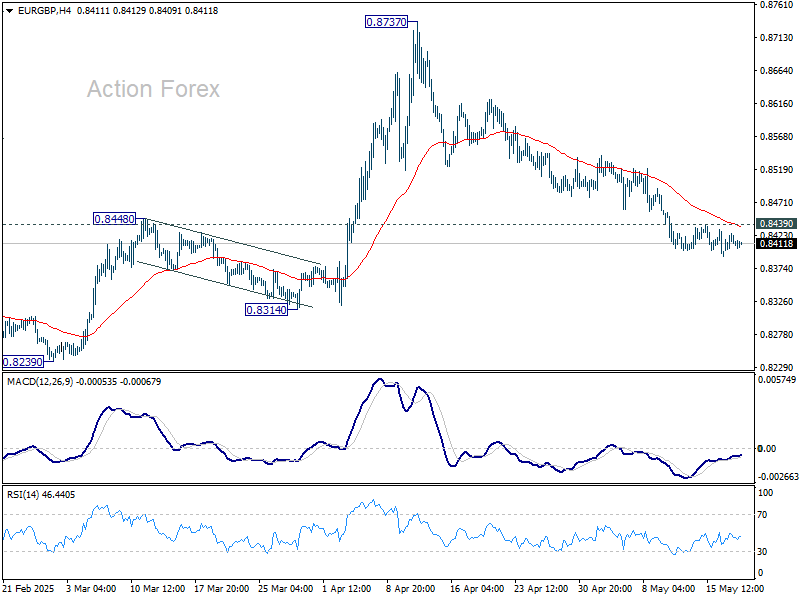
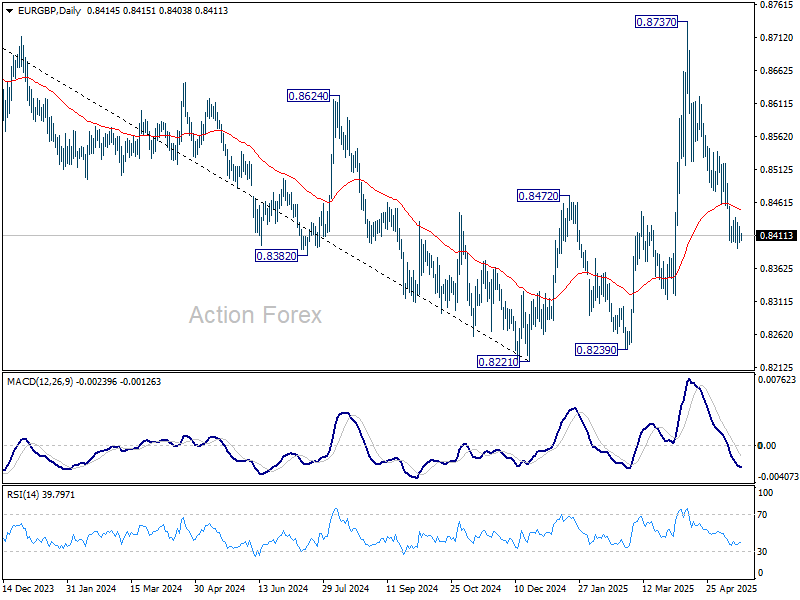
On FX markets, the dollar failed to hold on to initial gains (104.2). EUR/USD rebounded back above 1.08(1) on the EC tariff negation headlines and on rising US stagflation risks. Still this remains a fragile balance of USD weakness currently outweighing euro fragility. Sterling this morning temporarily profited from stronger than expected February retail sales. EUR/GBP tested the 0.8316 area, but sterling gains also could not be sustained (currently 0.835).
News & Views
Belgian inflation fell by 0.7% m/m to ease from 3.55% to 2.91% in March. Core inflation (excluding unprocessed food and energy products) declined from 3.10% to 2.71%. A range of subcategories all fell in y/y terms, including energy inflation (5.48% from 8.17%), rents (3.27% from 3.3%) and services inflation (3.88% from 4.34%). Food price inflation was the odd one out, accelerating to 2.45%, driven by fruit & sugar, chocolate and jam prices. The biggest decreasing effect came from motor fuels, clothing and plane tickets. The first inflation estimate by European (HICP) standards for Belgium amounts to 3.6%.
The ECB’s monthly survey showed consumer inflation expectations for the year ahead in February matching January’s 2.6%, as did those for the three-year ahead period at 2.4%. They thus remain below the perceived past inflation rate (3.1%, down from 3.4%). Consumers expect their nominal wages over the next 12 months to grow by 1%, a slight uptick from 0.9% in January. They turned more negative on the economy, seeing a 1.2% contraction in the year ahead, deepening from -1.1% in January. As a consequence, the unemployment rate 12 months from now rose from 10.4% to 10.5%. However, since this is about the same as the current perceived rate (10%), it implies a broadly stable labour market. In terms of housing and credit access, consumers expected the price of their home to increase by 3% over the next 12 months, unchanged from January. The net percentage of households reporting a tightening (relative to those reporting an easing) in access to credit over the previous 12 months declined, as did the net percentage of those expecting a tightening over the next 12 months.