Sun, Apr 12, 2026 10:36 GMT
More

    Sample Category Title

    EUR/JPY Daily Outlook

    ActionForex

    Daily Pivots: (S1) 160.82; (P) 162.00; (R1) 162.80; More...

    EUR/JPY's break of 160.89 support argues that rebound from 156.16 has completed at 164.89 already. Intraday bias is back on the downside for 156.16 support first. Firm break there will argue that corrective pattern from 154.40 has completed, and fall from 175.41 is ready to resume. For now, risk will stay on the downside as long as 164.53 resistance holds, in case of recovery.
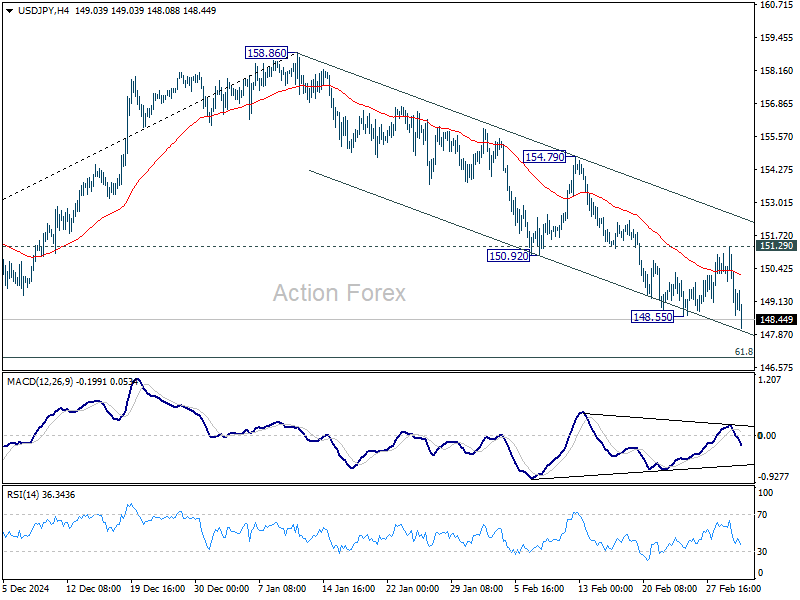
    In the bigger picture, price actions from 175.41 are seen as correction to rally from 114.42 (2020 low). The range of consolidation should have been set between 38.2% retracement of 114.42 to 175.41 at 152.11 and 175.41 high. However, decisive break of 152.11 would argue that deeper correction is underway.

    AUD/USD and NZD/USD Under Fire, Deeper Losses Ahead?

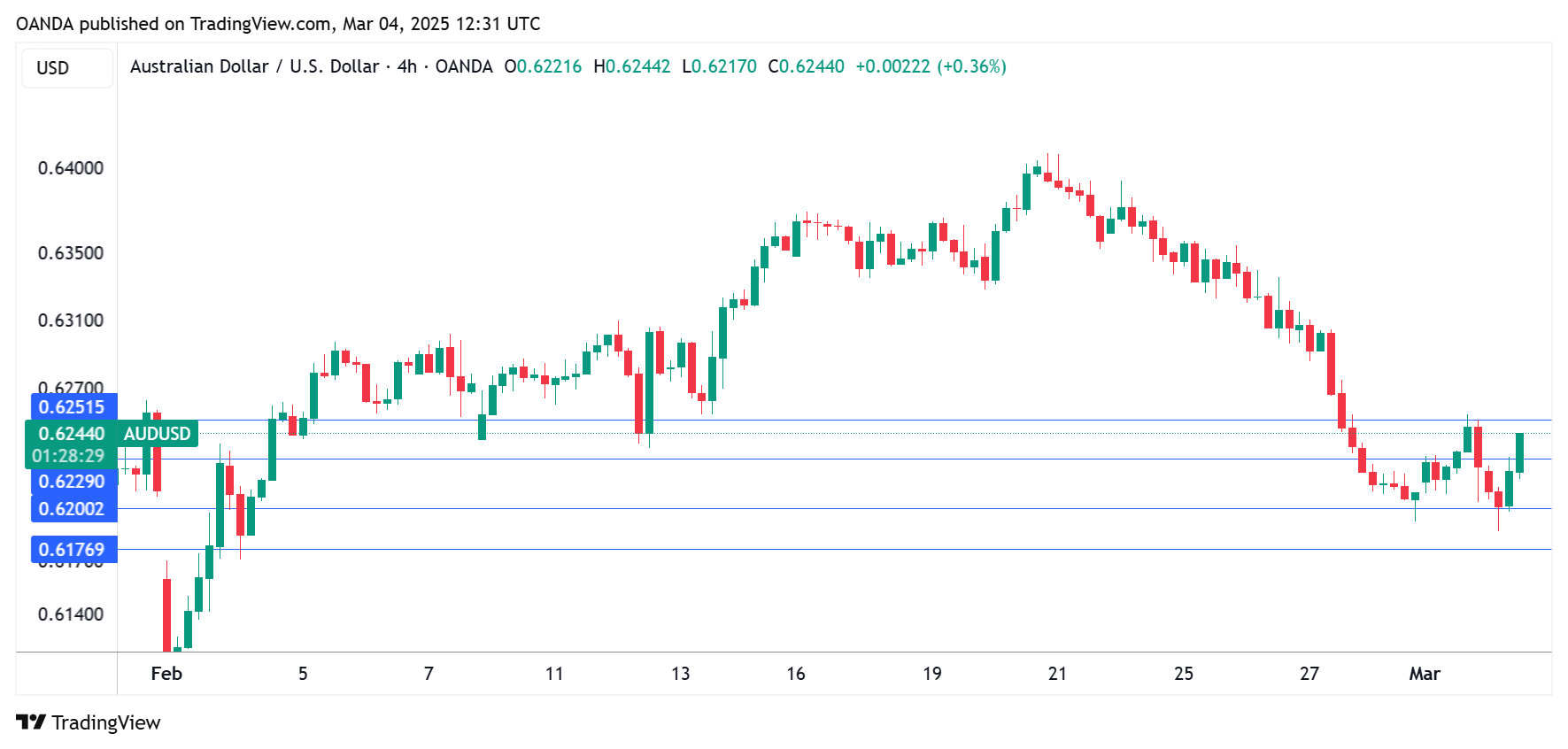
    AUD/USD declined below the 0.6350 and 0.6250 support levels. NZD/USD is also moving lower and might extend losses below 0.5540.

    Important Takeaways for AUD/USD and NZD/USD Analysis Today

    • The Aussie Dollar started a fresh decline from well above the 0.6300 level against the US Dollar.
    • There is a connecting bearish trend line forming with resistance at 0.6175 on the hourly chart of AUD/USD at FXOpen.
    • NZD/USD declined steadily from the 0.5690 resistance zone.
    • There is a short-term bearish trend line forming with resistance at 0.5580 on the hourly chart of NZD/USD at FXOpen.

    AUD/USD Technical Analysis

    On the hourly chart of AUD/USD at FXOpen, the pair struggled to clear the 0.6300 zone. The Aussie Dollar started a fresh decline below the 0.6250 support against the US Dollar.

    The pair even settled below 0.6220 and the 50-hour simple moving average. There was a clear move below 0.6200. A low was formed at 0.6139 and the pair is now consolidating losses. On the upside, an immediate resistance is near the 0.6175 level.

    There is also a connecting bearish trend line forming with resistance at 0.6175. It is close to the 23.6% Fib retracement level of the downward move from the 0.6288 swing high to the 0.6139 low.

    The next major resistance is near the 0.6210 zone or the 50% Fib retracement level of the downward move from the 0.6288 swing high to the 0.6139 low, above which the price could rise toward 0.6290. Any more gains might send the pair toward the 0.6320 resistance.

    A close above the 0.6320 level could start another steady increase in the near term. The next major resistance on the AUD/USD chart could be 0.6400.

    On the downside, initial support is near the 0.6140 zone. The next support sits at 0.6120. If there is a downside break below 0.6120, the pair could extend its decline. The next support could be 0.6050. Any more losses might send the pair toward the 0.6000 support.

    NZD/USD Technical Analysis

    On the hourly chart of NZD/USD on FXOpen, the pair also followed a similar pattern and declined from the 0.5700 zone. The New Zealand Dollar gained bearish momentum and traded below 0.5635 against the US Dollar.

    The pair settled below the 0.5600 level and the 50-hour simple moving average. Finally, it tested the 0.5540 zone and is currently consolidating losses.

    Immediate resistance on the upside is near the 23.6% Fib retracement level of the downward move from the 0.5692 swing high to the 0.5542 low at 0.5580. There is also a short-term bearish trend line forming with resistance at 0.5580.

    The next resistance is the 0.5620 level or the 50% Fib retracement level of the downward move from the 0.5692 swing high to the 0.5542 low. If there is a move above 0.5620, the pair could rise toward 0.5635.

    Any more gains might open the doors for a move toward the 0.5690 resistance zone in the coming days. On the downside, immediate support on the NZD/USD chart is near the 0.5540 level.

    The next major support is near the 0.5500 zone. If there is a downside break below 0.5500, the pair could extend its decline toward the 0.5465 level. The next key support is near 0.5420.

    Trade over 50 forex markets 24 hours a day with FXOpen. Take advantage of low commissions, deep liquidity, and spreads from 0.0 pips. Open your FXOpen account now or learn more about trading forex with FXOpen.

    This article represents the opinion of the Companies operating under the FXOpen brand only. It is not to be construed as an offer, solicitation, or recommendation with respect to products and services provided by the Companies operating under the FXOpen brand, nor is it to be considered financial advice.

    GBP/JPY Daily Outlook

    Daily Pivots: (S1) 191.61; (P) 193.20; (R1) 194.19; More...

    GBP/JPY's decline from 198.94 continues today and intraday bias remains on the downside. Deeper fall would be seen to 188.07 support. Firm break there will argue that corrective pattern from 180.00 has finished too, and larger decline from 208.09 might be ready to resume. On the upside, above 192.89 minor resistance will turn intraday bias neutral first. But risk will stay on the downside as long as 55 4H EMA (now at 195.22) holds.

    In the bigger picture, price actions from 208.09 are seen as a correction to whole rally from 123.94 (2020 low). The range of consolidation should be set between 38.2% retracement of 123.94 to 208.09 at 175.94 and 208.09. However, decisive break of 175.94 will argue that deeper correction is underway.

    Sterling Slides Further as UK Fiscal Concerns Persist, UK-China Trade Efforts Fail to Reassure Markets

    Sterling extended its losses at the start of the week as deepening concerns over the UK’s fiscal situation continued to dominate market sentiment. Yields on 10-year UK Gilts surged above 4.88%, inching closer to the psychologically significant 5% mark. Market participants remain skeptical about the government’s fiscal discipline, despite repeated reassurances from Chancellor Rachel Reeves.

    At a press conference in China, Reeves reaffirmed her commitment to fiscal responsibility, stating, "We will pay for day-to-day spending through tax receipts and we will get debt down as a share of GDP." However, these declarations fell flat with the markets, which is ore focused on the UK’s mounting fiscal challenges and sluggish economic growth.

    Reeves’ attempts to rejuvenate UK-China trade ties also failed to make a meaningful impact on sentiment. During her visit to Beijing, she announced trade and investment agreements worth GBP 600m over the next five years, following discussions with Chinese Vice-Premier He Lifeng.

    However, markets dismissed the news, viewing it as insufficient to offset broader economic and fiscal challenges. Domestically, Reeves faced criticism for engaging too closely with China, with some accusing her of compromising national interests for limited gains.

    In broader currency markets, Pound is currently the worst performer of the day, with Euro close behind. Dollar, consolidating last week’s robust gains, ranks as the third weakest currency. On the other hand, Yen tops the leaderboard, benefiting from renewed risk aversion among investors. Aussie follows, buoyed by upbeat Chinese trade data, while Kiwi ranks third. Swiss Franc and Canadian Dollar are positioning in the middle.

    The upcoming week promises significant developments, with key inflation reports from the US, UK, and Australia, alongside UK GDP figures.

    Technically, AUD/CAD's fall from 0.9375 continued last week and edged closer to 0.8851 structural support. Decisive break there should confirm that whole corrective rebound from 0.8562 (2023 low) has completed, and solidify medium term bearishness for retesting this low. Nevertheless, strong bounce from current level, followed by break of 0.9016 resistance, will keep the rise from 0.8562 alive for another rally through 0.9375 at a later stage.

    ECB’s Lane stresses the need for "middle path" on interest rates

    ECB Chief Economist Philip Lane, in an interview with Der Standard, highlighted that a "middle path" is essential to achieving the inflation target without stifling economic growth or allowing inflationary pressures to persist.

    Lane warned that if interest rates fall too quickly, it could undermine efforts to bring services inflation under control. On the other hand, keeping rates too high for too long risks that inflation could "materially fall below target".

    “We think inflation pressure will continue to ease this year,” Lane stated, while adding that wage increases in 2025 are expected to moderate significantly, which could contribute to a softer inflationary environment.

    While acknowledging that the overall direction of monetary policy is clear, Lane underlined the complexities of striking the right balance of "being neither too aggressive nor too cautious."

    China's monthly trade surplus soars to USD 104.8B as exports jumps 10.7% yoy

    China's trade data for December delivered a solid performance, reflecting resilience in exports and a surprising recovery in imports.

    Exports surged 10.7% yoy, significantly outpacing the 7.3% yoy expected growth and accelerating from November's 6.7%.

    Shipments to major markets rose sharply, with exports to the US jumping 18.9% yoy, ASEAN by 15.6% yoy, and the EU by 8.7% yoy. Some analysts highlighted that front-loading ahead of the Lunar New Year and trade policy shifts under Donald Trump’s incoming administration likely bolstered the month's figures.

    Imports grew 1.0% yoy, defying expectations of a -1.5% yoy decline and marking a rebound after consecutive contractions of -3.9% yoy in November and -2.3% yoy in October. This recovery was driven in part by increased purchases of commodities like copper and iron ore, with importers potentially capitalizing on lower prices.

    Regionally, imports from the US rose by 2.6% yoy, while ASEAN imports grew 5.4% yoy. However, imports from the EU fell by -4.9% yoy.

    Trade surplus widened from USD 97.4B in November to USD 104.8B in December, surpassing expectations of USD 100B.

    Looking ahead, markets will closely monitor China’s upcoming GDP figures, due for release on Friday. Expectations are for fourth-quarter growth to clock in at 5.0% yoy.

    Market focus on US inflation and UK growth as Sterling and Aussie face risks

    Markets are preparing for a critical week with Dollar, Sterling, and Aussie all facing major economic releases.

    In the US, upcoming CPI and retail sales reports will command attention, especially following last week’s strong employment data that has rattled expectations about Fed’s next move. With non-farm payrolls far exceeding forecasts, traders have priced out the likelihood of a rate cut in the first quarter, turning their gaze instead to May or even June as the earliest possibility.

    Fed officials, who have long noted balanced risks to the dual mandate, could pivot more hawkishly if inflation readings surprise on the upside. Should CPI data reveal resurgence in price pressures, markets may be forced to extend their timeline for a Fed rate cut.

    Such a shift would likely offer further support to Dollar, which is already benefiting from the resilience of US labor markets and the potential for sustained higher interest rates.

    Meanwhile, US retail sales report will provide an additional gauge of consumer demand; robust spending could reinforce the notion that Fed has limited room to ease policy in the near term, keeping the Dollar well-bid.

    In the UK, Sterling is bracing for GDP, CPI, and retail sales figures. The Pound suffered sharp decline last week amid intensifying concerns over fiscal de-anchoring and stagflation.

    Should UK economic data disappoint on growth—particularly GDP or retail sales—the currency could face renewed selling pressure. Although upside surprises in inflation remain possible, investors appear more wary of signs that British growth is faltering in the wake of the Autumn budget measures.

    In Australia, markets are closely weighing whether RBA will commence its easing cycle in February or May. Much hinges on labor market developments. If job data continues to weaken, policymakers may have room to act sooner. Attention will then shift to Q4 CPI data, due in about two weeks, as a decisive factor in clarifying RBA’s direction.

    Meanwhile, external factors also come into play: China’s upcoming GDP release, along with a host of other indicators, could influence regional sentiment and, by extension, Australian Dollar.

    Here are some highlights for the week ahead:

    • Monday: China trade balance; Swiss SECO consumer climate.
    • Tuesday: Australia Westpac consumer sentiment; Japan current account; US PPI.
    • Wednesday: Japan machine tool orders, UK CPI; Eurozone industrial production; Canada manufacturing sales, wholesale sales; US CPI, Empire state manufacturing, Fed's Beige Book.
    • Thursday: Japan PPI; Australia employment; UK GDP, production, trade balance; Eurozone trade balance, ECB accounts; US retail sales, jobless claims, Philly Fed survey, import prices, business inventories, NAHB housing index.
    • Friday: New Zealand BNZ manufacturing; China GDP, industrial production, retail sales, fixed asset investment; UK retail sales; Eurozone CPI final; US building permits and housing starts, industrial production and capacity utilization.

    GBP/JPY Daily Outlook

    Daily Pivots: (S1) 191.61; (P) 193.20; (R1) 194.19; More...

    GBP/JPY's decline from 198.94 continues today and intraday bias remains on the downside. Deeper fall would be seen to 188.07 support. Firm break there will argue that corrective pattern from 180.00 has finished too, and larger decline from 208.09 might be ready to resume. On the upside, above 192.89 minor resistance will turn intraday bias neutral first. But risk will stay on the downside as long as 55 4H EMA (now at 195.22) holds.

    In the bigger picture, price actions from 208.09 are seen as a correction to whole rally from 123.94 (2020 low). The range of consolidation should be set between 38.2% retracement of 123.94 to 208.09 at 175.94 and 208.09. However, decisive break of 175.94 will argue that deeper correction is underway.

    Economic Indicators Update

    GMT CCY EVENTS ACT F/C PP REV
    21:45 NZD Building Permits M/M Nov 5.30% -5.20%
    00:00 AUD TD-MI Inflation Gauge M/M Dec 0.60% 0.20%
    03:00 CNY Trade Balance (USD) Dec 104.8B 100.0B 97.4B
    08:00 CHF SECO Consumer Climate -30 -38 -37


    December Payrolls Shifted the Needle from Two to Only One Additional 25 bps Fed Rate Cut This Year

    Markets

    US December payrolls shifted the needle of US money markets from two to only one additional 25 bps Fed rate cut this year. Headline job growth (+256k vs +165k expected) was the best since March, came with barely any revision to previous months’ numbers and come together with decline in the unemployment rate (4.1% from 4.2%) and consistent wage growth (+0.3% M/M & 3.9% Y/Y). From a momentum perspective, we might be talking about a rate hike as the next Fed move if Wednesday’s January US CPI data manage to beat consensus for a 0.3% M/M headline increase (2.9% Y/Y) and a 0.2% M/M core inflation pace (3.3% Y/Y). Inflation expectations in the January University of Michigan consumer survey (released last Friday as well) in any case showed a significant uptick for both short-term (1-yr; 2.8% to 3.3%) and long-term (5-10 yr; 3.3% from 3%) inflation expectations. The short term gauge matched the highest level registered in 2024 while the long term metric was the highest since 2008. US Treasuries sold off in bear flattening fashion. Daily changes varied between +1.7 bps (30-yr) and +13 bps (3-yr). Technical resistance (5%) hampered a more pronounced increase at the very long end of the curve. The US 10-yr yield took out the 2024 top at 4.73% in its 7 bps march. German Bunds and UK Gilts joined the broad market move though obviously at a slower pace. German yields rose by 1.3 bps (30-yr) to 5.4 bps (3-yr) while UK yields added 2-4 bps across the curve. The US dollar extended the early 2025 momentum with the trade-weighted greenback (DXY) touching 110 for the first time since November 2022. EUR/USD closed at 1.0244 (from 1.03) and has its eyes at key support (1.0201) this morning. That corresponds with 62% retracement on EUR/USD’s 2022-2023 comeback. Losing that level implies a return to parity (or below). Sterling cedes more ground with EUR/GBP taking out 0.84 on fiscal and stagflationary worries. UK December inflation numbers (also on Wednesday) could inflict more pain on the UK currency. US stock markets lost 1.5% last Friday’s as the continuous rise in real yields bites. Today’s eco calendar is empty. The stealth sell-off pace in core bonds shows no signs of slowing down at the moment. Keep a close eye on oil prices as well with Brent crude prices rallying from $77/b to $81/b since US president Biden on Friday announced most aggressive sanctions on Russia’s oil trade as of yet.

    News & Views

    China’s trade balance grew the most on record in December. It added $104.84bn thanks to a double digit export increase vs a 1% rise in imports. The sprint into the end of the year suggested companies have been frontloading exports ahead of widely expected import tariff increases on Chinese goods under a second Trump presidency. Exports to the US indeed rose 15.7% y/y in December, the highest reading since February 2024. Shipments to the Asian area and Europe grew 19.2% and 8.8% respectively. Exports over the whole of 2024 rose 5.9% y/y and climbed to $3.58tn. Imports over the same period increased 1.1% y/y to $2.59tn. That resulted in a record high trade surplus of $992.1bn. Trade has been one of the key drivers of Chinese growth with private consumption in particular showing few signs so far of a hoped-for rebound. China’s yuan trades little changed around USD/CNY 7.33.

    IMF director Georgieva told reports end last week the Fund will forecast steady global growth and continuing disinflation in its updated World Economic Outlook due January 17. While the US economy was doing better than expected, high uncertainty on president-elect Trump’s trade policies added headwinds to the global economy. The IMF in October projected 3.2% global growth in 2025. Georgieva also said overall interest rates were expected to stay “somewhat higher for quite some time”, driven in particular by the US developments. Inflation was moving closer towards the Fed’s 2% target but with data showing a stable labour market, the central bank is in a position to wait before lowering policy rates further. Trends diverge in different regions though, the IMF chief added. Growth was expected to stall somewhat in the EU and to weaken a little in India. Brazil in the meantime would face somewhat higher inflation while China was seeing deflationary pressure and ongoing challenges with domestic demand.

    ECB’s Lane stresses the need for “middle path” on interest rates

    ECB Chief Economist Philip Lane, in an interview with Der Standard, highlighted that a "middle path" is essential to achieving the inflation target without stifling economic growth or allowing inflationary pressures to persist.

    Lane warned that if interest rates fall too quickly, it could undermine efforts to bring services inflation under control. On the other hand, keeping rates too high for too long risks that inflation could "materially fall below target".

    “We think inflation pressure will continue to ease this year,” Lane stated, while adding that wage increases in 2025 are expected to moderate significantly, which could contribute to a softer inflationary environment.

    While acknowledging that the overall direction of monetary policy is clear, Lane underlined the complexities of striking the right balance of "being neither too aggressive nor too cautious."

    Full interview of ECB's Lane here.

    Fed Hawks Progress on Strong Data, Oil Jumps

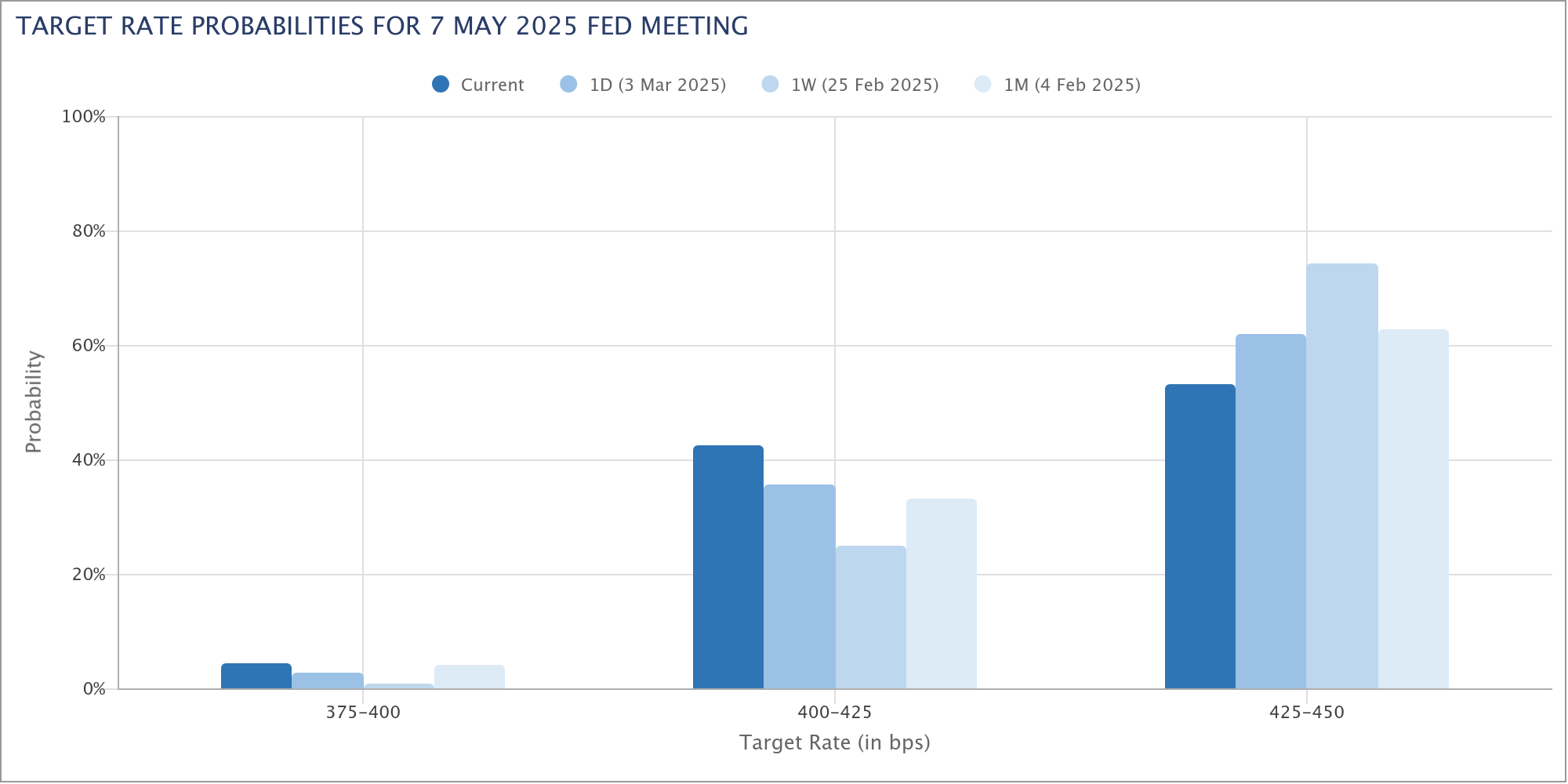
    Surprise! The US economy added more than 250K new nonfarm jobs in December, some 90K more than expected, and the unemployment rate fell to 4.1%. If it’s any comfort for the Federal Reserve (Fed) doves: wages growth softened from 4% to 3.9% on a yearly basis. But all in all, the report looked very strong. That’s excellent news for the US economy, and Joe Biden – who will pass on an abatable US economy to his successor. But that’s not necessarily good news for the market, as the strength of the US jobs data further dashed the dovish Fed expectations. The US 2-year yield – that captures the Fed’s rate expectations - jumped to 4.40%, the highest since November, the 10-year yield spiked to 4.78%, the highest since October, and the 30-year yield hit 5%. The probability of no rate cut from the Fed in May spiked to 67% in the aftermath of the data release, and the probability of a June cut is close to a coin flip.

    Of course, the melting Fed cut expectations hammered risk appetite and sent the S&P500 more than 1.50% lower on Friday. The index closed a touch above its 100-DMA. The Nasdaq 100 gap opened below its 50-DMA and lost a similar amount, while the Dow Jones slipped 1.63% and the small caps tanked more than 2% on rising US yields and prospects of higher Fed rates for longer than imagined. The latter puts the optimistic outlook for the stocks at jeopardy.

    Especially, the fact that the US yield curve has been steeping is not good news for stock valuations, as stocks tend to face larger setbacks when long-term yields climb more rapidly than short-term ones, reflecting inflationary pressures or tightening financial conditions. So, sentiment is fragile walking into the new week, with the VIX index gently moving toward the 20 level.

    Week ahead

    The US will release its latest inflation updates tomorrow and Wednesday. Tomorrow, the producer price index will give an idea on the evolution of prices paid by producers, and is expected to show a slowdown from 3.4% to 3.2% in December. However, on Wednesday, the CPI data is expected to print an uptick in US headline inflation from 2.7% to 2.9%. Core inflation is also seen super-sticky above the 3% mark. A sufficiently strong set of inflation data could throw the expectation of a June cut under the bus, as well. If that’s the case, stock investors could only rely on earnings to keep their heads above water.

    On that front, the US big banks will open the dance this week, with JP Morgan, Wells Fargo, Goldman and Citigroup expected to announce their earnings on Wednesday, Bank of America and Morgan Stanley on Thursday. TSM will also announce its Q4 earnings on Thursday and the expectations remain high. Nvidia’s partner in crime announced that its Q4 sales rose 39% to around $26.3bn and topped estimates, giving a clear indication that the AI spending will extend into the new year. TSM shares eked out a 0.60% gain on Friday despite a broad market turmoil. Nvidia shares however couldn’t enjoy the good news and tanked 3% on Friday.

    Back to the banks, the financial stocks in the S&P500 jumped up to 40% last year and are now around 28% up compared to the beginning of last year. The high interest rates – especially the steepening yield curve - offered the US banks the possibility to pocket interesting net interest revenue. Plus, trading activity was strong and deal making picked up. As such, the financials are expected print nearly 40% increase in their earnings last quarter. The easy comparison to the year before helps, as well: the regional banks, for example, are projected to report earnings of $3.1 billion compared to a loss of -$3.8 billion a year ago.

    Zooming out, the S&P500 companies are expected to print a 11.7% earnings growth in the Q4 of 2024. But Factset highlights that the index will likely report year-over-year growth in earnings above 14% for the fourth quarter based on the average improvement in the earnings growth rate during the earnings season. If that’s the case, a better-than-expected earnings season could throw a floor under a potential selloff in the US stocks. But the deteriorating Fed expectations remain the major risk to the positive outlook.

    FX & energy

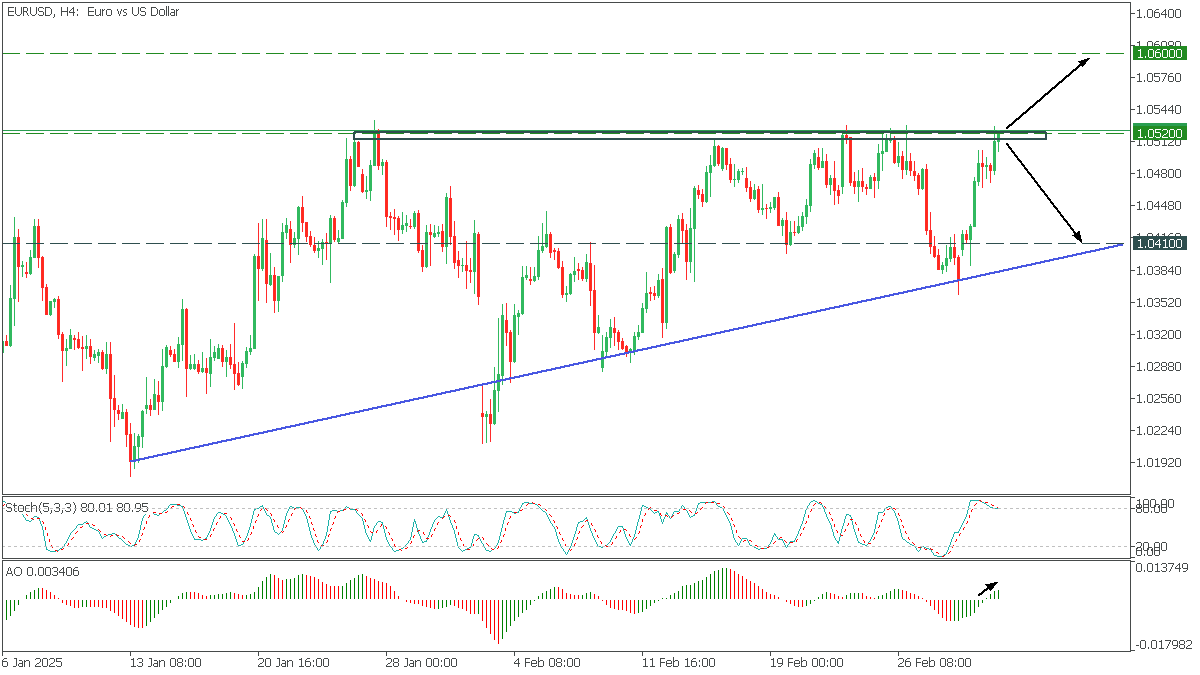
    The US dollar kicks off the week on a positive footage and the EURUSD is testing the 1.02 support this morning, with growing chance of pulling out this support on the back of a broad-based strength of the dollar due to the rising hawkish Fed expectations.

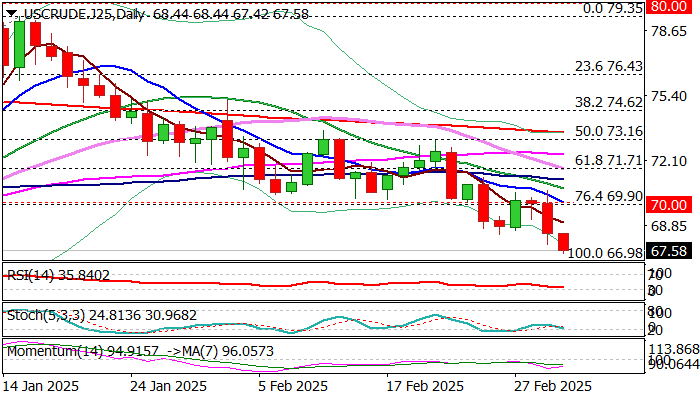
    In energy, US crude advances with big steps. The barrel of US crude trades above the $78pb mark for the first time since October as the US and the UK, together, announced important sanctions against two major Russian oil companies – that exported just below 1mbpd in the first 10 months of 2024, around 30% of Russia’s total flows on tankers, according to Bloomberg. The US also sanctioned more than 180 vessels associated with Russia’s shadow fleet, doubling the number of targeted oil tankers. The latest actions are expected to counter the 1mbpd oil surplus forecasted by the IEA this year. The price of crude rose too fast in a too short period of time, sending the RSI index into the overbought territory, yet the short-term outlook is positive, and the US crude could test the $80pb level in the extension of the rally. Price pullbacks could be interesting opportunities to strengthen tactical long positions. In the medium run, sentiment is mixed on the back of unsupportive global economic/China outlook. Strong resistance is seen into the $80pb psychological level.

    Week of Inflation Releases, US CPI in Focus

    In focus today

    Today will be quiet in terms of data releases, as we anticipate the upcoming inflation figures later this week.

    The rest of the week promises to be eventful, particularly with the release of inflation figures. On Wednesday, the highlight will be the US CPI for December, accompanied by inflation data from Sweden, France, Spain and the UK. Additionally, euro area industrial production figures will be released. Thursday brings German inflation data, leading up to the release of euro area HICP for December on Friday. Early Friday sees the release of Chinese data for GDP, housing and retail sales.

    Economic and market news

    What happened overnight

    In China, trade data surprised positively in December, as both exports (+10.7% y/y, November +6.7%) and imports (+1.0% y/y, November -3.9%) grew more than expected. The former could be explained at least partially by firms frontloading purchases ahead of expected tariffs.

    What happened over the weekend

    In the US, December Jobs Report was published last Friday. Nonfarm payrolls growth blew past expectations to +256k (cons: +160k) confirming solid job growth after hurricanes and strikes muddled past two readings. Moreover, unemployment rate fell to 4.1% (prior: 4.2%), while wage growth declined to 0.3% (prior: 0.4%). Overall, the report indicates a pause in the cooling of the labour market, making further interest rate cuts in the US less likely. The market reacted with a stronger dollar and higher US interest rates, influencing European rates as well. On Friday evening, the Chicago Fed's Goolsbee (voter) cautioned against overinterpreting single reports and noted that if current expectations are met, 'rates would be a fair bit lower' in 12-18 months' time. We still expect the next Fed cut in March.

    In Norway, core inflation dropped to 2.7% (prior: 3.0%) in December, below the 2.8% expected by consensus and Norges Bank. This confirms the ongoing disinflationary trend, indicating that November's surprising jump was a one-off, which is reassuring to Norges Bank. This supports the case for a rate cut in March and with inflation now slightly below Norges Bank's forecast, at least three cuts in 2025. We continue to forecast somewhat lower short-term rates and some headwind for the NOK FX.

    In Denmark, CPI inflation rose to 1.9% (prior: 1.6%) in December, as anticipated. This increase is primarily due to a base effect on energy, with food prices also contributing as they declined less than last year. Underlying price pressures remain subdued, with no significant evidence of high wage growth impacting inflation.

    Equities: Global equities fell on Friday and were down for the week as strong data pushed yields higher. With a macro-focused approach and an outlook in which inflation is under control we argue that the data we have seen from the US, including the job data on Friday, is extremely positive for equities. We have experienced similar situations before, where strong data causes the Fed to reprice. When the long end of the curve rises by roughly 100 basis points, equity investors lose confidence, and equities stop performing until yields settle at the higher plateau. This is the situation we find ourselves in today, and equities should struggle for direction until yields begin to stabilise. In the US on Friday, equities ended lower: Dow -1.6%, S&P 500 -1.5%, Nasdaq -1.6% and Russell 2000 -2.2%. All markets in Asia are lower this morning, and the same applies to European and US futures.

    FI: The strong US labour market report sent yields higher across the board. US 10y UST rose 10bp on the day to 4.76% and is now 110bp above the lows from September last year, see our discussion in Reading the Markets USD - Term premium lifts US bond yields, 8 January.

    FX: The USD ended last week on a strong footing amid US data releases triggering a further leg higher in USD rates. Interestingly, despite the move higher in yields the risk-off channel seemed to dominate in USD/JPY as the cross ended the day lower leaving the Japanese currency as the top performer. In the Scandies both NOK and SEK saw intraday fluctuations but ended Friday remarkably unchanged compared to Thursday's close. Finally, in GBP the pressure returned as EUR/GBP is back at the 0.84 level. Only MXN, AUD and ZAR had a worse session than GBP.

    China’s monthly trade surplus soars to USD 104.8B as exports jumps 10.7% yoy

    China's trade data for December delivered a solid performance, reflecting resilience in exports and a surprising recovery in imports.

    Exports surged 10.7% yoy, significantly outpacing the 7.3% yoy expected growth and accelerating from November's 6.7%.

    Shipments to major markets rose sharply, with exports to the US jumping 18.9% yoy, ASEAN by 15.6% yoy, and the EU by 8.7% yoy. Some analysts highlighted that front-loading ahead of the Lunar New Year and trade policy shifts under Donald Trump’s incoming administration likely bolstered the month's figures.

    Imports grew 1.0% yoy, defying expectations of a -1.5% yoy decline and marking a rebound after consecutive contractions of -3.9% yoy in November and -2.3% yoy in October. This recovery was driven in part by increased purchases of commodities like copper and iron ore, with importers potentially capitalizing on lower prices.

    Regionally, imports from the US rose by 2.6% yoy, while ASEAN imports grew 5.4% yoy. However, imports from the EU fell by -4.9% yoy.

    Trade surplus widened from USD 97.4B in November to USD 104.8B in December, surpassing expectations of USD 100B.

    Looking ahead, markets will closely monitor China’s upcoming GDP figures, due for release on Friday. Expectations are for fourth-quarter growth to clock in at 5.0% yoy.

    Euro Weakens: EUR/USD Faces Growing Downside Risks

    Key Highlights

    • EUR/USD failed to recover above 1.0450 and declined again.
    • A short-term bearish trend line is forming with resistance at 1.0300 on the 4-hour chart.
    • GBP/USD accelerated losses below the 1.2250 support.
    • Crude oil prices surged above the $75.00 and $76.00 levels.

    EUR/USD Technical Analysis

    The Euro remained in a bearish zone below 1.0450 against the US Dollar. EUR/USD started another decline below the 1.0400 and 1.0350 levels.

    Looking at the 4-hour chart, the pair settled below the 1.0320 level, the 100 simple moving average (red, 4-hour), and the 200 simple moving average (green, 4-hour). The pair tested the 1.0215 zone and is currently consolidating losses.

    On the upside, the pair is facing hurdles near the 1.0300 level. There is also a short-term bearish trend line forming with resistance at 1.0300 on the same chart.

    The first major resistance is near the 1.0335 level. The next major resistance is near the 1.0350 level. A close above the 1.0350 level could set the tone for another increase. In the stated case, the pair could rise toward the 1.0450 resistance.

    On the downside, immediate support sits near the 1.0215 level. The next key support sits near the 1.0200 level. Any more losses could send the pair toward the 1.01120 level.

    Looking at GBP/USD, the pair started another decline and the bears were able to push the pair below the 1.2250 support.

    Upcoming Economic Events:

    • US Producer Price Index for Dec 2024 (MoM) – Forecast +0.3%, versus +0.4% previous.
    • US Producer Price Index for Dec 2024 (YoY) – Forecast +3.0%, versus +3.0% previous.