

Sample Category Title
Eco Data 2/21/18
| GMT | Ccy | Events | Actual | Forecast | Previous | Revised |
|---|---|---|---|---|---|---|
| 00:30 | AUD | Wage Price Index Q/Q Q4 | 0.60% | 0.50% | 0.50% | |
| 00:30 | AUD | Construction Work Done Q4 | -19.40% | -10.00% | 15.70% | 16.60% |
| 00:30 | JPY | PMI Manufacturing Feb P | 54 | 55.2 | 54.8 | |
| 04:30 | JPY | All Industry Activity Index M/M Dec | 0.50% | 0.40% | 1.00% | |
| 08:00 | EUR | France Manufacturing PMI Feb P | 56.1 | 58 | 58.4 | |
| 08:00 | EUR | France Services PMI Feb P | 57.9 | 59 | 59.2 | |
| 08:30 | EUR | Germany Manufacturing PMI Feb P | 60.3 | 60.5 | 61.1 | |
| 08:30 | EUR | Germany Services PMI Feb P | 55.3 | 57 | 57.3 | |
| 09:00 | EUR | Eurozone Manufacturing PMI Feb P | 58.5 | 59.2 | 59.6 | |
| 09:00 | EUR | Eurozone Services PMI Feb P | 56.7 | 57.6 | 58 | |
| 09:30 | GBP | Jobless Claims Change Jan | -7.2K | 2.3K | 8.6K | |
| 09:30 | GBP | Claimant Count Rate Jan | 2.30% | 2.40% | ||
| 09:30 | GBP | Average Weekly Earnings 3M/Y Dec | 2.50% | 2.50% | 2.50% | |
| 09:30 | GBP | ILO Unemployment Rate 3Mths Dec | 4.40% | 4.30% | 4.30% | |
| 09:30 | GBP | Public Sector Net Borrowing Jan | -11.6B | -11.0B | 1.0B | |
| 14:45 | USD | US Manufacturing PMI Feb P | 55.9 | 55.5 | 55.5 | |
| 14:45 | USD | US Services PMI Feb P | 55.9 | 54 | 53.3 | |
| 15:00 | USD | Existing Home Sales Jan | 5.38M | 5.63M | 5.57M | 5.56M |
| 19:00 | USD | FOMC Meeting Minutes |
| GMT | Ccy | Events | |
|---|---|---|---|
| 00:30 | AUD | Wage Price Index Q/Q Q4 | |
| Actual: 0.60% | Forecast: 0.50% | ||
| Previous: 0.50% | Revised: | ||
| 00:30 | AUD | Construction Work Done Q4 | |
| Actual: -19.40% | Forecast: -10.00% | ||
| Previous: 15.70% | Revised: 16.60% | ||
| 00:30 | JPY | PMI Manufacturing Feb P | |
| Actual: 54 | Forecast: 55.2 | ||
| Previous: 54.8 | Revised: | ||
| 04:30 | JPY | All Industry Activity Index M/M Dec | |
| Actual: 0.50% | Forecast: 0.40% | ||
| Previous: 1.00% | Revised: | ||
| 08:00 | EUR | France Manufacturing PMI Feb P | |
| Actual: 56.1 | Forecast: 58 | ||
| Previous: 58.4 | Revised: | ||
| 08:00 | EUR | France Services PMI Feb P | |
| Actual: 57.9 | Forecast: 59 | ||
| Previous: 59.2 | Revised: | ||
| 08:30 | EUR | Germany Manufacturing PMI Feb P | |
| Actual: 60.3 | Forecast: 60.5 | ||
| Previous: 61.1 | Revised: | ||
| 08:30 | EUR | Germany Services PMI Feb P | |
| Actual: 55.3 | Forecast: 57 | ||
| Previous: 57.3 | Revised: | ||
| 09:00 | EUR | Eurozone Manufacturing PMI Feb P | |
| Actual: 58.5 | Forecast: 59.2 | ||
| Previous: 59.6 | Revised: | ||
| 09:00 | EUR | Eurozone Services PMI Feb P | |
| Actual: 56.7 | Forecast: 57.6 | ||
| Previous: 58 | Revised: | ||
| 09:30 | GBP | Jobless Claims Change Jan | |
| Actual: -7.2K | Forecast: 2.3K | ||
| Previous: 8.6K | Revised: | ||
| 09:30 | GBP | Claimant Count Rate Jan | |
| Actual: 2.30% | Forecast: | ||
| Previous: 2.40% | Revised: | ||
| 09:30 | GBP | Average Weekly Earnings 3M/Y Dec | |
| Actual: 2.50% | Forecast: 2.50% | ||
| Previous: 2.50% | Revised: | ||
| 09:30 | GBP | ILO Unemployment Rate 3Mths Dec | |
| Actual: 4.40% | Forecast: 4.30% | ||
| Previous: 4.30% | Revised: | ||
| 09:30 | GBP | Public Sector Net Borrowing Jan | |
| Actual: -11.6B | Forecast: -11.0B | ||
| Previous: 1.0B | Revised: | ||
| 14:45 | USD | US Manufacturing PMI Feb P | |
| Actual: 55.9 | Forecast: 55.5 | ||
| Previous: 55.5 | Revised: | ||
| 14:45 | USD | US Services PMI Feb P | |
| Actual: 55.9 | Forecast: 54 | ||
| Previous: 53.3 | Revised: | ||
| 15:00 | USD | Existing Home Sales Jan | |
| Actual: 5.38M | Forecast: 5.63M | ||
| Previous: 5.57M | Revised: 5.56M | ||
| 19:00 | USD | FOMC Meeting Minutes | |
| Actual: | Forecast: | ||
| Previous: | Revised: | ||
Summary 2/19 – 2/23
Monday, Feb 19, 2018
[php_everywhere] [/php_everywhere]
Tuesday, Feb 20, 2018
[php_everywhere] [/php_everywhere]
Wednesday, Feb 21, 2018
[php_everywhere] [/php_everywhere]
Thursday, Feb 22, 2018
[php_everywhere] [/php_everywhere]
Friday, Feb 23, 2018
[php_everywhere] [/php_everywhere].
Weekly Economic and Financial Commentary: Inflation Comes in January, Is Here to Stay
U.S. Review
Inflation Comes in January, Is Here to Stay
- In a busy week of economic data releases, the leading story is the stronger-than-expected CPI reading to begin 2018. Headline CPI increased 0.5 percent in January, and registered a 2.1 percent year-over-year increase.
- Retail sales and industrial production each disappointed this month, falling well short of market expectations. Though each could have been affected by seasonal factors, it remains to be seen if firming inflation will affect consumer spending and if manufacturing output will keep pace with ISM strength.
Inflation Comes in January, Is Here to Stay
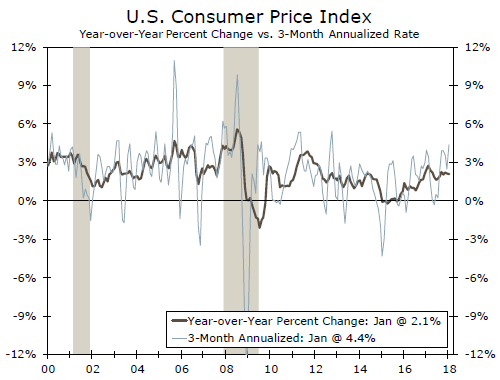
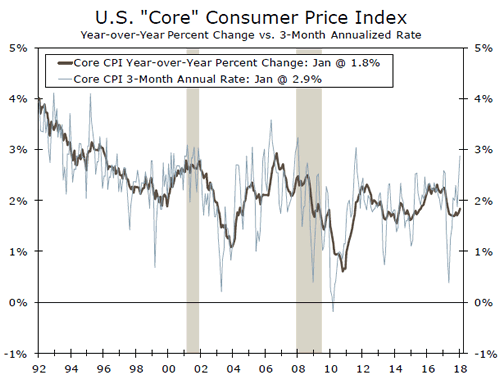
In a busy week of economic data releases, the leading story is the stronger-than-expected CPI reading to begin 2018. Headline CPI increased 0.5 percent in January, and registered a 2.1 percent yearover- year increase. While energy prices played a large role in boosting the CPI, core CPI, excluding food and energy prices, rose 0.3 percent, the largest gain since last January. While the year-ago gain is unchanged from December, core CPI has increased at a 2.9 percent three-month annualized rate. This indicates that yearago rates should strengthen in coming months. With inflation trending upwards recently as prices firm, we believe that the Fed will continue its tightening policy and raise rates three times this year.
Inflation is also rising on the producer side, as the Producer Price Index (PPI) for final demand rose broadly in January, by 0.4 percent. Both headline and core prices rose 0.4 percent, with increases in goods, services and construction. On a year-over-year basis, core PPI rose 2.5 percent, which is the strongest since 2014. Input prices for services has been slightly stronger than for goods, but the moderate rise indicates inflation should continue firming.
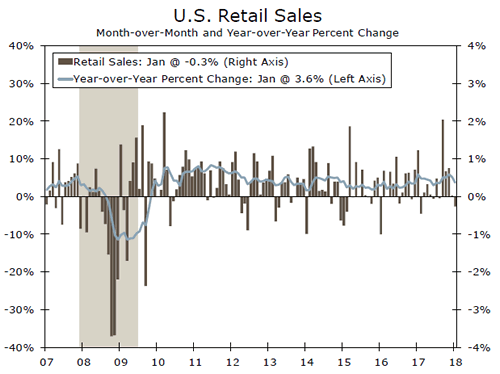
Retail sales data were released simultaneously with the CPI, and brought disappointing news. Retail sales growth came in 0.5 percentage points lower than expected, posting a 0.3 percent decline in January. The primary culprits for the drop were a 1.3 percent decline in motor vehicle & parts dealers' sales, a 0.4 percent drop in furniture stores' sales, a 2.4 percent drop in building material & garden equipment sales and a 1.2 percent drop in health & personal care stores' sales. It appears that there are some seasonal factors in January's report, as retail sales have typically been weaker during Q1 since the recovery from the Great Recession. Control group sales were expected to increase a solid 0.4 percent, but came in flat on the month. The weak retail sales report combined with stronger inflation data raise some concerns, however. Consumer purchasing power could be slashed as inflation picks up, which would certainly have a negative impact on retail sales moving forward. This will be something to keep an eye on.
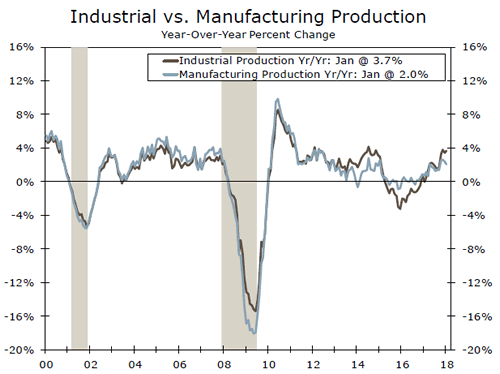
Industrial production (IP) also underwhelmed in January, falling 0.1 percent despite market expectations of a 0.2 percent gain. Mining can be blamed for this, falling 1.0 percent, though it comprises just 13 percent of IP. However, manufacturing was flat on the month, which allowed mining to drive the headline. This marks the second straight month of unchanged manufacturing output despite lofty ISM readings, which could partially be due to hurricane-related disruptions. We expect manufacturing production to grow in coming months as the hard and soft data converge and regional manufacturing activity has picked up.
Housing starts more than doubled expectations and rose 9.7 percent in January, following an upwardly revised 6.9 percent drop in December. The South led the growth in both starts and permits, increasing 21.9 and 5.4 percent, respectively. Starts are a historically volatile series, but the jump confirms high homebuilder confidence as improving job and wage growth, along with low for-sale inventory, means builders are selling homes just as fast as they can be built.
U.S. Outlook
Existing Home Sales • Wednesday
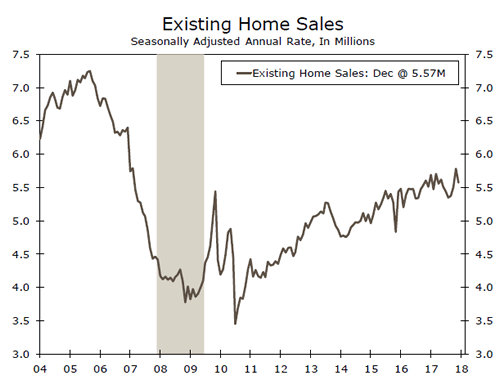
Existing home sales fell 3.6 percent in December to a 5.57 million unit pace following a strong 5.1 percent increase in November. The challenge remains in the existing housing market of continued tight inventories which, in turn, are driving up existing home prices and weighing on affordability. Existing home supply reached the lowest level (3.2 months) since the National Association of Realtors has been tracking the measure in 1999. The median price of an existing home is up 5.8 percent on a year-over-year basis. Even with these challenges, for total year 2017, overall sales rose 1.1 percent relative to 2016 to a 5.51-million unit pace. We expect existing home sales to start the year on a firmer note, rising 1.4 percent to a 5.65-million unit pace in January. In 2018, we expect existing home sales to rise to a 5.67-million unit pace. Our forecast for median existing home prices calls for a 5.6 percent increase in 2018.
Previous: 5.57 Million Wells Fargo: 5.65 Million Consensus: 5.61 Million
FOMC Meeting Minutes • Wednesday
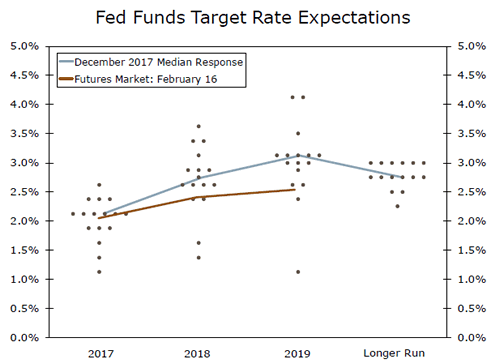
The Federal Open Market Committee left the federal funds range unchanged in January. Analysts will be looking closely at the minutes from the January meeting to look for further clues on the future rate hike path. Given the recent string of inflation readings, markets will be looking closely for concerns from the FOMC about the possibility of falling behind the curve in reacting to a rising inflation environment. That said, with a new FOMC composition this year the January meeting minutes may not hold too many clues. Currently, markets are pricing in a 99 percent probability of another rate hike at the March FOMC meeting. Our view is for three rate hikes this year beginning with the March meeting and subsequent hikes in Q2 and Q3 of this year. That said, should inflation continue to surprise to the upside, the risk of more rate hikes may start building as the year progresses.
Leading Economic Index • Thursday
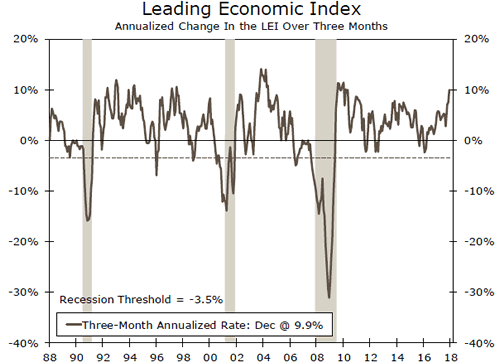
The Leading Economic Index rose 0.6 percent in December, marking the 16th month of consecutive gains in the measure. The leading index reached 9.9 percent on a three-month annualized basis. One of the biggest contributors to the strong reading was the Institute for Supply Management's new orders component, which added 0.29 percentage points to the index. We expect the LEI will post another sizable gain in January of 0.8 percent. The measure should be led higher once again by the ISM new order component given the continued strengthen observed in both the ISM manufacturing and non-manufacturing new order components in January. The LEI continues to point toward a robust economic growth environment in the quarters ahead, consistent with our forecast for GDP growth between 2.5 and 3.0 percent on an annualized basis.
Previous: 0.6% Wells Fargo: 0.8% Consensus: 0.7% (Month-over-Month)
Global Review
Slow But Steady Expansion Continues in Japan
- The sequential rate of real GDP growth was a tad disappointing in Q4. That said, the Japanese economy has actually been performing rather well recently. Real GDP growth has been positive for eight consecutive quarters, the longest string of uninterrupted expansion in 30 years.
Another Bank of England Rate Hike Looming?
- U.K. CPI inflation was higher than expected in January, which raises the odds that the Bank of England may hike rates as early as May. However, weaker-than-expected data on consumer spending may keep the bank on hold a bit longer.
Slow But Steady Expansion Continues in Japan
Data released this week showed that real GDP in Japan edged up at an annualized rate of only 0.5 percent in Q4-2017 relative to the previous quarter (see graph on front page). Not only was the outturn weaker than most analysts had expected, but it was also the slowest sequential rate of GDP growth in two years.
Although the headline rate of GDP growth in Q4 may have been a tad disappointing, the Japanese economy has actually been performing rather well recently. Real GDP in Japan grew 1.6 percent in 2017. Although this outturn may be underwhelming for many other economies, it was the strongest year for GDP growth in Japan since 2013. Moreover, real GDP growth has been positive for eight consecutive quarters, the longest string of uninterrupted expansion in 30 years. The unemployment rate in Japan has receded to a 23-year low below 3 percent.
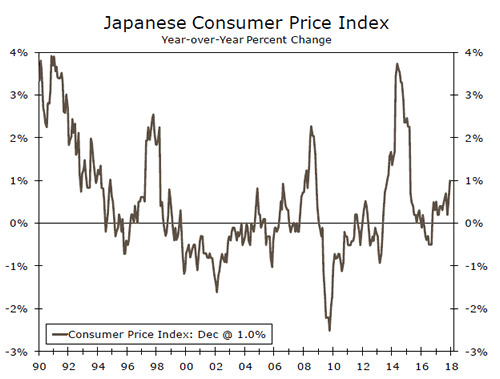
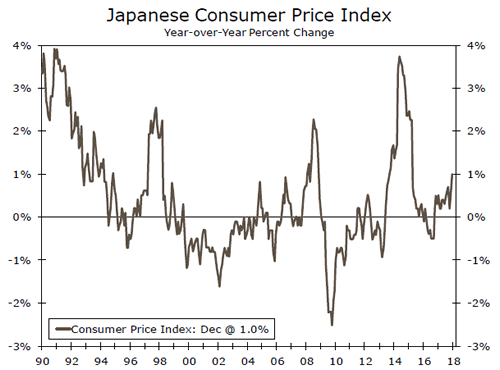
Despite solid GDP growth over the past few years, inflation in Japan remains benign. Although the overall rate of CPI inflation is currently around 1 percent (top chart), the underlying rate of inflation, as measured by consumer prices less food and energy, is essentially zero percent at present. Until inflation becomes firmly entrenched in Japan, which probably will not be anytime soon, the Bank of Japan is not likely to alter its accommodative policy stance.
Another Bank of England Rate Hike Looming?
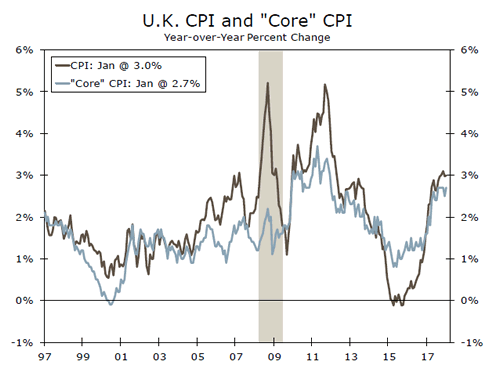
In contrast to Japan, inflation appears to be increasingly entrenched in the United Kingdom. Data released this week revealed that consumer prices rose 3.0 percent in January (middle chart). Not only was this overall rate of CPI inflation unchanged from the previous month, but it was higher than most analysts had expected. Furthermore, the core rate of inflation ticked up to 2.7 percent from 2.5 percent in December. Members of the Monetary Policy Committee (MPC) at the Bank of England, who are mandated by the government with achieving a 2 percent inflation rate, were probably not thrilled by the news.
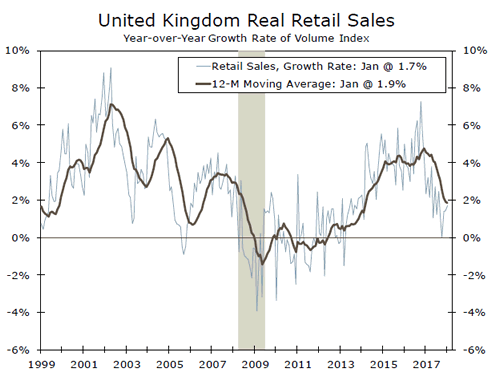
We made some changes to our U.K. interest rate forecast in the Interest Rate Watch section of this report last week. Specifically, we had thought that the MPC would wait until the fourth quarter to hike rates again, but we moved it up to Q3 last week due to hawkish sounding commentary from the MPC. Some analysts now look for the MPC to hike rates in May after the inflation data this week. However, lackluster data on British economic activity could stay the MPC's hand. The deceleration in consumer spending that has been evident for the past year or so continued in January as real retail sales edged up only 0.1 percent relative to the previous month (bottom chart). The rise in inflation has eroded growth in real income, which is weighing on growth in real consumer spending. Uncertainties related to Brexit are compounding the weight on the economy.
We are sticking to our forecast of a rate hike in Q3, at least for the time being, but acknowledge the risk that it may occur sooner. If inflation surprises to the upside again and/or spending data come in stronger than expected in the next month or two, we may need to bring forward our forecasted rate hike yet again. Stay tuned.
Global Outlook
U.K. Unemployment • Wednesday
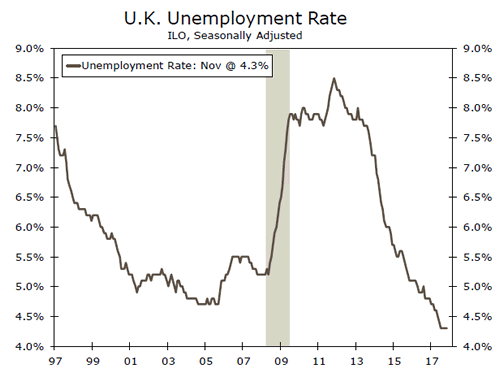
The annualized rate of GDP growth in the U.K. economy picked up a bit in the final quarter of 2017 according to the initial estimate released a few weeks ago, but after slower growth in prior quarters, the year-over-year rate of growth was the weakest in more than four years. A revision to fourth quarter U.K. growth is due out on Thursday of next week.
One headwind for U.K. economic growth is that real disposable income growth weakened over the course of 2017. That may be poised to change as the downward trend in the unemployment rate may eventually result in a pickup in disposable income. That is the reason the financial market in the United Kingdom will be paying particularly close attention to the release of the latest unemployment figures on Wednesday of this coming week.
Previous: 4.3% Consensus: 4.3%
Japanese CPI • Friday
Japanese GDP growth for the fourth quarter came in at an annualized rate of just 0.5 percent, which was below the consensus expectation of 1.0 percent. The underlying details were encouraging as strong consumer spending growth resulted in a pick-up in imports which resulted in part of the drag on the headline growth rate.
At its latest policy meeting, the Bank of Japan (BoJ) said that it is "not even thinking about" normalizing monetary policy there. The BoJ remains committed to providing an accommodative policy environment even as it is running into some capacity constraints in terms of the share it owns of Japanese Government Bonds and other securities. The BoJ is committed to driving CPI inflation higher. Friday of this coming week brings the January report for CPI and we expect to see a print of 1.4 percent, still well below the BoJ's 2.0 percent target.
Previous: 1.0% Wells Fargo: 1.4% Consensus: 1.3% (Year-over-Year)
Canadian CPI • Friday
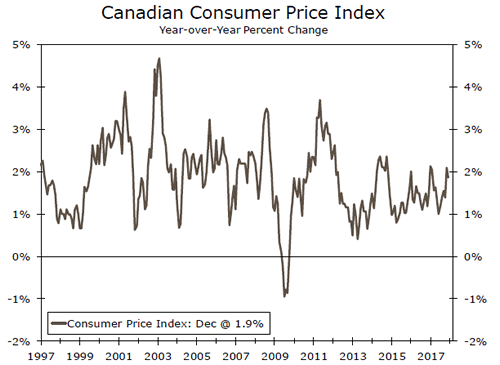
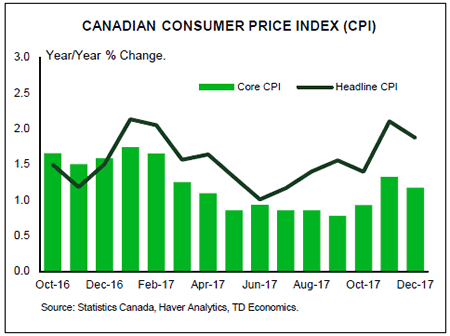
Speaking of central banks, the Bank of Canada (BoC) can look forward to new CPI data on Friday as well. The BoC aims to keep inflation between 1.0 and 3.0 percent, ideally at the midpoint of 2.0 percent. On that basis, it looks as though things are right in line with its objective as CPI inflation in December came in at 1.9 percent.
Our expectation is that CPI for January will come in much slower. The sudden drop-off here in the year-over-year rate is largely attributable to base effects as January of 2017 saw a significant jump up (0.9 percent) in consumer prices. "One month does not a trend make" and we expect the BoC to look through what is likely to be only a temporary slowdown in prices as it weighs its policy decisions for 2018. The next move from the BoC is likely to be an increase in the overnight rate, though we suspect a hike more likely at the April 18 meeting rather than at the upcoming one on March 7.
Previous: 1.9% Wells Fargo: 1.2% (Year-over-Year)
Point of View
Interest Rate Watch
Markets Finally Believing in Inflation
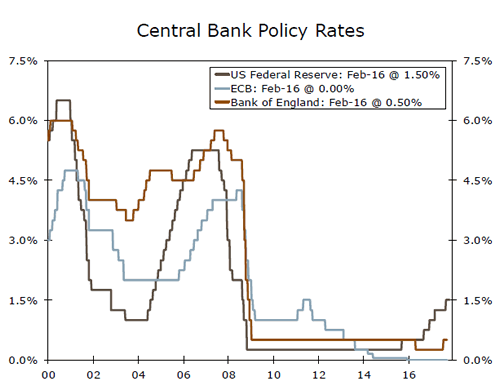
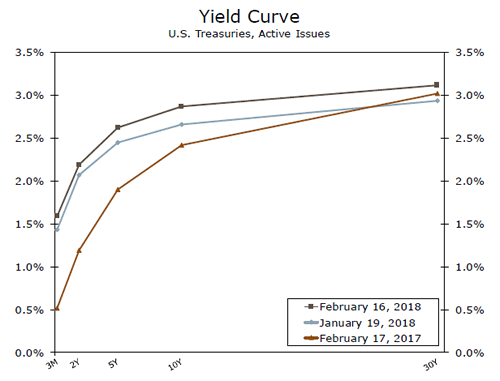
Strong CPI and PPI readings to start 2018 appear to have convinced markets that higher inflation has finally arrived and, as a result, the Fed is more likely to raise rates a few times this year. Treasury yields moved noticeably higher this week, with the 10-year yield reaching over 2.90 percent on Wednesday.
Rising spreads between nominal and inflation-linked Treasuries (TIPS) confirmed higher market expectations for inflation. The difference between the yield on 5-year nominal and TIPS notes, a gauge of short-term market inflation expectations, rose to the highest level since March 2017.
Far From Getting Out of Hand
While markets are finally coming around to our view that higher inflation is in the offing, it is worth noting that inflation is unlikely to come unhinged any time soon.
A tight labor market should lead to higher labor costs, but higher labor costs need not lead to significantly higher inflation. The pass-through of wages to inflation has weakened over the past few decades. If productivity picks up, as we expect given stronger capital spending, rising labor costs could be absorbed by greater output/sales. Alternatively, companies could give up some profit margins, but even that may not need to be the case following the recent tax bill.
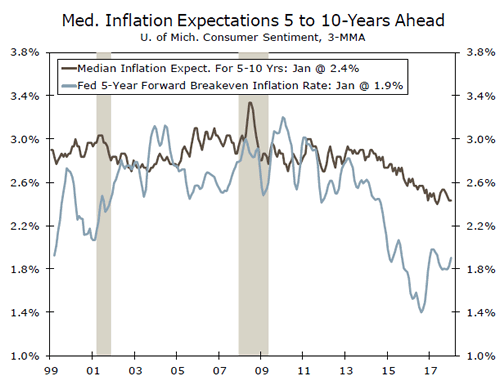
Inflation expectations also remain fairly low, suggesting the pickup in inflation will be gradual. Consumer and market based inflation expectations have improved the past few months, but are still below the levels that preceded the commodity price slide that began mid-2014. Along with structural headwinds to inflation like the shift to e-commerce and historically low healthcare inflation, we expect core CPI to run only slightly above 2 percent this year.
FOMC officials were already anticipating a pickup in inflation this year, with a median forecast of 1.9 percent for core PCE inflation by the fourth quarter versus 1.5 percent currently. The recent pickup in inflation should therefore not throw a wrench in the Fed's plans to hike rates only gradually in the coming quarters.
Credit Market Insights
Household Debt: Daring, not Delinquent
The New York Federal Reserve's Quarterly Report on Household Debt and Credit revealed that total household debt reached a new peak in Q4-2017, rising to $13.15 trillion, eclipsing the previous high set in Q3-2008. This now marks the 14th consecutive quarter that household balances have increased. Mortgage balances, which is the largest component of household debt, comprising 68 percent of total household debt, increased by $139 billion over the quarter. To put the jump into perspective, auto loans grew by $8 billion and credit card balances increased by $26 billion, while student loans grew by $21 billion. Auto and student loans continue to increase as a percent of the total outstanding household debt profile.
Despite the fact that the amount of outstanding debt is growing and interest rates are rising, delinquency rates have not ticked up in any meaningful way; in many cases, delinquency rates are improving. Mortgage delinquency rates for current mortgage balances ticked down, while aggregate student loan debt that was delinquent or in default declined from the previous quarter. Moreover, the number of credit inquiries within the past six months declined in the fourth quarter. Auto loan delinquency rates increased slightly, with 4.1 percent of loan balances 90 or more days overdue in Q4.
With consecutive months of inflation surprises to the upside, the Fed may consider accelerating along its tightening path. Although we are not calling for such a situation at this point, faster than expected rate hikes would certainly put pressure on borrowing.
Topic of the Week
The Return of Trillion Dollar Deficits
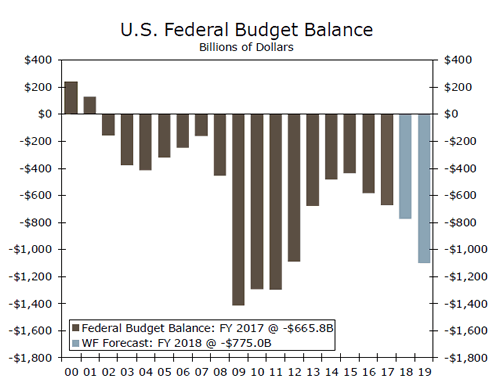
As interest rates continue to rise in the United States, the federal budget deficit has returned to center stage after spending years on the backburner. The combination of tax cuts, the recent spending deal and structural budget pressures related to the aging of the population have led analysts, including us, to predict the imminent return of trillion dollar deficits in the United States (top chart).
In light of the recent budget agreement, we have adjusted our FY 2018 budget deficit forecast to $775 billion (from $750 billion) and moved our FY 2019 forecast to $1.1 trillion (from $950 billion). The relatively modest increase in our FY 2018 forecast is the result of two offsetting factors: a larger-than-expected increase in the budget caps and a later-than-expected enactment. FY 2018 is more than one-third complete, and Congress still has to pass another bill appropriating the new money by March 23. Thus, the actual outlays for the current fiscal year will likely come in well below the new budget authority granted, pushing some spending into next year.
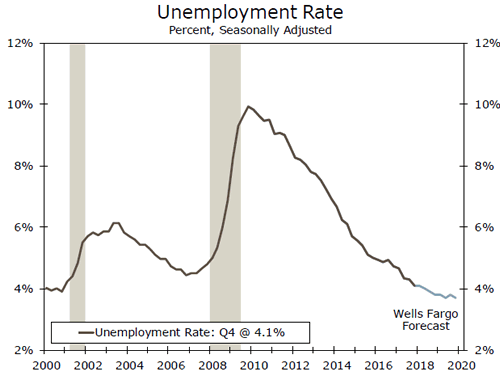
As a result, the stars are aligning for the return of trillion dollar deficits in FY 2019. Our $1.1 trillion forecast comes at a time when the economy is growing faster than potential and the unemployment rate is approaching sub- 4 percent (bottom chart). The relatively strong economy is mitigating the deficit impact to an extent; were the economy to underperform, the deficit over the next year and a half would likely be even larger, all else equal.
The Trump administration has expressed a desire for more fiscal stimulus in the form of an infrastructure plan. Even with state & local governments and private sources chipping in a large chunk of the funding, the proposals thus far have failed to gain traction over the lack of a consensus funding-source and growing fatigue over deficit-financed stimulus in a healthy economy.
Were an infrastructure plan to become law, the drivers of higher interest rates we outlined in a report earlier this year would likely be reinforced: faster economic growth, faster inflation and larger budget deficits.
The Weekly Bottom Line: Inflation Heats Up on Valentine’s Day
U.S. Highlights
- Last week's market sell-off came to a halt this week. U.S. equities staged a decent recovery, looking past January reports that pointed to higher-than-expected inflation and worse-than-expected retail sales.
- Price gains in the CPI report were broad-based, with core inflation rising by a hearty 0.3% m/m. Unfavorable base-year effects anchored the core pace at 1.8% in y/y terms, but this dynamic should turn more favorable in the months ahead.
- Despite a pullback in retail sales, Q1 consumer spending is still tracking a decent 2% (ann.). This pegs our tracking for Q1 GDP growth above 2%. Decent economic momentum and rising inflation bolster the case for a March hike.
Canadian Highlights
- After last week's market turmoil, the TSX is set to close up more than 2.0% this week, joining the global recovery in risk assets.
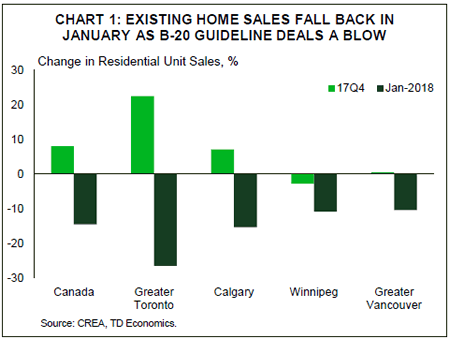
- With the OSFI B-20 guideline in full-effect in January, we anticipated that activity would weaken. And weaken it did, with sales falling 14.5% on a month-on-month basis. However, an outsized collapse in new listings in many markets helped prevent a similar decline in prices.
- Overall, the data this week does little to affect our view that the Bank of Canada is likely to raise rates this July. This should give the Bank enough time to evaluate how higher interest rates are affecting the Canadian economy.
U.S. - Inflation Heats Up on Valentine's Day
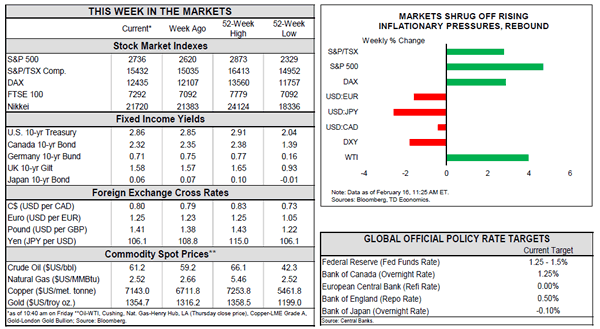
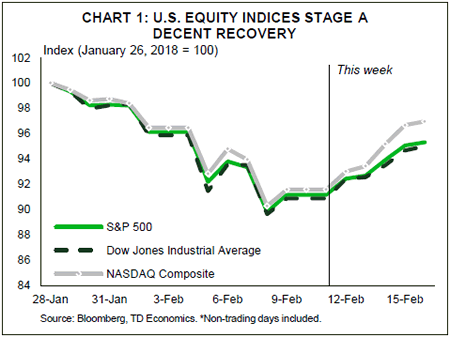
Last week's equity and bond sell-off halted this week as risk sentiment made a comeback and volatility receded. The much-awaited Valentine's Day reports failed to deliver as retail sales sharply disappointed while prices rose more than expected. The inflation report pushed Treasury yields higher, with the 10-year rising to a 4-year high. Inflation hedging benefited gold, but the trade-weighted US dollar pulled lower on strengthening global growth and expectation of higher U.S. deficits. Overall, the rebound in equities continued unperturbed (Chart 1).
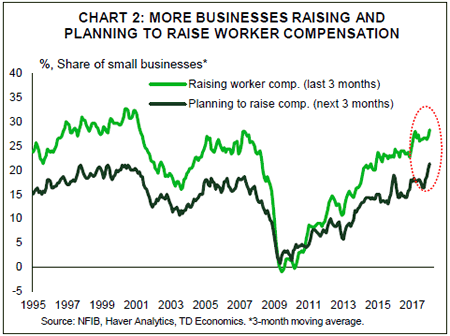
After the wage-data inspired sell-off, it was encouraging to see that markets took the CPI report in stride. Headline CPI jumped a hefty 0.5% m/m in January (2.1% y/y), boosted by a sharp gain in energy prices. But it wasn't all energy, with price gains broad-based. In fact, core inflation also rose by a robust 0.3% m/m. While base-year effects anchored the core pace at 1.8% in y/y terms, this dynamic should turn more favorable in the months ahead. In fact, even small monthly gains could take core CPI above target in the coming months. Ultimately, inflation should continue to firm, with this narrative reinforced by a robust gain of 0.4% in the January producer price index, along with a higher share of small businesses raising (and planning to raise) worker compensation (Chart 2). .
Future wage gains will be essential in sustaining the momentum in consumer spending. This is particularly important after a disappointing couple of months. Retail sales not only declined by 0.3% in January, but December's value was also revised down, wiping out the 0.4% advance estimate. Having said that, last month's print was weighed down by autos and building materials - categories which may be retreating after receiving a boost in the aftermath of hurricanes Harvey and Irma. Coupled with good performance in the many discretionary spending categories, this indicates that the pullback is likely transitory. All told, the recent developments suggest that first quarter consumer spending is now tracking 2% (ann.) - providing slightly less support to growth than previously anticipated.
The boost from residential investment is also looking increasingly frail at the beginning of 2018. While housing starts picked up to just below their post-recession high in January, the concentration in lower value-added apartments and condos has reduced its overall GDP boost. Despite these developments, first quarter GDP is still tracking above 2% - a number that is enough to reduce economic clack. The consumer and housing sectors are likely to remain supported by a continually improving labor market, despite some headwinds ahead related to recent policy changes and rising rates. Housing should also benefit from tight inventories of existing homes for sale, with the near-term trend supported by permitting activity which reached a new post-recession high.
All in all, economic momentum remains decent and price pressures are rising - both themes that lend support for a March rate hike. Moreover, the risk that possible signs of 'overheating' may compel the Fed to step with a more rapid pace of hikes - a move that could stress vulnerabilities in sub-sectors of household and corporate credit - remains well in place.
Canada - B-20 Guideline Serves First Body Blow to Home Sales
The reemergence of volatility has breathed some life back into financial markets. After last week's turmoil, Canada joined in the global recovery in risk assets this week. The TSX is likely to close at least 2.0% higher, but is still about 1000 points (or 6%) below its all-time high achieved this past January. The loonie is roughly unchanged on the week, as U.S. dollar weakness coincided with a higher price of WTI oil but a slight dip in what Canadian producers receive for their heavier blends.
Macroeconomic fundamentals remain solid for Canada. The Canadian economy is expected to have advanced at an above-trend, 2.0% annualized pace in the fourth quarter, and the bits of indicator data reported so far don't suggest a material slowdown occurring this quarter. Although this morning's manufacturing sales disappointed expectations in December, the weakness came after an automotive-driven surge in November. Looking ahead, we anticipate that December was likely a blip, and that manufacturing sales will be supportive of Canadian economic activity at the start of 2018.
The most critical piece of data we received this week was on existing home sales. With the OSFI B-20 mortgage guideline in full-effect in January, we anticipated that activity would weaken. And weaken it did, with sales falling 14.5% on a month-on-month (m/m) basis, and only five of twenty-six markets rising. Unsurprisingly, high priced markets such as Ontario's Greater Golden Horseshoe experienced double-digit declines, as did large markets in Western Canada (Chart 1). But, new listings also fell dramatically in many markets, as sellers, perhaps on the advice of their agents, decided against listing their home for sale in January. This collapse in listings may have helped support prices, which fell a modest 2.4% m/m nationally, led lower by declines in Ontario and B.C..
Although it's still too early to accurately assess what impact the new B-20 guideline has had on housing markets, the weak January data adds credence to the view that 2017 year-end sales strength was likely due to some pulling forward, as buyers rushed to mortgage up before the New Year.
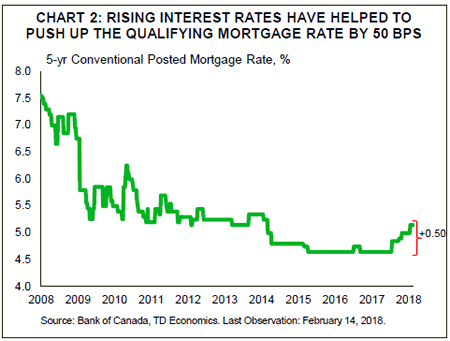
Looking ahead, we expect near-term volatility to persist as buyers react to the fallout from both the new guideline and rising mortgage rates. After stabilizing mid-year, home sales and prices are likely to remain weighed down by rising interest rates. But, with markets largely in balanced territory, prices should remain well supported.
Overall, the data this week does little to affect our view on the Bank of Canada. The impacts of both the new mortgage guideline and higher mortgage rates have largely been included in its economic forecasts. Moreover, uncertainty lingering over the future of NAFTA dampens any view that stronger U.S. demand may have a substantial, positive impact on Canadian activity in the next couple of years. And, with households more sensitive than ever to rising interest rates, the Bank will likely wait to see inflationary pressures build further before concluding that's it safe to raise rates again likely this July.
Canada: Upcoming Key Economic Releases
Canadian Retail Sales - December
Release Date: February 22, 2018
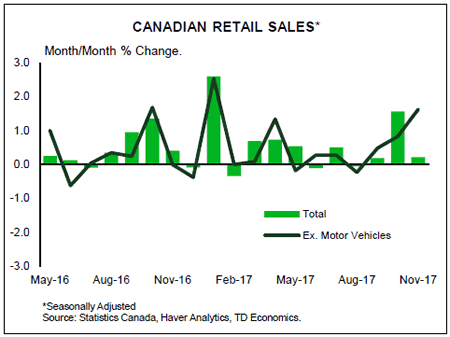
Previous Result: 0.2% m/m, 1.6% m/m
TD Forecast: 0.0% m/m, ex-autos: 0.2% m/m
Consensus: N/A
Canadian retailers should end 2017 on a relatively soft note owing to a cold snap of winter weather and a pullback in motor vehicle sales. We expect retail sales to come in flat while ex-auto sales should post a 0.2% increase. After a strong performance in 2017, industry reports suggest motor-vehicles spending should continue cooling to a more sustainable pace and level as consumers turn more cautious on debt-financed, big-ticket items. Gasoline sales should make a positive contribution due to higher prices. Meanwhile, unseasonably cold weather should hold back holiday spending. We also expect sales of electronics to unwind most of November's 12.9% gain, which was caused by the iPhone X release outside of the regular product launch schedule (typically September). We expect real Retail sales to decline modestly on higher seasonally adjusted consumer prices, though volumes should still post a 4.3% increase in Q4. After a soft Q3, this should allow for a stronger contribution to growth from household spending on goods.
Canadian Consumer Price Index - January
Release Date: February 23, 2018
Previous Result: -0.4% m/m
TD Forecast: 0.6% m/m
Consensus: N/A
We expect headline CPI to pull back to 1.6% y/y, but m/m CPI should rise 0.6% m/m on higher energy prices. Headline CPI is coming off a strong base effect as prices surged 0.9% m/m last January. The jump was mostly driven by energy prices, thanks to carbon taxation and cap-and-trade plans which boosted natural gas and gasoline prices in Alberta, Ontario and Quebec. Adjustments to carbon pricing plans will be more modest this year, which implies a smaller lift to energy prices.
Outside of energy, we expect the momentum in core prices to be stable after rising steadily since last summer. The peak in new-home inflation should mute the cyclical tailwind form shelter prices, although mortgage interest costs are rising thanks to three rate hikes in six months months. A recent area of weakness has been cellphone services where prices crashed 7.6% m/m in December. Although competition has lately intensified in that sector, we expect to be near the bottom in January. We see food prices remaining a key inflation tailwind as the pricing power of grocers has improved since a year ago. Finally, we don't expect CAD fluctuations to be a significant driver of the price action this month.
Japanese Trade Data Due as Yen Strength Gets into Focus
Japanese trade data for the month of January are scheduled for release on Sunday at 2350 GMT. Exports are projected to grow for the 14th consecutive month on a yearly basis and imports for the 13th. Yen pairs will be gathering attention as the data go public, though - especially as of late - those have been sensitive to other factors which are at play at the moment, rather than to economic releases out of Japan.
Exports are forecast to expand by 10.3% y/y in January and imports by 8.3%. These compare to December's figures of 9.3% for exports and 14.9% for imports. The world's third largest economy is anticipated to report a trade deficit of one trillion yen (around $9.42 billion) in January, after December's surplus of 358.7bn yen (around $3.38bn).
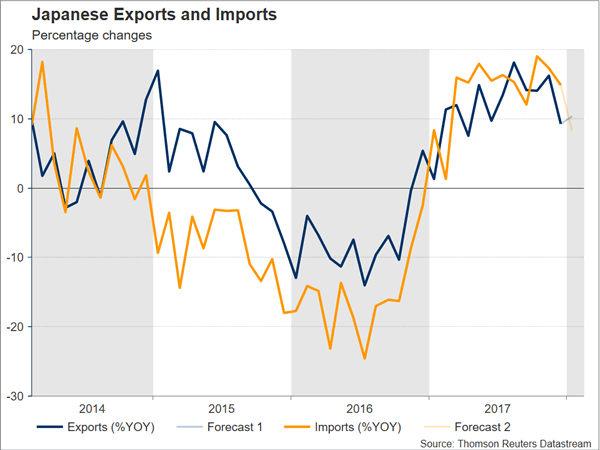
The rise in exports is expected to in large part be attributed to robust vehicle and semiconductor equipment shipments, with the global economic recovery that seems to be picking up steam setting a positive backdrop for Japanese exports moving forward. A risk though - potentially to a larger extent for auto exports - is the implementation of trade protectionist measures by the US as the country is getting closer to November's mid-term elections and rhetoric might heat up; the House of Representatives and 33 of 100 Senate seats will be contested in those elections.
Higher costs from new-model smartphones and elevated oil prices are contributing to the growth in imports, with stronger domestic demand on the back of a recovering economy also playing its role. Q4 2017 GDP figures earlier in the week showed the economy expanding at a weaker pace than anticipated, though still one cannot discount the fact that the economy posted its eighth straight quarter of positive growth, the longest such stretch since a period back in the 1980s. Also, it is the view of analysts that the slowdown during the last quarter of last year will turn out to be of temporary nature.
Sunday's release could spur some movement in the dollar/yen pair, which on Friday hit a fresh 15-month low of 105.52 after declining considerably in previous days amid broad dollar weakness. Upbeat readings could lead to further declines, with the area around the 105 handle coming into view as potential support; 105 may hold psychological significance. On the upside and in case of disappointing trade figures, the pair could find resistance around the 107 handle that may also be of psychological importance - the area around this level also encapsulates a low from early September (107.31).
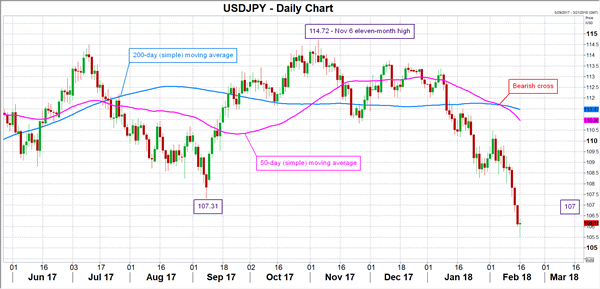
Despite trade figures having the capacity to lead to positioning in dollar/yen, it has been undoubtedly the case that other factors have been dominating attention recently, leading to yen strength versus the US currency. An ever-expanding US budget deficit potentially leading to unsustainable debt levels is one of those factors weighing on the greenback. Mounting debt concerns could see dollar/yen extent declines beyond the aforementioned 105 level, with the area between 100-103 which was congested in mid-2016 increasingly coming into view. A caveat that could halt declines in the pair is Japan's unease with a strengthening currency, as it can hurt exports and hamper inflationary pressures. Earlier on Friday, the nation's top government spokesman expressed discontent over the recent moves, adding that the government would take appropriate measures if required.
Other notable releases out of Japan next week are the flash Nikkei manufacturing PMI reading for the month of February due on Wednesday at 0030 GMT and, more importantly, January's inflation figures scheduled for release on Thursday at 2330 GMT. Core CPI, which excludes volatile fresh food prices but includes oil products and is utilized by the Bank of Japan in its policy-making, is expected to rise by 0.8% y/y versus 0.9% in December; the Japanese central bank's target for inflation is 2% annually.
Finally, it deserves mention that earlier on Friday, Haruhiko Kuroda was reappointed as BoJ Governor. His reappointment is seen as supporting the case for ultra-loose monetary policies remaining in place, at least for the time being.
GBPJPY Hovers Near 2 ½-Month Lows; Risk Tilted to the Downside
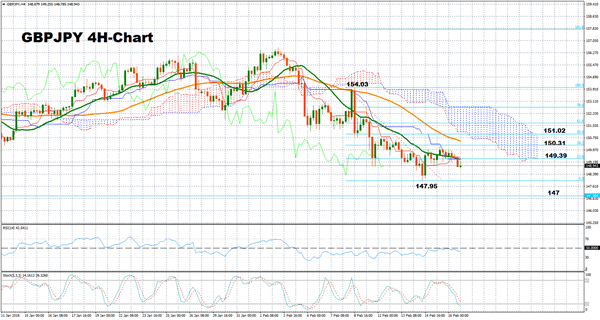
GBPJPY has been indecisive since its plunge to a 2 ½-month low of 147.95 on Wednesday, moving sideways between 149-150. The market, however, lacks positive sentiment as technical indicators suggest that a move to the downside is a more likely outcome in the near future.
The Relative strength index (RSI) seems to be gathering negative momentum as it has started to increase its rate of drop below the neutral zone of 50, while Stochastics are moving lower to meet oversold levels below 20. Moreover, the pair itself sends negative signals as market actions are currently taking place below the 20-period simple moving average line (SMA) and the Ichimoku cloud.
Should prices head down, the previous low at 147.95 could offer nearby support. In the worst scenario, GBPJPY could reach fresh troughs, dropping towards the 147 psychological mark.
Otherwise, if bullish moves prevail, 149.39, which is the 23.6% Fibonacci of the downleg from 154.03 to 147.95 could provide strong immediate resistance as the 20-period SMA is also located in this area. Therefore, if the market manages to close above this level, we would probably see prices crawling up to the 38.2% Fibonacci of 150.31 and then to the 50-period SMA of 150.55. More extended rallies have also the potential to find resistance at the 50% Fibonacci of 151.02.
Dollar Regains Ground Ahead of Fed Minutes
Higher US inflation fails to spark dollar revival
The US dollar depreciated across the board versus major pairs despite consumer prices rising more than expected. Inflation anxiety had triggered a sell-off in global stock markets with the Fed expected to ramp up their interest rate hike path yet the dollar did not benefit as higher rates have already been priced in by the market. Fiscal uncertainty driven by political factors continue to confound investors with stock indices rebounding this week and the dollar hitting a 2014 low. The paradox in consumer spending and retail sales continues as Americans remain confident in the economic outlook yet core retail sales remain flat and taking into consideration auto sales they actually dropped by 0.5 percent. The dollar showed some signs of life on Friday as it gained against a basket of major pairs, but not enough to offset the losses earlier in the week.
- Fed to release minutes of January meeting
- Kuroda renominated as Governor of Bank of Japan (BOJ)
- Lower trading activity with start of Chinese New Year celebrations and 3 day weekend in NA
Dollar Recovers on Friday But Still Underwater this Week
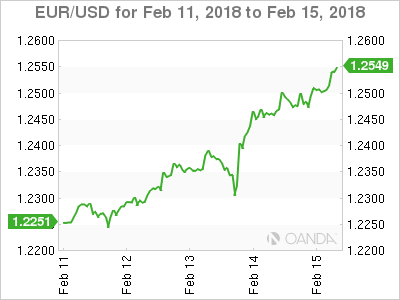
The EUR/USD gained 1.62 percent in the last five days. The single currency is trading at 1.2448 with the EUR recovering against the earlier losses versus the USD suffered earlier in the month. US inflation rose more than expected and US treasuries dropped in prices as investors sold them anticipating higher rates this year. Bond yields rose with the 10 year at four year highs (2.93 percent). The correlation between higher yields and a stronger currency is broken at the moment for the USD as the confidence in the stability of the US economy is up for debate. Fundamentals are strong and would point to a higher dollar, but political uncertainty around fiscal stimulus has made it hard to quantify the effects of actual and proposed legislation on the currency. The U.S. Federal Reserve will publish the minutes from its January Federal Open Market Committee (FOMC) meeting on Wednesday, February 21 at 2:00 pm EST. The meeting was the last presided by Chair Janet Yellen and is not expected to bring any surprises, but could prepare the market on what to expect in March when Chair Jerome Powell heads his first FOMC.
The USD went through a topsy-turvy week, with Wednesday's release of consumer price index data providing the most volatility. The market forecasts were slightly improved with a 0.3 percent monthly gain. The employment report in February 2 was the first data point that suggested a stronger inflationary pressure. Stock markets had already suffered two difficult weeks and the dollar rose as the inflation data was released only to quickly give back all gains and end up in the red.
President's day in the US will give some investors a much needed rest from a high octane trading week. The Lunar New Year celebrations will also affect trading volumes as Hong Kong and China markets will remain closed until Thursday. Stock markets had a positive week after stronger corporate results erased earlier losses.
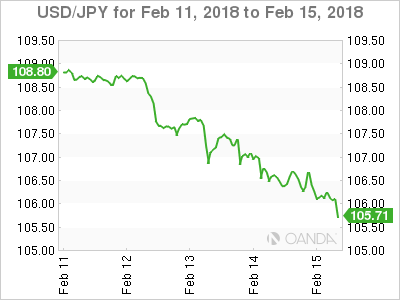
The USD/JPY lost 2.38 percent during the week. The currency pair is trading at 106.19 as the JPY keeps gaining. The government issued a statement where it was clear there is no need for intervention and the market took it as a sign to keep buying the yen. The tone changed slightly on Friday as the currency kept appreciating and there were some warning that the trade is one sided. The softness of the USD and uncertainty about how the American government will deal with growing twin deficits and political drama has boosted the JPY due to some safe haven flows.
The reappointment of BOJ Governor Haruhiko Kuroda along with other nominations of economist who favour further easing did not factor into Yen pricing in the short term, but should impact the growing gap between rates in Japan and the United States. In the short term, lack of stability in politics and fiscal uncertainty are overriding higher growth and interest rate expectations in the US.
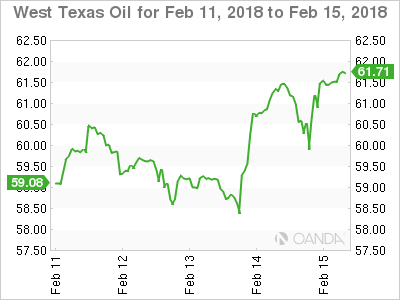
Oil prices advanced during the week. The price of West Texas Intermediate is trading at $61.21 with most of the gains in energy coming from dollar softness. Oil prices suffered losses earlier in the month as higher production in Canada, Brazil and the United States is anticipated given the high prices and producers in those nations not bound to the Organization of the Petroleum Exporting Countries (OPEC) production cut agreement. Lack of traction of the US currency is keeping prices above $60.
A small rise in oil rigs in Baker Hughes was not enough to derail energy prices specially with an underlying weak US dollar. The OPEC agreement with other major producers has stabilized oil prices after the freewill caused by overproduction. The question remains if demand for energy has recovered to the point that even after the agreement timeline runs out supply will not once again outweigh demand causing another drop in prices.
Market events to watch this week:
Monday, February 19
- 7:30pm AUD Monetary Policy Meeting Minutes
Wednesday, February 21
- 4:30am GBP Average Earnings Index 3m/y
- 9:15am GBP Inflation Report Hearings
- 2:00pm USD FOMC Meeting Minutes
Thursday, February 22
- 4:30am GBP Second Estimate GDP q/q
- 8:30am CAD Core Retail Sales m/m
- 11:00am USD Crude Oil Inventories
- 4:45pm NZD Retail Sales q/q
Friday, February 23
- 8:30am CAD CPI m/m
*All times EST