Sample Category Title
WTI Is Topping Out
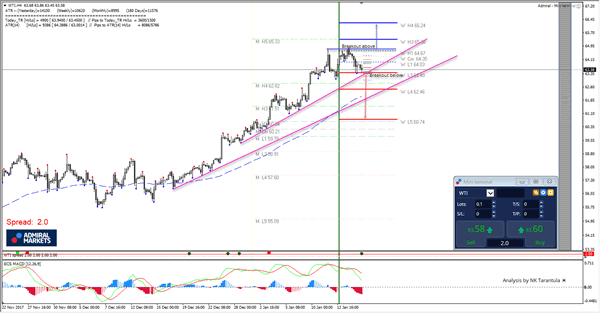
The WTI is still bullish, but we could see a possible correction taking place. The WTI topped out at 64.67 W H1 and the break of an X-Cross ™ (a trendline and camarilla pivot cross) at 63.40 could target 62.82 and 61.51 and 60.74 as a part of a more substantial correction. Continuation to the upside is expected at the break of 64.67, and it could lead to 65.30 and 66.24. 60.74 is a stable weekly level, and we might see fresh buyers who will push the price higher if the 60.74 is hit.
W H3 -1.2055 should give another upside boost to the pair.
W L3 - Weekly Camarilla Pivot (Weekly Interim Support)
W H3 - Weekly Camarilla Pivot (Weekly Interim Resistance)
W H4 - Weekly Camarilla Pivot (Strong Weekly Resistance)
D H4 - Daily Camarilla Pivot (Very Strong Daily Resistance)
D L3 – Daily Camarilla Pivot (Daily Support)
D L4 – Daily H4 Camarilla (Very Strong Daily Support)
POC - Point Of Confluence (The zone where we expect price to react aka entry zone)
EURJPY In Neutral Phase After Recent Rally Becomes Exhausted
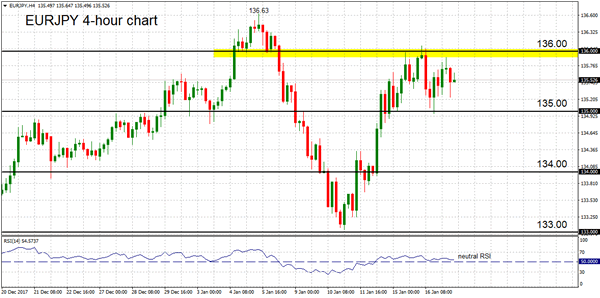
EURJPY is in a neutral phase after the recent rally off the 113 area was exhausted and found strong resistance at the key 136 level. Short term price action is expected to continue sideways if the market fails to break out of the current consolidation range very soon.
Looking at the 4-hour chart, the RSI is neutral, indicating a lack of momentum in the market. If EURJPY trades above 135 for an extended period of time then the odds will increase for a move higher and a break out of the current consolidation range.
A move above 136 would open the way for a re-test of the January 5 high of 136.63 and a break from here would confirm the longer-term bullish trend, with scope to rise to levels not seen since 2015.
To the downside, breaking 135 support could yield additional losses towards 134 and 133 and consequently erasing the recent bullish phase from January 11.
In the near term, there is limited downside risk and the EURJPY is expected to remain supported above 135 in a sideways pattern awaiting a catalyst for a move that would take the market out of the range. The 133-136 uptrend has not shown signs of a reversal yet.
Euro Retreats After Breaking Above $1.23, Bank Of Canada Eyed
Here are the latest developments in global markets:
FOREX: The dollar – as gauged relative to six other currencies – is on the rise after recording its lowest since late 2014 earlier on Wednesday. The euro retreated after climbing above $1.23.
STOCKS: The Japanese Nikkei 225 and Topix indices lost 0.35% and 0.2% respectively after yesterday tracking multidecade highs. Hong Kong’s Hang Seng was little changed at decade high levels. Euro Stoxx 50 futures traded lower by 0.3% at 0727 GMT. Dow futures were up by 0.2%, with S&P 500 and Nasdaq 100 equivalents also in the green, albeit slightly so. It was a bumpy ride yesterday during the US session, with the Dow, S&P 500 and the Nasdaq Composite giving up earlier gains that saw them post record highs. Bank of America and Goldman Sachs will be among US companies releasing quarterly earnings today.
COMMODITIES: WTI and Brent crude were not much changed at $63.73 and $69.12 per barrel. Gold was down by 0.4%, at $1,333.56 per ounce.
Major movers: Dollar recovers following fresh low; Chinese yuan remains elevated versus greenback
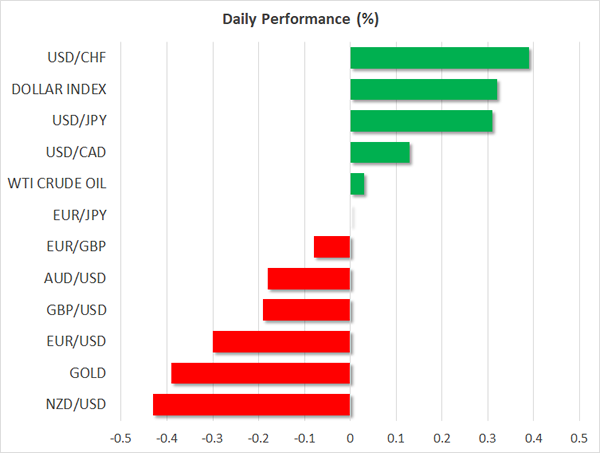
The dollar index was 0.3% up at 90.68 after earlier falling to 90.11, this being a fresh three-year low. Rising market expectations of monetary policy normalization on behalf of central banks other than the Fed was viewed as the catalyst behind the US currency’s recent retreat.
Dollar/yen was 0.3% higher at 110.76. The pair declined in the six trading days that preceded.
Euro/dollar was 0.3% down at 1.2227. Market participants’ sentiment on the pair may not be as bullish after the setbacks in German Chancellor Merkel’s efforts to revive a coalition with the Social Democrats, though it is notable the pair remains above the 1.22 handle, maintaining most of its recent gains. It is also of note that before the decline the pair recorded its highest since December 2014 of 1.2323.
Indicative of the dollar’s rebound on Wednesday: the commodity-linked currencies – the loonie, aussie and the kiwi – were all losing ground relative to their US counterpart, with the same holding true for sterling.
However, the greenback continued trading around two-year lows versus the Chinese yuan as the PBOC altered its fixing, setting its firmest midpoint since 2015. Thursday will see the release of important data out of China, including on Q4 2017 GDP.
Day ahead: Bank of Canada decides on interest rates; US economic data and Fed speeches awaited
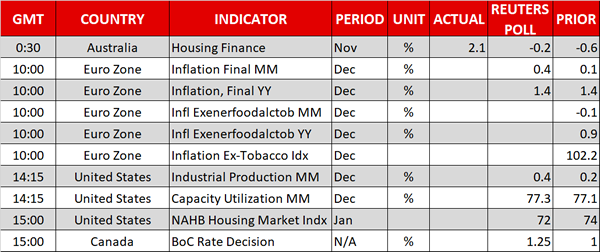
A policy meeting by the Bank of Canada (BOC) will be in immediate focus on Wednesday as BOC policymakers are said to start the year with a rate hike. Particularly, analysts predict the central bank to increase benchmark borrowing costs by 0.25 basis points to 1.25% despite inflation being still below the BOC target of 2.0%. Besides that, investors will be eager to hear any clues on the path of future monetary policy tightening given risks arising from looming NAFTA negotiations and an overloaded household debt. The rate decision will be announced at 1500 GMT, while a monetary policy report will be also submitted at the same time followed by a press conference held by the BOC Governor, Stephen Poloz, and the Deputy Governor, Carolyn Wilkins.
Meanwhile in the Eurozone, final inflation numbers will be out at 1000 GMT, with analysts anticipating the CPI to remain at 1.4% y/y in December as was earlier forecasted. However, January’s flash estimates due on January 31 will be of greater importance for the euro.
In the US, the dollar is likely to see some volatility as a number of agencies are preparing to publish economic data today during the afternoon European trading session, while later on, Fed members will be giving public speeches.
In terms of data, the Fed is scheduled to release monthly readings on US industrial production for the month of December at 1415 GMT, probably showing some improvement in the value of industrial output. Then at 1500 GMT, the National Association of Home Builders will publish its January Housing Market Index which measures the level of current and future home sales. In December, the gauge hit its highest level seen since 1999.
At 2130, the API weekly figures on the US crude oil inventories will also be under review.
Turning to public appearances, Michael Saunders, a member of the Bank of England’s monetary policy committee will speak first at 1145 GMT. Then at 2000 GMT, the Chicago Fed President, Charles Evans, will give comments on current economic conditions before the FOMC member and the Cleveland Fed President, Loretta Mester, gives a presentation on monetary policy communication at 2130 GMT.
Technical Analysis: USDCAD stable at 3½-month lows
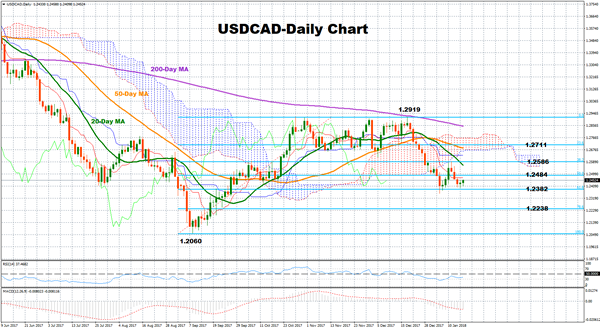
USDCAD stalled its downtrend near 3½-month lows but negative risks have not faded yet in the short-term as the bearish cross between the 20- and the 50-day moving averages is still in place. However, the pair might keep consolidating as indicated by the RSI which is moving sideways.
An extension to the downside, probably triggered by any hawkish messages delivered by the Bank of Canada today, could meet the 61.8% Fibonacci retracement level at 1.2382 of the upleg from 1.2060 to 1.2919 (September-December). Further below, additional support might come around the 78.6% Fibonacci at 1.2238.
On the other hand, if the BOC holds interest rates steady or expresses doubts about the path of future monetary policy tightening, the pair would likely break above the 50% Fibonacci at 1.2484 and move towards the 20-day MA at 1.2564 before it meets the 38.2% Fibonacci at 1.2586, all these being potential levels of resistance.
AUDUSD Stalls Rally At Key 0.80 Level, Bullish Phase Remains Intact
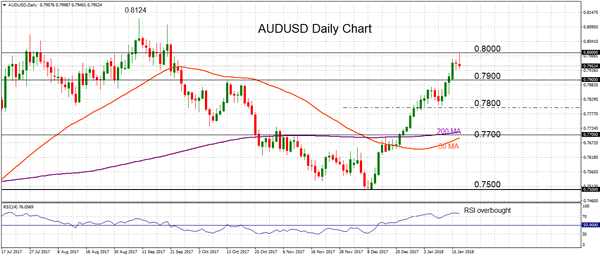
AUDUSD has been in a bullish phase since December, reaching the key 0.8000 level today, its highest point since September 2017. The market is pausing the rally at the moment, shifting the immediate bias to neutral after becoming overstretched. The RSI on the daily chart is in overbought territory above 70.
As upside momentum has faded, AUDUSD is expected to remain under pressure, making a correction lower. The psychological level at 0.8000 is considered to be a strong resistance level which needs to be breached soon if the bullish phase is going to continue. Otherwise, if prices hover at current levels for too long, the risk could turn to the downside towards 0.7900. A daily close below 0.7800 would indicate that a short-term top is in place at 0.8000.
Overall, AUDUSD has entered a fresh leg up within the current uptrend from December and there is scope for another push higher to re-test the September high of 0.8124. But there is caution in the near term as technical indicators show the market is overbought at the moment.
GBPUSD Still Bullish Above 1.3721 Level
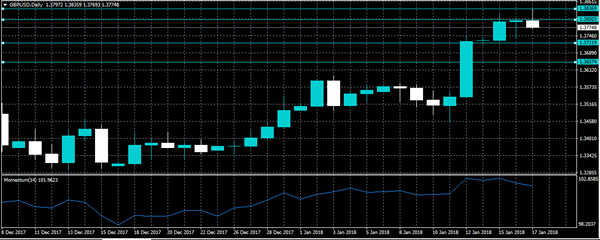
The British pound has moved to a new 2018 trading-high against the greenback, hitting 1.3836, as the U.S dollar index plummeted lower overnight, alongside U.S equities. Price-action quickly reversed back below the 1.3800 level, after short-term RSI indicators moved into extreme overbought territory on the GBPUSD pair, and the U.S dollar recovered. Going forward the 1.3800 level remains a key benchmark for traders on Wednesday, with buyers increasingly likely to test further demand around this key technical level.
The GBPUSD pair retains a bullish bias while price-action trades above the 1.3721 level, further upside towards 1.3800 and 1.3836 seems likely.
Should price-action on the GBPUSD pair slip below the 1.3721 level, sellers will likely push price-action back towards the 1.3689 and 1.3657 levels.
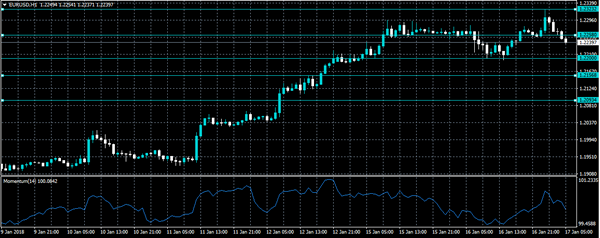
EURO Still Bullish Above 1.2200
The euro currency has soared to a new 3-year trading high against the U.S dollar, breaking above the 1.2300 handle, hitting 1.2323, as the U.S dollar index fell sharply overnight. Price-action has now reversed back towards the 1.2250 level, as the EURUSD pair quickly retreated from extremely overbought conditions. Going forward, traders now look to the release of Eurozone CPI inflation figures for December and the Federal Reserve Beige Book, which reports the current situation of the United States economy.
The EURUSD pair remains bullish while price-action trades above the 1.2200 level, further upside towards 1.2258 and 1.2323 appears likely.
Should price-action on the EURUSD pair start to move below the 1.2200 level, a sell-off towards the 1.2156 and 1.2093 levels seems likely.
Bank Of Canada Poised To Raise Interest Rates On Wednesday
Monetary policy will be in the headlines on Wednesday as the Bank of Canada (BOC) gets set to vote on interest rates. The BOC is expected to continue raising interest rates thanks to a firming domestic economy.
Action begins at 10:00 GMT with a report on Eurozone consumer inflation. The consumer price index (CPI) is forecast to rise 0.4% in December, following a 0.1% increase the month before. In annualized terms, this translates into a gain of 1.1%, which is well below the European Central Bank’s target of 2%.
Shifting gears to North America, the Federal Reserve will issue the latest US industrial production figures for December. Factory orders are projected to rise 0.4% from November, double the rate of the previous month. The industrial capacity utilization rate is expected to go up to 77.3% from 77.1%.
Housing data will also be in the headlines on Wednesday. The National Association of Home Builders (NAHB) will issue its monthly housing market index at 15:00 GMT. The monthly reading is expected to drop to a still-solid 72.
The BOC rate decision and monetary policy report will be unveiled at 15:00 GMT. Policymakers will issue a press conference at 16:15 GMT. Canada’s path of rate normalization has been much more aggressive than virtually all of its advanced industrialized peers, including the Federal Reserve. However, uncertainty over the future of NAFTA could derail the central bank’s outlook. NAFTA refers to the North American Free Trade Agreement, which has governed bilateral trade between Canada, the United States and Mexico since 1994.
Elsewhere on the policy front, Federal Reserve officials Charles Evans, Robert Kaplan and James Mester will deliver speeches on Wednesday. The Federal Open Market Committee (FOMC) will hold its next policy meeting in a few weeks. No change in policy is expected at that time.
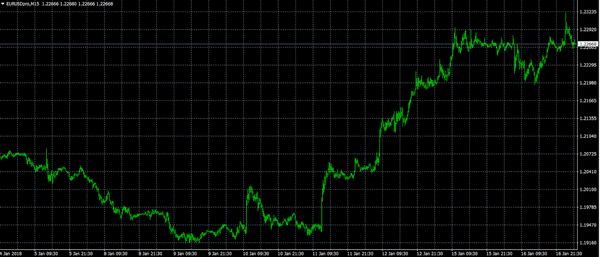
EUR/USD
The EUR/USD has consolidated in a narrow range over the past two days after surging to multiyear highs at the end of last week. The pair was last seen trading at 1.2270, where it was up 0.1%. Over the short-term, the pair faces immediate resistance at the psychological 1.2300 region.
GBP/USD
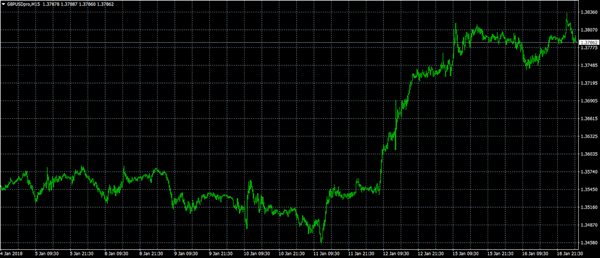
Cable continues to trade around 1.3800, as investors await fresh trading catalysts in the form of economic data. The pair is likely to run into stiff resistance near 1.3850. On the opposite side of the spectrum, immediate support is located around 1.3700.
USD/CAD
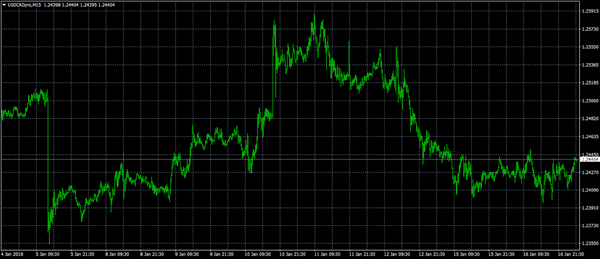
The Canadian dollar has been on an upward trajectory for the past four weeks, sending the USD/CAD to its lowest level since September. The USD/CAD was last seen trading at 1.2441, where it was up 0.1% from the previous close. The pair remains on a downward path, a trend that is expected to continue as the BOC raises interest rates.
NZDUSD Intraday Analysis
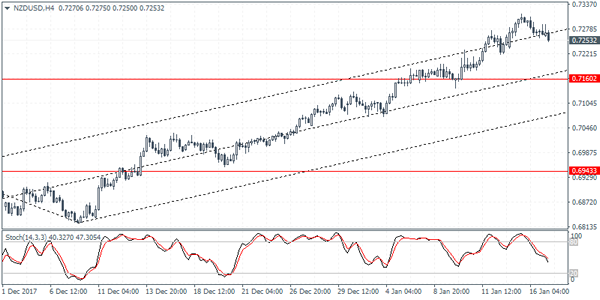
NZDUSD (0.7253): NZDUSD posted declines yesterday but price action has formed an inside bar as a result. This could potentially suggest a correction on a downwards breakdown. The support level 0.7160 remains the immediate level in question as it also marks the breakout from the falling trend line. A retest to this level could indicate new bullish momentum likely to emerge. On the 4-hour chart, NZDUSD could be seen posting declines on a close below 0.7260, targeting the initial level at 0.7160. If the support fails to hold NZDUSD, then we could expect to see further declines taking the kiwi dollar towards 0.6950 support.
USDJPY Intraday Analysis
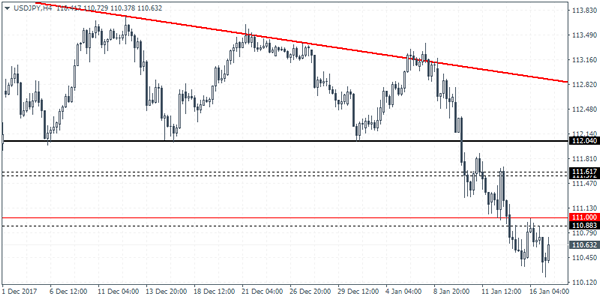
USDJPY (110.63): The USDJPY is seen attempting to pare losses as price action fell below the 110.70 handle yesterday. In the short term, the resistance level at 111.00 - 111.88 remains in play, as price action could be seen posting a reversal at this level. USDJPY could remain range bound below the 111.00 and supported above the 110.00 level. A break out from this range could emerge next week when the Bank of Japan holds its monetary policy meeting.
EURUSD Intraday Analysis
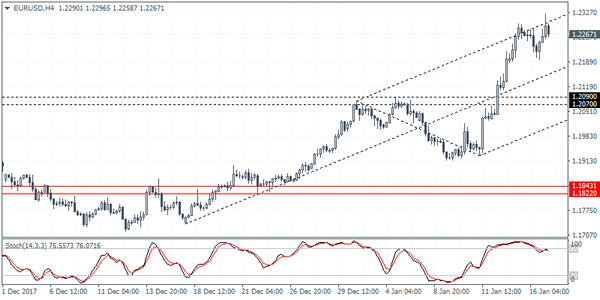
EURUSD (1.2267): The EURUSD continued to trade above the 1.2250 level which marks the major resistance level on the monthly charts. Price action is expected to remain muted near this level as we expect to see a short-term correction likely to take place. On the 4-hour charts, EURUSD is seen posting a consolidation. Any short-term declines could see price action limited to the 1.2090 level of support. The minor double top pattern currently taking shape near 1.2280 region could signal the downside correction in prices. This view can shift however if EURUSD manages to close above 1.2280 on a daily basis.