

Sample Category Title
EUR/AUD Daily Outlook
Daily Pivots: (S1) 1.6511; (P) 1.6573; (R1) 1.6625; More...
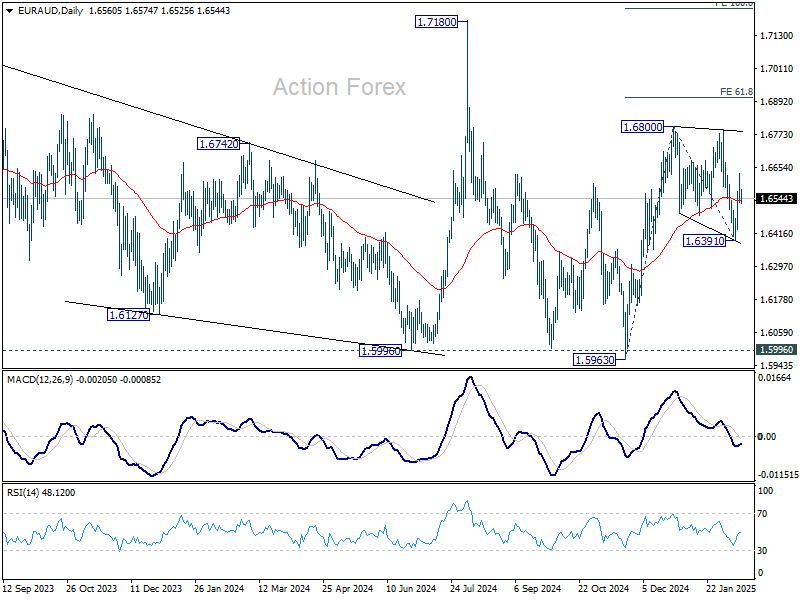
Intraday bias in EUR/AUD remains mildly on the upside for the moment. Corrective pattern from 16800 could have completed with three waves to 1.6391 already Further rally would be seen to retest 1.6800 first. Decisive break there will resume whole rally from 1.5963 to 61.8% projection of 1.5693 to 1.6800 from 1.6391 at 1.6908. For now, risk will stay on the upside as long as 1.6391 support holds, in case of retreat.
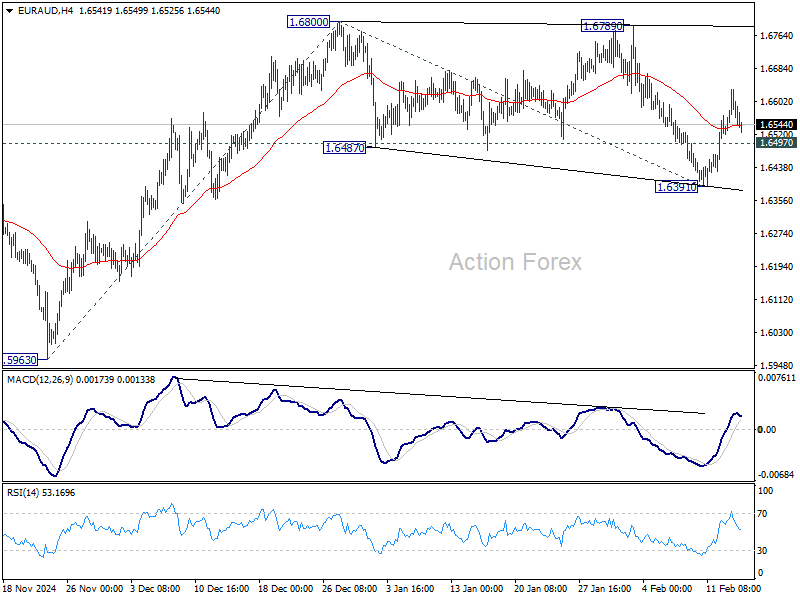
In the bigger picture, with 1.5996 key support (2024 low) intact, larger up trend from 1.4281 (2022 low) is still in favor to resume through 1.7180 at a later stage. Nevertheless, sustained break of 1.5996 will indicate that such up trend has completed and deeper decline would be seen.
EUR/CHF Daily Outlook
Daily Pivots: (S1) 0.9397; (P) 0.9455; (R1) 0.9510; More....
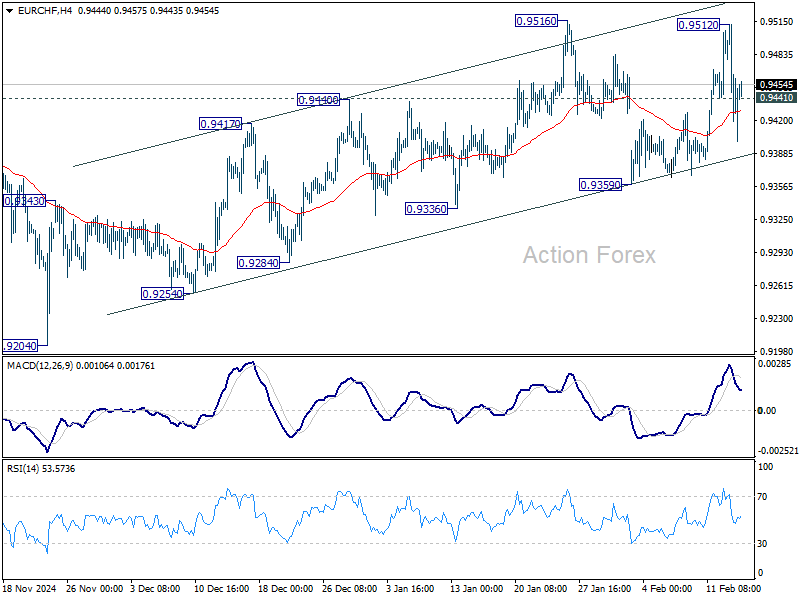
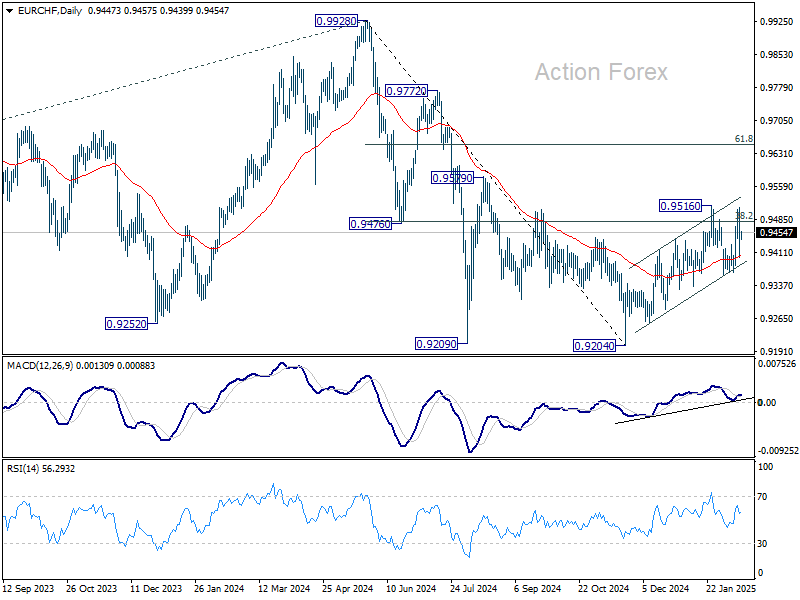
EURCHF reversed ahead of 0.9516 resistance but recovered well ahead of 0.9359 support. Intraday bias remains neutral first. On the downside, break of 0.9359 will argue that recent rebound from 0.9204 has already completed and bring deeper fall. However, sustained break of 0.9516 will carry larger bullish implication and extend the rise from 0.9204.
In the bigger picture, sustain above 38.2% retracement of 0.9928 to 0.9204 at 0.9481 should confirm that whole fall from 0.9928 has completed at 0.9204. Further rally should then be seen back to 61.8% retracement at 0.9651 and above. However, another rejection by 0.9481 will keep outlook bearish for extending larger down trend through 0.9204.
EUR/USD Daily Outlook
Daily Pivots: (S1) 1.0404; (P) 1.0435; (R1) 1.0498; More...
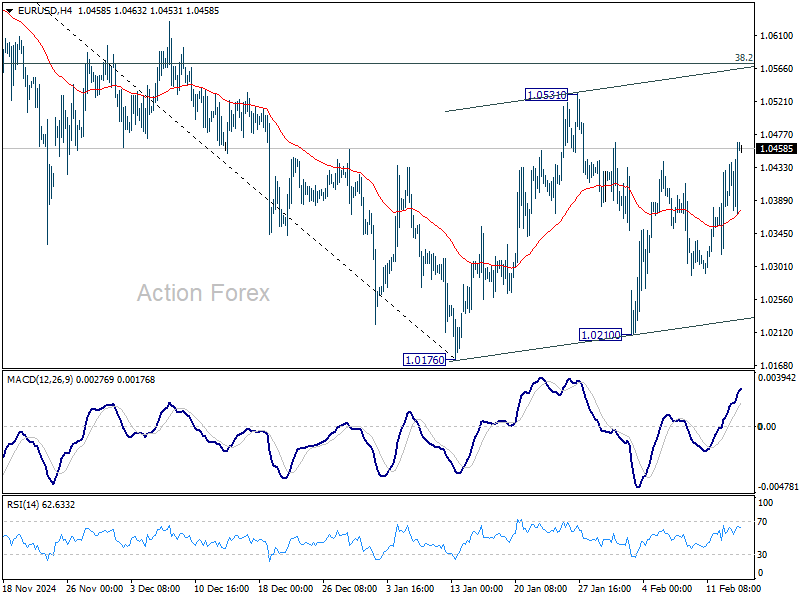
EUR/USD is extending the corrective pattern from 1.0176 with another upleg and intraday bias stays neutral. Outlook will remain bearish as long as 38.2% retracement of 1.1213 to 1.0176 at 1.0572 holds. On the downside, break of 1.0176 will resume whole fall from 1.1213. However, decisive break of 1.0572 will raise the chance of reversal, and target 61.8% retracement at 1.0817.
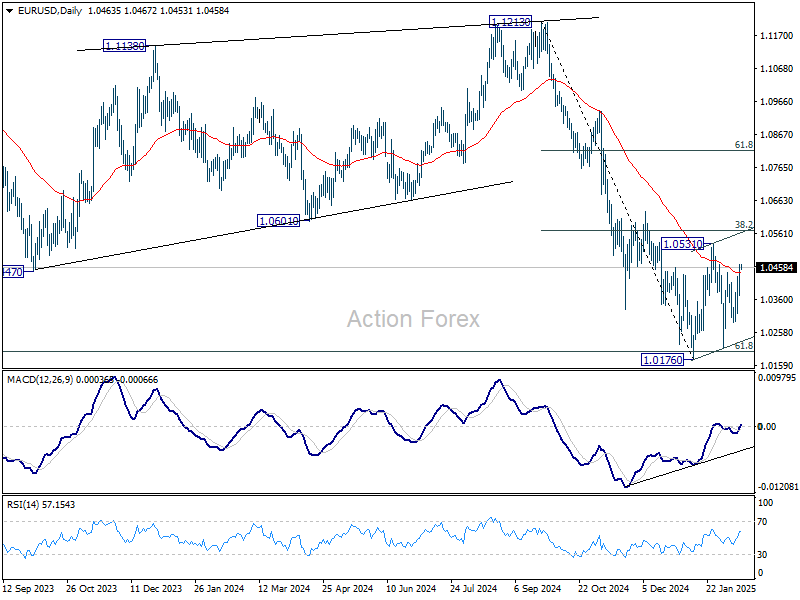
In the bigger picture, immediate focus is on 61.8 retracement of 0.9534 (2022 low) to 1.1274 (2024 high) at 1.0199. Sustained break there will solidify the case of medium term bearish trend reversal, and pave the way back to 0.9534. However, reversal from 1.0199 will argue that price actions from 1.1274 are merely a corrective pattern, and has already completed.
USD/JPY Daily Outlook
Daily Pivots: (S1) 152.12; (P) 153.40; (R1) 154.08; More...
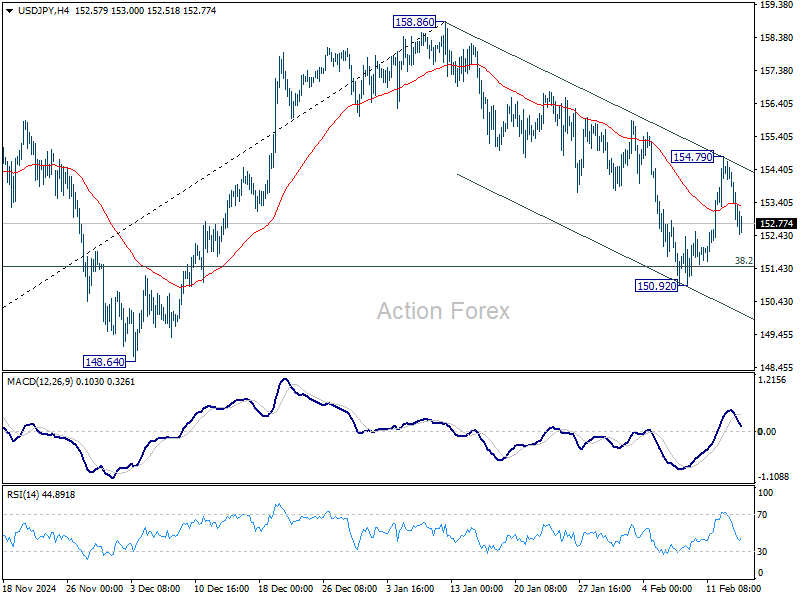
Intraday bias in USD/JPY remains neutral for the moment. Outlook is unchanged that corrective fall from 158.86 should have completed at 150.92 already. Risk will stay on the upside as long as 150.92 support holds. Above 154.79 will target a retest on 158.86 first. Firm break there will resume whole rally from 139.57 to retest 161.94 high.
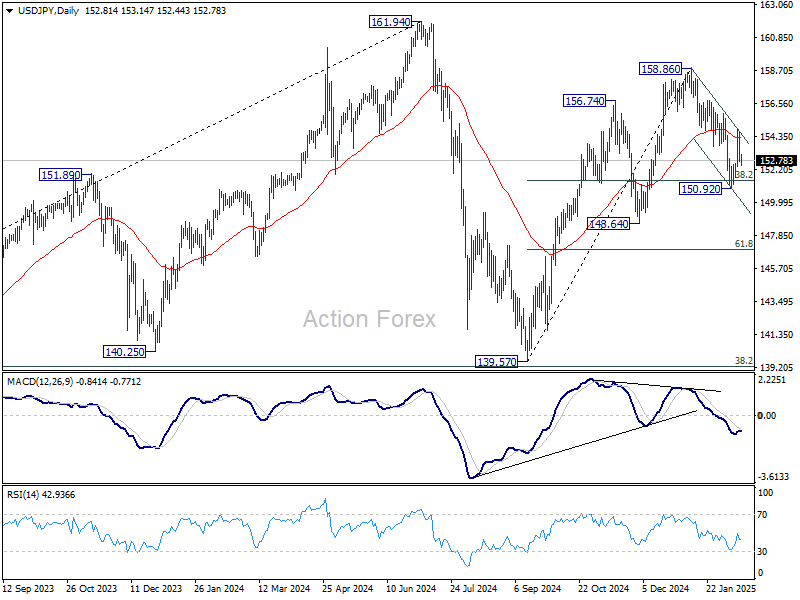
In the bigger picture, price actions from 161.94 are seen as a corrective pattern to rise from 102.58 (2021 low). In case of another fall, strong support should be seen from 38.2% retracement of 102.58 to 161.94 at 139.26 to bring rebound. However, sustained break of 139.26 would open up deeper medium term decline to 61.8% retracement at 125.25.
GBP/USD Daily Outlook
Daily Pivots: (S1) 1.2387; (P) 1.2435; (R1) 1.2493; More...
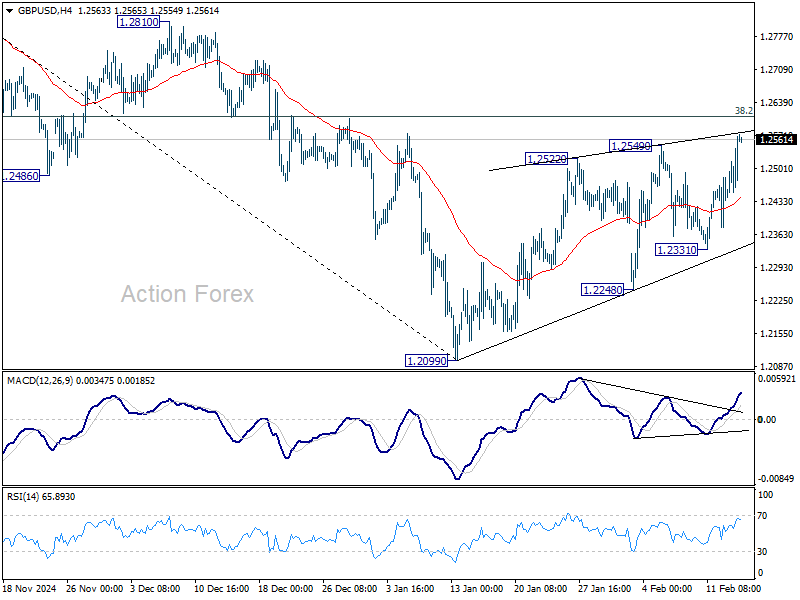
GBP/USD's corrective rebound from 1.2099 extended slightly higher, but stays below 38.2% retracement of 1.3433 to 1.2099 at 1.2609. Intraday bias remains neutral first, and larger fall from 1.3433 is still expected to continue. Break of 1.2331 minor support will turn bias to the downside for 1.2248 support. Firm break there will argue that the correction has completed and bring retest of 1.2099 low. However, decisive break of 1.2609 will raise the chance of near term reversal, and target 61.8% retracement at 1.2923.
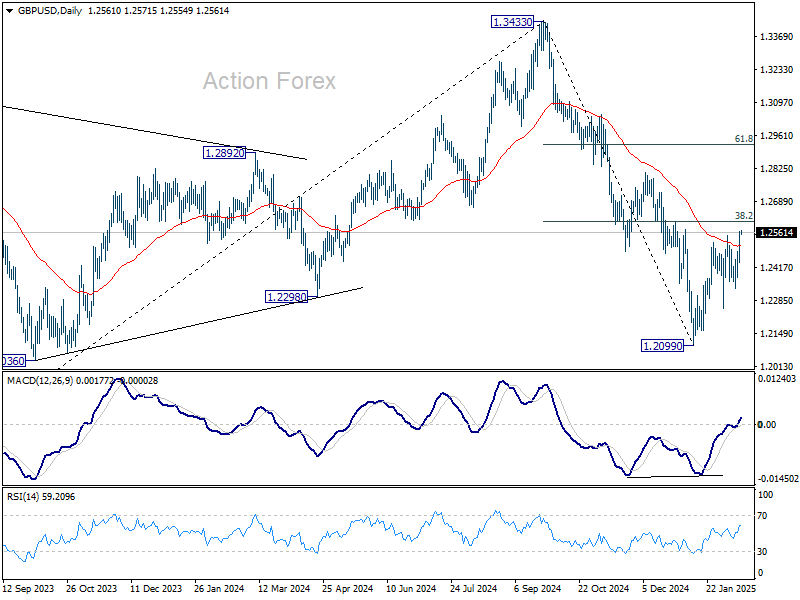
In the bigger picture, rise from 1.0351 (2022 low) should have already completed at 1.3433 (2024 high), and the trend has reversed. Further fall is now expected as long as 1.2810 resistance holds. Deeper decline should be seen to 61.8% retracement of 1.0351 to 1.3433 at 1.1528, even as a corrective move. However, firm break of 1.2810 will dampen this bearish view and bring retest of 1.3433 high instead.
USD/CHF Daily Outlook
Daily Pivots: (S1) 0.8991; (P) 0.9067; (R1) 0.9106; More…
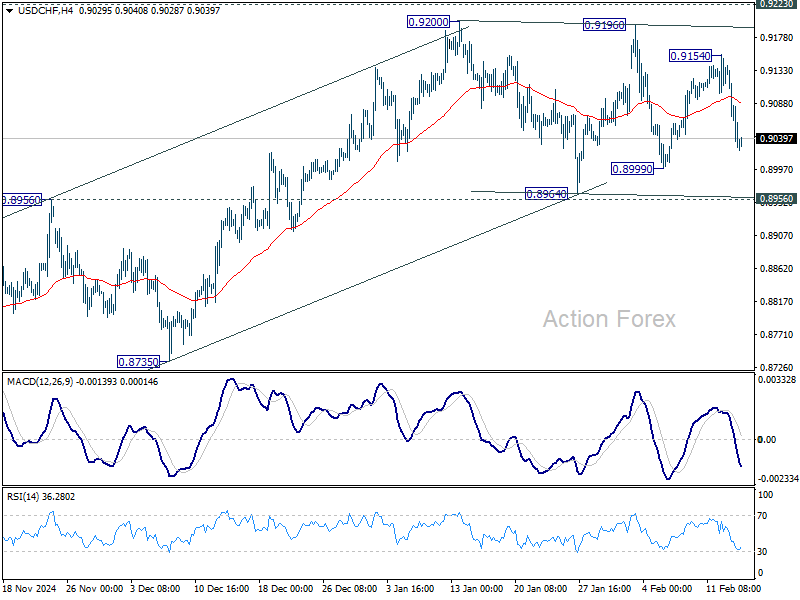
USD/CHF is still extending the consolidation pattern from 0.9200 and intraday bias remains neutral. Outlook stays bullish with 0.8956/64 support zone intact. On the upside, firm break of 0.9200/9223 will resume the whole rally from 0.8374 and carry larger bullish implication. However, sustained break of 0.8964 will be a sign of reversal and turn bias back to the downside.
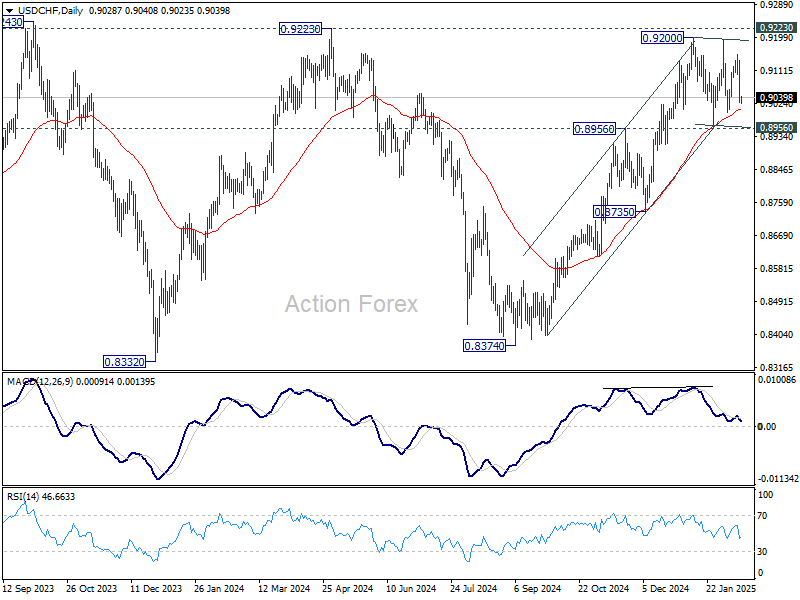
In the bigger picture, decisive break of 0.9223 resistance will argue that whole down trend from 1.0342 (2017 high) has completed with three waves down to 0.8332 (2023 low). Outlook will be turned bullish for 1.0146 resistance next. Nevertheless, rejection by 0.9223 will retain medium term bearishness for another decline through 0.8332 at a later stage.
AUD/USD Daily Report
Daily Pivots: (S1) 0.6274; (P) 0.6299; (R1) 0.6342; More...
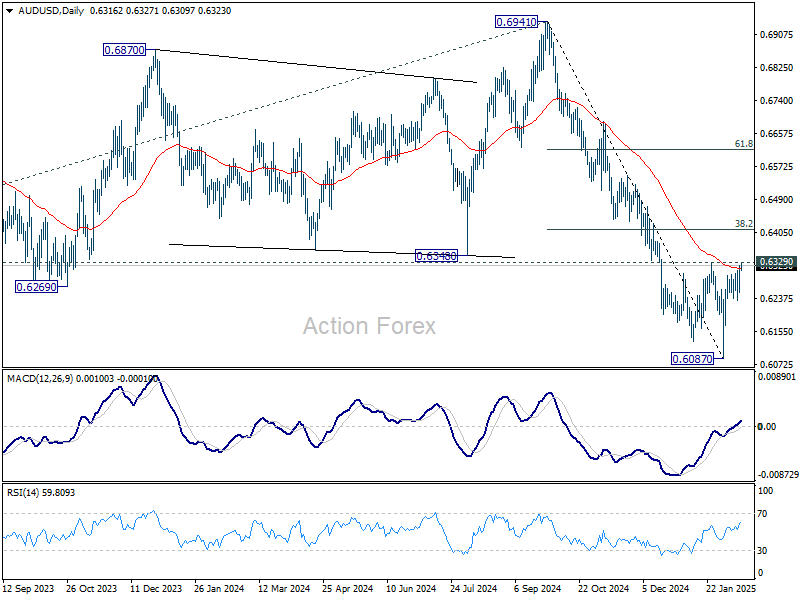
AUD/USD edged higher today but stays below 0.6329 resistance. Intraday bias remains neutral first. On the downside, break of 0.6234 support will suggest that rebound from 0.6087 has completed after rejection by 0.6329. Intraday bias will be back on the upside for retesting 0.6087 low. However firm break of 0.6329 will bring stronger rebound to 38.2% retracement of 0.6941 to 0.6087 at 0.6413, even just as a corrective move.
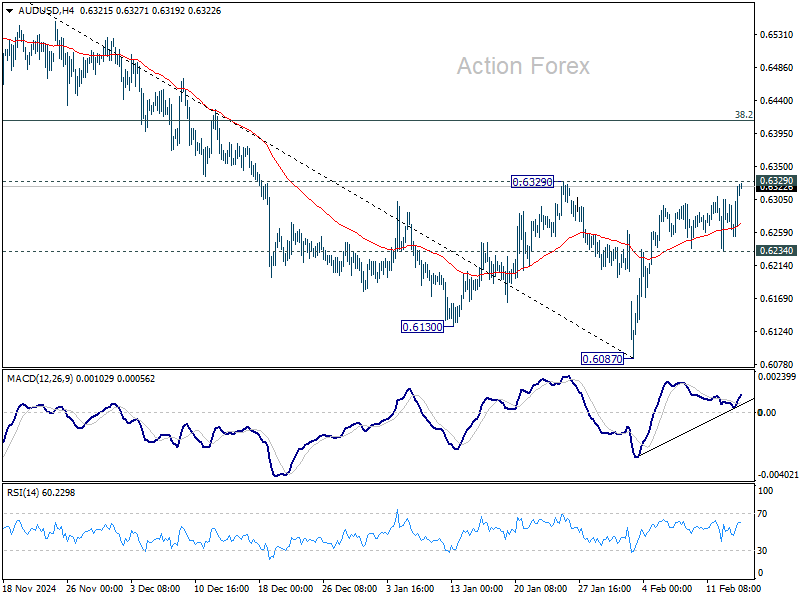
In the bigger picture, fall from 0.6941 (2024 high) is seen as part of the down trend from 0.8006 (2021 high). Next medium term target is 61.8% projection of 0.8006 to 0.6169 from 0.6941 at 0.5806. In any case, outlook will stay bearish as long as 55 W EMA (now at 0.6516) holds.
USD/CAD Daily Outlook
Daily Pivots: (S1) 1.4147; (P) 1.4229; (R1) 1.4274; More...
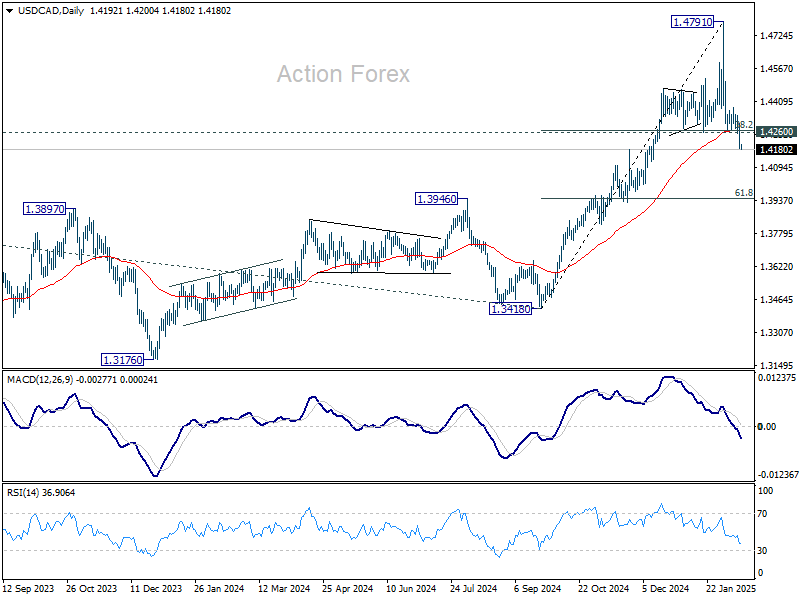
USD/CAD's fall from 1.4791 resumed by breaking through 1.4260 cluster support decisively. The development suggests that deeper corrective is underway and turn intraday bias to the downside for 1.3946 cluster support (61.8% retracement at 1.3942). For, risk will stay on the downside as long as 1.4378 resistance holds, in case of recovery.
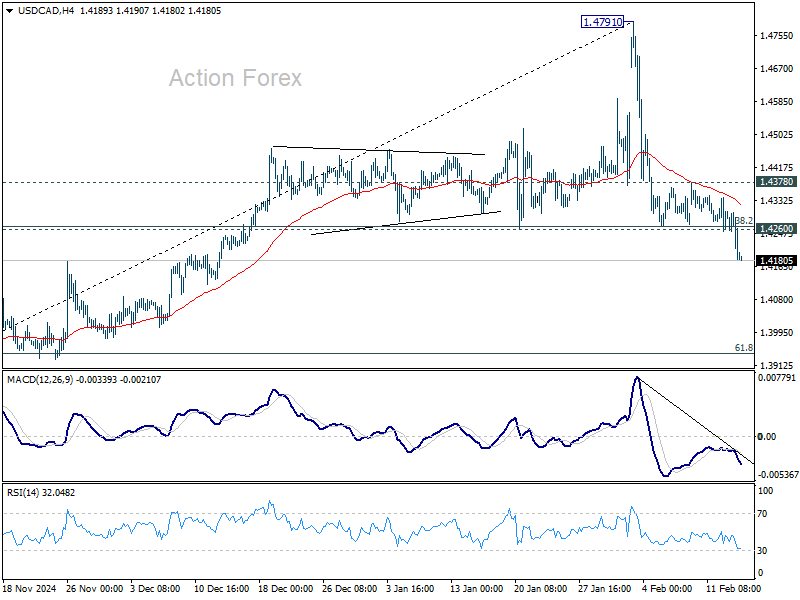
In the bigger picture, long term up trend is tentatively seen as resuming with breach of 1.4667/89 key resistance zone (2020/2015 highs). Next target is 100% projection of 1.2401 to 1.3976 from 1.3418 at 1.4993. This will remain the favored case as long as 1.3976 resistance turned holds (2022 high), even in case of deep pullback.
Dollar Slides as Markets Cheer Tariff Delay, Kiwi Surges on Manufacturing Rebound
Dollar’s selloff is accelerating as the week draws to a close, with investors continuing to react to the evolving trade policy stance from the White House. Wall Street posted broad gains overnight, as markets took relief in the fact that US President Donald Trump’s much-anticipated reciprocal tariff plan did not impose immediate trade restrictions. Instead, the administration will conduct a detailed review of tariff disparities before deciding on specific measures.
Despite the optimism in US equities, risk-on sentiment was not fully carried over into Asian session. While Hong Kong stocks extended recent strong gains, other major indexes struggled for direction, reflecting lingering caution. Investors remain wary of how the tariff situation will unfold, particularly as Trump’s trade team begins its assessment of countries with large trade surpluses with the US. This process is expected to take weeks, leaving room for further volatility in global markets.
The immediate focus now shifts to US retail sales data for January, which will provide fresh insights into consumer spending. Yet the figures are unlikely to have a significant impact on Fed expectations even with a major surprise. Fed has emphasized that its next move will be dictated by sustained trends rather than single data points. As a result, the Dollar’s downside pressure may persist, with market sentiment favoring risk assets.
Among major currencies, New Zealand Dollar is leading the pack, buoyed by surprisingly strong manufacturing data. The economy is responding well to RBNZ’s aggressive rate cuts last year. While the central bank is still expected to deliver another 50bps reduction next week as the march to neutral continues, the resurgence in manufacturing could mean the central bank may not need to push rates into stimulatory territory.
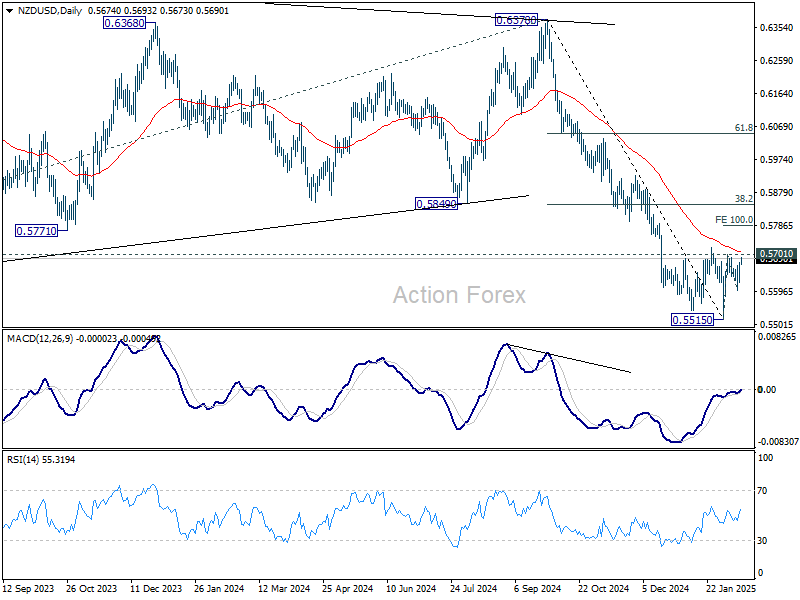
Technically, as NZD/USD rebounds, focus is now on 0.5701 resistance. Firm break there will resume the rise from 0.5515, as a correction to fall from 0.63780. Further rally should then be seen to 38.2% retracement of 0.6378 to 0.5515 at 0.5848.
In Asia, at the time of writing, Nikkei is down -0.35%. Hong Kong HSI is up 2.48%. China Shanghai SSE is up 0.25%. Singapore Strait Times is down -0.17%. Japan 10-year JGB yield is up 0.0018 at 1.351. Overnight, DOW rose 0.77%. S&P 500 rose 1.04%. NASDAQ rose 1.50%. 10-year yield fell -0.0112 to 4.525.
S&P 500 nears record high as Trump’s reciprocal tariff plan delays immediate action
U.S. stocks closed higher overnight as President Donald Trump unveiled his long-awaited reciprocal tariff plan without enforcing immediate measures. The market responded favorably to the lack of fresh tariffs, easing concerns about an abrupt escalation in trade tensions. In turn, Treasury yields and the U.S. dollar moved lower, reflecting a shift in sentiment away from safe-haven assets.
Trump’s directive instructs his administration to begin assessing tariff discrepancies between the US and its trading partner, including evaluation of non-tariff barriers. Also, the White House appears to be taking a targeted approach, prioritizing countries with large trade surpluses and high tariff rates on US exports.
Howard Lutnick, Trump’s nominee for Commerce Secretary, will lead the study, with findings expected by April 1. This extended timeline gives markets some breathing room and suggests that while trade tensions remain a concern, abrupt disruptions are unlikely in the near term.
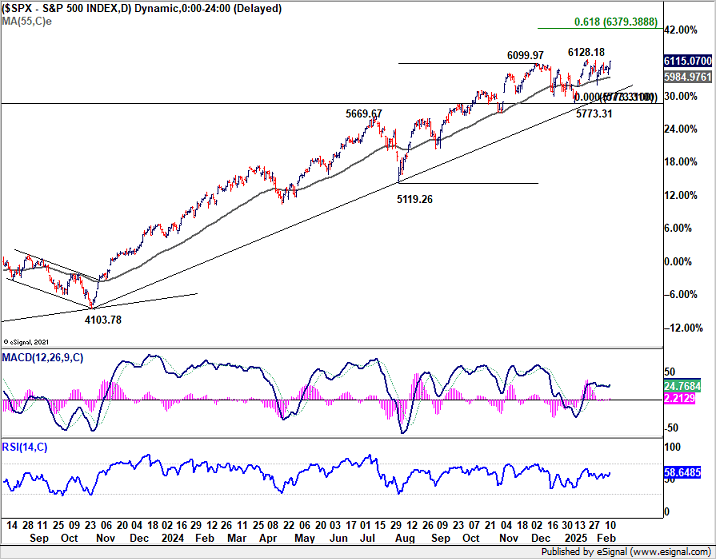
Equities responded positively to the development, with S&P 500 rebounding strongly and edging closer to its all-time high of 6128.18. Technically, firm break of 6128.18 will resume the long term up trend, with 618% projection of 5119.26 to 6099.97 from 5773.31 at 6379.38 as next target.
NZ BNZ manufacturing rises to 51.4, first expansion in nearly two years
New Zealand’s manufacturing sector finally returned to expansion in January, with BusinessNZ Performance of Manufacturing Index surging from 46.2 to 51.4. This marks the first expansion in 23 months and the highest reading since September 2022. While the rebound is a positive sign for the economy, the index remains below its long-term average of 52.5, suggesting that the sector has yet to regain full strength.
Encouragingly, all sub-indexes entered expansionary territory. Production saw a significant jump from 42.7 to 50.9. Employment also rose from 47.7 to 50.2. New orders climbed from 46.8 to 50.9, while finished stocks and deliveries improved to 51.9 and 51.7, respectively.
BNZ’s Senior Economist Doug Steel highlighted the significance of the data, noting that the sector is “shifting out of reverse and into first gear.” He acknowledged the improvement as a relief after two difficult years but cautioned that the PMI still lags behind its historical average.
USD/CAD Daily Outlook
Daily Pivots: (S1) 1.4147; (P) 1.4229; (R1) 1.4274; More...
USD/CAD's fall from 1.4791 resumed by breaking through 1.4260 cluster support decisively. The development suggests that deeper corrective is underway and turn intraday bias to the downside for 1.3946 cluster support (61.8% retracement at 1.3942). For, risk will stay on the downside as long as 1.4378 resistance holds, in case of recovery.
In the bigger picture, long term up trend is tentatively seen as resuming with breach of 1.4667/89 key resistance zone (2020/2015 highs). Next target is 100% projection of 1.2401 to 1.3976 from 1.3418 at 1.4993. This will remain the favored case as long as 1.3976 resistance turned holds (2022 high), even in case of deep pullback.
USD/JPY Eyes Another Drop—Key Support Levels in Focus
Key Highlights
- USD/JPY failed to clear the 154.80 resistance zone.
- A key bearish trend line is forming with resistance at 154.80 on the 4-hour chart.
- EUR/USD is rising and might test the 1.0520 resistance zone.
- Gold prices are again rising and might aim for a move above the $2,950 level.
USD/JPY Technical Analysis
The US Dollar started a recovery wave above the 154.00 level against the Japanese Yen. USD/JPY struggled to continue higher above 154.80 and dipped.
Looking at the 4-hour chart, the pair peaked at 154.88 and is currently correcting gains. There was a move below the 153.50 and 153.20 levels. The pair even declined below the 50% Fib retracement level of the upward move from the 150.92 swing low to the 154.88 high.
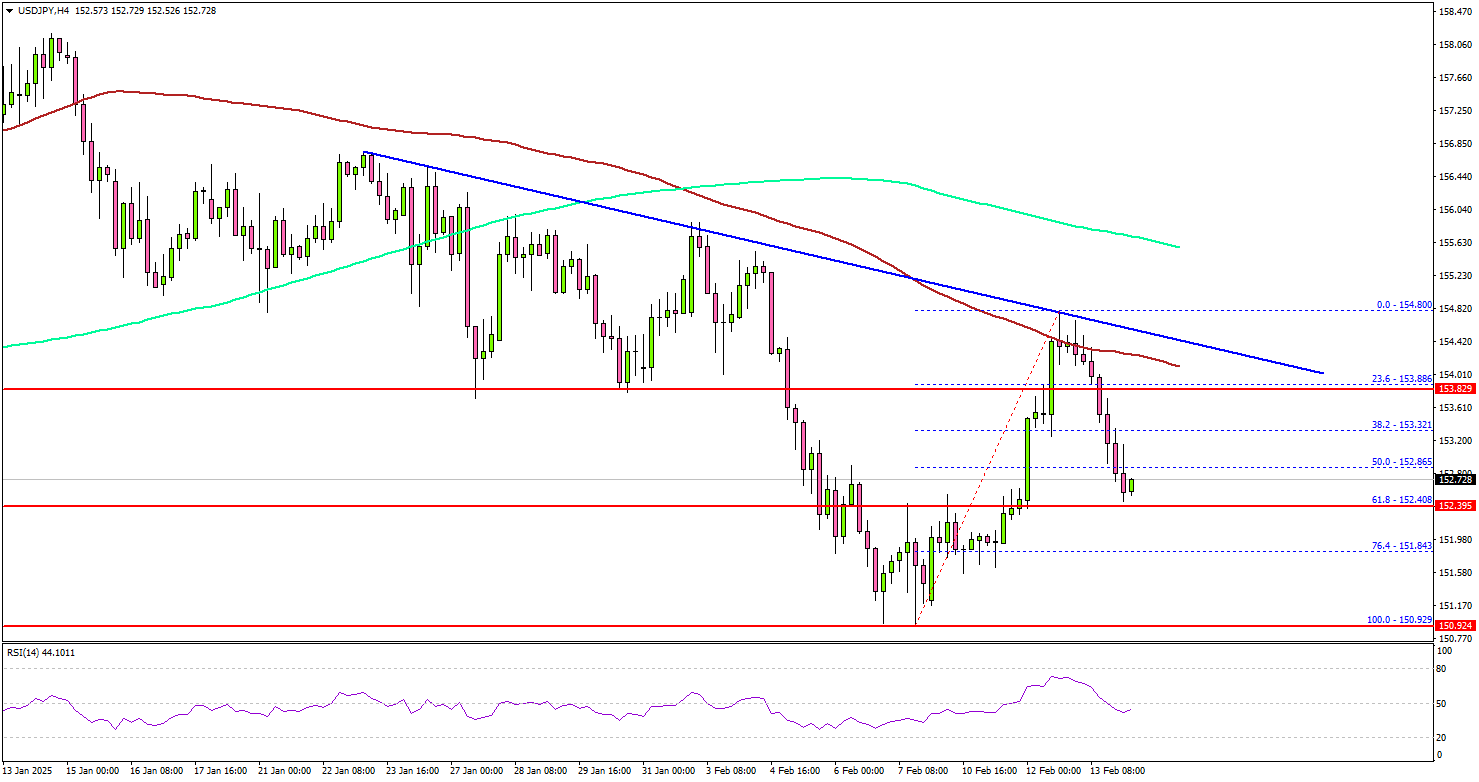
The pair is now showing bearish signs below the 100 simple moving average (red, 4-hour) and the 200 simple moving average (green, 4-hour). There is also a key bearish trend line forming with resistance at 154.80 on the same chart.
On the downside, immediate support sits near the 152.40 level. It is near the 61.8% Fib retracement level of the upward move from the 150.92 swing low to the 154.88 high. The next key support sits near the 151.80 level. Any more losses could send the pair toward the 150.50 level.
On the upside, the pair seems to be facing hurdles near the 153.80 level. The next major resistance is near the 154.50 level. The main resistance is now forming near the 154.80 zone.
A close above the 154.80 level could set the tone for another increase. In the stated case, the pair could even clear the 155.50 resistance.
Looking at EUR/USD, the pair remained stable and might aim for more gains above the 1.0500 level in the near term.
Upcoming Economic Events:
- US Retail Sales for Jan 2025 (MoM) – Forecast -0.1%, versus +0.4% previous.