Sample Category Title
Barnier Turned Out to be France’s Shortest-Serving Prime Minister
Markets
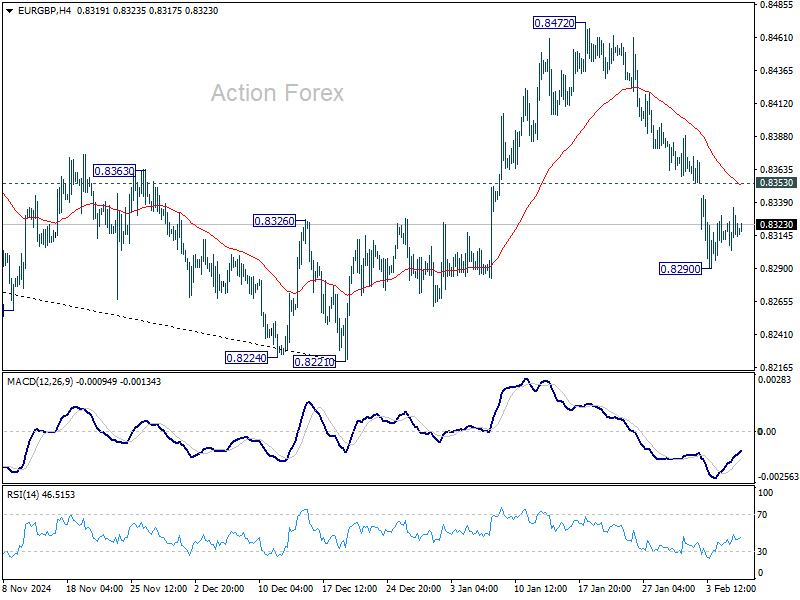
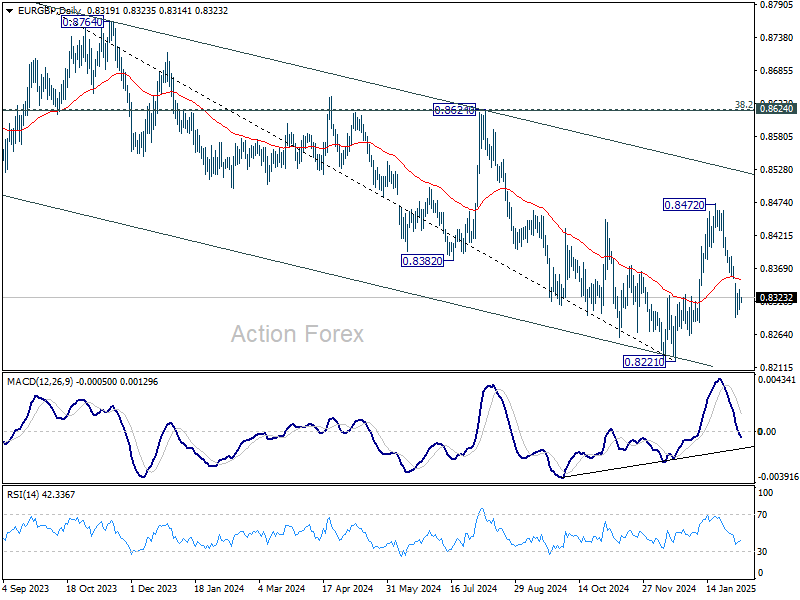
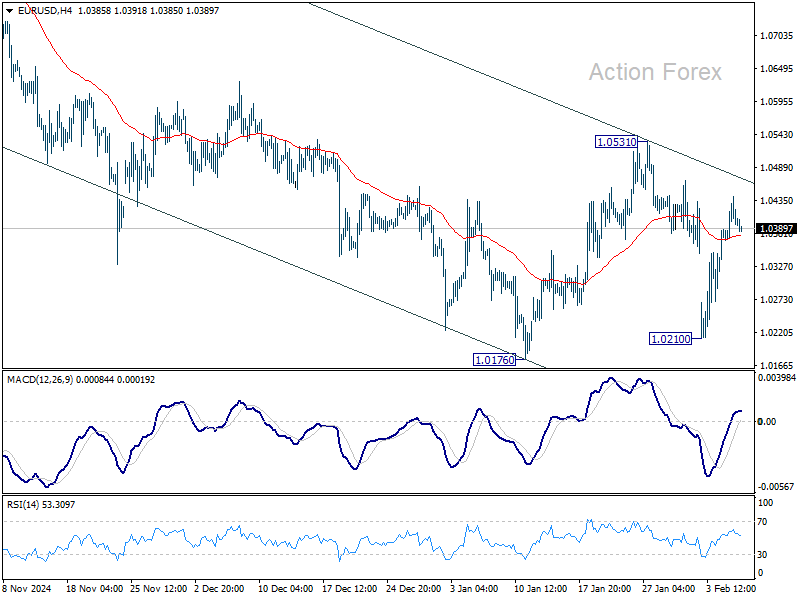
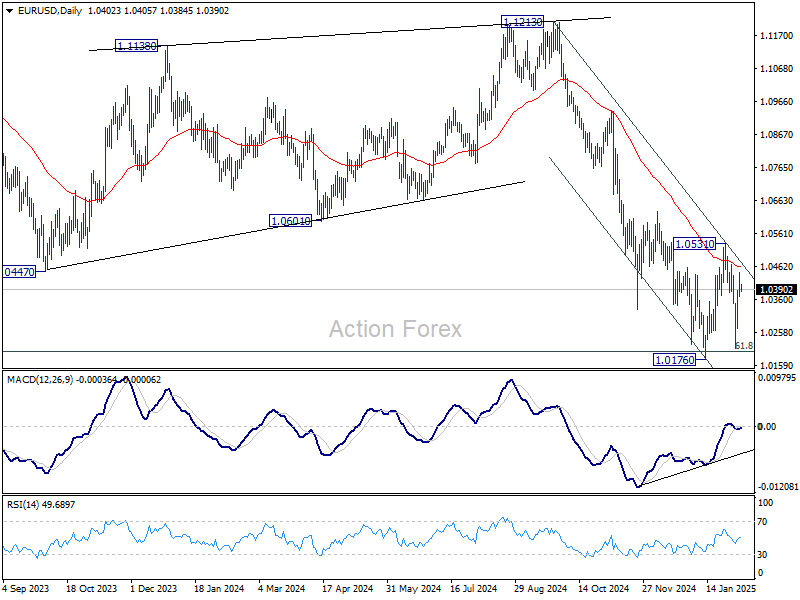
Barnier turned out to be France’s shortest-serving prime minister since the establishment of the Fifth Republic in 1958. After only 90 days in his tenure – still double UK Truss’ term – parliament yesterday passed a motion of no confidence. President Macron’s search for a new PM rebegins. But any new administration faces the same issues: a minority government that needs to find common ground to address unsustainable public finances in a heavily divided parliament. Yesterday’s decision was widely expected and as such left little traces on the euro intraday but ongoing political uncertainty (including in Germany) obviously doesn’t help clear the cloudy skies circling over the currency. EUR/USD finished virtually unchanged just north of 1.05 only because of some ISM-induced dollar weakness. The services gauge fell to 52.1 from 56 vs 55.7 expected. The drop was broad-based with subseries including new orders, business activity and employment all printing lower. We don’t jump to pessimistic conclusions, there have been false negatives in the past (e.g. June). Fed chair Powell isn’t at all worried either. A “remarkably good economy” & less pronounced downside risks to the labour market allow the central bank to be “a little more cautious” in dialing back policy restrictiveness towards a more neutral level given that they’re “not quite there on inflation”. ECB’s Lagarde before the European Parliament struck a similar note on inflation but was more concerned about short-term growth prospects. Neither Lagarde nor Powell changed anything to our base case of a 25 bps cut by both central banks in December. Since this isn’t fully reflected in US money markets, yesterday’s disappointing ISM triggered UST outperformance vs Bunds. Yields dropped 4.4-5.7 bps across the curve. German rates added about 1 bp. Gilt yields whipsawed to close with changes <1 bp amid a (too) loosely quoted Bank of England governor Bailey as signaling four cuts next year. EUR/GBP closed at the lowest level (0.827) in 2.5 years. The near-empty eco calendar won’t inspire trading much ahead of tomorrow’s closely watched payrolls report. Weekly jobless claims could trigger some intraday volatility in a mostly technically-driven session. We keep looking for (long-term) core bond yields to find a bottom. EUR/USD has found some relief in yesterday’s weakish dollar but we don’t expect any gains to reach far.
News & Views
Czech average real monthly wages grew a more-than-expected 4.6% y/y in the previous quarter. Wage dynamics accelerated especially in services, profiting from rising domestic demand. Construction wages are starting to accelerate as well but there was a noticeable slowdown in industrial wage growth. The Czech industry had a weaker year with a still-uncertain outlook. All in all, the numbers add to upside inflation risks for the central bank, especially due to the developments in the services sector. The CNB sees wage growth structurally at around 4.5% YoY, while both this year and next year it is highly likely to be 1-2 percentage points higher. In addition, the latest figures ended up visibly above the CNB's 3.6% (in real terms) staff forecast. The wage data fit into recent CNB guidance flagging an easing pause in the near future. Governor Michl yesterday said that they might choose for interest rate stability for some time, giving the bank time to “assess the new forecast with a goal to bring core inflation slightly below 2% and overall inflation to the target.” The next meeting is scheduled for December 19. The Czech koruna at EUR/CZK 25.11 yesterday touched the strongest levels since end-September, but with no follow-through gains (currently 25.17).
The National Bank of Poland (NBP) yesterday as expected left its policy rate unchanged at 5.75%. CPI in November slowed from 5.0% to 4.6%, but has been higher than in H1 2024 mainly due higher administered prices of energy carriers and food prices. Domestic/services inflation is also supported by marked wage growth. Yet, demand-driven inflation is assessed to remain low, due to weakened economic conditions. NBP expects inflation to remain markedly above target in coming quarters due to the effect of earlier increase in energy prices and planned increases in excise duties and administered services prices. In the medium term inflation should return to target, but there remains a factor of uncertainty amongst others due to the impact of higher energy prices on inflation expectations. Several NBP members including governor Glapinski recently indicated that the NBP might start to discuss interest rate cuts in March. Glapinski comments on the decision this afternoon. The zloty yesterday strengthened to close near EUR/PLN 4.28 but this was probably mainly due to global factors.
Euro Insoumis
There are rare moments when the market’s reaction to news leaves me baffled. And today – this week – is one of them. The French government just collapsed, and the composition of the government suggests that whoever replaces Micel Barnier will face the same problems than he did, in a France that became ungovernable. But who cares? The EURUSD was around 1.0510 when the news broke yesterday night, and is trading around 1.0526 now. The total absence of reaction from the euro hints that we won’t see a bloodshed in stock and bond markets, either. The message is clear: chaos feels better than the stability that was proposed to France.
What now? The uncertainty will grow and the pressure on Macron to quit will mount. But investors will move on with their lives, and look elsewhere, to the European Central Bank (ECB), to decide what to do next with their positioning. The ECB Chief Lagarde said yesterday that their battle against inflation ‘is nearing completion’ but not ‘mission accomplished’ yet. The services inflation remains sticky – near 3.9% in November – the headline inflation ticked above the 2% target, gas prices have been rising, and US is threatening Europe with tariffs. In the jungle of unknowns, the most cautious option for the ECB is a 25bp cut – and not a 50bo cut. The scaling back of the dovish ECB expectations and the resilience to the French chaos strengthen support near the 1.05 level and should allow a further rebound. The key resistance to the September-November selloff stands at 1.0672, the major 38.2% Fibonacci retracement. Until there, the euro’s recovery will not raise major questions regarding the medium term trend.
Of course, the dollar leg of the EURUSD trade is as - if not more - powerful than the euro leg. And sentiment among the dollar bulls is weakening despite the Federal Reserve (Fed) members’ cautious communication. The Fed Chair Powell couldn’t help but admit that the US economy is in a remarkably good shape and that the downside risks from the labour market have decreased. But his words did little to convince the Fed doves to dial back their 25bp cut expectations for December. The US 2-year yield – which best captures the Fed expectations – fell to 4.11% as the services PMI and ADP numbers came in lower than expected. Up next: Friday’s official jobs data – which will hardly derail the dovish Fed expectations. A potentially strong NFP number will be disregarded due to the hurricane disruptions of the month before. If that’s the case, the US dollar should lose some more field and let the majors recover.
The USDJPY continues to go up and down around the 150 mark, but the yen bulls lack conviction that the Bank of Japan (BoJ) rate hike would lead to a significant appreciation of the yen when the carry traders gently come back to the market to benefit from the comfortable rate differential – December hike or not.
In energy, US crude fell 1.80% yesterday after failure to clear the $70pb resistance. Even the 5.1 mio barrel weekly drop in US crude inventories couldn’t bring the buyers in. OPEC will announce its verdict about the production restrictions in a few hours and they have a tough job. First, they must announce more than a 3-month delay to attract the bulls’ attention. And even then, the bears are waiting in ambush to sell the slightest tops into and above the $70pb level on ample supply/weak demand outlook.
Away from these problems, the S&P500 just printed its 56th record high this year and Nasdaq 100 jumped to a fresh ATH. Amazon advanced to a fresh record as news that Amazon is building a supercomputer powered by hundreds of thousands of its own Trainium chips to train Anthropic AI models wet investors’ appetite. The move could help Amazon cut reliance on pricey Nvidia chips and do the same for its Big Tech buddies. The rumour has it, Apple is on board as a customer. Do Nvidia investors worry about it? Not for now. The shares jumped 3.5% yesterday to past $145 per share. But it’s worth keeping an eye on this space because the Big Tech stood for half – yes half – of Nvidia’s revenue last quarter and their ambition to build their own chips is one of the major risks to Nvidia’s revenue growth.
Uncertainty Looms in French Politics After Barnier’s Ousting
In focus today
President Macron is faced with the difficult task of appointing a new prime minister following PM Barnier being outed at yesterdays no-confidence vote. We think it is likely that a new government will not be formed before the new year, with the current government to continue in a caretaker capacity. We anticipate the passing of a 'special law' that will extend the 2024 budget into 2025. This measure would ensure the continuation of minimum state expenditures and revenue collection from 1 January 2025, until a new government is able to propose a formal budget.
In the euro area, we receive retail sales data for October. Retail sales increased 1% q/q in Q3, signalling decent consumption growth in the third quarter. This positive development has been flying a bit under the radar, so it will be interesting to see if the rebound continued in October as the recent development is one of the bright spots of the euro area economy.
Swedish preliminary November CPI and CPIF inflation is released, and we expect headline measures to overshoot the Riksbank's forecast by a large margin in part due to soaring electricity prices.
Overnight we get October wage data from Japan. Real wage growth remains key to the economic recovery and further Bank of Japan hikes.
Economic and market news
What happened overnight
In the crypto space, Bitcoin surpassed previous records reaching USD 103,284. Investors are betting on a friendlier US regulatory approach to cryptocurrencies under President Trump to bring crypto closer to mainstream adoption.
What happened yesterday
In France, the no-confidence vote against PM Barnier succeeded, pushing the country into deeper political turmoil. The decisive vote tallied 331 out of the required 288 and was initiated by the left-wing coalition which was met with support from Marine Le Pen's far-right National Rally. President Macron now faces the difficult task of appointing a new prime minister who can survive a no confidence vote in the National Assembly. The current stalemate in French politics is likely to persist, with no large reforms to be pushed through.
In South Korea, officials announced readiness to activate a USD 7.1bn stock market stabilisation fund and a USD 28.4bn bond market stabilisation fund if needed. This comes as both the won and South Korean stocks declined in the wake of President Yoon's declaration of martial law Tuesday evening. The declaration has since been repealed and calls have been mounting for President Yoon to face impeachment.
In the US, The Fed chair Powell refrained from providing any strong signals about FOMC's upcoming rate decision in his final remarks before the December blackout begins on Saturday; markets are pricing 18bp worth of cuts for the meeting. He emphasized that the economy remains in a good place, and as downside risks have diminished since September, the Fed 'can afford to be a little more cautious' in finding neutral. Earlier in the day, St. Louis Fed's Musalem and Richmond Fed's Barkin also kept all options open, citing more data still to come
ADP's private sector employment report landed close to consensus at +146k (cons. +150k) although with negative revisions. The manufacturing sector recorded job losses at odds with the strong ISM and PMI readings seen earlier. In addition, the ISM Services index released yesterday afternoon declined to 52.1 (cons: 55.5, prior: 56.0) driven by weakness in business activity, new orders and employment components, and also contrasting the stronger signal from its PMI counterpart released before.
In the euro area, service PMIs were revised up slightly in the final release to 49.5 from 49.2. The manufacturing PMI remained unchanged, and the composite index was revised up to 48.3. Despite the small upward revision, the November PMIs have still increased our concerns over the near-term growth outlook for the euro area economy. We expect GDP growth in the final quarter of the year to be 0.1% q/q, but this reflects large differences between countries where Germany and France are expected to contract while Spain, Portugal and Greece are expected to continue to grow at full speed. For details see our Nordic Outlook, 4 December.
In Denmark, The Danish Ministry of Finance yesterday published an update on the borrowing requirement for 2024 and 2025 relative to the forecast in August. The numbers show a significant improvement in the public finances for 2024 as the net financing requirement is revised downwards from DKK -66bn to DKK -81bn. Hence there is a bigger surplus on the budget in 2024. Furthermore, the net financing requirement for 2025 is revised downwards by DKK 11bn to DKK -15bn - hence, we are going from an estimated deficit in 2025 to a modest surplus.
In the UK, PMIs for November were revised slightly up, bringing them in line with euro area PMIs. Composite was revised to 50.5 from 49.9 and services to 50.8 from 50.0. In the morning, BoE governor Bailey (dove) made some dovish remarks noting that he expects four rate cuts the coming year and downplaying the impact of the budget, pushing UK rates slightly lower. However, he also noted that the BoE central forecast implied a gradual easing of monetary policy. We think a gradual easing is warranted by the BoE for now but expect a step up in easing pace in the spring.
Equities: Global equities were higher yesterday, driven by cyclicals and large caps. Over the past five trading days, there has been a very steady increase in investor sentiment and risk-taking. Although this aligns well with our strategy, we must admit that the complacency around Germany, France, and South Korea is slightly surprising to us. The guiding star remains the US, where the S&P 500 yesterday posted its 11th gain in the past 12 sessions, with all three leading indices - S&P500, Dow, and Nasdaq - achieving fresh record closes yesterday. Additionally, please note the narrow sector leadership we have seen both yesterday and over the last week, with cyclicals up by 2.4% and defensives down by 0.5% in the last five trading days. In terms of single sectors, tech is higher by 4.7%, while utilities were down by 2% the last five trading days. This builds on the historical outperformance of cyclicals over the last two years. Since 1 January 2023, MSCI World cyclicals have risen by 73.9%, while MSCI World defensives have increased by 14.1%. Again, this fits very well with the strategy we have had for the last two years but we have now reached a level at which the relative valuation between cyclicals and defensives will be a challenge going into 2025. In the US yesterday, the Dow was up by 0.7%, the S&P 500 by 0.6%, the Nasdaq by 1.3%, and Russell 2000 by 0.4%. Asian markets are mixed this morning, while European and US futures are lower.
FI: Yesterday's disappointing ISM Services figures for November led to a significant rally in bond markets. The 10Y UST yield closed some 5bp lower, taking the level back below 4.20%. The EUR swap curve rose from the front as markets trimmed expectations for a 50bp cut next week despite the rather dovish remarks from Lagarde in her speech in the EU parliament. Markets now discount 27bp ahead of next week's meeting. The OAT-Bund spread held steady in the 83-85bp range, as markets awaited last night's no-confidence vote against the French government. The motion was passed, implying that President Macron now faces the challenging task of appointing a new prime minister. We expect a special law to extend the 2024 budget into 2025, as we see little chance that a new French government will be formed before New Year.
FX: EUR/USD found slight support from weak ISM services and with the no-confidence vote out of the way in France focus now turns to the US jobs report out on Friday. EUR/GBP dipped slightly lower during yesterday's session as UK PMIs for November were revised slightly up and a dovish Bailey failed to provide support for the cross. It was a quiet day for NOK yesterday with EUR/NOK virtually ending the day where it started; just north of 11.60, SEK on the other hand was the big winner of the day with EUR/SEK breaking below the 11.50 mark.
AUD/USD Daily Report
Daily Pivots: (S1) 0.6390; (P) 0.6439; (R1) 0.6479; More...
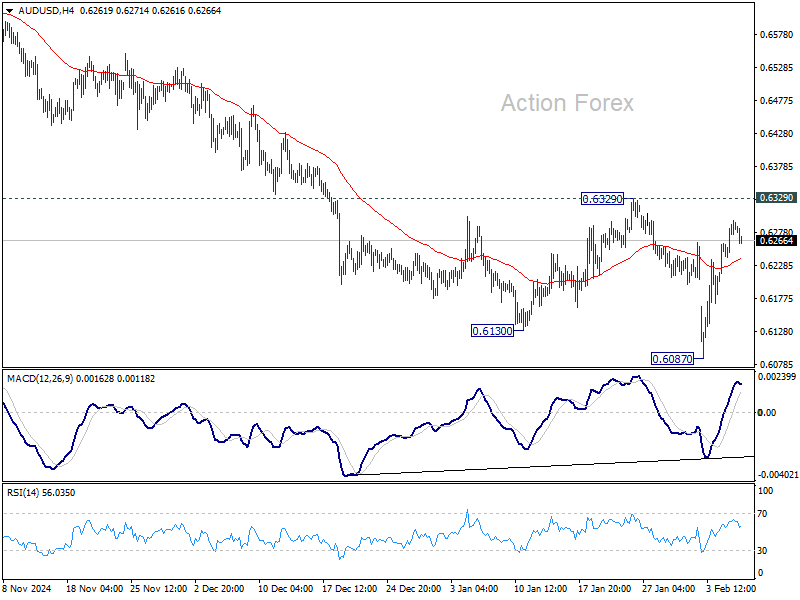
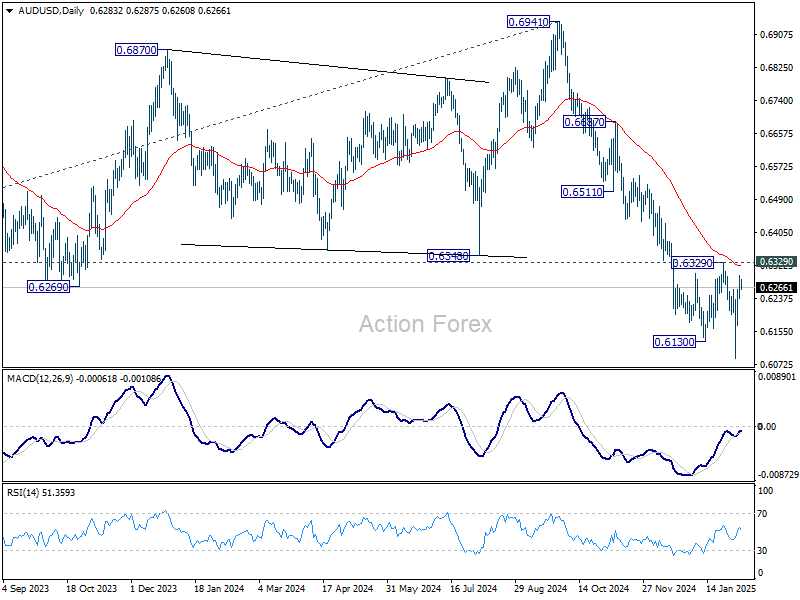
Intraday bias in AUD/USD remains on the downside for the moment. Fall from 0.6941 is in progress for 0.6348 support. Break there will target 0.6269 low next. On the upside, above 0.6503 minor resistance will turn intraday bias neutral again first.
In the bigger picture, rise from 0.6269 (2023 low) should have completed with three waves up to 0.6941. Corrective pattern from 0.6169 (2022 low) is now extending with another falling leg. Deeper decline would be seen back to 0.6269 as sideway trading extends.
Trump Trade Resurgence Boosts Bitcoin and Stocks, Dollar and Yen Maintain Strength
US financial markets basked in risk-on sentiment overnight, with S&P 500 and NASDAQ scaling new record highs. Bitcoin seized the momentum, surging past the psychologically significant $100K mark. Dubbed the "Trump Trade," optimism over President-elect Donald Trump's policies has returned in full force and is likely to persist, barring surprises from tomorrow's pivotal non-farm payroll report.
Fed Chair Jerome Powell's comments added to the upbeat tone, painting a positive picture of the economy. Additionally, the remarks suggested that he wouldn’t block another rate cut at this month’s meeting. While some Fed officials hinted at a pause in easing, a January timeframe appears more likely than December, keeping market participants optimistic about short-term monetary support.
In Asia, cautious remarks by BoJ board member Toyoaki Nakamura caused slight Yen volatility. However, as a known dove, Nakamura’s statements may not fully reflect the board’s collective stance. His clarification that he isn’t opposed to a rate hike but urges caution keeps the market’s expectations for a December or January hike split, with January remaining as the more probable choice.
Overall for the week so far, Dollar is currently the strongest performer, continuing the tight race with Yen, while Sterling ranks third. Conversely, Aussie and Kiwi lag behind, with the Euro not far ahead. The common currency was unfazed by France’s political turmoil after Prime Minister Michel Barnier's government fell to a no-confidence vote. Swiss Franc and Loonie are steady in the middle.
Technically, USD/JPY would be a focus for the rest of the week given the important of US NFP's impact of stocks and yields, as well as Dollar. For now, fall from 156.74 is expected to continue as long as 151.94 resistance holds. Break of 148.64 will reinforce the view that rise from 139.57 has already completed at 156.754. Deeper fall should then be seen to 61.8% retracement of 139.57 to 156.74 at 146.12, and possibly further to retest 139.57 low. The next down move in USD/JPY, if realized, would also be used to validate the decline in other Yen pairs.
In Asia, Nikkeir rose 0.27%. Hong Kong HSI is down -1.21%. China Shanghai SSE is down -0.12%. Singapore Strait Times is up 0.53%. Japan 10-year JGB yield is up 0.0182 at 1.071. Overnight, DOW rose 0.69%. S&P 500 rose 0.61%. NASDAQ rose 1.30%. 10-year yield fell -0.043 to 4.180.
Bitcoin soars past 100k on SEC nominee optimism and Powell’s Gold comparison
Bitcoin has surged past the highly anticipated 100k milestone, riding on a wave of optimism fueled by a couple of bullish factors. In particular, with anticipation of favorable regulatory environment in the US ahead, Bitcoin could now be heading to next target at 120k.
A key driver behind Bitcoin's leap was President-elect Donald Trump’s nomination of Paul Atkins as the next chair of the Securities and Exchange Commission. Known for his pro-crypto stance, Atkins has a track record of advocating for innovation within the financial sector and criticizing the SEC’s historically tough stance on digital asset firms. His nomination is widely seen as a signal of a more accommodative regulatory approach to cryptocurrencies.
Adding to the bullish momentum, Fed Chair Jerome Powell likened Bitcoin to gold, calling it “just like gold only it’s virtual.” He emphasized that Bitcoin is neither a primary form of payment nor a direct competitor to Dollar but rather serves as a speculative alternative to gold. While acknowledging Bitcoin’s volatility, Powell’s remarks underscored its growing legitimacy as a store of value.
The cryptocurrency's rally also coincides with broader market strength, as NASDAQ hit fresh record highs. This parallel momentum between Bitcoin and equities highlights the increasing overlap in sentiment toward risk assets, driven by a mix of optimism around economic resilience.
Technically, near term outlook in Bitcoin will stay bullish as long as 93559 support holds. 100% projection of 24896 to 73812 from 52703 at 101619 taken out, the next target is 138.2% projection at 12304, which is slightly above 120k psychological level.
Fed's Powell: Economy stronger than expected, allows cautious rate cuts
Fed Chair Jerome Powell expressed optimism about the US economy during an event overnight, stating it is in "very good shape" with "no reason for that not to continue." He highlighted reduced downside risks in the labor market, stronger-than-expected growth, and inflation running slightly higher than previously anticipated.
Given these developments, Powell suggested the Fed could "afford to be a little more cautious" in its approach to cutting interest rates as it works toward a neutral policy stance.
Reflecting on Fed's 50bos cut in September, Powell noted it was intended as "a strong signal" of support for a potentially weakening labor market. However, subsequent data revisions revealed that the economy was "even stronger than we thought".
Fed’s Daly: No urgency as Fed calibrate policy carefully
San Francisco Fed President Mary Daly emphasized a measured approach to interest rate adjustments during a PBS News Hour interview.
She noted there’s “no sense of urgency” to lower rates quickly but highlighted the need to “carefully calibrate our policy” to align with current and expected economic conditions.
Daly added that policymakers will deliberate on the best path forward at the upcoming December 17–18 FOMC meeting.
Despite signs of economic resilience, she stressed that “there’s a lot more work for us to do” to achieve the 2% inflation target while supporting durable economic growth. Inflation remains the top challenge for many Americans.
BoJ’s Nakamura skeptical on wage and inflation sustainability
BoJ board member Toyoaki Nakamura expressed a cautious stance on monetary policy adjustments, emphasizing the need for careful calibration aligned with Japan's economic recovery.
"We are at a state where it’s important to adjust the degree of monetary easing carefully in accordance with the economic recovery by assessing a broad array of data," Nakamura said.
As a known dove on the BoJ board, Nakamura raised doubts about the durability of current wage hikes, saying he is "not confident" about their sustainability. He also flagged concerns about inflation, noting the possibility that the annual rate "may not reach 2% from fiscal 2025 onwards."
In a related development, a Jiji Press report indicated growing hesitation within BoJ regarding a premature rate increase. Market expectations for a December rate hike have fallen sharply, with traders now pricing in only a 36% chance, down from 66% at the end of last week.
Looking ahead
Swiss unemployment rate, German factory orders, French industrial production, UK construction PMI, and Eurozone retail sales will be released in European session.
Later in the day, Canada will publish trade balance and Ivey PMI. US will release trade balance and jobless claims.
AUD/USD Daily Report
Daily Pivots: (S1) 0.6390; (P) 0.6439; (R1) 0.6479; More...
Intraday bias in AUD/USD remains on the downside for the moment. Fall from 0.6941 is in progress for 0.6348 support. Break there will target 0.6269 low next. On the upside, above 0.6503 minor resistance will turn intraday bias neutral again first.
In the bigger picture, rise from 0.6269 (2023 low) should have completed with three waves up to 0.6941. Corrective pattern from 0.6169 (2022 low) is now extending with another falling leg. Deeper decline would be seen back to 0.6269 as sideway trading extends.
Bitcoin soars past 100k on SEC nominee optimism, 120k next
Bitcoin has surged past the highly anticipated 100k milestone, riding on a wave of optimism fueled by a couple of bullish factors. In particular, with anticipation of favorable regulatory environment in the US ahead, Bitcoin could now be heading to next target at 120k.
A key driver behind Bitcoin's leap was President-elect Donald Trump’s nomination of Paul Atkins as the next chair of the Securities and Exchange Commission. Known for his pro-crypto stance, Atkins has a track record of advocating for innovation within the financial sector and criticizing the SEC’s historically tough stance on digital asset firms. His nomination is widely seen as a signal of a more accommodative regulatory approach to cryptocurrencies.
Adding to the bullish momentum, Fed Chair Jerome Powell likened Bitcoin to gold, calling it “just like gold only it’s virtual.” He emphasized that Bitcoin is neither a primary form of payment nor a direct competitor to Dollar but rather serves as a speculative alternative to gold. While acknowledging Bitcoin’s volatility, Powell’s remarks underscored its growing legitimacy as a store of value.
The cryptocurrency's rally also coincides with broader market strength, as NASDAQ hit fresh record highs. This parallel momentum between Bitcoin and equities highlights the increasing overlap in sentiment toward risk assets, driven by a mix of optimism around economic resilience.
Technically, near term outlook in Bitcoin will stay bullish as long as 93559 support holds. 100% projection of 24896 to 73812 from 52703 at 101619 taken out, the next target is 138.2% projection at 12304, which is slightly above 120k psychological level.
BoJ’s Nakamura skeptical on wage and inflation sustainability
BoJ board member Toyoaki Nakamura expressed a cautious stance on monetary policy adjustments, emphasizing the need for careful calibration aligned with Japan's economic recovery.
"We are at a state where it’s important to adjust the degree of monetary easing carefully in accordance with the economic recovery by assessing a broad array of data," Nakamura said.
As a known dove on the BoJ board, Nakamura raised doubts about the durability of current wage hikes, saying he is "not confident" about their sustainability. He also flagged concerns about inflation, noting the possibility that the annual rate "may not reach 2% from fiscal 2025 onwards."
In a related development, a Jiji Press report indicated growing hesitation within BoJ regarding a premature rate increase. Market expectations for a December rate hike have fallen sharply, with traders now pricing in only a 36% chance, down from 66% at the end of last week.
Fed’s Daly: No urgency as Fed calibrate policy carefully
San Francisco Fed President Mary Daly emphasized a measured approach to interest rate adjustments during a PBS News Hour interview.
She noted there’s "no sense of urgency" to lower rates quickly but highlighted the need to "carefully calibrate our policy" to align with current and expected economic conditions.
Daly added that policymakers will deliberate on the best path forward at the upcoming December 17–18 FOMC meeting.
Despite signs of economic resilience, she stressed that "there's a lot more work for us to do" to achieve the 2% inflation target while supporting durable economic growth. Inflation remains the top challenge for many Americans.
Gold Stabilizes at $2,650: Eyes on the Next Move
Key Highlights
- Gold started a fresh increase above the $2,600 support.
- A connecting bullish trend line is forming with support at $2,630 on the 4-hour chart.
- Oil prices are struggling to recover above the $70.50 resistance.
- EUR/USD is consolidating losses near the 1.0520 level.
Gold Price Technical Analysis
Gold prices remained well-bid near the $2,600 zone against the US Dollar. The price formed a base and started a fresh increase above $2,620 and $2,640.
The 4-hour chart of XAU/USD indicates that the price struggled to clear the $2,665 level and corrected some gains. The price declined below the 50% Fib retracement level of the upward move from the $2,536 swing low to the $2,721 high.
The price is now trading above the 100 Simple Moving Average (red, 4 hours), but is below the 200 Simple Moving Average (green, 4 hours).
On the upside, immediate resistance is near the $2,665 level. The first major resistance sits near the $2,680 level. A clear move above the $2,680 resistance could open the doors for more upsides.
The next major resistance could be $2,700, above which the price could rally toward the $2,720 level. On the downside, initial support is near the $2,635. The first major support is near the $2,630 level. There is also a connecting bullish trend line forming with support at $2,630.
The main support is now $2,605. A downside break below the $2,605 support might call for more downsides. The next major support is near the $2,565 level.
Looking at EUR/USD, the pair started a short-term recovery wave above the 1.0480 level but upsides might be limited above 1.0550.
Economic Releases to Watch Today
- US Initial Jobless Claims - Forecast 215K, versus 213K previous.
Elliott Wave View in Silver (XAGUSD) Favors the Metal Going Higher
Short Term Elliott Wave in Silver (XAGUSD) shows that the metal ended wave ((4)) at 29.63. The metal has turned higher in wave ((5)). The structure of the rally is unfolding as a 5 waves Elliott Wave impulse structure. Up from wave ((4)) low on 11.28.2024, wave (i) ended at 30.29 and wave (ii) dips ended at 30.17. Wave (iii) higher ended at 30.75 and pullback in wave (iv) ended at 30.56. Final leg wave (v) higher ended at 30.89. This completed wave ((i)) in higher degree. Pullback in wave ((ii)) ended at 30.04 with internal subdivision as a zigzag. Down from wave ((i)), wave (a) ended at 30.5 and wave (b) ended at 30.73. Wave (c) lower ended at 30.04 which completed wave ((ii)).
The metal has resumed higher in wave ((iii)). Up from wave ((ii)), wave (i) ended at 30.67 and wave (ii) pullback ended at 30.3. Wave (iii) higher ended at 31.07 and pullback in wave (iv) ended at 30.7. Final leg wave (v) ended at 31.13 which completed wave ((iii)). Pullback in wave ((iv)) ended at 30.44 and final wave ((v)) higher ended at 31.47. This should complete wave 1 in higher degree. Pullback in wave 2 is now in progress to correct cycle from 11.28.2024 low in 3, 7, 11 swing before the metal resumes higher again.
Silver (XAGUSD) 60 Minutes Elliott Wave Chart
XAGUSD Elliott Wave Video
https://www.youtube.com/watch?v=BImWT-qfkNM