Sample Category Title
GBP/JPY Daily Outlook
Daily Pivots: (S1) 195.80; (P) 196.80; (R1) 197.66; More...
Intraday bias in GBP/JPY is turned neutral again with current retreat. On the upside, break of 199.79 will resume whole rebound from 180.00. However, firm break of 193.54 will extend the fall from 199.79 to 183.70 support instead.
In the bigger picture, price actions from 208.09 are seen as a correction to whole rally from 123.94 (2020 low). The range of consolidation should be set between 38.2% retracement of 123.94 to 208.09 at 175.94 and 208.09. However, decisive break of 175.94 will argue that deeper correction is underway.
EUR/JPY Daily Outlook
Daily Pivots: (S1) 163.11; (P) 163.93; (R1) 164.71; More....
Intraday bias in EUR/JPY is turned neutral again with current retreat. On the upside, break of 166.67 resistance will resume the whole rebound from 154.40. However, below 161.48 will extend the fall from 166.67 towards 155.14 support instead.
In the bigger picture, price actions from 175.41 are seen as correction to rally from 114.42 (2020 low). The range of consolidation should have been set between 38.2% retracement of 114.42 to 175.41 at 152.11 and 175.41 high. However, decisive break of 152.11 would argue that deeper correction is underway.
EUR/GBP Daily Outlook
Daily Pivots: (S1) 0.8311; (P) 0.8335; (R1) 0.8357; More...
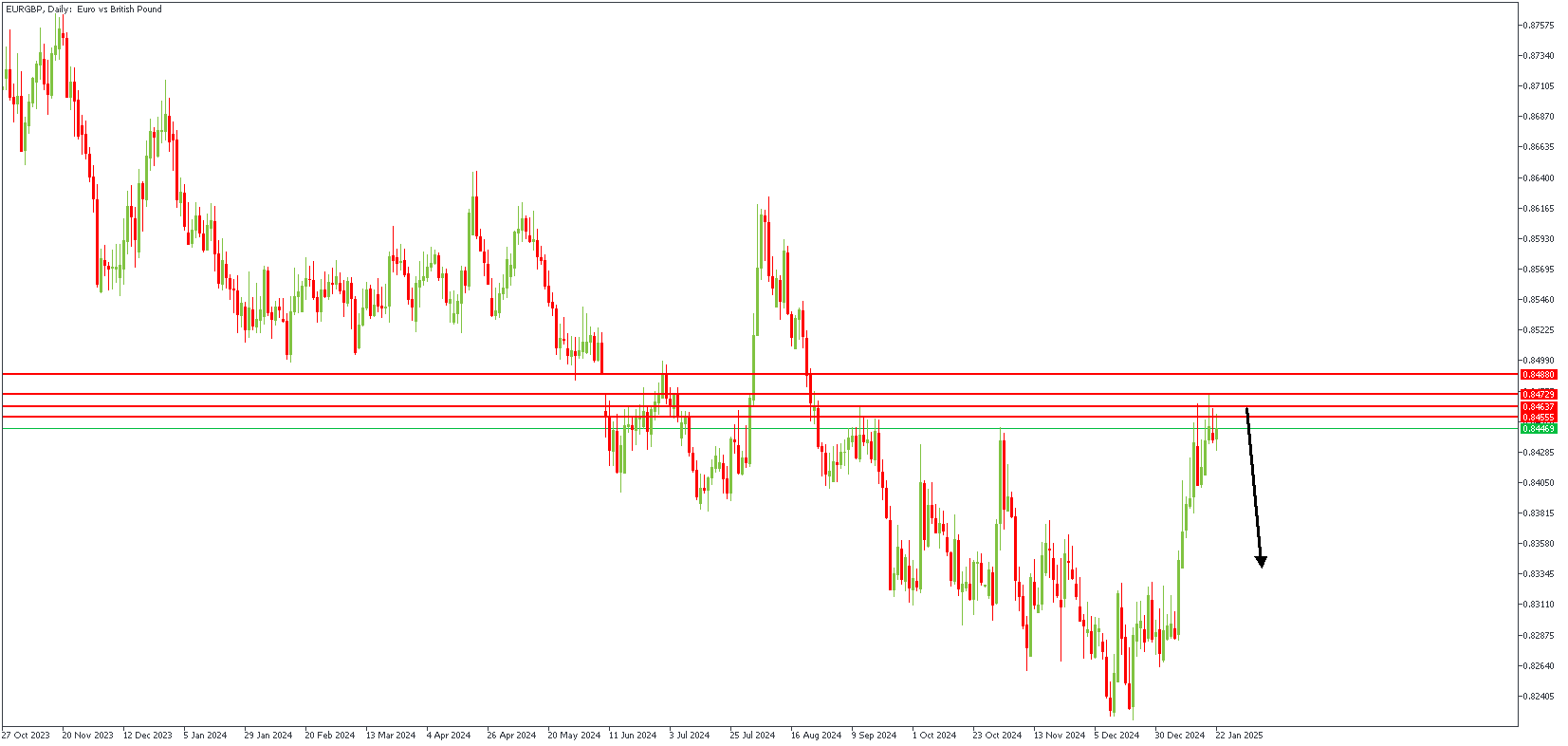
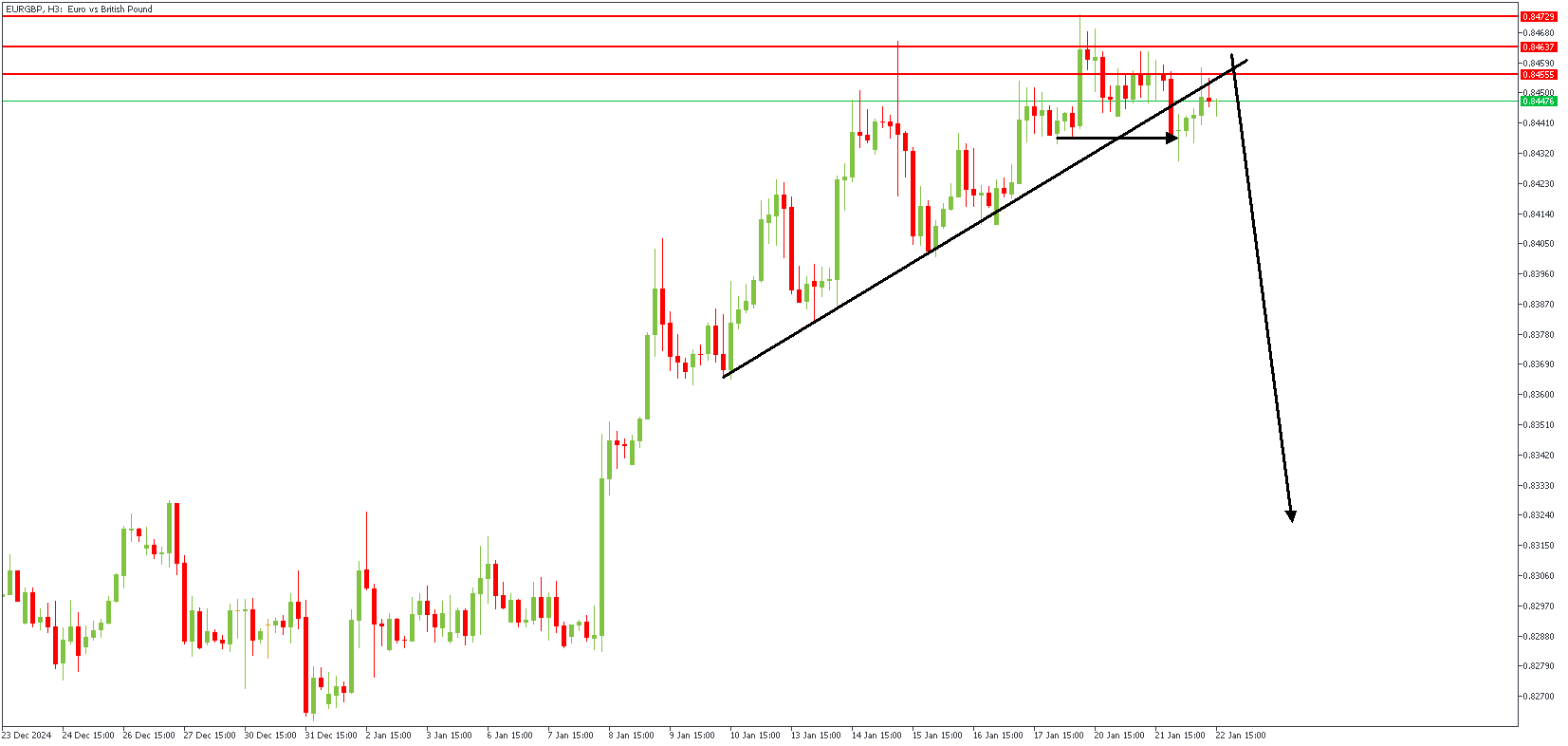
Intraday bias in EUR/GBP stays neutral at this point. Outlook also remains bearish with 0.8446 resistance intact. On the downside, below 0.8306 minor support will turn bias back to the downside for 0.8259 first, and then 0.8201 key support. Nevertheless, firm break of 0.8446 will confirm short term bottoming.
In the bigger picture, down trend from 0.9267 (2022 high) is in progress. Next target is 0.8201 (2022 low), but strong support should be seen there to bring rebound. However, outlook will remain bearish as long as 0.8624 resistance holds even in case of strong rebound. Decisive break of 0.8201 will indicate long term bearish reversal.
EUR/AUD Daily Outlook
Daily Pivots: (S1) 1.6190; (P) 1.6214; (R1) 1.6230; More...
Outlook in EUR/AUD remains unchanged and intraday bias stays neutral. Further decline is expected with 1.6359 resistance intact. On the downside, break 1.6161 will resume the fall from 1.6598 for retesting 1.5996/6002 key support zone. Nevertheless, break of 1.6359 will turn bias to the upside for stronger rebound towards 1.6598 resistance instead.
In the bigger picture, as long as 1.5996 support holds, up trend from 1.4281 (2022 low) is still expected to resume through 1.7180 at a later stage. However decisive break of 1.5996 will argue that the medium term trend might have reversed. Deeper fall would be seen to 61.8% retracement of 1.4281 (2022 low) to 1.7180 at 1.5388, even as a correction.
EUR/CHF Daily Outlook
Daily Pivots: (S1) 0.9314; (P) 0.9341; (R1) 0.9376; More....
Intraday bias in EUR/CHF stays neutral first. On the downside, break of 0.9303 will revive the case that triangle consolidation pattern 0.9305 has already completed. Intraday bias will be back on the downside for retesting 0.9209 low next. For now, risk will stay on the downside as long as 0.9444 resistance holds, in case of another recovery.
In the bigger picture, fall from 0.9928 is seen as part of the long term down trend. Repeated rejection by 55 D EMA (now at 0.9408) keeps outlook bearish for breaking through 0.9209 low at a later stage. Nevertheless, sustained trading above 55 D EMA will confirm medium term bottoming at 0.9209 and bring stronger rebound back towards 0.9928 key resistance.
Euro Soft Awaiting Breakout; Bitcoin Rockets to New Highs
Euro continues to trade on the softer side in an otherwise directionless market. Yet it's holding above its low against Dollar, lacking sufficient momentum for a decisive breakout. Market participants and ECB policymakers are grappling with critical questions regarding the pace at which interest rates should be reduced towards neutral, and whether the terminal rate in this easing cycle might dip below that neutral point. These deliberations are complicated by differing views within the ECB.
On one side, dovish members are voicing concerns about the risks of inflation undershooting, advocating for a more aggressive easing to prevent economic downturn. Conversely, hawkish policymakers are downplaying these risks, cautioning against premature easing that could reignite inflationary pressures.
Ultimately, barring any significant external shocks such as geopolitical escalations, the path of inflation will hinge on the duration and depth of the economic slowdown in the Eurozone. In this context, the upcoming release of the Eurozone PMI data tomorrow is highly anticipated, as it may provide clearer insights into economic activity, and could potentially catalyze more pronounced movements in Euro.
In the broader currency market, Japanese Yen is currently the weakest performer of the week. Dollar and Euro are also underperforming. In contrast, Canadian Dollar leads the major currencies, partly supported by stronger-than-expected CPI data released this week. Australian Dollar follows as the second-strongest currency, with Swiss Franc also showing resilience. New Zealand Dollar and British Pound are positioned in the middle of the performance spectrum.
Technically, Bitcoin's up trend is picking up momentum ahead today, and breaks to new record high. For now, near term outlook will stay bullish as long as 88712 support holds. Next target is 100% projection of 24896 to 73812 from 52703 at 10619. Firm break there will pave the way to 138.2% projection at 12304 next.
In Asia, at the time of writing, Nikkei is down -0.86%. Hong Kong HSI is down -0.13%. China Shanghai SSE is down -0.10%. Singapore Strait Times is up 0.11%. Japan 10-year JGB yield is up 0.0136 at 1.083. Overnight, DOW rose 0.32%. S&P 500 rose 0.00%. NASDAQ fell -0.11%. 10-year yield rose 0.027 to 4.406.
Fed’s Bowman flags inflation risks as progress stalls amid tight labor market
Fed Governor Michelle Bowman expressed concerns over the recent slowdown in inflation reduction efforts, emphasizing that while there has been "considerable progress in lowering inflation since early 2023," this progress "seems to have stalled in recent months."
While acknowledging the complexity of monetary policy decisions, Bowman expressed particular concern about the price stability side of the Fed's dual mandate, given that unemployment remains at historically low levels. "I see greater risks to the price stability side of our mandate, especially while the labor market remains near full employment," she said in a speech.
Bowman is known for her hawkish stance on monetary policy. In September FOMC meeting, she dissented from the majority decision to cut rates by 50bps, advocating instead for a smaller 25bps reduction. Her comments reinforce her cautious approach toward easing monetary policy further, especially given the risks of persistent inflation in a strong labor market.
Fed’s Cook confident inflation moving toward target
Fed Governor Lisa Cook said in a speech that the US economy is in a "good position". She remains "confident" that inflation is moving sustainably toward Fed's 2% objective, while acknowledging that the path may be "occasionally bumpy." Cook observed that employment risks are weighted to the downside but have "diminished somewhat" in recent months.
Cook reiterated that the direction for monetary policy remains "downward" but stressed that the "magnitude and timing of rate cuts will depend on incoming data, the evolving outlook, and the balance of risks."
Highlighting the need for flexibility, she emphasized that monetary policy is not on a "preset course" and that she is prepared to respond to changing conditions.
Fed's Collins: Additional policy easing required, final destination still uncertain
Boston Fed President Susan Collins stated in a speech that "additional policy easing is needed" as monetary policy remains "at least somewhat restrictive."
She acknowledged that the "final destination" of policy adjustments is "uncertain", and emphasized the importance of a "careful and deliberate" approach. FOMC should take the time to "holistically assess" data and evaluate its implications for the economic outlook and balance of risks.
Collins described the economy as being in a "good place overall," with inflation on track to return to Fed’s 2% target, albeit unevenly. She noted that while the labor market is healthy, job growth is becoming increasingly concentrated in fewer sectors. Collins warned that "any further slowing in hiring would be undesirable".
ECB’s Stournaras: Avoiding inflation undershoot becoming policy priority
Greek ECB Governing Council member Yannis Stournaras emphasized at an event overnight that inflation in Eurozone is now projected to reach the 2% target "sooner than earlier expectations," likely by early 2025 rather than the fourth quarter as previously anticipated. This shift suggests the ECB’s policy focus may increasingly pivot to ensuring "we don’t undershoot our inflation objective".
Stournaras highlighted markets are "extremely sensitive" to disappointing growth readings. He warned, “If negative surprises for growth come in and we fail to unwind our restrictive monetary-policy stance at the appropriate pace, unnecessary market turbulence could be induced."
While he acknowledged that the September inflation reading of 1.7% marked a success in controlling price pressures, he cautioned it should also serve as a “wake-up call.” Prolonged monetary restrictions, he warned, could risk "undershooting of our inflation target over the medium term and impede growth".
BoE's Ramsden supports gradual rate cuts, but highlights inflation undershooting risks
BoE Deputy Governor Dave Ramsden expressed support for the MPC's cautious approach to easing interest rates, citing economic uncertainties tied to recent fiscal measures and labor market data. Ramsden emphasized the need for a "watchful and responsive" strategy given lingering questions about the effects of higher employer taxes and potential misrepresentations in labor statistics.
However, Ramsden suggested he might endorse a faster pace of rate cuts if uncertainties ease and disinflationary pressures become more evident. He noted, "Were those uncertainties to diminish and the evidence to point more clearly to further disinflationary pressures... then I would consider a less gradual approach to reducing Bank Rate to be warranted."
BoE has projected that inflation will remain above its 2% target until early 2027, driven in part by fiscal stimulus and higher minimum wages under the Labour government. Ramsden acknowledged this scenario as "plausible" but also placed significant weight on an alternative outlook where inflation declines more quickly. This could occur through "more symmetry in wages and price setting, with less domestic inflationary pressure."
Looking ahead, Ramsden predicted that employers are likely to implement pay settlements at the lower end of the 2–4% range, which could lead to inflation staying closer to 2% in the early part of the forecast period. However, under this scenario, inflation could dip "more materially later on, lower than in the MPC's published forecasts," he added.
Looking ahead
UK will release publis sector net borrowing in European session. Later in the day, Canada will release IPPI and RMPI. US will release jobless claims, Philly Fed survey, and existing home sales.
EUR/CHF Daily Outlook
Daily Pivots: (S1) 0.9314; (P) 0.9341; (R1) 0.9376; More....
Intraday bias in EUR/CHF stays neutral first. On the downside, break of 0.9303 will revive the case that triangle consolidation pattern 0.9305 has already completed. Intraday bias will be back on the downside for retesting 0.9209 low next. For now, risk will stay on the downside as long as 0.9444 resistance holds, in case of another recovery.
In the bigger picture, fall from 0.9928 is seen as part of the long term down trend. Repeated rejection by 55 D EMA (now at 0.9408) keeps outlook bearish for breaking through 0.9209 low at a later stage. Nevertheless, sustained trading above 55 D EMA will confirm medium term bottoming at 0.9209 and bring stronger rebound back towards 0.9928 key resistance.
AUD/USD Recovery Faces Headwinds: Upside Still Restricted
Key Highlights
- AUD/USD extended losses and tested the 0.6440 support.
- It recovered above a connecting bearish trend line with resistance at 0.6480 on the 4-hour chart.
- Bitcoin extended gains and traded to a new all-time high above $94,000.
- EUR/USD is correcting losses and trading near the 1.0550 zone.
AUD/USD Technical Analysis
The Aussie Dollar started a fresh decline below the 0.6550 support against the US Dollar. AUD/USD tested the 0.6440 zone and is currently attempting to recover.
Looking at the 4-hour chart, the pair settled below the 0.6550 level, the 100 simple moving average (red, 4-hour), and the 200 simple moving average (green, 4-hour). Finally, a low was formed at 0.6440 and the pair corrected above the 0.6500 resistance.
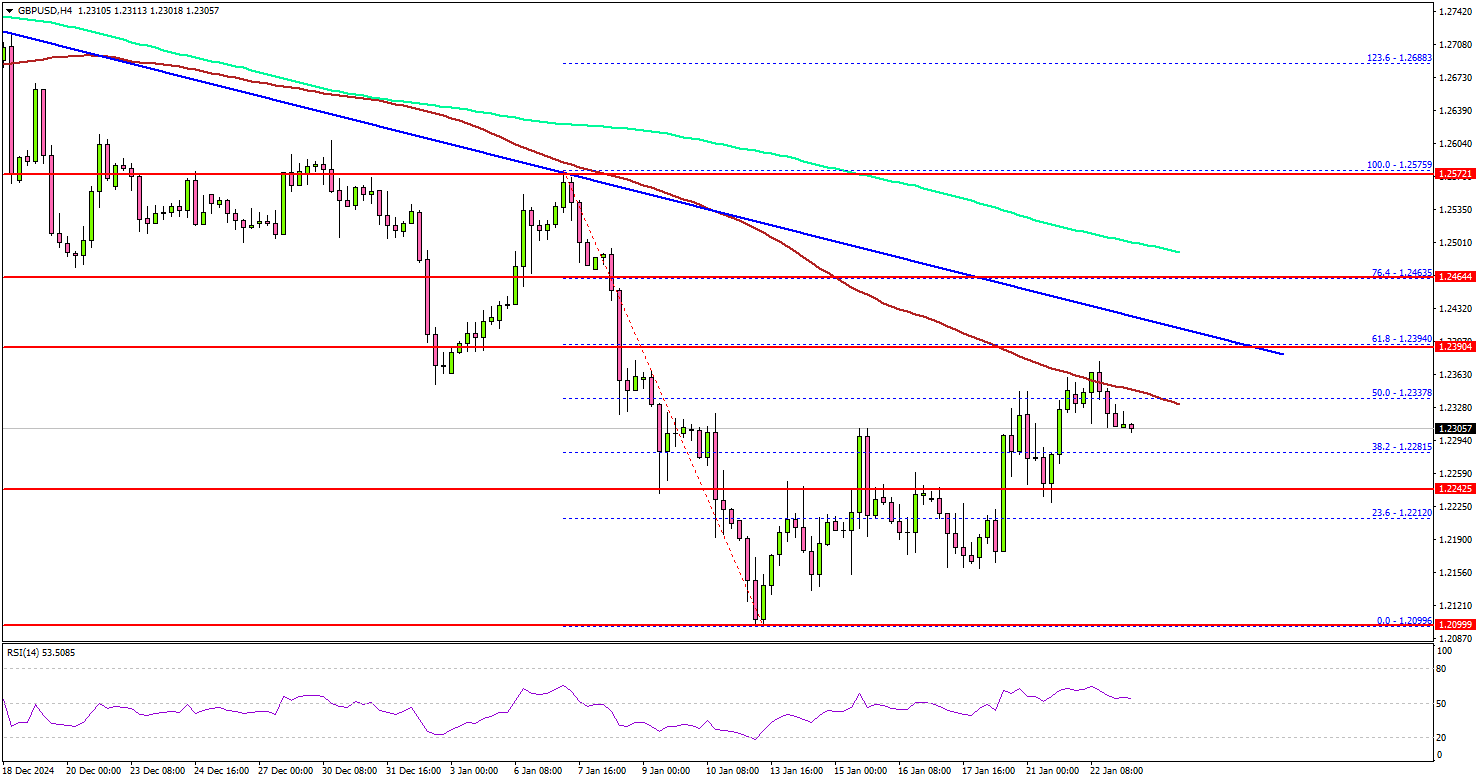
It cleared a connecting bearish trend line with resistance at 0.6480 on the same chart. There was a move above the 23.6% Fib retracement level of the downward move from the 0.6687 swing high to the 0.6440 low.
On the upside, the pair could face resistance near the 0.6550 level. A close above the 0.6550 level could set the tone for another increase. The next major resistance could be 0.6630, above which the price could climb higher toward the 0.6660 resistance.
On the downside, immediate support sits near the 0.6480 level. The next key support sits near the 0.6440 level. Any more losses could send the pair toward the 0.6400 level or even 0.6350 in the near term.
Looking at Bitcoin, the price gained traction for a new all-time high above $94,000 and might continue to move up.
Upcoming Economic Events:
- US Initial Jobless Claims - Forecast 220K, versus 217K previous.
- Philadelphia Fed Manufacturing Survey for Nov 2024 – Forecast 8, versus 10.3 previous.
RBA Cash Rate: Later But Faster Cuts Now More Likely
We have revised our view of the most likely scenario for the path of the RBA’s cash rate, pushing out the start date of the rate-cutting cycle from February to May, but more front-loaded than previously assumed.
We have revised our view of the most likely scenario for the path of the RBA’s cash rate, pushing out the start date of the rate-cutting cycle from February to May. Similar to the pattern in some peer economies, we expect the initial moves to be somewhat front-loaded, with consecutive cuts in late May and early July. This is also a change from our previous expectation of a moderate pace of decline of one cut per quarter. We continue to expect the terminal rate to be 3.35%, to be reached by year-end 2025.
As always, our view on the cash rate is predicated on things turning out broadly as we expect, which can differ from the RBA’s own view. An earlier start in February or March is still possible, but it is no longer more likely than a May start date. A later start date is also a risk scenario, if inflation does not decline as the RBA is currently forecasting, let alone our own marginally more dovish expectation. That said, the longer the RBA Board waits, the faster they will need to move thereafter, as it would then be more likely that they have hesitated too long.
The minutes of the RBA Board meetings often provide important colour about the Board’s deliberations, going beyond what is already covered in communications immediately after the meeting. While the post-meeting communication was still broadly in line with our earlier expectation, subsequent public appearances and the minutes now suggest that the balance of probabilities has shifted. The recent sharp increase in consumer sentiment – though still to a below-average level – and ongoing resilience in the labour market will have also tilted the balance of probabilities to waiting longer.
The minutes note that ‘staff forecasts were consistent with the Board’s strategy of aiming to return inflation to target within a reasonable timeframe while preserving as many of the gains in the labour market as possible’. This is important confirmation that, if things turn out as the RBA expects, it will eventually become time to normalise policy. Policy is restrictive, and if it were to stay where it is for an extended period, inflation would undershoot the target sooner or later. The path for interest rates assumed in the forecasts is a technical assumption, and small changes in timing are not that consequential. Even so, recent RBA communication does suggest that they are more comfortable with the later date embedded in recent market pricing than the late-2023 timing implied by market pricing not so long ago.
Market participants and other observers have also pointed to the language in the latest meeting Minutes that the Board ‘would need to observe more than one good quarterly inflation outcome to be confident that such a decline in inflation was sustainable’. This has been interpreted as saying that the RBA needs to see at least two more quarterly CPI (and more importantly, trimmed mean) outcomes from here before being confident of their forecasts. This is almost certainly how the Board and staff are thinking about the outlook. It suggests that they will wait for longer than we previously believed.
We are mindful, though, that things can pivot quite quickly, and that the RBA’s view of the economy looks somewhat more hawkish than we think is warranted.
Recall that as late as February 2022, the RBA was not signalling that it expected to increase the cash rate anytime soon. At the time, then-Governor Lowe was reported as saying, “I think these uncertainties are not going to be resolved quickly. Another couple of CPI’s would be good to see.” Yet it raised rates in May of that year. When the facts change – it became apparent that wages growth had actually picked up at last – you have to change your mind.
Recall also that the RBNZ pivoted quickly this year, too. Only a couple of months before the first cut in August, it was looking like it was going to stay on hold for all of 2024.
The language of the minutes emphasised that trimmed mean inflation was high and declining more gradually than the rebates-affected headline CPI. No mention was made that their near-term forecast for trimmed mean inflation over the year to December 2024 was shaved down slightly to 3.4% from 3.5% in the August round, as was the end-2025 forecast. This was characterised as being ‘little changed’. It does raise the question of what constitutes a ‘good quarter’ for inflation. Indeed, our own near-term view is a touch lower still. And if the December quarter outcome turns out to be a little lower than even our own view, it would take the annual rate to 3.2%, just barely above target. In that scenario, one would have to start wondering exactly what they are waiting for.
As the minutes highlighted, the RBA’s forecasts hang crucially on a relatively bullish view of the potential for consumption growth to pick up as inflation declines and real incomes recover. Our own view incorporates a more modest recovery, noting the relatively subdued response so far to the income boost from the Stage 3 tax cuts. And while public demand (and non-market employment) is sustaining some demand growth for now, this will not last forever. When the outsized growth in this area does eventually fade, it will take time for other sectors to recover in compensation. Australia could end up with an extended period of lacklustre growth.
Another area where the RBA could end up revising its view is on the labour market. Employment growth has been unexpectedly robust. It is important to remember that, with labour force participation rates trending up over many decades, employment has to run very hard to avoid an increase in the unemployment rate. While the unemployment rate has levelled out recently, the underlying trend has been an upward drift for precisely this reason. If employment growth slowed even moderately, things could unravel quite quickly.
Related to this, RBA has (correctly) avoided being too focused on a single number in assessing full employment. But in doing so, it has down-weighted the fact that wages growth has already turned down. Its assessment of the level of full employment could be too hawkish as a result. As we noted last week, the RBA already had to downgrade its wages growth forecasts in the November round. It will need to do so again following the September quarter WPI result.
Taking all these factors together, we assess the risks around our revised view of the rates outlook as two-sided.
Fed’s Collins: Additional policy easing required, final destination still uncertain
Boston Fed President Susan Collins stated in a speech that "additional policy easing is needed" as monetary policy remains "at least somewhat restrictive."
She acknowledged that the "final destination" of policy adjustments is "uncertain", and emphasized the importance of a "careful and deliberate" approach. FOMC should take the time to "holistically assess" data and evaluate its implications for the economic outlook and balance of risks.
Collins described the economy as being in a "good place overall," with inflation on track to return to Fed’s 2% target, albeit unevenly. She noted that while the labor market is healthy, job growth is becoming increasingly concentrated in fewer sectors. Collins warned that "any further slowing in hiring would be undesirable".
Fed’s Cook confident inflation moving toward target
Fed Governor Lisa Cook said in a speech that the US economy is in a "good position". She remains "confident" that inflation is moving sustainably toward Fed's 2% objective, while acknowledging that the path may be "occasionally bumpy." Cook observed that employment risks are weighted to the downside but have "diminished somewhat" in recent months.
Cook reiterated that the direction for monetary policy remains "downward" but stressed that the "magnitude and timing of rate cuts will depend on incoming data, the evolving outlook, and the balance of risks."
Highlighting the need for flexibility, she emphasized that monetary policy is not on a "preset course" and that she is prepared to respond to changing conditions.