Sample Category Title
GBPJPY Wave Analysis
- GBPJPY reversed from the resistance area
- Likely to fall to support level 201.65
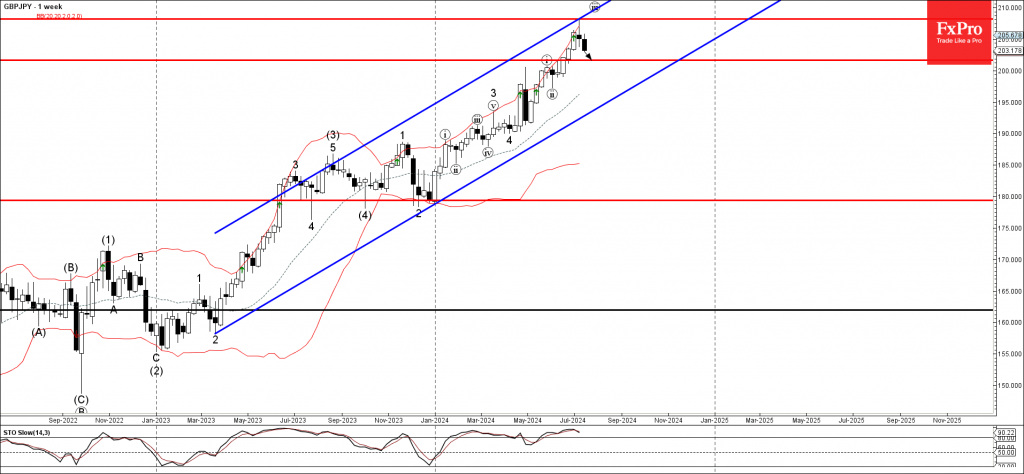
GBPJPY currency pair continues to fall after the price reversed down from the resistance area located between the upper trendline of the weekly up channel from last year and the upper weekly Bollinger Band.
The downward reversal from this resistance area created the weekly Japanese candlesticks reversal pattern Doji.
Given the overbought weekly Stochastic, strongly bearish sterling sentiment, and the equally strong yen optimism seen recently, GBPJPY currency pair can be expected to fall further to the next support level 201.65.
EURCAD Wave Analysis
- EURCAD broke key resistance level 1.4920
- Likely to rise to resistance level 1.5040
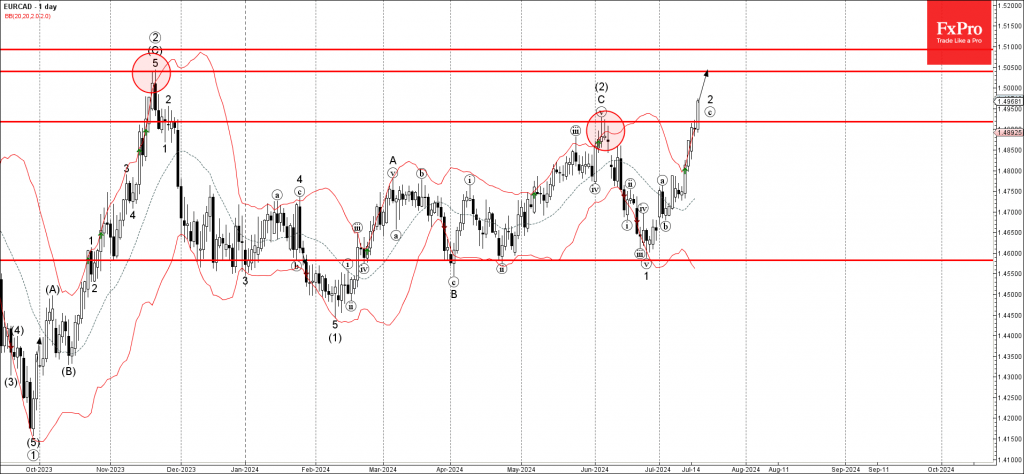
EURCAD currency pair recently broke above the key resistance level 1.4920, which stopped the previous correction (2) at the start of June.
The breakout of the resistance level 1.4920 greatly accelerated the active impulse wave c of the ABC correction 2 from the end of last month.
Given the rising euro bullish sentiment, EURCAD currency pair can be expected to rise further to the next resistance level 1.5040 (former multi-month high from November).
Fed’s Waller suggests rate cuts may be nearing
In a speech today, Fed Governor Christopher Waller stated that Fed is "getting closer" to the time when a cut in the policy rate is warranted. He noted that Q2 data on inflation and the labor market has moderated, suggesting that "progress toward price stability has resumed." Waller believes the current data align with the goal of achieving a soft landing and will be watching for further data in the coming months to support this view.
Waller outlined three scenarios for the future. The first, and most optimistic, scenario is that Fed continues to receive "very favorable" inflation data, leading to a "nice run" that began in May. In this case, Waller could "envision a rate cut in the not-too-distant future."
The second scenario, which Waller considers "more likely to occur," involves inflation data coming in "uneven" but still indicating overall progress in disinflation. Under this scenario, a rate cut in the near future is "more uncertain."
The third scenario involves a "significant resurgence in inflation" in the second half of the year, but Waller assigns a "low probability" to this outcome.
Given his belief that the first two scenarios are the most probable, Waller concludes that the "time to lower the policy rate is drawing closer."
USD/JPY Outlook: Sharply Down, Markets Suspect Intervention
USDJPY was sharply down on Wednesday (down 1.3% during the European / early US session), with markets suspecting another intervention, after Japan’s authorities intervened in the market and pushed yen away from the lowest levels in nearly four decades..
Although comments from top officials were not clearly pointing to intervention, the size and the pace of the latest move suggests that authorities continued to buy yen, in attempts to further strengthen weakening currency.
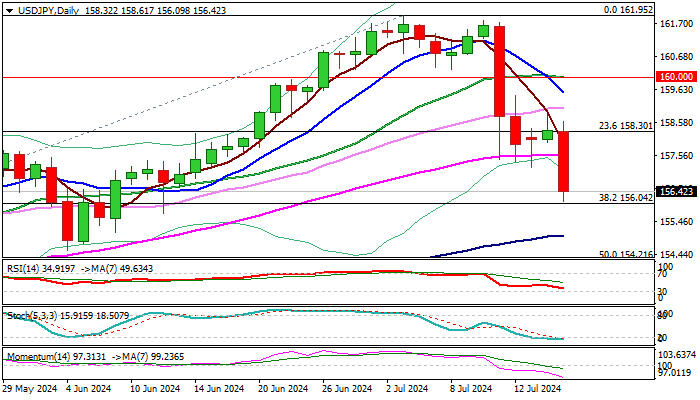
Fresh drop is pressuring pivotal Fibo support at 156.04 (38.2% of 146.48/161.95), with firm break here to add to negative outlook and allow for stronger correction towards 100DMA (155.04) and Fibo 50% (154.21).
Strong negative momentum and MA’s (10/20/55) in bearish configuration support the notion, wit broken 55DMA (157.55) to ideally cap.
Res: 157.55; 158.30; 158.86; 159.52.
Sup: 156.04; 155.71; 155.04; 154.21.
Australian Dollar Eyes Employment Report
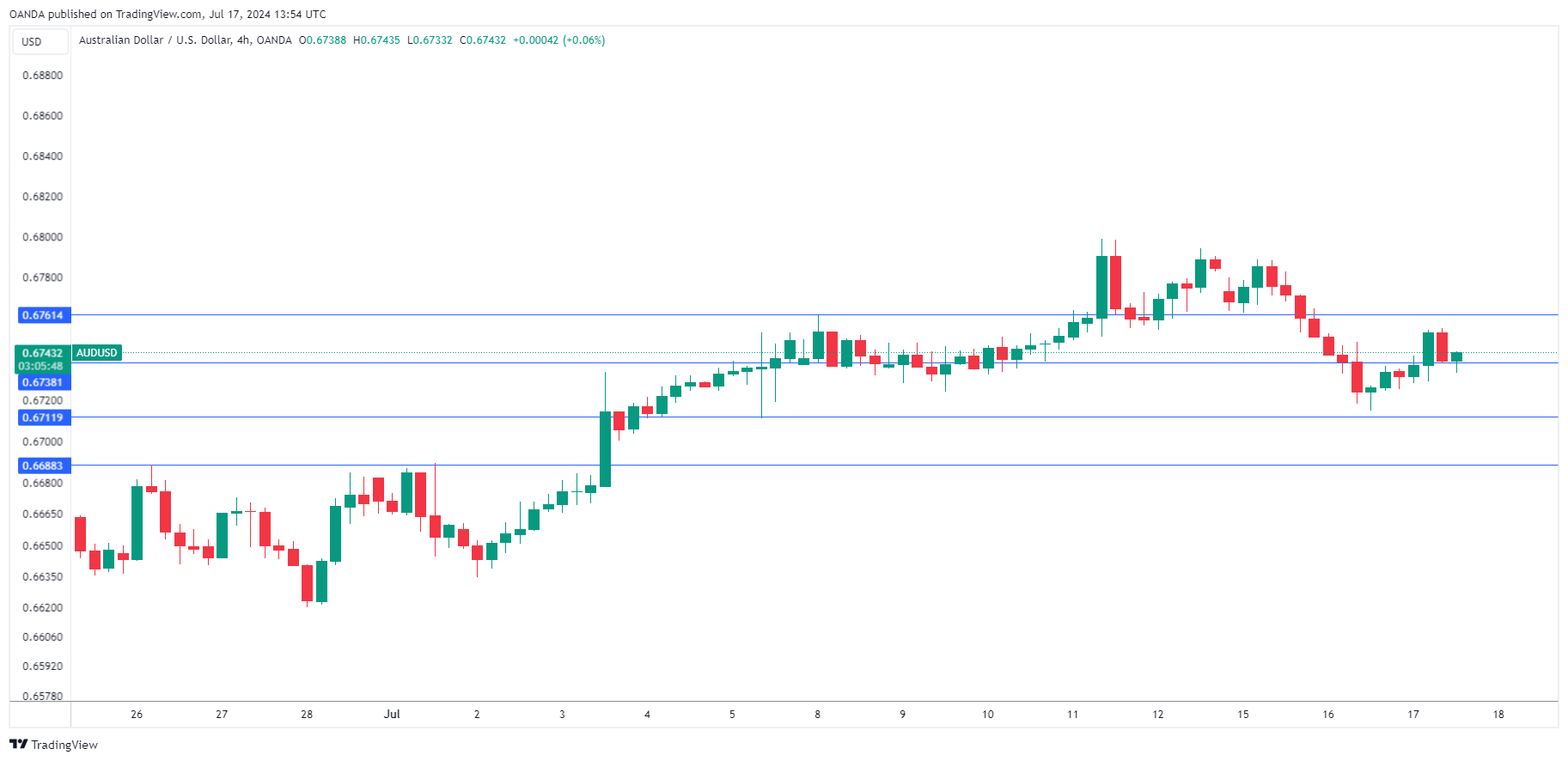
The Australian dollar is steady on Wednesday. AUD/USD is trading at 0.6743 early in the North American session, up 0.08% on the day.
Australia releases the June employment report early on Thursday. The market estimate stands at 20 thousand, compared to 39.7 thousand in May, which was a three-month high. The labor market has been tight, supporting the case for the Reserve Bank of Australia to avoid lowering interest rates.
Inflation hasn’t fallen as quickly as the RBA had hoped and unexpectedly rose in June from 3.6% to 4%, the highest level this year. The acceleration in inflation has policy makers concerned and the cautious RBA has kept the possibility of a rate hike on the table. The central bank has maintained the cash rate at 4.35% since December 2023 and a rate cut looks unlikely in the near term, barring an unexpected decline in inflation. The markets have priced in a 15% likelihood of a rate cut at the next meeting on August 6, according to the ASX RBA rate tracker.
We’ll hear from a host of Federal Reserve officials during the remainder of the week, and the markets will be hoping for insights about upcoming rate decisions. On Tuesday, Fed Governor Adriana Kugler said she was “cautiously optimistic” that inflation was returning the 2% target, noting that recent inflation readings have been softer than expected and wage growth has eased. Kugler didn’t provide a time line for a rate cut but said it would be appropriate to lower rates “later this year”.
AUD/USD Technical
- AUD/USD is testing resistance at 0.6738. Above, there is resistance at 0.6761
- 0.6711 and 0.6688 are the next support levels
Sunset Market Commentary
Markets
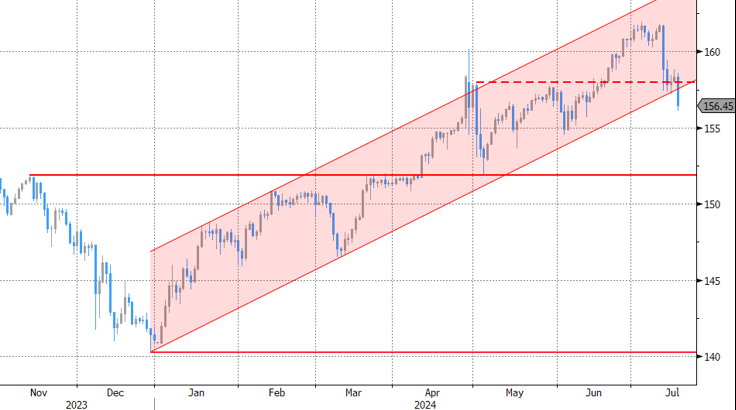
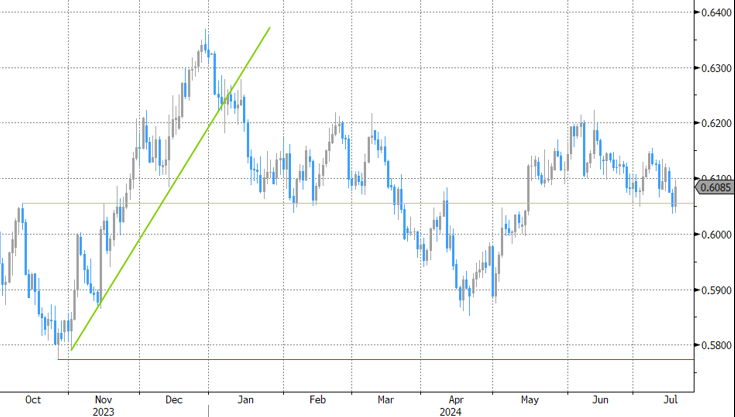
After last-week’s softer than expected US CPI data, global investors gained ever greater confidence that the Fed will embark for a genuine, protracted easing cycle soon. Yields turned south, especially at the short end of the (US) yield curve. The dollar faced an uphill battle, but losses after all remained modest. Key support levels mostly survived. Even as (US) yields steadied, FX markets today tried/succeded some kind of catching up move. Remarkably, this USD decline occurred even as equities mostly trade in red, pondering the impact of a protectionist Trump trade policy regarding IT-related exports to China (amongst others). It has been different of late and a yen rebound after presumed BOJ interventions stalled earlier this week. Even so, today the Japanese currency was first to profit from a weak USD and forced the break. USD/JPY dropped below the 157.19 correction low, triggering further stop-loss unwinding of stale yen-short/USD-long positions. At 156.40, USD/JPY trades about 3.5% below the multi-year peak touched early this month. The euro isn’t the front-runner to profit from the USD setback, but the USD/JPY decline also pushed EUR/USD beyond 1.0916/20 resistance (currently 1.0945). The 1.0981 March top is the last stop before the 1.10 barrier. The broader USD decline and easing of global financing conditions broadly supports smaller currencies that are often sensitive to global (risk)sentiment (NOK, SEK, AUD, CAD and NZD, the latter after mixed domestic CPI data). In CEE, the Czech krone and the forint also succeded modest gains. The zloty, regional outperformer YTD, for the second day in row lost ground. We saw no obvious trigger for PLN underperformance. The technical break in several major USD cross rates is noteworthy, but we look out whether/how long this combination of USD-weakness and equity risk-off lasts.
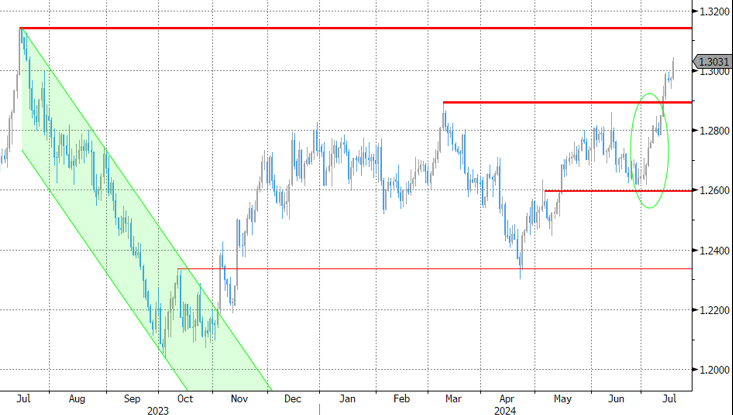
Cable (1.3035) today was squeezed beyond the 1.30 barrier, a level last seen this time last year. Aside from USD weakness, sterling strength was also in play. The UK currency of late profited from a return of political stability after the UK Parliamentary election. Today, UK inflation data didn’t provide a clear trigger for the BoE to aggressively downsize sterling’s interest rate support anytime soon. At 0.1% M/M and 2% Y/Y, UK inflation for the second consecutive month matched the BoE target. Still, core- 3.5 % Y/Y and services inflation (5.7% Y/Y) flagged a clear warning signal that there is some work to do for the BoE. The minutes of the June meeting showed that the unchanged decision at that time was a rather close call as several members wanted to gradually scale back policy restriction. Today’s data don’t make it easier for ‘middle-of-the-road’ MPC members to change camp already at the August meeting. UK monetary policy is again drifting closer to the Fed’s path rather than to an ECB scenario. UK yields added between 3.5 bps (2-y) and 2.5 bps (30-y). The market now only sees a <40% chance on an August rate cut vs almost 50% before to data. UK labour data (tomorrow) and retail sales (Friday) might further finetune the debate. EUR/GBP (0.8385) is trading at the lowest level in almost 2-year with the Augst 2022 low (0.834) the next reference on the technical charts.
News & Views
Belgian newspaper De Tijd reports that Belgium is running a €27.8bn budget deficit according to preliminary data by the Budget Monitoring Committee in preparation of federal formation talks (4.6% of GDP). That’s close to the €27.5bn estimated by the outgoing government. For next year, the deficit is expected to widen to €29.4 bn. Under unchanged policy settings, this rises to €46.5bn by 2029 (vs previous estimate of €45bn). The lion share of these deficits are on a federal rather than regional level. To comply with EU rules, the federal government needs to finds €27.6bn by 2029.
An analysis by the National Bank of Poland showed that domestic companies expect their financial conditions to worsen in Q3 amid demand worries. A particularly clear weakening of demand forecasts was noted in consumer services and in the construction industry. Companies lowered their employment forecasts and reduced their planned increase in salaries. The number of companies planning new investment has decreased as well.
Graphs
USD/JPY: Yen taking the lead on broad USD correction
Cable (GBP/USD) jumping beyond 1.30 for the first time in a year as BoE maybe won’t be able to frontrun Fed policy easing.
NZD/USD: mixed New Zealand inflation report raises doubts on August RBNZ rate cut. Kiwi dollar rebounds.
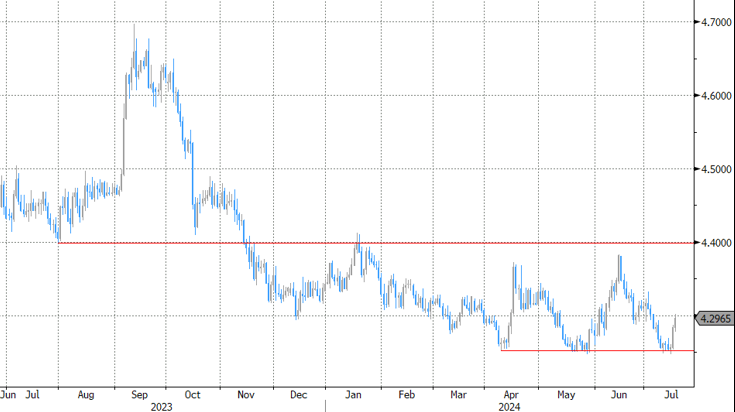
EUR/PLN: zloty underperforms as EUR/PLN 4.25 proves tough support (zloty resistance).
EUR/CHF Technical: Euro Underperformance Over Swiss Franc May Have Resumed
- The recent 4-week rally of EUR/CHF from 19 June has started to show signs of exhaustion.
- The ongoing weakness of the France CAC 40 has triggered a negative feedback loop towards EUR/CHF.
- Watch the 0.9780 key short-term resistance on the EUR/CHF.
The EUR/CHF cross pair has managed to recover its initial losses inflicted from 10 June to 19 June that has been triggered by the political uncertainties from the abrupt French legislation snap election announcement made by French President Macron on 9 June.
It has rallied by 295 pips/3.10% from the 19 June low to hit an intraday high of 0.9774 on 15 July on the onset of the 2nd round of the French legislation election on 7 July which resulted in a hung parliament as neither party (far-right, far-left, and Marcon’s centrist alliance) managed to gain a single majority foothold.
Weakness in the French stock market has stalled the rally in EUR/CHF
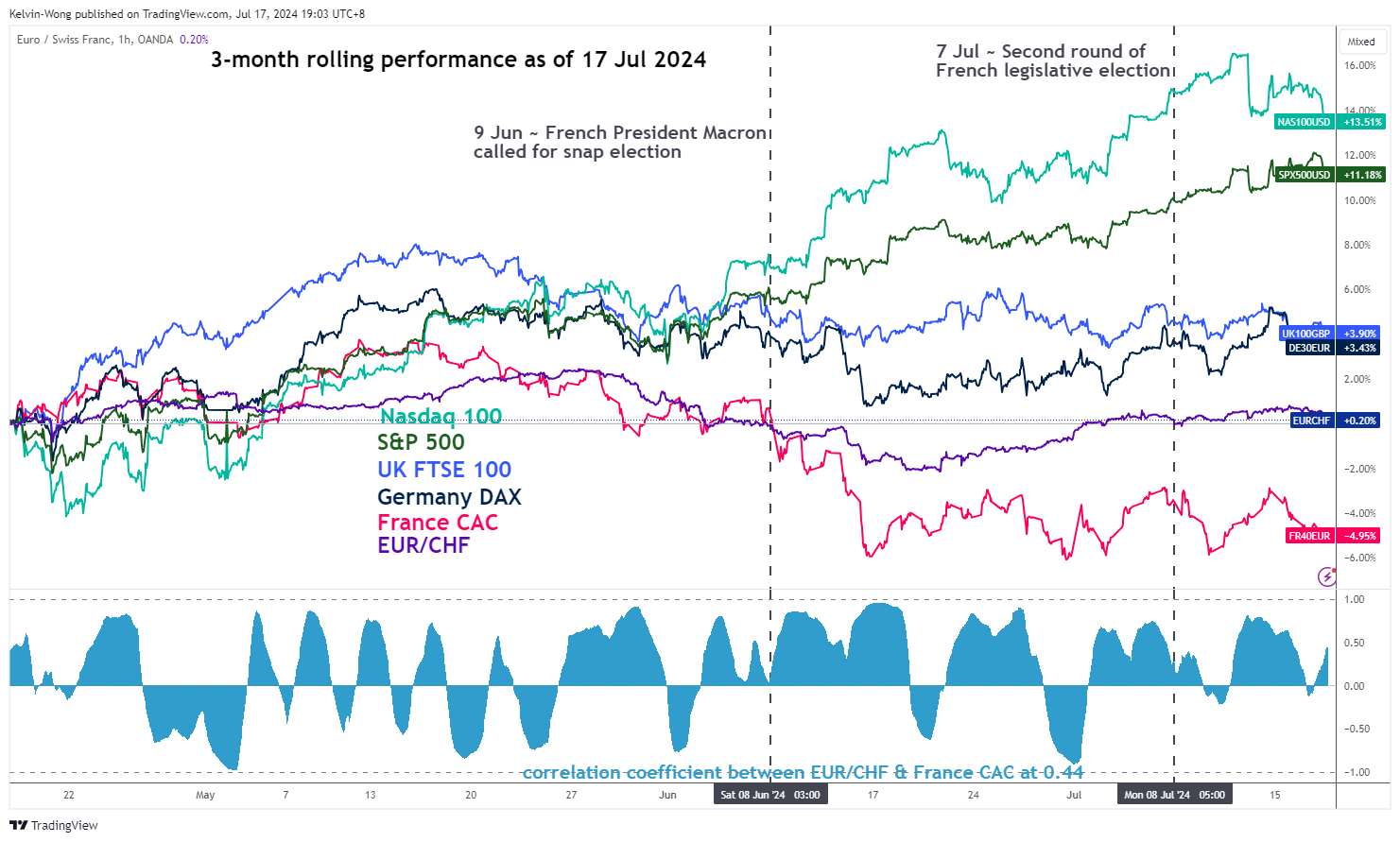
Fig 1: 3-month rolling performance CAC 40, EUR/CHF & other major stock indices (US, Germany, UK) as of 17 July 2024 (Source: TradingView, click to enlarge chart)
Based on a three-month rolling performance time frame, the French benchmark stock index, CAC 40 has continued to languish ex-post 2nd round of the Fench legislation election. It has recorded a loss of -5% at this time of the writing and underperformed against the German DAX (+3.45%), UK FTSE 100 (+3.90%), US S&P 500 (+11.17%), and US Nasdaq 100 (+13.50%) over the same period (see Fig 1).
Interestingly, the current weakness seen in the French CAC 40 seems to have a negative feedback loop cascading effect on the EUR/CHF as its 60-period rolling correlation coefficient has increased significantly to 0.44 from -0.11 seen previously on Tuesday, 16 July.
Bearish momentum condition detected in EUR/CHF
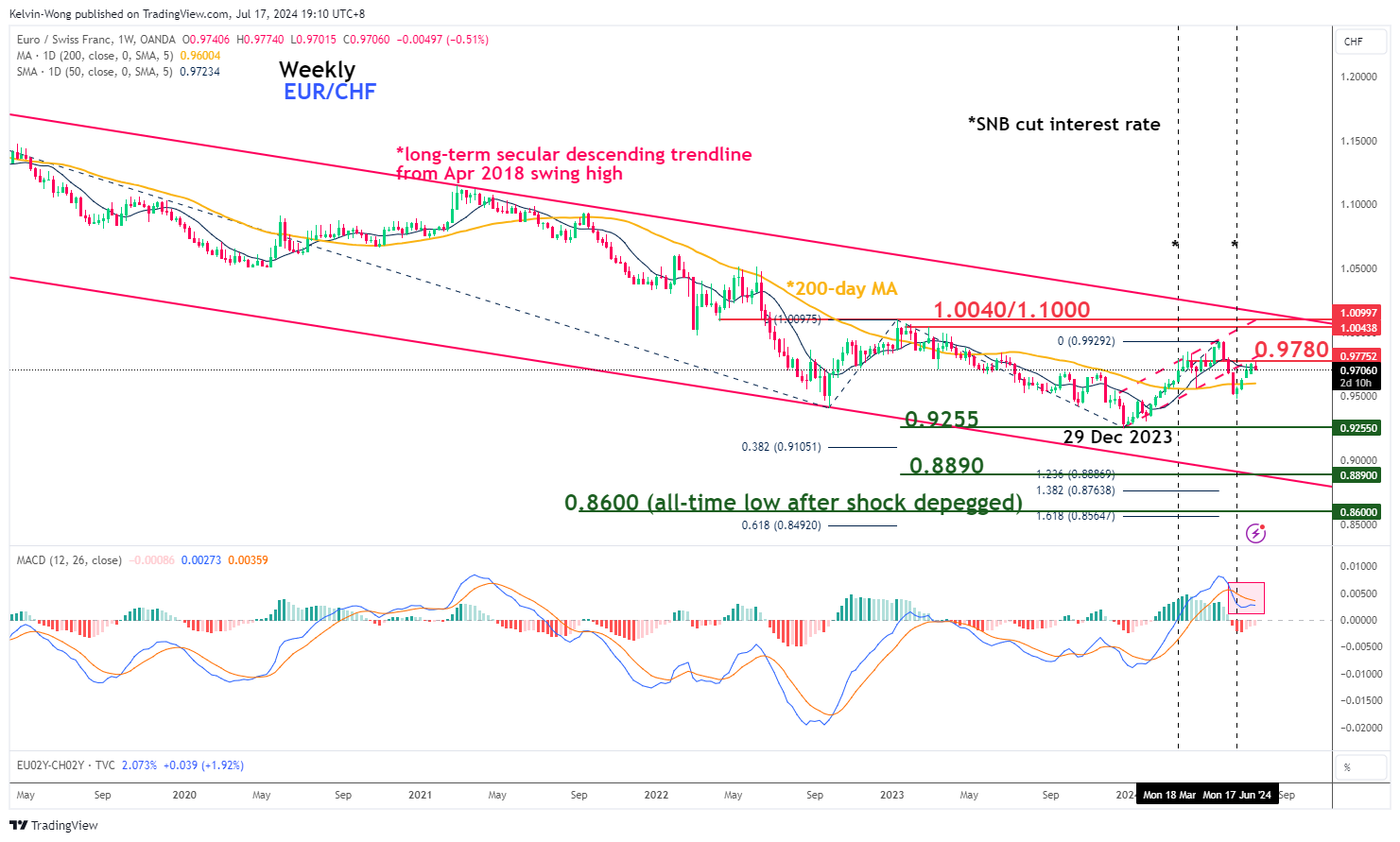
Fig 2: EUR/CHF major trend as of 17 Jul 2024 (Source: TradingView, click to enlarge chart)
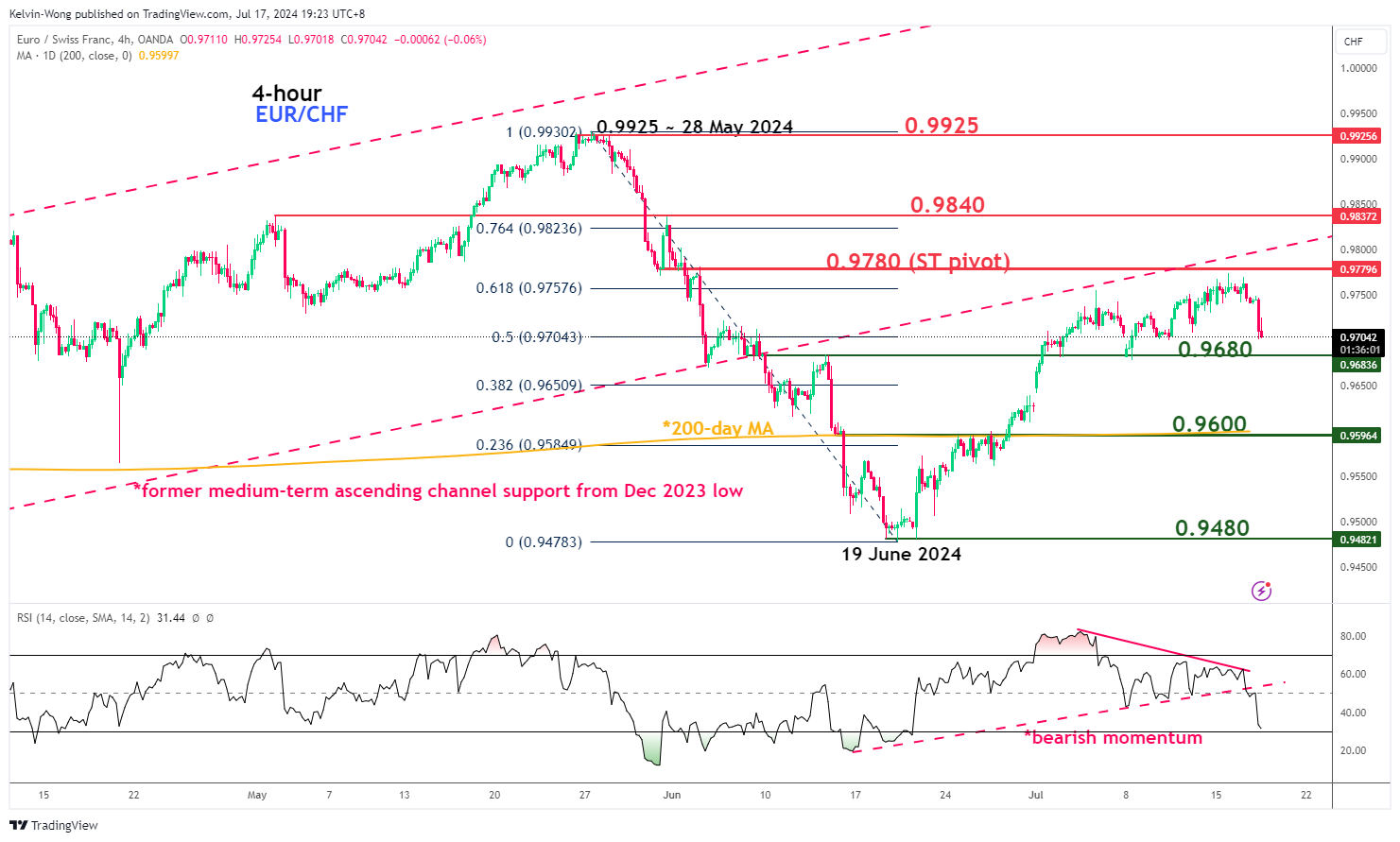
Fig 3: EUR/CHF short-term trend as of 17 Jul 2024 (Source: TradingView, click to enlarge chart)
The prior 4-week rally of EUR/CHF from 19 June to 15 July has stalled at a key resistance area of 0.9780 which confluences with the former medium-term ascending channel support from 29 December 2023 low and the 61.8% Fibonacci retracement of the most recent decline from 28 May 2024 high to 19 June 2024 low.
In addition, the weekly MACD trend indicator and its signal line have continued to inch downward after a bearish crossover signal flashed out on the week of 10 June (see Fig 2).
Also, the shorter-term 4-hour RSI momentum indicator has just staged a bearish momentum breakdown below its former ascending support on Tuesday, 16 June after a prior bearish divergence condition seen at its overbought zone.
These observations suggest that short to medium-term bearish momentum conditions have resurfaced on the EUR/CHF.
If the 0.9780 key short-term pivotal resistance is not surpassed to the upside, and a break below 0.9680 near-term support may see further weakness on the EUR/CHF to expose the next intermediate supports at 0.9600 (also the 200-day moving average) and 0.9480 in the first step (see Fig 3).
On the other hand, a clearance above 0.9780 negates the bullish tone for the next intermediate resistances to come in at 0.9840 and 0.9925.
USD/JPY Mid-Day Outlook
Daily Pivots: (S1) 157.93; (P) 158.39; (R1) 158.88; More...
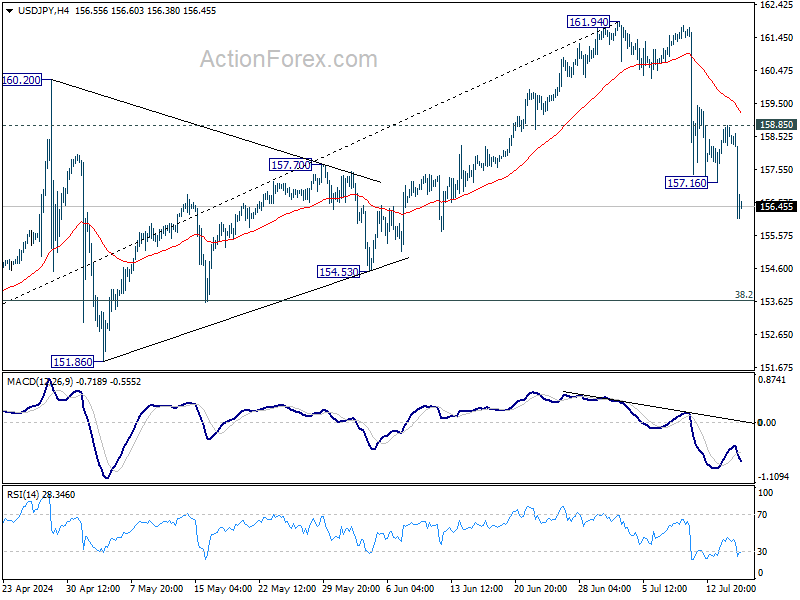
USD/JPY's fall from 161.94 resumed by breaking through 157.16 support and intraday bias is back on the downside. Current decline is seen as correcting whole rally from 140.25. Sustained trading below 55 D EMA (now at 157.72) will bring deeper correction to 38.2% retracement of 140.25 to 161.94 at 163.65. On the upside, above 158.85 resistance will turn bias back to the upside for stronger rebound instead.
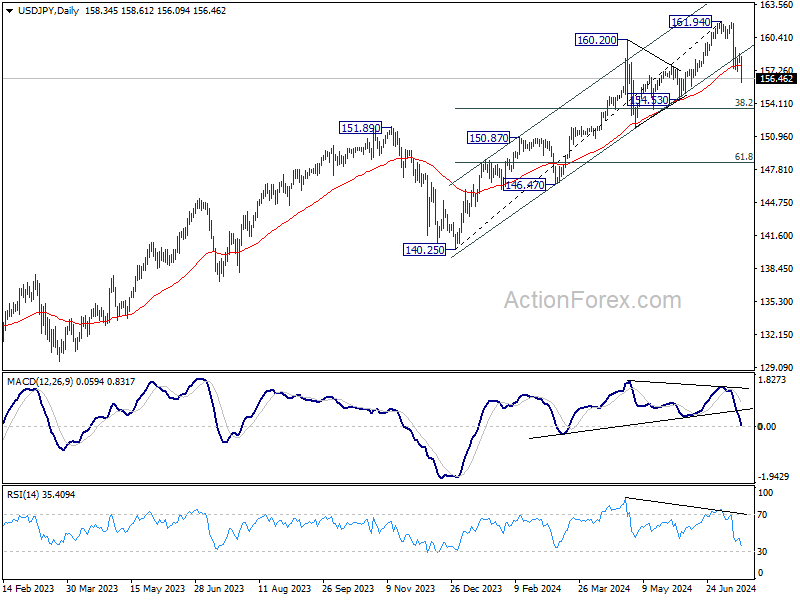
In the bigger picture, as long as 151.89 resistance turned support holds, long term up trend could still continue through 161.94 at a later stage. Next target will depend on the depth of the current correction from 161.94. However, sustained break of 151.89 will argue that larger scale correction or trend reversal is underway.
USD/CHF Mid-Day Outlook
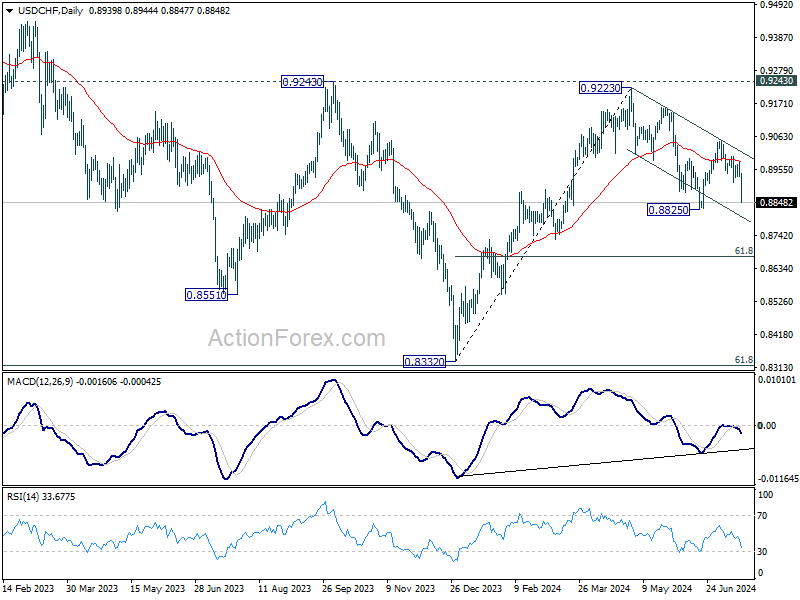
Daily Pivots: (S1) 0.8922; (P) 0.8951; (R1) 0.8967; More…
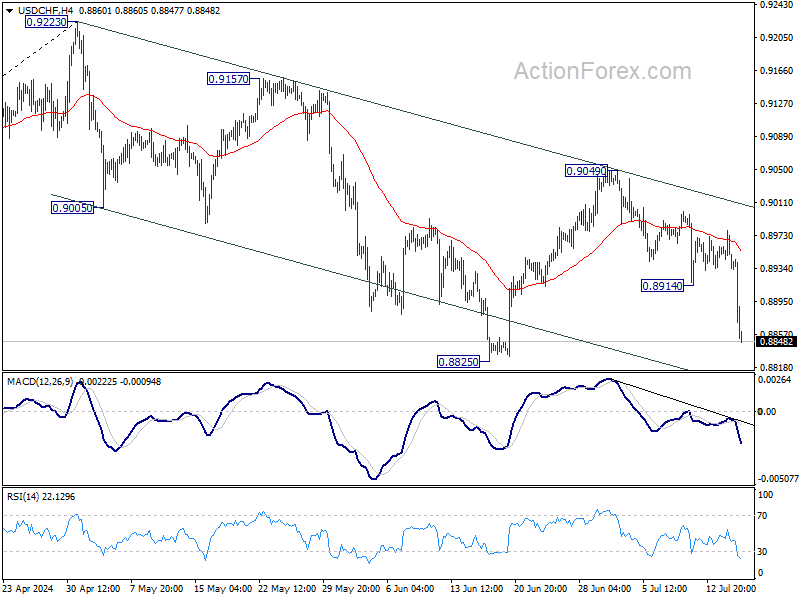
Intraday bias in USD/CHF is back on the downside as fall from 0.9049 resumed through 0.8914 temporary low. Deeper decline is expected to retest 0.8825 support next. Firm break there will resume whole fall from 0.9223 and target 60% retracement of 0.8332 to 0.9223 at 0.8672 next. On the upside, above 0.8914 support turned resistance will turn intraday bias neutral first.
In the bigger picture, with 0.9243 resistance intact, medium term outlook in USD/CHF is neutral at best. For now, more sideway trading is likely between 0.8332/9243. However, firm break of 0.9243 will indicate larger bullish trend reversal.