

Sample Category Title
US 500 Index Buying Interest in Progress
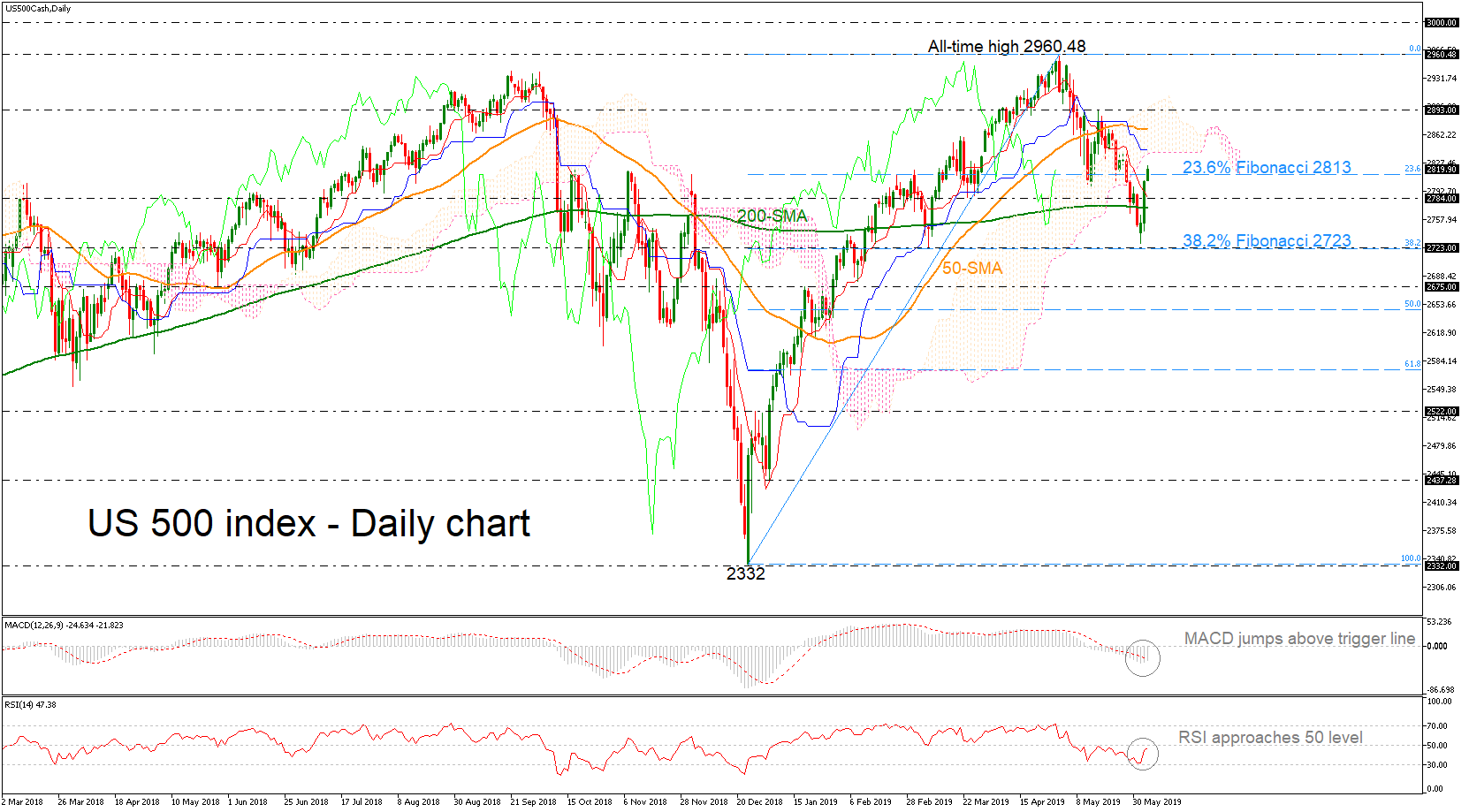
The US 500 stock index has rebounded somewhat after falling to a three-month low of 2728.50 and the momentum indicators suggest that the market sentiment might get better as the RSI is reversing back to the upside and the MACD also looks to be changing direction, moving down to meet its red signal line in the negative zone.
Should bullish dynamics dominate, the market might revisit the lower surface of the Ichimoku cloud and the flat Kijun-sen line currently at 2840. Above that, the area around the 50-day moving average near 2870 which halted upside movements, could be another potential barrier in focus, while steeper increases may overcome that point to test 2893.
Alternatively, if the price manages to fall below the 23.6% Fibonacci of the upleg from 2332 to 2960.48 of 2813, nearby support could come from the previous low around the 38.2% Fibonacci of 2723. Further down, the index could rest around the 2675 support level.
In the short-term picture, the downfall from 2960.48 is still active and hence the outlook remains negative. However, if the price jumps above the 50-day SMA, it could shift the bias back to strong bullish.
EUR/USD Mid-Day Outlook
Daily Pivots: (S1) 1.1227; (P) 1.1252; (R1) 1.1277; More.....
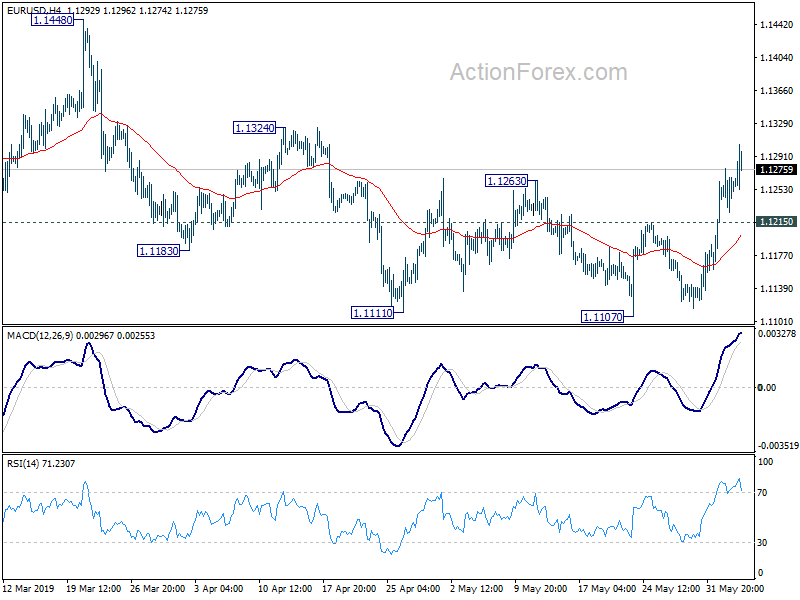
EUR/USD reaches as high as 1.1304 so far today. Break of 1.1263 resistance at least indicate completion of the decline from 1.1448 at 1.1107. Intraday bias is now back on the upside for 1.1448 key resistance next. On the downside, break of 1.1215 resistance support is now needed to indicate completion of rise from 1.1107. Otherwise, further rally will remain mildly in favor even in case of retreat.
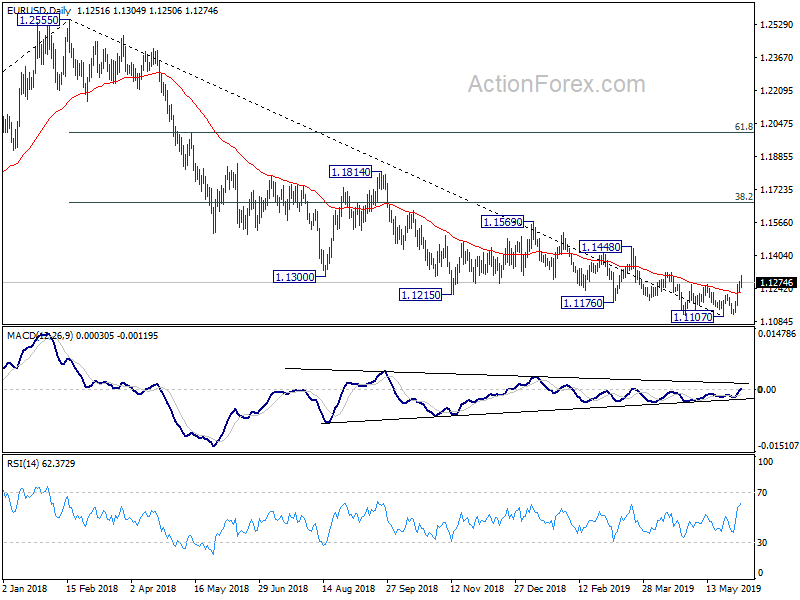
In the bigger picture, down trend from 1.2555 (2018 high) might still be in progress. Such decline would target 78.6% retracement of 1.0339 (2016 low) to 1.2555 (2018 high) at 1.0813 on resumption. However, break of 1.1448 resistance would confirm medium term bottoming, on bullish convergence condition in daily MACD. In such case, stronger rebound should be seen to 38.% retracement of 1.2555 to 1.1107 at 1.1660. We'd look at the structure of the rebound to decide whether it's a corrective rise later.
GBP/USD Mid-Day Outlook
Daily Pivots: (S1) 1.2656; (P) 1.2686; (R1) 1.2729; More....
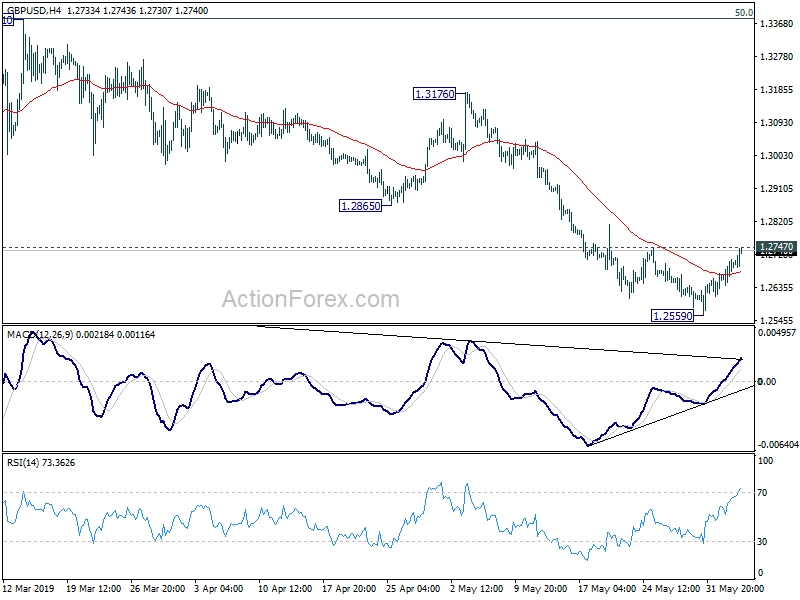
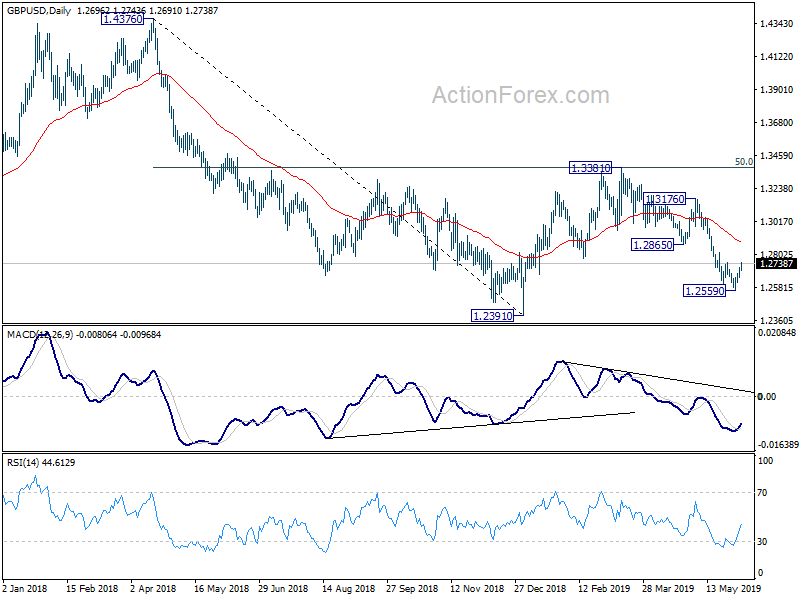
Current development suggests that a short term bottom is formed at 1.2559 on bullish convergence condition in 4 hour MACD. Stronger rebound could be seen. But upside should be limited by 1.2865 support turned resistance to bring fall resumption. On the downside, break of 1.2559 will extend the decline from 1.3381 for 1.2391 low first. However, sustained break of 1.2865 will indicate completion of fall from 1.3381. In that case, corrective pattern from 1.2391 would be in another rising leg through 1.3381 resistance.
In the bigger picture, medium term decline from 1.4376 (2018 high) is possibly ready to resume. Decisive break of 1.2391 would target a test on 1.1946 long term bottom (2016 low). For now, we don't expect a firm break there yet. Hence focus will be on bottoming signal as it approaches 1.1946. In any case, medium term outlook will stay bearish as long as 1.3381 resistance holds, in case of strong rebound.
USD/JPY Mid-Day Outlook
Daily Pivots: (S1) 107.87; (P) 108.12; (R1) 108.40; More...
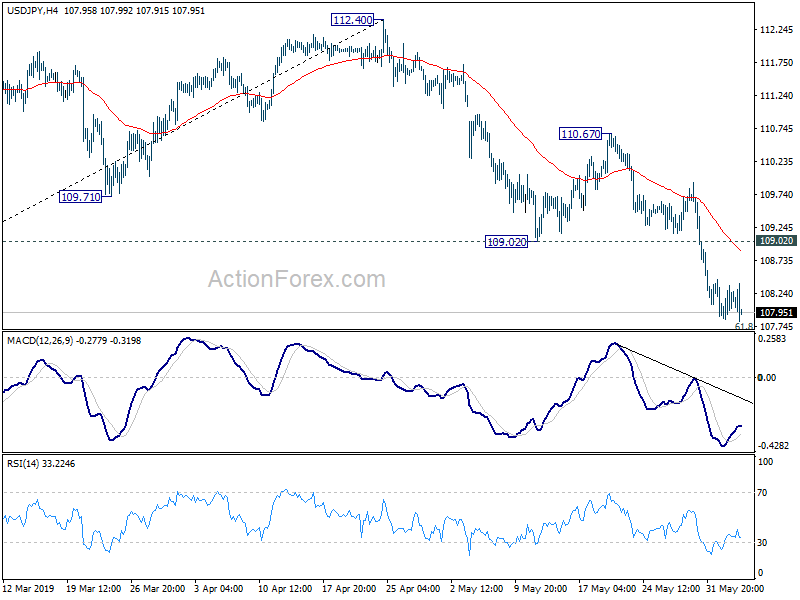
No change in USD/JPY's outlook. While it's losing downside momentum as seen in 4 hour MACD there is no sign of bottoming yet. Further decline should be seen and sustained break of 61.8% retracement of 104.69 to 112.40 at 107.63 will pave the way back to 104.62/9 key support zone. Though, break of 109.02 support turned resistance will indicate short term bottoming and bring lengthier consolidations first.
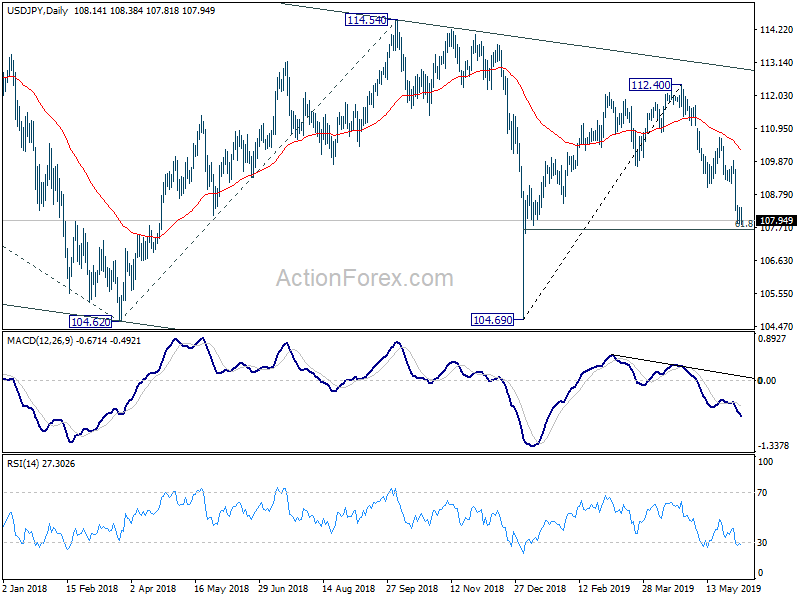
In the bigger picture, decline from 118.65 (Dec 2016) is still in progress, with the pair staying indicate long term falling channel. Break of 104.62 will target 100% projection of 118.65 to 104.62 from 114.54 at 100.51. For now, we'd expect strong support above 98.97 (2016 low) to contain downside to bring rebound.
USD/CHF Mid-Day Outlook
Daily Pivots: (S1) 0.9898; (P) 0.9927; (R1) 0.9953; More...
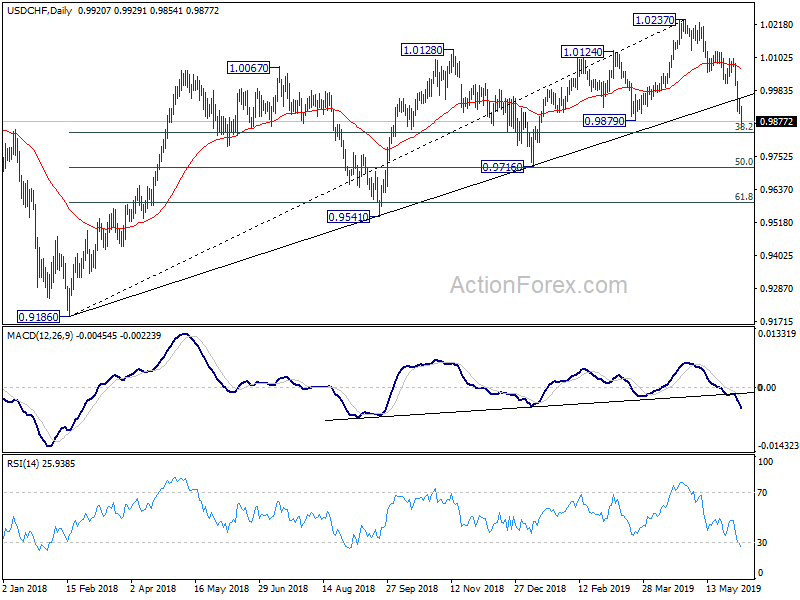
USD/CHF drops further to as low as 0.9854 so far and intraday bias remains on the downside. Break of 0.9879 support, now suggests that whole up trend from 0.9186 has completed at 1.0237. Further fall should be seen to 0.9716 cluster support (50% retracement of 0.9186 to 1.0237 at 0.9712). On the upside, break of 0.9929 minor resistance will turn intraday bias neutral first. But recovery should be limited by 1.0008 support turned resistance to bring fall resumption.
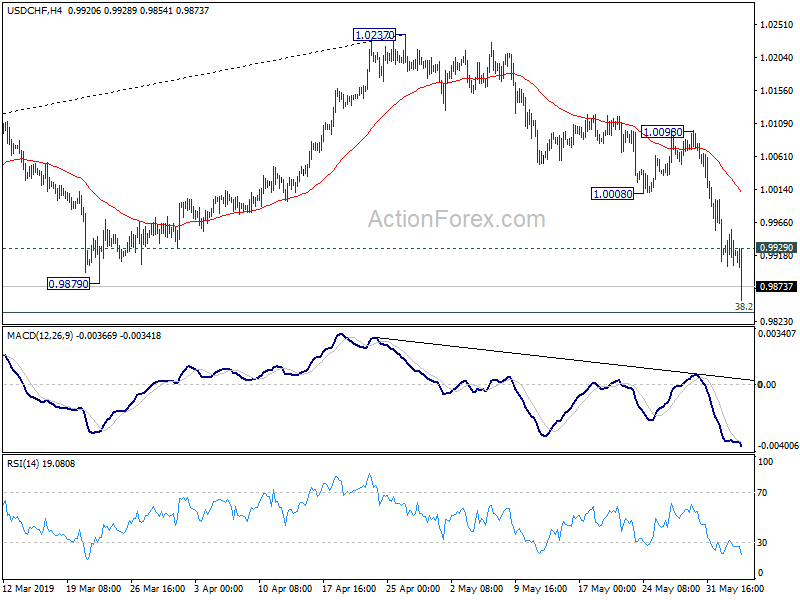
In the bigger picture, USD/CHF's break of long term trend line support is the first indication of medium term reversal. Focus is now back on 0.9879 support. Sustained break should confirm that medium term up trend from 0.9186 has completed at 1.0237 already. Further fall should be seen to 0.9716 cluster support (50% retracement of 0.9186 to 1.0237 at 0.9712) next. Break will target 61.8% retracement at 0.9587.
Dollar Selloff Extends on Poor ADP Job, Yields Dive Again
Dollar suffers another round off selloff after terribly poor ADP job data, which showed only 27k growth in May. 10-year yield also takes a steep dive breaching Monday's low at 2.081. Gold breaks 1344 and is on track to take on 1346.71 resistance. The poor data adds to speculation that Fed would be forced to at least an "insurance cut" later this year, if job markets worsen.
However, we'd like to point out again that Fed Chair Jerome Powell just promised to "act as appropriate" to economic developments. A rebound in unemployment rate of 3.60% isn't a disaster. Meanwhile, tariffs on Chinese imports might not have brought any surge in inflation, but how about Mexican goods? The developments ahead remain fluid. And judging from today's reaction, falling yields and stocks paring gains, a Fed cut shouldn't be something to cheer for neither.
For today, Dollar is now the clear loser, followed by Australian Dollar and then Canadian. New Zealand Dollar is the strongest one, followed by Swiss Franc and then Euro. Both the Franc and Yen are picking up momentum again on falling treasury yields. For the week, Dollar is the weakest followed by Yen. Kiwi is the strongest followed by Swiss.
Technically, Dollar bears are finally showing some aligned commitment. GBP/USD is set to take on 1.2747 minor resistance and break will at least confirm short term bottoming. EUR/USD has finally overcome 1.1263 resistance will conviction. 1.1448 could be the next destination to determine medium term reversal USD/CHF's break of 0.9879 support already takes the lead in indicating medium term reversal. Next is 0.9716 support.
In Europe, FTSE is currently up 0.17%. DAX is down -0.07%. CAC is up 0.24%. German 10-year yield is continuing to make record low, down -0.014 at -0.220. Earlier in Asia, Nikkei rose 1.80%. Hong Kong HSI rose 0.50%. China Shanghai SSE dropped -0.03%. Singapore Strait Times rose 0.61%. Japan 10-year JGB yield dropped -0.0249 to -0.126
US ADP employment rose 27k only, small businesses lost jobs
US ADP report shows only 27k private sector job growth in May, way below expectation of 185k. Looking at the details, small businesses lose -52k job, offsetting 11k growth in medium business and 68k in large businesses. Goods producing sectors lost -43k jobs, while service-providing sector gained 71k.
"Following an overly strong April, May marked the smallest gain since the expansion began," said Ahu Yildirmaz, vice president and co-head of the ADP Research Institute. "Large companies continue to remain strong as they are better equipped to compete for labor in a tight labor market."
Mark Zandi, chief economist of Moody's Analytics, said, "Job growth is moderating. Labor shortages are impeding job growth, particularly at small companies, and layoffs at brick-and-mortar retailers are hurting."
EU Dombrovskis: EDP on Italy is not just about procedure
European Commission Vice President Valdis Dombrovskis said the Commission concluded that Italy's debt criterion is not complied with and there fore a "debt-based excessive deficit procedure (EDP) is warranted". EDP is not opened today yet. And EU member states will give their views on the report on Italy first. Then, economic and financial committee has two weeks to form its opinion. He added "it's much more than just about the procedure, when we look at the Italian economy we see the damage that recent policy choices are doing."
The Commission estimated that Italy used EUR 2.2B more than expected to service its debt in 2018. And it's paying as much toward its debt servicing as it does toward its entire education system. Dombrovskis added "growth has come to almost a halt … and we now expect the Italian debt (to GDP) ratio to rise in 2019 and 2020 to over 135%."
Earlier today, coalition League's economic chief Claudio Borghi rejects fiscal tightening measures and warned that Economy Minister Giovanni Tria must take a "hard line on EU budget talks".
Eurozone retail sales dropped -0.4% mom, PPI slowed to 2.6% yoy
Eurozone retail sales dropped -0.4% mom in April, slightly better than expectation of -0.5% mom. Volume of retail trade decreased by 0.4% for food, drinks and tobacco and for non-food products, while automotive fuel increased by 0.1%. EU28 retail sales dropped -0.3% mom. In EU, volume decreased by 0.4% for non-food products and by 0.2% for food, drinks and tobacco and for automotive fuel.
Among Member States for which data are available, the largest decreases in the total retail trade volume were registered in Germany (-2.0%), Portugal (-1.0%) and Croatia (-0.9%). The highest increases were observed in Sweden (+2.4%), Slovenia (+2.0%) and Malta (+1.7%).
Eurozone PPI came in at -0.3% mom, 2.6% yoy in April, below expectation of 0.2% mom, 3.1% yoy. EU 28 PPI was at -0.1% mom, 2.9% yoy. The largest monthly decreases in industrial producer prices were recorded in Belgium (-1.7%), Italy (-1.5%) and Sweden (-0.8%), while the highest increases were observed in Denmark and Greece (both +1.2%), and Hungary (+0.9%). Annually, the highest increases in industrial producer prices were recorded in Romania (+6.7%), Hungary (+6.5%) and Latvia (+5.6%), while there were no decreases observed.
Eurozone PMI Composite finalized at 51.8, suggests 0.2% Q2 GDP growth only
Eurozone PMI services was finalized at 52.9, up from flash reading at 52.5 and April's final at 52.9. PMI Composite was revised up to 51.8, up from flash reading of 51.6 and April's final at 51.5. Among the countries, Italy PMI Composite improved to 49.9, 2-month high. France PMI Composite rose to 51.2, 6-month high. German PMI Composite rose to 52.6, 3-month high. But Spain PMI Composite dropped to 52.1, 66-month low.
Chris Williamson, Chief Business Economist at IHS Markit said: "Despite output at goods and service providers collectively rising at a slightly faster rate in May, the survey data are merely indicating a modest 0.2% rise in GDP in the second quarter... Furthermore, there seems little prospect of any immediate improvement: new orders barely rose in May, painting one of the gloomiest pictures of demand seen over the past six years, and companies' expectations of growth over the coming year likewise fell to one of the lowest in six years."
UK PMI services rose to 51.0, but pace of expansion remained disappointingly muted
UK PMI services rose to 51.0 in May, up from 50.4 and beat expectation of 50.6. Markit noted there was modest increase in business activity. New work rises for the first time since December 2018. But there was slowest rise in input costs for 12 months. All Sector PMI Index dropped to 0.7, down from 50.9. A sharp slowdown in manufacturing production growth and lower construction output more than offset an improvement in service sector business activity.
Chris Williamson, Chief Business Economist at IHS Markit, said: "PMI surveys collectively indicated that the UK economy remained close to stagnation midway through the second quarter as a result, registering one of the weakest performances since 2012... On a brighter note, optimism about the year ahead picked up to an eight-month high, in part reflecting an easing of near-term concerns due to the extension of the Brexit deadline to 31st October. However, it is clear that many businesses remain cautious in relation to spending and investing in the uncertain political environment, which is exacerbating the impact of a wider global economic slowdown on the UK."
IMF lowered China growth forecast on trade tensions, but no additional policy stimulus needed yet
IMF lowered growth forecast for China in 2019 to 6.2% (down from 6.3%). For 2020, growth forecast was cut to 6.0% (down from 6.1%). The IMF's First Deputy Managing Director, David Lipton, noted that the economy stabilized in early 2019 reflecting a wide range of policy support. However, "renewed trade tensions" is a "significant course of uncertainty" that weighs on sentiment.
However, IMF noted that "policy stimulus announced so far is sufficient to stabilize growth in 2019/20 despite the recent US tariff hike. " And "no additional policy easing is needed" for the moment, provided there are no further increases in tariffs or a significant slowdown in growth. However, if trade tensions escalate further, "some additional policy easing would be warranted.
China Caixin PMI Services dropped to 52.7, subdued expectations linked to ongoing China-US trade dispute
China Caixin PMI Services dropped to 52.7 in May, down from 54.5 and missed expectation of 54.2. PMI Composite dropped to 5.15, down from 52.7. Markit noted that "overall confidence towards the year ahead weakened to the lowest on record, which was primarily driven by weaker sentiment at manufacturers". Also, "expectations at goods producers were the least upbeat since the series began in April 2012", " services firms registered the lowest degree of confidence since July 2018".
And, "subdued expectations were often linked to the ongoing China-US trade dispute and relatively subdued global demand conditions."
Australia GDP grew 0.4% in Q1, driven mainly by government spending
Australian GDP grew 0.4% qoq in Q1, matched expectations. Annually, growth slowed to 1.8% yoy, down from 2.3% yoy and matched expectations too. But the details are rather weak. Government spending was the main contributor to growth, while rose 0.8%. Household spending slowed to 0.3% and contributed a modest 0.1%. And, dwelling investment contracted by -2.5% while slowing housing market has resulted in significant falls in ownership transfer costs. Non-mining investment rose 2.0% while mining investment dropped -1.8%.
Separately, RBA Head of Economic Analysis Alexandra Heath said in a report that "mining investment is probably around its trough and is likely to pick-up gradually over the next year or so". And, "resource exports are also expected to contribute to GDP growth before plateauing at a new, higher level."
Also from Australia, AiG Performance of Services Index rose to 52.5 in May, up fro 46.5.
USD/CHF Mid-Day Outlook
Daily Pivots: (S1) 0.9898; (P) 0.9927; (R1) 0.9953; More...
USD/CHF drops further to as low as 0.9854 so far and intraday bias remains on the downside. Break of 0.9879 support, now suggests that whole up trend from 0.9186 has completed at 1.0237. Further fall should be seen to 0.9716 cluster support (50% retracement of 0.9186 to 1.0237 at 0.9712). On the upside, break of 0.9929 minor resistance will turn intraday bias neutral first. But recovery should be limited by 1.0008 support turned resistance to bring fall resumption.
In the bigger picture, USD/CHF's break of long term trend line support is the first indication of medium term reversal. Focus is now back on 0.9879 support. Sustained break should confirm that medium term up trend from 0.9186 has completed at 1.0237 already. Further fall should be seen to 0.9716 cluster support (50% retracement of 0.9186 to 1.0237 at 0.9712) next. Break will target 61.8% retracement at 0.9587.
Economic Indicators Update
| GMT | Ccy | Events | Actual | Forecast | Previous | Revised |
|---|---|---|---|---|---|---|
| 22:30 | AUD | AiG Performance of Service Index May | 52.5 | 46.5 | ||
| 01:30 | AUD | GDP Q/Q Q1 | 0.40% | 0.40% | 0.20% | |
| 01:30 | AUD | GDP Y/Y Q1 | 1.80% | 1.80% | 2.30% | |
| 01:45 | CNY | Caixin PMI Services May | 52.7 | 54.2 | 54.5 | |
| 07:45 | EUR | Italy Services PMI May | 50 | 49.8 | 50.4 | |
| 07:50 | EUR | France Services PMI May F | 51.5 | 51.7 | 51.7 | |
| 07:55 | EUR | Germany Services PMI May F | 55.4 | 55 | 55 | |
| 08:00 | EUR | Eurozone Services PMI May F | 52.9 | 52.5 | 52.5 | |
| 08:30 | GBP | Services PMI May | 51 | 50.6 | 50.4 | |
| 09:00 | EUR | Eurozone PPI M/M Apr | -0.30% | 0.20% | -0.10% | |
| 09:00 | EUR | Eurozone PPI Y/Y Apr | 2.60% | 3.10% | 2.90% | |
| 09:00 | EUR | Eurozone Retail Sales M/M Apr | -0.40% | -0.50% | 0.00% | |
| 12:15 | USD | ADP Employment Change May | 27K | 185K | 275K | |
| 12:30 | CAD | Labor Productivity Q/Q Q1 | 0.30% | 0.40% | -0.40% | |
| 13:45 | USD | Services PMI May F | 50.9 | 50.9 | ||
| 14:00 | USD | ISM Non-Manufacturing/Services Composite May | 55.5 | 55.5 | ||
| 14:30 | USD | Crude Oil Inventories | -0.3M | |||
| 18:00 | USD | Federal Reserve Beige Book |
US ADP employment rose 27k only, small businesses lost jobs
US ADP report shows only 27k private sector job growth in May, way below expectation of 185k. Looking at the details, small businesses lose -52k job, offsetting 11k growth in medium business and 68k in large businesses. Goods producing sectors lost -43k jobs, while service-providing sector gained 71k.
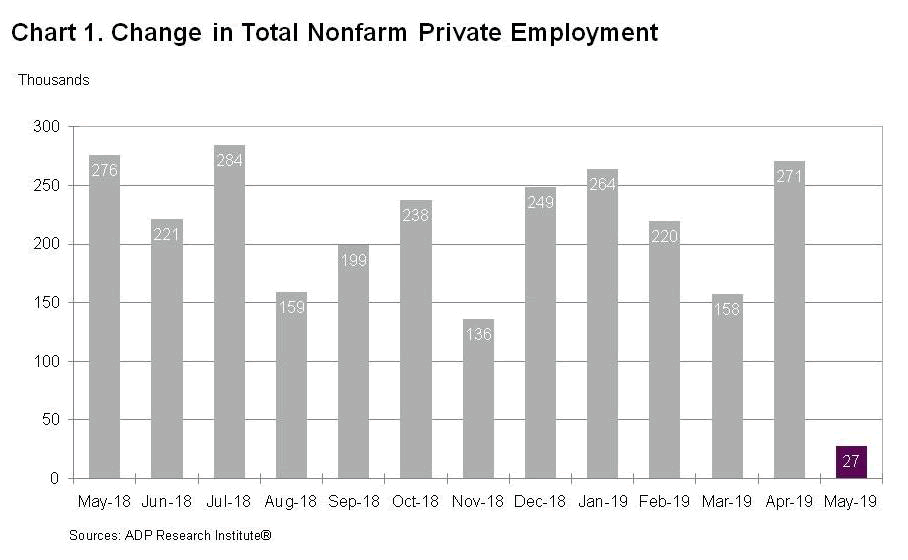
"Following an overly strong April, May marked the smallest gain since the expansion began," said Ahu Yildirmaz, vice president and co-head of the ADP Research Institute. "Large companies continue to remain strong as they are better equipped to compete for labor in a tight labor market."
Mark Zandi, chief economist of Moody's Analytics, said, "Job growth is moderating. Labor shortages are impeding job growth, particularly at small companies, and layoffs at brick-and-mortar retailers are hurting."
Rally Mode Continues on EU Data and Fed Rate Cut Expectations
Global equities are sharply higher after a wrath of European services PMI data showed most of the region remained in growth territory and continued momentum that the Fed will join the rest of the advanced economies’ central banks in delivering rate cuts. It appears markets are convinced the Fed will cut rates after yesterday’s stock rally saw the S&P 500 post its best gain in 5 months. On the trade front, no major developments occurred and that was good enough to keep a positive risk-on session overnight. Still in the UK, President Trump also delivered harsh tones towards Iran, noting military action is possible if Iran takes steps to get nuclear weapons. Trump has maintained a hard stance with Iran and his comments did not yield any major moves. Just before the open, Fed’s Kaplan delivered a wide range of comments on Bloomberg TV, that support the rate cut argument that June will be a hold, but July is live.
The Dow Jones Industrial Average is poised to open 0.6% higher, while the S&P 500 continues to advance from the pivotal 2,800 level, and the Nasdaq exits bear market territory with a 0.7% gain. The euro gave up all its gains and turned slightly negative to the dollar after the EU Commission recommended excessive deficit procedure against Italy. The rest of the high-betas have modest gains to the greenback.
- Italy – EU Triggers Disciplinary Process over Public Debt
- AUD – Annual Growth at Weakest Levels since Financial Crisis
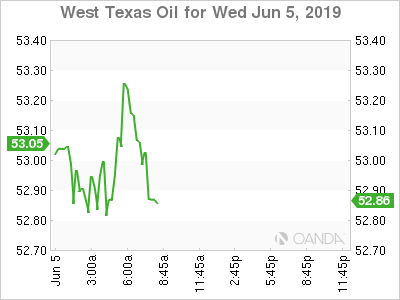
- Oil – Lower on higher American stockpiles and trade worries
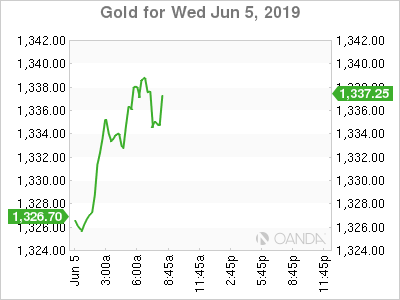
- Gold – Bullish Sentiment in place; rising along stocks
Italy
The European Commission began debt procedures against Italy, in what confirms the start of very lengthy battle between Brussels and Rome. The Commission’s report sees Italy’s debt ratio surging both this year and next to over 135%, mainly due to a snowball effect with current debt, falling primary surplus, and weak privatization proceeds.
The EU report also highlighted that France does not warrant disciplinary action as their deficit and debt are compliant. Greece was warned that they could fail to reach the post-bailout budget target this year, but their respective yields saw little reaction.
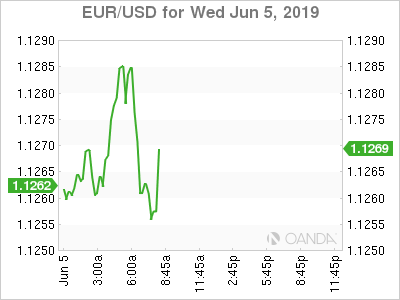
The market reaction to the European Commission Report saw Italian stocks fall and yield surge, with the 10-year yield rising 8.2 basis points to 2.594%. The euro also came off its highs, dropping around 30 pips to 1.1257.
AUD
The Reserve Bank of Australia (RBA) was correct in cutting rates earlier this week after dismal GDP data showed the slowest annual growth since the financial crisis. The Australian economy grew at 1.8% from a year earlier, in-line with analysts’ expectations, but at the weakest level in almost 10-years. It appears the housing slump has Aussies focused on saving money reducing their expenses.
Expectations for further rate cuts remain likely as weak income growth and falling house prices confirm the economy is losing its sound footing. The next couple of RBA meetings are live ones and we should probably expect another rate cut. The current implied probabilities show a 29.5% chance for the RBA to cut at the July 2nd meeting and a 61.6% chance at the August 6th policy decision.
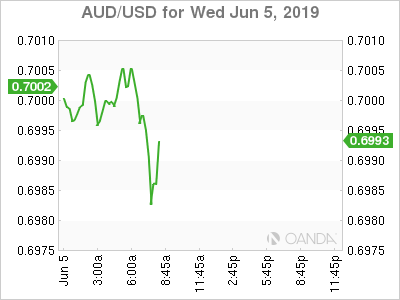
Despite all the concerns for a soft start in 2019 for the Australian economy, the currency is rallying mainly on expectations we are on the verge of seeing a softer dollar, as expectations surge the Fed will cut their own respective rates.
Oil
Crude prices continue to fall after the API weekly report showed inventories rose 3.55 million barrels, adding fuel to the fire of the bearish supply argument. Expectations are for the EIA crude inventory report to post a decline of 1.6 million barrels. If we see the EIA report surprisingly deliver a strong build like the API, crude could see another sharp selloff.
While trade and recession worries have played a major contributing factor to the recent slide, we are seeing some optimism that progress could emerge between the Chinese and Americans at the G20, which is at the end of the month. Combined with high expectations the Fed will cut rates and deliver soft landing for the US economy, we could see oil prices stabilize if we don’t see swelling inventory supplies of crude.
Gold
Gold prices rose 1.0%, despite a broad equity rally as investors pile on safe-haven bets in the event trade talks take a turn for the worst. The bullion rally is also firmly being supported by the Fed’s focus on whether and when to cut interest rates, which has the beginnings for a major dollar reversal.
DAX – Fed U-Turn Boosts Equity Markets
The DAX has gained ground on Wednesday, after posting sharp gains on Tuesday. Currently, the index is at 12,021, up 0.44% on the day. In economic news, German and eurozone services PMIs beat expectations, with scores of 55.4 and 52.9, respectively. Eurozone retail sales dropped 0.4%, its first decline in four months. On Thursday, the ECB is expected to maintain its key interest rate at a flat 0.00%.
The DAX plunged in May, falling by 5.0%. However, the index has rebounded in June, with gains of 2.5% so far this month. The catalyst for the sharp rise this week has been comments from senior Federal Reserve officials supporting a rate cut. In recent months, the Fed has tried to present an aura of neutrality regarding rate moves, but has taken a sharp U-turn this week in favor of an easing bias. On Tuesday, Fed chair Jerome Powell said that the Fed would “act as appropriate to sustain the expansion”, and analysts noted that he did not mention his “patient” approach to monetary policy, which has been a buzzword in Powell’s recent comments. This comes on the heels of comments from James Bullard, president of the St. Louis Fed. Bullard stated that the Fed might have to lower rates shortly due to low inflation and the ongoing trade war with China. Bullard added that the current benchmark rate, which is at a range of 2.25% to 2.50%, is too high for current economic conditions, and recommended lowering rates in order to stabilize the economy.
There were no surprises from European PMIs readings in May. The services sector continue to shows expansion in both Germany and the eurozone. The German release slowed to 55.4, down from the reading of 55.7 in April. It was a different story for manufacturing, as manufacturing PMIs pointed to contraction in Germany and the eurozone. Both indicators have been mired in contraction territory for most of 2019. This is a result of ongoing trade tensions, which have reduced global demand for German and eurozone exports, and dampened the manufacturing sectors.
Into US session: Yen weakest as risk-on continues, German yield hits another record low
Global stock markets are generally in risk-on mode today, riding on speculation of Fed rate cut. As Chair Jerome Powell indicated his openness on the topic yesterday, an insurance cut could come as soon as in September if US trade wars, with China and others, escalate. However, it's also pointed out that Powell just said Fed would "act as appropriate" only, without specifically talking about a cut. Impacts of trade wars could be rather complicated, in particular if Mexico is dragged into it. Trump could claim China subsidizes its products so there is no lift in inflation. But it's unsure if he thinks Mexico will do the same.
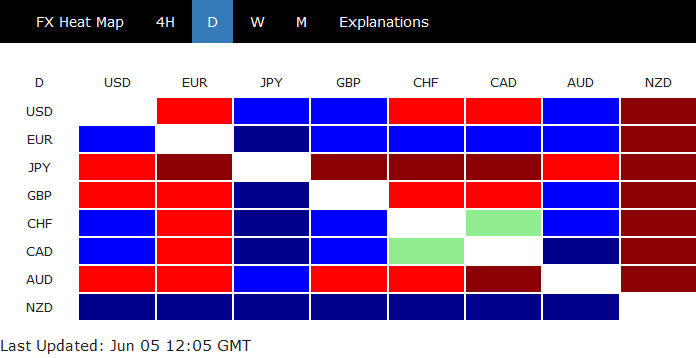
Anyway, entering into US session, Yen is the weakest one for today despite falling treasury yields. German 10-year bund yield has indeed hit another record low at -0.226. Australian Dollar is the second weakest one, followed by Sterling. New Zealand Dollar is the strongest one, followed by Euro. A lot of key events lie ahead, including ADP, ISM services, ECB tomorrow, and job data from US and Canada on Friday. A rough ride ahead is likely.
In Europe, currently:
- FTSE is up 0.49%.
- DAX is up 0.36%.
- CAC is up 0.56%.
- German 10-year yield is down -0.0108 at -0.217.
Earlier in Asia:
- Nikkei rose 1.80%.
- Hong Kong HSI rose 0.50%.
- China Shanghai SSE dropped -0.03%.
- Singapore Strait Times rose 0.61%.
- Japan 10-year JGB yield dropped -0.0249 to -0.126