

Sample Category Title
Summary 4/22 – 4/26
Monday, Apr 22, 2019
[php_everywhere instance="1"]
Tuesday, Apr 23, 2019
[php_everywhere instance="2"]
Wednesday, Apr 24, 2019
[php_everywhere instance="3"]
Thursday, Apr 25, 2019
[php_everywhere instance="4"]
Friday, Apr 26 2019
[php_everywhere instance="5"]
Can US Stock Markets Continue to Defy Gravity?
US equity markets have been on a tear in 2019, reclaiming lost ground to come within breathing distance of their all-time highs. The rally has been fueled mainly by the Fed putting its rate-hike plans on ice, though easing trade tensions and corporate buybacks helped as well. While stocks could advance even further and break new highs, the risks seem increasingly asymmetric, with gains looking limited if growth stays solid but losses severe in case fears of a recession make a comeback.
What a difference a few months make. Back in December, the decade-long rally in US equity markets looked ready to end, with the major stock indices suffering heavy losses amid concerns that we are approaching the final stages of this business cycle, and that a recession may be around the corner. Fading fiscal stimulus from the tax cuts, overtightening by the Fed, trade tensions, a slowdown in the housing market, and global weakness from Europe to China were all part of this narrative.
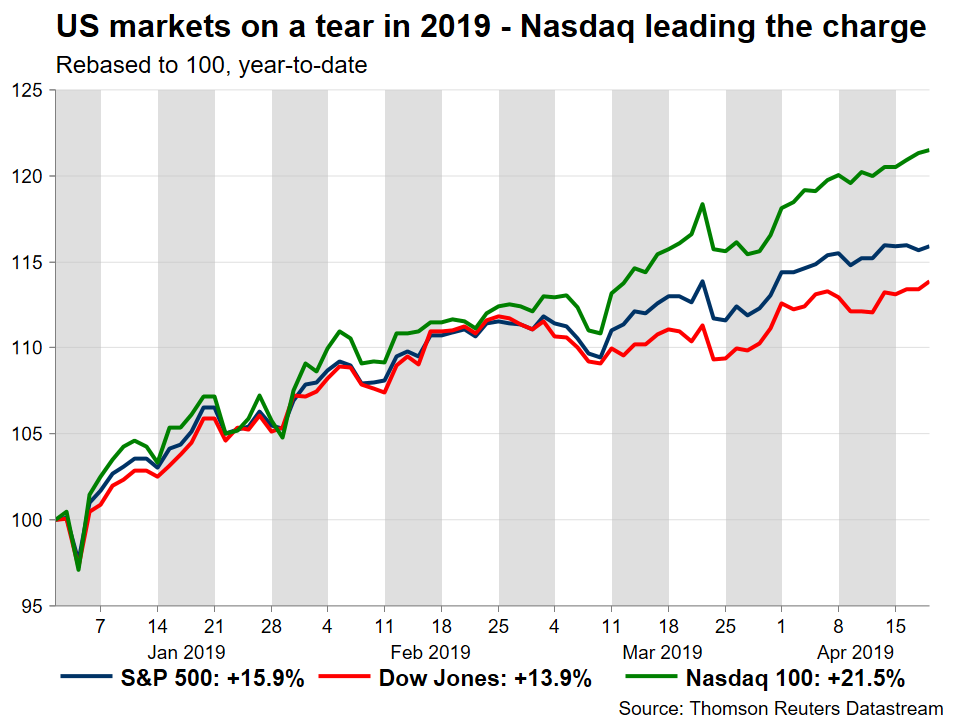
Fast forward to today. Fears of a recession have taken a back seat and US markets are flirting with their all-time highs, with the benchmark S&P 500 index gaining an astonishing 15.9% year-to-date.
What changed?
Fed to the rescue
In short, Fed policy changed. The US central bank made it clear it wouldn’t raise interest rates again for at least a few quarters while it monitors incoming data and the economy’s health. That was a sharp turn from the two rate hikes it had previously penciled in for 2019, which provided relief for stocks as lower borrowing costs tend to benefit risky assets.
In fact, market pricing has grown more pessimistic and currently indicates a ~50% probability for a Fed rate cut by December. This begs the question: if traders think there’s a good chance the most important central bank will cut rates soon in response to economic weakness, is the current equity rally sustainable?
Search for yield
It wasn’t just a cautious Fed that pushed investors towards riskier assets of course; signals of progress in the US-China trade negotiations no doubt helped. More broadly, one could argue that there’s no real alternative to stocks for now.
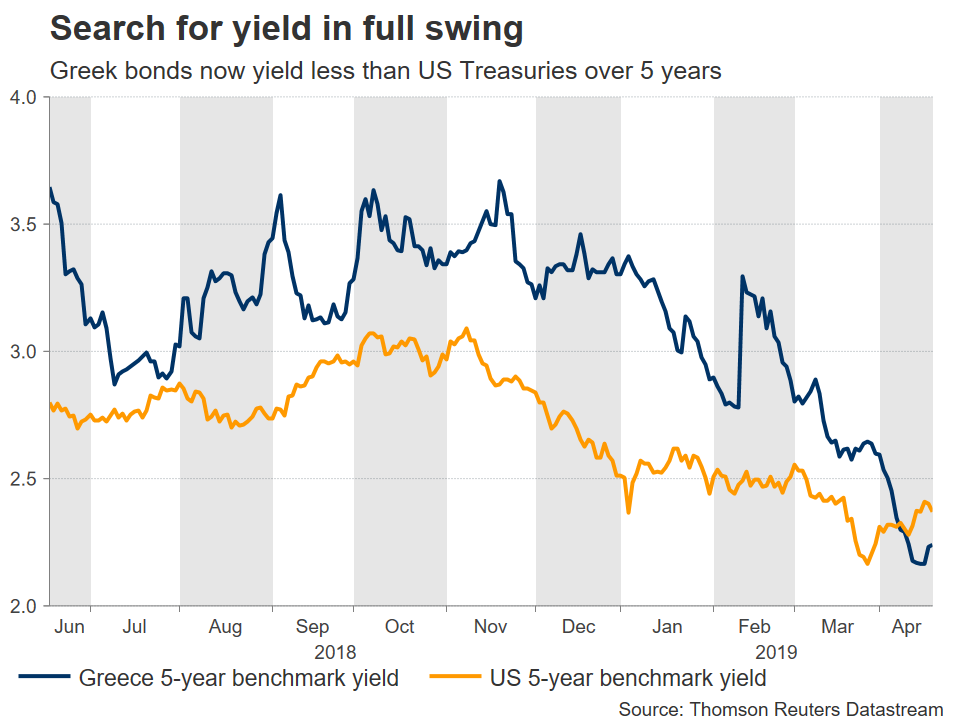
Bonds are particularly expensive, which means yields are low, providing very little or even negative real returns to investors when one accounts for inflation and currency hedging costs. Case in point, 5-year Greek government bonds now yield less than their US equivalents, which shows just how far the search for yield has gone.
Buybacks: Petal to the metal
Another major driver behind this rally has been the record pace of corporate stock buybacks. Companies buy their own stocks back from the market, decreasing the total number of stocks outstanding, and thus increasing the value of all remaining ones. By decreasing the supply of their stocks, they boost prices – providing immense support for markets.
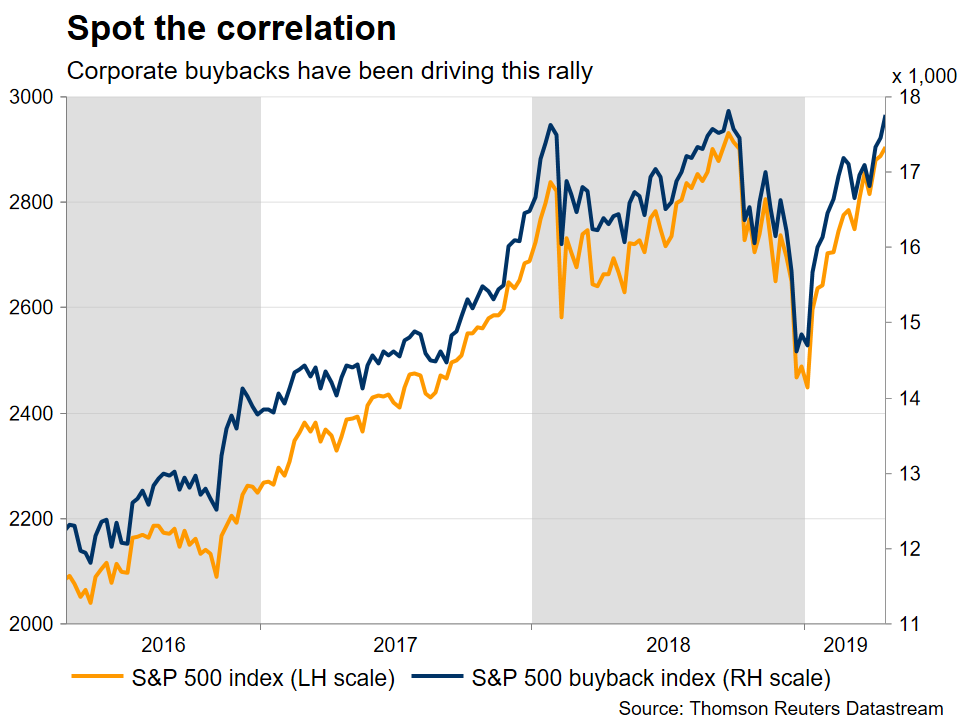
The bad news is that this practice is coming under scrutiny by lawmakers, both Democratic and Republican ones. Prominent Democratic Senators want to ‘attach strings’ to buybacks, such as companies having to pay workers higher wages before buying their own stock. Republicans meanwhile suggest buybacks could be taxed at higher rates, to discourage them.
The bottom line is that any clampdown of buybacks would diminish one of the biggest sources of demand for equities – although this is extremely unlikely while Trump is in office.
Valuations – distorted?
Related to buybacks, is the more ‘attractive’ valuation of equity indices. Investors usually look at several metrics to determine whether a stock or index are ‘overvalued’ or ‘undervalued’. The most popular is the 12-month forward price-to-earnings (P/E) ratio. It represents the dollar amount someone needs to invest to receive back a single dollar in annual earnings, so the higher it is, the more expensive a stock is considered, and vice versa.
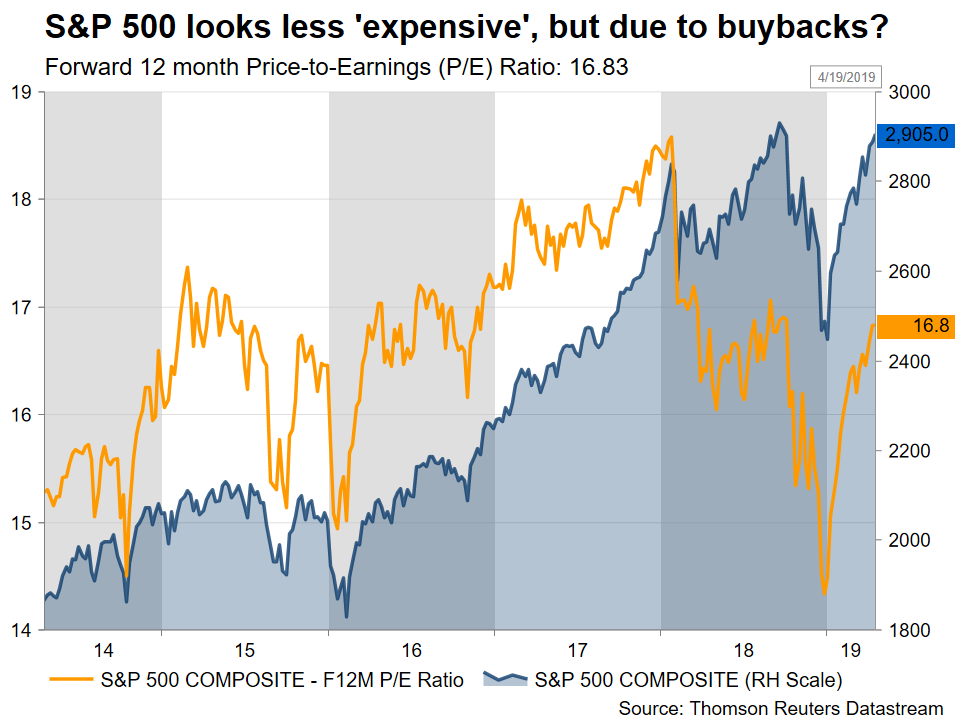
Equity index valuations are more reasonable now compared to recent years, when markets were trading at similar levels. However, the real question is whether these valuations have been ‘distorted’ by constant buybacks, which by definition boost earnings per share and thus push down on P/E ratios (as they leave fewer public shares to distribute earnings among). Hence, take metrics like P/E with a grain of salt, as they may be understating actual valuations.
Don’t discount “the Bern”
Markets haven’t focused on the 2020 presidential race yet, but that may change once the Democratic primary debates kick off in June. To be clear, the main risk for stocks is Bernie Sanders capturing the Democratic nomination. The senator from Vermont is an outspoken critic of large pharmaceutical firms, big banks, and huge multinationals overall. He wants to raise corporate taxes and increase social welfare, and while his policies may prove an effective antidote to low wage and productivity growth in the longer run, the short term effect on stocks will most likely be negative.
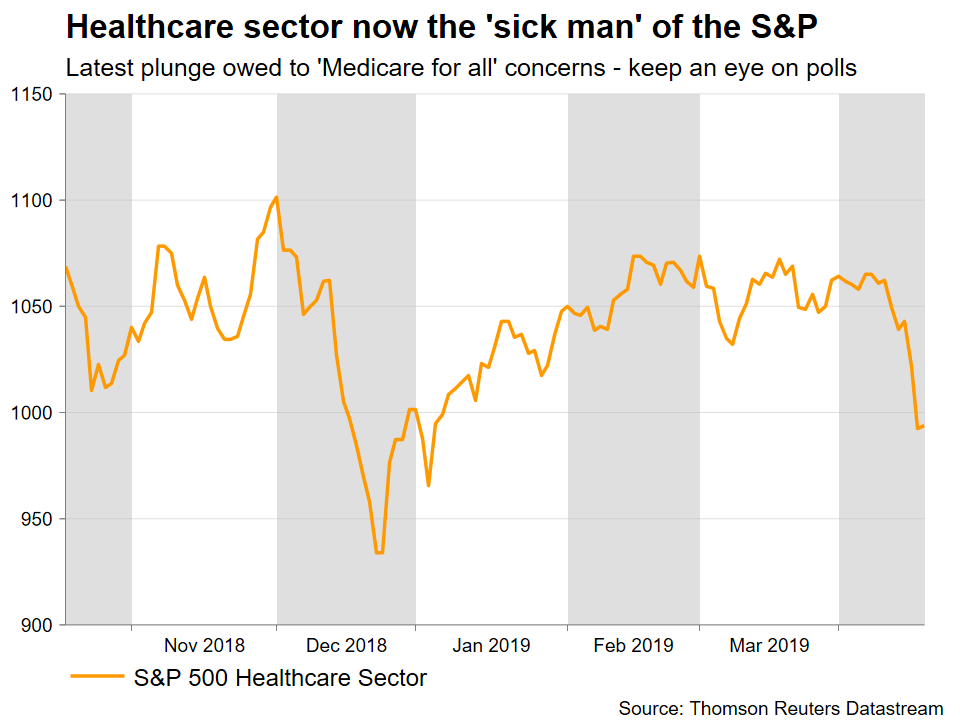
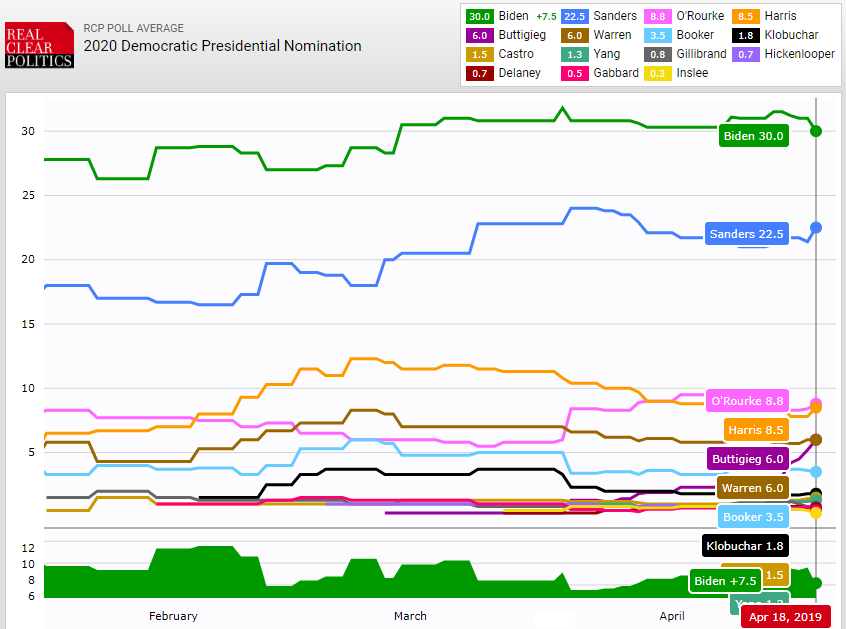
His bid shouldn’t be discounted for multiple reasons, not least because he is the frontrunner in opinion polls out of the Democrats that have entered the race, only behind former Vice President Joe Biden, who hasn’t announced yet. Separately, nearly all opinion polls have Sanders beating Trump if it gets to that, so it may be just a matter of time before investors realize how big of a risk “the Bern” is.
Recession ahead, or false alarm?
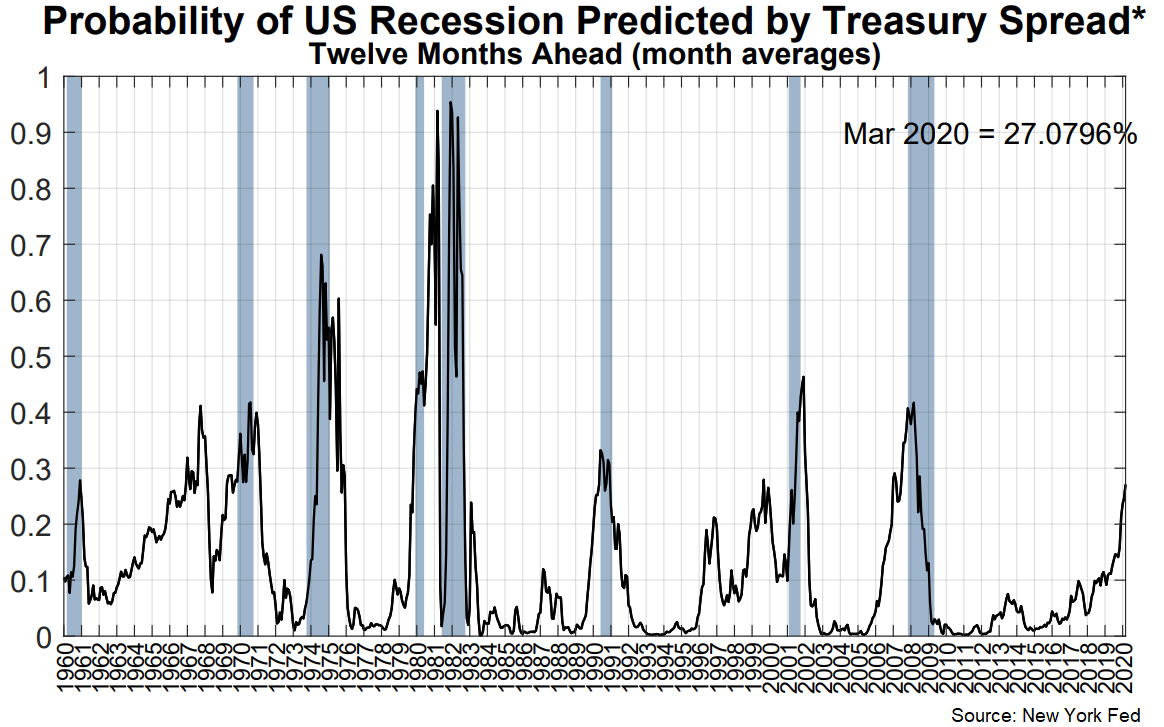
Finally, let’s examine the worst- and best-case scenarios ahead. On the pessimistic side, even though recession fears have abated given central bank caution, the likelihood for one remains elevated. In June, the US expansion will become the longest in history, so a downturn is already long overdue. Meanwhile, New York Fed models suggest a 27% chance – and rising – for a slump by early 2020. Notice that this number stayed below 50% even in the height of the 2008 crisis, so 27% may understate the actual probability. This would be a catastrophic outcome for stocks, with the potential for severe losses given current valuations, even if the recession is shallow.
On the bright side, the US economy is still in good shape, with the Atlanta Fed GDPNow model pointing to 2.8% growth in Q1. The global economy seems to be stabilizing too, thanks to massive stimulus in China. So in the optimistic scenario, where recession fears prove to be a false alarm, equities could eek out some further late-cycle gains and potentially carve out new record highs.
However, consider what that would mean for monetary policy. The Fed put its rate hike plans on ice because of growth worries, so if those truly diminish, then it could resume rate increases, which typically hurts stocks. That doesn’t necessarily mean markets will fall, especially in a strong growth environment – but rather that any upside could be limited amid rising interest rates.
Asymmetry
Concluding, the risks surrounding equity prices seem asymmetric. If fears of a recession prove correct, heavy losses could follow, but if the economy ‘dodges the bullet’ and the situation improves, any upside in stocks may be only limited as central banks resume their hiking cycles and cap the market rally.
Beyond that, demand for stocks hinges on corporate buybacks, valuations seem stretched, and even if growth remains stable and healthy, the mounting risk of higher corporate taxes via a Sanders presidency hasn’t been priced in – yet. Therefore, while markets could well advance and break new highs, the rally increasingly seems to be on wobbly legs, and the risk-to-reward of additional upside from here doesn’t look particularly attractive.
Big Earnings, Rate Decisions and US GDP Once Markets Return from Holiday
The US dollar ended the week higher after mixed data and earnings reports provided a slightly optimistic tone for the US economy. With thin conditions persisting due to the observance of Easter, choppy price moves could be expected over the next couple of sessions. All eyes will be on a barrage of US data with the focus on Friday’s advance reading of first quarter GDP. Earnings season also enters high gear with results from Boeing, Caterpillar, Microsoft, Tesla, Amazon and Exxon. The Bank of Canada is also expected to keep rates unchanged at the Wednesday meeting. The Bank of Japan is also expected to keep policy unchanged while providing small cuts to their economic forecasts.
- Earnings season enters high gear – 150 companies on S&P 500 report
- US Q1 Advance GDP expected to remain steady at 2.2%
- BOC and BOJ Interest Rate Decisions expected to see no changes in policy
BOJ
The Japanese yen could see volatile moves from both the BOJ’s rate decision on Thursday, but more importantly, ahead of Japan’s 10-day holiday break, aka shutdown that begins next week for the Golden Week holiday. The BOJ is pleased global yields have stabilized and their policy meeting is unlikely to see any majors with their yield curve control. The BOJ could downgrade their outlook report, like what the rest of the world has been doing.
BOC
The Bank of Canada is widely expected to keep rates unchanged at the Wednesday policy meeting. Most forecasters see no change for the rest of 2019 and are unsure which direction they may go in 2020. The outlook for Canada has deteriorated over the past month, as the mandatory production cut is hurting their exports, housing market is worrisome, and sentiment remains weak due to uncertainty with global trade relations. Concerns for economy are growing as the probability for a recession in the next 12 months has increased to 20%, with the next 24 months having a 27.5% chance.
US GDP
US first quarter GDP is expected to remain steady at 2.2%, despite dealing with the longest-ever partial federal government shutdown and flurry of softer data for the first couple months of the year. Thursday’s retail sales reading for the month of March showed the best reading in 18 months. The narrowing of the trade deficit also bodes well that growth may not weaken from the prior period.
Both economists for JP Morgan and Goldman Sachs have raised their forecasts to 2.5% and 2.1% respectively.
Earnings
The big financials kicked off earnings season and so far the results were mixed. A clearer take on the first quarter is expected after we see results from 150 of the 500 companies in the S&P 500. Investors will closely follow the results and earnings calls from Amazon, Microsoft, Visa, Facebook, Boeing, Caterpillar, Halliburton, Hasbro, Lockheed, Tesla, Coca-Cola, Twitter, eBay, United Tech, Harley-Davidson, AT&T, Chipotle, Ford, Intel, Mattel, Southwest, Starbucks, Exxon and Chevron.
Abe/Trump
On Friday, President Donald Trump and Japanese Prime Minister Shinzo Abe meet at the White House to discuss trade and North Korea. Trump has also planned a visit to Japan at the end of May to meet the new emperor. So far, Trump has not imposed tariffs on Japanese cars as both countries have begun trade talks.
Monday, April 22nd
- Holiday for many
Tuesday, April 23rd
- 3:15am ET EUR France PMI data
- 3:30am ET EUR Germany PMI data
- 4:00am ET EUR Eurozone PMI data
- 10:00am ET USD New Home Sales
- 9:30pm ET AUD CPI q/q
Wednesday, April 24th
- 4:00am ET EUR German IFO Business Climate
- 7:00am ET USD MBA Mortgage Applications
- 9:00am ET EUR Belgium Business Confidence
- 10:00am ET CAD BOC Interest Rate Decision
- 10:30am ET DOE US Crude Oil Inventories
Thursday, April 25th
- JPY BOJ Interest Rate Decision, Outlook Report and Press Conference
- 3:30am ET SEK Riksbank Interest Rate Decision
- 7:00am ET TRY Turkey CBRT Interest Rate Decision
- 8:30am ET USD Durable Goods
- 8:30am ET USD Initial Jobless Claims
- 6:45pm ET NZD Trade Balance
- 7:30pm ET JPY Jobless Rate
Friday, April 26th
- 6:30am ET RUB Russia Central Bank (CBR) Interest Rate Decision
- 8:30am ET USD Q1 Advance GDP Annualized q/q
- 10:00am ET USD Michigan Confidence
Week Ahead – US Next to Report Q1 GDP; BoC and BoJ Meet Amid Growth Worries
After China’s upbeat growth numbers this week, all eyes will be on the US economy’s performance during the first quarter. Aside from the US GDP, it’s going to be a rather quiet seven days for economic data due to the shortened Easter week but there will be two major central bank meetings to keep traders at their desks. The Bank of Canada and the Bank of Japan will announce their latest policy decisions in the coming days.
Aussie looks to inflation data for rate cut clues
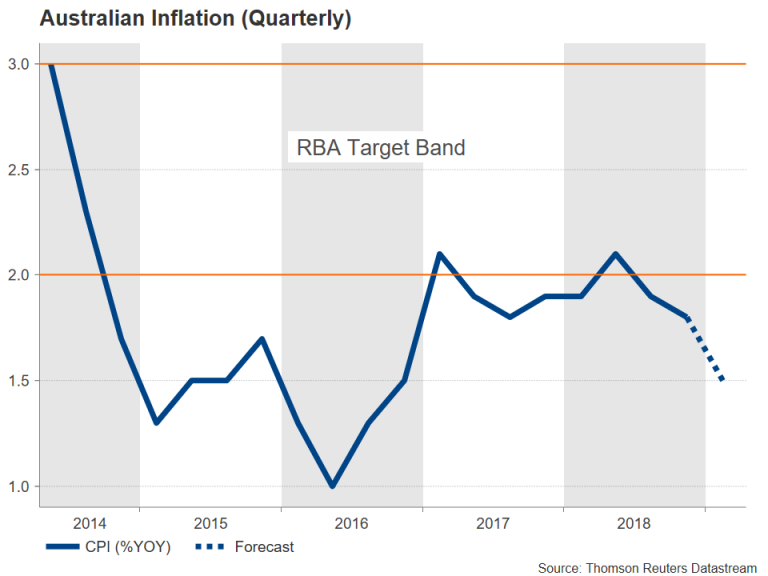
The Australian dollar has been steadily edging upwards from 2-month lows plumbed in March as risk sentiment improved. However, the gains have been very modest as expectations that the Reserve Bank of Australia’s next move will be a rate cut have been intensifying. The minutes of the RBA’s April policy meeting said a rate cut would be warranted if inflation remains low and unemployment begins to rise.
But with growth in China – Australia’s largest trading partner – seemingly rebounding and employment continuing to rise, markets may be overpricing the likelihood that the RBA will meet the conditions it’s set out to lower borrowing costs. Those odds may get a boost, though, next week if quarterly inflation numbers disappoint.
Inflation is expected to have risen by 1.5% on an annual basis during the first three months of the year, holding below the RBA’s 2-3% target band for the third straight quarter. The CPI report is out on Wednesday and will be followed by producer prices on Friday. The aussie is susceptible to sharp moves in either direction from any surprises in the inflation figures.
Bank of Japan to stand pat but projections eyed
The Bank of Japan is not expected to make any changes to its policy when it announces its decision on Thursday. However, the event could still prove market moving as the Bank will publish its latest quarterly outlook report where any downgrade in its forecasts could stoke expectations of fresh policy easing in the coming months.
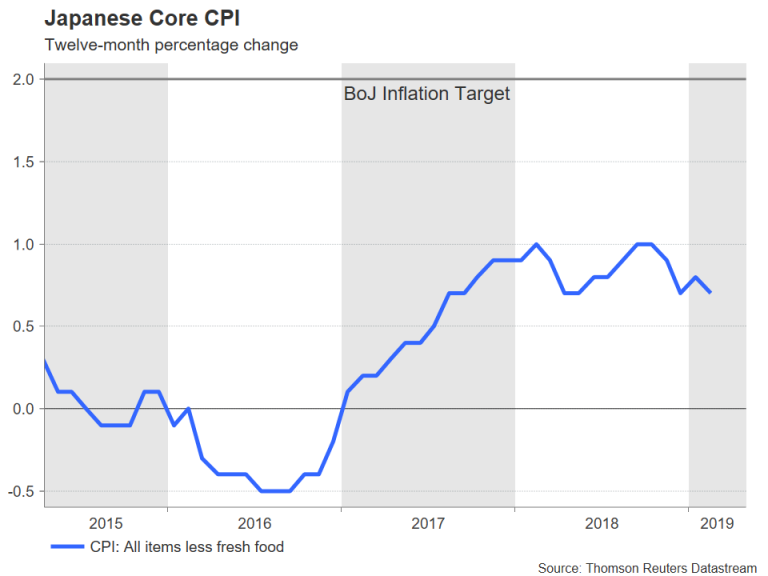
After some progress in 2017, inflation in Japan has been stuck between 0.7%-1.0% for the past year, while economic growth has weakened notably as exports (Japan’s main driver of growth) have struggled on the back of the global slowdown. BoJ’s governor, Haruhiko Kuroda, recently told Japanese lawmakers that the Bank would consider additional easing if momentum towards its 2% inflation target is lost.
However, given the BoJ’s limited arsenal, there would likely need to be a more severe downturn to spur the BoJ into action. Nevertheless, any dovish tilt by the Bank next week could weigh on the yen, which has already been under pressure lately from the bounce in risk appetite.
In addition to the BoJ meeting, economic indicators due on Friday will also be watched in Japan, including industrial production, unemployment and retail sales numbers for March.
No change either from Bank of Canada
The Bank of Canada will be the other central bank holding a policy meeting next week, and like the BoJ, it’s not expected to make any changes to its policy on Wednesday. Investors may have already gotten a glimpse of the BoC’s latest views on the economy from the Bank’s Spring Business Outlook Survey released this week, which pointed to declining business sentiment.
The Bank has raised rates five times since the summer of 2017 but has been on hold since October 2018 when it last hiked its overnight rate. However, despite becoming more cautious, the BoC has maintained a tightening bias and Governor Stephen Poloz recently suggested he thinks the slow patch in the Canadian economy will be temporary.
Should Poloz maintain a similar tone at his press conference next week, the Canadian dollar could be in line for a small lift as markets are anticipating a somewhat more dovish stance. The loonie has been caught in a range versus the US dollar as a worsening outlook has offset higher prices in oil – Canada’s biggest export.
Q1 GDP to be sole highlight of US calendar
Not even the US, where markets will be open on Easter Monday unlike most Westerns countries, will be able to escape the shortage of data releases. The main numbers to watch will be existing home sales on Monday, new home sales on Tuesday and durable goods orders on Thursday, all for March.
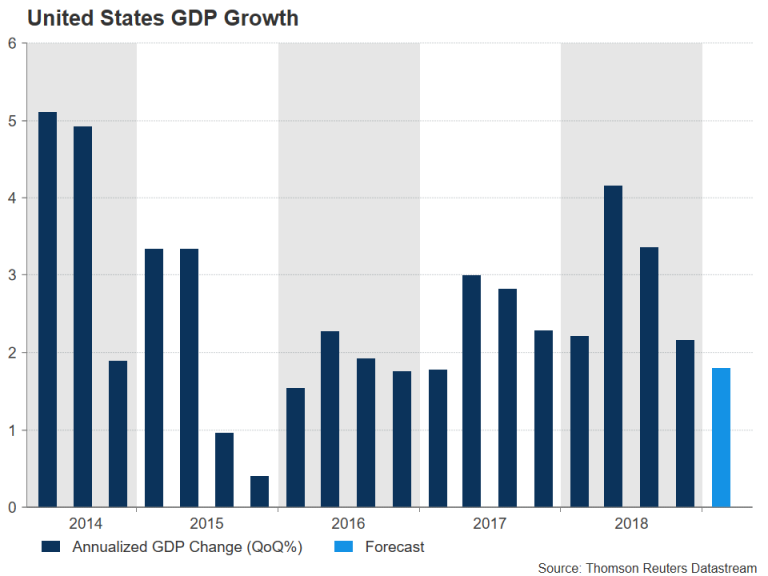
Everyone’s focus, though, will be on the advance GDP report for the first quarter on Friday. The US economy is expected to have expanded by an annualized rate of 1.8% between January-March, slowing slightly from the prior 2.2% pace. With many recent indicators surprising to the upside, a beat in the Q1 GDP reading would be another confirmation that US economic momentum remains solid.
It would also boost broader market sentiment, which was already bolstered this week from stronger-than-forecast data out of China. However, with the dollar index still trading not too far from its 2018 highs, it may be difficult for the bulls to push the greenback significantly higher and the GDP report will likely struggle to break the dollar crosses outside of their current sideways ranges.
Few cues for euro and pound next week
The euro and pound are set for a subdued week with not a lot of drivers for the European market. After this week’s disappointing flash Eurozone PMIs for April, the German Ifo business sentiment gauge should attract some attention on Wednesday. Ahead of that, the flash consumer confidence print for the euro area for April will be released on Tuesday.
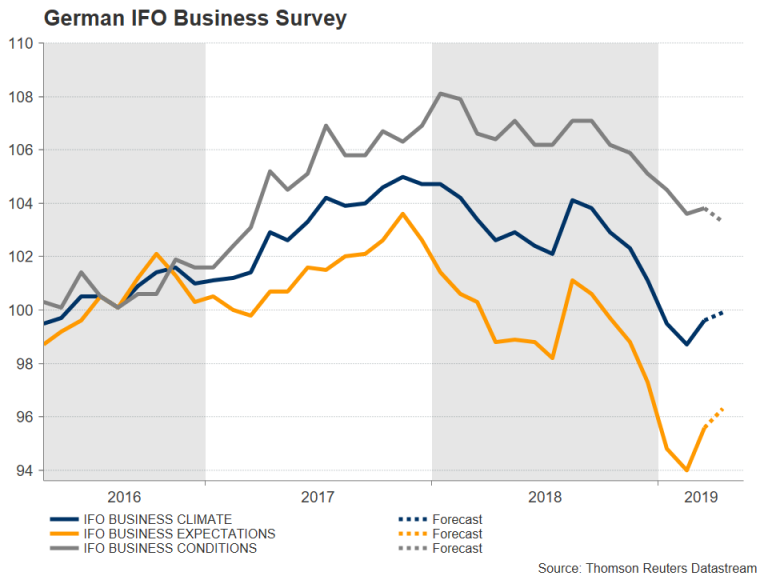
Although there’s been some evidence that the slowdown in the Eurozone is bottoming out, the latest PMIs suggest a sustained recovery could be some time away, keeping a check on the euro’s recent rebound.
Surprisingly, UK data has been much more robust in comparison but the standstill in the Brexit process is keeping investors away from UK assets. There are no major releases in Britain next week, but Parliament will return from its Easter break on Tuesday and it’s possible MPs may try to push through a vote on whether the UK should remain in a customs union once it leaves the EU.
Any plan to maintain a customs union post-Brexit would be positive for the pound as it would not only resolve the Irish backstop issue but would also simplify talks on a future trading relationship between the UK and the EU.
Most Markets Closed for Good Friday; Euro Trades in 20 Pip Range
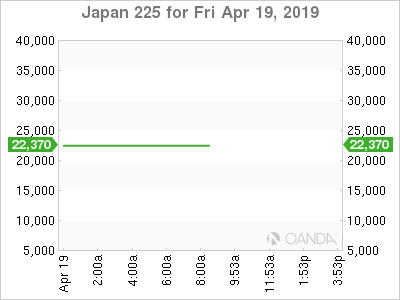
Most traders are enjoying a three-day weekend as markets observe Good Friday. Overnight, Asian markets finished higher as the Nikkei rose 0.5%, the Shanghai Composite closed 0.6% higher, the ASX 200 eked out a 0.1%, while the Hang Seng fell 0.5%.
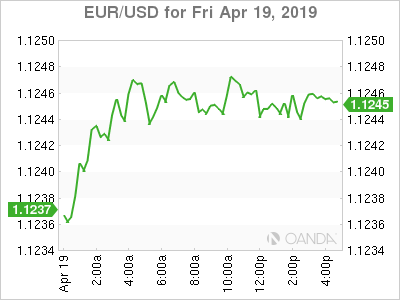
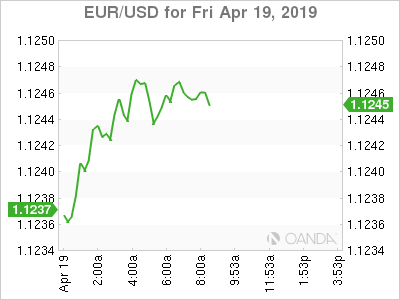
In Europe, the release of Italian confidence came in softer than expected and economic outlook for the next 12 months continued to decline. EUR/USD trades in a tight 20 pip range and is slightly higher by 0.14% on the session.
EURGBP Consolidates the Last 2 Months; Indicators Suggest Bullish Bias
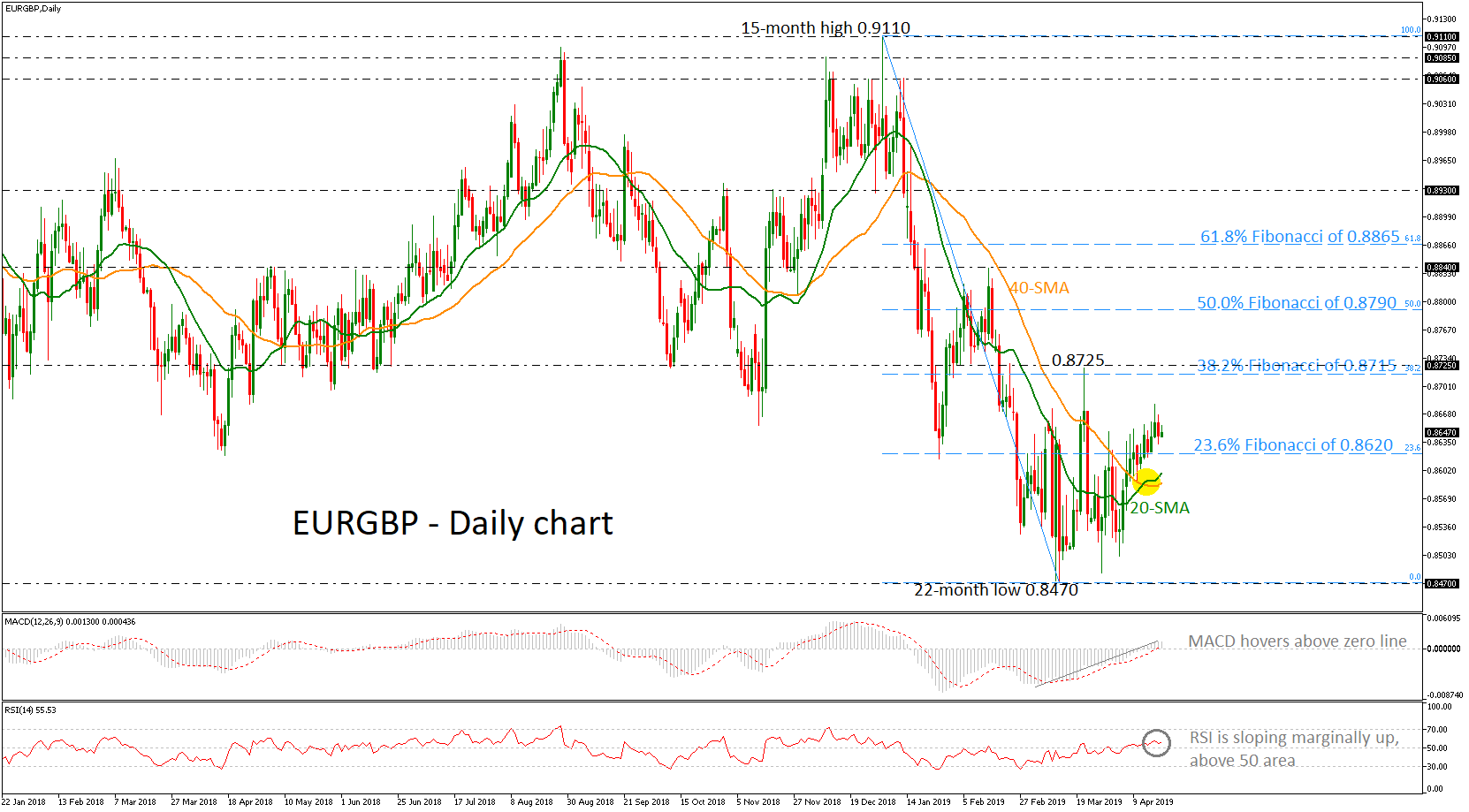
EURGBP is in a neutral mode after tumbling below the 38.2% Fibonacci retracement level of the downleg from the 15-month high of 0.9110 to the 22-month low of 0.8470 on February 19; prices are consolidating within the 0.8715 resistance and the 0.8470 support.
The technical indicators, however, are pointing to positive momentum in the near term. The MACD is strengthening its movement above its trigger and zero lines, while the RSI holds in positive area and is turning slightly higher. It is worth mentioning that the 20- and 40-simple moving averages (SMAs) created a bullish cross in the daily chart, confirming the recent upside move in the very short-term.
In case of upside movement, gains could follow until the 38.2% Fibonacci mark of 0.8715 which stands near the 0.8725 resistance barrier. Even higher, a climb could increase bullish sentiment until the 50.0% Fibonacci of 0.8790.
Alternatively, downside pressure below the 23.6% Fibonacci region of 0.8620 could drive the price south and towards the 22-month low of 0.8470. A failure to hold inside the narrow range would shift the focus to the 0.8380 low reached on May 2017.
A drop below 0.8470, would turn the short and the medium-term outlook into bearish, while a climb above 0.8715 would bring the bullish view into play only in the short term.
US 500 Index Flies Near 6-month Peak; All-time High is Near
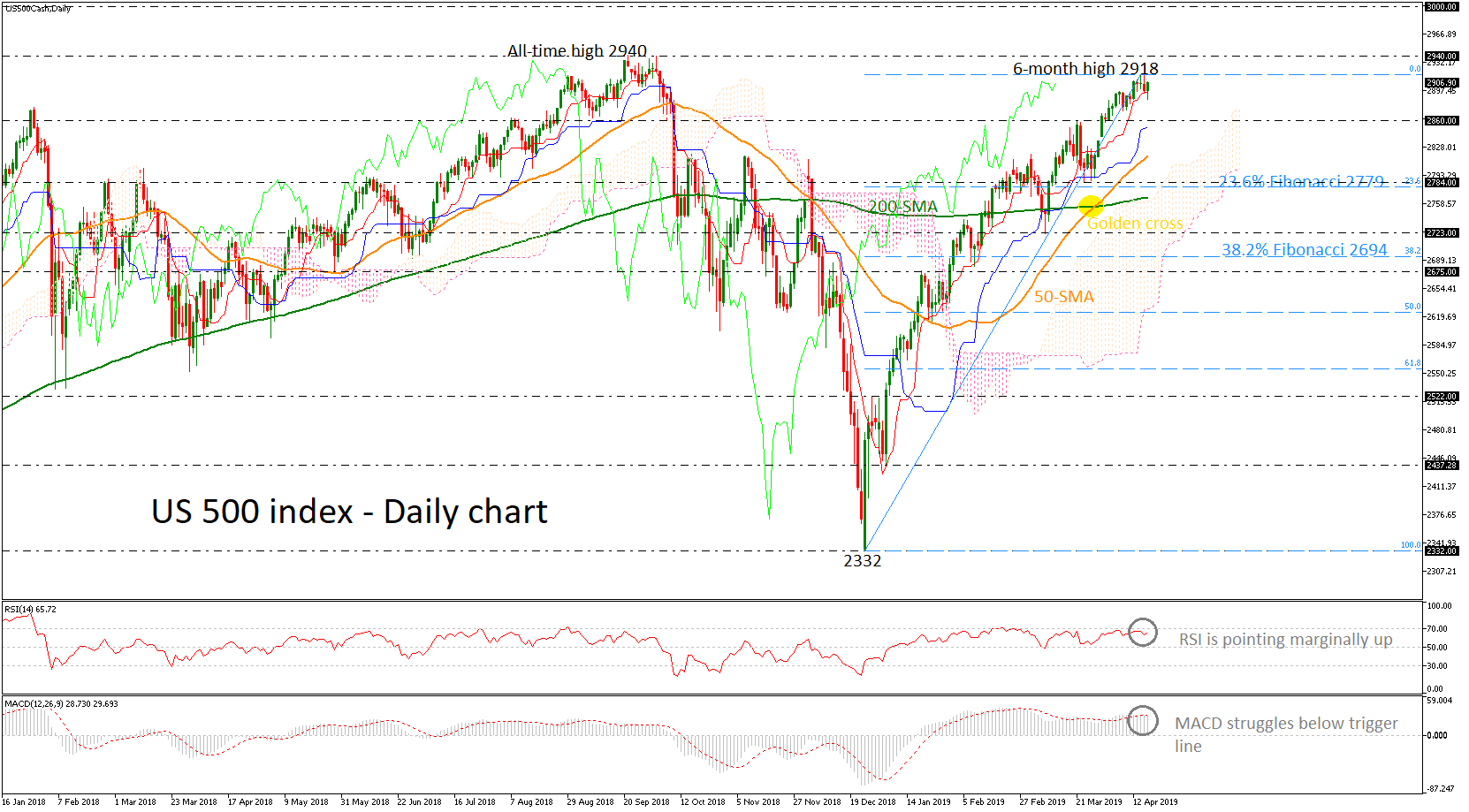
The US 500 index price skyrocketed to a fresh six-month high of 2918 on Thursday before it pared those gains later in the day.
The price is holding above the red Tenkan-sen line as well as above the ‘golden cross’ within the 50- and 200-simple moving averages (SMAs). Technically, the RSI indicator is pointing marginally up near the overbought territory. However, the MACD oscillator is developing with stable momentum over the last sessions, despite the strong upside rally in the price action, suggesting that a possible pullback may be on cards.
In case of further gains and a climb above the six-month peak, the next resistance would likely be faced around the all-time high of 2940. A successful surpass of this critical level would shift the long-term outlook back to strong bullish one, challenging a new record peak, which may come around the 3000 handle.
On the other side, if the price loses steam and declines beneath 2860, it could find support at the 50-day SMA currently at 2818. Even lower, the index could hit the 2784 area before touching the 23.6% Fibonacci retracement level of the upleg from 2332 to 2918 near 2779.
In the long-term, the index is trying to switch the mode to strongly bullish one and this would happen if prices overcome the all-time high set in September 2018.
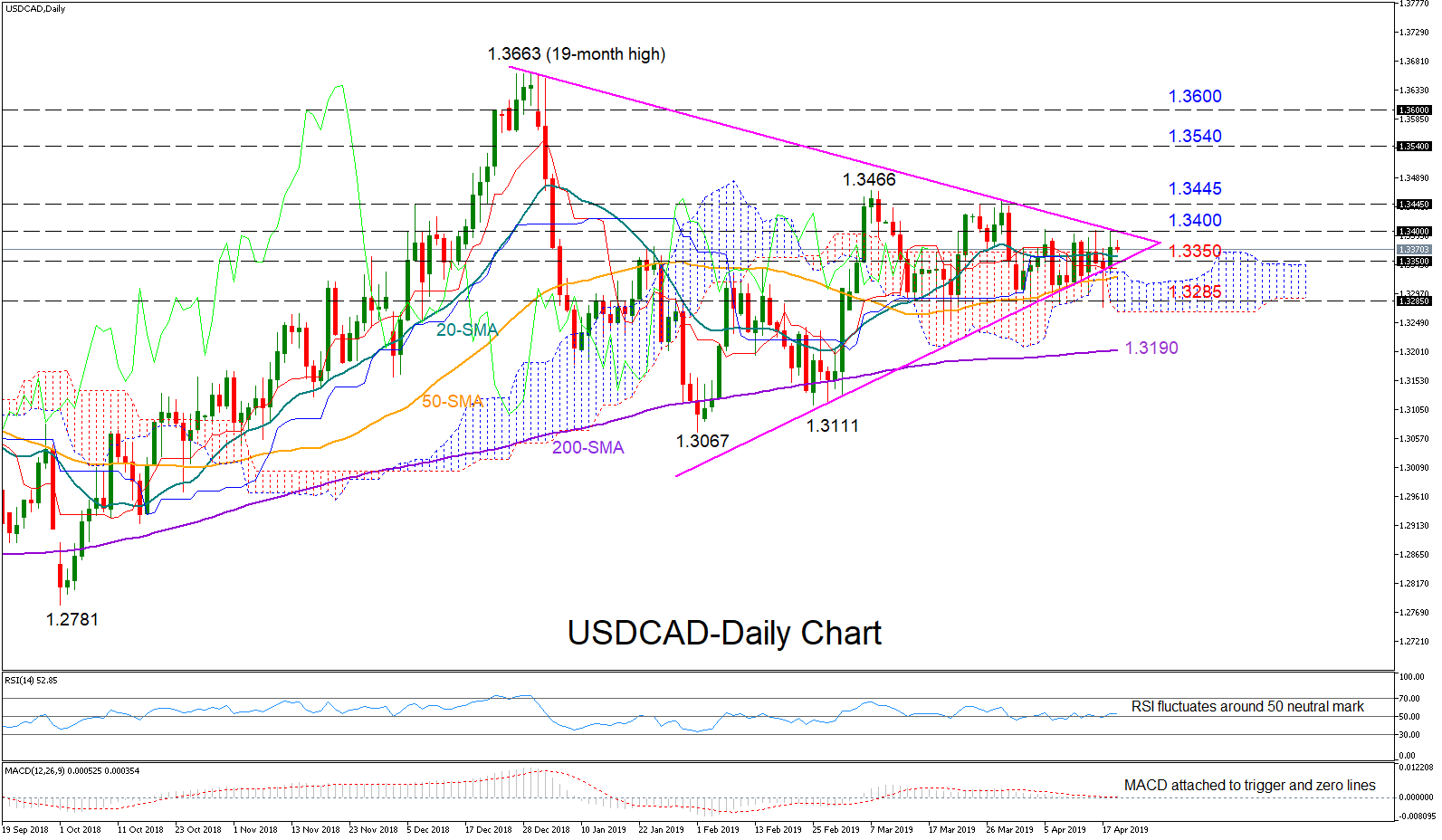
USDCAD Finalizes Symmetrical Triangle Formation
USDCAD had another uneventful week as it was congested within the 1.33 area. According to the RSI and the MACD the pair is likely to continue consolidating in the short-term as both indicators show no clear direction. Yet and more interesting, the market seems to be completing a symmetrical triangle, hinting that the sideways move may soon come to an end.
A breakout from the upper trendline currently seen around 1.34 would mark the start of a bullish phase, while only a close above 1.3445 would confirm a growing uptrend. Further up, the area between 1.3540-1.3600 has been a key resistance area during 2016-2017 and therefore should be in focus.
Following a breakdown of the lower bar near 1.3350, negative sentiment would heat up, with the bears probably taking full control under 1.3285. Lower, the 200-day simple moving average (1.3190) could trigger a more aggressive sell-off if the line fails to stop downside movements, shifting attention towards the 1.3111 and 1.3067 troughs.
Meanwhile in the medium-term picture, conditions are neutral as well, with the pair hovering within the 1.3466-1.3067 boundaries. Any violation at these points would change the outlook accordingly.
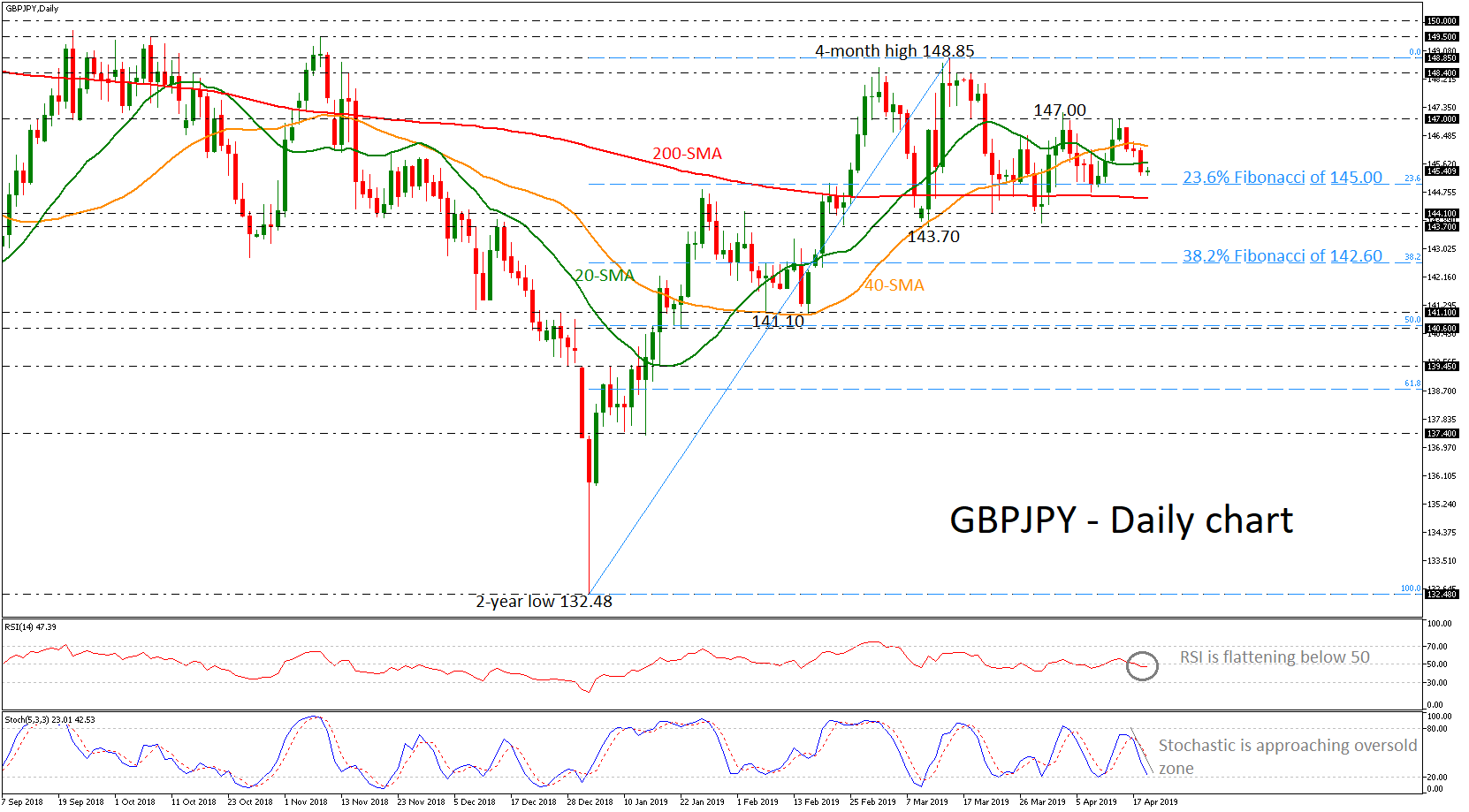
GBPJPY on a Sideways Move; 23.6% Fibonacci Appears to be Strong Support
GBPJPY has been on a sideways move for the most part of the week as the 23.6% Fibonacci retracement level of the upleg from 132.48 to 148.85, around 145.00 and the 200-day simple moving average seem to be critical obstacles for the bears. From the technical point of view, the price could lose some momentum in the short-term as the RSI is flattening below the 50 level and the stochastic oscillator is approaching oversold territory.
Another rebound on the 23.6% Fibonacci could send prices again towards the immediate resistance of 147.00, surpassing the 20- and 40-day SMAs. Should the price overcome that handle, resistance could run up to the 148.40 barrier and also the four-month high of 148.85 which may also prove a challenge for traders.
Alternatively, if 145.00 proves easy to get through, the spotlight will turn to the 200-day SMA currently at 144.60 and then at the 143.70 – 144.10 area; a former support zone in March. Below that, the bears would need to clear this area to push back the price towards the 38.2% Fibonacci of 142.60.
In the medium-term picture, GBPJPY should resume its upside trend above the four-month high of 148.85, however a dive below the 38.2% Fibonacci would bring the bearish outlook into play.
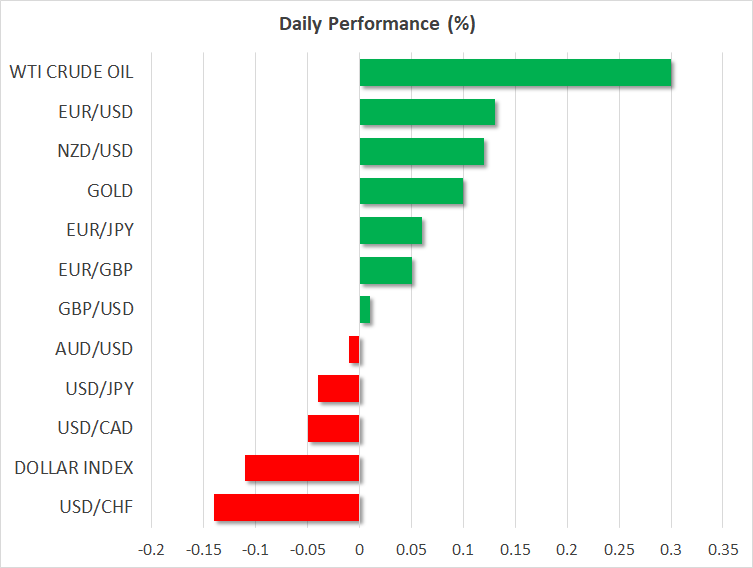
Dollar Powers ahead on Strong US Data; Euro Stumbles
- US dollar and Wall Street lifted by solid economic data and earnings
- But euro, pound, aussie and kiwi turn lower on Eurozone woes, resurgent dollar
- Thin liquidity expected today as many markets closed for Good Friday
US recession fears ebb after retail sales bounce
Dollar bulls made a comeback on Thursday after retail sales in the US unexpectedly surged in March and weekly jobless claims fell to their lowest in nearly half a century. The data once again highlighted the resilience of the US economy, with many investors further cutting their bearish bets on the interest rate outlook.
The dollar index, which measures the US currency against a basket of six of its major peers, climbed to a more than two-week high of 97.49, in a sign much of the concerns about a possible US downturn have now subsided. Sentiment for US assets was also boosted from positive earnings results on Wall Street, helping the S&P 500 make modest gains.
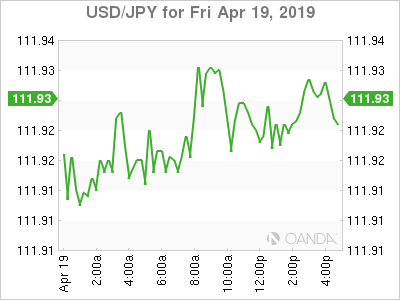
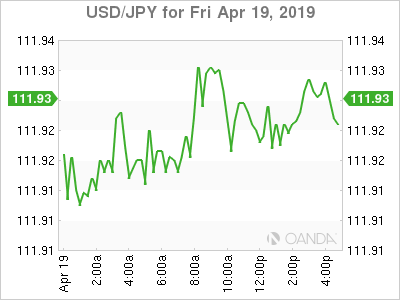
But the greenback was unable to make much progress versus the yen as growth worries in other parts of the world kept the safe-haven in demand. The pair continued to hover around 111.90 on Friday.
No end in sight to Eurozone gloom
In stark contrast to the upbeat US data and an improving picture in China as well, Eurozone indicators disappointed on Thursday, reviving fears of a prolonged slowdown or even a recession in the euro bloc. The flash PMI readings by IHS Markit for April showed the Eurozone’s manufacturing sector continues to shrink, while services activity softened by more than expected.
The euro tumbled on the data and was later further pressured by the bullish dollar, pushing the pair to a 10-day low of $1.1224. With most European markets closed today and on Monday for the Easter celebrations and few releases on the schedule next week, the euro will likely struggle to find much upside over the coming days.
The pound also underperformed on Thursday despite very strong retail sales numbers out of the UK and overall recent UK data being relatively solid. Sterling was unable to overcome the dollar’s advances amid the ongoing Brexit uncertainty and cable slipped below the key $1.30 level.
Traders will be on standby next week for a possible vote in the British Parliament on whether the UK should remain in the EU customs union after Brexit.
Aussie and kiwi also subdued
The Australian and New Zealand dollars were the other big losers from the greenback’s rally. The aussie’s short-lived claim of the $0.72 handle following China’s positive GDP print became difficult to repeat as the currency seemed more comfortable closer to the $0.7150 level. The focus for aussie traders now turns to next week’s quarterly inflation figures out of Australia, which could determine whether the RBA will cut rates in the near future.
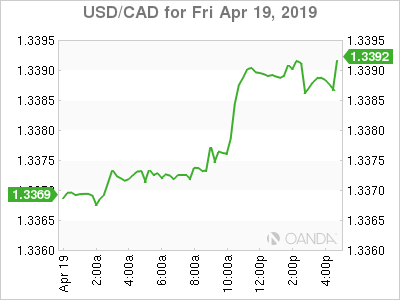
The Canadian dollar was perhaps the exception as its losses were more contained. The loonie was supported by better-than-expected retail sales figures of its own, which followed CPI numbers earlier in the week that pointed to an uptick in underlying measures of inflation in Canada. Nevertheless, the loonie remained rangebound and was last drifting around C$1.3370 as traders awaited next week’s Bank of Canada policy meeting for more direction.
In commodities, higher US Treasury yields drove gold prices to a near 4-month low of $1270.63.
