Sample Category Title
GBPCHF Slips after a Losing Battle at 1.31; Bollinger Band Eyed
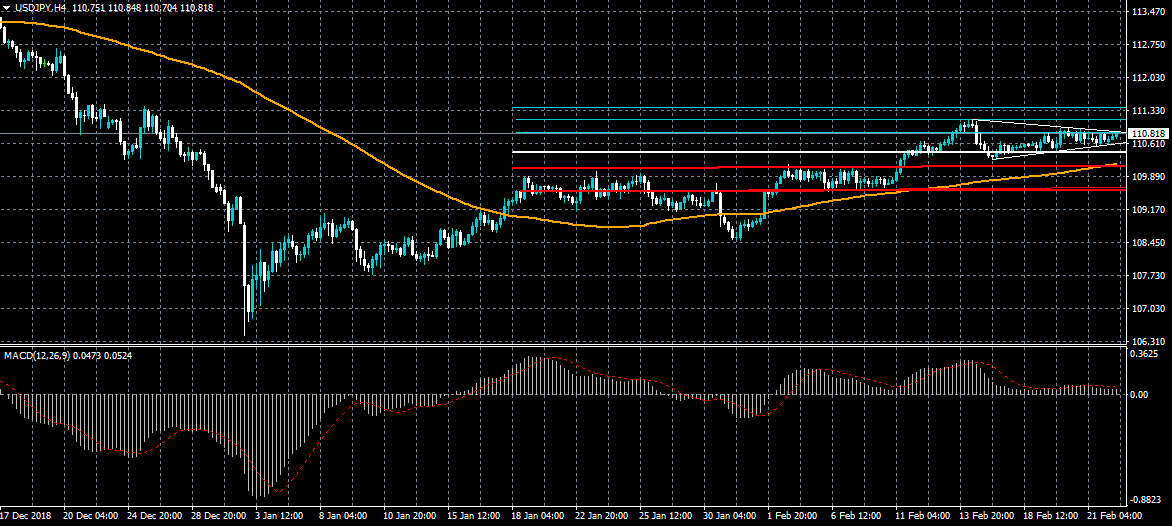
GBPCHF has been pushing hard to overcome the 1.31 resistance the past two days, but the bulls soon got exhausted, letting the bears to take control. The pair is currently trading below its 20-period moving average (MA) in the four-hour chart, while in momentum indicators, the RSI has exited the bullish territory and the MACD keeps losing steam below its red signal line, giving bearish warnings for the short term.
If the sell-off strengthens, the price could rebound once it touches the lower Bollinger band and the 50-period MA around at 1.2985. Should the negative pressure persist, support could run straight down to the 1.2947-1.2930 zone, a familiar spot for the bears. Beating that region too, the focus will shift to the 200-period MA which currently stands at 1.2893.
Alternatively, a reversal to the upside could retest the 1.3025 barrier before reaching the 20-period MA at 1.3047. Crossing that line, the way would open towards the 1.31 round level and the previous peak of 1.3118, where a closing breakout above the latter would pull the market back into a positive course.
GBP/USD Mid-Day Outlook
Daily Pivots: (S1) 1.3009; (P) 1.3052; (R1) 1.3078; More....
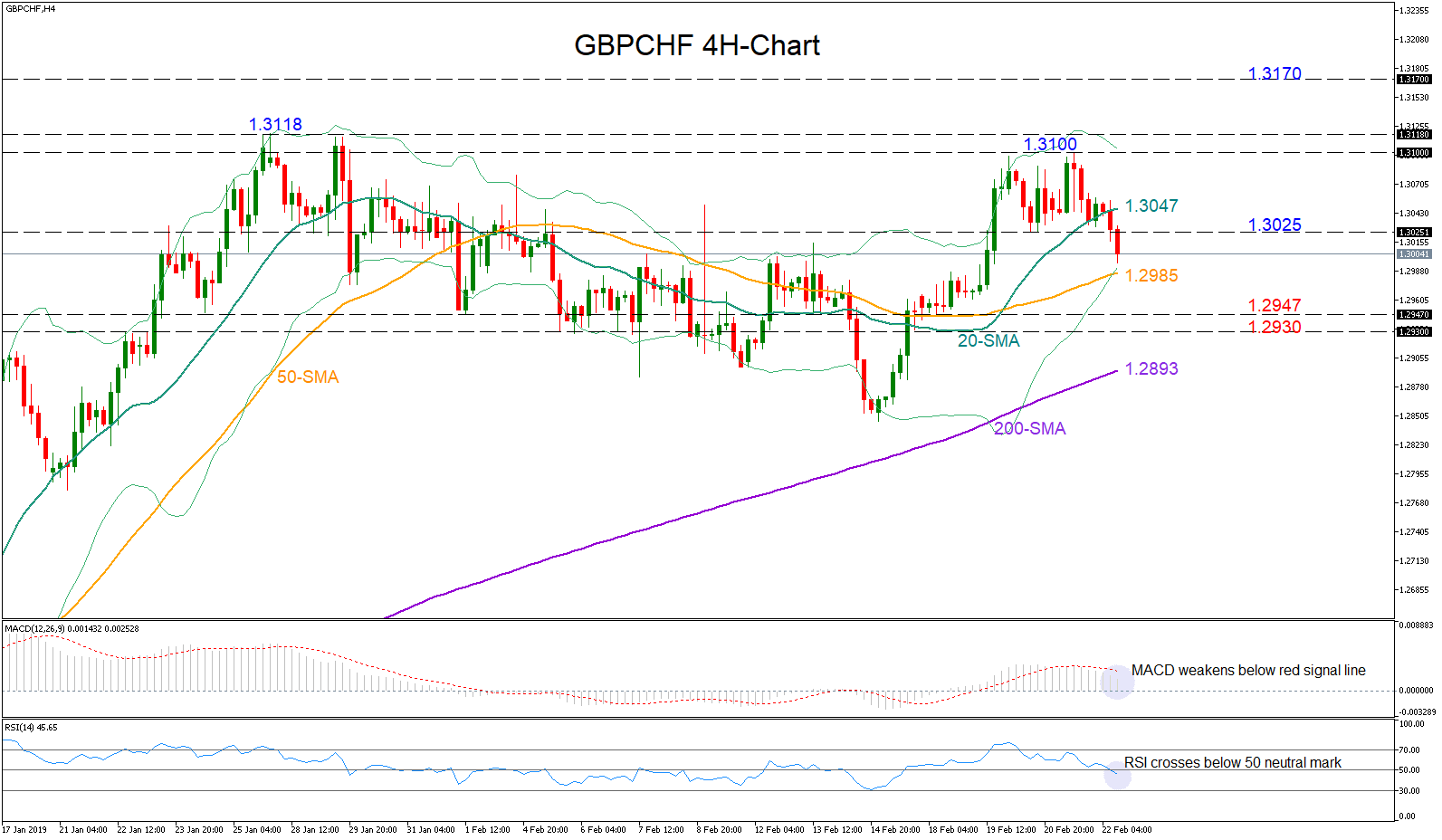
GBP/USD drops notably today but stays above 1.2938 minor support. Intraday bias remains neutral first. On the upside, above 1.3109 will target 1.3174/3217 resistance zone. Decisive break there will complete a head and shoulder bottom pattern (ls: 1.2661, h: 1.2391, rs: 1.2773). That would indicate bullish reversal for 61.8% retracement of 1.4376 to 1.2391 at 1.3618 next. On the downside, break of 1.2935 minor support will turn bias back to the downside for 1.2773 instead.
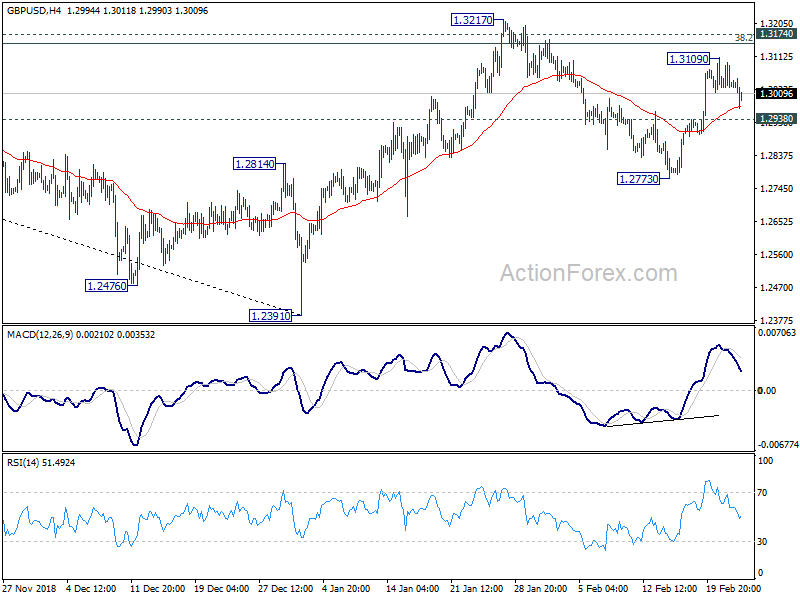
In the bigger picture, focus is back on 1.3174 resistance with current rebound. Break will indicate completion of decline from 1.4376. Rise from 1.2391 would then be seen as the third leg of the corrective pattern from 1.1946 (2016 low). In that case, further rise could be seen through 1.4376 resistance. Nevertheless, rejection by 1.3174 again will extend the decline from 1.4376 through 1.2391 to 1.1946 low.
Sterling Sold off ahead of Weekend, Aussie Rebounds
Sterling is sold off broadly today as it's getting unlikely to have a Brexit breakthrough at the Sharm El-Sheikh summit on Sunday. Prime Minister Theresa May is highly unlikely to bring back any revised deal for parliament approval next Wednesday. Dollar follows as the second weakest as markets await result of US-China trade negotiations. Trump is set to meet Chinese Vice Premier Liu He at 2.30 pm Eastern Time. A lack of concrete progress will be a huge blow to market sentiment.
On the other hand, Australian Dollar is the strongest one for today, reversing some of yesterday's decline. China denied that the news that Dalian ports banned Australian coal imports. But it should be noted that Aussie was also pressured on talks of RBA rate cuts this year. So, it's too early to cheer the rebound. New Zealand Dollar follows and also reversed earlier losses today. Canadian Dollar shrugs off mixed retail sales data, but follows oil prices higher. Headline retail sales dropped -0.1% mom in December versus expectation of -0.3% mom. Ex-auto sales dropped -0.5% mom versus expectation of -0.3% mom.
In Europe, FTSE is up 0.42%. DAX is up 0.39%. CAC is up 0.28%. German 10-year yield is down -0.0257 at 0.104. Nikkei dropped -0.18%. Hong Kong HSI rose 0.65%. China Shanghai SSE rose 1.91%. Singapore Strait Times dropped -0.24%. Japan 10-year JGB yield dropped -0.0008 to -0.041.
German Ifo dropped to lowest since Dec 2014, economic situation remains weak
German Ifo Business Climate dropped to 98.5 in February, down from 99.3 and missed expectation of 98.9. That's also the lowest level since December 2014, and the sixth decline in a row. Expectations index dropped to 93.8, down from 94.2 and missed consensus of 94.2. Current Assessment index also dropped to 103.4, down from 104.3 and missed expectation of 103.9.
Clemens Fuest, President of ifo Institute said "these survey results as well as other indicators point to economic growth of 0.2 percent in the first quarter. The economic situation in Germany remains weak."
Ifo economist Klaus Wohlrabe said "there was hope that the weak period we experienced in the second half of 2018 was only temporary but it looks like it will continue." Brexit is not off the table yet and US punitive tariffs would hit expect expectations. In particular, the impact of the tariffs is not reflected in the sentiment figures yet.
Also released, German GDP was finalized at 0.0% qoq in Q4. Eurozone CPI was finalized at 1.4% yoy in January, core CPI at 1.1% yoy.
China denies banning Australian coal at Dalian ports
Chinese Ministry of Foreign Affairs spokesman Geng Shuang denied the report that Australian coal imports are banned by Dalian port. He said in a regular press briefing that china's Australian coal imports continue as normal. Nevertheless, customs administration has stepped up environment and safety checks on foreign cargoes.
Australia's Minister for Trade, Simon Birmingham also said that "the application of those quotas combined with different testing and the quality assurance and environment is testing centres, may be slowing down the processing of costing data of coal in certain parts of China." He added that "we have no basis to believe that there is a ban on Australian coal exports into China, or into any part of China."
Australian Prime Minister Scott Morrison also said "This is not the first time that on occasion local ports make decisions about these matters. "There is no evidence before me or us that would suggest it has the connotations that it has anything to do with anything more broadly than that. This happens from time to time."
RBA Lowe: What's of concern is accumulation of downside risks
RBA Governor Philip Lowe said today that the central scenario for 2019 is for growth of around 3%, inflation of around 2%and unemployment of around 5. And "this is not a bad set of numbers". However, what is more of concern is the "accumulation of downside risks".
The first major area of risks globally is "political risks" including US-China trade and technology tensions, Brexit, rise of populism and strains in some wester European countries. Second area of international risk is China slowdown. Domestically, RBA board has recently been paying "particularly close attention" to household spending and housing market. Lowe noted that " underlying trend in consumption is softer than it earlier looked to be". Decline housing prices could also affect overall spending.
On monetary policy, Lowe reiterated that "the probability that the next move is up and the probability that it is down are more evenly balanced than they were six months ago."
RBNZ to raise top banks' capital requirement, might cut interest rate
RBNZ proposed to raise capital requirement for top banks of the country. Capital ratios would be increased to 16% of frisk-weighted assets. Combined the top four banks might need to raise NZD 20B over the next five years to meet the rule. RBNZ Deputy Governor Geoff Bascand said the move would only lead to a "marginal tightening of monetary conditions".
But he added that the central could consider to loosen up monetary further is needed. Bascand said "when we set the OCR (Official Cash Rate), we set it with for a 18 month to 2 year look ahead. So let's say we are making a decision in the third quarter of this year…we just have to feed that into our regular monetary policy decision making". And, "if we were worried, and thinking we were undershooting inflation, undershooting maximum sustainable employment, then we would obviously look for an OCR change…that is the implication."
GBP/USD Mid-Day Outlook
Daily Pivots: (S1) 1.3009; (P) 1.3052; (R1) 1.3078; More....
GBP/USD drops notably today but stays above 1.2938 minor support. Intraday bias remains neutral first. On the upside, above 1.3109 will target 1.3174/3217 resistance zone. Decisive break there will complete a head and shoulder bottom pattern (ls: 1.2661, h: 1.2391, rs: 1.2773). That would indicate bullish reversal for 61.8% retracement of 1.4376 to 1.2391 at 1.3618 next. On the downside, break of 1.2935 minor support will turn bias back to the downside for 1.2773 instead.
In the bigger picture, focus is back on 1.3174 resistance with current rebound. Break will indicate completion of decline from 1.4376. Rise from 1.2391 would then be seen as the third leg of the corrective pattern from 1.1946 (2016 low). In that case, further rise could be seen through 1.4376 resistance. Nevertheless, rejection by 1.3174 again will extend the decline from 1.4376 through 1.2391 to 1.1946 low.
Economic Indicators Update
| GMT | Ccy | Events | Actual | Forecast | Previous | Revised |
|---|---|---|---|---|---|---|
| 23:30 | JPY | National CPI Core Y/Y Jan | 0.80% | 0.80% | 0.70% | |
| 07:00 | EUR | German GDP Q/Q Q4 F | 0.00% | 0.00% | 0.00% | |
| 09:00 | EUR | German IFO Business Climate Feb | 98.5 | 98.9 | 99.1 | 99.3 |
| 09:00 | EUR | German IFO Expectations Feb | 93.8 | 94.2 | 94.2 | |
| 09:00 | EUR | German IFO Current Assessment Feb | 103.4 | 103.9 | 104.3 | |
| 10:00 | EUR | Eurozone CPI Core Y/Y Jan F | 1.10% | 1.10% | 1.10% | 0.90% |
| 10:00 | EUR | Eurozone CPI M/M Jan | -1.00% | -1.10% | 0.00% | |
| 10:00 | EUR | Eurozone CPI Y/Y Jan F | 1.40% | 1.40% | 1.60% | 1.50% |
| 13:30 | CAD | Retail Sales M/M Dec | -0.10% | -0.30% | -0.90% | |
| 13:30 | CAD | Retail Sales Ex Auto M/M Dec | -0.50% | -0.30% | -0.60% | -0.70% |
Canadian Dollar shrugs mixed retail sales, follows oil higher
Canadian Dollar shrugs off mixed retail sales data, but follows oil prices higher. Headline retail sales dropped -0.1% mom in December versus expectation of -0.3% mom. Ex-auto sales dropped -0.5% mom versus expectation of -0.3% mom.
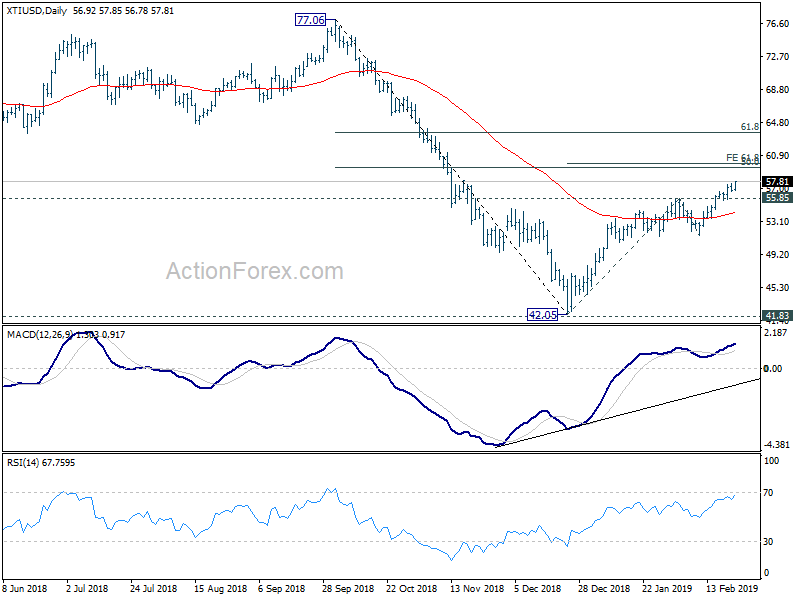
WTI Crude oil's rally resumes today and hits as high as 57.85 so far. Rise fro 42.05 is in progress and should target 61.8% projection of 42.05 to 55.85 from 51.49 at 60.01. For now, we'd continue to expect strong resistance around 60, which is close to 50% retracement of 77.06 to 42.05 at 59.55. 55 week EMA (now at 59.48). Upside should be capped there to bring near term reversal.
GBPAUD Eases above Short-Term Uptrend Line; Indicators Slope Down
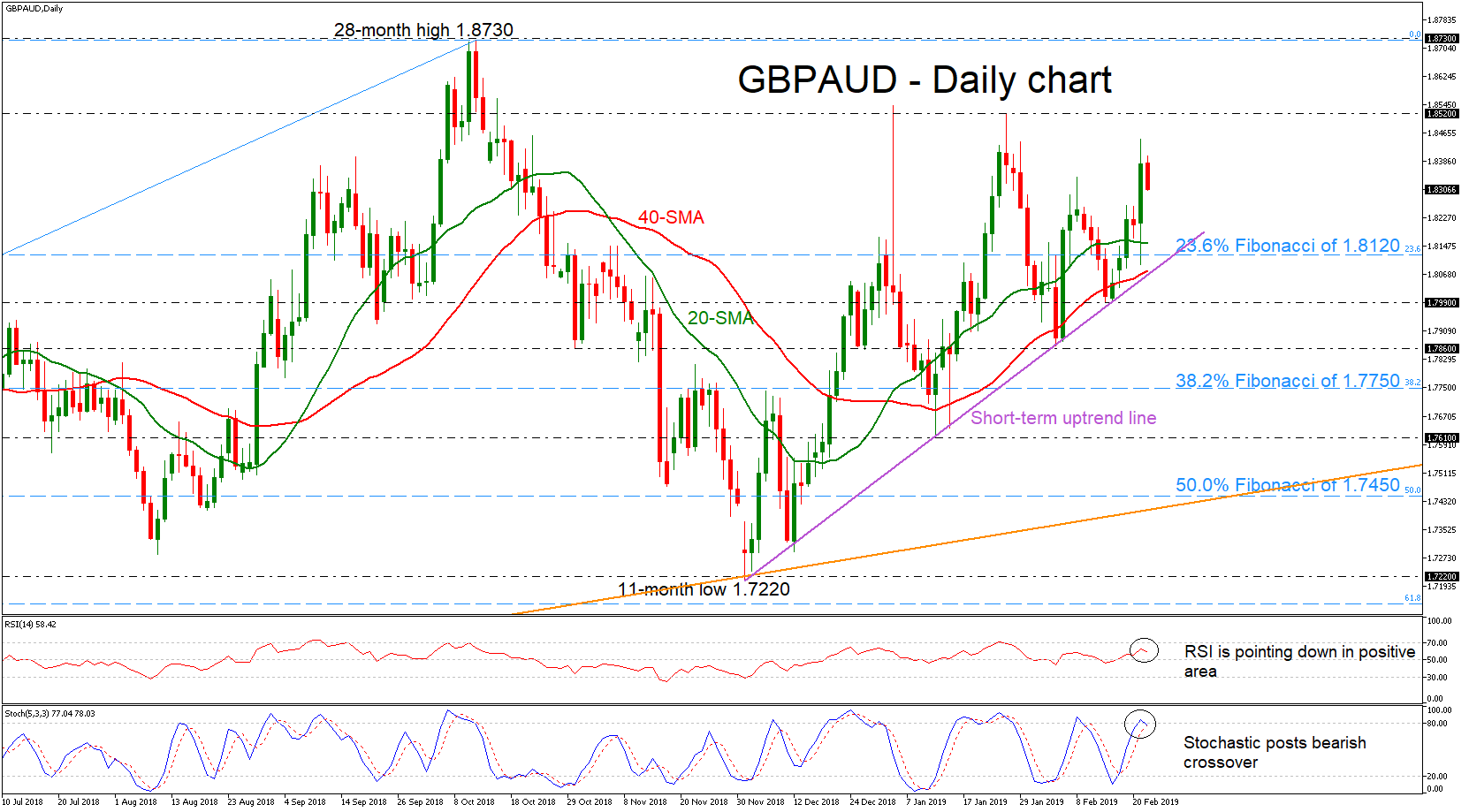
GBPAUD is paring yesterday’s gains significantly above the 23.6% Fibonacci retracement level of the upleg from 1.6160 to the 28-month high of 1.8730. The technical indicators have a steeper negative slope now. The RSI is heading towards the neutral threshold of 50, while the stochastic is moving down, attempting a bearish cross within the %K and %D lines in the daily chart.
Should the price retreat further, the 20-simple moving average (SMA) around 1.8155 could act as support before slipping again towards the 23.6% Fibonacci. Moving lower, the focus would shift to the 1.7990 support area, while lower still, a violation of this barrier and the short-term uptrend line would increase speculation that the bullish phase has ended and has switched to neutral.
To the upside, buyers could turn their attention to the 1.8520 latest high. Further up, the area around 1.8730 comes into view before pushing prices until the 28-month high of 1.8730, achieved on October 2018.
Overall, GBPAUD in the long term has been trading within an upside rally since October 2016, creating higher highs and higher lows during this period.
USDTRY Continues to Consolidate in a Sideways Range
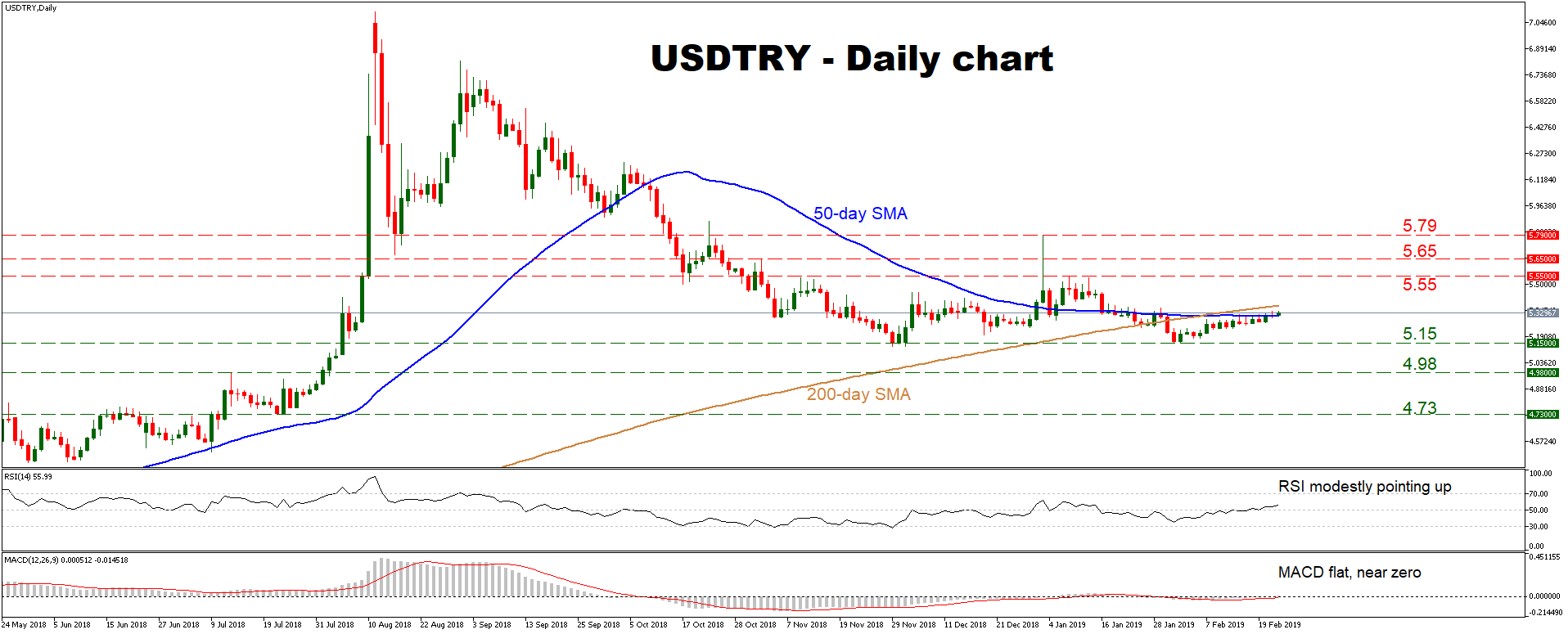
USDTRY remains neutral in the medium-term, staying trapped in a sideways range with an upper bound at 5.55 and a lower end at 5.15 since the beginning of November. Confirming the absence of a trend, the 50- and 200-day simple moving averages (SMAs) are very close to each other and have flattened out.
Indeed, the RSI is close to its neutral level, though is pointing slightly higher, while the MACD is adjacent to its red trigger line – both leveling out near zero.
Potential advances in the market could encounter immediate resistance near the 200-day SMA, currently at 5.37. A bullish break could open the door for the upper bound of the range at 5.55, where another clear upside violation would turn the picture to cautiously positive, setting the stage for a test of 5.65.
On the downside, initial support to declines may be found at 5.15, which halted the pullback on January 31. A bearish break would mark a lower low on the daily chart, allowing sellers to challenge the 4.98 hurdle, marked by the top of July 12.
In brief, a decisive move either above 5.55 or below 5.15 is required to alter the neutral outlook.
Markets Await Outcome of High-Level US-China Trade Talks
Global sentiment and risk appetite will be heavily influenced by the outcome of high-level trade talks between the United States and China that began in Washington yesterday.
While there is a growing sense of optimism over both sides securing a deal, a more realistic outcome will be for an agreement to extend the 1 March deadline. Such a development will open the doors to further negotiations down the road – ultimately removing some element of uncertainty over trade, while also reducing tensions. A return of risk appetite amid easing tensions will certainly be good news for global equities and emerging markets but will signal bad luck for King Dollar.
It has not been the best of trading weeks for the Dollar, especially after minutes from January’s FOMC meeting revealed that policymakers were unsure if rate hikes were needed this year. The Dollar is clearly facing multiple headwinds in the form of disappointing economic data and speculation over the Fed taking a long pause on rate hikes this year. While the economic and central bank divergence between the United States and everyone else seems to be supporting the Dollar, the question is - for how long? The Dollar may lose its throne, as fears over US growth slowing down sends investors to other safe-havens like the Japanese Yen and Swiss Franc.
In the United Kingdom, the Brexit saga has dragged on for too long and this fatigue is slowly being reflected in the Pound’s valuation. This was a week filled by Brexit noise, political drama in the UK and endless uncertainty. The pessimism over Theresa May securing any deal with the EU was re-confirmed this morning, after an EU official stated that “there will be no deal in the desert” at the summit in Egypt next week. I believe the Pound could still be offered a lifeline amid the chaos if the government extends Article 50 in an effort to prevent a no deal outcome. Taking a look at the technical picture, bears are seen to be re-entering the scene if a weekly close below the psychological 1.3000 level is achieved.
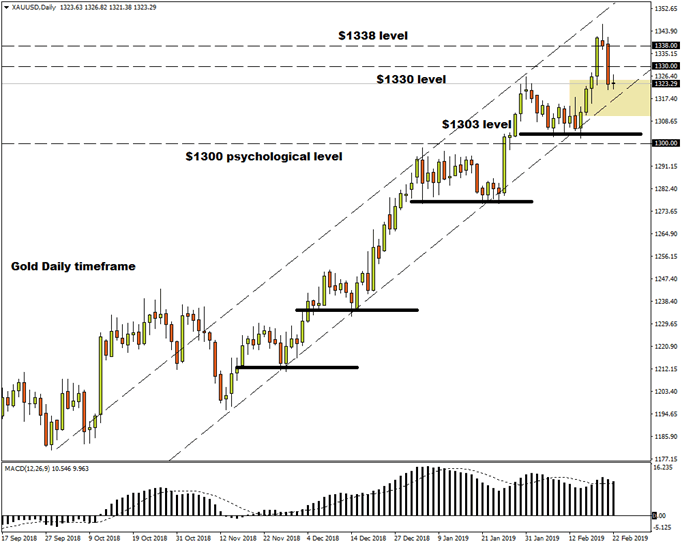
Taking a peek into the commodity markets, Gold is set to cap two consecutive weeks of gains after briefly reaching its highest level since April 2018 earlier this week. With US President Donald Trump set to meet China’s top trade negotiator, Vice Premier Liu He, later today, investors are left hanging on the edge of their seats just one week before the 1 March deadline. Any positive headlines of a trade deal being struck between the world’s two largest economies may put downward pressure on bullion prices. On the other hand, concerns about global growth momentum may offer support for Gold. Recently, weaker-than-expected economic data out of the US is starting to pose questions about the resilience of the world’s largest economy, especially when set against the slowdown evident in the EU and China.
In regards to the technical perspective, the precious metal seems to be in the process of creating a new higher low. The bullish trend on the daily charts remains valid above the $1303 support level.
DAX Jumps On Optimism Over U.S-China Trade Talks
The DAX index has posted considerable gains in Friday trade, after a pause on Thursday. Currently, the DAX is at 11,484, up 0.53% on the day. On the release front, German data was soft. Final GDP for the fourth quarter came in at 0.0%, matching the forecast. Ifo Business Climate dropped to 98.5, shy of the estimate of 99.0 points. In the eurozone, inflation dipped to 1.4%, slowing down for a third straight month.
It’s been an excellent February for the DAX, which has climbed 2.8%. Risk appetite remains high, but German numbers continue to disappoint. On Friday, fourth-quarter GDP showed no change, after a contraction of 0.2% in the third quarter. The Ifo Business Climate survey slowed for a sixth successive month, indicating concern in the business sector about the country’s economic outlook. German manufacturing PMI contracted for a second straight month, while German CPI declined in January for the first time in a year. As the largest economy in the eurozone, Germany is the bellwether for the entire eurozone, and if German data continues to miss expectations, risk apprehension could rise and weigh on equity markets.
Is a breakthrough around the corner in the U.S-China trade rift? Trade officials are holding a fourth round of talks in Washington this week. The talks are reportedly making substantial progress, as negotiators are preparing memorandums of understanding on key issues such as cyber theft and intellectual property rights. The trade war has triggered a slowdown in China and weighed on global stock markets. The U.S. has threatened to raise tariffs on March 1 if a deal is not reached, so there is strong pressure to reach a deal before the deadline. If the negotiations continue to make progress, traders can expect the DAX to move higher.
EURCHF Neutral In Both The Short- And Medium-Term
EURCHF has been trading in a sideways manner during the past few weeks, staying confined in a relatively narrow range between 1.1445 and 1.1305. Attesting to the neutral short-term bias, price action is also taking place between the 50- and 200-day simple moving averages (SMAs).
Momentum oscillators are also flat, with the RSI resting near its neutral 50 level, while both the MACD and its red trigger line are close to zero.
Potential declines in the pair could meet initial support near the crossroads of the 1.1305 level and the 50-day SMA, which is currently at 1.1313. If the bears violate that area, that would turn the bias to cautiously negative, opening the door for a test of 1.1255 – the January 24 low.
On the other hand, advances in the market may stall near the 200-day SMA at 1.1410. Even higher, the 1.1445 level would be eyed, with another break above that hurdle turning the short-term picture to cautiously positive.
The medium-term outlook is also neutral, with price action taking place between 1.1180 and 1.1500 since September.
Summarizing, a break above 1.1445 could signal more advances, while a move below 1.1305 may be the trigger for greater declines.
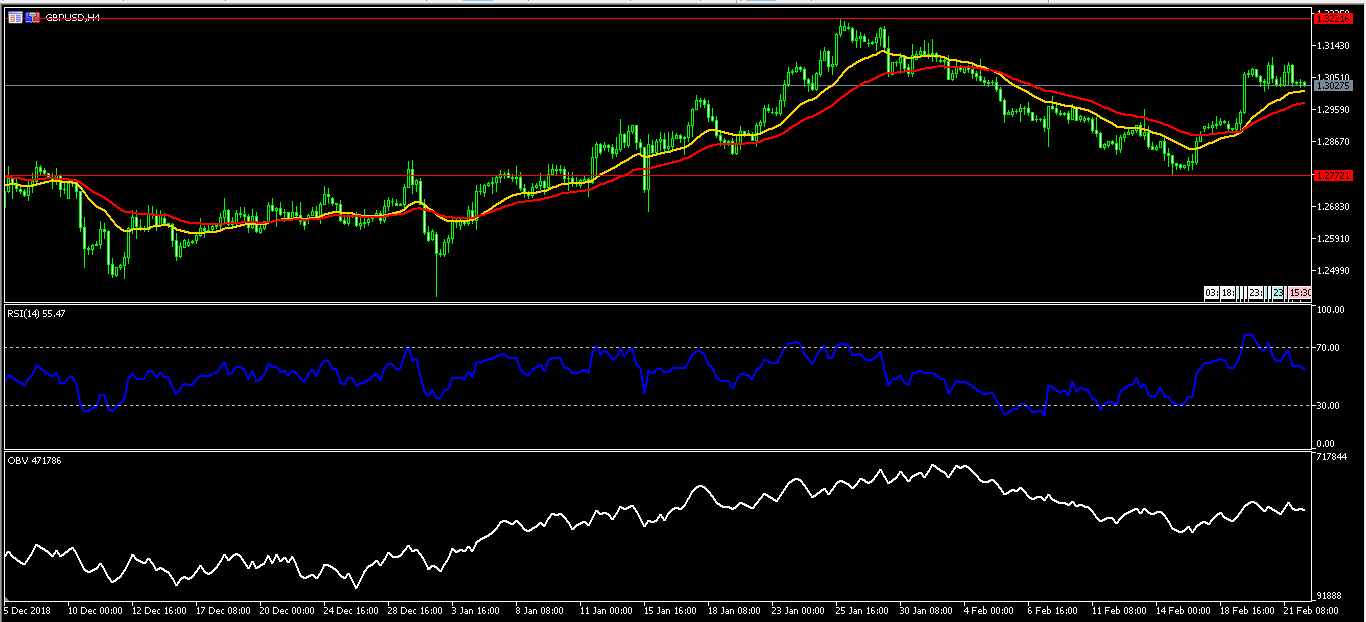
USDJPY Turning Bullish Above 110.80
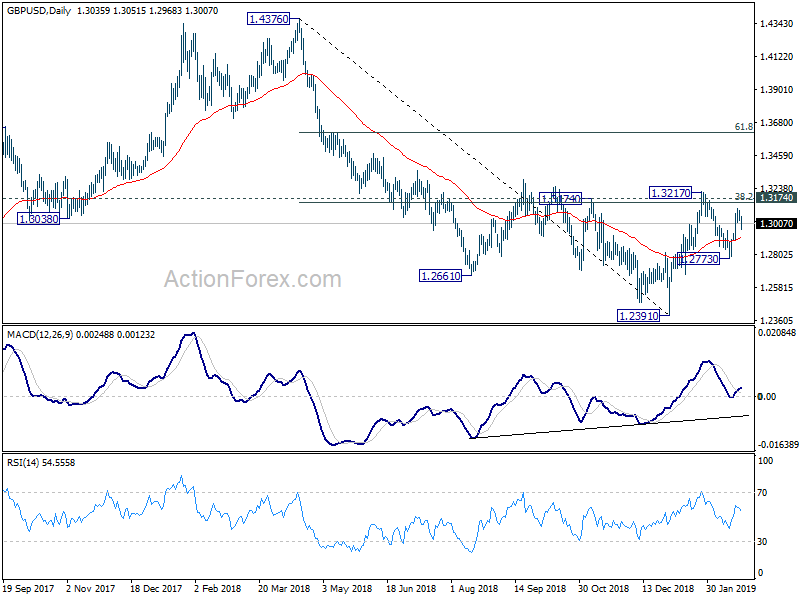
The US dollar is trading above the 110.80 level against the Japanese yen currency, after bullish reports from ongoing trade talks between US and Chinese government officials. Bulls have control of the USDJPY above the 110.80 level and may soon start to challenge the monthly price high, around the 111.12 level. Some caution is advised, as the pair is currently showing bearish MACD divergence on the four-hour time frame.
The USDJPY pair is bullish while trading above the 110.80 level, key technical resistance is found at the 111.12 and 111.40 levels.
If the USDJPY pair trades below the 110.40 level, sellers may test towards the 110.24 and 110.10 support levels.