

Sample Category Title
Canada’s Inflation Climbed To A 7-Year High Level In July
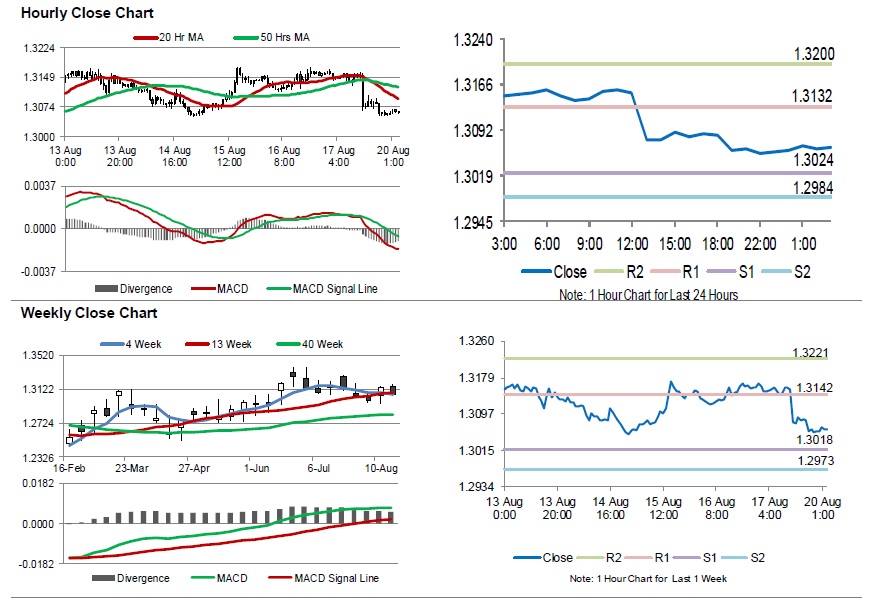
For the 24 hours to 23:00 GMT, the USD declined 0.73% against the CAD and closed at 1.3062 on Friday.
In the economic news, Canada's consumer price index (CPI) climbed 3.0% on an annual basis in July, notching a 7-year high level and boosted by rising fuel and air transportation prices. In the prior month, the CPI had advanced 2.5%.
In the Asian session, at GMT0300, the pair is trading at 1.3064, with the USD trading marginally higher against the CAD from Friday's close.
The pair is expected to find support at 1.3024, and a fall through could take it to the next support level of 1.2984. The pair is expected to find its first resistance at 1.3132, and a rise through could take it to the next resistance level of 1.3200.
The currency pair is trading below its 20 Hr and 50 Hr moving averages.
Aussie Trading Lower, Ahead Of The RBA Meeting Minutes
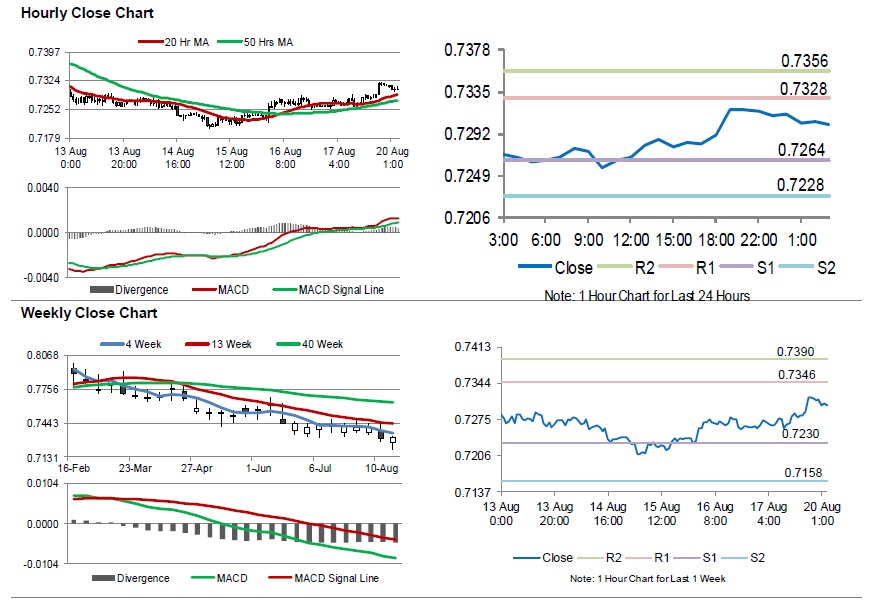
For the 24 hours to 23:00 GMT, the AUD rose 0.74% against the USD and closed at 0.7316 on Friday.
LME Copper prices declined 0.3% or $16.0/MT to $5844.0/MT. Aluminium prices rose 0.1% or $1.0/MT to $1999.0/MT.
In the Asian session, at GMT0300, the pair is trading at 0.7301, with the AUD trading 0.21% lower against the USD from Friday’s close.
The pair is expected to find support at 0.7264, and a fall through could take it to the next support level of 0.7228. The pair is expected to find its first resistance at 0.7328, and a rise through could take it to the next resistance level of 0.7356.
Looking ahead, investors will closely monitor the Reserve Bank of Australia’s (RBA) August meeting minutes, slated to release overnight.
The currency pair is trading above its 20 Hr and 50 Hr moving averages.
Gold: Yellow Metal Extends Its Gains In The Morning Session
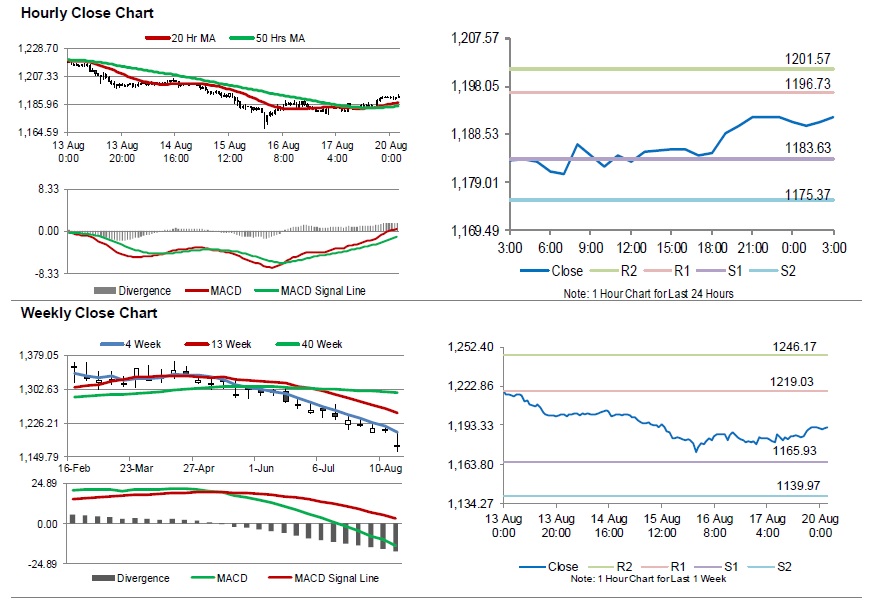
For the 24 hours to 23:00 GMT, Gold rose 0.59% against the USD and closed at USD1188.70 per ounce on Friday, amid weakness in the greenback.
In the Asian session, at GMT0300, the pair is trading at 1191.90, with gold trading 0.27% higher against the USD from Friday’s close.
The pair is expected to find support at 1183.63, and a fall through could take it to the next support level of 1175.37. The pair is expected to find its first resistance at 1196.73, and a rise through could take it to the next resistance level of 1201.57.
The yellow metal is trading above its 20 Hr and 50 Hr moving averages.
Silver: White Metal Trading On A Weaker Footing In The Asian Session
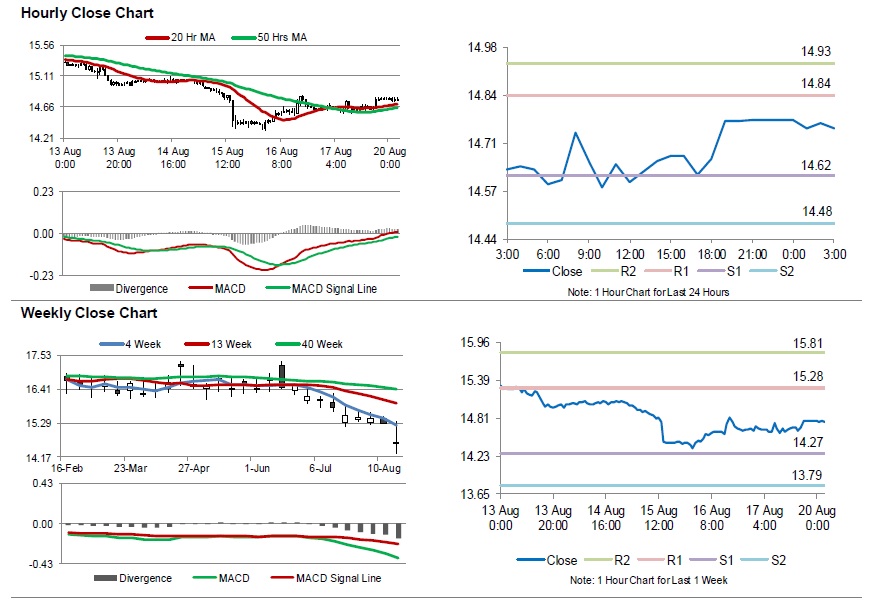
For the 24 hours to 23:00 GMT, Silver rose 0.82% against the USD and closed at USD14.77 per ounce on Friday, tracking rise in gold prices.
In the Asian session, at GMT0300, the pair is trading at 14.75, with silver trading 0.14% lower against the USD from Friday’s close.
The pair is expected to find support at 14.62, and a fall through could take it to the next support level of 14.48. The pair is expected to find its first resistance at 14.84, and a rise through could take it to the next resistance level of 14.93.
The white metal is trading above its 20 Hr and 50 Hr moving averages.
Crude Oil: Crude Oil Reverses Its Gains In The Asian Session
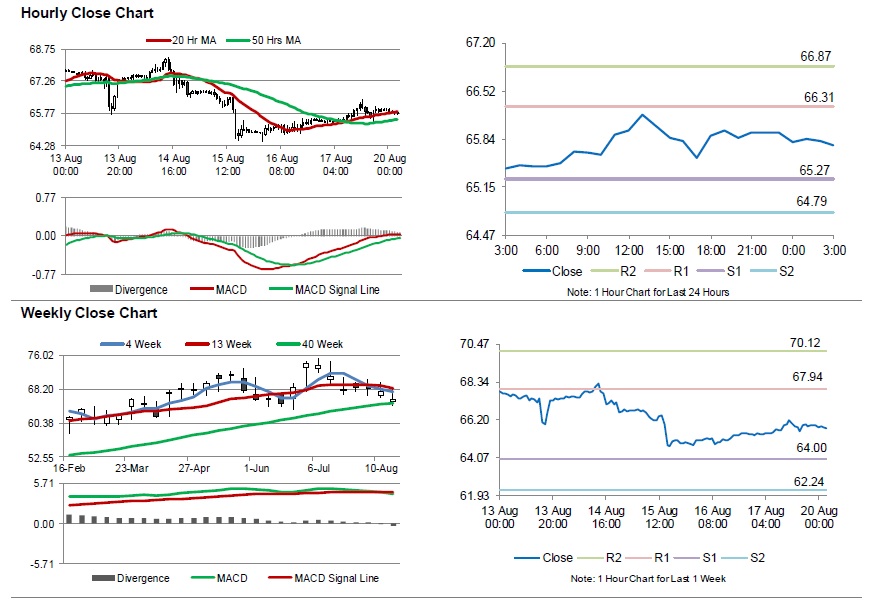
For the 24 hours to 23:00 GMT, Crude Oil rose 0.69% against the USD and closed at USD65.85 per barrel on Friday, amid easing trade tensions between the US and China.
Meanwhile, fresh figures from Baker Hughes disclosed that the number of active oil rigs remained unchanged at 869 in the week ended 17 August.
In the Asian session, at GMT0300, the pair is trading at 65.75, with oil trading 0.15% lower against the USD from Friday’s close, amid concerns over slowing economic growth.
The pair is expected to find support at 65.27, and a fall through could take it to the next support level of 64.79. The pair is expected to find its first resistance at 66.31, and a rise through could take it to the next resistance level of 66.87.
Crude oil is showing convergence with its 20 Hr moving average and trading above its 50 Hr moving average.
Economists project 2 BoE hikes next year, we disagree
According to a Bloomberg survey, majority of the 31 economists surveyed expected BoE Bank Rate to reach 1.25% by the end of 2019. That is, they expected two 25bps rate hikes next year. The first move is expected to come in Q2. It's cited that Brexit is a concern that slows BoE's tightening path. But by the time of Q2 next year, such concerned should be cleared. Meanwhile, falling inflation could only give BoE a reason to keep rates on hold until May. With Brexit cleared, and unfolded smoothly, path will be clear for another hike in November. Some analysts also saw BoE's unanimous votes as sign that policymakers are confident enough to act twice next year. The Bank Rate currently stands at 0.75%.
But it should noted that BoE has revised down the rate path in August Inflation Report released less than three weeks ago. The central bank forecast Bank Rate to hit 0.9% in Q3 2019, revised down from 1.0%. Bank Rate is forecast to be at 1.0% in Q3 2020, revised down from 1.2%.
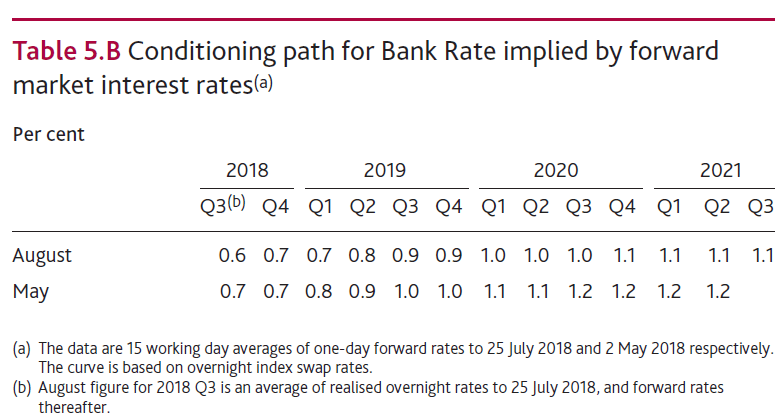
Looking into the details, the conditioning path that BoE used didn't price in a 25bps hike fully until 2020. And basically there would be no more hike within the forecast horizon. And based on such conditioning path, CPI is forecast to slow to 2.2% in Q3 2019, 2.1% in 2020. July's pick up in CPI to 2.5% was in line with BoE's expectations.
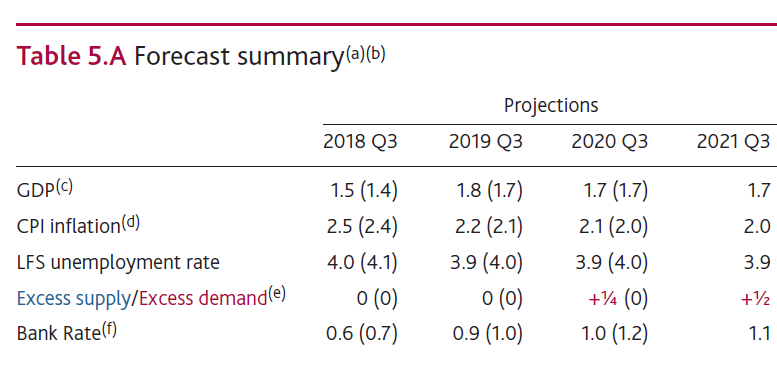
So, to us, a hike in H2 of 2019 is possible based on the current projections and developments. But a hike in Q2 2019 looks a bit stretched. And two hikes in 2019 is rather far-fetched.
Moreover, the unanimous vote was seen to us as a compromise between hawks and doves. That is, BoE was going to hike once this year anyway as Q1 slowdown was proven to be temporary. Let's do it and settle, but to stay graudual and cautious going forward.
Market Morning Briefing: Dollar Index Could Find Support Near 95.75-95.50
STOCKS
Global equities do not look very strong just now. Either the indices could see a rejection from resistance levels above current levels or sideways consolidation would be preferred.
Dow (25669.32, +0.43%) has moved up to again test immediate resistance near 25750. If the resistance holds, a fall back to levels near 25500 or lower is possible else a rise above 25750 could indicate bullishness and take the index towards 26000-26500 in the medium term.
Dax (12210.55, -0.22%) is trading lower and while it remains below 12300, there is scope on the downside towards 12000. Immediate support is visible on the 3-day candles but that could break on the downside if the index chooses to trade lower and come off in the next few sessions. Weekly charts show a break below immediate trend support.
Nikkei (22226.45, -0.20%) is trading higher after bouncing from support near 21850. Trade within 22800-21850 is likely to continue for a couple of more weeks. A break on either side of this range is needed to interpret the next directional movement.
Shanghai (2680.87, +0.45%) looks weak towards support near 2650 from where some corrective rise or consolidation could take place. Overall weakness is visible for at least some more time. Trade within 2750-2650 may continue for the next 3-4 sessions.
11500 on Nifty (11470.75, +0.75%) is still a level to keep an eye on. A break above could trigger a rise towards 11600-11800 in the medium term while a fall from here could lead to some sideways consolidation in the resistance at 11500 and prefer a fall towards 11300-11200 in the 11300-11500 region.
COMMODITIES
Commodities mostly look stable to weak in the medium term. Some sideways consolidation in the near term is possible with a possible test of respective resistances on the upside.
Nymex WTI (65.01) and Brent (71.59) are slightly higher than the levels seen on Friday.WTI could test resistance near 67 which if holds could bring in more weakness in the medium term towards 64-62. Brent is trading in the narrow 70-73 region and could continue to remain so for the next 2-3 sessions at least.
Gold (1191.80) could see some sideways range trade in the 1160-1200 region for this week with an attempt to rise back above 1200. While below 1200, gold looks weak towards 1160-1150 in the medium term.
Copper (2.6460) has risen from 2.55 and could test immediate trend resistance near 2.70. A sharp fall in the Shanghai composite index if seen could bring down Copper prices also to lower levels below 2.60. Watch if important resistance near 2.70 holds or breaks this week.
FOREX
Dollar strength could see some pause in the first part of the week with Euro strengthening towards 1.147-1.155 and Yen towards 110.0-109.5. However,the broader trend looks supportive of continued Dollar strength in the weeks ahead.
Euro (1.143):As per expectation Euro has risen towards 1.145. There is resistance in the 1.147-1.155 zone. Current preference is for the resistance to hold, leading to another downmove towards 1.13 later in the week.
Dollar Index (96.17): Dollar Index could find support near 95.75-95.50, or else, it could rise from current levels itself back towards 97 in this week. A break below 95.50 is currently not preferred.
Dollar Yen (110.54): While below 111.0-111.2, Dollar Yen in the next 2-3 sessions looks bearish towards 110.0-109.5 - which is a crucial support zone. A break below this zone would be quite bearish and is currently less preferred.
Euro Yen (126.38): Resistance near 126.6-127.0 could keep the upside capped in this week. Previous low of 124.62 is the crucial level on the downside which needs to break to confirm bearishness towards 1.23-1.22.
Pound (1.2742): Although the broader trend is bearish towards 1.25-1.24 in the next 2-3 weeks, this week could see some upward correction towards 1.285 (max till 1.295).
Dollar Rupee (70.155): Range 69.90-70.40 within overall uptrend. May look to buy dips to 70.00-69.90 for the near-term. NDF trading lower near 69.86 could be an indication of an opening near 69.90.
INTEREST RATES
The dip in US Yields since the beginning of August might have been attributed to "flight to safety" in a trade-war and "risk-off" environment. It is to be seen whether they inch up a bit this week if the US-China trade talks are seen as anywhere near meaningful.
Possibly more importantly, the market will try to read between the lines of the FOMC Minutes (22nd Aug, Wed) and the ECB Monetary Policy Meeting Accounts (23rd Aug). Also, how the market interprets these Minutes in light of the recent dip in Crude prices will be important.
As mentioned on Thursday (16th Aug), the US 10Yr (2.86%) may be ranged between 2.82-90% for now and may have room down to 2.75-70% while below 2.90% and on a break below 2.82%.
An eye should be kept on the US Yield Curve, where there has been a bit of curve-steepening between the 30-10Yr (0.16%) and 30-5yr (0.28%) has been going on since July. It can also be seen slightly in the 10-5 (0.12%), but less than the steepening at the Far end. We need to see if the US 5Yr (2.74%) falls more sharply, towards 2.60%. This could lead to greater Curve Steepening.
Watch also the German-US 2Yr Spread (-3.27%) to see whether it can rise past -3.24%. A rise past -0.60% on the German 2Yr would help that. Such a rise could help the Euro (1.1430) rise some more.
Over in Japan, the 30Yr JGB (0.84%) has got good Resistance just overhead. It will be crucial to see if that holds or breaks. Note that the 10Yr JGB (0.10%) has broken out of the long-term downtrend has been in since levels near 1.8% in 2008.
UK to publish technical notices on no-deal Brexit preparations
UK Brexit Minister Dominic Raab will meet EU chief Brexit negotiator Michel Barnier in Brussels on Tuesday. Prime Minister Theresa May's spokesman said that "on the agenda will be resolving the few remaining withdrawal issues related to the UK leaving the EU and pressing ahead with discussions on the future relationship."
Raab said that securing a Brexit deal was still "the most likely outcome". But at the same time, the government scheduled to push a series of technical notices for no-deal preparation. Raab added that the government would wanted to "clearly set out the steps that people, businesses and public services need to take in the unlikely event that we don't reach an agreement" with the EU.
The no-deal advice will be due on Thursday and are "sensible, proportionate, and part of a common sense approach to ensure stability, whatever the outcome of talks", according to Raab.
CFTC Commitments of Traders: EUR Turned to NET SHORT Amidst Contagion Fear
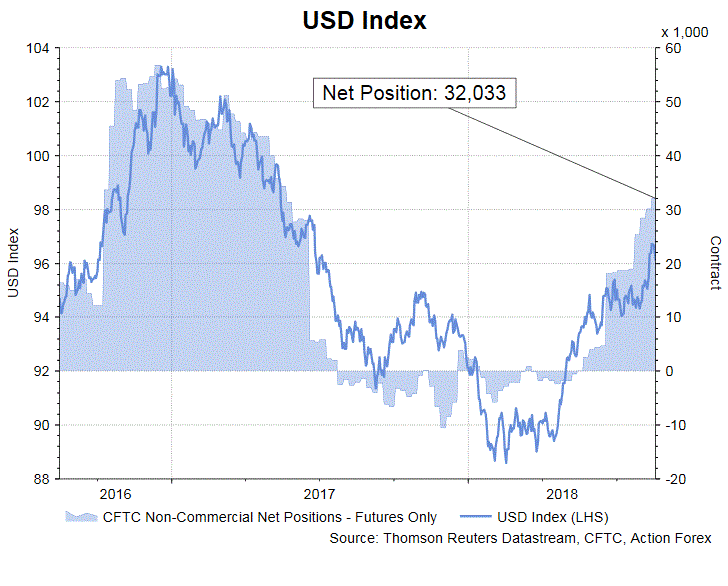
As suggested in the CFTC Commitments of Traders report in the week ended August 14, NET LENGTH of USD index increased further, by +1 931 contracts, to 30 102 for the week. This was driven by the fact that the increase in speculative long positions doubled that of shorts.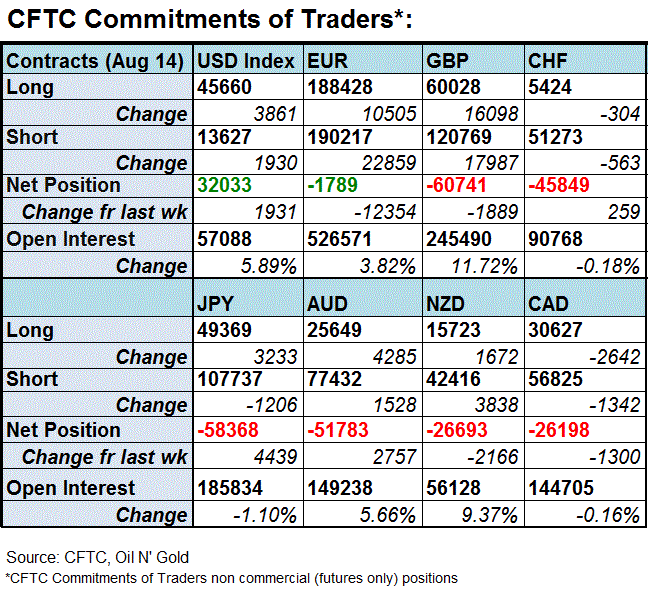
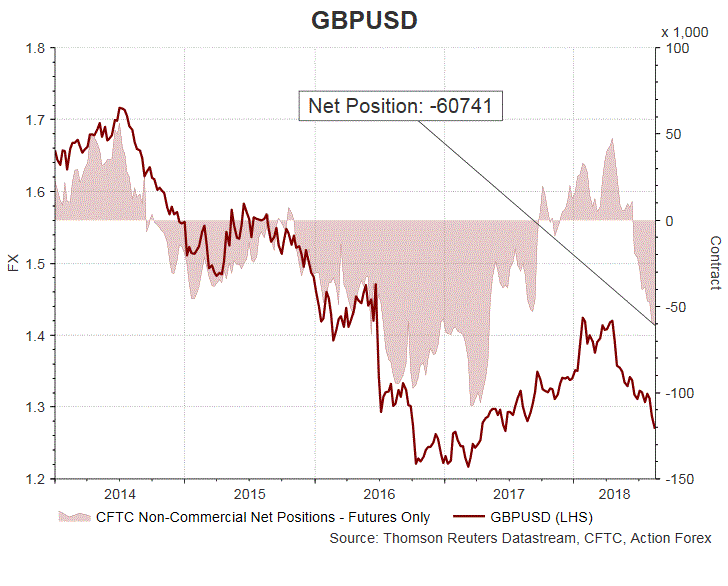
 EUR futures turned to NET SHORT of 1 789 contracts, from NET LENGTH of 10 565 contracts a week ago. Turkish currency crisis has raised concerns that the problem would spread to other European countries, especially those having high exposure to Turkey. speculative long positions increased +10 505 contracts but were more than offset by the +22 859 increase in short positions. Meanwhile, NET SHORT for GBP futures deepened to 60 741 contracts, up +1 889 from the prior week.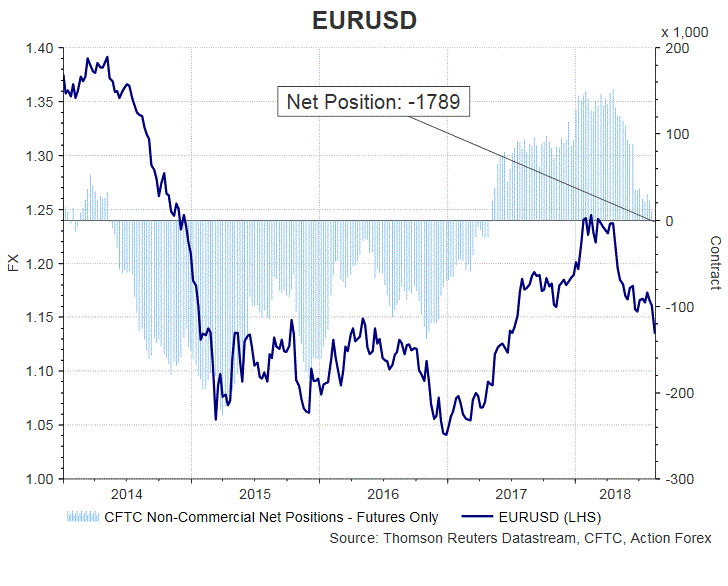
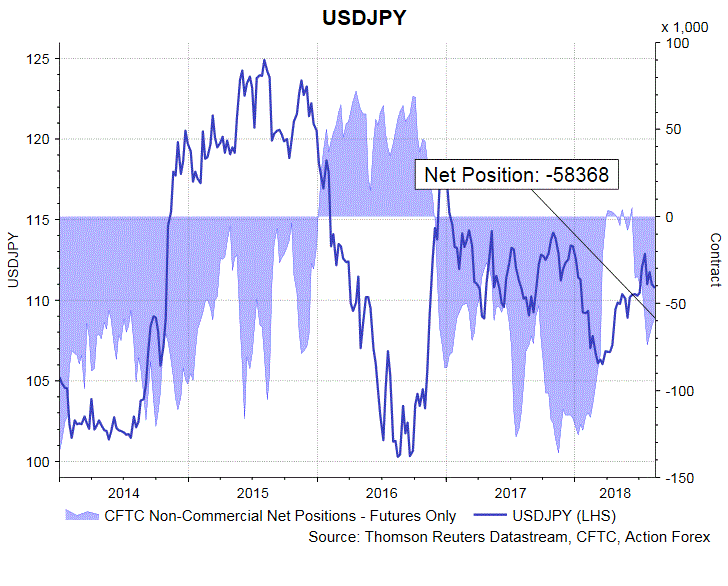
 On safe-haven currencies. Net SHORT for CHF futures slipped -259 contracts to 45 849 while that for JPY futures plunged -4 439 contracts to 58 368 during the week. As we predicted last week, there were bigger bets for price increases for both currencies as geopolitical tensions in Turkey, Russia and Iran have raised demand for safe haven assets.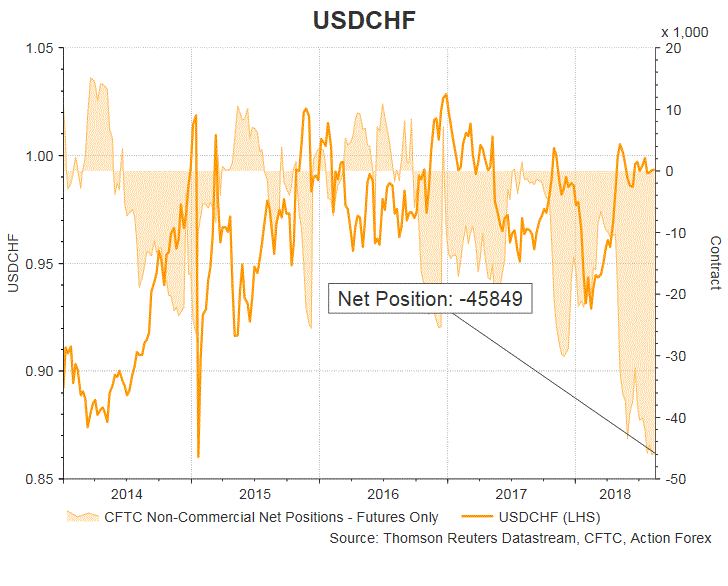
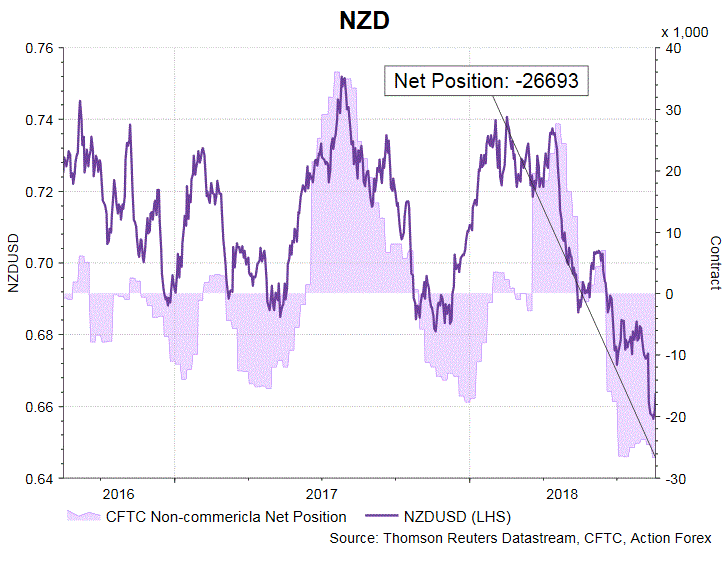
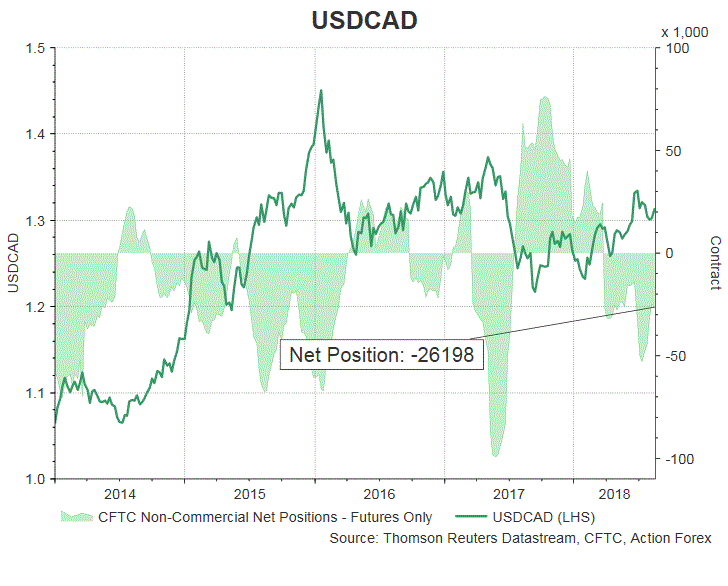
 All commodity currencies stayed in NET SHORT positions. NET SHORT for AUD futures dropped -2 757 contracts to 51 783, while that for NZD futures gained +2 166 contracts to 26 696 . NET SHORT for CAD futures rose +1 300 contracts to 26 198.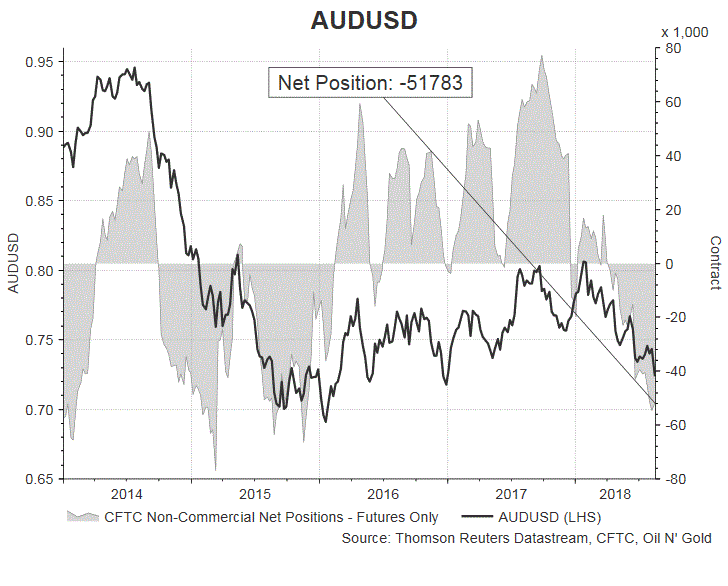
German Finance Ministry: Turkish crisis adds to risks of Brexit and trade war
In its monthly report, the German Finance Ministry the "economic developments in Turkey present a new, external economic risk" to the economy. Germany is the second largest foreign investor in Turkey.
That adds on trop of Brexit as "risks remain particularly with regards to uncertainty over how Brexit is going to pan out".
US trade policy is another main risk as "the persistent debate about tariffs and the threat of a trade war are choking trade activity."
Nonetheless, despite the risks, the Minstry said the economy remains supported by state spending, private consumption, low interest rates, a robust labor market and rising real wages.