

Sample Category Title
Turkish Lira Calmed by CBRT Announcements, But Stays Vulnerable
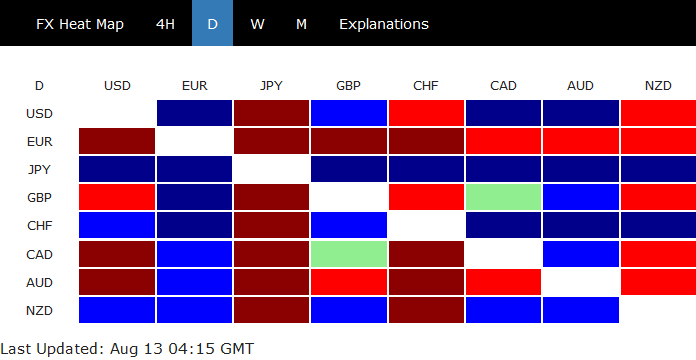
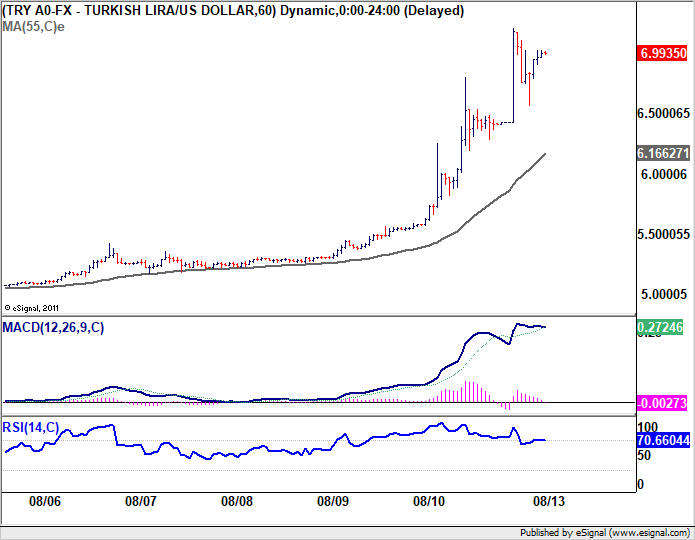
Turkish Lira continues to be the dominant theme in the financial markets today. The efforts by the government seemed to have calmed the markets a bit, in particular after CBRT's announcements. But at the time of writing, USD/TRY is still up more than 4% today at around 6.7. It's still vulnerable for another rise back above 7 handle. Risk aversion keeps Yen and Swiss Franc as the strongest ones for today. Meanwhile, Euro and Australian Dollar tie for being the weakest. Dollar is trading mixed for the moment.
Asian stocks are generally in deep red. Nikkei closed down -1.98% at 21857.43. Hong Kong HSI is down -1.7%, China Shanghai SSE is down -1.1%, Singapore Strait Times is down -1.0%. Gold continues to receive no love despite risk aversion. It's hovering in tight range around 1210. Nonetheless, there is no selloff to push it through 1200 handle yet. WTI crude oil is also range bound at 67.5.
Technically, there is renewed selling in USD/JPY today as it dipped to as low as 110.10. As it's now close to 109.90 fibonacci level, we'll start to look for bottoming signal. AUD/JPY's break of 80.48 key support is also worth a mention as the cross has now resumed medium term down trend from 90.29. While Euro and Sterling stays weak, the decline is starting to look exhausted and we might see a bounce soon.
CBRT announced measures on Lira and FX liquidity management
The Turkish central bank CBRT announced measures on Lira and FX liquidity management today. In short, CBRT pledged to provide "all the liquidity the banks need". Discount rates for collateral against Lira transactions will be revised. Collateral FX deposit limits is raised from EUR 7.2B to EUR 20B. Banks are allowed to borrow FX despite in one-month maturity, in addition to one-week maturity. CBRT will release intermediary function as at the FX deposit markets. CBRT will also continue to buy foreign banknotes within their pre-determined limits at the Foreign Exchange and Banknotes Markets. Full statement here.
Separately, CBRT also announced to lower Lira reserve requirement ratios by 250bps for all maturities. RRR for non-core FX liabilities were lowered by 400bps, from 14-24% to 10-20%. Maximum average maintenance facility for FX liabilities has been raised to 8 percent. And, in addition to US dollars, euro can be used for the maintenance against Turkish lira reserves under the reserve options mechanism.
Erdogan blames Lira's free fall as a plot, an operation against Turkey
Turkish President Tayyip Erdogan told supports in Trabzon on the Black Sea coast on Sunday that the country is not in a crisis, and the Lira's free fall was a plot. He said "What is the reason for all this storm in a tea cup? There is no economic reason for this ... This is called carrying out an operation against Turkey."
Erdogan also repeated his call for citizens to buy Lira. He said, "I am specifically addressing our manufacturers: Do not rush to the banks to buy dollars. Do not take a stance saying 'We are bankrupt, we are done, we should guarantee ourselves'. If you do that, that would be wrong. You should know that to keep this nation standing is ... also the manufacturers' duty."
German EM Altmaier: We won't let Washington dictate us with whom we can do business
German Economy Minister Peter Altmaier launched strong attack on Trump for his tariffs and sanctions. He told Bild am Sonntag newspaper that "this trade war is slowing down and destroying economic growth - and it creates new uncertainties."
Meanwhile, the agreement between the EU and US "can only be first step". Altmaier emphasized "Our goal is a global trade order with lower tariffs, less protectionism and open markets."
Regarding US sanctions on Iran, Altmaier also pledged the Germany and EU will continue to support companies doing business with Iran. He warned that "we won't let Washington dictate us with whom we can do business and we therefore stick to the Vienna Nuclear Agreement so that Iran cannot build atomic weapons."
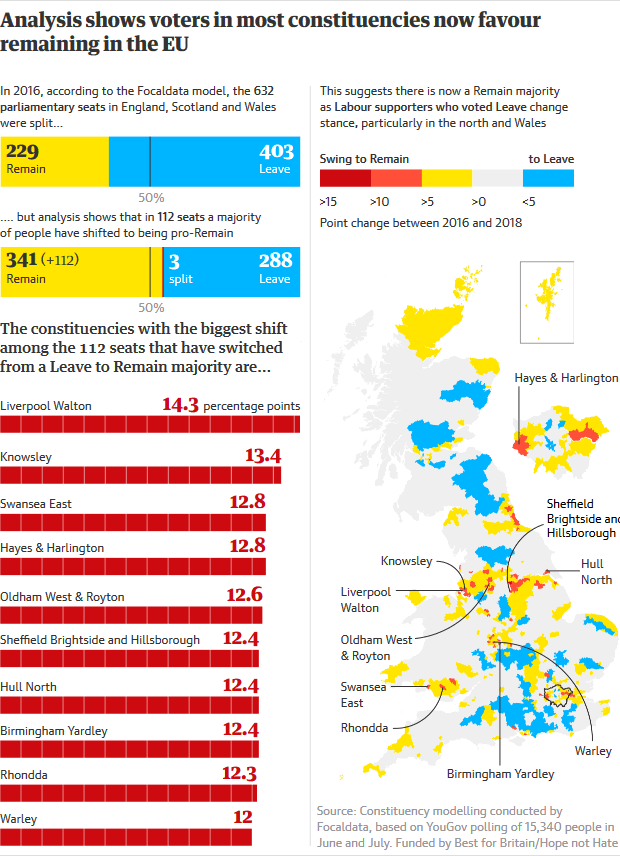
Study shows 112 constituencies switched from Brexit to Bremain
According to a latest study, more than 100 parliamentary seats have flipped from pro-Brexit in 2016 to pro-Bremain now. Focaldata, a consumer analytic company, compiled the breakdown data by modelling two YouGov polls conducted before and after Prime Minister Theresa May's Chequers Deal. The study was jointly commissioned by anti-Brexit group Best for Britain and anti-racist group Hope Not Hate.
The study found that 112 seats out of 632 in England, Scotland and Wales have switched from leave to Remain. And there are now 341 seats with majority Remain support, up from 229 seats at the referendum in 2016. Among the switches, 97 was in England, 14, in Wales and 1 in Scotland. Also, there is now a majority for Remain in both Scotland and Wales.
Eloise Todd, the chief executive of Best for Britain, said: "the sands of public opinion are shifting and politicians risk falling behind", and "the deal must be put to the people." Nick Lowles, head of Hope not Hate, said "the rate of change appears to be quickening as the realities of what Brexit would mean become more apparent and the fears of a no-deal Brexit grow".
The UK and EU are due to reconvene Brexit negotiation on Thursday in Brussels. UK is believed to be pushing the deadline for negotiation to October while EU is insisting to conclude it in September.
Looking ahead
Economic data are the major focuses this week with not major central bank events. Many currencies will have something that could move them. Retail sales is probably the main one from the US. UK employment, CPI and retail sales could all trigger volatility in the pound. Eurozone GDP and Germany ZEW will be watched closely. Australia employment and wage price, Canada CPI are also important events.
Here are some highlights for the week:
- Tuesday: Australia NAB business confidence; China, fixed asset investment, industrial production, retail sales; Germany GDP, CPI final, ZEW economic sentiment; Eurozone GDP UK employment data; US import prices
- Wednesday: Australia wage price index; UK CPI, PPI; US retial sales, Empire State manufacturing, non-farm productivity, industrial production, NAHB housing index
- Thursday: Japan trade balance; Australia employment; UK retail sales; Eurozone trade balance; Canada manufacturing sales; US building permits, housing starts, Philly Fed survey, jobless claims
- Friday: New Zealand PPI; Eurozone current account, CPI final; Canada CPI; US U of Michigan sentiment, leading indicator
USD/JPY Daily Outlook
Daily Pivots: (S1) 110.57; (P) 110.87; (R1) 111.23; More...
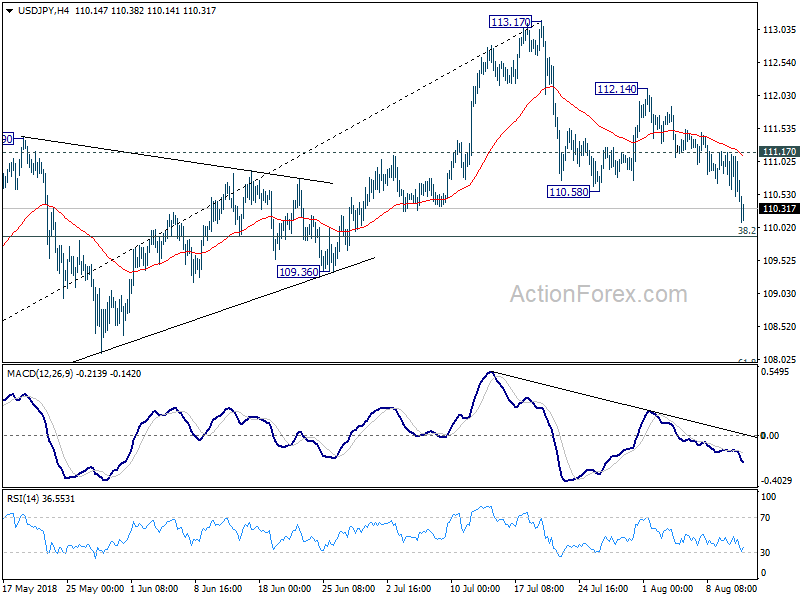
USD/JPY's correction from 113.17 extends lower to 110.10 so far today. Intraday bias stays mildly on the downside for deeper fall. At this point, we'd continue to expect strong support from 38.2% retracement of 104.62 to 113.17 at 109.90 to contain downside and bring rebound. On the upside, above 111.17 minor resistance will turn bias back to the upside. Further break of 112.14 will bring retest of 113.17 high. However, firm break of 109.90 will put focus on 109.36 key structural support level.
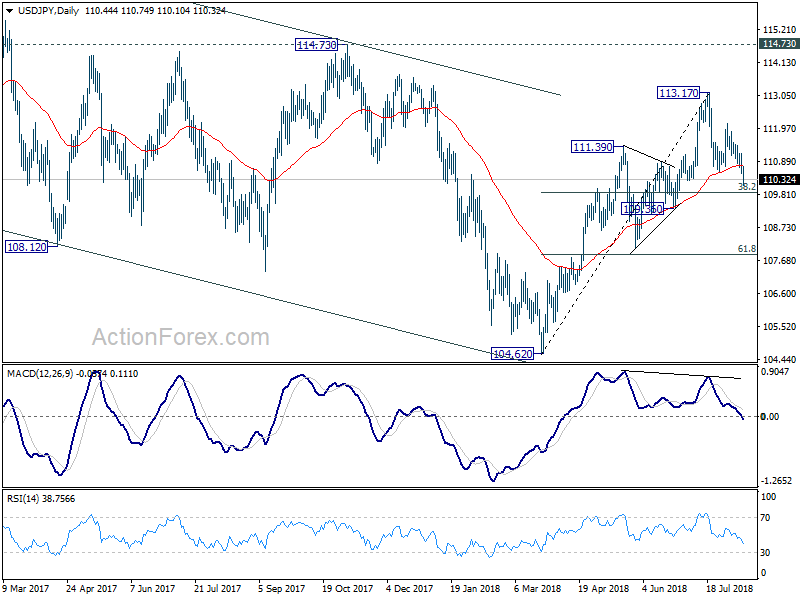
In the bigger picture, corrective fall from 118.65 (2016 high) should have completed with three waves down to 104.62. Decisive break of 114.73 resistance will likely resume whole rally from 98.97 (2016 low) to 100% projection of 98.97 to 118.65 from 104.62 at 124.30, which is reasonably close to 125.85 (2015 high). This will stay as the preferred case as long as 109.36 support holds.
Economic Indicators Update
| GMT | Ccy | Events | Actual | Forecast | Previous | Revised |
|---|---|---|---|---|---|---|
| 02:00 | CNY | M2 Money Supply Y/Y Jul | 8.20% | 8.20% | 8.00% | |
| 02:00 | CNY | New Loans (CNY) Jul | 1450B | 1210B | 1840B |
CBRT cuts lira reserve requirement ratios by 250 basis points.
More announcement from CBRT as Albayrak promised.
Below is full statement.
To support effective functioning of financial markets and flexibility of the banks in their liquidity management;
- Turkish lira reserve requirement ratios have been reduced by 250 basis points for all maturity brackets.
- Reserve requirement ratios for non-core FX liabilities have been reduced by 400 basis points for the following maturities.
| Other FX Liabilities | Current Reserve Requirement Ratios | New Reserve Requirement Ratios |
| Up to (and including) 1-year maturity | 24% | 20% |
| Up to (and including) 2-year maturity | 19% | 15% |
| Up to (and including) 3-year maturity | 14% | 10% |
- The maximum average maintenance facility for FX liabilities has been raised to 8 percent.
- In addition to US dollars, euro can be used for the maintenance against Turkish lira reserves under the reserve options mechanism.
With this revision, approximately 10 billion TL, 6 billion US dollars, and 3 billion US dollars equivalent of gold liquidity will be provided to the financial system.
Traders Deepened Bets on Higher US Dollar; Long Positions for Safe Haven Currencies Might Turn Positive Next Week on...
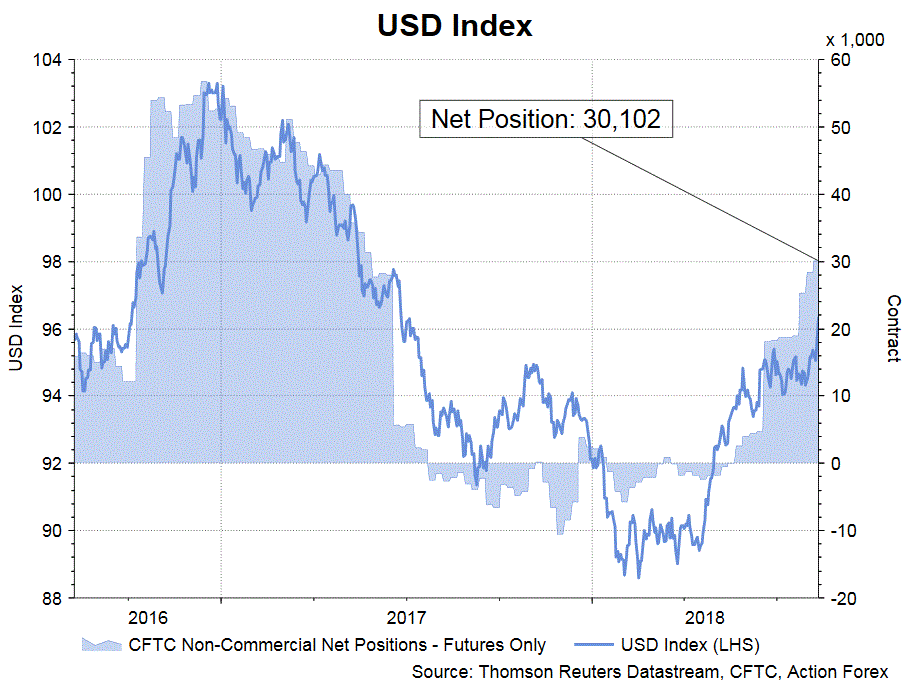
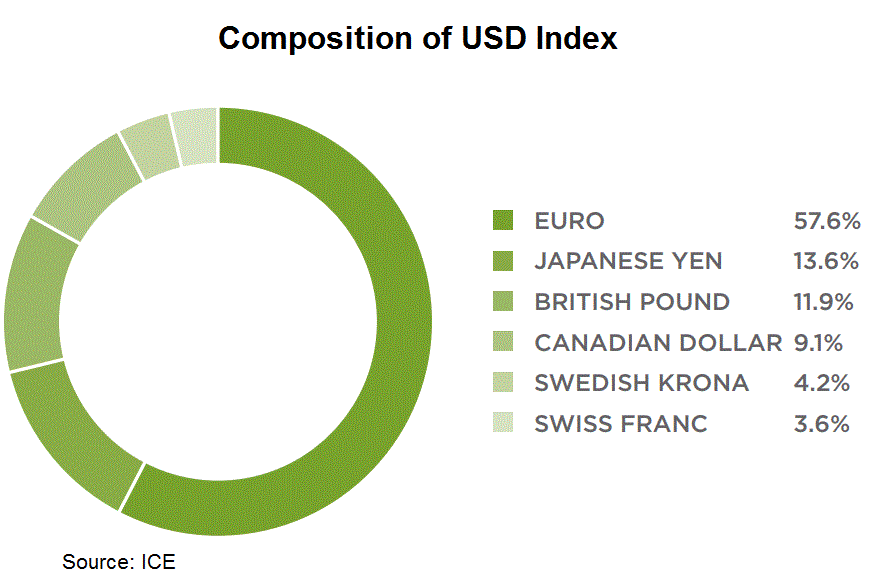
As suggested in the CFTC Commitments of Traders report in the week ended August 7, speculative long positions increased +1 039 contracts in USD index futures, while shorts dropped -607 contracts, resulting in an increase in NET LENGTH to 30 102 contracts for the week.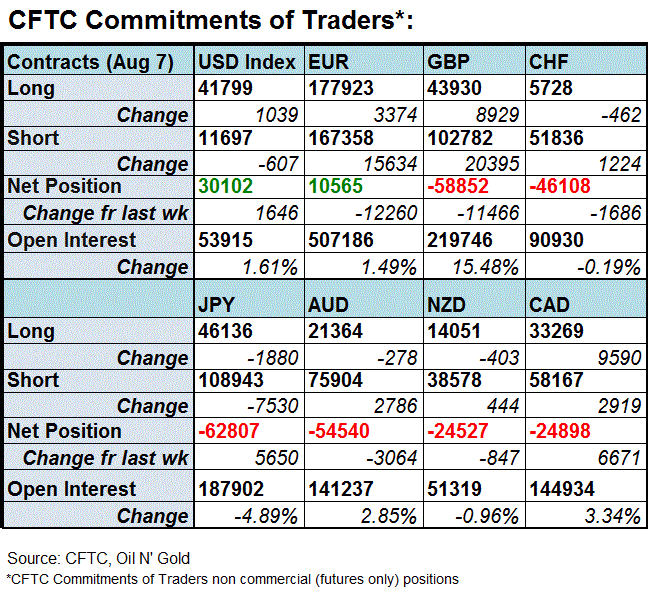
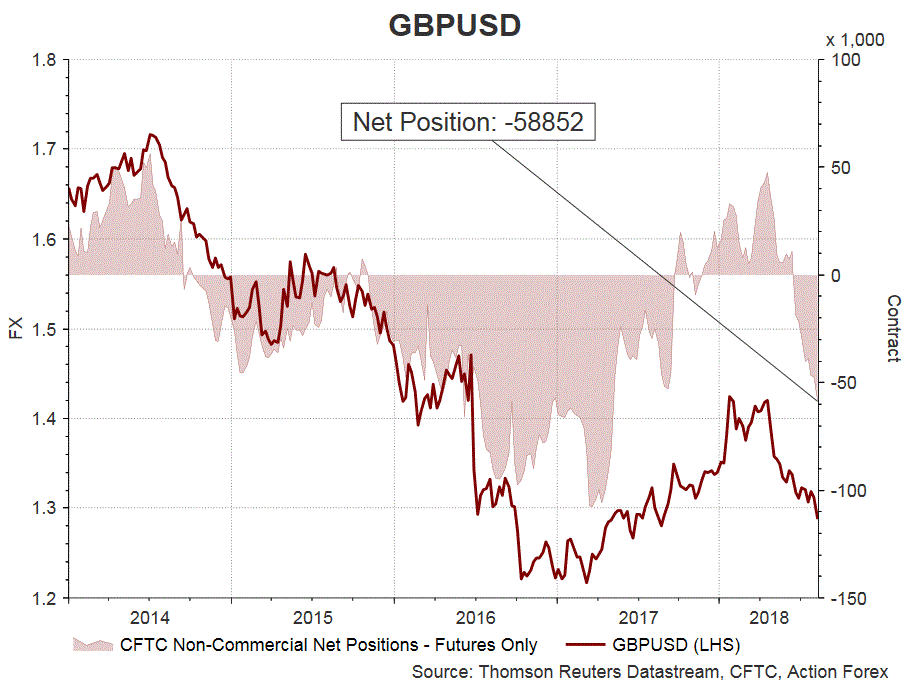
 For European currencies, traders raised speculative long positions on both euro and sterling futures. However, the increases in shorts for both were much bigger. NET LENGTH for EUR futures plunged -12 260 contracts to 10 565 for the week. Meanwhile, NET SHORT for GBP futures soared +11 466 contracts to 58 852.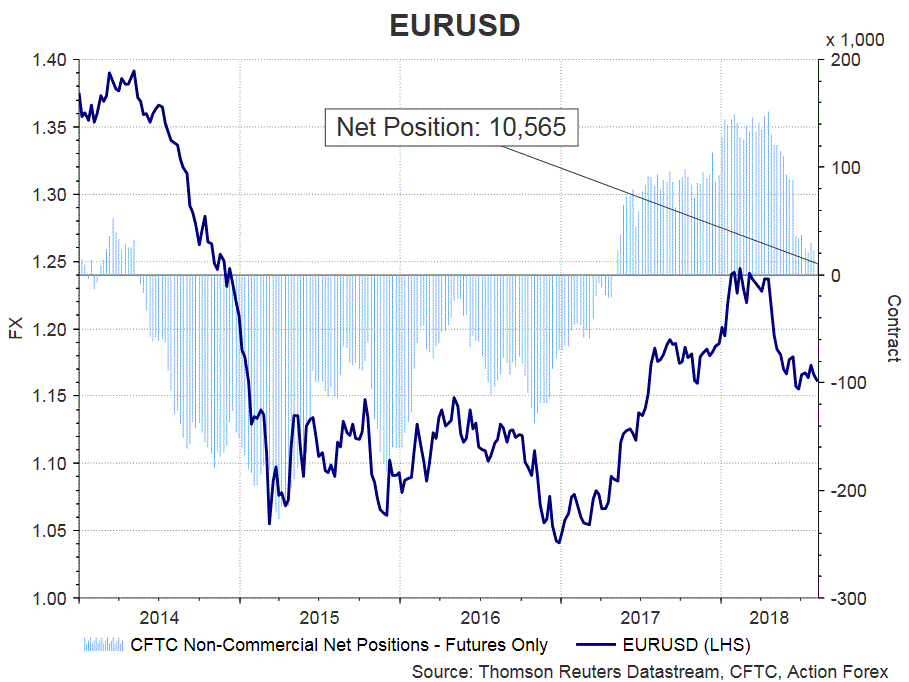
On safe-haven currencies. Net SHORT for CHF futures added +1 686 contracts to 46 108 while that for JPY futures plunged -5 650 contracts to 62 807 during the week. We expect to see bigger bets for price increases for both currencies as geopolitical tensions in Turkey, Russia and Iran have raised demand for safe haven assets.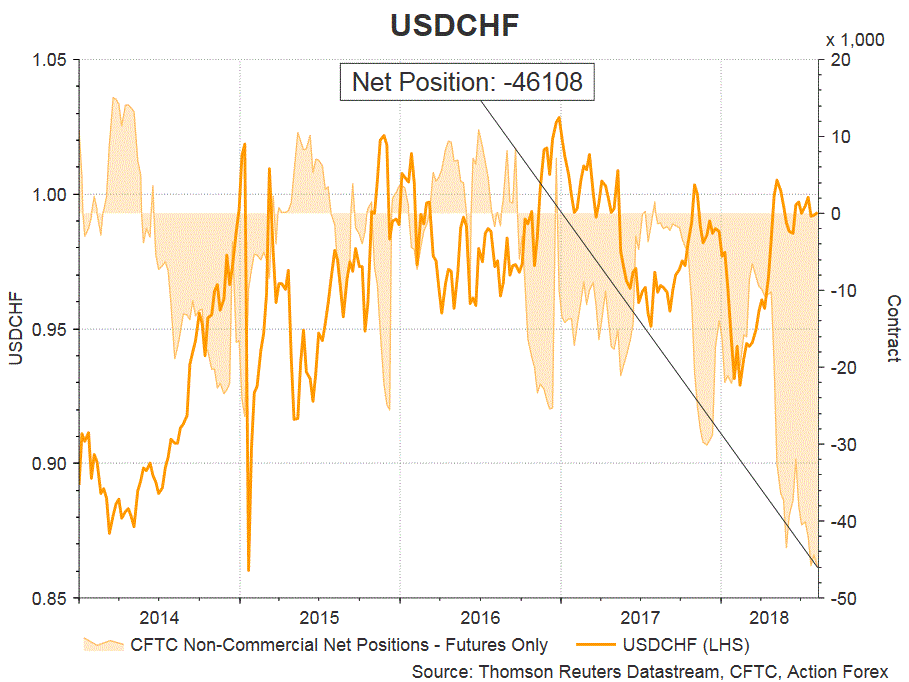
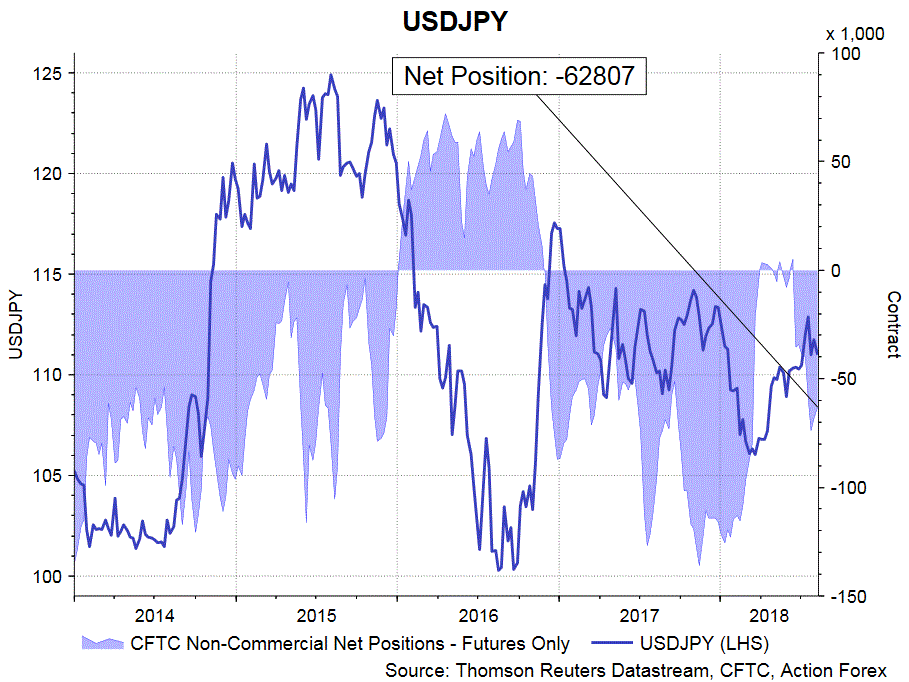
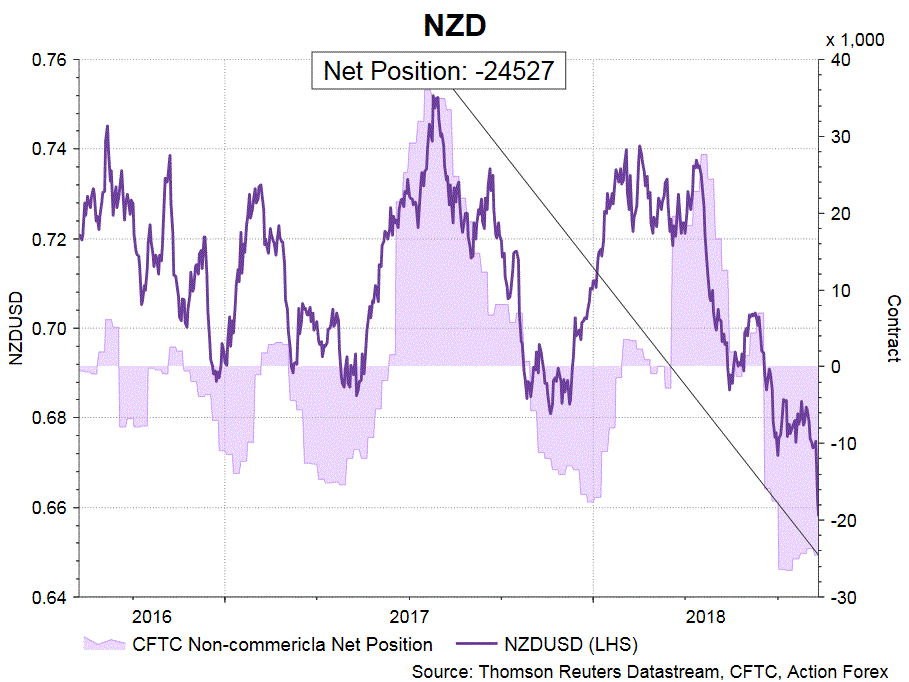
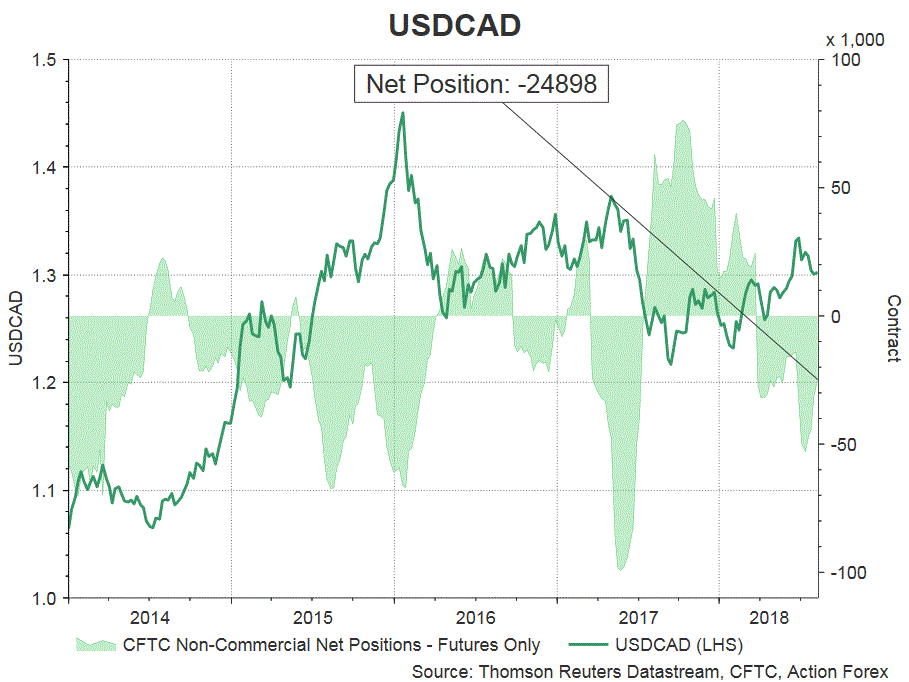
All commodity currencies stayed in NET SHORT positions. NET SHORT for AUD futures rose +3 064 contracts to 54 540, while that for NZD futures slipped -847 contracts to 24 527. NET SHORT for CAD futures declined -6 671 contracts to 24 898.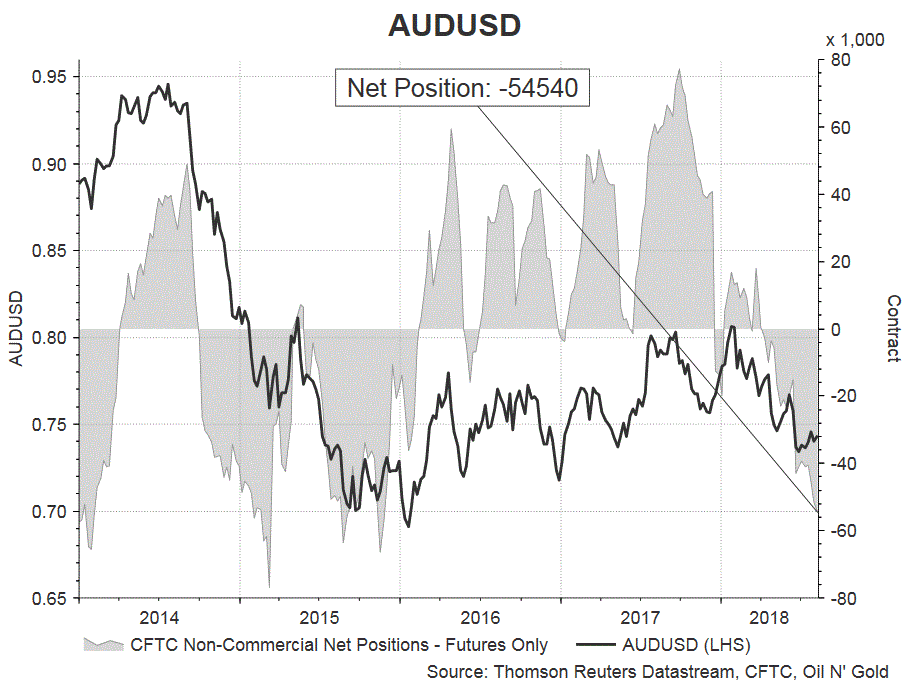
CBRT announced measures on Turkish Lira and FX liquidity management
Full statement below.
Press Release on Financial Markets
To support financial stability and sustain the effective functioning of markets, the following measures have been introduced:
I. Turkish lira liquidity management:
1) In the framework of intraday and overnight standing facilities, the Central Bank will provide all the liquidity the banks need.
2) Discount rates for collaterals against Turkish lira transactions will be revised based on type and maturity, thus providing banks with flexibility in their collateral management. Through this regulation, the discounted value of banks’ current unencumbered collaterals is projected to increase by approximately 3,8 billion Turkish liras.
3) Collateral FX deposit limits for Turkish lira transactions of banks have been raised to 20 billion euros from 7,2 billion euros.
4) As cited in the Monetary and Exchange Rate Policy Text for 2018, when deemed necessary, in addition to one-week repo auctions, which are the main funding instrument of the Central Bank, traditional repo auctions or deposit selling auctions may be held with maturities no longer than 91 days.
5) For the days with relatively higher funding need, more than one repo auction may be conducted with maturities between 6 and 10 days.
6) To provide flexibility in banks’ collateral management, upon the request of banks, a portion of or the entire amount of the winning bids in one-week repo auctions will be allowed to be used in deposit transactions instead of repo transactions at the Central Bank Interbank Money Market with the same interest rate and maturity.
II. FX liquidity management:
1) Banks will be able to borrow FX deposits in one-month maturity in addition to one-week maturity.
2) The Central Bank will resume its intermediary function at the FX deposit market. Accordingly, through the intermediation of the Central Bank, banks will be able to borrow from and lend to each other at the FX deposit market as per the rules set by the Implementation Instructions on the Foreign Exchange and Banknotes Markets.
3) Banks’ current foreign exchange deposit limits of around 50 billion US dollars may be increased and utilization conditions may be improved if deemed necessary.
4) Banks will continue to purchase foreign banknotes from the Central Bank via foreign exchange transactions within their pre-determined limits at the Foreign Exchange and Banknotes Markets.
The Central Bank will closely monitor the market depth and price formations, and take all necessary measures to maintain financial stability, if deemed necessary.
Yen strong on Lira crisis, Chinese Yuan back pressured
The story continues as the selloff in Turkish Lira continues in Asian session today. Yen is leading the way higher, followed by Swiss Franc on risk aversion. Euro is the weakest one followed by Australian Dollar. Asian markets are in deep red. At the time of writing, Nikkei is down -1.85%, Hong Kong HSI down -1.83%, Shanghai SSE down -1.73% and Singapore Strait Times down -1.20%.
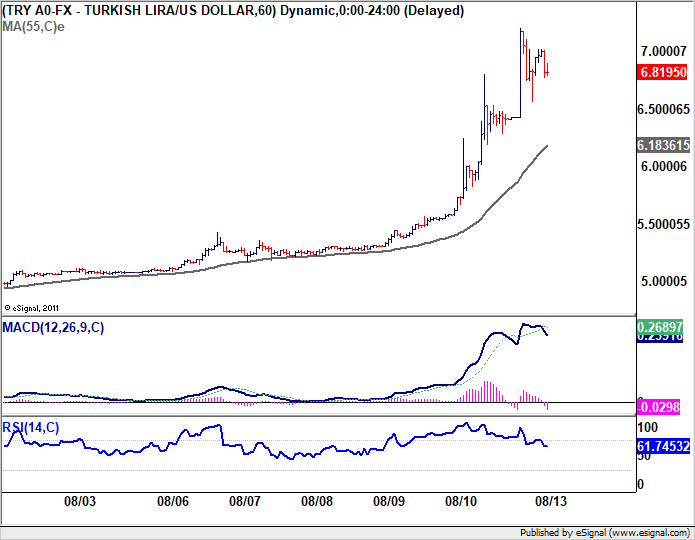
USD/TRY rally could have stabilized a bit. It breached 7.2 handle earlier today, but it's now back at 6.82, up 6.3%. However, another trouble could be in the making as USD/CNH (offshore Yuan) is picking up strength today.
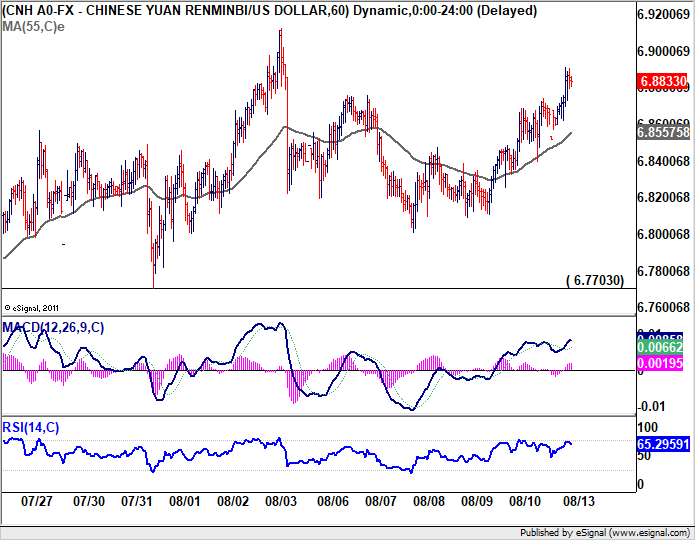
Currently at 6.88, it could be ready to have a take on recent high at 6.921. And it looks like the Chinese government's effort on support the Yuan is rather fruitless.
CFTC Commitments of Traders: Gold Lost Safe Asset Appeal
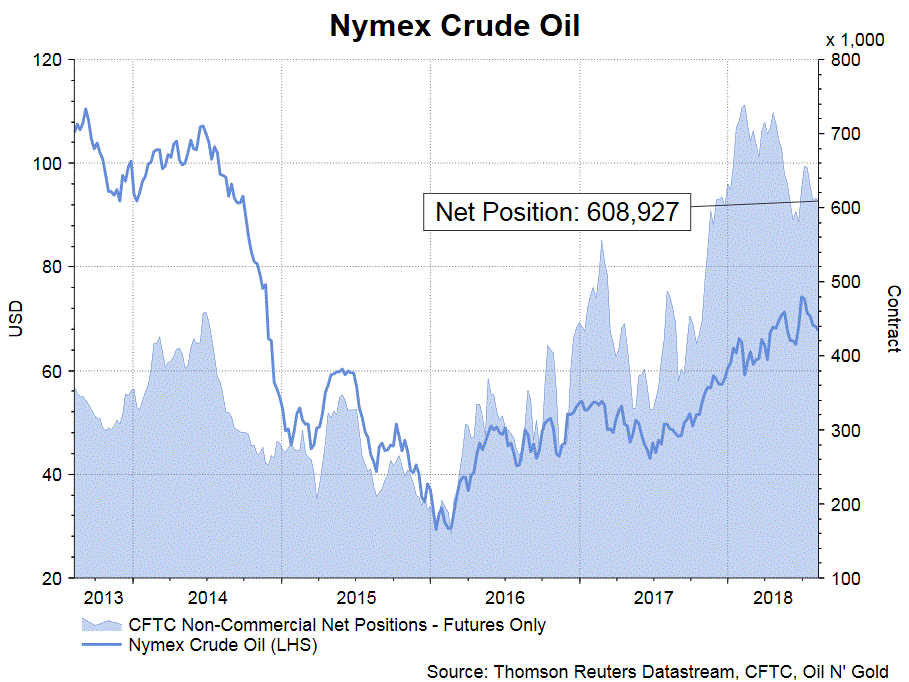
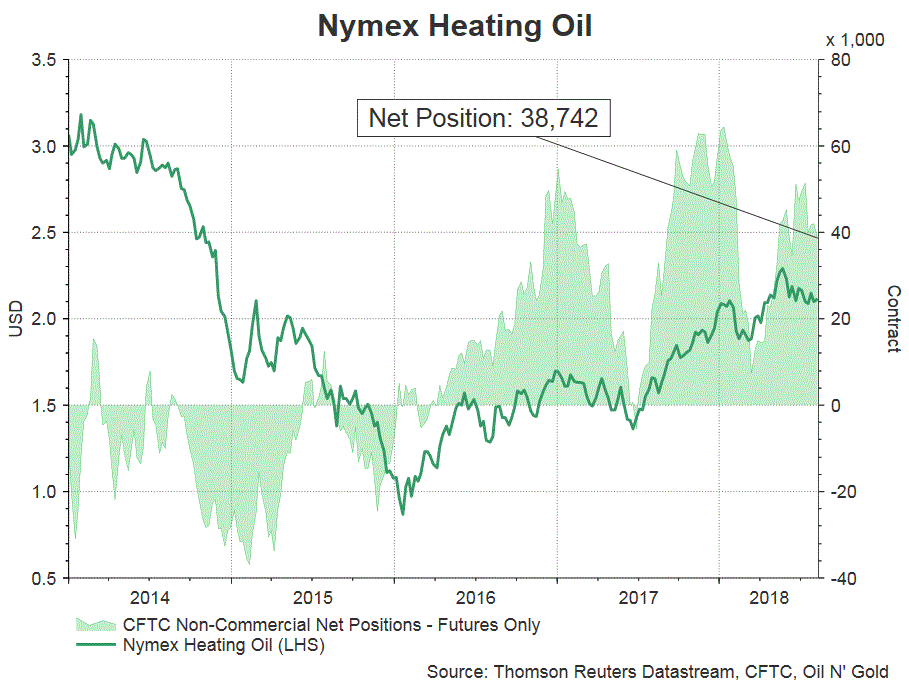
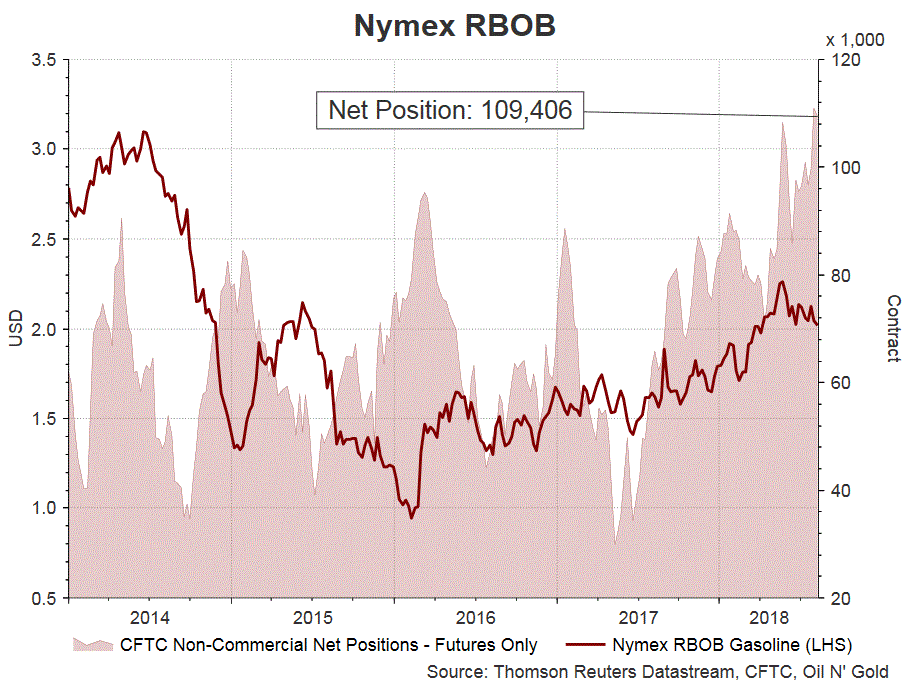
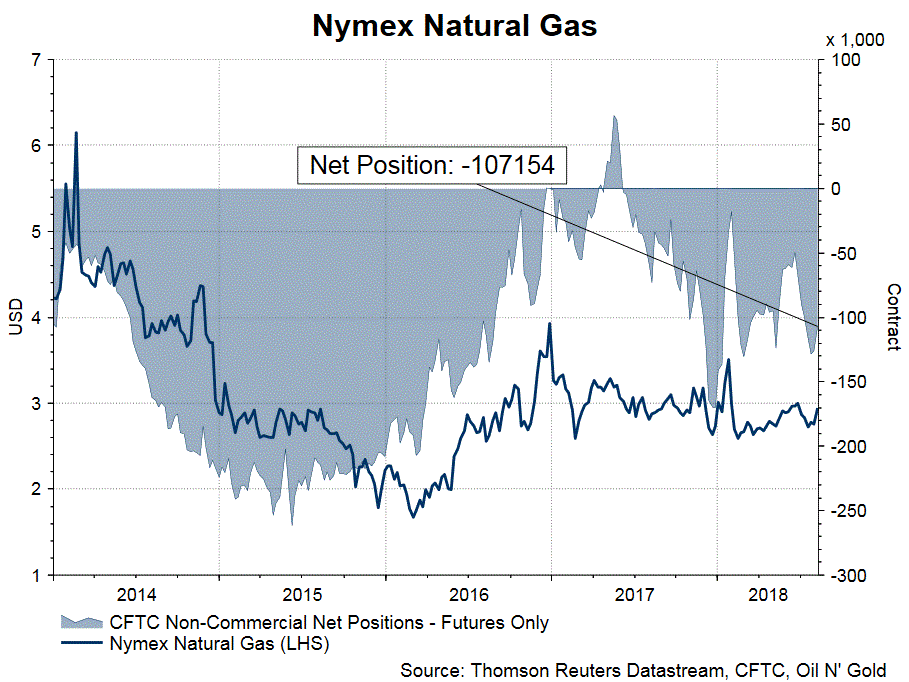
According to the CFTC Commitments of Traders report for the week ended August 7, traders turned less bullish towards the energy complex. They trimmed bets for crude oil and heating oil futures, while raising short positions on gasoline futures. Net LENGTH for crude oil futures fell -4 473 contracts to 608 927, resulting from reduction of -7 011 contracts and -2 538 contracts, respectively, on speculative long and short positions. Net LENGTH for heating oil futures dropped -3 275 contracts to 38 742. The decline in long positions (-3 805 contracts) was over 7 times of that in shorts (-530 contracts). Bets for weakness in gasoline price overwhelmed those for stronger price, resulting in a reduction of -1 552 contracts in NET LENGTH to 109 406 contracts. Net SHORT for natural gas plunged -19 273 contracts to 107 154 for the week. Traders trimmed bets on both sides. Yet, the decline in shorts overshadowed that in longs.
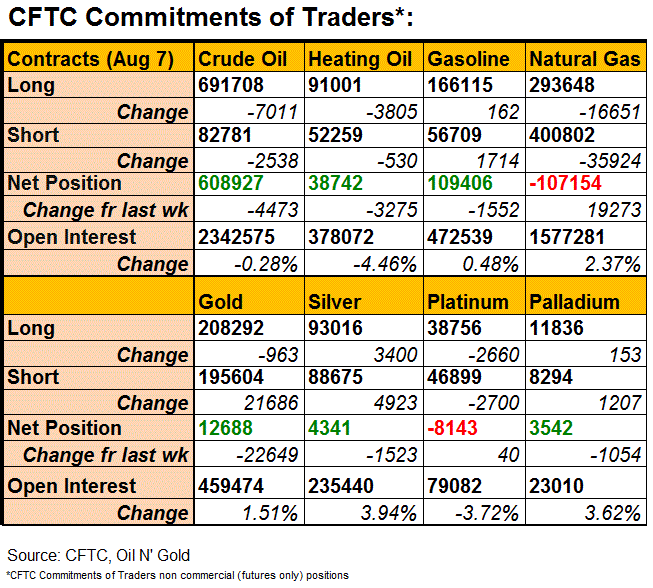
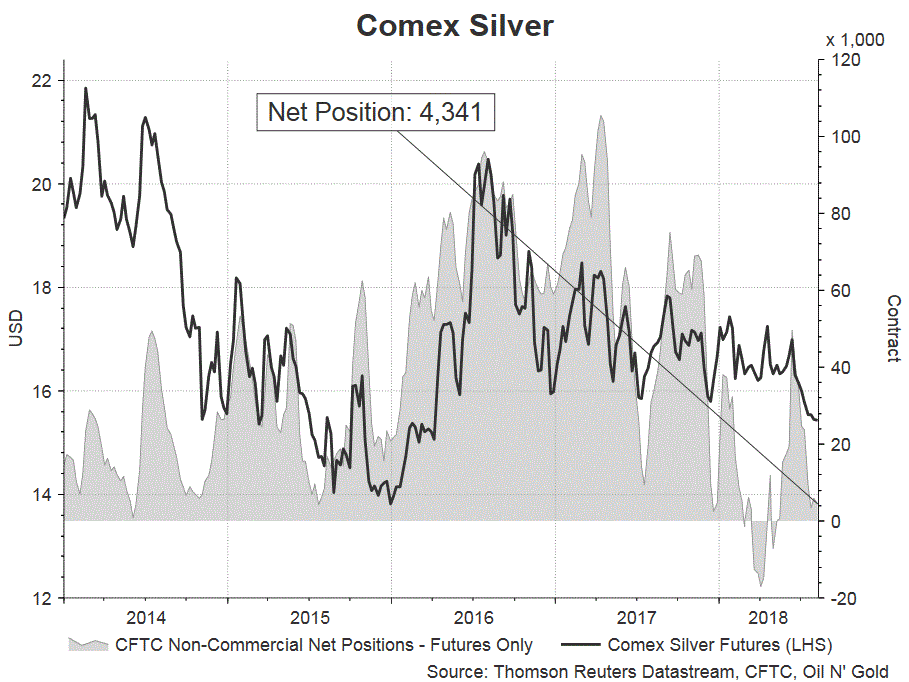
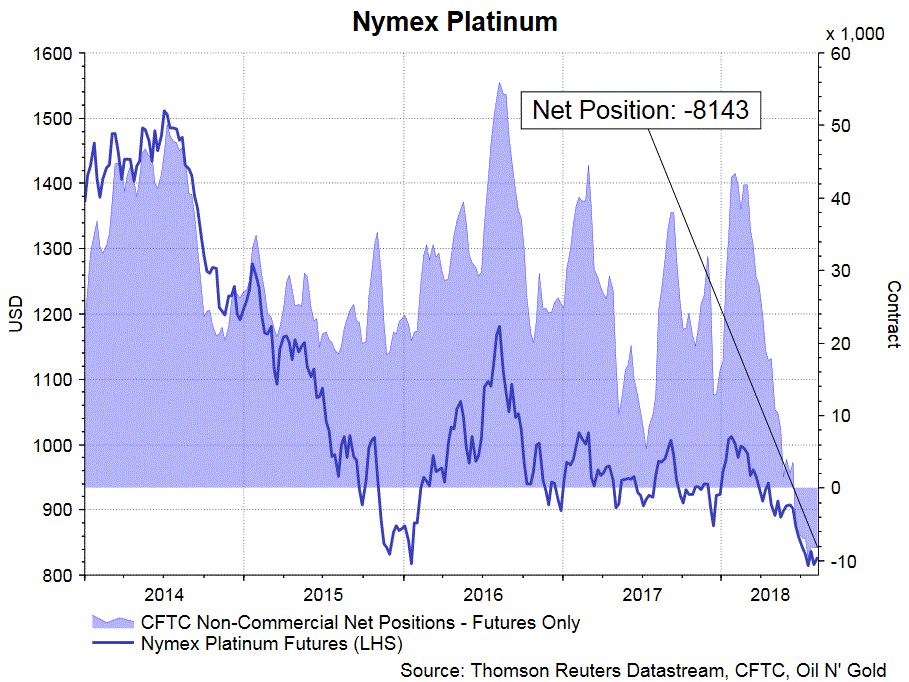
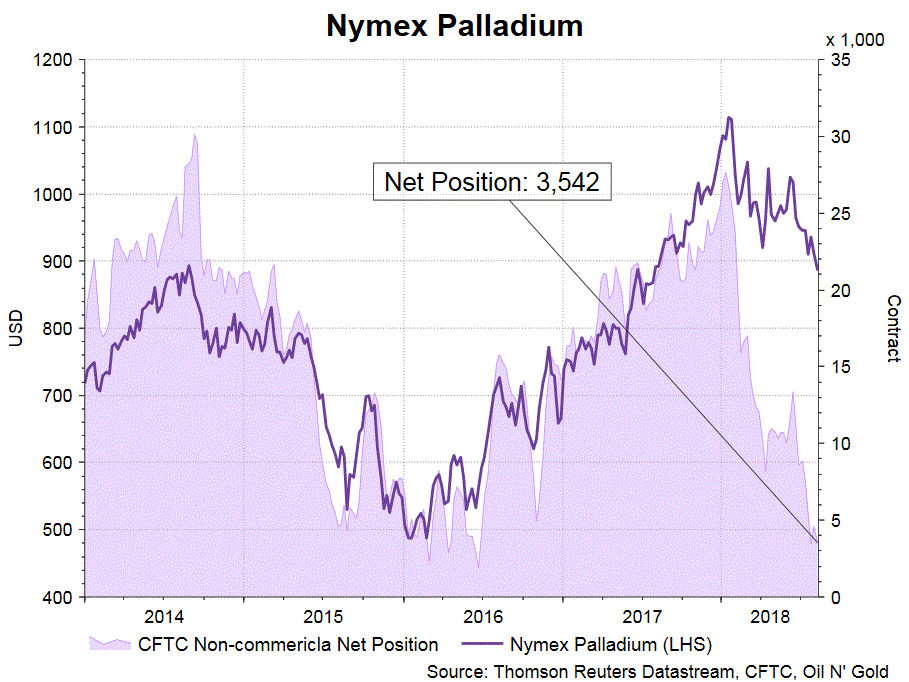
The market deepened their pessimism over precious metals, as US dollar strengthened and Treasury yields remained firm. NET LENGTH for gold gold futures declined -22 649 contracts to 12 688 last week. Meanwhile, NET LENGTH for silver futures dropped -1 523 contracts to 4 341. For PGMs, NET SHORT of platinum added +40 contracts to 8 143 while NET LENGTH for palladium was down -1 054 contracts to 3 542 during the week. Renewed geopolitical tensions in Turkey, Russia and Iran have raised demand for safe-haven assets. However, Japanese yen and, to a lesser extent, Swiss franc, rather than gold, have benefited. We believe gold's appeal as safe-haven asset has diminished significantly from the period shortly after the global financial crisis, due to fictionalization of the metal as an asset class. Over 50 gold-levered Exchange-Traded Funds (ETFs) in existence today have has attracted short-term speculative money to the metal. Moreover, although the US has continued to struggle with twin deficits, the US dollar is still viewed as safe and remains the world's biggest reserve currency. Treasury bonds continue to be a safe asset and is considered as a better alternative to gold holding with the high yields.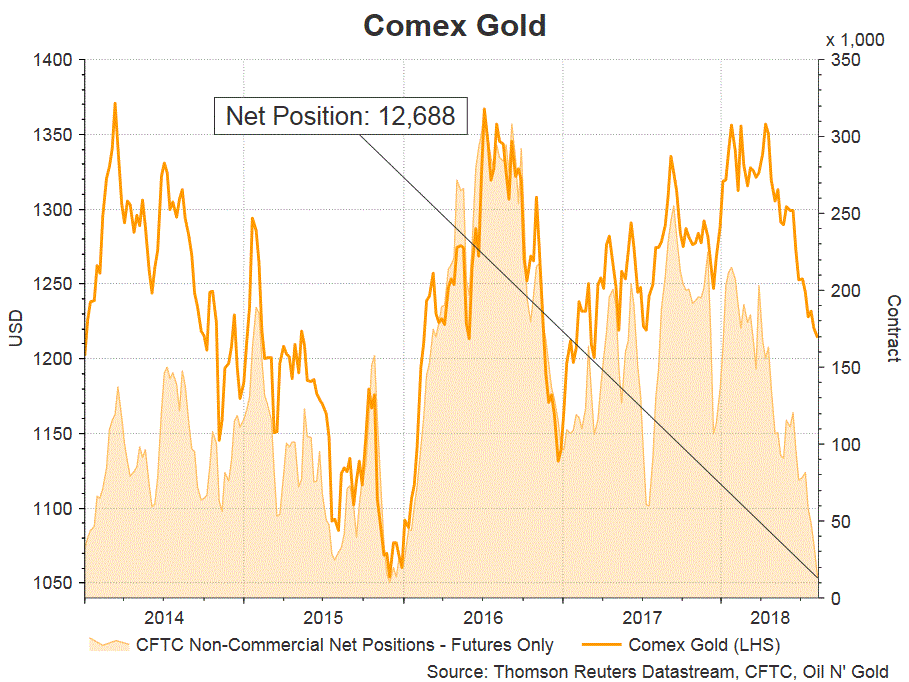
Market Morning Briefing: Dollar Yen Has Broken Below Support Near 110.50
STOCKS
Indices look bearish for this week and could see lower levels in the next few sessions.
Dow (25313.14, -0.77%) seems to be holding well below the resistance on the 3-day candles and looks bearish in the near term. Unless an immediate rise is seen that takes the index beyond the resistance, Dow could come off towards 25000 or even lower in the medium to long term.
Dax (12424.35, -1.99%) came off sharply and may test 12300 in the next 2-3 sessions before moving up again towards 12500-12600. Note decent support near 12300-12200 region which may hold this week.
Nikkei (21944.35, -1.59%) has finally broken below support at 22400, coming out of the narrow sideways range of 22850-22400. While Nikkei may head towards 22000, it could pull down Dollar Yen also in the near term. The 3-day and weekly charts show more room on the downside for the medium term.
Shanghai (2757.50, -1.35%) is trading lower. Range trade within 2850-2700 is likely to continue for the next 2-3 sessions.
Nifty (11429.50, -0.36%) closed below 11500 on Friday but unless a sharp fall is seen from here, the index could have equal chances of moving on either side of 11500 in the near term.
COMMODITIES
All major commodities look stable for now. Crude prices have immediate supports near current levels while precious metals are likely to remain stable this week.
Nymex WTI (67.65) could trade in the 68.50-6.00 region in the near term. Long term support on the 3-day candles are visible which if holds, is bullish for WTI in the medium term towards 70+ levels.
Brent (72.66) is also likely to see some range trade in the 71-73 region. Brent is trading along the long term support and only an immediate bounce from here could take it higher in the longer run. Failure to hold above current support levels could make it vulnerable to further fall in the longer run.
Gold (1216.10) could be limited to 1200-1210 on the downside. We could see some more of trade below 1225 before the price shows any bullish signs.
Copper (2.7320) is likely to remain in the 2.70-2.85 region. While support on the weekly candles hold, upside scope remains intact. A break below 2.70, if seen would turn bearish for Copper towards 2.60.
FOREX
The Turkish Lira (6.9891) crashed by almost 20% on Friday as Trump's announcement of tariffs on metal exports from Turkey aggravated the already delicate situation in the Turkish economy. This crash has weakened most majors (except the Yen) against the Dollar.
Euro (1.1377): The Turkish lira's crash on Friday weakened the Euro towards the 200 weeks MA (1.135) much faster than we had expected. Euro could weaken more to test crucial trendline support on weekly line chart near 1.13 in this week. The EU GDP release tomorrow and EU CPI release on Friday could be important factors.
Dollar Index (96.41): Dollar Index saw some dramatic strengthening on Friday as the Turkish Lira's crash might have led investors towards safe haven assets like US bonds. As we had written on Friday morning, the Dollar Index is now looking bullish towards levels near 97-98 – Euro's test of 1.13 could correspond to the Dollar Index's test of 97. A breach beyond 98, if it happens, would be very bullish for the medium term.
Dollar Yen (110.20): Dollar Yen has broken below support near 110.50 on daily and weekly candles. We need to watch out for the 21 weeks MA near 109.76 on weekly line chart, which could provide some support. If that is broken as well, we could see Dollar Yen decline more in the weeks ahead.
Euro Yen (125.38): Euro Yen has also seen a steep fall, breaking below the crucial horizontal support near 127 on weekly line chart on Friday. It now looks bearish towards its May end low near 124.62, which it could test in this week itself. On weekly candles, there could possibly be some support near 124.0-123.5.
Pound (1.2751): Pound has broken support in the downward channel on daily candles near 1.28 and is now looking bearish towards support on weekly candles near 1.25 in this month. A further downmove towards 1.270-1.265 in this week seems likely.
Dollar Rupee (68.83): Chances of fall to 68.30-20-10 stand reduced. But break above 69.10 needed for further upside to open up. May range between 69.10-68.70 this week. Need to stay conscious of chances of a rise past 69.10 in the medium term.
INTEREST RATES
Although US Core CPI exceeded expectations on Friday by registering a 2.4% y-o-y growth as against the expected 2.3%, US yields still saw a drastic fall as the Turkish crisis overpowered the strong US inflation numbers. The US-China trade tensions seem to have already made investors risk averse – add to that, the crisis in Turkey is now feared to impact European banks due to their exposure in Turkey. This could further enhance the ‘risk off' sentiment.
US 10 year yield (2.85%), 30 Year (3.01%), 5 Year (2.72%), 2 Year (2.59%):
As we have been saying, there is crucial support near 2.82-85% for the US 10 year yield, which it wasn't able to break below in Jun-Jul '18 and which might again restrict its downmove. The next few sessions would be important – any delay in breaking below 2.82% could imply that the support is still strong and that, another rise beyond 2.9% could commence anytime soon.
German 10 year bond yield (0.32%) also fell as investors might have rushed towards safe haven assets on Friday. It is currently testing support near 0.3% on medium term chart. A break below 0.3% could make it bearish towards lower support near 0.18%-0.19%.
Study shows 112 constituencies switched from Brexit to Bremain
According to a latest study, more than 100 parliamentary seats have flipped from pro-Brexit in 2016 to pro-Bremain now. Focaldata, a consumer analytic company, compiled the breakdown data by modelling two YouGov polls conducted before and after Prime Minister Theresa May's Chequers Deal. The study was jointly commissioned by anti-Brexit group Best for Britain and anti-racist group Hope Not Hate.
The study found that 112 seats out of 632 in England, Scotland and Wales have switched from leave to Remain. And there are now 341 seats with majority Remain support, up from 229 seats at the referendum in 2016. Among the switches, 97 was in England, 14, in Wales and 1 in Scotland. Also, there is now a majority for Remain in both Scotland and Wales.
Eloise Todd, the chief executive of Best for Britain, said: "the sands of public opinion are shifting and politicians risk falling behind", and "the deal must be put to the people." Nick Lowles, head of Hope not Hate, said "the rate of change appears to be quickening as the realities of what Brexit would mean become more apparent and the fears of a no-deal Brexit grow".
The UK and EU are due to reconvene Brexit negotiation on Thursday in Brussels. UK is believed to be pushing the deadline for negotiation to October while EU is insisting to conclude it in September.
German EM Altmaier: We won’t let Washington dictate us with whom we can do business
German Economy Minister Peter Altmaier launched strong attack on Trump for his tariffs and sanctions. He told Bild am Sonntag newspaper that "this trade war is slowing down and destroying economic growth - and it creates new uncertainties."
Meanwhile, the agreement between the EU and US "can only be first step". Altmaier emphasized "Our goal is a global trade order with lower tariffs, less protectionism and open markets."
Regarding US sanctions on Iran, Altmaier also pledged the Germany and EU will continue to support companies doing business with Iran. He warned that "we won't let Washington dictate us with whom we can do business and we therefore stick to the Vienna Nuclear Agreement so that Iran cannot build atomic weapons."
Turkish Lira drops further despite Erdogan family’s effort to calm markets
Turkish Lira's depreciation continues today despite effort by the government to calm the markets. USD/TRY breached 7.2 handle in early trading and stays firm around 7, up more than 9%.
Turkish Finance Minister Berat Albayrak said on Sunday that plans will be ready on Monday to ease investors concerns. The plans are prepared for banks and will particularly help small to mid-sized business most affected by the sharp depreciation in Lira. In an interview with Hurriyet newspaper, Albayrak said "from Monday morning onwards our institutions will take the necessary steps and will share the announcements with the market." And, "we will be taking the necessary steps with our banks and banking watchdog in a speedy manner". No detail is leaked yet. Albayrak is President Tayyip Erdogan's son-in-law
Talking about the President, Erdogan told supports in Trabzon on the Black Sea coast on Sunday that the country is not in a crisis, and the Lira's free fall was a plot. He said "What is the reason for all this storm in a tea cup? There is no economic reason for this ... This is called carrying out an operation against Turkey."
Erdogan also repeated his call for citizens to buy Lira. He said, "I am specifically addressing our manufacturers: Do not rush to the banks to buy dollars. Do not take a stance saying 'We are bankrupt, we are done, we should guarantee ourselves'. If you do that, that would be wrong. You should know that to keep this nation standing is ... also the manufacturers' duty."