Sample Category Title
USDJPY – Bulls Cracked 109 Barrier and Eye Cloud Top, but May Correct Lower Before Resuming
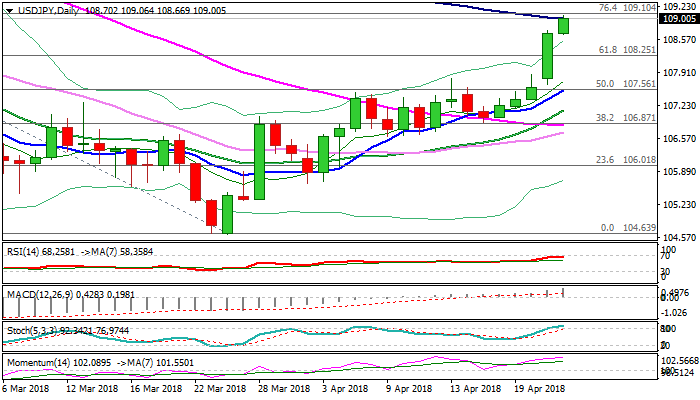
The pair cracked 109 barrier on fresh extension higher at the beginning of US session on Tuesday, but so far without clear break through round-figure barrier, reinforced by descending 100SMA. Strong bullish sentiment remains in play for extension through 109 and test of daily cloud top at 109.31, break of which would generate fresh bullish signal for further retracement of 113.75/104.63 fall and attack at psychological 110.00 barrier. Despite strong bullish environment, risk of stall of strong bullish acceleration in past few sessions exists as strongly overbought slow stochastic warns of consolidative / corrective action ahead, likely before probes through cloud top. Strong supports lay at 108.25 (broken Fibo barrier) and 107.90 (former high of 21 Feb/rising daily Tenkan-sen) and should hold extended corrective dips to keep bulls intact.
Res: 109.10; 109.31; 109.78; 110.00
Sup: 108.66; 108.49; 108.25; 107.90
USD/JPY Mid-Day Outlook
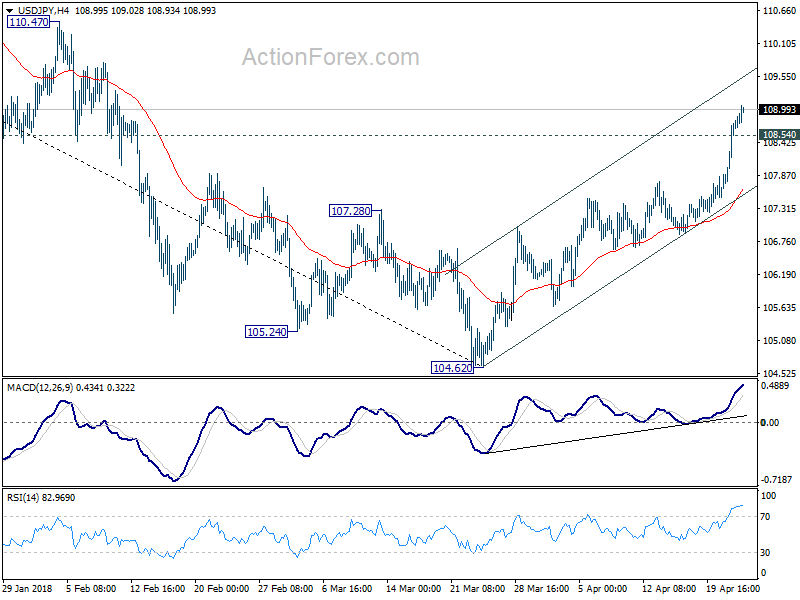
Daily Pivots: (S1) 107.98; (P) 108.36; (R1) 109.08; More...
Intraday bias in USD/JPY remains on the upside as rise from 104.62 is in progress. Further rally would be seen to 61.8% retracement of 114.73 to 104.62 at 108.48 9 110.86 next. On the downside, below 108.54 minor support will turn bias neutral and bring consolidation first, before staging another rise.
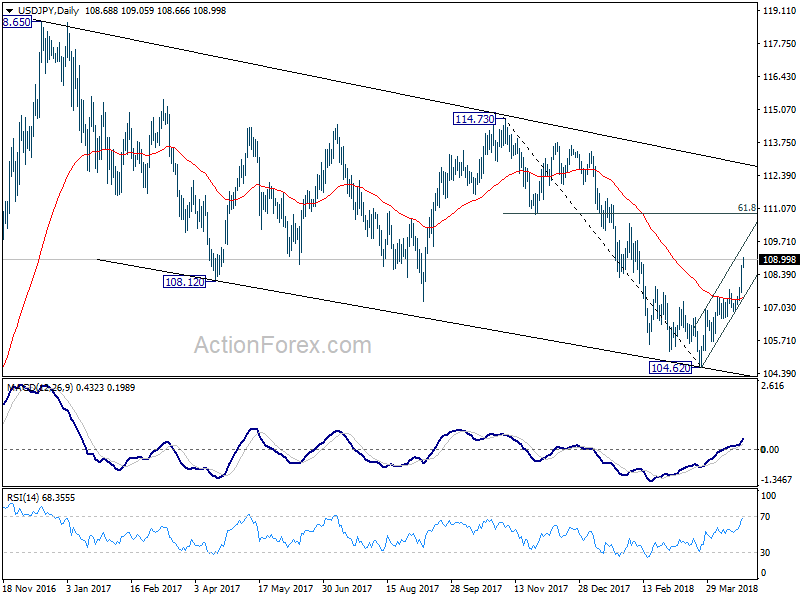
In the bigger picture, break of 108.12 support turned resistance now suggests that corrective fall from 118.65 (2016 high) has completed with three waves down to 104.62. And, rise from 98.97 (2016 low) could be resuming. Focus is back on 114.73 resistance and break there will pave the way to 118.65 and above. This will now be the preferred case as long as USD/JPY stays above 55 day EMA (now at 107.47).
USD/CHF Mid-Day Outlook
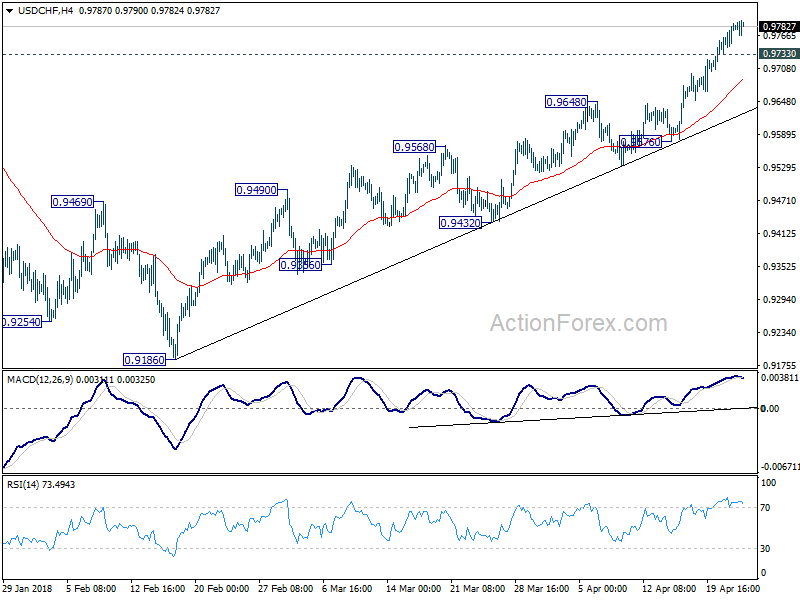
Daily Pivots: (S1) 0.9749; (P) 0.9768; (R1) 0.9801; More...
Intraday bias in USD/CHF remains on the upside at this point. Current rally from 0.9186 should extend to 0.9900 fibonacci level next. On the downside, below 0.9733 minor support will turn bias neutral and bring consolidations. But outlook will stay bullish as long as 0.9576 support holds.
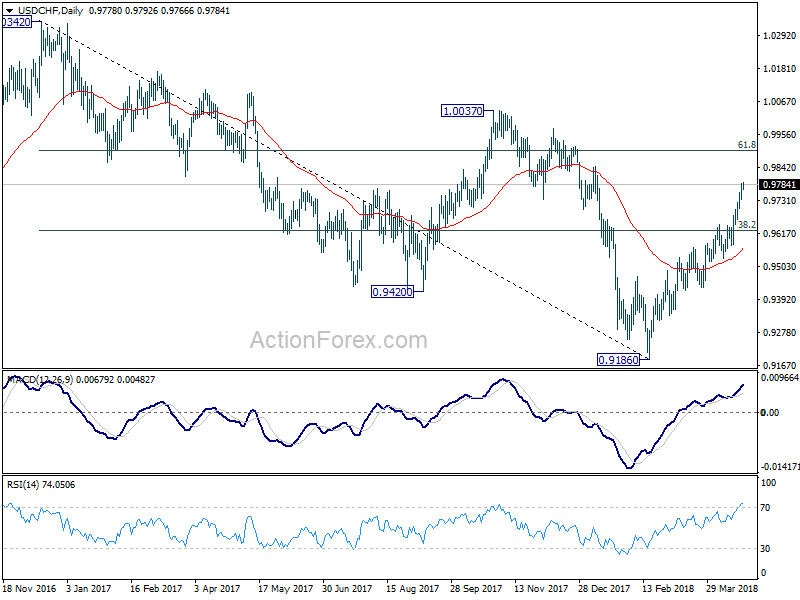
In the bigger picture, fall from 1.0342 is seen as a medium term down trend. The break of 38.2% retracement of 1.0342 (2016 high) to 0.9186 (2018 low) at 0.9626 suggests that it's likely completed at 0.9186 already. Further rally would be seen back to 61.8% retracement at 0.9900 and above. Sustained break there would pave the way to retest 1.0342 key resistance next. This will now be the preferred case as long as 0.9576 support holds.
GBP/USD Mid-Day Outlook
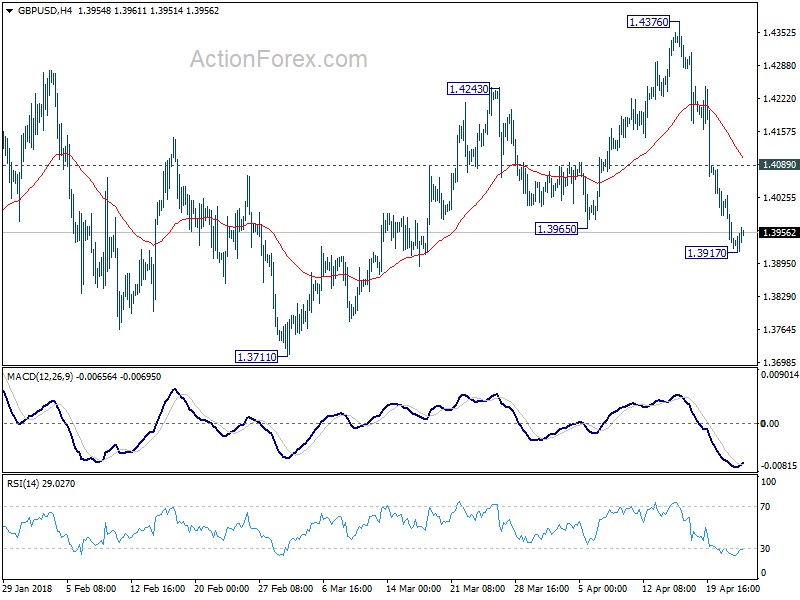
Daily Pivots: (S1) 1.3899; (P) 1.3965; (R1) 1.4004; More...
A temporary low is in place at 1.3917. Intraday bias in GBP/USD is turned neutral for consolidation. Upside of recovery should be limited by 1.4089 minor resistance to bring another fall. Below 1.3917 will target 1.3711 key support next. However, firm break of 1.4089 will turn focus back to 1.4376 high instead.
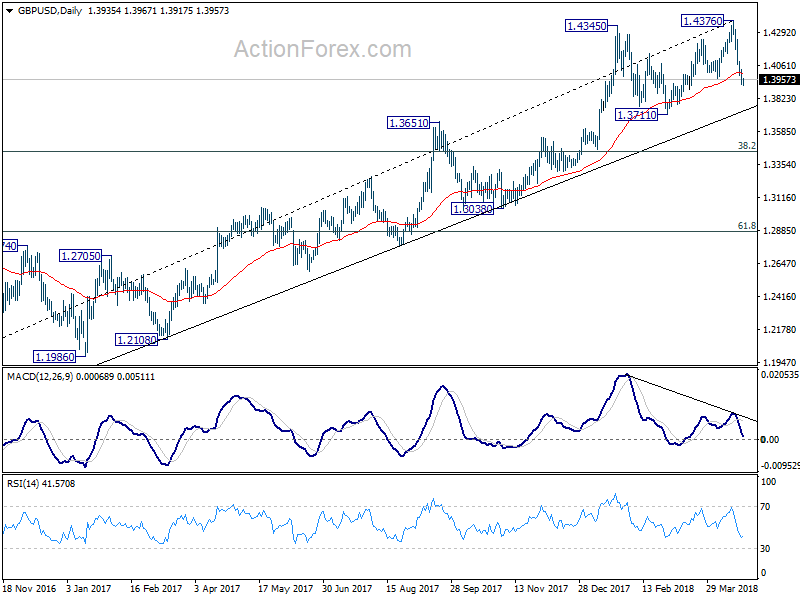
In the bigger picture, bearish divergence condition in daily MACD is raising the chance of medium term reversal. Also, note that GBP/USD has just failed to sustain above 55 month EMA (now at 1.4257). Focus is back on 1.3711 support. Firm break there will confirm medium term reversal and target 38.2% retracement of 1.1936 (2016 low) to 1.4376 at 1.3448 first. Break will target 61.8% retracement at 1.2874 and below. For now, sustained break of 55 month EMA is needed to confirm medium term upside momentum. Otherwise, we won't turn bullish even in case of strong rebound.
EUR/USD Mid-Day Outlook
Daily Pivots: (S1) 1.2173; (P) 1.2231 (R1) 1.2265; More....
Intraday bias in EUR/USD remains on the downside for 1.2154 support. Decisive break there should confirm the bearish case of medium term reversal. And EUR/USD should then target 161.8% projection of 1.2475 to 1.2214 from 1.2413 at 1.1991. On the upside, 1.2245 minor resistance will turn bias neutral first. But risk will now stay on the downside as long as 1.2413 resistance holds.
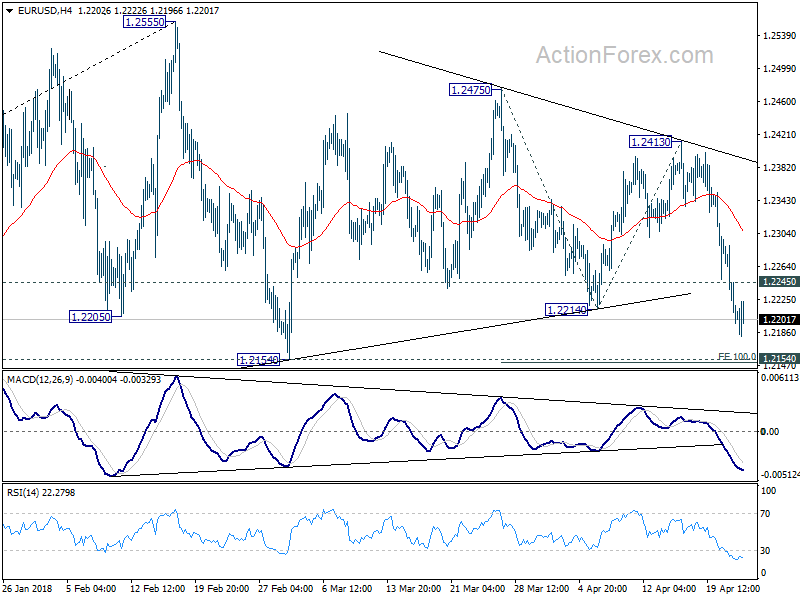
In the bigger picture, key fibonacci level at 38.2% retracement of 1.6039 (2008 high) to 1.0339 (2017 low) at 1.2516 remains intact despite attempts to break. Firm break of 1.2154 support will confirm rejection by this fibonacci level. And in that case, a medium term top is at least formed at 1.2555. EUR/USD should then head back to 38.2% retracement of 1.0339 to 1.2555 at 1.1708 first. We'll look at the structure and momentum of such decline before decision if it's an impulsive or corrective move.
Dollar Turned into Consolidation, German Ifo Miss Gives Euro No Support
Dollar engages in consolidative trading today as markets digest recent sharp gains. Also, as pointed out before, 10 year yield should a sign of hesitation ahead of 3%, and it might take a bit more time to overcome this level. While housing data is a focus in the US today, consumer confidence is a piece of data that could help dollar extend its rally. Elsewhere in the currency markets, weaker than expected German Ifo confidence provide little support for Euro's rebound. New Zealand dollar remains the weakest, followed by Yen. Sterling is leading others high, followed by Aussie and Canadian Dollar. The Loonie could have a little more upside on oil price. Brent oil breached 75 level for the first time since 2014 today. And WTI is trying to reclaim 69.
German Ifo business climate dropped to 102.1
German Ifo business climate dropped to 102.1 in April, below expectation of 102.8. Expectations dropped to 98.7, below consensus of 99.5. Current assessment also dropped to 105.7, below expectation of 106.5. Ifo President Clemens Fuest commented that "high spirits among German businesses have evaporated," and, "the German economy is slowing down." Ifo economist Klaus Wohlrabe noted that the 5th drop in a row in the Ifo reading is merely a sign of normalization, and Germany is far from a recession. GDP growth is seen as slowed to 0.4% in Q1 versus Q4's 0.6%.
Separately, Bank of France Governor, ECB Governing Council member Francois Villeroy de Galhau warned that "we are all aware that an escalation of protectionist threats from the United States would dampen growth everywhere." And, he urged "Europeans, shoulder-to-shoulder with Canada, Japan and others, must resolutely defend international economic relations based on commonly respected rules and multilateral institutions."
Also released in European session, Swiss trade surplus narrowed to CHF 1.77B in March. UK public sector net borrowing dropped GBP -0.3B in March. UK CBI trends total orders was unchanged at 4 in April.
Japan Economy Minister Motegi: We're not thinking of signing a bilateral FTA with US
Japan's Economy Minister Toshimitsu Motegi said today that trade discussion with US Trade Representative Robert Lighthizer will begin around mid-June or later. There was an agreement between Japan Prime Minister Shinzo Abe and US President Donald Trump on setting up a new framework focusing on bilateral trade. But Motegi reiterated today that "we're not thinking of signing a bilateral FTA."
It's believed that Japan's priority is on TPP, the pact that it leads with 10 other nations. And Abe's cabinet would want to pass relevant legislations through the parliament within the current session which ends on June 20. In addition, Japan has been clear that it opposes to a two way trade deal. On the other hand, Trump and Treasury Secretary Steven Mnuchin showed no respect to Japan's preference and persistently tried to force bilateral trade agreement on Japan.
Aussie spiked lower CPI, but quickly recovered
Australia CPI was unchanged at 1.9% yoy in Q1, below expectation of 2.0%. RBA trimmed mean CPI rose to 1.9% yoy, up from 1.8% yoy and beat expectation of 1.8% yoy. RBA weighted median CPI was unchanged at 2.0% yoy, beat expectation of 1.9% yoy. The Australian Bureau of Statistics noted in the release that "while the annual CPI rose 1.9 per cent, most East Coast cities have continued to experience annual inflation above 2.0 per cent, due in part to the strength in prices related to Housing and Food. Softer economic conditions in Darwin and Perth have resulted in annual inflation remaining subdued at 1.1 and 0.9 per cent respectively."
AUD/USD spiked lower to 0.7576 after the release but quickly recovered. Firstly, the decline is a bit stretched after AUD/USD fell for three days. Secondly, the CPI data just affirmed the case that RBA is in no rush to raise interest rate.
EUR/USD Mid-Day Outlook
Daily Pivots: (S1) 1.2173; (P) 1.2231 (R1) 1.2265; More....
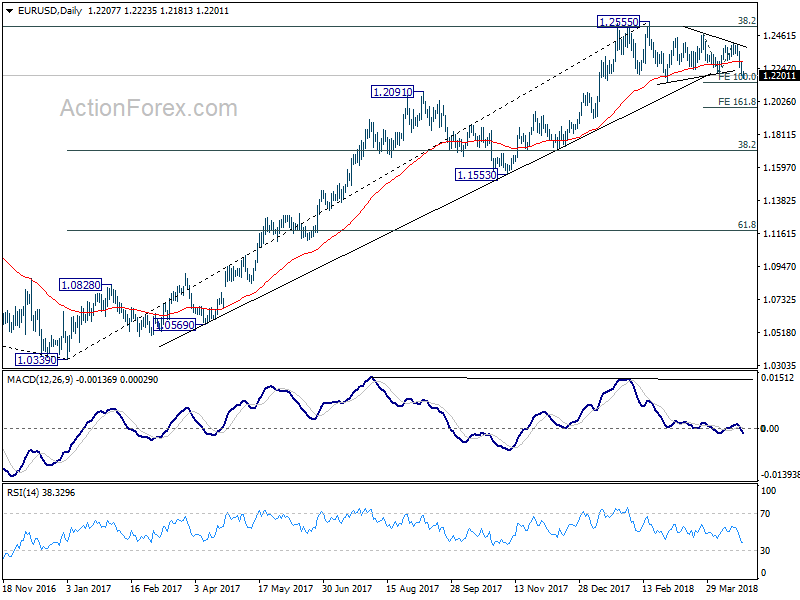
Intraday bias in EUR/USD remains on the downside for 1.2154 support. Decisive break there should confirm the bearish case of medium term reversal. And EUR/USD should then target 161.8% projection of 1.2475 to 1.2214 from 1.2413 at 1.1991. On the upside, 1.2245 minor resistance will turn bias neutral first. But risk will now stay on the downside as long as 1.2413 resistance holds.
In the bigger picture, key fibonacci level at 38.2% retracement of 1.6039 (2008 high) to 1.0339 (2017 low) at 1.2516 remains intact despite attempts to break. Firm break of 1.2154 support will confirm rejection by this fibonacci level. And in that case, a medium term top is at least formed at 1.2555. EUR/USD should then head back to 38.2% retracement of 1.0339 to 1.2555 at 1.1708 first. We'll look at the structure and momentum of such decline before decision if it's an impulsive or corrective move.
Economic Indicators Update
| GMT | Ccy | Events | Actual | Forecast | Previous | Revised |
|---|---|---|---|---|---|---|
| 23:50 | JPY | Corporate Service Price Y/Y Mar | 0.50% | 0.50% | 0.60% | 0.70% |
| 1:30 | AUD | CPI Q/Q Q1 | 0.40% | 0.50% | 0.60% | |
| 1:30 | AUD | CPI Y/Y Q1 | 1.90% | 2.00% | 1.90% | |
| 1:30 | AUD | CPI RBA Trimmed Mean Q/Q Q1 | 0.50% | 0.50% | 0.40% | |
| 1:30 | AUD | CPI RBA Trimmed Mean Y/Y Q1 | 1.90% | 1.80% | 1.80% | |
| 1:30 | AUD | CPI RBA Weighted Median Q/Q Q1 | 0.50% | 0.50% | 0.40% | 0.50% |
| 1:30 | AUD | CPI RBA Weighted Median Y/Y Q1 | 2.00% | 1.90% | 2.00% | |
| 6:00 | CHF | Trade Balance (CHF) Mar | 1.77B | 3.23B | 3.14B | 3.08B |
| 8:00 | EUR | German IFO Business Climate Apr | 102.1 | 102.8 | 103.2 | 105.7 |
| 8:00 | EUR | German IFO Expectations Apr | 98.7 | 99.5 | 100.1 | 101 |
| 8:00 | EUR | German IFO Current Assessment Apr | 105.7 | 106 | 106.5 | 110.6 |
| 8:30 | GBP | Public Sector Net Borrowing (GBP) Mar | -0.3B | 1.1B | -0.3B | -0.4B |
| 10:00 | GBP | CBI Trends Total Orders Apr | 4 | 4 | 4 | |
| 13:00 | USD | House Price Index M/M Feb | 0.60% | 0.80% | ||
| 13:00 | USD | S&P/Case-Shiller Composite-20 Y/Y Feb | 6.30% | 6.40% | ||
| 14:00 | USD | New Home Sales Mar | 625K | 618K | ||
| 14:00 | USD | Consumer Confidence Index Apr | 126 | 127.7 |
Dollar Fights for Throne, Euro Wobbles While Oil Rises
The story behind the Dollar’s incredible appreciation in recent days continues to revolve around rising U.S bond yields and easing geopolitical risks.
Market expectations of higher U.S interest rates have also played a leading role in the Greenback’s resurgence, with the DXY marching to levels not seen in over three months, above 91.00. With the Dollar finding support from rate hike expectations and bullish sentiment towards the U.S economy, are the bulls back in town?
The main event risk for the currency this week will be the release of U.S GDP figures for Q1, which are expected to show economic growth cooling as consumer spending eases. However, an upside surprise in U.S Q1 GDP could boost confidence in the health of the U.S economy, ultimately elevating King Dollar. Taking a look at the technical picture, the Dollar Index is turning increasingly bullish on the daily charts. A decisive daily close above 91.00 could result in an incline towards 91.80. Alternatively, if bulls tire and run out of momentum, prices could dip back towards 90.50 and 90.25, respectively.
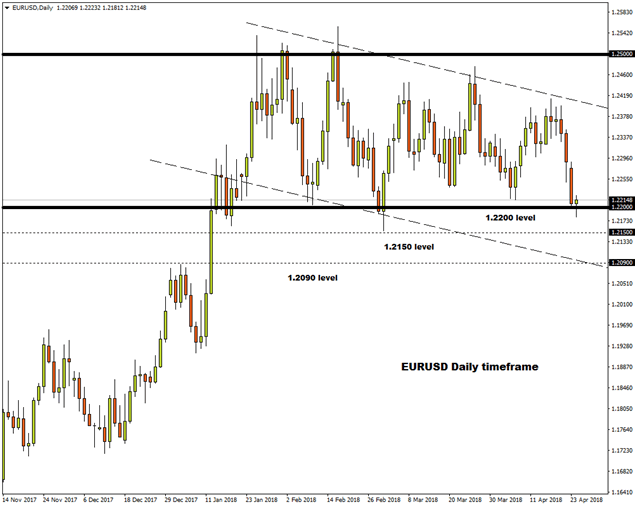
Euro dangerously wobbles above 1.2200
The Euro remains under the mercy of an appreciating Dollar, with prices struggling to keep above the 1.2200 support level as of writing.
Market players will direct their attention towards the European Central Bank meeting on Thursday where policymakers are widely expected to leave monetary policy unchanged. However, there could be some action if ECB President Mario Draghi adopts a cautious stance during the post-meeting press conference. Focusing on the technical picture, the EURUSD is at risk of tumbling lower if bears are able to secure a daily close below 1.2200. Previous support at 1.2200 could transform into a dynamic resistance that encourages a decline lower towards 1.2150 and 1.2090, respectively.
Commodity spotlight – WTI Oil
Heightened geopolitical tensions in the Middle East and growing optimism over OPEC’s supply cut have injected oil bulls with a renewed sense of confidence.
With WTI Crude sprinting to levels not seen in over three years, it seems that market sentiment is turning increasingly bullish towards the commodity. While further upside could be on the cards for oil in the near term, the sustainability of the rally is a concern. WTI bulls may be heavily reliant on geopolitics to keep prices appreciating, which could expose oil to extreme downside risks if geopolitical tensions start to ease. With rising production from U.S Shale still a key market theme that continues to weigh on oil prices, it will be interesting to see how much oil appreciates before bears enter the scene.
Focusing on the technical outlook, WTI Crude is bullish on the daily charts as there have been consistently higher highs and higher lows. There is scope for prices to challenge $70.00, providing bulls can defend $67.50.
Canadian Dollar Under Pressure as US T-Bill Yields Climb
The Canadian dollar is steady in the Tuesday session, after posting losing sessions for four straight days. Currently, USD/CAD is trading at 1.2822, down 0.22% on the day. The Canadian dollar remains under pressure and has lost 2.2% since April 18. On the release front, there are no Canadian events. In the US, the key event is CB Consumer Confidence, which is expected to dip to 126.0 points. As well, the US releases housing and manufacturing reports. On Wednesday, BoC Governor Stephen Poloz will testify before the Standing Senate Committee on Banking.
The US dollar started the week with broad gains and the Canadian dollar has dropped to its lowest level since April 18. The catalyst for the greenback rally was higher yields for 10-year US treasury bills, which rose to 2.996% on Monday. Higher yields for US-T bills have made them more attractive than European or Japanese counterparts and pushed the US currency higher. With oil pushing above $70 a barrel, there are concerns that inflation will rise, which has pushed bond prices lower and yields upwards. The dollar has also benefitted from a reduction in geopolitical risk, with an easing of tensions between North and South Korea, and a lull in the conflict in Syria.
The Bank of Canada maintained the benchmark rate of 1.25% last month but hinted that more rate hikes are on the way. Inflation has crept closer to the BoC target of 2 percent, and the employment market remains tight. Still, the protectionist stance of the US administration remains a major headache for policymakers. President Trump has taken on China and the tit-for-tat tariff battle between the US and China has raised fears of a trade war which would be disastrous for Canada. As well, the Canadian government is in tough in negotiations over a new NAFTA agreement, with the US threatening to walk away if it isn’t given major concessions. Ideally, the bank would prefer to hold off on a rate hike until the NAFTA issue is resolved. At the same time, the Federal Reserve is expected to raise rates at least twice more in 2018, and if the BoC does not increase rates as well, the Canadian dollar could fall sharply against a US currency that would be more attractive to investors.
EURO Sellers Targeting Key Swing-Low
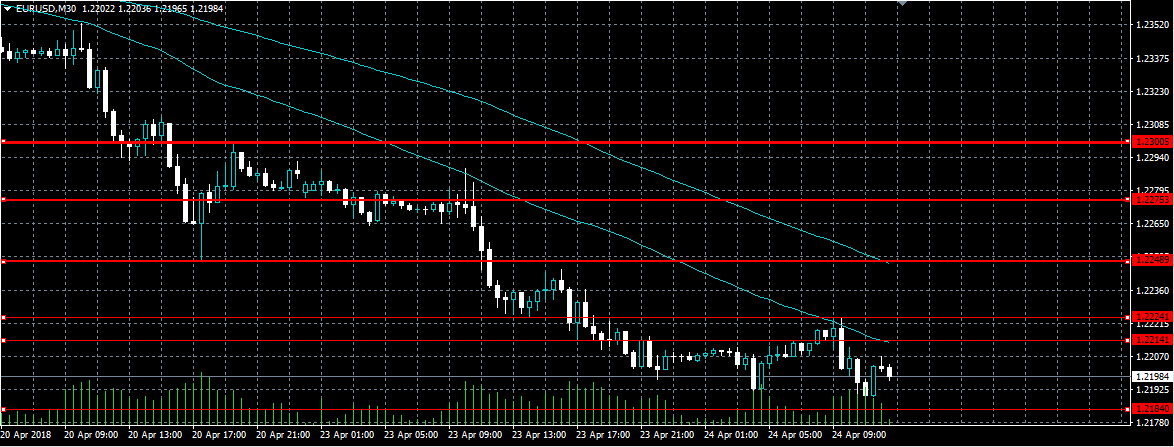
The euro has remained under selling pressure against the U.S dollar during the European trading session, after the German IFO survey missed expectations. The EURUSD pair currently trades below the 1.2200 handle, with price-action managing only a shallow bounce towards the 1.2224 level so far. Sellers are likely to target the key swing-low, found at the 1.2154 level, while buyers need to stabilize price-action above the 1.2214 level.
The EURUSD pair is bearish while trading below the 1.2214 level, sellers may now target towards the 1.2154 and 1.2090 levels.
Should the EURUSD pair starts to hold above the 1.2214 level, buyers may attempt to test towards the 1.2224 and 1.2248 levels.
GBPUSD Intraday Bearish Below 1.3992 Level
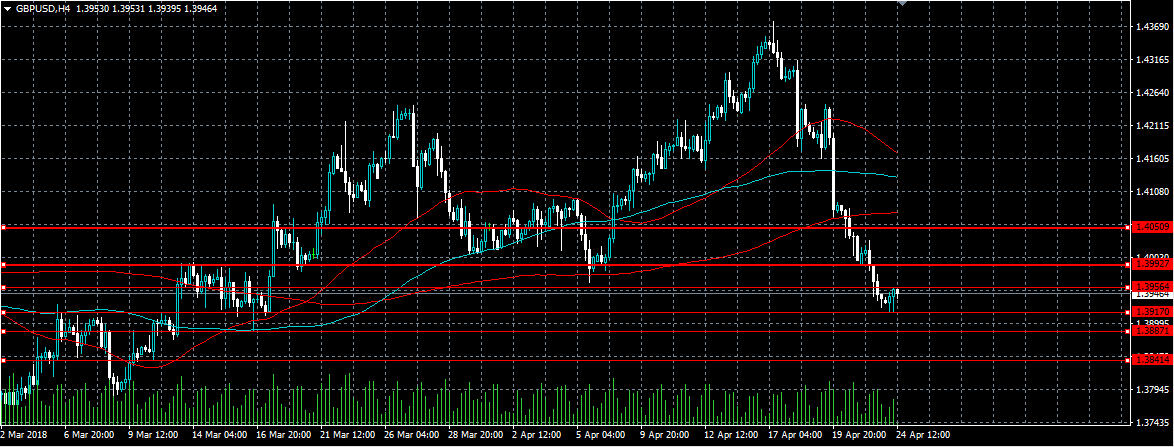
The British pound has started to recover marginally higher against the U.S dollar, after finding strong technical support from the 1.3917 level in early Tuesday trading. The GBPUSD pair currently trades around the 1.3946 level, as short-term MACD and Stochastic indicators recover from extreme oversold conditions. Sterling buyers may attempt to push price-action towards the 1.3992 level, while further losses below the 1.3917 level should encourage more pound selling.
The GBPUSD pair is bearish while trading below the 1.3992 level, further losses towards the 1.3887 and 1.3841 levels remains possible.
If the GBPUSD pair moves back above the 1.3992 resistance level, buyers may attempt to test the 1.4050 region.