

Sample Category Title
WTI and Brent React To a Key Pivot
Brent oil is currently on a bullish trend, facing resistance near $84 and supported by the 200-day EMA. Breaking above this level could lead to a climb towards $90. Short-term support is observed around $80, backed by the 50-day EMA. As summer approaches and travel increases, crude oil tends to benefit from seasonal patterns. Despite temporary setbacks, buying opportunities are anticipated in a market with declining supply. Traders are also watching for potential economic stimulus from central bank rate cuts, which could lift commodity prices, especially oil. While the oil market is a key indicator of global economic health, its volatility remains a challenge. Overall, there's a bullish sentiment, albeit with lingering challenges.
XBRUSD - D1 Timeframe
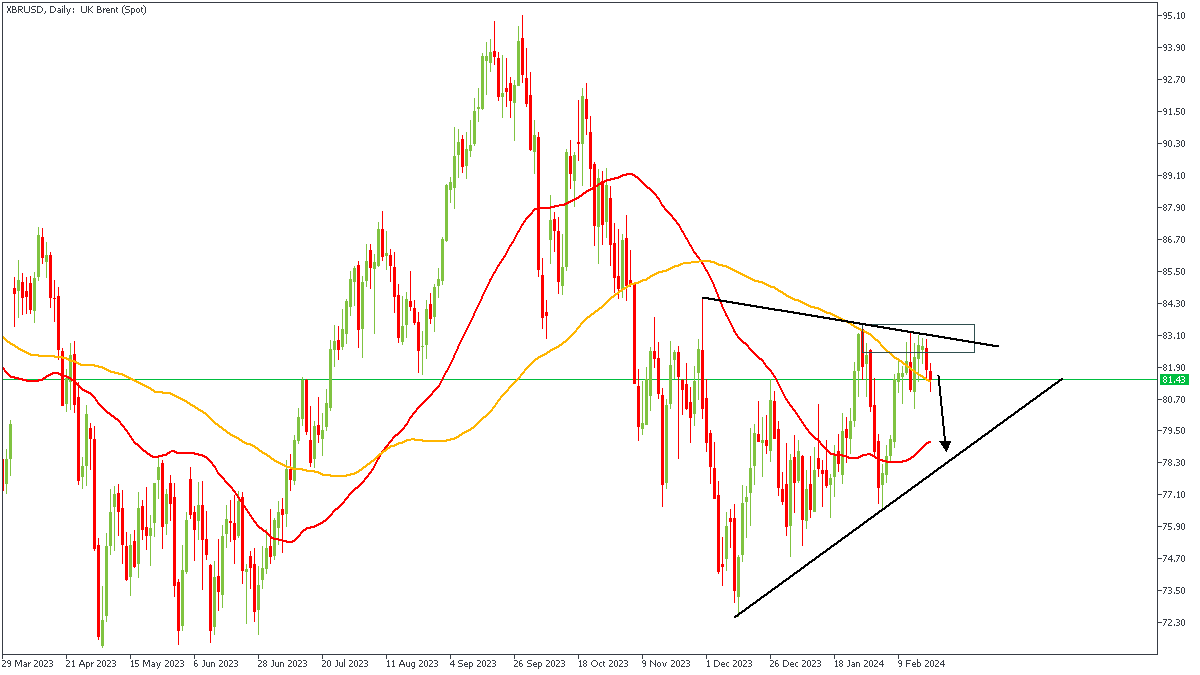
Brent (XBRUSD) on the daily timeframe has just been rejected off the rally-base-drop supply zone, which is in alignment with the trendline resistance, and the bearish array of the moving averages, as well as the 100-day moving average resistance. In light of these confluences, I will be expecting a continuation of the bearish movement with a target at the confluence of the 50-day moving average and the trendline support.
Analyst’s Expectations:
- Direction: Bearish
- Target: $79.13
- Invalidation: $83.60
XTIUSD - D1 Timeframe
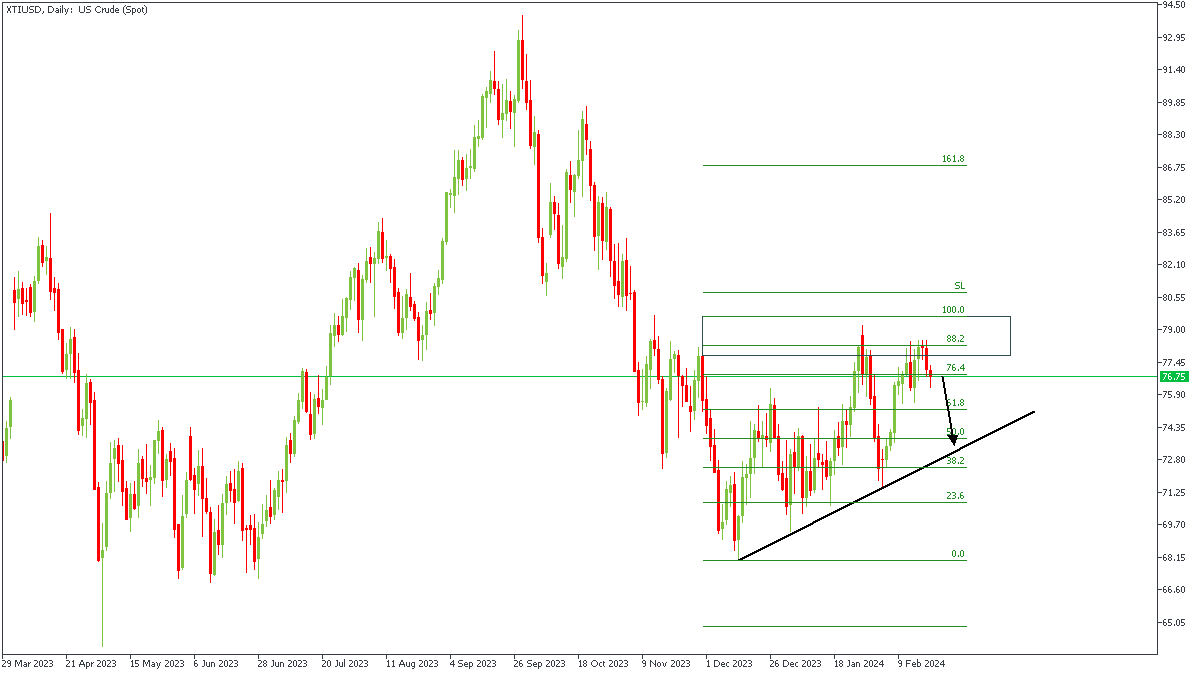
XTIUSD (USOIL) has recently reacted to the bearish pressure from the rally-base-drop supply zone around the 88% Fibonacci retracement level. In light of this, I perceive that price could slide further down till it reaches the trendline support, before we get to see a possible continuation of the bullish pressure.
Analyst’s Expectations:
- Direction: Bearish
- Target: $73.83
- Invalidation: $79.65
CONCLUSION
The trading of CFDs comes at a risk. Thus, to succeed, you have to manage risks properly. To avoid costly mistakes while you look to trade these opportunities, be sure to do your due diligence and manage your risk appropriately.
XAUUSD: Will Gold Continue to Rally?
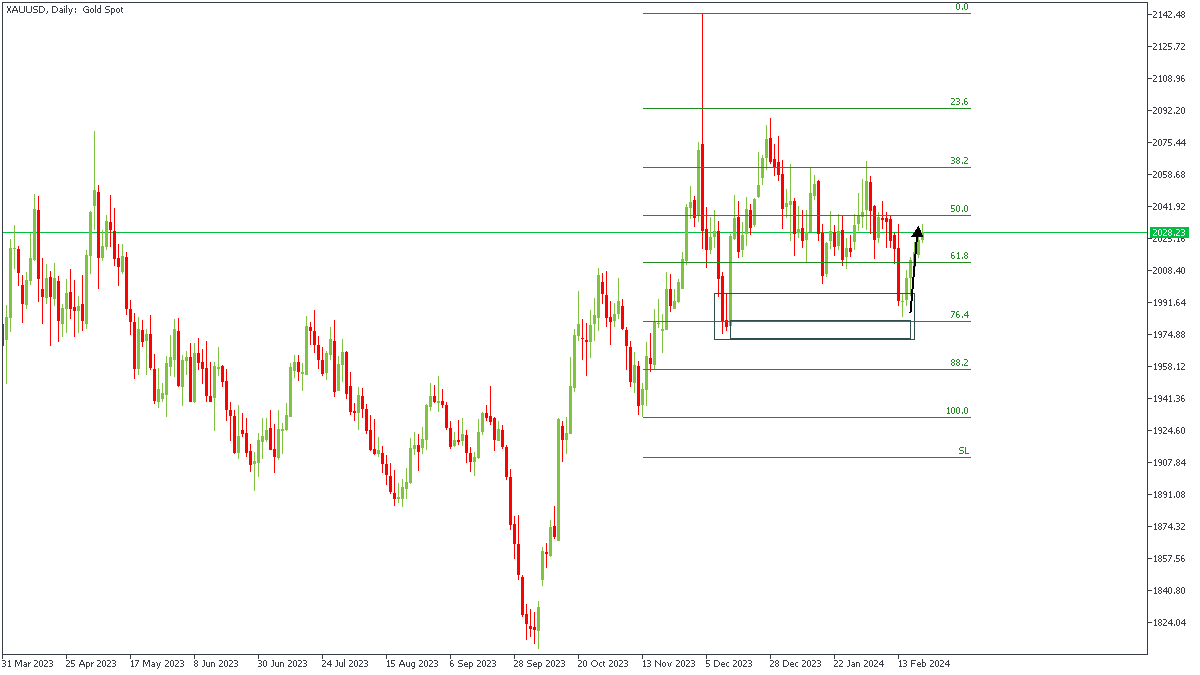
Last week I gave a trade idea on XAUUSD with a target around the $2,020 price line. At the time of writing, XAUUSD already exceeded the target and I’m sure that would leave a lot of people wondering what to expect next. Below, I have presented my view of how I expect the price action to turn out in the meantime.
XAUUSD - D1 Timeframe
On the daily timeframe, we see that price has reached the target area, whilst approaching the 50% mark of the Fibonacci retracement tool. The lingering question at this moment seems to be whether or not the bullish pressure will continue. In my opinion, I expect to see a short decline in bullish pressures, which should give the price action enough room to regain its momentum.
XAUUSD - H4 Timeframe
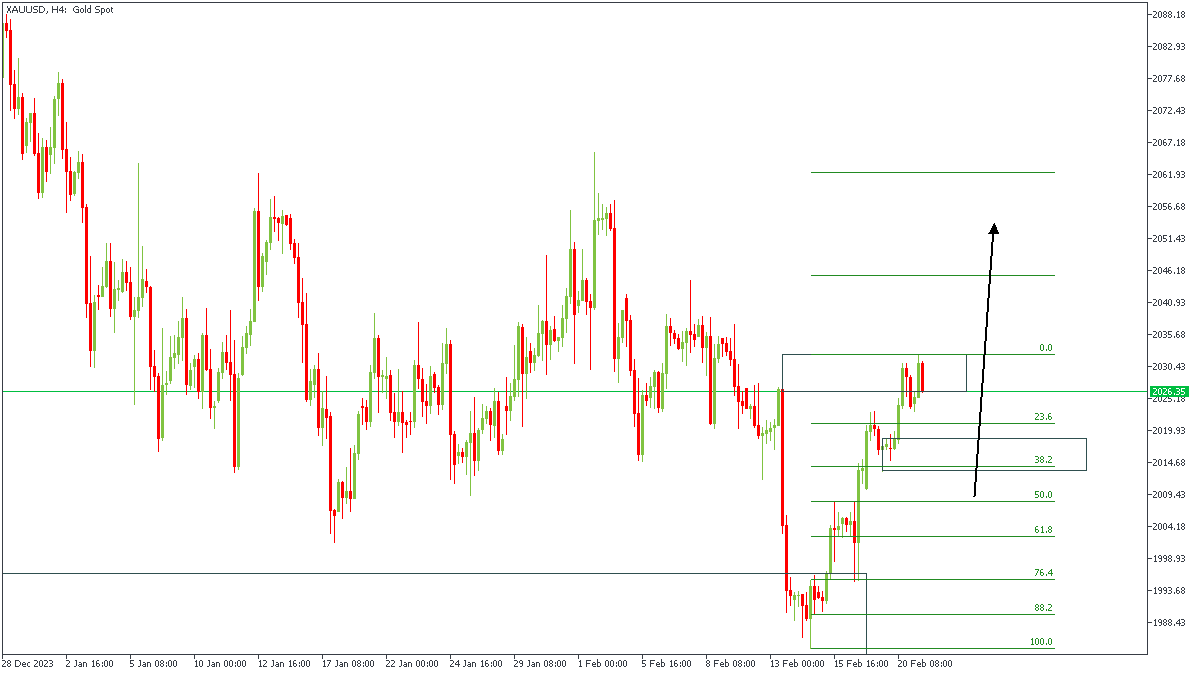
On the 4-hour timeframe of XAUUSD, price has reached a minor rally-base-drop supply zone, and is expected to bounce off in reaction to the bearish pressure from that zone. However, I perceive this to be simply a retracement move, which is why I have drawn the Fibonacci retracement tool in a bid to show the expected area for the bullish continuation.
Analyst’s Expectations:
- Direction: Bullish
- Target: $2046.27
- Invalidation: $1983.61
CONCLUSION
The trading of CFDs comes at a risk. Thus, to succeed, you have to manage risks properly. To avoid costly mistakes while you look to trade these opportunities, be sure to do your due diligence and manage your risk appropriately.
NZDUSD Prepares to Switch to a Bull Market
- NZDUSD prints bullish trend pattern
- Constraining 50-day SMA under examination again
- FOMC meeting minutes due for release at 19:00 GMT
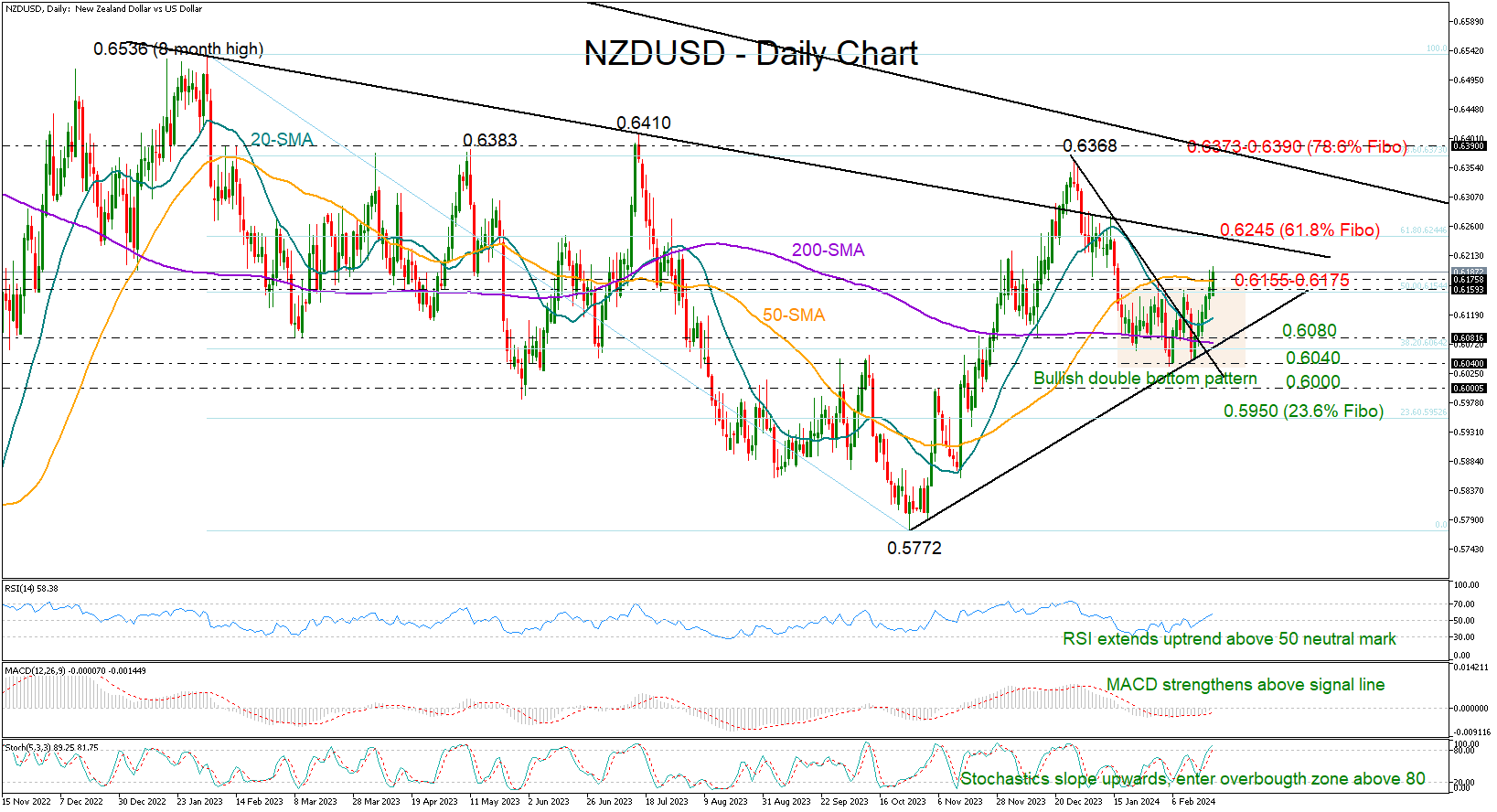
NZDUSD is looking to complete a bullish double bottom pattern above the 0.6155 neckline and the 50% Fibonacci retracement of the February-October 2023 downtrend.
Technically, the bulls could dominate in the coming sessions as the RSI has extended its upward pattern above its 50 neutral mark and the MACD continues to strengthen above its red signal line. Meanwhile, the stochastic oscillator has entered the overbought zone above 80, warning that potential price increases might be transitory.
The 50-day simple moving average (SMA), which has been capping upside movements over the past couple of weeks, is currently under the spotlight at 0.6175. A close above it could push the price straight up to the 61.8% Fibonacci mark of 0.6245, while higher, the market could experience a fast rally towards December’s peak of 0.6368 and the 0.6390 barrier.
Should the sellers take over, squeezing the price back below the 50% Fibonacci of 0.6155, support could come somewhere between the 200-day simple moving average (SMA) and the 0.6040 zone. Note that the 38.2% Fibonacci of 0.6064 and the ascending trendline from October’s lows are also within the region. Therefore, a bearish correction at this point might confirm an extension to 0.6000 and then down to the 23.6% Fibonacci of 0.5950.
Summing up, NZDUSD is setting the stage for another bullish round, with traders awaiting another positive close above the 50-day SMA and the 0.6155 territory to confirm a positive trend pattern.
Gold Encounters Resistance at 50.0% Fibo
- Gold rebounds strongly from 2-month bottom
- Price breaks above 50- and 200-period SMAs
- Oscillators tilt to the positive side
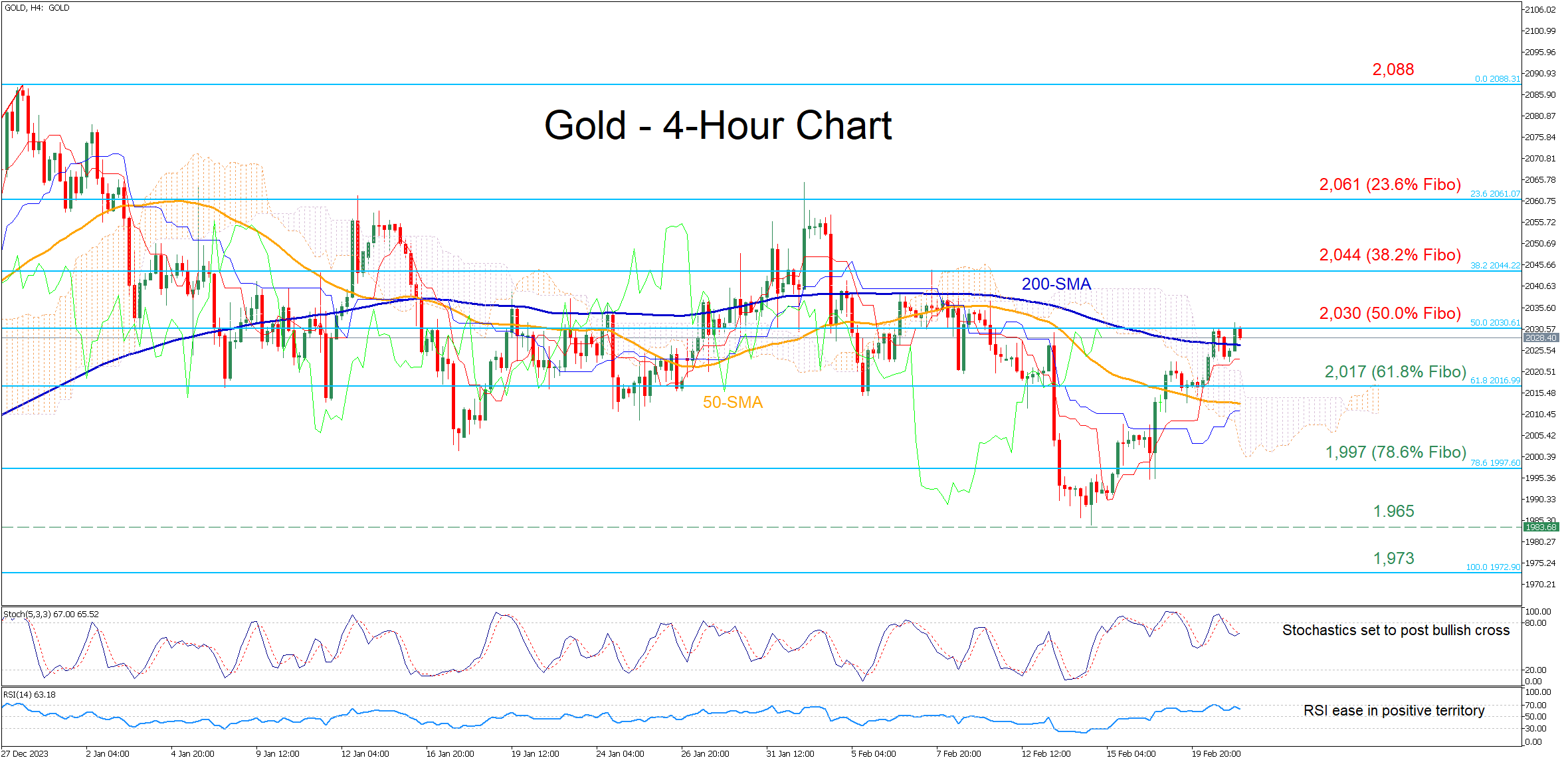
Gold had been trading within a range in the four-hour chart, but a hotter-than-expected US inflation report triggered a downward spike to a fresh two-month low of 1,984. However, bullion managed to post a swift recovery, jumping above both 50- and 200-period simple moving averages (SMAs) before encountering strong resistance at 2,030.
For the rebound to resume, the bulls need to conquer 2,030, which is the 50.0% Fibonacci retracement of the 1,973-2,086 upleg. Surpassing that area, the price may ascend towards the 38.2% Fibo of 2,044. Further advances could then cease at the 23.6% Fibo of 2,060, a region that held strong three times in January.
On the flipside, should gold reverse back below its 200-period SMA, immediate support could be met at the 61.8% Fibo of 2,017, which has prevented retreats multiple times throughout January. Lower, the 78.6% Fibo of 1,997 could prove to be a tough barrier for the bears to overcome. Failing to halt there, the price may challenge the recent two-month low of 1,984.
In brief, gold has been regaining lost ground after finding its feet at a fresh two-month low. However, its repeated failure to claim the 2,030 mark could result in another round of weakness.
Ethereum Price Falls after Exceeding $3,000
We previously wrote about the reasons for the positive sentiment in the ETH/USD market.
Optimism was added by a post on X (Twitter) by Vitalik Buterin about the so-called Werkle trees. This technology, which should (according to the information in the roadmap) be introduced in the future, it includes the advantages of:
→ reduced requirements for validators;
→ faster network synchronization, and others.
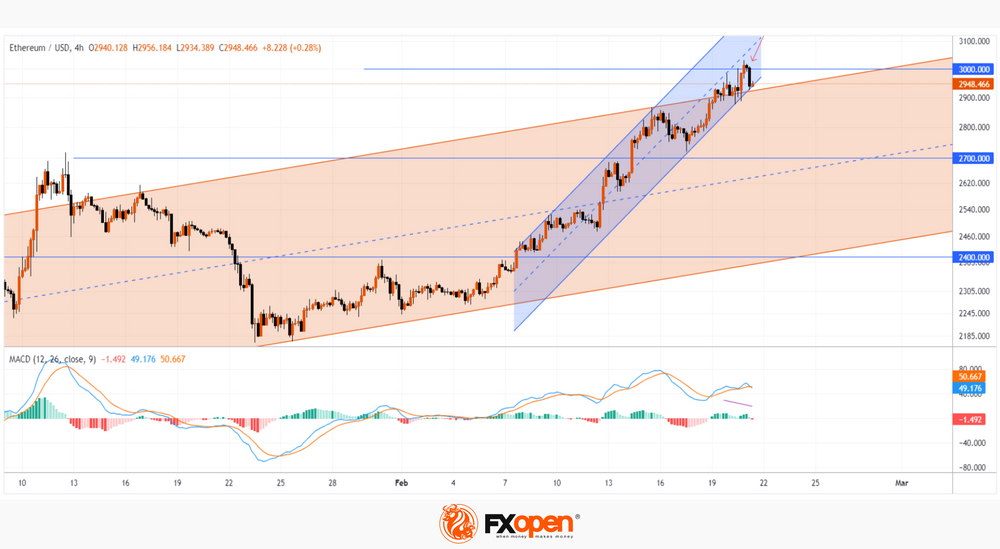
The ETH/USD chart shows that:
→ ETH price is within a larger uptrend (shown in orange);
→ the price is within the February bullish trend (shown by blue lines);
→ the market is in an overbought state, judging by the bearish divergence on the MACD indicator.
These arguments suggest that the market is vulnerable to a pullback.
Notice the wide bearish candle (shown by the red arrow) that is pushing the ETH price down from above the psychological USD 3,000 level. It may indicate a change in mood.
Since the beginning of February, the price of ETH has increased by approximately 30%. Therefore, some market participants could take profits from long positions at the psychological level. If a pullback occurs and is about 50% of the February rise, the price of Ethereum may fall to the median line of the orange channel to the support area of 2,700.
FXOpen offers the world's most popular cryptocurrency CFDs*, including Bitcoin and Ethereum. Floating spreads, 1:2 leverage — at your service. Open your trading account now or learn more about crypto CFD trading with FXOpen.
*At FXOpen UK and FXOpen AU, Cryptocurrency CFDs are only available for trading by those clients categorised as Professional clients under FCA Rules and Professional clients under ASIC Rules respectively. They are not available for trading by Retail clients.
This article represents the opinion of the Companies operating under the FXOpen brand only. It is not to be construed as an offer, solicitation, or recommendation with respect to products and services provided by the Companies operating under the FXOpen brand, nor is it to be considered financial advice.
Japan’s government reports stall in consumption and manufacturing slide
The Japanese government maintains its assessment that the economy is "recovering at a moderate pace", but with a of caution with the observation that the recovery "recently appears to be pausing."
A critical shift noted in the Monthly Economic Report concerns private consumption, which has been downgraded from "picking up" to "pausing for picking up." Additionally, while there was optimism surrounding industrial production, the report highlights a recent decline in manufacturing activities attributed to production and shipment suspensions by some automotive manufacturers.
The report maintains unchanged assessments in several other economic indicators. Business investment and exports, similar to private consumption and industrial production, are described as "pausing for picking up."
On a positive note, corporate profits are reported to be improving overall, and firms' judgments on current business conditions are becoming more favorable.
Additionally, employment situation is showing signs of improvement. Consumer prices, meanwhile, continue to rise "moderately".
EUR/USD Starts Increase While USD/JPY Dips
EUR/USD gained bullish momentum above the 1.0800 resistance. USD/JPY is declining and showing bearish signs below the 150.40 level.
Important Takeaways for EUR/USD and USD/JPY Analysis Today
- The Euro remained in a bullish zone and climbed above the 1.0800 resistance zone.
- There is a key bullish trend line forming with support near 1.0790 on the hourly chart of EUR/USD at FXOpen.
- USD/JPY is trading in a bearish zone below the 150.40 and 150.15 levels.
- There is a major bearish trend line forming with resistance near 150.15 on the hourly chart at FXOpen.
EUR/USD Technical Analysis
On the hourly chart of EUR/USD at FXOpen, the pair started a fresh increase above the 1.0745 zone. The Euro climbed above the 1.0800 resistance zone against the US Dollar.
The pair even settled above the 1.0800 resistance and the 50-hour simple moving average. Finally, it tested the 1.0840 resistance. A high is formed near 1.0838 and the pair is now consolidating gains. There was a minor decline below the 23.6% Fib retracement level of the upward move from the 1.0761 swing low to the 1.0838 high.
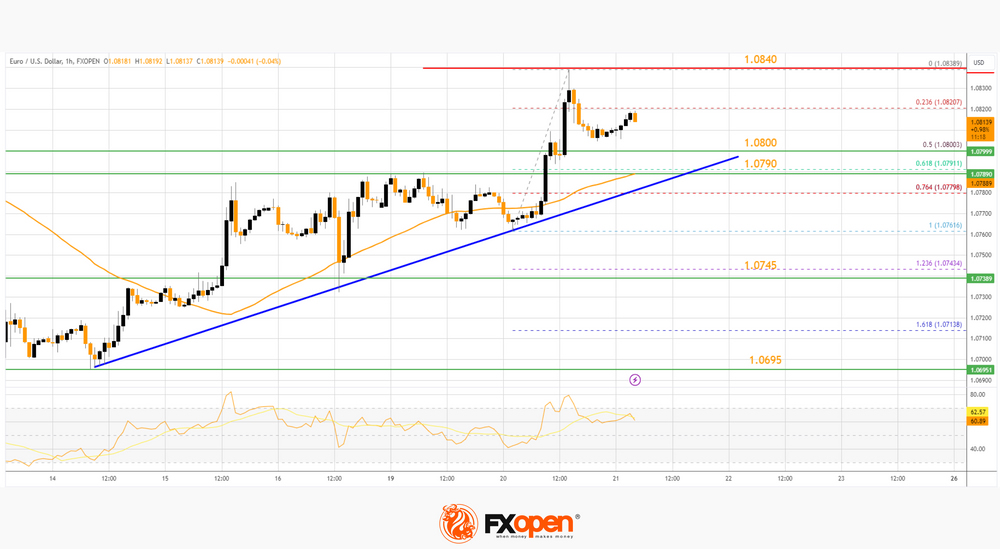
Immediate support is near the 1.0800 level. The next major support is at 1.0790. There is also a key bullish trend line forming with support near 1.0790 and the 50-hour simple moving average. It coincides with the 61.8% Fib retracement level of the upward move from the 1.0761 swing low to the 1.0838 high.
If there is a downside break below 1.0790, the pair could drop toward the 1.0745 support. The main support on the EUR/USD chart is near 1.0695, below which the pair could start a major decline.
On the upside, the pair is now facing resistance near 1.0840. The next major resistance is near the 1.0885 level. An upside break above 1.0885 could set the pace for another increase. In the stated case, the pair might rise toward 1.0950.
USD/JPY Technical Analysis
On the hourly chart of USD/JPY at FXOpen, the pair started a steady decline well above the 150.80 zone. The US Dollar gained bearish momentum below the 150.40 support against the Japanese Yen.
The pair even settled below the 150.00 level and the 50-hour simple moving average. There was a spike below the 50% Fib retracement level of the upward move from the 148.92 swing low to the 150.88 high.
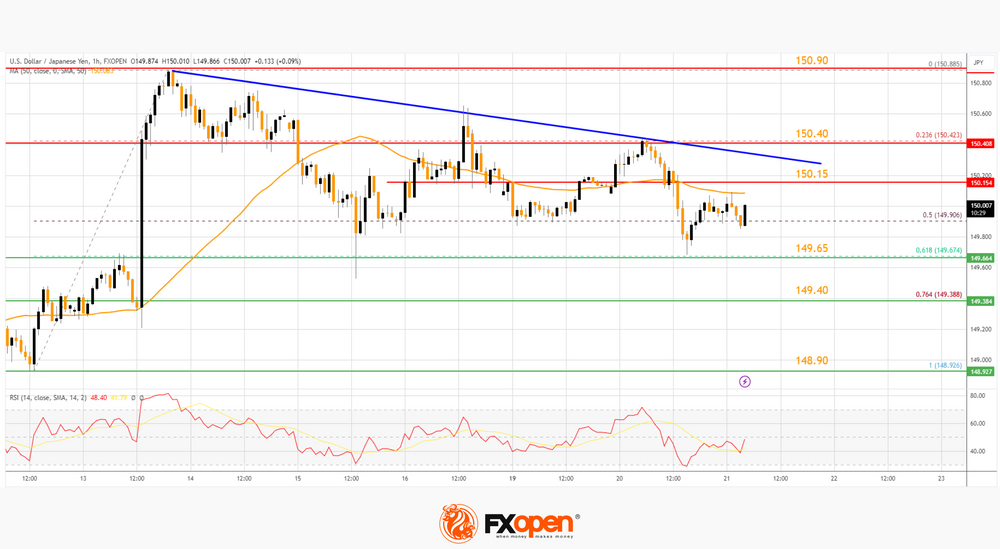
On the downside, the first major support is near 149.65. It is close to the 61.8% Fib retracement level of the upward move from the 148.92 swing low to the 150.88 high. The next major support is near the 149.40 level.
If there is a close below 141.90, the pair could decline steadily. In the stated case, the pair might drop toward the 148.90 support.
Immediate resistance on the USD/JPY chart is near the 50-hour simple moving average. The first major resistance is near a bearish trend line at 150.15. If there is a close above the 150.15 level and the hourly RSI moves above 50, the pair could rise toward 150.40. The next major resistance is near 150.90, above which the pair could test 152.50 in the coming days.
Trade over 50 forex markets 24 hours a day with FXOpen. Take advantage of low commissions, deep liquidity, and spreads from 0.0 pips. Open your FXOpen account now or learn more about trading forex with FXOpen.
This article represents the opinion of the Companies operating under the FXOpen brand only. It is not to be construed as an offer, solicitation, or recommendation with respect to products and services provided by the Companies operating under the FXOpen brand, nor is it to be considered financial advice.
USDJPY Hovers Above a Key Trendline
- USDJPY trades sideways, hovering around the 150 level
- It remains close to its recent peak and it is comfortably above a key trendline
- Momentum indicators are mixed, all eyes on the stochastic oscillator
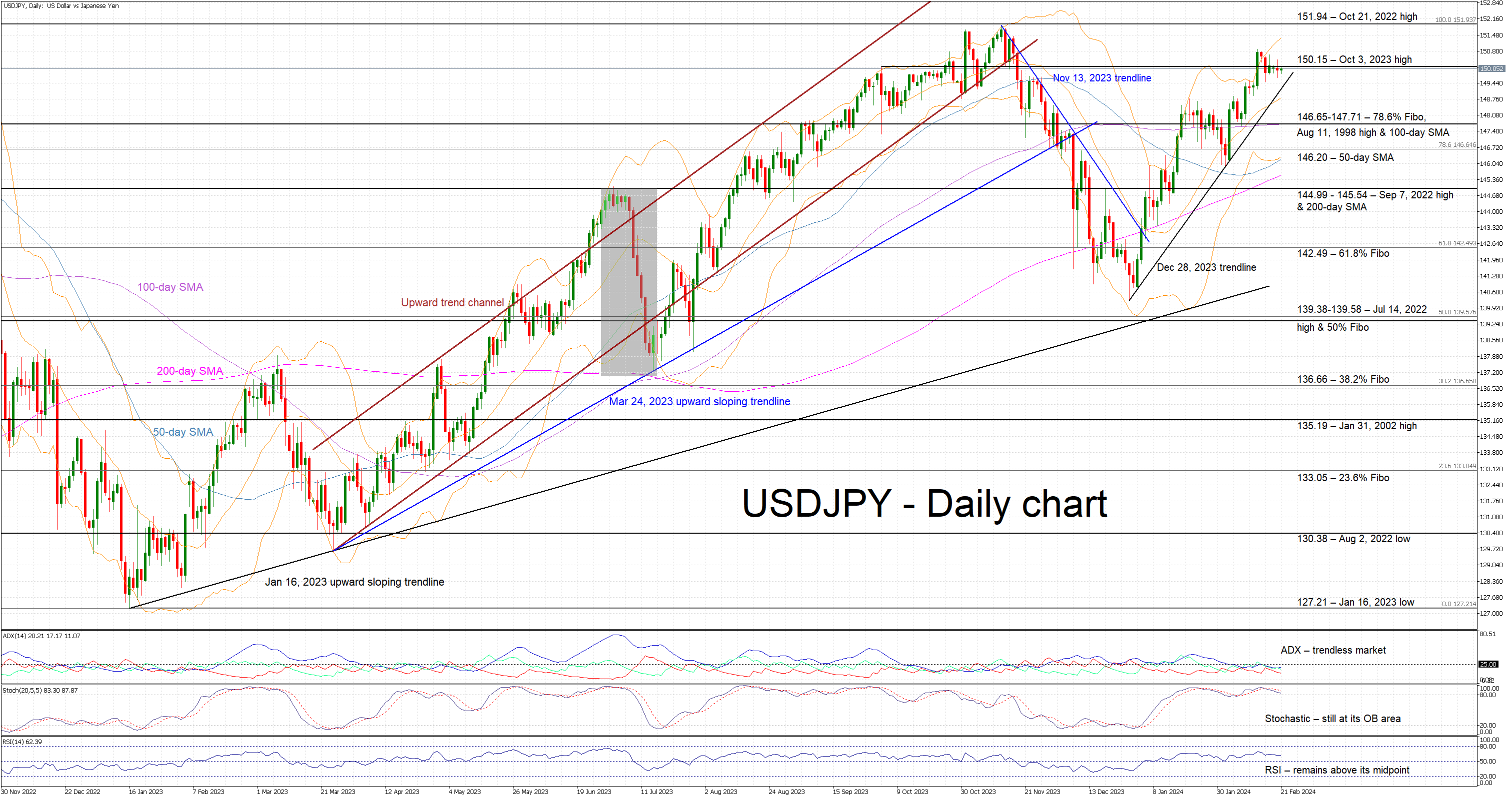
USDJPY is trying to record a green candle as it continues to range trade and to respect the aggressive December 28, 2023 ascending trendline. It remains a tad below the October 3, 2023 high at 150.15, a level that appears to provoke verbal interventions from Japanese officials.
In the meantime, the momentum indicators are mostly mixed. More specifically, the Average Directional Movement Index (ADX) appears uninterested in the recent upleg as it continues to hover in trendless territory. The RSI continues to trade comfortably above its 50-midpoint and, more importantly, the stochastic oscillator remains stuck in its overbought (OB) territory. It is edging lower, but it needs a more forceful move in order to break below its OB area and send a bearish signal.
Should the bulls remain confident, they could try to overcome the October 3, 2023 high at 150.15. USDJPY bulls could then stage a rally towards the October 21, 2022 high at 151.94 and, if successful, open the door to a new 30-year high.
On the flip side, the bears are keen to push USDJPY below the December 28, 2023 ascending trendline and then test the support set by the 146.65-147.71 area, which is populated by the 78.6% Fibonacci retracement of the October 21, 2022 - January 16, 2023 downtrend, the August 11, 1998 high and the 100-day simple moving average (SMA). Even lower, the bears could then lead USDJPY towards the 144.99-145.54 region, provided they overcome the 50-day SMA at 146.20.
To sum up, USDJPY bulls are keen to record another upleg, but they need stronger support from the momentum indicators and to avoid provoking the Japanese authorities.
Minutes of January Fed Meeting the Only Item Worth Mentioning Today
Markets
US stock markets performed well this year despite the hawkish repositioning on bond markets. The Dow Jones, S&P 500 and Nasdaq are off their YTD/all-time highs, but record YTD gains of respectively 2.32%, 4.31% and 4.13%. One of the reasons is that stocks have been backed by a strong Q4 earnings season. Unfortunately, this support is gradually petering out. AI-frontrunner NVidia is the final bellwether tonight, after which remaining earnings will be downgraded to playing second fiddle. Following an astronomic (stock price) rise, investors took a more guarded approach yesterday going into tonight’s release. The stock fell around 4%, pulling Nasdaq almost 1% lower. Once the result is out, for better or for worse, we believe that stock markets and risk sentiment in general could be prone for some short-term correction. This can help US Treasuries temporarily off the sell-off lows, though we don’t think that investors will be rapidly tempted into piling Fed rate cuts bets again ahead of the June policy meeting. From a data point of view, we have tomorrow’s global PMI’s but then the wait stretches to PCE deflators published next Thursday (Feb 29). The US dollar had a solid start to the year but showed first signs of weakness yesterday, easily giving up to 1.08 first resistance area against a still weak euro. The pair is trying to escape the YTD downward trend channel. First support in the trade-weighted dollar around 104 survives for now. USD/JPY holds north of 150.
Today’s eco calendar fails to inspire. Minutes of the January Fed meeting are the only item worth mentioning. We expect them to align with the recent Fed push against dovish market bets. Fed chair Powell strongly suggested that the base case scenario of “only” three 25 bps rate cuts, as plotted in December Dots, remains in play going into the March update. More and more Fed members indicate summer as the preferred starting point. From a market point of view, we fear that they won’t contain much new, guiding, info though, setting the stage for another session of sentiment-driven trading within technical boundaries.
News & Views
The Australian Bureau of Statistics this morning reported its wage price index. Wages rose 0.9% in Q4 of last year, bringing the Y/Y measure at 4.2%. The outcome was marginally higher than expected and follows a strong 1.3% quarterly gain in Q3. Y/Y growth was the strongest since the March 2009 quarter. Private sector wage growth was comparable to December 2022 (also 0.9%). The public sector had the highest quarterly rise in 15 years (1.3%). The Reserve Bank of Australia in its February monetary policy report expected wage growth at 4.1%. Today’s data suggest the RBA might take some more time to assess the impact of wages on inflation going forward. Yesterday, Minutes of the February meeting showed that the RBA still didn’t completely rule out the option of a final rate hike, even as markets see the chance for such a move as non-existent.
Japanese exports beat expectations in January, rising by 11.9% from the same month in 2022. The improvement was mainly driven by shipments of cars and car parts and chipmaking equipment. Exports to the US rose 15.6%, to Europe 13.8% and exports to China even jumped 29.2%. However, with respect to the latter some calendar effects related to timing of the Lunar New year were in play. On the other hand imports declined by a bigger than expected 9.6% Y/Y. The data might give some comfort after Japan fell into recession in the second half of last year, mainly due to poor domestic demand. A solid export performance and a weak yen keep the option for the BOJ to start policy normalization/leaving the negative interest rate policy at one of the upcoming meetings. The yen is going nowhere this morning, with USD/JPY hovering near the 150 pivot.
Nasdaq 100 Technical: Torpedoed by Nvidia, At Risk of Undergoing Multi-Week Corrective Decline
- Nasdaq 100 has remained sluggish and underperformed the Dow Jones Industrial Average since last Friday, 16 February.
- The recent underperformance of the Nasdaq 100 has been triggered by the concentration risk of its significant YTD return contributor, Nvidia.
- The options market has priced in around an 11% move in either direction on the share price of Nvidia after it reports its Q4 2023 earnings results later today.
- Nasdaq 100 faces the risk of a potential multi-week corrective decline unfolding; immediate supports to watch will be at 17,350 and 17,160.
The Nasdaq 100, the top outperformer among the major US benchmark stock indices has remained sluggish since last Friday, 16 February.
Yesterday, the mega-cap technology stocks heavy-weighted Nasdaq 100 slipped by -0.79% after shedding as much as -1.62% intraday. In contrast, the Dow Jones Industrial Average only recorded a minor loss of -0.17%
Concentration risk in Nvidia
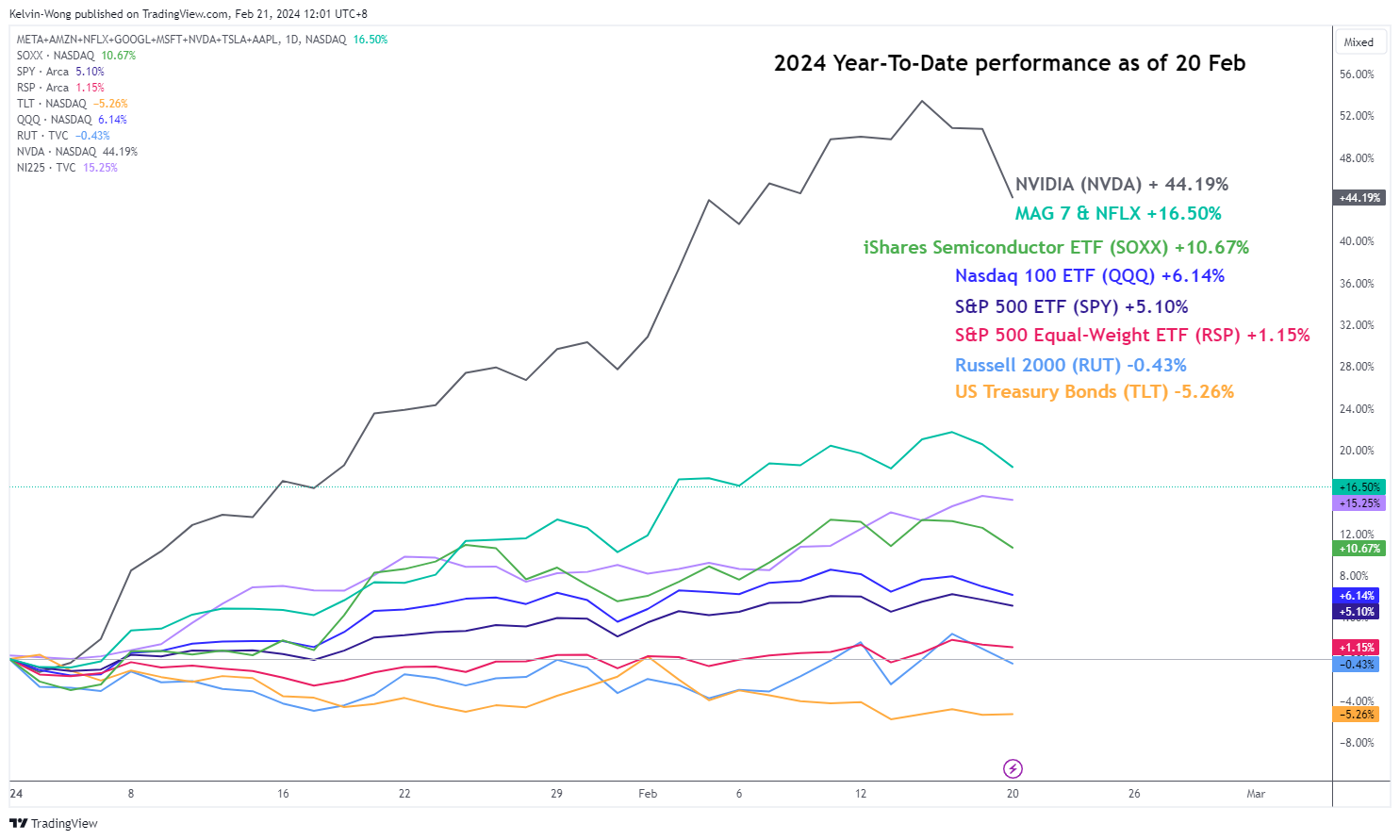
Fig 1: YTD performance of major US benchmark stock indices & key ETFs as of 20 Feb 2024 (Source: TradingView, click to enlarge chart)
The main culprit to blame for the Nasdaq 100’s current short-term underperformance over the Dow Jones Industrial Average has been the horrendous sell-off seen in the share price of Nvidia yesterday where it plummeted by -4.35% with a maximum intraday loss of -6.58%, its worst daily return since 17 October 2023 ahead of its Q4 2023 earnings result release today after the close of the US session.
Market participants have started to remain weary of the high growth earnings expectations being placed on Nvidia, being the leader of the ongoing Artificial Intelligence (AI) high productivity and business cycle revolution optimism theme play. Analysts’ consensus expectations have set a high bar for Nvidia’s Q4 2023 earnings per share to come in at $4.59, that’s a whopping gain of +420% y/y over the same quarter a year ago.
A Wall Street Journal report dated yesterday, 20 February has cited data obtained from Cboe Global Markets that the options market has priced in around an 11% move in either direction on the share price of Nvidia after it reports its earnings later today at the close of the US session. The expected 11% move is based on an option trade known as a straddle which entails purchasing puts and calls at the same strike price.
Notably, market participants have turned cautious about the state of the US stock market as a significant portion of the current year-to-date (YTD) of the S&P 500 has been contributed by a huge portion from Nvidia’s YTD return of +44 % with a current peak of +53% seen earlier on 14 February (see Fig 1) that surpassed the YTD returns of Nasdaq 100 by 7 times, and a wider margin of 38 times on the equal-weight S&P 500.
Bearish “Ascending Wedge” breakdown
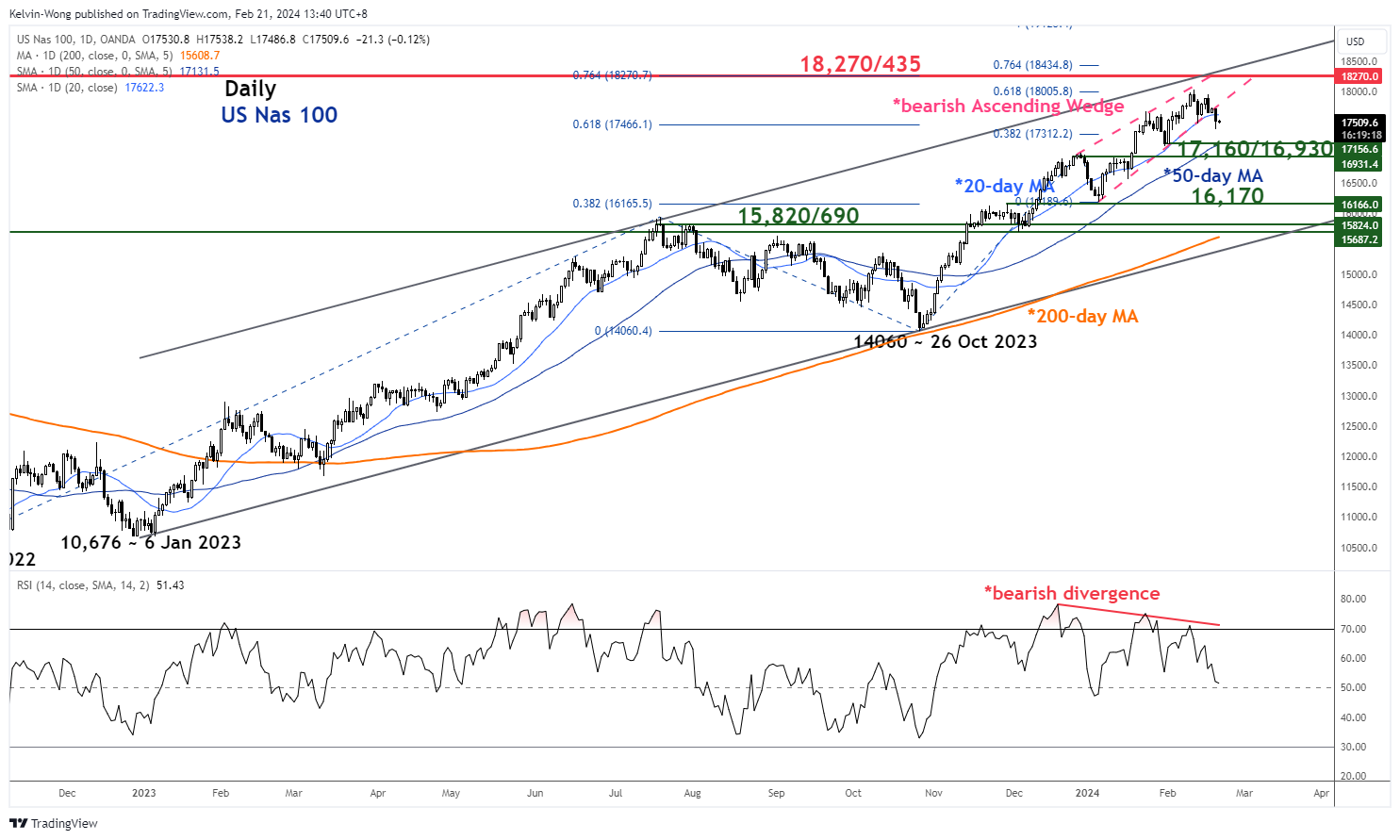
Fig 2: US Nas 100 medium-term & major trends as of 21 Feb 2024 (Source: TradingView, click to enlarge chart)
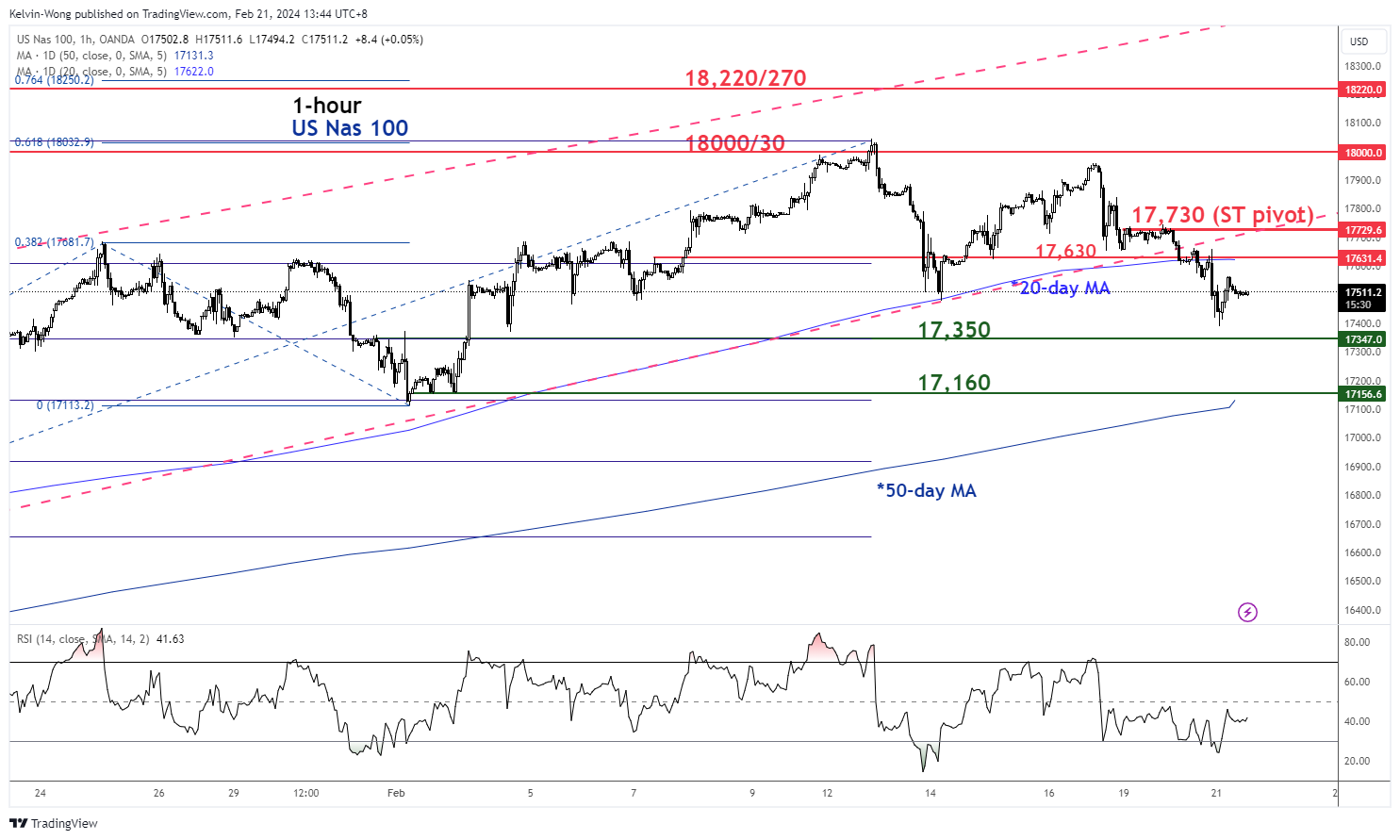
Fig 3: US Nas 100 short-term trend as of 21 Feb 2024 (Source: TradingView, click to enlarge chart)
Yesterday’s sell-off seen in the US Nas 100 Index (a proxy for the Nasdaq 100 futures) has led to a breakdown on the lower boundary of its medium-term bearish “Ascending Wedge” configuration that also confluences with the 20-day moving average that acted as a prior support at 17,630.
In addition, the daily RSI momentum indicator has flashed a bearish divergence condition since 24 January at its overbought region. These observations have increased the risk of a potential medium-term (multi-week) corrective decline unfolding within the Index’s ongoing major uptrend phase in place since the 6 January 2023 swing low.
On a short-term horizon, as seen in the hourly chart, the key short-term pivotal resistance to watch will be at 17,730 (pull-back of the former “Ascending Wedge” support & 61.8% Fibonacci retracement of the recent slide from 16 February 2024 high to 21 February 2024 low).
If 17,730 is not surpassed to the upside, the Index may exhibit further weakness to expose the next intermediate supports at 17,350 and 17,160 (also the upward-sloping 50-day moving average) in the first step.
On the other hand, a clearance above 17,730 invalidates the bearish tone to see a retest on the current all-time high area of 18,000/18,030.