

Sample Category Title
GBP/AUD resuming rally after dovish RBA minutes
Australian Dollar trades mildly lower after RBA minutes indicated the possibility of a pause in tightening at next meeting. On the other hand, Sterling (and Euro too) is supported by funds flow from Swiss Franc. But there are some uncertainties for the Pound ahead with UK CPI and BoE rate decisions scheduled later in the week.
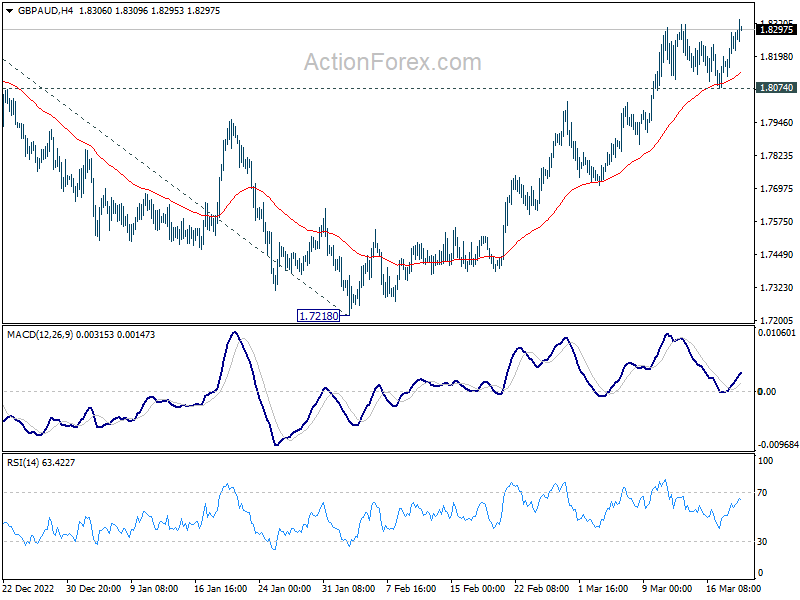
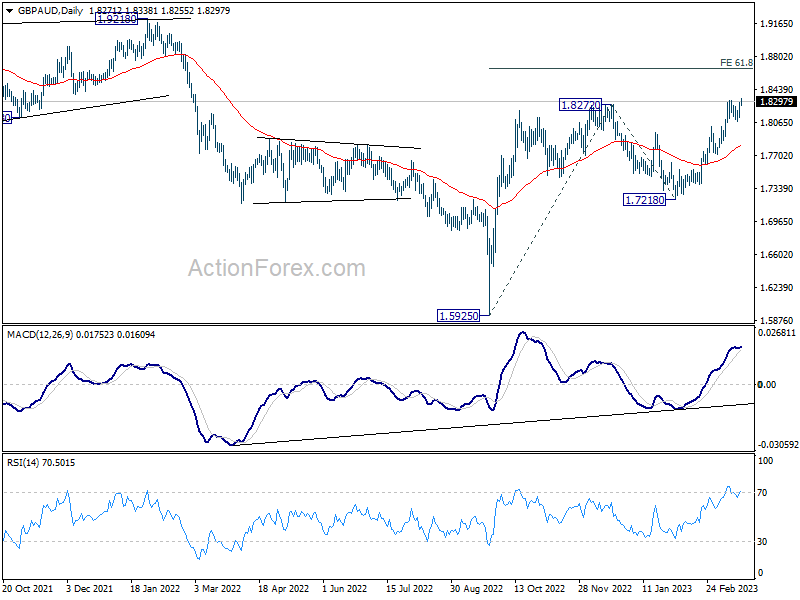
Technically, GBP/AUD is resuming the near term rise by breaking last week's high at 1.8316. At the same time, rise from 1.7218 is likely resuming the whole up trend from 1.5925. Near term outlook will stay bullish as long as 1.8074 support holds, even in case of retreat. Next target is 61.8% projection of 1.5925 to 1.8272 from 1.7218 at 1.8668. Nevertheless, break of 1.8074 support will delay the bullish case and bring some consolidations before another rally attempt.
RBA Minutes: To reconsider a pause at next meeting
The minutes of RBA's meeting on March 7 indicate that the central bank is considering a more cautious approach in tightening monetary policy, as uncertainty surrounding the economic outlook persists. The RBA members observed that "further tightening of monetary policy would likely be required to ensure that inflation returns to target." However, they also noted the restrictive nature of current monetary policy and the economic uncertainty, stating that "it would be appropriate at some point to hold the cash rate steady."
During the meeting, RBA members agreed to "reconsider the case for a pause at the following meeting, recognizing that pausing would allow additional time to reassess the outlook for the economy." The decision on when to pause will be determined by incoming data and the board's assessment of the economic situation.
The RBA acknowledges that "the outlook for consumption remained a key source of uncertainty." The central bank will closely monitor upcoming data releases on employment, inflation, retail trade, and business surveys, as well as developments in the global economy, to inform their decision-making.
(RBA) Minutes of the Monetary Policy Meeting of the Reserve Bank Board
Sydney – 7 March 2023
Members present
Philip Lowe (Governor and Chair), Michele Bullock (Deputy Governor), Mark Barnaba AM, Wendy Craik AM, Ian Harper AO, Carolyn Hewson AO, Steven Kennedy PSM, Carol Schwartz AO, Alison Watkins AM
Others present
Luci Ellis (Assistant Governor, Economic), Christopher Kent (Assistant Governor, Financial Markets)
Anthony Dickman (Secretary), David Norman (Acting Deputy Secretary)
David Jacobs (Head, Domestic Markets Department), Marion Kohler (Head, Economic Analysis Department), Penelope Smith (Head, International Department), Matthew Boge (Deputy Head, International Department)
International economic developments
Members commenced their discussion of international economic developments by noting that inflation remained well above central banks' targets, though it had moderated over prior months. Headline inflation had come off its peaks as energy prices had fallen and – outside the euro area – core inflation had also eased as reduced supply-chain pressures had led to slowing goods price inflation. Services inflation remained high in most economies, reflecting the tight labour market conditions and still-firm demand for services, but had been broadly stable recently. Rents inflation was also high in most advanced economies, but there were signs from new rental agreements that this could start to ease in the United States. The latest monthly data on core inflation had mostly been stronger than expected and had picked up noticeably in the United States and some euro area countries.
Unemployment rates remained at multi-decade lows for many advanced economies and vacancy rates were still high. Nevertheless, employment growth had slowed and hiring intentions pointed to further moderation in coming months. Vacancy rates had declined from their peaks and vacancies had become slightly easier to fill. Members noted that wages growth had slowed from its earlier peaks in the United States and Canada, although in the United States it remained above rates consistent with sustainable achievement of the inflation target.
Growth in domestic demand slowed in late 2022 across most advanced economies, driven by weaker growth in household consumption, particularly the demand for goods. Members observed that there had been signs of strength more recently, with indicators of services consumption and from business surveys holding up in several advanced economies, and a strong pick-up in US consumption in January. The housing sector remained an area of weakness around the world, reflecting the tightening of financial conditions.
Members discussed that, in contrast to most other economies, China was still in the early stages of the post-pandemic economic recovery. Following the abrupt removal of tight COVID-19 restrictions at the end of 2022, demand had picked up rapidly; while little official data for 2023 were available at the time of the meeting, a range of high-frequency indicators, such as domestic airline passenger movements and business surveys, pointed to activity recovering quickly. In line with the focus on supporting economic activity, Chinese authorities had continued to introduce measures to support demand in the depressed property sector. In early March, the National People's Conference highlighted the policy priorities of Chinese policymakers for the coming year, which included a growth target of 5 per cent and a headline general government deficit of 3 per cent.
The stronger outlook for Chinese demand had supported iron ore and coking coal prices owing to the more positive outlook for Chinese steel production. Coking coal prices had increased further in February to be back in line with thermal coal prices, although this partly reflected supply disruptions in Queensland. Base metals prices had softened. Energy prices had declined to the levels of early 2022 – before Russia's invasion of Ukraine – in part due to warmer-than-usual weather in Europe. Nevertheless, energy prices remained around two to three times higher than in pre-pandemic years.
Domestic economic developments
Turning to the domestic economy, members observed that the data over the preceding month had confirmed the expected slowing in activity in the December quarter and into early 2023. The key economic themes were largely unchanged: the labour market was still very tight, although conditions appeared to have eased somewhat; wages growth had picked up a little further; and inflation remained too high. Economic growth had slowed to a below-trend rate in the December quarter 2022, and overall private demand had declined. Early indicators suggested that sluggish growth in demand had continued into the March quarter.
The national accounts for the December quarter showed that quarterly GDP growth had moderated to 0.5 per cent. This was below trend and broadly in line with population growth, implying that GDP per capita had been flat. An increase in numbers of tourists and international students had provided a modest boost to activity. However, private demand had decreased as investment had declined and consumption growth had slowed notably, even as the saving rate had declined sharply in the December quarter, to be just below its pre-pandemic average. The recovery in household spending from the pandemic-related restrictions seemed to have mostly run its course. Retail sales had increased in January, but the broader trend was for slowing growth across most categories. Members observed that higher interest rates, falling housing prices and declining real household incomes as a result of the rising cost of living were acting to dampen household spending. Dwelling investment remained at a high level in the December quarter as firms continued to work through the large pipeline of work yet to be done. Demand for new detached housing, however, had fallen particularly sharply since mid-2022, which would weigh on future dwelling investment.
Housing prices nationally had fallen further in February and were around 8 per cent below their April 2022 peak. The pace of decline had slowed in several markets. Members observed that rental markets remained very tight and that this was continuing to flow through to growth in CPI rents. Vacancy rates for residential property in Sydney and Melbourne had seen the largest declines, reaching below their longer run average levels. In other capital cities and many regional areas, vacancy rates were at or around historical lows.
The outlook for business investment remained positive, but had softened a little. The ABS Capital Expenditure Survey for the December quarter 2022 (taken early in 2023) indicated that non-mining firms expected to increase nominal investment in the first half of 2023, with a small increase expected for the 2023/24 financial year as a whole. In the Bank's liaison with businesses, firms generally reported around-average investment plans (in nominal terms) and intentions to persevere with projects despite rising costs. Capacity utilisation remained high across industries and the NAB Business Survey reported continued above-average business conditions and business confidence at around long-run average levels.
The unemployment rate had increased to 3.7 per cent in January, with employment falling a little in the month; however, this was still close to its 50-year low. Members noted that changes to seasonal patterns were making it difficult to gauge underlying labour market conditions. Relative to previous years, there was an unusually large number of people who were unemployed or not yet in the labour force and about to start a new job in January. Members noted that the February labour force data was expected to provide a clearer indication of whether the softness in the January data reflected changes to usual seasonal patterns or a genuine turning point in labour market conditions. Firms in the Bank's liaison program reported that the demand for labour had remained strong, but had eased over preceding months in line with the job advertisements data.
Members noted that wages had increased solidly in the December quarter, although by less than had been expected following the very strong result in the September quarter. The Wage Price Index increased by 0.8 per cent in the December quarter, to be 3.3 per cent higher over the year. The private sector continued to drive the pick-up in wages growth, while public sector wages growth remained subdued. Taking the preceding two quarters together, private sector wages had increased at an annual rate of around 4 per cent, which was in line with the average increase for those private sector jobs that did receive a pay rise in the December quarter. Public sector wages growth was expected to increase in coming quarters as wage rises associated with recently announced state government wages policies took effect. Broader measures of wages from the national accounts continued to be volatile, reflecting compositional shifts in the labour market, such as changes in the share of higher and lower paid jobs. Looking through this volatility, members observed that over the preceding three years productivity had not increased in net terms, even as the disruption from the pandemic had largely ended, and therefore had not provided any offset to rising labour costs. As a result, unit labour costs had risen at an annual rate of more than 3 per cent over that period.
A range of timelier measures, such as newly lodged enterprise agreements and the estimate derived by CBA from its banking data, pointed to wages growth remaining solid in the March quarter. More generally, wages growth was expected to pick up further. Firms in the Bank's liaison program expected annual wages growth in the private sector to level out at around 4 per cent. Those firms that had reported large wage increases generally expected more moderate outcomes over the coming year, while firms reporting smaller wage rises generally expected to pay larger increases. Unions' longer term inflation expectations had picked up but were still in line with their expectations during the 2000–2010 period. Other measures of long-term inflation expectations remained consistent with the inflation target.
Members noted that the monthly CPI indicator for January pointed to an easing in inflation in the March quarter, consistent with the expectation that inflation was likely to have peaked in the December quarter; however, they also noted this indicator could be volatile from month to month. The monthly CPI indicator for headline inflation had moderated to 7.4 per cent over the year (from 8.4 per cent in December). Liaison information also indicated that imported upstream cost pressures had eased, although many firms reported that they were still adjusting to the earlier increases in costs for materials, energy and freight. Members noted that the February data would provide more information on domestic services inflation, which was not available in the January release.
Recent trends in company profits had attracted some public attention as a potential driver of high prices domestically. Members noted that the national accounts showed that the mining sector accounted for most of the increase in company profits over the preceding few years, with profits in the non-mining sector being little changed as a share of total income. This was consistent with the differential between growth in the GDP implicit price deflator, at more than 9 per cent over 2022, and CPI inflation, at 7.8 per cent over the same period, since most of the mining sector's profits had been derived from export revenue, which is not directly related to consumer prices.
International financial markets
Members noted that central banks in most advanced economies had increased their policy rates further to address high inflation, although many had reduced the size of increases as policy rates were judged to have reached or neared restrictive levels. While most central banks had noted signs that inflation was moderating, several had highlighted the risk of not tightening enough and indicated that policy settings might need to be restrictive for some time.
Members observed that market participants' expectations of the path of policy rates in advanced economies had shifted up since the previous meeting, in response to stronger-than-expected labour market and inflation data. Market participants continued to expect that policy rates would peak around mid-2023.
Members noted that most central banks, other than the Bank of Japan, had continued to run down their holdings of assets purchased under quantitative easing programs. Some were allowing bonds to mature without reinvestment or were reinvesting only part of the proceeds from maturities, while others had actively been selling bonds purchased under their quantitative easing programs.
Consistent with the increase in market expectations for policy rates, government bond yields had increased in most major advanced economies since the previous meeting. Members observed that market-implied measures of longer term inflation expectations had remained between 2 per cent and 3 per cent in most advanced economies, indicating that markets expected monetary policy settings to be sufficiently restrictive to return inflation to central banks' targets.
Private sector financing conditions had tightened a little in most advanced economies since the previous meeting. Equity prices had generally declined but remained higher than at the start of the year. Corporate bond spreads had increased somewhat but remained lower than in late 2022. Financial conditions in China were little changed following the sharp rise in equity prices, government bond yields and the renminbi since late November as the authorities stepped away from their strict COVID-19 restrictions and signalled a stronger focus on supporting growth.
The US dollar had appreciated a little over the prior month following stronger-than-expected economic data, but remained well below its 2022 peak. The Australian dollar was little changed in trade-weighted terms since the start of the year.
Domestic financial markets
Members noted that the expected path of the cash rate had shifted higher over the prior month, in response to the Bank's communication following the February meeting and stronger-than-expected data overseas. Market pricing implied a 25 basis point increase in the cash rate at the March meeting and suggested that the cash rate would peak at around 4¼ per cent in the second half of 2023; this compared with an expectation prior to the February meeting of a peak at 3¾ per cent. Market economists were also anticipating further increases in the cash rate. Australian Government bond yields had risen over the prior month, though by a little less than government bond yields abroad.
Members discussed how the cumulative increase in the cash rate was passing through to household borrowers, noting that this is only one of several channels through which monetary policy affects the economy. Demand for new housing credit had declined sharply, as higher interest rates had led to weaker conditions in the housing market and reduced the amount that new borrowers could afford to borrow. Increases in the cash rate had continued to be passed through to reference rates for standard variable home loans, although banks had been competing for market share, which had dampened the extent to which actual loan rates had increased. In particular, banks were offering larger discounts to reference rates than in the past and borrowers were responding by refinancing with other banks at record levels, while others renegotiated a better rate with their existing lender.
Members noted that scheduled mortgage payments had increased further as interest payments had risen, and were projected to reach around a record share of households' disposable incomes later this year. As their scheduled payments rose, households had reduced the extent to which they were making extra, ahead-of-schedule payments on their mortgages. In the December quarter, these extra payments had dipped a little below their long-run average, helping to support household consumption.
While these extra mortgage payments had eased of late, members noted that households had accumulated larger-than-usual extra payments on their mortgages during the pandemic, alongside other forms of savings. The historical experience suggested that households tend to use these additional payments as a mechanism to smooth consumption over time, including when faced with changing interest rates.
Members discussed households' current ability and willingness to run down these and other savings buffers, and observed that this would have an important bearing on how the economy evolves in the period ahead. If households did draw down at least part of these cumulated savings, then it would help sustain spending in an environment of higher interest rates and cost-of-living pressures. However, if households saw such savings as wealth that they preferred to draw upon only gradually over a long period, then these buffers would play less of a role in supporting spending. Indeed, the higher interest rate environment created an incentive to repay home loans more quickly, which could see some households less willing than otherwise to draw upon their savings buffers.
Members also noted that these mortgage buffers were not distributed evenly among borrowers, as was the case for savings buffers more broadly. Some households had modest buffers, if any, and would feel more pressure to adjust their spending than households that could allow some of their additional savings to run down. Members remained mindful of the financial pressure facing some borrowers, although they noted that inflationary pressures would be affected by how borrowers overall responded to higher interest rates.
Considerations for monetary policy
In considering the policy decision, members observed that inflation in Australia remained too high, the labour market was very tight and wages growth had picked up. Surveys continued to signal that business conditions were favourable. GDP growth had softened over 2022, but rapidly rising prices meant that nominal GDP had continued to grow quickly.
Members noted that the most important data released over the prior month – covering GDP, the labour market, wages and inflation – had all been a little softer than expected. They discussed the extent to which this should be interpreted as a signal that demand was weaker than previously assumed. Members noted that the shortfalls to expectations generally were not large and that there were various considerations suggesting it would be prudent not to place too much weight on one period's data. They also observed that there had been a few months of softer data in some other countries around mid-2022 that had been followed by stronger data, and that the same pattern could emerge in Australia. However, members agreed that it was appropriate to take some signal from the consistent pattern across recent data releases.
Market expectations for the future path of the cash rate had shifted up materially since the February meeting. Members noted that a similar increase had also occurred overseas, and the projected peak for policy interest rates remained around 100 basis points lower in Australia than in several other countries. Some central banks were projecting that GDP in their economies would contract over coming quarters. Members also discussed signs that the prior tightening in monetary policy in Australia was affecting economic and financial activity. Most notably, new housing loan commitments had fallen significantly. The value of extra home loan repayments had also declined as required payments had risen, consistent with households reducing the rate at which they were adding to their savings.
In light of inflation being too high and forecast to remain above target for two years, members agreed that a further tightening of monetary policy was warranted at the current meeting. This assessment was supported by the observation that the unemployment rate remained around a 50-year low and that business surveys continued to show that firms were operating close to full capacity, with business conditions remaining strong. Moreover, labour productivity had not increased over the preceding three years, which was contributing to robust growth in unit labour costs. Members agreed that the appropriate adjustment of interest rates was 25 basis points, the same as in preceding months.
Turning to the outlook for interest rates, members observed that further tightening of monetary policy would likely be required to ensure that inflation returns to target and that the current period of high inflation is only temporary.
While it was viewed as likely that headline inflation had peaked at the end of 2022, core inflation remained too high. Members noted that the staff's most recent forecasts were for inflation to return to the 2–3 per cent target only by mid-2025, and this was on the assumption that the cash rate is increased a little further. In addition, the national accounts had highlighted that productivity had not increased even at the slow rate recorded in the years before the onset of the pandemic; if this continued, it could mean that inflation could be more persistent than previously thought. Members also noted that the policy rate in Australia was below that in several other countries; while a number of factors might account for this, members were conscious of the effect of this difference on financial prices, including the exchange rate.
Notwithstanding this assessment, members noted that monetary policy was in restrictive territory and that the economic outlook was uncertain. These considerations meant that it would be appropriate at some point to hold the cash rate steady, to assess more fully the effect of the interest rate increases to date. As part of their deliberations, members discussed the lags in the effect of monetary policy and the cumulative impact of the significant increase in interest rates since May 2022. They noted that these lags complicate the task of assessing the outlook for the economy.
The outlook for consumption remained a key source of uncertainty. Consumption growth had slowed significantly, as real incomes fell because of high inflation, rising tax receipts and increased interest payments, and as housing prices declined. The staff's most recent forecasts assumed that consumption growth would remain subdued for some time, but it was possible that growth could slow by more than expected given very low levels of consumer confidence. Members noted that the information from liaison with retailers indicated that there had been little growth in retail sales over preceding months, although there was a considerable diversity of experience in this regard. More generally, members discussed the significant financial pressures that some households were experiencing.
Members also noted that the large stock of unexpected additional savings accumulated during the pandemic had not yet been drawn upon materially and that people were finding jobs and additional hours of work. It was possible that these savings might allow households to maintain their level of spending even as real incomes decline, especially if the labour market remained tight. However, it was also possible that some households had already exhausted these additional savings or would soon do so, and other households might choose not to spend their additional savings for several years.
Members noted that it was not yet possible to determine how these various considerations would balance out. They agreed that upcoming releases on employment, inflation, retail trade and business surveys would provide important additional information, as would developments in the global economy. Members agreed to reconsider the case for a pause at the following meeting, recognising that pausing would allow additional time to reassess the outlook for the economy. At what point it will be appropriate to pause will be determined by the data and the Board's assessment of the outlook.
The Board reiterated that its aim is to return inflation to the 2–3 per cent target range while keeping the economy on an even keel. It noted that this path remained narrow and there are risks in both directions. The Board remains resolute in its determination to return inflation to target and will do what is necessary to achieve that outcome.
The decision
The Board decided to increase the cash rate by 25 basis points to 3.6 per cent. It also increased the interest rate on Exchange Settlement balances by 25 basis points to 3.5 per cent.
WTI Crude Price Falls to 15-month Low on Demand Fears Amid Banking Crisis and US Interest Rates
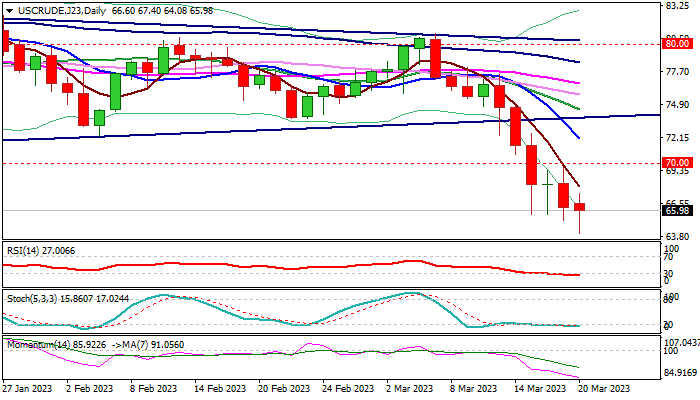
WTI oil fell to new lowest level ($64.08) since Nov 2021 on Monday, as sentiment continues to weaken on growing fears that crisis in banking sector could deepen, with potential increase of US interest rates, to lead into recession, which would significantly hurt fuel demand.
Traders closely watch movements in the stock markets, as banking stocks continued to fall despite the deal in which the UBS, the largest bank in Switzerland, bought troubled Credit Suisse, suggesting that the risk is still high and investor confidence remains fragile.
Additional support was provided by world’s major central banks, which promised to boost market liquidity and support other struggling banks.
Markets are likely to remain volatile, on growing fears that situation in banking sector could deteriorate and awaiting the decision of the US Federal Reserve’s Federal Open Market Committee, which ends its policy meeting on Wednesday.
Daily studies are in full bearish setup but oversold, warning that bears may take a breather before resuming lower, as long tails of daily candles in for consecutive days, signal strong bids, provided by 200WMA ($66.17) where the latest fall found a footstep.
Consolidation is likely to be limited, as the action remains weighed by a large bearish weekly candle (the WTI contract price lost over 13% of its value last week), as well as weakened sentiment.
Broken psychological $70 support reverted to solid resistance, after a weekly close below this level and should ideally cap the action, to guard falling 10DMA ($72.10) and broken bull-trendline ($73.64), which should limit extended upticks, to keep bears in play.
Res: 69.61; 70.00; 72.10; 73.64.
Sup: 64.08; 62.42; 61.80; 60.00.
Dollar Wasn’t Really Able to Profit from the Early European Risk-off
Markets
Volatility is still the name of the game. Initial optimism following the Credit Suisse – UBS deal, brokered by the Swiss government over the weekend, abruptly ended in Asian dealings. US yields reversed a 18 bps move higher to trade more than 20 bps lower as European investors braced for the open. German yields even topped that, going down almost 30 bps (2y) shortly after the bell. The sharp risk-off repositioning originated from a specific niche in the bond market: AT1 (perpetuals, CoCo’s…). Under the CS-UBS deal, AT1 bondholders see all of their invested capital (CHF 16bn) wiped out in the take-over whereas shareholders still recoup a little. Investors knew the risks when loading up these notes but assumed that they’d still get priority over pure equity. It caused heavy risk premia repricing that spilled over into other parts of the market. European regulators – the ECB Banking Supervision, Single Resolution Board and European Banking Authority – in a statement about the loss-absorbing approach rushed to make clear that common equity instruments are the first ones to take the hit. Only after their full use, AT1 would be required to be written down, it added. After the initial shock reaction in European dealings, the dust settled a bit. Staving off an imminent collapse of a G-SIB was seen as the critical trading theme while the regulators’ statement also helped. German bond yields capped losses to just 5.9 bps at the front while adding a few bps further out. US yields trade 2.9-6.3 bps higher. European stocks swapped losses (up to 2% in the Euro Stoxx 50) for gains of >1%. WS adds 0.4-0.90%.
The dollar wasn’t really able to profit from the early European risk-off. It went no further than EUR/USD 1.064 before a reversal together with the general mood kicked in. The pair is currently changing hands in the 1.072 area, testing the 50dMA. The trade-weighted index is testing support at 103.35 (50% retracement of the Feb-Mar upleg) - down from an intraday high at 103.96. The Japanese yen gave back earlier gains. USD/JPY is trading little changed around 131.62, EUR/JPY bounced back from 138.83 to 141.05.
ECB President Lagarde appears before the European Parliament today as we finish this report. In her prepared remarks, she stuck to the message delivered at last Thursday’s ECB policy meeting during which she decoupled a potential liquidity crisis/financial stability issues from the need to tighten monetary policy further to address high and above-target inflation. French governor Villeroy early this morning also kept the focus on (underlying) inflation, adding that last week’s rate hike showed confidence in European banks. ECB’s Kazaks joined Villeroy and said more hikes are needed if the baseline holds up. He said that it is easier to repair if you hiked too much than the other way around. The Greek Stournaras struck a different chord, saying that rate hikes are mostly a story of the past.
News & Views
Polish data as published this morning showed a mixed picture. PPI inflation in February declined -0.4% M/M. However, due to an upward revision of January data, Y/Y PPI declined only modestly from 20.1% Y/Y to 18.4% (17.7% expected). Sold industrial output rose below expectations at 0.4% M/M bringing output 1.2% below the level of the same month last year. Average gross wages on the other hand continue to rise at faster pace than expected (2.6% M/M and 13.6% Y/Y) Employment dropped 0.1% M/M to be 0.8% higher in a Y/Y perspective, but the soft February figure followed a strong 0.4% M/M rise in January. Recently, several NBP MPC members were reluctant to provide concrete guidance on the start of a rate cut cycle, potentially at the end of this year, as it wasn’t supported by the inflation projections yet. Recent market turmoil slightly lowered Polish short-term yields while the negative impact on the zloty is modest for now. EUR/PLN currently trades in the EUR/PLN 4.705 area.Belgium today sold bonds from 3 existing series at regular bond auctions for a total amount for 3.902 bln. The Belgian Debt Agency sold €1.542 bln of bonds due in June 2033. The bid cover ratio came out at 1.69. The bonds yielded 2.778%. The Kingdom also sold €896 mln of bonds to come due in April 2039. The sale also recorded a 1.69 bid-cover ratio and was sold at yield of 3.036%. A 1.497 bln sale of bonds mat
uring June 2027 attracted investor interest to a bid-cover ratio of 1.45. The sale resulted in a weighted average yield of 2.37%. The Belgian Debt Agency’s 2023 funding plan foresees an issuance of EUR 45.00 billion of OLOs, and EUR 2.00 billion of EMTN & Schuldscheine. As of February 28, 26.5% of the funding plan has been achieved.
ECB Lagarde: Price-pressures still spreading through the economy
In a today address to the European Parliament, ECB President Christine Lagarde noted that economic activity indicators have shown steady improvement in recent months, coinciding with diminished concerns over energy shortages and price hikes. However, she cautioned that accumulated price pressures are still spreading throughout the economy, albeit with some delay.
Lagarde observed, "Wage pressures have strengthened on the back of robust labor markets and employees aiming to recoup some of the purchasing power they have lost to high inflation." She added that due to inflation remaining "too high for too long," the ECB Governing Council decided to increase the three key interest rates by 50 basis points last week, demonstrating their commitment to returning inflation to the 2% medium-term target.
In light of the heightened uncertainty, Lagarde emphasized the importance of a "data-dependent" approach to policy rate decisions, stating, "Our policy rate decisions will be determined by our assessment of the inflation outlook in light of the incoming economic and financial data, the dynamics of underlying inflation, and the strength of monetary policy transmission."
Gold Tests $2000 for the Third Time
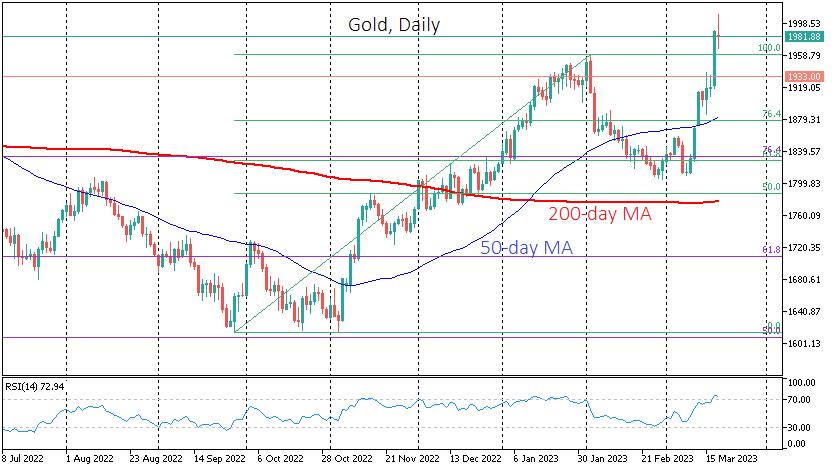
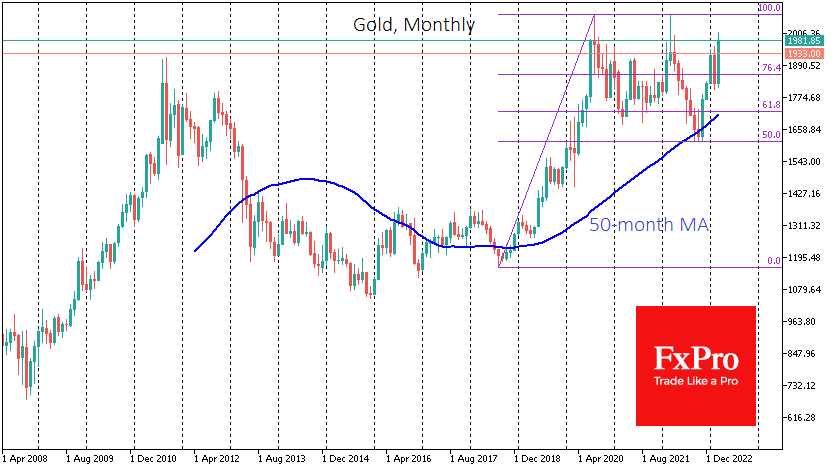
In just ten days, gold has risen by 11% or around $200. At the start of the day on Monday, the price was approaching $2010. Historically, this is thin-air territory for gold. Despite the threat of a short-term pullback to replenish the bulls’ positions, the medium- and long-term trends are up, opening the potential for gains to the $2200 area as a medium-term benchmark and $2500 as a long-term benchmark.
The problems in the US and Swiss banking sectors have triggered a frenzy of demand for gold and cryptocurrencies. The risk of default on large deposits has increased, although so far, it has mainly been the holders of stocks and bonds of troubled banks who have suffered losses rather than depositors.
In the weekly timeframe, the RSI is approaching the overbought level of over 70, where corrections have regularly started since the beginning of the year, as the bulls prefer to “blow off steam”. The RSI is already overbought on the daily timeframe, suggesting that price action will need to be watched closely. A move back out of overbought territory would be one of the first signals of the start of a local correction.
Taking a step back, the spark of demand for gold ignited a huge surge. Gold was corrected during February, falling from $1960 to below $1810. This was an almost unquestioned Fibonacci retracement to the 61.8% level of last year’s November-January momentum. Another bullish signal is that gold broke the previous high at $1960 in a sharp move on Friday, which can now be considered support.
The long-term picture is also bullish. There have been two phases in gold since 2018: a two-year rally since August 2018 and a nearly flat two-year sideways rally. Last year, gold frayed our nerves, breaking out of the $1700-2000 sideways range and temporarily below the 50-month average, giving back 50% of its initial rally but rebounding strongly from $1616 in November last year.
Fed Will Set the Mood for EURUSD
EUR/USD starts a new week of March by consolidating around 1.0670.
This week, investors will be anxious. The key event is the meeting of the US Federal Reserve System, where monetary politicians will have to make difficult decisions, specifically the ones concerning the interest rate. As soon as problematic spots emerged in the US banking sector, the market started discussing the necessity to make a pause in lifting the interest rate to stop the crisis from expanding.
On the other hand, there are appearing more and more arguments supporting the growth of the interest rate. Among them there are the increase in base inflation and the Core PCE inflation index, tracked by the Fed.
Earlier the ECB lifted its rate by 50 base points, dismissing banking problems, and continued tightening the monetary policy. Its main goal is still beating high prices.
By the end of the week, volatility of EUR/USD will have increased noticeably.
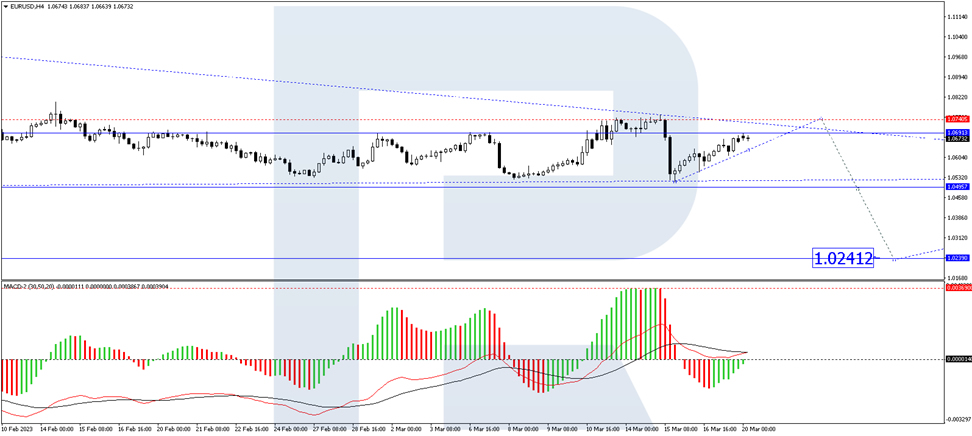
On H4, EUR/USD has formed a correctional structure to 1.0630. At the moment, the market is consolidating around it and with an escape from the range upwards might extend the structure to 1.0708. Then a decline to 1.0630 might follow. And then a link of growth to 1.0742 is not excluded. There the wave of growth will exhaust its potential. Next, the pair should go down by the trend to 1.0505. Technically, this scenario is confirmed by the MACD. Its signal line is above zero and is preparing to renew the highs.
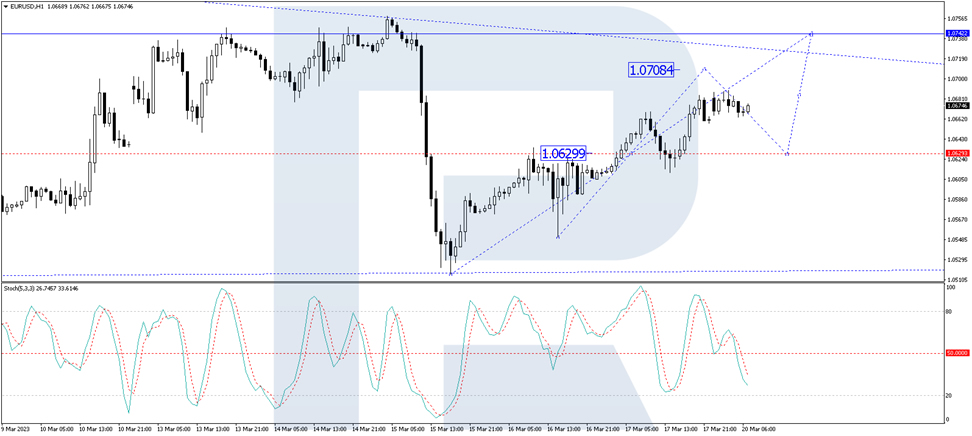
On the H1 chart, EUR/USD has completed a wave of growth to 1.0650. Today the market has already formed a link of decline to 1.0620 and a link of growth to 1.0687. At the moment, a consolidation range is forming under this level. The price might escape it upwards, opening a pathway to 1.0708. Then a decline to 1.0620 and growth to 1.0742 are expected. Upon reaching this level, the price might fall to 1.0600, and if this level breaks, the quotes might drop to 1.0540. Technically, this scenario is confirmed by the Stochastic oscillator. Its signal line is near 50, and later it should fall to 20.
Will the SNB Roil Markets With a Hike Amid Credit Suisse Crisis?
The Swiss National Bank (SNB) will announce its quarterly monetary policy decision on Thursday (08:30 GMT), but the meeting has already been overshadowed by the Credit Suisse saga. The SNB is hoping that the emergency takeover of Credit Suisse by UBS will be enough to prevent a wider fallout, allowing it to go ahead with its planned rate increase. But there is uncertainty not only about the size of the expected hike but also about how much additional tightening policymakers will signal. As for the Swissie, its safe-haven status hasn’t been able to cushion it from domestic banking woes.
The fall of another giant
It was only a week ago that SNB Chairman Thomas Jordan was stressing the need to get inflation back into the “area of price stability”, describing it “too high”. Three days later, the share price of the country’s second largest banking group collapsed after its biggest shareholder refused to shore it up with more cash. The selloff came just as the panic over the health of US banks had started to recede, sending fresh shivers through the markets.
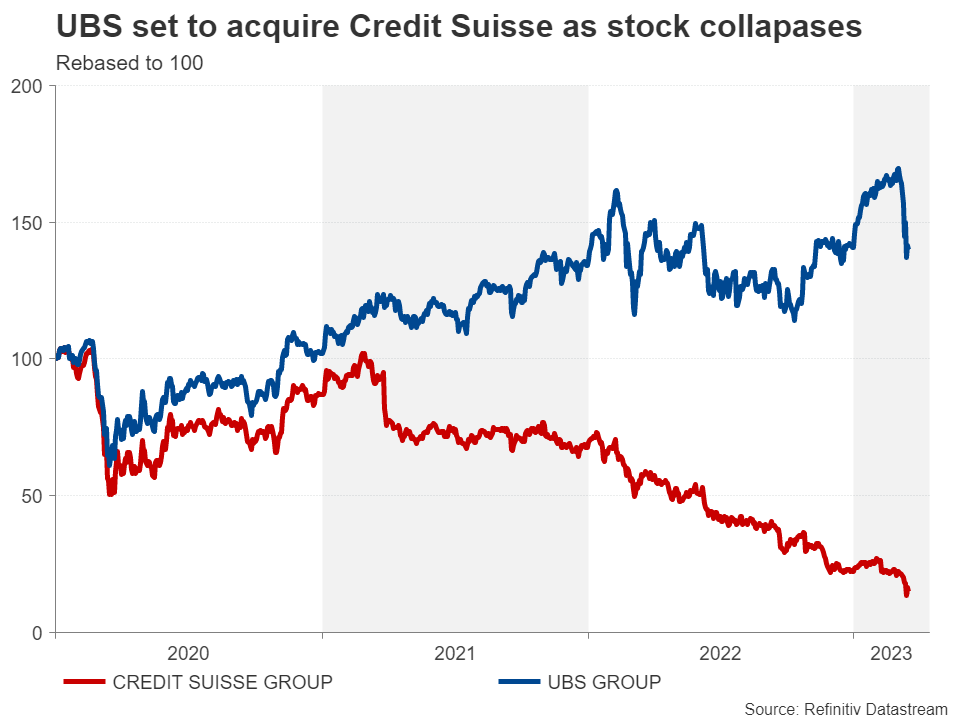
Although the troubles facing Credit Suisse are unrelated to those inflicting regional banks in the US, the market reaction highlights how quickly contagion can spread and that policymakers and regulators shouldn’t underestimate the risk posed by the further loss of confidence in financial institutions. It is hard to ignore that the confidence crisis hitting Credit Suisse is reminiscent of the days of the Eurozone debt crisis.
Mega deal fails to calm jitters
And just as they did back then, central banks and governments are riding to the rescue of these too large to fail banks. After the SNB’s decision to grant a CHF 50 billion lifeline to Credit Suisse only temporarily soothed nerves, the forced combination with its bigger rival UBS Group was thought to be the only viable option to save the bank.
The deal is backed by CHF 9 billion in guarantees from the Swiss government and a CHF 100 billion in liquidity by the SNB. Yet, doubts persist about the Swiss and global banking system, adding pressure on SNB policymakers to provide further assurances on Thursday that they stand ready to act should more banks or financial markets in general come under stress.
The stakes are high at upcoming meeting
One such reassurance could be to tone down the hawkish rhetoric, placing as much emphasis on the need for financial stability as on achieving low inflation. Prior to the turmoil, a 50-basis-point-rate hike was fully priced in for March, but investors now see a 25-bps increase as more likely. More importantly, even after the dramatic re-evaluation of rate hike expectations, almost two additional rate hikes of 25 bps are priced in for the SNB.
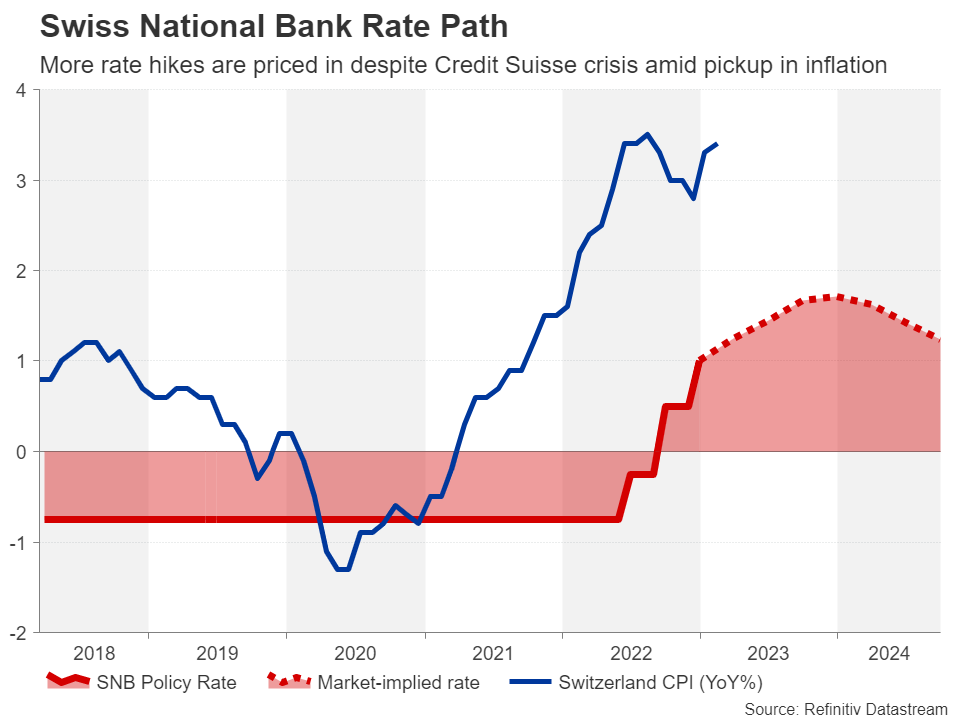
At 3.4% as per the February data, inflation in Switzerland remains comparatively low, hence, it can be argued that the SNB is in a more enviable position and can afford to ease up on its tightening plans. However, the consumer price index has been unexpectedly edging higher since January, rising well above the central bank’s target range of 0-2%, suggesting that it may not have quite peaked just yet.
Will the SNB maintain a hawkish bias?
It is worth pointing out the policy rate is not the only tool that the SNB has been using in its fight against inflation as it has also been selling its foreign currency reserve to purchase Swiss francs in an attempt to bring down import prices. This would have been unthinkable a year ago when policymakers considered the franc to be significantly overvalued and were still actively selling it.
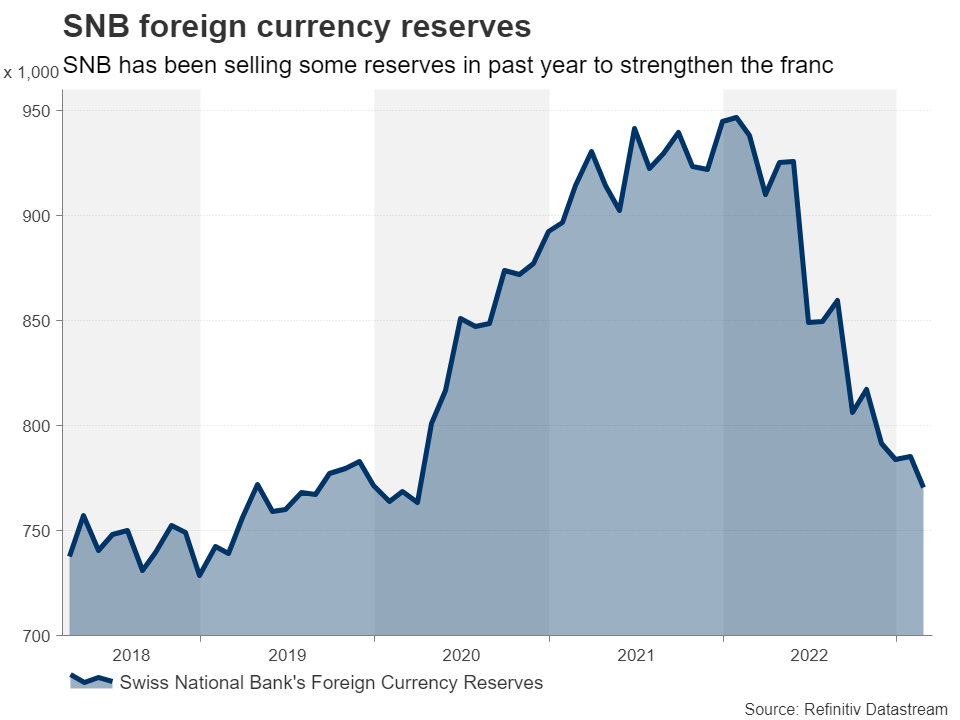
But the shift goes to show just how big the hawkish pivot has been in such a short period of time and so the SNB may not necessarily follow in the footsteps of the European Central Bank, which raised rates at its March meeting but indicated that future rate increases will be conditional on the incoming data.
Tougher times ahead for the franc?
The Swiss franc could come under pressure from a dovish hike, pushing euro/franc above its 50-day moving average, which currently stands at 0.9930. Further gains would bring into scope the January high of 1.0097 that sits slightly above the 38.2% Fibonacci retracement of the March 2021-September 2022 downtrend.
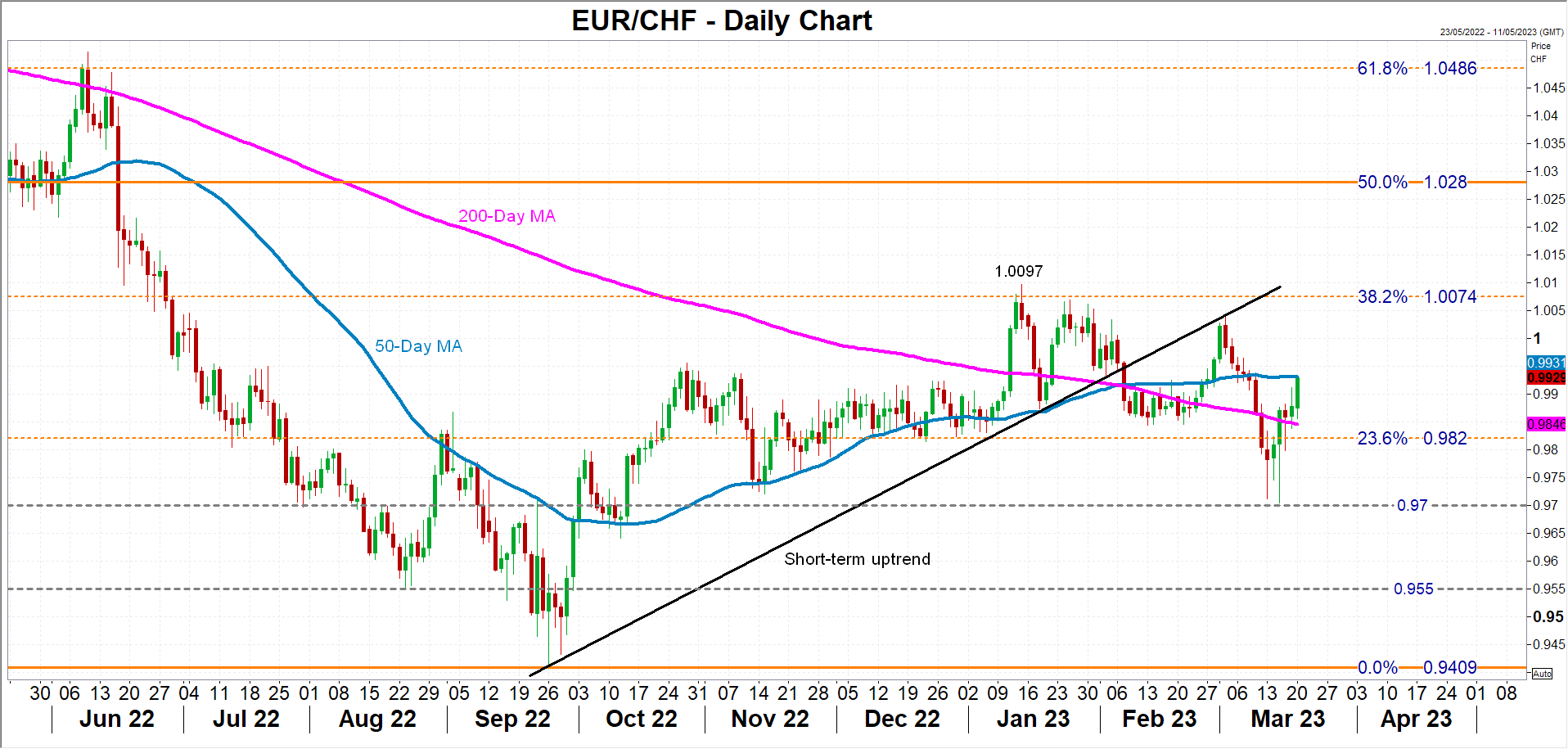
However, if the SNB maintains a hawkish bias, flagging further rate increases, euro/franc could head back towards the 0.97 level, which it came close to breaching last week. A drop below it could spur the franc to rally until the 0.9550 mark.
In the bigger picture, the franc has been mostly neutral against the euro this year. The question now is, would the SNB reinforcing its commitment to additional tightening while the ECB goes on pause work in the Swissie’s favour, or are there more losses to come amid concerns about the country’s banks?