Sample Category Title
Aussie Rebounds With Rally in Copper, Dollar Turns South
Australia Dollar leads commodity currencies higher, in otherwise still very quiet markets today. Prospect of further easing of restrictions is probably giving some industrial metals and oil prices a lift. But the positive sentiment is not much reflected in the global stock markets. Dollar is back under selling pressure, followed by Yen. European majors also turn weaker.
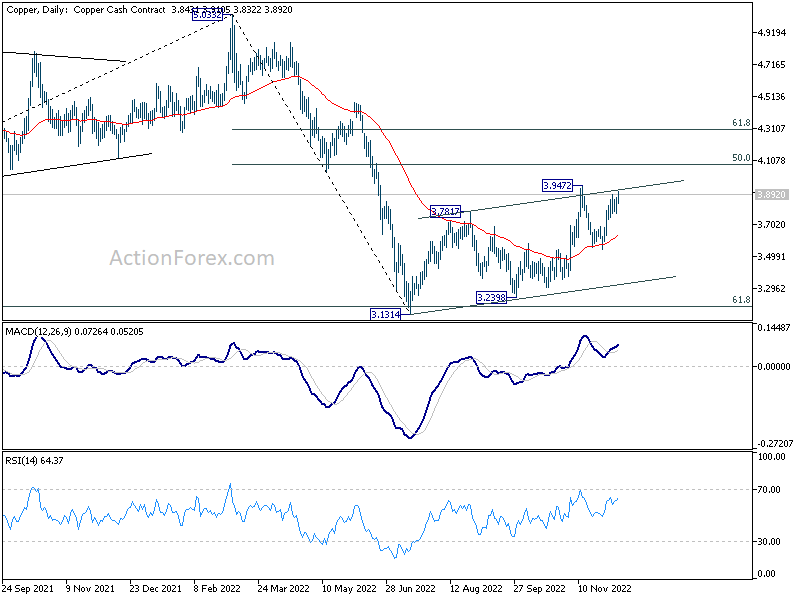
Technically, copper is now eyeing 3.9472 resistance with today's rally. Firm break there will resume the whole rebound from 3.1314. Next target will be 50% retracement of 5.0332 to 3.1314 at 4.0823. If happens, that would help support AUD, in particular against Dollar and Yen.
In Europe, at the time of writing, FTSE is up 0.07%. DAX is down -0.15%. CAC is down -0.06%. Germany 10-year yield is up 0.0279 at 1.814. Earlier in Asia, Nikkei dropped -0.40%. Hong Kong HSI rose 3.38%. China Shanghai SSE dropped -0.07%. Singapore Strait Times rose 0.33%. Japan 10-year JGB yield rose 0.0015 to 0.256.
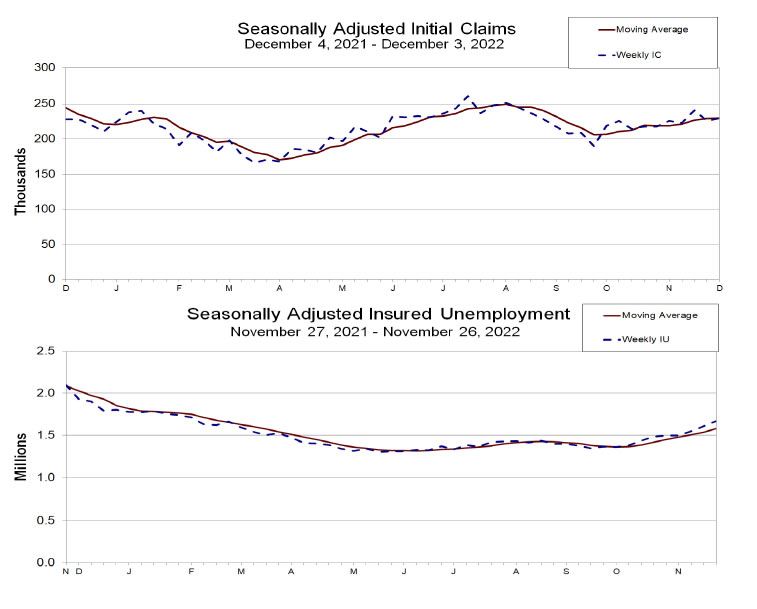
US initial jobless claims rose to 230k, below expectations
US initial jobless claims rose 4k to 230k in the week ending December 3, below expectation of 245k. Four-week moving average of initial claims rose 1k to 230k.
Continuing claims rose 62k to 1671k in the week ending November 26. Four-week moving average of continuing claims rose 43k to 1582k.
Australia trade surplus little change at AUD 12.22B in Oct
Australia exports of goods and services dropped -0.9% mom to AUD 60.01B in October. Imports dropped -0.7% mom to AUD 47.85B. Trade surplus narrowed slightly from AUD 12.44B to AUD 12.22B, slightly above expectation of AUD 12.10B.
Looking at some details, the decline in exports was driven mainly by AUD -0.6B fall in gold while imports decline was driven by AUD -0.5B fall in energy. Fuel exports, dominated by LNG, rose AUD 0.3B to AUD 11.2B, and hit a new record high. Rural goods exports rose AUD 0.1B to AUD 7.2B, also a record high.
AUD/USD Mid-Day Report
Daily Pivots: (S1) 0.6682; (P) 0.6712; (R1) 0.6755; More...
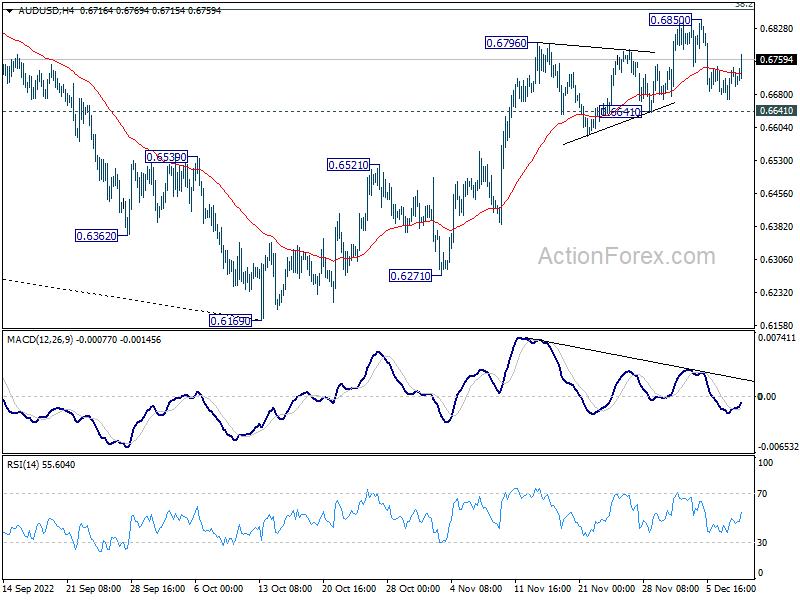
AUD/USD recovers ahead of 0.6641 resistance but stays below 0.6850 resistance. Intraday bias remains neutral first. Again, considering bearish divergence condition in 4 hour MACD, break of 0.6641 support should indicate short term topping, following rejection by 0.6871 fibonacci level. Intraday bias will be back on the downside for 0.6521 resistance turned support first. However, sustained break of 0.6871 will extend the rise from 0.6169 towards 55 week EMA at 0.6922.
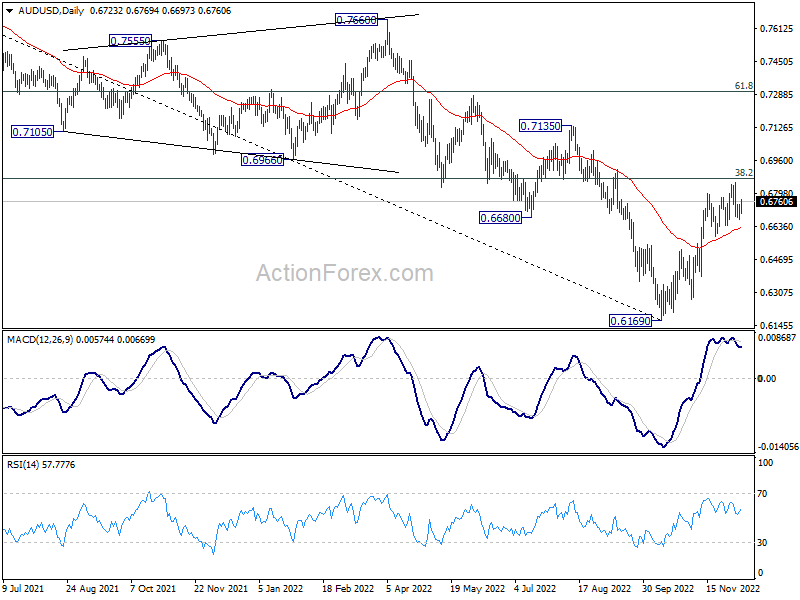
In the bigger picture, a medium term bottom is in place at 0.6160 already. But it's too early to call for trend reversal. Nevertheless, even as a corrective move, rise from 0.6169 should target 38.2% retracement of 0.8006 to 0.6169 at 0.6871. Sustained trading above 55 week EMA (now at 0.6922) will raise the chance of the start of a bullish up trend. However, rejection by 0.6781 or 55 week EMA, followed by 0.6521 resistance turned support and retain medium term bearishness.
Economic Indicators Update
| GMT | Ccy | Events | Actual | Forecast | Previous | Revised |
|---|---|---|---|---|---|---|
| 23:50 | JPY | GDP Q/Q Q3 | -0.20% | -0.30% | -0.30% | |
| 23:50 | JPY | GDP Deflator Y/Y Q3 F | -0.30% | -0.50% | -0.50% | |
| 23:50 | JPY | Bank Lending Y/Y Nov F | 2.70% | 2.50% | 2.70% | 2.60% |
| 23:50 | JPY | Current Account (JPY) Oct | -0.61T | 0.35T | 0.67T | |
| 00:01 | GBP | RICS Housing Price Balance Nov | -25% | -2% | ||
| 00:30 | AUD | Trade Balance (AUD) Oct | 12.22B | 12.10B | 12.44B | |
| 05:00 | JPY | Eco Watchers Survey: Current Nov | 48.1 | 49.3 | 49.9 | |
| 13:30 | USD | Initial Jobless Claims (Dec 2) | 230K | 245K | 225K | 226K |
| 15:30 | USD | Natural Gas Storage | -38B | -81B |
US initial jobless claims rose to 230k, below expectations
US initial jobless claims rose 4k to 230k in the week ending December 3, below expectation of 245k. Four-week moving average of initial claims rose 1k to 230k.
Continuing claims rose 62k to 1671k in the week ending November 26. Four-week moving average of continuing claims rose 43k to 1582k.
ECB Preview – A Hawkish 50bp
At next week's meeting, we expect the ECB to deliver a 50bp rate hike with a hawkish twist. Specifically, we expect the ECB to present key principles of the end to reinvestments under the APP process (in which reinvestments will almost come to a full stop) and an open-ended wording for more rate hikes to come. This will be a compromise, which we believe will be palatable to both hawks and doves.
Nominal rates have repriced lower since the latest meeting in October by almost 40bp (10y EA GDP-weighted yield), while inflation has increased somewhat and as a result the 1y forwards have repriced back to late August levels. We expect the hawks to use the easing of financial conditions in the past weeks to argue for a more aggressive calibration, as textbook would say that the current ECB stance is not particularly restrictive.
The European economy fared surprisingly well in Q3, but we expect the ECB to have a mild recession in its baseline staff projections. For inflation, we expect the new staff projections to only point to headline inflation at the 2% target in 2025.
We currently expect ECB rate hikes into Q1 next year, with the deposit rate peaking at 2.75%, but with risks skewed for more hikes.
GBP/USD Steady, Inflation Expectations Next
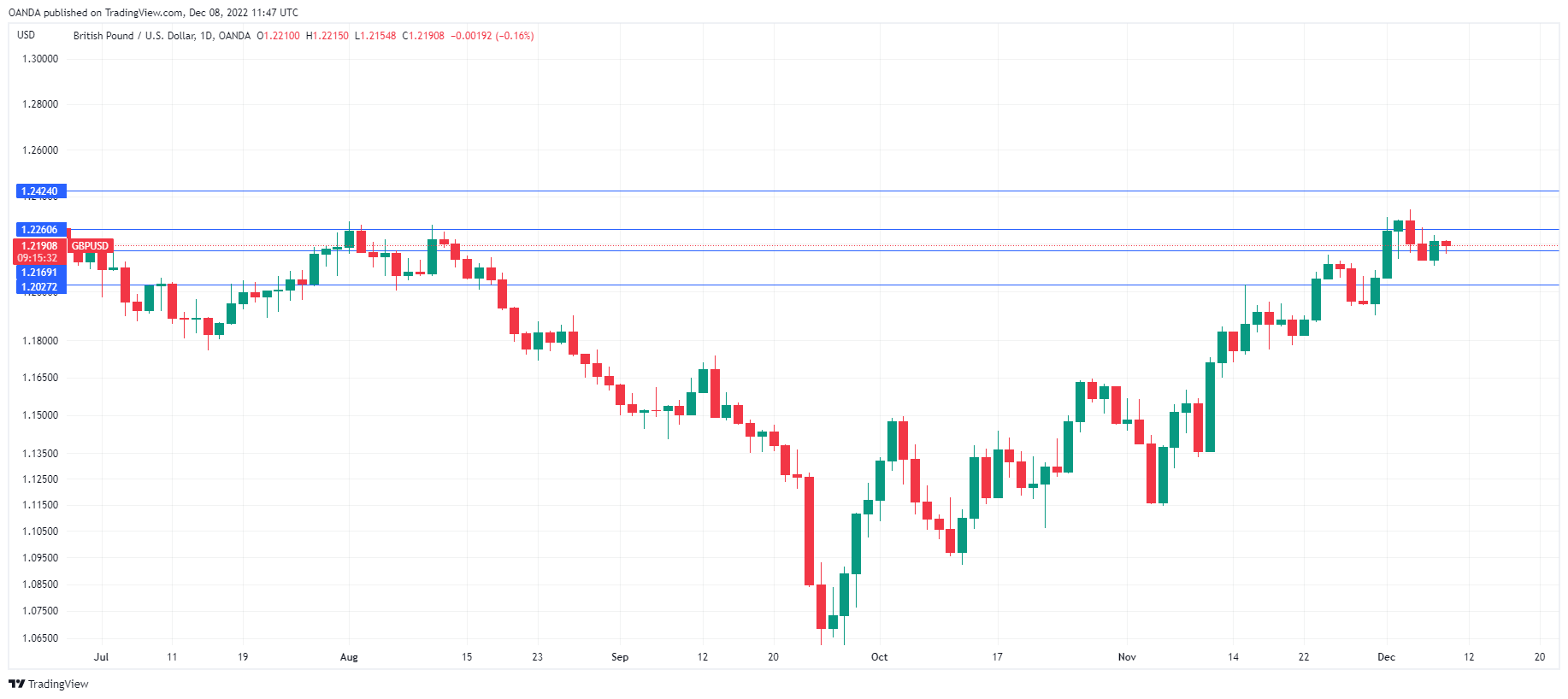
The British pound is in negative territory on Thursday. In the European session, GBP/USD is trading at 1.2174, down 0.29%. We’ll get a look at inflation expectations in both the UK and the US on Friday, ahead of the key US inflation report next week.
It has been a rather quiet week on the economic calendar, save for the November PMIs out of the US and the UK. The PMIs reflect the different directions taken by the UK and US economies. In the UK, the Services PMI remained in negative territory, unchanged at 48.5. This points to contraction in the services sector, which has been hit by the cost-of-living crisis and economic uncertainty, which has dampened consumer spending. In the US, Services PMIs rose to 56.5, above the previous read of 54.4 and the consensus of 53.5. The services sector is showing expansion and this will lend support to the argument that the US economy is resilient enough to absorb additional rate hikes, as the Fed continues to battle high inflation.
BoE expected to raise by 50 bp
Like the Federal Reserve, the BoE has also circled inflation as public enemy number one, but Governor Bailey doesn’t have a strong economy to work with. With GDP in negative territory and inflation at a staggering 11.1%, the economy may already be experiencing stagflation. Despite this grim background, the BoE will have to keep raising rates in order to get the upper hand on inflation and keep inflation expectations in check.
The BoE is expected to raise rates by 50 bp next week, which would raise the cash rate to 3.50%. As rates continue to rise, there is the danger of the recession becoming deeper and lasting longer. This winter is likely to bring a rash of strikes from public workers, which will keep the BoE on guard for signs of a wage-price spiral, which could complicate the Bank’s efforts to curb inflation.
GBP/USD Technical
- 1.2169 and 1.2027 are the next support levels
- GBP/USD is testing support at 1.2169. Below, there is support at 1.2027
EUR/USD Moving into Resistance
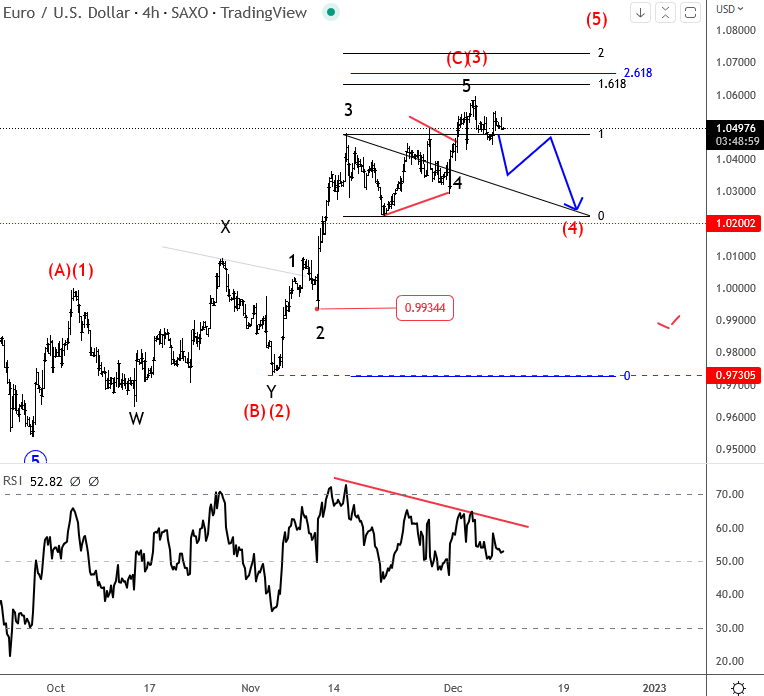
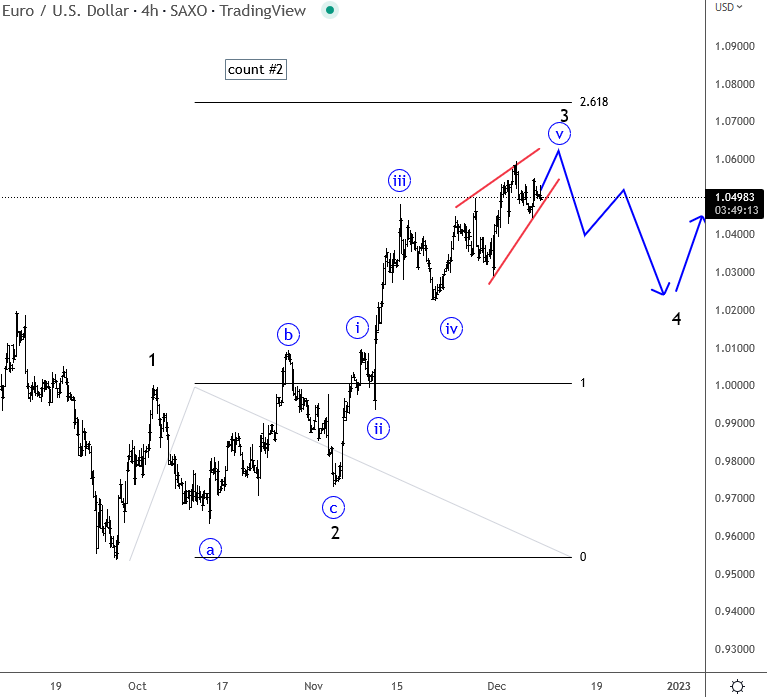
EURUSD has been in a nice and strong recovery from 0.9730 from where we can count five waves up, so wave (C)/(3) might have come to an end especially if we consider a divergence on the RSI. As such, a minimum of three waves of a pullback can be in play down from 1.06-1.07 resistance based on two 4h wave counts. Support is at 1.03-1.02.
EUR/USD: Bulls to Hold Grip While Rising 10DMA Protects the Downside
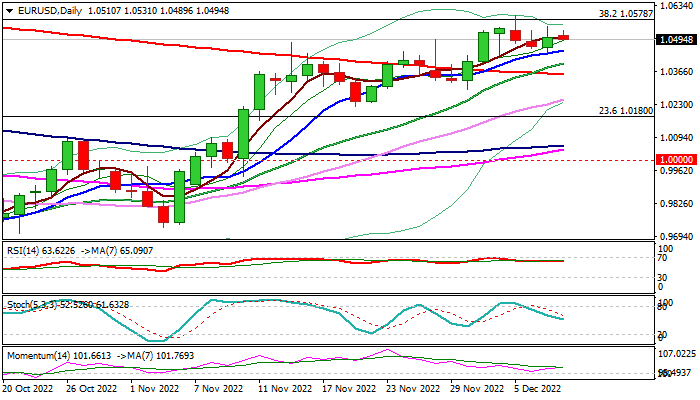
The Euro remains constructive above solid supports at 1.0448/52 (10DMA / Fibo 38.2% of 1.0222/1.0594 upleg) which contained pullback after larger bulls failed to break pivotal Fibo barrier at 1.0578 (Fibo 38.2% of larger 1.2266/0.9535 downtrend).
Daily studies remain in bullish setup and support the action, however, bullish weekly close with minimum requirement on close above Monday’s high (1.0550) is needed to confirm bear-trap under 1.0452 Fibo support and additionally support near-term action.
On the other hand, overbought weekly studies warn that bulls may lose traction, with bearish weekly close to signal bull-trap above 1.0578 Fibo barrier and increase risk of deeper pullback, which would look for confirmation on sustained break of 10DMA.
Res: 1.0550; 1.0578; 1.0608; 1.0700.
Sup: 1.0448; 1.0397; 1.0353; 1.0290.
WTI Oil Futures Hit Yearly Lows; Bias Negative
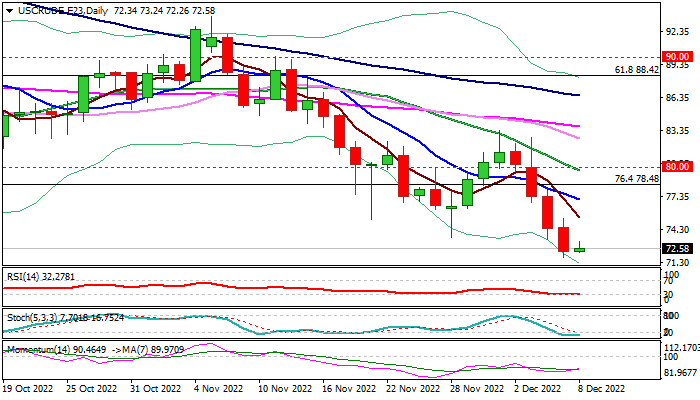
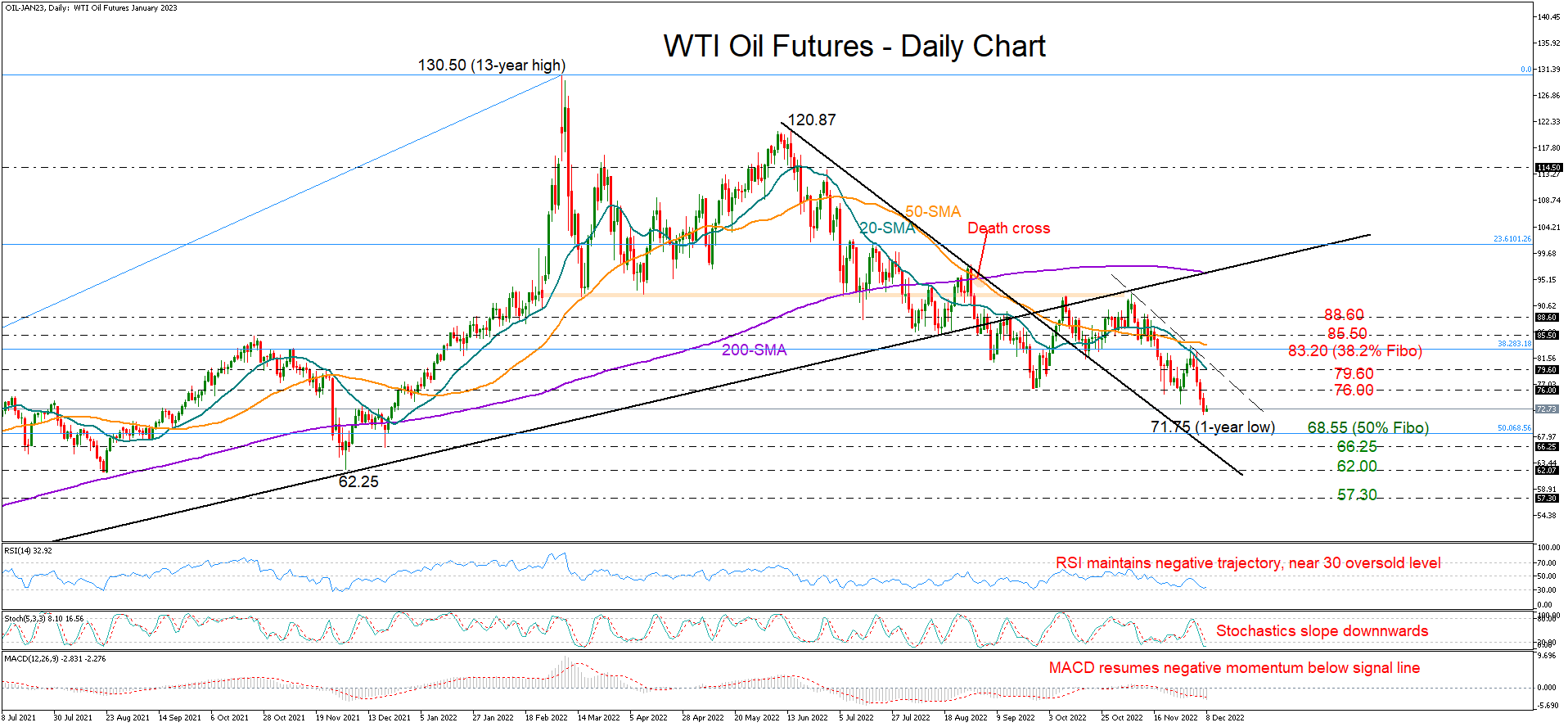
WTI oil futures entered the red zone following the rejection near the 20-day simple moving average (SMA), stretching their 2022 downtrend to a new yearly low of 71.75 on Wednesday. The 38.2% Fibonacci retracement of the 2020-2021 upleg proved to be a tough obstacle too near 83.20.
The four-day bearish streak could see a continuation, as the RSI and the stochastics have yet to confirm oversold conditions. Adding to the discouraging signals is the MACD, which has resumed its negative momentum below its red signal line.
An extension lower would bring the 50% Fibonacci of 68.55 under examination, while slightly beneath that, the 66.25 level has been frequently tested since March 2021 and might be another important area to watch. Note that the resistance-turned-support line is also positioned here. Hence, if sellers claim that barricade, the decline may get another leg to 62.00 and then to 57.30.
If the bullish scenario unfolds, the price may face initial limitations near the 76.00 level before heading for the 20-day SMA, currently around 79.60. A decisive close above the 38.2% Fibonacci of 83.20 could strengthen bullish engagement up to 88.60, unless the 85.50 barrier blocks the way higher.
In brief, the depreciation in WTI oil futures seems to have some room to go. The next pivot point could occur near 68.55
A Bit Flat
Equity markets look a little flat on Thursday, perhaps a sign that we've entered into a waiting period ahead of some major data releases and central bank meetings.
This month was always effectively split into two dominant weeks, the first of the month which included the jobs report that proved extremely impactful. And then next week when we get a flurry of interest rate decisions and some big data releases. This week was always going to be the void in the middle and that's how it's largely played out, with the ripple effects from Friday's jobs data continuing to dictate sentiment.
Of course, developments in China have a big role to play, although as we're seeing once again, Covid-related moves are almost exclusively impacting stocks in domestic markets. We can see that again overnight, with reports of looser mask and isolation requirements in Hong Kong lifting the Hang Seng and making it the clear outperformer in the region, while most other indices tread water.
There is, of course, US PPI to come tomorrow which could give investors a welcome boost ahead of the main event next week. That said, while probably indicating lower price pressures in the pipeline, it doesn't alleviate the concerns thrown up by the jobs report last week of strong wage growth and the threat of entrenched inflation. So it will be interesting to see how investors react to the PPI report, coming so close to next weeks CPI release and Fed decision.
A floor in oil prices?
Oil prices remain under pressure as traders continue to price in a slower global economy next year and the prospect of deeper recessions. China's efforts to reduce restrictions are probably preventing a much steeper decline in the oil price, although this won't be without disruption as Covid spreads like wildfire throughout the country after such a long period of zero-Covid measures.
Then there's also the pledge by the White House to restock the SPR once oil falls to around $70 a barrel, only a couple of dollars below where it is now, which could in theory put even a temporary floor under the price considering how much it's been drawn down this year.
Gold awaiting the Fed meeting
Gold appears to be steadying ahead of the inflation data from the US and, of course, the Fed meeting next week. The jobs report was a setback and one that could stand in the way of another break higher before the Fed meeting. The inflation data tomorrow and on Wednesday could given the yellow metal a boost but it's the fear of entrenched inflation that could nudge the terminal rate higher. Investors will want to hear what the Fed has to say on the nasty wages surprise last week.
No making up for lost time
With risk appetite not improved, bitcoin continues to trade below $17,000 and await upcoming data. The headlines haven't been favourable recently although the FTX fallout has cooled somewhat. Unfortunately for bitcoin, the timing means it never participated in the last risk rebound and there isn't much appetite to make up for lost time.
AUDUSD Holds a Bullish Bias Near the 20-day SMA
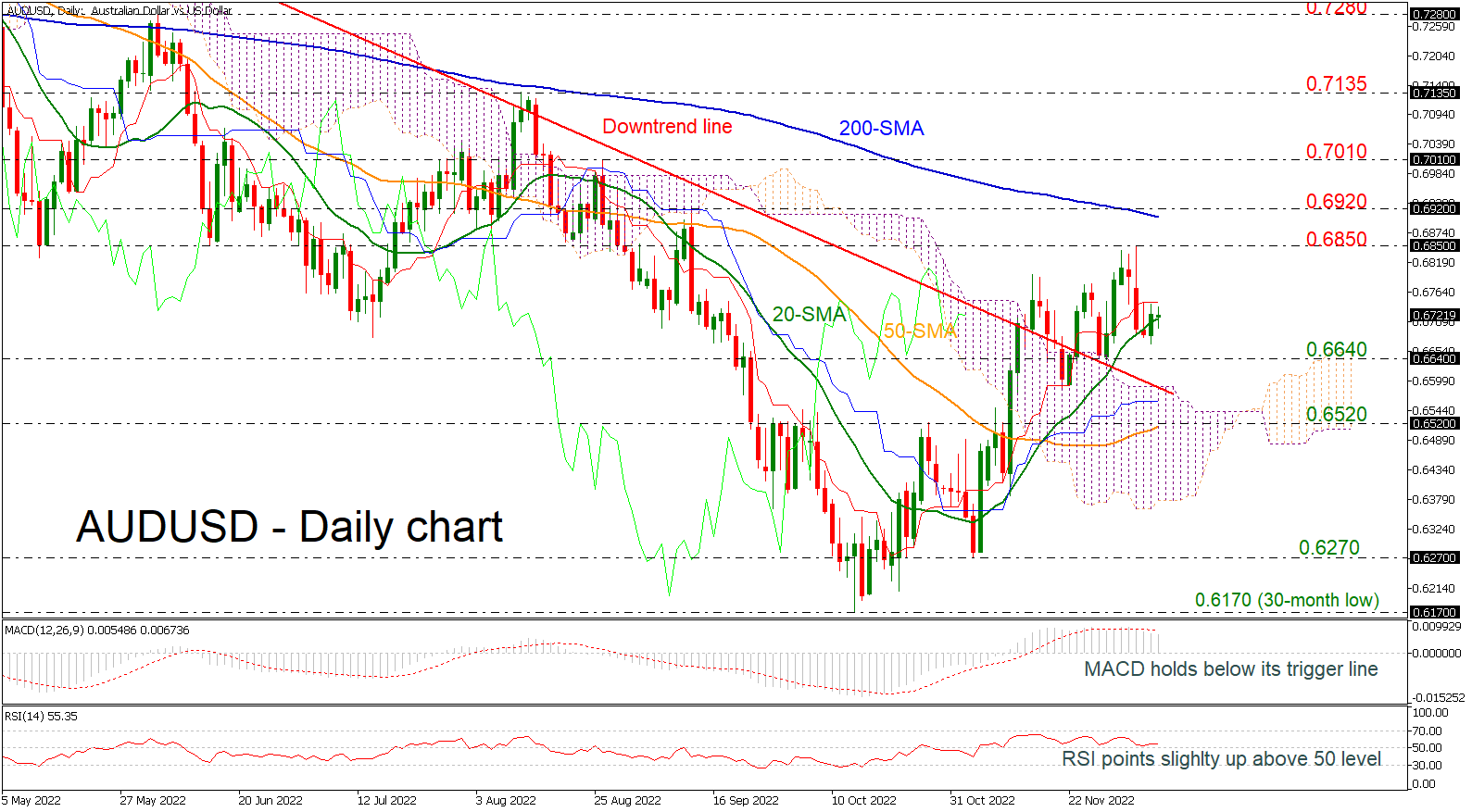
AUDUSD has gained little the last couple of sessions, managing to hold above the 20-day simple moving average (SMA) and re-enter the 0.6700 area, with the technical indicators feeding prospects for a possible positive short-term trading. The RSI holds above the 50 level, while the MACD continues to move in bullish territory but below its trigger line. Also, in Ichimoku indicators, the red Tenkan-sen line keeps standing above the blue Kijun-sen line.
A failure to move higher than the 0.6850 resistance could be a challenge ahead of the 200-day SMA near 0.6900. Above that, the 0.6920 resistance could next come in focus before the bulls shift the long-term outlook to positive as well, testing the 0.7010 peak.
Alternatively, if the 20-day SMA proves easy to get through, the spotlight will turn to the 0.6640 support ahead of the upper boundary of the Ichimoku cloud at 0.6586. Any moves lower could meet the 0.6520 barrier, which overlaps with the 50-day SMA before traders hit the 0.6270 bottom.
In the medium-term picture, AUDUSD has turned bullish after violating the downtrend starting from the 0.7660 peak. Should the market continue the upward pattern, the outlook may turn brighter. A run above the 200-day SMA would turn the outlook strongly bullish.
WTI Oil: Trading Near New 2022 Low, Pressured by Demand Concerns
WTI oil price is consolidating above new 2022 low ($71.74) hit on Wednesday, following sharp four-day fall.
Growing concerns that economic slowdown would further weaken demand and increased production in the US, continue to pressure oil prices, with the latest break of previous low at $73.57 (Nov 28) signaling bearish continuation of the downtrend from a double-top and a lower platform at $93.60/72 (Oct 10 / Nov 7).
Bears cracked support at $72.49 (200MMA), which guards psychological support at $70, with stronger acceleration to threaten of extension towards $64.97 (200WMA).
Oversold daily studies suggest bears may take a breather for consolidation, with under falling 10DMA ($77.06) and broken Fibo 76.4% ($78.48) offering solid resistances which should cap upticks and keep bears intact.