Sample Category Title
GBP/USD Rally Takes Breather, Why Dips Might Be Limited
Key Highlights
- GBP/USD rallied above the 1.2200 and 1.2250 levels.
- A major bullish trend line is forming with support near 1.2170 on the 4-hours chart.
- EUR/USD started a consolidation phase above the 1.0450 support.
- Gold price is struggling to gain bullish momentum above $1,800.
GBP/USD Technical Analysis
The British Pound started a fresh increase from the 1.1900 support zone against the US Dollar. GBP/USD gained pace for a move above the 1.2000 resistance zone.
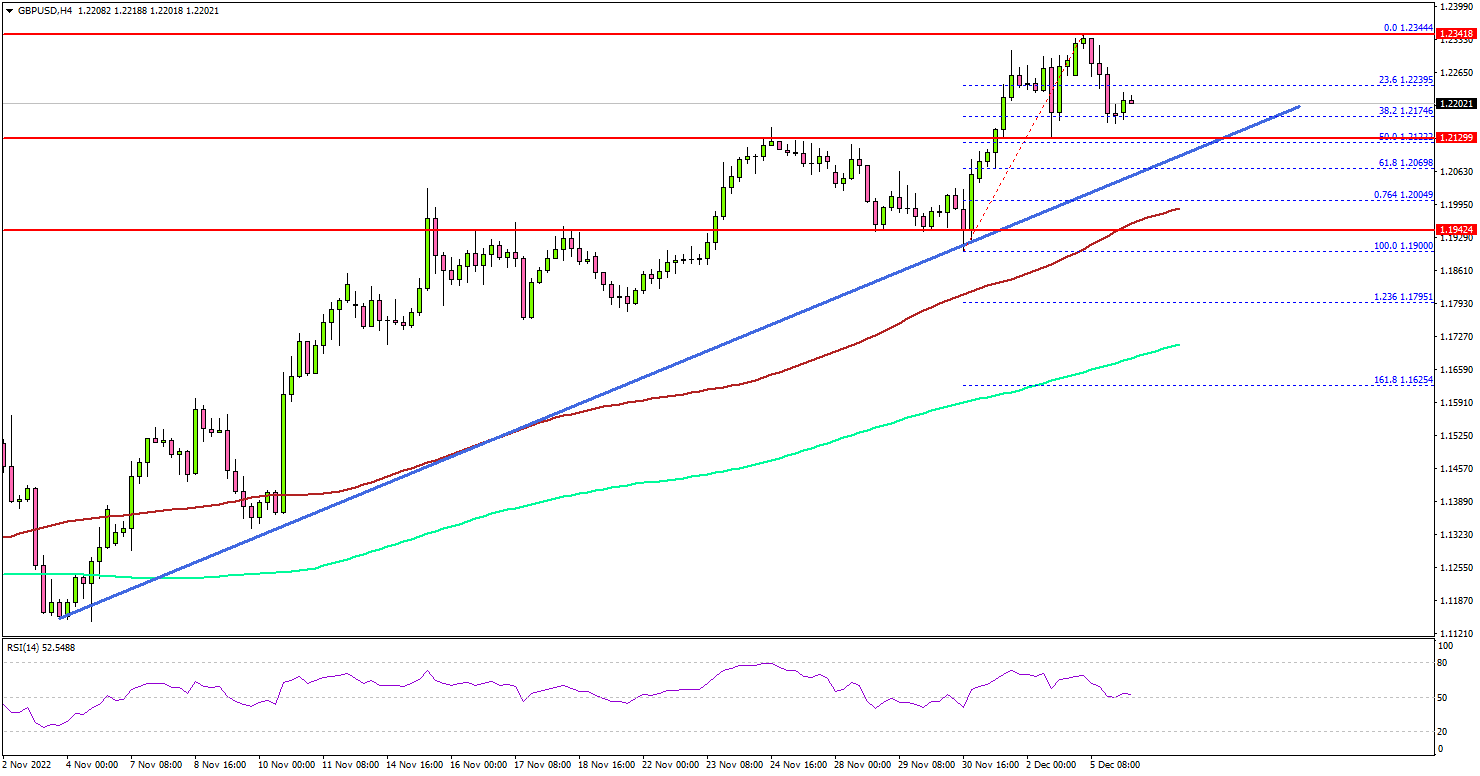
Looking at the 4-hours chart, the pair settled above the 1.2120 zone, the 100 simple moving average (red, 4-hours), and the 200 simple moving average (green, 4-hours).
The bulls even pushed the pair above the 1.2200 resistance. Finally, there was a move above the 1.2300 zone. A high was formed near 1.2344 before the pair started a consolidation phase. On the upside, the pair is facing resistance near the 1.2350.
The next major resistance may perhaps be near 1.2420. A clear move above the 1.2420 resistance might start another decent increase.
In the stated case, GBP/USD may perhaps test 1.2500. Any more gains could set the pace for a move towards the 1.2640 resistance zone.
An initial support is near the 1.2200 level. The next major support is near the 1.2180 zone. There is also a major bullish trend line forming with support near 1.2170 on the same chart. Any more losses might send the pair towards the 1.2120 support zone.
Looking at EUR/USD, the pair started a consolidation phase above the 1.0450 support and might aim a fresh increase in the near term.
Economic Releases
- German Factory Orders for Oct 2022 (MoM) – Forecast -0.2%, versus -4.0% previous.
- US Goods and Services Trade Balance for Oct 2022 - Forecast $-79.1B, versus $-73.2B previous.
BoJ Kuroda: Premature to discuss specifics of monetary policy framework
BoJ Governor Haruhiko Kuroda told the parliament, "the BOJ is seeking to sustainably and stably achieve its 2% inflation target accompanied by wage growth. Our view is that this will likely take more time."
"It's therefore premature to discuss specifics about our monetary policy framework," he said.
"We'll maintain our current monetary policy to make it easier for companies to raise wages," he added.
FX Year Ahead 2023: Recessions and Trend Reversals
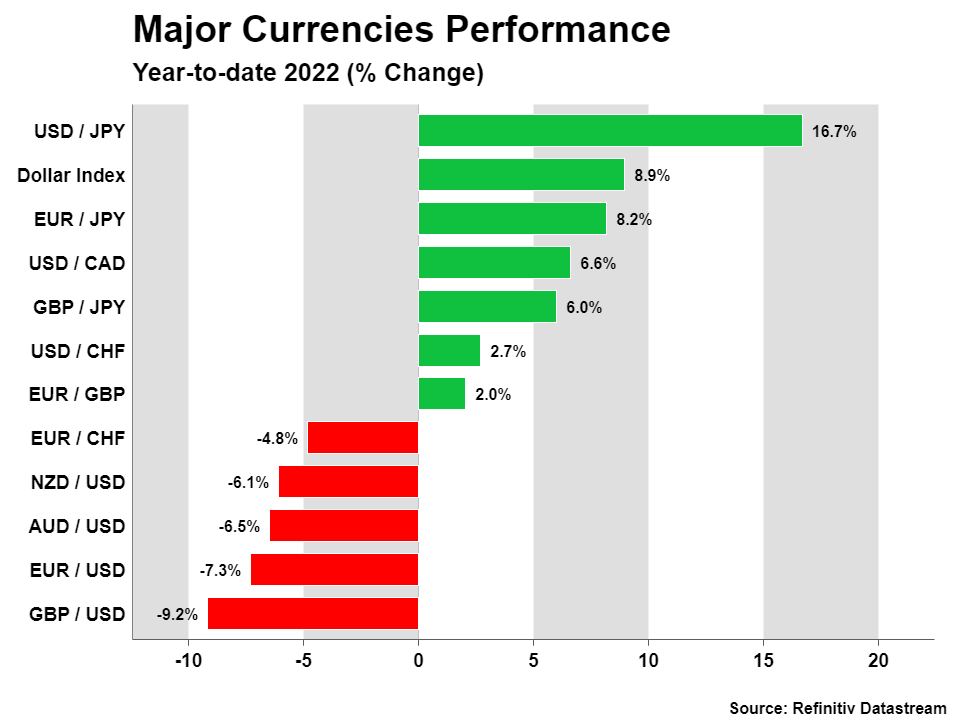
The US dollar steamrolled every other major currency this year, capitalizing on a perfect storm of widening interest rate differentials, safe-haven flows, and an absence of attractive alternatives. This ferocious rally could extend into next year, as most economies will likely fall into recession long before the US does. Nonetheless, the second half of the year might see a reversal in this trend. Could the yen come from behind to be the winner of 2023, in case the dollar rally comes off the boil?
Dollar rally enters final chapter
It’s been a stormy year for FX markets, characterized by severe episodes of volatility as central banks and governments across the world unwound the extraordinary stimulus rolled out during the pandemic. Being long the US dollar was the only trade that worked, with the reserve currency crushing everything in its path as the Fed rolled out the big guns.
Looking into next year, this wave of dollar strength could persist early on, but perhaps reverse later in the year. The logic behind this call is that even though some of the elements that fueled this stunning rally seem to be losing their kick, it’s still premature to envision a bearish trend reversal because the fundamentals of other currencies are even gloomier.
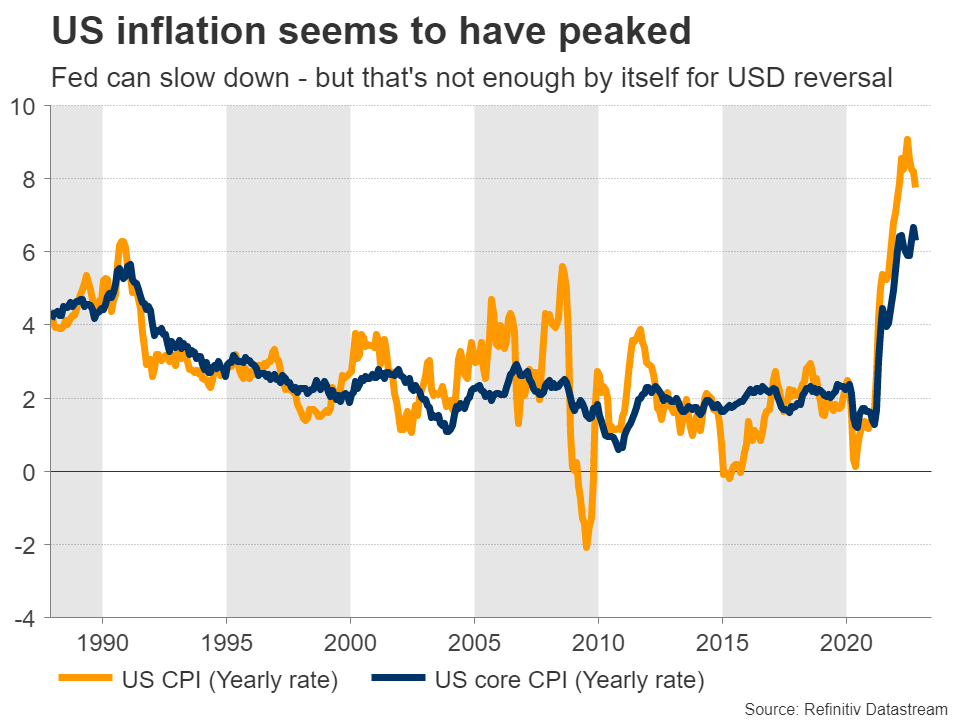
By most indications, US inflation has started to cool and the Fed is about to slow down the pace of rate increases. Market pricing currently suggests rates will peak at 4.9% in March and stay there until the final quarter of 2023. Since one of the main drivers of this rally was the Fed racing ahead of other central banks, the dollar could lose some of its shine as the tightening cycle concludes.
However, a more cautious Fed profile is usually not enough to turn the tide in the dollar. Historically speaking, the economic outlook in the rest of the world - and especially Europe - needs to be bright enough to convince investors that parking funds outside the US is worth the risk. That’s not currently the case.
According to business surveys, the Eurozone and United Kingdom are either already in recession or headed directly into one, as the energy shock and the rapid tightening in financial conditions ripple through both economies. This notion is supported by the latest forecasts from the European Commission and Bank of England.
Meanwhile, the outlook for China is arguably worse. Covid outbreaks are intensifying and it could be a while before the economy is fully reopened. On top of the painful deleveraging in the property sector, which might take several years, it’s difficult to be optimistic about growth in the world’s second-largest economy.
By comparison, America seems more resilient. While most leading indicators suggest it is also headed for recession, it might take longer to get there. Much of this resilience boils down to the nation’s energy independence, which has helped shield it from the worldwide power crisis, as well as longer monetary policy transmission lags.
Since most US mortgages are given at fixed interest rates, it takes several quarters before rising Fed rates can impact economic activity, as people with existing mortgages aren’t affected. In contrast, almost all European mortgages are at variable rates. This means ECB rate increases can affect the economy much faster, hence why Europe appears to be in worse shape.
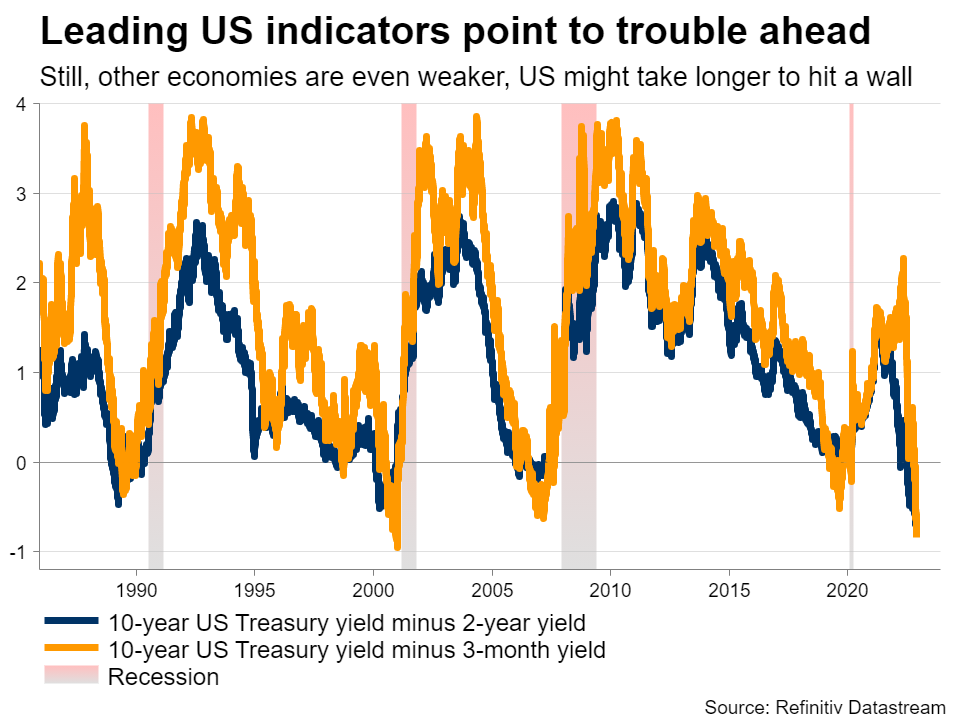
Therefore, even though the US is also staring down the barrel of a recession, this might be a story for the second half of 2023. At that point, Europe could begin to bottom out - having entered a downturn much earlier - setting the stage for a trend reversal in euro/dollar.
Euro - Trading the weather
In the euro area, the economic data pulse has been weakening for several months now. Spiraling energy costs served as rocket fuel for inflation, which forced the European Central Bank to roll out some heavy rate increases, further squeezing businesses and consumers.
The euro spent most of the year under pressure because of these concerns, yet it managed to stabilize recently, helped by a sharp decline in oil and gas prices after the European Commission intervened in the energy market. The unusually mild weather so far also helped many nations fill their energy stockpiles, easing some nerves about the severity of any recession.
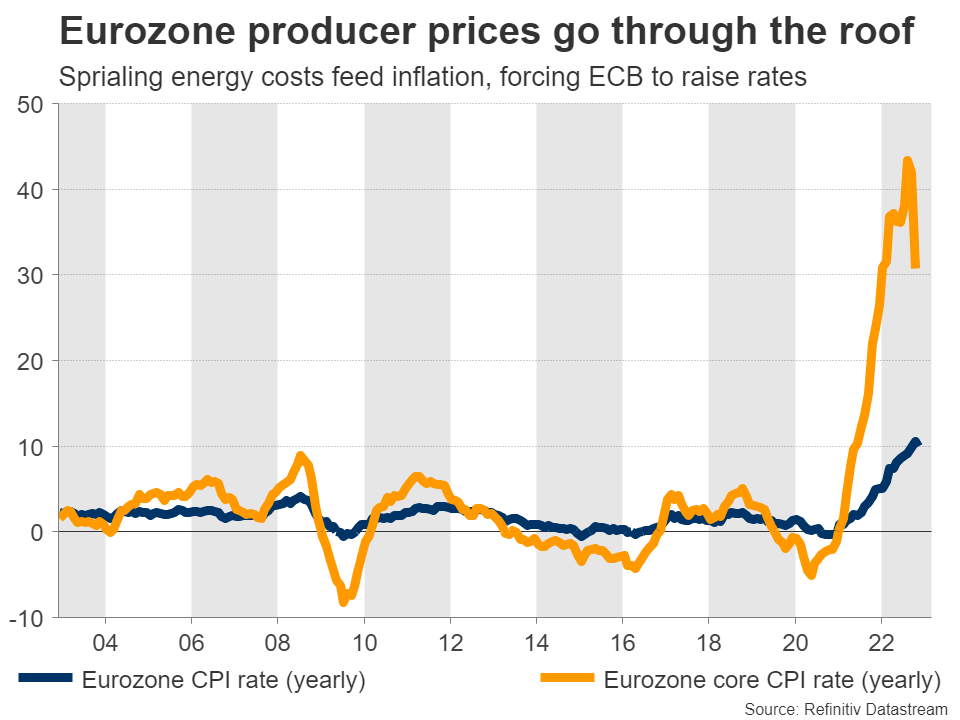
This suggests the euro’s performance going forward might be linked to weather patterns, as the existing energy stockpiles are not enough for the entire winter. Hence, a bet on the euro is essentially a bet on European weather staying favorable, which is not a very attractive strategy.
Markets currently expect the ECB to raise rates faster than the Fed next year, and the central bank could also begin to reduce its enormous balance sheet - both steps that would normally support the euro. The problem is that these measures can also backfire, by inflicting unnecessary damage on an economy already headed downhill.
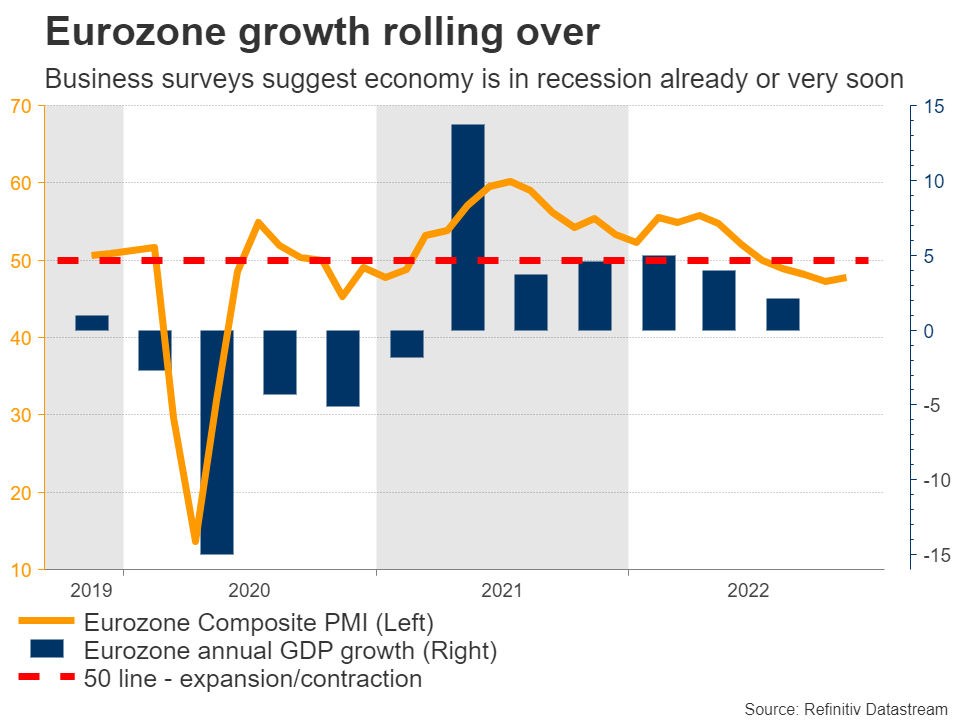
Economic performance is ultimately more important than rate differentials in FX markets, which is why a sustainable recovery in the euro is likely a story for the second half of next year. The wildcard is how quickly the war in Ukraine will conclude. Peace talks could be a powerful catalyst for a comeback in the euro, although this doesn’t appear imminent either.
Sterling’s fate tied to global forces
The British pound didn’t fare any better. An economy plagued by the energy crisis, a central bank reluctant to raise interest rates with any urgency, and a budget crisis that chipped away at confidence in British economic governance were a toxic cocktail for sterling, which is set to end the year as the second-worst performer among the major currencies.
Another problem was the pound’s close link to global risk sentiment. Because the UK runs massive twin deficits that require funding from abroad, sterling has turned into a proxy for risk appetite, mirroring any moves in stock markets. The correlation between Cable and the S&P 500 was running at nearly 90% most of the year, which is astonishingly high.
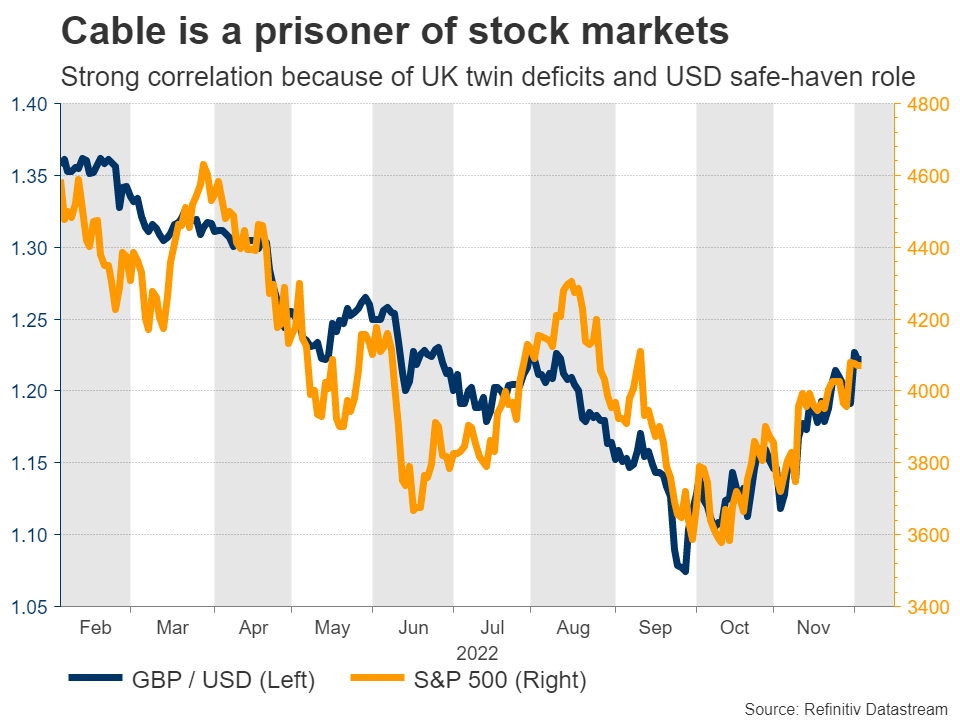
Looking into 2023, this is the biggest threat for the pound. Every major economy is losing steam, yet earnings estimates for next year haven’t been calibrated lower to reflect these risks and equity valuations remain uncomfortably high. This suggests the stock market storm is probably not over yet, which spells downside risks for sterling.
Yen - Time to shine?
The yen was the biggest FX casualty of the year, crushed under the boot of widening interest rate differentials as the Bank of Japan refused to follow other economies in raising rates. Since inflation was relatively low, the BoJ felt no pressure to tighten policy. As a result, capital left the country, searching for higher returns abroad.
Another thorn in the yen’s side was the shift in trade flows. With energy prices going ballistic and Japan being a net-importer of power, the nation lost its chronic trade surplus. Coupled with tourists being prohibited from visiting the island due to covid controls, demand for the yen vanished.
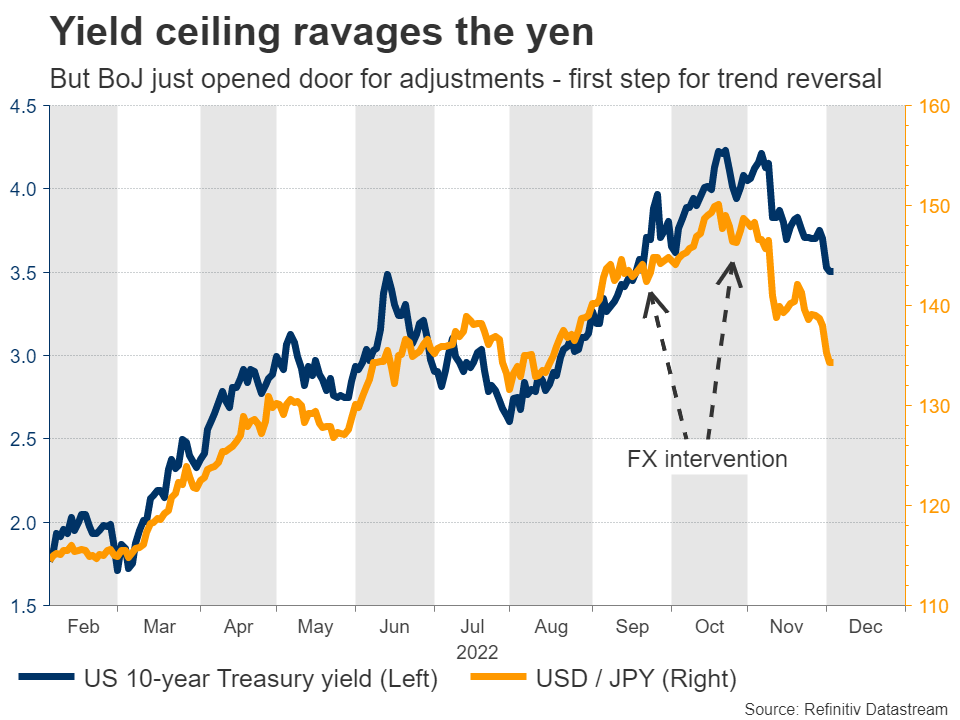
Yet, this gloomy narrative might be about to change. The Bank of Japan recently opened the door for tightening policy, and the latest acceleration in inflation has added credence to this notion. With oil prices also moving back down and tourists being allowed to visit again, many of the factors that ravaged the yen seem to be fading.
Most importantly, a potential recession in other economies means that foreign central banks will stop raising rates and perhaps look to cut them, in case inflation subsides. Therefore, rate differentials could narrow in the yen’s favor, as foreign central banks stop tightening just as the BoJ begins to.
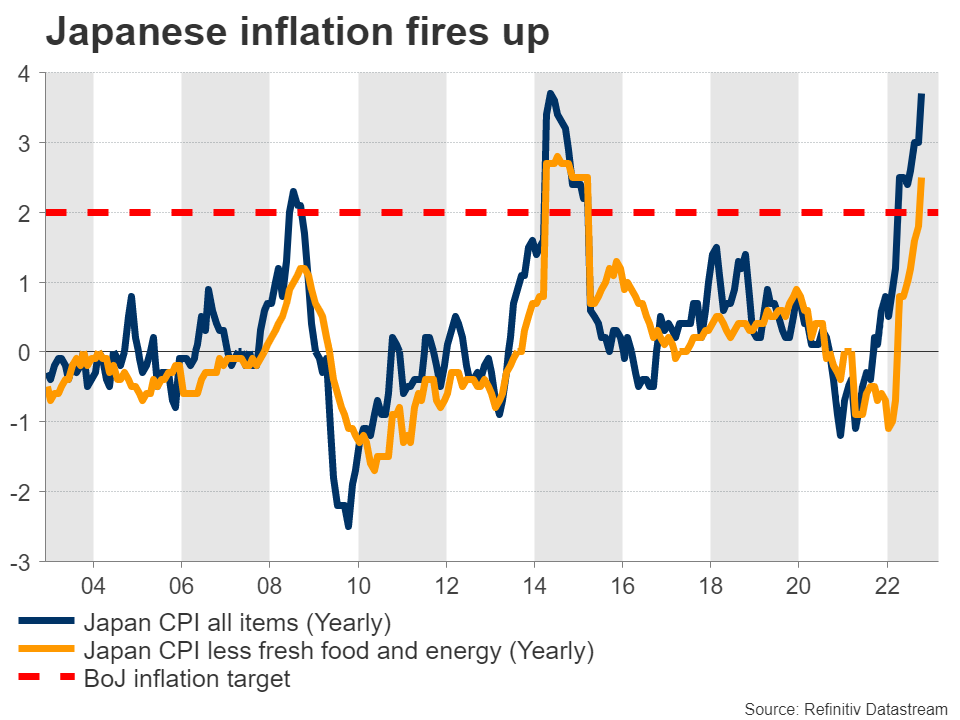
All told, the stars seem to be aligning for a trend reversal in the yen. An important determinant will be who replaces Kuroda as BoJ Governor when his term ends in April. Someone more open to tightening could be the catalyst for the comeback, especially if that coincides with a deteriorating global backdrop and a retreat in foreign yields.
Aussie, kiwi, loonie: Caught between the Fed and commodity prices
It’s been an odd year for the commodity-linked dollars, as it’s been a constant battle between monetary policy divergence and commodity price shocks, while China risks have also been keeping traders on their toes.
As 2022 draws to a close, the Canadian dollar comes out on top, not just within the commodities clan but it’s also the best performing major currency after the greenback. Without question, the oil rally shored up the loonie. But with the energy crisis subsiding, the currency won’t be able to rely as much on high oil prices for support, turning the spotlight on domestic factors.
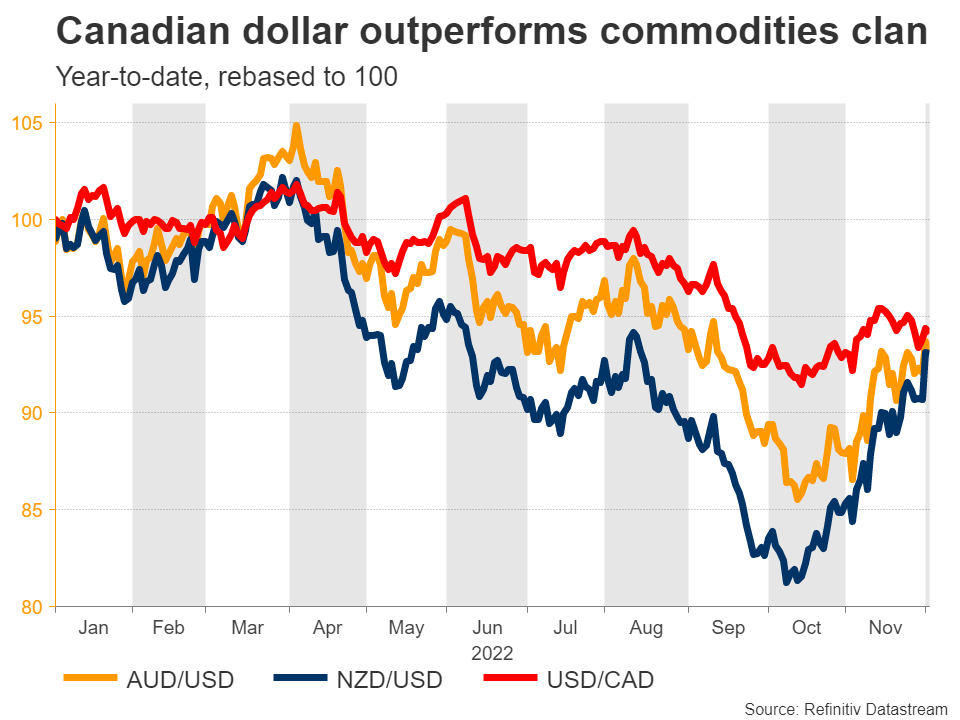
The Bank of Canada has been almost as aggressive as the Fed and only has a handful of rate increases left in this tightening cycle, at least according to money markets. Should the BoC pause before the Fed, the loonie might not fare as well in 2023, although Canada’s relatively robust economy might prevent traders from turning too gloomy.
Another central bank that matched the Fed’s pace of rate hikes is the Reserve Bank of New Zealand. But the RBNZ’s early tightening lead in 2021 disadvantaged the kiwi dollar when the Fed caught up in 2022. If it wasn’t for the commodities’ rally spurred by the Russia-Ukraine conflict, the kiwi’s losses could have been even bigger. However, the RBNZ might still win the race, giving the kiwi the edge in 2023 against the US dollar, as inflation remains too high and the labour market too tight.
For the Australian dollar, however, there is more uncertainty both from a monetary policy perspective and what’s happening in China. The Reserve Bank of Australia could end up having a lower terminal rate than many of its peers, although it is prone to making U-turns. But the real question is, how much does RBA policy matter?
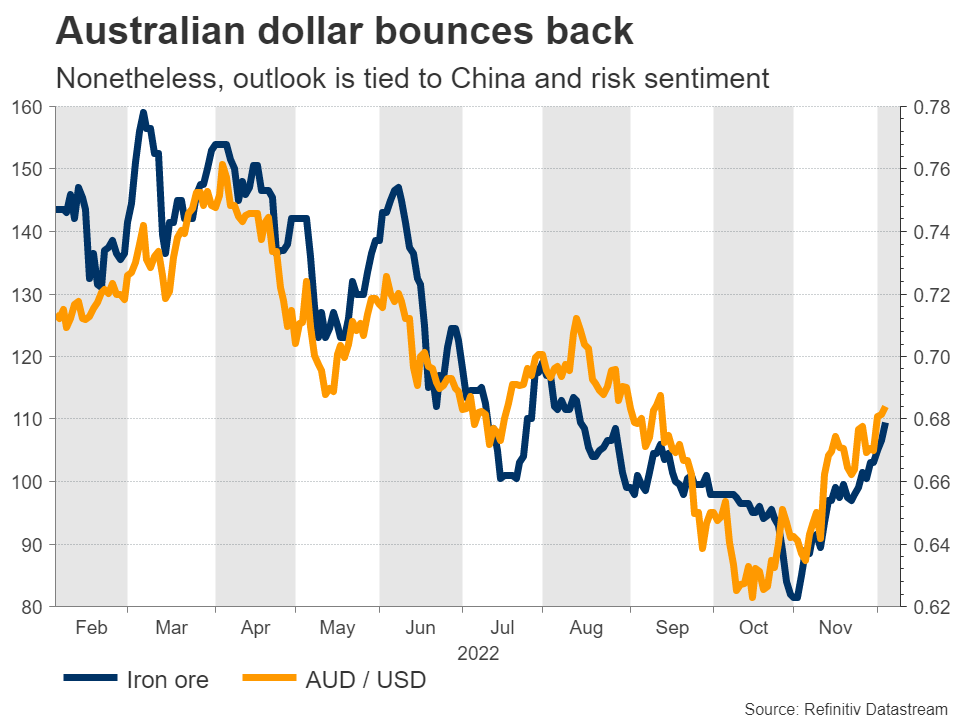
The aussie has been the most oblivious to domestic policy out of the three dollars and put on a stellar performance in March when the RBA remained dovish as other central banks commenced rate increases. Higher commodity prices following the Ukraine war and strong demand from China were a boon for Australia’s current account. But those effects have started to fade.
All hopes for the currency next year rest on China proceeding swiftly with its reopening plans. Stronger growth in its main trading partner would give the Australian economy something to lean on should the RBA struggle to contain inflation and decide to push up rates a lot higher than what it has flagged.
The bearish scenario for the aussie is the Fed hiking rates above 5% and the RBA pausing before the cash rate reaches 4%. But even then, this would only be half the equation and much would still depend on the outlook for the Chinese economy and overall sentiment.
Sunset Market Commentary
Markets
When the Fed wants to make some last-minute changes to market positioning going into a Fed policy meeting, they often make use of their favorite news media, the Wall Street Journal, to dot the I’s and cross the T’s. It didn’t surprise us to read exactly that today. “Brisk wage growth could lead officials to consider raising their policy rate above 5% in 2023 to fight inflation”. The message strokes with Fed guidance of late, but is completely ignored by markets. Last week’s speech by Fed chair Powell and stronger-than-expected payrolls even achieved the opposite. The article floats two possible strategies for proceeding. One would be to quickly raise rates above 5% and then lower them right away when the Fed should have gone too far. The other is to go slower and “feel your way a bit”, but hold on to that high level for longer and not loosen policy too early. The latter is what Fed Chair Powell has in mind. The new (median) policy rate projection could be increased to 5.25% in the new dot plot, compared to 4.75% currently, with the higher level being maintained for longer. US money markets currently discount a 5% peak in H1 2023, but a reduction to 4.5% by year-end. The WSJ article clearly stipulates that the bigger mistake the Fed could make would be undershooting it and failing to get inflation under control. If the Fed’s aim was to change current market positioning somewhat, they (at least for now) failed to really do so. In a rather dull European trading session, US yields add 3 bps to 5.8 bps with the belly of the curve underperforming the wings. German yield changes vary between +1.6 bps (2-yr) and -2 bps (30-yr) as they still had to catch up with the fall in US yields after European close last Friday. EUR/USD flipped sides around the 1.0550 handle without strong preference. We retain comments by ECB Makhlouf who said that the ECB will probably also shift from 75 bps to 50 bps rate hikes in December. That could mark the start of consecutive such moves as it is premature to be talking about the end-point for policy rates. On the topic of the future balance sheet roll-off, he favours it to start slowly at the end of Q1 or early Q2, leaving room to accelerate afterwards. The most outspoken USD move came this morning as USD/CNY slipped below 7 for the first time since September after China loosened some of its strict Covid-rules. Where this news managed to boost Asian bourses, it couldn’t inspire European ones. Main indices lose around 0.5% today. EUR/GBP bounces off key support at 0.8559/67 in a technically-inspired move.
News Headlines
Turkish inflation slowed in November to 2.88% M/M and 84,39% Y/Y (3.54% M/M and 85.51% in October). Core inflation (excluding food and energy) slowed to 68.9% from 70.5%. Except for clothing and footwear (-1.42% M/M) all main groups in the consumer basket still show a rise compared to October. In Y/Y terms, the slowest rise was seen in communication (35.87%) with the highest readings for food and non-alcoholic beverages (102,55%) and transportation (107.03%.). The decline of the lira recently shifting into a lower gear helps to slow inflationary dynamics. Base effects from very high monthly rises a year ago probably will further reduce inflation in the months ahead. However, there is no perspective for inflation to return to the 5% CBRT target in the foreseeable future. A stimulative fiscal and monetary policy ahead of the 2023 elections might even fuel inflationary tendencies. PPI inflation also slowed to 0.74% M/M and 136.02% Y/Y (From 157.69%). The lira is holding stable against the dollar (USD/TRY 18,639) and eases slightly against the euro (EUR/TRY 19,65). Real yields remain extremely negative after the CBRT cut the interest rate to 9.0%.
Hungarian retail sales eased more than expected in October, suggesting a slowdown in domestic demand. Sales volumes were only 0.6% higher compared to the same period last year. In a monthly perspective, sales (calendar-adjusted) decreased by 5.6% in food shops and 0.9% in non-food retailing. However automotive fuel retailing rose 19.7% M/M. Over the January-October period, the retail sales volume was still 7.0% Y/Y. The forint is losing modest ground (EUR/HUF 411,75) but stays with a short term consolidation pattern between EUR/HUF 398 and 415. Trading in the currency remains subject to uncertainty on the solution of ‘the rule of law dispute’ with the EU which is a condition to free blocked EU funds for the country.
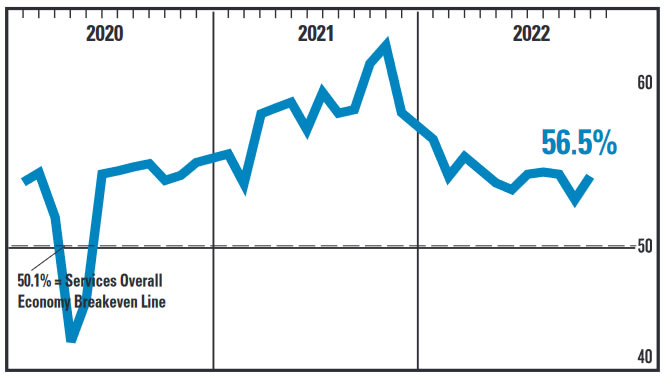
US ISM services rose to 56.5 in Nov, production surged
US ISM Services PMI rose from 54.4 to 56.5 in November, above expectation of 53.5. Looking at some details, business activity/production surged sharply from 55.7 to 64.7. New orders dropped slightly form 56.5 to 56.0. Employment rose from 49.1 to 51.5. Prices dropped from 70.7 to 70.0.
ISM said: "The past relationship between the Services PMI and the overall economy indicates that the Services PMI for November (56.5 percent) corresponds to a 2.3-percent increase in real gross domestic product (GDP) on an annualized basis."
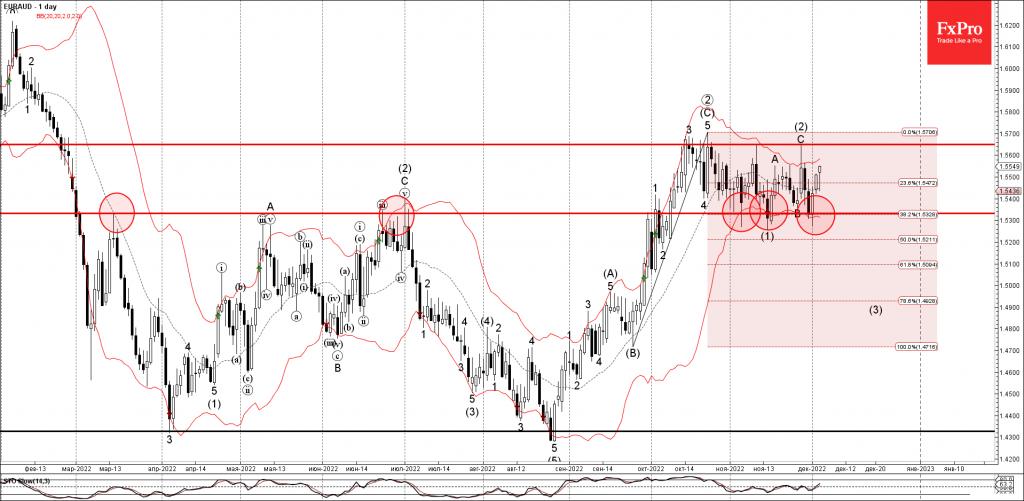
EURAUD Wave Analysis
- EURAUD under the bullish pressure
- Likely to rise to resistance level 1.5650
EURAUD under the bullish pressure after the earlier upward reversal from the major support level 1.5332 (former strong resistance from March and June) – which has been steadily reversing the price from November.
The upward reversal from the support level 1.5332 created the clear daily Japanese candlesticks reversal pattern Piercing Line.
EURAUD can be expected to rise further toward the next resistance level 1.5650 (top of the previous intermediate correction (2)).
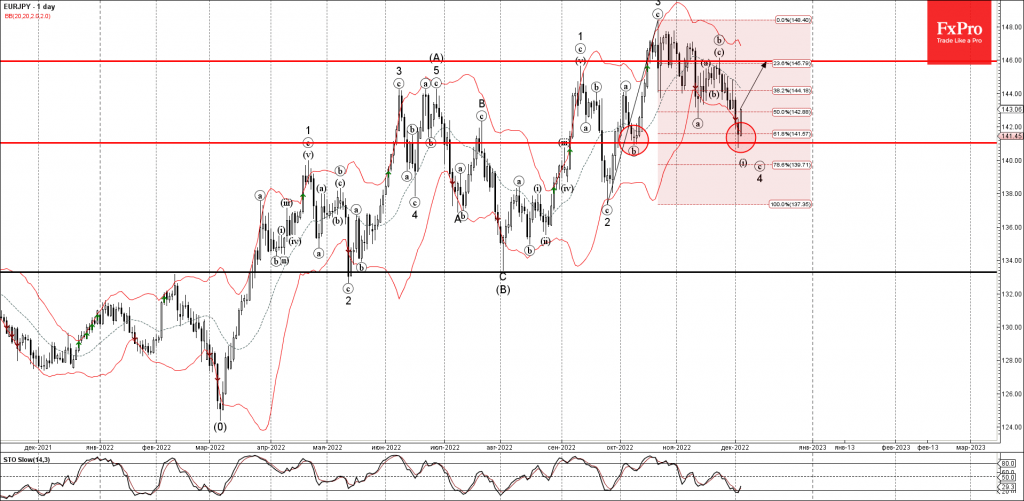
EURJPY Wave Analysis
- EURJPY reversed from support level 141.00
- Likely to rise to resistance level 146.00
EURJPY recently reversed up from the support level 141.00 (previous monthly low from October), standing near the lower daily Bollinger Band and the 61.8% Fibonacci correction of the upward impulse from September.
The upward reversal from the support level 141.00 is aligned with the clear multi-month uptrend inside which the pair has been moving from March.
Given the strongly bearish yen sentiment, EURJPY can be expected to rise further toward the next resistance level 146.00 (top of the previous minor correction (b)).
How Far Can Gold Rally?
For over a month now, gold prices have been trending higher, gaining over 10% since the start of November. Naturally this poses the question of whether a new peak is coming, or will the precious metal keep moving up through next year. The prospect of inflation in the early part of 2023 might keep investors on the lookout for a place to store wealth. But there are things that central banks can do that might disrupt trends.
In order to guess whether gold prices will continue their current trend, it's important to get a good idea of why they have performed like this so far. While a diverse range of factors can be pointed to, the depreciation of the dollar has the largest contribution. In fact, since the start of November, the dollar has lost 8.5% against its basket of currencies. Suggesting that if we want to know whether the current trend in gold will continue, we have to see if the dollar is likely to keep weakening while going into the end of the year.
What's going on?
The dollar has been losing ground chiefly because investors are coming to believe that the Fed's extraordinary tightening is coming to an end. The dollar has been more attractive than other currencies over the past year, because the Fed was the most aggressive of the central banks in trying to curb inflation. Meaning that holding debt in dollars was more profitable than in other currencies.
But, with the Fed starting to "pivot" away from an aggressive stance, other central banks are expected to slowly catch up. The dollar's main advantage is expected to dwindle over the coming months. Then there is the question of what's going to happen in the first half of next year, when most economists believe the US will fall into a recession. And not one of those technically, debate on the definition, ones like the start of this year. Will the Fed hold firm with higher interest rates through the recession in order to bring inflation down? Or will they cave to political pressure and start easing to prop up the economy?
The China factor
Adding to the weakness of the dollar is a resurgence in risk appetite, thanks to China apparently moving away from its strict zero-covid policy to a more economically friendly zero-covid policy. This could help global outlook as China could return to buying more raw materials, and supply chains could be eased in the coming months. Increased productivity in the world's industrial base along with a weaker yuan could help reduce inflation, and ease some of the worries about a recession.
The markets are pricing in a 50bps hike by the Fed in December, a reduction of the pace recently. That would put it on track for a 25bps hike at the end of January. Then there is the option of one more hike sometime in the first half of the year, leaving the terminal rate at no more than 5.0%. So, if the Fed delivers next week, and there is a year-end rally in the markets, gold could continue to trend higher in the short term. But if the Fed were to double down on the hiking rhetoric, particularly in light of the stellar jobs numbers from Friday, the dollar might find some footing. And gold could falter a bit.
USD/JPY Mid-Day Outlook
Daily Pivots: (S1) 133.33; (P) 134.65; (R1) 135.67; More...
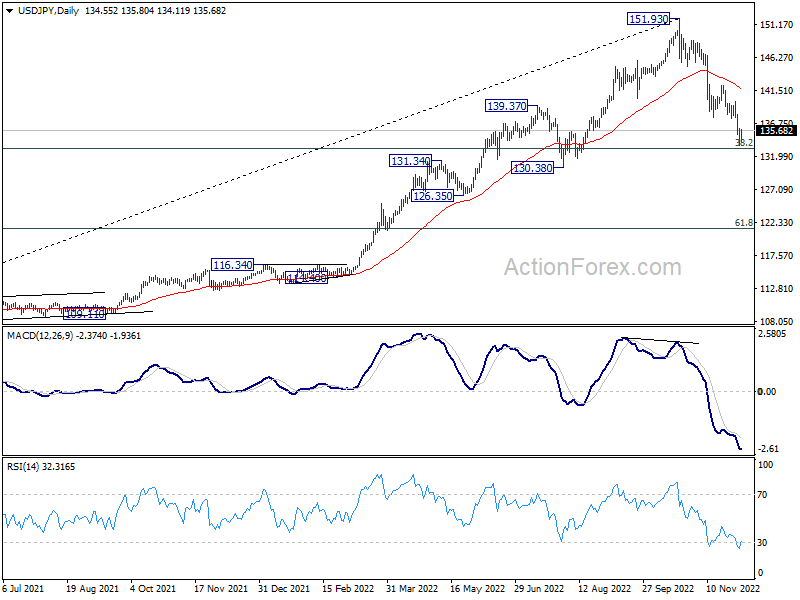
Intraday bias in USD/JPY is turned neutral first on loss of downside momentum. Break of 137.66 resistance will indicate short term bottoming, on bullish convergence condition in 4 hour MACD, ahead of 133.07 medium term fibonacci level. Intraday bias will be turned back to the downside for 142.24 resistance first. However, before, another decline could still be seen to 133.07 medium term fibonacci level or further to 55 week EMA.
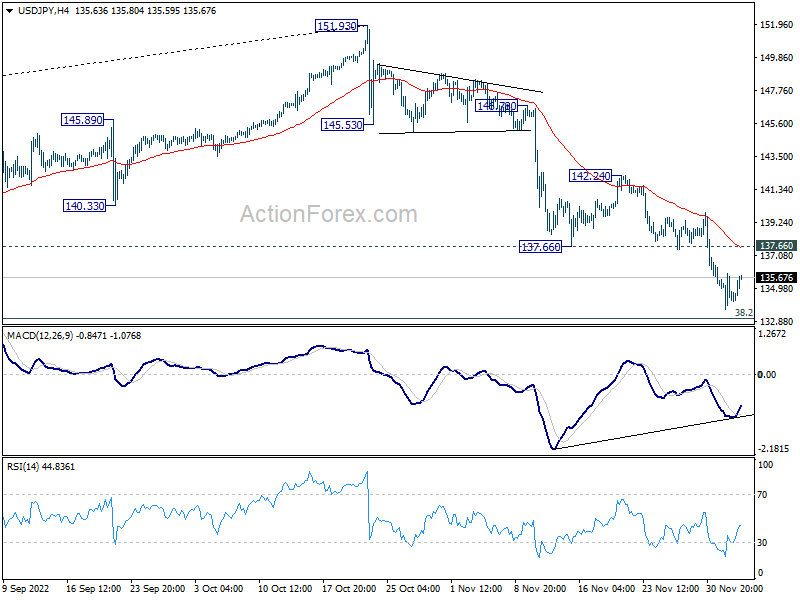
In the bigger picture, a medium term top should be formed at 151.93. Fall from there is correcting larger up trend from 102.58. It's too early to call for bearish trend reversal. But even as a corrective move, such decline should target 38.2% retracement of 102.58 to 151.93 at 133.07, or further to 55 week EMA (now at 131.33). Some support should be seen around this zone to bring rebound. However, sustained break of 55 week EMA will pave the way to 61.8% retracement at 121.43.