Sample Category Title
A Promising Response to Protests
Investors in Europe remain in a cautious mood on Tuesday as they await a huge influx of economic data in the coming days, while US futures are also pointing to modest gains ahead of the open.
Stocks in China soared after a difficult start to the week, on the hope that the country's zero-Covid policy stance may be relaxed further. That had been the expectation in recent weeks, with a modest softening recently seen being followed by a more substantial shift in the spring.
But protests in recent days on the back of record Covid cases and tighter restrictions could have gone either way and that made investors extremely anxious on Monday. While I can imagine the path from zero-Covid to zero restrictions will be long and full of potholes and hurdles, the response to the unrest has appeared more promising than feared.
It may well be that the leadership had already been gauging the public mood on restrictions and had, as has been rumoured, already been planning its exit strategy which recent comments align with. Either way, it appears zero-Covid has reached a crossroads and the direction of travel now will determine investor appetite toward Chinese stocks going into 2023. Today's rebound suggests there's some optimism.
So much uncertainty in the oil markets
It's already been a very volatile week in oil markets and that's unlikely to change over the coming days given the immense uncertainty over the Russian price cap, China's Covid stance, and the OPEC+ meeting. The market is being led by speculation and leaks, of which there have been plenty and will likely be much more, which makes for very lively conditions given the wide array of possible outcomes.
And as you'd expect, all of the above are linked to varying degrees. A record surge in Covid cases is leading to tightening restrictions weighing on activity, spurring protests, and forcing a rethink of the country's zero-Covid policy. They've also weighed heavily on prices with China being the world's second-largest economy which will impact the demand forecasts from OPEC+ unless the group opts to hold on and await more clear signals and data.
Also influencing the group's analysis will be Russian sanctions, most notably the price cap which is yet to be fully agreed upon. The latest rumours suggest the cap could be agreed to as low as $62 which is much lower than the $65-70 previously leaked and could therefore have a bigger impact on Russian output. And of course, Russia itself is a key member of the OPEC+ alliance, just to complicate matters further and could throw its weight around in those discussions and make an agreement harder and more uncertain.
Oh and the EU does have a tendency to make full use of deadlines, with the next sanctions due to come into force the day after OPEC+ meets, which is of course on a Sunday for some reason. Not that the alliance always comes to quick agreements and on this occasion, you could easily forgive them for not. Needless to say, this is certainly a recipe for volatile trading conditions.
Volatile and awaiting key US data
Gold is rallying again on Tuesday on the back of a softer dollar but has only largely wiped out Monday's losses leaving it basically net even on the week. I expect to see plenty more volatility in the coming days given the amount of US economic data that are being released including inflation, GDP, and the jobs report. That sets us up nicely as we move into the final month of the year with only a couple of weeks to go until the hotly anticipated CPI inflation report and Fed meeting.
Choppy and vulnerable
Bitcoin has also reversed its Monday losses, rallying 1.5% so far today. The cryptocurrency has remained volatile in the aftermath of another plunge following the FTX collapse and now trades more than 75% from its highs just over a year ago. Even now it remains vulnerable as we continue to discover what the full contagion effect will be and what else will be uncovered.
USD/CAD Mid-Day Outlook
Daily Pivots: (S1) 1.3420; (P) 1.3462; (R1) 1.3539; More....
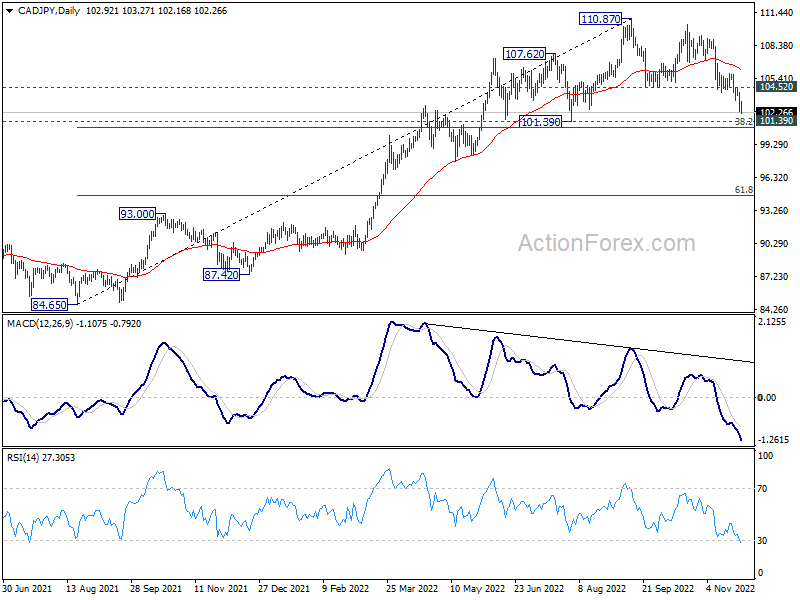
USD/CAD's rise from 1.3224 resumed by breaking through 1.3494 resistance finally. The development adds to the case that correction from 1.3976 has completed at 1.3224. Intraday bias is now back on the upside. Further break of 100% projection of 1.3224 to 1.3494 from 1.3315 at 1.3585 should prompt upside acceleration to 161.8% projection at 1.3752. This will now remain the favored case as long as 1.3315 support holds, in case of retreat.
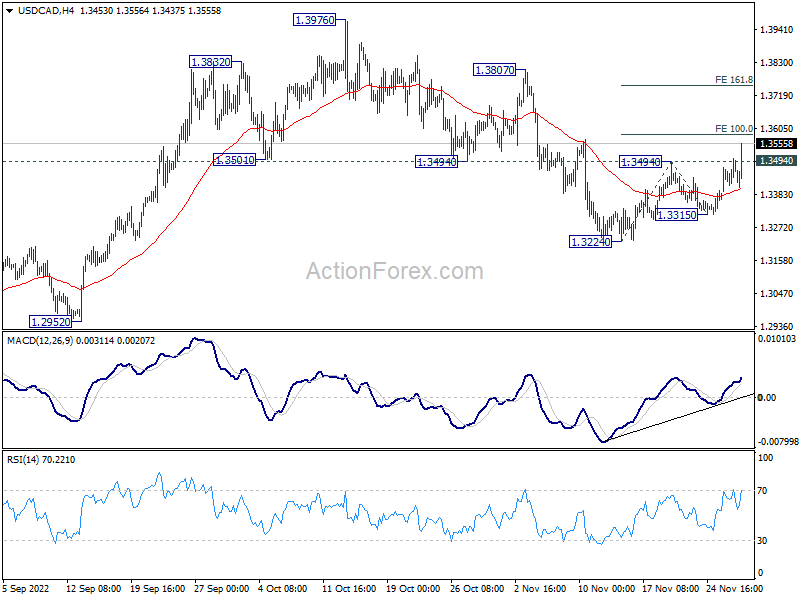
In the bigger picture, as long as 1.3222 cluster support (38.2% retracement of 1.2005 to 1.3976 at 1.3223) holds, larger up trend from 1.2005 (2021 low) is still expected to resume through 1.3976 high at a later stage. However, firm break of 1.3222/3 will indicate that the trend might have reversed. Deeper fall would be seen to next cluster support at 1.2726 (61.8% retracement at 1.2758).
CAD Falls Broadly after GDP, Markets Lag Direction Elsewhere
Canadian Dollar falls broadly after weaker than expected GDP data. Dollar and Swiss Franc are also weak on steady market sentiment. Australia and New Zealand Dollar are currently the strongest ones, followed by Sterling. But all three are just staying in range against the greenback. Euro is also relatively directionless with mixed trading with Yen together.
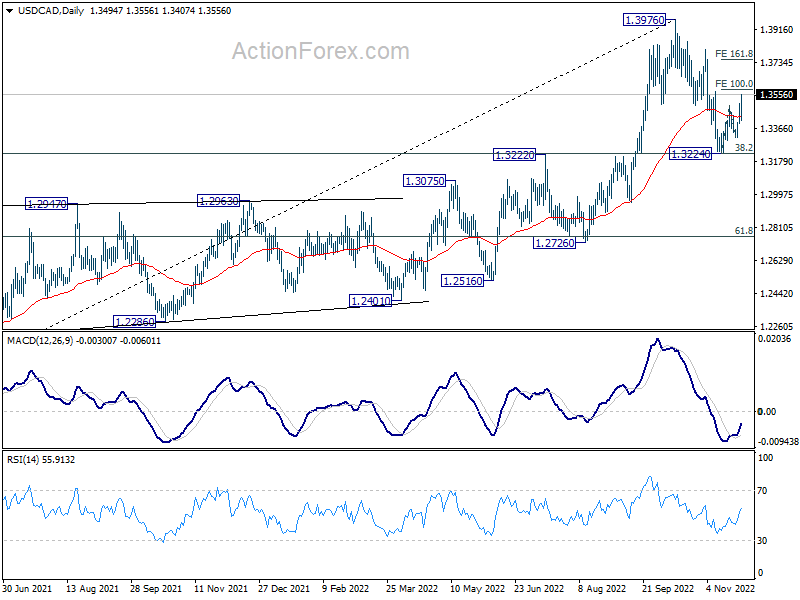
Technically, CAD/JPY is extending the fall from 110.87. Such decline is seen as a correction to the up move from 84.65. Downside could be contained by 101.39 support zone (38.2% retracement of 84.65 to 110.87 at 100.85) to bring rebound, at least on first attempt. But overall, further fall will remain in favor as long as 104.52 minor resistance holds.
In Europe, at the time of writing, FTSE is up 0.67%. DAX is up 0.05%. CAC is up 0.18%. Germany 10-year yield is down -0.053 at 1.943. Earlier in Asia, Nikkei dropped -0.48%. Hong Kong HSI rose 5.24%. China Shanghai SSE rose 2.31%. Singapore Strait Times rose 1.12%. Japan 10-year JGB yield dropped -0.038 to 0.254.
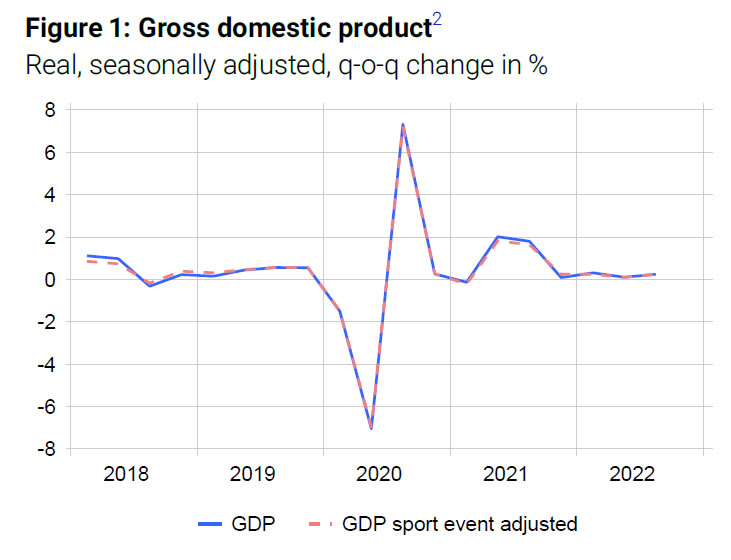
Canada GDP grew 0.1% mom in Sep, to be unchanged in Oct
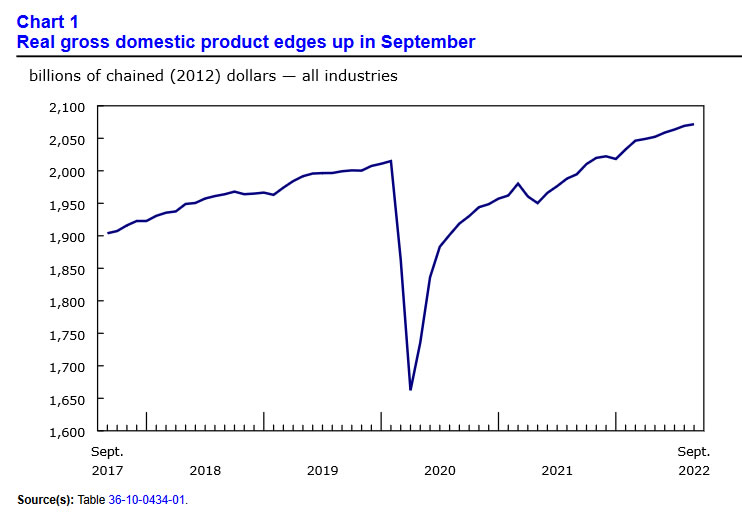
Canada GDP rose 0.1% mom in September, below expectation of 0.2% mom. Goods-producing industries grew 0.3% while services-producing industries were essentially unchanged.
Advance information indicates that real GDP was unchanged in October. Increases in the public, transportation and warehousing, construction and wholesale trade sectors were offset by decreases in the manufacturing and mining, quarrying and oil and gas extraction sectors.
BoE Mann: Medium-term inflation expectation important for next rate vote
BoE MPC member Catherine Mann said at an online event, "looking at medium-term expectations is a very important ingredient to my assessment of what the appropriate Bank Rate at the next vote might be."
"Once inflation expectations have been managed, the bank rate can come off a future peak," she added. At the same time, foreign exchange rate is also an "important ingredient" for inflation in the UK.
Eurozone economic sentiment rose to 93.7 in Nov, first increase since Feb
Eurozone Economic Sentiment Indicator rose from 92.7 to 93.7 in November, the first increase since February. Industrial confidence dropped from -1.2 to -2.0. Services confidence rose from 2.1 to 2.3. Consumer confidence rose from -27.5 to -23.9. Retail trade confidence was unchanged at -6.7. Construction confidence dropped from 2.6 to 2.3. Employment Expectation Indicator rose from 105.4 to 107.4. Economic Uncertainty Indicator dropped from 30.7 to 28.4.
EU ESI rose from 91.2 to 92.2. Amongst the largest EU economies, the ESI increased strongly in Italy (+4.1) and, to a lesser extent, the Netherlands (+1.2) and Germany (+1.1), while it eased in Spain (-1.7) and France (-1.6). Sentiment in Poland stayed broadly flat (+0.3). EEI rose from 104.9 to 106.3. EUI dropped from 29.8 to 27.8.
Swiss GDP grew 0.2% qoq in Q3
Swiss GDP grew 0.2% qoq in Q3, matched expectations. Looking at some details, manufacturing contracted -0.2%. Construction dropped -2.2%. Finance and insurance dropped -2.1%. But trade expanded 2.3% while accommodation and food rose 2.8%.
By expenditure approach, private consumption grew 0.7%. Equipment and software investment rose 2.1%. Exports excluding valuables rose 7.89%. But construction investment dropped -2.0%.
NZIER: RBNZ rate to peak at 5% next year
In the November Monetary Policy Statement, RBNZ projected that interest rate would peak at 5.5% while the economy would start contracting in Q2 2023 until Q1 2024.
NZIER said it expected the negative impact of higher interest rates on demand will "become more apparent around mid-2023". With that, RBNZ "will not need to increase interest rates by as much as it currently expects to".
"Nonetheless, we expect further increases in the OCR and for it to peak at 5 percent over the coming year," NZIER added.
USD/CAD Mid-Day Outlook
Daily Pivots: (S1) 1.3420; (P) 1.3462; (R1) 1.3539; More....
USD/CAD's rise from 1.3224 resumed by breaking through 1.3494 resistance finally. The development adds to the case that correction from 1.3976 has completed at 1.3224. Intraday bias is now back on the upside. Further break of 100% projection of 1.3224 to 1.3494 from 1.3315 at 1.3585 should prompt upside acceleration to 161.8% projection at 1.3752. This will now remain the favored case as long as 1.3315 support holds, in case of retreat.
In the bigger picture, as long as 1.3222 cluster support (38.2% retracement of 1.2005 to 1.3976 at 1.3223) holds, larger up trend from 1.2005 (2021 low) is still expected to resume through 1.3976 high at a later stage. However, firm break of 1.3222/3 will indicate that the trend might have reversed. Deeper fall would be seen to next cluster support at 1.2726 (61.8% retracement at 1.2758).
Economic Indicators Update
| GMT | Ccy | Events | Actual | Forecast | Previous | Revised |
|---|---|---|---|---|---|---|
| 23:30 | JPY | Unemployment Rate Oct | 2.60% | 2.60% | 2.60% | |
| 23:50 | JPY | Retail Trade Y/Y Oct | 4.30% | 5.00% | 4.50% | 4.80% |
| 08:00 | CHF | GDP Q/Q Q3 | 0.20% | 0.20% | 0.30% | 0.10% |
| 09:30 | GBP | M4 Money Supply M/M Oct | 0.00% | 0.80% | 2.10% | |
| 09:30 | GBP | Mortgage Approvals Oct | 59K | 60K | 67K | |
| 10:00 | EUR | Eurozone Economic Sentiment Nov | 93.7 | 93 | 92.5 | 92.7 |
| 10:00 | EUR | Eurozone Industrial Confidence Nov | -2 | -0.8 | -1.2 | |
| 10:00 | EUR | Eurozone Services Sentiment Nov | 2.3 | 3.4 | 1.8 | |
| 10:00 | EUR | Eurozone Consumer Confidence Nov F | -23.9 | -23.9 | -23.9 | |
| 13:00 | EUR | Germany CPI M/M Nov P | -0.50% | 2.00% | 0.90% | |
| 13:00 | EUR | Germany CPI Y/Y Nov P | 10.00% | 10.90% | 10.40% | |
| 13:30 | CAD | GDP M/M Sep | 0.10% | 0.20% | 0.10% | |
| 14:00 | USD | S&P/Case-Shiller Home Price Indices Y/Y Sep | 10.70% | 13.10% | ||
| 14:00 | USD | Housing Price Index M/M Sep | -1.20% | -0.70% | ||
| 15:00 | USD | Consumer Confidence Nov | 100 | 102.5 |
BoE Mann: Medium-term inflation expectation important for next rate vote
BoE MPC member Catherine Mann said at an online event, "looking at medium-term expectations is a very important ingredient to my assessment of what the appropriate Bank Rate at the next vote might be."
"Once inflation expectations have been managed, the bank rate can come off a future peak," she added. At the same time, foreign exchange rate is also an "important ingredient" for inflation in the UK.
Canada GDP grew 0.1% mom in Sep, to be unchanged in Oct
Canada GDP rose 0.1% mom in September, below expectation of 0.2% mom. Goods-producing industries grew 0.3% while services-producing industries were essentially unchanged.
Advance information indicates that real GDP was unchanged in October. Increases in the public, transportation and warehousing, construction and wholesale trade sectors were offset by decreases in the manufacturing and mining, quarrying and oil and gas extraction sectors.
Aussie Storms Higher
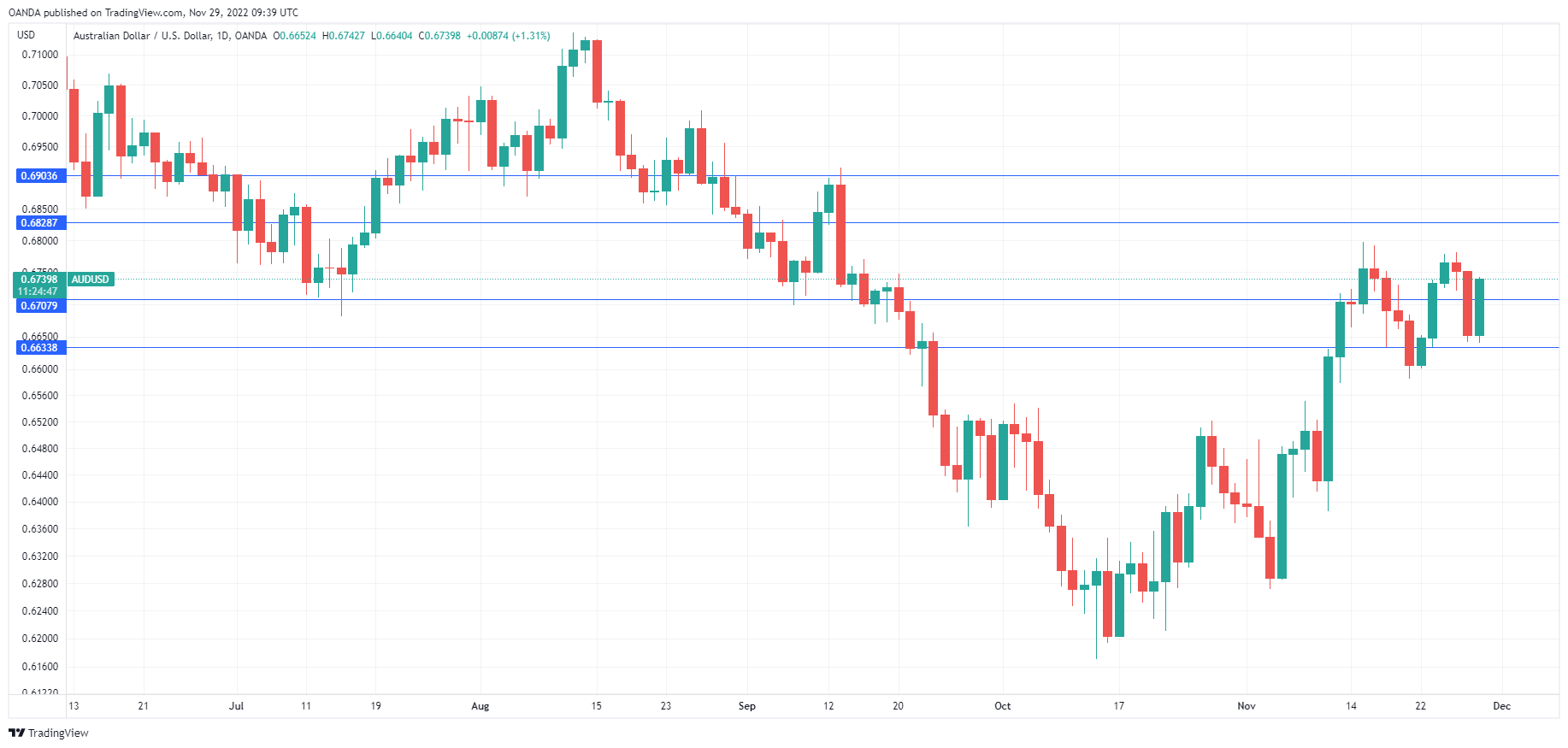
The Australian dollar has rebounded on Tuesday after a poor start to the week. In the European session, AUD/USD is trading at 0.6737, up 1.28%.
What goes down … can go right back up. This has been the story early this week for the Australian dollar, which tumbled 1.5% on Monday but has recovered most of those losses today. The Australian dollar was hit hard after a weak retail sales report and widespread unrest in China over the country’s zero-covid policy. The unrest in China has put a damper on risk appetite, as the result is likely to exacerbate supply chain disruptions and dampen domestic spending. Investors may have sensed an opportunity for profit-taking after the massive slide on Monday, which would help explain the rebound today.
Fed members keep up the blitz
The Fed doesn’t hold a policy meeting for another two weeks, but the Fedspeak blitz, which started after the soft US inflation report sent the markets in a tizzy, continued in earnest on Monday. Fed member Bullard said on Monday the markets could be underestimating the likelihood of higher rates and that the Fed funds rate will have to reach the bottom end of the 5%-7% range in order to curb inflation, which has been more persistent than anticipated. Fed member Williams added that the Fed needed to do more work to tame inflation, which is “far too high”. Fed member Brainard, a dove, expressed concern about inflation expectations rising above the Fed’s 2% target. The Fed has been aggressive in telegraphing the markets that its rate cycle is far from over, a message we’re likely to continue to hear in the coming weeks.
AUD/USD Technical
- AUD/USD is testing resistance at 0.6707. The next resistance line is 0.6829
- There is support at 0.6633 and 0.6511
Eurozone economic sentiment rose to 93.7 in Nov, first increase since Feb
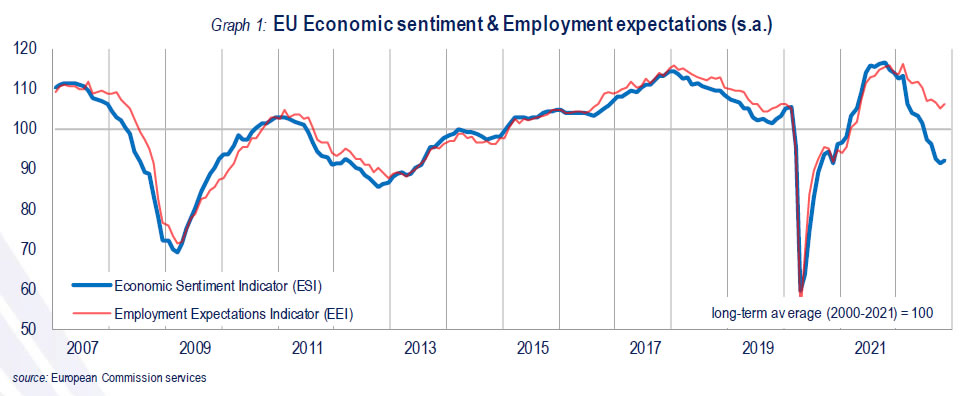
Eurozone Economic Sentiment Indicator rose from 92.7 to 93.7 in November, the first increase since February. Industrial confidence dropped from -1.2 to -2.0. Services confidence rose from 2.1 to 2.3. Consumer confidence rose from -27.5 to -23.9. Retail trade confidence was unchanged at -6.7. Construction confidence dropped from 2.6 to 2.3. Employment Expectation Indicator rose from 105.4 to 107.4. Economic Uncertainty Indicator dropped from 30.7 to 28.4.
EU ESI rose from 91.2 to 92.2. Amongst the largest EU economies, the ESI increased strongly in Italy (+4.1) and, to a lesser extent, the Netherlands (+1.2) and Germany (+1.1), while it eased in Spain (-1.7) and France (-1.6). Sentiment in Poland stayed broadly flat (+0.3). EEI rose from 104.9 to 106.3. EUI dropped from 29.8 to 27.8.
AUD/USD: Aussie Rallies on Improved Sentiment as Top of Thick Daily Cloud Provides Strong Support
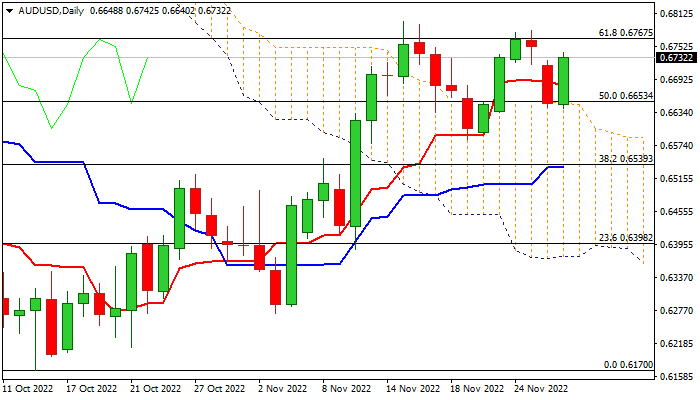
The Australian dollar bounces strongly in Asian / early European trading on Tuesday (up 1.3%), lifted by improved risk sentiment on speculations that China could ease Covid restrictions after recent protests.
Fresh bullish acceleration comes after repeated rejection at the top of thick daily cloud (0.6649) which continues to underpin near-term action.
Daily studies maintain strong bullish momentum and improved on the latest rally which pushed the price above converged 10/100DMA’s, bringing moving averages in full bullish setup.
Bulls look for retest of key resistance zone (0.6767/97) provided by Fibo 61.8% of 0.7136/0.6170 / recent tops of Nov 15/24, with firm break here to generate signal bullish continuation.
Extension of larger uptrend from 0.6170 (Oct 13) would focus targets at 0.6906/16 (Fibo 76.4% / Sep 13 high).
Daily cloud top marks strong support, guarding lower pivots at 0.6584/52 (Nov 21 trough / Fibo 38.2% of 0.6170/0.6797) loss of which would weaken near-term structure.
Res: 0.6780; 0.6797; 0.6894; 0.6906
Sup: 0.6698; 0.6649; 0.6614; 0.6584
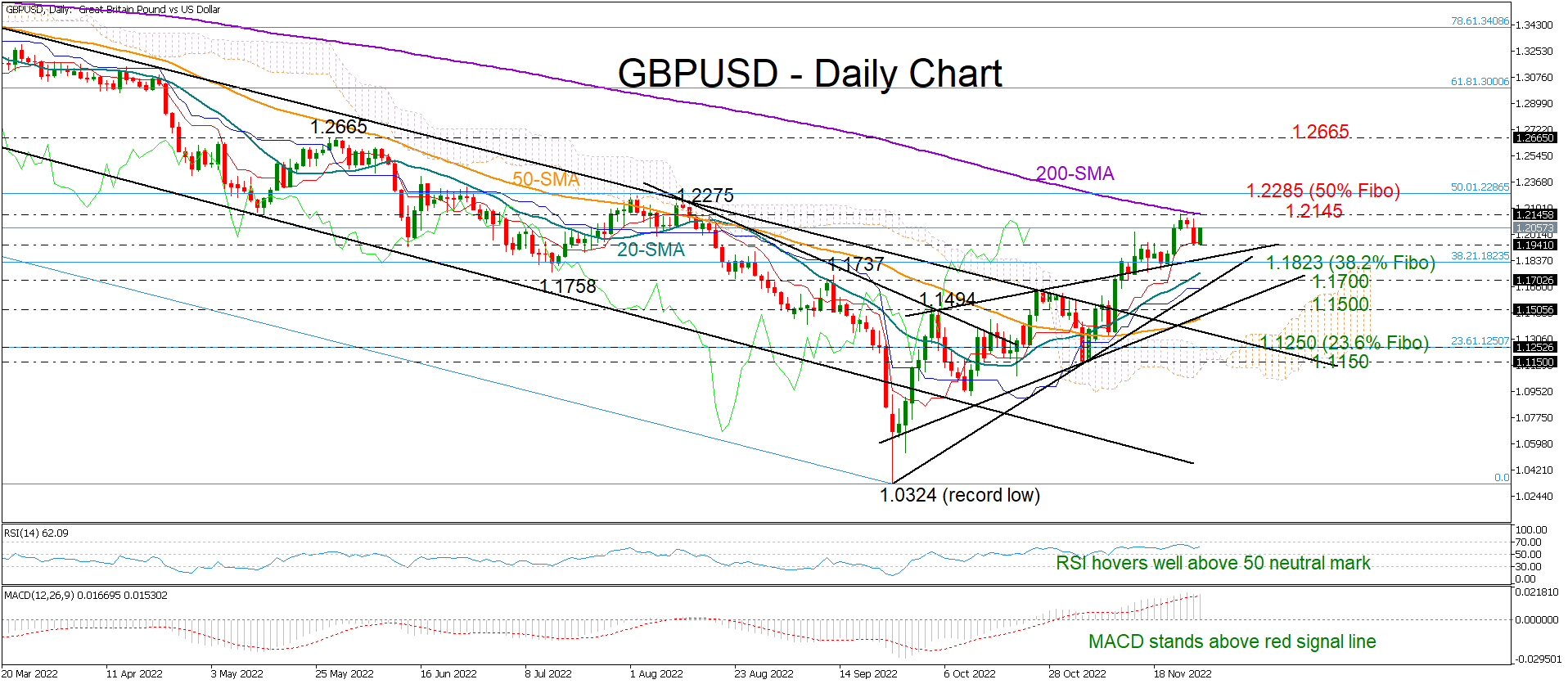
GBPUSD Needs Break Above 200-SMA
GBPUSD finished Monday’s session on the negative side, unable to climb above the 200-day simple moving average (SMA) at 1.2145 once again; the line has been acting as a crucial ceiling to upside movements since September 2021.
The positive structure of higher highs and higher lows in the short-term picture remains valid, backed by the bullish cross between the 20- and 50-day SMAs.
Encouragingly, the momentum indicators are still in favor of the bulls despite the latest retreat in the price. The RSI is maintaining a positive trajectory above its 50 neutral mark and the MACD is standing above its red signal and zero lines. Adding to the optimism is the flattening red Tenkan-sen line, which is fluctuating some distance above the blue Kijun-sen line.
Support is currently provided by the red Tenkan-sen line at 1.1940, where the 50-period SMA is positioned in the four-hour chart. If that base stands firm, the pair may again challenge the 200-day SMA with scope to reach the 50% Fibonacci retracement of the 1.4248–1.0324 downleg at 1.2285. The area has been a key resistance zone during the second half of 2022. Therefore, a sustainable move above that wall could renew bullish pressures, sparking a rally towards the next barrier of 1.2665.
On the downside, the 1.1823–1.1700 zone, which encapsulates two constraining lines, the 20-day SMA, and the 38.2% Fibonacci, may limit selling pressures. If not, the lower ascending trendline currently at 1.1500 may prevent an outlook deterioration and an aggressive decline towards the 1.1250–1.1150 support area.
In brief, GBPUSD keeps trading within a bullish region, though only an advance above the 200-day SMA would bring new buyers into the market.
Swiss GDP grew 0.2% qoq in Q3
Swiss GDP grew 0.2% qoq in Q3, matched expectations. Looking at some details, manufacturing contracted -0.2%. Construction dropped -2.2%. Finance and insurance dropped -2.1%. But trade expanded 2.3% while accommodation and food rose 2.8%.
By expenditure approach, private consumption grew 0.7%. Equipment and software investment rose 2.1%. Exports excluding valuables rose 7.89%. But construction investment dropped -2.0%.